Breaking News
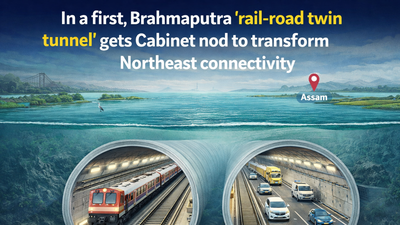
In a first, Brahmaputra ‘rail-road twin tunnel’ gets Cabinet nod to transform North-east connectivity


In a first, Brahmaputra 'rail-road twin tunnel' gets Cabinet nod to transform North-east connectivity

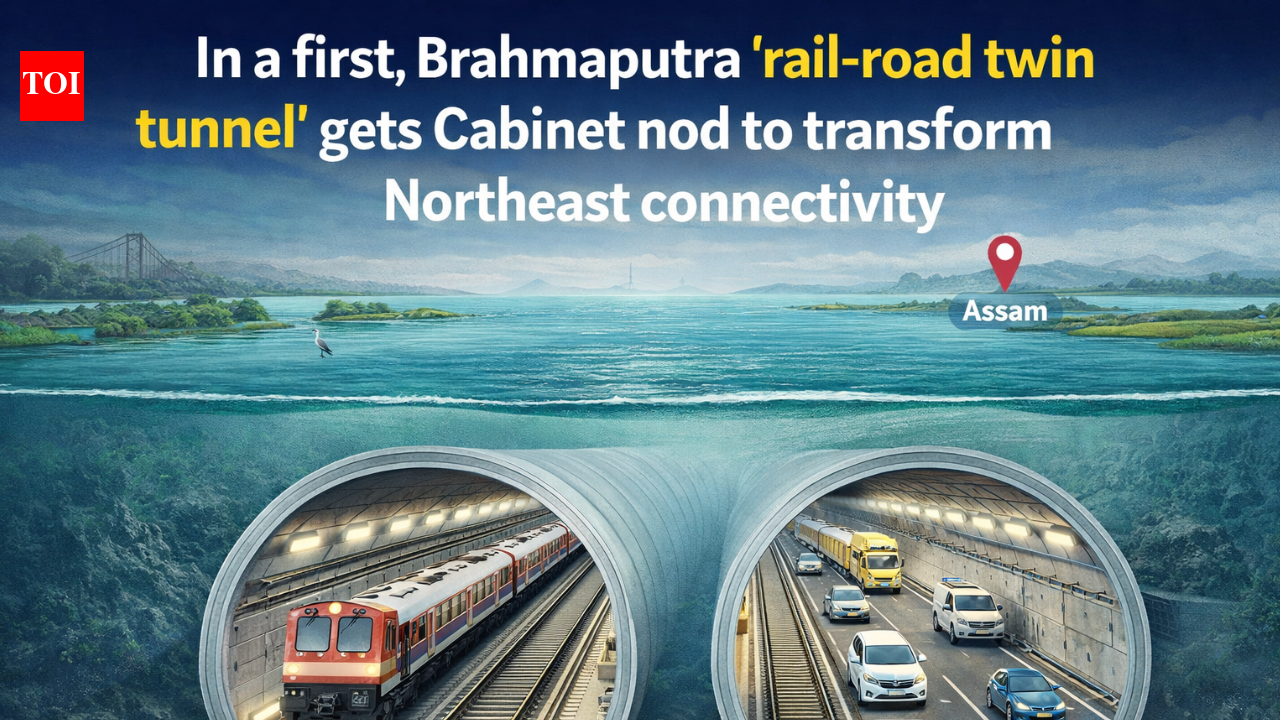
Union cabinet has approved construction of a 4-lane access-controlled greenfield corridor from Gohpur (NH-15) to Numaligarh (NH-715), including a 15.79-km road-cum-rail underwater tunnel under the Brahmaputra, at a total capital cost of Rs 18,662 crore, the government said.The total project length will be about 33.7 km, and will be implemented on an Engineering, Procurement and Construction (EPC) mode.The project is expected to be India’s first underwater road-cum-rail tunnel and the world’s second, and is aimed at strengthening connectivity across Assam and the broader Northeast region.Currently, travel between Numaligarh and Gohpur via the existing Kaliabhomora bridge route is about 240 km and takes nearly six hours, passing through areas including Kaziranga National Park and Biswanath Town.

PM Modi Opens Kumar Bhaskar Varma Setu, Rs 3000 Crore Bridge Cuts Guwahati Travel Time To 7 Minutes

The new greenfield corridor with the tunnel is aimed at significantly improving connectivity, reducing logistics costs and improving freight movement efficiency across Assam, Arunachal Pradesh, Nagaland and other northeastern states.

Multimodal integration and network connectivity

The corridor will integrate with two major national highways — NH-15 and NH-715 — and two railway sections:

  • Rangia–Mukongselek railway section (Gohpur side)
  • Furkating–Mariani loop line (Numaligarh side)

The project will also enhance multimodal connectivity by linking:

  • 11 economic nodes
  • 3 social nodes
  • 2 tourist nodes
  • 8 logistics nodes

It will also improve access to four major railway stations, two airports and two inland waterway terminals, enabling faster movement of goods and passengers.

Strategic and economic impact

The government said the project will play a key role in strategic connectivity, regional economic growth and trade expansion while strengthening links between major economic centres.The project is expected to generate about 80 lakh person-days of direct and indirect employment, supporting economic activity and development in surrounding regions.The tunnel component will include– Twin tube TBM tunnel with rail provision in one tube — 15.79 km, Road cut-and-cover section (1.26 km) and Rail cut-and-cover section (4 km). The project will connect key economic zones, industrial areas, social districts, tourist hubs including Kaziranga National Park, and major urban centres including Numaligarh, Tezpur, Gohpur, Dibrugarh and Itanagar.


Source link

Short-term loan dependence puts Pakistan’s economic stability at risk


Short-term loan dependence puts Pakistan’s economic stability at risk

Representative image (AI)

The economy of Pakistan is in a risky state due to its over-reliance on short-term foreign loans, according to business leaders and economists. Key figures are calling for urgent negotiations with friendly nations to extend loan repayment periods and implement structural reforms, as reported by Express Tribune.Vice chairman of the Pakistan industrial and traders associations front (PIAF) Raja Waseem Hassan warned that without extending loan maturities, the country will continue to face balance-of-payments problems. While foreign reserves have grown to $21 billion in January 2026, experts say this improvement relies too heavily on temporary support from international institutions and friendly countries.

Pak PM Shehbaz Sharif Says He Begged For Funds With Asim Munir As Pakistan Buys Global Influence

“The government must immediately begin serious negotiations with friendly nations to secure longer repayment periods and ease pressure on foreign exchange reserves,” said Hassan. He welcomed recent positive diplomatic developments with Gulf states and the United States but cautioned that these relationships can change quickly.The country’s trade performance remains concerning. Exports stood at $32 billion in FY25, while imports continue to exceed export earnings. Dr. Saleem Ahmed, a senior economist, warned that Pakistan can’t rely forever on rollovers and short-term deposits. He suggests the country needs 5-6 per cent annual growth to stabilize its debt-to-GDP ratio, which currently hovers around 70 per cent.Economic growth prospects remain modest. The IMF expects 3.6% GDP growth for FY26, while the State Bank of Pakistan projects 3.75-4.75%. Though inflation has dropped from its 38% peak in 2023, strict monetary policies have slowed industrial growth and business lending.Experts recommended focusing on export-oriented sectors like textiles, IT, and agricultural processing. They suggest improving tax collection, reducing energy waste, and boosting remittances, which could reach $42 billion in FY26. They also stress the need to increase foreign direct investment beyond its current annual level of $1.5-2 billion to reduce dependency on external borrowing.Hassan pointedout that while Pakistan’s military importance can help in diplomacy, economic strength is crucial for long-term stability. “Economic strength must be the real shield. Without strong buffers and self-reliance, external partnerships alone cannot guarantee stability,” he said.


Source link

Iceland’s iconic black sand beach is vanishing in a shocking transformation; here’s why | World News


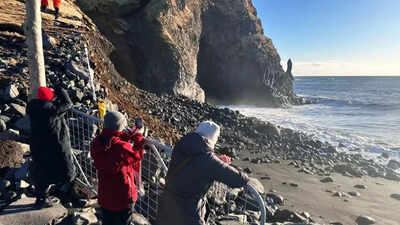
Iceland’s famous black sand beach has always felt a little unreal. Dark as charcoal and framed by cliffs. Pounded by Atlantic waves that don’t play nicely. For years, travellers have stood on the shore at Reynisfjara Beach, staring at its basalt columns and snapping photos that barely look real. It’s one of those places that seems permanent. And yet, in a matter of weeks, much of that iconic black sand appears to have vanished. Swept away and dragged into the North Atlantic, as cited by Arcticportal.org. Visit Iceland has long described it as one of the country’s most hazardous destinations. Sneaker waves, those sudden, powerful surges, have swept visitors into the sea before. Several people have died over the years, including one as recently as summer 2025. Now, the erosion may be adding another risk!

Iceland’s black sand beach nears to ‘extensive erosion’: Reports

Reports from Iceland suggest that powerful winds and heavy currents have stripped away large sections of the shoreline at Reynisfjara Beach. What was once a wide, dramatic stretch of black volcanic sand is now reportedly reduced to a narrow strip in places. The environmental change is described as “extensive erosion.” The appearance and accessibility of the beach are said to be dramatically altered.The transformation, which locals say is that the towering basalt columns that once sat high above the sand are now rising almost directly from the sea. These formations, shaped by ancient volcanic activity, used to be easily reachable on foot. Now they appear much closer to the crashing surf.

Iceland’s black sand beach nears to 'extensive erosion': Reports

Source: The Reykjavik Grapevine

What can be the reason behind the disappearance of sand

Experts near Reynisfjara Beach are pointing to unusual wind patterns this winter. Coastal engineer Sigurður Sigurðarson from the Icelandic Road Administration explained to Icelandic media that easterly winds have dominated recently. That’s not typical.Usually, southwesterly winds push sand eastward along Iceland’s south coast. This winter, the pattern seems to have flipped and easterly winds have reportedly pushed sand westward instead. The nearby mountain Reynisfjall juts far into the sea. When sand moves west, it hits that natural barrier and stops. Reynisfjara doesn’t receive fresh sand from the east under these conditions. So the beach shrinks. Experts say it’s still unclear whether the sand will return. It all depends on future wind directions and wave patterns.


Source link

Highways as runways: Why Northeast’s first emergency landing strip is a message to China


Highways as runways: Why Northeast’s first emergency landing strip is a message to China

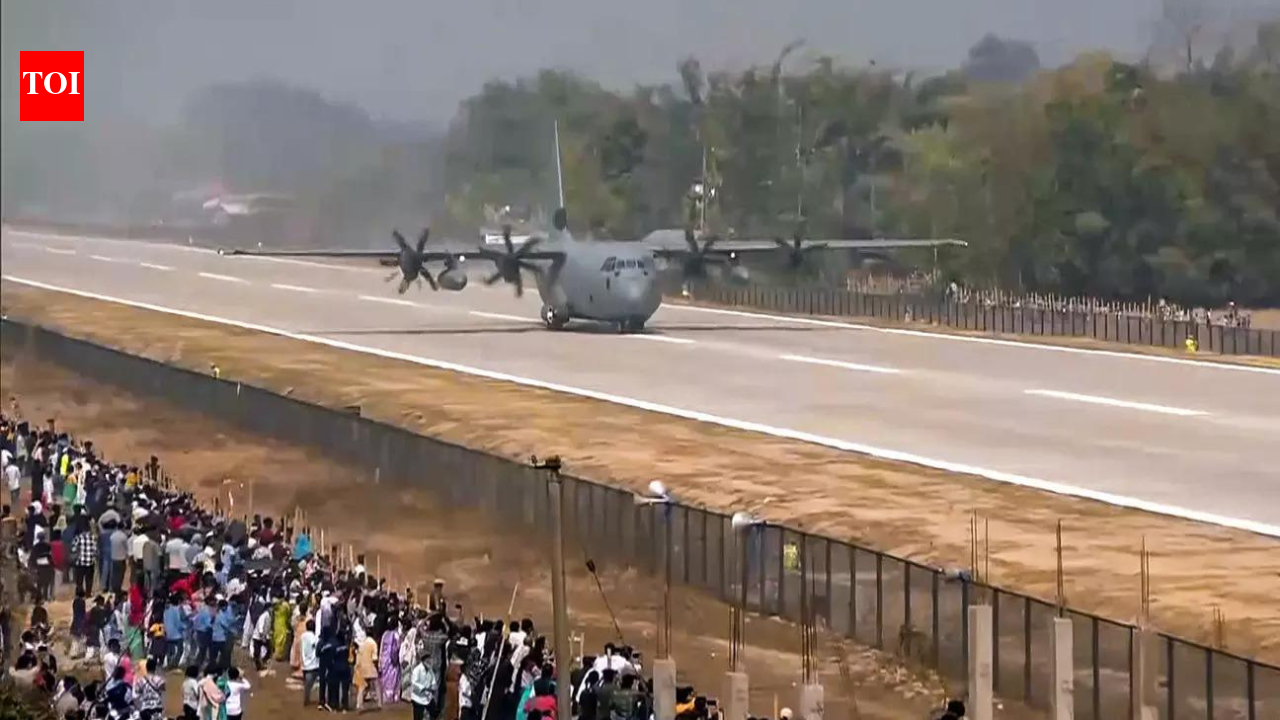
NEW DELHI: The emergency landing facility on the Moran Bypass in Assam’s Dibrugarh marks a significant piece of strategic infrastructure for India. The move has been described by defence officials as a “moment of profound significance” for India’s national security and regional resilience.Landing on the Moran Bypass in an IAF C-130J Super Hercules, Prime Minister Narendra Modi dedicated the 4.2 km reinforced stretch of National Highway 127 to the nation.The inauguration was marked by a sophisticated aerial display featuring Rafale and Sukhoi Su-30MKI fighter jets, demonstrating the highway’s ability to transition from a civilian transit route to a high-performance military runway in minutes.

What is an ELF?

An Emergency Landing Facility is an “alternative runway” engineered directly into the national highway system. Designed in coordination with the Indian Air Force (IAF), these stretches are built with specialised Pavement Quality Concrete (PQC) to withstand the immense heat and weight of modern aviation.The Moran ELF is uniquely equipped as a “dual-use” asset, capable of supporting:

  • Fighter Jets: Heavy combat aircraft up to 40 tonnes.
  • Transport Aircraft: Strategic lifters up to 74 tonnes.
  • Helicopters: Rapid deployment of rotary-wing assets for tactical support.

Strategic deterrence: The LAC factor

Located approximately 300 km from the China border (LAC), the facility serves as a critical “backup” for nearby airbases like Chabua and Tezpur. In a conflict scenario where primary airfields might be targeted, the ELF provides the IAF with essential operational redundancy.By dispersing landing options across the highway network, India effectively creates a “mobile” air defence grid that is significantly harder for an adversary to neutralise than a fixed, static airbase.Beyond its military utility, the ELF is a vital tool for Humanitarian Assistance and Disaster Relief (HADR).The facility opens a reliable air bridge for far-flung areas, allowing heavy transport planes to land life-saving supplies, rescue teams, and medical aid directly into the heart of Upper Assam when time is of the essence.The Moran facility is part of a broader national security initiative and the fourth of the 28 ELF sites across India.With approximately 15 now operational, the grid spans from the deserts of Rajasthan to the expressways of Uttar Pradesh, and now, the strategic borders of the Northeast.


Source link

Rail safety: Spending triples to Rs 1.17 lakh cr in FY26; Kavach expanded, CCTV rollout scaled up


Rail safety: Spending triples to Rs 1.17 lakh cr in FY26; Kavach expanded, CCTV rollout scaled up

Safety expenditure on Indian Railways has nearly tripled over the past decade to Rs 1,17,693 crore in 2025-26 from Rs 39,200 crore in 2013-14, with the national transporter expanding deployment of indigenous train protection system Kavach and rolling out CCTV surveillance across coaches and locomotives, the government said in response to questions in the Rajya Sabha.Safety remains the highest priority for Indian Railways and the stepped-up investments have contributed to a steep decline in accidents over the years, according to information shared in the Rajya Sabha by Railway Minister Ashwini Vaishnaw.

“Reform Express Moving At Speed Under PM Modi” Piyush Goyal On Budget 2026

Trackside implementation of Kavach — an indigenously developed Automatic Train Protection (ATP) system — has been taken up across 23,360 route kilometres, covering the Golden Quadrilateral, Golden Diagonal, High Density Network and other identified sections of the rail network.Kavach assists loco pilots in operating trains within specified speed limits and automatically applies brakes if the driver fails to do so. It also enables safer operations during adverse weather conditions. The system was adopted as the national ATP system in July 2020.After extensive trials, Kavach Version 4.0 has been commissioned across 1,297 route kilometres, including key high-density corridors such as Delhi–Mumbai and Delhi–Howrah. The latest version improves location accuracy, enhances signal information handling in large yards, and enables direct interface with electronic interlocking systems.Indian Railways has also finalised tenders to equip 6,300 electric locomotives with Kavach Version 4.0, while another tender for 2,679 diesel locomotives is under finalisation. More than 48,000 personnel, including about 45,000 loco pilots and assistant loco pilots, have been trained on Kavach technology so far.The cost of providing trackside and station Kavach infrastructure is about Rs 50 lakh per km, while onboard locomotive equipment costs about Rs 80 lakh per loco. Funds utilised on Kavach works till December 2025 stood at Rs 2,573.36 crore, with Rs 1,673.19 crore allocated for 2025-26.Alongside, Indian Railways is expanding onboard surveillance to enhance passenger safety. Around 12,300 coaches — including all operational Vande Bharat and Amrit Bharat train rakes — and 460 locomotives have been equipped with CCTV cameras across the network.The installation of CCTV cameras is aimed at deterring vandalism, theft and other miscreant activities while assisting in incident investigation, with zonal railways and production units undertaking procurement and installation.


Source link

Minor allowed inside poll booth in Maharashtra’s Solapur; SEC suspends polling officer, cop | Mumbai News


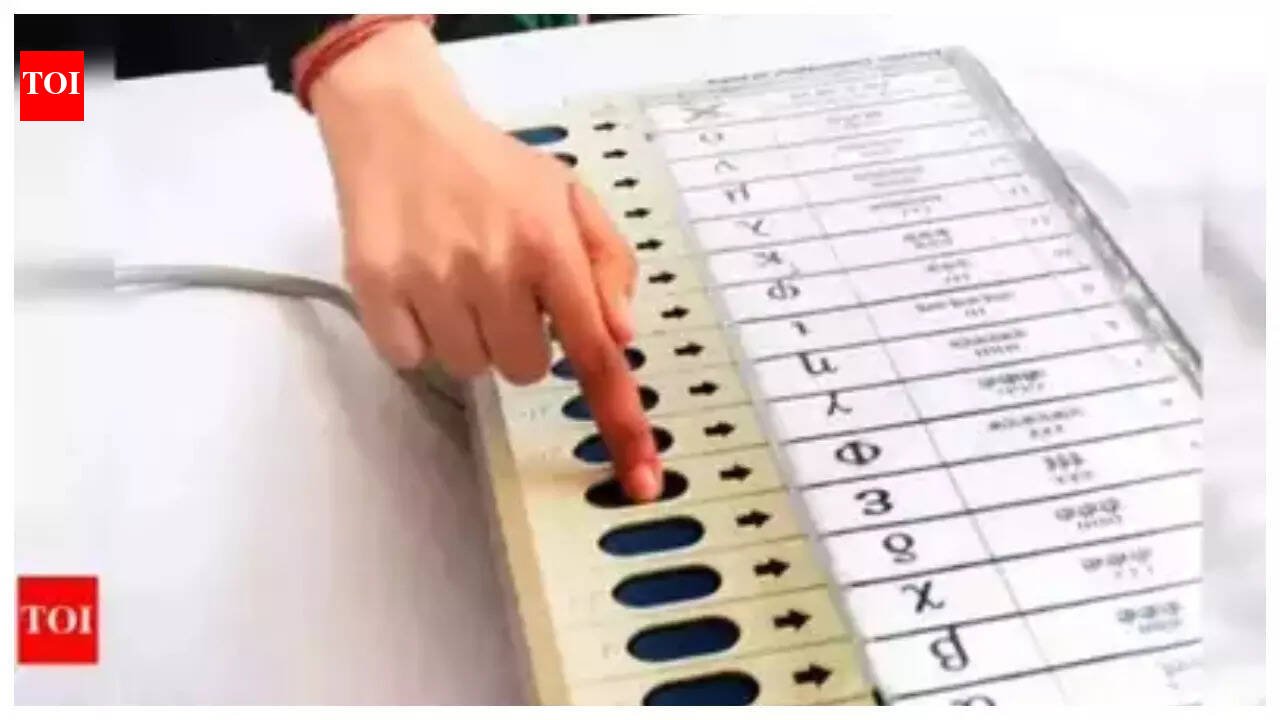
Image used for representative purpose only

MUMBAI: The Maharashtra State Election Commission (SEC) has ordered the suspension of a polling officer and a police constable in Solapur after a minor was allowed inside a polling booth along with his father, a candidate in the Zilla Parishad election. The action follows a video that went viral on social media last week, showing a 14-year-old boy accompanying his father and allegedly casting a vote at the Yashwant Nagar polling station in Akluj during the Zilla Parishad and Panchayat Samiti elections held on February 7. In the video, NCP (SP) candidate Arjun Sinh Mohite Patil’s son is seen standing beside him inside the polling compartment and pressing the button on the EVM. In a letter addressed to the Solapur collector on February 10, the SEC said allowing a child inside the polling compartment amounted to a violation of election rules. According to a preliminary inquiry report, the commission found negligence in the discharge of election duties by polling officer Anna Savata Budhe and police constable Gajanan Sitaram Rajut, who were posted at the booth. The SEC has directed the immediate suspension of both officials and initiated departmental disciplinary proceedings against them. It has also instructed the district administration to submit a detailed compliance report at the earliest. The commission further stated that an FIR has been registered in the matter, naming Mohite-Patil, and asked the collector to provide a factual report on the status of the case and subsequent action taken.


Source link

The ‘Zimbabwe Prophecy’: Why history says Suryakumar Yadav’s India will lift the T20 World Cup 2026?


As the dust settles on Zimbabwe‘s monumental 23-run victory over Australia at the R. Premadasa Stadium in T20 World Cup 2026 on Friday, a startling historical coincidence has gripped the cricketing world. While Zimbabwe are celebrating their clinical dismantling of the world’s number two side, Indian fans are pointing toward a ‘history loop’ that has accurately predicted every major Indian World Cup victory for over four decades.

Why history indicates Suryakumar Yadav’s India will win T20 World Cup 2026?

The statistical anomaly began in 1983, when Zimbabwe, playing their first-ever ODI, shocked the mighty Australians at Trent Bridge by 13 runs. Later that same month, India famously defeated the West Indies at Lord’s to claim their first-ever World Cup. This “Prophecy” resurfaced 24 years later during the inaugural T20 World Cup 2007 in South Africa.

In their opening fixture, Zimbabwe chased down Australia’s target with one ball to spare, sparking a tournament that ended with MS Dhoni hoisting the inaugural T20 trophy in Johannesburg. Now, in 2026, the third chapter has been written. Zimbabwe’s defense of 169 in Colombo, led by Blessing Muzarabani’s 4/17, has not only pushed Australia to the brink of elimination but has reignited the legend of the ‘Zimbabwean Jinx.’ As entrepreneur Ramesh Srivats noted on social media, the pattern is undeniable:

“1983 ODI World Cup: Zimbabwe beats Australia. India wins. 2007 World T20: Zimbabwe beats Australia. India wins. 2026 T20 World Cup: Zimbabwe beats Australia. Complete the sentence…”

The fact that Zimbabwe holds a 100% win record against Australia in T20 World Cup history (2 wins in 2 matches) adds a layer of mystical superiority that seems to serve as the ultimate omen for an Indian triumph.

The pattern is as simple as it is eerie: every single time Zimbabwe defeats Australia in a World Cup, India goes on to lift the trophy. This rare feat has only occurred twice before, in 1983 and 2007, leading many to believe that the stars have officially aligned for Suryakumar Yadav to join the elite company of Kapil Dev, MS Dhoni and Rohit Sharma.

Also READ: Mohammad Amir mocks unwell Abhishek Sharma ahead of IND vs PAK T20 World Cup 2026 clash

T20 World Cup 2026: India’s dominance and Australia’s desperation

Beyond the realm of superstition, the on-field reality for the “Men in Blue” is equally formidable. India currently sits comfortably at the top of Group A with two clinical wins over the USA and Namibia, boasting a tournament-high Net Run Rate of +3.050. Under the aggressive leadership of Suryakumar Yadav, the squad has displayed a balanced lethality, with Hardik Pandya firing as a true all-rounder and Varun Chakravarthy spinning webs around opposition batters.

Meanwhile, the Zimbabwe-Australia result has turned Group B into a graveyard for favorites. Australia, missing the likes of Pat Cummins and Josh Hazlewood for the first time in 15 years, now faces a ‘virtual knockout’ against co-hosts Sri Lanka on February 16. While Pakistan fans hope to break the loop at the R. Premadasa this Sunday, the momentum is firmly with the defending champions. For India, the path to the March 8 Final in Ahmedabad is no longer just about their formidable 15-man squad; they are now backed by a 43-year-old historical ‘prophecy’ that has never been wrong.

India’s Performance in World Cups

Year The Catalyst (ZIM vs AUS) India’s Captain India’s Final Result
1983 Zimbabwe won by 13 runs Kapil Dev Champions
2007 Zimbabwe won by 5 wickets MS Dhoni Champions
2026 Zimbabwe won by 23 runs Suryakumar Yadav TBD (March 8)

Also READ: T20 World Cup 2026: Sunil Gavaskar highlights technical flaw in Sanju Samson’s batting ahead of Pakistan showdown


Source link

Mumbai Metro Pillar Collapse: Portion of under-construction Mumbai Metro pillar collapses in Mulund; 1 dead, 4 injured | Mumbai News


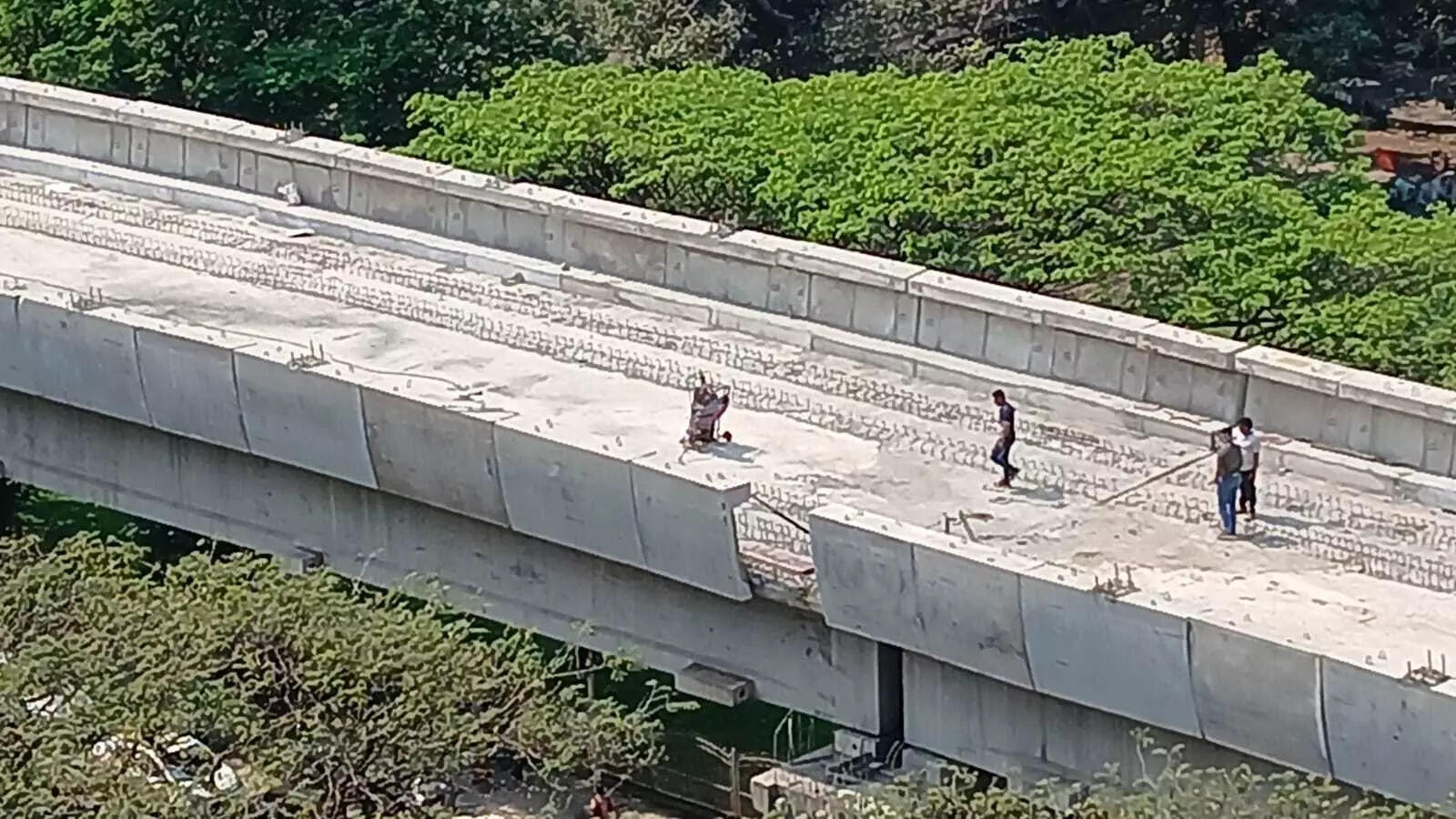
MUMBAI: One person was killed and three others were injured after a portion of a parapet segment from the under-construction Metro Line-4 viaduct collapsed onto an autorickshaw and a car on LBS Road near the Johnson & Johnson Company in Mulund (West) at around 12.20 pm on Saturday.According to the Mumbai Fire Brigade, a concrete piece measuring approximately 6 ft by 4 ft fell onto a moving autorickshaw and a Skoda car.The injured were rushed to Upasana Multispeciality Hospital, where Ramdhan Yadav was declared brought dead. Rajkumar Indrajeet Yadav (45) is in critical condition in the ICU, while Mahendra Pratap Yadav (52) and Deepa Ruhiya (40) are stable.

Image Credit: TOI

Fire brigade personnel, police teams, metro staff, ward officials and 108 ambulance service personnel rushed to the spot and launched rescue operations. Authorities cordoned off the area, and traffic movement on the busy LBS Road stretch was affected for some time.Fire brigade teams, police personnel, metro staff and civic officials carried out rescue operations, and the area was cordoned off, briefly affecting traffic on the busy arterial road.Mulund MLA Mihir Kotecha demanded an inquiry and action against the contractor as well as the officials concerned. Mayor Ritu Tawde said the parapet segment had been installed only a day earlier and that the stretch should have been barricaded, indicating possible negligence.

-

Image Credit: TOI/ Sanjay Hadkar

Shiv Sena (UBT) leader Aditya Thackeray criticised the government over alleged safety lapses at infrastructure sites and questioned whether the contractor would be blacklisted.The work falls under Package CA-10 and is being executed by contractor M/s Rajv-Milan, with project management consultancy by the DB-Hill-LBG consortium. Officials said a detailed probe has been initiated to ascertain the cause of the collapse.Maharashtra CM Devendra Fadnavis ordered a probe into the pillar collapse incident and also announced an ex gratia of Rs 5 lakh for the family of the deceased.


Source link

Noida metro expansion: Cabinet okays Aqua Line extension to Sector 142, 8 new stations to come up


Noida metro expansion: Cabinet okays Aqua Line extension to Sector 142, 8 new stations to come up

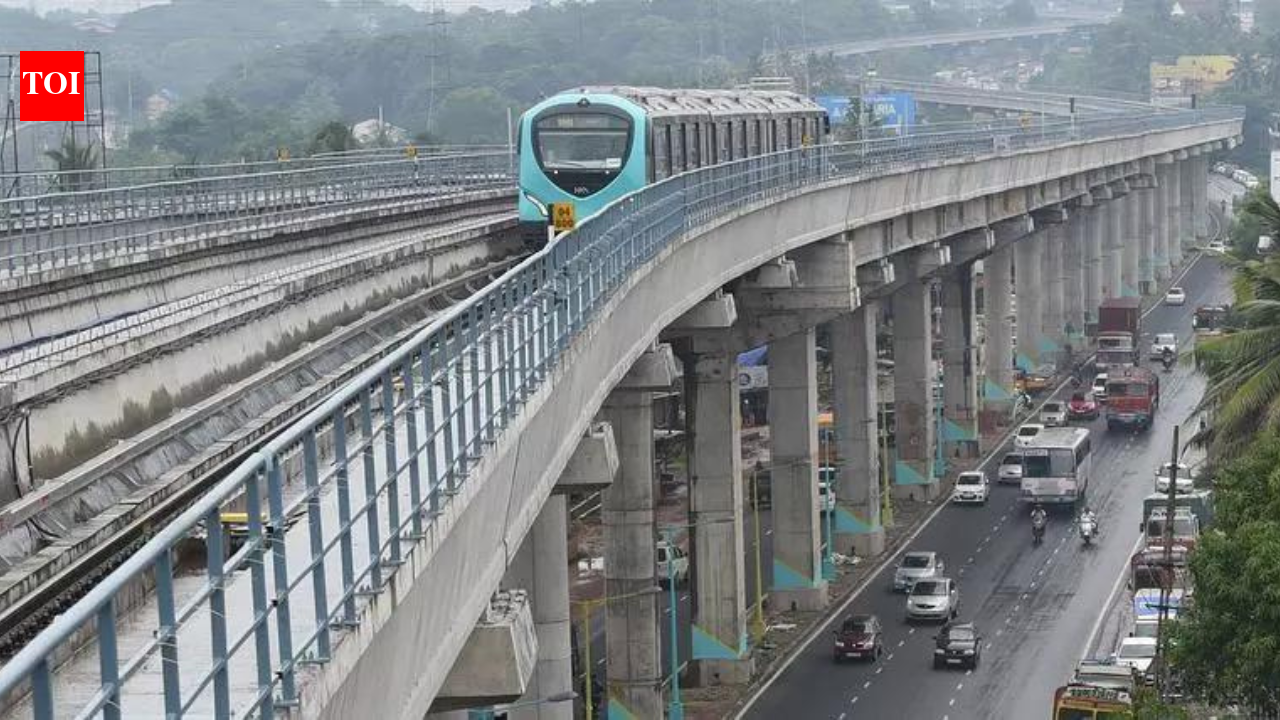
The Union Cabinet has approved the extension of the Noida Metro Aqua Line from Botanical Garden to Noida Sector 142, a move aimed at strengthening urban connectivity in one of the fastest-growing manufacturing and services hubs in the National Capital Region.The project will be implemented by the Noida Metro Rail Corporation Limited (NMRC) and will add 11.6 km of metro network with eight new elevated stations, cabinet minister Ashwini Vaishnaw said.The total project cost has been pegged at Rs 2,254 crore, with an estimated implementation timeline of four years.Botanical Garden will serve as a key interchange station, linking the Noida Metro Aqua Line with the Delhi Metro’s Magenta Line and Blue Line, improving multi-modal connectivity for commuters travelling between Delhi, Noida and Greater Noida.Once completed, the total metro network across Noida and Greater Noida is expected to cross 61 km, significantly enhancing last-mile connectivity and supporting urban and industrial expansion in the region.


Source link

‘Don’t think Abhishek Sharma is technically sound’: Mohammad Amir makes controversial remark ahead of IND vs PAK clash | Cricket News


'Don’t think Abhishek Sharma is technically sound': Mohammad Amir makes controversial remark ahead of IND vs PAK clash
Mohammad Amir makes controversial remark about Abhishek Sharma (Agency Photos)

NEW DELHI: Former Pakistan fast bowler Mohammad Amir has stirred controversy ahead of the India vs Pakistan T20 World Cup 2026 clash by criticising Indian batter Abhishek Sharma, who is currently recovering from illness. With the big match set for February 15 in Colombo, the comments have added extra spice to the rivalry.

What will be India’s playing XI against Pakistan?

Amir questioned Abhishek’s batting ability and called him a one-dimensional player.“By whatever little I have seen, if you ask me honestly, I feel he is just a slogger… I don’t think he is technically sound,” Amir was quoted as saying in a Pakistani show. “He just stands there and wants all balls to be bowled in a particular area. I will consider him a proper batter only when I see that the ball is swinging even slightly and he tackles it well.” Amir also suggested that Pakistani bowlers should target Abhishek with bodyline bowling and slower balls, claiming he lacks patience and technique.Meanwhile, Abhishek has been racing against time to recover from a serious stomach infection that led to weight loss and hospitalisation.Recently, Varun Chakravarthy offered a more positive update, saying, “As far as I have spoken to him he looks good, he did some practice today also. He told me he is on the way.”Abhishek has travelled with the team to Colombo and will undergo final fitness tests. India have made a perfect start to their campaign, having already won both their matches against USA and Namibia, respectively. If they win the game against Pakistan on Sunday, the Men in Blue will qualify for the Super 8s.


Source link