Breaking News
T20 World Cup 2026 [WATCH]: Babar Azam denied fifty as Milind Kumar pulls off a stunning diving catch in PAK vs USA clash


The ICC Men’s T20 World Cup 2026 ignited the Singhalese Sports Club (SSC) in Colombo this Tuesday, February 10, as Pakistan and USA faced off in a high-stakes Group A encounter. While Pakistan set a daunting target, the highlight of the first innings was an extraordinary display of athleticism by American fielder Milind Kumar, whose breathtaking catch sent a well-set Babar Azam back to the pavilion, just four runs short of a half-century.

Milind Kumar’s spectacular diving catch halts Babar Azam’s charge against USA

The momentum was firmly in Pakistan’s favor during the 15th over when Babar looked poised to unleash a late-innings assault. Facing leg-spinner Mohammad Mohsin, Babar attempted to exploit a shorter delivery, looking to drag the ball forcefully into the leg side. However, the former captain didn’t quite get the middle of the bat, resulting in a slight top edge that sent the ball soaring toward the long-on boundary.

What looked like a safe landing zone or a potential boundary was quickly closed down by Milind. Sprinting in with lightning speed from the rope, Milind judged the swirling ball to perfection. In a moment of pure T20 magic, he threw himself forward in a full-length dive, clutching the ball inches above the grass as he tumbled across the turf.

The dismissal (46 off 32 balls) was a massive blow for Pakistan, as Babar had struck four boundaries and a six at a strike rate of 143.75. The catch not only denied Babar a landmark fifty but also provided the USA with a vital breakthrough just as the “Green Shirts” were looking to shift into sixth gear.

Here’s the video:

Also READ: Fans react as Tim Seifert and Finn Allen bulldoze through UAE to seal dominant T20 World Cup 2026 win for New Zealand

Pakistan posts formidable total despite late wicket cluster

Despite the brilliance in the field by the Americans, Pakistan managed to post a robust total of 190/9 in their allotted 20 overs. The innings was characterized by a blistering start and a chaotic finish. Sahibzada Farhan was the standout performer for Pakistan, smashing a rapid 73 off 41 balls, including four towering sixes. His partnership with Babar stabilized the innings after the early departures of Saim Ayub and Salman Agha.

USA’s disciplined bowling in the final stretch, including two run-outs in the last over involving Saurabh Netravalkar and wicketkeeper Andries Gous, prevented Pakistan from crossing the 200-mark. However, with a current run rate requirement of 9.55, the USA faces a steep climb.

Also WATCH: Mark Chapman and Daryl Mitchell combine for a brilliant relay catch to dismiss Alishan Sharafu in NZ vs UAE clash


Source link

ED summons Anil, Tina in Rs 40,000cr bank fraud case | India News


ED summons Anil, Tina in Rs 40,000cr bank fraud case

NEW DELHI: The ED has issued fresh summonses to Anil Ambani of Reliance group and his wife Tina for next week to appear at its headquarters in Delhi for questioning in connection with its ongoing probe of alleged laundering of Rs 40,000 crore by the industrialist and his entities.The ED has already attached Rs 12,000 crore worth of assets of Anil and his Reliance group entities and is in the process of initiating further proceedings for their restitution to banks and other lenders once the authorities allow confiscation of the assets. Anil, who has been questioned once in the ongoing probe last year, has been summoned again on Feb 18, while his wife Tina, who did not appear on the first summons on Monday, has been called again to join the investigation a day earlier, on Feb 17.Meanwhile, Delhi HC has restricted the beleaguered industrialist from creating a third-party interest in the attached assets by further leasing them or creating any other interest. TOI reported on Tuesday the ED has entrusted its investigation against Anil to an SIT constituted on the direction of the Supreme Court to take the probe to its logical conclusion at the earliest.Tina has been called for questioning in connection with the purchase of an apartment in Manhattan in New York. Her name came up during custodial interrogation of Punit Garg, a Anil confidant who was arrested last week.Both CBI and ED, probing Anil and his entities, are looking to file multiple other cases against him since the allegations of diversion of funds concern more than a score of loans he took from different financial institutions. The Manhattan apartment, sources suspect, has been purchased using the alleged proceeds of crime siphoned off from the bank loans Reliance Communication had received from an SBI-led consortium. The ED has come across a network of shell entities involved in money laundering, including the one that received the sale proceeds ($8.3 million) of the NY apartment “remitted from the US under the guise of a sham investment arrangement with a Dubai-based entity controlled by a Pakistan-linked individual”.


Source link

Can’t post clips ‘defaming’ Karan Johar, YouTuber told | Mumbai News


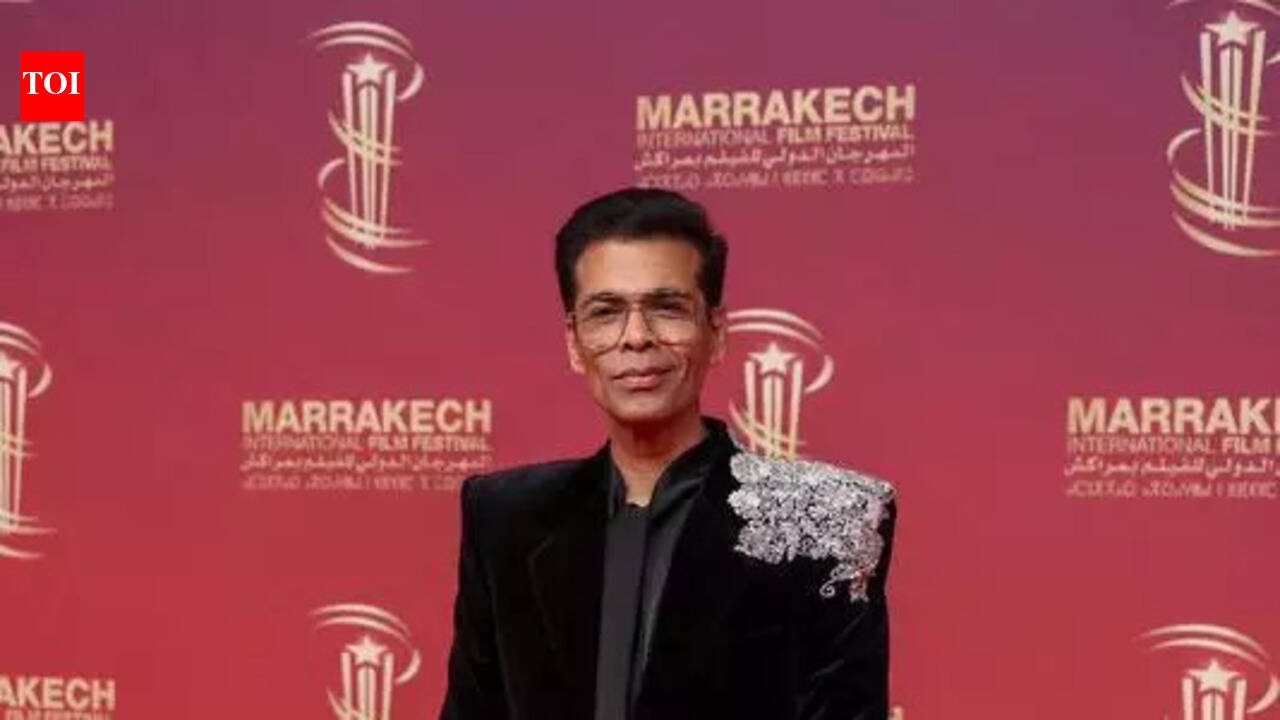
Mumbai: A court has directed YouTuber Ajey Nagar, aka CarryMinati, from making “defamatory, vulgar, and abusive” content about filmmaker Karan Johar. It also asked social media platforms to take down Nagar’s existing videos targeting the filmmaker.Civil judge P G Bhosale passed the interim order in a suit filed by Johar against Nagar. Many other parties, including Nagar’s manager Deepak Char, One Hand Clap Media Pvt Ltd as well as Google and Meta, have been named as defendants.Johar claimed that certain videos circulating on social media sought to ridicule him and damage his reputation and goodwill “painstakingly built over decades”. He sought a temporary injunction to restrain Nagar and his associates from making and uploading such clips. Nagar’s lawyer said he had already deleted the clips and, hence, there was no cause of action left. PTI

Banner Insert


Source link

T20 World Cup: Key all-rounders sidelined as Sri Lanka and New Zealand face injury blow | Cricket News


T20 World Cup: Key all-rounders sidelined as Sri Lanka and New Zealand face injury blow
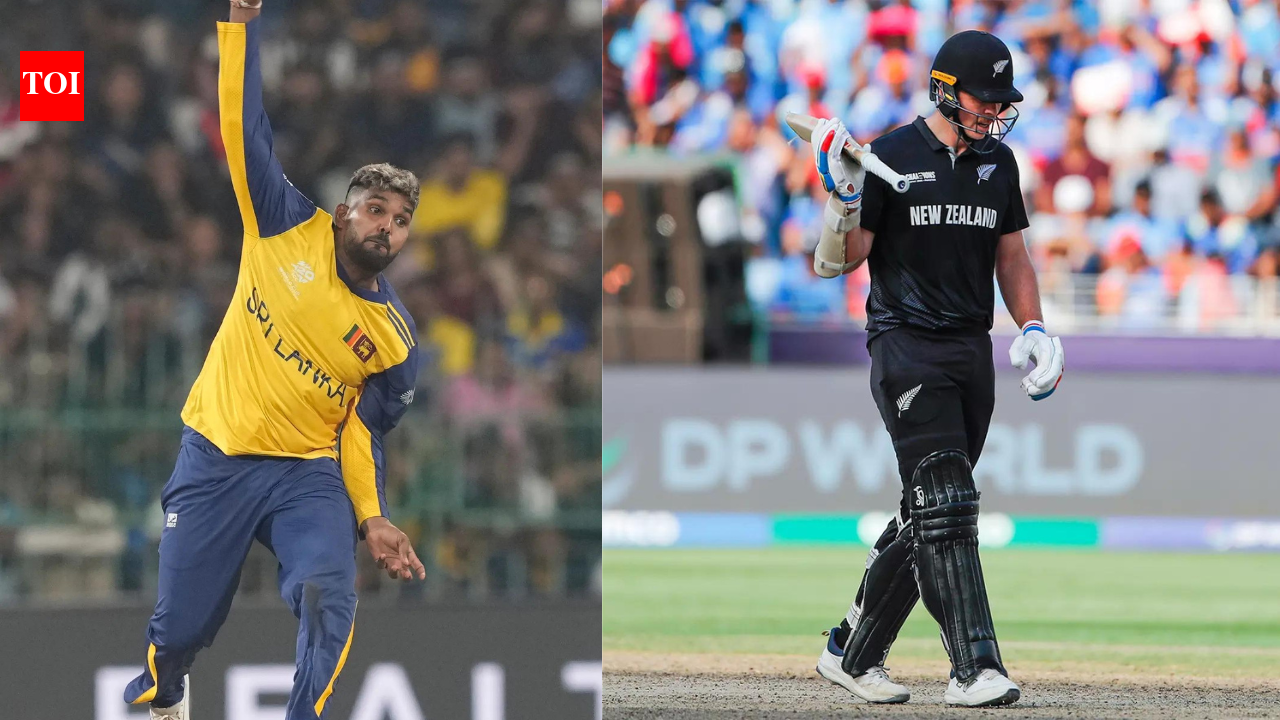
Wanindu Hasaranga and Michael Bracewell (Agency Image)

Sri Lanka and New Zealand have both been hit by injury setbacks in the ICC Men’s T20 World Cup, losing key all-rounders Wanindu Hasaranga and Michael Bracewell for the rest of the tournament. Both teams have acted quickly to name replacements, with Deshan Hemantha joining Sri Lanka and Cole McConchie called into the New Zealand squad. Hasaranga’s campaign ended abruptly after he suffered a hamstring injury during Sri Lanka’s opening match against Ireland in Colombo on Sunday. Despite the early exit, the leg-spinning all-rounder had an impressive outing, taking three wickets for 25 runs in four overs.

Inside India’s net session ahead of T20 World Cup match vs Namibia

However, his condition deteriorated, and an MRI on Monday confirmed a severe tear in his left hamstring. Following a review by a specialist in the UK, Sri Lanka Cricket officially ruled him out, with local reports indicating a recovery period of at least four weeks, effectively ending his World Cup. “The Event Technical Committee of the ICC Men’s T20 World Cup 2026 has approved Dushan Hemantha as Hasaranga’s replacement in the squad. Hemantha has appeared in five ODIs and three T20Is,” the ICC said. For New Zealand, Bracewell suffered a calf injury during warm-ups against Afghanistan in Chennai on February 8, aggravating a pre-existing tear from the third ODI against India last month. Follow-up scans confirmed the severity, with medical advice suggesting around three weeks before he could play again. Cole McConchie will join the squad in India as a travelling reserve alongside pacer Ben Sears, according to New Zealand Cricket. These injuries come at a crucial stage, forcing both teams to adjust their lineups as the tournament progresses.


Source link

3-hr takedown, AI labels: Govt cracks down on deepfakes | India News


3-hr takedown, AI labels: Govt cracks down on deepfakes

NEW DELHI: Cracking down on deepfakes, the Centre has tightened India’s digital rules by mandating compulsory labelling, traceability and user declarations for AI-generated content. It has also sharply cut timelines to take down unlawful content to as little as three hours from 36 hours and placed direct compliance responsibility on social media platforms and their senior officers.For the first time, AI-generated material, including deepfake videos, synthetic audio and manipulated visuals, has been brought under a formal regulatory framework through amendments to the IT intermediary rules. The Information Technology (Intermediary Guidelines and Digital Media Ethics Code) Amendment Rules, 2026 will come into force from Feb 20. The amended rules introduce a statutory definition of “synthetically generated information” (SGI).AI-made, edited posts must carry clear disclosureThe new rules impose mandatory obligations on intermediaries to identify, label and trace AI content. All AI-generated or AI-altered material must carry a clear and prominent disclosure visible to users. Platforms must also embed persistent metadata and unique identifiers to enable traceability of the content’s origin and the tools used to create it. Once applied, these disclosures cannot be altered, hidden or removed.The rules exclude routine edits such as colour correction, noise reduction, compression or translation, as long as they do not change the meaning. Clearly hypothetical or illustrative drafts are exempt.Large social media platforms face stricter compliance requirements. Before any content goes live, platforms must ensure users declare if it is AI-generated. Intermediaries must deploy automated tools to verify these declarations by analysing the content’s format, source and characteristics. If content is identified as synthetic, visible labelling becomes mandatory. Platforms that knowingly allow unlabelled AI-generated content to remain online will be treated as having failed their due-diligence obligations.The rules also compress response timelines. Certain lawful takedown orders must now be complied with within three hours, compared to 36 hours earlier. Other deadlines have been tightened, with a 15-day window reduced to 7 days and a 24-hour window cut to 12 hours. Platforms must acknowledge user grievances within two hours and resolve them within seven days.Oversight and enforcement will rest with the ministry of electronics and information technology, while users can appeal platform decisions to the grievance appellate committee.Misuse of SGI linked to child sexual abuse material, obscene content, false electronic records, impersonation using a real person’s identity or voice, or explosives-related material will attract action under multiple criminal laws.Platforms must also warn users at least once every three months about penalties for misuse of AI-generated content.


Source link

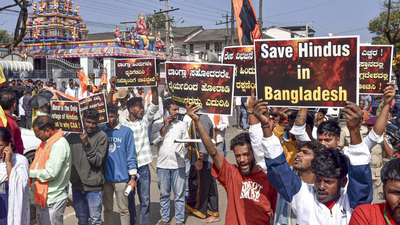
Days ahead of elections, another Hindu man is killed in Bangladesh


Days ahead of elections, another Hindu man is killed in Bangladesh

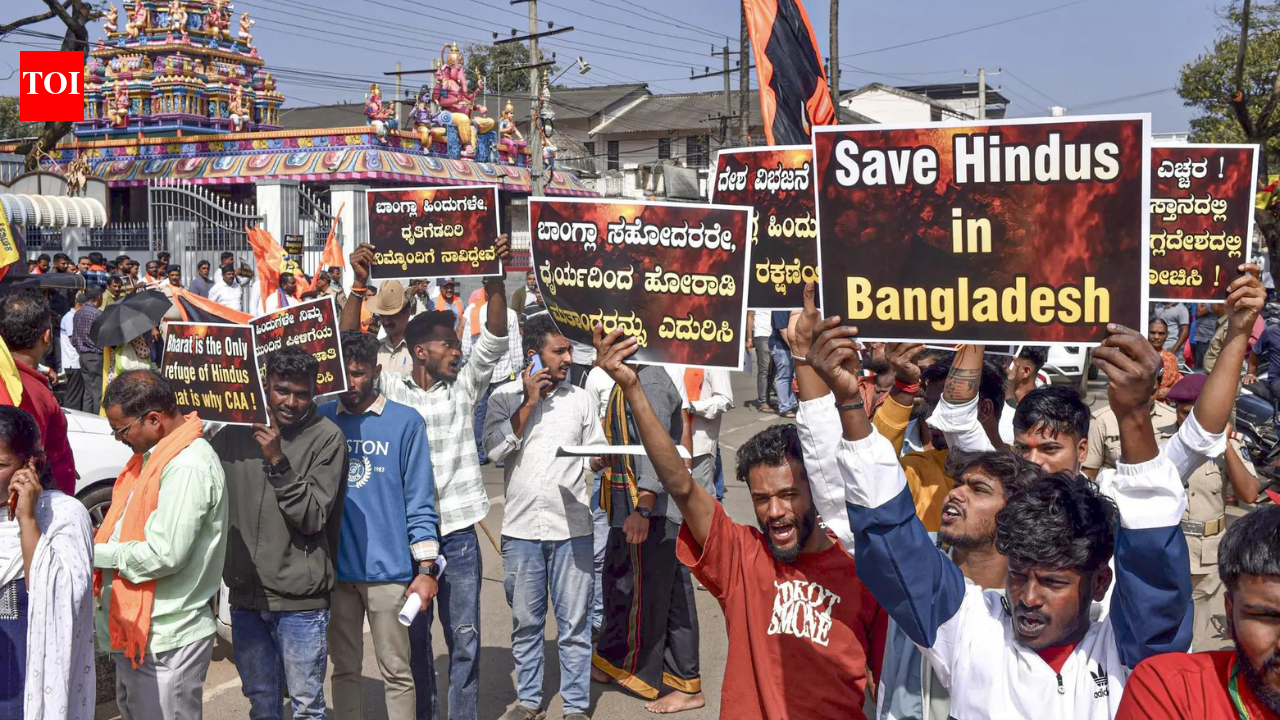
DHAKA: Amid growing fear among minority communities ahead of the Feb-12 twin elections, a 62-year-old rice trader, Susen Chandra Sarkar, was brutally hacked to death inside his shop in Trishal upazila of Mymensingh.Police said unidentified assailants attacked Sarkar with a sharp weapon, killing him before locking the shop from outside and fleeing the scene. Family members later found him lying in a pool of blood.“After brutally killing my father, the miscreants looted several lakhs of taka from the shop,” Sarkar’s son, Sujan Sarkar, told the reporters. He also said their family had been running the rice business for many years and had no known disputes or enmity with anyone.According to Trishal police station officer-in-charge Muhammad Firoz Hossain, the murder occurred around 11pm on Monday at the Bogar Bazar intersection. Sarkar was rushed to Mymensingh Medical College Hospital, where doctors declared him dead.The International Crisis Group sees a “real danger” of further attacks on candidates, as well as reprisals against Awami League supporters or Bangladesh’s Hindu minority.Meanwhile, the interim govt is providing financial and housing assistance to the family of Dipu Chandra Das (Dipu Das), who was beaten and burnt to death in Square Masterbari area of Bhaluka Upazila in Mymensingh district on Dec 18, 2025. As Dipu Das was the sole breadwinner, the govt has assured comprehensive financial assistance for the family, including the construction of a permanent home.


Source link

Mustafizur Rahman posts one-word message, trophy in hand | Cricket News


Mustafizur Rahman (AP Photo)

NEW DELHI:Bangladesh allrounder Mustafizur Rahman took to social media on Tuesday to share a celebratory moment, posting a picture with the winner’s trophy after Dhumketu XI clinched the Odommo Bangladesh T20 Cup title. The triumph came at the Shere Bangla National Stadium in Mirpur, where Dhumketu XI edged past Durbar XI in a tense final.Mustafizur was released from Kolkata Knight Riders ahead of the Indian Premier League (IPL) 2026 season.

Why is Ahmedabad likely to be the sporting capital of India? | Bombay Sport Exchange

“Alhamdulillah”, Mustafizur wrote.Dhumketu XI sealed the title with a narrow seven-run win, successfully defending 208 in a high-scoring 20-over final. The night belonged to Tanzid Hasan, whose match-winning innings (88 not out off 54 balls) earned him the Player of the Match award.Asked to bat first, Dhumketu XI were powered by a commanding opening partnership between Saif Hassan and Tanzid. Saif set the tempo with a fluent 79 off 44 balls, striking seven sixes as the pair put Durbar’s bowlers under sustained pressure. Their 149-run stand inside 13.1 overs laid the foundation for a big total.Following Saif’s dismissal to Hasan Mahmud, Tanzid assumed the anchor’s role with composure. He remained unbeaten on 88 from 54 deliveries, peppering the boundary eight times and clearing it on four occasions. Late cameos from Litton Das, who smashed 15 off seven balls, and Towhid Hridoy, who added an unbeaten 13, lifted Dhumketu XI to an imposing 208/3.In reply, Durbar XI began aggressively, with Habibur Rahman Sohan blasting 67 from just 27 balls. His assault threatened to swing the contest, but Mustafizur’s timely breakthrough brought Dhumketu back into the game. Durbar continued to fight through Nurul Hasan’s steady 54 and Afif Hossain’s unbeaten 60.The chase went down to the wire, but Mustafizur kept his composure in the closing overs, returning figures of 2 for 33. With Rishad Hossain also striking at a crucial moment, Durbar XI were restricted to 201/5.Tanzid Hasan’s unbeaten knock ultimately proved decisive as Dhumketu XI held their nerve to clinch a memorable title win.


Source link

FB post doesn’t name PM or refer to him: UK doc | Mumbai News


Mumbai: UK-based doctor and YouTuber Sangram Patil, who has challenged an FIR and a lookout circular issued against him for posts against BJP leaders, has told Bombay high court that his Facebook post did not mention Prime Minister Narendra Modi by name.In his rejoinder to Mumbai police’s reply, Patil said although he had posted a particular post on FB, “it is categorically denied by me that the said post mentions the Prime Minister of India by name, or makes any direct or indirect reference identifiable exclusively to the Prime Minister”. Patil was intercepted at Mumbai airport upon his arrival on Jan 10 and questioned. On Jan 19, he was stopped from leaving India. Patil’s affidavit said to date, the lookout circular has not been furnished to him. He submitted documentary and oral evidence regarding his post during the investigation. Therefore, he said, “there is no need for any further investigation in this respect”. He also “emphatically” denied committing any offence or being part of any larger conspiracy or “that I fund or that I am being funded by any organisation or individual for this purpose”. These are not issues mentioned in the FIR and “police do not have the jurisdiction to expand the investigation beyond the post”, he said. Police’s intent to “catch hold of my other (digital) devices and implicate me in similar false cases is evident from the fact that they are asking irrelevant information and instruments”, he said. Patil said allegations of “promotion of enmity” are baseless and legally unsustainable. For such an offence, the sine qua non (the essential condition) is the existence of two or more identifiable groups and an act which promotes or attempts to promote hatred between six definite groups based on religion, race, language, region, caste or community, he said. “Police are attempting to innovate a new group of followers and non-followers of a political leader...” he added.

Banner Insert


Source link

Compliance takes centrestage in boardrooms


Compliance takes centrestage in boardrooms

MUMBAI: For Indian companies with a global footprint, navigating regulatory complexity has moved from the sidelines to the centre of corporate strategy. Rules on trade, tariffs, the environment, labour, data, and taxation are changing rapidly and increasingly shaping business outcomes.Import restrictions, carbon taxes, anti-dumping duties, subsidies, and localisation norms are altering cost structures, market access, and competitiveness, directly affecting product pricing, profit margins, and capital allocation. Companies now factor regulation into core business planning, rather than treating it as a compliance exercise. Tata Steel‘s management, which oversees operations in India, the UK, the EU and Canada, highlighted this in a recent earnings call. Managing regulatory complexity, CFO Koushik Chatterjee said, has become a strategic imperative across geographies. He pointed to Tata Steel’s Netherlands operations as an example. During 9MFY26, the unit reported operating profit of 210 million euros after absorbing carbon emission-related costs of 150 million euros and an impact of 50 million euros from US tariffs. Without these regulatory-linked costs, operating profit would have topped 400 million euros-showing how policy has weighed on the bottom line.Smaller players face similar pressures. Jyoti Steel Industries partner Pankaj Chadha said fast-changing regulations leave little room for manoeuvre, often forcing companies to rely on customers for real-time intelligence. In one case, a Mexican customer told him Japanese steel was cheaper than Indian steel due to a zero-duty trade arrangement versus a 35% import duty on Indian steel. “Can you believe Japanese steel was cheaper than Indian steel? I had never heard of it until then. Understanding and incorporating regulations is now part of the business. Meetings start with this,” said Chadha, also chairman of engineering exports body EEPC.Law firm Sarvaank Associates founder Ankita Singh calls this the start of an era of “regulated strategy,” where navigating the global legislative maze becomes a competitive advantage. “Regulatory risk is no longer a cost centre but a survival metric, prompting boards to move from a ‘wait and see’ approach to a ‘preventive vigilance’ model, embedding compliance into the very architecture of products and supply chains,” she said. Madhavan Srivatsan, senior partner at Emerald Law, concurs. “Gone are the days when Indian companies treated regulatory issues lightly,” he said. “With increased regulatory scrutiny, mandatory self-reporting obligations, and the risk of stringent penalties, compliance is now one of the most critical functions.” Responsibility is also moving up the management chain. “Any instance of non-compliance can expose directors to civil and even criminal liability, in some cases on a strict liability basis where intent is irrelevant,” Srivatsan said. While conditions have improved for Tata Steel’s Netherlands unit after the EU imposed carbon costs on emission-intensive imports from Jan 1, the same measures have raised costs for India’s exports of steel, cement, aluminium and fertilisers to the bloc. From June, the EU will also cut import quotas and raise duties on volumes above those limits from 25% to 50%, further favouring domestic producers. Meanwhile, Chadha hopes India cuts a trade deal with Mexico.


Source link

Exporters not sweating over US-Bangladesh trade deal


Exporters not sweating over US-Bangladesh trade deal

NEW DELHI: Bangladesh on Monday secured 19% reciprocal tariff from the US under a trade agreement, while managing some exemptions from reciprocal tariffs for textiles and garments manufactured using American material. While Indian exporters are keeping a close watch on the details – especially after some of the stocks took a beating – they are not unduly worried.The reduction in the reciprocal tariff from 20% to 19%, compared with 18% for India, widens the price gap between garments made in Bangladesh and those produced here due to lower wage cost across the border.But the exemption from reciprocal tariffs for Bangladesh-made garments using US cotton and man-made fibre, is unlikely to provide a major edge as it will involve transportation cost and the spinning industry in and around Dhaka is not very competitive.“It was struggling until a few months ago. A large part of the global trade uses man-made fibre. So, we do not have much reason to worry,” said Premal H Udani, CMD of Kaytee Corporation.Industry estimates suggest that cotton accounts for around 20% of the overall cost and the duty benefit will only be on that component.“Let’s wait for the fine print. It doesn’t look alarming,” said Pearl Global Industries MD and group president Pallab Banerjee.Udani said that many international buyers are looking to diversify their sourcing, given the political uncertainty in Bangladesh and India can take advantage of that.“There is nothing to worry, we have got a good deal from the US. In fact, even for India cotton for re-export can be considered for concessions, if there is a 20% value addition,” said A Sakthivel, chairman of the Apparel Export Promotion Council.Trade research body GTRI said in 2024, Bangladesh exported 63% of its over $50 billion garments to Europe and around 15% went to the US. “In practical terms, a Bangladeshi garment that normally faces a 12% US MFN tariff would attract a total duty of 31% (12% MFN + 19%. For India, the comparable total would be about 30% (12% MFN + 18% reciprocal). But, Bangladeshi garments made with US fibres would avoid the reciprocal duty, paying just the 12% MFN tariff. While this appears to be a significant concession, Bangladesh’s export structure and its heavy dependence on non-US textile inputs mean the arrangement is likely to result in only a limited increase in garment exports to the US,” it said.Besides, it said Bangladesh agreed to offer too many concessions to bag this deal from the US, opening up its market US machinery, chemicals, energy goods, soy, dairy, beef and cotton and has also committed to buy about $3.5 billion of US farm products, energy and aircraft.


Source link