Breaking News
‘Sacred institution should not be linked’: Kiren Rijiju defends Dalai Lama amid alleged Epstein connection | India News


'Sacred institution should not be linked': Kiren Rijiju defends Dalai Lama amid alleged Epstein connection
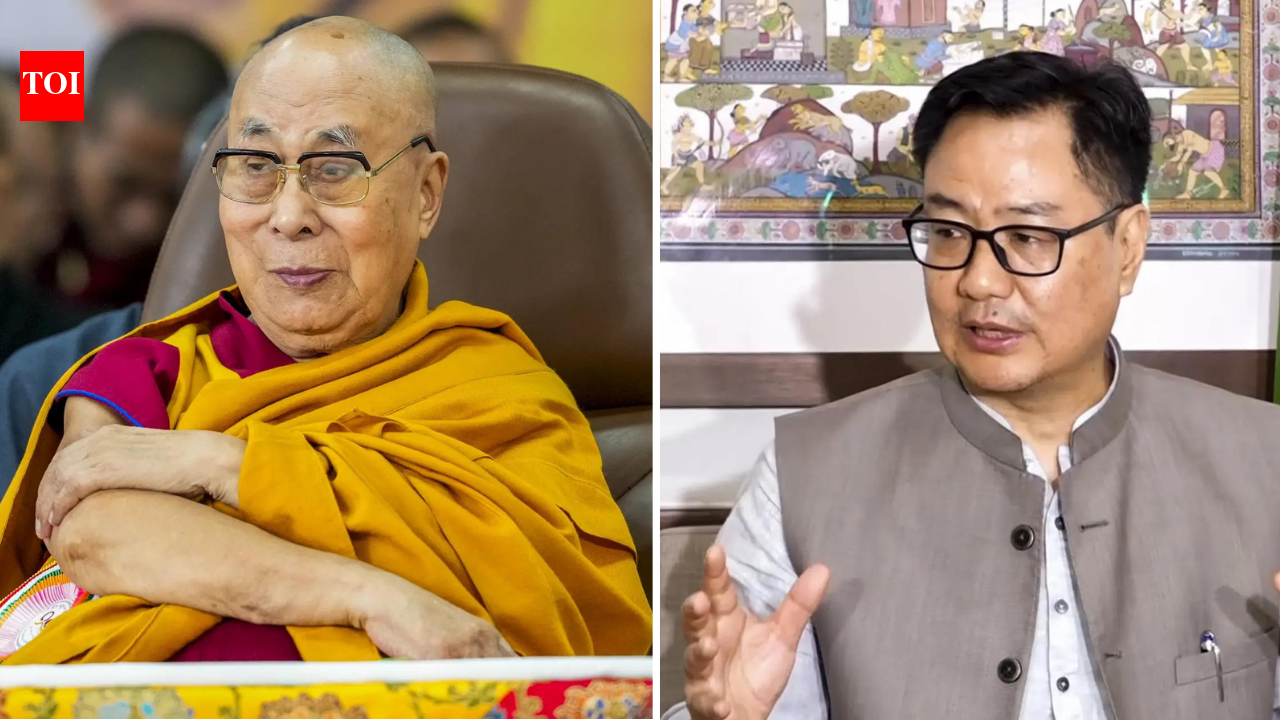
Dalai Lama and Kiren Rijiju (Images/Agencies)

NEW DELHI: Union minority affairs minister Kiren Rijiju on Sunday cautioned against linking the Dalai Lama with the recently released Epstein files. He said that the revered spiritual institution should not be dragged into unrelated controversies to malign its sanctity.In a post on X, Rijiju said, “The revered institution of ‘The Dalai Lama’ should not be casually linked with the ‘Epstein Files’ or any other issues, with the motive of damaging the sacred institution. We shouldn’t become the casualties of immoral-lifestyle, hookup-culture and unconventional-relationships.”Rijiju’s remarks came amid renewed global debate following the latest release of documents related to disgraced financier Jeffrey Epstein by the US Justice Department. The release has brought a fresh set of prominent names into public discussion, including political leaders, business figures and public personalities, triggering widespread scrutiny and speculation.His statement followed a clarification issued by the office of the Dalai Lama, which firmly denied any association with Epstein. Responding to reports suggesting that the Tibetan spiritual leader’s name appeared in the files, the Dalai Lama’s office said there was no basis to such claims.“Some recent media reports and social media posts concerning the ‘Epstein files’ are attempting to link His Holiness the Dalai Lama with Jeffrey Epstein. We can unequivocally confirm that His Holiness has never met Jeffrey Epstein or authorised any meeting or interaction with him by anyone on His Holiness’s behalf,” the statement said.The latest tranche of documents, released in late January under the Epstein Files Transparency Act, runs into more than three million pages. It includes over 2,000 videos and around 1,80,000 images, making it the largest and final scheduled disclosure of federal material related to Epstein and his associates.The files have referenced or mentioned several high-profile individuals, including US President Donald Trump, Microsoft co-founder Bill Gates, billionaire Elon Musk, Britain’s Prince Andrew, former US Treasury Secretary Larry Summers, musician Michael Jackson and actor Kevin Spacey, among others.Legal experts and victim advocates have repeatedly stressed that being named in the documents does not imply criminal wrongdoing. They highlighted that the material includes a wide range of records such as contact lists, correspondence, travel logs and third-party references, many of which do not establish any involvement in Epstein’s crimes.Epstein was arrested in 2019 on sex-trafficking charges and later died in custody. The document release is part of efforts by US authorities to address sustained public pressure for transparency. Under the Transparency Act, the Justice Department was required to disclose relevant investigative material, with redactions to protect victims and sensitive information.


Source link

Access Denied


Access Denied

You don’t have permission to access “http://www.ndtv.com/world-news/sri-lankan-man-in-canada-accused-of-harassing-and-filming-strangers-without-consent-arrested-10969880” on this server.

Reference #18.7c392017.1770559006.148b6201

https://errors.edgesuite.net/18.7c392017.1770559006.148b6201


Source link

‘If the Indian team had been all out for just 100’: Virender Sehwag after India’s T20 World Cup win over USA | Cricket News


'If the Indian team had been all out for just 100': Virender Sehwag after India's T20 World Cup win over USA
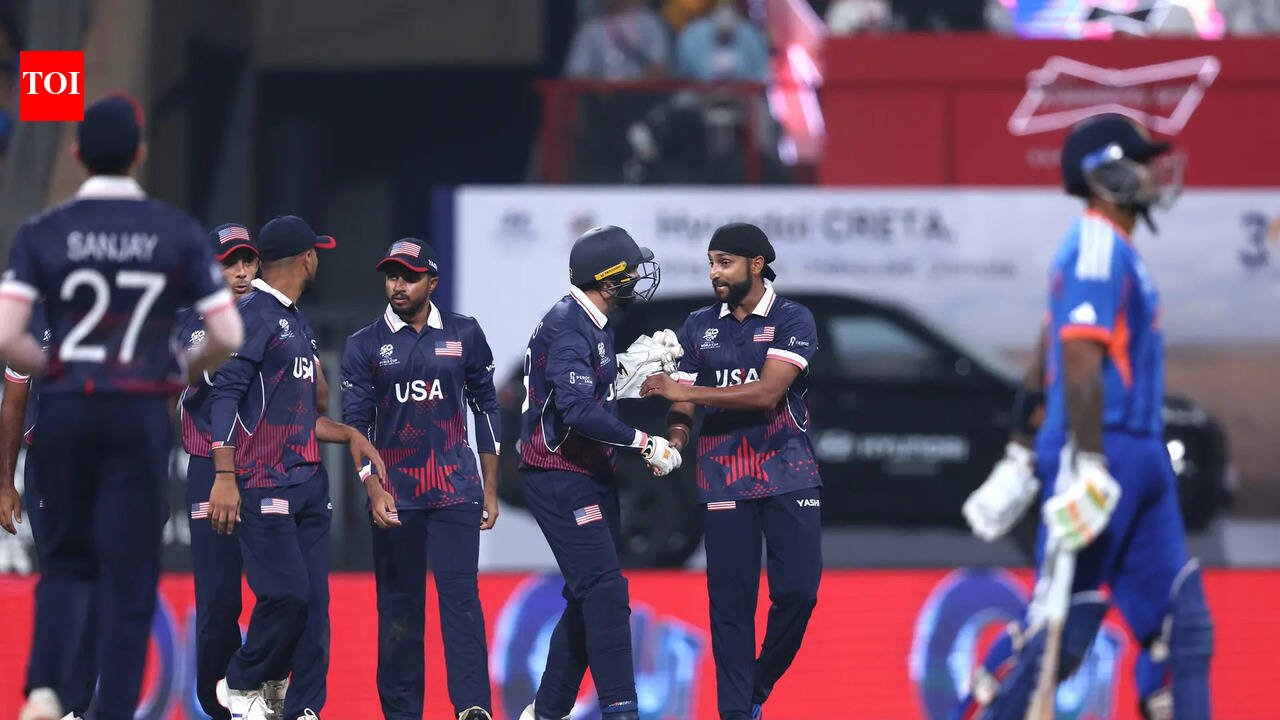
India vs USA (Photo by Pankaj Nangia/Getty Images)

Former Indian cricketer Virender Sehwag praised Suryakumar Yadav for playing a match-winning innings against the USA in India’s opening game of the ICC Men’s T20 World Cup at the Wankhede Stadium on February 7. India won the match by 29 runs, thanks largely to their captain’s calm and powerful batting under pressure.India had a shaky start while batting first and were struggling at 77 runs for 6 wickets. At that point, things could have gone badly, but Suryakumar held his nerve and played a brilliant unbeaten knock of 84 runs off 49 balls, hitting 10 fours and 4 sixes. His innings helped India reach a respectable total of 161/9 in 20 overs.

Suryakumar Yadav, the captain, has best horoscope | Greenstone Lobo predicts

Ishan Kishan and Tilak Varma also chipped in with quick runs, while USA bowlers Shadley van Schalkwyk and Harmeet Singh impressed with the ball.Sehwag called Suryakumar’s knock one of the best of his career, explaining how important it was in the match situation. He said, “Imagine if the Indian team had been all out for just 100, we wouldn’t have said that a weak team like the USA beat India. They have also qualified for the World Cup. That’s why I feel it was one of the best knocks of Suryakumar Yadav’s career. I always say, focus on the ball and not the bowler, because if it pitches in the right area, you have to respect it. If you go for your shots on a good ball, you might get out.”Sehwag also praised the USA bowlers for putting India under pressure, saying, “Take this USA team, we had heard very little about some of these bowlers, but they were able to reduce India to 77 for 6, which I don’t think any other team has managed in the last two to two-and-a-half years. So, hats off to Suryakumar Yadav, he played extremely well.”In reply, the USA scored 132/8, with Milind Kumar, Sanjay Krishnamurthi, and Shubham Ranjane putting up a fight. Indian bowlers Mohammed Siraj, Axar Patel, and Arshdeep Singh took key wickets to seal the win.


Source link

T20 World Cup: England survive Nepal scare; register 4-run win in last over thriller | Cricket News


T20 World Cup: England survive Nepal scare; register 4-run win in last over thriller
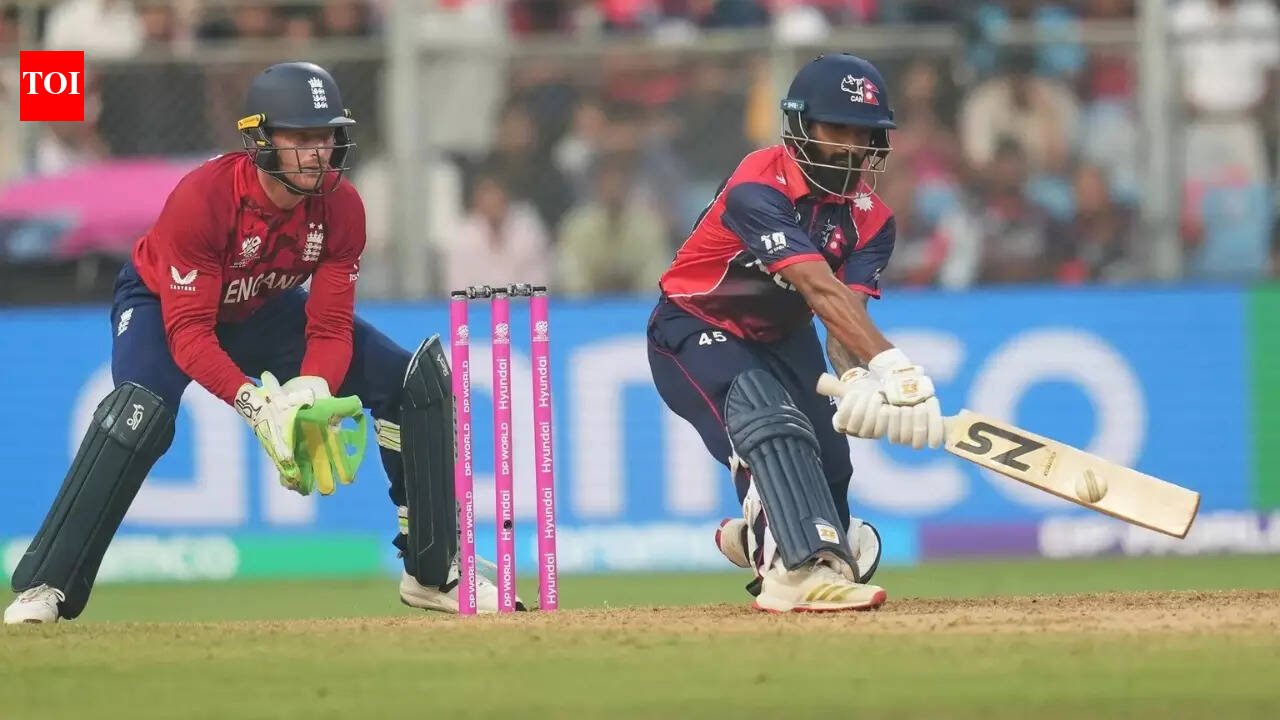
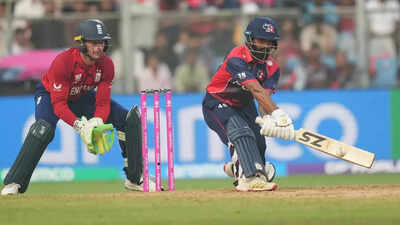
Nepal’s Dipendra Singh Airee plays a shot during the T20 World Cup cricket match between England and Nepal in Mumbai, India, Sunday,Feb. 8, 2026.(AP)

NEW DELHI: England survived a late scare from Nepal to begin their T20 World Cup campaign with a narrow four-run win on Sunday at Mumbai’s Wankhede Stadium, but the result did little to hide how close the associate side came to scripting a landmark upset.Chasing 185, Nepal needed 10 runs from the final over, but Sam Curran did not let set batter Lokesh Bam even a single boundary in the last six balls. Nepal stayed in the contest till the very end, pushing England to the brink before falling just short.Chasing 185 for a win, Nepal ended at 180 for 6 with Lokesh remaining not out on 39 off 20 balls with the help of four boundaries and two sixes.Dipendra Singh Airee scored a 29-ball 44 while captain Rohit Paudel chipped in with 39 off 34 balls.Earlier, England scored 184 for seven against Nepal in their opening game of the T20 World Cup.Batting first, England saw Jacob Bethell (55 off 35 balls) and Harry Brook (53 off 32 balls) make significant contributions with the bat after opener Phil Salt was dismissed early at the Wankhede Stadium.Will Jacks remained not out on 39 off 18 balls.


Source link

Aadhaar update drive: UIDAI completes 1 crore biometric updates for school children


Aadhaar update drive: UIDAI completes 1 crore biometric updates for school children

Aadhaar custodian UIDAI has completed mandatory biometric updates (MBU) for over one crore school children across 83,000 schools nationwide, according to an official statement.A child below five years can enrol for Aadhaar using photograph, name, date of birth, gender, address and birth certificate. However, fingerprints and iris biometrics are not captured at this stage as these indicators are not fully developed, PTI reported. Providing fingerprint and iris data through the MBU process after crossing the ages of five and 15 years is therefore mandatory.Lack of MBU in Aadhaar may lead to difficulties in authentication for availing benefits under various government schemes, as well as while registering for competitive and university examinations such as NEET, JEE and CUET.“The UIDAI has crossed the milestone of completing over one crore Mandatory Biometric Updates (MBUs) for school-children studying in 83000 schools across the country,” the statement said.UIDAI has made MBU free for children aged between seven and 15 years from October 1 for a period of one year.“UIDAI had initiated this special MBU drive for school-children in September 2025 after a successful technological integration with the Unified District Information System for Education Plus application, that enabled visibility of MBUs status of children at schools. This breakthrough helped the UIDAI and schools to jointly identify children who were due for an MBU, and hold camps at schools to complete the MBU,” the statement said.UIDAI CEO Bhuvnesh Kumar has written to Chief Secretaries of all states and Union Territories, seeking support for conducting focused MBU camps in schools.“The mission mode campaign continues to be operational till such time all schools in the country are covered. This initiative has already benefited 1 crore children in 83,000 schools and many more are set to gain from it,” the statement said.Apart from school camps, children can also complete MBU at Aadhaar enrolment centres and Aadhaar Seva Kendras across the country.“About 1.3 crore MBU transactions have also been completed in the same period, by children visiting these centres,” the statement said.


Source link

Trump removes 25% penal tariff: What happens if India stops buying Russian crude oil?


Trump removes 25% penal tariff: What happens if India stops buying Russian crude oil?
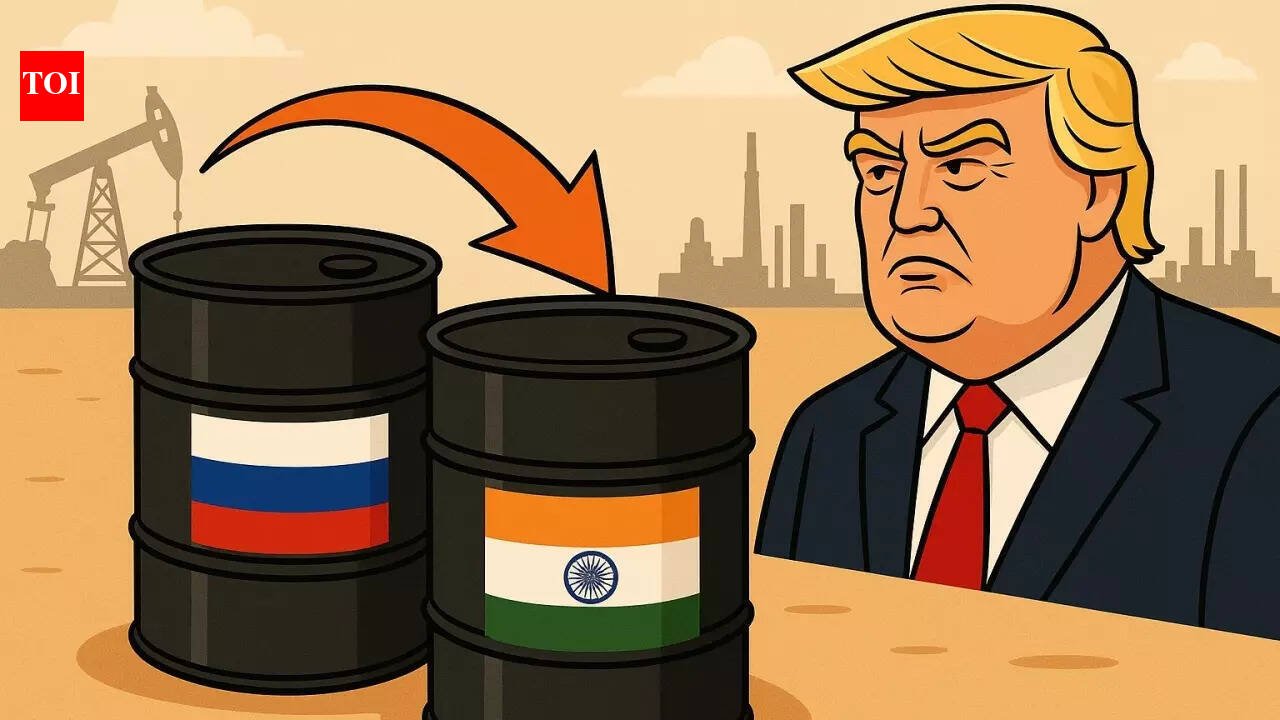
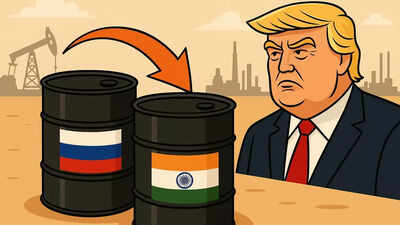
During much of 2024 and 2025, India was one of the largest purchasers of discounted Russian oil. (AI image)

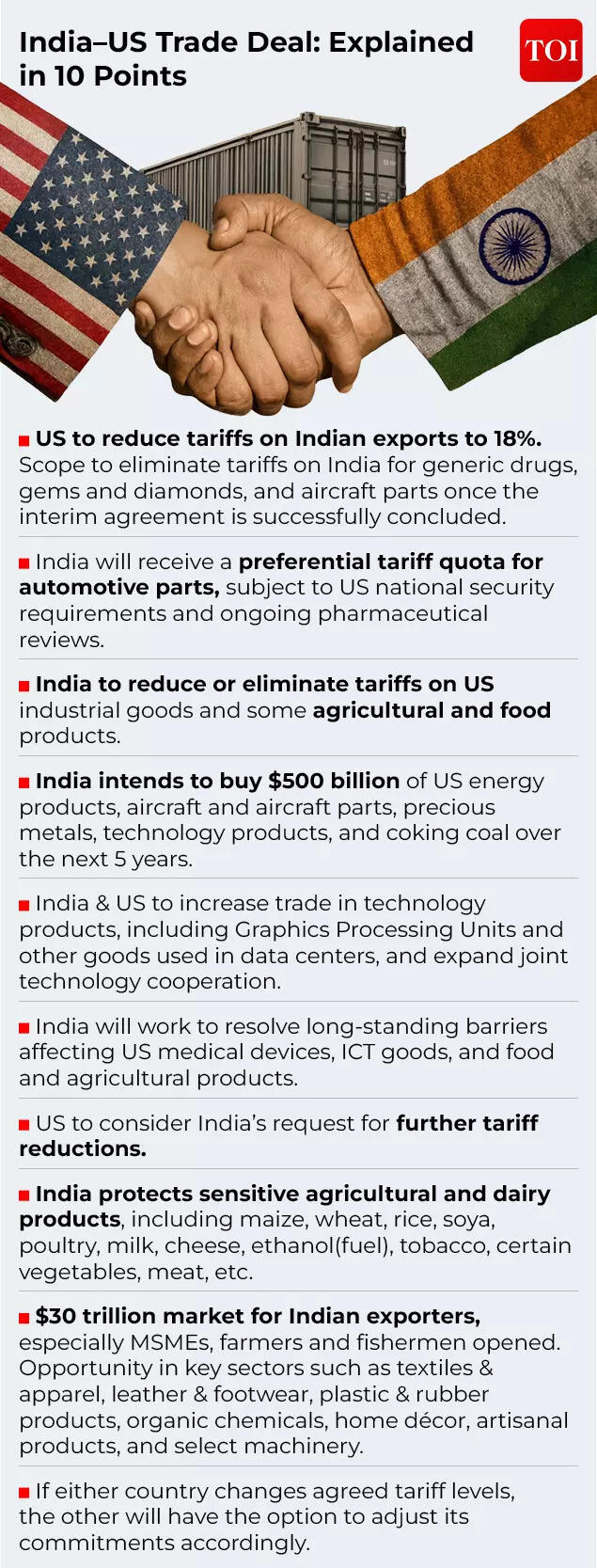
Will India stop buying Russian crude oil? US President Donald Trump has signed an executive order revoking the 25% penal tariffs on India for its imports of crude from Russia. However, the executive order clearly says that this 25% penal tariff may be restored if India doesn’t stop buying oil from Russia. With the removal of 25% penalty tariff and the reduction in reciprocal tariff, Indian exports to the US will now face a duty of 18%.A key element of the understanding, according to Trump, is India’s commitment to stop both direct and indirect imports of Russian crude oil, a move Washington considers essential to increasing economic pressure on Moscow over the conflict in Ukraine. While the executive order says that India has committed to ending direct or indirect imports of Russian oil, New Delhi has reiterated that safeguarding the energy needs and security of its 1.4 billion citizens remains its foremost priority.

India-US Trade Deal Explained: What The White House Says On Tariffs, Markets And Tech Shifts

During much of 2024 and 2025, India was one of the largest purchasers of discounted Russian oil, with imports of over two million barrels per day at their peak.

India-US Trade Deal In 10 Points

Will India stop buying Russian crude?

Government sources, referring to a recent Ministry of External Affairs statement, told TOI that India’s strategy centres on diversifying energy supplies in line with market conditions and evolving global developments, and that all decisions are guided by this objective.According to a PTI report, while Indian refiners have not yet received any formal instructions to halt Russian crude imports, they have been informally advised to begin scaling back purchases. Refiners are expected to honour existing contracts, typically placed six to eight weeks in advance, but refrain from placing fresh orders after that.Also Read | 18% tariffs, boost to exports, agriculture protected: How India benefits from trade deal with US? Explained Experts believe that while Russian crude may drop in the coming months, the chances of it completely disappearing from India’s crude basket appear slim.Sumit Ritolia, Lead Research Analyst, Refining and Modeling at Kpler sees no immediate reduction since contracts are already in place.“Russian volumes remain largely locked in for the next 8-10 weeks and continue to be economically critical for India’s complex refining system, supported by deep discounts on Urals relative to Brent. Imports are expected to stay broadly stable in the 1.1-1.3 million barrels a day range through Q1 and early Q2,” he said.“Despite a recent moderation in purchases, India is unlikely to fully disengage in the near term.”Sourav Mitra, Partner, Oil and Gas, Grant Thornton Bharat told TOI, “India has always maintained that it will continue to prioritize the energy security of its 1.4 billion citizens. India reaffirmed this position recently in response to the claims by the United States that India will stop purchasing Russian crude oil while announcing the broader contours of the trade deal with India. India has strategically diversified its crude oil import basket and will continue to stay the course.“The oil flow from Russia to India is unlikely to vanish completely anytime soon as these strategic decisions are based on existing contractual obligations, prices offered, supply chain reorientation, and refining capabilities/ margins of refiners. Though Russia’s share in India’s imports has fallen off the peak of ~40%, it still tops the list, and any scale back is expected to be more gradual,” he added.

What are the alternatives to Russian crude for India?

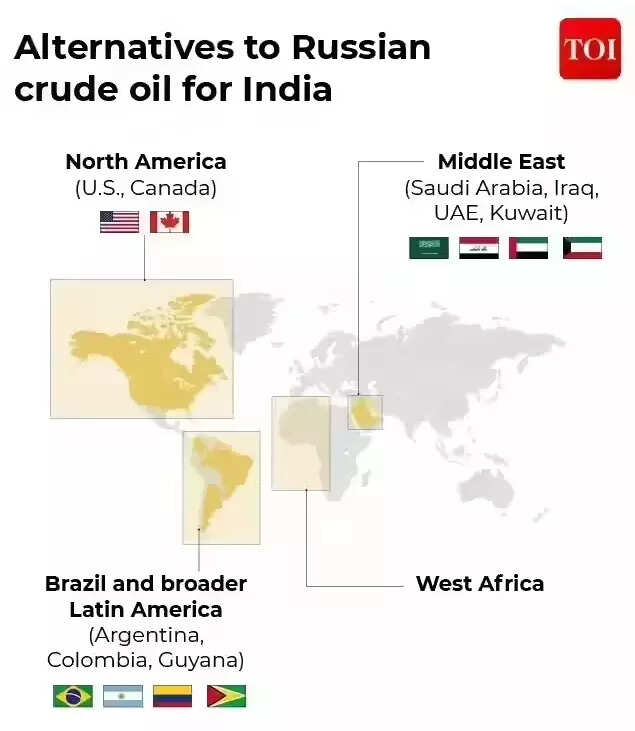
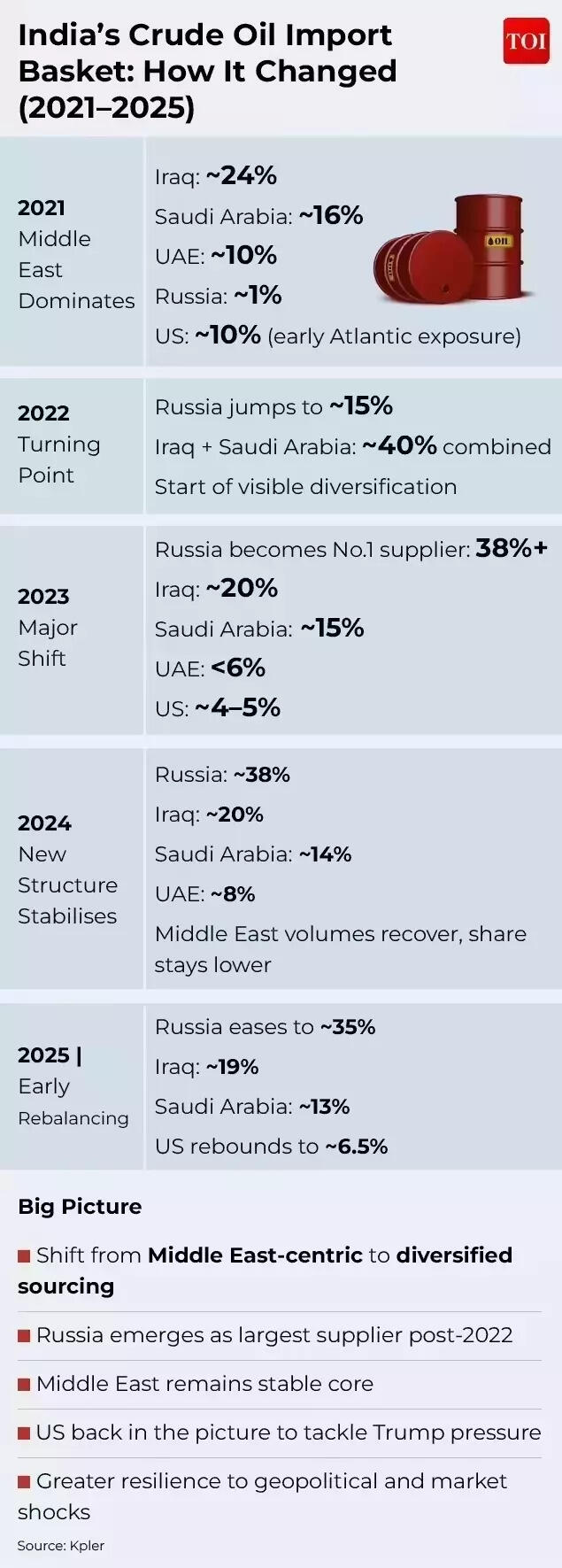
Before India ramped up its crude oil import from Russia, the West Asian suppliers dominated the supply with Russia contributing in lower single digits. India has diversified its sources of supply to about 40 countries with more supply coming onto the market from Guyana, Brazil and Canada.Kpler’s Ritolia emphasises that crude sourcing diversification is expected to continue, with incremental volumes likely to come from the Middle East and the US as India broadens its supplier base while maintaining flexibility across origins.

Alternatives to Russian crude for India

According to Sourav Mitra of Grant Thornton Bharat, in a remote eventuality of Russian oil imports ceasing completely, the import basket may reorient towards Middle East-based suppliers; led by Iraq, Saudi Arabia, and UAE. The US is already one of the top 5 exporters of crude oil to India. India can look to augment the oil purchase from the US depending on the prices offered, he says.African suppliers can be potential alternatives to backfill the gap. Their crude is sweeter and more suitable to Indian refiners. India has already seen an increase from oil imports from African countries such as Nigeria, Angola, Egypt, Libya in FY26 as Russian oil imports reduce.“India can opportunistically look at the Venezuelan oil, but the volumes can be constrained by pricing considerations and limited capacity of Indian refiners to process the Venezuelan oil. Venezuela’s crude oil is heavy and sour grade which requires hydro processing, consequently squeezing the refining margins,” Mitra adds.

Rising Crude Imports From The US

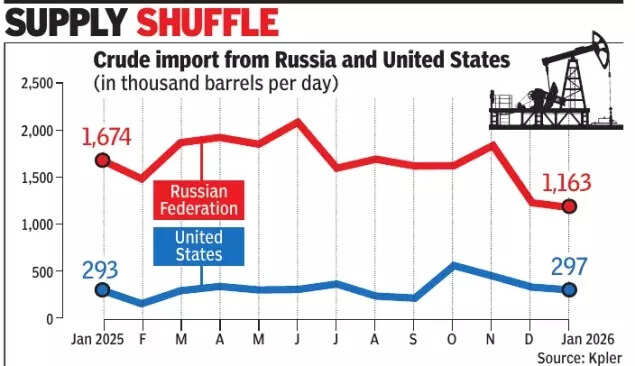
Russia’s share in India’s crude imports fell to 33.7% during the April–November 2025 period, compared with 37.9% in the corresponding months of 2024. Over the same timeframe, the United States’ share increased to 8.1% from 4.6%. Kpler estimates indicate that Russian crude imports declined from 1.8 million barrels per day in November to 1.2 million barrels per day in December, and further to 1.16 million barrels per day in January 2026.

Supply shuffle

The US has said that India plans to acquire American energy products, technology goods and agricultural commodities worth $500 billion over the next five years. These are expected to include crude oil, liquefied natural gas, aircraft and related components, advanced technologies such as graphics processing units, and farm products.According to the Grant Thornton expert, this signals that India will likely ramp up crude oil purchase from the US which may be a mix of crude oil, LNG, coking coal among others. “India’s purchase from the US is already on an upward trend, with the US now constituting around 8% of India’s total oil purchase. However, the scale of oil purchase from the US would largely depend on the commercial considerations,” he says.Also Read | India-US trade deal: Which Indian goods will face zero tariffs in America? Piyush Goyal lists out

India’s Crude Import Bill To Be Hit?

India’s crude oil import is 4.5-5 million bpd. Russian oil imports hit a peak of ~2 million bpd in June 2025, which has come down to about 1.1 million bpd in January 2026. Sourav Mitra of Grant Thornton Bharat notes that if the Russian oil purchase were to cease entirely, the adverse impact on India’s crude oil import bill could be anywhere between 1-2%. “This impact can be set off by ramping up oil purchase from Venezuela though. However, this reorientation has its own challenges. India’s decision to buy oil from Venezuela will primarily depend on the discounts offered. The Venezuelan oil should come at a discount of $10-14/barrel vis-à-vis Brent to outweigh the additional costs stemming from freight, insurance, and higher processing by the Indian refiners,” he tells TOI.

India's Crude Import Basket Change

As SBI Research notes in a new report this month: India turned to purchasing Russian oil sold at a discount (capped: $60 per barrel), to ensure its energy security, after Western countries-imposed sanctions on Moscow and shunned its supplies over its invasion of Ukraine in February 2022. Consequently, Russia’s share has increased to 35.1% in FY25 and it is now the biggest oil importer for India.“The substitution of Russian crude by Merey 16 has clear positives for the domestic economy as private and PSU oil refineries can exploit the heavy crude discount. Heavy crude discounts in range $10-12 can make good the Russian discount, ensuring commercial viability. This implies the trade deal will not affect the domestic inflation after sacrificing the Russian discount. India’s fuel import bill could even decline by $3 billion in the event of shifting to Venezuela. The discount of $10-12 could make the choice agnostic,” says SBI.However, Mitra warns that what may complicate the math is the fact that if India stops buying the Russian crude oil, it will tighten the global crude market due to its sheer volumes. “Where the crude oil prices stabilize will primarily depend on where the additional Urals go and how easy it is for the Venezuelan oil to find buyers,” he says.


Source link

Delhi CM Rekha Gupta approves Rs 1,200 cr grant for DTC salaries, pensions and transport modernisation | India News


Delhi CM Rekha Gupta approves Rs 1,200 cr grant for DTC salaries, pensions and transport modernisation

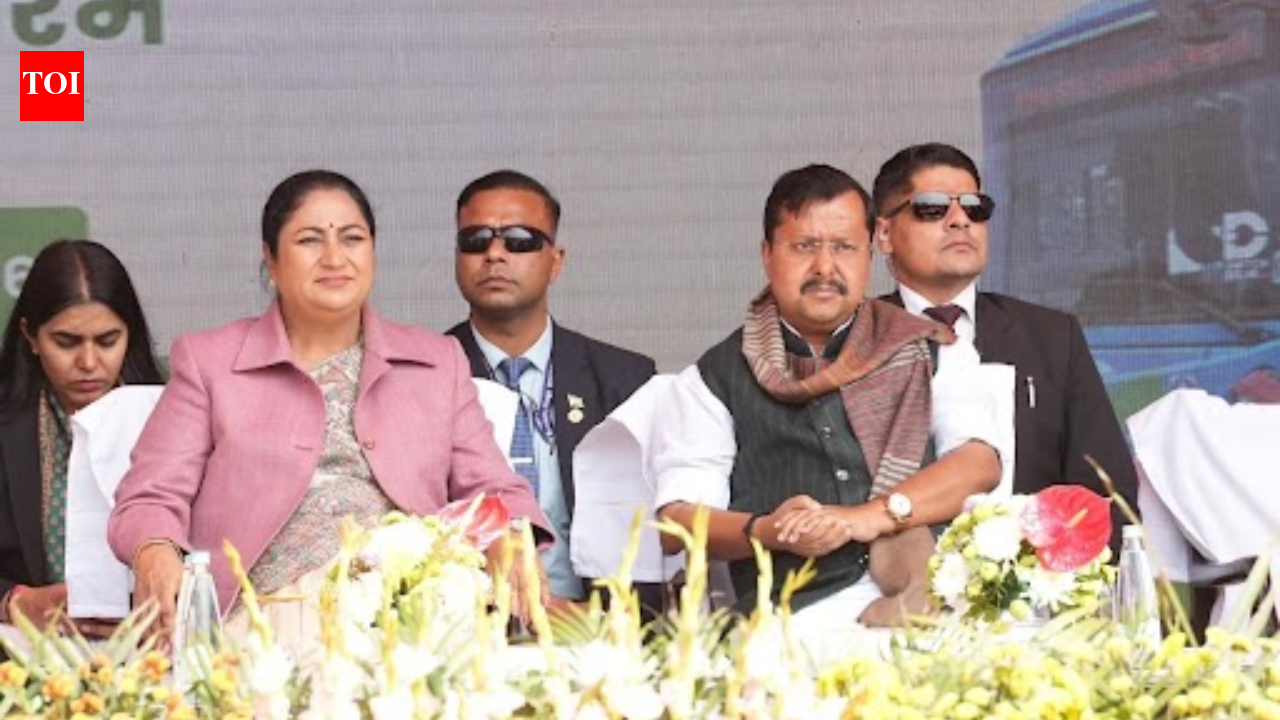
NEW DELHI: The chief minister of Delhi, Rekha Gupta, has approved a grant of Rs 1,200 crore for the Delhi Transport Corporation (DTC), providing major relief to thousands of serving employees and pensioners, while also strengthening technology-driven initiatives to improve traffic management and urban mobility in the Capital.Out of the total allocation released by the Finance Department, Rs 1,100 crore has been earmarked for payment of salaries, pensions and other statutory dues of DTC employees and pensioners. The remaining Rs 100 crore has been allocated to transport modernisation and the adoption of advanced technologies to ensure smoother traffic flow and promote sustainable mobility, according to a release. Speaking on the decision, the chief minister said that the grant reflects the government’s commitment to the dignity and financial security of DTC employees and pensioners. She stated that DTC employees work tirelessly in all conditions to keep Delhi moving, and the government has ensured that senior pensioners and serving staff never have to wait for their rightful dues.The chief minister said that DTC and its workforce are the lifeline of Delhi’s public transport system. Timely payment of salaries and pensions will provide financial stability to employees and their families and reinforce confidence in the system.In addition to employee welfare, the chief minister informed that Rs 100 crore has been allocated for two key strategic initiatives. These include the implementation of an Advanced Traffic System (ATS) to improve traffic flow through modern technology and the development of commercial electric vehicle charging infrastructure under the Scheme for Special Assistance to States for Capital Investment (SASCI).Reiterating the government’s long-term vision, the chief minister said that these initiatives align with the objective of making Delhi a technology-driven, pollution-free city with safe, efficient and world-class public transport facilities, the release noted. She further emphasised that DTC is not merely a fleet of buses, but a system that enables the daily lives of millions of citizens. The government remains committed to strengthening this system while upholding the welfare and dignity of its employees and pensioners.


Source link

India-US trade deal may help Tamil Nadu’s garment exports double to Rs 30,000 crore


India-US trade deal may help Tamil Nadu’s garment exports double to Rs 30,000 crore

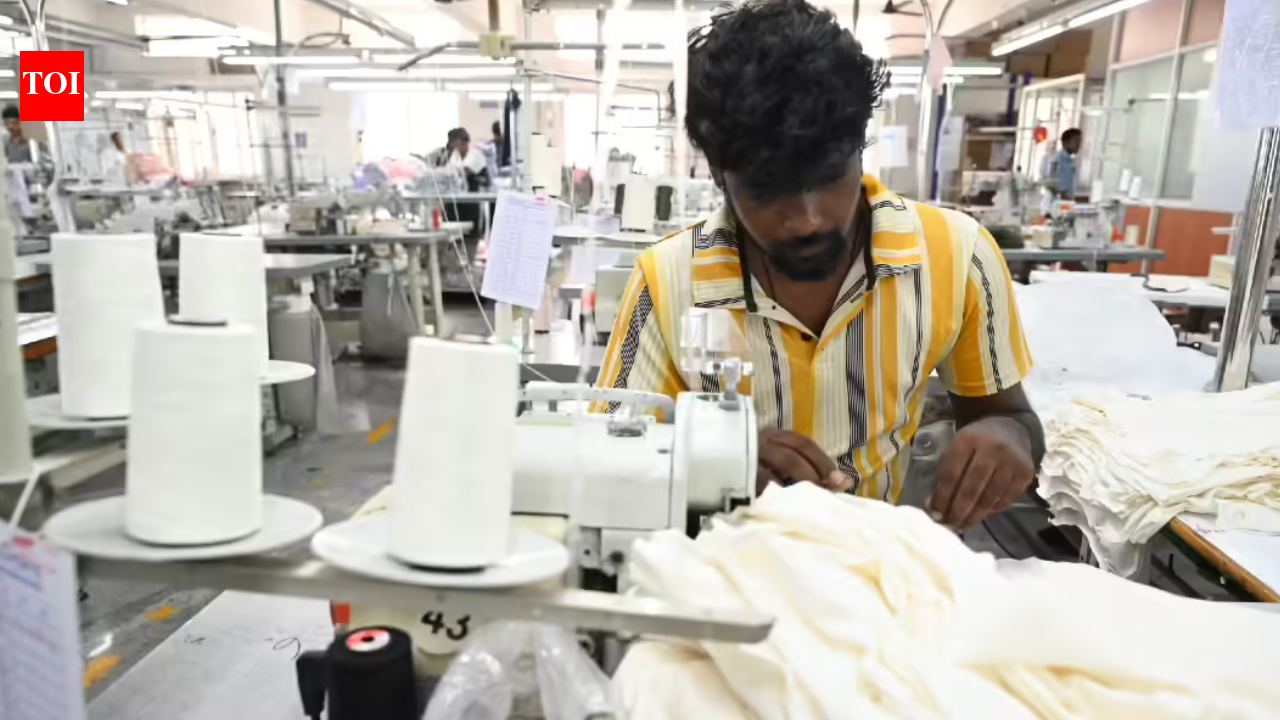
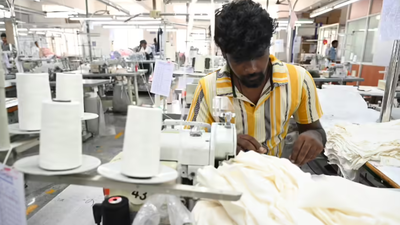
Garment exporters in Tamil Nadu’s textile hub Tiruppur expect shipments to the United States to double to about Rs 30,000 crore over the next three years following the India-US trade framework, industry representatives told PTI.They also indicated that the sector could generate about 5 lakh additional jobs over the next three to five years as export orders and production expand.India and the United States on Saturday announced that they have finalised the framework for the first phase of the bilateral trade agreement under which both sides will reduce import duties on a number of goods to boost two-way trade.

‘Reasons For Reducing Russian Oil Imports Are…’ Foreign Expert Explains India-US Trade Framework

Tiruppur Exporters’ Association president K M Subramanian said, “We welcome it. This deal assumes significance as it will give a huge growth for Tiruppur over the next 5 years.”He said garment exports from Tamil Nadu are currently valued at about Rs 15,000 crore and are expected to double to Rs 30,000 crore over the next three years following the agreement.Subramanian, also founder-chairman of Tiruppur-based clothing manufacturer K M Knitwear Pvt Ltd, said the impact of the deal is expected to be visible over the next three months.“After that we will be able to see a good growth for (India made) garments that will be exported from Tamil Nadu. Tiruppur’s growth will be on a higher trajectory,” he said.On employment, he said, “Currently, about 10 lakh people are employed in this industry. It will witness addition of another 5 lakh jobs over the next 3 to 5 years.”Another Tiruppur-based entrepreneur and founder of Starrlight Exporters, M Rathinasamy, said, “Earlier, some of the orders were going to Bangladesh and other countries. After this deal, we will be getting more orders (from the United States).”“We expect that we will be getting a large number of orders on account of this deal,” he added.The Tiruppur Exporters’ Association represents exporters of cotton knitwear operating in Tiruppur and neighbouring regions and currently represents about 1,135 knitwear exporters.


Source link

‘Ramayana’: Vikrant Massey CLARIFIES on being REPLACED by Raghav Juyal in the film; DELETES post later, ‘Such irresponsible…’ | Hindi Movie News


Vikrant Massey has firmly denied any involvement in the much-anticipated ‘Ramayana’ directed by Nitesh Tiwari, quelling speculation about Raghav Juyal taking over his rumored role of Meghanad. In a now-deleted post, Massey clearly expressed that he was not part of the film from the outset. Read on to know more.

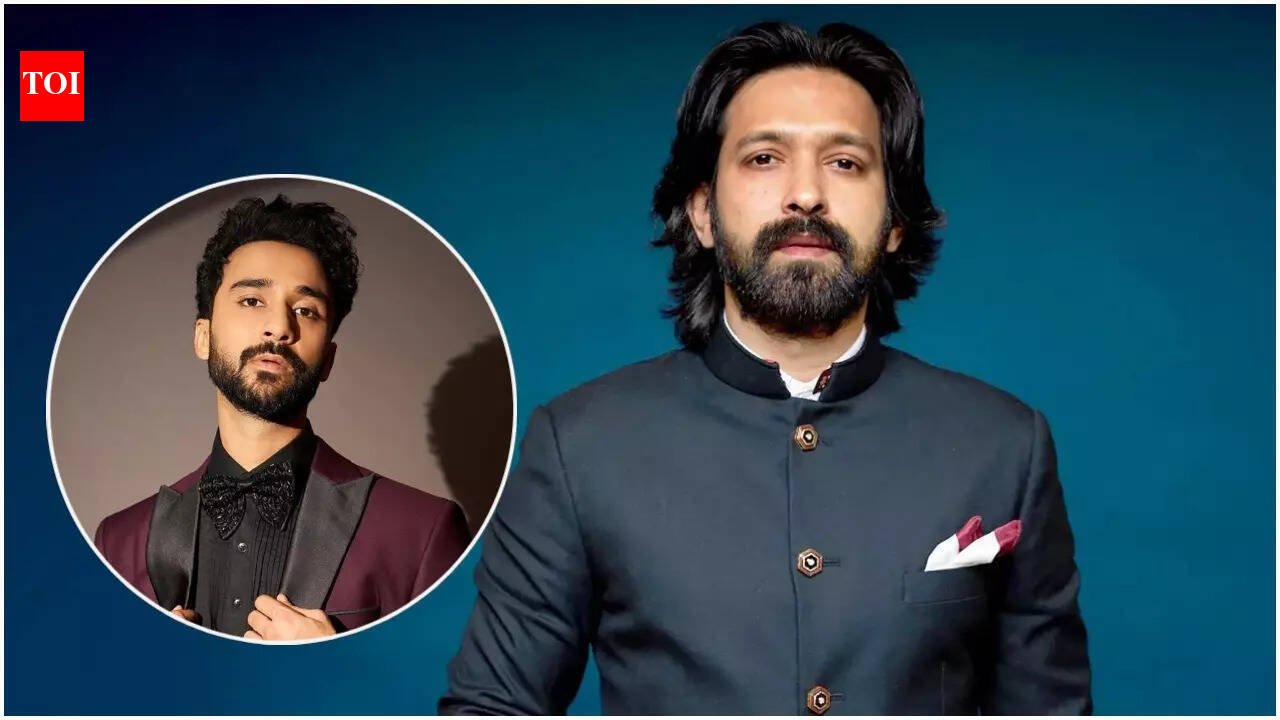
Vikrant Massey was rumored to play the role of Meghanad in Nitesh Tiwari‘s magnum opus, ‘Ramayana‘, starring Ranbir Kapoor in the lead. Soon, news of Raghav Juyal playing the part surfaced on the internet, replacing Massey in the movie. And now, the ’12th Fail’ star has responded to all such reports through his social media post. The actor shared that he was not a part of the movie from the beginning; however, he deleted the post later. Let’s learn more about it.

Vikrant Massey clears the air around him being replaced by Raghav Juyal in ‘Ramayana’

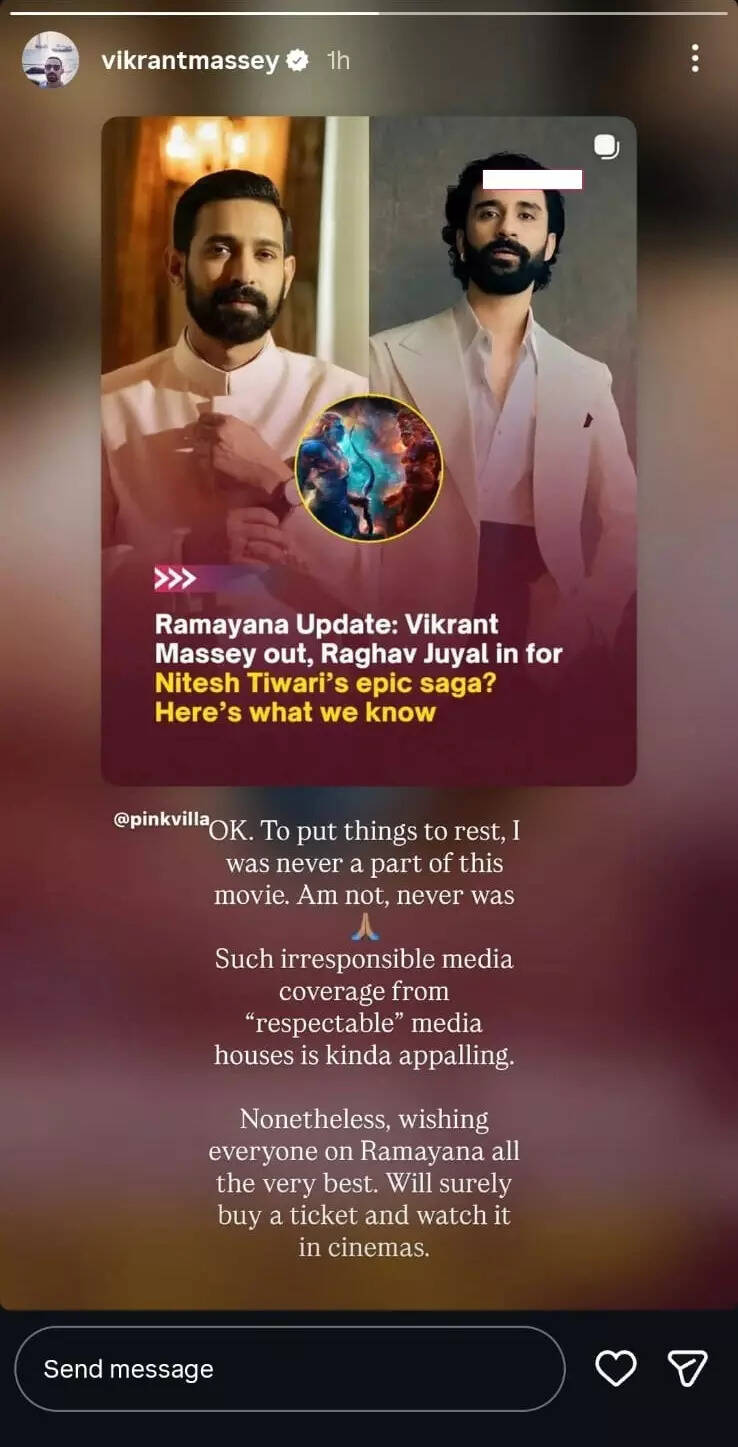
As per the Variety India report, Raghav Juyal will be seen playing the role of Meghanad/Indrajit, the eldest son of Lankanaresh Ravana, in ‘Ramayana’. Soon, another entertainment portal reported that the actor has replaced Vikrant Massey in Nitesh Tiwari’s film. Soon, the actor took to his Instagram Story to clarify the rumors. On February 7, he posted, “OK. To put things to rest, I was never a part of this movie. Am not, never was. Such irresponsible media coverage from ‘respectable’ media houses is kinda appalling. Nonetheless, wishing everyone on Ramayana all the very best. Will surely buy a ticket and watch it in cinemas.”

VM

However, the actor deleted the post later.

Vikrant Massey Openly Admits He Tried PR, Felt ‘Fake,’ and Quit

More about the ‘Ramayana’ cast

Ranbir Kapoor is set to play the role of Lord Ram, while Sai Pallavi will be seen as Goddess Sita. Yash will portray the role of Lankanaresh Ravana. Sunny Deol and Ravie Dubey will essay the characters of Lord Hanuman and Lakshman, respectively.The cast also includes Kajal Aggarwal and Rakul Preet Singh as Mandodari and Surpanakha. Kunal Kapoor, Adinath Kothare, Arun Govil, Sheeba Chaddha, and Indira Krishnan will also be seen in pivotal roles. Recent reports suggested that makers are considering Vijay Sethupathi to portray Vibhishana, the younger brother of Ravana, in the film.

More about ‘Ramayana’

Backed by Namit Malhotra and Yash, the film is being helmed by Nitesh Tiwari. The makers are reportedly set to unveil the first glimpse of the film on the occasion of Ram Navami on March 27, 2026, hosting a grand event at Mumbai’s Gateway of India.The first part of the film will arrive in cinemas in Diwali this year.


Source link

ICC–PCB talks in Lahore as Pakistan rethinks India match boycott at T20 World Cup 2026


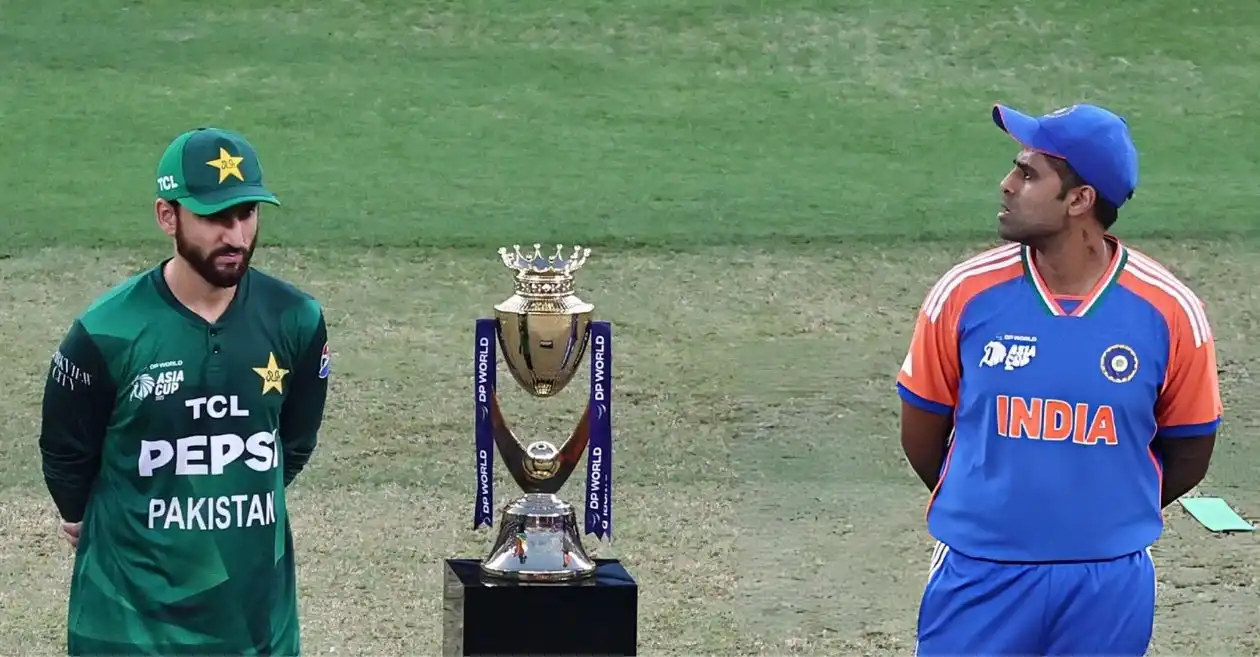
A high-stakes meeting in Lahore on Sunday could shape the immediate future of the ICC Men’s T20 World Cup 2026, with officials from the International Cricket Council (ICC) and the Pakistan Cricket Board (PCB) set to discuss Pakistan’s refusal to play their scheduled February 15 match against India. Adding another layer to the talks, Bangladesh have also been invited, with BCB president Aminul Islam expected to represent his board in what is being seen as a crucial tripartite conclave.

The talks, as reported by cricbuzz, come amid growing pressure on the PCB, which has found itself isolated after invoking the rarely used Force Majeure clause to justify its stance. ICC officials, who are reportedly en route to Lahore, have already rejected the legitimacy of that claim, pushing Pakistan into dialogue to avoid potential sanctions and significant financial fallout.

How Bangladesh became central to the controversy

Bangladesh’s presence at the table is not incidental. The controversy can be traced back to the Bangladesh Cricket Board (BCB) requesting a venue change for their men’s team earlier, citing safety concerns about playing in India. The ICC declined the request, leading to Scotland replacing Bangladesh in the tournament.

Pakistan then stepped in to back Bangladesh publicly, declaring that it would not play India in Colombo as a mark of solidarity. What initially appeared to be a symbolic gesture soon escalated into a major governance issue, threatening the smooth conduct of the World Cup.

Force Majeure gamble backfires on PCB

According to reports, Pakistan’s attempt to invoke Force Majeure proved to be a turning point. The ICC questioned whether the PCB had met the high evidentiary threshold required to justify non-participation, especially in a marquee fixture with enormous commercial value.

The governing body also highlighted that refusing to play a single match would violate the Members Participation Agreement, opening the door to financial penalties and broader disciplinary action. Faced with these realities, the PCB has now opted for negotiations rather than confrontation.

Also READ: “With power comes responsibility…”: Nasser Hussain slams ICC and BCCI; sides with Bangladesh and Pakistan in boycott debate

Sri Lanka voices strong objections

The standoff has not gone down well with Sri Lanka, the host nation for the India–Pakistan fixture. Sri Lankan officials have reportedly warned of heavy losses to tourism and hospitality if the match is boycotted, given its ability to draw global attention and fans.

Sri Lanka have also reminded Pakistan of a sensitive chapter in its own cricketing history, when international teams stayed away due to security concerns. During that period, Sri Lanka played a key role in helping Pakistan revive international cricket at home — a gesture that has now been cited as a reason for reciprocity.

Demands, negotiations, and what lies ahead

Unverified reports suggest the PCB may seek a larger share of ICC revenue, revival of bilateral cricket with India, and enforcement of handshake protocols. However, bilateral series fall outside the ICC’s jurisdiction, and on-field protocols remain voluntary, making the acceptability of these demands uncertain. Bangladesh, having been replaced in the tournament, could also push for compensation.

Also READ: Iceland cricket reveals why Pakistan will be the first team to exit T20 World Cup 2026


Source link