Breaking News
Sanath Jayasuriya decides to step down after T20 World Cup disappointment | Cricket News


Sanath Jayasuriya decides to step down after T20 World Cup disappointment
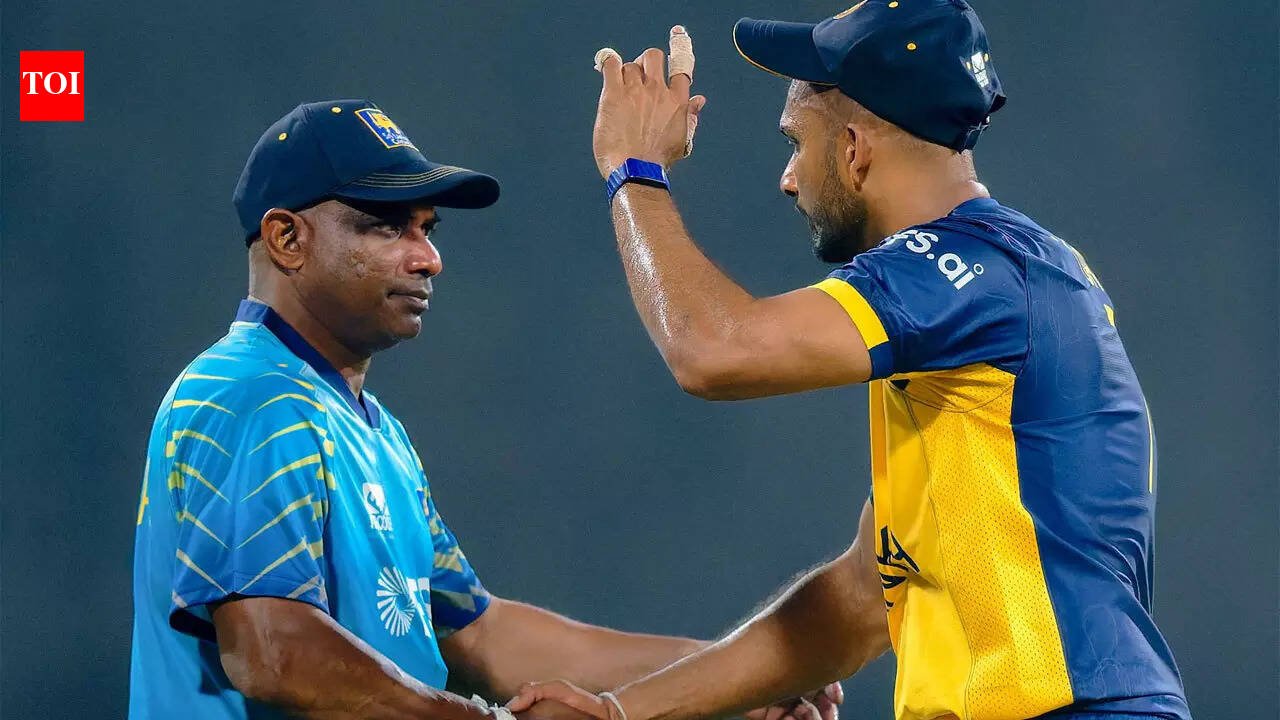
Sri Lanka, who were co-hosts of the tournament, had already been eliminated from semifinal contention and were unable to close their campaign with a victory. (Image credit: Sri Lanka Cricket)

Sri Lanka head coach Sanath Jayasuriya has chosen to step aside from his position following the team’s narrow five-run defeat to Pakistan in their final Super Eights fixture of the ICC Men’s T20 World Cup 2026.The announcement came shortly after the loss, with the former attacking left-hander admitting he had hoped to sign off from the World Cup on a “good note” but fell short of that expectation.

T20 World Cup: Ryan ten Doeschate press conference before IND vs WI

Sri Lanka, who were co-hosts of the tournament, had already been eliminated from semifinal contention and were unable to close their campaign with a victory.Jayasuriya revealed that the decision had been on his mind for some time and that he had indicated during the England series earlier this year that he did not intend to continue long-term.“I thought I should give that title to someone else. That’s why I mentioned two months ago during the England series that I have no plans staying here. So, I said that after taking that decision. I thought from the World Cup, I would be able to leave here as the coach in a good note. I couldn’t do that as much as I thought. I feel sorry about that,” the former Sri Lankan cricketer said as quoted by the ICC website.He further clarified that formal discussions with Sri Lanka Cricket are yet to take place.“My contract ends in June. I have not given my official decision or anything to Sri Lanka Cricket. I have to go and discuss with them. Have to talk about what do I have to do,” he added.In the match against Pakistan, half-centuries from captain Dasun Shanaka and Pavan Rathnayake were not enough to chase down a formidable 212 for 8, which was built on a 176-run opening partnership between Sahibzada Farhan (100) and Fakhar Zaman (84).Despite the win, Pakistan also failed to progress to the semifinals, missing out on net run rate to New Zealand national cricket team.


Source link

BJP MP Baluni plays Holi in ‘ghost village’, seek return of ex-residents | India News


BJP MP Baluni plays Holi in 'ghost village', seek return of ex-residents
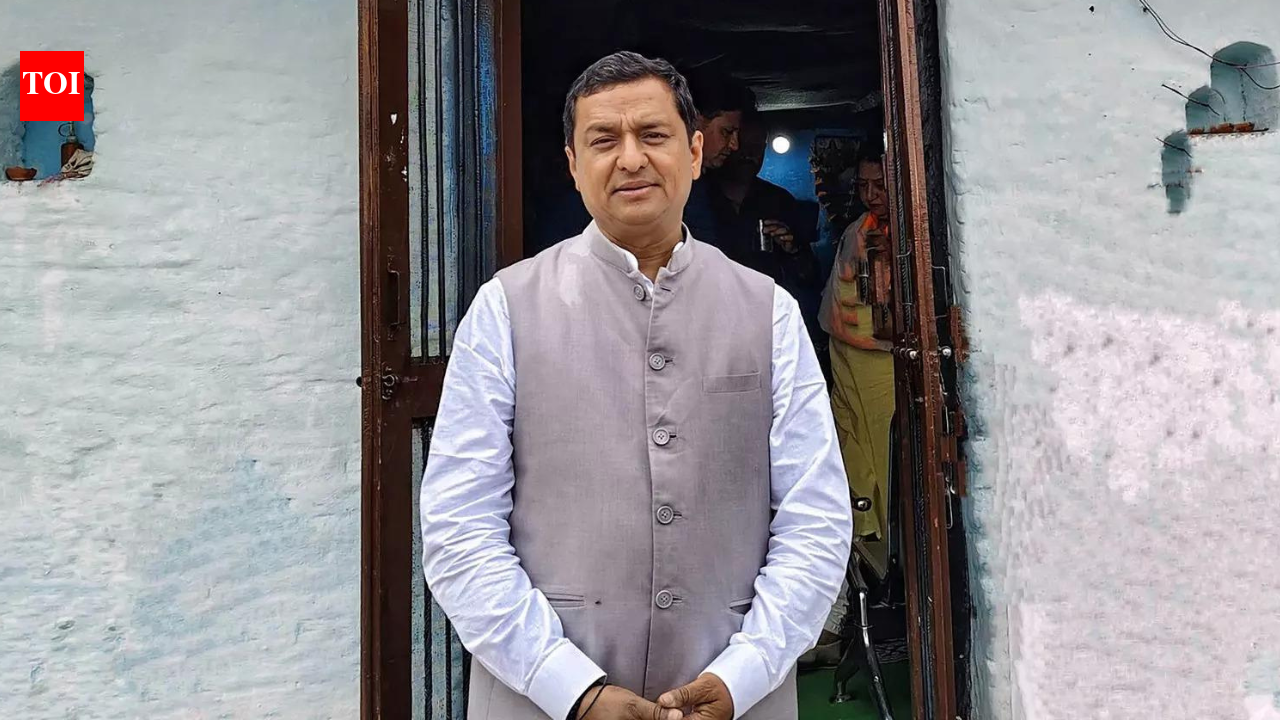
Garhwal MP Anil Baluni (PTI image)

NEW DELHI: As part of his campaign to re-populate settlements hit by exodus of locals in Uttarakhand, Garhwal MP Anil Baluni played Holi with current and former residents of Dhoor village during his visit to the constituency. Several former residents returned to the village briefly to play the festival of colour to render the almost empty village a vibrant feel, which reminded them of a bygone era before they relocated to different cities in search of livelihood. “Since childhood, I have seen villages being deserted because people sought better lives in cities. Today, many of them are called ghost villages . But now, with improved roads, electricity, water and other facilities, it is time to return to our roots, where our heritage truly thrives,” Baluni said.Baluni, who was a Rajya Sabha member before being elected to Lok Sabha in 2024, has been spearheading a campaign to revive traditional festivals, a call given by PM Narendra Modi, and to bring back former residents to their native villages to revive the old way of life in these remote, hilly areas which have suffered stagnation as people left.Once vibrant with laughter and livestock, these hamlets, numbering hundreds across Uttarakhand, lie abandoned now, their terraced fields covered with wild weeds and the houses locked and crumbling, he said. Migration has taken a toll on the region, he added. Baluni said Pauri had eight Assembly constituencies earlier but the number has come down to six and it can fall further after the next “delineation”. Several districts across the hill state are facing the same crisis, he said. Amid the splash of colours and bursts of laughter, Holi was celebrated with the handful of families still staying put in Dhoor. They were joined by many former residents who returned from distant cities on the occasion. Baluni has been visiting such villages at frequent intervals in his efforts to repopulate them. As part of his efforts, the BJP leader has also launched the “Apna Vote Apne Gaon” campaign, urging people to register themselves as voters in their native villages.


Source link

‘One-way attack drone’ used by US for first time in Iran strikes: What LUCAS is and how it works


'One-way attack drone' used by US for first time in Iran strikes: What LUCAS is and how it works
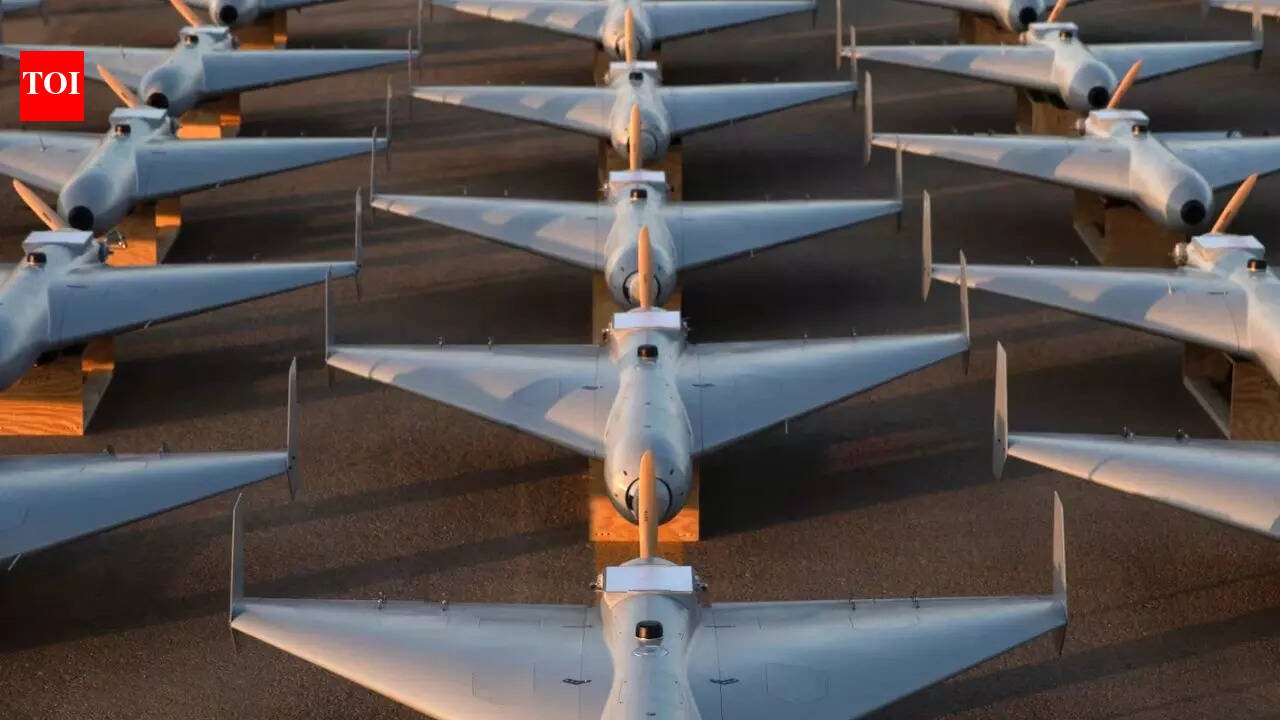
(Photo credit: Central Command)

In a significant escalation of its drone warfare capabilities, the United States turned Iran’s own drone strategy against it, deploying its new low-cost, one-way attack drone, the Low-cost Unmanned Combat Attack System (LUCAS), for the first time during coordinated strikes with Israel under Operation Epic Fury.The coordinated strikes on Iran orchestrated by US President Donald Trump and Israeli Prime Minister Benjamin Netanyahu on Saturday targeted key Iranian military assets and resulted in the killing of Tehran’s Supreme Leader Ayatollah Ali Khamenei.The operation saw US and Israeli forces unleash a mix of advanced and cost-effective weaponry, combining next-generation fighter jets and long-range cruise missiles with low-cost autonomous drones, marking a sharp escalation in both scale and strategy.Alongside the newly deployed LUCAS drones, the mission involved Tomahawk cruise missiles and advanced fighter aircraft, including the F/A-18 and F-35 jets. US Central Command (CENTCOM) later released photographs showing Tomahawk missiles and fighter aircraft involved in the operation.

First combat use of LUCAS drone

As part of Operation Epic Fury, the US military fielded the Low-cost Unmanned Combat Attack System (LUCAS), a one-way “kamikaze” drone reverse-engineered from Iran’s Shahed-136 platform.“For the first time in history is using one-way attack drones in combat during Operation Epic Fury. These low-cost drones, modeled after Iran’s Shahed drones, are now delivering American-made retribution,” CENTCOM announced on X.

What is LUCAS?

According to the Pentagon, the drones used in the strike appear identical to the LUCAS system manufactured by Spektreworks, a Phoenix, Arizona-based company, Reuters reported.Designed as a low-cost, expendable system, LUCAS is intended for large-scale production by multiple manufacturers.Each unit costs approximately $35,000, making it significantly cheaper than many conventional precision weapons.The growing reliance on such drones reflects a broader military shift toward what officials describe as “affordable mass” deploying large numbers of relatively inexpensive weapons to overwhelm adversaries. The strategy gained prominence following Russia’s invasion of Ukraine, which highlighted the battlefield effectiveness of drones.

How it works?

LUCAS is designed with a modular, open-architecture system that enables it to perform multiple mission profiles, including strike operations, reconnaissance, and communications support. Its flexible configuration allows operators to quickly swap payloads depending on operational needs. It is capable of operating both as a target drone for training and as a combat UAV in active missions. Notably, LUCAS is built to be handled by non-specialized personnel, offering a key logistical advantage in rapidly evolving conflict zones.According to Defence Security Asia, the drone is capable of operating at medium altitudes over extended ranges, further expanding its battlefield utility.CENTCOM said Operation Epic Fury targeted Islamic Revolutionary Guard Corps command-and-control facilities, Iranian air defense systems, missile and drone launch sites and military airfields.

Tomahawk cruise missiles deployed

The strikes also featured Tomahawk Land Attack Missiles, long-range, precision-guided cruise missiles typically launched from sea-based platforms for deep-strike missions.The Tomahawk can strike targets up to 1,000 miles (1,600 km) away, including in heavily defended airspace. It measures about 20 feet (6.1 meters) in length, has an 8.5-foot wingspan, and weighs roughly 3,330 pounds (1,510 kg).According to Pentagon budget documents, the US plans to purchase 57 Tomahawk missiles in 2026 at an average cost of about $1.3 million each. Tomahawks have previously been used in operational settings, including strikes by US and UK naval forces on Houthi targets in Yemen.

Fighter jets in action

The F-35, a fifth-generation stealth fighter, is designed to evade radar detection while carrying precision-guided munitions. It can deploy a range of missiles, including those capable of targeting and destroying enemy radar systems.The F/A-18, manufactured by Boeing, is a multi-role aircraft capable of conducting both air-to-air and air-to-ground missions, carrying various bombs and missiles.The United States has deployed F-35s extensively across the Middle East, and the aircraft is also operated by the Israeli Air Force.


Source link

The fall of Ayatollah Khamenei: How Iran’s Supreme Leader met his end


The fall of Ayatollah Khamenei: How Iran’s Supreme Leader met his end

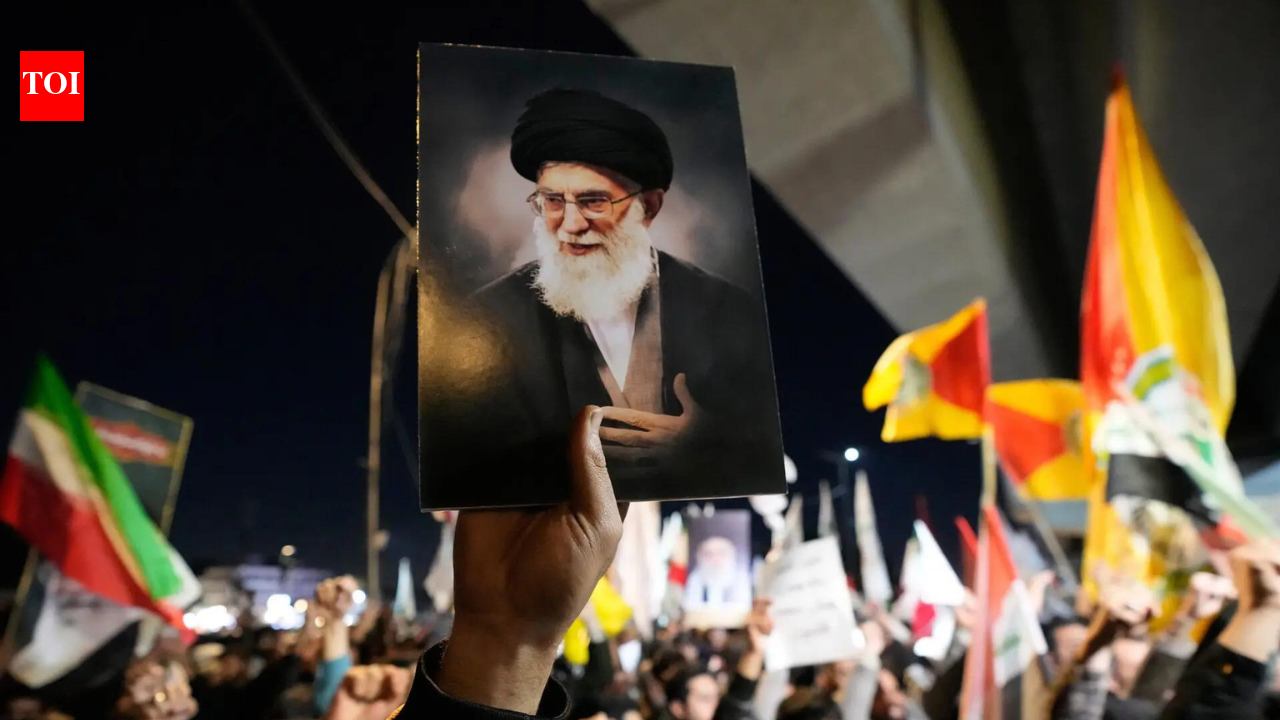
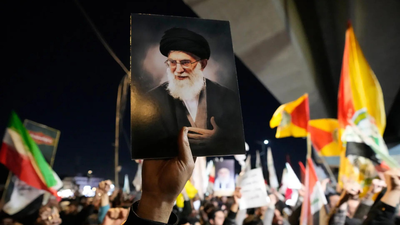
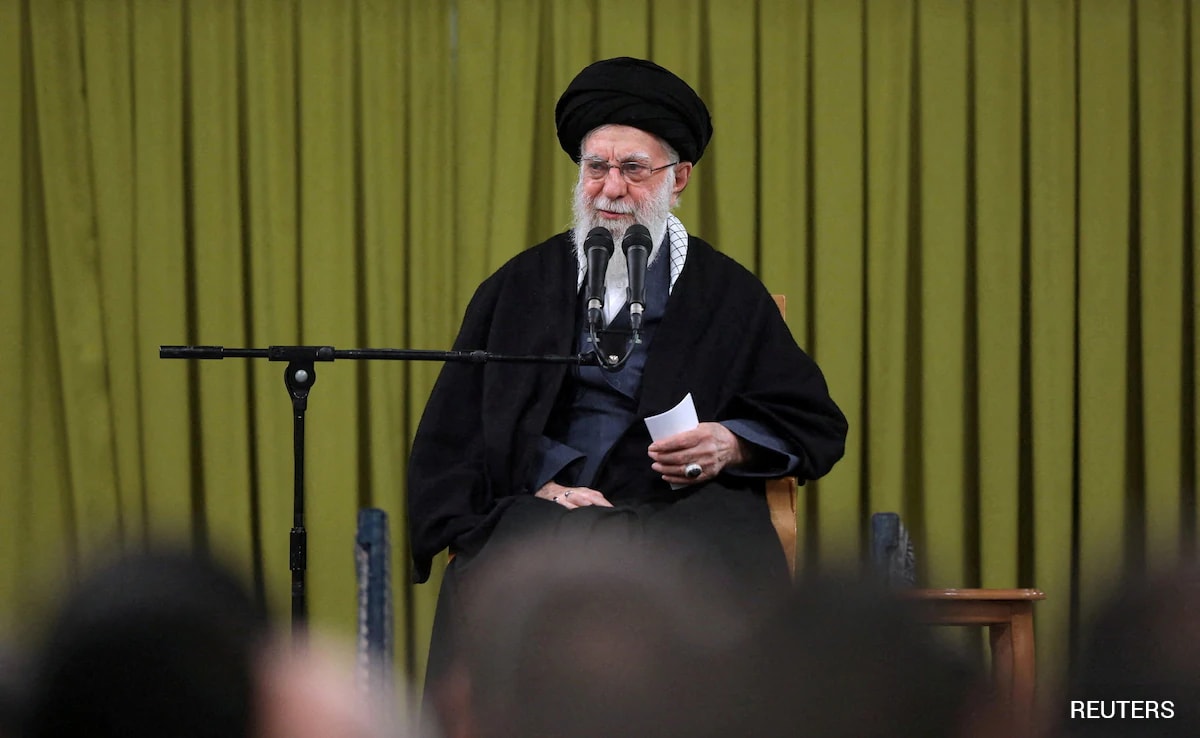
On 16 January 1979, the Shah fled Iran, leaving behind a collapsing monarchy and a revolutionary tide that would reshape the Middle East. From that upheaval emerged a new political order, an Islamic Republic built on the doctrine of clerical rule. Nearly half a century later, the system created in revolution has been shaken by another upheaval, one that ended with the death of the man who embodied it for more than three decades.Ayatollah Ali Khamenei, Iran’s second Supreme Leader, rose from the ranks of revolutionary clerics to become the most powerful figure in the Islamic Republic. He survived assassination attempts, war, sanctions and repeated waves of protest. He outlasted presidents at home and adversaries abroad. In the end, however, it was war with the United States and Israel, the very confrontation that had defined much of his rule, that brought it to a close.His death, confirmed by Iranian state media after extensive US and Israeli air strikes on Tehran, closes a chapter that began with the overthrow of a monarch and concludes with the violent unravelling of a revolutionary state. Born in resistance, the Islamic Republic was shaped by struggle. Under Khamenei, it hardened into a system that tolerated neither dissent nor compromise.

From Mashhad seminarian to supreme authority

Born in 1939 in Mashhad to a clerical family, Khamenei was shaped by religious study and political dissent. As a young cleric he studied in Qom under Khomeini and was arrested multiple times by the Shah’s security services for anti-regime activism. After the 1979 revolution, he rose swiftly: Friday prayer leader in Tehran, then president during the brutal Iran–Iraq war.In 1981 he survived an assassination attempt that paralysed his right arm. The experience deepened his suspicion of rivals and foreign enemies. When Khomeini died in 1989, Khamenei lacking his mentor’s senior clerical rank, was unexpectedly elevated by the Assembly of Experts to the role of supreme leader.

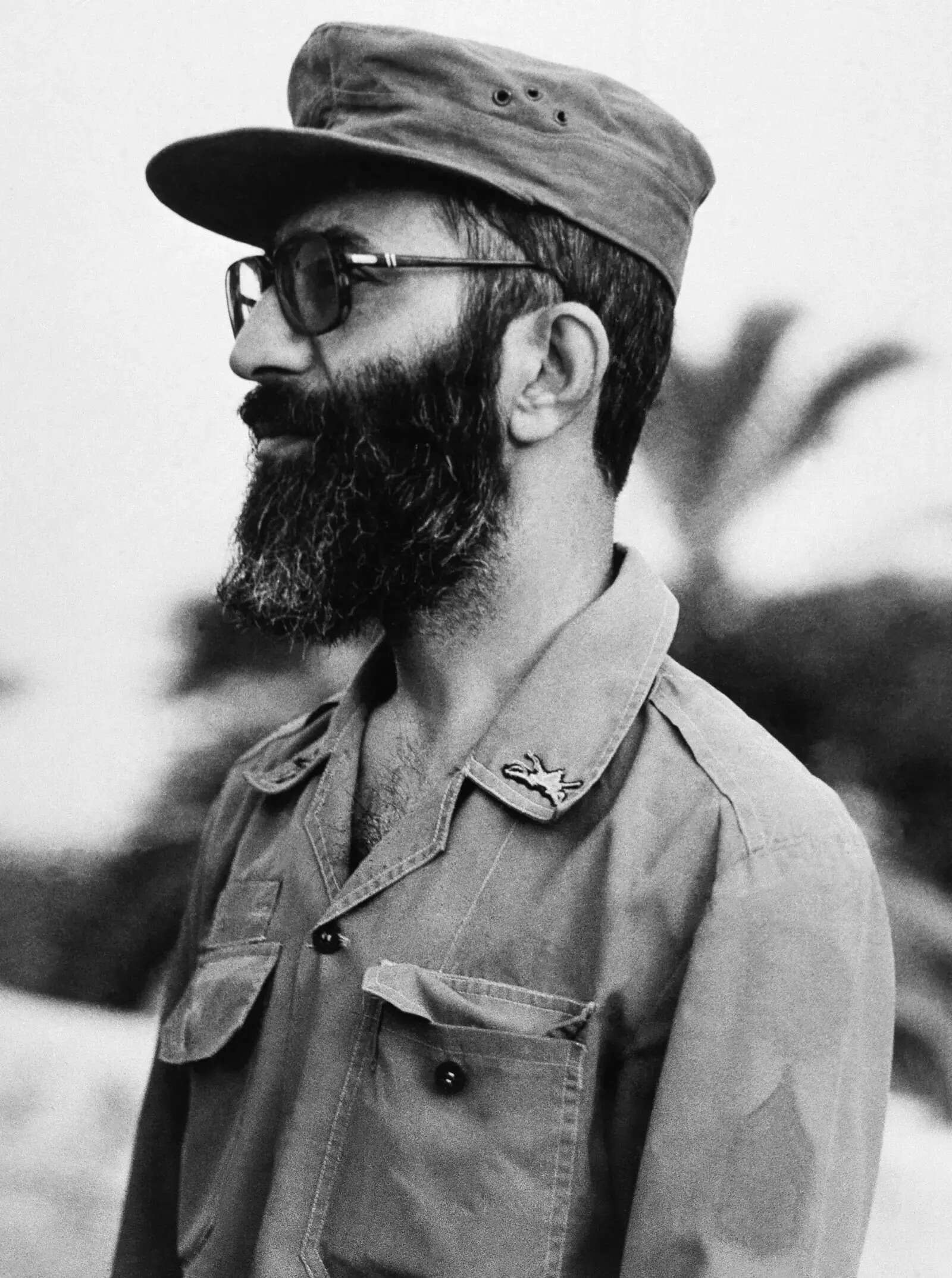
Khamenei stands in a military uniform in October 1981 (Photo credit: AP)

Khamenei stands in a military uniform in October 1981 (Photo credit: AP)

Initially viewed as weak, he moved carefully to consolidate authority. Constitutional changes strengthened the office. Over time, he built networks of loyalists across the judiciary, parliament, state media and the clerical establishment, transforming himself from compromise candidate into the system’s undisputed arbiter.

Building a security state

Central to Khamenei’s power was the Islamic Revolutionary Guard Corps (IRGC). He expanded it into Iran’s dominant military and economic force, granting it oversight of the ballistic missile programme and vast commercial interests. In return, it became his most reliable instrument of control.The Basij militia and intelligence services were repeatedly deployed to crush dissent. Student protests in 1999 were put down. The 2009 “Green Movement”, which erupted after a disputed presidential election, was suppressed with arrests and force. Economic protests in 2017 and 2019 met similar fates.

How Khamenei tightened his grip on Iran

The most profound domestic rupture came in 2022 after the death in custody of Mahsa Amini, detained for allegedly breaching Iran’s strict dress code. Demonstrations led by women and young people spread nationwide. Hundreds were killed, thousands arrested. Khamenei framed the unrest as foreign-instigated sedition and refused concessions on compulsory hijab or political reform.His final and bloodiest crackdown followed a currency collapse that drove the rial to record lows. When protesters again chanted “Death to the dictator”, he declared that “rioters must be put in their place”. Security forces opened fire. Activists reported thousands killed. It was a show of force that revealed both the regime’s resilience and its fear.

Confrontation with the West and regional ambition

If repression defined Khamenei’s domestic rule, confrontation marked his foreign policy. He consistently cast the United States as Iran’s principal adversary, accusing it of seeking regime change. The 1979–81 US embassy hostage crisis, supported by revolutionary leaders including Khamenei, cemented decades of hostility.Under his watch, Iran pursued an expansive regional strategy. Through allies and proxies – from Hezbollah in Lebanon to Hamas in Gaza and the Houthis in Yemen – Tehran projected influence while avoiding direct war. Khamenei viewed Israel as illegitimate and supported armed resistance as both ideological duty and strategic leverage.Iran’s nuclear programme became the central flashpoint. The 2015 Joint Comprehensive Plan of Action (JCPOA) offered sanctions relief in exchange for limits on enrichment. Khamenei endorsed it cautiously, describing tactical compromise as “heroic flexibility”. When the United States withdrew in 2018 and reimposed sanctions, Iran gradually breached the deal’s limits.

One crisis after another

Years of sanctions, mismanagement and corruption hollowed out the economy. Inflation soared, oil revenues dwindled and public anger deepened. Yet Khamenei refused to abandon missile development or regional alliances, seeing them as essential deterrents.His final months were marked by escalating brinkmanship. As US forces massed in the region and Israel struck Iranian assets, he warned that any attack would trigger wider war. Negotiations flickered but faltered. Then came the strikes that targeted key military sites – and his own compound.

An uncertain future

Khamenei’s death leaves no publicly confirmed successor. Constitutionally, the Assembly of Experts must appoint a new supreme leader. Speculation has ranged from senior clerics to his son Mojtaba. The IRGC, now the country’s most powerful institution, may play a decisive role in any transition.Iran stands at a crossroads. The system Khamenei inherited from revolution he hardened into a security state sustained by ideology, patronage and force. Yet beneath it lies a society weary of isolation, economic hardship and repression.


Source link

Fire breaks out at Babel Hotel in Mumbai; no injuries reported | Mumbai News


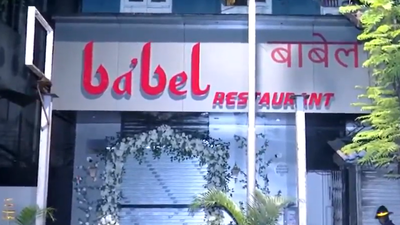
MUMBAI: A fire broke out at Babel Hotel in Fort in the early hours of Sunday, prompting a multi-agency response. The fire was reported at 12.57 am and was spread accross electric wiring, furniture and scrap material on the first and second floors.The blaze was extinguished at 2.25 am by the Mumbai Fire Brigade. Police, BEST, ambulance services and BMC ward staff were also deployed. No injuries were reported.


Source link

Triple Murder In Bengaluru: Son kills parents, sister over marriage dispute | Bengaluru News


BENGALURU: Gathering inside the station, the Tilaknagar police posse were lost in thought. They were trying to trace a missing family: a man in his late 50s, his wife, and their daughter. Despite painstaking efforts, their search was in vain. Akshay BJ, 27, who had come to the station claiming his parents and sister were missing, lamented the police’s inability to locate them. Police Inspector Vishwanath K was contemplating the next move when suddenly, a mobile phone ringtone sounded from Akshay’s trouser pocket. As others looked at him, Akshay’s face turned pale.

Bengaluru: Flyers’ Protest, By-poll Battles, Law Enforcement Actions & More

“Sir, I gave the ring to his sister’s mobile, and it is ringing now,” said a constable to Vishwanath.
-

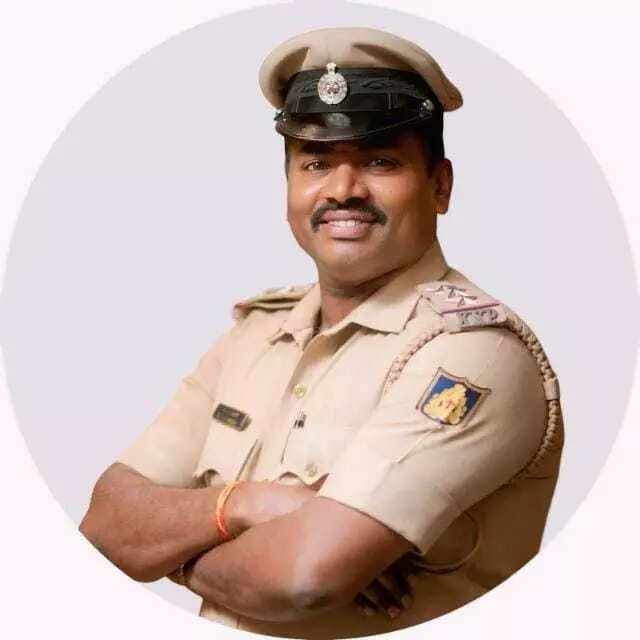
K. Vishwanath police inspector Tilak nagar ps

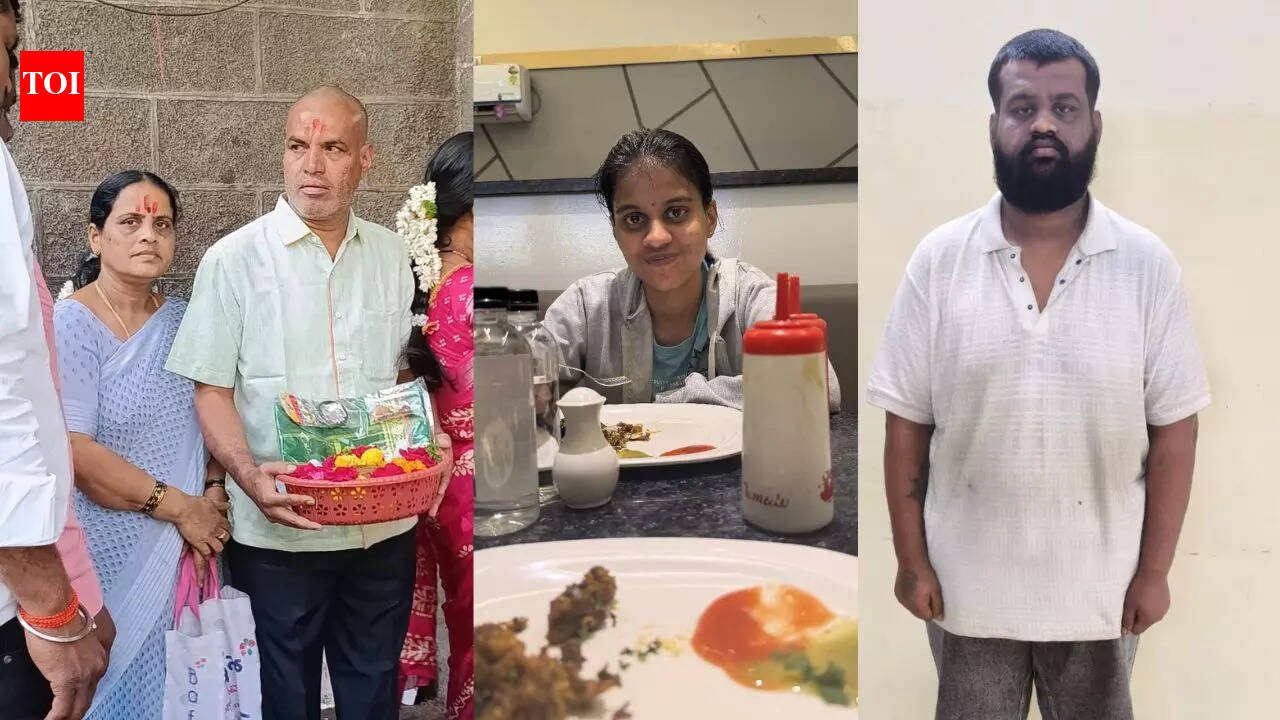
That was enough for Vishwanath and his team to suspect that something was amiss in the missing-person case, and that Akshay was hiding something. Searching Akshay, the cops found three SIM cards — those of his ‘missing’ parents and sister. Joint commissioner of Police-East, Ramesh Banoth, said the ringtone changed the entire investigation. “Tilaknagar police officials sensed something amiss from the beginning, as Akshay not only made contradictory statements but also tried to mislead us whenever we sought details on certain blank points. Officials were randomly dialing his parents’ and sister’s numbers, which were switched off. But on the morning of January 30, while Akshay went out for a tea break, he switched on his sister’s mobile to mislead the police into thinking they were somewhere in Bengaluru,” he said. This was how the mysterious case of three missing persons turned into a horrifying one: the son had hatched and executed the killings in an inhuman way. After slitting their throats with an axe blade, he dug a 10-foot-deep pit inside their Kottur residence in Vijayanagar district. City police arrested Akshay for killing the three, along with his uncle Vasanth, who was involved by giving tips on destroying evidence. Akshay runs a tyre-remoulding factory in his hometown, Kotturu. Deputy Commissioner of Police-South East, Mohammad Sujeetha, said, “We arrested two accused persons in the case: Akshay and his uncle Vasanth. Though the prime accused, Akshay, claimed personal reasons behind the killings, we strongly suspect other motives. However, we need to investigate the case from all possible angles to find the truth.” Another officer from Vijayanagar added that Bheemaraj had sold a property in Harappanahalli, Davanagere, fetching Rs 1.2 crore. “Bheemaraj had deposited the cash in a bank account, and Akshay had spent a portion of it. According to him, Bheemaraj was unaware of the spending,” he said. The tragic drama unfolded on the night of January 29 when Akshay stepped into Tilaknagar police station to file a complaint about his missing parents — Bheemraj H, Jayalakshmi J, and sister Amrita. According to him, they had come to the city on January 28 intending to visit Jayadeva Hospital. Bheemaraj had health issues, and doctors from his hometown had advised a hospital visit. To strengthen his claim, Akshay showed photos on his mobile, saying his father and sister had sent them after reaching Jayadeva. Indeed, the pictures were taken near the hospital. “My sister told me that Jayadeva hospital staff had seized her mobile for recording inside the hospital,” Akshay claimed. “At least 15 police personnel were put on the job that night. We were panicked on hearing that the couple and their daughter had gone missing. We first contacted Jayadeva, but they firmly said they did not have any patient by the name Bheemaraj. Some of our officials scanned CCTV footage for the previous two days but did not find Bheemaraj or the others. Different police teams visited various hospitals, including Nimhans and Victoria, but in vain,” Banoth said. Meanwhile, police, having collected the mobile numbers of the three, were randomly dialing them — all were switched off. Police thought leaving Akshay alone was risky, as he seemed panicked. A constable was assigned to him, and they went to a nearby hotel to rest. While walking, the constable explained to Akshay how the team was trying to locate the missing family. “We are continuously dialing their numbers, but they are switched off,” he said. The next morning, Akshay woke before the constable and visited a nearby tea shop, where he switched on his sister’s mobile so that the police would think they were somewhere in the city. However, like many criminals who make mistakes, he forgot to put the phone on silent mode. The entire case took a turn when, inside the police station, a constable dialed his sister’s number, which rang from Akshay’s trouser pocket. Later, the cops found the SIM cards of his father and mother. Then Akshay confessed, revealing one of the most horrific crimes the police had ever encountered. “I killed the three and buried their bodies inside our house. I did it because my sister wanted to marry a man of a different caste, and my parents supported her,” Akshay claimed. “First, I killed my mother on the afternoon of January 26 and hid her body in the bedroom. In the evening, my sister entered the house, and I killed her. My father came at night, and I killed him too. I kept the bodies in a bedroom and covered them with a bedsheet. At midnight, I caught a KSRTC bus and reached Bengaluru in the morning,” Akshay said. That day, Akshay intentionally left his mobile at home and carried the three phones of his parents and sister. After arriving in the city, he visited Jayadeva Hospital, clicked pictures from the mobile phones, and sent them to his own phone. That afternoon, he travelled back. “On January 27 and 28, I dug the pit using a drilling machine. I kept the TV volume high so neighbors would not hear the drilling. Again, I took a bus to Bengaluru on the morning of January 29 and reached in the evening,” Akshay explained. “After coming to the city, I met my uncle Vasanth. He knew I killed the three and suggested I file a missing-person complaint so that the police investigation would derail,” Akshay told cops. After zeroing in on Akshay on January 30, Tilaknagar police alerted their counterparts in Vijayanagar. The team rushed to the house, broke open the door, and recovered the bodies after digging the pit. The entire process was video recorded. Tilaknagar police have now taken Akshay into 10-day police custody for further questioning, while his uncle Vasanth was handed over to judicial custody.

Source link

IND vs WI, T20 World Cup 2026 Super 8 Match Prediction: Who will win today’s game between India and West Indies?


The stakes couldn’t be higher. With South Africa already securing their spot in the T20 World Cup 2026 semi-finals from Group 1, the iconic Eden Gardens sets the stage for a winner-takes-all showdown. For India and West Indies, the equation is simple win and progress, lose and fly home. Both teams currently sit on 2 points from two matches in the Super 8s.

India enter this game with momentum after a crushing 72-run victory over Zimbabwe, where they posted a tournament-high 256/4. West Indies, despite a strong start to the tournament, are coming off a tough 9-wicket loss to South Africa. However, they hold a superior Net Run Rate (+1.791 vs India’s -0.100), meaning a washout would actually favour the Caribbean side.

IND vs WI, T20 World Cup 2026: Match details

  • Date and Time: March 01; 7:00 pm IST / 1:30 pm GMT
  • Venue: Eden Gardens, Kolkata

IND vs WI, Head-to-Head Record in T20Is

Matches played: 30 | India won: 19 | West Indies won: 10 | No result: 01

Eden Gardens Pitch Report

The surface at Eden Gardens for tomorrow’s high-stakes encounter appears to be a quintessential batting paradise, characterized by its firm bounce and consistent pace. While the iconic Kolkata track historically offers some initial lateral movement for the seamers under lights, the true nature of the clay-based pitch suggests a high-scoring affair. Spinners like Kuldeep Yadav and Gudakesh Motie may find some grip as the match progresses, but the relatively short boundaries and rapid outfield will likely neutralize the slower bowlers. Expect a flat deck where the ball comes onto the bat beautifully, making a first-innings total of 200+ the par score.

Squads

India: Abhishek Sharma, Ishan Kishan (wk), Tilak Varma, Suryakumar Yadav (c), Shivam Dube, Hardik Pandya, Rinku Singh, Washington Sundar, Arshdeep Singh, Jasprit Bumrah, Varun Chakaravarthy, Sanju Samson, Kuldeep Yadav, Axar Patel, Mohammed Siraj

West Indies: Brandon King, Shai Hope (c & wk), Shimron Hetmyer, Roston Chase, Sherfane Rutherford, Rovman Powell, Jason Holder, Matthew Forde, Akeal Hosein, Gudakesh Motie, Shamar Joseph, Romario Shepherd, Jayden Seales, Quentin Sampson, Johnson Charles

Also READ: T20 World Cup 2026: What if the India vs West Indies Super 8 clash at Eden Gardens gets washed out due to rain in Kolkata?

IND vs WI, T20 World Cup 2026: Today’s Match Prediction

Case 1:

  • India wins the toss and bowls first
  • West Indies’ powerplay score: 40-50 (6 overs)
  • West Indies’ total score: 190-200

Case 2:

  • West Indies wins the toss and bowls first
  • India’s powerplay score: 60-70 (6 overs)
  • India’s total score: 230-240

Match result: Team batting second to win the contest.

Also READ: Sunil Gavaskar highlights silver lining of South Africa defeat following India’s T20 World Cup Super 8 triumph vs Zimbabwe


Source link

Access Denied


Access Denied

You don’t have permission to access “http://www.ndtv.com/world-news/iran-vows-most-ferocious-operation-against-us-israel-after-ayatollah-khamenei-killed-in-strikes-11152437” on this server.

Reference #18.c7f5d217.1772339211.b55f7dca

https://errors.edgesuite.net/18.c7f5d217.1772339211.b55f7dca


Source link

‘444 flights expected to be cancelled on March 1’: Civil aviation ministry shares update amid Middle East crisis


‘444 flights expected to be cancelled on March 1’: Civil aviation ministry shares update amid Middle East crisis

NEW DELHI: The Ministry of Civil Aviation (MoCA) said that more than 410 flights operated by domestic carriers were cancelled on Saturday and around 444 flights are expected to be cancelled on Sunday as airspace restrictions continue over Iran and parts of the Middle East. In a post on X, the ministry stated: “Due to airspace restrictions over Iran and parts of the Middle East, 410 flights of domestic carriers were cancelled on 28 February, and 444 flights are expected to be cancelled on 1 March.”Amid widespread cancellations and airspace restrictions over parts of the Middle East, the aviation ministry said that the authorities are closely monitoring the situation and coordinating with airlines and airports to minimise passenger inconvenience.“DGCA is maintaining close coordination with airlines to ensure full compliance with safety and operational regulations. Passengers are advised to check and confirm their flight status with the respective airlines before proceeding to the airport. Major airports remain on operational alert to manage potential diversions and ensure seamless passenger facilitation. Passenger assistance, airline coordination, and terminal crowd management are being closely monitored, with senior officials deployed on the ground,” the ministry further wrote. Highlighting the measures taken to address passenger concerns amid large-scale cancellations, the ministry said that its grievance redressal mechanisms remain fully active to support affected travellers.“The Ministry’s Passenger Assistance Control Room (PACR) continues to closely monitor passenger concerns and facilitate prompt redressal. On 28 February, AirSewa recorded 216 grievances, and 105 grievances were resolved during the same period ensuring necessary support to affected passengers. All stakeholders are working in coordination to ensure orderly handling of affected passengers and timely assistance to all concerned travellers,” the statement added. The cancellations come amid escalating tensions in West Asia following coordinated US-Israel strikes on Iran and subsequent retaliatory actions by Tehran targeting Israel and US military bases in the region. Several countries have imposed airspace restrictions and issued NOTAMs, affecting international flight operations.Earlier, Air India announced the cancellation of 28 international flights scheduled for March 1 connecting India with cities in Europe, the United States and Canada, citing the evolving situation in the Middle East.The affected routes include services between Delhi and London (Heathrow), Mumbai and London (Heathrow), Amritsar and London (Gatwick), Delhi and New York (JFK), Mumbai and New York (JFK), Mumbai and Newark, Delhi and Chicago (via Vienna), Delhi and Toronto (via Vienna), Delhi and Frankfurt, Mumbai and Frankfurt and Delhi and Paris.The airline had earlier suspended all flights to Middle East destinations until 2359 hours on March 1, stating that safety remains its highest priority. It said that affected passengers are being informed and provided rebooking and refund options.IndiGo also issued a travel advisory saying that it is closely monitoring developments across the Middle East, including updates related to Iran and surrounding airspace and remains prepared to take necessary steps based on changing conditions.Flight disruptions were particularly visible at airports in Kerala. Several services from Kochi to Doha, Dubai, Ras Al Khaimah and Abu Dhabi were cancelled, while some flights were delayed or diverted. Qatar Airways temporarily suspended flights to and from Doha following the closure of Qatari airspace.The Aviation Minister conducted a high-level review meeting via video conference with senior officials from the ministry, the Airports Authority of India, the Directorate General of Civil Aviation (DGCA), airline operators and major airport operators. Discussions focused on maintaining passenger safety, uninterrupted operations and real-time coordination.Airlines have been instructed to closely track airspace advisories and implement rerouting or diversions wherever necessary in line with international safety standards. Airports across India, especially major international hubs, have been placed on heightened alert to handle diversions, emergency landings and passenger assistance.The ministry is also coordinating with the Ministry of External Affairs to address any urgent requirements involving Indian carriers or nationals abroad.Passengers have been urged to stay in contact with their airlines for updates and confirm flight status before heading to the airport as the situation in the Middle East remains volatile.


Source link

For 61 lakh ‘doubtful’ voters, it’s a race against time to get on electoral roll | India News


For 61 lakh 'doubtful' voters, it's a race against time to get on electoral roll

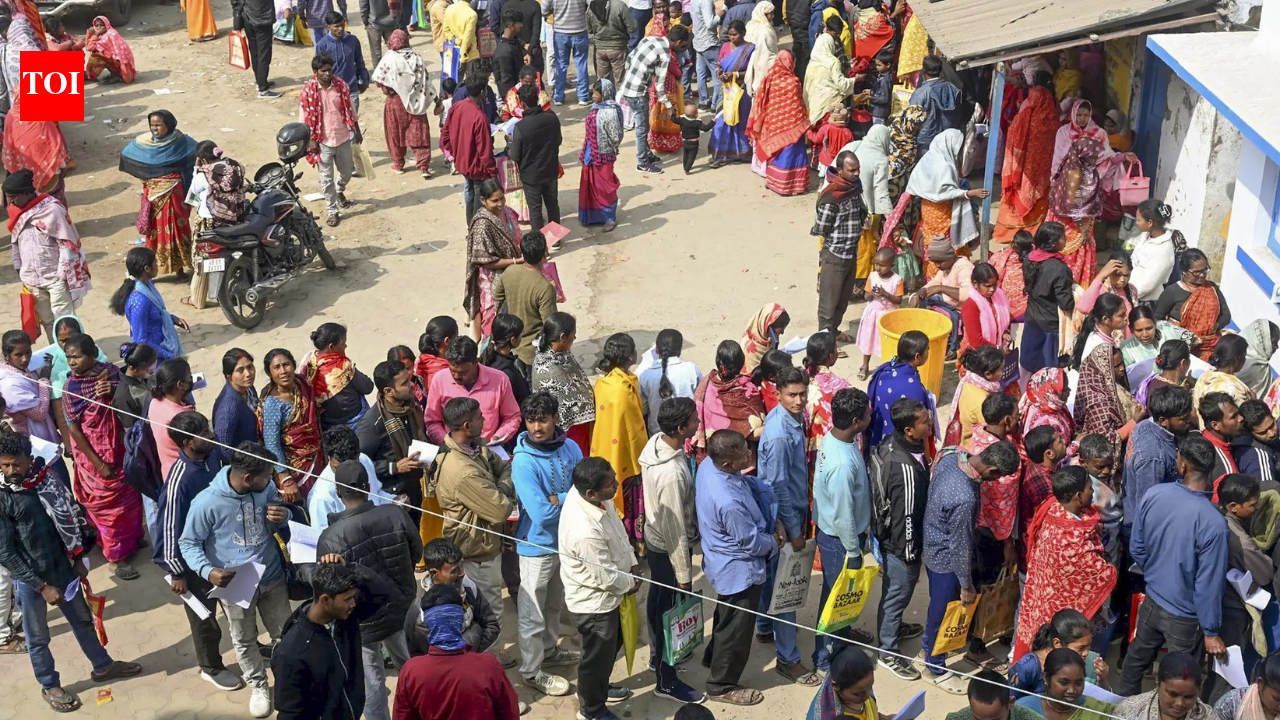
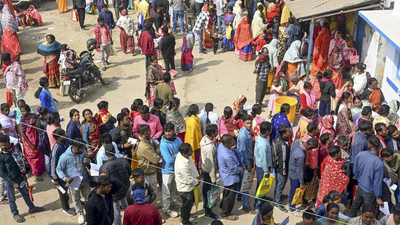
NEW DELHI: Around 60 lakh electors in West Bengal have been categorised as ‘doubtful’ by Election Commission, and their cases have been sent for adjudication by judicial officers appointed by the Kolkata high court. This is in line with the Supreme Court‘s directive dated Feb 20. With assembly elections in the state likely to be announced in the second half of March, this means that it would be a race against time for the “doubtful” voters to be made a part of the electoral list.Sources said that the final electorate of Bengal is around 6.4 crore, with a total 1.2 crore deletions since Oct 27, 2025 (15.9%). Of these, around 61.8 lakh were deleted on account of being deceased, shifted, migrated and registered at multiple places and another 60 lakh categorised as ‘doubtful’ voters under adjudication.Such ‘doubtful’ electors, as and when their cases are approved by the court-appointed judicial officers, shall be added back to the state’s roll by way of supplementary lists to be published later. Until then, these voters will not be eligible to vote in any election.A senior EC functionary told TOI that the majority of these ‘doubtful’ electors are likely to be illegal immigrants from Bangladesh. “Despite stiff resistance, the SIR exercise in Bengal has been a huge success,” said another EC official.According to the rules, the electoral roll of a state is frozen 10 days before the last date for nomination in Lok Sabha or assembly elections. So only those ‘doubtful’ voters whose cases are disposed of within the prescribed deadline can vote in the upcoming Bengal assembly elections.It remains to be seen how much time the judicial officers will take to dispose of cases of the 60 lakh ‘doubtful’ voters in West Bengal. The cases of thousands of ‘doubtful’ or ‘D’ voters in Assam, categorised as such since 1997 and not allowed to vote, have been under adjudication by the foreigners tribunals for decades. Only after the tribunals declare the ‘D’ voters as bona fide citizens can they vote. If ruled as foreigners, they are sent to detention centres and deportation proceedings initiated.The judiciary-appointed officers in Bengal will now have to do the same for those categorised as ‘doubtful’ voters due to SIR, ostensibly on grounds of being Bangladeshis. So effectively, the judicial officers will act like foreigners tribunals, examining and confirming citizenship of ‘doubtful’ electors before restoring their voting rights.At the start of the SIR exercise on Oct 27, 2025, Bengal’s electorate stood at 7.7 crore. The draft roll published on Dec 16, 2025, put the strength of the electorate at 7.08 crore after 58.2 lakh deletions. The final roll published on Saturday listed 6.4 crore voters, with 3.6 lakh net deletions since draft roll publication.


Source link