Breaking News
Explosion scare in Dubai Marina: UAE emirate confirms tower hit by falling debris from aerial interception amid Iran and US-Israel clashes


Explosion scare in Dubai Marina: UAE emirate confirms tower hit by falling debris from aerial interception amid Iran and US-Israel clashes
Dubai Confirms Dubai Marina Incident Was Caused by Aerial Interception: What Really Happened In The UAE Emirate

Dubai authorities have confirmed that the recent incident in the Dubai Marina area was caused by debris from a successful aerial interception, reassuring residents that the situation has been contained and that public safety remains intact. The event occurred amid rising regional tensions linked to the ongoing conflict involving Iran, the United States and Israel, which has led to missile and drone activity across parts of the Middle East that host US military bases.While the incident sparked concern after videos of smoke and damage circulated on social media, officials emphasised that it was a minor incident caused by falling debris rather than a direct attack on the city. The clarification has helped calm fears in one of Dubai’s busiest residential and tourist districts.

What happened in Dubai Marina

According to the Dubai Media Office, debris from a projectile that had been successfully intercepted by air defence systems struck the façade of a tower in Dubai Marina. Authorities confirmed that emergency teams responded quickly and secured the area. Officials said the incident was limited in scale and no injuries were reported at the tower, with the damage mainly affecting the building’s exterior.Dubai Marina is one of the emirate’s most densely populated neighbourhoods, home to luxury residential towers, hotels and popular waterfront attractions. Due to its visibility and international profile, even a small incident there quickly drew attention online and in international media. Authorities stressed that the situation was brought under control rapidly and that residents could resume normal activities.The incident did not occur in isolation. It comes during an ongoing wave of missile and drone attacks linked to the escalating Iran-US-Israel conflict, which has spilled into several Gulf states. Since the conflict intensified in late February 2026, the UAE’s air defence systems have intercepted hundreds of drones and missiles, preventing most of them from reaching populated areas. However, fragments from intercepted projectiles sometimes fall back to the ground, creating secondary risks.Experts say this is a common challenge during missile interceptions. When defence systems destroy incoming threats in mid-air, pieces of debris can scatter over wide areas before falling to the ground. In this case, authorities say that the debris that struck the building in Dubai Marina was the result of one such interception.

Dubai air defence and public safety measures

The UAE’s Ministry of Defence has been actively responding to incoming threats using a network of advanced air defence systems designed to detect and intercept missiles and drones. These systems include radar detection, early-warning alerts, and interceptor missiles that destroy incoming projectiles before they reach their targets.Authorities have also taken additional precautionary steps during the conflict, including:

  • Issuing public safety alerts warning residents of potential missile threats
  • Temporarily closing airspace during active interceptions
  • Deploying emergency response teams across key areas
  • Monitoring critical infrastructure such as airports, ports and residential zones

During the recent event, residents across parts of the UAE reportedly received mobile alerts advising them to seek shelter temporarily while interceptions were underway. Shortly afterward, officials issued an “all clear” message confirming that the situation was safe.

Why interception debris can still cause damage

Even when air defence systems work as intended, interceptions can still create risks for civilians. When a missile or drone is destroyed in the air, it breaks apart into fragments. These fragments can include:

  • Pieces of the missile body
  • Fuel tanks
  • Electronics and guidance systems
  • Fragments of the interceptor missile itself

Depending on the altitude of the interception, these fragments may fall back to the ground across a wide radius. Military analysts note that this phenomenon has been seen in several conflicts worldwide, including missile defence operations in Israel, Ukraine and Saudi Arabia. In many cases, the debris causes limited structural damage but can still pose dangers to people and vehicles on the ground.

Dubai’s rapid emergency response

Authorities credit the quick containment of the Dubai Marina incident to the emirate’s well-developed emergency response infrastructure. Emergency teams including Dubai Civil Defence, police units, and medical responders were dispatched immediately after reports of the incident emerged.Their responsibilities included securing the affected building, assessing structural damage, assisting residents if evacuation was necessary and ensuring that no unexploded debris remained. Officials later confirmed that the damage was minor and that residents were safe.Videos and photos from the scene spread rapidly on social media, showing smoke rising from a tower in Dubai Marina. These images led to speculation that the city had been directly targeted. However, authorities quickly clarified the situation, explaining that the damage resulted from interception debris rather than a successful strike.The Dubai Media Office urged residents and media outlets to rely on official sources for accurate information, particularly during periods of heightened regional tensions. Misinformation during security incidents can spread quickly online, sometimes causing unnecessary panic.

The bigger picture: Gulf security during Iran and US-Israel conflict

The Dubai Marina incident reflects the broader security challenges facing Gulf countries during the current regional crisis. Since the escalation began, several countries in the region, including the UAE, Qatar and Bahrain, have reported missile or drone threats linked to the Iran-Israel-US conflict. Many of these attacks have targeted military facilities or strategic infrastructure but defence systems have intercepted the majority before impact.According to official figures, hundreds of drones and missiles have been intercepted over the UAE since the conflict began, significantly limiting the potential damage. However, the falling debris from interceptions remains an unavoidable risk in densely populated urban environments.Security analysts say that the next situation will depend largely on how the wider conflict evolves in the coming weeks. If tensions escalate further, Gulf states may continue to strengthen air defence readiness, early-warning systems and coordination with allied defence forces. At the same time, authorities are likely to continue issuing public safety alerts whenever interception operations occur.For now, officials in Dubai stress that the city remains safe and that the recent Dubai Marina incident was quickly controlled and limited in scope.


Source link

‘Census-style’ 45-day assessment signals early learning turnaround in Haryana schools | India News


'Census-style' 45-day assessment signals early learning turnaround in Haryana schools

NEW DELHI: At a time when India is struggling to ensure children can read and do basic arithmetic by Class III – a core goal of the National Education Policy (NEP) 2020 – Haryana has reported a sharp turnaround in govt school-level learning outcomes (grade-level competencies). A statewide “census-style” assessment, exclusively accessed by TOI, showed the share of high-performing govt schools rising from 7% in Sept to 53% in Dec last year after a targeted remediation drive addressing foundational literacy and numeracy gaps.Haryana’s initiative marks a move from sample-based assessments to a “census-style diagnostic approach” that measures the competency of every child individually. The exercise covered over 4.35 lakh students across nearly 8,600 govt primary schools, using a digital teacher-led assessment system under NIPUN (National Initiative for Proficiency in Reading with Understanding and Numeracy) Haryana mission.The first assessment conducted in Sept 2025 revealed significant learning gaps across the system. Most schools were classified in Category C (the lowest), where fewer than half the students had achieved grade-level competencies.Following the diagnosis, districts designed their own 45-day remediation strategies, grouping students by competency and targeting specific learning gaps. Peer-learning approaches were also used to support weaker students. “Every district made their own strategy for 45 days which also included category A students helping lower category students as all the students were already mapped,” NIPUN Haryana programme officer Pramod Kumar said.The state repeated the assessment in Dec 2025 using same teachers who conducted first round. “Data made a completely significant shift showing unimaginable progress,” the official said.Learning gains were visible across literacy and numeracy. Class II literacy rose from 46.5% to 67%, while Class III literacy increased from 44.2% to 61.4%. Numeracy performance also improved, with Class II scores rising from 63.7% to 78.8% and Class III numeracy improving from 50.5% to 71%. The results translated into a major shift in school performance categories. Number of Category A schools increased from 621 to 4,545, while Category C schools fell from 6,385 to 1,973.Officials said the next phase will focus on sustaining the gains and expanding the programme. The state plans to extend the NIPUN model to Classes IV and V, with around seven lakh students expected to be assessed this year.The shift is significant against the backdrop of India’s persistent foundational learning challenge. National learning surveys have shown only gradual improvements in basic reading and arithmetic. For instance, the proportion of Class III children in govt schools able to read a Grade II-level text increased from 16.3% in 2022 to 23.4% in 2024, while proficiency in basic subtraction rose from 20.2% to 27.6% during same period.


Source link

Karnataka woman, lover held after autopsy of exhumed body reveals husband died of smothering, not ‘heart attack’ | Bengaluru News


A Bengaluru man, initially reported to have died of a heart attack, was actually smothered to death

BENGALURU: Carrying out an autopsy on the exhumed body of a 50-year-old daily wage worker, who, according to his wife, had died of a heart attack, revealed that the victim was smothered to death. Police arrested his wife, P Asha, 46, and her alleged lover, Chandrappa, 48, on charges of murdering K Paramesh inside the latter’s Hebbur home in Tumakuru district.According to police, Asha, who worked as housekeeping staff, had an affair with Chandrappa, a cook. As Paramesh discovered it, they decided to eliminate him. An alcoholic, Paramesh downed a few pegs before going to sleep every night. When he was asleep on Jan 29 night, Asha and Chandrappa allegedly smothered him to death. The next morning, Asha called the relatives, saying Paramesh died of a heart attack. He was buried.

Iran War Escalates, US Waiver On Russian Oil, Rahul Targets Centre And More

However, Paramesh’s elder sister, K Nagamma, filed a police complaint on March 4, suspecting foul play.“Seeing Asha unaffected by Paramesh’s death and her closeness with Chandrappa, Nagamma questioned Asha, asking for details on Paramesh’s death. When Asha made contradictory statements, Nagamma filed the police complaint,” an investigating officer said.


Source link

Top legal experts split on social media ban for kids | India News


Top legal experts split on social media ban for kids

NEW DELHI: At a time when parents are worried about the downside of screen addiction among adolescents, legal experts including former CJI Ranjan Gogoi appreciated the intent behind proposed move by Karnataka and Andhra Pradesh to ban social media access to children below certain age but doubted the pertinence and effectiveness of legislative or executive intervention.TOI spoke to a spectrum of other experts – former attorney general Mukul Rohatgi, and senior advocates A M Singhvi, Rakesh Dwivedi, and Devadatt Kamat – on the problem, efficacy of a law enacted by a state to prevent children below certain age from accessing social media platforms when telecommunication and information technology fall squarely within the law making domain of Centre and the possible ways and means to pull the children off the social media quagmire.Gogoi, with grandchildren of impressionable age, spoke more like a wise elderly head of a family than a legal expert: “Social media is here to stay. Instead of banning children from accessing it, it would be better to educate them about its constructive usage. Older generation must teach them its benefits because it provides instant reach to a vast knowledge base. Why should children be deprived of its tremendous benefits?”When pointed out that Australia has banned under-16s from accessing Tiktok, Facebook, Instagram, YouTube, Snapchat and Threads, Gogoi said, “We have very different social values and structures compared to Australia. We do not have to follow other countries blindly. Our strong social bonds and parental relations would be helpful in guiding the children to use social media beneficially.”Rohatgi was sceptical about the working and implementation of states enacting different laws prescribing different age limits for children to access social media: “Telecommunication and IT are central subjects. States should not enact laws individually. It will create confusion. It should be left to govt which can bring a legislation in Parliament to address the issue pan-India.”Singhvi said in principle the objective behind the proposed regulatory framework is laudable and desirable. “Across political spectrum, suffering parents, teachers and elders will endorse the deleterious impact of unlimited social media access on impressionable young minds.”What should be the mechanism to regulate it? Singhvi said, “As always both God and Devil reside in the details. The real test will depend on proper implementation without harassment and unrelated ulterior acts.” Dwivedi said, “The ban should not be absolute as children too have a fundamental right to communication and information. The ban should be on putrid content being placed on social media without adequate safeguards to prevent children from accessing such undesirable content.”Kamat, with two children of impressionable age, said mental health of the next generation should be safeguarded from the deleterious impact of unlimited access to social media. He said though communication is exclusively within the legislative competence of Centre, states can bring in regulatory mechanisms under the broad subject of health.


Source link

Mitchell Santner admits fear of Jasprit Bumrah and Varun Chakravarthy before T20 World Cup final


The Mitchell Santner-led New Zealand national cricket team is fully ready to face the mighty India national cricket team on Sunday, March 8, at the Narendra Modi Stadium in Ahmedabad. Both teams have played fearless cricket in the tournament, but the final brings a completely different level of pressure.

And New Zealand is fully aware that they will have to produce their best performance to stop a confident Indian side on home soil in the title clash in Ahmedabad – the same venue for the 2023 ODI World Cup final, where Australia broke Indian hearts with the historic title glory.

Mitchell Santner admits the T20 World Cup 2026 final challenge and pressure

Mitchell Santner is fully aware of the huge challenge waiting for his team in the T20 World Cup 2026 final. The New Zealand skipper expects a good batting pitch for the title clash, which could turn the final into a high-scoring battle. But he also knows that India’s bowling attack can change the match at any moment, especially with their biggest match-winner leading the pace attack.

Your daily dose of cricket!

next

Read Also: Mitchell Santner issues Pat Cummins-like ‘breaking billion hearts’ warning ahead of T20 WC 2026 final

Mitchell Santner admitted that India’s star fast bowler Jasprit Bumrah is the kind of player every team worries about before a big match. The Kiwi camp has already spent a lot of time discussing how to handle his deadly spells because he has the ability to change the game in just a few balls.

Mitchell Santner said at the pre-match press conference in Ahmedabad: One can assume pitch could be flat. Jasprit Bumrah will be a part of every team’s conversation. England looked pretty hard to hit, but he’s a game changer.”

Varun Chakravarthy on New Zealand’s radar

The New Zealand captain also kept a close eye on India’s mystery spinner Varun Chakravarthy, who has troubled many batters in the tournament. Santner believes the spinner can be very dangerous if he finds rhythm, and he could play a huge role in deciding the final.

He added, “Varun is a very good bowler. He’s one game away from breaking the tie.” However, Chakravarthy has been expensive in the last four games; still, he will be a big threat to the Kiwis.

Meanwhile, Santner revealed that the Black Caps are studying videos, analyzing strategies, and making sure they stay calm under pressure so they can execute their plans perfectly on the big day.

Read Also: Suryakumar Yadav labelled minnow basher by ex-KKR star before T20 World Cup final

The spinner further mentioned, “A lot of different things can happen in a game. You want to be consistent with the approach. Watch the videos, analyze, and execute well out there.”

New Zealand using India series experience for final preparation

Additionally, New Zealand are carrying important lessons from their recent bilateral tour of India. That series gave them experience of playing in Indian conditions and on different types of pitches. But they lost the T20I series 1-4 to India.

However, Santner admitted that a World Cup final is a completely different stage, where even small moments can decide who lifts the trophy. Santner signed off by saying, “We were challenged in the bilateral series. We played on five very good surfaces. It’s all learning. Good conversation from that series. The World Cup final is pretty much different.”


Source link

Seismic map rollback hits quake readiness: Experts | India News


DEHRADUN: Union govt’s decision to roll back India’s newly introduced seismic zonation map and revised earthquake design code has triggered concern among seismologists and geologists, many of whom said the move could weaken the country’s preparedness for a future major earthquake.The revised framework, introduced in Nov 2025 by Bureau of Indian Standards (BIS), proposed significant updates to India’s seismic design norms, including placing the entire Himalayan arc under a new Zone VI – the highest seismic risk category.

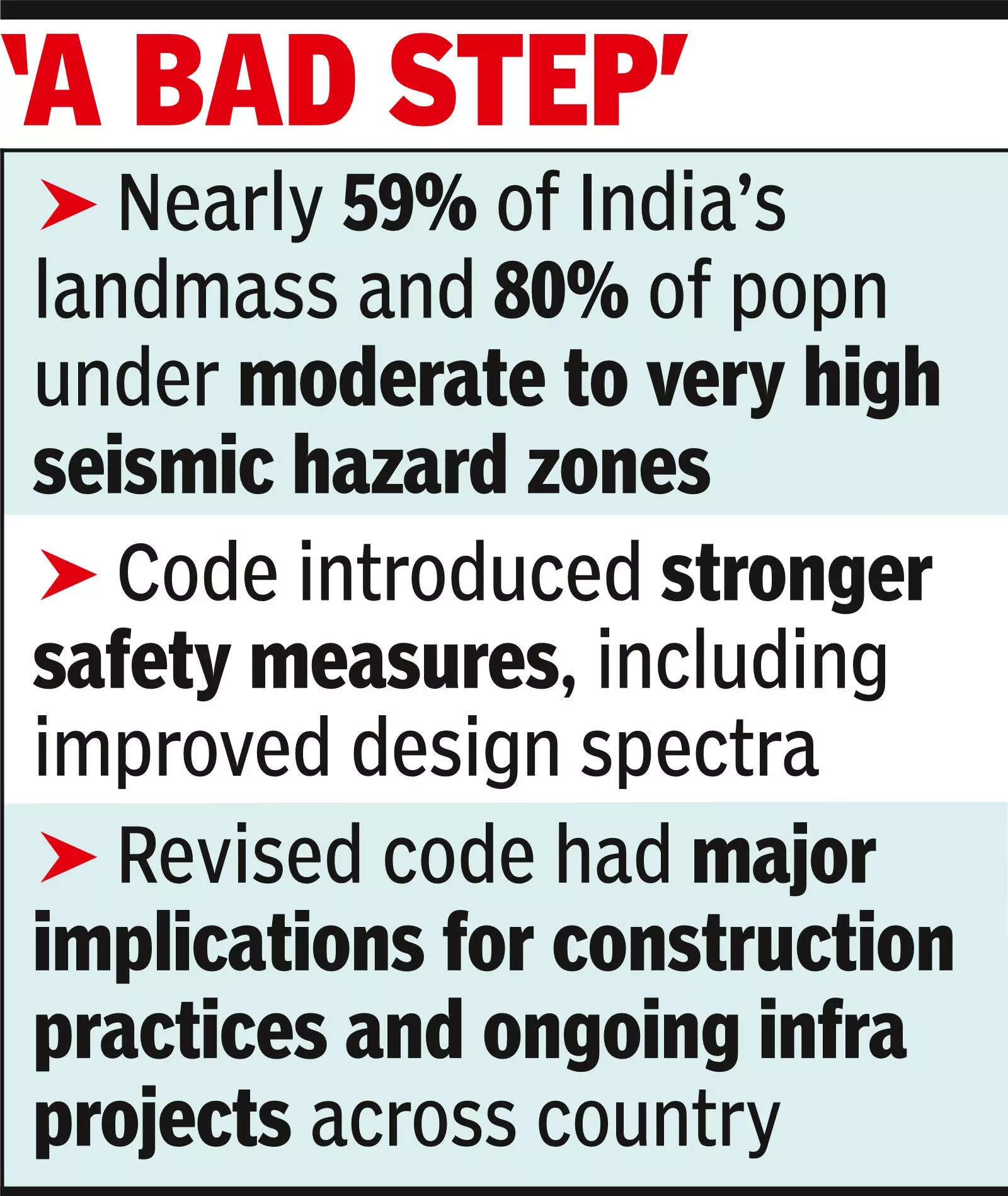
'A bad step'

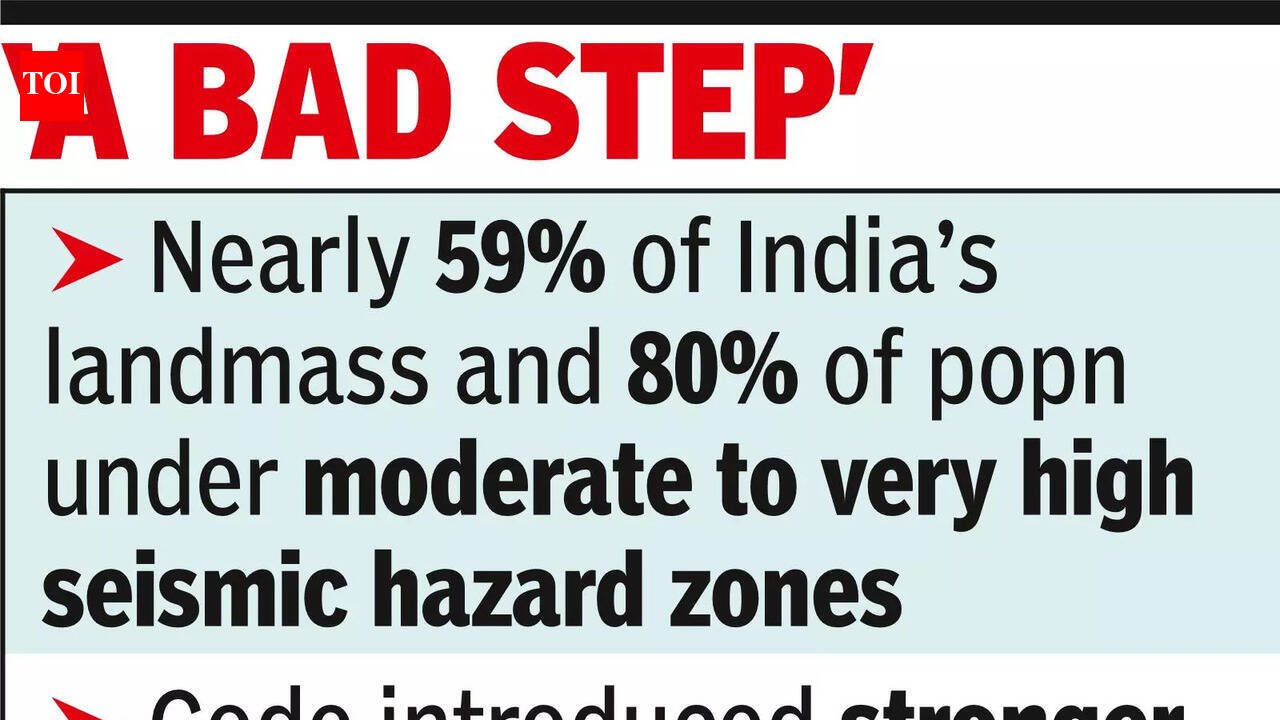
India’s seismic risk far from marginal, warn geologistsSeveral experts described the withdrawal as “a missed opportunity to strengthen India’s disaster resilience”, particularly in regions that scientists long warned could experience a devastating earthquake.Senior geoscientist CP Rajendran termed the rollback a “bad step”. “We don’t know what triggered the govt to roll back such a bold policy. The new seismic code was based on the knowledge the scientific community had accumulated about earthquakes and its possible impact on India,” he said.Rajendran added that scientists repeatedly warned that the Himalayan region could witness a magnitude eight or a larger quake in future. “New code was a reflection of the real earthquake risks the country faces,” Rajendran said.Geologists pointed out that India’s seismic risk was far from marginal. According to experts, nearly 59% of the country’s landmass and nearly 80% of the population fell under moderate to very high seismic hazard zones.Piyoosh Rautela, geologist and former executive director of Uttarakhand State Disaster Management Authority, said the proposed revisions to the code represented a major step forward in improving the country’s preparedness.“The proposed revisions marked a major step in strengthening India’s seismic design framework to better protect the country’s built environment from future earthquakes,” Rautela said. He added that the newly- proposed Zone VI covering the Himalayan arc acknowledged the persistent tectonic threat along the Indo-Eurasian plate boundary — similar to the earthquakes seen during the 2001 Bhuj and 2015 Nepal earthquakes.Experts further said the revised code introduced stronger safety measures, including improved design spectra, a 10-30% increase in base shear requirements, stricter rules for structural irregularities, and more rigorous geotechnical and dynamic analyses. These changes aimed to promote performance-based engineering — ensuring buildings were designed not only to survive shaking, but also to minimise collapse risks and economic losses during large quakes.At the same time, experts acknowledged that the revised code had major implications for construction practices and ongoing infrastructure projects across the country.


Source link

Dera Sacha Sauda chief Gurmeet Ram Rahim acquitted in journalist murder case | India News


Dera Sacha Sauda chief Gurmeet Ram Rahim acquitted in journalist murder case
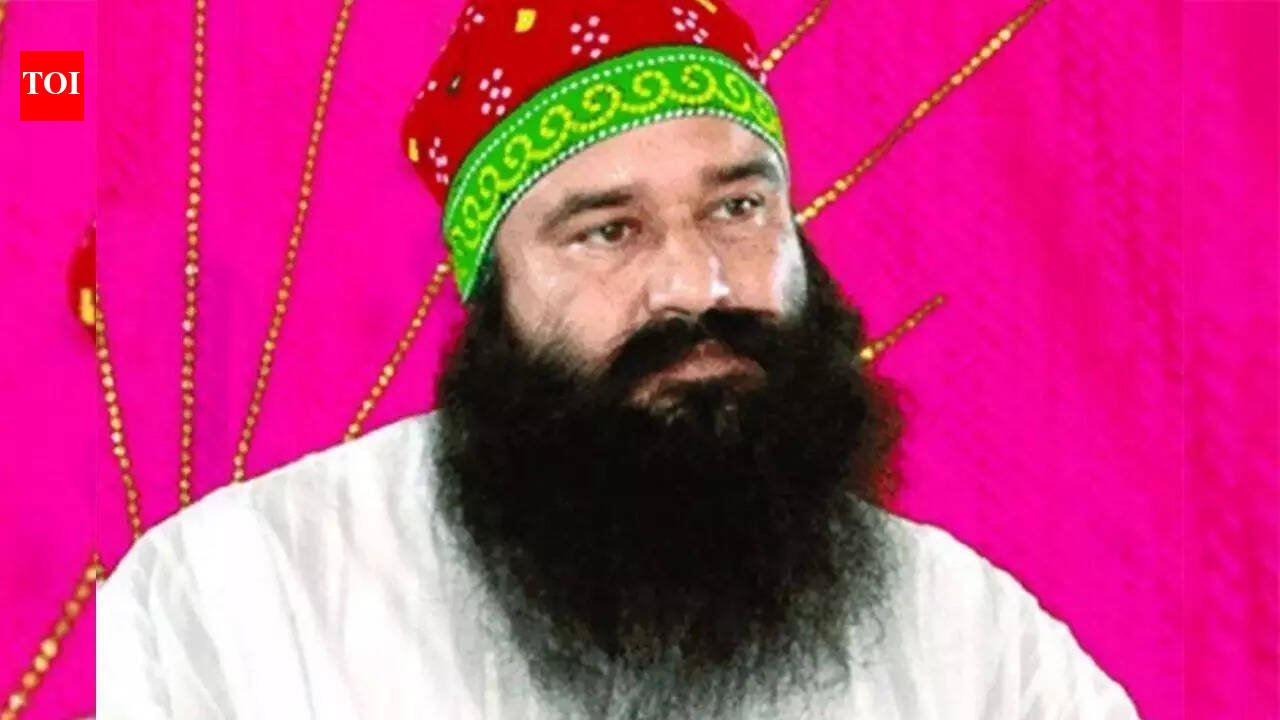
File photo: Dera Sacha Sauda chief Gurmeet Ram Rahim

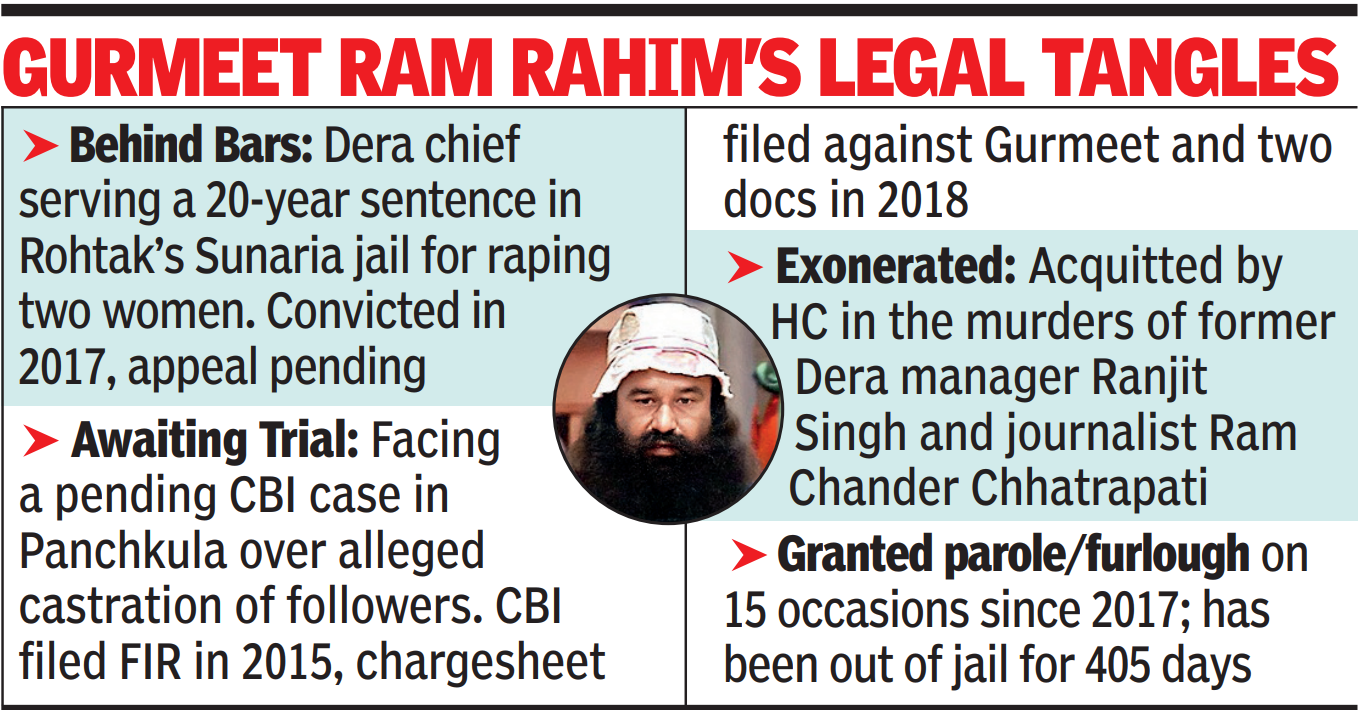
CHANDIGARH: Punjab and Haryana high court on Saturday acquitted the jailed Dera Sacha Sauda chief Gurmeet Ram Rahim in the 2002 murder of journalist Ram Chander Chhatrapati, overturning a life sentence awarded by a CBI court and dealing a blow to the investigating agency.Gurmeet remains lodged in Sunaria jail in Rohtak, serving a 20-year sentence since August 2017 after conviction for raping two women devotees. He has spent more than eight years in prison in that case.He also faces a separate CBI case over the alleged castration of some Dera followers. Trial is pending in a court in Panchkula. HC had earlier acquitted him in the murder case of former Dera manager Ranjit Singh. On Saturday, HC allowed the Dera chief’s appeal against his conviction in the Chhatrapati murder case while upholding life sentences of three co-accused. The slain journalist’s son Anshul, said the family plans to challenge the acquittal in Supreme Court. Chhatrapati was the editor of evening newspaper Poora Sach.

Gurmeet Ram Rahim's legal tangles

He had published reports alleging sexual exploitation of women disciples at Dera Sacha Sauda. Prosecution alleged he was killed in retaliation for the coverage.Dera chief counsel alleges CBI torture and revengeA special CBI court had sentenced the Dera chief and three others to life imprisonment in 2019, along with a fine of 50,000 each. Gurmeet challenged that conviction in HC, saying he had been wrongly accused.“Krishan Lal was tortured by CBI. The name of the Dera chief was thereafter included as an accused by way of revenge,” his counsel said.Lawyers also questioned the testimony of key witness Khatta Singh, saying the claim that a conspiracy was hatched in his presence and wasn’t undisclosed to anyone “stands falsified by the admission of IO, M Narayanan, in his cross-examination”. The defence further argued prosecution failed to show Gurmeet had any grievance against the journalist. “The investigating agency failed to prove even an iota of evidence that the appellant ever read the said newspaper,” the counsel said, adding that the evening paper largely reproduced reports already published by morning newspapers.


Source link

Congress: US calling India ‘good actor’ is evidence of PM Modi’s cowardice | India News


Congress: US calling India 'good actor' is evidence of PM Modi's cowardice

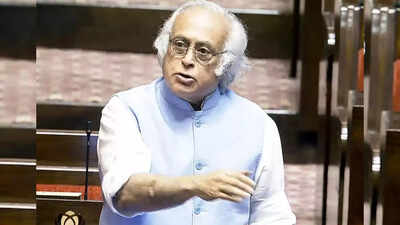
NEW DELHI: After slamming the Modi government for the US “permission” to India for Russian oil imports, Congress Saturday attacked the BJP over the comment from American treasury secretary that India has been a “good actor” for agreeing to stop imports from Russia on US demand – calling it evidence of PM Modi’s “cowardice”.AICC spokesperson Jairam Ramesh said, “The US treasury secretary has given the Modi govt its certificate for faithfully following President Trump’s orders. Does anything more need to be said about how cowardly and compromised the self-proclaimed 56-inch chest has become?” Congress president Mallikarjun Kharge lashed out at the Modi govt over the increase in LPG prices, saying the govt all these years refused to give the benefit of low international crude prices to the consumers, but has chosen to increase the prices now. AICC spokesman Pawan Khera said petroleum minister Hardeep Singh Puri said on Friday that “our priority is to ensure availability of affordable and sustainable fuel for our citizens, and we are doing it comfortably”, and within hours, the government hiked the LPG cylinder prices. “Never believe a word of what Hardeep Singh Puri says,” he added.


Source link

‘Clutch is Hardik Pandya’: All-rounder credits calm mindset for Bethell runout in semifinal – Watch | Cricket News


'Clutch is Hardik Pandya': All-rounder credits calm mindset for Bethell runout in semifinal - Watch

India all-rounder Hardik Pandya has explained the reason behind his celebration after the dismissal of Jacob Bethell during the second semi-final of the ICC Men’s T20 World Cup at the Wankhede Stadium on Thursday.Pandya’s direct throw at the striker’s end in the final over of England’s chase ended Bethell’s innings of 102. After the dismissal, the 32-year-old reacted with an animated celebration and tried to lift the team’s energy. Pandya later said the reaction came because his son Agastya and girlfriend Mahieka Sharma were watching the match from the stands, and he wanted them to experience his emotions at that moment.

India leave Mumbai for Ahmedabad | Team India heads to T20 World Cup final vs New Zealand

“Clutch is Hardik Pandya,” the all-rounder said in a video released by Board of Control for Cricket in India (BCCI) on X. “See, there are two ways in life. I could have got my heart rushing and would have not been able to execute. So, I went in my zen mode. Quite amazing that instead of getting my heartbeat rushed, I was still. And I’m really proud of that,” Pandya said.“One batter I had to get out from the field was Bethell, the way he was batting. I knew I had to keep calm and throw it where it was supposed to be. I would have liked it a little closer to the stumps, but nevertheless, we got the job done,” Hardik said in a video released by BCCI on X.“The reaction was also because my son came, and I wanted my son and Mahieka to enjoy this moment and feel how emotional I was,” he added.

Poll

Who do you think has a greater influence on a player's performance in crucial games?

Before the run-out, Pandya had also made an impact with the ball. In the 19th over, he conceded nine runs and took the wicket of Sam Curran, who was trying to accelerate the scoring but was caught at mid-wicket.Pandya said he focused on staying calm before bowling the over.“There are two ways in life. I could have got my heart racing and not been able to execute, so I went into my Zen mode. It’s quite amazing that instead of my heartbeat rushing, I stayed still. I’m really proud of that,” Hardik said.For his performance, Pandya was named the impact player of the match in the dressing room after the game.India will next face New Zealand in the final of the 2026 T20 World Cup at the Narendra Modi Stadium on Sunday.


Source link

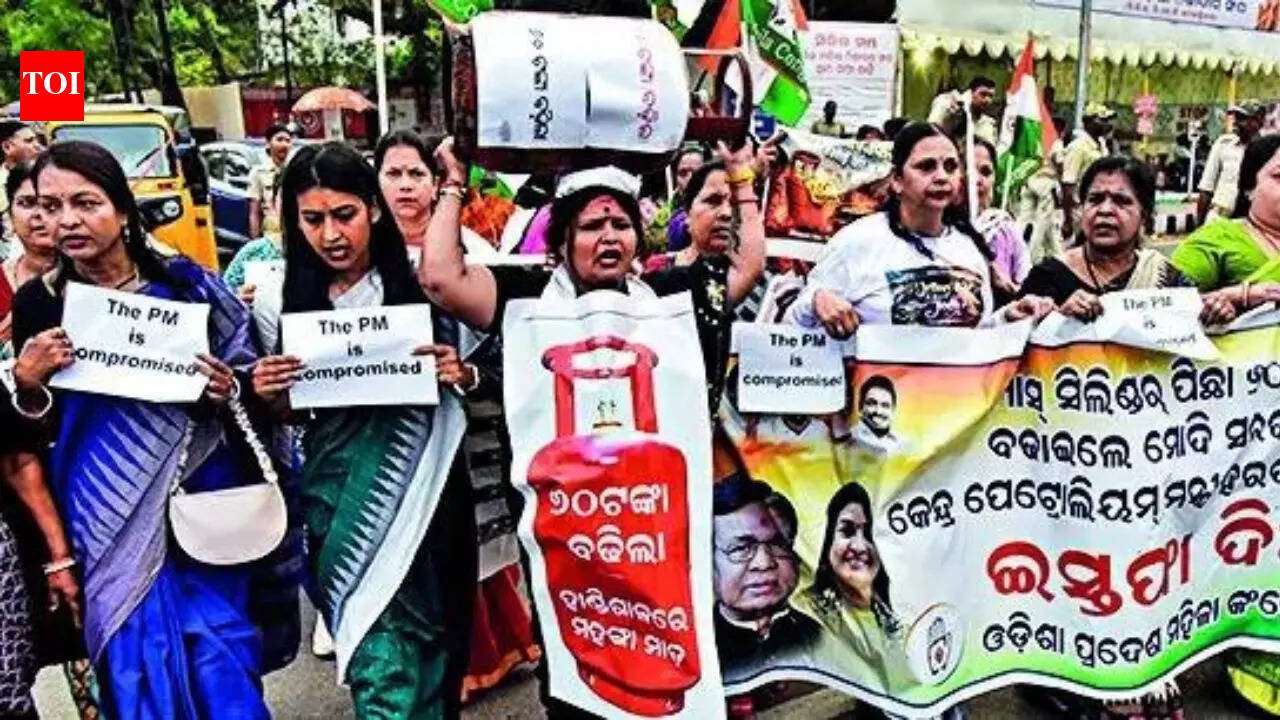
LPG price hike: Mamata calls for protests, Sidda seeks PM Modi’s ouster | India News


LPG price hike: Mamata calls for protests, Sidda seeks PM Modi's ouster
Mahila Congress workers stage a protest in Bhubaneswar on Saturday

KOLKATA/RANCHI/BENGALURU: Several opposition-governed states mounted a scathing attack on the Centre over the increase in LPG cylinder prices, with Bengal CM Mamata Banerjee asking women across the state to hold protests and her Karnataka counterpart Siddaramaiah calling for PM Modi’s resignation.In poll-bound Bengal, Mamata, focusing on her party’s women vote bank, weaved the issue of rising kitchen costs with SIR deletions. She urged women across the state to mark Women’s Day by organising rallies in black outfits and armed with utensils to protest against the hike in LPG cylinder prices and largescale deletion of women’s names from the voters’ list. “Gas prices have been increased again and you can’t book a cylinder before 21 days. So what will you do for 21 days if you run out of cooking gas at home?” she said at a rally. Siddaramaiah said the hike was a result of “flawed foreign policy” of the Modi government. He said it would further strain millions of households at a time when families were battling relentless inflation. He accused the PM of surrendering India’s strategic autonomy “by aligning blindly with the US” and disrupting long-standing energy ties with Russia and Iran. In Jharkand, JMM spokesperson Supriyo Bhattacharya said, “Had India maintained its earlier ties with Russia, the country would not be facing such a situation.”


Source link