Breaking News
1970s-style oil shock loading? Crude may hit $100 if Strait of Hormuz shuts amid Middle East tensions – what it means


Energy Expert Taneja Says Crude May Rise To $80 Briefly, Expects Middle East Tensions To Stabilise

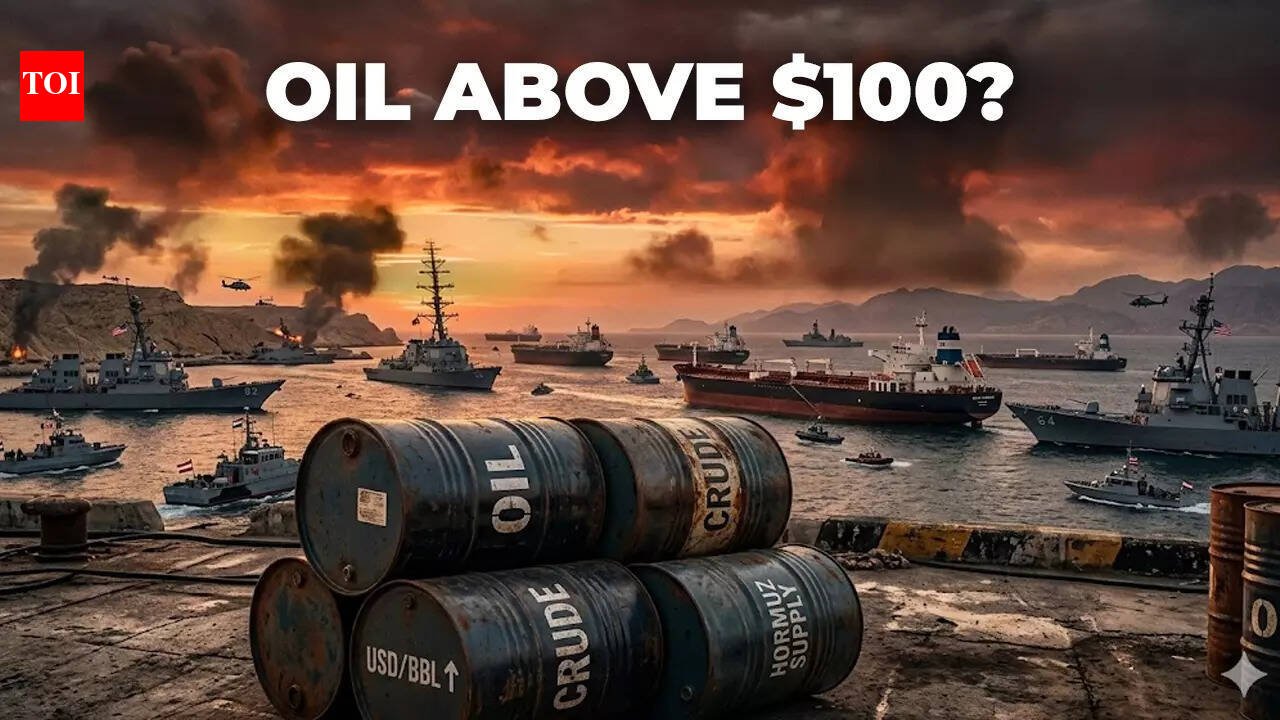
The Strait of Hormuz serves as the primary outlet for most crude exports from the Persian Gulf. (AI image)

Will oil prices hit $100 due to ongoing tensions and conflicts in the Middle East? Oil, quite literally, is the fuel that drives global economies. Rising oil prices in turn can trigger inflation across goods and services in major economies. In fact, the war between US-Israel and Iran have sparked fears that a 1970s style energy shock may be loading!Global oil markets are preparing for potential supply disruptions after US airstrikes on Iran over the weekend revived concerns that shipments through the Strait of Hormuz could be affected.

Energy Expert Taneja Says Crude May Rise To $80 Briefly, Expects Middle East Tensions To Stabilise

US President Donald Trump’s move to launch strikes on Iran has introduced fresh uncertainty for a major chunk of global oil supplies.Iran produces over 3 million barrels of crude per day, accounting for roughly 3% of worldwide output and ranking as the fourth-largest producer within OPEC. However, its strategic position gives it influence that extends well beyond its production share.The more significant concern is whether the situation could escalate into a prolonged disruption of crude exports from the Gulf region.

The 1970s energy shock

During the 1970s, there were two major shocks to the oil markets that sent ripples across global markets. The first crisis happened in 1973–74, when Arab OPEC nations enforced an oil embargo against the United States and other countries that backed Israel during the Yom Kippur War. This led to sharply reduced supplies, causing oil prices to rise substantially resulting in fuel shortages, high inflation and economic hits in many Western nations.Also Read | Middle East on the boil after Khamenei’s death: What does it mean for India’s trade, exports, crude oil & LPG supply?The second problem happened in 1979 in the wake of the Iranian Revolution, which severely affected Iran’s oil production. Concerns over constrained output once again drove crude prices steeply higher.

Strait of Hormuz & its vital role

This time around, if Iran were to successfully shut the Strait of Hormuz, the fallout for global oil markets could be profound.“This could present a scenario three times the severity of the Arab oil embargo and Iranian revolution in the 1970s, and drive oil prices into the triple digits, while LNG prices retest the record highs of 2022,” Saul Kavonic, head of energy research at MST Marquee told CNBC.
Strait of Hormuz

Strait of Hormuz

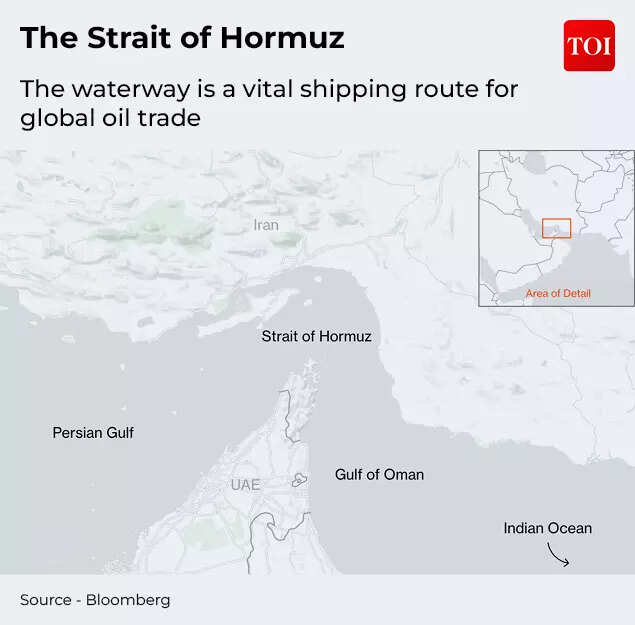
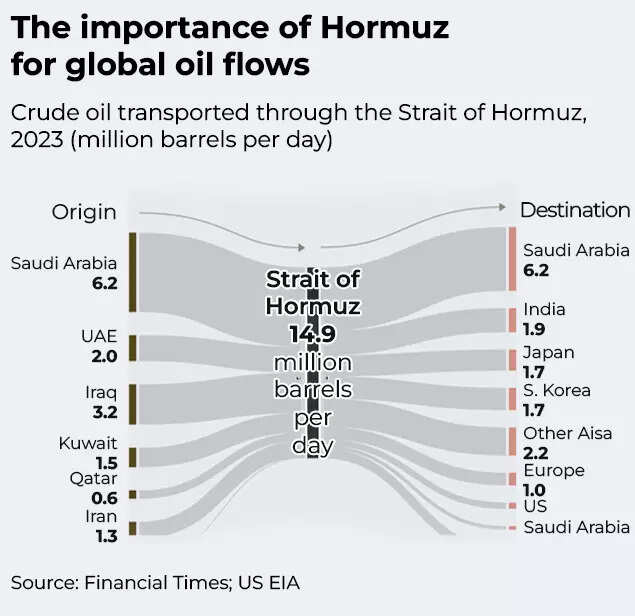
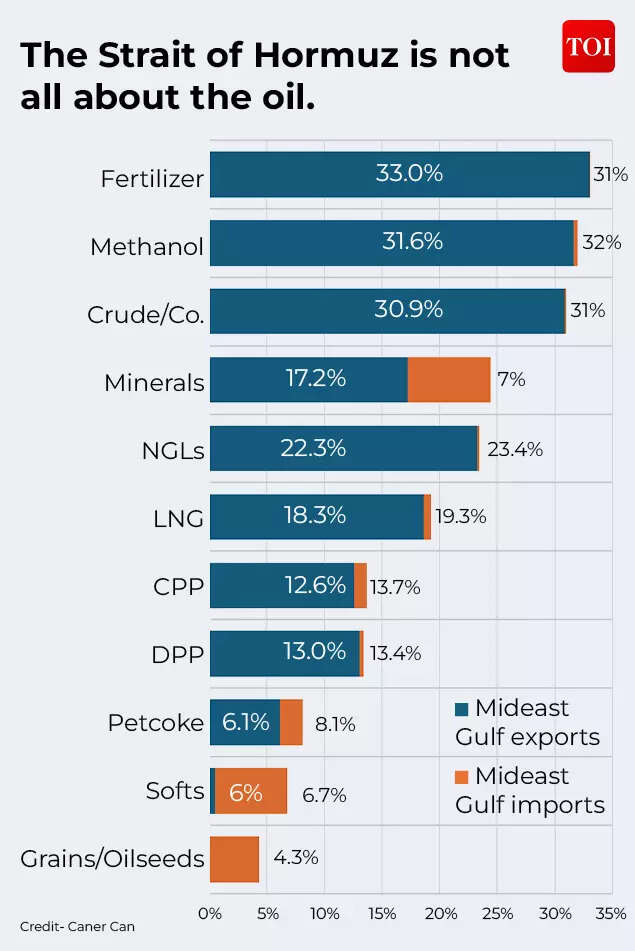
As tensions mount, focus has once again turned to the Strait of Hormuz, where any blockage would have swift and far-reaching implications for global crude and LNG supplies.Located between Oman and Iran, the narrow waterway functions as a vital transit corridor and a potential bottleneck for international oil trade. Data from Kpler indicates that around 13 million barrels per day passed through the strait in 2025, accounting for roughly 31% of total seaborne oil flows.The Strait of Hormuz serves as the primary outlet for most crude exports from the Persian Gulf, along with refined products including diesel and aviation fuel. Qatar, a leading exporter of liquefied natural gas, also depends on this route. Ship-tracking data suggest that LNG shipments through the passage have nearly come to a standstill.
The importance of Hormuz for global oil flows

Iran has on several occasions over the years warned it could shut the narrow Strait of Hormuz in retaliation for attacks against the Islamic Republic.The route connects leading Gulf oil producers such as Saudi Arabia, Iran, Iraq and the United Arab Emirates to the Gulf of Oman and the Arabian Sea.Reuters reported on Saturday that an official from the European Union’s naval mission, Aspides, said commercial ships had received VHF radio warnings from Iran’s Revolutionary Guards stating that “no ship is allowed to pass the Strait of Hormuz.”The official added that Tehran had not officially confirmed any order to shut the passage.Following the attacks in the region that began on Saturday, vessel movement through the passage declined sharply, with reports indicating that three ships were targeted near the entrance to the Persian Gulf.Also Read | US-Israel strikes on Iran: How will India be hit by Strait of Hormuz closure? Explained

Alternative Export Routes

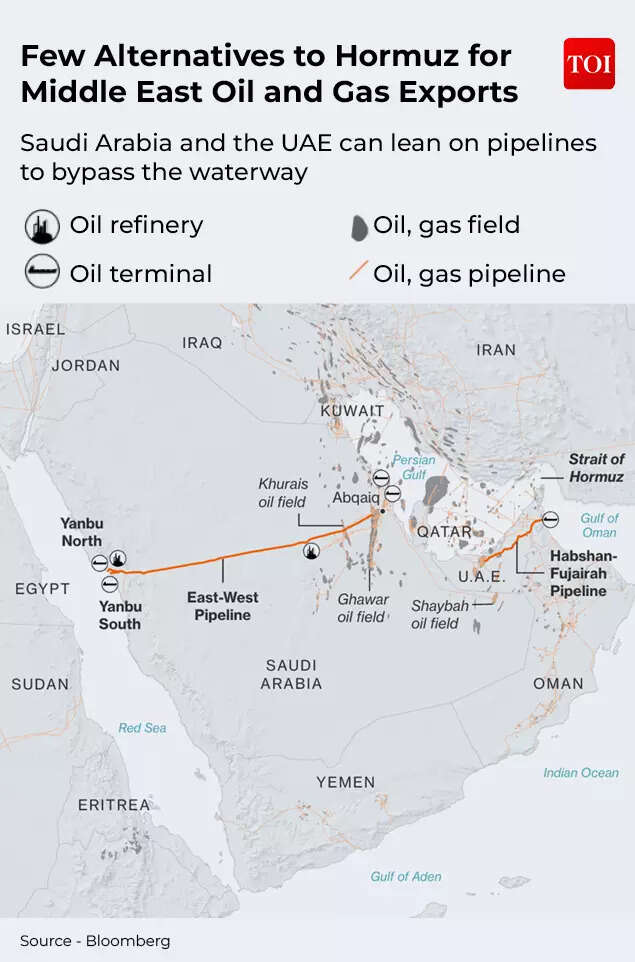
Some OPEC producers, notably Saudi Arabia and the United Arab Emirates, have limited capacity to redirect crude shipments through pipelines that circumvent the Strait of Hormuz.According to a Bloomberg report, Saudi Arabia can channel part of its exports through a 746-mile pipeline stretching across the country to a Red Sea terminal, from where oil can be loaded onto tankers for further transport. The East-West Pipeline has a throughput capacity of up to 5 million barrels per day.
Few alternatives to Hormuz

Few alternatives to Hormuz

The UAE also has a partial workaround. It operates the Habshan-Fujairah pipeline, which links its oil fields to a port on the Gulf of Oman, allowing it to bypass Hormuz to a certain extent. This pipeline can handle around 1.5 million barrels of crude daily.Iraq, the second-largest producer in OPEC, has a pipeline running through Turkey to the Mediterranean. However, this route only carries oil from northern fields. As a result, the vast majority of Iraqi crude exports are shipped from the southern port of Basra and must transit the Strait of Hormuz.Kuwait, Qatar and Bahrain do not have alternative routes and remain entirely dependent on the strait for their oil exports.Despite these pipeline options, a shutdown of the waterway would still significantly disrupt global supply flows and push crude prices higher.

Iran’s Oil Output

Iran’s crude production rose to roughly 3.3 million barrels per day, up from under 2 million barrels per day in 2020, even as international sanctions remain in place. The country has improved its ability to bypass these restrictions, with nearly 90% of its oil exports currently directed to China.For exports, Kharg Island in the northern Persian Gulf serves as the main shipping and storage hub. Kharg Island is equipped with multiple loading berths, jetties, offshore mooring points and storage tanks capable of holding tens of millions of barrels of crude. In recent years, the terminal has managed export volumes of more than 2 million barrels per day.Any direct strike on the Kharg Island export terminal would deal a severe blow to Iran’s economy.

Worst-case scenario: Oil above $100

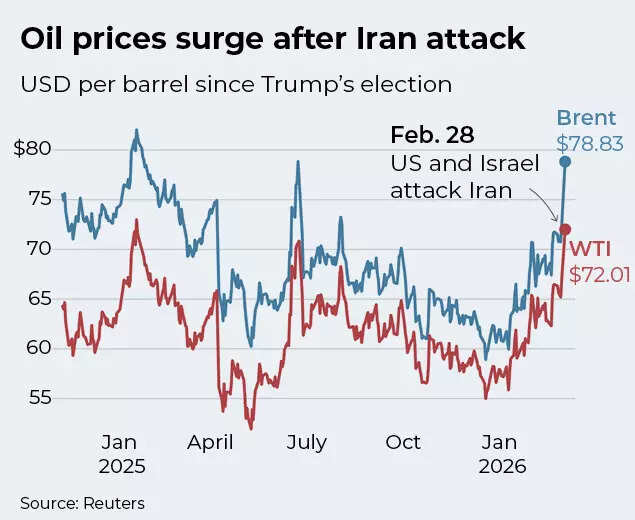
According to the CNBC report, analysts suggest outcomes could range from minor interruptions to Iranian exports to a complete closure of the Strait of Hormuz.For global markets, the gravest risk is not limited to reduced Iranian supply but extends to a wider breakdown in maritime traffic through the strait.“Early indications are of a broader scale attack on Iran, with counterattacks which could escalate to draw in multiple Gulf countries,” said Saul Kavonic.
Oil prices surge after Iran attack

Kavonic said traders are likely to factor in a range of possibilities at the outset, from the loss of as much as 2 million barrels per day of Iranian exports to strikes on regional infrastructure or, in the most extreme case, a halt in transit through Hormuz.“If the Iranian regime feels they face an existential threat, attempts to block the Strait of Hormuz cannot be ruled out,” he said, while noting that the United States and its allies would probably deploy naval protection to safeguard shipping routes.
The Strait of Hormuz is not all about oil

The Strait of Hormuz is not all about oil

“At this point, it seems we are looking at a full-scale military conflict between the U.S. and Iran, which would be unprecedented and the trajectory impossible to assess,” said Vandana Hari, CEO of energy research firm Vanda Insights.“If it carries on for days with Iran and its proxies retaliating to the fullest extent, we are looking at the worst-case scenarios for oil, including a major disruption of oil flows through the Middle East,” Hari told CNBC. Bob McNally, president of Rapidan Energy Group described the situation as “a very serious development” for global oil and gas markets, given their heavy reliance on production and transit through Hormuz.Industry experts stressed that the key factor now is how long the tensions persist. McNally said the scale of any surge in oil and LNG prices would hinge on both the duration and the breadth of disruptions to output and shipments from the Gulf.Andy Lipow, president of Lipow Oil Associates, said the recent strikes have materially increased the likelihood of supply disruptions in the region, even though Iranian oil installations have not yet been directly hit.He characterised the most severe scenario as “an attack on Saudi oil infrastructure followed by a complete closure of the Strait of Hormuz.” Lipow placed the probability of such an outcome at around 33 per cent, suggesting Iran could take drastic measures if it feels cornered.(Disclaimer: Recommendations and views on the stock market, other asset classes or personal finance management tips given by experts are their own. These opinions do not represent the views of The Times of India)


Source link

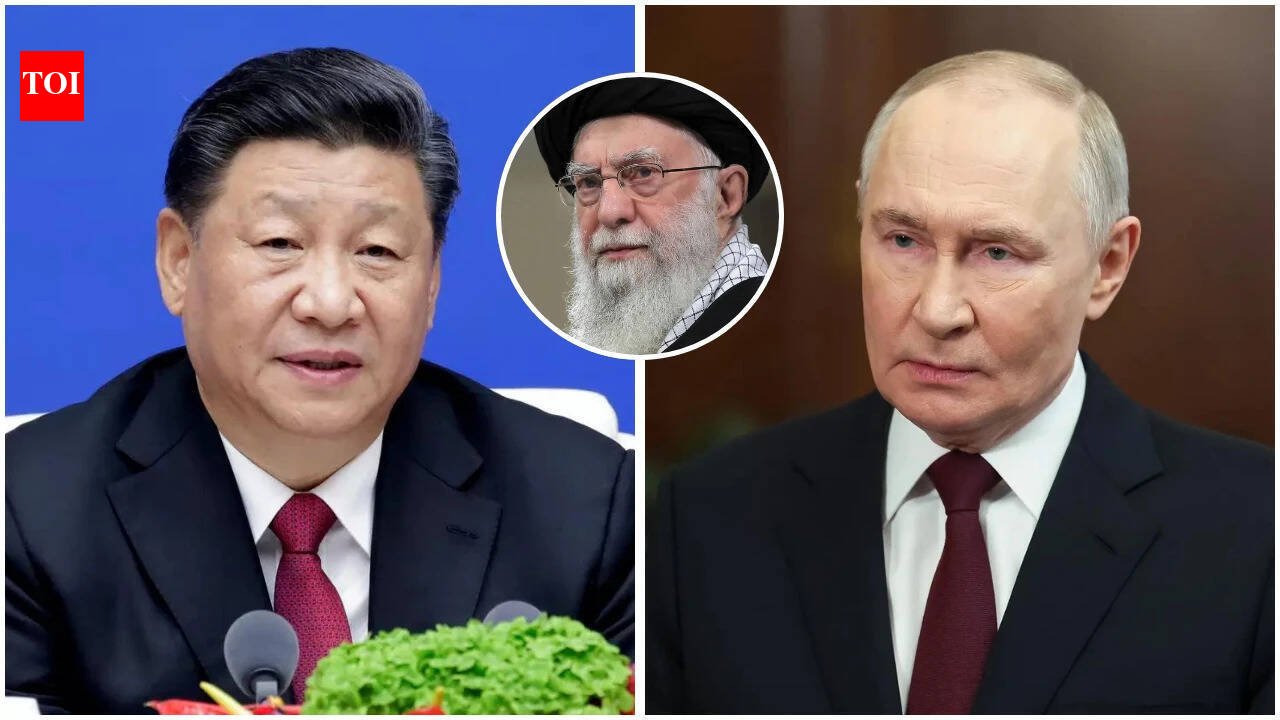
Ayatollah Ali Khamenei Killed: ‘Cynical violation of law’: Russia, China condemn killing of Khamenei in US-Israel strikes; call for end to military action


Russia, China condemn killing of Khamenei in US-Israel strikes (Picture credit: AP)

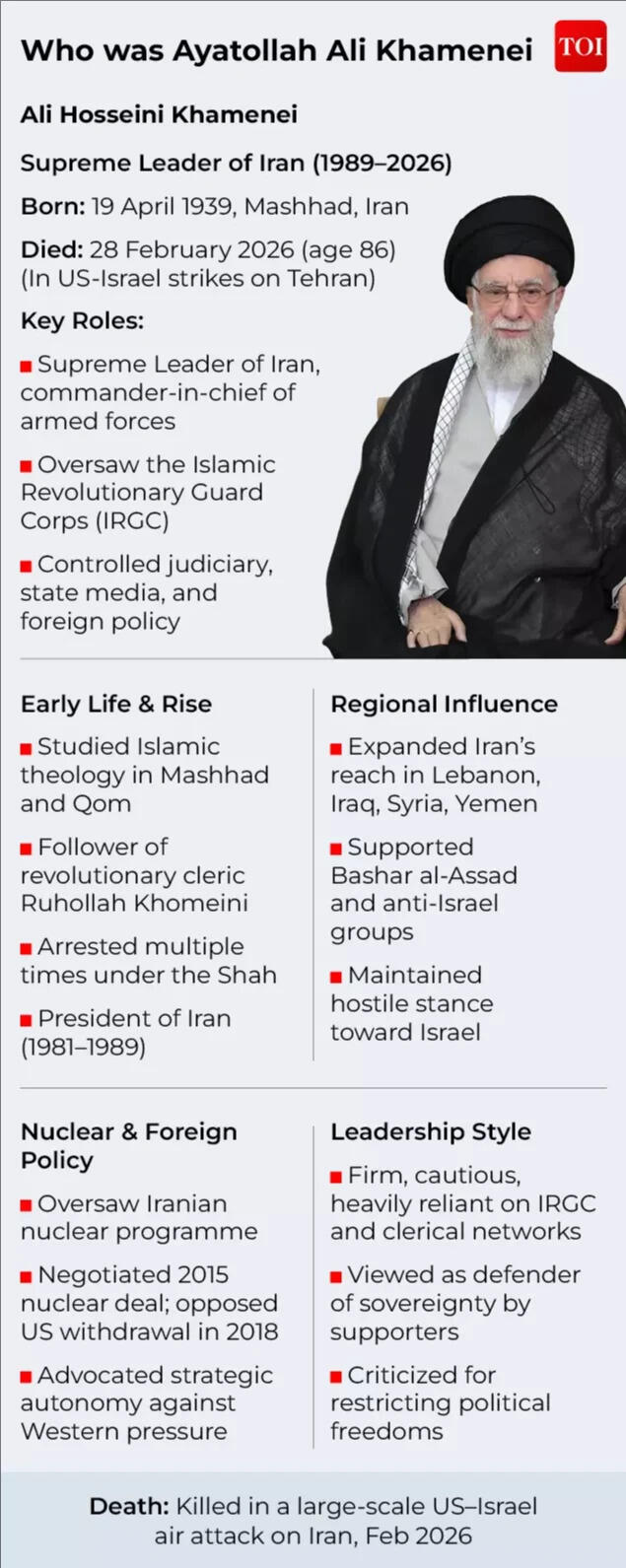
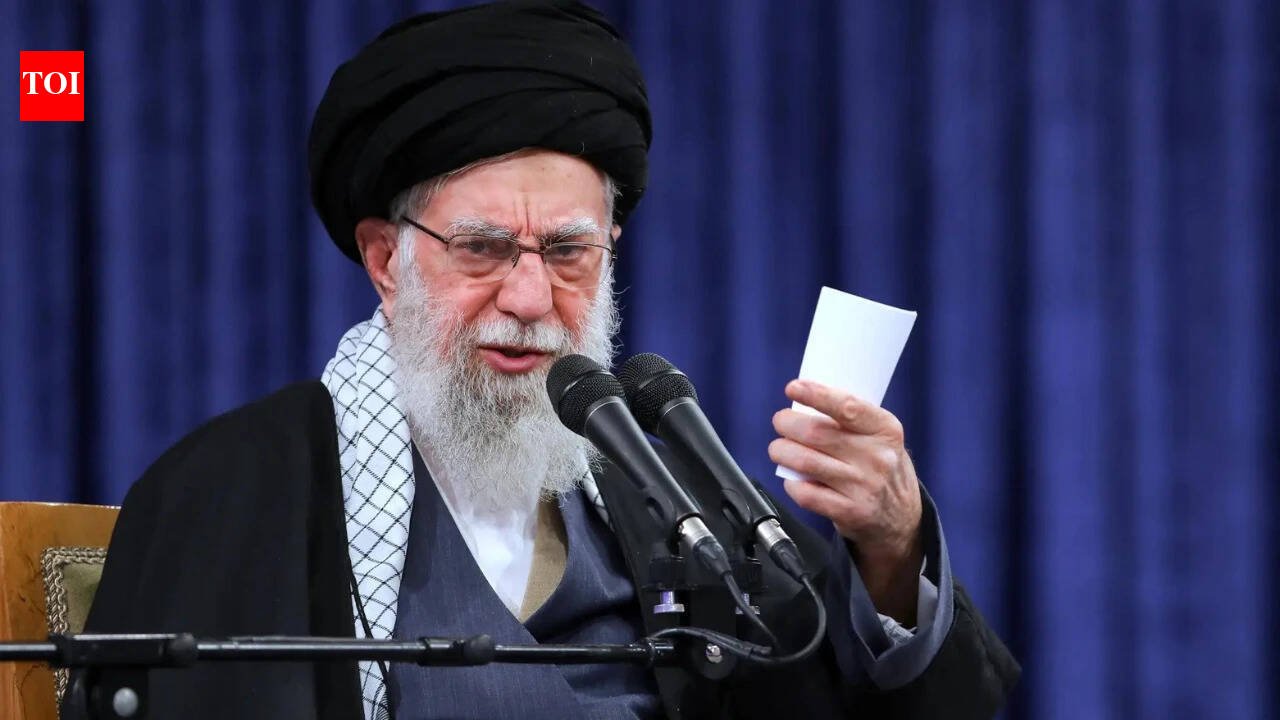
The killing of Iran’s Supreme Leader Ayatollah Ali Khamenei in joint US–Israeli strikes has drawn strong reactions from both Russia and China, with leaders in Moscow and Beijing sharply criticising the move and urging an immediate halt to military operations.Khamenei, 86, was killed in a major aerial assault on Iranian military and government sites.

Russia ENTERS Iran-US War? Putin RAGES After ‘Cynical Murder’ Of Khamenei | ‘Won’t Spare…’

His death has pushed the region into fresh instability, with Iran launching retaliatory missile and drone attacks across the Gulf.

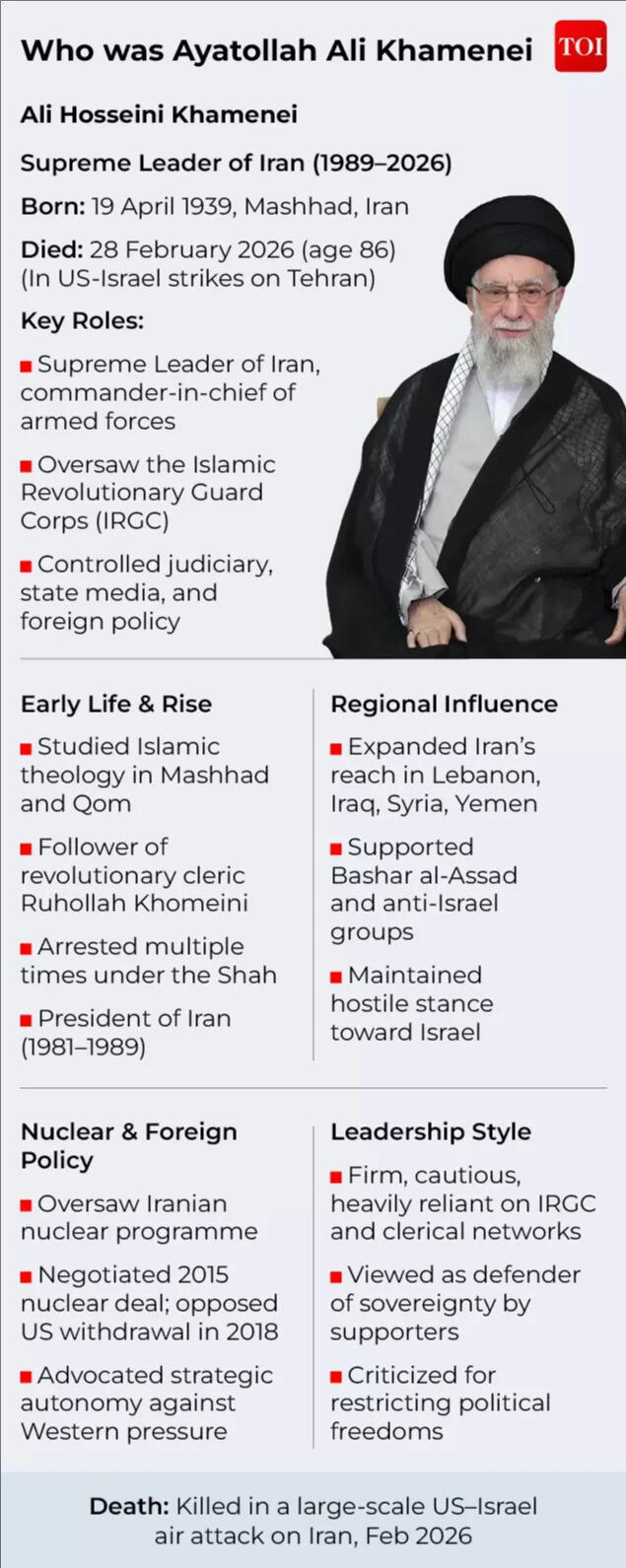
Who was Ayatollah Ali Khamenei

Putin calls killing ‘cynical violation’ of law

Russian President Vladimir Putin described the assassination as “a cynical violation of all norms of human morality and international law”, as per news agency AFP.In a letter published by the Kremlin and addressed to Iranian President Masoud Pezeshkian, Putin expressed his “deepest condolences for the assassination of” Khamenei. He said the Iranian leader “will be remembered as an outstanding statesman who made an enormous personal contribution to the development of friendly Russian-Iranian relations”.Putin also asked Pezeshkian to “convey my most sincere sympathy and support to the relatives and loved ones of the Supreme Leader, to the government and to the entire people of Iran”.Russia had earlier condemned the US–Israeli strikes as a “dangerous adventure” that could trigger a regional “catastrophe”. Moscow had previously called for restraint in the run-up to the attacks.On Saturday, Russian foreign minister Sergei Lavrov held a phone call with his Iranian counterpart Abbas Araghchi. The Russian foreign ministry stressed that the conversation was held “at the initiative of the Iranian side”.Russia and Iran have strengthened ties in recent years, especially after Moscow’s offensive in Ukraine. In 2025, the two countries signed a strategic partnership treaty aimed at deepening cooperation, including in military matters.

China says killing ‘unacceptable’

China also issued a strong condemnation. According to AFP, Beijing said the killing was “a serious violation of Iran’s sovereignty and security, a trampling on the aims and principles of the UN Charter and the basic norms of international relations”.“China firmly opposes and strongly condemns this,” the foreign ministry said, calling for an “immediate halting of military operations”.Chinese foreign minister Wang Yi spoke by phone with Sergei Lavrov, in a call initiated by the Russian side, Chinese state media reported.During the conversation, Wang said the “blatant killing of a sovereign leader and the incitement of regime change” by the United States and Israel was “unacceptable”, according to China’s Xinhua news agency.He added that China was “highly concerned” the Middle East could be pushed into a “dangerous abyss”. Wang also warned that attacking a sovereign state without UN Security Council authorisation undermines the global order established after the Second World War.“The international community must send a definite and clear message opposing the world’s regression to the law of the jungle,” he said.

Evacuation advisory for Chinese citizens

Amid rising tensions, Beijing has urged its citizens in Iran to leave the country “as soon as possible”. Repeating the call on Sunday, the foreign ministry said Chinese passport holders could exit Iran through visa-free land routes into Azerbaijan, Armenia and Turkey.The warning reflects growing fears that the conflict could widen further after Iran fired drones and missiles at Israel, US military installations and Gulf states, according to news agency AP.

Wider global concern

The killing has sparked alarm beyond Moscow and Beijing. Pope Leo XIV called for an end to the “spiral of violence” and urged all parties to act with “moral responsibility” before the situation becomes “an irreparable chasm”.“Stability and peace are not built through mutual threats or with weapons, which sow destruction, pain, and death, but only through reasonable, genuine, and responsible dialogue,” the Pope said during his Angelus prayer in St Peter’s Square.Meanwhile, the United States has defended the operation. President Donald Trump said the strikes gave Iranians their “greatest chance” to “take back” their country and warned Tehran against escalating attacks further.

Operation Epic Fury

The strong language from Moscow and Beijing portrays a widening geopolitical divide. Both Russia and China have closer ties with Iran and have frequently criticised US and Israeli actions in the region.With Russia and Iran bound by a recent strategic treaty and China warning against “regime change”, the reactions show that the killing of Khamenei is not only a regional issue but one with global diplomatic consequences.


Source link

Gautam Gambhir makes bold statement after India beat West Indies to reach T20 World Cup 2026 semifinals


India head coach Gautam Gambhir has sent shockwaves through the cricketing world with a stunning post-match admission that he “doesn’t believe in data” and relies purely on instinct, following India’s five-wicket victory over the West Indies at Eden Gardens that sealed their semifinal berth in the T20 World Cup 2026. The former India opener’s remarkable statement came after Sanju Samson powered the defending champions to a record chase of 196, setting up a blockbuster semifinal clash against England at the Wankhede Stadium in Mumbai on March 5.

“I don’t even know what data is all about”: Gautam Gambhir

During the post-match press conference in Kolkata, Gambhir was questioned about the extent to which he depends on data and analytics while preparing for opponents in the World Cup. His response was characteristically blunt and uncompromising .

“I don’t believe in data, honestly. I have never seen data. I don’t even know what data is all about. I absolutely do not believe in it,” Gambhir declared, leaving journalists stunned.

The head coach elaborated on his philosophy, emphasizing that T20 cricket demands intuitive decision-making rather than statistical analysis. “I feel T20s are more about instinct and backing your instinct as well. Whatever knowledge I have about the game and the T20 format, I give it to the captain and try to help him out as much as I can. But ultimately, it is the captain who takes the final call.” 

Gambhir’s dismissal of data-driven approaches represents a significant departure from modern coaching trends, where analytics and match-up statistics have become increasingly prevalent across international cricket.

The head coach also dismissed another widely discussed concept in tournament cricket – the notion of “peaking at the right time.” When asked if he felt India were hitting their stride at the perfect moment heading into the semifinals, Gambhir rejected the premise entirely.

“Look, I don’t believe in all this peaking at the right time. You’ve got to win every game that you represent your country in. There is nothing like peaking at the right time,” Gambhir asserted.

He stressed that in a short tournament like the T20 World Cup, consistency matters more than timing. “It’s a short tournament that comes and goes very quickly, so you’ve got to try and play your A game every time. You can’t take any opposition for granted.” 

“He never accelerated the innings”: Gambhir’s unique take on Sanju Samson’s masterclass

Gambhir reserved special praise for Sanju Samson, whose unbeaten 97 off just 50 balls guided India to their highest successful T20 World Cup chase, surpassing Virat Kohli’s iconic knocks from 2016 and 2022. However, the coach’s analysis of the innings was characteristically nuanced.

“I actually thought that he never accelerated the innings. It was just very normal cricketing shots. I never saw him muscling the ball. That is the kind of talent he has,” Gambhir observed.

Also READ: Sanju Samson reflects on his batting performance that powered India into the T20 World Cup 2026 semifinals

The coach revealed that Samson’s return to form was carefully managed after a difficult bilateral series against New Zealand in January, where the wicketkeeper-batter registered scores of 10, 6, 0, 24 and 6 .

“Obviously, he had a tough series against New Zealand. So sometimes it’s important to give him a break as well, because you want to get the guy off that pressure situation,” Gambhir explained.

“Against Zimbabwe, he delivered for us. We got a start that we wanted in the first three overs. And today, again, from where he left against Zimbabwe, he showcased his talent. And this is what we expect from Sanju to do more consistently.” 

In a poignant moment that reflected his own 2011 World Cup final experience – where his match-defining 97 is often overshadowed by the winning six – Gambhir emphasized that all contributions deserve recognition .

“For too many years, we’ve only spoken about certain contributions. This is a team sport. For me, Shivam’s two boundaries are as important as Sanju’s 97. The big contribution makes headlines. The small contribution that can help the team win, cross that line, is going to be very important. That’s going to be the philosophy going forward till I am there.”

As India prepare to face England in Thursday’s semifinal in Mumbai, Gambhir’s instinct-over-data approach will face its toughest test yet against a formidable opponent seeking revenge for the 2024 semifinal defeat.

Also READ: T20 World Cup 2026 Semifinals – Date, Match Time, Venue, Broadcast and Live Streaming details


Source link

Iran conflict disrupts air travel; Emirates, Etihad, Air India, IndiGo issue advisories | India News


Over 100 International Flights Cancelled At Delhi IGIA Amid Middle East Turmoil

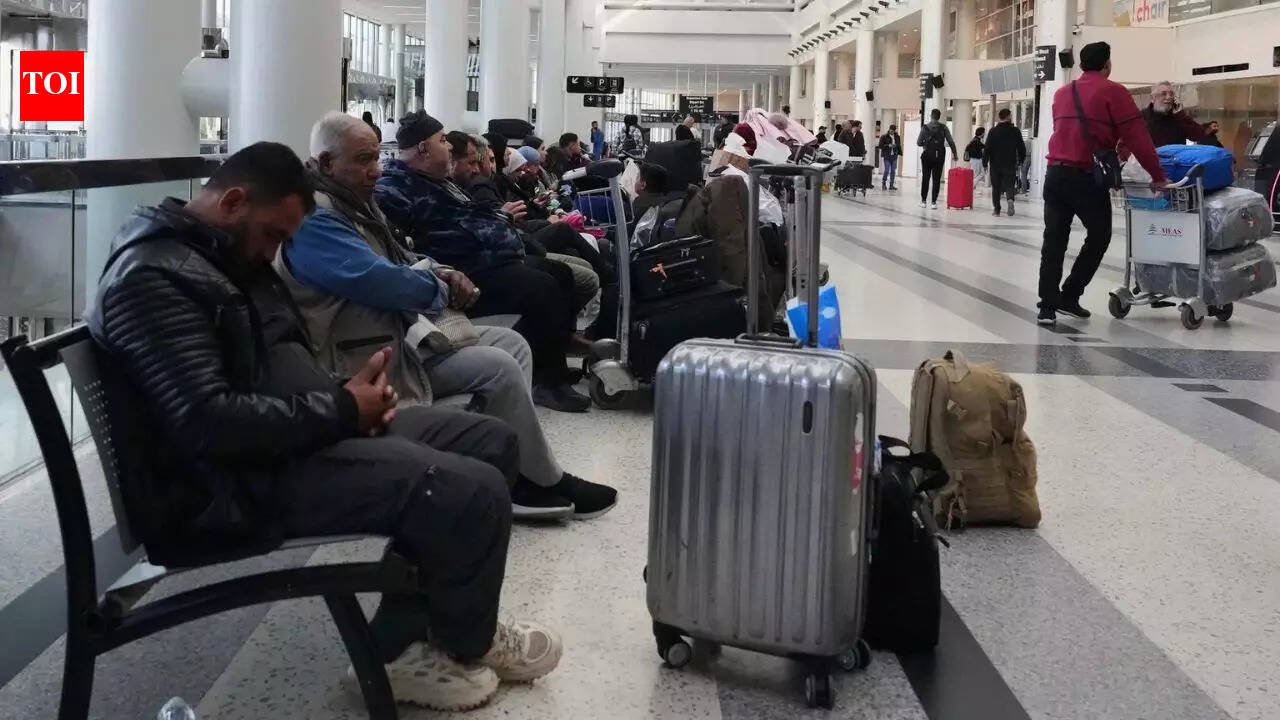
Passengers stranded at Beirut airport (AP photo)

Flight operations worldwide have been largely affected by the constantly evolving situation in the Middle East, triggered by the joint US-Israel attack on Iran that killed its supreme leader Ayatollah Ali Khamenei and strong retaliation from Tehran. The exchange of missile strikes amid escalating tensions has made the skies unsafe for aviation, leading to widespread flight cancellations as several Gulf nations shut their airspace. Airports in Israel, Qatar, Syria, Iran, Iraq, Kuwait, Bahrain, Oman and the United Arab Emirates have also closed their airspace.The disruption followed joint US and Israeli strikes on Iran, which killed Iran’s supreme leader Ayatollah Ali Khamenei. Iran retaliated by firing missiles and drones at Israel and US military installations in the Gulf. The military campaign has continued after Khamenei’s death, with both the US and Israel striking Iranian military sites.Iran in return, has fired missiles and drones at Israel, US bases in the Gulf region, and other regional targets.

Over 100 International Flights Cancelled At Delhi IGIA Amid Middle East Turmoil

Key transit hubs such as Dubai, Doha and Abu Dhabi handle major traffic between Europe, Asia and Africa. Airlines operating through West Asia can be diverted over Saudi Arabia or use longer oceanic routes, leading to delays and higher costs. More than 2,800 flights were cancelled across the Middle East on Sunday, according to Flight Aware. Around 1,600 flights were cancelled by West Asian carriers alone. In India, nearly 350 flights were cancelled during the day. Delhi airport reported 100 cancellations, while Mumbai reported 125. Tiruchirappalli airport also saw multiple cancellations.

Air India

Air India suspended flights to and from the UAE, Saudi Arabia, Israel and Qatar until March 2. It cancelled around 125 international flights and said North America and Europe flights would operate on alternative routes with technical stops in Rome. The airline advised passengers to check updates online.“In view of the continuing situation in the Middle East, Air India has extended the suspension of all flights to and from the UAE, Saudi Arabia, Israel, and Qatar until 2359 hrs IST on 2 March 2026. Additionally, select flights to Europe scheduled on 2 March 2026 have been cancelled,” the airline said.

IndiGo

IndiGo suspended select international flights using West Asia airspace until March 2. It offered passengers options to rebook or claim refunds and said updates would be shared directly. “This extension is a precautionary measure to ensure that we uphold the highest standards of safety for our customers and crew,” the IndiGo statement read.

Akasa Air

Akasa Air suspended flights to and from Abu Dhabi, Doha, Jeddah, Kuwait and Riyadh until March 2. It offered full refunds or free rescheduling for affected passengers. “Passengers with impacted bookings until March 7, 2026, may opt for a full refund or reschedule their travel at no additional charge,” it said.

SpiceJet

SpiceJeat cancelled all flights operating between India and the UAE (to and from UAE) for March 1, 2026 and March 2, 2026.“Due to the temporary closure of UAE airspace amid the current situation, all SpiceJet flights operating between India and the UAE have been cancelled till 01 March 2026. Passengers are advised to check their flight status before proceeding to the airport,” the airline said.

Emirates

Emirates suspended all flights to and from Dubai until at least Monday afternoon, local time. The airline asked passengers to check flight status before heading to the airport.The official statement read: “Due to multiple regional airspace closures, Emirates has temporarily suspended all operations to and from Dubai, up until 1500hrs UAE time on Monday, 2 March.”

Qatar Airways

Qatar Airways flight said its operations remained temporarily suspended due to the closure of Qatari airspace. The airline further said it will resume operations once the Qatar Civil Aviation Authority announces the safe reopening of Qatari airspace. A further update will be provided on March 02 by 09:00 Doha time (06:00 UTC)

Etihad

“Regional airspace closures continue to impact Etihad’s operations, and all flights to and from Abu Dhabi are suspended until 14:00 UAE time on Monday 2 March,” Etihad said in a social media post. The Gulf carrier has cancelled 30 percent of its flights, according to Aviation analytics agency Cirium said.Thousands of passengers remain stranded across West Asia and other international hubs. Travellers are waiting at airports and hotels with no clear timeline on when normal flight operations will resume as the fighting continues.


Source link

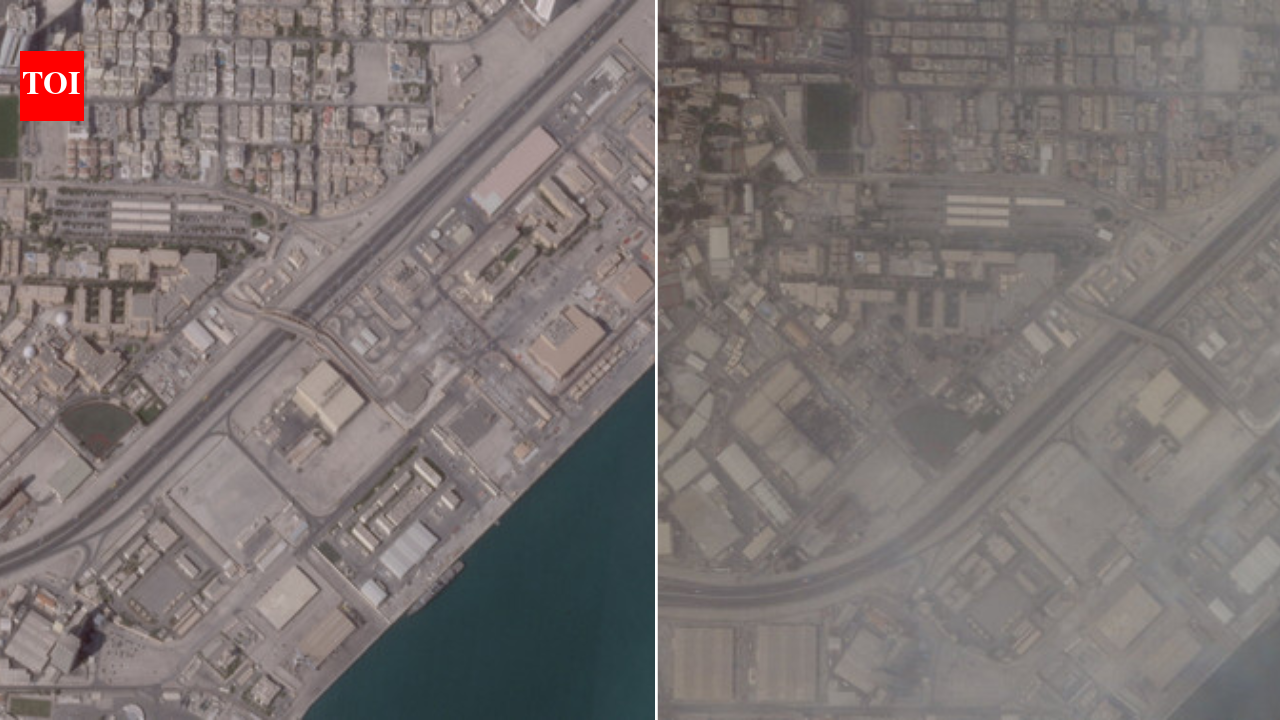
Satellite images show damage at US Fifth Fleet naval base in Bahrain’s Manama; see before-after pics


Satellite images show damage at US Fifth Fleet naval base in Bahrain's Manama; see before-after pics
Before and after image of US navy fleet

Iran launched retaliatory strikes in fury after the killing of its Supreme Leader.After the longest-serving leader in the Middle East was killed in strikes while in office, Supreme Leader Ayatollah Ali Khamenei, Iran launched strong retaliatory attacks, targeting key cities including Dubai and Sharjah in the United Arab Emirates and Manama in Bahrain. The strikes rattled the Arab world, with multiple American bases and targets across the region coming under attack from an angered and Khamenei-less power centre in Tehran.

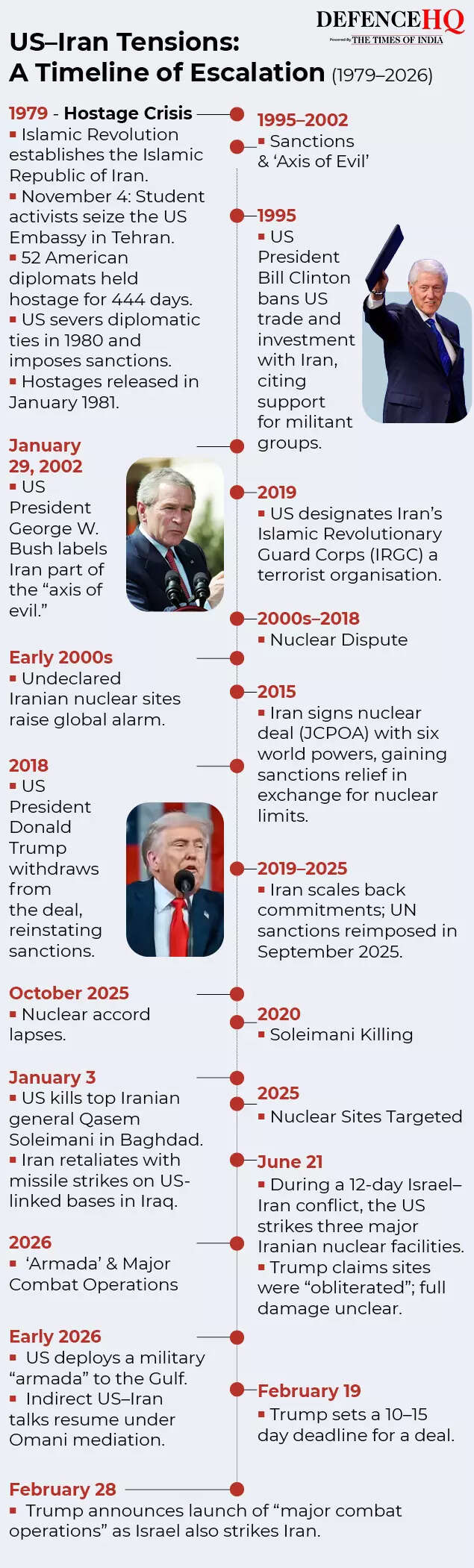
iran timeline

The strikes followed a major military operation by the United States and Israel against Iran, aimed at dismantling the political leadership that had been under Khamenei for more than three decades.Also read: US F-15 down in Kuwait? Iran shares video showing fighter jet engulfed in flames, pilots ejectingSatellite images later emerged showing the Iranian offensive targeting the US Fifth Fleet naval base in Manama. The before-and-after comparison of the images highlighted the scale of the damage caused by the strikes on the American facility.A video circulating online also showed smoke rising from the area around the base. Bahrain’s government confirmed that a missile had targeted the US Navy’s Fifth Fleet facility and called the strike a violation of the country’s sovereignty.Officials said the Fifth Fleet service centre was hit in the missile attack and that emergency response teams were immediately deployed to the site. It is not yet clear whether there were any casualties from the strike.The attack in Bahrain came as part of a wider wave of military actions across the Middle East.Several sites linked to the United States across the region are facing threats, including military installations in Qatar, Kuwait and the United Arab Emirates. Air defence systems in several countries were activated in response.Iran described the strikes as defensive retaliation, saying they were a response to what it called aggression against it.Early Sunday, drones struck the airport in Bahrain’s capital, Manama, causing minor damage, authorities said.The US embassy in Manama also urged American citizens to avoid hotels in the city, warning that they could become potential targets after the Crowne Plaza hotel was hit.Tehran’s offensive also targeted cities that are not traditional military targets, including Abu Dhabi, Dubai, Doha, Sharjah and Manama.


Source link

Shai Hope owns up as West Indies crash out of T20 World Cup at Eden | Cricket News


‘I’ll take the blame’: Shai Hope owns up as West Indies crash out of T20 World Cup at Eden
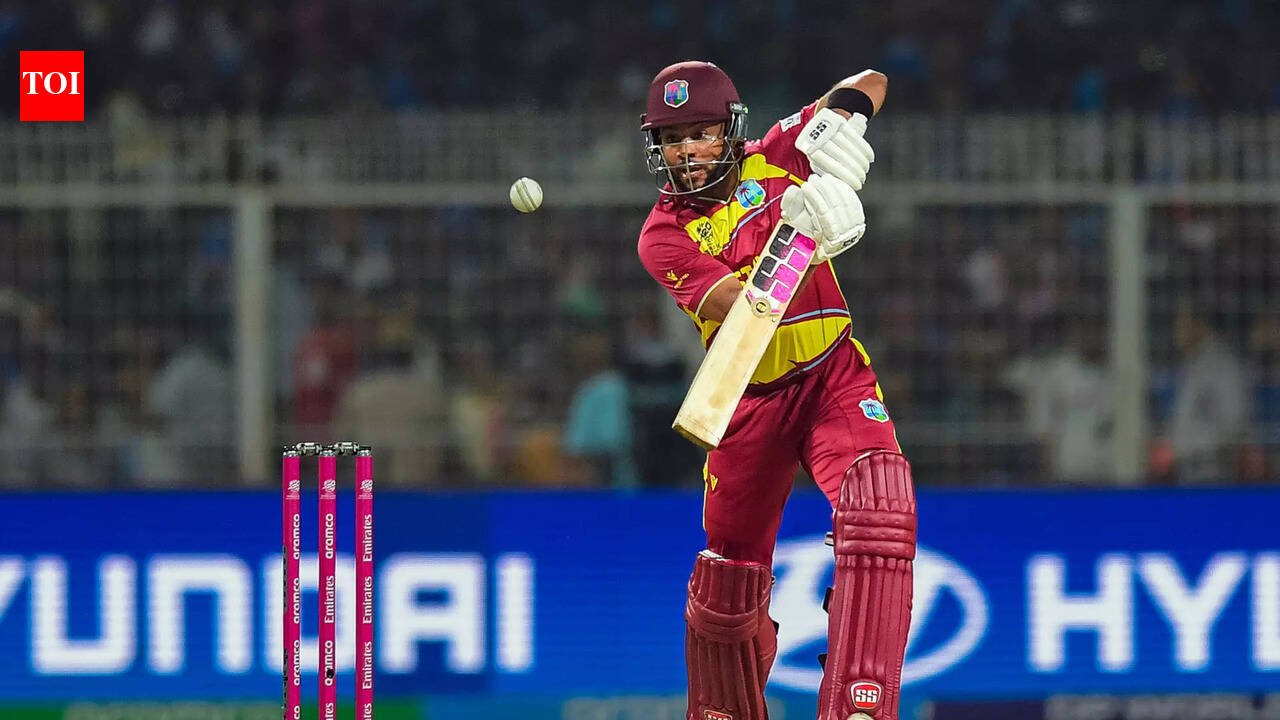
West Indies’ skipper Shai Hope plays a shot at Eden Gardens. (ANI Photo)

NEW DELHI: West Indies captain Shai Hope did not hide behind excuses after his side’s T20 World Cup campaign ended with a defeat to defending champions India at Eden Gardens. Instead, he stood up and took responsibility.Go Beyond The Boundary with our YouTube channel. SUBSCRIBE NOW!India chased down a challenging 196-run target to knock the former champions out in a must-win Super Eight clash on Sunday. But Hope admitted the total could have been far more imposing had he accelerated at the top.“Yes, I’ll take the blame. I should have batted a lot faster — if that’s what you want me to say,” Hope said candidly in the post-match media interaction. “When you’re leading, you want to put your hand up and set the tone at the top. It didn’t happen for me today. I just didn’t get going.”

Sanju Samson becomes darling of Eden Gardens | T20 World Cup

Hope’s 32 off 33 balls — including 17 dot deliveries — stalled momentum in a high-scoring contest. Though he insisted he was not batting poorly, he conceded that the tempo hurt the team.“In situations like this, when you’re struggling, everyone struggles. But I don’t think I was batting badly,” he explained. “I hit a few fielders and they bowled well. As much as you’d love to hit every ball for six, it doesn’t happen.”West Indies were 45 without loss in the powerplay after targeting 65–70. “We had a platform. With the batting depth we have, I didn’t see it as a big issue at the time, but we didn’t execute as well as we wanted,” Hope admitted.Despite late acceleration from Roston Chase, Rovman Powell and Jason Holder lifting them to 195/4, the total proved 20 runs short on a dewy surface.“Here in Eden Gardens, chasing is usually better, especially with the dew. It always becomes a factor,” Hope said, also lamenting his poor run with the toss. “I don’t think I could win a toss… that always puts me on the back foot.”Calling it a “game of small margins,” Hope added, “One team has to win.”He reserved special praise for India’s match-winner Sanju Samson, whose unbeaten 97 sealed the chase. “He shot the ball very nicely from the beginning all the way through to the end… very smart and calculated. You must give him an A-plus. But we wish he didn’t have that innings today.”Even in defeat, Hope chose perspective. “There are a lot of positives. Our bowling was much better… the powerplay bowling especially stood up.”


Source link

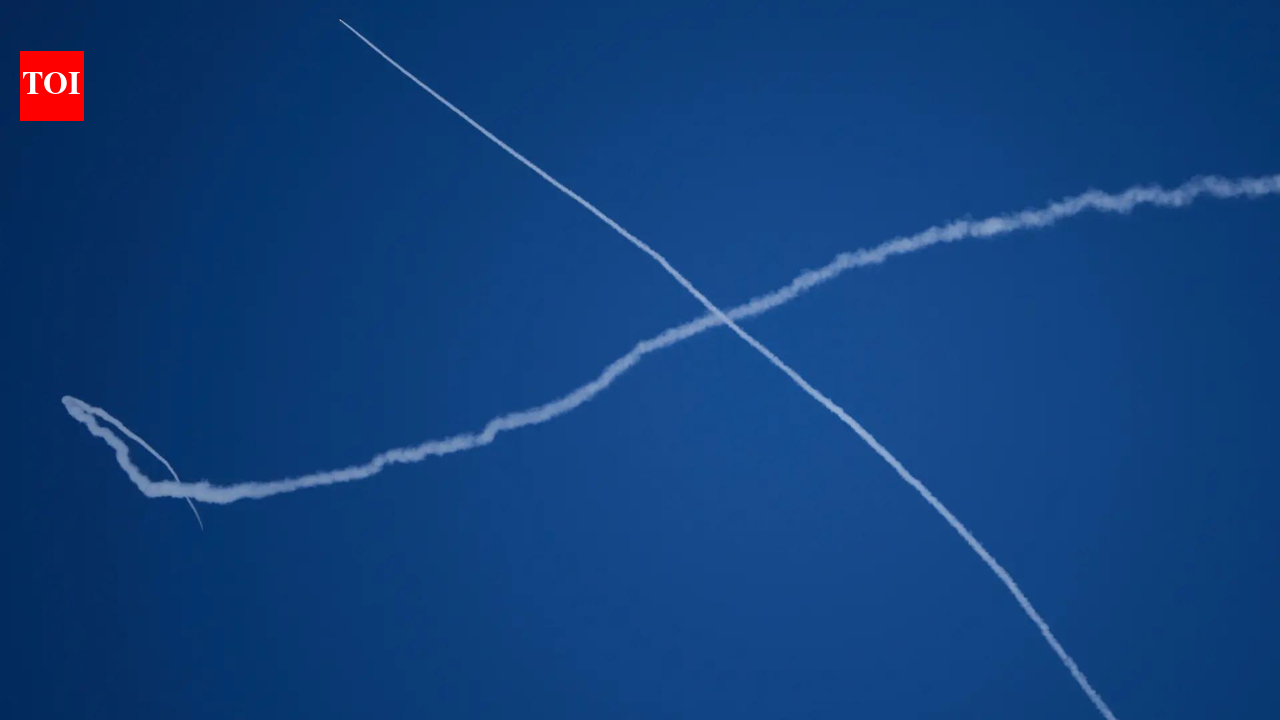
Watch: How Iran missile slipped past interceptor rockets to strike target


Watch: How Iran missile slipped past interceptor rockets to strike target

Amid the escalating Iran–US–Israel conflict, a viral video circulating online appears to show an Iranian missile evading multiple interceptor rockets over Jerusalem before striking its target.The footage, reportedly recorded from a terrace, captured around 10 interceptors heading toward the incoming missile. A spark is seen mid-air before the missile continues its trajectory and hits. The exact time and location of the video have not been independently verified.Some social media users have claimed the missile could be Iran’s Fattah system, which is designed with manoeuvrable glide capabilities to evade air defence interceptors.The Islamic Revolutionary Guard Corps has previously described Fattah missiles as marking “the beginning of the end” for Israel’s air defences, asserting that their manoeuvrability allows them to alter trajectory during the terminal phase of flight.Iran’s broader missile capabilityIran maintains one of the largest missile arsenals in the Middle East. In 2022, former US Central Command chief General Kenneth McKenzie said Tehran possessed “over 3,000” ballistic missiles, excluding cruise missile systems.Its inventory includes short- and medium-range ballistic missiles such as the Fateh family, Zolfaghar, Dezful, Kheibar Shekan and Sejjil, alongside older Shahab and Ghadr variants. Ranges vary between 300 km and 2,000 km, with some systems assessed as potentially capable of longer reach if modified.Shift toward precision and survivabilityOver the past two decades, Iran has prioritised precision, solid-fuel propulsion and survivability over merely extending range. Solid-fuel missiles are quicker to launch and less vulnerable to pre-emptive strikes compared to liquid-fuel systems.Iran has also invested in manoeuvrable re-entry vehicles and terminal guidance systems, aimed at complicating interception by advanced air defence systems.Regional reach and regeneration effortsDespite reported damage to parts of its missile stockpile in recent strikes, analysts say Iran retains significant strike capability across the Middle East. Tehran has also transferred missile technology to regional allies and proxy groups, expanding its strategic depth.While the exact size of its current inventory remains unclear, the breadth of systems across ballistic and cruise categories suggests Iran’s missile forces remain central to its military doctrine and deterrence posture.


Source link

Defence stocks surge on Middle East tensions! HAL, BEL, Paras Defence rise up to 13% even as stock market crashes


Defence stocks surge on Middle East tensions! HAL, BEL, Paras Defence rise up to 13% even as stock market crashes
Defence stocks (AI image)

Defence stocks today: Contrary to the crash in Nifty50 and BSE Sensex, defence stocks on Monday moved up in trade as rising Middle East tensions brought focus back on them. Shares of defence companies such as Hindustan Aeronautics, Bharat Dynamics, BEL and Paras Defence surged by as much as 13.5% as tensions in the Middle East intensified following the death of Iran’s supreme leader, Ayatollah Ali Khamenei. The escalation has raised expectations of increased export opportunities and strengthened investor sentiment toward the sector. Paras Defence led the gains, climbing 13.5%. Meanwhile, HAL, BEL and Bharat Dynamics advanced by up to 3.5% on the BSE.During his recent visit to Israel, Prime Minister Narendra Modi said that the two countries would move ahead with joint development, production and technology transfer in the defence sector.A joint statement issued after the visit noted that India and Israel would collaborate on the co-development and manufacturing of defence equipment to deepen strategic ties. The two sides also agreed to work toward concluding a bilateral trade agreement soon, broaden cooperation under the UPI digital payments framework, and partner on space projects and emerging technologies, among other areas.Brokerage house JM Financial said Indian defence companies such as Hindustan Aeronautics Limited and Bharat Electronics Limited may receive sentiment support despite continued volatility in domestic equities amid a broader global risk-off environment, according to an ET report.Defence counters have seen significant fluctuations in recent months. The sector saw a robust rally last year after Indian armed forces conducted targeted strikes against terrorist groups in Pakistan and Pakistan-occupied Kashmir. However, the uptrend later lost steam in the absence of new catalysts.Even as defence counters could witness a strong rally amid the escalating conflict, the wider equity market is expected to stay subdued.(Disclaimer: Recommendations and views on the stock market, other asset classes or personal finance management tips given by experts are their own. These opinions do not represent the views of The Times of India)


Source link

Us Iran War: ‘US crossed dangerous red line’: Iran says has no option but to respond after Khamenei killing


File photo (Picture credit: AP)

Iran has warned that the United States has crossed “a very dangerous red line” by killing Supreme Leader Ayatollah Ali Khamenei, as tensions continue to rise across the Middle East.In an exclusive interview with CNN, Iranian deputy foreign minister Saeed Khatibzadeh said US President Donald Trump had triggered serious consequences by authorising the strike.

Khamenei Dead — Is Iran Preparing for a Wider War?

‘We have no option but to respond’

Khatibzadeh said Khamenei was not only a political leader but also a major religious figure for millions of Shiite Muslims.

Who was Ayatollah Ali Khamenei

“Of course, from a religious aspect, he was a great religious leader, so many of Shiite followers across the region and around the world are going to react to that, and this is very obvious because President Trump passed a very dangerous red line,” he told CNN.“We have no option but to respond,” he added.Khamenei, 86, was killed in joint US–Israeli strikes targeting Iranian military and government sites. His death has shaken the leadership of the Islamic Republic and raised fears of wider regional instability.

Wave of retaliation across the region

Following the strikes, Iran launched an unprecedented wave of missile and drone attacks across the Middle East. Targets included countries hosting US military bases, such as Bahrain and the United Arab Emirates.According to news agency AP, explosions were reported in Tehran as Israel said it was striking the “heart” of the Iranian capital. At the same time, Iran fired missiles and drones at Israel, US installations in the Gulf, and cities including Dubai and Riyadh.

Operation Epic Fury

Iran’s paramilitary Revolutionary Guard earlier threatened to launch its “most intense offensive operation” ever against Israel and US bases.The violence has disrupted air and sea traffic, caused civilian casualties and damaged infrastructure across several countries.

Iran warns Gulf states over US bases

Khatibzadeh told CNN that Tehran had contacted Gulf Arab states about American military bases on their soil.“We communicated with them: either to shut down those American bases that are constantly threatening Iran and are constantly using to offend on Iran, or we have no option just to push back,” he said.He added that Iran cannot directly strike US territory.“Iran cannot reach out to American soil, so we have no option just to attack any bases which is under US jurisdiction,” he said.Several Gulf states, including Kuwait, Qatar and Bahrain, have reported intercepting Iranian missiles and drones. Qatar said eight people were wounded in attacks early Sunday, raising its total to 16 injured since the conflict began.

Diplomacy in doubt

When asked whether diplomacy was still possible, Khatibzadeh said Washington had repeatedly disappointed Tehran.“The US has disappointed Iran several times and there was no necessity to start this aggression,” he said.“If President Trump didn’t want to see Iran hitting back … President Trump should have not started this war from the beginning,” he added. “It was a war of choice.”Meanwhile, Trump warned Iran not to escalate further. In a post online, he said the US would respond with unprecedented force if Tehran intensified its attacks.

Uncertain leadership in Tehran

As the conflict continues, Iran has moved to stabilise its political system. A 66-year-old cleric, Ali Reza Arafi, has been appointed to a three-member leadership council that will govern until a new supreme leader is selected.The council includes President Masoud Pezeshkian and judiciary chief Gholam Hossein Mohseni Ejehei.At the same time, Israeli officials claimed their strikes killed several top Iranian military figures, including chief of staff Abdolrahim Mousavi. Iran has not confirmed those claims.

Region on edge

The crisis has already spread beyond Iran and Israel. Protests have broken out in places such as Karachi and Kashmir, while embassies across the region have issued security alerts.US embassies in Bahrain, Israel, Iraq, Jordan, Oman and Pakistan have advised staff and citizens to shelter in place. Several airports across the Middle East remain closed, stranding thousands of travellers.With both sides exchanging threats and missiles, and diplomacy appearing distant, the killing of Khamenei has pushed the region into one of its most dangerous moments in years.


Source link

T20 World Cup 2026 Semifinals: Date, Match Time, Venue, Broadcast and Live Streaming details


The ICC Men’s T20 World Cup 2026 has reached its thrilling knockout stage, with the four semifinalists confirmed following India’s victory over the West Indies at Eden Gardens on Sunday, March 1. Defending champions India will face England in a blockbuster second semifinal, while tournament unbeaten South Africa takes on New Zealand in the first semifinal.

T20 World Cup 2026 Semifinals: Schedule

The semifinals will be played across two iconic Indian venues on successive nights, with both matches starting at 7:00 PM IST.

  • First Semifinal: South Africa vs New Zealand
  • Date: Wednesday, March 4
  • Time: 7:00 pm IST (Toss at 6:30 pm IST)
  • Venue: Eden Gardens, Kolkata

South Africa enters the contest as the only unbeaten team in the tournament, having won all seven matches played so far. The Proteas defeated New Zealand earlier in the tournament by seven wickets on February 14 in Ahmedabad. The Black Caps, finalists in 2021, will be eager to settle scores and return to the summit clash after five years.

  • Second Semifinal: India vs England
  • Date: Thursday, March 5, 2026
  • Time: 7:00 pm IST (Toss at 6:30 pm IST)
  • Venue: Wankhede Stadium, Mumbai

This fixture renews one of modern cricket’s most intense rivalries. India and England have met five times previously in T20 World Cups, with India winning three encounters and England two. The teams faced each other in the 2024 semifinal, where India emerged victorious by 68 runs in Guyana. However, England exacted revenge in the 2022 edition in Adelaide, defeating India by 10 wickets.

How the teams reached the T20 World Cup 2026 semifinals?

South Africa dominated Group 1 of the Super 8s, defeating India, Zimbabwe and the West Indies to maintain their perfect record. They had previously topped their group stage with four wins out of four.

India secured their semifinal berth with a crucial victory over the West Indies in the final Super 8 fixture on Sunday. Chasing 196, Sanju Samson’s unbeaten 97 off 50 balls guided the defending champions home with four balls to spare.

England topped Group 2 with three consecutive wins against Pakistan, New Zealand and Sri Lanka, becoming the first team to secure semifinal qualification.

New Zealand progressed despite losing to England in their final Super 8 match, courtesy of their superior net run rate following a rain-abandoned game against Pakistan.

Also READ: Will PCB sack him? Pakistan captain Salman Ali Agha responds after T20 World Cup debacle

Broadcast and Live Streaming details

Region TV and Digital Platforms
India Jio Hotstar (Streaming on Jio Hotstar app; TV on Star Sports and Network 18)
Pakistan PTV, PTV Home (Urdu) and Myco (Streaming: Tapmad, Tamasha, and ARY Zapp)
Sri Lanka Star Sports, Dialog TV (ThePapare.com) and Dialog Play, TV Supreme and Peo TV
UK & Ireland Sky Sports Cricket and Main Event (Streaming: NOW and SkyGO)
USA & Canada Sling TV – Willow TV (sign up here) Willow DTC (English Commentary) and CricBuzz DTC (Hindi Commentary)
Australia Prime Video
New Zealand Sky Sport NZ (Digital via SkyGo and Now)
South Africa SuperSport and SuperSport App (Sub-Saharan coverage)
MENA (UAE) CricLife Max and CricLife Max2 (Streaming: STARZPLAY), VOX (UAE, KSA, Kuwait, Qatar, Bahrain, Oman), Reel (UAE), Roxy, Cinepolis, Star (UAE), Mukta (Bahrain) and Epix Cinema (Bahrain).
Bangladesh Star Sports, T Sports and Nagorik TV (Digital: Toffee and Rabbithole)
Caribbean ESPN (sign up here) (Streaming via ESPN Play Caribbean)
Afghanistan Lemar TV
Bhutan and Maldives Star Sports
Italy Sky Italia
Netherlands NOS
Singapore Hub Sports 4
Pacific Islands PNG Digicel
Nepal Star Sports, Kantipur Tv and ICC.tv (Non Hindi speakers)
Malaysia and Hongkong Cricbuzz
Latin America Disney +
Brazil ESPN’s Linear TV Platforms (Portuguese)
Travelling fans (in-flight and at sea) Sports 24
Remaining Territories icc.tv

Broadcast details (Radio)

Region Radio Station / Audio Feed
UK & Ireland BBC Radio 5 Sports Extra
India All India Radio and Radio Mirchi (Live score updates)
Australia ABC and SEN
Sri Lanka Derana FM (Live ball-by-ball commentary)
Global ICC Mobile App (English World Feed Audio)


Source link