Breaking News
T20 World Cup 2026: India won’t ‘mask pressure’ even as Darren Sammy rallies a war cry | Cricket News


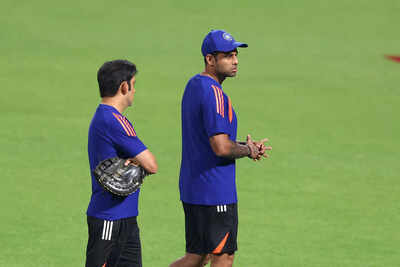
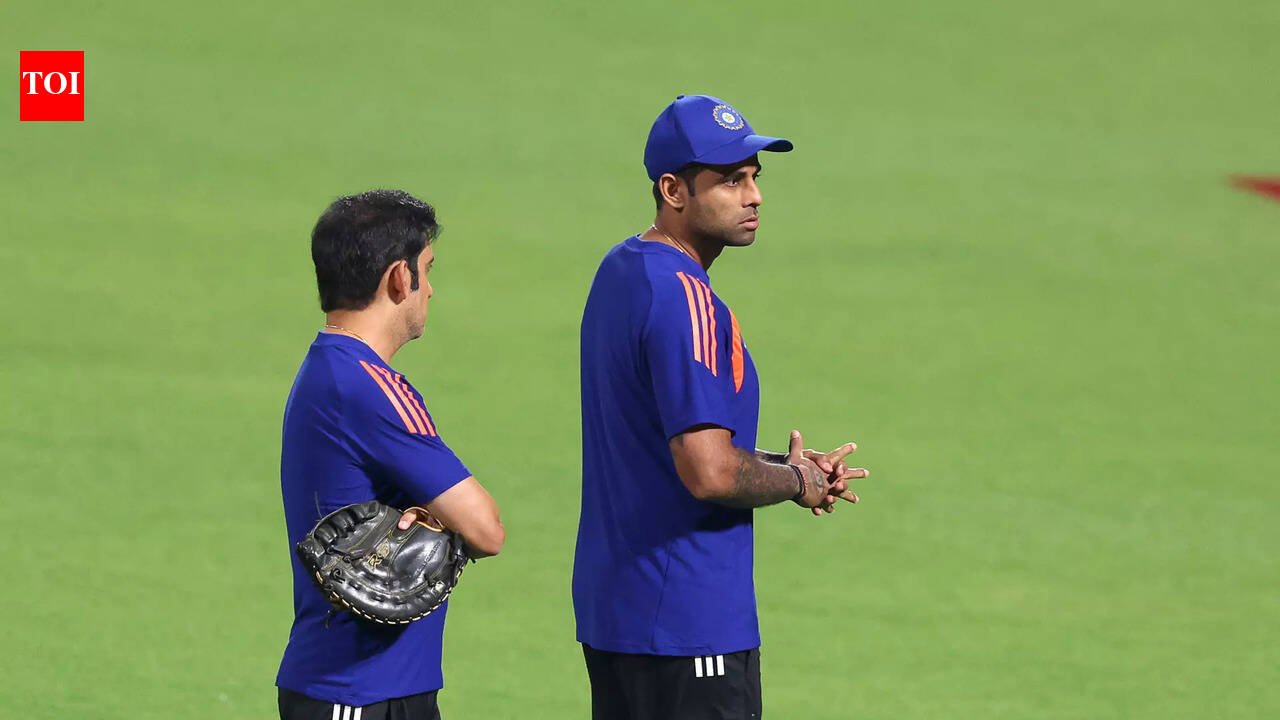
Suryakumar Yadav Captain of India and Gautam Gambhir Head Coach of India during an India ICC Men’s T20 World Cup India & Sri Lanka 2026 net session at Eden Gardens on February 28, 2026 in Kolkata, India. (Photo by Pankaj Nangia/Getty Images)

TimesofIndia.com in Kolkata: Fifty matches across India and Sri Lanka are complete, and only one team has remained unbeaten through both the Super 8 and group stages of the T20 World Cup. With six wins from as many games, the Aiden Markram-led South Africa are the only side yet to taste defeat, and Sunday will finalise the semi-final line-up for the games in Kolkata and Mumbai. Two-time champions India and West Indies are vying for that one available slot, and everything will be on the line at the iconic Eden Gardens on Sunday.

All eyes on how India handle pressure and pitch vs West Indies | T20 World Cup 2026

It is a situation India, the pre-tournament runaway favourites, were not expected to be in, but the nature of the beast, the T20 format, is such that even the best are not spared. The unit led by Suryakumar Yadav is no exception. The virtual quarter-final will be the first high-pressure test for the combination of coach Gautam Gambhir and captain Surya. They were tested in the Asia Cup final against Pakistan last year, but the magnitude of a World Cup knockout clash brings a level of pressure that not many can handle.
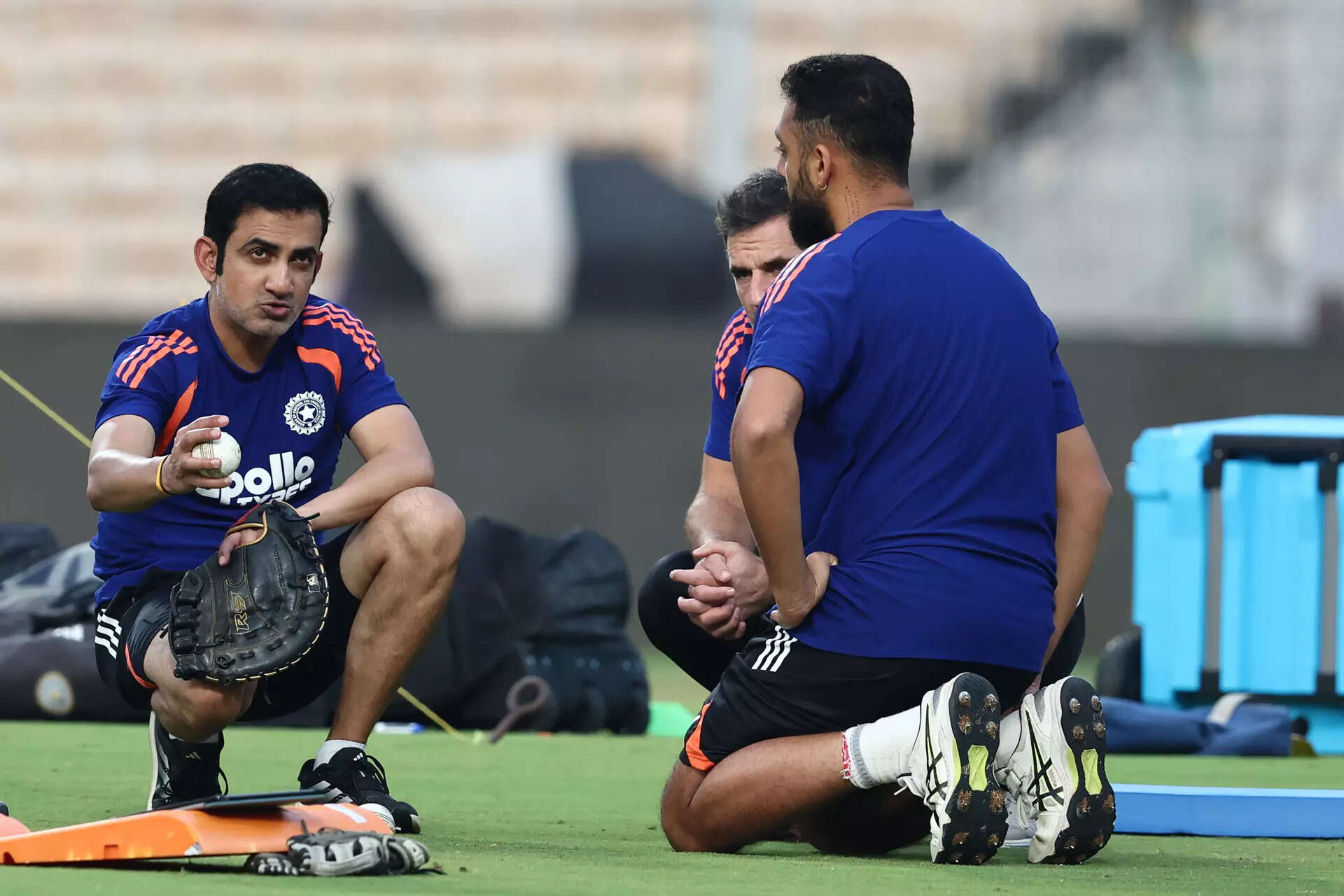
Net Sessions - ICC Men's T20 World Cup India & Sri Lanka 2026

Gautam Gambhir Head Coach of India and Varun Chakravarthy of India during an India ICC Men’s T20 World Cup India & Sri Lanka 2026 net session at MA Chidambaram Stadium on February 23, 2026 in Chennai, India. (Photo by Pankaj Nangia/Getty Images)

War cries have already sounded from the opposite corner as West Indies coach Darren Sammy said his soldiers are ready for battle. He has happy memories of playing at this venue in the past and carried an air of confidence during the pre-match media interaction.“Of course, every time we come to Eden Gardens, it brings back good memories. Do I tell you my XI? No, I will not. But I can tell you all my soldiers are ready for battle tomorrow when we call upon them. We will have to wait till the toss for the XI,” said Sammy while keeping his Playing XI cards close to his chest.It would have been fitting if Sammy’s soldiers remark had received an apt response from the Indian corner, but that will have to wait as head coach Gautam Gambhir has yet to interact with the media during this multi-nation tournament. Assistant coach Ryan ten Doeschate was in the hot seat again, and he emphasised that experienced players must absorb pressure and perform for the side in situations like these.
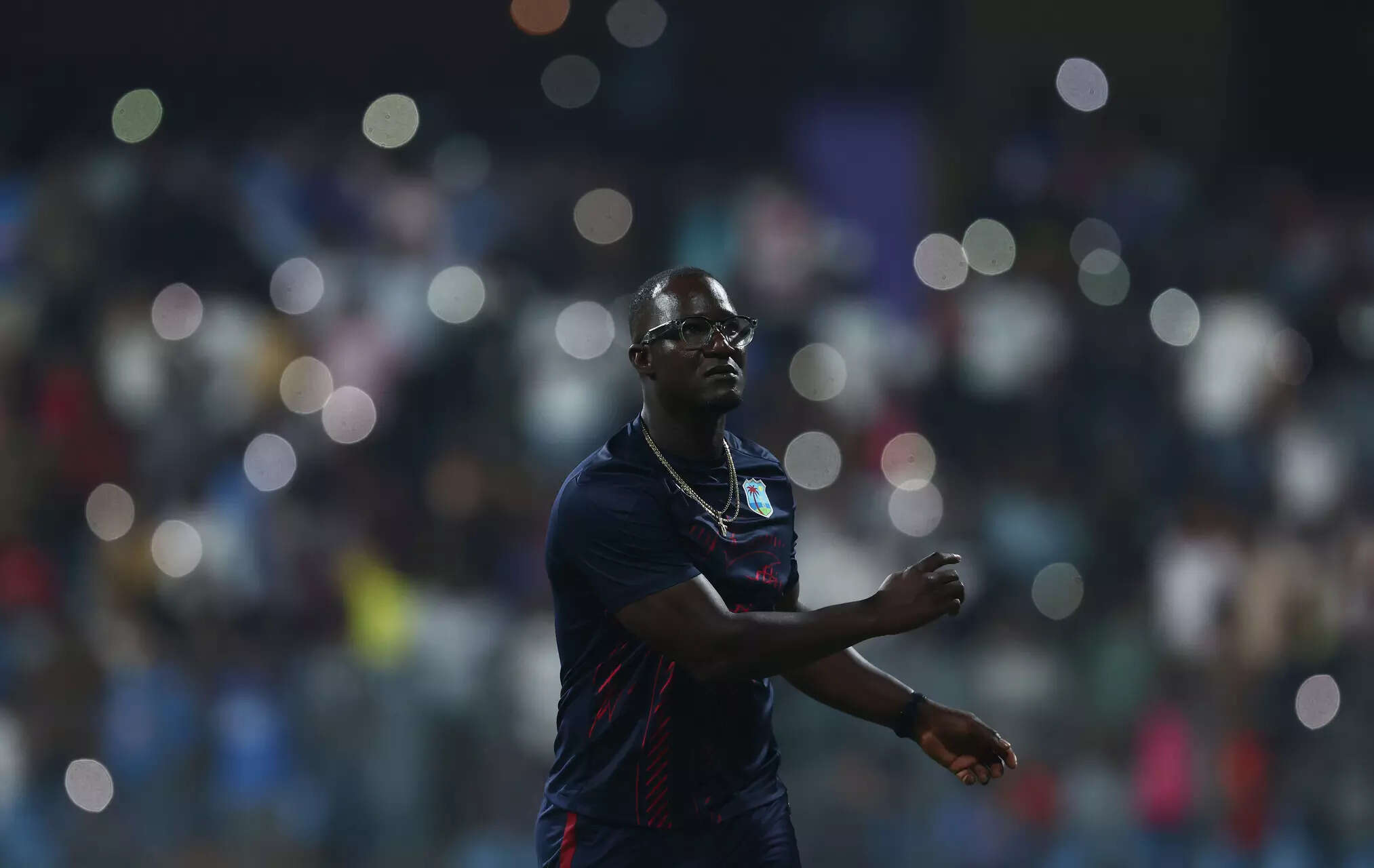
Zimbabwe v West Indies: ICC Men´s T20 World Cup India & Sri Lanka 2026

Daren Sammy, Coach of West Indies looks on during the ICC Men’s T20 World Cup India & Sri Lanka 2026 Super 8 match between Zimbabwe and West Indies at Wankhede Stadium on February 23, 2026 in Mumbai, India. (Photo by Pankaj Nangia/Getty Images)

“South Africa are the only undefeated team in the competition now. A tournament of this magnitude builds in stature and builds to this point where it is a quarter-final and you have to win to stay alive. The important thing is to focus on ourselves and what has got this group to this point, and how well they have done. Now there are only quality players left in the tournament, so it is about big players standing up, experienced players standing up, remaining calm and staying true to the way we have played leading up to this match,” said ten Doeschate.The defending champions carry the burden of expectations from the home crowd, but the management is looking to go towards pressure rather than attempt to mask it. The group’s focus is to embrace the occasion of this must-win fixture rather than avoid it. The P word has been constant in the build-up to this game, but for Team India, P means Privilege, not Pressure.“I do not think you ever want to mask pressure. You want to go towards pressure. That has been the message throughout, not just in the World Cup but also in the bilateral series. All our preparation towards this has been about going towards pressure when it comes. More than masking it, you want to reframe it. We are continually telling the guys what a privilege it is to play for your country and what a privilege it is to walk out at Eden Gardens in a match to stay in the tournament,” added ten Doeschate.
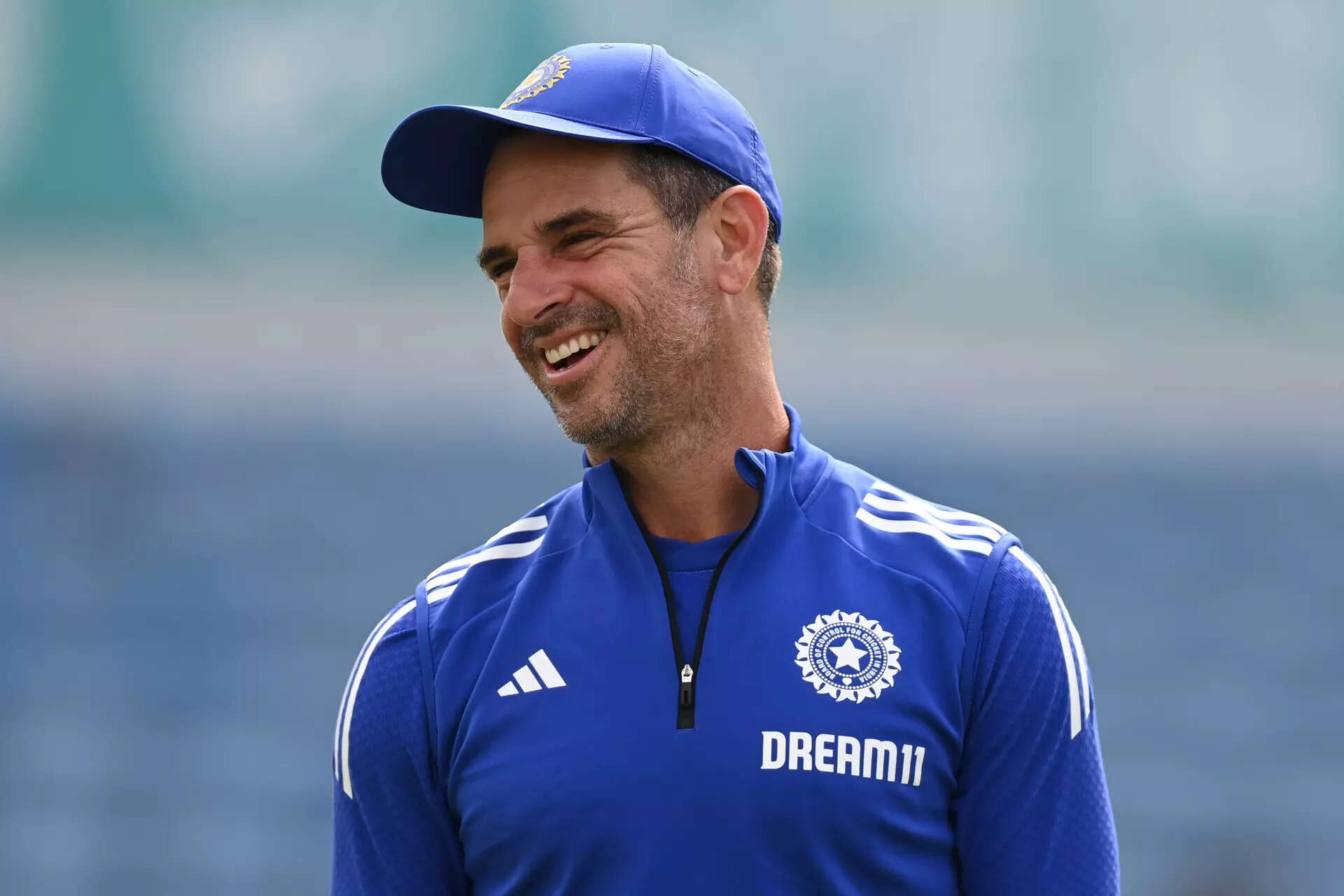
England & India Net Sessions

India coach Ryan ten Doeschate during a nets session

Apart from the happy memories from a decade ago, the West Indies have enjoyed plenty of success this year, winning both their games in Kolkata against Scotland and Italy. They too were unbeaten in the tournament before South Africa stopped the juggernaut in Ahmedabad. However, that game, which had India glued to the action, showed that the West Indies unit will continue to throw their strongest punches even when facing a count on the mat.They looked down and out after a terrible start, but the rearguard action from Jason Holder and Romario Shepherd kept them alive till the halfway stage. South Africa did not break a sweat while chasing down the total, but even in defeat, the Shai Hope-led unit showcased its character and why it remains a force in the format. Sammy cited their 2016 campaign as an example and urged them to leave South Africa in Ahmedabad.“Leave South Africa in Ahmedabad, just like in 2016. I remember Afghanistan beat us and we just said, bin it. There are still positives we could have taken from the game. Not often do you see a team at 83 for 7 go on to score 170. I think we sent a strong message about how deep our batting is. But yes, we left that game in Ahmedabad and our focus has been solely on what we have to do tomorrow against a strong Indian team, and that is where our focus is right now,” said Sammy.
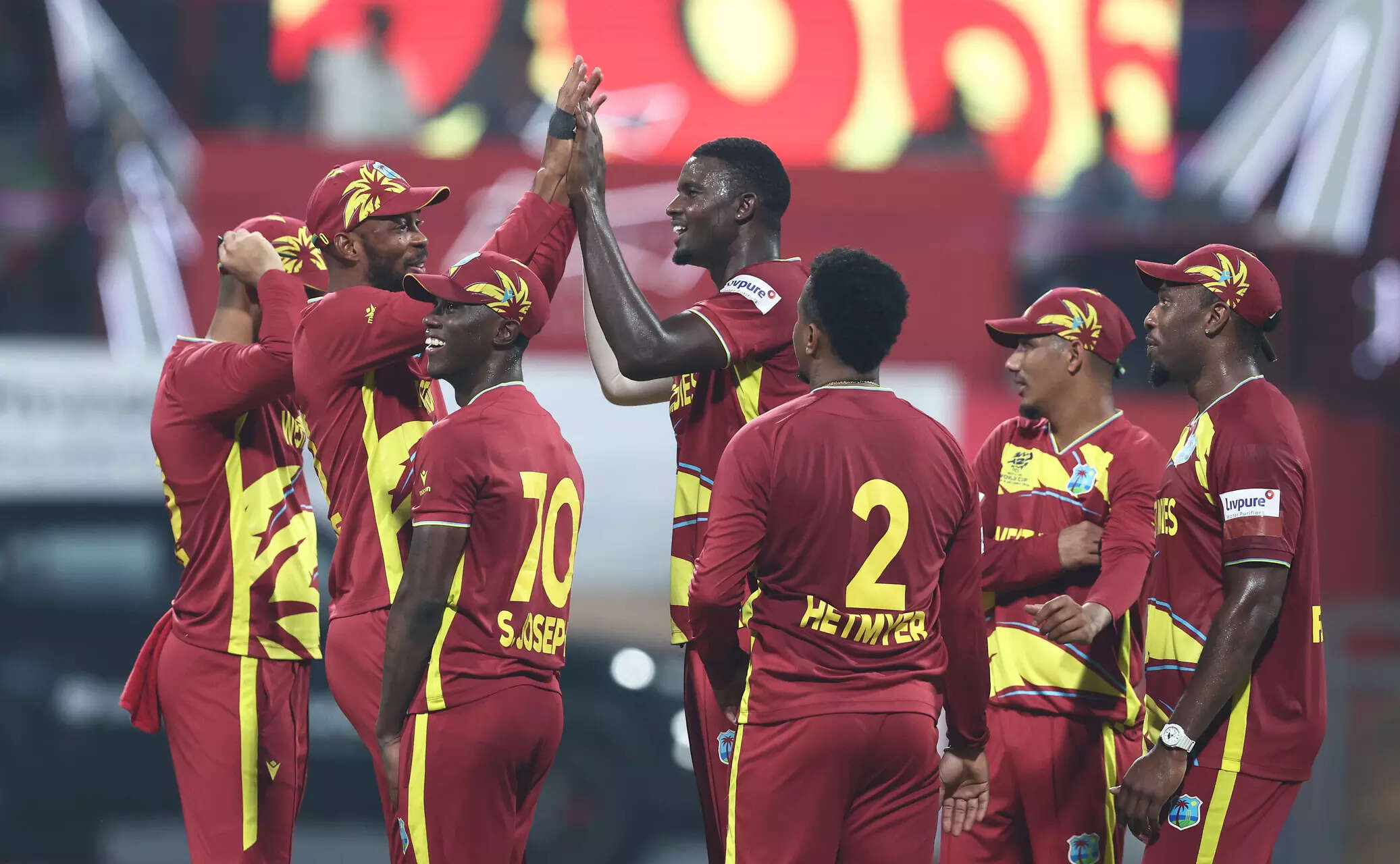
Zimbabwe v West Indies: ICC Men´s T20 World Cup India & Sri Lanka 2026

Jason Holder of West Indies celebrates the wicket of Graeme Cremer of Zimbabwe during the ICC Men’s T20 World Cup India & Sri Lanka 2026 Super 8 match between Zimbabwe and West Indies at Wankhede Stadium on February 23, 2026 in Mumbai, India. (Photo by Pankaj Nangia/Getty Images)

The West Indies bat deep and bat big. They have firepower from the openers through the No. 9 position and are witnessing a fine year from Shimron Hetmyer’s willow. A threatening line-up in a format that comes naturally to them could give any opposition sleepless nights, but India seemed relaxed on the eve of the match. Coach ten Doeschate asserted that they are ready to fight fire with fire and are not bothered about whether the format comes naturally to the opposition.“I do not think that bothers us at all. The challenge is that they are a very good T20 side. They possess power as good as any of the best teams in the world. What you know about the West Indies when they come to a T20 competition is that they give absolutely everything. This is their big moment in the calendar. It is a challenge we are relishing. We are going to fight fire with fire tomorrow, and I am expecting a really good game out there,” said ten Doeschate.

Poll

Who will win the virtual quarter-final at Eden Gardens — India or West Indies?

India had an optional session, but even the 12 who attended were buzzing with activity on the practice pitches near the ropes, while others prepared for range hitting on the square. Coach Gambhir chatted with different players as most went through their usual routine, applying the finishing touches. Big games differentiate the good from the great, and Sunday is an opportunity for 22 players from both sides to move toward a legacy they will long be remembered for.As ten Doeschate said, it is a clean slate, but anything less than a W would be considered an anomaly for this Indian side.


Source link

“Pehli fursat me nikal…”: Fans troll Mohammad Amir as India storm into T20 World Cup 2026 semi-final


The 52nd match of the T20 World Cup 2026 at Eden Gardens was nothing short of a cinematic masterpiece. On Sunday, the hallowed turf of Kolkata played host to a Super Eights clash between India and the West Indies. In a winner-takes-all scenario, India successfully chased down a daunting 196 to secure their spot in the semi-finals, silencing skeptics and sending a raucous 65,000-strong crowd into a frenzy.

The hero of the night was Sanju Samson, whose unbeaten 97 off 50 balls broke Virat Kohli’s long-standing record for the highest individual score by an Indian in a T20 World Cup chase.

Mohammad Amir’s prediction for India during the Super 8 stage

While the Men in Blue were busy dismantling the West Indies bowling attack, social media was ablaze with the ghost of a failed prophecy. Former Pakistan pacer Mohammad Amir had become the center of a digital storm following his repeated claims that India would not reach the semi-finals. During the Super Eight stage, appearing on the show “Haarna Mana Hai,” Amir had boldly asserted that South Africa and the West Indies were the favourites to progress from Group 1.

His most viral moment came when he dismissed India’s chances with a smug, “Pakistan qualify kare na kare, India naaaa” (Whether Pakistan qualifies or not, India won’t). Amir even doubled down on this stance after India’s earlier loss to South Africa in Ahmedabad, where he was mockingly labeled an ‘astrologer’ by the show’s host. He pointed toward India’s fielding lapses and a perceived over-reliance on Jasprit Bumrah as signs of an impending exit. However, the resilient performance at Eden Gardens effectively turned his ‘astrology’ into a meme.

Also READ: T20 World Cup 2026: Mammootty, Mohanlal and other film stars hail Sanju Samson after his match-winning knock against West Indies

Indian fans roast Mohammad Amir as Men in Blue march into T20 World Cup 2026 semi-final

As soon as India reached the target of 199/5 with four balls to spare, the phrase “Pehli fursat me nikal” (Leave at the first opportunity) began trending globally. Indian fans, never ones to forget a slight, used the famous meme to escort Amir out of the tournament’s conversation. The irony was palpable: Amir had predicted the West Indies would eliminate India, but it was India who ended the Windies’ campaign on the same ground where the Caribbean side had famously won the title in 2016.

Even in the aftermath, a defiant Amir tried to pivot, calling Shimron Hetmyer’s dismissal ‘controversial’ and claiming India was still “not playing good cricket” despite the win. But for the Indian faithful, the results spoke louder than the rhetoric. With a semi-final against England at the Wankhede Stadium now confirmed for March 5, the ‘Men in Blue’ have moved forward, leaving Amir’s failed predictions behind in the dust of Kolkata.

Here’s how fans reacted:

Also READ: T20 World Cup 2026: Suryakumar Yadav heartwarmingly bows to Sanju Samson after India reaches the semis; video goes viral


Source link

US-Israel strikes in Iran: Indian national killed in attack on oil tanker off Oman coast


US-Israel strikes in Iran: Indian national killed in attack on oil tanker off Oman coast

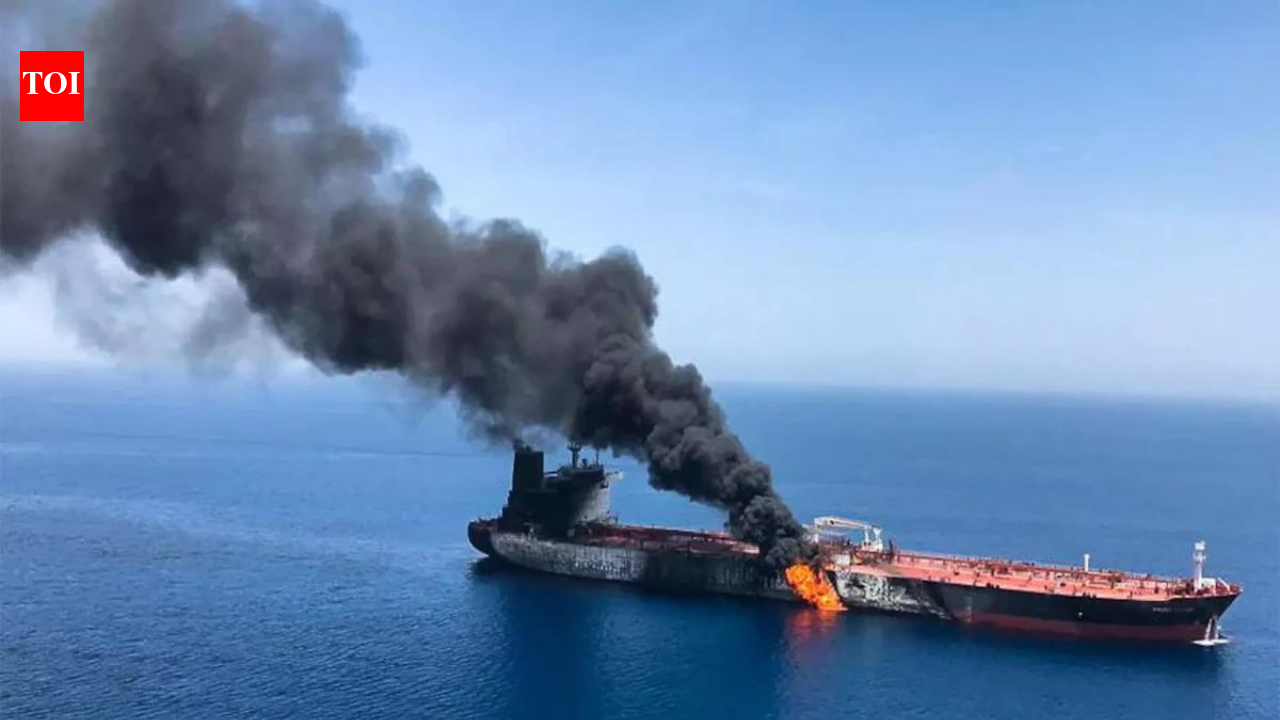
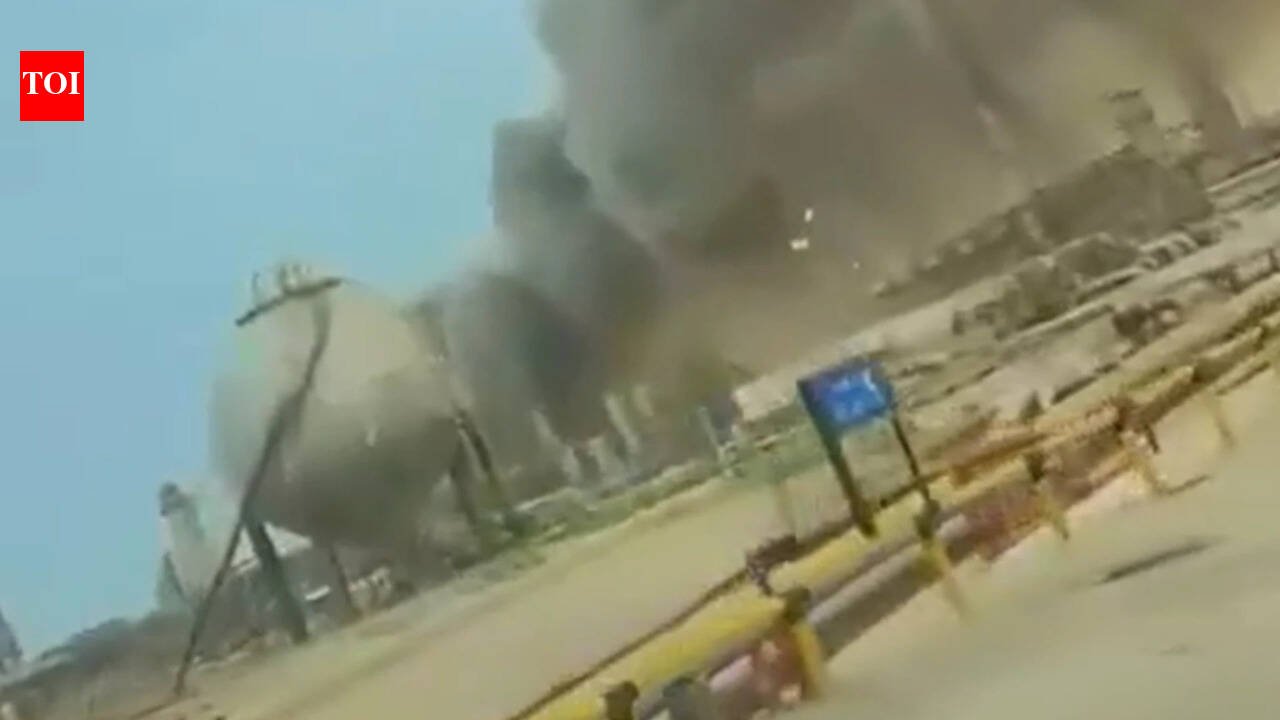
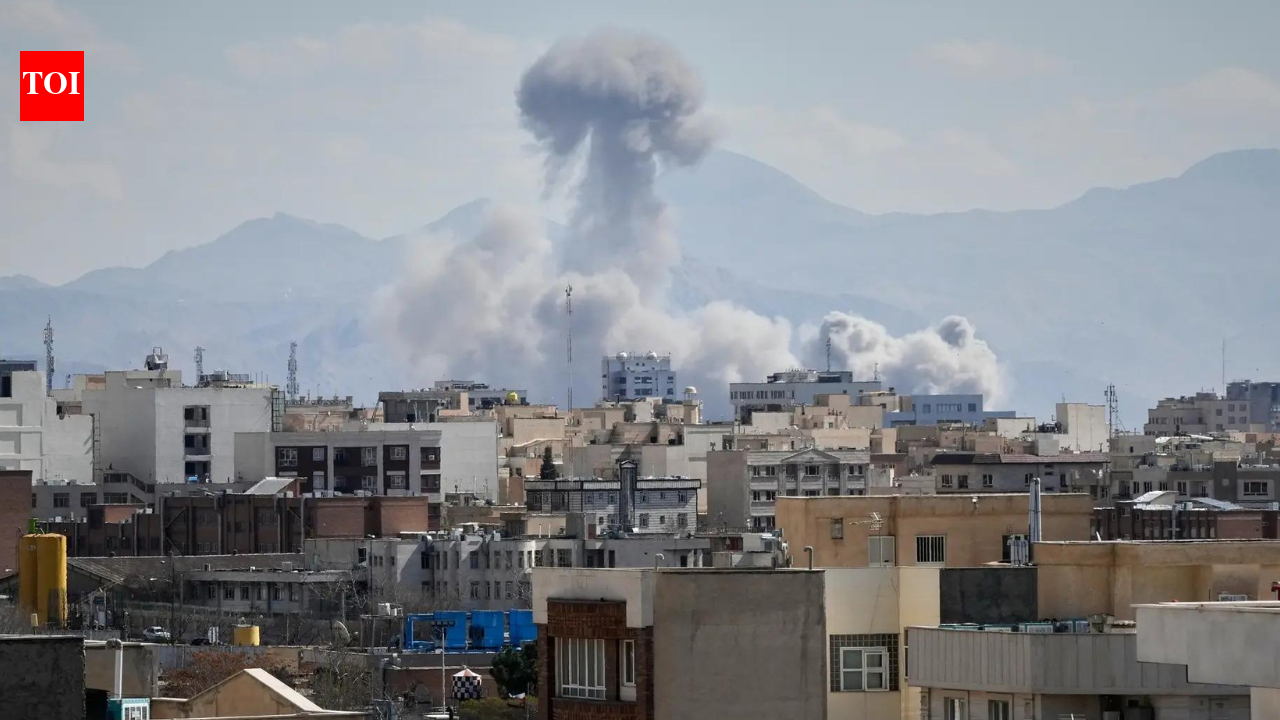
NEW DELHI: An Indian national was killed after an oil tanker was attacked off the coast of Oman, triggering an explosion and fire onboard, Omani authorities said on Monday.According to Oman’s maritime security centre, the oil tanker MKD VYOM was targeted 52 nautical miles off the coast of Muscat Governorate amid rising tensions in the Gulf region.“The oil tanker MKD VYOM, flying the flag of the Republic of the Marshall Islands, was attacked by an unmanned boat 52 nautical miles off the coast of Muscat Governorate. The tanker was carrying approximately 59,463 metric tons of cargo,” the Omani maritime security centre said in a statement.Authorities said the strike led to a blast inside the vessel’s engine section.“The attack resulted in a fire and explosion in the main engine room, killing one crew member, an Indian national,” it added.The incident comes as Iran continues its retaliation campaign across the Gulf following recent military escalations in the region. Further details on the condition of other crew members or the extent of damage to the vessel were not immediately available.


Source link

Captain’s tribute: Suryakumar Yadav takes off cap, bows to Sanju Samson – WATCH | Cricket News


Captain's tribute: Suryakumar Yadav takes off cap, bows to Sanju Samson - WATCH
Sanju Samson (BCCI Photo)

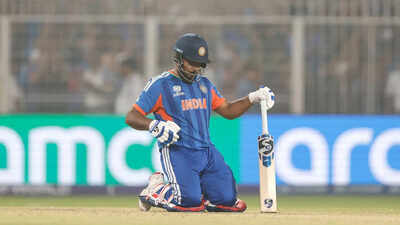
NEW DELHI: Perpetually under scrutiny, Sanju Samson rose above the noise with a match-winning 97 not out as India defeated West Indies by five wickets in their T20 World Cup Super Eights clash to storm into the semifinals on Sunday.But beyond the runs and the result, it was a captain’s bow that defined the night at Eden Gardens.

Indian cricket team leaves from Kolkata, fans go mad for Sanju Samson

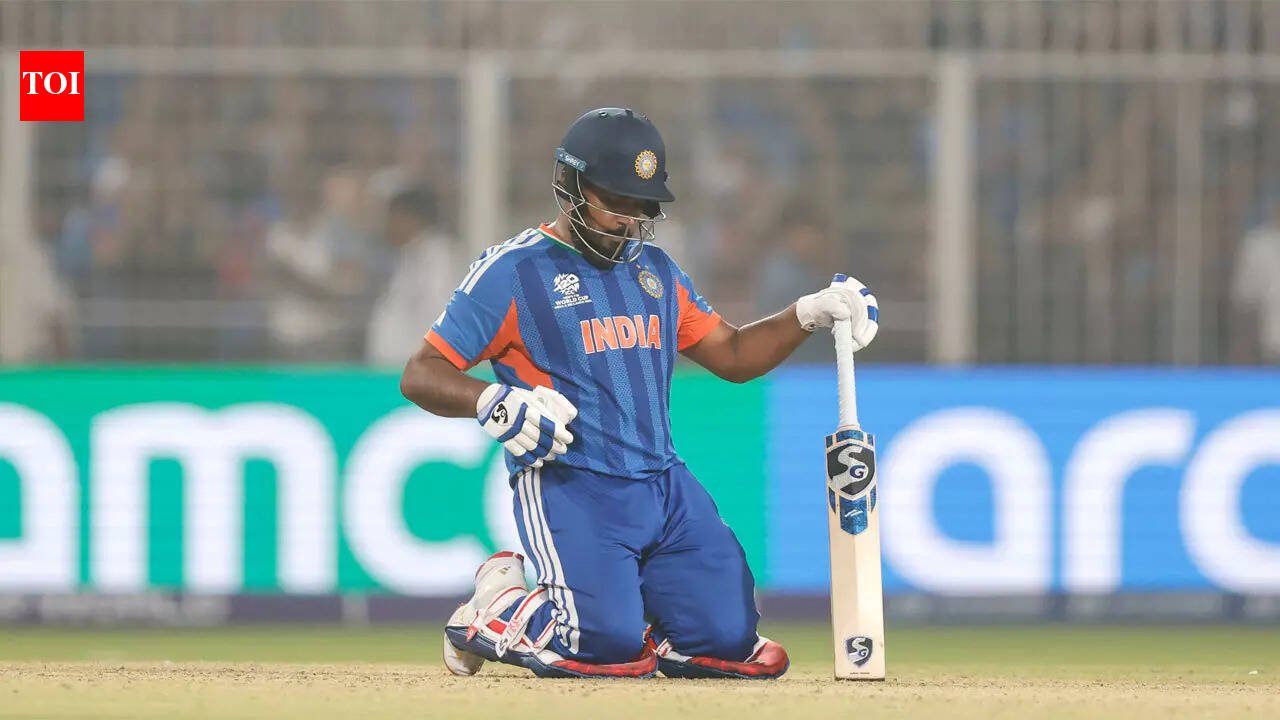
India will now face England in the semifinal at the Wankhede Stadium in Mumbai on March 5.As the winning boundary was struck and the noise reached fever pitch, Samson began his walk back to the pavilion. That’s when India skipper Suryakumar Yadav did something few captains do.Surya walked down from his position, removed his cap and bowed to Sanju in the middle of the ground before embracing him tightly. It was spontaneous, heartfelt and symbolic — a public acknowledgement of belief repaid.The packed Eden Gardens, with over 65,000 spectators, erupted. Teammates applauded. Fans roared. It was more than celebration; it was respect.Asked to bat first, West Indies followed a clear attacking blueprint. Roston Chase laid the foundation before Rovman Powell (34* off 19 balls) and Jason Holder (37* off 22 balls) launched a late assault to power them to 195/4.Chasing 196 in a virtual knockout, India needed composure. Instead, they lost early momentum as in-form batters faltered under pressure.That’s when Sanju stood tall.Playing only his third match of the tournament, the wicketkeeper-batter produced an innings of poise and authority — 97* off 50 balls, laced with 12 fours and four sixes. He batted deep, absorbed the pressure and ensured India reached 199/5 in 19.2 overs, sealing victory with four balls to spare.In the 19th over, with tension peaking, Sanju brought the scores level by heaving Romario Shepherd’s attempted yorker high over square leg for a towering six — a statement blow under pressure.Moments later, he carved the winning boundary over a leaping mid-on to book India’s semifinal berth and end West Indies’ campaign at the very venue where they had lifted their second and last T20 World Cup title in 2016.As “Maa Tujhe Salaam” echoed through Eden Gardens, Sanju dropped to his knees, removed his helmet and offered a quiet prayer — a moment of relief, gratitude and redemption. The BCCI top brass stood up in applause.And just behind that image stood Surya’s bow — a captain recognising a warrior who had delivered when it mattered most.On a night of pressure and expectation, it wasn’t just about a 97*. It was about faith, redemption and a skipper who wasn’t afraid to bow down to brilliance.


Source link

Pakistan: Iran attacks Saudi Arabian cities, Aramco facility: Will Pakistan honour its defence pact with Riyadh?


Iran attacks Saudi Arabian cities, Aramco facility: Will Pakistan honour its defence pact with Riyadh?
Pakistan condemned Iran’s strikes on Saudi Arabia and voiced firm solidarity with Riyadh. Despite a 2025 defence pact, analysts expect Islamabad to pursue diplomacy and logistical support rather than direct military involvement, due to its domestic and regional constraints. The agreement centres on conventional cooperation and explicitly excludes nuclear guarantees.

Iran’s recent retaliatory drone and missile strikes on Saudi Arabia and key oil refinery sites amid joint US-Israel attacks and Ayatollah Khamenei’s killing, has sparked a strong reaction from Pakistan, which has condemned Tehran’s “dangerous escalation” and pledged “full solidarity” with Riyadh and Gulf states.As the situation continues to escalate with Iran continuing its missile and drone barrage, questions are being raised whether Islamabad’s reaction will go beyond verbal admonishment given its 2025 Strategic Mutual Defence Agreement with Riyadh .

Saudi cities, Aramaco oil refinery attacked

  • Riyadh: Capital hit by intercepted missiles, prompting air raid sirens and government condemnation of “blatant Iranian aggression” on the kingdom’s heartland.
  • ​Dammam/Eastern Province: Broader barrages struck this industrial hub near oil fields, with debris and direct impacts reported.
  • Ras Tanura Refinery: Primary target, one of the world’s largest with 550,000 barrels/day capacity on the Persian Gulf. A drone strike caused a small fire and black smoke, leading to temporary shutdown for damage assessment; no injuries, blaze contained quickly.

​The strikes were part of a wider Iranian wave hitting UAE (Abu Dhabi, Dubai), Qatar (Doha), Bahrain (Manama), and Oman (Duqm port), spiking oil prices 10-15%. Saudi Patriots intercepted most threats.

Pakistan’s reaction

Pakistan Prime Minister Shehbaz Sharif said he had spoken with Saudi Crown Prince Mohammed bin Salman to convey Islamabad’s position on the escalating situation.Posting on X, Sharif said, “This evening, I spoke with my dear brother, His Royal Highness the Crown Prince Mohammed bin Salman, to express Pakistan’s strong condemnation of the dangerous regional escalation that followed the Israeli attack on Iran and the subsequent strikes in the Gulf region.”He added that Pakistan stands “in full solidarity with the Kingdom of Saudi Arabia and the sisterly Gulf states during this difficult time”.Sharif further said that Pakistan is fully prepared to play a constructive role for peace and expressed hope that the holy month of Ramadan would bring tranquillity and stability to the region.But will Islamabad dispatch jets, troops, or nukes?

What the defence pact says

Pakistan and Saudi Arabia formalised the Strategic Mutual Defence Agreement (SMDA) in September 2025, a pact treating aggression against one as an attack on both.Core provisions

  • Collective defense clause: Any attack on either nation triggers mutual response, rooted in decades of military training, joint exercises, and Pakistan’s support for Saudi security.
  • Enhanced cooperation: Covers joint mechanisms, intelligence sharing, defense industry collaboration (e.g., drones, cybersecurity), and potential co-production of equipment, without explicit nuclear guarantees despite speculation.
  • No nuclear umbrella: Pakistan’s doctrine remains India-focused; the pact institutionalizes conventional ties rather than extending deterrence.

​Will Pakistan step up?

The pact’s collective defense clause treats aggression against one as an attack on both, building on decades of military ties. Yet, core provisions emphasise conventional cooperation — joint exercises, intelligence sharing, drones — without nuclear commitments. PM Sharif’s call with Crown Prince Mohammed bin Salman pledged “full solidarity” and peace mediation, not jets or troops. Experts say dispatching forces could drag Pakistan into a multi-front war, straining its economy and exposing vulnerabilities amid domestic woes.“The Saudi-Pakistan defence pact is more of a political and strategic partnership rather than a classical defence pact akin to NATO. Pakistan has publicly condemned the Iranian attack on the Saudis and expressed solidarity and nothing beyond that. Pakistan in no way will get into any kind of military involvement as it has enough on its hand both externally with Afghanistan and internally with TTP and BLA. This once again exposes the double standards which Pakistani leadership has been exhibiting from time to time,” said Major General Rajan Kochar (Retd).Experts add that Islamabad will likely stick to diplomacy, logistics aid, or overflight rights — bolstering Riyadh without boots on ground.


Source link

India Iran Israel Us: US-Israel-Iran war: What’s the impact on India? Explained in top 5 points


US-Israel-Iran war: What’s the impact on India? Explained in top 5 points

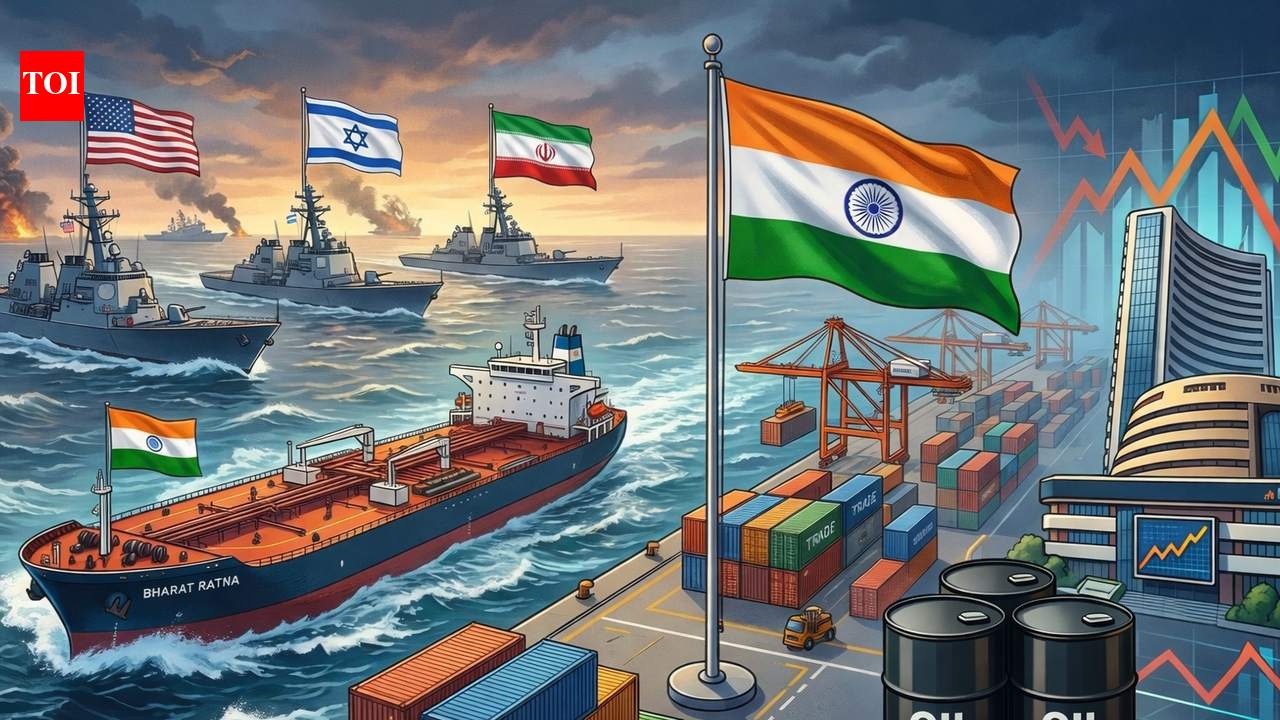
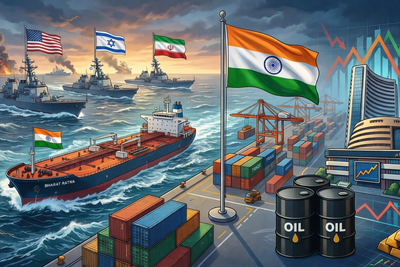
The ongoing US-Israel conflict with Iran has both geopolitical and economic consequences for the world, and India is expected to be impacted too if it persists. Policymakers are closely monitoring crude oil prices and cargo movement following the renewed tensions in the Middle East, though they maintain that it is premature to gauge the broader economic fallout.The immediate effect is expected to be visible in energy costs, given India’s heavy dependence on imported oil and gas, much of which transits through the Middle East. However, any sustained increase in crude prices would directly affect both consumers and businesses. Meanwhile, Dalal Street also reacted negatively to the news with Nifty falling below 24,700 and Sensex shedding over 1,600 points. During the day, benchmark indices traded in red with NSE Nifty50 closing at 24,865, down 1.24% and BSE Sensex trimming 1048 points or 1.29% to end the day at 80,238.85. In the currency market, Rupee mirrored the fall, plunging past the 91 per US dollar mark to 91.32 in early trade.Executives at major consumer goods companies have flagged concerns over the ripple effects of rising crude oil prices, supply chain interruptions, weaker consumer sentiment and potential disruptions in remittances from the Gulf, just as demand had begun to recover amid the Middle East conflict.Ajay Srivastava, founder of the Global Trade Research Initiative, said the consequences for India would be both economic and strategic. “Disruption in the Strait of Hormuz threatens a major share of its crude oil and LNG imports, raising freight costs, insurance premiums, and fuel prices, while a surge in global oil prices could widen the current account deficit and fuel inflation,” he said.

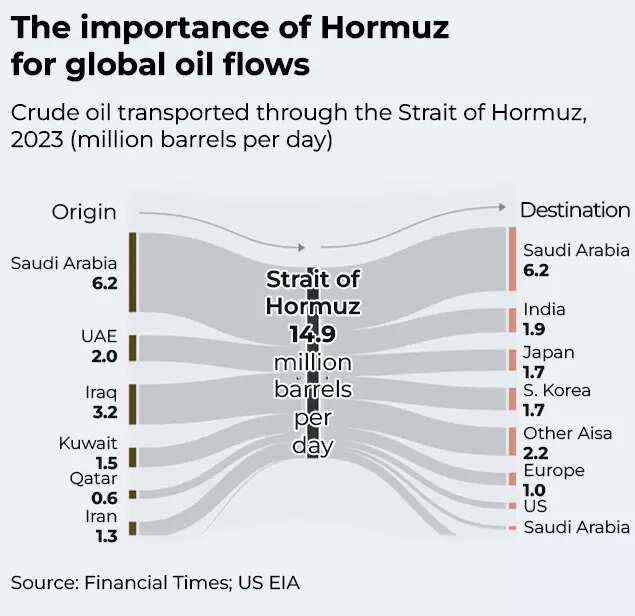
The importance of Hormuz

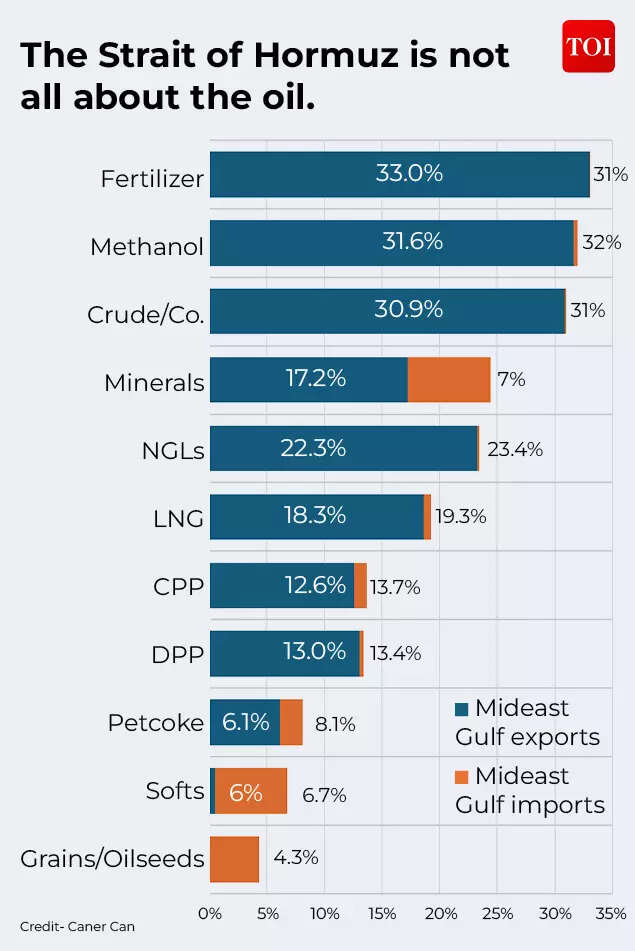
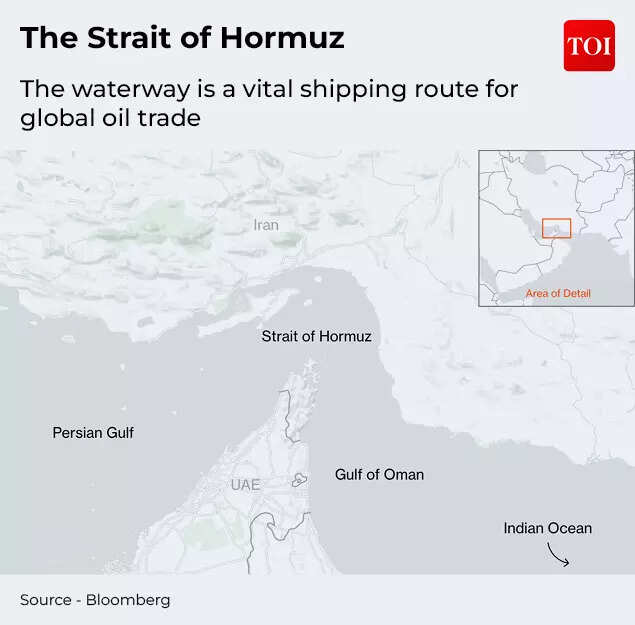
Exporters have voiced serious apprehensions about vessel movement through the Strait of Hormuz and the Bab el-Mandeb Strait, two strategic sea lanes vital to global commerce. These maritime corridors are key arteries linking India to the Gulf and onward to major markets in North America and Europe.The Strait of Hormuz, a narrow 33-kilometre channel connecting the Persian Gulf to the Arabian Sea, is widely recognised for its role in global oil trade. However, its importance extends well beyond crude shipments, as it also facilitates a significant volume of broader commercial traffic.What do the ongoing Middle East tensions mean for India? Let’s understand:

1. Impact on oil prices

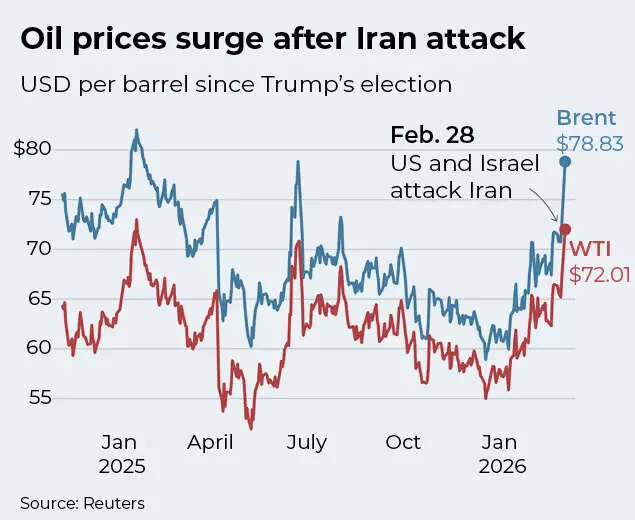
Crude oil prices have risen over 10% on fears of disruption in supplies transiting through the Strait of Hormuz. Between 2.5 and 2.7 million barrels per day of India’s crude imports move through the Strait of Hormuz, primarily sourced from Iraq, Saudi Arabia, the United Arab Emirates and Kuwait. In recent months, the share of Middle Eastern oil in India’s import basket has increased as refiners trimmed some purchases of Russian crude, heightening reliance on Gulf suppliers and amplifying sensitivity to any disruption in the strait.According to Kpler data, Russian crude cargoes are still present in the Indian Ocean and Arabian Sea region, including volumes held in floating storage. Should Middle Eastern flows tighten, refiners could potentially step up purchases of Russian grades in the short term. Nevertheless, Gulf shipments retain a logistical advantage, typically reaching India in five to seven days, compared with 25 to 45 days for cargoes from the Atlantic basin.

Oil prices surge after Iran attack

According to a TOI report, Centre has so far managed retail fuel prices through a combination of taxation adjustments and margins allowed to oil marketing companies, and that approach is expected to continue. While oil retailers had been earning healthy margins on petrol and diesel before global prices firmed up, the first line of response would likely involve trimming these margins. If necessary, the government also has room to cut domestic taxes and import duties to cushion the impact.If hostilities continue, trade flows in and out of India could face disruptions, particularly supplies of oil, gas, fertilisers and other essential inputs sourced from the western region. For now, authorities have not reported any shortages.GTRI has said that refiners could respond to any closure of Hormuz by redirecting supplies through pipelines leading to Red Sea ports. India might also expand sourcing from Russia, the United States, West Africa and Latin America. Another buffer could come from drawing down strategic petroleum reserves to manage immediate supply shocks.Even so, the think tank has cautioned that such alternatives would involve higher transportation costs and longer transit times. Sumit Ritolia, Lead Research Analyst for Refining and Modelling at Kpler, said India may be able to manage higher crude prices and short-term supply constraints, but flagged greater vulnerability in liquefied petroleum gas supplies. “Escalating Middle East tensions once again highlight a structural reality: India remains materially exposed to the Strait of Hormuz – not just for crude oil, but even more so for LPG and LNG,” he said.

The Strait of Hormuz is not all about oil

Impact on trade

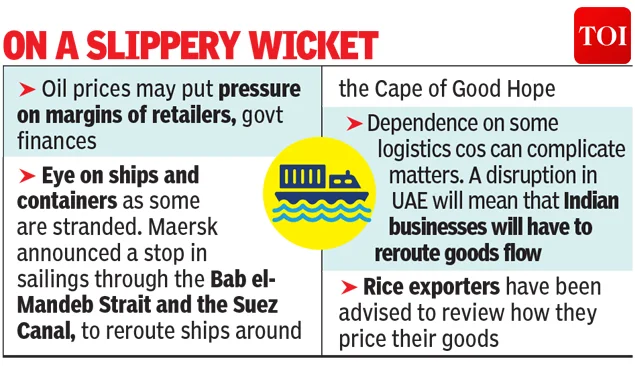
Ship movements over the coming days will be crucial, especially as some vessels remain stranded following military action by the US and Israel and Iran’s retaliatory response. Broader trade flows across the region and shipments transiting Hormuz, face significant risks. The commerce ministry has initiated discussions to assess how evolving developments could affect India’s external trade.

On a slippery wicket

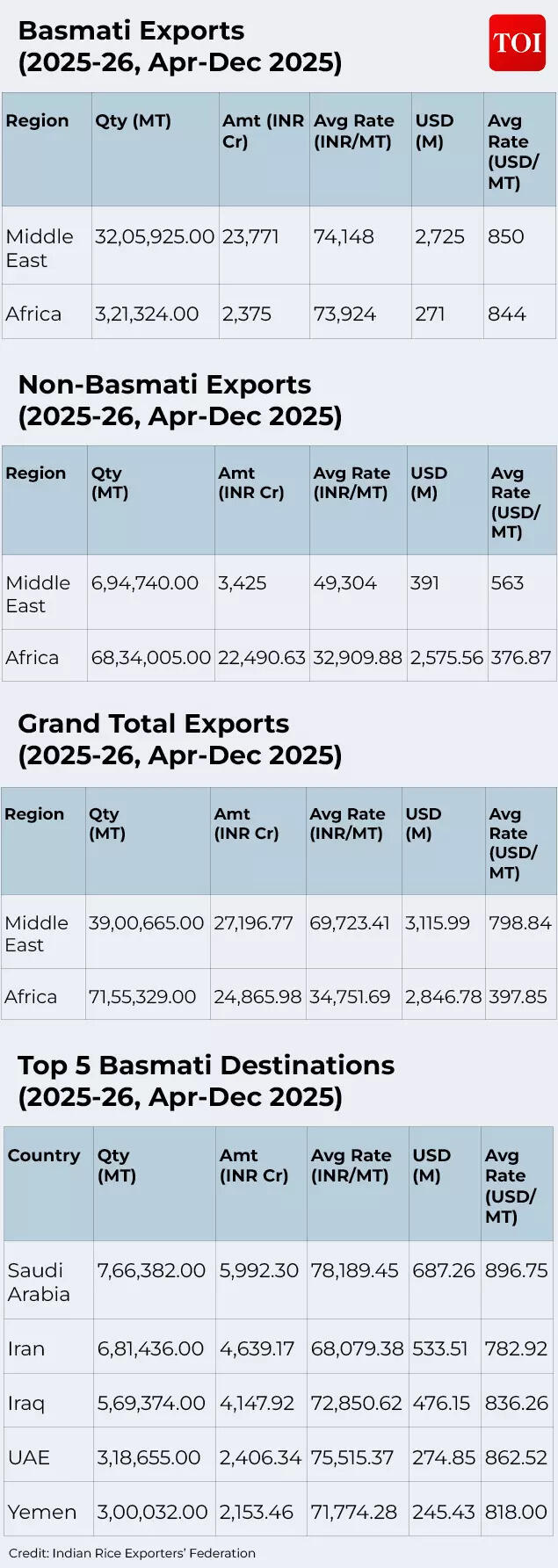
Federation of Indian Export Organisations president SC Ralhan said hostilities are already straining established logistics networks. Airlines are adjusting routes, and maritime trade across the Red Sea and key Gulf passages is facing mounting uncertainty.If rerouting becomes prolonged, cargo destined for Europe and the United States may need to sail around the Cape of Good Hope, extending transit by 15 to 20 days. Such detours are expected to drive up freight and insurance costs. Industry sources indicated that clarity on shipping capacity, alternative routes, coverage terms and freight pricing may take several days to emerge.The Indian Rice Exporters Federation has advised members not to enter into fresh cost, insurance and freight commitments for shipments to Iran and other Gulf destinations, warning that disruptions could escalate logistics and insurance expenses. The federation noted that five principal Basmati markets — Saudi Arabia, Iran, Iraq, the United Arab Emirates and Yemen — are located in the Middle East and collectively account for nearly half of India’s Basmati exports.

Basmati exports

The Middle East also hosts critical sea lanes through which a substantial portion of India’s exports to major markets such as the United States and Europe are transported. These destinations together represent about 56% of India’s merchandise exports.Danish container shipping major Maersk announced on Sunday that it would temporarily suspend sailings through the Bab el-Mandeb Strait and the Suez Canal, instead diverting vessels around the Cape of Good Hope. If such rerouting continues, shipments bound for Europe and the US could face an additional two to three weeks of transit time, tightening container and vessel availability.Complicating matters further is India’s significant reliance on DP World for handling a substantial share of its cargo. Any disruption in the UAE could force Indian businesses to redirect their trade routes.Escalating tensions could affect India’s $4.5 billion electronics and technology exports to the Gulf region, even though direct trade in these products with Iran remains minimal.Commerce and industry ministry data show that the UAE is a key market for Indian electronics. During the first nine months of FY26, from April to December, shipments of electronic goods to the UAE totalled $4.1 billion, making it the second-largest buyer of such products from India.The UAE ranked as the second-biggest destination for smartphones manufactured in India, with exports valued at $3.1 billion. Saudi Arabia was the second-largest Middle Eastern market for Indian electronics and stood 15th globally, with exports worth $387 million during April-December FY26. Israel recorded the highest share of consumer electronics exports from India.

The Strait of Hormuz

Air travel crippled

Across the Middle East, thousands of Indian nationals – including tourists, expatriates, pilgrims, public representatives and families travelling with children – have found themselves stranded. The escalation led to widespread airspace closures and the shutdown of Dubai, the world’s busiest transit hub. Air connectivity across the Middle East, stretching from the UAE to Israel, continues to face major disruption, with nearly several thousand flights operated by regional carriers such as Emirates, Etihad and Qatar Airways cancelled across their global networks. Indian airlines including IndiGo, Air India and Akasa have also cancelled many flights.Normal operations hinge on when it is considered safe to resume flights in the conflict-affected airspace.Air India has said that its services to North America and Europe would operate via alternate flight paths through available Middle Eastern air corridors, a move expected to increase travel time. In a statement, the airline said, “Flights to New York (JFK) and Newark (Liberty International) will operate with technical stops at Rome (Fiumicino Airport).”With Pakistani airspace shut to Indian carriers, they are unable to use the Pakistan-Afghanistan-CIS corridor for westbound flights, a route currently accessible to Lufthansa and other Western airlines.

Higher grocery bills & inflation?

Higher grocery bills for Indian households may be loading with staples such as pulses likely to become costlier as trade disruptions drive up global prices, industry representatives have said.“If the war continues beyond a week, the price of pulses will increase,” Suresh Agarwal, president of the All India Dal Mill Association told ET.India relies on imports of around 5–6 million tonnes of pulses each year, including tur, urad and lentils, sourced largely from Myanmar, Canada and African nations. This dependence makes domestic prices vulnerable to international supply shocks.Crude oil and its derivatives form a crucial part of the cost structure for everyday consumer products such as detergents, biscuits, toothpaste and paints, apart from packaging materials. Petrochemical inputs are extensively used in items including soaps, shampoos, creams, hair oils, bottles and tubes. These derivatives contribute more than a quarter of input costs for FMCG companies and roughly 40% for paint manufacturers.Global markets are preparing for inflationary pressure and potential supply disruptions in one of the world’s most critical oil-producing regions. B Thiagarajan, managing director of Blue Star, told ET that southern markets, which are heavily supported by remittance inflows, could face a sharp slowdown if the conflict persists. He added that any sustained increase in oil prices would weigh on consumer confidence more broadly. Industry executives stressed that the magnitude of the impact would hinge on how long hostilities continue. Havells India chairman Anil Rai Gupta said consumption trends and pricing pressures would depend entirely on the duration of the conflict.Auto component manufacturers are also monitoring the situation carefully.

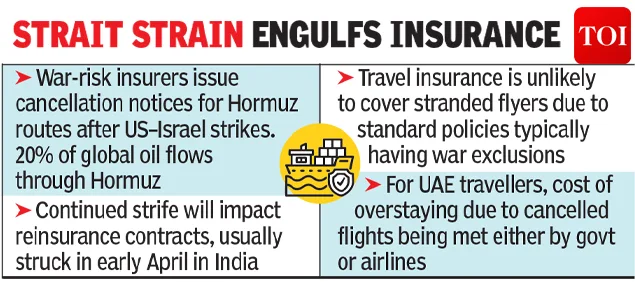
Insurance

Insurance premiums could be hiked

Insurance companies are preparing for the possible activation of “notice of cancellation” provisions in war-risk policies and for sharp spikes in war-risk premiums. In response to fears of a potential closure of the Strait of Hormuz, Iranian vessel seizures and retaliatory military action, several marine war-risk underwriters have already issued cancellation notices for ships navigating the corridor. Many vessels have opted for alternative routes, driving up operational expenses.Although aviation insurance policies remain in force, airlines are exercising caution by suspending services in the affected region. Insurers note that policy terms often contain a grey area, requiring the insured party to take the same level of precautions they would have adopted even without insurance coverage.“In case of ships and airlines, insurers can issue a notice of cancellation of war cover for specified zones after due notice. For ships already at sea, ongoing voyages will remain covered until cancellation. Post-cancellation, they may impose geographic limits or increase premiums,” said Kunal Khanna, MD–Reinsurance and global head of natural resources, Edme Insurance Brokers. “If the conflict continues for long, it will impact reinsurance contracts, which are typically struck from the beginning of April in India,” he added.


Source link

‘My son reads these stories’: Shoaib Malik’s emotional statement shuts down marriage rumours


Former Pakistan cricket captain Shoaib Malik has broken his silence on marriage rumours, strongly refuting false claims and stating his first marriage ended mutually in early 2023. He clarified his remarriage occurred only after the legal conclusion of his previous union, emphasizing the need to protect his family from misinformation.

Former Pakistan cricket captain Shoaib Malik has finally spoken up about the rumours swirling around his personal life – especially claims suggesting he is planning a third marriage. And this time, he didn’t stay quiet.In a detailed public statement, Malik pushed back strongly against what he described as false and fabricated stories. He said the speculation had reached a point where silence was no longer helping anyone, especially his family.So he decided to set the record straight himself.

Shoaib Malik and Sania Mirza divorce: What is Unilateral Divorce? What are the grounds to file?

What Shoaib Malik said

According to Malik, his first marriage officially ended in early 2023, and the separation happened mutually. He explained that both sides chose to co-parent their child respectfully after the split. He also clarified that his remarriage happened only after the previous marriage had legally concluded – something he felt needed to be clearly stated amid constant online chatter.And that clarification matters, because social media conversations around his relationships have refused to slow down.Malik admitted he had intentionally stayed away from discussing his private life for a long time. The reason, he said, was simple – respect for family and personal boundaries. But over time, he felt that silence started working against him. Rumours multiplied. Unverified stories circulated freely. Some reports even linked him to people he claims he has never met.At that point, he felt he had to respond.One part of his statement carried a noticeably emotional tone when he spoke about his current wife. Malik said she had been dragged into controversies she had nothing to do with and had faced unnecessary criticism online. He called the situation unfair and upsetting, saying what began as gossip had turned into something far more personal.

42420_603667_sana_updates

And for him, that crossed a line.He also spoke about his son – a detail that revealed why the issue affected him so deeply. Malik said his child is now old enough to read news and social media conversations. Seeing inaccurate or sensational stories circulating online, he explained, was no longer just background noise. It was something his family had to emotionally deal with every day.That, he suggested, became the biggest reason to finally speak publicly.Malik acknowledged that being a public figure naturally brings attention, scrutiny and opinions. He understands that fame comes with discussion. But, he added, there has to be a boundary between public interest and invasion of privacy.Criticism is one thing.Misinformation, he said, is another.

Misinformation?

He urged people to stop sharing rumours without verifying facts, not only about him but about anyone’s personal life. Ending his statement on a firm note, Malik warned that continued spread of false claims could lead to legal action against individuals or platforms responsible for publishing misleading information.For fans who have followed him for years, the statement felt unusual. Malik has rarely addressed personal matters so directly. This time, however, the message was clear – he is no longer willing to let speculation define his story.And perhaps that’s what stood out the most.This wasn’t just a celebrity responding to gossip. It sounded like a father and husband trying to protect the people closest to him while reminding everyone that public figures, despite the spotlight, still deserve personal boundaries.


Source link

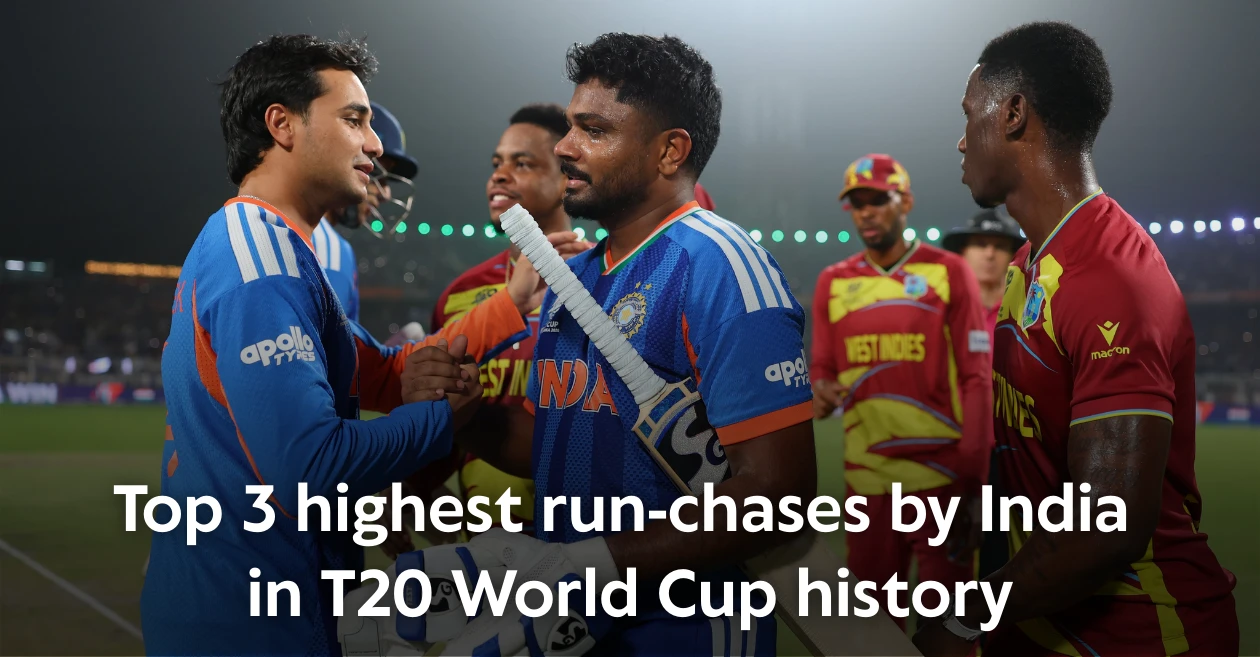
Top 3 highest run-chases by India in T20 World Cup history


India’s sensational five-wicket victory over the West Indies at Eden Gardens on Sunday not only secured their semifinal berth in the T20 World Cup 2026 but also etched their name in the record books with the highest successful run-chase in the country’s T20 World Cup history. Wicketkeeper-batter Sanju Samson powered the defending champions to overhaul a challenging target of 196, surpassing India’s previous best chase set over a decade ago.

Top three highest run-chases by India in T20 World Cup history

1. 196 vs West Indies, Eden Gardens, Kolkata (2026) 

Target: 196 | Score: 199/5 in 19.2 overs | Margin: 5 wickets

India’s record-breaking chase unfolded on March 1, 2026, at the iconic Eden Gardens in what was effectively a virtual quarterfinal for both teams . The West Indies, asked to bat first, posted a formidable 195/4, powered by late fireworks from Jason Holder (37 not out off 22) and Rovman Powell (34 not out off 19), whose unbeaten 76-run partnership off just 35 balls propelled the Caribbean side to a challenging total.

India’s pursuit began shakily, losing Abhishek Sharma and Ishan Kishan inside the powerplay to slump to 41/2 . However, Sanju Samson, playing only his third match of the tournament, anchored the innings with sublime composure. He stitched a vital 58-run partnership with skipper Suryakumar Yadav (18), followed by crucial stands with Tilak Varma (27 off 15) and Hardik Pandya (17), before Shivam Dube finished the chase with four balls to spare.

Samson’s unbeaten 97 off 50 deliveries – featuring 12 fours and four sixes at a strike rate of 194 – rewrote record books. It became:

  • The highest individual score by an Indian in a successful T20 World Cup chase, surpassing Virat Kohli’s unbeaten 82 against Australia (2016) and Pakistan (2022)
  • The second-highest individual score for India in any T20 World Cup innings, behind only Suresh Raina’s 101 against South Africa in 2010
  • India’s first instance of chasing down a 180+ target in T20 World Cup history

This chase also ranked as the third-highest successful run-chase in overall T20 World Cup history, behind England’s 230 against South Africa in 2016 and South Africa’s 206 against West Indies in 2007.

2. 173 vs South Africa, Mirpur (2014) 

Target: 173 | Score: 176/4 in 19.1 overs | Margin: 6 wickets

Virat Kohli (PC: X.com)

For nearly 12 years, India’s 2014 chase against South Africa in Mirpur stood as their highest successful run-chase in T20 World Cup history. The match, played on April 4, 2014, during the Super 10 stage, saw South Africa post 172/4, with Quinton de Kock scoring 52 and JP Duminy contributing an unbeaten 39.

India’s response was orchestrated by the peerless Virat Kohli, who remained unbeaten on 72 off 44 balls, an innings that combined classical strokeplay with calculated aggression. Kohli found able support from Suresh Raina, who chipped in with a quickfire 18-ball 27, as India coasted to victory with five balls remaining.

This chase remained India’s benchmark for over a decade, demonstrating Kohli’s remarkable prowess in run-chases – a legacy that would later see him register two identical 82* scores in subsequent World Cups.

3. 161 vs Australia, Mohali (2016)

Target: 161 | Score: 161/4 in 19.1 overs | Margin: 6 wickets

Tied with India’s 160-run chase against Pakistan in Melbourne (2022), the 2016 chase against Australia at Mohali stands as India’s joint third-highest successful run-chase in T20 World Cup history.

Also READ: Top 5 highest team totals in the ICC Men’s T20 World Cup history

On March 27, 2016, India faced a formidable Australian side in a crucial group-stage encounter at the Punjab Cricket Association Stadium. Australia posted 160/6, with Aaron Finch scoring 43 and Glenn Maxwell adding 31. In response, India lost early wickets before Virat Kohli produced one of his most celebrated T20 knocks—an unbeaten 82 off 51 balls, laced with nine fours and two sixes.

Kohli’s innings, combined with Yuvraj Singh’s quickfire 21, guided India home with five balls to spare. The knock became synonymous with Kohli’s reputation as the world’s best chaser and remained the highest Indian score in a T20 World Cup chase until Samson’s heroics in 2026.

Honorable mention: 160 vs Pakistan, Melbourne (2022)

Target: 160 | Score: 160/6 in 20 overs | Margin: 4 wickets

Rohit Sharma lifting Virat Kohli on his shoulders
Rohit Sharma lifting Virat Kohli on his shoulders (PC: X.com)

India’s chase of 160 against Pakistan at the Melbourne Cricket Ground (MCG) on October 23, 2022, deserves special mention as it almost matches the 161-run chase in the record books. In front of a packed stadium of over 90,000 fans, India found themselves struggling at 31/4 before Virat Kohli (82 not out off 53) and Hardik Pandya (40) staged a miraculous recovery, sealing victory on the final ball of the innings. The chase remains one of the most dramatic in T20 World Cup history.

Also READ: Top 3 biggest run defeats for India in the T20 World Cup history


Source link

Israel-Iran conflict: What is India’s position amid rising Middle East tensions? | India News


Modi Breaks Silence on Middle East Crisis, Urges Calm and Dialogue Amid Israel‑Iran Tensions

Prime Minister Narendra Modi on Monday said India supports the resolution of conflicts through dialogue and diplomacy, while expressing concern over the escalating situation in West Asia.“India has always called for dialogue and diplomacy to find a solution to such disputes,” PM Modi said, reiterating New Delhi’s consistent position in favour of the peaceful resolution of conflicts.

Modi Breaks Silence on Middle East Crisis, Urges Calm and Dialogue Amid Israel‑Iran Tensions

Addressing a press briefing with Canadian counterpart Mark Carney, Pm Modi referred to the ongoing tensions following the US and Israeli military action against Iran that led to the killing of its Supreme Leader Ayatollah Ali Khamenei.“Situation in West Asia is a matter of grave concern for us,” PM Modi said. He added, “we will keep working with countries in West Asia to ensure safety of Indians there.”This comes amid a fresh spell of conflict in the Middle East after the United States and Israel launched a joint military operation against Iran on Saturday. The operation, named “Epic Fury,” involved a series of strikes over the weekend that killed supreme leader Ayatollah Ali Khamenei and several other senior figures, triggering a strong Iranian retaliation and heightening fears of a wider regional war.Allies of the United States have pledged to help counter Iran’s missile and drone attacks. The Lebanese militant group Hezbollah claimed strikes on Israel for the first time in over a year, prompting Israeli retaliatory action.The first US military fatalities have been reported, while additional deaths have been confirmed in Israel and Gulf countries. Iran has said that hundreds of people have been killed within its territory.

India calls for maximum restraint

India has called for maximum restraint after a joint US-Israeli military strike on Iran raised fears of a wider conflict in the Middle East. New Delhi urged all parties to avoid escalation and stressed that the sovereignty and territorial integrity of all states must be respected.In its first official response to the rapidly evolving situation, the government said it is “deeply concerned” about developments in Iran and the Gulf region, and emphasised that “dialogue and diplomacy” should be pursued to ease tensions.“India is deeply concerned at the recent developments in Iran and the Gulf region. We urge all sides to exercise restraint, avoid escalation, and prioritise the safety of civilians. Dialogue and diplomacy should be pursued to de-escalate tensions and address underlying issues. Sovereignty and territorial integrity of all states must be respected. Our Missions in the region are in touch with Indian nationals and have issued appropriate advisories asking them to remain vigilant, stay in contact with the Missions, and follow local security guidance,” the MEA said through a statement. External affairs minister S Jaishankar separately spoke with Iranian foreign minister Seyed Abbas Araghchi and Israeli foreign minister Gideon Sa’ar. During his conversation with Araghchi, Jaishankar conveyed India’s deep concern over the situation in Iran and the wider region.“Had a telecon with Iranian FM Seyed Abbas Araghchi this evening. Shared India’s deep concern at the recent developments in Iran and the region,” Jaishankar said through a post on X.

MEA issues advisories, activates helplines for Indians in conflict-hit Middle East

The Ministry of External Affairs (MEA) has issued urgent advisories for Indian nationals in the region following the US-Israel strike on Iran. Indian embassies in Tehran and Tel Aviv have activated 24×7 helplines and are coordinating with local authorities to assist citizens.Advisories have also been issued for Indian nationals in Qatar, Turkey and Syria, asking them to remain vigilant, monitor official updates and stay in contact with the respective embassies and consulates amid the evolving security situation and flight disruptions.

PM Modi speaks to Israeli counterpart Benjamin Netanyahu

Prime Minister Narendra Modi on Monday held a telephone conversation with his Israeli counterpart, Benjamin Netanyahu, to discuss the situation in Middle East and convey India’s concerns.During the call, PM Modi stressed that the safety of civilians must remain a priority.“Had a telephone call with PM Benjamin Netanyahu to discuss the current regional situation. Conveyed India’s concerns over recent developments and emphasised the safety of civilians as a priority. India reiterates the need for an early cessation of hostilities,” PM Modi said through a post on X.On Saturday night, PM Modi spoke with UAE President Sheikh Mohamed bin Zayed Al Nahyan and strongly condemned the attacks on the Gulf nation, expressing India’s solidarity with the UAE during the crisis.PM Modi also thanked the UAE leadership for ensuring the safety and well-being of the Indian community there. He reiterated that India supports de-escalation and remains committed to regional peace, security and stability.

CCS reviews Iran strikes fallout, flags safety of Indian nationals

The Cabinet Committee on Security (CCS), chaired by Prime Minister Narendra Modi, met on Sunday in the national capital to review the evolving situation in West Asia.According to an official release, the committee was briefed on the air strikes in Iran on 28 February and the subsequent escalation, including attacks in several Gulf countries. It expressed serious concern over the safety and security of the large Indian expatriate community in the region.The CCS also assessed the difficulties faced by Indian travellers transiting through the region and students appearing for scheduled examinations. It reviewed the broader implications of the crisis for regional security, as well as economic and commercial activities.The committee directed all concerned departments to take necessary and feasible measures to assist Indian nationals affected by the developments. It emphasised the need for an early cessation of hostilities and a return to dialogue and diplomacy.

Iran allows stranded foreign students to leave via land borders

In a relief to foreign students, including several from India, stranded in Iran amid escalating tensions in West Asia, Tehran has allowed them to exit the country through its land borders.Citing Iran’s science ministry, the report said students would also be permitted to appear for their term-end examinations and defend their doctoral theses at a later date. The revised schedule will be announced separately.The decision comes as universities and public institutions remain temporarily closed and Iran’s airspace has been shut to international flights due to the ongoing security situation.“Possibility of Foreign Students Exiting Through Land Borders Without Requiring Permission. Head of the Student Affairs Organization of the Ministry of Science: All universities are obligated to provide necessary cooperation to foreign students for exiting the country, as well as to announce alternative times for holding end-of-term exams or conducting thesis defences,” Tasnim News said through a post on X.


Source link

Stock Market Holiday On Holi: Stock market holiday for Holi 2026: Will NSE, BSE remain closed on March 3 or 4?


Stock market holiday for Holi 2026: Will NSE, BSE remain closed on March 3 or 4?

Stock market holiday: Holi is just on the horizon and investors are confused about whether stock market will remain closed on March 3 or on March 4. According to the Exchange’s list of holidays, Dalal Street will remain closed on March 3 and not March 4, on the occasion of Holi, giving traders and investors a break. Trading in the equities segment takes place on all days of the week except Saturdays, Sundays and exchange-declared holidays. The pre-open session runs from 09:00 hrs to 09:08 hrs for order entry and modification, with random closure in the last one minute, after which pre-open order matching begins. The regular trading session for the normal and limited physical market is held from 09:15 hrs to 15:30 hrs. The closing session takes place between 15:40 hrs and 16:00 hrs. Meanwhile, the block deal session operates in two windows — the morning window from 08:45 AM to 09:00 AM and the afternoon window from 02:05 PM to 02:20 PM.Upcoming holidays in 2026

Date Day Holiday
March 26 Thursday Shri Ram Navami
March 31 Tuesday Shri Mahavir Jayanti
March 21 Saturday Id-Ul-Fitr (Ramadan Eid)
April 3 Friday Good Friday
April 14 Monday Ambedkar Jayanti
May 1 Thursday Maharashtra Day
May 28 Wednesday Bakri Id
June 26 Friday Muharram
September 14 Sunday Ganesh Chaturthi
October 2 Thursday Gandhi Jayanti
October 20 Monday Dussehra
November 10 Monday Diwali Balipratipada
November 24 Monday Guru Nanak Jayanti
December 25 Thursday Christmas


Source link