Breaking News
Containers of perishables stranded at JNPA, await green signal from Gulf | Mumbai News


Mumbai: The conflict between the US-Israel and Iran is causing anxiety among Indian exporters of fruit and vegetables. Shipments of perishable commodities to the Middle East are facing the highest impact. Hundreds of containers bearing onion, grapes and fresh produce are held up at the JNPA port, awaiting booking or clearance.Alphonso farmers fear the upcoming mango season may be a damp squib for export in case the conflict prolongs.Container lines have suspended services to the Middle East and are diverting vessels via the Cape of Good Hope — a move that is adding to transit time, costs and congestion at Indian ports. Port authorities say currently around 1,000 containers are stuck at Mumbai ports, mainly the JNPA.Sunil Vaswani, executive director of the Container Shipping Lines Association (India), flagged the immediate concern as cargo piling up at Indian ports. “Containers continue to come in, creating congestion. Port personnel are working with us,” he said.Exporters say delays threaten to raise costs of refrigeration. If the stalemate continues, prices will fall in local markets as export consignments may be diverted here. Demand for fruit and vegetables in the Gulf countries leaps during the ongoing month of Ramzan so more shipments have been scheduled.Exporter-supplier Sanjay Pansare said over 150 containers of banana, pomegranate, watermelon and onion are held up due to the disruption. “Around 200 containers may have to be brought back and sold in the domestic market. That will weaken prices and cause losses across the entire supply chain,” he said.Trade sources say 150 containers of grapes from Maharashtra were held up after arriving from JNPA at Dubai port. Over 200 containers of banana headed for the Middle East are stranded at JNPT, creating a growing backlog at the port, said fruit exporter Yunus Bagwan of Chand Fruits Company. He added that the financial strain was mounting. “Exporters may have to pay about Rs 8,500 per day per container as daily expenditure while the shipments remain stuck,” Bagwan said.With banana volumes piling up and export movement slowing, wholesale prices have fallen from Rs 25 per kg to Rs 15. Traders warn that rates could slide further given the stalemate. Exporter Sambit Patnaik from S R Praelia said, “Shipments to Europe remain largely unaffected for now, offering some relief. But Gulf shipments have completely halted.”Scores of containers of onion, a key export, meant for the Gulf are stranded at JNPA too, said APMC trader Ashok Walunj. Local wholesale prices so far remain steady at Rs 10-16 per kg.


Source link

IND vs ENG Live Streaming: When and where to watch India vs England T20 World Cup semifinal | Cricket News


IND vs ENG: When and where to watch India vs England T20 World Cup semifinal

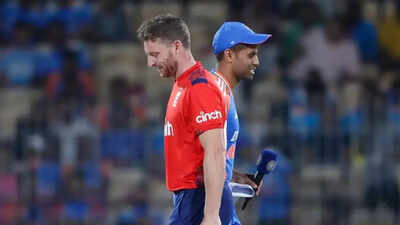
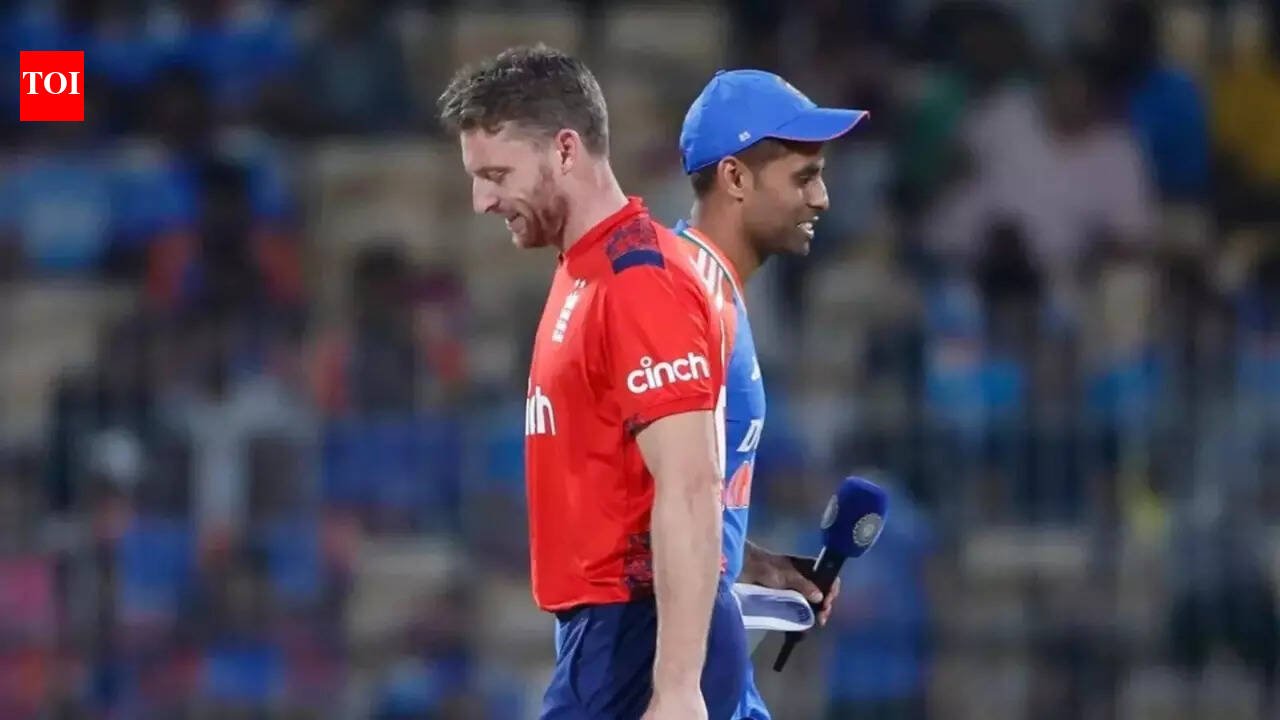
India and England will meet again in a T20 World Cup semi-final when they face off in the second last-four clash of the ICC Men’s T20 World Cup 2026 at the Wankhede Stadium in Mumbai. It is the third straight edition in which the two teams have squared off at this stage, after also meeting in the semi-finals in 2022 and 2024.Their recent history adds context to the contest. In 2022, England ended India’s campaign in the semi-final and went on to defeat Pakistan in the final to win the title. In 2024, India reversed that result under Rohit Sharma, beating England in the semi-final before defeating South Africa in the final in Barbados to lift the trophy.

Can India beat England and reach T20 World Cup final? Greenstone Lobo makes bold prediction

In both those editions, the team that won the India-England semi-final went on to become world champion, adding significance to Thursday’s match.England have played six T20 Internationals at the Wankhede Stadium, winning three and losing three. India have played seven T20Is at the venue and won five. India have not lost a T20I there since December 2017. Their two defeats in Mumbai came against West Indies in 2016 and against England in 2012. The two sides have met twice in T20Is at the Wankhede, with one win each.Overall, India and England have faced each other five times in the T20 World Cup. India have won three of those matches, while England have won two, reflecting a close contest between the teams in the tournament.One of the most remembered meetings came in the inaugural 2007 edition. During the group-stage match, Yuvraj Singh hit Stuart Broad for six sixes in one over after an exchange with Andrew Flintoff. It was the first time a batter hit six sixes in an over in T20 Internationals and remains one of the key moments in the tournament’s history.

Venue, time and streaming details-

T20 World Cup 2026 India vs England semifinal: VenueWankhede Stadium in Mumbai will host the second semi-final clash between India vs England \.T20 World Cup 2026 India vs England semifinal: TimeThe India vs England semifinal will begin 7:00 PM (IST) and 1:30 PM (GMT) with the toss taking place 30 minutes before the starting time on Sunday.T20 World Cup 2026 India vs England semifinal: Live TelecastLive television coverage of the India vs England ICC Men’s T20 World Cup 2026 semi-final match will be available on the Star Sports Network.T20 World Cup 2026 India vs England semifinal: Live StreamingThe ICC Men’s T20 World Cup 2026 semi-final between India vs England will be streamed live on the JioHotstar app and website.India vs England Head-to-Head Record in T20 World CupPlayed: 5India won: 3England won: 2India vs England Head-to-Head Record in T20 World Cup Semi-FinalsPlayed: 2India won: 1England won: 1


Source link

Pahalgam Case: Pahalgam case: NIA seeks China’s help to trace GoPro cam info | India News


Pahalgam case: NIA seeks China's help to trace GoPro cam info

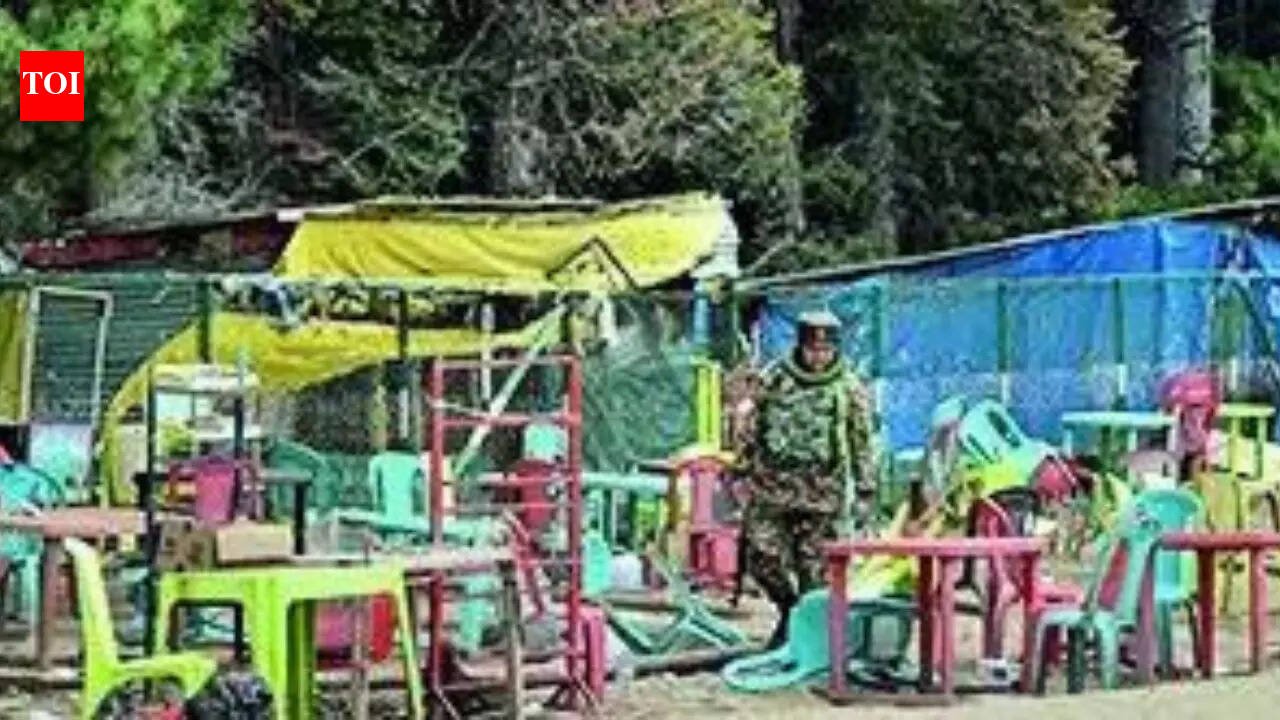
NEW DELHI: A special NIA court hearing the Pahalgam terror attack case in Jammu has issued a letter rogatory to the authorities concerned in China, seeking assistance to trace the supply chain and end-user details of a GoPro Hero Black 12 camera seized as part of the NIA investigation. Its purpose is to establish details such as pre-attack reconnaissance, movement and operational preparation of the Pakistani terror module behind the deadly strike that killed 26 people, including 25 tourists, on April 22, 2025.Sources said though the GoPro camera was body-mounted by one of the three Pakistani terrorists to capture the attack as it happened, it yielded no footage when seized from the attackers tracked and killed in Dachigam forest during Operation Mahadev months after the attack.The GoPro Hero 12 Black camera remains a crucial evidence nevertheless, as its supply chain can help establish details like reconnaissance of the attack site and the route and movement of the attackers.Earlier, a lawful notice was issued by NIA to the manufacturer of the camera, GoPro B V, seeking details of its supply chain and activation. “In its response, GoPro B V has informed that the said camera was supplied to AE Group International Limited, a distributor based in the People’s Republic of China; and the camera was activated on Jan 30, 2024, at Dongguan, People’s Republic of China,” NIA said.“The manufacturer has further stated that it does not possess downstream transaction details or end-user records of the device. The activation, initial use and commercial trail of the said device lie within the territorial jurisdiction of the People’s Republic of China, and the information necessary to trace the purchaser, end-user and associated technical records can only be obtained through judicial assistance of the Chinese authorities,” as per the application filed before the NIA court.The court said since India and China are not signatories to a mutual legal assistance treaty, assistance as requested can be sought under UNTOC, as both nations have ratified UNTOC.Ministry of home affairs has given its concurrence for the issuance of the letter rogatory to China for seeking legal assistance in investigation of the case.


Source link

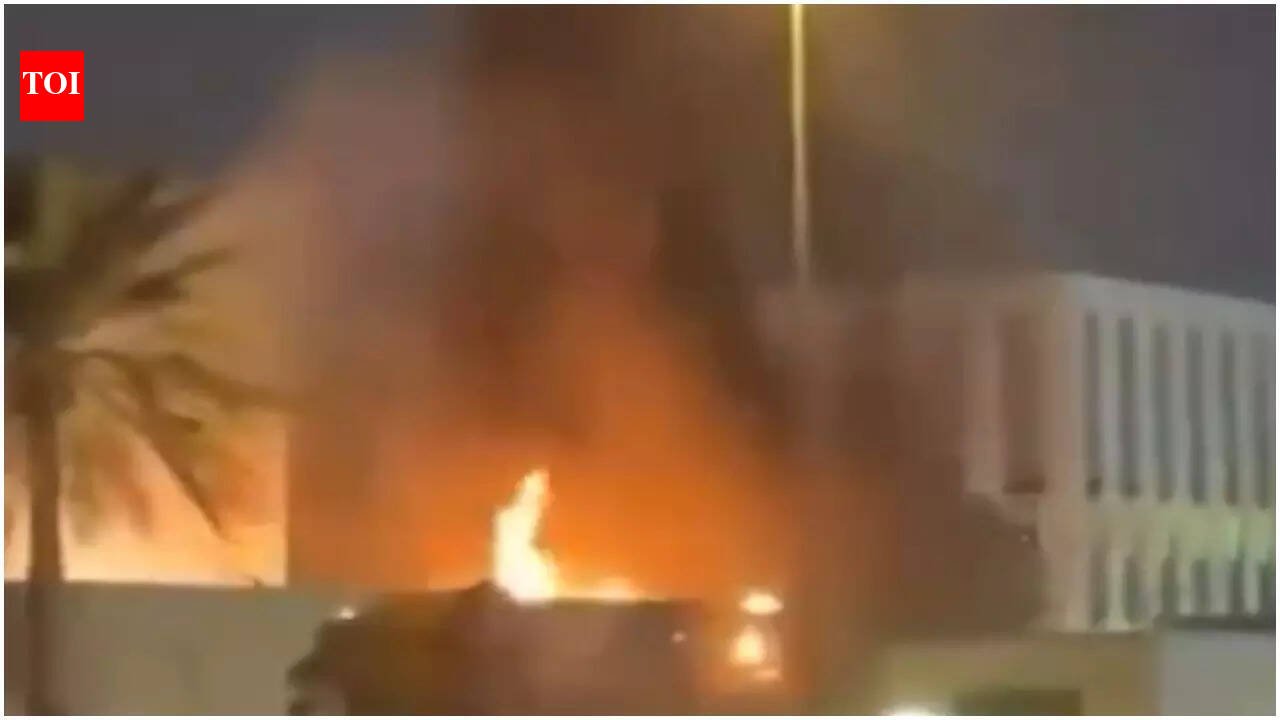
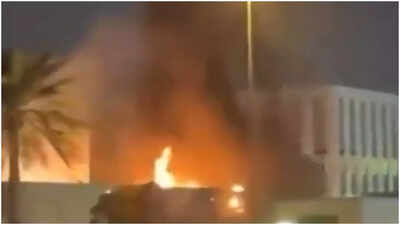
Flames, black smoke rise near US Consulate in Dubai after drone strike; no injuries reported — watch video


U.S. Embassy In Kuwait 'BOMBED' By Iranian Forces; Explosion, Black Smoke After Drone Strike

Authorities have put down ‌a limited fire in the vicinity of ⁠the US consulate in Dubai due to a drone strike, Dubai’s media office ⁠said on Tuesday.A US official and Dubai’s government media office told the Wall Street Journal that a drone struck the parking lot of the consulate in Dubai.

U.S. Embassy In Kuwait ‘BOMBED’ By Iranian Forces; Explosion, Black Smoke After Drone Strike

Several Footages are being circulated on social media, showing black smoke near the consulate. Dubai’s government told the Journal that it had contained the fire.“Emergency teams responded immediately,” the media office said. “No injuries have been reported.”

‘Iran hiding behind missiles’

State secretary Marco Rubio said that Iran is hiding behind these missiles and drones and gave an indirect warning that under Trump a country which has “terroristic” regime will not get nuclear weapons. They are hiding behind these missiles and hiding behind these drones. They wanted to reach a point where you couldn’t touch them and then they could do whatever the hell they wanted with their nuclear program — and there was no way in the world that this terroristic regime was going to get nuclear weapons. Not under Donald Trump’s watch.”

UAE retains its rights to self defence

The United Arab Emirates reaffirmed that it has not taken any decision to alter its defensive posture in response to the repeated Iranian attacks. “The UAE reiterates that it is not a party to this war and has not permitted the use of its territory, territorial waters, or airspace for any attack against Iran, consistent with its long-standing policy of good neighborliness, de-escalation, and its firm commitment to the Charter of the United Nations,” the foreign ministry said in a tweet. “Furthermore, the UAE underscores that it retains its legitimate right to self-defense, as recognized under international law and the Charter of the United Nations. The UAE further stresses the importance of journalistic responsibility and the need to rely on official, credible sources before publishing or circulating inaccurate or misleading reports,” it added.WhatsAppAuthorities in Dubai confirmed earlier in the day that sounds heard in various areas across the city were the result of air defence interception operations.The relevant Dubai teams continued to closely monitor the situation and were taking all necessary measures to ensure public safety.The UAE Ministry of Defence (MoD) announced that UAE air defence systems intercepted 11 ballistic missiles and 123 drones today, while one missile landed within the country’s territory without causing any human casualties.The Ministry stated that since the beginning of what it described as the blatant Iranian aggression, a total of 186 ballistic missiles was detected as launched towards the UAE. Of these, 172 missiles were destroyed, 13 fell into the sea, and one missile landed on the country’s territory.MoD added that 812 Iranian drones were detected, of which 755 were intercepted, while 57 fell within the country. It also reported that eight cruise missiles were detected and destroyed.


Source link

Iran Conflict: Middle East tensions: Global insurers exit Iranian waters as conflict deepens


Middle East tensions: Global insurers exit Iranian waters as conflict deepens

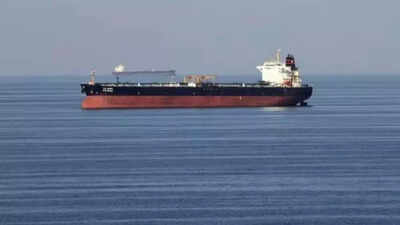
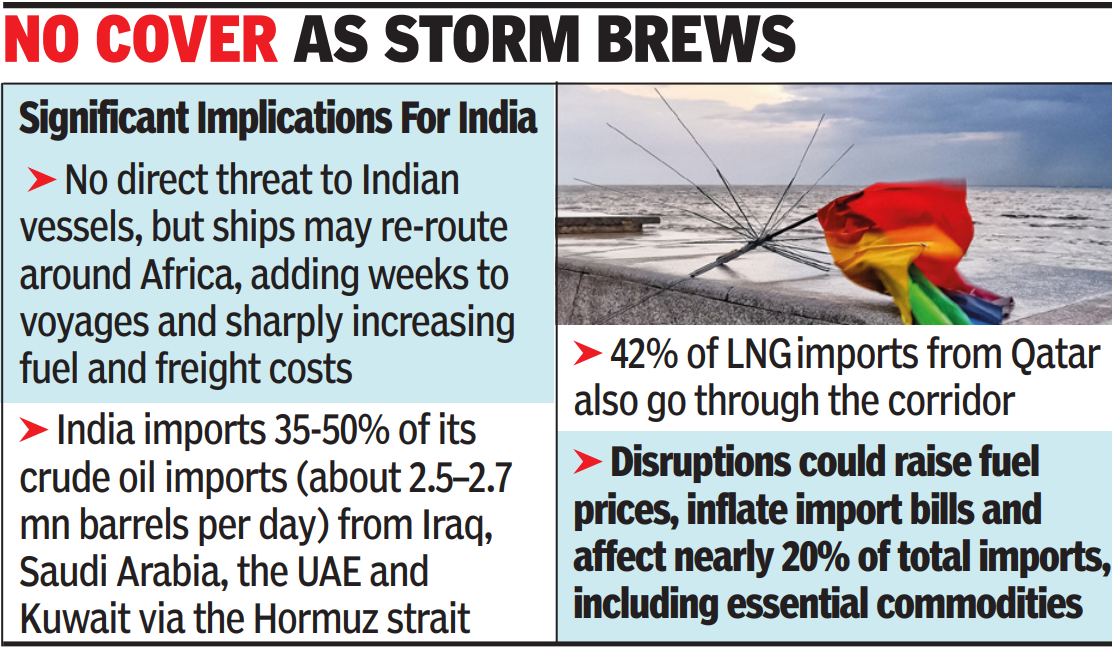
MUMBAI: India’s trade and energy supplies face fresh risks after reinsurers and Protection & Indemnity (P&I) clubs announced cancellation of war risk insurance for vessels transiting the Strait of Hormuz and Iranian waters, following an escalation in the Iran conflict. The cancellations, effective from this week, have left over 150 vessels stranded and disrupted a corridor that handles nearly one-fifth of global oil flows.P&I clubs are mutual, non-profit insurance associations owned by shipowners. They provide third-party liability cover through a pooled premium for risks such as cargo damage, pollution, crew injuries and collisions that are not covered under hull insurance. The clubs also provide legal support and dispute resolution across jurisdictions.“The industry is currently in a wait-and-watch mode, as much depends on how long the conflict persists. If it turns prolonged, insurers are likely to come together to create additional capacity for war-risk cover. Typically, there is an immediate surge in demand when hostilities break out, but that demand tends to ease quickly if the situation stabilises in a short span,” said Tapan Singhel, MD & CEO, Bajaj General Insurance.

No cover as storm brews

Brokers said that in the past when international reinsurers ceased to provide cover for some risks like terrorism the Indian market had provided the capacity by building an insurance pool where domestic companies come together and share the risks. However, this tie state-owned reinsurer GIC Re, which leads domestic marine pools, has itself issued cancellation notices for marine hull war risk covers effective March 3, 2026, mirroring global reinsurers and P&I clubs. The crisis has brought marine insurance centerstage, the share of this line of non-life had shrunk to around 2% of industry premium as risks ebbed due to containarisation and more safety in transport. The size of the premium also determines the capacity of the industry to provide large covers.Their role is central to global shipping. Without P&I cover, shipowners face potentially unlimited liabilities in the event of accidents, pollution or war-related damage. In high-risk zones, the absence of insurance effectively halts voyages, as operators are unwilling to expose vessels to uninsured losses. In previous crises in the Red Sea, war risk exclusions by insurers sharply curtailed traffic and drove up freight rates.In the current episode, major P&I clubs and reinsurers have issued notices cancelling war risk cover for Iranian waters, the Persian Gulf and the Strait of Hormuz, citing tanker damage, casualties and threats from Iranian forces. Reports of VHF warnings and GPS disruptions have added to concerns. Insurers have invoked standard cancellation clauses following US and Israeli strikes on Iran, with broader policy implications if the conflict further widens.Fresh war risk cover may be available, but at sharply higher premiums. Rates that were around 0.25% of vessel value have surged multiple times, rendering transits commercially unviable for many operators. Even where cover is available, shipowners remain wary of risks such as seizures or missile strikes.


Source link

US-Israel War with Iran: A beginner’s guide to how Hamas terror attack on Oct 7 changed the Middle East | World News


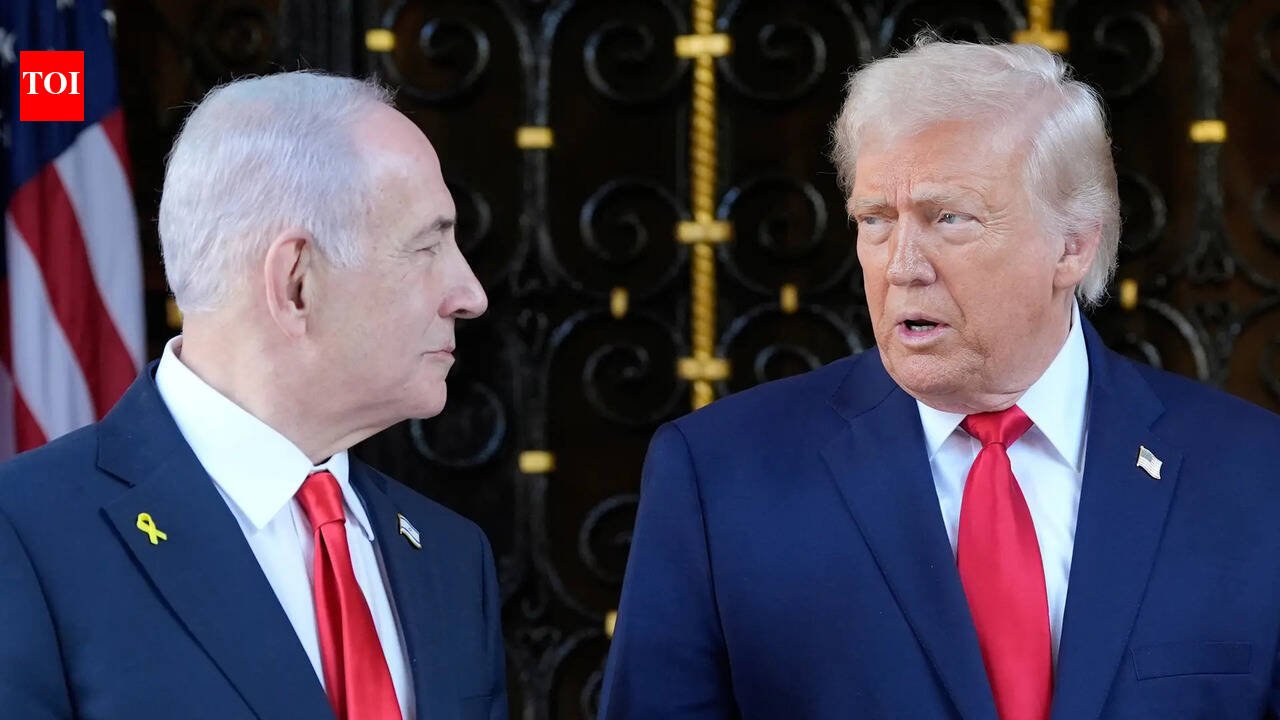
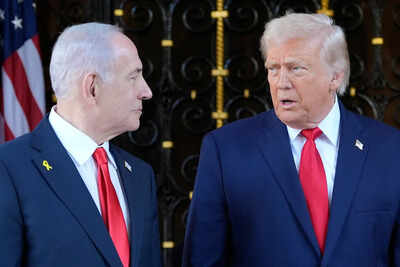
President Donald Trump greets Israel’s Prime Minister Benjamin Netanyahu at his Mar-a-Lago club, Monday, Dec. 29, 2025, in Palm Beach, Fla. (AP Photo/Alex Brandon)

There’s a phenomenon, popular among OSINT enthusiasts on Twitter, called monitoring the situation. For those lucky enough to lead real lives, monitoring the situation is the Olympics of toxic masculinity, referring to the act of following conflicts on social media. It is a multi-disciplinary pursuit that can include checking airplanes and closed airspaces, comparing different weapon systems, checking the delivery volume of pizza outlets in Washington, finding obscure facts about obit writers, digging up old ‘pookie’ tweets of Supreme Leader Ayatollah Khamenei, noticing that Reza Pahlavi has an exceptionally large nose, or wondering why Donald Trump exhibits all the attributes of an Ottoman emperor (PS: All references tweets are at the bottom). In the last three days, social media users exhibited unprecedented levels of monitoring the situation, since the US and Israel launched operations that have decapitated the so-called Axis of Resistance. But what is the Axis of Resistance? Don’t worry, because even if you haven’t monitored the situation, here’s a small breakdown of what has happened in the Middle East so far.

A Pivotal Moment in History

There are pivotal moments in history that end up changing the course of the world.An Italian confusing the Caribbean for India. An East India Company agent turning up in the court of a Mughal ruler. An Archduke getting murdered. An Austrian getting rejected from art school. A Swiss patent clerk getting bored at his job. Japanese pilots deciding to fly a little more than usual. A plane flying into a building. A virus escaping from a lab. A former president mocking a real-estate developer at a White House dinner. And with the benefit of hindsight, a few Hamas terrorists paragliding into a music festival in Israel. Now, as historians are wont to point out, the fissures in the Middle East certainly did not start on October 7, 2023, but its events certainly accelerated the events that we see today.

What was the Axis of Resistance?

If you have ever been on social media, you must have seen the memes: Iran before the Islamic Revolution of 1979, often used to depict Iran as some sort of secular utopia where John Lennon’s Imagine met Rick Blaine’s Casablanca. And then there was the Islamic Revolution, which brought to power the Islamic Republic of Iran, specifically the Islamic Revolutionary Guard Corps (IRGC) and its external operations arm, the Quds Force. The new Iranian state had one doctrine: do anything feasible to cock a snook at the Big Satan (US) and the Little Satan (Israel). This meant building what came to be known as the Axis of Resistance, named in rhetorical defiance of the “Axis of Evil,” the term used by George W. Bush in 2002 to describe Iran, North Korea and Iraq.Soon the axis took shape. Hezbollah was born from the wreckage of Israel’s 1982 invasion of Lebanon, trained by Iran’s Revolutionary Guard. The Houthis, an insurgency in Yemen, found in Tehran a benefactor that could strike Saudi oil fields and rattle shipping lanes in the Red Sea. Syria — under Hafez and later Bashar al-Assad — became an indispensable corridor, a land bridge that allowed Iranian weapons and other things to make their way to Lebanon. Meanwhile, after the 2003 US invasion dismantled Saddam Hussein’s regime over non-existent weapons of mass destruction, Shia militias with Iranian backing became a pain for American forces. And finally, Hamas, a Sunni Palestinian movement, found common ground with Tehran, whose hostility towards Israel overlooked any other religious qualms.And of course, at the top of the pyramid of the Axis was the Iranian regime led by the Supreme Commander Ayatollah Khamenei.

How did Israel respond?

After the attack, in a chilling statement, Benjamin Netanyahu announced that all attackers were ‘dead men walking’. Very rarely have politicians kept their word to this effect. Much of the things that Western civilisation holds dear — from atom bombs to literature — were designed by Jews. So there’s no surprise they have also perfected revenge to an art form. To quoteFor years, whispers have told us about the depths Israel has gone to infiltrate its enemies (so much so the joke is that the only people alive in Iran’s high command are three Mossad agents who don’t know each other’s identities). Netanyahu and Co ran slipshod in Gaza, killing Hamas commanders with precision operations that didn’t care how many civilians it accidentally killed. From exploding pagers to missiles to bombs, Israel dismantled each branch of the axis and then went after the head.For years, Israel had built its networks in Iran, carrying out audacious attacks and building a war machine Bob Dylan could have sung about. And its success showed, as the final attack took only sixty seconds, which saw multiple attacks on various sites inside a heavily guarded compound. As Oded Ailam, a former head of Mossad’s counter-terrorism division, told The Guardian: “Sixty seconds. That’s all it took for this operation, but it is the product of years in the making. The modern battlefield is no longer defined only by tanks and aircraft. It is defined by data, access, trust and timing. One minute can change a region.”The Axis of Resistance was built over decades. Israel, with help from Uncle Sam, destroyed it in a little more than two years.As operations go, it was so successful that it appeared to have wiped out all potential successors. As Donald Trump candidly told a reporter: “The attack was so successful it knocked out most of the candidates. It’s not going to be anybody that we were thinking of because they are all dead. Second or third place is dead.”

The Trump Salvo

Of course, none of this would have been possible without Donald Trump being back in the White House, particularly in this second term where he has no one to restrain him.For the longest time, Trump has harboured the deepest ill feelings about Iran.Read: The OG Trump DoctrineIn 1980, the first time he ever expressed any sort of view on foreign policy was when he wondered during an interview why a country like America couldn’t rescue its own citizens during the hostage crisis.For him, Iran had always been the devil that America couldn’t tame. In his first term, Trump carried out a drone attack that killed Qasem Soleimani, the head of the Quds Force and often considered the most powerful man in Iran after the Supreme Leader. Before his death, Soleimani was often called “the senior-most powerful operative in the Middle East,” and some experts have pointed out that Soleimani’s death had really weakened the Axis.Iran has been hell-bent on assassinating Trump since then and, failing that, ensuring he wasn’t re-elected. This has included hacking the Trump campaign and even running content farms trying to turn Americans against him.When October 7 happened, Joe Biden was president, whose views and actions managed to alienate both pro- and anti-Israel Americans. When Biden dropped out, Harris inherited his misgivings, and she tried to play both sides by running both campaigns at the same time.Trump’s arrival was manna from heaven for Netanyahu. The Donroe Doctrine doesn’t believe in the rules-based international order, thinks whatever he can come up with is best, wants to improve his monetary standing in any way feasible, wants revenge against Iran for national humiliation and finally believes: We are America, b*****. This meant that, unlike previous presidents, Trump was the one who finally sanctioned the use of lethal force against Iran.All this heralded Trump, who has made “peace” in the Middle East one of his pet projects with a Board of Peace that consists of major regional players, many of whom are opposed to Israel without saying so publicly. Now half the Board is part of this war, with its only South Asian member fighting with Afghanistan.He’s a man who doesn’t need Congressional oversight or legal sanction. Having survived an assassination attempt and political exile, Trump (and his supporters) seem to believe he is God’s chosen warrior, where actions follow words. After Khamenei’s death, Trump announced: “I got him before he got me.”Trump and his administration have tried to give various reasons to justify their timing. Few pass the smell test.

The Beginning

Of course, this is not the end. Iran, like Israel, is a survivalist state that has spent decades preparing for isolation, sanctions and war. Regimes born in revolution do not disappear because their leadership has been targeted, and networks constructed patiently across Lebanon, Syria, Iraq and Yemen do not dissolve simply because a series of operations were executed with breathtaking efficiency. They retreat, they recalibrate, they reorganise.

Trump Iran War Address Cold Open – SNL

The Axis of Resistance may be fractured, its command hierarchy disrupted and its deterrence dented, but the forces that produced it remain stubbornly alive. Sectarian politics has not vanished. Regional rivalries have not softened. External powers have not withdrawn. What has changed is the balance of fear and confidence, and that balance in the Middle East has always been temporary.Trump may believe he has avenged decades of perceived humiliation stretching back to the hostage crisis. Netanyahu may believe he has delivered on a vow forged in the aftermath of October 7. Yet history in this region has rarely rewarded declarations of finality. It has a tendency to respond to certainty with complication.Which means that despite the precision strikes, the covert penetrations and the bold rhetoric, none of us can say with confidence what the next chapter looks like. We are left, as always in the digital age, watching flight paths, reading oil markets, parsing official statements and pretending that pattern recognition is foresight.In other words, we continue to monitor the situation.PS: The tweets mentioned above.1) Pentagon Pizza Watch2) Obscure Facts about Obit Writers3) Old ‘pookie’ tweets4) Reza Pahalvi’s nose5) Donald Trump being an Ottoman Emperor

‘Netanyahu’s Fate Unclear’: Bibi Targeted In ‘Surprise Missile Attack’, Claims Iran; Chaos Erupts In Israel



Source link

Pahalgam Terror Attack: GoPro trail in Pahalgam terror attack leads to Chinese city, court allows NIA to seek Beijing help | India News


GoPro trail in Pahalgam terror attack leads to Chinese city, court allows NIA to seek Beijing help

JAMMU: Fifteen months before Lashkar-e-Taiba terrorists killed 25 tourists and a Kashmiri pony handler at Baisaran in J&K’s Pahalgam on April 22 last year, a GoPro action camera now in NIA custody as a “crucial” piece of reconnaissance evidence was first activated in China’s Dongguan, investigators told a Jammu court this week.The special court allowed Monday NIA’s plea for a “letter rogatory” – legalese for a formal request from one country to another for judicial assistance – to be sent to the Chinese govt through the ministry of external affairs to help trace who bought the device and how it ended up in the hands of a terror module operating in J&K.The home ministry has already cleared the request submitted by NIA DIG Sandeep Choudhary.The GoPro Hero 12 Black camera, bearing serial number C3501325471706, is among several electronic devices and other items seized during the investigation into the terrorist attack targeting tourists in one of J&K’s more popular destinations.NIA told the special judge that finding out who procured and activated the camera in China was integral to establishing pre-attack reconnaissance, movement patterns and operational preparedness of the Pakistan-backed terrorists.The agency previously issued notice to manufacturer GoPro BV, seeking details of the specific camera’s distribution chain and activation.GoPro’s response revealed that the camera was supplied to AE Group International Ltd, a distributor based in China, and activated in Dongguan – an industrial hub in central Guangdong province – on Jan 30, 2024. The manufacturer informed NIA that it didn’t hold downstream transaction records or end-user details, making Chinese authorities the only route to identifying the buyer.Since India and China don’t have a bilateral mutual legal assistance treaty, the request will be routed through the United Nations Convention against Transnational Organised Crime, which both countries have ratified.The court acknowledged that the information sought by NIA was “very important in establishing the chain of custody, user attribution and evidentiary linkage of the camera to the wider conspiracy”. It directed the investigating officer to upload the request with Chinese translations on the mutual legal assistance portal and send copies through CBI’s international police cooperation unit in Delhi for forwarding to China through diplomatic channels.


Source link

Shahid Afridi blasts next potential captain of Pakistan after T20 World Cup 2026 exit amid leadership crisis debate


Pakistan’s turbulent campaign at the T20 World Cup 2026 has triggered another wave of debate back home, with former captain Shahid Afridi openly questioning the leadership credentials of star all-rounder. As speculation grows over a possible change in captaincy following the team’s underwhelming run, Afridi’s blunt remarks have added fuel to an already intense conversation around Pakistan cricket’s direction.

Pakistan’s below-average campaign in T20 World Cup 2026

Pakistan were knocked out of the 2026 T20 World Cup at the Super Eight stage, failing to secure a semi-final berth in what turned out to be a campaign of missed chances. Although they signed off with a narrow five-run victory over Sri Lanka in their final Super 8 fixture, it wasn’t enough to keep their hopes alive.

Led by captain Salman Ali Agha, Pakistan’s journey was marked by inconsistency. A damaging group-stage defeat to India dented their momentum early, and their inability to close out crucial moments in the Super Eights ultimately proved costly. When the points were tallied, Pakistan found themselves eliminated due to an inferior net run rate compared to New Zealand.

The narrow margins reflected a broader issue — flashes of brilliance but little sustained control. For a team rich in talent, the early exit has prompted serious introspection within cricketing circles in Pakistan.

Shahid Afridi questions Pakistan’s next potential captaincy candidate

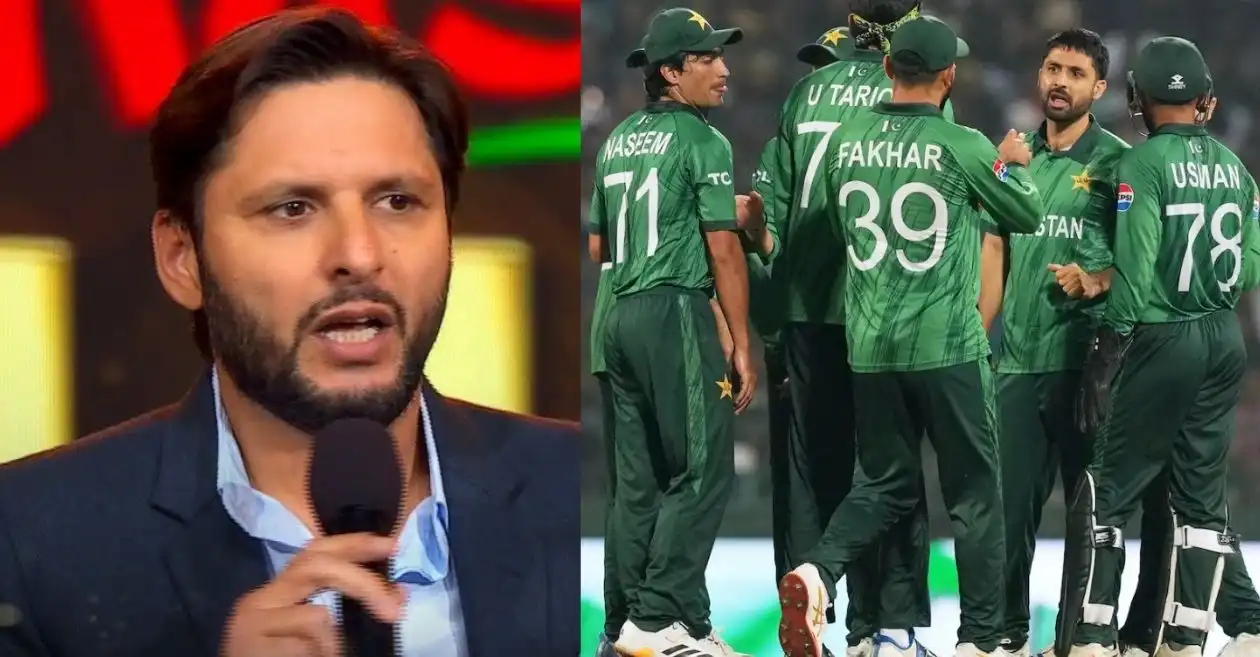
In the aftermath of the elimination, criticism has been widespread. While Agha has faced scrutiny for his leadership during the tournament, reports suggesting that Shadab Khan could be considered as the next T20 captain sparked a strong reaction from Afridi.Speaking on Samaa TV, Afridi did not hold back while criticizing Shadab.

“Looking at his performance, I wouldn’t even keep him in the team, let alone give him the captaincy,” the former all-rounder said while reacting to speculation about Shadab replacing Salman.

Afridi went further, suggesting that repeated backing from the team management has not translated into results.

“The head coach is giving Shadab chance after chance. That’s why I said Shadab can become the next Pakistan captain. But looking at his recent performances, he doesn’t even deserve a place in the playing XI,” he added.

Shadab’s numbers from the tournament make for uncomfortable reading. Featuring in seven matches, he managed just five wickets and scored 118 runs — figures that fall short of expectations from a player considered one of Pakistan’s premier all-rounders. His struggles with both bat and ball became a talking point, particularly in high-pressure games where senior players are expected to rise.

Afridi’s remarks reflect a larger frustration among fans who believe leadership should be earned through consistent performances rather than reputation.

Also READ: ICC unveils match officials for T20 World Cup 2026 semi-finals

What’s next for Pakistan?

With their T20 World Cup campaign over, Pakistan now shift focus to rebuilding and recalibrating. The team is entering a period of transition, both competitively and structurally.

The immediate attention turns to the 50-over format as preparations begin for the 2027 ODI World Cup. Pakistan are scheduled to arrive in Dhaka on March 9 for a three-match ODI series, with all games set to be day-night fixtures at the Sher-e-Bangla National Cricket Stadium. The series offers an opportunity to reset combinations and evaluate emerging players.

Later in the year, Pakistan will tour England for a marquee three-match Test series starting August 19 at Headingley — a challenging assignment that will test the team’s resilience in red-ball cricket.

Also READ: PCB set to penalise Pakistan players following underwhelming display at T20 World Cup 2026 – Reports


Source link

Teen killed, at least 40 hurt during Holi festivities | Mumbai News


Mumbai: A teenager was reported dead following a drunken mob attack, and many others were injured during Holi festivities on Tuesday. Some paediatric patients as young as five years old were brought in with allergic rashes, while others were referred to ophthalmology or orthopaedic wards. The deceased was identified as 18-year-old Tushar Sunil Unjanwal, who was playing Holi near the Wadala Truck Terminus. He was declared “brought dead” at Sion Hospital.

War Tensions Rise, Markets Slide, Energy Assurances & Sporting Glory And More

Hospital officials said his wounds were severe, including trauma to his left toes and middle fingers, a head injury, and blunt force trauma to the right side of his face. “We were told he was attacked by 8 to 10 people,” said a hospital doctor.Thirteen other injured individuals, all male, were rushed to Sion Hospital by 6pm, most of whom were residents of Dharavi. Two of them admitted themselves after feeling drowsy due to bhang consumption. A similar situation unfolded at KEM Hospital, where 35-year-old Harishchandra Gadmale suffered severe head injuries. His wife, Vinaya, told TOI he was rushed in after being assaulted by drunk men during the celebrations. In total, the hospital saw at least 10 people, 5 of whom were children. Four children, aged between 6 and 12, suffered trauma to the head, upper back, and eyes.Seven people were rushed to Nair Hospital with similar injuries and three at Cooper Hospital, including a 35-year-old woman with burn injuries on the right side of her face.


Source link

‘Resisted inclusion of Babar Azam in squad’: Pakistan selector resigns after team’s poor performance in T20 World Cup | Cricket News


'Resisted inclusion of Babar Azam in squad': Pakistan selector resigns after team's poor performance in T20 World Cup
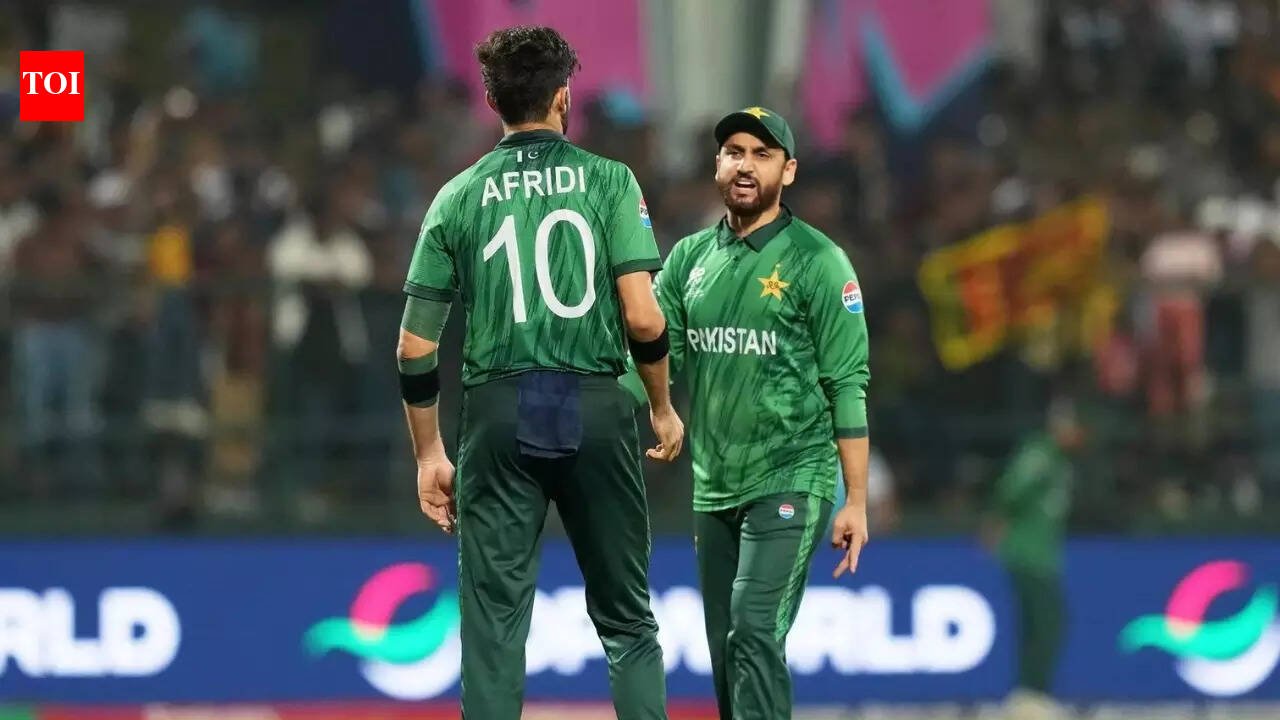
Pakistan’s captain Salman Ali Agha, right, has a word with teammate Shaheen Shah Afridi during the T20 World Cup cricket match between Pakistan and Sri Lanka in Pallekele, Sri Lanka, Saturday, Februrary 28, 2026. (AP)

Senior selection committee member Aleem Dar has resigned from his position with the Pakistan Cricket Board (PCB) following the national team’s exit from the T20 World Cup, news agency PTI reported on Tuesday, quoting sources. His resignation comes after Pakistan failed to reach the semifinals of the tournament.“Former ICC elite panel umpire Dar has sent his resignation which is yet to be accepted,” a source close to the PCB was quoted as saying by PTI.

T20 World Cup: Salman Ali Agha press conference after PAK vs SL

Dar serves on the selection committee alongside former Test cricketers Asad Shafiq and Aaqib Javed. As per the PTI report, Dar stepped down due to concerns over the authority given to head coach Mike Hesson in team selection decisions.“Aleem is very upset that when the World Cup squad was being selected he had resisted the inclusion of Babar Azam and Shadab Khan in the squad without any performance but Hesson insisted on having them,” the source was quoted as saying by PTI.The source added that Dar was surprised that captain Salman Agha and other selectors did not oppose the coach’s role in the process.“Aleem had also insisted that when Babar and Shadab could be called in without performance, Muhammad Rizwan should be included in place of Usman Khan because of his experience but no one supported him.”Pakistan lost to India in the group stage and then to England in the Super Eight stage, while their match against New Zealand was washed out. They defeated Sri Lanka in their final Super Eight fixture but still did not qualify for the semifinals.According to the PTI report, the team’s performance has caused concern within the PCB and among figures in the government.The PCB has also reportedly imposed fines of PKR 50 lakh on each player after the team failed to reach the semifinals. The Express Tribune reported on Monday that PCB “officials have clearly told the players that enough pampering has been done — from now on, financial benefits will only come with performance.”


Source link