Breaking News
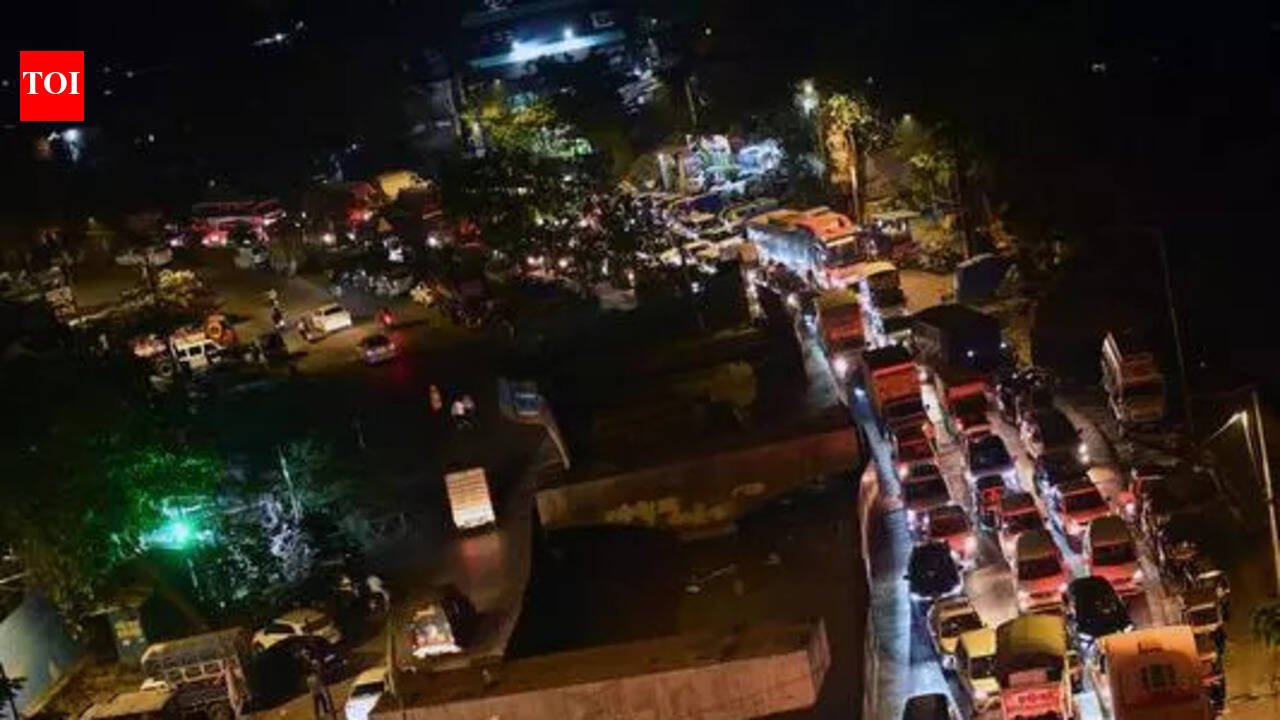
In Holi special drive, FIRs filed against 159 drunk drivers in Mumbai, 196 in Thane | Mumbai News


Mumbai: Traffic police registered FIRs against 159 drunk drivers in Mumbai on Holi as part of a special drive on Tuesday. Besides, police issued 16,700 challans against motorists for various traffic violations such as jumping signals, riding without helmets, speeding, among others, and sent 20 offenders to court for driving on the wrong side. Total fines worth Rs 1.99 crore were charged.The special drive was carried out between 12 am and 7 pm. Breathalysers were used for identifying drunk drivers. They will face legal action before court and their driving licences have been sent to the RTO for suspension. The highest number of challans issued were for speeding (4,486), followed by riding without helmets (4,317). Other offences included obstructing traffic (2,532), jumping signals (610), riding triple seat (530), driving without licence (431), violating no entry (278) and honking (2). Police appealed to citizens to celebrate responsibly. Meanwhile, in Thane, as many as 196 revellers were caught driving under the influence of alcohol during a special Holi and Dhulivandan enforcement drive carried out by the Thane police commissionerate, which booked a total of 1,681 traffic violators across 5 divisions of the city.Traffic officers said the crackdown was conducted under the guidance of police commissioner Ashutosh Dumbre, with around 450 traffic police officers and personnel deployed at multiple naka-bandi points to prevent accidents and ensure public safety during the festive period.According to DCP (traffic) Pankaj Shirsat, apart from the 196 drunk drivers, 836 two-wheeler riders were penalised for riding without helmets, while 408 were booked for triple-seat riding.As many as 227 motorists were fined for allowing passengers to occupy the front seat in autorickshaws in violation of norms, and 14 drivers were caught driving on the wrong side.Officials said the focused enforcement drive was aimed at curbing drunken driving, rash riding and other violations commonly reported during Holi celebrations, thereby ensuring safer roads and smoother traffic movement across Thane city.

Source link

India script history as Harmanpreet Kaur-led side becomes first-ever women’s cricket team nominated for Laureus honour | Cricket News


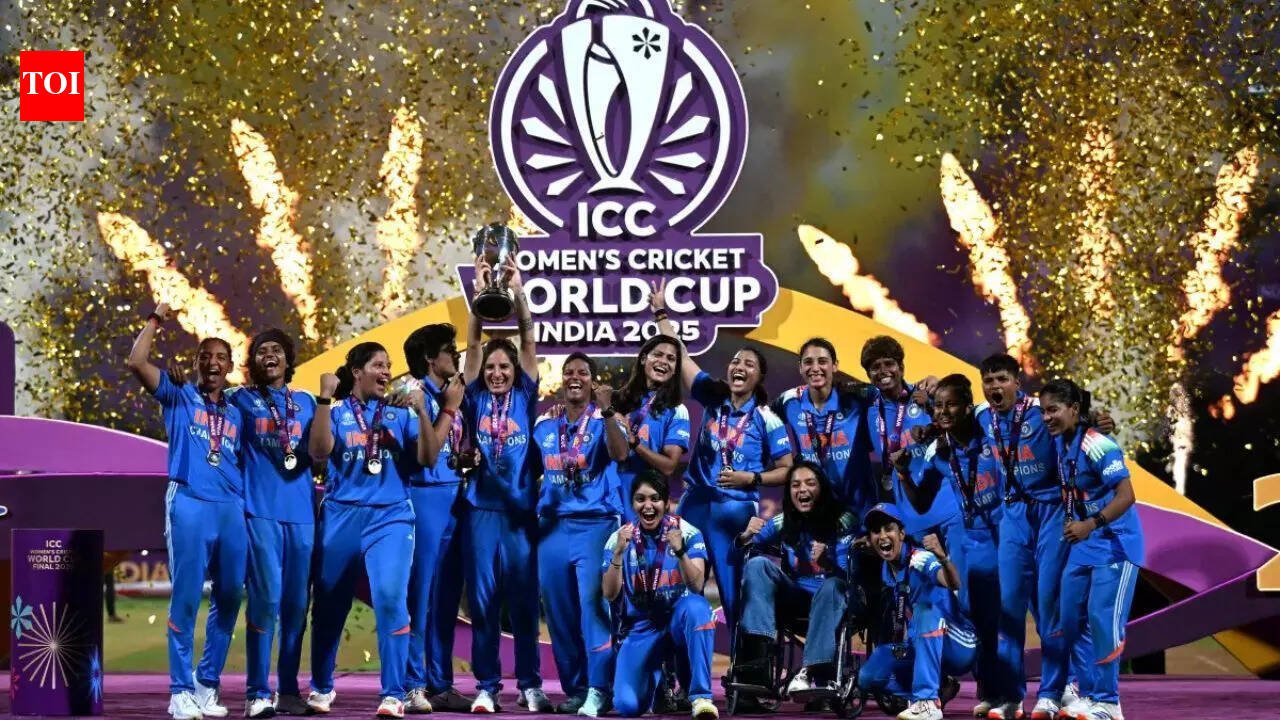
India script history as Harmanpreet Kaur-led side becomes first-ever women’s cricket team nominated for Laureus honour
India women’s cricket team (Photo by PTI)

NEW DELHI: India’s women’s cricket team has achieved another historic milestone as they have been nominated for the 2026 Laureus World Team of the Year Award after winning their first-ever World Cup title.The nomination, confirmed by Laureus Sport, makes them the first women’s cricket team to receive this honour. Their journey to the title included a record-breaking moment in the semi-final against Australia, where they completed the highest successful run chase in women’s ODI history — 339 runs — before going on to defeat South Africa in the final.

Hardik Pandya reaches Wankhede in a sports car for Team India nets

Laureus Sport said in a press release: “In their Cricket World Cup semi-final against Australia, the India Women’s Cricket Team pulled off the highest successful run chase in women’s ODI history (339) – before winning their first title against South Africa and are the first women’s cricket team to be nominated for this Award.”Led by Harmanpreet Kaur, the Indian team now finds itself in elite company. They have been nominated alongside global heavyweights such as the England Women’s football team, the European Ryder Cup squad, Paris Saint-Germain, and the McLaren Formula 1 team.Their World Cup victory sparked celebrations across India, with the BCCI announcing a cash reward of Rs 51 crore for the squad.The team also joins a small list of Indian sportspersons previously nominated in major Laureus categories, including Vinesh Phogat, Neeraj Chopra, and Rishabh Pant.The winners will be chosen by the Laureus World Sports Academy jury and announced at a grand ceremony at the Cibeles Palace in Madrid on April 20, marking the third straight year the Spanish capital will host the event.


Source link

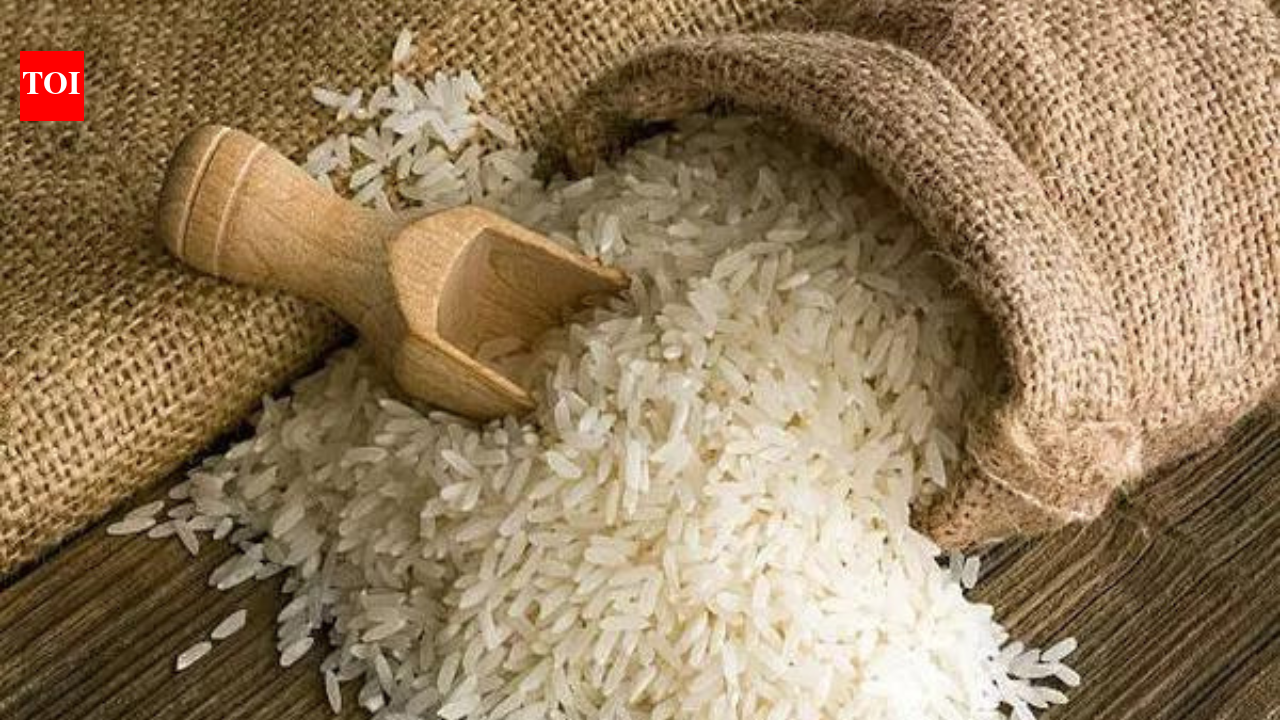
Basmati exports hit by Middle East war as 4 lakh metric tonnes pile up at ports


Basmati exports hit by Middle East war as 4 lakh metric tonnes pile up at ports

A sharp escalation in the Middle East conflict has choked India’s basmati rice shipments, leaving nearly 400,000 metric tons stranded at ports and in transit, while new export deals have come to a halt as freight rates have more than doubled since the US and Israel attacked Iran over the weekend, trade officials told Reuters.India, the largest global exporter of premium aromatic basmati, depends heavily on West Asian markets, with buyers in Saudi Arabia, Iran and the United Arab Emirates accounting for more than half of total shipments.“Around 200,000 tons of basmati rice are stuck in transit, and an equal amount is stranded at Indian ports as the war has disrupted shipping routes across the Middle East,” Satish Goel, president of the All India Rice Exporters’ Association (AIREA), said.According to Goel, exporters had already positioned consignments at ports, but escalating container freight costs have made shipments to the Middle East unviable. He added that no alternative market is capable of absorbing such large volumes at short notice.The US and Israeli air campaign against Iran widened on Monday, with Israel striking Lebanon and Iran retaliating by targeting energy infrastructure in Gulf countries and tankers in the Strait of Hormuz. As a result, tankers and container vessels are steering clear of the waterway after insurers withdrew coverage, sending global shipping rates sharply higher.With cargo lying idle, AIREA has approached the commerce ministry for support, citing mounting storage costs at ports and exposure to higher freight charges, Goel said.A New Delhi-based dealer with a global trading house told Reuters that exporters are avoiding fresh orders from the Middle East and focusing only on fulfilling existing contracts. Both buyers and sellers recognise the situation as unprecedented, he said, adding that if disruptions persist, some exporters may invoke force majeure.The trade shock follows a record basmati harvest in India this year. However, the abrupt export slowdown has dragged prices down by nearly 6 per cent.India and Pakistan are the only countries that widely cultivate basmati, a long-grain variety used in biryani, pilafs and other dishes and sold at a premium in global markets.“Basmati rice is a staple in the Middle East, and there’s really no substitute for Indian supplies,” a Mumbai-based trader said. “Once the war is over, these countries will start stocking up again.”


Source link

Chennai Metro Rail Ltd: When metro builds a city: Chennai Metro Rail plans to develop 73.4L sqft across 37 locations as commercial hubs along Phase-II corridors to boost non-fare revenue | Chennai News


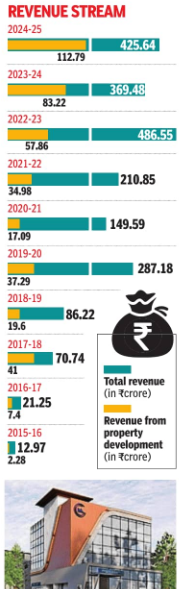
CHENNAI: Glass façades, retail arcades and office blocks may soon line the city’s Phase-II metro corridors. To achieve this, the Chennai Metro Rail Ltd (CMRL) will develop 73.4lakh sqft of commercial property across at least 37 locations.The large-scale property push is aimed at monetising land parcels to boost non-fare box revenue and improve financial sustainability of the expanding metro network. Officials say several of the proposed buildings will either be integrated with station entry structures or located a few metres away, creating commercial clusters around transit nodes and potentially increasing daily footfall.

-

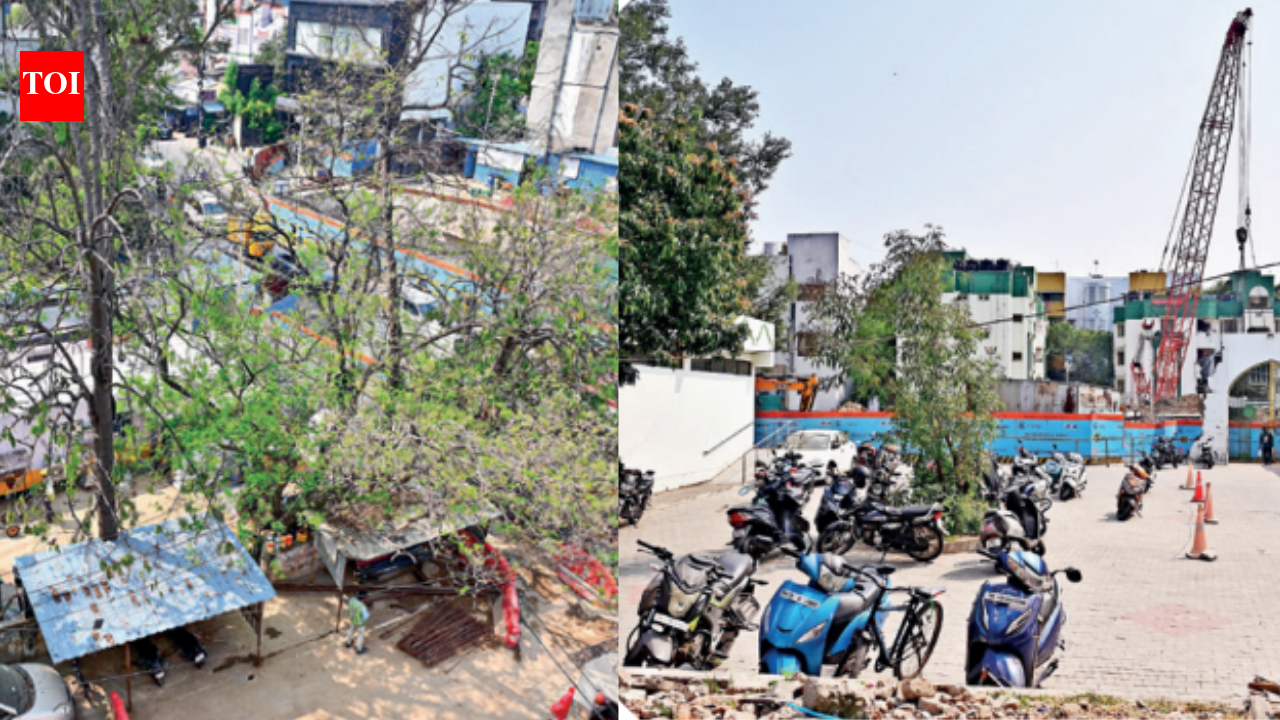
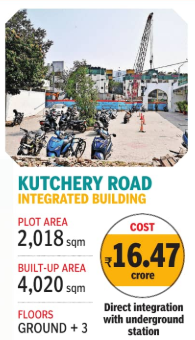
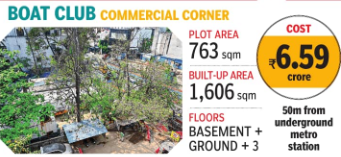
Among the prominent sites identified are the posh locality of Boat Club, the heritage stretch of Kutchery Road, Sholinganallur along the IT corridor, and key transport nodes such as Mandaveli, Vadapalani and Alandur.Within walking distance of Kapaleeshwarar Temple, an integrated four-storey building is planned at Kutchery Road, on a nearly 22,000 sqft plot with more than 43,000 sqft of built-up area at an estimated cost of ₹16.47 crore. The structure is designed to connect directly with the underground station.In the periphery of Boat Club residential area, a standalone fourstorey commercial building with a basement is proposed on an 8,200 sqft plot, offering more than 17,000 sqft of built-up space at a cost of ₹6.59 crore. Two additional integrated buildings are planned nearby.

-

“In Phase-II, we will start construction first in Mandaveli terminus-cum-bus depot. We will also initiate work soon in Vadapalani and Alandur. We plan to issue a designand-build contract for each of the properties,” a CMRL official said.In Phase-I, CMRL began work on a 27-storey ‘central tower’ near Central Station and an eight-storey multimodal complex at Broadway, while also leasing commercial spaces within stations. However, Phase-II marks the first time the agency is undertaking large-scale development outside station footprints, like metros in Delhi and Bengaluru.Delhi metro developed integrated residential complexes in several locations and IT parks with blocks each comprising eight floors, and planned a 29-storey residential property in Janakpuri West. It has a wellentrenched property-development programme to monetise station-area land. Bangalore metro is catching up. It has planned multiple projects, such as an 11-storey mall in KR Puram.

-

R Ramanathan, former CMRL director and adviser to Nagpur Metro, said non-fare revenue is crucial for metro viability. “No metro service can function with just revenue from ticket fares because these are highcost projects… the transit is planned with properties and space for commercial exploitation to generate as much non-fare box revenue as possible, as long as it doesn’t affect operations,” he said, adding that integration and parking access will determine market success.

-

Sivasubramaniam Jayaraman of ITDP said such projects can strengthen ridership if mobility remains central. “Easy and safe access to the station is critical. If people have to negotiate traffic, unsafe crossings or poor pedestrian infrastructure, the whole purpose of transit-oriented development is defeated,” he said.Urban planner Karthikeyan Baskar said denser development within 500m of stations could reshape commute patterns. “The major point of transit-oriented development is to boost public transport. Commute patterns will change, and the number of private vehicles on road will reduce. But pedestrian infrastructure around these areas must improve. Otherwise, people will come in their personal vehicles.”


Source link

Why China’s Support for Iran is More Rhetorical Than Real | World News


China’s 'ice-cold' calculus: Why Tehran can’t count on Beijing
Despite Iran’s critical economic reliance on China, Beijing’s response to strikes on its leader was limited to verbal condemnation and calls for de-escalation. China prioritizes its broader economic interests and balanced regional ties over defending Tehran militarily, demonstrating a strategic calculus that favors diplomacy and deniability over direct intervention or security guarantees.

When American and Israeli strikes killed Iran’s supreme leader Ayatollah Ali Khamenei, Beijing responded with ritual condemnation. Chinese officials denounced violations of sovereignty. State media warned against escalation. The foreign ministry urged restraint and called for stability in the Strait of Hormuz.But what China did not do was more telling. It did not mobilize. It did not airlift weapons. It did not pledge security guarantees. It did not threaten retaliation.Driving the newsChina is Iran’s single most important economic backer – yet Beijing is showing few signs it will materially defend Tehran after US and Israeli strikes escalated into a wider regional war.Beijing has condemned the attacks and called for de-escalation. But it has largely stayed inside a familiar lane: Statements, diplomatic calls, and warnings about spillover risks like the Strait of Hormuz.That restraint is striking because China is widely seen as Iran’s great-power hedge against US pressure – a perception reinforced by years of discounted oil sales, sanctions workarounds and frequent talk of “strategic partnership.”

Some of President Donald Trump’s boosters in America have depicted Khamenei’s death as a devastating blow not just for the Islamic Republic but for China itself. These hot takes assume that China has been humbled.

An article in the Economist

Why it mattersThe gap between how important Iran is to China and how important China is to Iran has never been clearer – and it explains why Beijing’s support is likely to remain more rhetorical than real.Iran needs China: China is Tehran’s economic lifeline under sanctions, buying the overwhelming bulk of Iran’s oil exports and helping keep cash flowing. That trade is the core of the relationship.China can live without Iran: As per a Bloomberg report, Iran is meaningful to China’s energy mix but not indispensable. Iranian crude makes up about 13% of China’s seaborne oil intake – significant, but not irreplaceable in a global market where Beijing can shift purchases among multiple suppliers.The relationship is asymmetric in trade, investment, and risk toleranceAccording to the Center for Strategic and International Studies, Iran represents less than 1% of commerce for the world’s second-largest economy. That imbalance shapes Beijing’s instincts: it can condemn strikes, keep buying some oil, and still avoid betting its broader economic interests on Tehran’s survival.This is the strategic heart of it: Iran is a lever for China, not a pillar – and Beijing doesn’t typically go to war for levers.Ice-cold calculus: The Economist has described China’s approach as “ice-cold calculus.” Beijing is less alarmed by an airstrike that kills a leader than by mass protests that threaten regime collapse. Internal upheaval carries contagion risk. External strikes can be condemned at low cost.The big pictureAccording to Evan A Feigenbaum, Western commentary often describes China-Iran ties in alliance-like language. But Beijing’s Middle East strategy is built on balance, not bloc politics.China has pursued what analysts call a dual-track approach: Keeping channels open to Iran while simultaneously deepening ties with Iran’s regional rivals and economic heavyweights, including Saudi Arabia and the UAE.That posture helps Beijing do three things at once:1. Present itself as a Global South champion challenging US dominance;2. Protect its business footprint across the Gulf; and3. Avoid entanglement in conflicts that don’t touch its first-order security priorities.This is why China leaned into the 2023 Iran-Saudi detente: It gained diplomatic prestige without inheriting a defense obligation. It also allowed Beijing to signal that it can broker deals where Washington struggles – a branding win, not a binding commitment.She Gangzheng, a professor at Tsinghua University, summed up the logic bluntly: Military support for Iran is “not the way that China does things in the region.”Zoom in: Money talks – but it doesn’t saluteEven China’s economic relationship with Iran is less robust than the rhetoric suggests.Start with the headline promise: in 2021, Chinese foreign minister Wang Yi signed a 25-year cooperation agreement in Tehran that reportedly envisioned up to $400 billion in Chinese investment.Now compare the follow-through: Bloomberg cites estimates that only $2 billion to $3 billion has been confirmed since then – a rounding error versus what China has committed to the UAE or Saudi Arabia. China’s official data show its foreign direct investment stock in Iran totaled $4.5 billion by end-2024, compared with $9.5 billion in the UAE. The American Enterprise Institute’s China Global Investment Tracker places cumulative Chinese investment in Iran at $4.7 billion since 2005, concentrated mainly in energy and metals – versus $15.7 billion in Saudi Arabia across energy, tech, metals and entertainment.The implication is uncomfortable for Tehran: Even when the geopolitics are hot, the capital flows are lukewarm.Iranian officials have voiced that frustration. In 2023, then-president Ebrahim Raisi said there had been a “serious regression” in the relationship and that economic ties had been unsatisfactory. Another Iranian trade official said Russia had overtaken China as Iran’s biggest foreign investor.Beijing’s restraint also shows up in corporate behavior. Esfandyar Batmanghelidj, chief executive of the Bourse & Bazaar Foundation, said: “Chinese companies have a very limited footprint in Iran relative to other countries in the region.” He added: “Major Chinese firms have steered clear of Iran due to secondary sanctions risks.”So even where China is economically present, it is present in ways that limit exposure: Oil buying and selective trade are easier to sustain under risk than a deep, visible investment surge that would make major Chinese firms hostage to sanctions and war.This is the pattern: China will take discounted barrels, but it won’t take on Iran’s battlefield liabilities.Between the linesChina is unlikely to “rally” behind Iran in the way many observers imagine.1) Beijing avoids binding security obligations by designEvan A Feigenbaum argues that describing China’s policy as alliance-based “misses the point.” China may imitate some tools of US power – sanctions, security cooperation, training – but it has not copied the US model of defense commitments for partners.Feigenbaum’s key warning is conceptual: Western analysts “expect China to behave like the United States-and then when China does not behave like the United States, they conclude that it is a strategic failure rather than a deliberate choice.”That misread turns into surprise every time a partner expects a rescue that never comes.Nicholas Burns put the critique sharply: “China,” he concludes, “is proving to be a feckless friend for its authoritarian allies.” Feigenbaum’s reply is essentially: Beijing never promised to be Washington.2) China’s Middle East posture depends on keeping ties with Iran’s rivalsBloomberg analysts stress that Beijing’s broader strategy depends on balancing Iran against relationships with Sunni Gulf states and – historically – Israel.Yang Zi, research fellow at the S Rajaratnam School of International Studies, captures the constraint: “It’s hard to say China is a major arms supplier to Iran, but it does supply dual-use tech.” And: “China is limited by sanctions as well as considerations over its ties with Sunni Gulf states and Israel.”Overtly arming Iran would be the opposite of balancing: it would force Gulf capitals to treat China as a partisan actor, threatening the very market access Beijing has spent years buying with trade, infrastructure and technology.3) Beijing’s prefers “help” comes with deniability – not flagsIf China does anything beyond diplomacy, it is more likely to be in the dual-use gray zone.Beijing officially stopped selling weapons to Iran in 2005. There have been reports of air-defense systems or missile propellant ingredients reaching Iran, but neither side has publicly confirmed them. After President Donald Trump’s strike, China’s foreign ministry rejected an account that it was poised to arm Iran with supersonic anti-ship missiles as “not true.”What’s nextBeijing’s most likely course is a continuation of current policy: Emphasis on trade and diplomacy, not security guarantees.Expect China to:* Keep buying Iranian oil if flows continue (especially via discounted, hard-to-trace channels);* Intensify calls for restraint and protection of shipping lanes;* Position itself as a “voice of stability” while privately hedging for multiple outcomes in Tehran;* Avoid visible arms transfers that could rupture Gulf ties or blow up the Trump-Xi agenda;* Engage pragmatically with whoever holds power in Iran next.The bottom lineBeijing is not abandoning Tehran. It is simply refusing to fight for it.China will likely keep doing what it does best in crises: condemn, call for restraint, protect its economic interests, and stay flexible.(With inputs from agencies)


Source link

US stock market: Wall street crashes amid Iran tension; Dow jones slips over 900 points, Nasdaq dips by 2%


US stock market: Wall street crashes amid Iran tension; Dow jones slips over 900 points, Nasdaq dips by 2%

A fresh wave of global selling pressure hit Wall Street on Tuesday, as escalating tensions involving Iran deepened fears of prolonged economic disruption. The S&P 500 fell 1.8 per cent in early trade. The Dow Jones Industrial Average was down 907 points, or 1.9 per cent, as of 9:35 am Eastern time, while the Nasdaq Composite dropped 2.1 per cent. The renewed slide came just a day after US equities had erased steep early losses to close marginally higher — a rebound that had hinged on oil prices remaining contained. That relief faded as crude surged closer to levels that investors fear could reignite inflationary pressures. Brent crude, the global benchmark, jumped 8.2 per cent to $84.14 a barrel after trading near $70 less than a week ago. US benchmark crude rose 8 per cent to $76.92. Oil prices spiked after Iran struck the US Embassy in Saudi Arabia, broadening its list of targets to include areas central to global oil and natural gas production. Markets are particularly focused on the Strait of Hormuz, a strategic chokepoint off Iran’s coast through which roughly one-fifth of the world’s oil supply passes. Any disruption there could have outsized consequences for global energy markets. Uncertainty over the duration of the conflict is adding to volatility. US and Israeli strikes have already killed Iranian Supreme Leader Ayatollah Ali Khamenei, yet US President Donald Trump has indicated that hostilities could persist for weeks. In a late-night social media post on Monday, Trump said wars can be fought “forever” with the munitions available to the United States. The sharp rise in crude threatens to compound inflation, which remains elevated, by increasing fuel and transportation costs. According to data from motor club AAA, the average US gasoline price rose 11 cents overnight to about $3.11 per gallon.On Wall Street, airline stocks extended losses amid concerns over higher jet fuel costs and travel disruptions linked to the conflict. United Airlines fell 4.1 per cent, American Airlines declined 4 per cent and Delta Air Lines slipped 3 per cent. Bond markets also reflected rising inflation expectations. The yield on the 10-year US Treasury climbed to 4.10 per cent from 4.05 per cent late Monday and 3.97 per cent on Friday. Higher yields translate into more expensive borrowing costs for households and businesses, affecting everything from mortgages to corporate bond issuances.The impact in equity markets has been most pronounced in sectors and countries heavily reliant on energy imports. In South Korea — a major oil importer — the Kospi index plunged 7.2 per cent in its worst session in nearly two years as markets reopened after a holiday. Japan’s Nikkei 225 fell 3.1 per cent, despite analysts noting that Japan maintains strategic energy reserves estimated to last more than 200 days.


Source link

Maharashtra transport minister urges transporters to withdraw March 5 strike call over e-challans | Mumbai News


Mumbai: Maharashtra transport minister Pratap Sarnaik on Tuesday appealed to transporters across Maharashtra to withdraw their proposed agitation from March 5, saying the state govt was “positive” about cancelling unfair e-challans and initiated a formal process to address the wider set of demands raised by the sector.A section of transporters on Tuesday said they appealed to vehicle owners to blow the vehicle horn for 1 minute at 4 pm on Wednesday to oppose the e-challan system. “Blow the horn wherever you are to support transporters in their fight against the irregularities in the e-challan system,” said Harsh Kotak from Mumbai Bus Malak Sanghatana. “We also want people from all sectors of commercial transport to join the stir,” he added.Various transport organisations threatened an indefinite strike from midnight of March 5, with school buses, trucks, tempos, taxis, trailers, private cabs and autorickshaws expected to participate in the stir. The agitation is largely centred on the e-challan system, which transporters allege is being misused and is leading to arbitrary penalties.Sarnaik said a joint meeting of the police administration, representatives of transporters’ organisations and the transport commissioner was convened on March 5 to resolve pending issues. “Efforts will be made to give justice to their demands in this meeting,” he said, urging unions to suspend the strike call until discussions are held.Sarnaik said he met representatives of several transporter bodies a couple of days back to hear their grievances. Transport Commissioner Rajesh Narvekar and officials from the concerned police administration were present during the meeting. The minister acknowledged that “feelings are very strong” among transporters on the issue of e-challans.He cited complaints that e-challans are being issued “with malice” even on vehicles parked in designated parking areas, and that some staff are generating challans without approval from authorised officers. Calling such action unfair, Sarnaik said strict instructions were issued to ensure that, going forward, only authorised officers will initiate e-challan action. He added that the govt was positive about cancelling previously issued challans that are found to be unjust.However, sections of the transport community said the outreach was inadequate. Malik Patel of the Mumbai Bus Malak Sanghatana claimed some associations were not given an opportunity to meet the minister. “The minister did not bother to call us. The agitation will continue on a larger scale now,” Patel warned. He added that transporters would proceed with the protest until there is an official written decision. “We are going ahead with our agitation till nothing comes officially on paper,” he added.


Source link

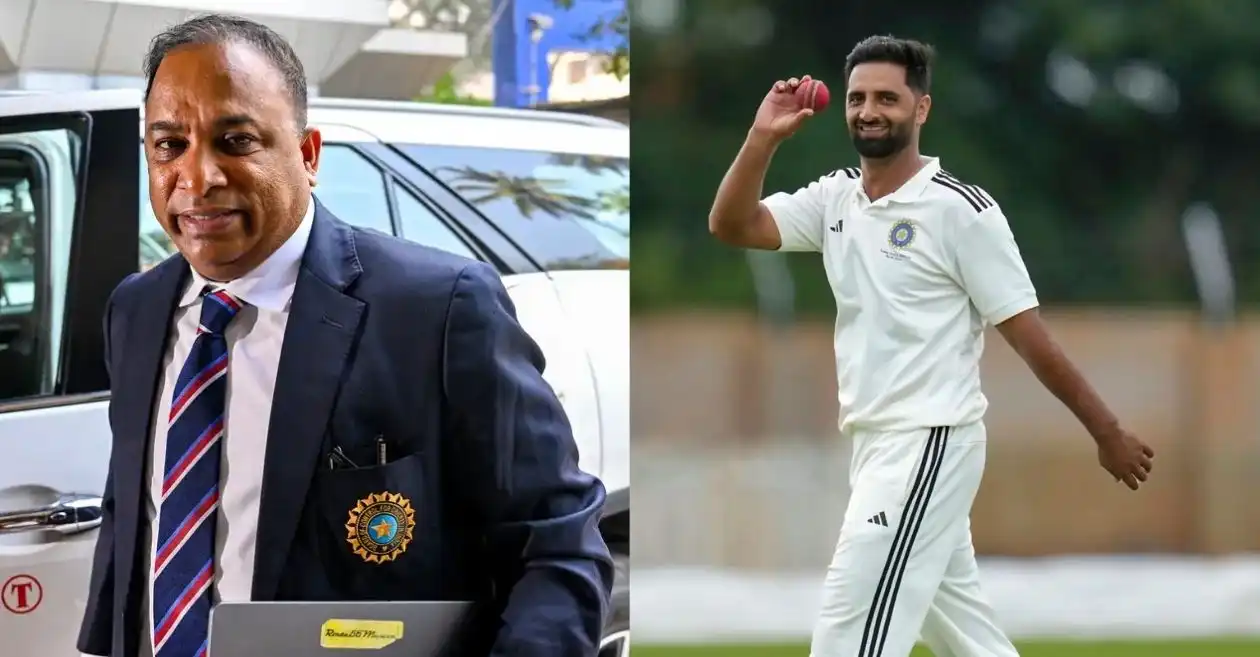
BCCI secretary Devajit Saikia breaks silence on Auqib Nabi’s India selection after Ranji Trophy heroics


Auqib Nabi’s rise in Indian domestic cricket has been nothing short of extraordinary. The star pacer delivered a historic performance in the 2025–26 Ranji Trophy, emerging as the leading wicket-taker and the chief architect behind Jammu & Kashmir’s maiden title triumph. Over the last two seasons, Nabi has established himself as arguably the most prolific fast bowler in the Indian domestic circuit, claiming a staggering 104 wickets in just 18 matches.

Auqib Nabi’s splendid show in the Ranji Trophy

In the latest Ranji campaign alone, Nabi was virtually unstoppable. He picked up seven five-wicket hauls in the tournament — eight in the overall first-class season — equalling the record for the most five-wicket hauls by a pacer in a single season in India. His impact was felt most strongly in the knockout stages. Nabi grabbed five wickets in the quarter-final, repeated the feat in the semi-final, and then produced a match-defining spell in the final that swung the contest decisively in Jammu & Kashmir’s favour.

Unsurprisingly, he was named Player of the Series for his dominant performances. With such consistency and match-winning displays, many former cricketers and experts have openly demanded his inclusion in the Indian national squad.

Devajit Saikia responds to selection demands for Nabi

Amid the growing clamour for Nabi’s India call-up, BCCI secretary Devajit Saikia addressed the matter in an interview with The Times of India. Saikia acknowledged the pacer’s remarkable performances and confirmed that his efforts have not gone unnoticed.

“He has played very well. His contribution has been major to the success of the team. He took five wickets in the quarter-final, five wickets in the semi-final, and left nothing in the final. His spell changed the final. So, everybody is taking note of it,” Saikia said.

The BCCI secretary also underlined the board’s commitment to ensuring that talent from every corner of the country gets due recognition. Saikia’s remarks indicate that while immediate selection is not guaranteed, Nabi firmly remains on the radar of national selectors.

“The BCCI has set the stage right so that no proper talent goes unnoticed. When selectors are present, their only focus is on players’ performances, which they are tracking closely. That is why so many players from small and lesser-known places are getting opportunities to represent the country. Regarding Nabi, he has come from Baramulla. Who brought him to this position? The selectors in J&K. The BCCI selectors did not bring him. But when he plays domestic cricket and represents his state team, the BCCI selectors keep an eye on domestic matches,” he added.

Also READ: Indian cricket fraternity reacts as Jammu & Kashmir scripts history with maiden Ranji Trophy victory by defeating star-studded Karnataka in final

Jammu & Kashmir’s historic Ranji triumph

The 2025–26 season of the Ranji Trophy will forever be remembered in Jammu & Kashmir’s cricketing history. On 28 February 2026, the team clinched their maiden Ranji Trophy title in their first-ever appearance in a final.

Led by veteran Paras Dogra, Jammu & Kashmir defeated eight-time champions Karnataka at the D. R. Bendre Cricket Stadium in Hubballi, ending a 67-year wait since their tournament debut in the 1959–60 season. The victory has been hailed as a transformative moment for cricket in the region.

The achievement resonated beyond the boundary ropes. Chief Minister Omar Abdullah announced a ₹2 crore cash reward for the team, celebrating their landmark success.

For Nabi, the title was not just a personal milestone but a symbol of a region’s cricketing resurgence. Whether his Ranji heroics soon translate into an India cap remains to be seen, but one thing is certain — his name is now firmly etched in the national conversation.

Also READ: Sourav Ganguly calls on BCCI to pick Auqib Nabi for India’s tour of England


Source link

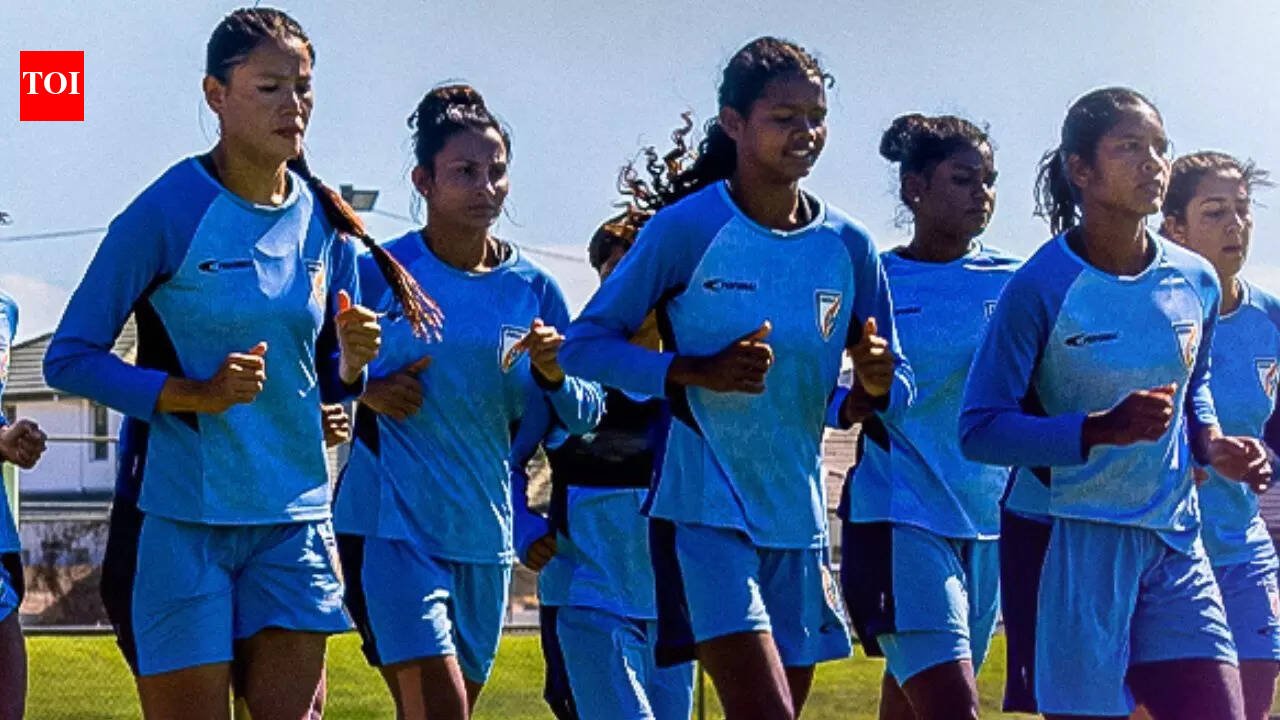
India women face embarrassment after receiving ill-fitting kits ahead of AFC Asian Cup campaign | Football News


India women face embarrassment after receiving ill-fitting kits ahead of AFC Asian Cup campaign

NEW DELHI: Just days before their AFC Women’s Asian Cup opener against Vietnam in Perth, India’s women footballers found themselves dealing with an unexpected problem — ill-fitting kits and lack of proper training gear. In a rare and strongly worded letter to AIFF Deputy General Secretary M Satyanarayanan, all 26 players expressed frustration, saying the issue had hurt their morale at a crucial time.“Representing India on the international stage requires professional standards, including properly fitted and appropriate match and training apparel,” the letter said.The players revealed they had already faced problems during preparation due to inadequate clothing. “The arrival of incorrect match kits at this crucial stage has further affected morale and disrupted our focus in the final days leading up to the match.”Shockingly, the kits were reportedly too small, with sizes seemingly meant for Under-15 players and not fitting at least 80% of the squad. Even the coaching staff received incorrectly sized kits.“This tournament marks our return to a major continental competition after 23 years and is a significant moment for Indian women’s football. Unfortunately, on Matchday Minus 2… we discovered a serious issue. The kits supplied are not fit for purpose.”The letter, signed by eight senior players including captain Sweety Devi and Grace Dangmei but backed by the entire squad, demanded urgent action. “We urgently request: 1. Immediate provision of correctly sized match and training kits… 2. Confirmation that suitable replacements will be delivered before kickoff. 3. Clarification on the steps being taken to prevent such incidents in the future,” it further added.Despite the setback, the players added, “We remain fully committed to representing our country with pride and giving our best performance.”The AIFF later said new kits had been provided and cleared by AFC officials.


Source link

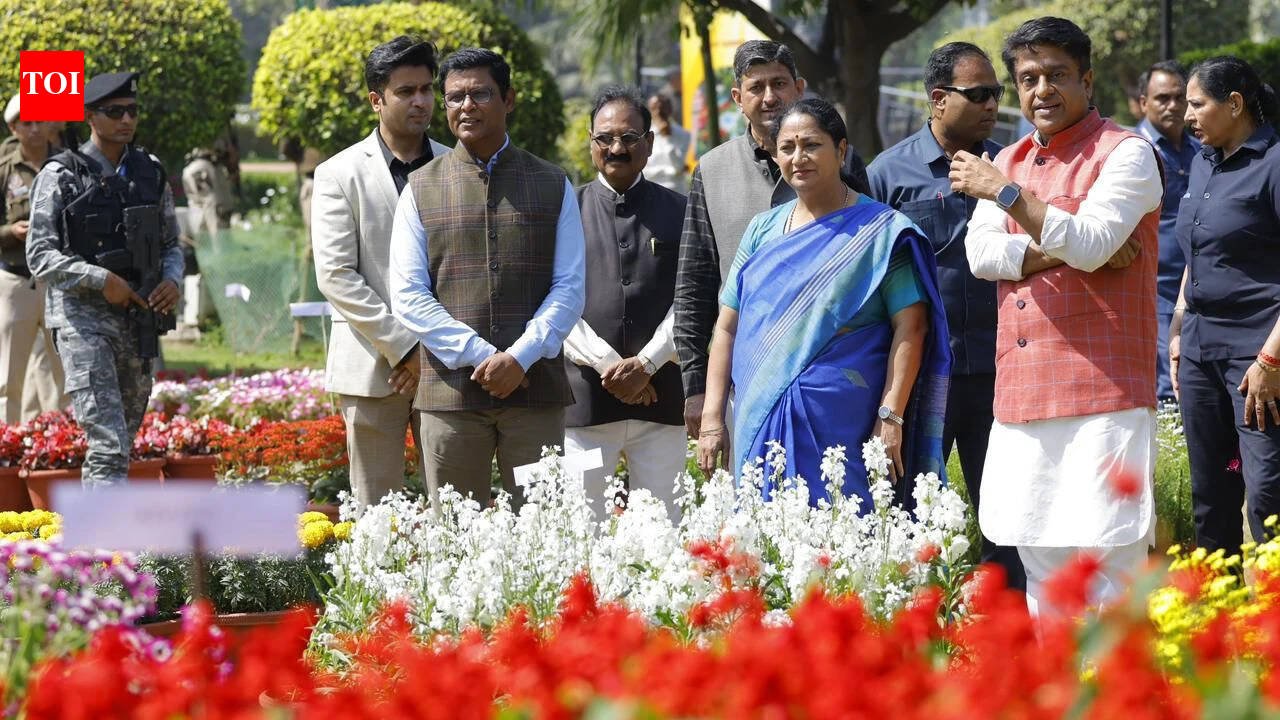
CM Rekha Gupta inaugurates NDMC’s two-day flower festival | India News


CM Rekha Gupta inaugurates NDMC's two-day flower festival

NEW DELHI: Delhi chief minister Rekha Gupta on Tuesday inaugurated NDMC’s two-day Flower Festival at Connaught Place, drawing visitors to a colourful showcase of seasonal blooms and various floral-themed displays in the heart of the capital.The New Delhi Municipal Council (NDMC) opened its festival at Connaught Place’s Central Park. The event began with a brief ceremony attended by NDMC officials and citizens.Gupta congratulated NDMC officials, stating that the council has helped build Delhi’s green and positive image.“People used to go to Kashmir to get their pictures clicked with tulip flowers; now they don’t need to go there, central Delhi has ample tulips,” she said while inaugurating the flower festival.“Whenever there is a big event, whether it was G20 or the recent AI India Impact Summit, NDMC has done a commendable job of keeping the area clean and planting thousands of tulip flowers,” CM Gupta said.She also urged other civic agencies in Delhi to draw inspiration from NDMC on how to create more green spaces in the national capital.“NDMC has become a model civic council for creating green spaces in the country. We want all of Delhi to be this green and vibrant,” the CM said on the occasion.If the need arises, the Delhi government will send horticulture departments of other agencies to come and train under NDMC, she added.The CM added that the Delhi government will provide NDMC with all the necessary resources to help build greenery across the city.The festival features a range of flower arrangements, landscaped exhibits and horticultural presentations aimed at promoting urban gardening and green awareness.Families, office-goers and morning walkers were seen stopping by the park throughout the day to view the displays and take photographs, officials said.NDMC officials said the festival will continue on March 4, with the civic body expecting steady footfall over the two days as the venue remains open to the public.The annual event is part of NDMC’s efforts to encourage interest in horticulture while adding a splash of colour to the Connaught Place area during the spring season, the officials said.


Source link