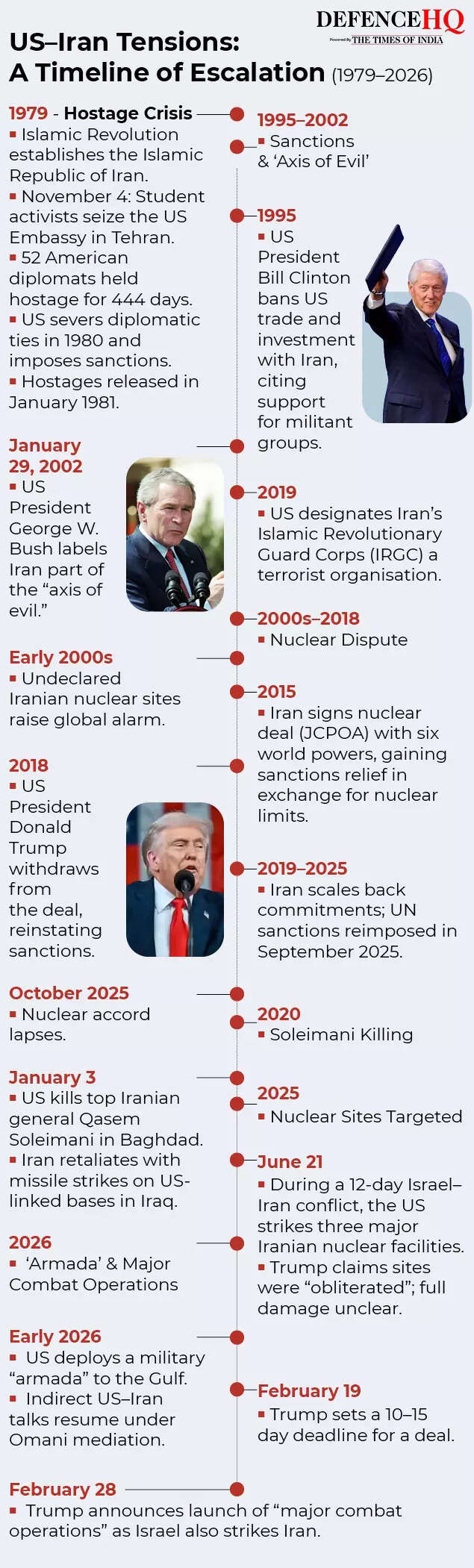
Breaking News
T20 World Cup 2026 SA vs NZ semifinal: What happens if South Africa vs New Zealand match is washed out in Kolkata? | Cricket News


T20 World Cup 2026 SA vs NZ semifinal: What happens if South Africa vs New Zealand match is washed out in Kolkata?
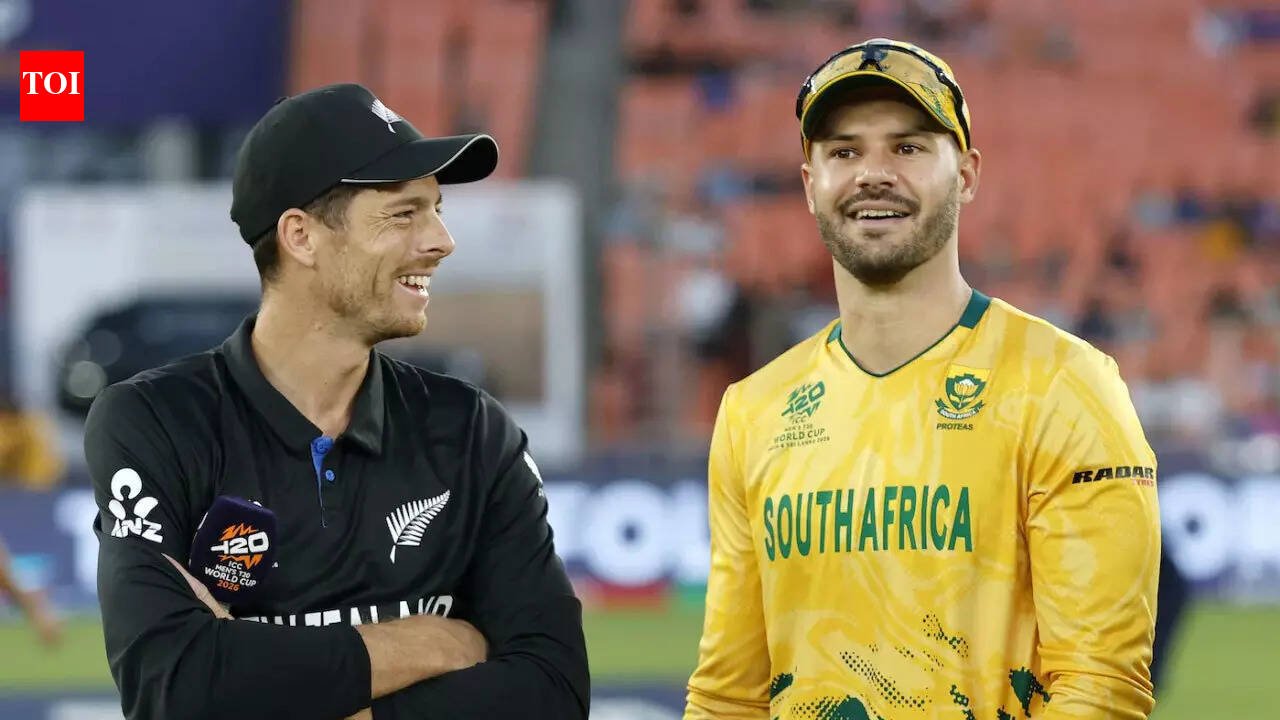
South Africa, unbeaten in the tournament so far, will look to continue their quest for a maiden World Cup title when they take on New Zealand. (ICC Photo)

NEW DELHI: New Zealand and South Africa are set to lock horns for a coveted place in the final when they meet in the first semi-final of the T20 World Cup at Eden Gardens in Kolkata on Wednesday.The rivalry between the two sides has produced some unforgettable moments, none more dramatic than the 2015 ODI World Cup semi-final. On that occasion, New Zealand clinched a thrilling last-over victory, a result that left South Africa shattered and further cemented their reputation for stumbling at crucial stages.

Indian cricket team leaves from Kolkata, fans go mad for Sanju Samson

This Proteas side, however, carries a different aura. Guided by coach Shukri Conrad, South Africa have transformed into a mentally tougher and more composed outfit. Their World Test Championship triumph last year signalled a shift in belief and temperament. Though a major white-ball title still eludes them, the long-standing “chokers” narrative no longer hangs as heavily over the team.Much of the spotlight will fall on the two captains, both of whom have led from the front. Aiden Markram has been in destructive form, scoring 268 runs at a strike rate exceeding 175 and frequently seizing control during the powerplay. Mitchell Santner, meanwhile, has been equally influential in a different role — applying the brakes with the ball, boasting an impressive economy rate of 6.35 and consistently delivering in key phases.South Africa’s batting unit looks formidable on paper. Alongside Markram, the likes of Quinton de Kock, Dewald Brevis, Ryan Rickelton, Tristan Stubbs, David Miller and Marco Jansen provide depth, versatility and explosive finishing power. On a good batting surface, this line-up has the potential to overwhelm opposition attacks.New Zealand, though, bring balance and discipline, particularly through their spin department. Santner has marshalled his resources smartly, with Rachin Ravindra (nine wickets at an economy under seven), Glenn Phillips and Cole McConchie offering control and breakthroughs. Barring India, this may be the most effective spin combination South Africa have faced in the tournament.One possible weakness for the Black Caps is the lack of a consistent wrist-spin threat. Ish Sodhi has yet to make a significant impact in his appearances, which could leave New Zealand slightly short in that department.The Eden Gardens surface is expected to assist batters, raising the prospect of a high-scoring contest. South Africa might prefer chasing, especially since New Zealand’s Super Eight fixtures were played on slower pitches in Sri Lanka. On a truer Kolkata track, aggressive stroke-makers such as Finn Allen, Tim Seifert, Glenn Phillips and Daryl Mitchell could aim for a total in excess of 200.With the ball, Lungi Ngidi’s variations — including his slower deliveries, wide yorkers and leg-cutters — may be key for South Africa on a flat pitch. For New Zealand, much could hinge on Lockie Ferguson’s opening spell, which has the potential to set the tone in a high-stakes encounter.

T20 World Cup semifinal, SA vs NZ: What happens if rain washes out match?

Weather interruptions remain a talking point in Kolkata. If rain halts play on Wednesday (March 4), the match will not be abandoned immediately. Tournament regulations include a reserve day to ensure a result is achieved. The game would resume from the exact point it was stopped, preserving fairness.March 5 (Thursday) has been designated as the official reserve day. If both days are completely washed out, the team that finished higher in the Super Eight stage will advance to the final. South Africa topped Super 8 Group 1 with six points, while New Zealand qualified from Group 2 with three points. As a result, if the semi-final is completely washed out on both the scheduled day and the reserve day, South Africa would progress to the final by virtue of their superior Super Eight standing.

T20 World Cup semifinal, SA vs NZ: Weather Forecast in Kolkata

According to the latest forecast, Kolkata is expected to enjoy sunny conditions on March 4, with no rain or thunderstorms predicted. Temperatures are likely to peak at around 33°C, and the chance of precipitation remains minimal — making a washout appear unlikely for this crucial semi-final showdown.

T20 World Cup semifinal, SA vs NZ: Squads

South Africa Squad: Aiden Markram(c), Quinton de Kock(w), Ryan Rickelton, Dewald Brevis, David Miller, Tristan Stubbs, Marco Jansen, Corbin Bosch, Kagiso Rabada, Keshav Maharaj, Lungi Ngidi, George Linde, Anrich Nortje, Kwena Maphaka, Jason SmithNew Zealand Squad: Tim Seifert(w), Finn Allen, Rachin Ravindra, Glenn Phillips, Daryl Mitchell, Mark Chapman, Mitchell Santner(c), Cole McConchie, Matt Henry, Ish Sodhi, Lockie Ferguson, James Neesham, Jacob Duffy, Kyle Jamieson, Devon Conway


Source link

Holi Wishes & Quotes: 85+ Happy Holi Messages, Greetings, Wishes and Quotes for 2026 |


85+ Happy Holi Messages, Greetings, Wishes and Quotes for 2026
(Image Credits: Pinterest)

The winter smog has cleared out, the late February sun is finally baking the streets again, and the local markets are suddenly drowning in mountains of neon powder. Yes, Holi 2026 is officially loading. You are probably busy plotting your escape from the neighborhood kids who have been practicing their water balloon sniping skills from the balconies all week. But before the actual street warfare begins, there is a massive digital hurdle we all must cross: The Holi Morning WhatsApp Crisis. You know the exact drill. You wake up, check your phone, and you are trapped under an avalanche of identical, violently glittering e-cards from relatives you haven’t spoken to since Diwali. If you want to survive the group chats this year without sounding like a completely automated bot, you need to ditch the generic forwards. You need messages that sound human. To save you from staring at a blank screen while your phone blows up, we have curated over 75 unique Holi wishes, quotes, and greetings for every single person in your contact list.

The Family Group Chat (Warm & Respectful)

Family groups are a tricky minefield. You have to balance respectful blessings for the elders with hype for the younger cousins. Skip the forwarded graphics and drop one of these instead.1. Wishing the best family a Holi full of sweet gujiyas and absolutely zero drama! 2. May our home be filled with endless laughter today. Happy Holi 2026! 3. Sending the warmest wishes to my favorite people. Let’s make some memories today. 4. Hope everyone’s day is as loud and chaotic as our usual family dinners! 5. To my amazing family: May happiness multiply for us today. Have a safe one. 6. Let’s forget the small arguments and just eat the sweets. Happy Holi! 7. Wishing the elders good health and the kids an unlimited supply of water balloons. 8. May Lord Krishna bless our home with absolute peace and colorful chaos. 9. Happy Holi! Let’s hope the pink dye actually washes off before Monday morning. 10. Sending colorful hugs to all the aunties, uncles, and cousins today. 11. May the splash of colors bring an abundance of joy to our household. 12. Hoping our family bonds grow even stronger this spring. Happy Holi! 13. Eat up, play hard, and stay safe. Love you all. Happy Holi! 14. Wishing our beautiful family a very blessed and safe festival of colors. 15. Let’s make today entirely about good food and great company.16. Holi helps me to remember you in light of the fact that it is so vibrant and brimming with full.17.If wishes come in rainbow colors then I would send the brightest one to say Happy Holi.Best wishes to you for a Holi filled with sweet moments and memories to cherish for long.Trust your adoration is surrounded with all colors of affection & joy. Today & dependably. Euphoric Holi!

The Core Friends (Unhinged & Unfiltered)

Your actual friends do not want a poem from you. They want to know what time to show up, and they need a firm reminder to wear terrible clothes.16. Happy Holi! If I can still recognize you later, we honestly didn’t play hard enough. 17. May your day be full of crazy dancing and absolutely zero work emails. 18. Put on your absolute worst t-shirt and get over here right now. Happy Holi! 19. Here is to drinking way too much thandai today. Let’s go! 20. Let’s make a pact right now: no throwing permanent silver paint near my ears. 21. To my favorite weirdos, let’s go make a massive mess today. 22. May our friendship always remain this loud and brightly colored. 23. I bought extra water balloons specifically targeting you. Consider this your final warning. 24. May your gujiya supply be endless and your hangover non-existent tomorrow. 25. The madness begins now. See you in five minutes. Bring the colors. 26. Happy Holi! Let’s completely ruin our oldest shoes today. 27. Getting ready to absolutely humble you in a water gun fight. 28. Hoping you get completely soaked today. Happy Holi, bestie! 29. Let’s skip the pleasantries and go straight to the water balloons. 30. Cheers to the best crew. Happy Holi 2026!

Coworkers and the Boss (HR-Approved)

Keep it crisp, professional, and universally polite. You cannot joke about hangovers with the person who approves your payroll.31. Wishing you and your family a joyous and peaceful Holi. 32. Happy Holi 2026! May this festival bring massive success to your life. 33. Sending warmest greetings to you and your family today. Have a safe celebration. 34. Wishing you a colorful, relaxing holiday mid-week. See you back at the office! 35. May the colors of Holi bring fresh energy to all your upcoming projects. 36. Hope you get some quality downtime with your family today. Happy Holi! 37. May this festive season bring good health and prosperity to your home. 38. Wishing you a bright, happy, and incredibly safe Holi. 39. Warm greetings on the festival of colors! Enjoy the sweet treats. 40. Happy Holi! Wishing you a fantastic holiday and great celebrations. 41. Hoping your Holi is filled with joy, peace, and great company. 42. Wishing you a wonderful break and a brilliantly colorful day ahead. 43. May the festive spirit bring you immense professional and personal joy. 44. Happy Holi! Have a restful and happy day with your loved ones. 45. Sending positive and colorful thoughts your way this Holi.

Short Quotes (For Your Instagram Aesthetics)

When you have the perfect candid photo of the gulal plates but no idea what to write in the caption box. 46. “Let the colors of Holi spread the absolute message of peace.” 47. “Life is a canvas. Today is the day to throw all the paint at it.” 48. “Forget the worries, remember the colors. Happy Holi 2026.” 49. “Spring is nature’s way of saying, ‘Let’s party!'” 50. “Dive into the colors and let your inner child completely take over.” 51. “May the canvas of your life be painted with the brightest love.” 52. “Good vibes. Great sweets. Bright colors. The only agenda.” 53. “A day to forgive, forget, and throw a balloon at someone’s head.” 54. “Soaking in the spring spirit today. Happy Holi.” 55. “Keep calm and just play Holi.” 56. “Let love be the dominant color today.” 57. “Colors are the smiles of nature. Share them today.” 58. “Make a splash. Leave a mark. Happy Holi.” 59. “Let the child inside you run completely free today.” 60. “Celebrate life, celebrate love, celebrate the chaos.”

WhatsApp Statuses (The “I’m Busy” Automated Replies)

61. Out of office. Covered in pink gulal. Will reply tomorrow. 62. Currently accepting all deliveries of gujiyas and thandai. Happy Holi! 63. If you need me today, don’t. I am busy fighting a brutal water war. 64. Wishing everyone a beautifully messy and loud Holi today. Stay safe! 65. My only goal today is to eat my body weight in festival sweets. 66. May your day be as colorful as my ruined white t-shirt. 67. Radiating pure joy and a lot of neon green right now. Have a great Holi! 68. Keep the colors organic and the thandai flowing. Happy Holi! 69. Sending a virtual splash of colors to everyone far away today. 70. Holi mode: ON. See you on the other side. 71. Phone is going in a ziplock bag now. Happy Holi, everyone! 72. Survived the neighborhood water balloon ambush. Barely. 73. Let the street food binge officially commence. Happy Holi! 74. Do not text me unless you are bringing more dry colors. 75. Covered in dye, full of sweets, entirely happy. Have a great day!Once you have fired off your carefully selected morning messages, do yourself a massive favor. Put the phone away in a plastic pouch and go outside. Let the chaos take over for a few hours.


Source link

Mumbai Motorcycle Accident: 19-year-old BPO employee dies in road crash as rider tries to avoid stray dog in Mumbai’s Malad West | Mumbai News


MUMBAI: A 19-year-old girl seated pillion on a friend’s motorcycle lost her life when he couldn’t control his speed and they both fell while trying to avoid hitting a stray dog at Malad West. The Bangur Nagar Police registered an FIR against the motorcyclist.Sidra Shaikh, the victim, worked at a BPO in Malad West since last year. She lived with her family at Andheri. On Feb 28, she was on duty from 3 pm to 1 am on March 1. She called up her mother around 12.45 am on March 1 and told her to keep some dinner. Her mother asked what she would like to eat but Shaikh did not mention anything in particular.At 1.45, her mother got another phone call. The caller said his name was Aniket and that he and Shaikh had been hurt in a road-related crash. He asked Shaikh’s mother to come to the Babasaheb Ambedkar Hospital in Kandivali. At 2.15 am, Shaikh was pronounced dead at the hospital. Aniket met her family at the hospital and told them that he and Shaikh were returning on his motorcycle after purchasing cigarettes around 1.15 am. They were on the stretch connecting Toyota showroom junction to Back Road at Malad West when a stray dog appeared before the motorcycle. The road was partially dug up and barricades had been put up. While trying to avoid hitting the dog, Aniket couldn’t control his speed and they both fell. Shaikh suffered head injuries and bled profusely. Aniket also suffered injuries to his hands, back and head. He stopped an auto and rushed Shaikh to the hospital but she did not survive.Based on a statement given by Shaikh’s mother, police registered an FIR against Aniket for negligence.


Source link

Us Iran War Impact On Stock Market: Rs 11 lakh crore wiped out! How US-Israel-Iran war is hitting stock market investors hard


Rs 11 lakh crore wiped out! How US-Israel-Iran war is hitting stock market investors hard
Market experts anticipate continued turbulence in the near term as tensions between Iran and the Israel-US alliance intensify. (AI image)

Rs 11 lakh crore gone! Middle East tensions, the ongoing war of the US and Israel with Iran have bled the Indian stock markets, with investors rushing for cover to safe haven assets as economic and geopolitical uncertainties mount the world over. Indian equity markets have come under heavy pressure in recent sessions, with the benchmark Sensex and Nifty sliding more than 2.5% each over two straight trading days. Both indices extended losses on Monday after Iran responded to strikes by Israel and the United States that killed its supreme leader Ayatollah Ali Khamenei over the weekend. The Sensex plunged by more than 1,000 points, slipping below the 81,000 mark for the first time in over a month. The Nifty 50 also dropped sharply, losing upwards of 300 points and falling beneath the crucial 25,000 support level.

What’s the outlook for Nifty & Sensex?

Market experts anticipate continued turbulence in the near term as tensions between Iran and the Israel-US alliance intensify without any visible diplomatic breakthrough. Despite the current uncertainty, analysts maintain that the longer-term prospects for Indian equities remain constructive.Tanvi Kanchan, Associate Director at Anand Rathi Share & Stock Brokers, said near-term conditions are likely to remain choppy. She pointed to the steep jump in the India VIX, which climbed over 25 per cent to 17.13 on Monday, as a clear indicator of heightened uncertainty and investor risk aversion.“Gold futures rose sharply on MCX as safe-haven demand surged. Elevated crude is a fiscal headache, but RBI has room to manoeuvre, and domestic consumption remains resilient. IT stocks face additional pressure from the Anthropic-driven AI model disruptions rattling US tech sentiment. Banking stocks need to be watched for yield curve dynamics,” the analyst told ET.

Stock market crash unlikely to alter long-term path

Although steep market declines can be unsettling, Tanvi Kanchan of Anand Rathi Share & Stock Brokers noted that such corrections have not historically disrupted India’s broader growth trajectory. She underscored that the country’s domestic macroeconomic fundamentals remain intact. Net GST collections stood at Rs 1.71 lakh crore in January 2026, earnings recovery is anticipated in FY27, and quarterly performances from PSU banks and metal companies have been encouraging.Vikram Kasat, Head Advisory at PL Capital, said that despite short-term challenges, underlying economic indicators continue to display resilience, supported by stable earnings expectations and sustained systematic investment plan inflows. “However, we expect markets to remain headline-driven in the near term, with crude trajectory and geopolitical cues likely to dictate sentiment. Investors should stay selective and focus on quality balance sheets and earnings visibility,” he said.Naval Kagalwala, COO and Head of Product at Shriram Wealth, observed that geopolitical flare-ups such as escalating tensions in the Middle East have occurred repeatedly in the past, typically triggering temporary volatility followed by eventual stabilisation.“Any correction, if it plays out, could help rationalise valuations further in India, which continues to remain among the fastest-growing major economies. Importantly, this is not an India-specific event. Near-term spillovers, if any, would largely be through a spike in oil prices and certain other segments which rely on exports-imports,” he added.Ajit Mishra, Senior Vice President of Research at Religare Broking, advised a guarded approach in the near term. He suggested keeping exposures modest and prioritising strict risk management practices.Rupak De, Senior Technical Analyst at LKP Securities, noted that the Nifty has slipped beneath its rising trendline on the daily chart, signalling mounting bearish sentiment. He added that the RSI remains in a negative crossover, reinforcing signs of weakening momentum.He identified 24,600 as immediate support, cautioning that a clear breach below this mark could lead to a sharper correction. “On the higher side, resistance is seen at 25,000. Until the Nifty sustains above 25,000, overall sentiment is likely to remain tilted in favor of the bears,” he said.(Disclaimer: Recommendations and views on the stock market, other asset classes or personal finance management tips given by experts are their own. These opinions do not represent the views of The Times of India)


Source link

Two titans, two models: How Jyoti Basu & Mamata Banerjee defined Bengal politics | India News


Two titans, two models: How Jyoti Basu & Mamata Banerjee defined Bengal politics
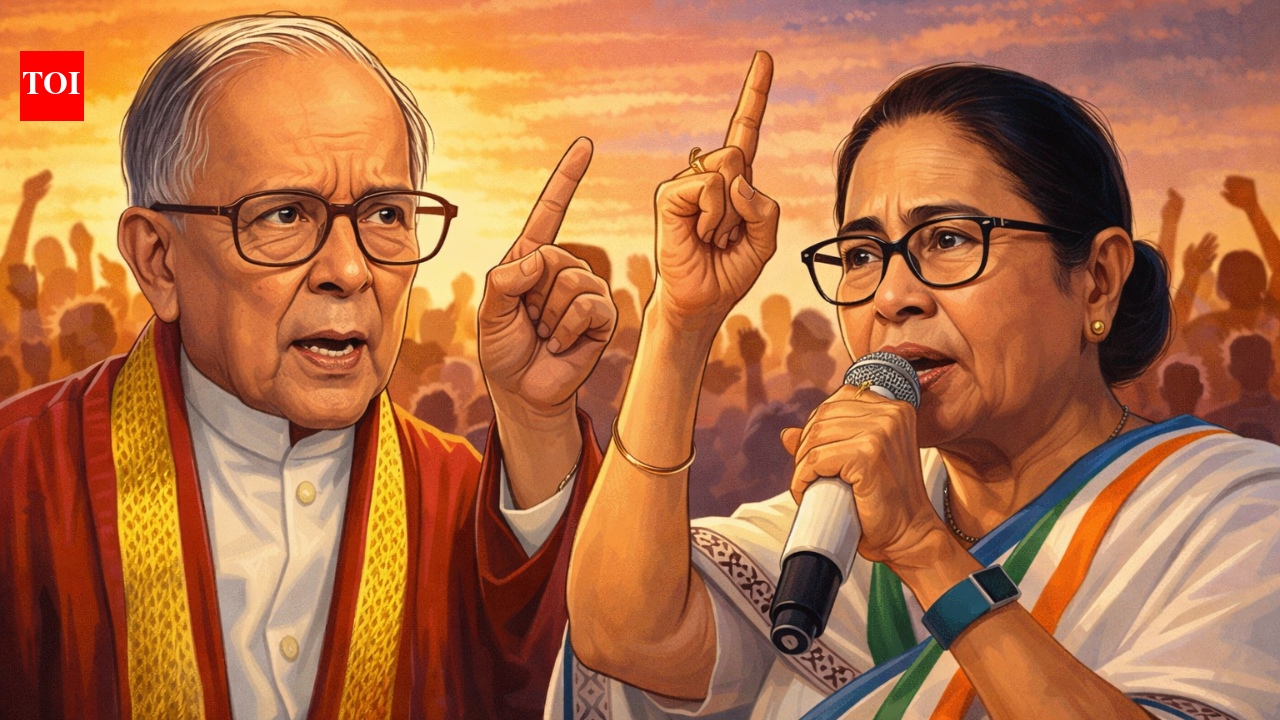
This image is used for representation purpose only (AI-generated)

On 20 May 2011, it was a humid summer afternoon in Kolkata. Crowds gathered outside Raj Bhavan as Mamata Banerjee took oath as the first woman chief minister of West Bengal. The moment marked the end of a 34-year Left Front rule and the beginning of a new political chapter.Having visited the Kalighat Kali Temple earlier that day, Mamata arrived at the Governor’s residence shortly before 1 pm. Dressed in her trademark white cotton sari with a blue border and a tricolour uttariya draped over her shoulders, she took the oath in the name of Ishwar in Bengali at exactly 1.01 pm, a time chosen as auspicious by her family priest.

Mamata Banerjee Vows Bengal Poll Win Despite Voter Deletions, Abhishek Claims BJP Won’t Pass 50 Seats

Accusing the communists of failing West Bengal’s 90 million people and contributing to economic decline, she declared, “We will give good governance. There will be an end to autocracy and atrocities. This is the victory of people against years of oppression.”
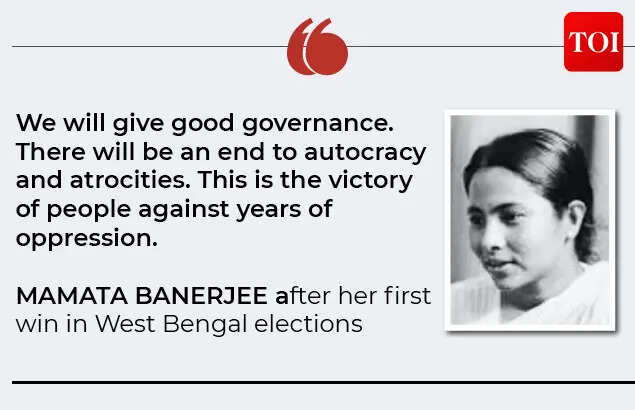
.

.

For over three decades, West Bengal had been governed by the Left Front, first under Jyoti Basu from 1977 to 2000 and then under Buddhadeb Bhattacharjee from 2000 to 2011. Bhattacharjee sought to industrialise the state and attract private investment, but the controversies over land acquisition in Singur and Nandigram weakened the Left’s rural base, paving the way for Mamata Banerjee’s decisive victory in 2011.It was, however, Basu who had built that formidable political edifice in the first place. Serving as chief minister for 23 consecutive years, Basu led the Left Front to repeated electoral victories, establishing one of the longest uninterrupted elected governments.His tenure was defined by sweeping land reforms such as Operation Barga, which strengthened tenancy rights and by the deepening of the three-tier panchayati raj system that decentralised power to rural bodies. In 1996, he was proposed as Prime Minister by the United Front alliance, but the CPI(M) declined to join the government, a decision Basu later described as a “historic blunder.”
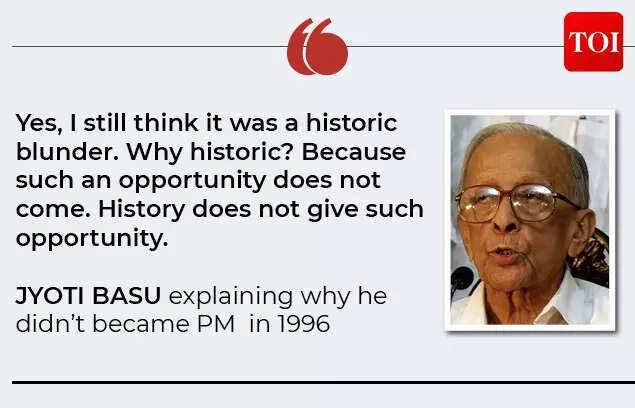
.

.

As West Bengal gears up for the 2026 Assembly elections, understanding the state’s political grammar requires revisiting the legacies of two of its longest-serving chief ministers, Jyoti Basu and Mamata Banerjee, whose contrasting models of governance have shaped the state’s political and economic trajectory.

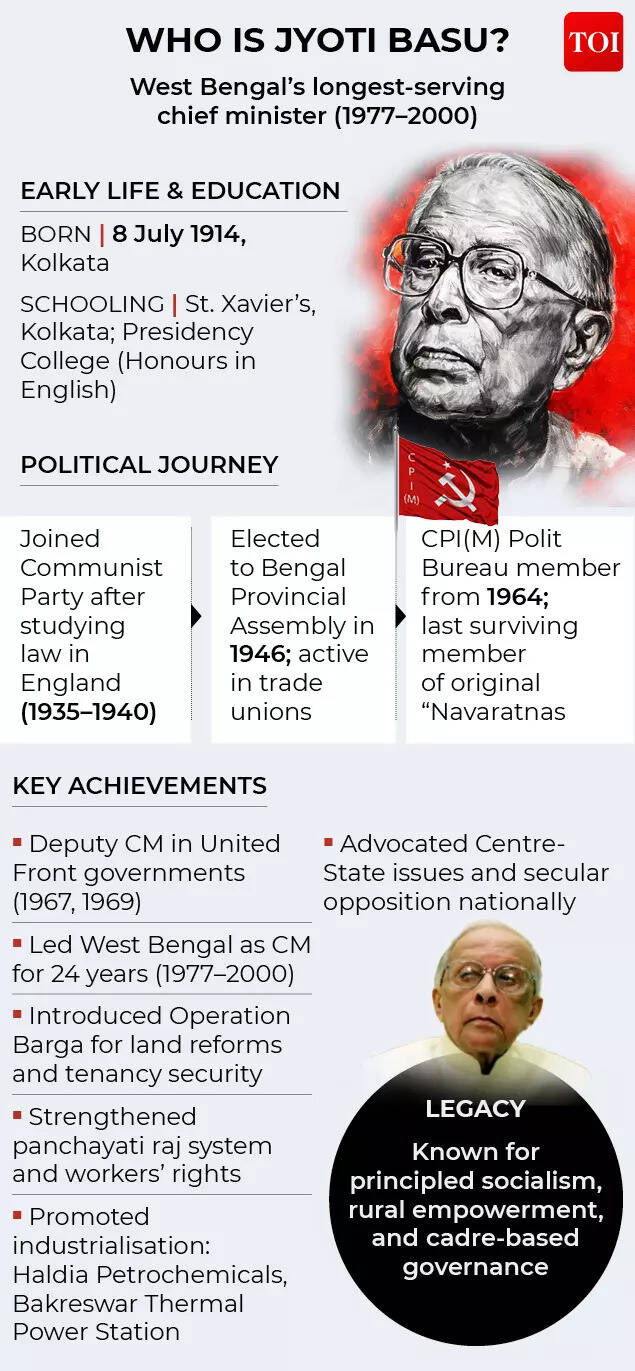
Model I: Structural land reform and cadre consolidation under Jyoti Basu (1977–2000)

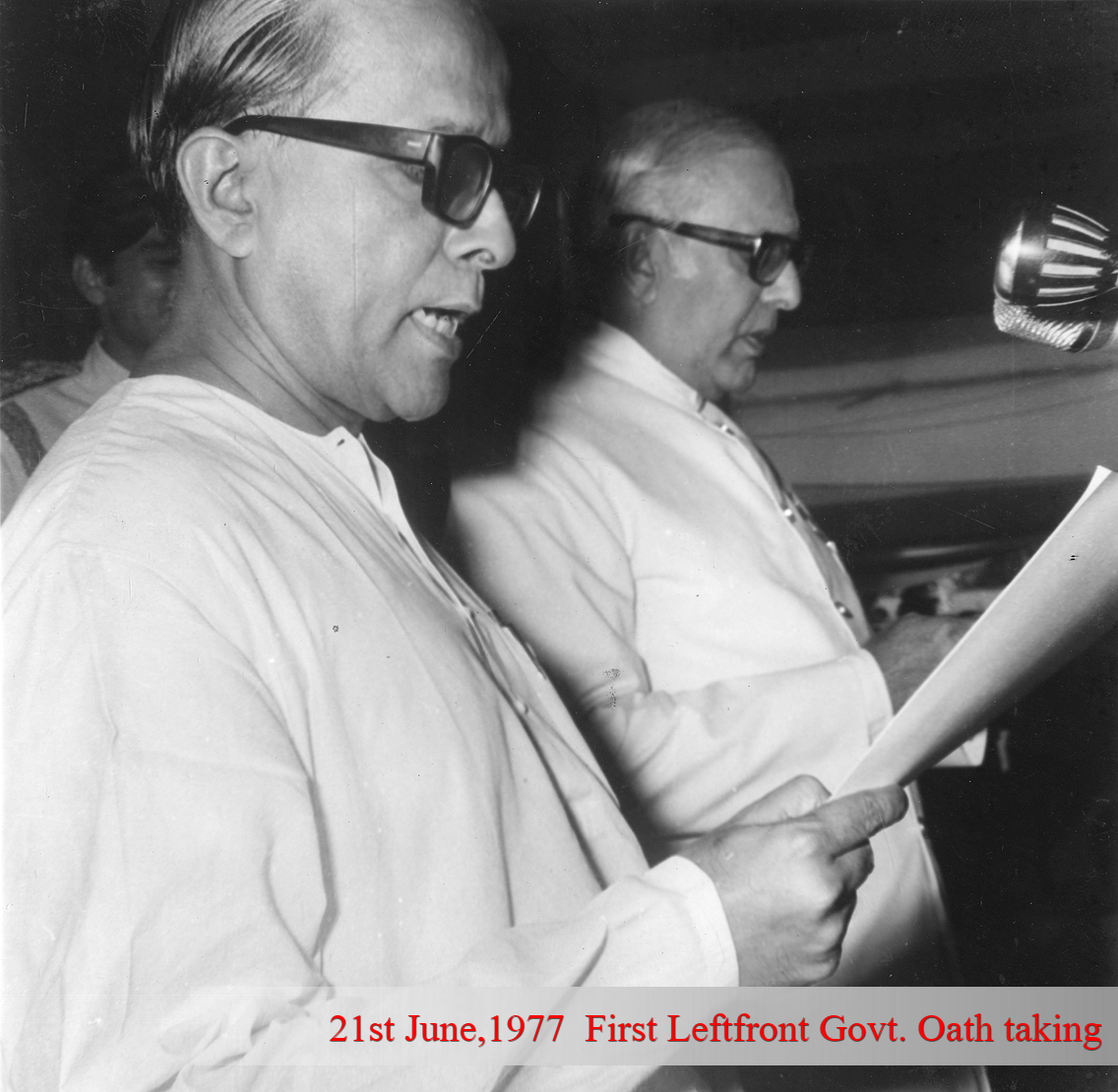
When Jyoti Basu assumed office in 1977, West Bengal was grappling with political instability, food shortages and industrial decline. Over the next 23 years, he built a governance framework anchored in structural agrarian reform and decentralised rural power.

Jyoti Basu taking oath in 1977 (Image/Jyoti Basu Centre for Social Studies and Research)

A defining pillar of his tenure was Operation Barga, a land reform programme that recorded and legally protected sharecroppers, significantly enhancing tenancy security. By the early 1990s, nearly 1.5 million bargadars (sharecroppers) had been registered and millions of acres of ceiling-surplus land were redistributed among the rural poor. Alongside land reforms, Basu strengthened the three-tier panchayati raj system, devolving administrative and financial powers to elected rural bodies. However, Basu’s tenure also faced persistent criticism over industrial stagnation during the 1980s and early 1990s. While land reforms improved rural equity, industrial growth lagged behind western and southern states. Frequent labour strikes and militant trade unionism during the 1980s contributed to the perception of Bengal as industry-unfriendly, leading to companies moving out of the state and slower private investment. By the late 1990s, questions about job creation, urban infrastructure and economic diversification were becoming more pronounced. By the time Basu stepped down in 2000, the Left’s political machinery remained formidable, but the economic anxieties were visible. His successor, Buddhadeb Bhattacharjee, attempted to correct this imbalance through rapid industrialisation, but failed to do so.

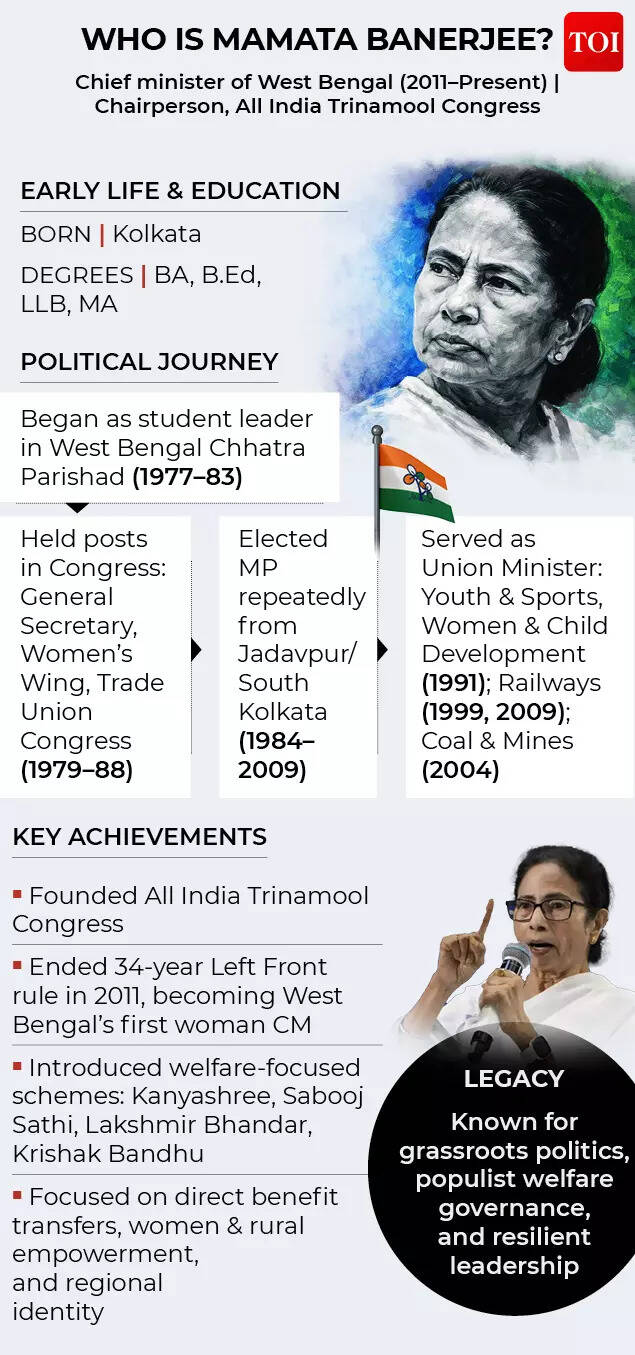
Model II: Income support and welfare-driven rural stabilisation under Mamata Banerjee (2011–Present)

When Mamata Banerjee took office in 2011, she inherited a countryside once reshaped by redistribution but unsettled by industrial conflict. Unlike Basu’s structural reform approach, her governance strategy leaned heavily on targeted welfare schemes, direct benefit transfers and symbolic political messaging centred around “Maa, Mati, Manush.”

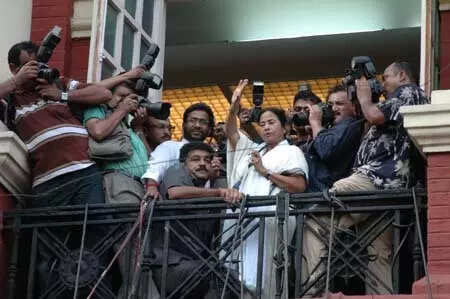
Mamata Banerjee's first day at Writer's building (Image/AITC)

One of her first major decisions was the return of acquired farmland in Singur to unwilling farmers, a move that symbolically reversed the previous government’s industrial land acquisition policy. Over time, her administration shifted from structural land reform to direct financial assistance, most notably through schemes such as Krishak Bandhu. Under the programme, farmers and sharecroppers receive Rs 10,000 per acre annually in two instalments. The scheme now covers over 1.09 crore beneficiaries, with Rs 2,930 crore disbursed in the latest cycle directly into bank accounts. Since its launch in 2019, more than Rs 24,000 crore has been allocated under the scheme. It also provides Rs 2 lakh as social security assistance to families of deceased farmers, benefiting nearly 1.46 lakh households.Where Basu’s reforms focused on strengthening agrarian structures, Banerjee’s model prioritised in providing stability and income support.

Welfare architecture: Institutional reforms vs targeted cash transfers

Under Jyoti Basu: Institutional and structural welfareUnder Jyoti Basu, welfare was embedded within structural reform rather than delivered through direct cash transfers. The emphasis was on land redistribution, tenancy security and decentralised governance through empowered panchayats. Rural employment, agricultural credit expansion and food distribution systems were strengthened through state-backed institutions rather than personalised beneficiary schemes.

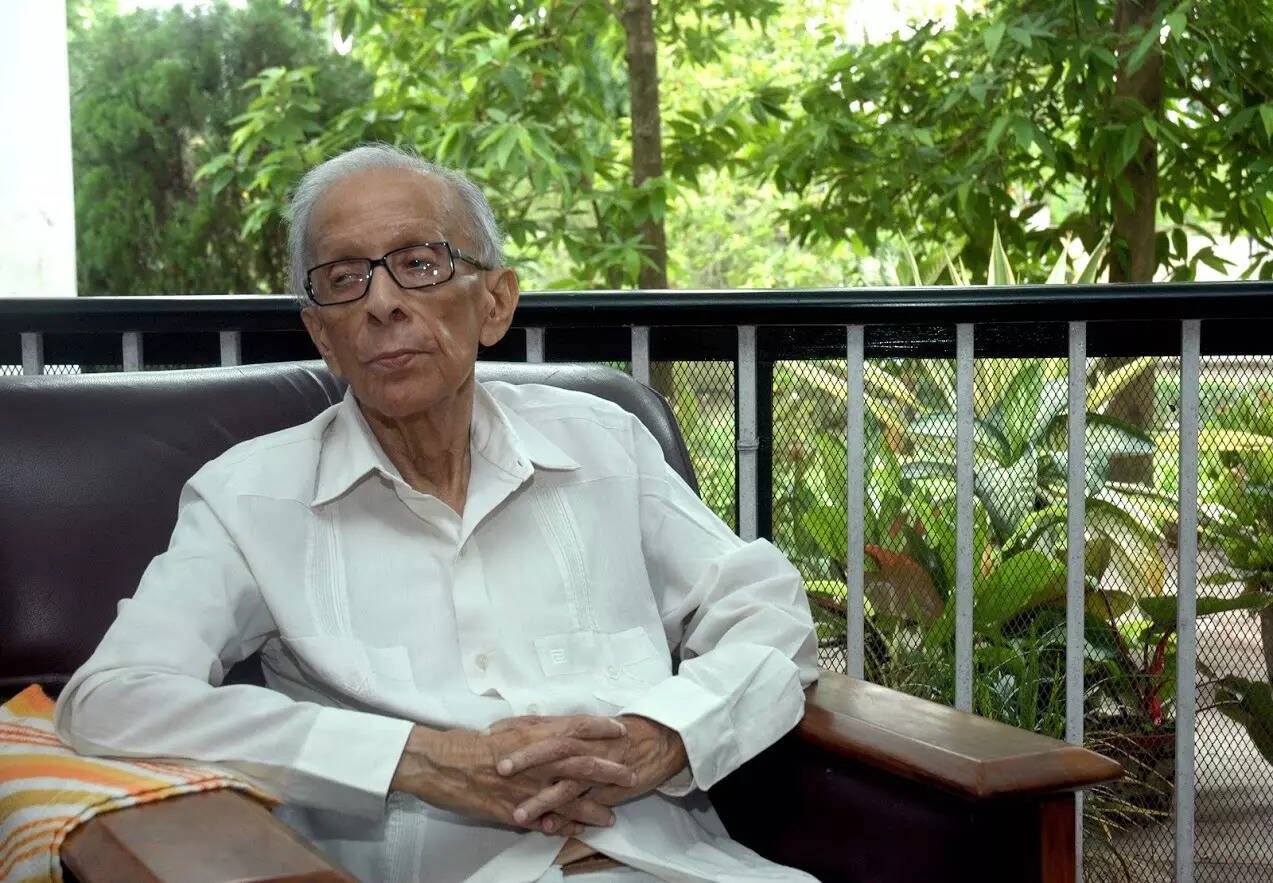
Jyoti Basu

Education and public health spending expanded gradually during the Left Front years, with a focus on government schools, primary healthcare centres and rural outreach. The model relied heavily on institutional delivery and cadre-driven implementation. Welfare, in this framework, was tied to class-based redistribution and long-term social restructuring rather than immediate financial assistance.Under Mamata Banerjee: Direct benefit transfers and beneficiary-centric governanceIn contrast, Mamata Banerjee built a welfare architecture centred on direct financial assistance and identifiable beneficiaries. Her administration rolled out a series of targeted schemes aimed at women, farmers, students and vulnerable households.

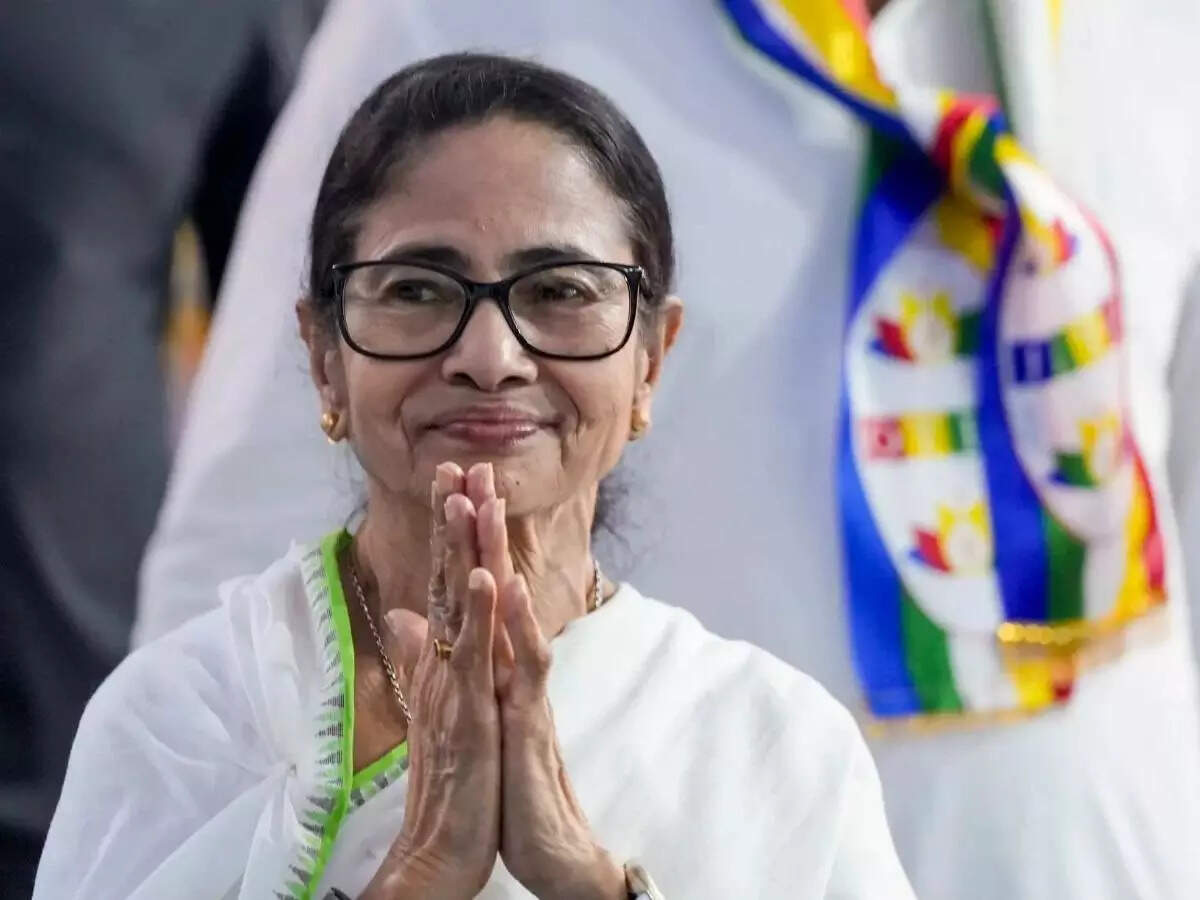
Mamata Banerjee (Image/PTI)

Programmes such as Kanyashree (financial support for girls’ education), Sabooj Sathi (bicycles for students), Lakshmir Bhandar (monthly cash support for women) and Krishak Bandhu (income support for farmers) reoriented the state’s welfare strategy toward predictable cash flows and household-level impact. Benefits were increasingly transferred directly into bank accounts, strengthening the government’s connection with individual beneficiaries.

Left front vs TMC: Education and health models

Jyoti Basu’s era: Expansion in education infrastructure and healthcare restructuringUnder successive Left Front governments led initially by Jyoti Basu, West Bengal saw significant expansion in education infrastructure. Literacy rates rose from 38% in 1977 to 68% in 2001 and further to 77% in 2011.
.

.

In healthcare, the Left initially attempted systemic restructuring. A rural three-tier health model was introduced, linking primary health centres to district hospitals and state-run medical colleges as referral institutions.Infrastructure expanded and budgets were allocated. Infant mortality declined at one of the fastest rates in the country during the latter years of the Left. The seventh Left Front government also launched health insurance schemes covering around 25 lakh workers in the unorganised sector.Mamata Banerjee’s era: Subsidy-driven access and household coverageUnder Mamata Banerjee, education and health policy shifted toward direct household-level support and universal coverage schemes. In education, programmes such as Sikshashree (textbook grants) and Sabooj Sathi (distribution of bicycles to students) aimed to reduce dropout rates and improve mobility for rural students, particularly girls. The emphasis moved from expanding institutions to improving access and retention through targeted benefits.In healthcare, the flagship Swasthya Sathi scheme provides cashless treatment coverage of up to Rs 5 lakh per family and reportedly covers over 2.5 crore households. The scheme positions the state as a primary guarantor of hospital expenses for lower-income families, supplementing national health programmes. Immunisation coverage and key health indicators have continued to improve, supported by both state initiatives and central schemes.

Industry, infrastructure and economy: Structural shifts across two eras

Left Front era: Industrial slowdown and late pragmatismUnder Jyoti Basu, the Left Front inherited an industrial base concentrated in Kolkata, Durgapur, Howrah, Hooghly and the mineral-rich western belt. However, its early industrial policy (1978) prioritised small-scale and cottage industries to generate employment and curb the dominance of large business houses and multinational corporations. New foreign investment was effectively discouraged.Labour militancy, frequent strikes and a perception of an adversarial business climate contributed to industries relocating to western and southern states. Private investment slowed, and Bengal’s share in national industrial output declined over time.A shift came in 1994 when the Left Front announced a liberalised industrial policy welcoming private and foreign investment. Priority sectors included petrochemicals, IT, steel, textiles and tourism. TMC era: Investment outreach, IT expansion and fiscal balancingWhen Mamata Banerjee assumed office in 2011, her government sought to reposition West Bengal as investment-friendly while distancing itself from the contentious land acquisition policies of the late Left period.
.

.

A major recent step was the introduction of the Revocation of West Bengal Incentive Schemes and Obligations like Grants and Incentives Bill, 2025, which scrapped the 2001-era incentive structure introduced under the Left.Her administration has aggressively promoted IT and services. Salt Lake Sector V, often dubbed Kolkata’s “Silicon Valley” hosts around 2,800 IT and ITeS firms, employing roughly 2 lakh professionals as of 2023. The state has also pushed mining projects in coal and shale gas, green technology initiatives, tourism expansion and infrastructure upgrades, including metro rail extensions and airport proposals.

Mamata Banerjee vs Jyoti Basu: Electoral report card

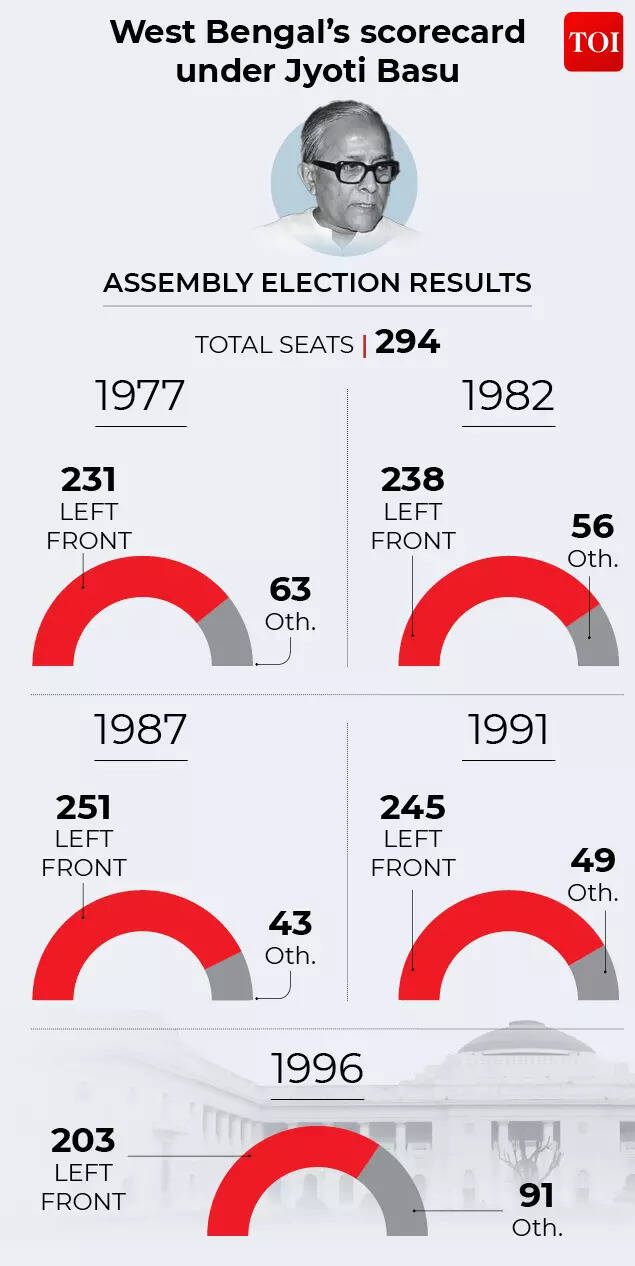
Under Jyoti Basu, the Left Front established one of the longest uninterrupted electoral reigns in Indian politics. Between 1977 and 2000, Basu led the coalition to five consecutive Assembly victories – 1977, 1982, 1987, 1991 and 1996. In each victory, his party had secured stable and often comfortable majorities.
.

.

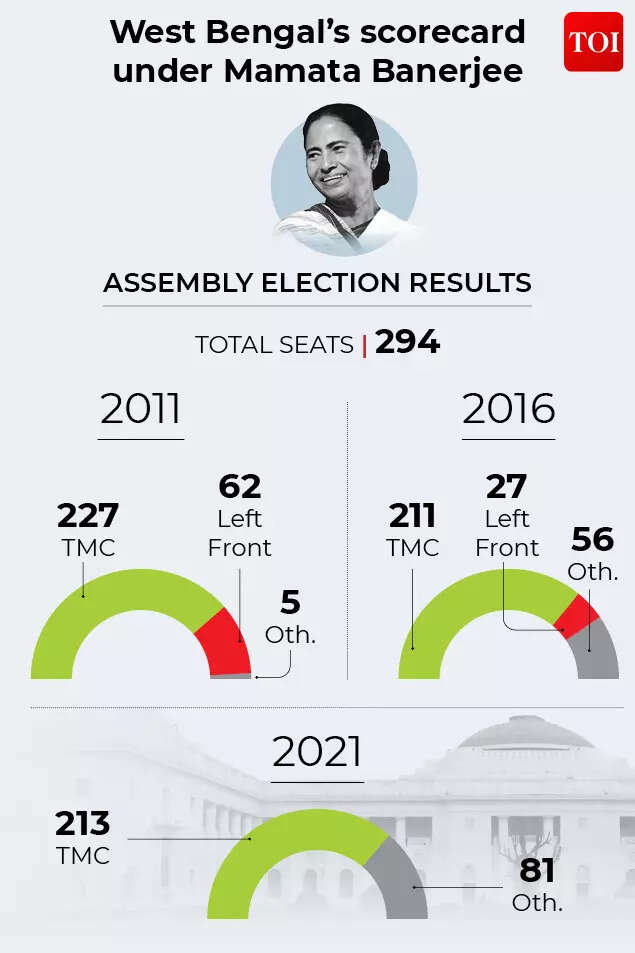
The strength of the Left during this period lay in its deeply embedded rural network, disciplined cadre structure and consolidation of peasant support through land reforms. By the time Basu stepped down in 2000 due to health reasons, the Left’s political machinery was so entrenched that it retained power between 2001 and 2011 under Buddhadeb Bhattacharjee.Basu’s electoral legacy was defined by ideological consistency and organisational discipline. However, by the late 2000s, fatigue within the ruling establishment and unrest over industrial land acquisition eroded the Left’s dominance, setting the stage for political transition.The turning point came in 2011 when Mamata Banerjee and her party, the All India Trinamool Congress, ended the Left Front’s 34-year rule. In that landmark election, the TMC won 184 of 294 seats on its own and, with allies, secured a decisive majority of around 227 seats. Banerjee became the first woman chief minister of West Bengal and the first non-Left leader since 1967.
.

.

Her dominance strengthened in 2016 with an even larger mandate, reinforcing the TMC’s position as the state’s principal political force. In 2021, despite an aggressive campaign by the Bharatiya Janata Party (BJP), Banerjee secured a third consecutive term with 213 seats, a result widely interpreted as a consolidation of her welfare-centric governance model and appeal to regional identity.Unlike the Left’s cadre-based ideological mobilisation, Mamata’s electoral strategy has relied heavily on direct welfare delivery, cash assistance schemes and targeted benefits to women, students and rural households.

Conclusion: Bengal’s next political test

As West Bengal approaches the 2026 Assembly elections, the contrast between these two models has never been sharper.Jyoti Basu institutionalised a cadre-driven, ideology-led governance structure rooted in land reform and class mobilisation. Mamata Banerjee, in contrast, has centralised political authority while expanding direct welfare delivery and targeted income support.The state’s political grammar has shifted: from structural redistribution to beneficiary-based governance and from party organisation to personalised leadership. The next big question is whether Bengal is ready to continue along the path it has chosen or whether 2026 will signal the beginning of another new political chapter?



Source link

Iranian Leaders Killed In Attack: US, Israel wipe out key Iranian leaders in attack blitz; how it may be a tactical blunder


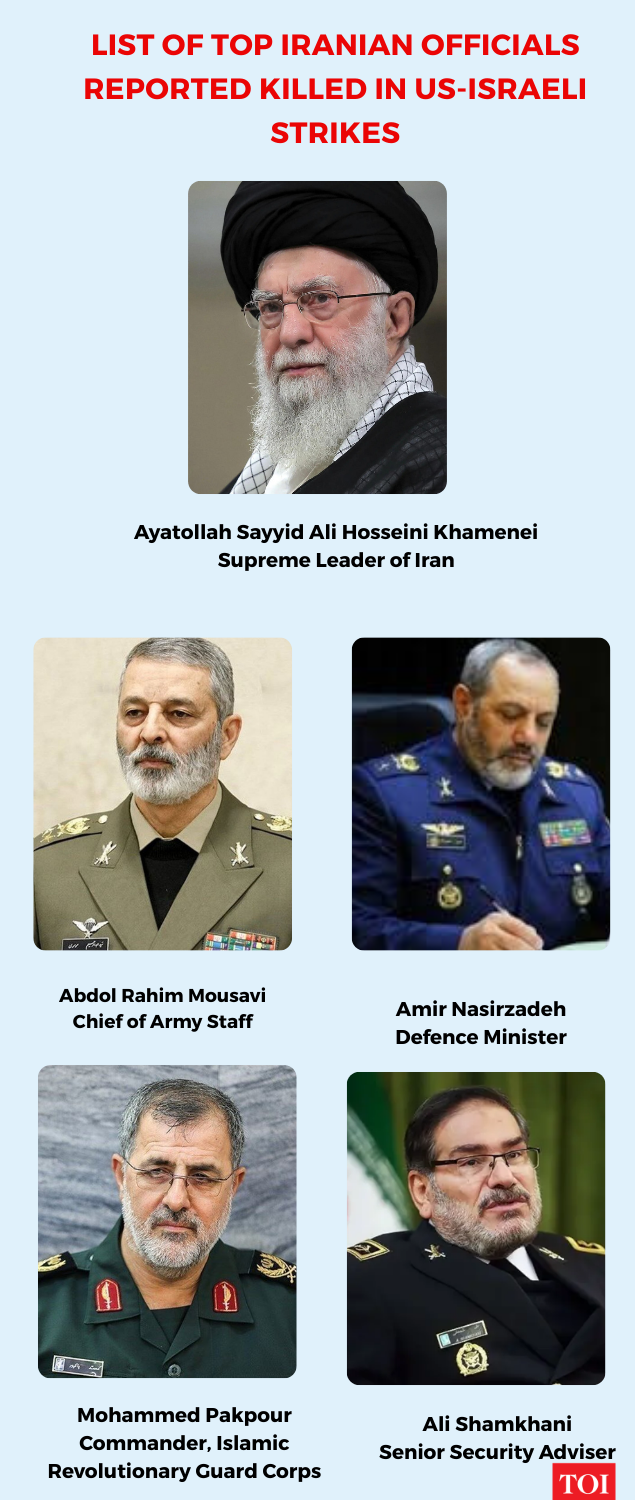
Middle East is burning. US, Israel and Iran are engaged in a military conflict, de-stabilising the whole region. The targeted killing of Iran’s Supreme Leader, Ali Khamenei, by the United States and Israel marked one of the most consequential escalations in the region in decades.In Washington and Tel Aviv, the expectation appears clear: remove the apex of the Islamic Republic’s power structure and the system beneath it will begin to fracture, potentially opening the door to long-sought regime change after more than four decades of Khamenei’s rule.

‘KHAMENEI IS DEAD!’: Trump Declares End Of Iran Supreme Leader In Israel-US Attack

But Tehran’s immediate response suggests a far more complex reality. Iran has moved quickly to signal continuity rather than collapse, activating its constitutional succession mechanism through the assembly of experts and appointing Alireza Arafi as interim Supreme Leader. Even as missiles fly across the region, the state has projected resilience, politically at home and militarily abroad.Now the question is, what was intended as a decapitation strike, will it backfire?

-

Will regime change strengthen the system?

Iran’s economy is shattered. Dissatisfaction towards the current dictatorial set up is high, especially after the crackdown on protestors left thousands dead and under arrest earlier this year. Given this scenario, regime change seems smooth. However, it’s not.The Islamic Republic was not built around one man alone. Over 47 years, it has evolved into a layered system of clerical oversight, security institutions, patronage networks and ideological enforcement mechanisms designed precisely to withstand external shocks. A successor can be appointed, military commanders replaced, and governance routines restored. Air power, however devastating, does not easily unravel a political order that has institutionalised succession and embedded itself deeply within the state’s bureaucracy and security apparatus.In fact, external assault may complicate, rather than hasten, regime change. Even weakened and unpopular at home, the Islamic Republic retains tools of coercion and mobilisation. The Islamic Revolutionary Guard Corps remains intact, and its regional proxy architecture, from Hezbollah in Lebanon to the Houthis in Yemen, provides Tehran with escalation options that can raise the costs of war for the United States and Israel.

-

Short-term retaliation across Iraq, Syria or the Red Sea could transform a bilateral confrontation into a regionwide conflict, pressuring Gulf states and global markets. Such dynamics may buy the regime time, shift diplomatic calculations, and make outside powers wary of pushing for outright collapse.

Are US-Israel strikes pushing Middle East to war?

What began as a targeted strike has rapidly metastasised into a regionwide confrontation. In the days following the killing of Ali Khamenei, Israel and the United States expanded air operations across Iran, but the response has not been confined to Iranian territory. Hezbollah rockets from Lebanon, missile strikes on Gulf targets, explosions in Dubai and Manama, and attacks on shipping in the Strait of Hormuz signal that the conflict is no longer bilateral. With a Saudi oil refinery ablaze, smoke rising near the US embassy in Kuwait, and even a drone strike on a UK base in Cyprus, the theatre of war has widened dramatically. The very escalation intended to deter Tehran appears instead to have unlocked multiple fronts.For Washington and Tel Aviv, the strategic gamble is beginning to look perilous. The entry of Hezbollah, confirmed by Iran’s Islamic Revolutionary Guard Corps, risks turning the confrontation into a prolonged, multi-actor war stretching from Lebanon to the Gulf. Gulf monarchies that host US forces now find themselves under direct threat, with key energy infrastructure targeted and commercial aviation disrupted. Far from isolating Iran, the strikes have created a shared vulnerability across the region, raising oil prices, paralysing trade routes and amplifying diplomatic pressure for de-escalation. The chaos undercuts the narrative of swift, decisive action and instead projects instability that could erode allied confidence.Politically, the offensive may also be backfiring. Calls by US President Donald Trump and Israeli Prime Minister Benjamin Netanyahu for Iranians to overthrow their government have coincided with a surge in nationalist rhetoric in Tehran. Iranian leaders have framed the attacks as a broader assault on sovereignty and the Muslim world, reinforcing internal cohesion at a moment of crisis.

Nuclear risks and international fallout

Strikes on Iran’s nuclear infrastructure have introduced a layer of danger that extends far beyond the battlefield. Facilities such as Natanz, where the International Atomic Energy Agency has previously reported uranium enrichment at 60 per cent purity, are not conventional military targets. Damage to enrichment halls, fuel production units or storage sites carries the risk of radiological leakage, particularly in a region dotted with operational nuclear reactors and research facilities. IAEA chief Rafael Mariano Grossi has warned that further attacks could trigger a radiological release with “serious consequences,” potentially requiring evacuations and sparking cross-border contamination fears. Even if contamination remains contained, the perception of nuclear insecurity alone can rattle global markets and heighten public anxiety across the Gulf.Beyond safety concerns, the diplomatic architecture surrounding Iran’s nuclear programme is under acute strain. Military escalation sidelines inspection regimes and undermines whatever limited oversight mechanisms were still functioning. If Tehran responds by curtailing cooperation or accelerating enrichment, the confrontation could shift from a conventional military clash to an overt nuclear crisis. That, in turn, would widen geopolitical divisions, complicate UN diplomacy, and sharpen rivalry among major powers. Instead of neutralising a proliferation risk, the current trajectory may weaken monitoring safeguards and increase the likelihood of a more opaque and dangerous nuclear standoff.


Source link

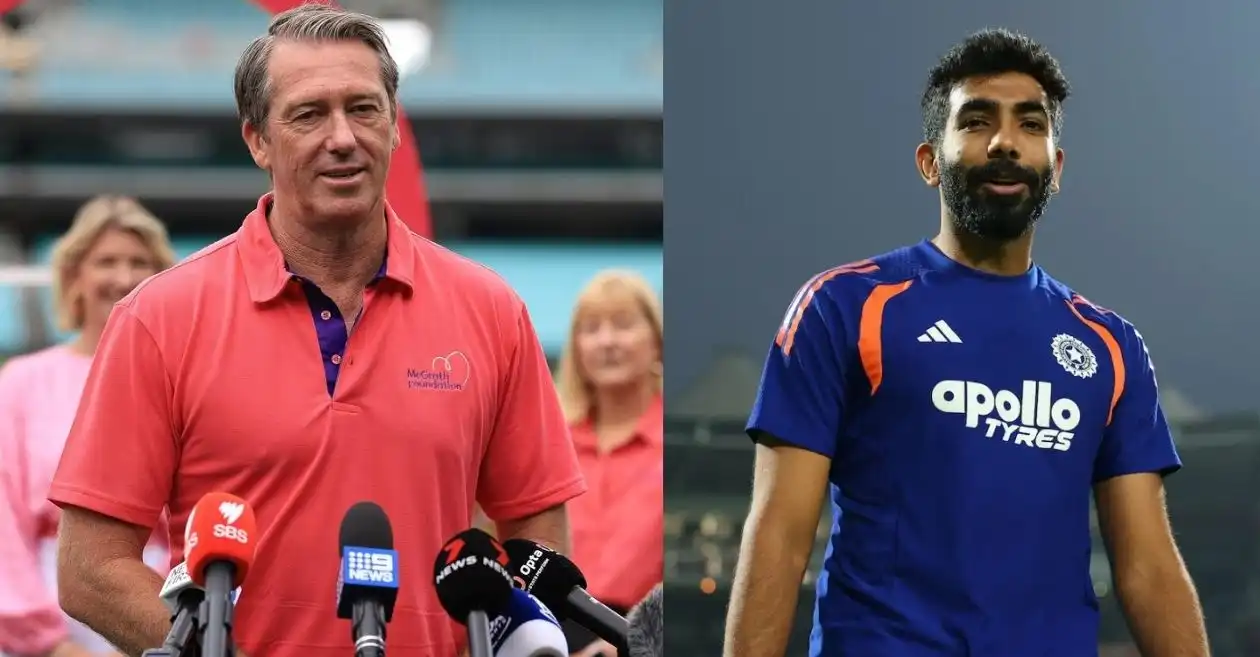
T20 World Cup 2026: Glenn McGrath explains why Jasprit Bumrah will sizzle in India’s semi-final clash against England


Defending champions India sealed their place in the semi-finals of the T20 World Cup 2026 with a statement win over West Indies in what was virtually a knockout clash on March 1. After a shaky start to their Super 8 campaign, India regrouped brilliantly to finish second in Group 1 with two wins and one defeat.

At a packed Eden Gardens, the Men in Blue chased down a daunting 196-run target — their highest successful chase in T20 World Cup history. The night belonged to Sanju Samson, whose unbeaten 97 off just 50 balls turned the game on its head. Calm under pressure and fearless in stroke play, Samson guided India home with five wickets to spare, sending fans into a frenzy.

With momentum on their side, India now prepare for a blockbuster semi-final clash against England on March 5 at the iconic Wankhede Stadium in Mumbai.

Glenn McGrath on why Jasprit Bumrah will be a key for India in the semifinal clash against England

Ahead of the much-anticipated showdown, Australian pace legend Glenn McGrath has thrown his weight behind India’s premier fast bowler Jasprit Bumrah, calling him a ‘big-game player’ who thrives under pressure. McGrath’s words carry weight. Known for his own mastery in ICC knockouts, the former Australian great understands what it takes to deliver when the stakes are highest. According to him, Bumrah possesses that rare quality of elevating his performance when the spotlight shines brightest.

“I think Jasprit is a big-game player. Sometimes in the big games, these players lift from their normal game. Not saying the focus is not there, but they really love those big moments, big games. I’ve got total faith in Bumrah when it comes to big matches,” McGrath said, as quoted by India Today.

Bumrah has already played a crucial role in India’s campaign, striking at vital moments and keeping batters guessing with his pinpoint yorkers and deceptive slower deliveries. On a batting-friendly surface like Wankhede, his ability to nail yorkers at the death and break partnerships in the powerplay could prove decisive.

India’s pace spearhead has consistently delivered in high-pressure tournaments, and with England boasting an explosive batting lineup, the responsibility on his shoulders will be immense. Yet, as McGrath suggested, this is precisely the kind of occasion Bumrah relishes.

Also READ: T20 World Cup 2026 Semifinals: Date, Match Time, Venue, Broadcast and Live Streaming details

Wankhede set for another India-England classic

The semi-final between India and England promises to be a cracker. Scheduled for March 5 at Mumbai’s iconic Wankhede Stadium, the clash is expected to be a high-scoring thriller given the venue’s history of run-fests.

Interestingly, this will mark the third T20 World Cup where these two powerhouses meet in the semi-finals, adding another fiery chapter to an already intense rivalry. Both sides are packed with match-winners capable of turning the contest within a few overs.

England’s aggressive brand of cricket, combined with India’s depth in both batting and bowling, sets the stage for a mouth-watering encounter. With the pitch likely to favour stroke-makers, bowlers who can handle pressure — especially in the death overs — will be worth their weight in gold.

Also READ: T20 World Cup 2026: Sanju Samson’s wife Charulatha shares heartwarming posts after star Indian opener’s heroics against West Indies


Source link

PV Sindhu returns to India after being stuck in Dubai amid Middle East conflict | Badminton News


'Back home and safe': PV Sindhu returns to India after being stuck in Dubai amid Middle East conflict
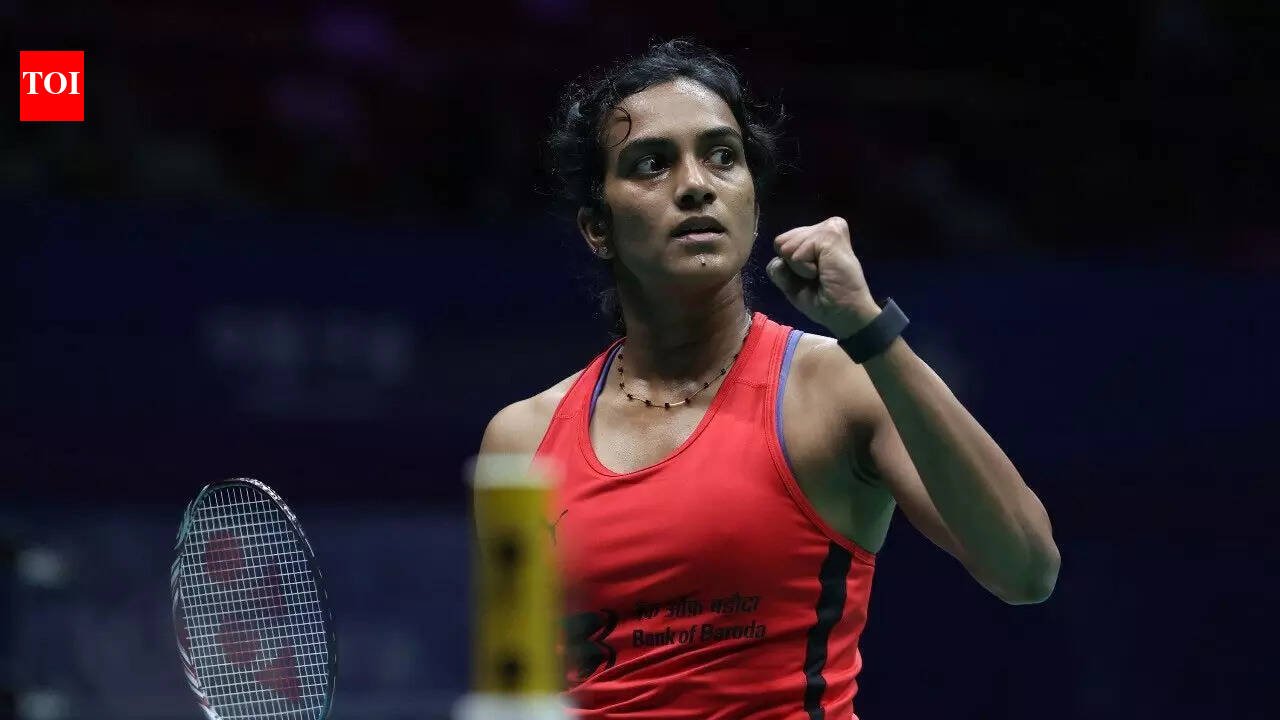
PV Sindhu (Image credit: PTI)

NEW DELHI: Indian badminton ace PV Sindhu has safely returned to India after a tense few days in Dubai, where she was stranded due to the escalating conflict in the Middle East.Sindhu confirmed her return through a post on social media, sharing that she is back home in Bengaluru after an anxious period abroad.

Indian cricket team leaves from Kolkata, fans go mad for Sanju Samson

“Back home in Bangalore and safe. The last few days have been intense and uncertain, but I’m truly grateful to be back. A heartfelt thank you to the incredible ground teams, Dubai authorities, airport staff, immigration, and every single person who stepped up and took such good care of us during a very difficult time. The empathy and professionalism meant more than words can say. For now, it’s time to rest, reset, and figure out the next steps,” Sindhu posted on X (formerly Twitter).Sindhu and her support staff — including Indonesian coach Irwansyah Adi Pratama — had been stranded in Dubai. They reportedly experienced a close call after an explosion occurred near the area where they were staying.Two-time Olympic medallist Sindhu is set to to miss the All England Championships, which begin on Tuesday. The Indian star was scheduled to take on Thailand’s Supanida Katethong in the opening round.


Source link

US-Israel-Iran war hits oil supplies: How India is preparing for the economic fallout


US-Israel-Iran war hits oil supplies: How India is preparing for the economic fallout
Refiners have begun scouting for alternative crude sources to offset supplies affected by the conflict in West Asia. (AI image)

India is looking at several emergency measures to tackle the risk of fuel shortages if shipping through the Strait of Hormuz remains affected for an extended period. Strait of Hormuz in the Persian Gulf is a prominent and vital maritime route for transmit of oil and goods. According to people aware of discussions between the government and industry stakeholders, the options under consideration include curbing exports of petrol and diesel, stepping up crude purchases from Russia, and implementing demand-side steps such as rationing LPG supplies.Even as the Centre and oil firms maintained that there is no immediate scarcity, refiners have begun scouting for alternative crude sources to offset supplies affected by the conflict in West Asia. The geopolitical strain has pushed up global oil and gas prices. For India, which relies heavily on imports, this surge translates into a higher import bill and adds to inflationary pressures.

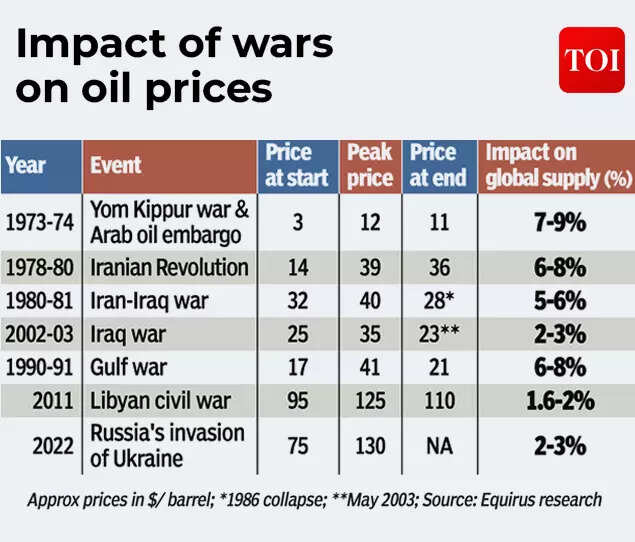
Impact of wars on oil prices

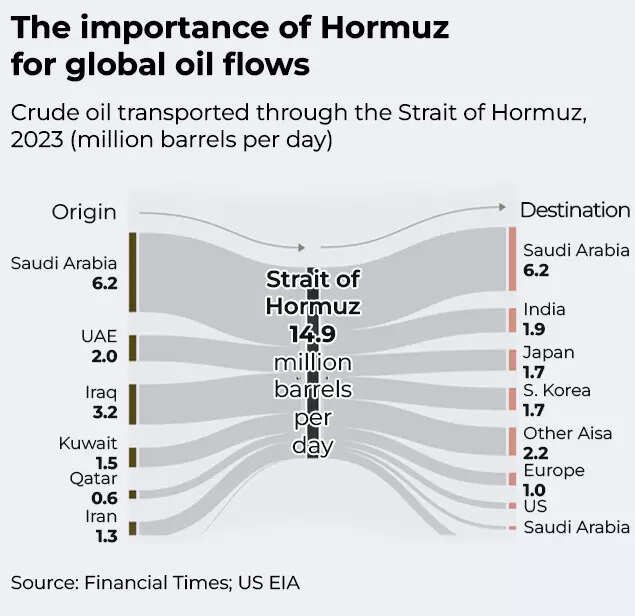
India depends on overseas purchases for almost 90 per cent of its crude oil needs. It also relies on imports to meet around 60–65 per cent of its LPG consumption and roughly 60 per cent of its LNG requirement. A significant portion of these supplies originates in West Asia and moves through the Strait of Hormuz, a vital corridor that faces the risk of disruption amid the ongoing conflict.

India to curb oil exports?

With concerns mounting over potential disruptions in crude oil availability, the government is considering measures to encourage refiners to channel a larger share of automobile fuels and LPG toward the domestic market by trimming exports, according to a TOI report. It is also exploring ways to step up cooking gas output to ensure uninterrupted supplies for local consumers.Currently, India sends abroad roughly one-third of its petrol production, about a quarter of its diesel output, and nearly half of the aviation turbine fuel it produces. If necessary, refiners can also channel excess ATF into alternative product streams, they said.

Importance of Hormuz for global oil flows

Data from the International Energy Agency shows that 5.9 per cent of India’s petroleum output was exported in 2023. During the period from April to December 2025, the country shipped petroleum products worth nearly $330 billion, with key markets including the Netherlands, the UAE, the US, Singapore, Australia and China. In 2024, petroleum gas exports totalled $454 million, largely destined for Nepal, China and Myanmar. The Reliance Industries Limited refinery at Jamnagar remains the country’s biggest exporter.An executive at an oil company said refiners have already initiated discussions with traders to secure capacity amid concerns over a potential blockade of the Strait of Hormuz. By Monday, global markets were unsettled following QatarEnergy’s decision to halt gas shipments.

LNG and LPG disruptions

The most pressing area of concern is LPG, as the country relies on imports to meet close to two-thirds of its consumption and keeps relatively limited stockpiles. Around 85–90 per cent of LPG imports originate from Gulf nations.Industry assessments indicate that existing inventories, including domestic storage and cargoes that have already passed through the Strait of Hormuz, would be sufficient for less than a fortnight if fresh supplies are halted. To prepare for such a scenario, Indian Oil Corporation, Hindustan Petroleum Corporation Limited, and Bharat Petroleum Corporation Limited have started raising LPG production at select refineries integrated with petrochemical units.Officials are also examining focused demand-management strategies, including the possibility of rationing LPG for consumers who have access to alternate cooking fuels, particularly in rural regions, the people said. India’s crude oil stockpiles are estimated to cover around 17–18 days of consumption, while reserves of refined products such as petrol and diesel could last approximately 20–21 days.LNG inventories are sufficient for about 10–12 days. Without additional shipments through the Strait of Hormuz, these reserves would gradually diminish. Increasing purchases of Russian crude is another option being evaluated, sources told ET.Another industry executive noted that while any disruption could pose short-term challenges, Indian companies maintain a diversified LNG sourcing portfolio, including supplies from the US, with vessels routed via the Suez Canal.“Even if there is a force majeure, we have other sources of supply, which we can tap. Besides, no one is going to stop supplies indefinitely,” the executive said. Although oil and gas prices climbed on Monday, efforts remain focused on keeping supply chains operational.

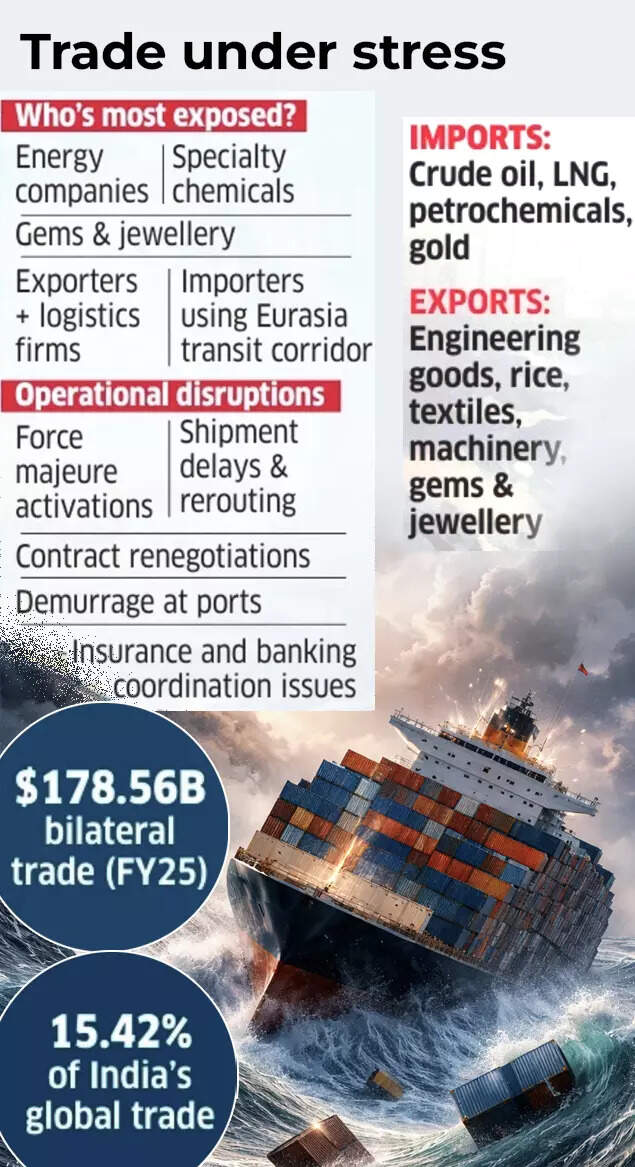
Trade under stress

No rise in petrol, diesel prices expected

Officials indicated that pump prices of petrol and diesel are unlikely to be revised upward in the near term. Oil marketing companies continue to adhere to a calibrated pricing strategy, absorbing losses when international rates climb and recovering margins when they ease. Retail fuel prices have effectively remained frozen since April 2022.On a day when Iranian drone strikes damaged sections of a Saudi Aramco refinery and QatarEnergy, the world’s largest LNG producer, announced a temporary halt to exports, Petroleum Minister Hardeep Singh Puri convened a meeting with senior officials and oil company representatives to review the status of crude and gas supplies.“We are closely tracking the fast-changing developments and will take every necessary measure to maintain both the supply and affordability of key petroleum products across the country,” the oil ministry said in a message posted on X.

Measures for Exporters

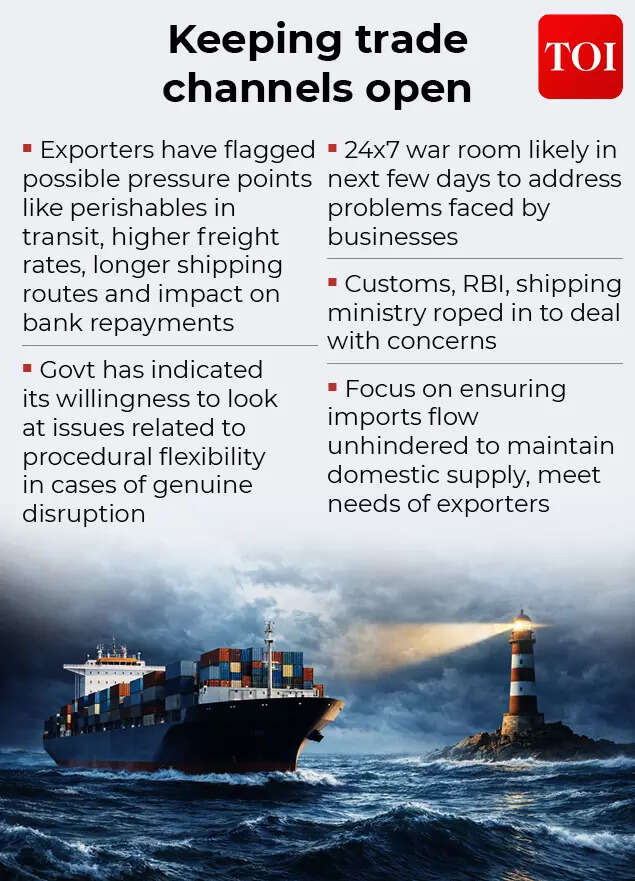
The government has sought to reassure exporters, saying that it stands prepared to extend necessary support and introduce flexible measures to ease trade operations in view of the uncertainty stemming from tensions in West Asia.At a meeting held in the commerce department and chaired by special secretary Suchindra Misra and DGFT Lav Agarwal, exporters highlighted several areas of concern.

Keeping trade channels open

These included risks to perishable consignments already in transit, escalating freight costs, demurrage charges, rerouting of shipments leading to longer transit times, dependence on imported inputs for exports, and potential strain on loan repayments to banks.According to an official statement, authorities are considering setting up a monitoring mechanism or round-the-clock control room to improve inter-agency coordination and swiftly address emerging challenges. The government reiterated its commitment to facilitating trade and signalled openness to granting procedural relaxations in instances of genuine disruption. It also indicated that it would work closely with customs officials to ensure timely clearances and coordinate with banks and insurance companies to ease operational bottlenecks.


Source link

Access Denied


Access Denied

You don’t have permission to access “http://www.ndtv.com/world-news/iran-israel-war-steve-witkoff-fox-tv-interview-why-did-us-israel-attack-iran-tehran-nuclear-programme-enriched-uranium-11162113” on this server.

Reference #18.cdf5d217.1772522430.7311d231

https://errors.edgesuite.net/18.cdf5d217.1772522430.7311d231


Source link