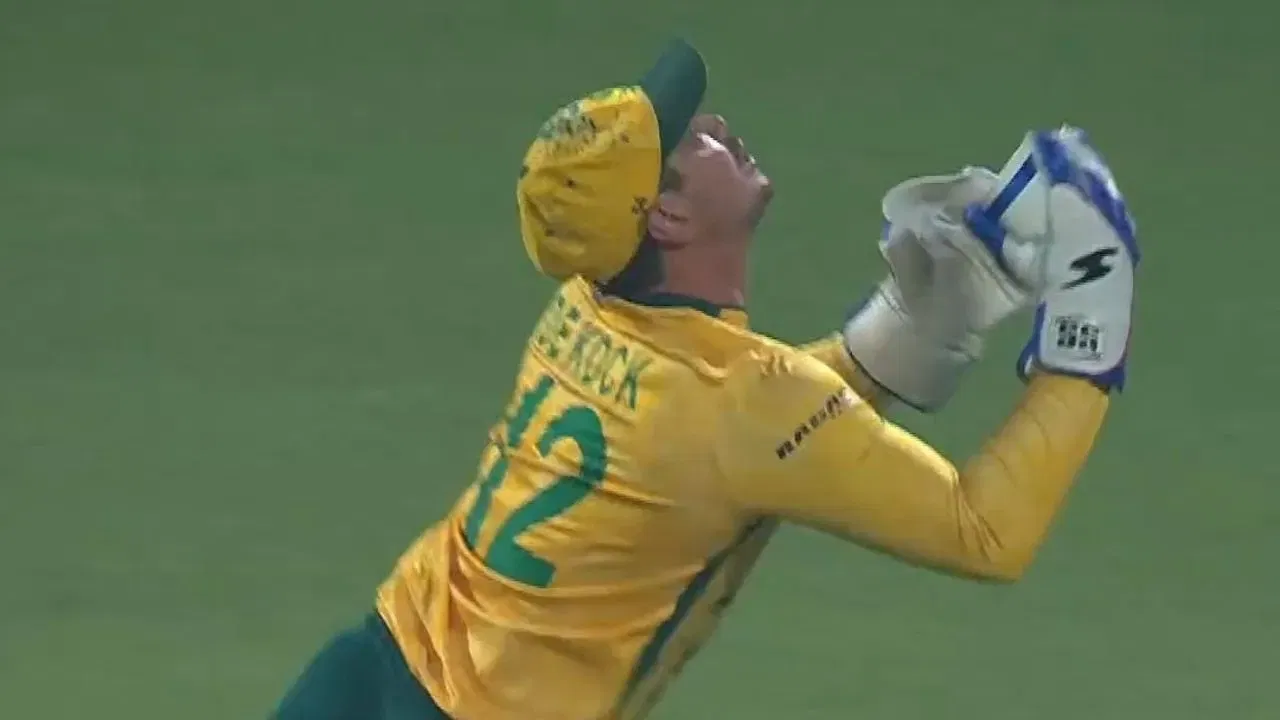
Quinton de Kock’s heart-out effort went in vain. They covered a good amount of ground to take a stunning catch. But in the end, it was a missed catch. After running near the boundary rope, from the keeping spot, the wicketkeeper threw his body into the air to catch the ball. If he were able to take the catch, then South Africa could have dismissed New Zealand opener Finn Allen early in the second innings.
Kagiso Rabada, the pacer, was hoping to watch a stunner. But he had turned his back as the ball bounced from the fingertips of de Kock. The incident happened in the second over of the second innings of the first semifinal of the ongoing T20 World Cup 2026 at the Eden Gardens in Kolkata.
The incident took place in the first over of Kagiso Rabada, and the second over of the second innings. New Zealand was then with only 12 runs, with their openers, Finn Allen and Tim Seifert on the crease. While Seifert was batting on 12, Allen had yet to score his first run of the night.
The catch miss perhaps mostly because of the confusion between Quinton de Kock and Dewald Brevis, as both of them went for the catch. Measuring the distance between the ball’s trajectory line and the position of the fielders, Brevis was nearer than the wicket keeper.
But it was Quinton de Kock who eventually went for the catch, and Brevis was then only a spectator. If the wicketkeeper was able to successfully pull off the stunner, then no one would blame him. But as the chance dropped, de Kock will have to take the responsibility for the action he took.
A moment of confusion between Quinton de Kock and Dewald Brevis resulted in the catch being missed
After the conclusion of the momentum, de Kock and Brevis exchanged some words with each other as well. It was not clear what they were told to each other, but the reaction of the bowler, Kagiso Rabada was describing the whole story. Under disappointment, he was shaking his head, and then turned back for the next delivery.
The drop catch can result in costing the match as well for the South Africa cricket team, who had been undefeated before the Semi-finals of the T20 World Cup 2026.
With an extra lifeline, both of the Kiwi openers registered a half-century each. Tim Seifert departed first, after scoring a well-earned 58 off 33 with seven 4s and a couple of 6s.
Before heading back towards the pavilion, for the first wicket stand, Allen and Seifert stitched a partnership of 117 runs, which took New Zealand on the doorstep to the Final of the T20 World Cup 2026.
South African bowlers tried their best to stop the openers, but their efforts mostly remained ineffective.
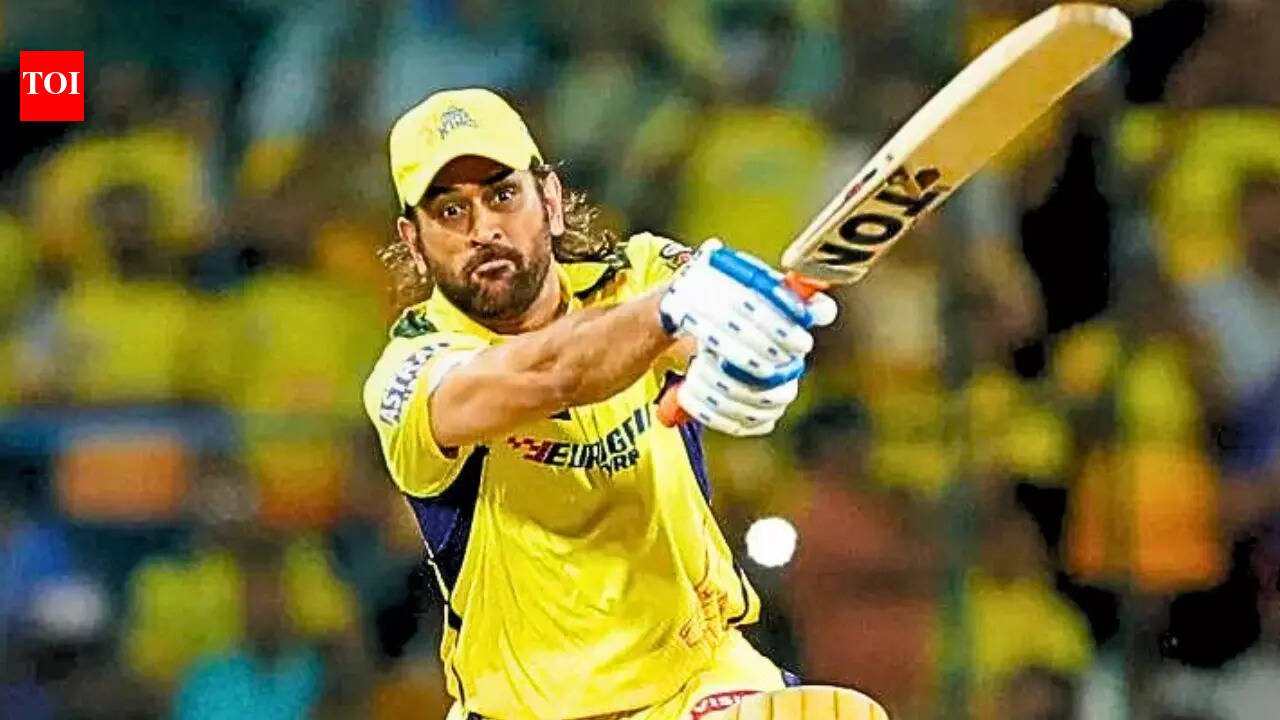
Former Indian men’s cricket team captain MS Dhoni has been fined Rs 1000 for overspeeding in Ranchi after his car was caught breaking traffic rules near his home. The city’s automated traffic monitoring system recorded the vehicle going above the speed limit, and an e-challan was issued under Section 183 of the Motor Vehicles Act.
IPL 2026: RCB confirm their home venue for upcoming edition
Though it was a minor offence, anything involving the former India captain quickly grabs attention online.Also See: SA vs NZ Live Score T20 World Cup SemifinalThis comes shortly after another issue involving Dhoni. The Jharkhand State Housing Board recently sent him a notice over the alleged misuse of a residential plot on Harmu Road in Ranchi. Officials believe the land, which was meant only for housing, may have been used for commercial purposes. The property is where Dhoni once lived before moving to his current house on Ring Road.Meanwhile, Dhoni is focused on cricket again. With IPL 2026 around the corner, he has already started training with Chennai Super Kings. The team is hoping for a turnaround after a disappointing 2025 season, where they finished last with 10 losses in 14 matches.Now 44, Dhoni was retained under the uncapped player rule for Rs 4 crore. He may not bat high up the order anymore, but he still plays an important finishing role. There are reports suggesting that he may not play all the matches in CSK’s season this time.Last season, he scored 196 runs in 14 matches at a strike rate of 135.17, mostly in quick late-innings knocks. Beyond the numbers, his experience and leadership remain key as Chennai aim for a fresh start in IPL 2026.
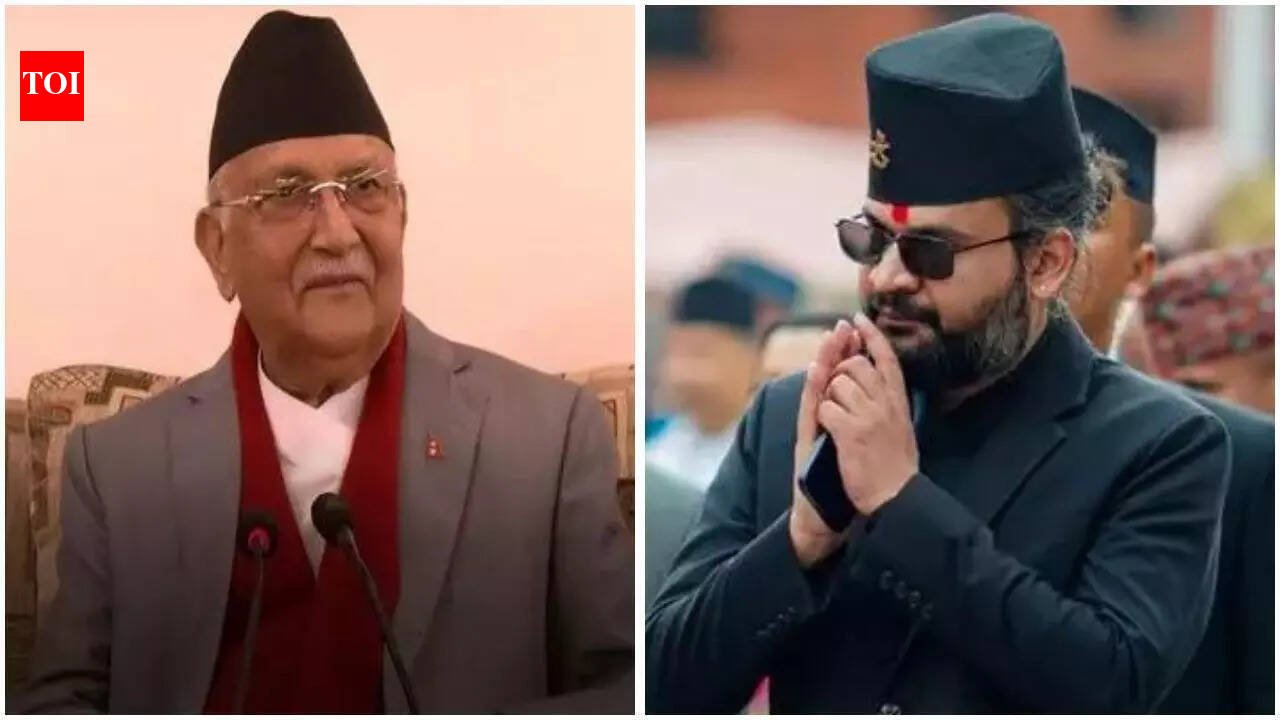
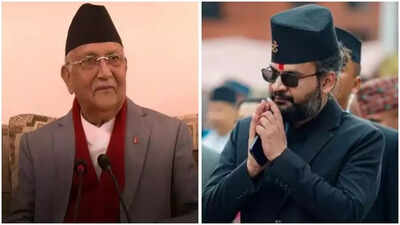
Pitted against Balen, Oli faces litmus test of 50-year-old career
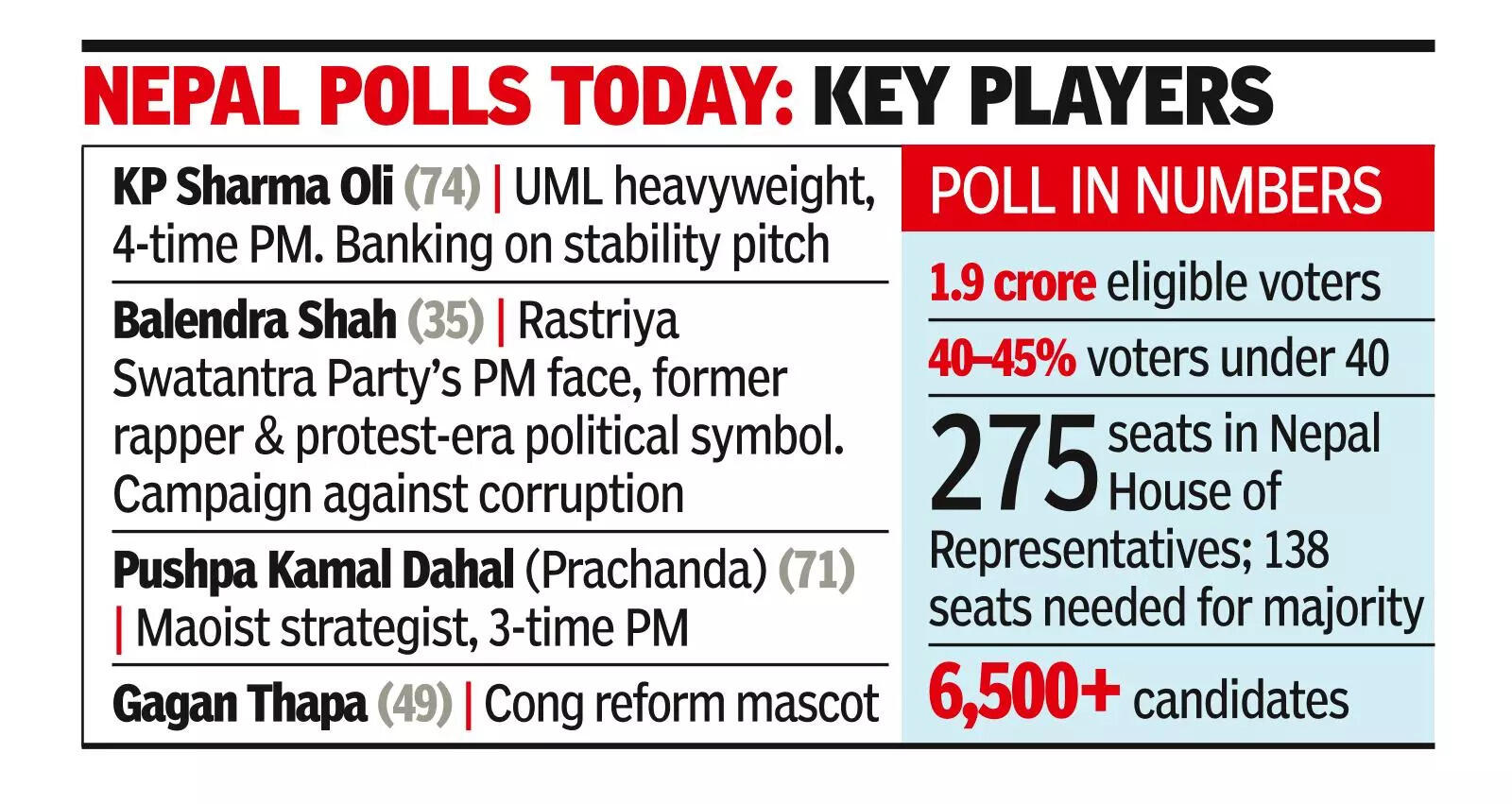
KATHMANDU: As Nepal votes on Thursday, a generational shift has reshaped the political mood in the Himalayan nation. In Kathmandu and other cities, many Gen Z voters – the cohort that toppled the KP Sharma Oli govt and propelled figures like the 35-year-old (Balen) into prominence – have grown impatient with Nepal’s traditional leadership. Yet Oli remains one of the most enduring faces of Nepal’s political establishment.Even after years of turbulence, Oli commands loyalty in Jhapa-5, the constituency along eastern Nepal’s border with India that has anchored his national career. This time though Balen has chosen to challenge him in a direct contest, as if to prove a point.Born in 1952, Oli came of age during Nepal’s Panchayat era, when political parties were banned — in 1970, as a teenage communist activist opposing the monarchy’s partyless system. Arrested in Oct 1973 for his role in the Jhapa rebellion and anti-monarchy activities, he spent 14 years in prison, four of them in solitary confinement. Decades later, the former dissident would become one of the most powerful figures in the very establishment he once fought.
Those years shaped his political instincts. “Leaders who came through Panchayat-era prisons developed a hard view of politics,” a political analyst told a Nepali daily in 2018. “They believed power had to be exercised decisively because they had seen how easily it could be suppressed.”After the 1990 People’s Movement restored multiparty democracy, Oli entered open politics through the Communist Party of Nepal (Unified Marxist-Leninist). In parliament, he quickly gained a reputation for blunt rhetoric and biting humour. A Kathmandu newspaper wrote in 2014 that Oli approached debate “as a contest of endurance and wit rather than quiet compromise”, often using sarcasm to unsettle opponents.Ever since, he has remained a prominent figure in Nepal’s unstable coalition politics.His national breakthrough came in 2015, when Nepal adopted a new constitution and relations with India deteriorated sharply. Protests along the southern border disrupted the flow of fuel, medicines and essential supplies into the landlocked country. The shortages lasted months and were widely seen in Nepal as an unofficial blockade by India. Oli cast the crisis as a question of sovereignty and national dignity, a message that resonated. The nationalist sentiment that followed helped a left alliance sweep the 2017 elections, bringing him back to office with a rare parliamentary majority.But the stability he promised proved short-lived. Facing dissent within his own party, Oli dissolved parliament in Dec 2020. Nepal’s Supreme Court reinstated it. In May 2021 he dissolved it again, triggering another constitutional confrontation that eventually forced him out of office at that time. “A leader who once spent years in prison resisting state authority was now accused of pushing constitutional limits to retain power,” a constitutional scholar wrote in 2021.Oli returned to office again in 2024 as part of a coalition government and was PM during the deadly Gen Z protests last Sept. Many in Nepal believed that his resignation after the protests would end his political career. Instead, Oli has returned to the ballot from Jhapa-5, a reminder of the resilience that has defined his five-decades-old career.A leader who survived prison, political upheaval and repeated challenges to his authority, he now faces voters who will decide whether the rebel who became the establishment still has a future in it.
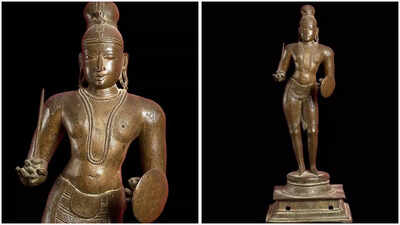
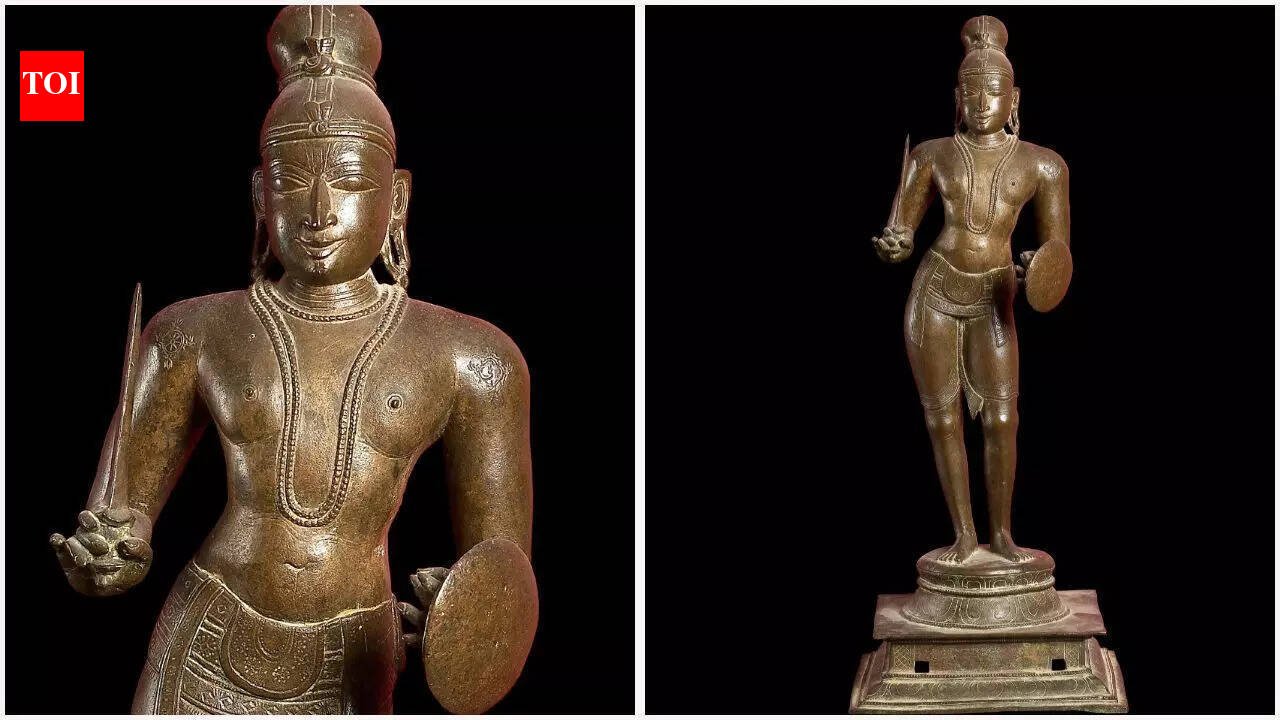
Ashmolean museum acquired the statue in 1967. In 2019, a French scholar flagged that its provenance was unclear, leading to a probe
A 16th-century bronze statue of Saint Tirumankai Alvar, taken from a temple in Tamil Nadu, is among several Indian heritage items that are being returned to India from the UK.The Ashmolean Museum in Oxford acquired the 57.5cm tall statue of the South Indian Hindu saint in good faith in 1967 and had it on display. According to Sotheby’s, it was sold to the museum by the private collector, Dr J R Belmont (1886-1981). There is no information on how it entered his collection.However, in Nov 2019, a French scholar alerted the University of Oxford museum to research indicating that a photograph of the bronze had been taken in 1957 in the temple of Soundarrajaperumal temple in Thadikombu, a village in Tamil Nadu. This made the museum aware that its provenance was unclear, so the museum decided to investigate.Although no formal claim had been made, the Ashmolean wrote to the Indian High Commission on 16 Dec 2019, requesting further information and indicating the museum’s willingness to discuss its possible return.On 11 Feb 2020 a temple executive officer filed a police report noting that a modern replica had replaced the original bronze. The Indian High Commissioner then made a formal claim for return of the bronze on 3 March 2020.At request of Archaeological Survey of India (ASI), the museum commissioned metal analysis of the bronze and submitted results to inform a report on its provenance.Director of the Ashmolean Dr Xa Sturgis said: “The Ashmolean is pleased to see this important object returned to India and we are grateful to the Indian authorities and scholars who have helped establish its provenance. The museum and University of Oxford are committed to ethical collections practices and continued research into our collections, their origins and history.”
Ashmolean museum acquired the statue in 1967. In 2019, a French scholar flagged that its provenance was unclear, leading to a probe
A 16th-century bronze statue of Saint Tirumankai Alvar, taken from a temple in Tamil Nadu, is among several Indian heritage items that are being returned to India from the UK.The Ashmolean Museum in Oxford acquired the 57.5cm tall statue of the South Indian Hindu saint in good faith in 1967 and had it on display. According to Sotheby’s, it was sold to the museum by the private collector, Dr J R Belmont (1886-1981). There is no information on how it entered his collection.However, in Nov 2019, a French scholar alerted the University of Oxford museum to research indicating that a photograph of the bronze had been taken in 1957 in the temple of Soundarrajaperumal temple in Thadikombu, a village in Tamil Nadu. This made the museum aware that its provenance was unclear, so the museum decided to investigate.Although no formal claim had been made, the Ashmolean wrote to the Indian High Commission on 16 Dec 2019, requesting further information and indicating the museum’s willingness to discuss its possible return.On 11 Feb 2020 a temple executive officer filed a police report noting that a modern replica had replaced the original bronze. The Indian High Commissioner then made a formal claim for return of the bronze on 3 March 2020.At request of Archaeological Survey of India (ASI), the museum commissioned metal analysis of the bronze and submitted results to inform a report on its provenance.Director of the Ashmolean Dr Xa Sturgis said: “The Ashmolean is pleased to see this important object returned to India and we are grateful to the Indian authorities and scholars who have helped establish its provenance. The museum and University of Oxford are committed to ethical collections practices and continued research into our collections, their origins and history.”
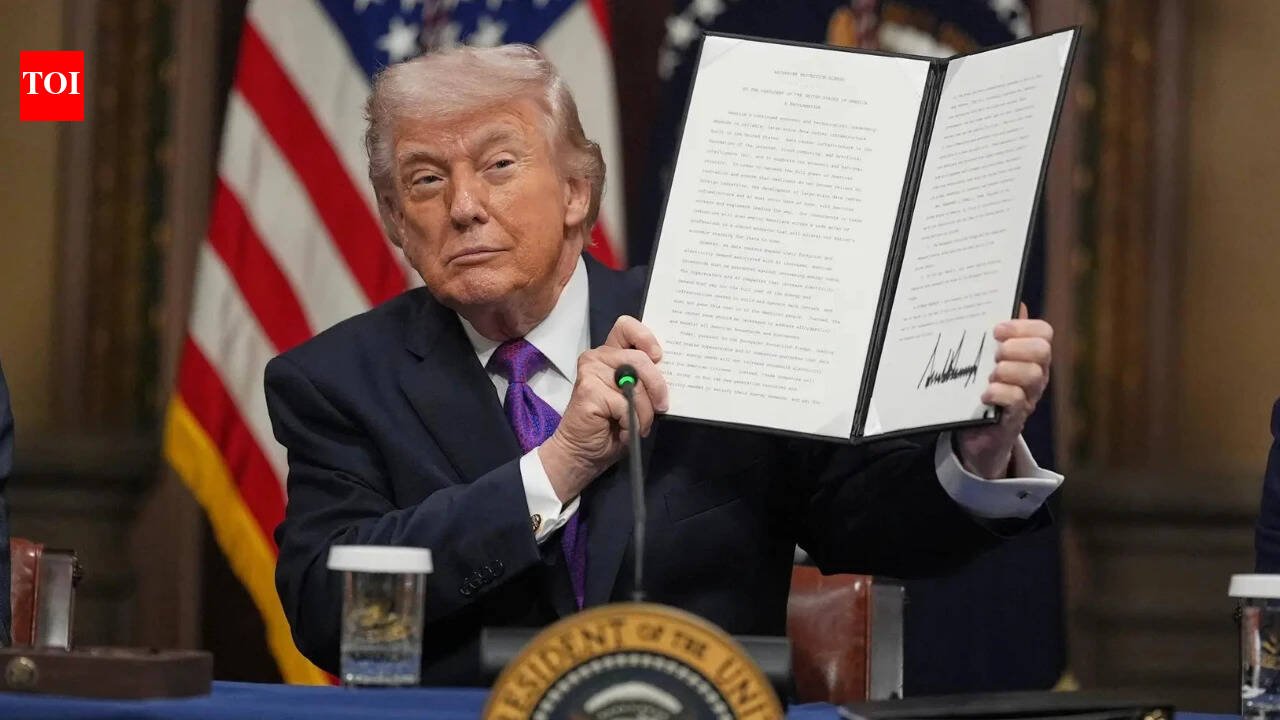
US President Donald Trump on Wednesday said the American campaign against Iran was performing beyond expectations, rating it “about a 15” on a scale of 10 and pledging to press ahead with operations alongside Israel.“We’re doing well on the war front, to put it mildly. Somebody said on a scale of 10, where would you rate it? I said about a 15,” Trump told tech executives at the White House.He claimed Iran’s leadership was being decimated. “We’re in a very strong position now, and their leadership is just rapidly going. Everybody that seems to want to be a leader, they end up dead,” he said, adding that Tehran’s ballistic missile arsenal was being “wiped out rapidly.”
Justification for the war
Trump repeated that the offensive was aimed at stopping Iran from acquiring nuclear weapons. “When crazy people have nuclear weapons, bad things happen,” he said, calling the previous Obama-era nuclear deal “the worst deal ever made” and “a road to a nuclear weapon”.He vowed to “continue forward” with the joint air campaign that, according to AFP, killed Iran’s Supreme Leader Ali Khamenei on the opening day of the conflict.The White House said Iran’s clerical leadership was being “absolutely crushed” and was “paying in blood,” but Press Secretary Karoline Leavitt declined to confirm whether Trump was seeking regime change. She said he was “actively considering” a US role in Iran after the current operation concludes, reported AFP.
Expanding conflict and global fallout
A US submarine sank an Iranian warship in international waters, while Israel launched fresh strikes on Tehran and Hezbollah positions in Lebanon. Iran has fired missiles at Israel and Gulf states.The war has killed more than 1,000 people in Iran, over 50 in Lebanon and around a dozen in Israel, according to officials cited by news agency AP. The United Nations said 100,000 people fled Tehran in the first two days alone.Oil prices have surged after Iranian attacks on traffic through the Strait of Hormuz, rattling global markets.
Domestic and diplomatic pressures
Trump’s stance has drawn criticism, especially given his earlier campaign pledge of starting “no new wars.” The US Senate is preparing to vote on a war powers resolution seeking congressional approval for further action, though it faces long odds.Leavitt rejected reports that Trump had agreed to arm Kurdish separatists in Iran, calling them “false,” though she confirmed he had spoken to Kurdish leaders regarding US bases in Iraq.Trump also referenced Venezuela, saying US engagement there had “worked out really great” and that oil extraction would benefit both nations.Despite mounting casualties and regional instability, Trump insisted the United States was in “very good shape now” and would continue its military campaign.
Mumbai: The incidence of breast cancer in India more than doubled between 1990 and 2023, according to an 204-country study that estimates another huge increase in cases by 2050 if “six modifiable risk factors” are not tackled.The Global Burden of Disease Study Breast Cancer Collaborators, published in ‘The Lancet Oncology’, said the incidence rate in India climbed from 13 per 1 lakh women in 1990 to 29.4 per 1 lakh in 2023. In the same period, the age-standardised mortality rate increased from 8.9 to 15.5, marking a 74% rise in breast cancer deaths in India.Globally, breast cancer continues to be the leading cause of cancer-related illness and premature death among women worldwide. In 2023, there were an estimated 23 lakh new breast cancer cases and 7.6 lakh deaths. By 2050, cases could rise by a third to 3.5 million despite advances and treatment, said the Lancet study.Globally, three times as many new breast cancer cases were diagnosed in women aged 55 or older in 2023 (161 vs 50 new cases per 1 lakh women) compared to women aged 20-54. However, rates of new cases have risen in women aged 20-54 (up 29%) since 1990, with rates in older women not changing substantially. These differences reflect changing age patterns as well as changes in risk factors, which vary between pre- and post-menopausal women.“In middle-income countries such as India, the total economic burden of breast cancer was estimated at $8.13 billion in 2021 and is projected to rise to $14 billion by 2030 as incidence continues to increase,” it added.The study also said that “over a quarter of healthy years lost to breast cancer are due to six modifiable risk factors, including high red meat intake, tobacco, high blood sugar, and high BMI—offering important opportunities for prevention.”“The projected rise in breast cancer burden by 2050 is not fate — it’s a forecast, and, therefore, preventable. This analysis is a policy blueprint. With organized screening, timely diagnostics, and universal access to evidence-based treatment, we can bend the curve. The science is ready. The time to act is now,” said Dr (Prof) Jyoti Bajpai, lead medical & precision oncologist from Apollo Hospital, Navi Mumbai.Tata Memorial Centre director Dr Sudeep Gupta pointed out that with increased levels of development, there is often a concomitant rise in the incidence of some cancers, in India it is breast cancer. “There is a change in reproduction pattern, increase in tobacco and alcohol use, among other reasons that have been seen across the globe,” said Dr Gupta.The latest study, however, shows that the breast cancer burden in the West has peaked there and associated deaths are lower.“This publication highlights the improvement in breast cancer detection in underprivileged countries, but also provides us the insight into the gap between the developed and the developing countries which we need to bridge,” said senior medical oncologist Dr Kumar Prabhash from Tata Memorial Hospital, Parel.The study’s authors said that progress towards ensuring all women have an equal chance to survive breast cancer can only be achieved through a combination of aggressive prevention strategies, ensuring well-functioning health systems capable of early diagnosis and comprehensive treatment, and making cancer services both accessible and affordable to all.
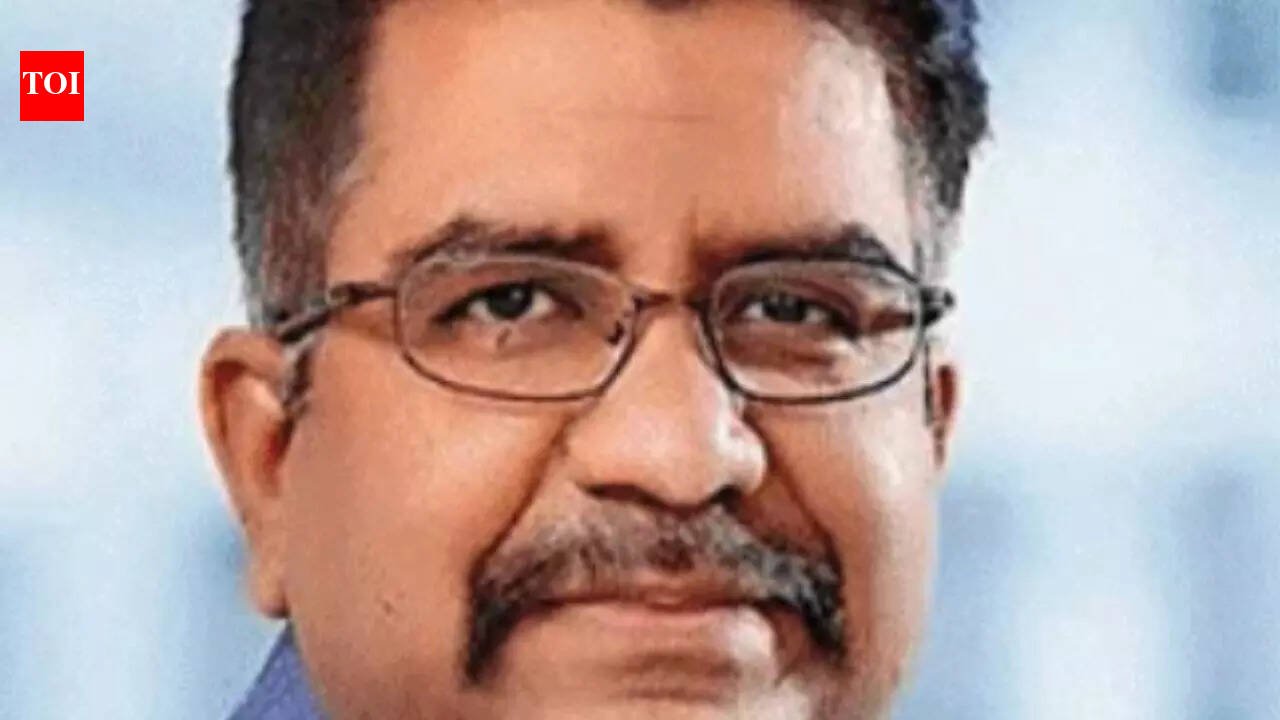
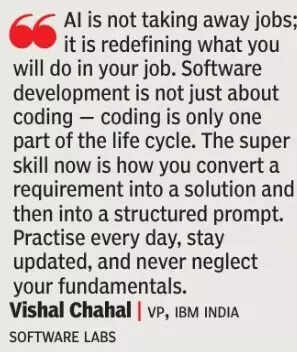
Artificial intelligence has generated both excitement and anxiety among students, fresh graduates and mid-career professionals, particularly in software development. Coding, built on structured logic and repeatable patterns, has proved especially amenable to AI training. As models grow more capable of generating, testing and even debugging code, many are asking a blunt question: what exactly should a software professional now learn to remain relevant? Vishal Chahal, VP at IBM India Software Labs, argues that the answer is not to compete with machines on speed, nor to abandon programming fundamentals. It is to elevate one’s thinking. “AI is redefining software. Coding is only one part of the software life cycle.” Design, architecture, deployment, support and continuous improvement remain firmly in human hands. “AI is redefining what you will do in your job (as a software developer)”.The productivity gains are real and this has implications. In Chahal’s own experience, developers can see “at least a 30 percent uplift in daily coding tasks”. Essentially, software can be built “much faster”, test cases can be generated more quickly, and iteration cycles have shrunk. This means teams can now experiment more freely because they can fail fast and try again without the same cost in time.
.
The deeper shift lies in how engineers think. “Instead of spending your time writing code line by line, you should be thinking about systems,” he says. “How am I designing this system? What solution am I trying to achieve?” Once that clarity exists, structured prompts can guide AI tools to generate much of the code. For students, the message is not to discard programming languages either, even if AI can write much of the code. “We must continue to learn the fundamentals,” Chahal says. Understanding how software interacts with hardware, how prgramming languages translate into machine instructions and how systems behave under load remains essential. AI-generated code still needs to be understood, validated and improved.However, “coding itself is no longer the super skill,” he adds. “The super skill is the ability to take a requirement, turn it into a solution, and then express that solution clearly through structured prompts.”Vague instructions will yield vague results. “If you say ‘write a good JavaScript program’, that means nothing. You must define what ‘good’ means — secure, efficient, scalable, compliant. You must specify the constraints.”Chahal cautions strongly against intellectual complacency as well. “If you offload all your thinking to these tools at the start of your career, you will not develop the ability to design complex enterprise systems.” Building prototypes with AI is one thing, designing mission-critical digital infrastructure is another. Architectural judgement in this space is built through understanding gained over many years at the workplace.Security and governance, he argues, are also now becoming foundational skills. With AI generating code and developers pulling from open-source repositories, risks multiply. “You must know how to build secure, governed solutions,” he says. Engineers should be able to scan for vulnerabilities, detect data leaks and apply responsible AI principles.Chahal rejects the idea that entry-level roles are disappearing. “Jobs are not going away. They are transforming,” he says. Which is why Chahal and his team at IBM now look out for candidates who are adaptable. “The hunger to learn and the ability to unlearn. That’s what we look for.” he says. Linear, narowly defined career paths matter a lot less than evidence of flexibility — shifting domains at work, learning new tools and embracing change. Chahal’s advice is to try and highlight these competencies in your resume if you have them.For both young and mid-career professionals, his other bit of advice is to practice daily. “Spend half an hour or an hour every day using these AI tools.” The objective is to be intimately familiar with them — to understand the nuances of these AI models, their limitations, and their rapid evolution. Those who stay close to the change will recognise the shifts between one wave of models and the next and will be able to adapt in a cutthroat jobs marketplace more effectively because of it.
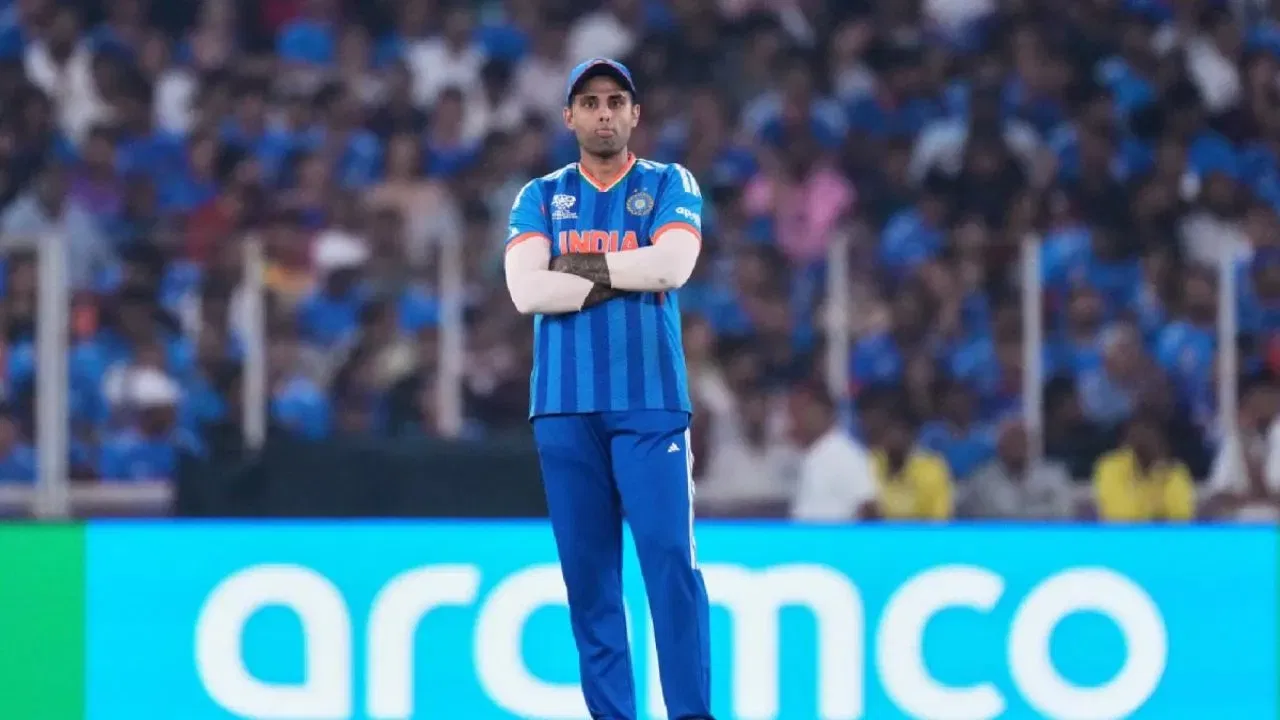
Since India‘s opening match of the T20 World Cup 2026, captain Suryakumar Yadav has not struck a single half-century. Ahead of the semi-final, there are concerns over Yadav’s form. However, SKY’s childhood coach dismissed all the concerns over his student.
Team India is all set to face England in the second semi-final of the tournament tomorrow. Ahead of the highly anticipated clash, some concerns are hovering around the Indian skipper. India captain Suryakumar Yadav’s childhood coach Ashok Aswalkar believes that there is nothing to be worried about Yadav.
Suryakumar Yadav’s batting causes worry ahead of India vs England Semifinal, T20 World Cup 2026
The Indian national cricket team is in Mumbai for the semi-finals of the T20 World Cup 2026. As the captain of the defending champions, Suryakumar Yadav is in the middle of the stage right now.
Your daily dose of cricket!
The right-handed batters kicked off their campaign in style. In their opening match, when the Indian batters were surprisingly struggling against the bowlers of the United States, the middle-order batter came to rescue the team. Because of the skipper’s unbeaten 84 -run knock, India registered the much-needed win.
After the challenging first match, the co-hosts of the ongoing event remained unbeaten until they faced South Africa in the first match of the Super 8. South Africa defeated India and made their semi-final equation complicated. India bounced back on time by defeating Zimbabwe and the West Indies in back-to-back matches.
Suryakumar Yadav’s childhood coach opined on his student’s recent performance
After the USA match, Yadav failed to deliver according to his calibre. Though his childhood coach said that Suryakumar Yadav is not out of form, he is doing well. The coach praised Yadav’s leadership qualities as well. Ashok Aswalkar said that Yadav might not be scoring enough runs, but his leadership skills reflect his class in every game.
Here’s the video
VIDEO | Mumbai: India captain Suryakumar Yadav’s childhood coach Ashok Aswalkar has dismissed concerns over the batter’s form in the ongoing ICC Men’s T20 World Cup, saying there is no reason to worry.
“His form is currently good; there is no issue with that. His captaincy is also going well, his leadership is visible on the field. He was not able to score runs, but he never let that reflect on his captaincy,” Aswalkar told PTI Videos on Wednesday. “People will keep making comments on social media,” he added.
The pitch of Wankhede Stadium is increasing the suspense
The India vs England match will be on March 5, at the Wankhede Stadium in Mumbai. The pitch in Mumbai traditionally helps batters to score runs at a fluent pace. But in the previous few matches of the tournament, it reacted differently. Yadav, the local cricketer of Mumbai, also previously stated that the pitch acted differently.
Ahead of the electrifying match, the nature of the surface of the iconic Wankhede cricket ground is creating more suspense. It will be interesting to see the team combinations of both of the sides. In the recent past, some of the cricket experts suggested that Yadav should promote himself in the batting order to face more balls.
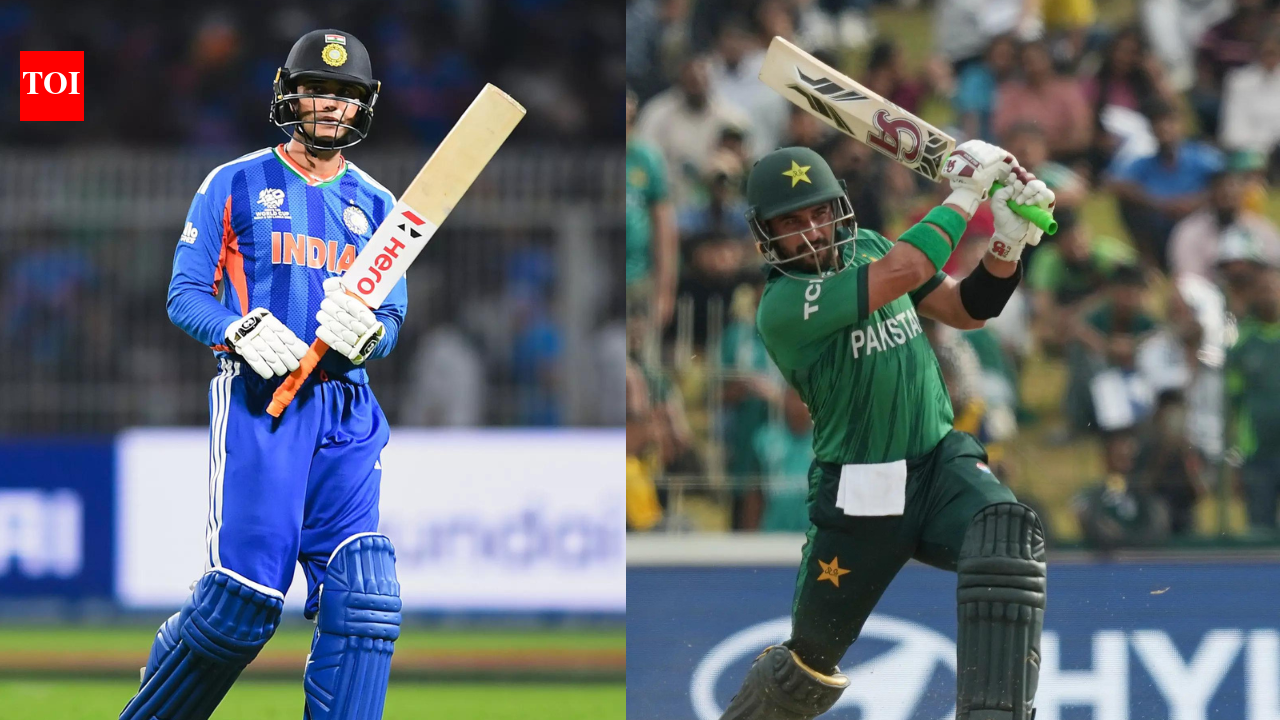
Abhishek Sharma and Sahibzada Farhan (Agency Image)
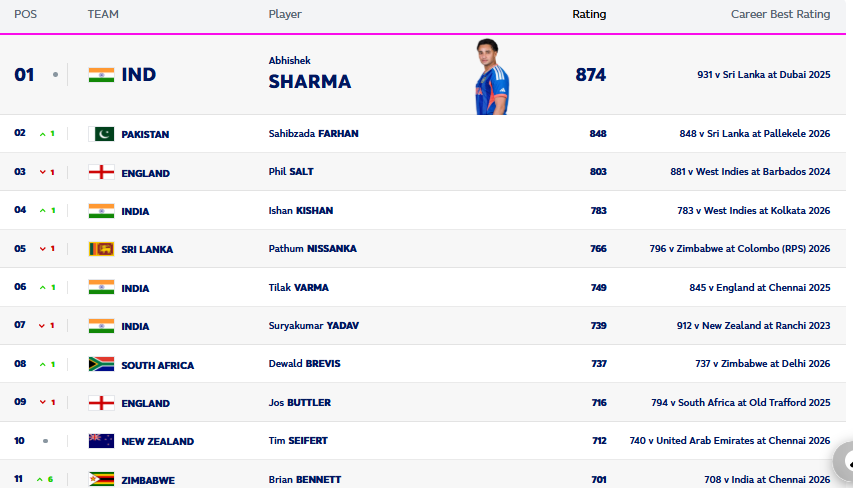
Pakistan opener Sahibzada Farhan has edged closer to the summit of the ICC Men’s T20I batting rankings, tightening the race with India’s Abhishek Sharma after the latest weekly update released on Wednesday.
T20I Batting Rankings
Farhan climbed to second place following a historic outing at the ICC Men’s T20 World Cup 2026. The right-hander became the first cricketer to score two centuries in a single edition of the tournament, bringing up his second hundred against Sri Lanka in Pallekele during the final Super 8s fixture for both sides. The knock not only lifted him one spot in the rankings but also earned him a new career-best rating.Also See: South Africa vs New Zealand Live Score T20 World Cup Semifinal
India arrive for final net session before T20 World Cup semifinal
Abhishek Sharma continues to occupy the No. 1 position, maintaining a 26-point cushion over Farhan. The Pakistan batter now sits on 848 rating points after overtaking England’s Phil Salt, having piled up 383 runs during the World Cup to significantly narrow the gap at the top. The end of the Super 8s stage has triggered several other movements in the batting charts. India’s Ishan Kishan advanced to fourth place with 783 rating points, while Tilak Varma moved up to sixth with 749 points as both broke into the top 10. South Africa’s Dewald Brevis also gained a position to settle in eighth. Zimbabwe’s Brian Bennett enjoyed one of the biggest jumps, soaring six places to 11th after collecting 292 runs in the competition. South African duo Ryan Rickelton and Aiden Markram also progressed, rising to 13th and 16th respectively.
T20I bowling rankings
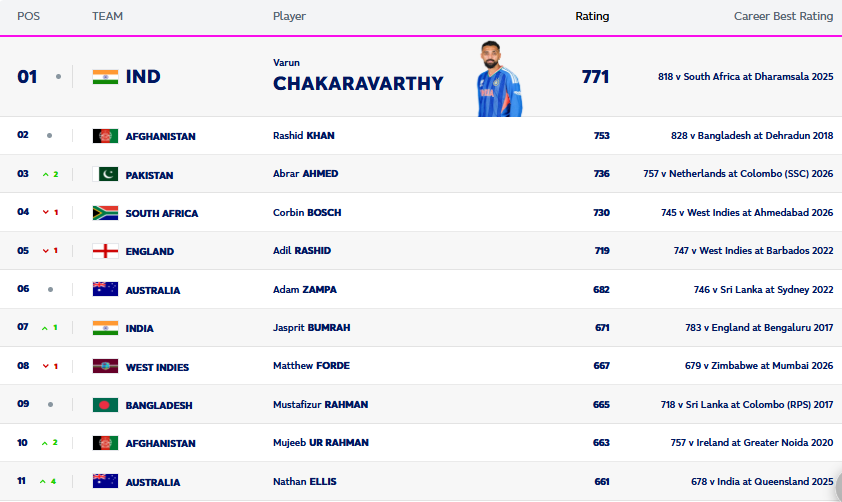
In the T20I bowling rankings, India spinner Varun Chakravarthy remains at the top, though his lead has been trimmed to just 18 points as the tournament heads into the knockout rounds. Chakravarthy has taken 12 wickets so far, but Pakistan’s Abrar Ahmed is closing in after moving up two spots to third overall. Among other bowlers, India’s Jasprit Bumrah climbed to seventh, while Arshdeep Singh made a six-place leap to 13th. England’s Liam Dawson surged nine positions to share 14th place, and South Africa pacer Lungi Ngidi advanced six spots to 20th. The all-rounder rankings continue to be led by Zimbabwe captain Sikandar Raza. India’s Hardik Pandya is now his closest challenger after moving up one place to second, displacing Pakistan’s Saim Ayub. West Indies veteran Jason Holder was another major gainer, jumping eight positions to 11th following a strong World Cup showing with both bat and ball.