Breaking News
Rupee falls to all-time low of 92.05 against dollar as oil surge, foreign outflows rattle markets


Rupee falls to all-time low of 92.05 against dollar as oil surge, foreign outflows rattle markets

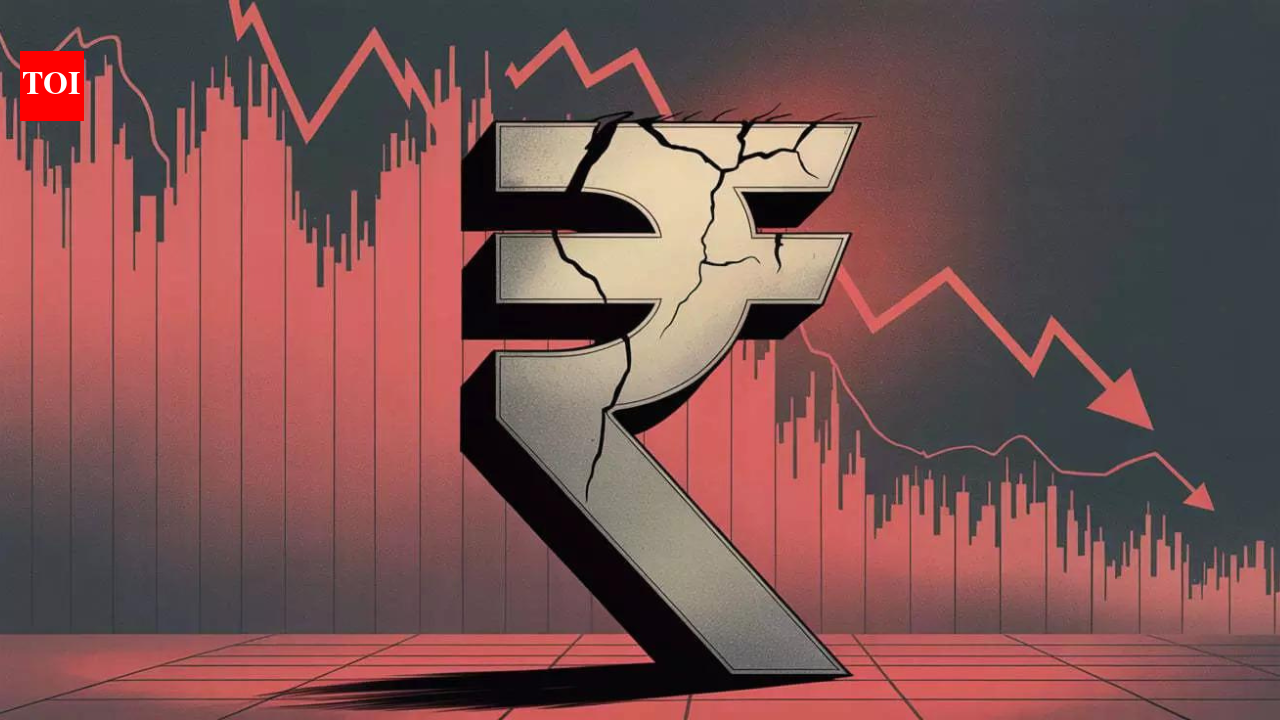
The Indian rupee weakened sharply on Wednesday, slipping to a record closing low of 92.05 against the US dollar as soaring crude oil prices and global risk aversion linked to the Iran crisis weighed heavily on the domestic currency.The rupee depreciated by 56 paise during the session, pressured by rising energy costs, foreign fund outflows and broad-based weakness in domestic equities, PTI reported.At the interbank foreign exchange market, the rupee opened at 92.05 and slid further to an intraday record low of 92.35 against the greenback. It eventually ended the session at 92.05, marking its lowest-ever closing level.The domestic forex market remained shut on Tuesday due to the Holi holiday. On Monday, the rupee had already fallen 41 paise to settle at 91.49 against the US dollar.Forex traders said the global risk-off mood triggered by the US-Iran conflict strengthened the dollar and intensified pressure on emerging market currencies, including the rupee.Foreign investors sold equities worth Rs 8,752.65 crore on a net basis on Wednesday, according to exchange data, further weighing on the currency.“A sharp escalation in Middle East conflict and the consequent spike in oil prices have reduced investor risk appetite. Higher oil prices increase inflation concerns and fiscal pressure on India (a major oil importer), leading to selling in bonds and rising yields,” said Anil Kumar Bhansali, Head of Treasury and Executive Director, Finrex Treasury Advisors LLP.Meanwhile, the dollar index, which measures the greenback against a basket of six currencies, was trading 0.23 per cent lower at 98.82.“The dollar index crossed 98 levels comfortably on the risk-off situation prevailing all around the globe with stocks and bond markets getting hit badly, along with Gold and Silver, with predominance of the dollar,” Bhansali said.Brent crude, the global oil benchmark, was trading 1.29 per cent higher at USD 82.46 per barrel in futures trade, as supply concerns intensified after US attacks on Iran and Tehran’s retaliatory actions raised fears over energy flows through the Strait of Hormuz.Dilip Parmar, Research Analyst at HDFC Securities, said, “The Indian rupee recorded its steepest two-session decline since May 2025, as soaring energy prices intensified fears of persistent inflation and a widening trade deficit.This prevailing risk-off sentiment, coupled with high energy costs, is expected to keep the currency under pressure in the near term. Investors are closely monitoring the longevity of the Middle East conflict, as a prolonged standoff would likely drive up the import cost of energy and precious metals while hindering export growth.”According to Parmar, the spot USDINR pair faces immediate resistance at 92.60, while key support is seen at 91.80.On the domestic equity market front, the BSE Sensex dropped 1,122.66 points to close at 79,116.19, while the NSE Nifty declined 385.20 points to settle at 24,480.50.


Source link

‘Huge danger’: Stuart Broad flags Hardik Pandya as England’s biggest semifinal threat | Cricket News


'Huge danger': Stuart Broad flags Hardik Pandya as England’s biggest semifinal threat
India’s Hardik Pandya (AP Photo/Mahesh Kumar A.)

Former England seamer Stuart Broad has issued a strong warning to England ahead of their semifinal clash against India, singling out Hardik Pandya as the player who could decisively swing the contest.Broad stressed that Pandya’s impact goes far beyond numbers on the scoreboard. The Indian all-rounder has the rare ability to alter the tempo of a match, whether through late-innings power-hitting or by delivering crucial overs with the ball. According to Broad, Pandya relishes high-pressure scenarios and carries a self-assurance that energises those around him.

India arrive for final net session before T20 World Cup semifinal

The semifinal also presents an added layer of comfort for Pandya, as it will be played at his IPL home venue. Familiarity with the surface and conditions, combined with strong crowd backing, could further enhance his influence on the game.Offering a tactical perspective, Broad suggested England must be smart about when Pandya comes to the crease. He believes the key lies in forcing him to bat earlier than he would ideally prefer, before he can slip seamlessly into his devastating finishing role.“If I am an England bowler, I think I need to get him in after 12 overs so I can bowl when he’s not in the hitting zone straightaway. He might think I would like to look at a few before going at the end. I would see that as my chance to get him out before he can hurt me in the last four overs. If India are just three or four down entering the death overs, that’s where India get over 200, and you are in a bit of trouble,” Broad said on the For the Love of Cricket podcast.Broad further explained that Pandya becomes especially dangerous if India lay a strong foundation in the first half of the innings. With a solid platform in place, the all-rounder’s confidence and presence can take over the game.“If India sets up a good first ten overs, Hardik Pandya becomes a huge danger. When he walks in, he’s extremely confident. He has got an aura about him and an ego on him in a positive way. He just believes he can do the job. He is so wiry and slim that you think how he can hit the ball 100 metres like he does. But he does it so effortlessly,” he added.


Source link

PhonePe eyes up to $10.5 billion valuation in India IPO, plans about $1 billion


PhonePe eyes up to $10.5 billion valuation in India IPO, plans about $1 billion

Walmart-backed fintech major PhonePe is targeting a valuation of $9 billion to $10.5 billion (about Rs 75,000 crore–Rs 87,000 crore) for its upcoming India IPO, with plans to raise around $1.05 billion through an equity sale, sources aware of the development told news agency PTI.The expected valuation is lower than the company’s last funding round in 2023, when PhonePe raised $100 million at a valuation of $12 billion.Even at the reduced valuation, the proposed public issue is expected to be the second-largest fintech IPO in India after rival Paytm, which listed at a valuation of about $20 billion (around Rs 1.4 lakh crore) in November 2021.The PhonePe IPO will be entirely an offer-for-sale (OFS) by existing shareholders.According to updated draft papers, shareholders including Walmart, Tiger Global and Microsoft Global Finance plan to offload stakes worth around Rs 10,115 crore, or about $1.1 billion, through the public issue.PhonePe promoter WM Digital Commerce Holdings Pte will sell 45,942,496 shares out of 371,517,890 shares, representing about a 12 per cent stake in the company through the OFS, priced at Rs 1,996.8 per share based on the weighted average cost of acquisition per equity share.Microsoft and Tiger Global are also planning to exit the firm through the IPO.PhonePe filed its draft papers for the IPO in September and expects to conclude the process by April, subject to favourable market conditions and the absence of major disruptions from the ongoing Middle East military conflict.The company has reported strong revenue growth and sharply narrowing losses over the past three fiscal years, according to its draft red herring prospectus (DRHP).Revenue from operations increased to Rs 7,114.85 crore in FY25 from Rs 2,914.28 crore in FY23, reflecting a compound annual growth rate (CAGR) of 56.25 per cent.PhonePe’s revenue mix has also diversified beyond core UPI payments.The contribution from merchant payments rose from 14.75 per cent in FY23 to 30.78 per cent by September 2025.Financial services, including lending and insurance distribution, expanded from 0.96 per cent in FY23 to 11.55 per cent in the first half of the current fiscal year.Merchant payments and financial services accounted for 42 per cent of the company’s revenue, highlighting growing monetisation across verticals.Losses have also narrowed significantly. Restated losses declined by more than Rs 1,060 crore between FY23 and FY25 to Rs 1,727.41 crore, with loss margins improving to (22.64) per cent from (90.68) per cent over the same period.The company achieved positive adjusted EBITDA in FY24 and FY25 and reported adjusted EBIT profitability in FY25. It also generated free cash flow of Rs 190.47 crore in FY25 and over Rs 250 crore in the six months ended September 30, 2024.Founded in 2016 and headquartered in India, PhonePe had over 65 crore registered users and a merchant network of more than 4.7 crore as of September 30, 2025.Its services span consumer and merchant payments, lending and insurance distribution, and newer platforms such as Share Market and Indus Appstore


Source link

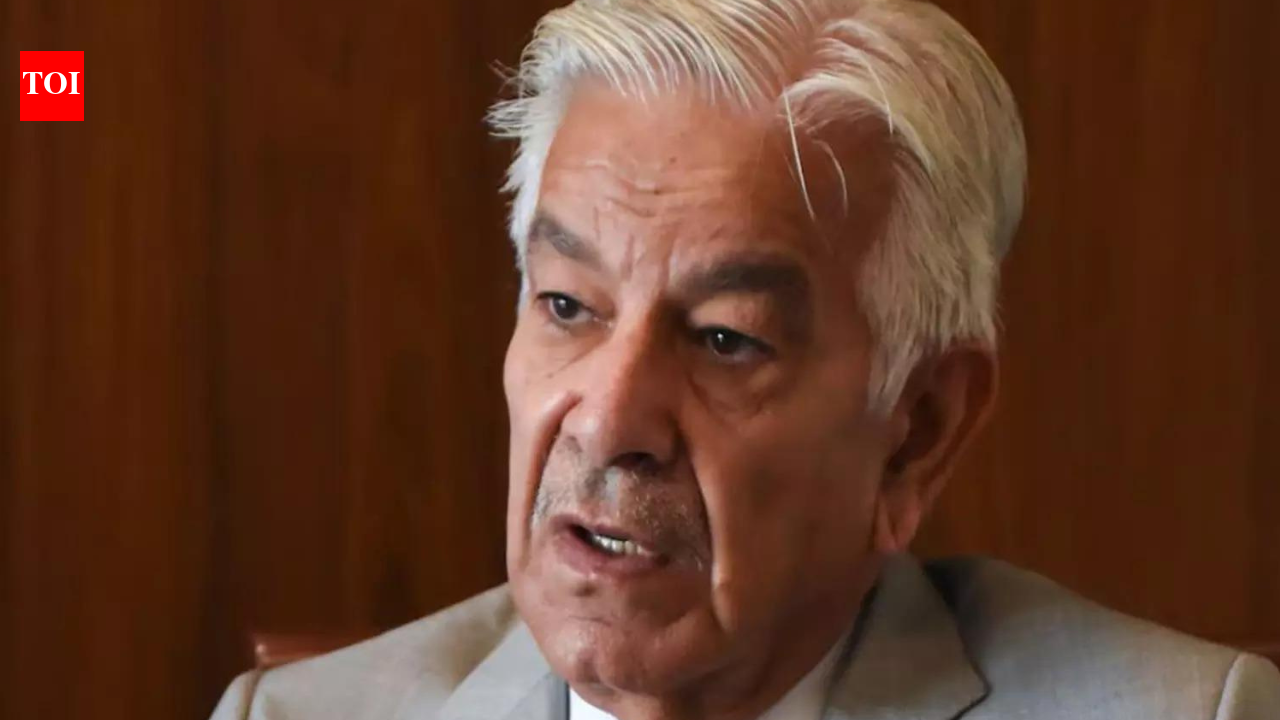
‘Pakistan will turn into a vassal state’: Khawaja Asif accuses Israel of ‘orchestrated war’ that could align India, Iran and Afghanistan


Pakistan’s Defence Minister Khawaja Asif on Tuesday claimed that Zionists were behind the Iran war as part of a wider plan to expand Israel’s influence towards Pakistan’s borders.In a post on X, Asif said that despite Iran’s readiness for an agreement, “a war has been imposed upon them, and its agenda, orchestrated by the Zionists, includes bringing Israel’s influence right up to Pakistan’s border”.

Pak Defence Minister Khawaja Asif Claims India, Afghanistan On Same Page, Raises War Concerns

“From the establishment of Israel on the land of Palestine until today, every catastrophe that has befallen the Islamic world, every war imposed upon it, will show the direct or indirect hand of Zionist ideology and the state.”Asif also alleged that Afghanistan, Iran, and India were sharing a “joint single point agenda” of enmity towards Pakistan. “The joint single point agenda of Afghanistan, Iran, and India will then be enmity towards Pakistan, making our borders insecure, surrounding us with enemies from all sides, and turning Pakistan into a vassal state,” he claimed.He urged Pakistanis, regardless of political or religious affiliation, to “understand this conspiracy and the intentions of our eternal enemies”.His remarks come at a time when Pakistan’s ties with Afghanistan remain strained after recent border clashes. Afghanistan has also stepped up diplomatic engagement with India in recent months.The conflict in the Middle East has widened after the United States and Israel carried out major strikes on Iran that killed the country’s supreme leader, Ayatollah Ali Khamenei. Iran has since launched heavy reprisals across the region.


Source link

T20 World Cup 2026: India vs England 2nd Semi-Final Ticket Prices and Sitting Details


With only a few hours left before the much-awaited India vs England semi-final in the ICC Men’s T20 World Cup 2026, excitement has reached fever pitch among cricket fans. Mumbai’s iconic Wankhede Stadium will host the blockbuster clash on Thursday, as defending champions India take on Harry Brook’s England for a place in the grand final at Ahmedabad’s Narendra Modi Stadium on March 8. As anticipation builds for the high-stakes encounter, fans across the country are scrambling for tickets and making last-minute plans to be part of the action.

IND vs ENG, T20 World Cup 2026 Semi-Final 2: Match details

The second semi-final is scheduled to begin at 7:00 pm IST, with stadium gates opening for spectators at 4:00 pm IST. Interestingly, this will be the third consecutive T20 World Cup semi-final meeting between India and England, after their clashes in 2022 and 2024. With both teams boasting explosive batting lineups and strong bowling attacks, the stage is perfectly set for a thrilling contest under the lights at Wankhede.

Slim chance of tickets for the marquee clash

Unsurprisingly, tickets for this high-voltage clash have been snapped up quickly. According to reports, tickets sold through the official platforms – BookMyShow and the ICC’s ticketing website – have already been marked as sold out. The initial ticket sale opened on February 24 at 7:00 pm IST, and the demand was so overwhelming that most categories were booked within minutes.

However, fans who missed out may still have a slim chance. There is a possibility that a limited number of “sponsor return tickets” could be released roughly 24 hours before the match. While there has been no official confirmation yet, fans are advised to keep checking the official booking platforms for any last-minute availability.

Ticket prices and seating categories

Ticket prices for the semi-final varied widely depending on seating category and location inside the stadium. Reports suggested that prices started at around ₹1,000 for general seats and went significantly higher upto ₹10,000 for premium areas. Wankhede Stadium, which can host around 33,000 spectators, offers several seating options including General Stands, Lower Tier, Mid-Tier, Premium Seats, Club Level and VIP Hospitality sections. Like most online bookings, a convenience fee is added to the ticket price during checkout.

One important detail for those who managed to secure tickets is that entry to the stadium is completely digital for this World Cup. Fans must ensure they have downloaded their M-ticket beforehand and keep it available offline. Mobile networks around the Marine Drive area often become overloaded on match days, making it difficult to access apps at the last moment.

Also READ: T20 World Cup 2026 – Wankhede pitch under spotlight ahead of IND vs ENG semifinal

Watching the cricket match in theatres

For fans who couldn’t get their hands on stadium tickets, there’s still a great way to experience the excitement. Several theatres across Mumbai will screen the match live on the big screen, giving fans the chance to enjoy the atmosphere with fellow supporters. Popular locations like INOX, PVR, and Miraj Cinemas across Mumbai, Navi Mumbai and Thane will host screenings in both Hindi and English.

Show timings are expected to begin between 6:00 pm and 6:40 pm, with ticket prices ranging from ₹150 to ₹1500, depending on the theatre and seating option.

Also READ: T20 World Cup 2026 Semifinals – Date, Match Time, Venue, Broadcast and Live Streaming details


Source link

Application & approval process for access roads from NHs goes fully digital | India News


Application & approval process for access roads from NHs goes fully digital

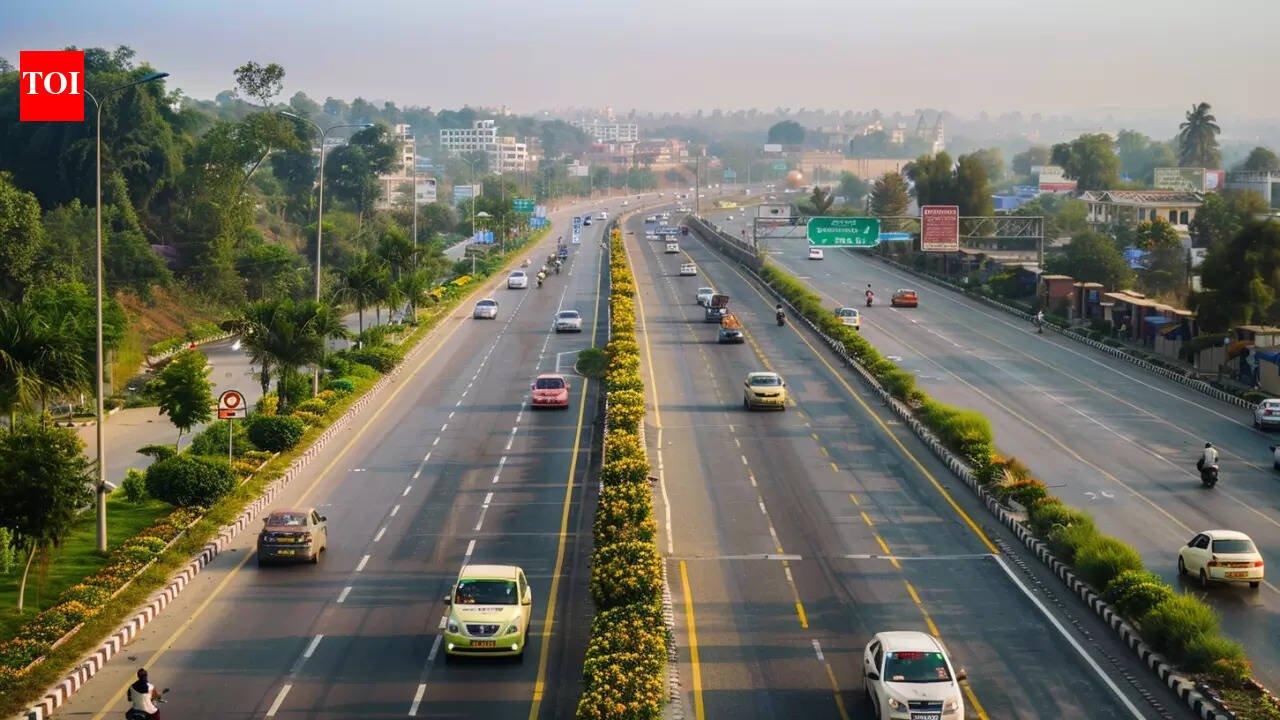
NEW DELHI: People seeking access roads from National Highways (NHs) for fuel stations, wayside amenities, industries, private properties and rest area complexes won’t need to visit govt offices to get an NOC anymore. They will be able to apply online and get the approval without any physical interface with the system.Road transport minister Nitin Gadkari has launched a new one-stop digital platform — http://rajmargpravesh.morth.gov.in — to process all such applications. The portal can also be used by govt and private entities to obtain permissions for laying utilities such as water pipelines, gas pipelines, optical fibre cables, electrical lines and other services along or across NHs.Gadkari said the new portal will make the approval process more convenient, transparent and time-bound, helping citizens and businesses save time and effort. Officials said the portal allows fully digital submissions and attachments and automated routing of applications to the authority concerned. “There are specific timelines for initiation, processing and completion of the exercise by the authority concerned. Delays at any stage will be monitored to fix accountability,” an official said.


Source link

US stocks today: Wall Street rebounds as oil prices ease and strong economic data lift sentiment


US stocks today: Wall Street rebounds as oil prices ease and strong economic data lift sentiment

US stock markets rebounded on Wednesday after two days of sharp volatility, supported by easing oil prices and encouraging economic data that improved investor confidence.The S&P 500 rose 0.8 per cent in midday trading and was on course to recover most of the losses recorded since the war with Iran began. The Dow Jones Industrial Average gained 301 points, or 0.6 per cent, while the Nasdaq Composite climbed 1.3 per cent, AP reported.The recovery followed a turbulent start to the day in global markets. South Korea’s Kospi index plunged 12.1 per cent earlier, marking the worst single-day fall in its history, as uncertainty over the conflict in the Middle East triggered intense volatility across financial markets.Oil prices moderated as trading shifted from Asia to Europe and the United States. Brent crude, the global benchmark, eased 0.6 per cent to $80.88 a barrel after briefly rising above $84. US benchmark crude also declined 0.6 per cent to $74.14 a barrel.Investor sentiment was also supported by fresh economic data pointing to resilience in the US economy.One report showed business activity in services sectors such as real estate and finance accelerated last month at the fastest pace since the summer of 2022. The report also indicated that prices charged by these businesses rose at a slower pace, at least before the escalation of the Iran conflict.Another report suggested US employers outside the government increased hiring last month, potentially signalling strength ahead of the official employment report due from the US government later this week.Despite the rebound, investors remain focused on how long the conflict with Iran could last and the impact of rising oil prices on inflation and corporate earnings.Historically, the US stock market has tended to recover relatively quickly from military conflicts in the Middle East, provided oil prices do not surge excessively. Some investors therefore see the current volatility as temporary.Not all market participants share that optimism.“I think the Iran situation is getting out of hand, and I think that US President Donald Trump miscalculated enormously,” said Francis Lun, CEO of Venturesmart Asia. “The situation is very grim.”On Wall Street, crypto-linked stocks rallied as bitcoin rose back above $73,000. Coinbase Global surged 15.3 per cent, while Robinhood Markets advanced 7.8 per cent.Retail and travel stocks also gained on expectations that easing fuel costs and a stable economy could support consumer spending. Ross Stores rose 7.4 per cent after reporting better-than-expected profit and revenue and saying it is entering 2026 with “solid momentum.” Expedia Group added 3.6 per cent.Big technology companies were among the biggest contributors to the market’s gains. Nvidia advanced 1.5 per cent and Amazon climbed 3.1 per cent, with their large market capitalisation giving them significant influence on the S&P 500.In overseas markets, European indices recovered after sharp losses in Asia. France’s CAC 40 rose 0.8 per cent and Germany’s DAX jumped 1.7 per cent. Earlier in the day, Hong Kong’s Hang Seng had fallen 2 per cent and Japan’s Nikkei 225 declined 3.6 per cent.Bond markets were relatively stable after earlier volatility. The yield on the 10-year US Treasury note held steady at 4.06 per cent.The encouraging economic data offered some relief for the Federal Reserve, which is balancing efforts to keep inflation under control while supporting employment.However, the recent surge in oil prices complicates that task because higher energy costs can push inflation higher.The Fed had earlier indicated that it could resume interest rate cuts later this year to support economic growth. But rising oil prices and geopolitical tensions have led traders to push expectations for the next rate cut further into the summer.


Source link

Road ministry proposes Centre’s authority to set speed limits for NHs | India News


Road ministry proposes Centre’s authority to set speed limits for NHs

NEW DELHI: Seeking to end confusion among commuters over speed limits on national highways and expressways, the road transport ministry has proposed that the authority be with the Centre to set these restrictions while state govts retain the power to notify the norms for all other roads within their jurisdiction.The ministry recently shared a host of proposed changes, including this, to end ambiguities over speed limits that state govt and local police put on NHs and expressways. As speed limits are set by local authorities, commuters, who don’t use NHs frequently, fail to note this and end up paying fines.At present, the road transport ministry notifies the maximum speed limit for all categories of roads, but state agencies can reduce this.People aware about the plan said that the ministry proposes to amend Section-112 of the MV Act, which empowers state govts to set both minimum and maximum speed limits. Similarly, Section 113, which empowers states to regulate, restrict, or prohibit the use of vehicles based on weight, would be amended.To bring clarity, it has been proposed that in the case of NHs, the power to specify the norms will rest with the ministry, and states will be free to set limits for their roads.“While, the notified speed norms on NH for cars is 100 kmph, states and local police often reduce this to 60-70 kmph on NH stretches passing through urban areas. This causes a lot of compliance issues for commuters. The proposed amendments will address this. Under the Control of National Highways (Land and Traffic) Act, highway administrations appointed by NH agencies have the authority to control land, manage traffic, and remove unauthorised occupations on highways. Hence, there will be no more confusion,” said an official.


Source link

8th Pay Commission: Why employee unions want family units raised to 5 and what it means for fitment factor


8th Pay Commission: Why employee unions want family units raised to 5 and what it means for fitment factor

A proposal to increase the number of family units considered in salary calculations from three to five could significantly boost pay revisions under the 8th Pay Commission, according to central government employee organisations. They argue that if the government accepts the demand, the fitment factor used to revise basic salaries could cross 3, potentially leading to a much higher pay hike for employees.During last month’s National Council (Staff Side)–Joint Consultative Machinery (NC-JCM) meeting, unions pressed the government to increase the number of family units considered in wage calculations from three to five.Major central government employee and pensioner associations are backing this demand. Their argument is that expanding the family unit size could significantly raise the fitment factor, which ultimately determines how much salaries increase under a pay commission.According to several employee organisations, if the proposal is accepted by the central government, the fitment factor under the 8th Central Pay Commission (CPC) could potentially cross 3.0.

Why pay commissions consider family units

C. Srikumar, secretary general of the All India Defence Employees’ Federation (AIDEF), says the idea of calculating wages based on family units dates back to the 15th Indian Labour Conference (ILC) in 1957, as reported ET.At that conference, need-based wage norms were discussed and the concept of three family units was adopted while estimating minimum wage levels.Under this framework, a family unit includes:Since then, most pay commissions have used three family units as the base for determining wage structures.

Why employee bodies want family units raised to five

Employee associations now argue that the current framework does not reflect present social and legal realities.Srikumar notes that the Maintenance and Welfare of Parents and Senior Citizens Act, 2007 makes it a legal responsibility for children to support their parents. Because of this obligation, employee bodies believe parents should be considered part of the family unit calculation.Manjeet Singh Patel, National President of the All India NPS Employees Federation, adds that with the rise of nuclear families, elderly parents increasingly depend on their children financially. Including parents as additional units would better represent real household expenses.

How this change could affect salaries under the 8th Pay Commission

Employee groups estimate that increasing family units from three to five could raise the base salary calculation by roughly 66%.This estimate comes from the logic that each family unit corresponds to about 33.33% of the wage calculation. Adding two more units would therefore increase the calculation by about 66%.Below are three illustrative scenarios showing how this could influence the fitment factor and revised salaries.In the first scenario, calculations assume no change in family units and consider only DA increases and annual increments.Basic salary: Rs 78,800Current DA: 58%Estimated DA rise: 8%Annual increments: 12%Fitment factor calculation:1 (basic pay) + 0.66 (DA) + 0.12 (annual increments) = 1.76

Salary outcome

Particulars Details
Current Basic Salary Rs 78,800
Current DA 58%
Expected DA Rise 8%
Total DA Considered 66%
Salary increase after 2 annual increments 12% approximately
Fitment Factor Formula 1 + 0.66 + 0.12
Fitment Factor 1.76
Revised Basic Salary (Estimated) Rs 1,38,688

Scenario 2: If family units rise from 3 to 5In this case, the additional family unit factor of 0.66 is added to the base fitment factor calculated above.Total fitment factor:1.76 + 0.66 = 2.42

Salary outcome

Particulars Details
Current Basic Salary Rs 78,800
Base Fitment Factor (Earlier Calculated) 1.76
Additional Fitment (Family Units 3 to 5) 0.66
Total Fitment Factor 2.42
Revised Basic Salary (78,800 × 2.42) Rs 1,90,676

Pay commissions also include a salary growth factor. In the 7th Pay Commission, the government granted a growth factor of 15%.Employee organisations are seeking a 25% growth factor, but even assuming the earlier 15% level, the numbers could change significantly.Calculation steps:

  1. Salary at 1.76 fitment = Rs 1,38,688
  2. Per family unit (for three units) = Rs 46,230
  3. Salary for five family units = Rs 2,31,150
  4. Derived fitment factor = 2.94

Adding a 15% growth factor:2.94 + 0.15 = 3.09

Salary outcome

Particulars Calculation Amount
Current Basic Salary Rs 78,800
Revised Salary at 1.76 Fitment Factor 78,800 × 1.76 Rs 1,38,688
Per Family Unit (3 Units) 1,38,688 ÷ 3 Rs 46,230
Revised Salary for 5 Family Units 46,230 × 5 Rs 2,31,150
Derived Fitment Factor 2,31,150 ÷ 78,800 2.94
Add Salary Growth Factor (15%) 2.94 + 0.15 3.09
Final Revised Salary at 3.09 Fitment 78,800 × 3.09 Rs 2,43,492

Particulars Scenario 1 (Base 1.76 FF) Scenario 2 (Family Units 5) Scenario 3 (Family Units 5 + Growth Factor)
Current Basic Salary Rs 78,800 Rs 78,800 Rs 78,800
Total DA Considered 66% 66% 66%
Base Fitment Factor 1.76 1.76 1.76
Additional Family Unit Factor 0.66 Derived via per unit method
Intermediate Fitment Factor 1.76 2.42 2.94
Salary at Intermediate Fitment Rs 1,38,688 Rs 1,90,676 Rs 2,31,150
Salary Growth Factor (15%) 0.15
Final Fitment Factor 1.76 2.42 3.09
Final Revised Salary Rs 1,38,688 Rs 1,90,676 Rs 2,43,492


Source link

Panel: Hear us before deciding on 3 languages | Mumbai News


Mumbai: Laxmikant Deshmukh, chairman of the state’s language advisory committee, has written to the CM seeking a meeting to present the panel’s views before govt takes a decision on the proposed three-language policy. The three-language policy panel, headed by economist Narendra Jadhav, submitted its report to the CM on Feb 18 after months of deliberations. Deshmukh said making a third language must from Class 1 will place an additional burden on children at the foundational stage. He said established principles of education and child psychology emphasise strengthening the mother tongue in early years. He said improving Marathi and English instruction should be the priority instead. —Mahiyar Patel


Source link