Breaking News
The future of world cricket:new formats, emerging markets, and the global evolution of the game


Once a game steeped in tradition, cricket has undergone significant change in recent years – and this evolution is good news for its future. While Test matches remain the most prestigious form of the sport, limited-overs cricket and T20 are now pulling in bigger crowds plus vast TV and online audiences, at a time when viewers want things fast-paced, clear-cut, and full of drama.

A Commercial Boom Beyond Borders

Cricket’s expansion is not only cultural. It is financial. Broadcast rights are rising, sponsorship deals are expanding, and fans are engaging in new ways. Around the world, people now even place bets on cricket through international platforms like 1xBet, reflecting how deeply the sport has entered mainstream entertainment. What was once regional is now a global business. Cricket is no longer limited to traditional strongholds.

The Rise of New Formats

Innovation is shaping the next era. The success of tournaments such as the Indian Premier League proved that franchise cricket can transform the sport’s economy. England’s The Hundred introduced a bold 100-ball structure aimed at attracting new fans. These formats reduce complexity and create faster narratives. They are built for television and streaming audiences. The goal is simple: keep the tension high from start to finish.

Emerging Markets and New Power Centers

Cricket will no longer be a sport monopolized by one continent; the International Cricket Council (ICC) is putting its money where its mouth is, bankrolling various development projects in North America, Europe, and the Middle East. And while it may take some time for the benefits to filter through, there is an increasing belief that a new frontier for the game has been breached. The success of the ICC Men’s T20 World Cup in the United States has helped to unlock a new market, improve infrastructure, and create fresh possibilities that could see a transformation in the sport’s popularity over the next two decades, with large financial institutions starting to show interest in putting money into cricket programs for the first time.

What Will Define the Next Decade

Several forces will shape global cricket in the years ahead:

  • Increased use of technology and data analytics
  • Growth of women’s cricket on commercial platforms
  • Stronger pathways for associate nations
  • Digital engagement through streaming and short-form content

As cricket enters a period of transformation, it is important that the game does not forget its roots but also continues to innovate and evolve. The balance between heritage and innovation will be key as to who prospers from the changes that are taking place. However, one thing is certain, the future of world cricket is looking exciting with more interest, more coverage, a broader reach & greater competition at the highest level than ever before.


Source link

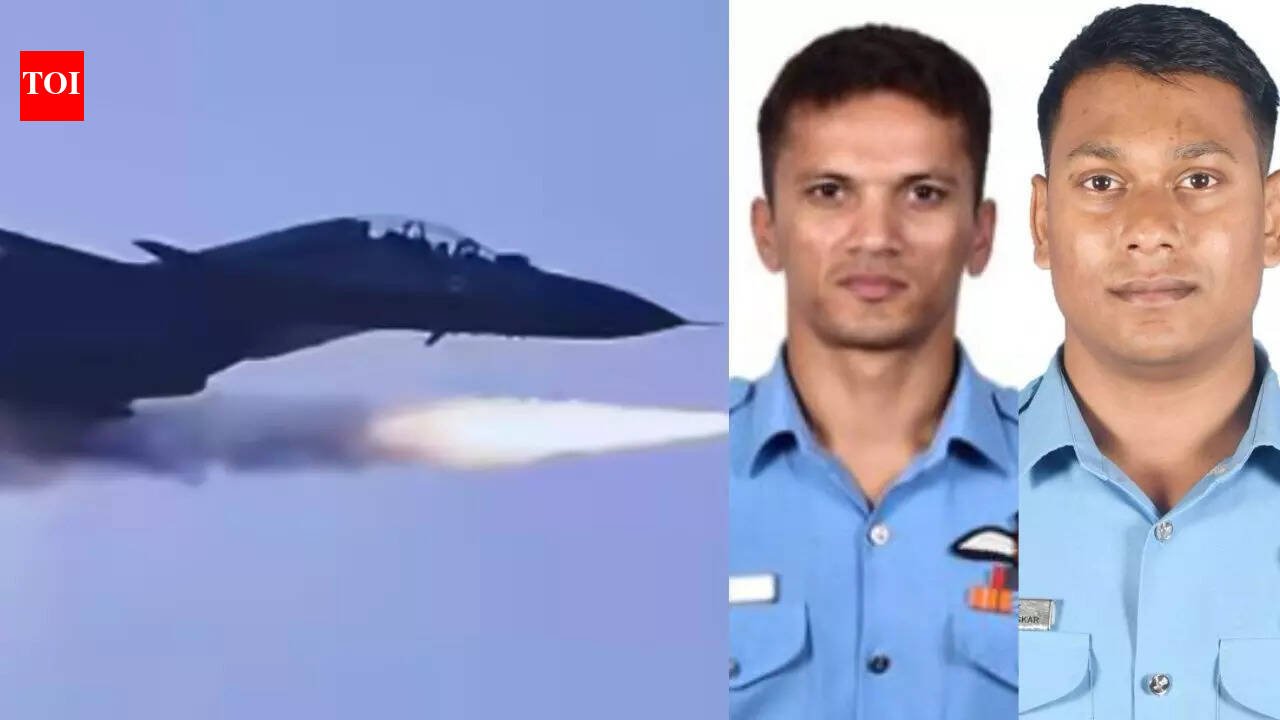
Nashik, Gwalior and now Assam: 3rd Sukhoi fighter jet crash in recent years; lost contact at 7.42pm — here’s what happened | Guwahati News


Nashik, Gwalior and now Assam: 3rd Sukhoi fighter jet crash in recent years; lost contact at 7.42pm — here's what happened
Two pilots were killed after a Sukhoi‑30MKI fighter aircraft crashed during a training mission in Assam’s Karbi Anglong district, the Indian Air Force said on Friday.

GUWAHATI: Two pilots were killed after a Sukhoi‑30MKI fighter aircraft crashed during a training mission in Assam’s Karbi Anglong district, the Indian Air Force said on Friday. The twin-engine jet had taken off from the air base at Jorhat — one of the IAF’s key forward bases in the northeast — on Thursday evening before it lost contact mid-flight. Defence PRO Lieutenant Colonel M Rawat said the last communication with the aircraft was recorded at 7.42pm. Soon after, radar contact was lost over the forested hills of Karbi Anglong, an area known for its difficult terrain and limited ground access. Local residents later reported hearing a loud explosion. Teams from the IAF, along with police, civil administration and villagers, launched a search through the night. After trekking through the hilly terrain, rescue personnel located the debris of the aircraft around 1am on Friday. “IAF acknowledges the loss of Sqn Ldr Anuj and Flt Lt Purvesh Duragkar, who sustained fatal injuries in the Su-30 crash. All personnel of the IAF express sincere condolences and stand firmly with the bereaved family in this time of grief,” the force said in a statement posted on X. Officials said the aircraft had earlier been reported “overdue” after losing radar contact. The cause of the crash is yet to be determined. The Sukhoi‑30MKI is a two-seater, long-range multirole fighter developed by Russia’s Sukhoi and produced in India under licence by Hindustan Aeronautics Limited. It forms the backbone of the IAF’s combat fleet, with the force operating more than 260 aircraft.This is not the first such accident in recent years. According to news agency PTI, a Sukhoi fighter jet crashed in Maharashtra’s Nashik district in June 2024, while another Sukhoi‑30MKI went down near the Gwalior Airbase in January 2023 shortly after take-off.


Source link

Hardik Pandya interacts with Dhoni and his son Agastya in the stands — viral video melts hearts | Cricket News


Hardik Pandya interacts with Dhoni and his son Agastya in the stands — viral video melts hearts
Hardik Pandya interacts with Dhoni and his son Agastya. (Video grabs)

NEW DELHI: India’s thrilling win over England in the semi-final of the ICC Men’s T20 World Cup at the iconic Wankhede Stadium produced many memorable moments on the field, but it was an emotional off-field interaction involving Hardik Pandya, MS Dhoni and Pandya’s son Agastya that has taken social media by storm.Go Beyond The Boundary with our YouTube channel. SUBSCRIBE NOW!Pandya played a crucial all-round role in India’s dramatic seven-run victory. The flamboyant all-rounder smashed 27 off just 12 balls to give India a late push with the bat and then returned to pick up two key wickets during England’s chase. He also produced a decisive moment in the field by running out England’s centurion Jacob Bethell, whose brilliant 105 had nearly taken the game away from India.

“Holi ki double khushi ho gayi“ India fans erupt after win against England | T20 World Cup

But the internet was equally captivated by a heartwarming moment after the match.A viral video shows Pandya looking up towards the stands to greet Dhoni, who was watching from the gallery as fans erupted in cheers. During the interaction, Pandya’s girlfriend Mahieka Sharma brought his son Agastya next to Dhoni, creating a wholesome scene that quickly spread across social media.Dhoni was then seen helping the youngster locate his father, pointing down towards the players’ tunnel that leads to the dressing room. The touching moment between the legendary former captain and the young fan — Pandya’s son — melted hearts online.An Instagram user who shared the clip summed it up perfectly: “Moments like these are pure gold.”WATCH: Earlier in the match, India had produced a batting masterclass after being asked to bat first. Sanju Samson led the charge with a blazing 89 off 42 balls, his second successive half-century of the tournament. He stitched vital partnerships with Ishan Kishan (39 off 18) and Shivam Dube (43 off 25) as India piled up a massive 253/7 in 20 overs.England fought back bravely thanks to Bethell’s sensational century, but India’s bowlers held their nerve at the death. Jasprit Bumrah delivered a brilliant 18th over, conceding just six runs, before Pandya’s tight penultimate over swung the match decisively.England eventually finished on 246/7, falling seven runs short despite a valiant effort.India will now face New Zealand in the final at the Narendra Modi Stadium on Sunday, aiming to become the first team to successfully defend the T20 World Cup title.


Source link

WI Cricket Team: ICC arranges charter flight for West Indies team’s return amid West Asia conflict | Cricket News


T20 World Cup: ICC arranges charter flight for West Indies team’s return amid West Asia conflict
West Indies celebrates (Getty Images)

MUMBAI: Forced to stay back in India following the end of their campaign in the T20 World Cup, the West Indies team might finally be able to fly home on a chartered flight on Friday with assistance from the International Cricket Council, TOI has learnt.Go Beyond The Boundary with our YouTube channel. SUBSCRIBE NOW!The departures of both West Indies and Zimbabwe were delayed after the situation in West Asia led to widespread flight cancellations and airspace closures, disrupting key transit hubs. “West Indies are likely to fly back home via a chartered flight on Friday, with assistance from the ICC. The details of this chartered flight arrangement are being worked out,” a source said.

“Holi ki double khushi ho gayi“ India fans erupt after win against England | T20 World Cup

Another source said ICC chairperson Jay Shah, CEO Sanjog Gupta and the head of events have been in regular contact with Cricket West Indies and the team management to ensure a safe return.West Indies head coach Darren Sammy posted on X on Wednesday: “I just wanna go home,” reflecting the team’s frustration at being stranded in Kolkata. The Caribbean side had been scheduled to leave soon after losing their final Super 8 match to India in Kolkata.Late on Thursday, Cricket West Indies (CWI) released a statement confirming the development. “During a high-level call earlier today, it was confirmed that a charter flight is currently being arranged for the team’s departure from India, with the expected departure scheduled within the next 24 hours. The departure time remains subject to final air traffic approvals,” the statement said.Zimbabwe leave in batchesZimbabwe, also stranded after exiting the Super 8, have begun returning home in batches after the ICC arranged alternate routes following the cancellation of their flight via Dubai. The team is travelling to Harare via Addis Ababa, with the first group leaving on Wednesday and the final group scheduled to depart on Friday afternoon, Zimbabwe Cricket said.South Africa nextThe ICC is also working on South Africa’s return travel after their semifinal loss to New Zealand. A source said the team is most likely to fly via Ethiopian Airlines, with Emirates and Etihad gradually restoring routes.


Source link

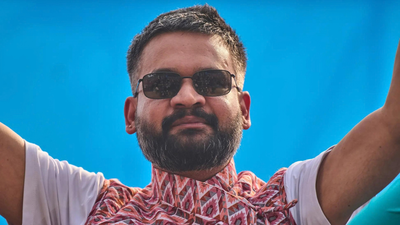
Balen Shah: Engineer, rapper, mayor, disruptor — Nepal’s next PM at 35?


Balen Shah: Engineer, rapper, mayor, disruptor — Nepal's next PM at 35?

His songs fuelled a protest generation. Now the former Kathmandu mayor is taking on ex-PM Oli and asking voters to imagine him running countryKATHMANDU: Everybody wants a selfie with Balendra Shah.In Jhapa district on Sunday, as Nepal prepared for its March 5 election, the line curved along a dusty courtyard in the eastern plains. A volunteer kept the queue moving, allowing barely 10 seconds for each supporter — a handshake, a smile, a photograph. “I am here to see Balen though I have a fever,” a seven-year-old girl said. A middle-aged woman admitted she had left a heart check-up midway. “Just for a photo.”At the centre of the crowd stood Balen — dark blazer, trimmed beard, rectangular black sunglasses. It’s a look so closely associated with him that Kathmandu shops once ran out of the frames he favours, and online retailers still sell them as ‘Balen Shah glasses’. When the man — known simply as Balen — steps onto a campaign stage, the crowd often mirrors him in black shirts and dark shades. He removes his sunglasses only briefly. “Look at me,” he says. “I love you.” Balen, who turns 36 next month, is contesting parliamentary elections from Jhapa-5 against KP Sharma Oli, 74, the four-time PM who resigned five months ago after youth-led protests left 77 people dead. Jhapa-5 lies about 300km southeast of Kathmandu, close to Nepal’s open border with India; Siliguri in West Bengal sits just across the frontier and serves as a key commercial gateway for the region. Oli leads the Communist Party of Nepal – Unified Marxist Leninist, whose networks remain deeply rooted in this eastern constituency. Balen is running under the banner of Rastriya Swatantra Party, which is less than four years old. The contest pits a first-time national candidate against one of Nepal’s most durable political figures on ground that has rarely favoured outsiders.Balen was born in Kathmandu, the youngest of four siblings. His father, Ram Narayan Shah, a govt ayurveda practitioner who died last Dec, described him as “bright and simple,” a child who wrote poems — a habit that endured. Balen studied civil engineering in Kathmandu and later completed postgraduate work in structural engineering in India. His early life suggested discipline rather than disruption.In 2013, he entered Raw Barz, Nepal’s most visible rap battle stage, and won. His lyrics were pointed and unsparing, targeting corruption, political stagnation and the inheritance of power by the same figures. “More than a rapper, he was a poet,” one organiser said. “He talked about suppressed people.”His songs travelled beyond the underground. On a Discord forum last Sept where young protesters discussed who should steer the country after Oli’s resignation, Balen’s name surfaced more than 16,000 times, making him the most frequently mentioned figure in conversations about interim leadership. Many Gen Z activists saw him as their preferred successor. He declined that role, however, and publicly backed former Supreme Court chief justice Sushila Karki instead. Balen built his following largely online, amassing millions of followers across platforms.“He speaks the language of our frustration,” said Srijan Karki, 23, a software developer. “Other leaders deliver long speeches. He makes direct statements. Even when he is angry, it feels genuine.”In 2022, running as an independent, Balen won the Kathmandu mayoralty with 61,767 votes, defeating nominees from established parties. He governed publicly and confrontationally. Bulldozers tore down illegal structures, and waste collection to Singha Durbar — which houses the PM’s office — was temporarily halted in protest over what he described as central govt inaction.When protests convulsed Nepal in Sept 2025 and demonstrators clashed with security forces after a crackdown under Oli’s govt, anger spilled onto the streets. In Nov, still serving as Kathmandu mayor, Balen channelled that fury in a midnight Facebook post: “F*** America, F*** India, F*** China, F*** UML, F*** Congress, F*** RSP, F*** RPP, F*** Maobaadi. You guys all combined can do nothing.” Two months later, he resigned as mayor and joined RSP. Balen does not regularly engage with the media. He declined Oli’s call for a public debate, instead demanding that the former PM take responsibility for civilians killed during the protests. He instead relies on social media for outreach. Across platforms, he has built an online audience unmatched in Nepal — 3.5 million followers on Facebook, 1 million each on Instagram on YouTube and 4,00,000 on X. The protests of Sept 2025 altered Nepal’s political atmosphere. Young Nepalis poured into the streets over unemployment, corruption and perceived impunity, and Oli resigned. Balen did not formally lead the demonstrations, but he became closely identified with their tone.Aayal Sah, 23, a first-time voter from Janakpur, travelled to see him speak after he joined RSP. “I cannot directly vote for Balen as he is not contesting from our area,” Sah said. “But I’ll surely vote for his party.”In Jhapa’s Damak town, Bipana Oli, 25, a migrant worker who returned from Kuwait to cast her ballot, linked her future to the outcome. “How long I continue working in Kuwait will depend on Balen’s victory,” she said. “And the job opportunities he creates.”


Source link

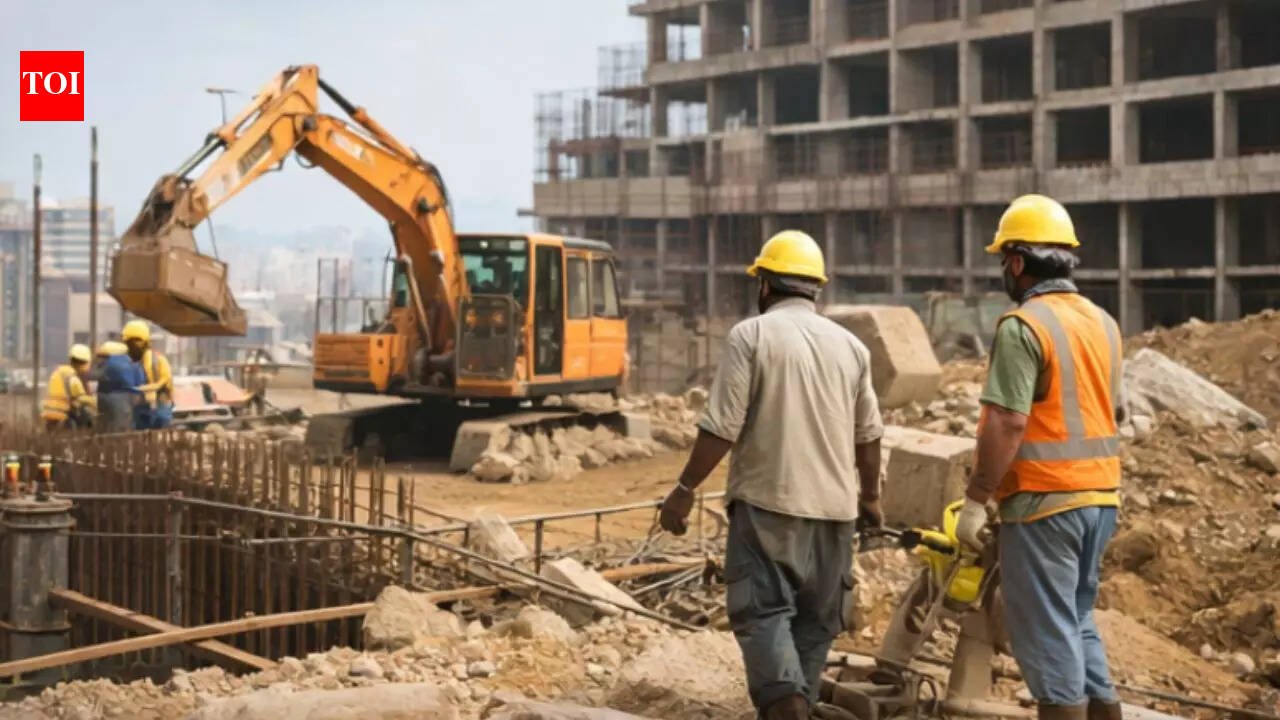
UP urban transition after 2017 – A shift to non-agricultural economy | India News


UP urban transition after 2017 - A shift to non-agricultural economy

Over the last eight years, Uttar Pradesh has undergone a structural metamorphosis. Historically viewed through its agrarian roots, the state is rapidly pivoting toward an urban-centric economy. Between 2011 and 2021, the shift from agricultural to non-agricultural employment grew at a rate of 7% per decade, outstripping the 5% growth seen in previous decades. This shift is the backbone of a new, diversified economic era for India’s most populous state.

A foundation of governance and funding

The state’s strategy began with expanding the reach of local governance. Since 2017, 117 new Urban Local Bodies (ULBs) were established and 123 were expanded to accommodate a surging urban population. This administrative expansion was backed by a massive fiscal commitment: the budget allocation for urban development saw a staggering 287% increase between 2016 and 2025.Funding via the State and Central finance commissions has also scaled dramatically:

  • State Finance Commission (SFC): Increased from Rs 6,406.09 crore in 2016-17 to Rs 14,400 crore in 2024-25.
  • Central Finance Commission (CFC): Increased from Rs 1,667.22 crore to Rs 5,118 crore in the same period.

Cleanliness as a culture: The Swachh Bharat revolution

The most visible change has been in sanitation and waste management. Uttar Pradesh has moved from a state of “planning” to one of “execution.”

Component 2014–2017 (Baseline) 2017–2025 (Achievements)
Waste processing 0% 85%
Legacy waste treated 0 112.17 lakh metric tons
Individual toilets (IHHL) 2,23,747 9,40,033
Garbage free cities (GFC) 0 83 cities
ODF+ / ODF++ status 15 (ODF) 660+ (ODF+/++)

The introduction of Integrated Command and Control Centers (ICCC) powered by AI has turned cities into “smart hubs,” allowing for real-time monitoring of waste, traffic, and even emergency response—a system that proved vital during the Covid-19 pandemic.

Infrastructure and living standards: AMRUT & PMAY

Through the AMRUT 1.0 and 2.0 missions, the state has prioritised the basic necessities of life: water and sewage.

  • Water connections: From zero structured progress in 2017 to 15 lakh connections.
  • Sewage connections: Reached 9.40 lakh households.
  • Housing (PMAY): A massive leap from 7,409 approved houses in 2017 to over 15.49 lakh by 2025.

Smart cities and modern policing

The Smart City Mission is nearing completion, with 95% of projects finished. Beyond the 10 cities selected by the Central government, Uttar Pradesh launched its own State Smart City initiative for 7 additional cities.A standout achievement is the management of Mahakumbh 2025, which utilised AI and IoT for crowd management and security, achieving a 97% success rate in “lost and found” cases and clearing 161 garbage hotspots through a dedicated force of 12,000+ workers.

Sustainability and social welfare

The “Green” agenda has seen the development of 228 acres of green area and the introduction of the UP Urban Greening Policy. Social welfare has also been modernised:

  • Animal welfare: 676 ‘gaushalas’ (cow shelters) providing refuge to 1.4 lakh cattle.
  • Aspirational cities: 100 youth-centric/underdeveloped cities have been selected for specialised infrastructure development.
  • Chief Minister Urban Creation Scheme (CM-NSY): Focused on the grassroots, constructing 2,534 km of roads and 342 km of drains in newly formed ULBs.

Conclusion

The data paints a picture of a state in a hurry to modernise. By blending technology (AI/ICCC) with massive civil engineering projects and community-led initiatives like the Swachh Bharat Mission, Uttar Pradesh has laid a robust foundation. The result is a network of cities that are not just larger, but smarter, cleaner, and more resilient.


Source link

3-acre Mumbai’s Marol ground along Mithi to become urban forest | Mumbai News


Mumbai is set to develop a 3.2-acre recreation ground in Marol.

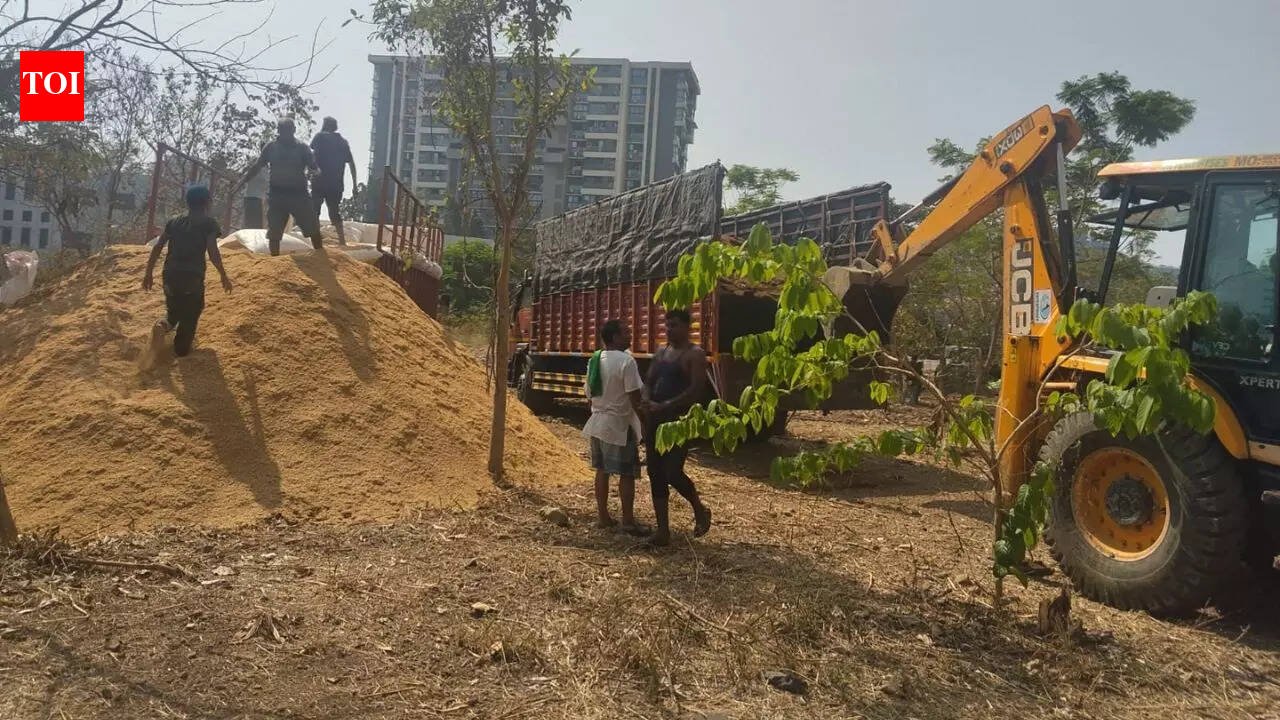
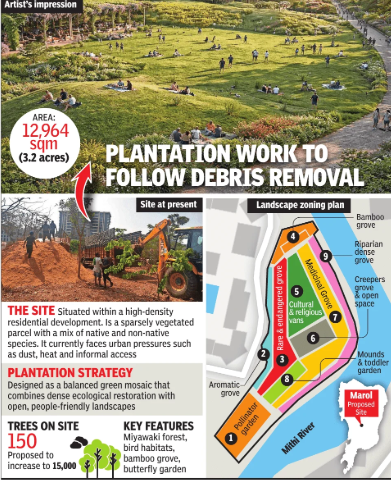
MUMBAI: A 12,964-sqm (3.2-acre) recreation ground in Marol, Andheri (East), along the Mithi River, is set to be developed into what is proposed as Mumbai’s first public urban forest. The plot, reserved as a recreation ground (ROS 1.4) under the Development Plan (DP), currently remains largely undeveloped despite housing around 150 trees. The BMC now plans to develop the space as a nature interactive centre.The concept envisions a biodiversity-focused space that integrates ecological restoration with recreational amenities for all age groups. Nitin Shukla, assistant municipal commissioner of K East ward, said the planning department had earlier proposed including the plot in the second phase of the city’s urban forest project, but the plan did not materialise. “Subsequently, it was decided to explore developing the plot through corporate social responsibility (CSR) funding instead. We have received CSR funds and work has begun,” Shukla said.

Marol recreation ground to be developed as Mumbai’s first urban forest

Marol recreation ground to be developed as Mumbai’s first urban forest.

The proposed forest will feature elements such as a Miyawaki forest patch, bird habitat zones, a bamboo arboretum, native grasslands, butterfly gardens, sacred groves and medicinal plant zones. Recently, local MLA Murji Patel wrote to the BMC stating that although the land parcel exists, it currently remains unusable for residents in his constituency and should therefore be developed into an accessible open space for the public.Deputy municipal commissioner Vishwas Mote said that in the face of climate change, such projects are a must. “Projects like these are the need of the hour. Apart from benefiting the environment, they will also help residents in the area, as the park will include public amenities such as natural walking pathways, children’s play areas, lawns, open-air fitness zones, senior citizen seating spaces, and specially designed gardens for children and the elderly,” Mote said.While work on the project has already begun, it is expected to be completed within the next year, said Pradeep Tripathi, founder of the NGO Green Yatra, which is implementing the project through CSR funding.“The timeline is mainly because the plot has a large amount of debris that needs to be cleared before plantation can begin. After plantation, we also need the trees to grow to a certain height before opening the space to the public, so that they can withstand possible damage,” Tripathi said. “The plan includes planting flowering trees as well as species that attract birds throughout the year. The park will also feature a dedicated toddler zone with a play area designed for children below two years of age.


Source link

ATS crackdown in Mumbai: Engineering student arrested for sharing terror propaganda; devices seized | Mumbai News


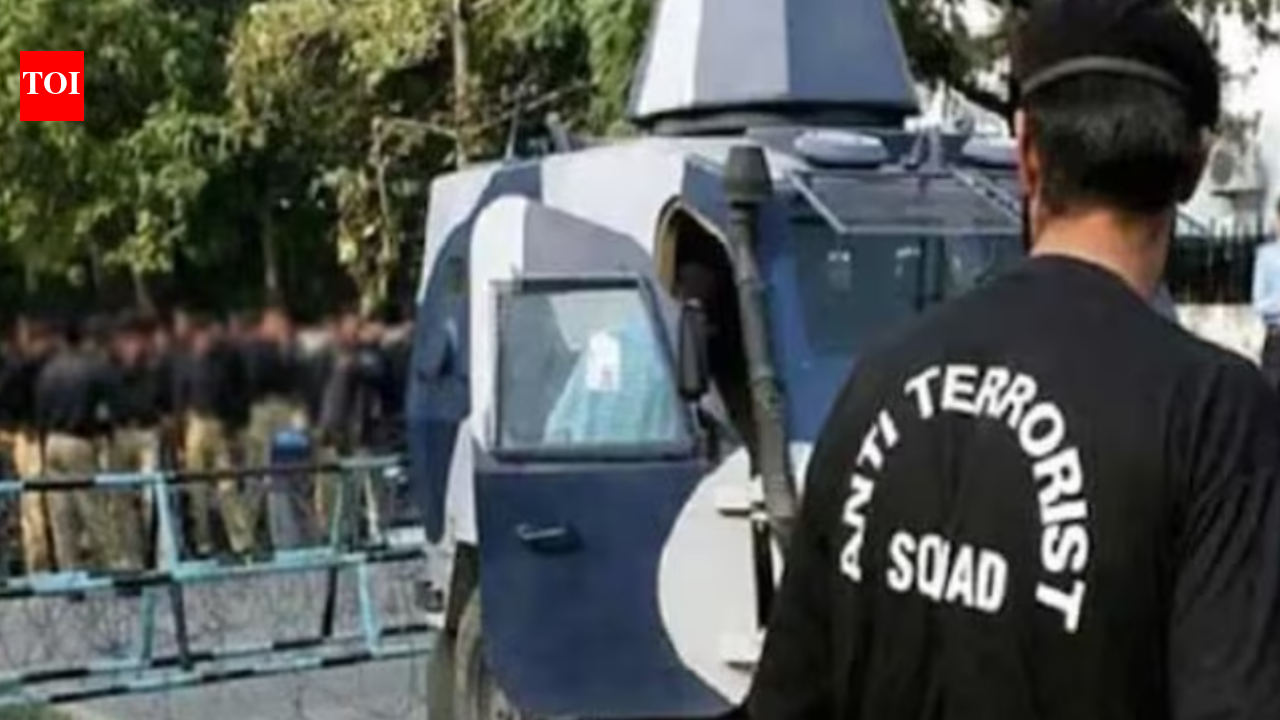
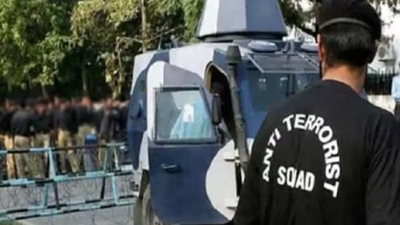
MUMBAI: The Maharashtra Anti-Terrorism Squad (ATS) has arrested an engineering student from Mumbai for allegedly sharing online propaganda material linked to banned terrorist organisations, an official said. According to the official, two other individuals are also under investigation in connection with the case. The ATS recently conducted search operations at multiple locations across the city as part of an investigation into suspected online radicalisation linked to banned terror outfits, he said on Thursday. Following the operation, a case was registered under the Unlawful Activities (Prevention) Act (UAPA), and engineering student Ayan Sheikh was taken into custody, he said. Electronic devices, including a laptop and mobile phones, were seized during the searches and have been sent for forensic examination, the official added. Sheikh had earlier come under the radar of investigating agencies for allegedly being associated with extremist propaganda circulating on social media and encrypted messaging platforms.“The ATS had received specific intelligence inputs regarding the dissemination of propaganda related to banned terror outfits such as Jaish-e-Mohammed and Islamic State. Based on the information, coordinated search operations were conducted late Monday night at premises in Kurla, Govandi and Shivaji Nagar in Mumbai,” the official said. During the examination of Sheikh’s devices, investigators allegedly found several audio and video clips linked to Masood Azhar, chief of terror organisation Jaish-e-Mohammed (JeM), he said.“Sheikh was active on encrypted messaging platforms and Telegram channels where extremist content was circulated. Multiple chats were also recovered, suggesting attempts to promote terrorist recruitment. He allegedly shared extremist material, attempted to recruit individuals and may have been involved in facilitating funding for extremist activities,” the official said. The ATS also found that Sheikh had allegedly tried to influence two other youths, both engineering students and his close friends, by exposing them to radical content and adding them to Telegram groups carrying propaganda of JeM and ISIS, the official informed. During coordinated raids in Govandi and Kurla, officials found that the two youths had accessed extremist material shared by Sheikh. However, investigators said they were not actively involved in any terror-related activities, adding that their statements have been recorded as part of the ongoing probe. Sheikh was questioned for several hours, during which he reportedly disclosed suspicious communications with foreign handlers and individuals linked to banned terror organisations, including JeM and ISIS (Islamic State of Iraq and Syria), the official said. According to sources, several foreign nationals and suspected facilitators were part of these encrypted messaging groups, believed to be associated with sleeper networks and recruitment cells. Officials further noted that several youths and individuals from different states across India were active members of these encrypted groups. Records show they frequently exchanged extremist content, guidance on radicalisation and instructions related to recruiting new members, they added. Investigators are currently analysing digital footprints to map the network involved, identify individuals undergoing radicalisation and trace operational links with possible local sleeper cells, he said.“Digital evidence and communication records have also been shared with agencies in other states to coordinate a wider investigation and prevent potential recruitment at the local level. The ATS is also probing Sheikh’s financial transactions and digital trail to identify funding channels and logistical support allegedly used for extremist activities,” he said. The accused will be produced before a special court in Mumbai on Friday, the official added, noting that further arrests in the case cannot be ruled out as the investigation progresses.


Source link

Asian stocks today: Kospi drops 1.6% as Middle East tensions weigh on markets


Asian stocks today: Kospi drops 1.6% as Middle East tensions weigh on markets

Asian stocks mostly fell on Friday as the ongoing conflict in the Middle East continued to unsettle global markets, while oil prices remained elevated despite some efforts to ease supply concerns.After a difficult week on trading floors, investors are heading into the weekend uncertain about when the US-Israel war on Iran and Tehran’s attacks across the Gulf region might end.Global equities have been battered by the crisis, which has pushed crude prices sharply higher and raised fears of renewed inflation that could weigh on the global economy. Oil prices have surged by about a fifth since last Friday, the day before the attacks began.Although markets saw a rebound in the middle of the week, analysts warned that the longer the conflict continues, the more pressure it will put on financial markets.“It is too soon to suggest that stocks have bottomed,” wrote IG chief market analyst Chris Beauchamp, as quoted by AFP.“Unless the war ends soon- and if anything a more intense conflict seems more likely- markets will struggle. Volatility remains elevated, which means we should expect plenty of two-way price action, but a continued decline for the moment seems likely, even with short-term bounces along the way.”The conflict also appears unlikely to ease soon. Iranian foreign minister Abbas Araghchi said Thursday that Iran was neither seeking a ceasefire nor negotiations with the United States.Asian markets largely followed losses on Wall Street, where all three main indexes ended lower despite staging late rallies.Seoul again saw sharp movement. The Kospi index, which plunged nearly 19 percent on Tuesday and Wednesday before rebounding more than nine percent on Thursday, fell another 1.5 per cent.Sydney, Singapore, Wellington, Manila and Jakarta were also down, while Tokyo, Hong Kong, Shanghai and Taipei managed gains.Concerns about rising crude prices have also intensified fears that inflation could climb again, potentially forcing central banks to reconsider plans to cut interest rates, with some analysts warning that rate hikes could even return.While Iran has not officially shut off the Strait of Hormuz, shipping through the key waterway has all but dried up. Around a fifth of the world’s crude supply and large volumes of gas normally pass through the strait.There was some relief in oil markets after US Interior Secretary Doug Burgum said officials were considering measures to ease the surge in prices.The White House also temporarily eased sanctions against Russia on Thursday, allowing Russian oil currently stranded at sea to be sold to India until April 3.Treasury Secretary Scott Bessent said the waiver was issued “to enable oil to keep flowing into the global market.”Earlier this week, US President Donald Trump pledged to protect ships passing through the Strait of Hormuz.Other countries have also taken steps to secure supplies. According to Bloomberg News, China has asked its largest oil refiners to suspend exports of diesel and gasoline amid fears of shortages.Despite the small pullback, oil prices remain high. By the end of trading Thursday, Brent crude had risen about 19 percent since last Friday, while West Texas Intermediate had climbed more than 22 percent, briefly crossing $80 a barrel for the first time since January last year.Investors are also watching the release of US jobs data later on Friday for clues about the strength of the world’s largest economy.At around 0230 GMT, oil prices were higher, with West Texas Intermediate rising 2.0 percent to $79.38 per barrel and Brent North Sea Crude up 1.5 percent at $84.10 per barrel. In equity markets, Seoul’s Kospi fell 1.6 percent to 5,497.51, while Tokyo’s Nikkei 225 rose 0.4 percent to 55,490.04. Hong Kong’s Hang Seng Index gained 0.9 percent to 25,557.59 and Shanghai’s Composite edged up 0.1 percent to 4,111.86. In currency trading, the euro strengthened to $1.1617 from $1.1604 on Thursday, while the pound rose slightly to $1.3367 from $1.3357. The dollar slipped to 157.51 yen from 157.55 yen, and the euro rose to 86.91 pence from 86.87 pence.


Source link

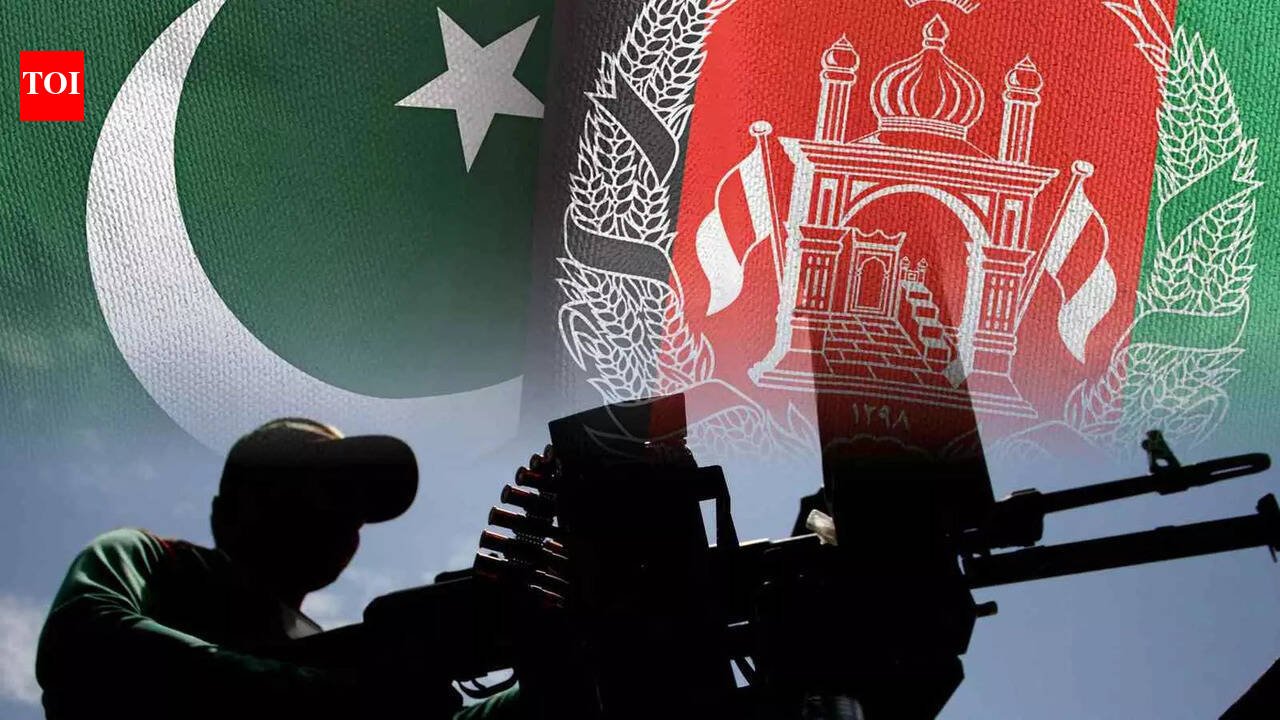
‘Almost all targets achieved’: Pak PM Sharif’s aide claims success in Afghanistan conflict


Pakistan has achieved nearly all of its objectives in the recent military operation against Afghanistan, according to Rana Sanaullah, special assistant to Prime Minister Shehbaz Sharif, on Thursday.Islamabad launched Operation Ghazab lil-Haq last week in response to attacks by the Afghan Taliban forces on more than 50 locations along the over 2,600-kilometer border between the two countries. The Taliban attack followed Pakistan’s airstrikes in eastern Afghan provinces targeting alleged militant camps.

Still Reeling From India’s Strikes, Pakistan’s Nur Khan Air Base Hit Again By Taliban Drones

“Pakistan’s targets in Operation Ghazab lil-Haq in Afghanistan have almost been achieved and are being fortified now. Our only demand from Afghanistan was that it should not allow its soil to be used for terrorism against us,” Sanaullah, a former interior minister, told a private news channel.He further stated that Islamabad expects Kabul to immediately withdraw support for the Tehreek-e-Taliban Pakistan (TTP).Meanwhile, Pakistan’s Information Minister Attaullah Tarar reported that its armed forces have killed 481 Afghan Taliban personnel so far.“As of March 4, security forces have killed 481 and injured over 696 Afghan Taliban personnel, destroyed 226 check posts, and captured 35 posts,” Tarar wrote in a post on X.He added that 198 tanks, armoured vehicles, and artillery guns have been destroyed, while air strikes have targeted 56 locations across Afghanistan.The strikes followed Pakistan’s air operations last Thursday, after the Taliban said it had conducted “large-scale offensive operations” against Pakistani military positions along the shared border.Afghan authorities claimed that dozens of Pakistani soldiers were killed and that 19 army posts and two bases were destroyed in the attacks.Pakistan’s defense minister, Khawaja Asif, later stated that Islamabad is conducting an “open war” against Kabul, citing concerns that Tehreek-e-Taliban Pakistan (TTP) fighters were using Afghan territory to target Pakistan.Relations between the neighbours, which share a 2,611-kilometer-long border, have deteriorated significantly since October of last year.(With PTI inputs)


Source link