Breaking News
Uae Flight Disruption: West Asia conflict: 80 Indira University students among 111 Pune residents flown back from UAE | Pune News


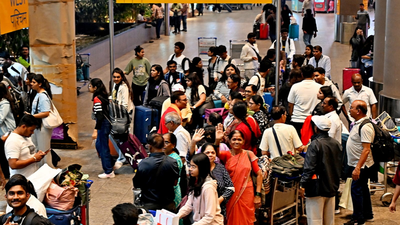
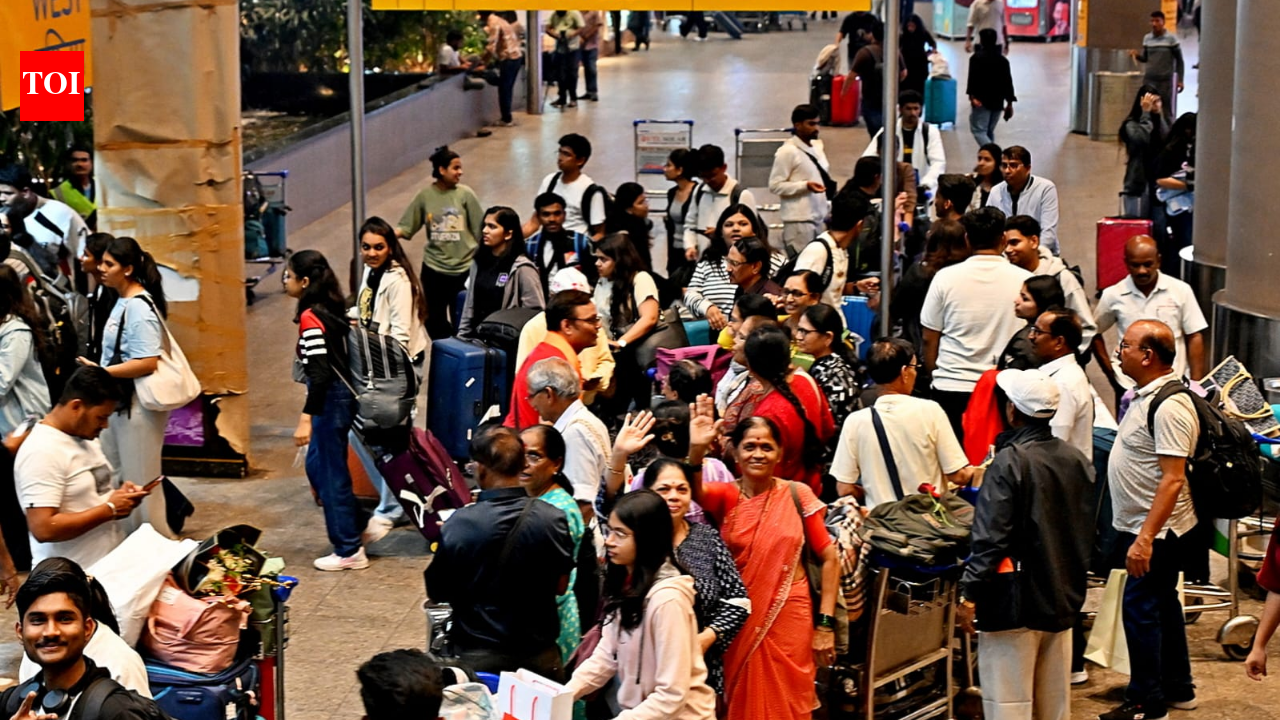
80 students among 111 Pune residents back from Dubai (Uma Kadam/ TOI)

PUNE: A total of 111 residents from Pune district, including students stranded in Dubai due to the ongoing US-Israel-Iran military conflict, have safely returned home, the district administration confirmed on Wednesday.Authorities said that 184 residents from Pune were initially stuck in the United Arab Emirates (UAE) city, and efforts are ongoing to bring back the remaining travellers. Among those who returned were 80 students and four faculty members from the Indira School of Business Studies (ISBS).

Middle East crisis Hits Aviation: 1,500 Flights Scrapped As Air India Ramps Up Capacity

Across Maharashtra, 164 tourists stranded in the UAE due to the escalating conflict in West Asia have returned in two special flights arranged by Deputy chief minister Eknath Shinde, a Shiv Sena leader, officials said. The flights, which landed at Mumbai International Airport on Tuesday night, brought back travellers from Pune, Thane, and Ahilyanagar districts.The district collector, Jitendra Dudi, added that flights for 19 Pune residents still stranded in Dubai have been rescheduled, while arrangements for the remaining 54 travellers are underway.Dr Janardhan Pawar, Dean at Indira University, expressed gratitude to the Centre and the Maharashtra government for facilitating the safe return of the ISBS students and faculty.Flight operations to most West Asian airports have been disrupted since Saturday due to the conflict, leaving thousands of passengers stranded. The Centre and Maharashtra government have issued advisories urging Indian citizens abroad to stay safe, remain vigilant, avoid unnecessary movement, and follow instructions from local authorities and Indian embassies.In case of emergencies, citizens are advised to contact the 24×7 helpline numbers of the respective Indian embassies. The Maharashtra government has appealed to its residents abroad to stay patient and rely only on official information.For assistance within Pune district, citizens can contact the District Disaster Management Control Room at 020-26123371 or 26133522, Dudi added.(With agency inputs)


Source link

T20 World Cup 2026 [WATCH]: MS Dhoni’s priceless reaction to wife Sakshi’s early celebration during IND vs ENG semi-final goes viral


Former India captain MS Dhoni once again proved why his composure is admired by millions, even when he is off the field. During the India vs England semi-final of the ICC Men’s T20 World Cup 2026 at Wankhede Stadium in Mumbai, Dhoni produced a hilarious reaction to his wife Sakshi Dhoni’s premature celebration, and the moment quickly went viral across social media.

While the game itself turned out to be a nail-biting contest, Dhoni’s humorous gesture in the stands became one of the most talked-about highlights of the night.

Sakshi Dhoni celebrates too early in the stands

The incident took place during England’s tense run chase after India had posted a massive 253/7 in their 20 overs. In the 18th over, a dramatic moment unfolded when Jasprit Bumrah appeared to take a catch off his own bowling.

From the stands, Sakshi thought England batter Sam Curran had been dismissed. Convinced the wicket had fallen, she immediately began celebrating enthusiastically along with fans nearby.

However, replays quickly showed that the ball had bounced before reaching Bumrah, meaning Curran was not out and the game continued. Sakshi’s early celebration instantly caught the attention of people seated around her, including her husband Dhoni.

MS Dhoni’s hilarious response goes viral

Known for his cool-headed nature on the cricket field throughout his career, Dhoni displayed the same calm demeanor in the stands.

As Sakshi continued celebrating, Dhoni gently gestured toward her with a playful expression, indicating that the catch had not been taken cleanly and the batter was still safe. His subtle but humorous reaction had spectators smiling and soon became a trending moment online.

Fans quickly shared clips of the interaction across social media platforms, praising Dhoni’s trademark composure and lighthearted response.

Here’s the video:

Also WATCH: T20 World Cup 2026 – Axar Patel plucks a jaw-dropping catch to dismiss Harry Brook in IND vs ENG semi-final

India beat England to secure final berth

India booked their place in the T20 World Cup 2026 final after defeating England by seven runs in a thrilling semi-final at Wankhede Stadium in Mumbai. Batting first, India posted a formidable 253/7 in 20 overs, powered by a brilliant 89 off 42 balls from Sanju Samson and a quickfire 43 from 25 deliveries by Shivam Dube, which put England under immediate pressure.

In response, England mounted a strong fightback through Jacob Bethell, who smashed an impressive 105 off 48 balls, keeping the chase alive deep into the innings. However, India’s bowlers held their nerve in the final overs to restrict England to 246/7, sealing a narrow victory and securing a spot in the final against New Zealand, scheduled for March 8 at the Narendra Modi Stadium in Ahmedabad.

Also READ: Harry Brook reveals key reason behind England’s defeat in the T20 World Cup 2026 semi-final against India


Source link

‘Like having a genie’: Faf du Plessis in awe of Jasprit Bumrah after India’s dramatic T20 World Cup semifinal win | Cricket News


‘Like having a genie’: Faf du Plessis in awe of Jasprit Bumrah after India’s dramatic T20 World Cup semifinal win
Jasprit Bumrah celebrates the run out of Jacob Bethell of England. (Getty Images)

NEW DELHI: Former South Africa captain Faf du Plessis heaped glowing praise on India pace spearhead Jasprit Bumrah after the fast bowler’s decisive spell helped India edge past England by seven runs in the semifinal of the ICC Men’s T20 World Cup at the Wankhede Stadium.Go Beyond The Boundary with our YouTube channel. SUBSCRIBE NOW!Calling Bumrah a match-winner across formats, du Plessis said having him in the team was “like having a genie”.India had earlier piled up a massive 253/7 riding on a stunning 42-ball 89 from Sanju Samson. But England threatened to chase it down thanks to a sensational hundred from Jacob Bethell.

India in T20 World Cup final: Small contributions which had HUGE impact

With England needing 45 runs from the last three overs and momentum on their side, the match swung dramatically when captain Suryakumar Yadav handed the ball to Bumrah for the crucial 18th over.In a game where bowlers had been hammered all around the park, Bumrah conceded just six runs, effectively turning the tide. England eventually finished at 246/7, falling agonisingly short despite Bethell’s 105.Speaking on ESPNcricinfo’s TimeOut show, du Plessis said India might not fully realise how fortunate they are to have a bowler like Bumrah.

Poll

Did Bumrah’s performance change the outcome of the semifinal match against England?

“Team India don’t understand how lucky they are to have him in their ranks,” du Plessis said. “It is just proven time and time and time again, regardless of the format — you just give him the ball and he wins you games.”“It’s a superpower that any captain will dream of. It’s like having a genie — you just rub the lamp and out comes Bumrah,” he added.Du Plessis highlighted how even Bumrah’s occasional errors become difficult for batters to capitalise on because of his unique action and late release.“They know it’s going to be full — yorker or slower ball. He bowled two low full tosses in that over and both times Sam Curran was late on the ball. Any other bowler missing length like that goes for six,” he explained.“He’s got such a unique action that it’s hard to pick how quickly the ball comes out of his wrist. That mystery makes it very hard to line him up.”Bumrah finished with figures of 1/33 from four overs in a match that produced a staggering 499 runs. As India prepare for the final against New Zealand, the hopes of a billion fans will once again rest on their “genie with the ball.”


Source link

UV radiation alert in Bengaluru, Kerala: ‘Cause for concern’: No heatwave yet but UV radiation already worry in Bengaluru, Kerala; what you need to know | Bengaluru News


'Cause for concern': No heatwave yet but UV radiation already a worry in Bengaluru, Kerala; what you need to know
Image Used For Representational Purpose Only (PTI Photo)

BENGALURU: Even before the peak summer months set in, parts of south India are witnessing an unusual rise in ultraviolet (UV) radiation levels. In Bengaluru, a relatively moderate maximum temperature of 32°C recorded on Tuesday was accompanied by a sharp spike in UV radiation. The city’s afternoon UV Index climbed to 13 — classified as “extreme” under World Health Organization (WHO) standards. Weather officials said the sudden surge in UV levels, rather than the temperature itself, was the more worrying development. The rapid jump in UV levels — from 10 to 13 in under two days — has raised concern among experts.UV intensity is influenced largely by the thickness of the ozone layer, which acts as a protective shield by absorbing much of the Sun’s harmful radiation.

Radiation alert in Kerala

Authorities in Kerala have also flagged similar concerns. The Kerala State Disaster Management Authority (KSDMA) issued an ultraviolet radiation alert after several districts recorded high UV Index values. Konni, Chengannur and Munnar recorded a high UVI of 8, while Kottarakkara, Changanassery, Ollur, Thrithala and Mananthavady recorded UVI levels of 7. Earlier, the authority noted that districts including Kollam, Pathanamthitta, Alappuzha, Kozhikode and Palakkad had recorded a UV index of seven, while Idukki touched eight. KSDMA warned that continuous exposure to UV radiation for long periods can lead to sunburn, skin diseases, eye problems and other health issues. The highest UV radiation levels are typically recorded between 10am and 3pm.

Precautions to take during high UV radiation:

  • Avoid direct sunlight between 11am and 3pm, when UV radiation is at its strongest.
  • Wear sunscreen with SPF 30 or higher and reapply every 2–3 hours if outdoors.
  • Use protective clothing such as full-sleeve shirts, caps or wide-brimmed hats.
  • Wear UV-protection sunglasses to prevent eye damage.
  • Stay well hydrated by drinking plenty of water and fluids.
  • Seek shade whenever possible, especially during peak afternoon hours.
  • Avoid prolonged outdoor work or exercise during extreme UV conditions.
  • Watch for signs of sunburn, dizziness, dehydration or heat exhaustion and seek rest immediately.

Risks of high UV radiation exposure:

  • Sunburn and skin irritation after even short periods in direct sunlight
  • Premature skin ageing, including wrinkles and pigmentation
  • Eye damage, such as irritation and long-term vision problems
  • Increased risk of skin cancer with prolonged or repeated exposure
  • Dehydration due to intense heat and sun exposure
  • Heat exhaustion, especially during extended outdoor activity
  • Heatstroke in severe cases, particularly among outdoor workers and vulnerable groups


Source link

US-Iran war impact: Emergency powers invoked, India asks refiners to step up LPG output to avoid cooking gas shortage – report


US-Iran war impact: Emergency powers invoked, India asks refiners to step up LPG output to avoid cooking gas shortage - report
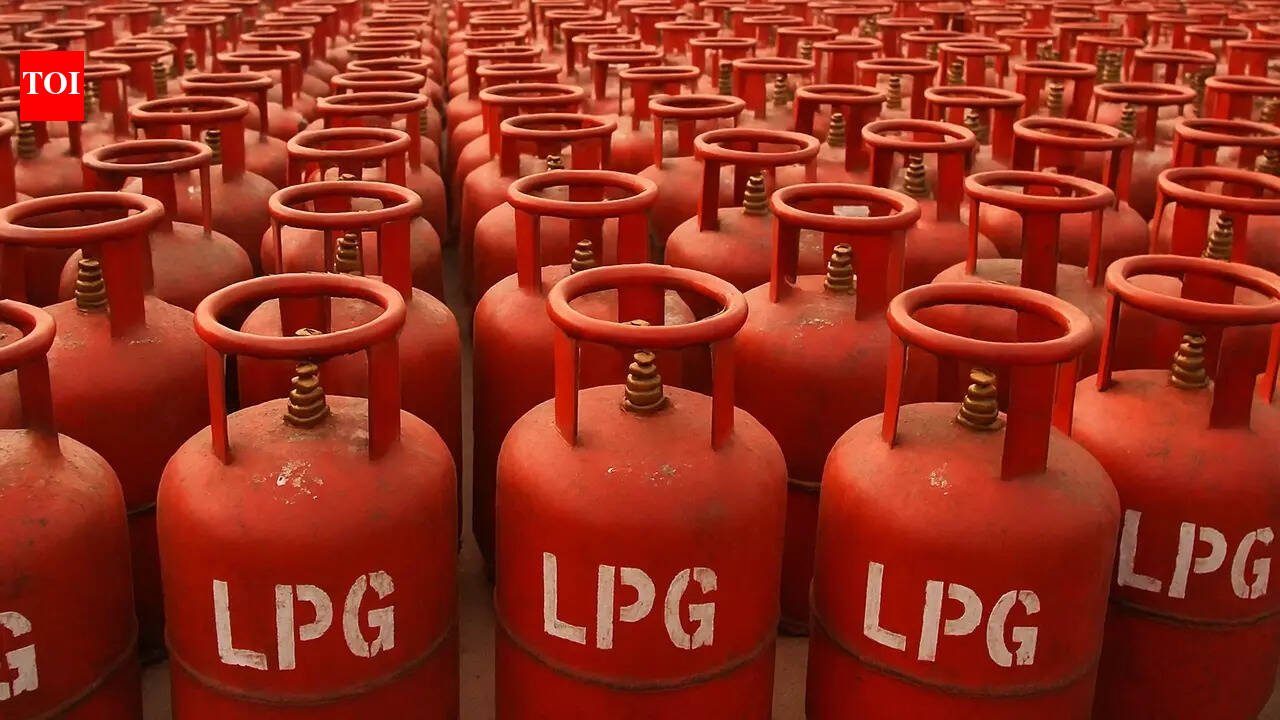
The government has also directed producers to supply LPG, propane and butane to state-run refiners. (AI image)

Middle East crisis impact: The government has activated emergency provisions to ensure there is no shortage of liquefied petroleum gas (LPG) in wake of the ongoing US-Israel-Iran war that has hit India’s imports of the energy source. India, which was the world’s second-largest LPG importer last year, consumed 33.15 million metric tonnes of the fuel. LPG is a blend primarily composed of propane and butane.Around two-thirds of India’s LPG demand is met through imports, with the Middle East accounting for roughly 85 to 90 per cent of those supplies. According to a Reuters report, emergency powers have been invoked and domestic refiners have been instructed to increase the production of LPG in order to avert a potential shortage.

India Moves To Step Up LPG Output

Under the directive issued late on Thursday, all oil refiners have been told to maximise LPG output by ensuring that the propane and butane available with them are fully utilised for cooking gas production, the report said.Also Read | Israel-Iran war: What US 30-day waiver on Russian oil means for India – explainedThe government has also directed producers to supply LPG, propane and butane to state-run refiners Indian Oil Corp, Hindustan Petroleum Corp and Bharat Petroleum Corp so that these companies can maintain uninterrupted distribution to households.Government data shows that India currently has around 332 million active LPG consumers.The compulsory diversion of propane and butane toward LPG production is expected to reduce the output of alkylates, a component used in blending gasoline, particularly affecting production by Reliance Industries Ltd, the Reuters report said.

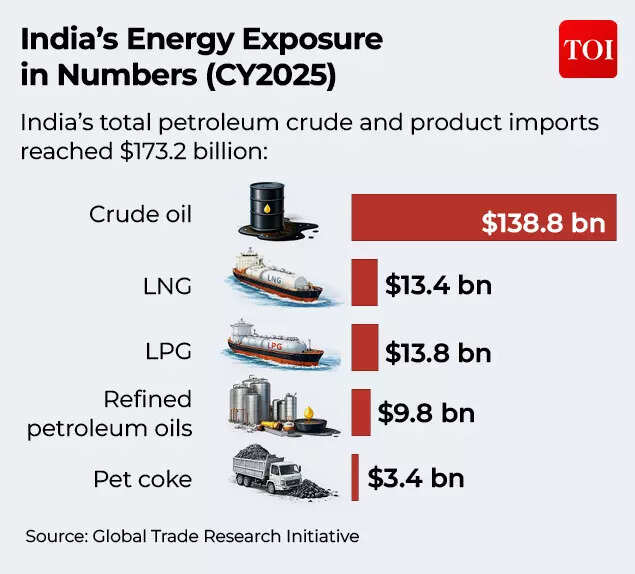
India’s Energy Exposure in Numbers (CY2025)

According to data from LSEG, Reliance exported roughly four alkylate cargoes every month last year.The government has also instructed refiners not to use propane and butane for petrochemical manufacturing.A trade source was quoted as saying that redirecting propane and butane for LPG production would squeeze margins for petrochemical companies that produce items such as polypropylene and alkylates, as these products typically command higher prices than LPG.According to Global Trade Research Initiative, India imported $13.9bn worth of LPG from West Asia in 2025, which is 46.9 per cent of its LPG imports. LPG remains the primary cooking fuel for millions of households.

India Eyes Alternative LPG & LNG Sources

According to a PTI report, India has approached the United States to arrange maritime insurance protection for vessels transporting oil from the Middle East, as the country seeks to maintain stable energy supplies beyond its existing reserves.The official said the ministry is currently holding discussions with leading producers and trading firms to secure supplies of crude oil, LPG and liquefied natural gas (LNG).“We are in touch with US authorities for getting a cover from the International Development Finance Corporation for vessels to transit the Strait of Hormuz,” he said.US President Donald Trump has directed the multilateral financial institution to extend political risk insurance and financial guarantees to support maritime trade in the region.However, the official noted that before the IDFC can offer such coverage, a fund worth several hundred million dollars must first be created to support the insurance mechanism. He added that the insurance premium would be borne by the parties involved in the cargo contracts.The government is also negotiating with suppliers such as Sonatrach and Abu Dhabi National Oil Company, along with global trading houses including TotalEnergies, Vitol and Trafigura, to secure additional oil and gas shipments.In addition, the official said India has increased its imports of crude oil and LPG from the United States.


Source link

UP economy sees surge in credit distribution and industrial investment | India News


UP economy sees surge in credit distribution and industrial investment

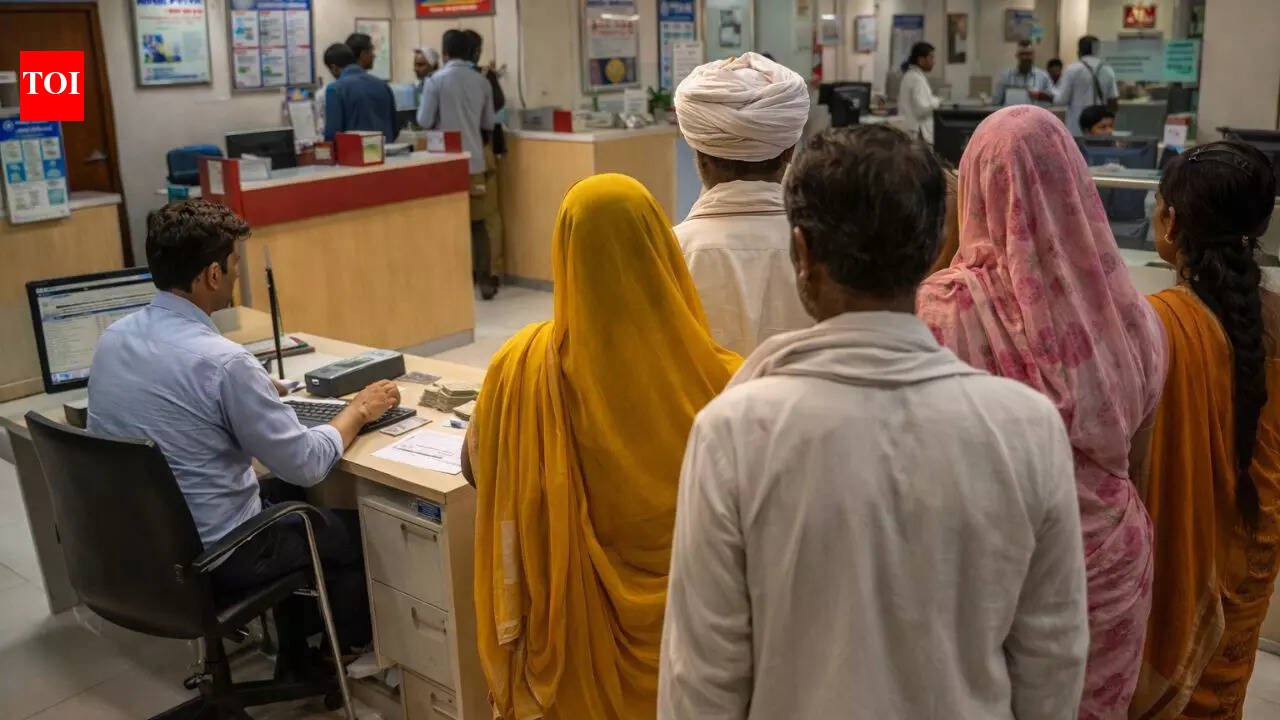
Uttar Pradesh is witnessing a historic transformation in its financial landscape. Recent data reveal a massive surge in credit distribution, industrial investment, and banking accessibility, signalling a robust shift toward economic self-reliance and manufacturing-led growth.

1. Credit-Deposit (CD) ratio: A surge in financial momentum

The Credit-Deposit (CD) Ratio is a key indicator of how effectively a state is utilising its bank deposits for local lending and development.

  • Significant growth: The CD ratio in Uttar Pradesh has jumped to 60% in 2024, up from 43% in 2017. This follows decades of sluggish growth and represents a major shift in the state’s financial health.
  • Bridging the gap: This improvement reflects better credit access and rising confidence in the state’s economy. To put this in perspective, the ratio was at a historic low of 32.8% in 1990.
  • Banking infrastructure: The state has significantly expanded its reach through:
    • 20,416 bank branches
    • 4,00,932 Bank Mitras and BC Sakhis
    • 18,747 ATMs
    • Total: 4,40,095 banking touchpoints providing financial services across the state.

2. Industrial credit: Boosting manufacturing-led development

The state has successfully doubled its industrial credit in just seven years, highlighting its commitment to becoming a manufacturing hub.

  • Doubling the investment: Industrial credit has grown from Rs 82,800 crore in 2017 to Rs 1.68 lakh crore in 2024.
  • Policy intervention: This growth is attributed to strong policy interventions, infrastructure development, and active efforts to encourage investors.
  • Private investment: This consistent focus has not only attracted large-scale private investment but has also boosted the confidence of financial institutions in the state’s industrial sector.

3. Total credit distribution: 3x capital availability

The overall availability of capital in Uttar Pradesh has seen an exponential rise, empowering entrepreneurs and rural development.

  • Rapid allocation: The total outstanding credit in Uttar Pradesh rose from Rs 3.54 lakh crore in 2017 to Rs 9.24 lakh crore in 2024. This is a 2.6x increase in just seven years.
  • Historical context: In 1990, the total credit was a mere Rs 7,200 crore, and by 2004, it had only reached Rs 39,600 crore. The recent spike demonstrates a massive increase in credit absorption capacity.
  • Enabling policies: Key drivers for this growth include:
    • Expansion of digital financial services and banking infrastructure.
    • Support for MSME financing and agricultural credit schemes.
    • Financial Inclusion: Initiatives like universal Jan Dhan account coverage, the BC Sakhi Yojana for doorstep banking via female agents, and the 2025 Gram Panchayat Financial Saturation Campaign.


Source link

Watch: Israel shares video of precision strikes in Beirut; Hezbollah’s military infrastructure hit


Watch: Israel shares video of precision strikes in Beirut; Hezbollah's military infrastructure hit

The Israeli Defence Forces released a footage showing what it described as an overnight strike targeting headquarters of Hezbollah in Lebanon’s Beirut. In a social media post on X, IDF said that it launched its twenty sixth wave of strikes in Dehiya since the start of its campaign and targeted headquarters and 10 high-rise buildings containing military infrastructure of Hezbollah.“The IDF completed a broad wave of strikes in Beirut overnight, targeting terror infrastructure of the terror organisation Hezbollah. As part of the strikes, the headquarters of the Executive Council was struck, along with a warehouse where unmanned aerial vehicles were stored, which Hezbollah uses in attacks towards the State of Israel,” IDF said.“The headquarters that were struck were intended to serve the terror organisation Hezbollah in advancing various terror plots against IDF forces and civilians of the State of Israel. Prior to the strike, steps were taken to minimise the risk of harm to civilians, including advance warnings, use of precision munitions, and aerial observations. The IDF will continue to act forcefully against the terror organisation Hezbollah, which decided to join the campaign and operate under the auspices of the Iranian terror regime, and will not allow harm to civilians of the State of Israel,” it added.Meanwhile, The New York Times reported that the strikes were conducted in a densely populated commercial and residential area in the Beirut region that is a stronghold of the Lebanese militant group.A series of violent strikes then rocked the city, the most intense barrage since a ceasefire in late 2024 paused fighting between Israel and Hezbollah, which is backed by Iran. As explosions shook the city, collapsing at least three buildings, residents fled.The attacks continued into the early morning hours, with more than 10 Israeli airstrikes targeting a minimum of five areas in the southern suburbs before dawn. And drones continued to hover over Beirut.Hezbollah joined the Middle East crisis, opening up another front in the war. The militants launched projectiles into northern Israel overnight Sunday for the first time in more than a year and the Israeli military quickly retaliated, declaring that Hezbollah had violated the truce.Hezbollah said it was responding to Israel’s violations throughout the truce, as well as the killing of Ayatollah Ali Khamenei, Iran’s Supreme Leader, who died in a strike on his compound in Tehran on Saturday.The Israeli military had been attacking Hezbollah’s infrastructure and capabilities amid the ceasefire, arguing that the Lebanese military was failing to promptly disarm the powerful militant group as the truce deal required.Late Thursday, Lebanon’s health ministry reported that 123 people had been killed and 683 wounded in the recent Israeli attacks.Earlier in the day, the streets of Beirut erupted in chaos after the Israeli military warned people to leave the southern suburbs, prompting fears that it would soon begin a large-scale bombing campaign there. The Israeli military had attacked in the Beirut area on Wednesday night as well.


Source link

Nitin Kumar Rajya Sabha: Desi Maduro model, political abduction, leadership coup: Reactions pour in over Nitish Kumar’s Rajya Sabha plan | Patna News


Bihar chief minister Nitish Kumar confirmed his Rajya Sabha nomination, sparking political uproar. Opposition leaders criticized the move, calling it a “leadership coup” and “political abduction” orchestrated by the BJP, betraying the people’s mandate.

PATNA/NEW DELHI: Bihar chief minister Nitish Kumar on Thursday confirmed that he will file his nomination for the Rajya Sabha in the current cycle of elections.The announcement has sent shockwaves through the political landscape of Bihar, coming just months after his resounding fifth electoral victory in 2025 and his tenth oath as Chief Minister.

‘Maha Strategy Repeated’: Opposition Hits Out at BJP After Nitish RS Move

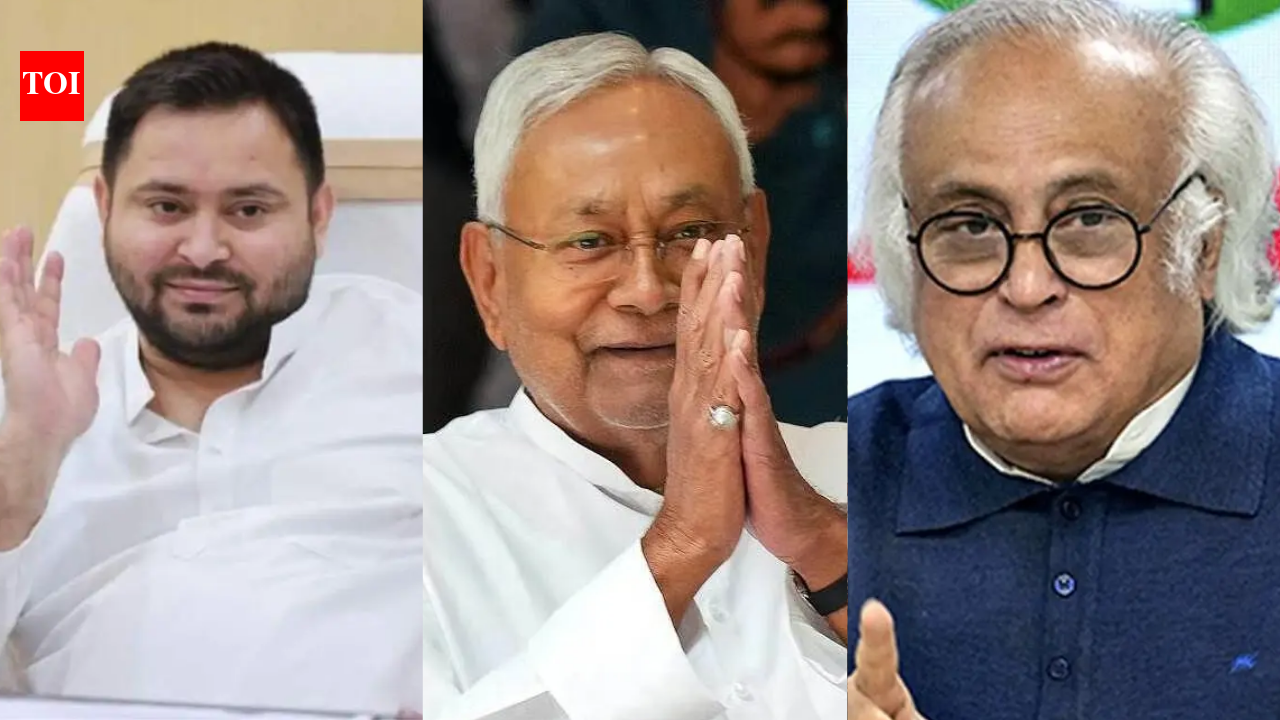
Reacting to the move, Rashtriya Janata Dal MP Manoj Kumar Jha drew an unusual analogy. He said the situation resembles a “desi version of the Maduro model” or a case of “kidnapping by consent.” Jha referred to the December 2025 US strikes in Venezuela that captured President Nicolas Maduro and his wife. “The way this news emerged suddenly across multiple media platforms indicates that it is not mere speculation or rumour. This reflects the end of a political chapter. Even in a ‘desi’ form, such a model can be seen as captivity by consent where the consent is not truly given by the individual but by those around him,” he said.Tejashwi Yadav, leader of opposition in the Bihar Assembly, launched a scathing attack on the BJP after Kumar’s confirmation. He accused the party of hijacking Nitish Kumar and said the move is against the sentiments of the people. “I always said ‘Nitish ji ko ghoda toh chadaya hai dulha banake, lekin phera kisi aur ke sath dila raha hai.’ The BJP has completely hijacked Nitish Kumar. Today, that statement has come true. People’s aspirations are against this change of power,” Yadav said.RJD leader Mrityunjay Tiwari described the move as a “huge political abduction.” He said it exposes the attitude of the BJP towards its allies and claimed that some JD(U) leaders are working in collusion with the BJP while others support Nitish Kumar. “A major upheaval in Bihar politics has suddenly become visible. No one could have anticipated that the BJP would remove Chief Minister Nitish Kumar so quickly after the elections, but the warning had been there. This is a huge political abduction,” Tiwari told news agency ANI.Congress MP Jairam Ramesh called it a “leadership coup” and said it betrayed the mandate of the people. “What the Indian National Congress had been saying during the Bihar election campaign has now come to pass. A leadership coup and regime change orchestrated by G2 has taken place. In many ways, it is a huge betrayal of the people’s mandate,” he said in a post on X.JD(U) workers and supporters expressed disbelief outside the Chief Minister’s residence in Patna. One worker even suggested that it was possible Nitish Kumar’s account had been hijacked.Union minister and JD(U) MP Rajiv Ranjan Lalan Singh praised Nitish Kumar’s achievements. He said no one can imagine what Kumar has done for Bihar and stressed that it is entirely up to him to decide where he wants to go. “Nitish Kumar will make this decision. He has built Bihar. He will go wherever he wants to go,” Singh said.Former union minister and BJP ally Udit Raj expressed surprise at Kumar’s decision and criticized it for weakening the JD(U). He pointed to high unemployment, the privatization of government functions, and the low standards of government schools in Bihar. “If he is going to be an MP, it would be more honourable for him to take up no roles,” he said.In his statement on X, CM Nitish Kumar sought to assure the people of Bihar that his commitment to the state remains unchanged. “I seek to become a member of the Rajya Sabha in the elections being held this time. My relationship with you and my resolve to work together to build a developed Bihar will remain steadfast. The new government that will be formed will have my full cooperation and guidance,” he wrote.(With agency inputs)


Source link

Arjun Tendulkar ties the knot with Saaniya Chandhok in a star-studded Mumbai ceremony


Wedding celebrations lit up Mumbai as Arjun Tendulkar, the son of legendary Indian cricketer Sachin Tendulkar, married Saaniya Chandhok in a lavish ceremony on March 5. The high-profile wedding turned into a memorable gathering of prominent personalities from the worlds of cricket, entertainment and business, as close friends and family came together to celebrate the couple’s special day.

A joyful occasion for the Tendulkar family

The wedding ceremony took place at an exclusive venue in south Mumbai and was attended by a host of distinguished guests. The celebrations marked a major milestone for the Tendulkar family, with the event reflecting both elegance and warmth as loved ones gathered to bless the newlyweds.

Arjun and Saaniya had announced their engagement on August 25 last year, setting the stage for months of anticipation among family members and well-wishers. Since then, a series of pre-wedding festivities had taken place, building excitement ahead of the grand ceremony.

The wedding itself was an intimate yet glamorous affair, with carefully planned arrangements and heartfelt moments shared between the couple and their guests.

Cricket legends gather to celebrate the big day

Unsurprisingly, the wedding saw the presence of several stalwarts of Indian cricket, many of whom have shared long-standing relationships with the Tendulkar family.

Legendary opener Sunil Gavaskar attended the ceremony with his wife Marshneil Gavaskar. Former India head coach Rahul Dravid, former captain Anil Kumble and former India coach Ravi Shastri were also among the distinguished cricket personalities present at the venue.

Former India captain MS Dhoni arrived alongside his wife Sakshi Dhoni, attracting considerable attention from guests and fans alike. India head coach Gautam Gambhir was also spotted at the ceremony with his wife Natasha Jain. Gambhir made time to attend the celebrations before India’s crucial T20 World Cup semi-final clash against England later in the evening.

World Cup-winning all-rounder Yuvraj Singh attended the wedding with his wife Hazel Keech, while brothers Irfan Pathan and Yusuf Pathan were also present.

Several other former Indian cricketers added to the star-studded guest list. Virender Sehwag, Suresh Raina with his wife Priyanka Chaudhary, and commentator Aakash Chopra with his wife Aakshi Mathur were seen arriving at the venue.

Former India pacer Zaheer Khan attended with his wife Sagarika Ghatge, while spinner Harbhajan Singh was present with his wife Geeta Basra. Former wicketkeeper Parthiv Patel arrived with his wife Avni Zaveri, and pacer Dhawal Kulkarni also joined the celebrations.

Young cricketer Prithvi Shaw was among the players who came to congratulate the couple on their special day. Similarly, star batter Shreyas Iyer was also present in the ceremony.

Also WATCH: T20 World Cup 2026 – Gautam Gambhir makes appearance at Arjun Tendulkar’s wedding

Guests from entertainment, politics and business

The celebrations extended well beyond the cricketing fraternity. Bollywood star Abhishek Bachchan attended the ceremony along with his wife Aishwarya Rai Bachchan and family members, adding a strong presence from the film industry.

Filmmaker and actor Ashutosh Gowariker arrived with his wife Sunita Gowariker, while Maharashtra minister Ashish Shelar was also among the notable guests.

From the world of cricket administration, ICC chairman Jay Shah and India’s chief selector Ajit Agarkar attended the ceremony as well. Business leaders Mukesh Ambani and Nita Ambani were closely associated with the celebrations and were also expected to attend the event in Mumbai.

Also WATCH: Sachin Tendulkar turns emotional for son Arjun at pre-wedding bash with Saaniya Chandhok in Jamnagar


Source link

Bengaluru New Far Norms: Bengaluru to soon witness taller buildings: What higher FAR norms mean for home investors |


Bengaluru to soon witness taller buildings: What higher FAR norms mean for home investors

With the recent changes in FAR (Floor Area Ratio) guidelines by the Karnataka government, Bengaluru’s real estate market is to witness taller buildings in the coming years. The Bengaluru skyline will likely see an entirely new shape through the easing of construction regulations, with the Karnataka Industrial Areas Development Board (KIADB) making it possible to purchase a Floor Area Ratio (FAR) of up to 5.2. The city will benefit from increased vertical development to utilize land more efficiently and stimulate economic development along industrial corridors in the outer ring of the city. Floor Area Ratio (FAR) is an important real estate metric parameter based on which it is determined how much maximum total built-up area in a building with all floors combined is allowed on a specific plot of land. FAR norms are important because they regulate urban density, building height, and development intensity. If the FAR ratios are high, it means buildings with denser construction and which are taller. On the other hand, lower ratios are allowed in cities to manage the infrastructure-population ratio.FAR = Total Building Floor Area ————————- Gross Plot AreaHigher Floor Area Ratio (FAR) norms, which are 4.0 or higher, are being adopted to promote vertical growth, redevelopment, and densification near transit hubs. Cities like Delhi, Mumbai, and Noida have increased these limits to maximize land usage, often allowing developers to purchase extra FAR. The real estate market and home buyers will experience a totally different landscape that will change how land, investment, and infrastructure will come together in the next decade due to this change in FAR.

Building Bengaluru's Future

Representative Image

According to Ajay Singh, Senior Director- Sales and Strategy, Jenika Ventures, ” This creates opportunities for this type of industrial development by enabling vertical factories, multi-level storage warehouses, and office parks to be constructed on a smaller footprint, thereby preserving valuable real estate and increasing economic activity in the same geographical location. As a result of the new regulations, land in KIADB-notified regions will be used more rationally, and as land availability becomes increasingly scarce along Bengaluru’s growth corridors, vertical growth of the same type will significantly reduce the need for extensive land acquisition, while at the same time providing even greater opportunities for increasing the economic viability of the growth corridor (or area of development). Notably, the policy aims to encourage the development of integrated townships that incorporate manufacturing facilities, logistics centers, commercial areas, and housing for workers.”For the developer, a higher FAR means better project economics, as it translates into a larger saleable or leasable area on the same land. For the institutional investor, it means better scalability and potential value growth. For the larger ecosystem, it translates into job creation and development-driven growth, which can lead to increased economic activity and improved community infrastructure.Residential market implications“Although the initial impact will be seen in the industrial corridors, the secondary effect may have a bearing on the residential market in the long run. With the rise in employment density and commercial activity in the KIADB (Karnataka Industrial Development Board) sites, it is only a matter of time before there is a greater demand for residential projects in the area. Professionals working in factories, data centers, logistics parks, and office campuses may seek better-designed residential projects in the vicinity of the new industrial hubs. This will also help to reduce the congestion on roads in the Bengaluru city center while further developing the micro-markets in the peripheral areas. This presents an opportunity for the residential real estate investor to take advantage of the projects that are currently being developed around the industrial corridors and their infrastructure,” adds Singh.How this is going to benefit the investorsThe new FAR policy holds significant soaps for real estate investors and homebuyers. Increased land value potential: The increase in permissible built-up areas is going to increase the land valuations.Improved rental opportunities in mixed-use developments: As integrated townships continue to expand, demand for both residential rentals and commercial leasing is expected to rise alongside job creation and economic activity.The ruling of the Karnataka government for allowing FAR up to 5.2 indicates a shift towards vertical growth. This trend is going to lead to vertical and efficient land use. The government is in a position to transform Bengaluru’s peripheral areas into future-ready growth drivers by aligning industrial growth with comprehensive development. Home investors, in particular, will see that the policy is more than just a sign of taller buildings; it is a sign of shifting demand patterns, decentralized employment nodes, and emerging residential growth areas. Research-driven investment choices in these areas can unlock significant long-term value.


Source link