Breaking News
Air India Plane Emergency Landing: Air India Express plane makes hard landing at Phuket airport; pictures show nose-wheel damage | India News


Air India Express plane makes hard landing at Phuket airport; pictures show nose-wheel damage

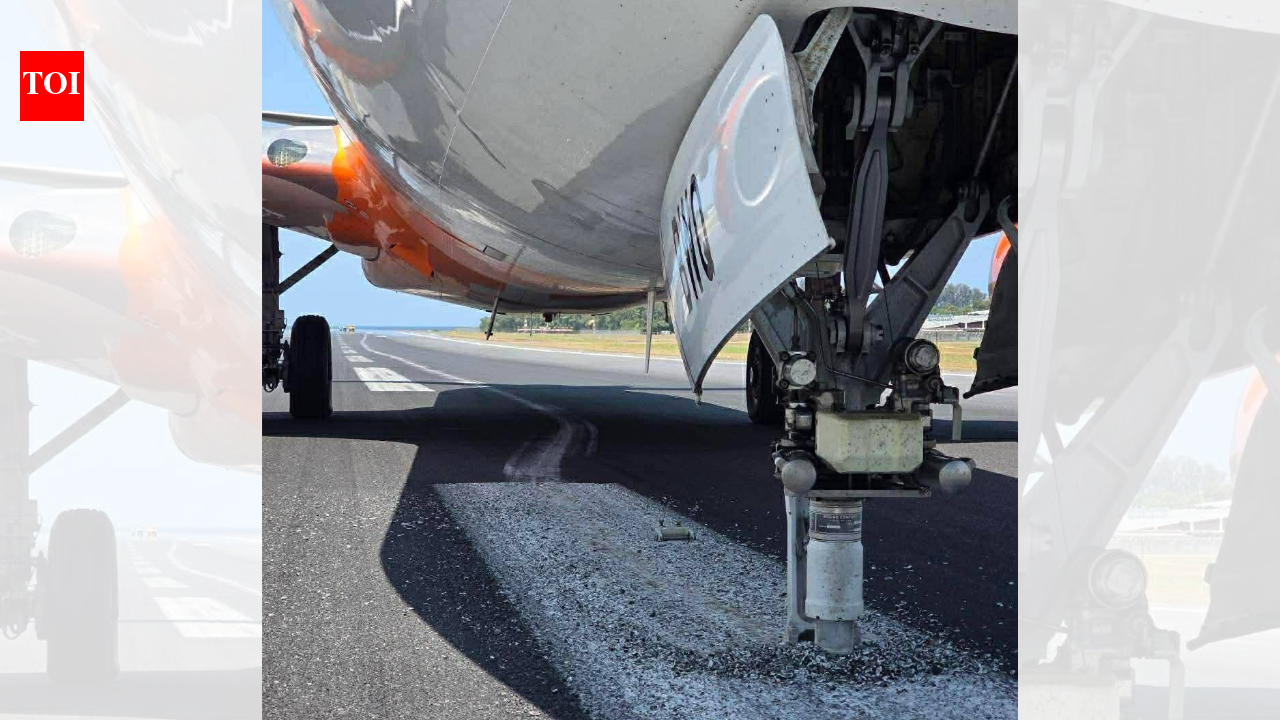
NEW DELHI: An Air India Express aircraft on Wednesday suffered a nose-wheel issue while landing at Phuket International Airport in Thailand, the airline confirmed to news agency PTI.A video surfaced online showed the aircraft making a rough touchdown on the runway, appearing to land abruptly and momentarily bounce before settling.Authorities temporarily suspended flight operations at the airport after the aircraft became stuck on the runway, sources said. The number of passengers on board the Boeing 737 MAX 8 aircraft was not immediately known.

-

“We confirm that our Hyderabad-Phuket flight on March 11 experienced an issue with the nose wheel at Phuket Airport,” Air India Express said in a statement.The nose wheel is a key component of an aircraft’s landing gear system.Flight IX 938 departed from Hyderabad at 6:42 am, slightly later than its scheduled departure time of 6:20 am, and landed at Phuket at 11:40 am local time, according to data from Flightradar24.“The crew followed all standard protocols, and guests were deplaned,” the airline added in its statement.


Source link

China Yj-12 Missile: Iran almost bought China’s supersonic ‘aircraft-carrier killer’: How it could have changed the Middle East war


Iran almost bought China’s supersonic ‘aircraft-carrier killer’: How it could have changed the Middle East war

As the war between Iran, the United States and Israel intensifies across the Middle East, attention has turned to the weapons that could shape the naval balance in the region. During the intial phase of ‘Operation Epic Fury’ the United States used its naval might including two aircraft carriers to target key sites across Iran. One report suggested that just days before the conflict escalated, Iran had been close to acquiring one of China’s most feared anti-ship weapons, a missile described as an “aircraft-carrier killer”.

Iran War: Putin Steps In As China Demands Ceasefire After Trump’s New Threat To Tehran

According to reporting cited by the South China Morning Post, a deal involving the CM-302 anti-ship cruise missile, the export version of China’s YJ-12 was reportedly nearing completion before Beijing publicly rejected the claim. The report, originally published by Reuters, cited multiple sources who said the sale could have significantly strengthened Iran’s ability to threaten US naval forces in the Persian Gulf.China’s foreign ministry quickly denied the report, calling it “not true”. But the discussion has drawn renewed attention to the missile itself a supersonic weapon designed specifically to target large surface warships, including aircraft carriers.If Iran had acquired the missile and deployed it along its coastline, analysts say it could have changed the military balance in the narrow waters of the Gulf.

What is China’s YJ-12 ‘aircraft-carrier killer’?

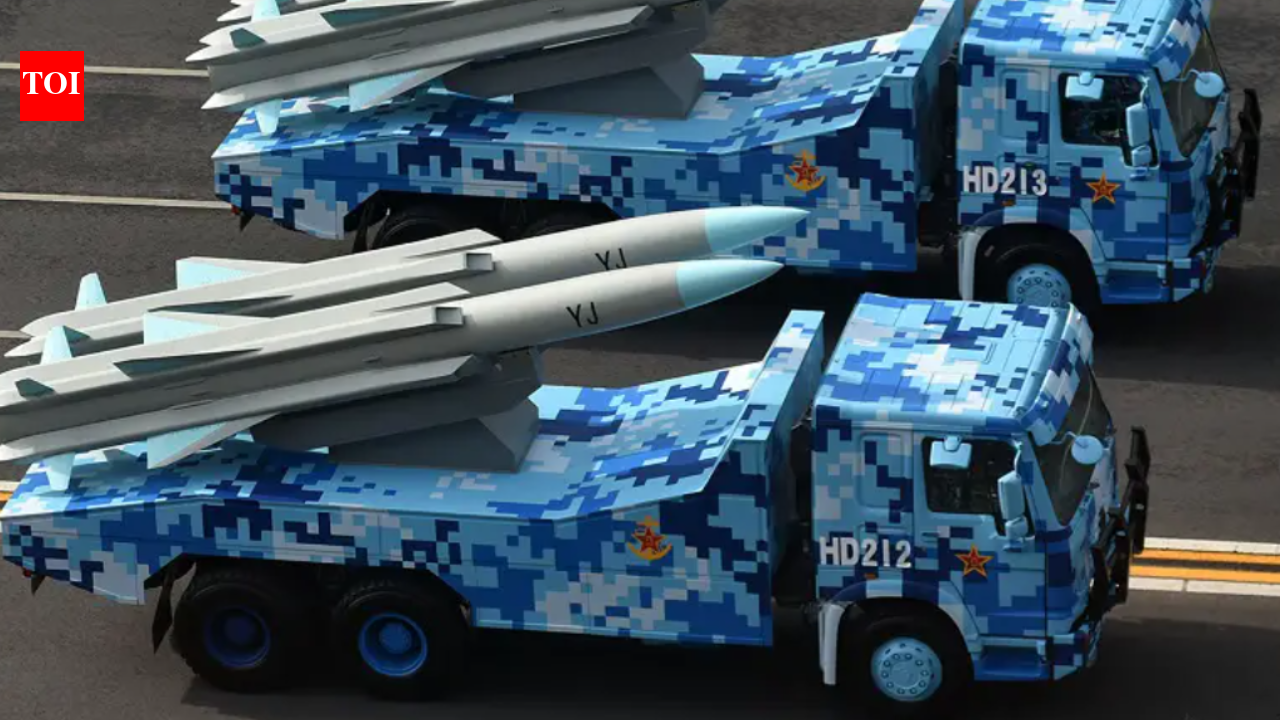
The YJ-12 is a Chinese supersonic anti-ship cruise missile designed to strike large naval vessels at long range. Developed by the China, it entered service around 2015 and forms part of Beijing’s growing anti-ship strike capability.The missile is primarily air-launched, most notably from the Xian H-6K strategic bomber. Once released, the YJ-12 uses a booster and ramjet propulsion system to accelerate to speeds of up to Mach 3, allowing it to cover distances of roughly 400–500 km before striking its target. It carries a high-explosive fragmentation warhead of about 500 kg and relies on inertial navigation combined with active radar homing for terminal guidance.One of the missile’s defining features is its ability to perform high-speed evasive manoeuvres during the final phase of flight, making interception more difficult. Variants such as the YJ-12A can be launched from naval platforms, while export versions like CM-302 and CM-400AKG offer similar capabilities for foreign buyers.Designed primarily to attack large naval targets, the missile travels at extremely high speeds, reaching roughly Mach 3 to Mach 4 depending on the variant. That velocity dramatically reduces the time available for enemy warships to detect and intercept it.The missile is powered by a rocket booster that accelerates it after launch before a ramjet engine takes over, pushing the weapon to sustained supersonic speeds. During the final stage of flight, the missile can descend to very low altitude and perform sharp manoeuvres, making interception difficult.Its warhead — typically around 200 kilograms of semi-armour-piercing explosives is designed to punch through the hulls of large warships before detonating. Combined with its speed and manoeuvrability, this capability is what earned the missile the label “carrier killer”.

The CM-302 export missile and why Iran wanted it

The weapon reportedly discussed with Iran was not the standard Chinese military version but its export variant, known as the CM-302 anti-ship cruise missile.To comply with international arms-control rules, the export model has a shorter range than the Chinese domestic system. While the YJ-12 can reportedly strike targets up to 400–500 kilometres away, the CM-302’s range is believed to be around 280–290 kilometres.

Could such missiles actually sink a US aircraft carrier?

The idea of a single missile destroying a modern aircraft carrier is often exaggerated. The United States’ newest carrier, the USS Gerald R. Ford (CVN-78), displaces about 100,000 tonnes and is designed with extensive damage-control systems and compartmentalised hull sections to prevent catastrophic flooding.Even powerful anti-ship missiles would be unlikely to sink such a vessel with a single strike. Modern carriers are built to absorb damage, contain fires and continue operating after an attack.

Critical technologies on Ford-Class aircraft carrier

However, anti-ship missiles like the YJ-12 could still pose a serious threat. A successful hit might disable flight operations, damage radar systems or temporarily reduce combat capability. Military planners worry more about coordinated “saturation attacks”, where multiple missiles are launched simultaneously to overwhelm defences.US carriers rarely operate alone. They typically sail within a carrier strike group protected by destroyers, submarines and layered missile-defence systems designed to intercept incoming threats long before they reach the carrier itself.


Source link

Cbse Math Paper QR Code: CBSE issues clarification on YouTube QR code in Maths paper, here’s why there are QR codes on question papers |


After social media posts claimed that a QR code reportedly printed on the Class 12 Mathematics question paper directed students to a YouTube video, the Central Board of Secondary Education has issued a clarification. In a post on microblogging platform X, the board said that the “security of the question papers remains uncompromised”. “On 09.03.2026, examination of Mathematics was conducted for class 12. In a few question paper sets, it appears that when one of the given QR codes is scanned, it links to a YouTube video,” the board said. “While the concern about the veracity of the question papers is put to rest, the matter has been viewed seriously and necessary steps are being taken by the Board to ensure that such issues are not repeated in future,” it further added.

CBSE clarifies the need for QR codes on question papers

In the official statement, CBSE clarified that the board gives “many security features” on the question papers. One such feature is QR codes, which as per the board, helps “verify the genuineness of the question paper in case of suspected security breach”.

Poll

How concerned are you about the security of examination question papers?

The board introduced QR codes on question papers in 2019 to help trace the origin of the leak as well as stop its spread. The CBSE Board Exam 2025 rules mandated unique QR codes on all answer sheets as well.

What CBSE said after QR code reportedly printed on the Class 12 Maths paper directed students to YouTube video

In social media posts, students claimed that scanning the QR code on Maths question paper led to the music video of “Never Gonna Give You Up” by British singer Rick Astley. Sharing the clarification on X, CBSE wrote: Many security features are provided on the Question Papers. These include QR codes to verify the genuineness of the question paper in case of suspected security breach. On 09.03.2026, examination of Mathematics was conducted for class 12. In a few question paper sets, it appears that when one of the given QR codes is scanned, it links to a YouTube video. It appears that this has raised concerns about the veracity of the question papers amongst concerned students and their parents. It is hereby confirmed by the Board that the question papers are genuine. The security of the question papers remains uncompromised. While the concern about the veracity of the question papers is put to rest, the matter has been viewed seriously and necessary steps are being taken by the Board to ensure that such issues are not repeated in future.


Source link

Explained: Why the Bangladesh vs Pakistan ODI series matters for World Cup 2027 qualification?


The upcoming three-match ODI series between Bangladesh and Pakistan in Dhaka is more than just a bilateral contest. For Bangladesh, it marks the beginning of a crucial journey toward securing direct qualification for the 2027 ICC Men’s Cricket World Cup. While Pakistan will view the series as part of their rebuilding process, the stakes are significantly higher for the hosts, who are looking to improve their standing in the ICC ODI rankings before the qualification deadline.

For Bangladesh, every match in this series could have a direct impact on whether they qualify automatically for the tournament or face the uncertainty of the qualifying rounds.

Understanding the road to the 2027 Cricket World Cup

The 2027 Cricket World Cup, which will be jointly hosted by South Africa, Zimbabwe and Namibia, will feature 14 teams. The qualification process is largely determined by the ICC ODI team rankings.

Under the current system, the top eight teams in the ICC ODI rankings as of March 31, 2027 will qualify automatically for the tournament. However, the situation becomes slightly more complex because two of the host nations – South Africa and Zimbabwe – are full ICC members and are guaranteed direct entry into the competition.

This creates an important scenario. If Zimbabwe does not finish inside the top eight of the rankings by the cut-off date, their automatic host qualification would effectively free up an extra spot for the next highest-ranked team.

Teams that do not secure direct qualification will have to compete in a global qualifying tournament, where only four additional spots for the World Cup will be available.

The current rankings highlight how intense the battle for those automatic qualification places has become. As of early March 2026, the standings around the crucial qualification zone look like this:

Rank Team  Rating
 6  South Africa  99
 7  Afghanistan  95
 8  England  88
 9  West Indies  80
 10  Bangladesh  77
 11  Zimbabwe  54

These rankings show that the fight for the final automatic qualification spots is extremely tight.

Bangladesh’s urgent need to climb the ICC Team Rankings

For Bangladesh, the ODI series against Pakistan comes at a critical moment. Currently placed 10th in the rankings, Bangladesh is just behind West Indies and outside the automatic qualification bracket.

Their position becomes even more precarious when the host qualification factor is considered. Because Zimbabwe will automatically qualify as a co-host if they remain outside the top eight, Bangladesh effectively needs to move up to at least ninth place to stay on track for direct entry into the World Cup.

That makes every ODI in the upcoming series extremely important.

If Bangladesh fails to climb into the automatic qualification positions, they will have to compete in the qualifying tournament. That path is notoriously unpredictable and challenging. In fact, the West Indies failed to qualify for the 2023 World Cup after stumbling in the qualifiers, highlighting how risky that route can be. For Bangladesh, avoiding that situation is a top priority.

The series also marks Bangladesh’s return to ODI cricket after a four-month gap. During that time, the team has been reflecting on recent struggles in the format. They lost four of their last five ODI series, which has contributed to their slide in the rankings.

Bangladesh will also be using this series to address key weaknesses in their ODI game. One area of focus is strengthening the middle-order batting, which has struggled to convert starts into big totals. Another priority is improving wicket-taking during the middle overs, a phase where Bangladesh has often struggled to control opposition innings.

To strengthen their batting depth, selectors have recalled Litton Das and Afif Hossain to the squad. Litton, in particular, is expected to play an important role against Pakistan’s spin attack, especially in familiar home conditions.

Also READ: BAN vs PAK 2026 – Broadcast and Live Streaming Details | When and where to watch in India, USA, Pakistan & other countries

Pakistan’s objective from the ODI series against Bangladesh

For Pakistan, the stakes are somewhat different. Currently ranked fourth in the ICC ODI rankings, they sit comfortably inside the automatic qualification zone with 100 rating points. Even a disappointing result in this series is unlikely to threaten their World Cup qualification prospects.

However, the series still holds importance for Pakistan as they look to rebuild and experiment following a disappointing T20 World Cup 2026 campaign.

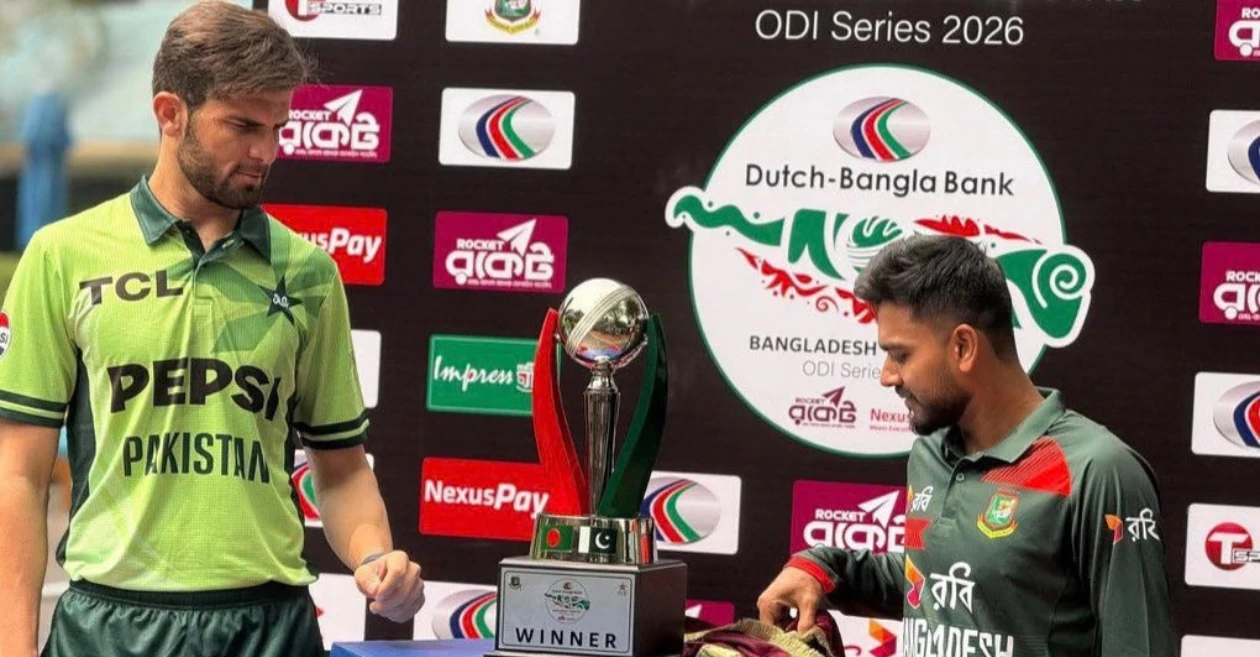
The team is entering a period of transition, with several changes to the squad. Star batter Babar Azam has been left out due to recent form, while Mohammad Rizwan returns to the side. Pakistan will also be led by Shaheen Afridi, who is expected to guide the team through this transitional phase.

Also READ: Mike Hesson explains Babar Azam’s omission from Pakistan ODI squad for Bangladesh tour


Source link

Iran war oil shock: India buys 30 million barrels of Russian crude after US waiver


'We Agree To Remain...': Jaishankar Calls Up Iran FM Araghchi Amid Looming Energy Crisis Due To War

India has purchased around 30 million barrels of unsold Russian crude after the United States issued a 30-day waiver allowing the country to buy shipments already stranded at sea, Bloomberg reported citing sources.According to the report, Indian refiners moved quickly to secure the available cargoes, many of which were already positioned in Asian waters, offering an immediate alternative as disruptions hit oil flows from the Middle East.

‘We Agree To Remain…’: Jaishankar Calls Up Iran FM Araghchi Amid Looming Energy Crisis Due To War

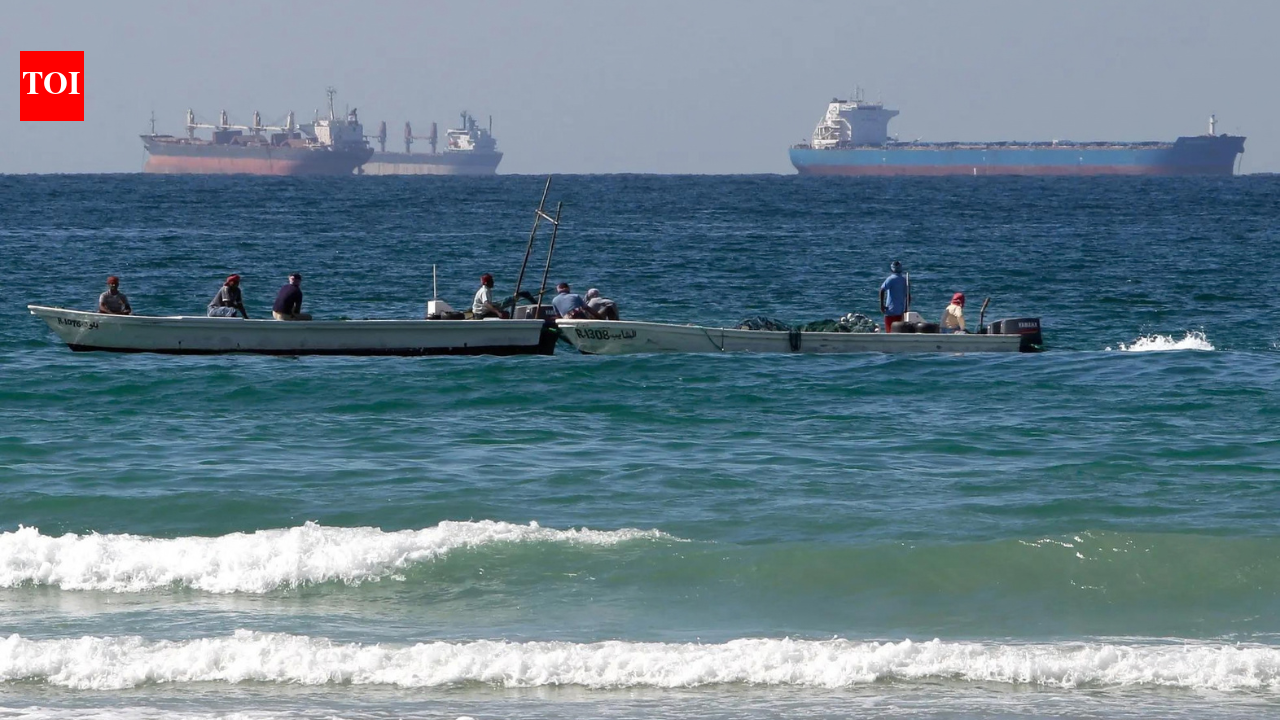
India had earlier scaled back purchases of Russian oil, replacing part of those supplies with crude from Saudi Arabia and Iraq. While New Delhi has never officially said it would stop buying Russian oil and a significant volume continues to flow. Though the overall import levels had declined in recent months.The widening conflict in the Middle East has since disrupted traditional supply routes, with shipping traffic through the Strait of Hormuz severely affected after US and Israeli strikes on Iran.Although the Strait of Hormuz is one of the world’s most critical oil shipping lanes, only about 40% of India’s crude imports pass through the waterway. Still, the disruption has pushed Indian refiners to secure alternative crude supplies to maintain stable energy flows.

Indian refiners move quickly to secure cargoes

Following the waiver, Indian refiners including Indian Oil Corporation and Reliance Industries bought up nearly all available Russian cargoes in the spot market, according to sources cited by Bloomberg.Much of the crude had already been loaded onto tankers and was moving through Asian waters but had not yet been committed to buyers.Traders said Indian Oil purchased around 10 million barrels, while Reliance bought at least another 10 million barrels, with other Indian refiners taking the remaining volumes. Russian crude offered included a range of grades such as Urals, ESPO and Varandey. The prices were offered at premiums of $2 to $8 per barrel over London’s Dated Brent benchmark, a sharp shift from earlier months when Russian oil traded at discounts to the global marker.The surge in purchases comes amid major disruptions to global energy supplies caused by the escalating Middle East conflict. The Strait of Hormuz, which connects Gulf oil producers to global markets, has been effectively closed since US and Israeli strikes on Iran began, limiting access to Middle Eastern crude.The disruption has forced importers such as India to quickly secure alternative supplies.

Tankers change course toward India

Several oil tankers that had initially been sailing away from the subcontinent have reversed course toward India following the waiver.Among them are the vessels Maylo and Sarah, which recently changed their destination from Singapore and are now heading to Indian ports, according to shipping data cited by Bloomberg.India traditionally imported little Russian oil before the Russian invasion of Ukraine, but the purchase increased after Western sanctions forced Moscow to offer crude at steep discounts.At its peak in mid-2024, India’s imports of Russian oil exceeded 2 million barrels per day. However, purchases fell to about 1.06 million barrels per day in February, according to data from analytics firm Kpler, as India cut back under pressure from Washington.

US says waiver is temporary

The United States has earlier described the waiver as a temporary measure aimed at stabilising global energy markets during the ongoing Middle East crisis.White House press secretary Karoline Leavitt said the move was intended to address short-term supply disruptions.Responding to a question about the waiver, Leavitt said, “They came to this decision because our allies in India have been good actors and have previously stopped buying sanctioned Russian oil,” she said. “So as we work to appease this temporary gap of oil supply around the world because of the Iranians, we have temporarily permitted them to accept that Russian oil and this Russian oil was already at sea,” she added.She noted that the shipments would not boost Russia’s revenue, stating that, “It was already out on the water. So this short term measure, we don’t believe it will provide significant financial benefit to the Russian government at this time.”


Source link

Maharashtra’s CET Cell defines malpractice in age of computer-based test, AI | Mumbai News


Maharashtra’s CET Cell has introduced strict new regulations to combat exam malpractice

MUMBAI: The use of AI tools, hidden cameras, screen mirroring, smartwatches or any remote-access software during any CET conducted in the state may lead to canellation of candidature for the entire year and/or legal action under the new regulations aimed at preventing malpractice in examinations.For the first time, the Maharashtra State CET Cell has clearly defined what constitutes malpractice in the computer-based entrance tests it conducts, with particular emphasis on the misuse of technology and AI tools. The cell has also specified the punishment for 13 different forms of malpractice in the regulations released ahead of this year’s entrance exam season. Earlier, the rules were not clearly defined and mostly followed the provisions of the Maharashtra Prevention of Malpractices Act.

Catching up with new tricks to cheat

Catching up with new tricks to cheat

After an inebriated candidate created a ruckus last year, the CET Cell has introduced a clause providing for the immediate expulsion and cancellation of candidature for entering the examination centre under the influence of alcohol or narcotics.An official said that regulations for malpractices always existed, but they were generic and did not specify any measures for computer-based tests. Of the exams conducted by the CET Cell for 17 courses, 15 are in the CBT format, mentioned a note issued by the office. “The revised regulations will address malpractices carried out using digital, cyber and AI technology. There was a committee which looked into the aspects of malpractices during exams and they have come out with specific guidelines,” said the official.CET Cell commissioner Dileep Sardesai said the regulations were specified and published on the website well before the exams to ensure that the severity of the penalties acts as a deterrent, and to prevent students from claiming they were unaware of rules. He said some of the provisions are drawn from the regulations followed by some universities in the state, such as the Mumbai University.Even candidates found talking, giving signals, exchanging gestures or trying to communicate during an exam will call for the cancellation of their candidature for that exam. No legal action, though, will be initiated in such cases. Some of the rules that were specified in hall tickets earlier only mentioned prohibition on notebooks, calculators, pagers or mobile phones. While earlier rules specified that instances of providing incorrect information would amount to malpractice, now altering or falsifying biometric data has been included too.The CET cell also framed regulations for the examination centres and made it mandatory for them to install CCTV, conduct biometric verification and maintain strict vigilance, failing which their recognition could be temporarily or permanently revoked, or will also include suspension of staff and imposition of financial and administrative penalties.


Source link

Access Denied


Access Denied

You don’t have permission to access “http://www.ndtv.com/world-news/where-is-ayatollah-mojtaba-khamenei-irans-new-supreme-leader-remains-missing-in-action-11198569” on this server.

Reference #18.3fa21ab8.1773220061.73a327c

https://errors.edgesuite.net/18.3fa21ab8.1773220061.73a327c


Source link

Mumbai investment scam: 125 people duped of Rs 5.13 crore in Mankhurd | Mumbai News


Mankhurd police have registered a case against five individuals for allegedly duping over 125 people of Rs 5.13 crore (Representative image)

MUMBAI: The Mankhurd police have booked a group of people who under promise of giving 5 interest on the investment, collected Rs 5.13 crores from more than 125 persons and duped them.Police have booked the firm’s proprietor Amanat Ali Ansari, his partners Rahim Ansari, Ali Ansari and Nayeem Sarvar and Yogini Shirke. Police have booked the stringent act of Maharashtra Protection of interest of Depositor’s act and are looking for the accused.Though the number of victims are growing up and the figure of fraud could go up, a 31-year-old IT engineer Saeed Khan from Trombay has filed the cheating complaint alleging that he and more than 125 investors were duped of over ₹5.13 crore through an investment scheme promising 5 per cent monthly returns,.Khan has alleged that he was introduced about four years ago to Naeem Sarwar Musa Anjum, owner of a gym in the Chita Camp area. Naeem allegedly told him about an investment scheme run by Dream Sunshine Digital Pvt. Ltd., claiming that investors would receive 5 per cent monthly returns.Khan stated that Naeem later took him to the company’s office at Mohite Patil Nagar in Mankhurd, where he was introduced to Amanat Ali Ansari, who claimed to be the owner of the company. Two others, Rahim Abdul Ansari and Nawajis Ali Ansari, were introduced as partners, while Yogini Shirke was present as a company associate.The accused allegedly claimed that the company was involved in businesses such as Real Aussie water, sugar, dates and construction, and assured investors of steady monthly returns if they invested in the scheme.Trusting their claims, Khan initially invested ₹2 lakh in October 2022 from his ICICI Bank account. After he began receiving the promised returns for some time, he and several relatives invested additional amounts in the scheme. In total, Khan and his relatives invested ₹23.70 lakh between 2022 and 2026.However, the complainant stated that monthly payments stopped from February 2026. When he visited the company’s office to inquire, he found the office shut and several investors gathered there. He later learned that the accused had allegedly closed the office and fled.Police said the complainant alleged that the accused collectively cheated him, his relatives and about 125 investors of approximately ₹5.13 crores by collecting deposits on the promise of high returns but failing to repay the principal amounts or the assured profits.


Source link

MLCs question Maharashtra govt’s Mahalaxmi racecourse plan | Mumbai News


Legislators across party lines voiced strong concerns regarding the proposed Central Park project at Mahalaxmi racecourse.

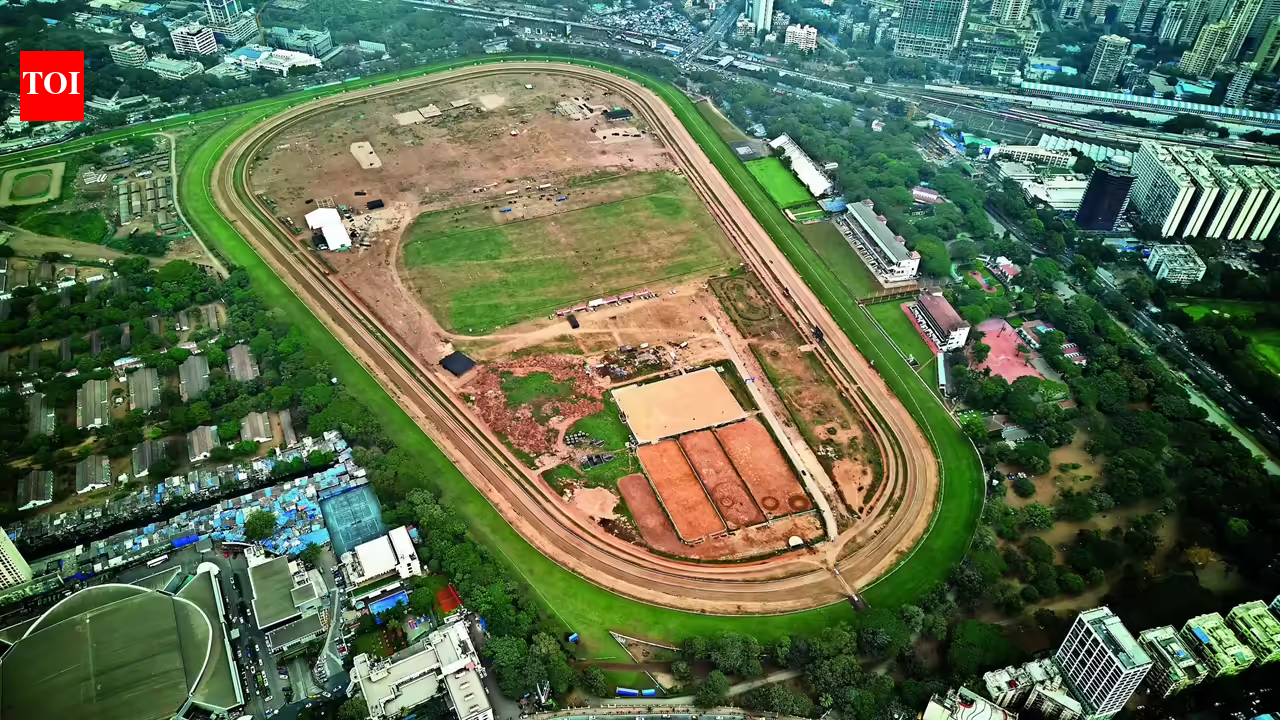
MUMBAI: Legislators across party lines on Tuesday questioned the proposed Central Park project at Mahalaxmi racecourse, demanding clarity on whether the open space would remain freely accessible to Mumbaikars. Responding to concerns, industries minister Uday Samant assured the House govt would hold consultations with all city MLAs before finalising the project and added there would be no commercialisation of the open space.The issue was raised in the legislative council by Sachin Ahir, who said over 100 architects have opposed the proposal. MLAs said the question was whether ordinary Mumbaikars would have full access if international-standard facilities were developed at the site.Anil Parab (Shiv Sena UBT), Pravin Darekar (BJP) and Satej Patil (Congress) asked if entry would be affordable, what proportion of facilities would be available to local residents and if international sports infrastructure would sideline local sports. “This open space is the lung of Mumbai and must be protected,” Patil said. “If 295 acres are being developed for the city’s residents, there must be public consultation. A parking lot for nearly 6,000 vehicles is being planned in this area, but are the roads outside capable of handling that traffic? All these vehicles will eventually come onto the same roads. Has any traffic impact study been carried out?” Patil said. Ahir opposed the proposed helipad in the plan and suggested using existing facilities instead. The Central Park project plans to merge open spaces along the Coastal Road with grounds of the racecourse to create a nearly 300-acre public park.Samant said govt would organise a project presentation for all Mumbai legislators and invite written suggestions before taking further steps. The meeting would be held in the presence of urban development minister and Dy CM Eknath Shinde. He said neither the state nor BMC intended to commercialise the park’s open space.


Source link

India ‘great partner’ in maintaining stable oil prices: US envoy Sergio Gor on Russian imports amid Iran war


India 'great partner' in maintaining stable oil prices: US envoy Sergio Gor on Russian imports amid Iran war

NEW DELHI: The United States on Wednesday again hailed India as a “great partner”, praising New Delhi’s purchase of oil from its old ally Russia and crediting it as an effort to maintain stable oil prices around the world.The US envoy to India, Sergio Gor, wrote on X, “India has been a great partner in maintaining stable oil prices around the world. The United States recognizes ongoing purchases of Russian oil are a part of this effort.”He added, “India is one of the largest consumers and refiners of oil and it is essential for the United States and India to work hand in hand for market stability for Americans and Indians.”Earlier in the day, the United States repeated its stance on the temporary waiver “allowing” India to buy limited quantities of Russian oil, citing the evolving situation in the oil-rich Middle East. Washington said the waiver for New Delhi was aimed at easing pressure on global energy supplies during the crisis.White House press secretary Karoline Leavitt said the move was intended as a short-term measure to stabilise markets as disruptions linked to Iran and rising tensions in the region continue to affect supply routes.Responding to a question about the waiver issued last week, Leavitt said the decision reflected India’s earlier cooperation with Western sanctions on Russia. “They came to this decision because our allies in India have been good actors and have previously stopped buying sanctioned Russian oil,” she said. “So as we work to appease this temporary gap of oil supply around the world because of the Iranians, we have temporarily permitted them to accept that Russian oil and this Russian oil was already at sea.She added that the shipments involved crude that was already in transit and would not significantly boost Russia’s revenues. “It was already out on the water. So this short term measure, we don’t believe it will provide significant financial benefit to the Russian government at this time,” Leavitt said.The clarification comes as the administration of US President Donald Trump faces questions over the decision to ease restrictions months after imposing punitive measures on India for purchasing Russian crude.


Source link