Breaking News
Middle East crisis: Jaishankar holds ‘detailed conversation’ with Iranian foreign minister Araghchi | India News


Middle East crisis: Jaishankar holds 'detailed conversation' with Iranian foreign minister Araghchi

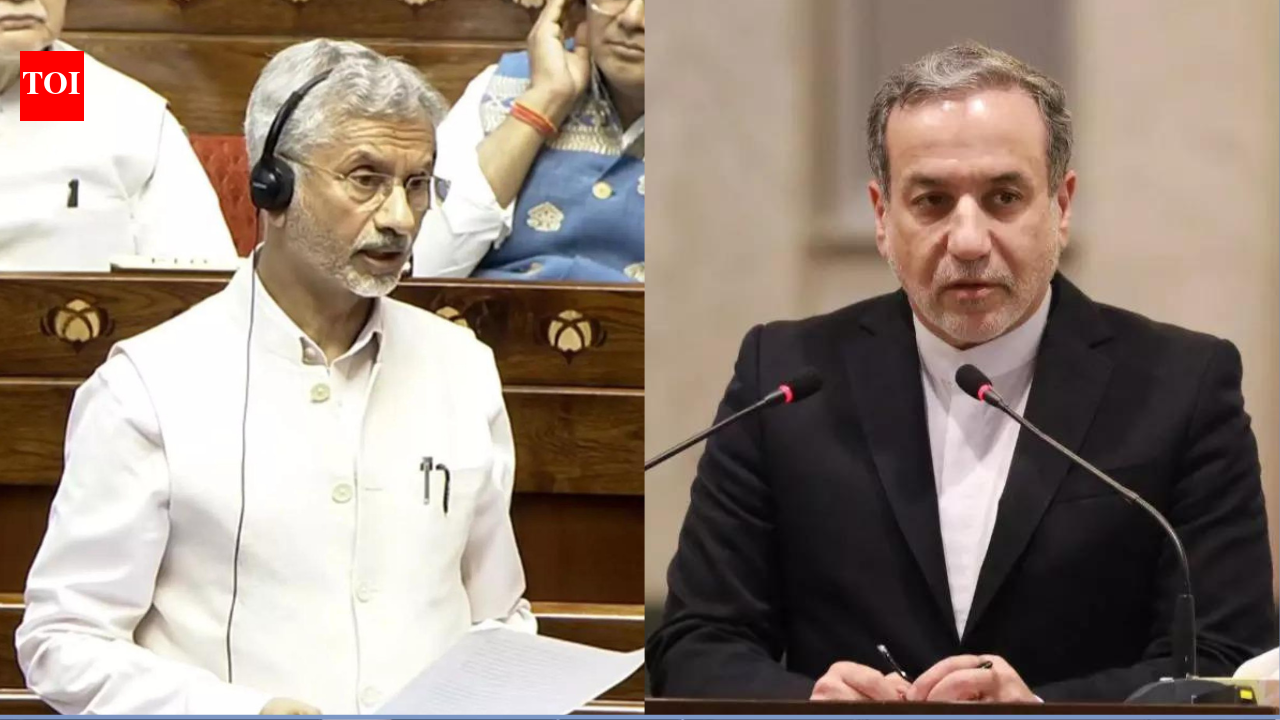
NEW DELHI: External affairs minister Subrahmanyam Jaishankar held a phone conversation with Iran’s foreign minister Seyed Abbas Araghchi on Tuesday, to discuss regional developments and concerns over shipping security in the region. In a post on X EAM later described the talks as detailed and said both sides agreed to remain in touch.

Modi Meets Jaishankar, Puri As India Secures Energy Routes Amid Iran War

“A detailed conversation this evening with Foreign Minister Abbas Araghchi of Iran on the latest developments regarding the ongoing conflict. We agreed to remain in touch.”Later, Iran’s foreign ministry in a statement on Wednesday gave details of the phone call between both ministers. .In a post on X, the ministry of foreign affairs of Iran said: “Subrahmanyam Jaishankar, Minister of Foreign Affairs of India, held a phone conversation with Seyed Abbas Araghchi, Minister of Foreign Affairs of the Islamic Republic of Iran, during which they discussed regional developments.” According to the statement, the two ministers also discussed the impact of the ongoing conflict on maritime traffic through the key waterway that links the Persian Gulf with global shipping routes.“The foreign ministers of Iran and India also discussed the consequences of the US and Israeli regime’s military aggression on the security of shipping and vessel traffic through the Strait of Hormuz,” the Iranian foreign ministry said.During the call, Araghchi detailed the attack by the United States and Israel on Iran over the past 11 days, including the missile attack on a girls’ elementary school, which killed over 100 girls, and civilian sites and public service centers. “In this telephone conversation, Iran’s Foreign Minister detailed the crimes committed by the United States and the Israeli regime against the Iranian nation over the past 11 days, including the missile attack on a girls’ elementary school in Minab on the first day of the war and subsequent widespread attacks on civilian sites and public service centers. He emphasized Iran’s determination to comprehensively defend the integrity of Iran,” the post added. He said such actions violated international law and the principles of the United Nations Charter. The Iranian minister also referred to what he called Iran’s “principled approach to safeguarding shipping security in the Persian Gulf,” adding that instability affecting maritime traffic in the region was the result of “aggressive and destabilising actions of the United States.”Jaishankar, according to the statement, emphasised the importance of continuing and strengthening bilateral relations between India and Iran, and stressed the need for continued consultations aimed at restoring stability in the region.


Source link

‘That was the turning point’: Gautam Gambhir reveals moment that changed India’s T20 World Cup 2026 campaign | Cricket News


‘That was the turning point’: Gautam Gambhir reveals moment that changed India’s T20 World Cup 2026 campaign
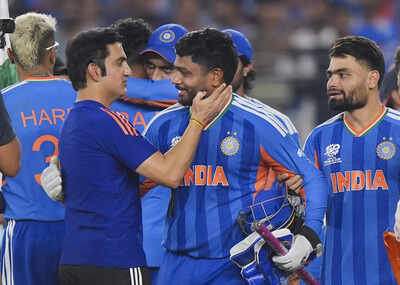
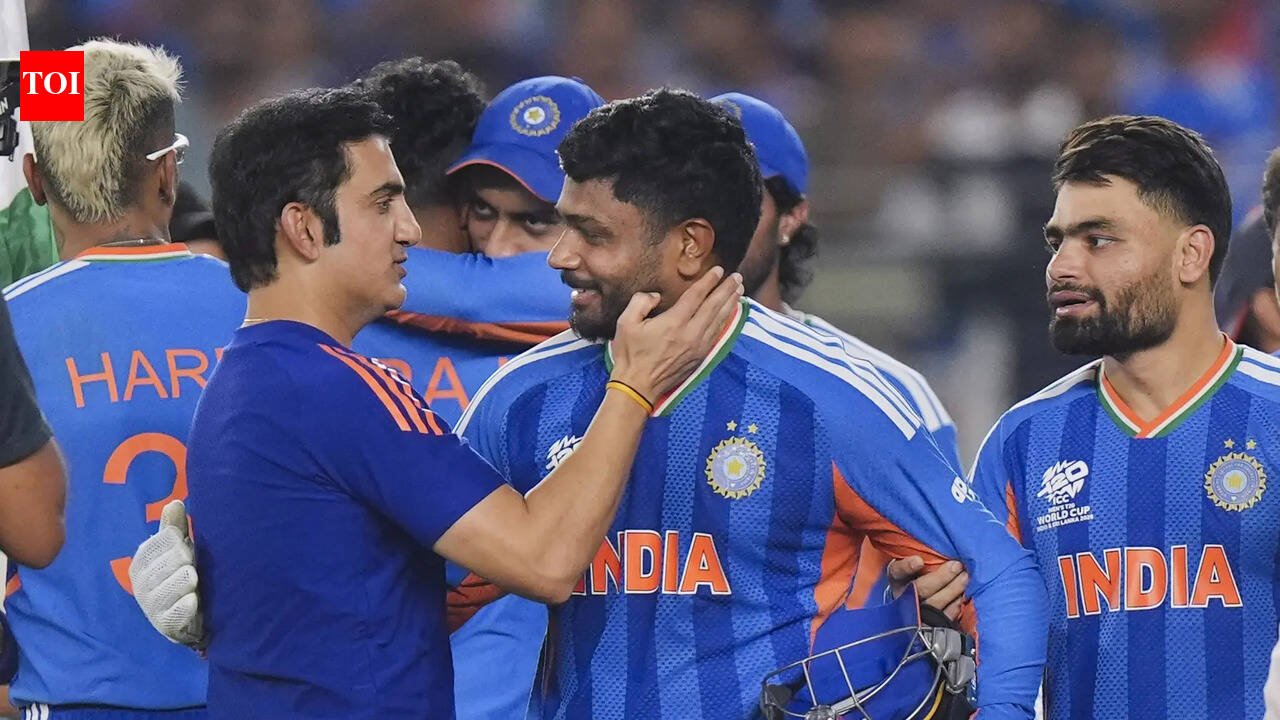
Sanju Samson being congratulated by head coach Gautam Gambhir. (PTI Photo)

NEW DELHI: India head coach Gautam Gambhir has revealed that Sanju Samson’s match-defining 97 against West Indies proved to be the turning point in India’s triumphant campaign at the 2026 ICC Men’s T20 World Cup.Go Beyond The Boundary with our YouTube channel. SUBSCRIBE NOW!India sealed their third title in the tournament after defeating New Zealand in the final in Ahmedabad, completing a memorable campaign on home soil. Reflecting on the journey, Gambhir said Samson’s knock during a tense chase against the West Indies changed the momentum of the entire tournament for India.

Suryakumar Yadav receives grand homecoming after India’s T20 World Cup win

“It’s very difficult to say, but I still believe that Sanju’s 97 against West Indies was the turning point of this campaign. It was a virtual quarter-final. Chasing 195 in a World Cup game is never easy, irrespective of the ground,” Gambhir said on JioStar.According to the former opener, Samson’s calm and controlled approach under pressure lifted the dressing-room mood and gave the squad the belief that the campaign was heading in the right direction.Team India Report Card: Perfect finish to a not-so-perfect T20 World Cup campaign“With the ease and calmness with which he batted, it gave us a lot of confidence in the group that now we were probably on the right track. When Sanju got going and the way Ishan Kishan batted at number three, a lot of things actually started taking shape,” he added.Gambhir also described winning a World Cup as India’s head coach as a deeply emotional moment, saying the opportunity to once again contribute to the country in national colours was something he never expected.“I could have never thought about winning a World Cup as a coach. I never thought I would get the opportunity or privilege to be the head coach of the Indian team because it’s an absolute privilege to again wear the India jersey or do something special for the country,” he said.

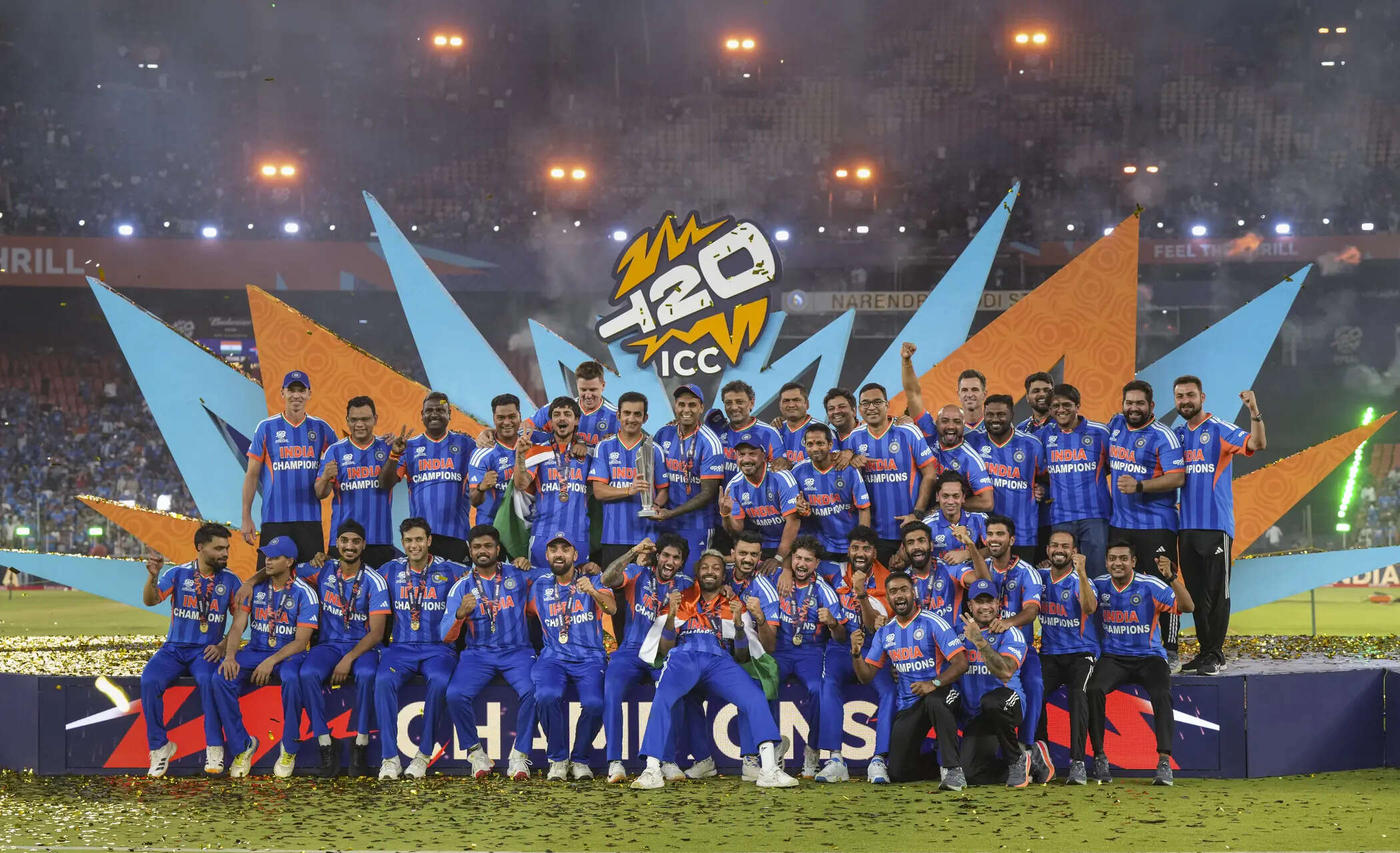
Team India wins T20 World Cup 2026

Suryakumar Yadav lifts the trophy with Gautam Gambhir as the team members celebrate. (PTI Photo)

The 2011 World Cup winner added that representing India carries a responsibility beyond personal milestones.“When your mom wishes you and tells you ‘well done’, that’s what you play for and what you live for as well. What bigger feeling is there than making 140 crore Indians proud,” Gambhir said.Throughout the tournament, Gambhir said he repeatedly reminded the players that a place in the national dressing room is a privilege.“I’ve always believed that, and I’ve always told the boys as well, that being in that dressing room is a privilege, not an entitlement. Thousands of people would want to be in my position as the head coach of the Indian team, and many would want to be in the position the players are in,” he said.

Team India

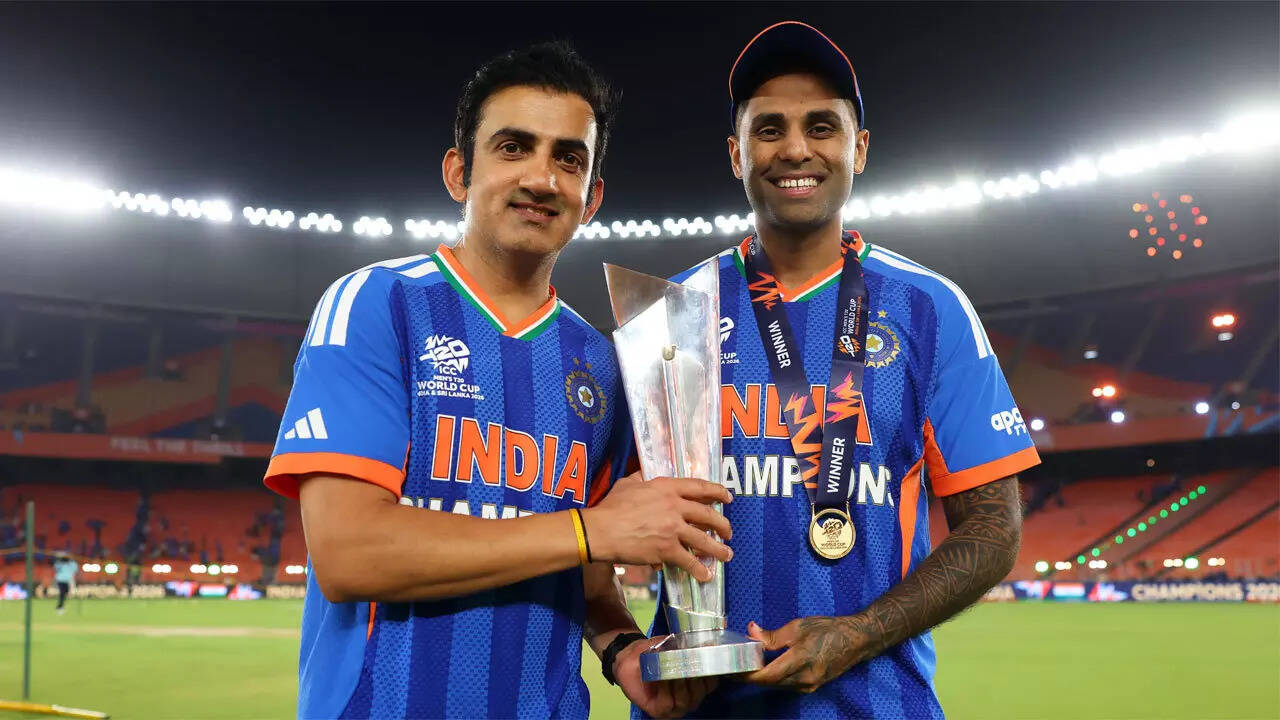
India head coach Gautam Gambhir with captain Suryakumar Yadav. (Pic credit: BCCI)

He credited India’s success to a fearless, high-impact approach in the shortest format.“From day one, I had a very strong belief that the T20 format is about impact. It’s not about milestones or individual performances. It’s about going out there and creating an impact, whether it’s on the field, with the ball or with the bat,” Gambhir explained.The head coach also highlighted the players’ willingness to adapt to different roles during the tournament, pointing out that captain Suryakumar Yadav set the tone by accepting tactical changes for the team’s benefit.“One thing which will stay with me for the rest of my life is how comfortably the boys accepted different batting positions,” Gambhir said.From Tilak Varma and Shivam Dube shifting roles in the batting order to Jasprit Bumrah delivering in every phase of the innings, Gambhir said the team’s adaptability was the defining feature of India’s title-winning run.


Source link

Real Estate Investments: What are plotted developments and 10 tips for investing in this kind of real estate


What are plotted developments and 10 tips for investing in this kind of real estate

Plotted developments have become one of the most closely watched areas in India’s real estate market. What used to be seen as a long-term, patient play is now attracting both end users and investors who want more freedom, lower costs of entry, and clearer land ownership. The increase in supply in new corridors, on the other hand, means that not every planned project will have the same result. In 2026, being disciplined about evaluations is more important than being excited.What are plotted developments?Plotted development, as the name suggests, is an area of land that has a planned, gated, or managed residential layout. This land is divided into smaller, legally approved plots for sale. In these areas the basic infrastructure is provided by the developers, like water, sewage management, and electricity, and individuals have the freedom to make homes as per their preference. Rahul Agarwal, Founder, Avani Ventures by RASA Group shared with Times of India ten useful investment tips that serious buyers should remember.1. Begin with clean paperworkLegal hygiene is always the first filter. Before looking at the potential for appreciation, investors need to make sure they have a clear title, the right land conversion if necessary, and all the necessary local approvals. In plotted developments, legal problems can stay hidden for years and only show up when the property is sold or built. If the paperwork is clear and can be checked, a slightly higher entry price is often fair.2. Look at the micro marketCity growth headlines can be distracting. Plot values move on hyper-local triggers. Look at road upgrades, nearby employment hubs, civic infrastructure, and the volume of competing supply within a few kilometres. Locations with multiple demand drivers tend to hold value better.

Image: Canva

3. Evaluate access qualityOn paper, a project may look close to a highway, but the last mile is what really matters for usability. Investors should go to the site and look at the approach roads, the access width, the traffic jams, and the potential right-of-way risks in the future. Bad last-mile connections can slow down both price discovery and the use of the product by end users.4. Prefer structured layouts over fragmented land parcelsOrganised plotted communities generally perform better than loosely cut land parcels. Defined internal roads, drainage lines, utilities, and open spaces make a real difference over time. They also make resale and financing easier. Unplanned layouts may look cheaper initially but often face friction later.5. Check development phasing and delivery disciplineNot all plotted projects move forward at the same speed. Investors need to know if the developer has a clear plan for how to build the project in phases, including internal roads, street lights, water systems, and defining the boundaries. Early delivery of infrastructure makes buyers more confident and helps the secondary market move.6. Look for real demandIn some corridors, planned launches are mostly based on what investors think will happen. A healthier sign is that people are interested in the end user, that residential areas are growing nearby, and that home construction is slowly picking up. Areas where homes start to be built usually see more stable long-term value growth than areas where people are just buying and selling homes for fun.7. Know the risk of future supplyOne of the most common mistakes is not thinking about how much land that competes with yours might come on the market. Nearby large undeveloped land banks can keep values from going up for years. To get an idea of how much supply pressure there will be in the future, investors should look at zoning patterns and ownership concentration in the nearby micro market.8. Check out the liveabilityEven investors who only want to make money can benefit from projects that are truly viable. Basic planning factors like drainage, tree cover, internal mobility, and utility readiness can affect how quickly a home sells. End users are the ones who ultimately determine how deep the plotted market goes, so projects that make living in the future more comfortable tend to do better.

Image: Canva

9. Be realistic about how long you can holdPlotted investments often take longer than ready apartments. Some new corridors move quickly, but many plots take longer to find their true value. Investors in 2026 should think about the medium to long term instead of expecting quick flips unless the project is in a proven high absorption zone.10. Keep a close eye on policy and infrastructure signalsDo not rely on announcements alone. Land values move when roads are actually built, utilities are laid, and industrial projects start taking shape. Visit the corridor, see the progress for yourself, and check whether timelines are being met. Locations where infrastructure work is visibly moving usually carry far less risk than those driven mainly by future promises. Plotted developments in 2026 offer genuine opportunity, but the easy gains phase is largely behind us. As the segment grows, results will depend more and more on the quality of the projects, the strength of the micro market, and the credibility of the execution, rather than on general excitement about buying land.For investors willing to do careful groundwork, plotted assets can still deliver a compelling mix of flexibility and long-term value. But the discipline needed today is more like evaluating institutional real estate than the opportunistic land buying cycles of the past. In the future, the people who make the most money from plotted investments will not be the ones who buy first, but the ones who do the best research.


Source link

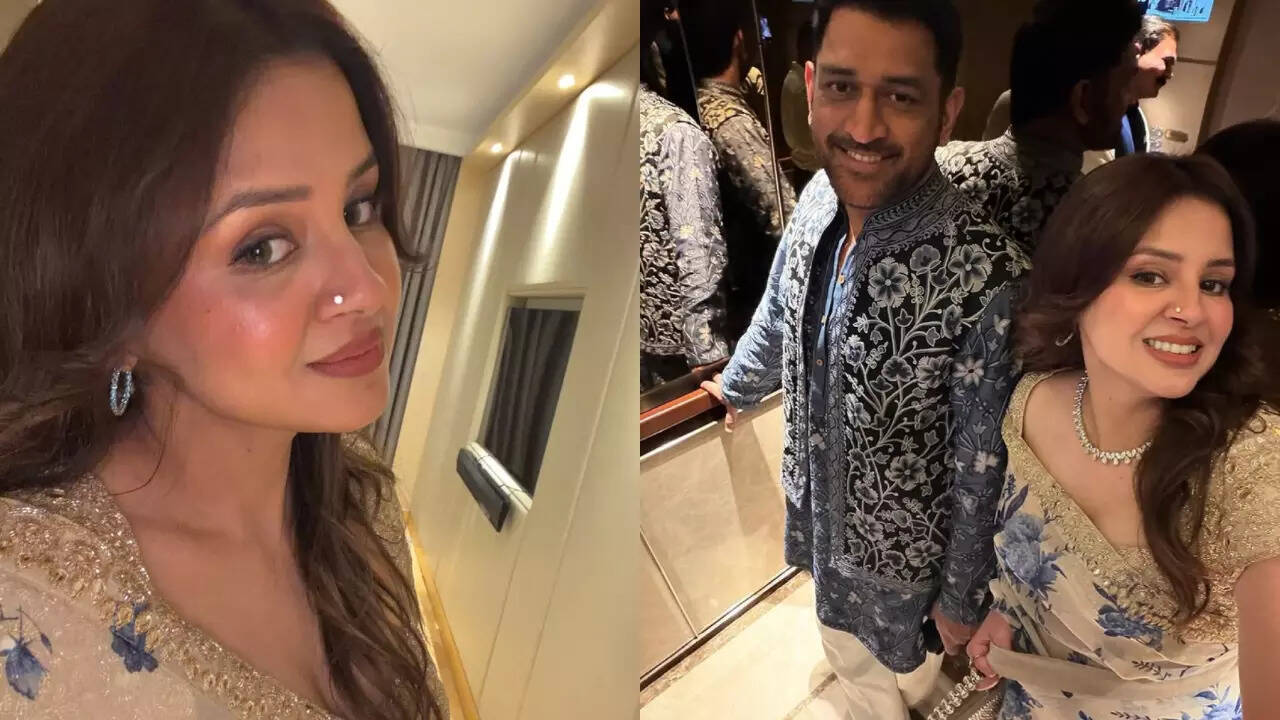
Sakshi Dhoni Saree: Sakshi Dhoni stuns in ₹1.22 lakh organza saree while MS Dhoni looks dapper in embroidered Nehru jacket at Mumbai wedding


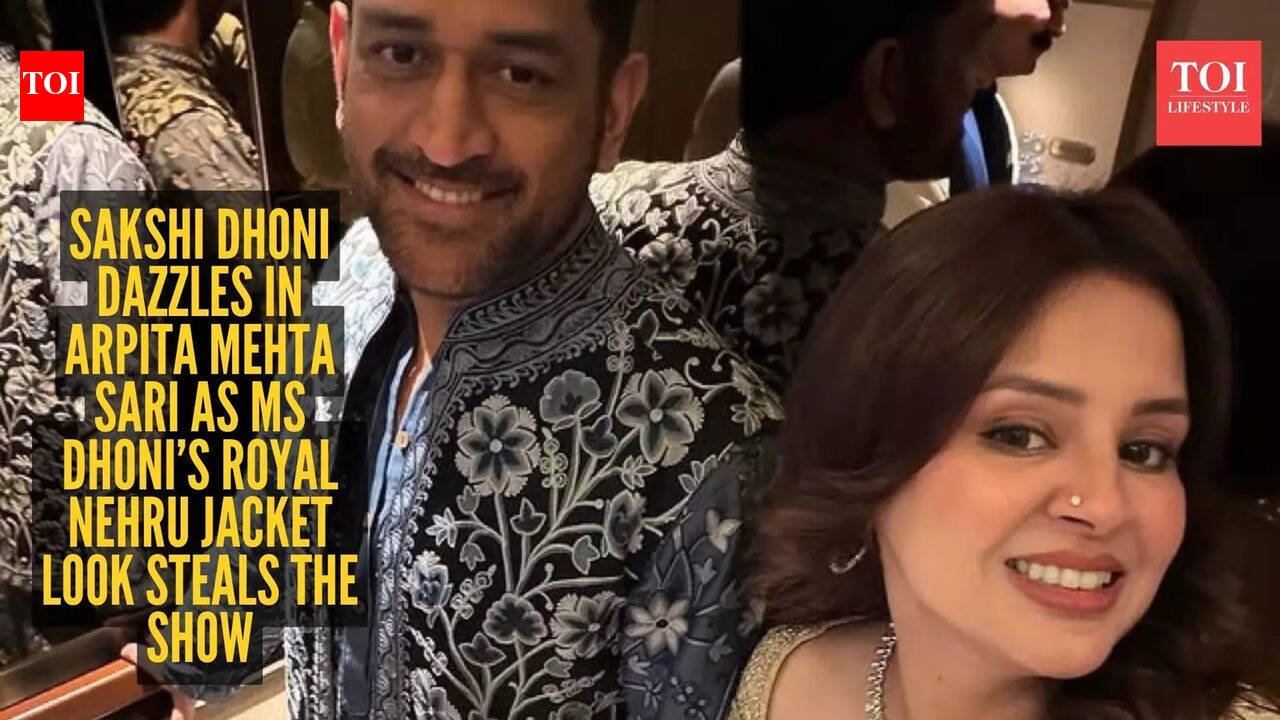
MS Dhoni and Sakshi Dhoni recently attended a Mumbai wedding. Sakshi wore a hand-embroidered organza saree. MS Dhoni sported a Nehru jacket. Their outfits displayed quiet coordination. The couple’s style was calm and balanced. They demonstrated elegance without being loud. Their fashion choices stood out among glamorous guests. The Dhonis remain a benchmark for couple style.

In the high-octane world of Indian celebrity weddings, where sparkle and excess usually take centre stage, MS Dhoni and Sakshi Dhoni quietly reminded everyone that elegance doesn’t need to shout. The couple recently attended businessman Mudit Dani’s wedding in Mumbai. And while the event was filled with glamorous guests and statement outfits, the Dhonis stood out for a different reason entirely – their effortless, perfectly balanced style.Dhoni has always carried that calm, “Captain Cool” presence. Even off the cricket field, he rarely tries too hard. But this time, it was Sakshi who drew the first glance.

Stylish Sakshi Dhoni is the selfie queen of India

Mrs. Dhoni hit a six with her saree

She wore a striking Blue Bloom Print and Rose Gold hand-embroidered organza saree from designer Arpita Mehta. The saree, priced at ₹1,22,000, was luxurious without being loud. And that’s what made it work. The organza fabric gave the look a light, almost dreamy feel. It moved easily, catching the light without needing heavy embellishment to make a statement.The floral print was soft and feminine. But the rose-gold embroidered border added just enough richness to keep it festive. It felt wedding-appropriate without crossing into the over-the-top territory we often see at celebrity events.

sa (1)

And then there was Sakshi’s styling. Simple, relaxed, and very much her own. She skipped the heavy jewellery many people would instinctively add with a sari like this. Instead, she kept things minimal. Her hair was left in soft waves, her makeup fresh and glowing. Nothing looked forced. Nothing looked overly planned.That restraint has always been Sakshi’s strength. She doesn’t chase trends. She just sticks to what feels natural.

Captain Cool was not far!

Of course, the Dhoni effect works best when the couple appears together. Styled by Shyamli Arora, Dhoni looked sharp in a deep blue and black Nehru jacket worn over a matching kurta. The embroidery on the jacket added texture without overwhelming the look. The outfit by designer Heena Kochhar drew its inspiration from the beautiful tradition of Khovar art from Ranchi, Jharkhand. The blue-black jacket, paired with a grey kurta and white pants, used fine aari embroidery to recreate those ancient motifs. It’s more than just an outfit; it’s a quiet, wearable tribute to the craft traditions of Jharkhand.

Poll

Do you think the Dhoni couple sets a standard for modern wedding fashion?

But what really worked was the quiet coordination between them.They weren’t wearing matching outfits. Not the obvious kind, at least. Instead, the deep blues in Dhoni’s jacket echoed the tones in Sakshi’s saree. It created a subtle visual harmony. You notice it, but it doesn’t feel staged.And that’s really the charm of the Dhonis.They don’t dress to dominate a room. They dress like two people who are comfortable in their own skin. Comfortable with each other too.In a celebrity world obsessed with bigger, brighter, louder looks, the Dhonis keep showing up in a different way. Calm. Balanced. Effortlessly stylish.Maybe that’s why, years later, they’re still the gold standard for couple style.


Source link

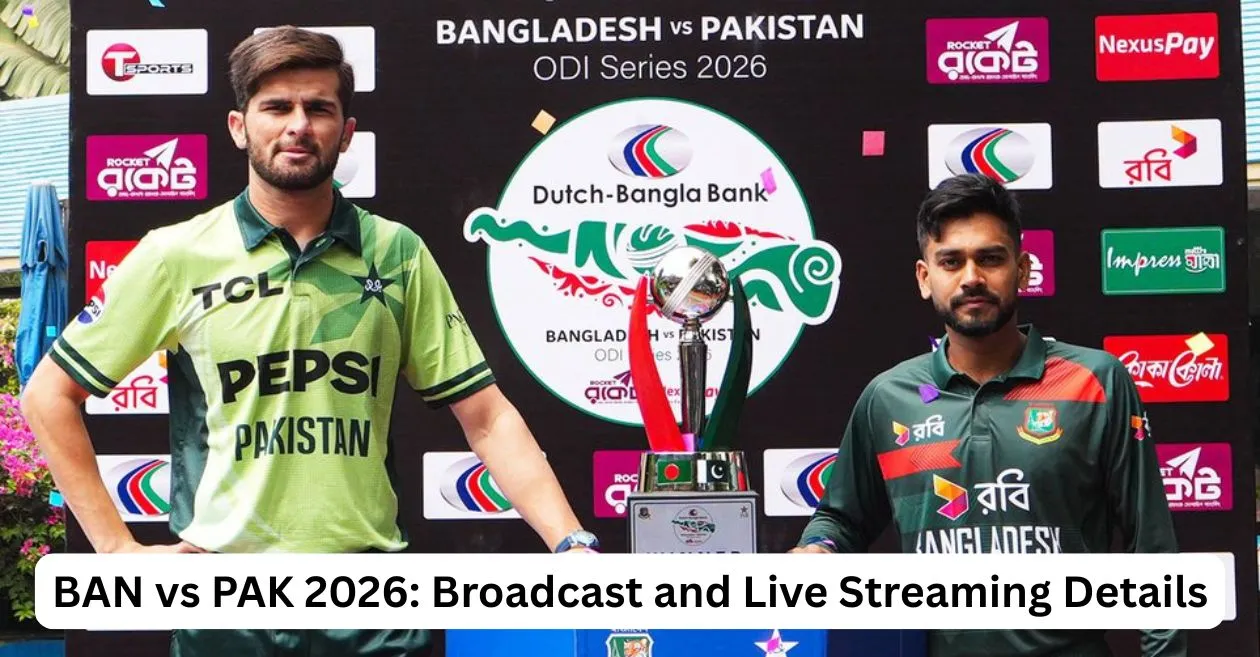
BAN vs PAK 2026: Broadcast and Live Streaming Details – When and where to watch in India, USA, Pakistan & other countries


With the 2027 ICC Men’s Cricket World Cup appearing on the horizon, both Bangladesh and Pakistan enter this three-match ODI series in Dhaka looking to solidify new combinations. This tour marks a significant transitional phase for Pakistan, who have arrived with a refreshed squad, while Bangladesh look to assert dominance at their fortress in Mirpur.

The big story for Pakistan is the absence of Babar Azam, who was omitted as selectors pivot toward the next World Cup cycle. Under the leadership of Shaheen Shah Afridi, Pakistan have named six uncapped players, including exciting prospects like Shamyl Hussain and Abdul Samad. With veteran Mohammad Rizwan providing the backbone, the Men in Green are clearly testing their bench strength in subcontinent conditions.

The Tigers, led by Mehidy Hasan Miraz, are formidable at home. While they are missing the injured Hasan Mahmud and Tanzim Hasan Sakib, the recall of Afif Hossain adds depth to a middle order that includes the experienced Litton Das and Najmul Hossain Shanto. For Miraz, this series is a chance to prove his tactical mettle as a full-time leader.

Pakistan tour of Bangladesh 2026: ODI fixtures

  • 1st ODI: March 11, 2026, Shere Bangla National Stadium, Dhaka, 1:45 PM IST/ 08:15 AM GMT / 02:15 PM LOCAL
  • 2nd ODI: March 13, 2026, Shere Bangla National Stadium, Dhaka, 1:45 PM IST/ 08:15 AM GMT / 02:15 PM LOCAL
  • 3rd ODI: March 15, 2026, Shere Bangla National Stadium, Dhaka, 1:45 PM IST/ 08:15 AM GMT / 02:15 PM LOCAL

Also READ: Bangladesh name strong squad for the ODI series against Pakistan, Atif Hossain returns

Squads:

Pakistan: Shaheen Afridi (c), Abdul Samad, Abrar Ahmed, Faheem Ashraf, Faisal Akram, Haris Rauf, Hussain Talat, Maaz Sadaqat, Mohammad Rizwan, Mohammad Wasim, Muhammad Ghazi Ghori, Saad Masood, Sahibzada Farhan, Salman Agha, Shamyl Hussain.

Bangladesh: Mehidy Hasan Miraz (c), Soumya Sarkar, Saif Hassan, Tanzid Hasan, Najmul Hossain Shanto, Tawhid Hridoy, Litton Das, Afif Hossain, Mahidul Islam Bhuiyan, Rishad Hossain, Tanvir Islam, Mustafizur Rahman, Taskin Ahmed, Shoriful Islam, Nahid Rana

Broadcast and Live Streaming details

  • USA: Sling TV – Willow TV (sign up here)
  • UK: Sky Sports Cricket
  • India: Fancode
  • Pakistan: PTV Sports, A Sports
  • Bangladesh: T Sports, Nagorik TV
  • New Zealand: Sky Sports NZ
  • Australia: Fox Sports, Amazon Prime
  • South Africa: SuperSport

Also READ: ICC announces T20 World Cup 2026 Team of the Tournament, Aiden Markram to lead


Source link

Middle East crisis: IEA proposes largest oil reserve release of 182 million barrels to ease crude prices


Middle East crisis: IEA proposes largest oil reserve release of 182 million barrels to ease crude prices

Amid soaring crude oil prices worldwide due to the ongoing US-Israel war with Iran, the International Energy Agency (IEA) has proposed the largest disbursement of oil reserves to help bring down prices.The release could exceed the 182 million barrels of oil that IEA member countries put on the market in two separate releases in 2022, when Russia launched its full-scale invasion of Ukraine.

Petrol, Diesel Prices Unlikely To Rise Unless Crude Oil Breach $130 Per Barrel: Report

According to a report by the Wall Street Journal, the proposal was circulated at an emergency meeting of energy officials from the organisation’s 32 member countries on Tuesday.Officials familiar with the matter said that the countries are expected to decide on the proposal on Wednesday. The plan will be adopted if no member objects; however, even if a single country objects, then the plan could be delayed.

Why it matters?

The IEA’s proposal aims to counter disruptions caused by the near-total closure of the Strait of Hormuz. The narrow waterway lies between the Persian Gulf and the Gulf of Oman and connects the region’s oil exports to global markets. According to the Wall Street Journal, around one-fifth of the world’s oil supply passes through the strait every day and the threat of tanker attacks by Tehran has halted ship traffic.Since February 28, when the United States and Israel began strikes on Iran, crude oil prices have surged by nearly 40%, briefly crossing the $100-per-barrel mark. However, prices fell this week as traders closely tracked statements by President Donald Trump about how long the conflict might last. On Tuesday, crude oil prices dropped to below $84 per barrel, although diesel prices have continued to rise.IEA Executive Director Fatih Birol said on Monday that member countries hold about 1.2 billion barrels in public oil stocks, along with another 600 million barrels in mandatory commercial inventories. According to him, this combined reserve could cover roughly 124 days of lost supply from the Gulf.The agency previously released crude oil reserves twice in 2022 after Russia invaded Ukraine. However, that move initially pushed oil prices up by nearly 20%, as traders interpreted the release as a sign that the crisis was more serious than expected.One of the most notable coordinated releases took place in 1991, when then US President George HW Bush ordered the first-ever drawdown of the Strategic Petroleum Reserve as a US-led coalition launched Operation Desert Storm against Iraq. IEA member countries also released oil from their stockpiles under a coordinated plan prepared ahead of the invasion.Oil prices fell by more than 20% on the first day of the US-led assault. By the time coalition forces entered Iraq and Kuwait in February, oil from the Strategic Petroleum Reserve had already reached the market.The IEA was established in 1974 following the Arab Oil Embargo. Western countries created the organisation due to the increasing Iranian attacks on oil tankers travelling through the Strait. It aims to coordinate energy policy and ensure oil supply security during market disruptions.The agency sets guidelines on the level of crude oil reserves member countries must maintain and coordinates emergency releases to stabilise global markets during crises.


Source link

Mumbai Death Suicide: ‘Constantly humiliated, caused mental trauma’: Mumbai dentist’s chilling death note shocks kin; how troubled relationship ended in tragedy MUMBAI: A 24-year-old Master of De | Mumbai News


The deceased, Stuti Sonawane, was found hanging at her home in the Antop Hill area on Monday.

MUMBAI: A 24-year-old Master of Dental Surgery (MDS) student allegedly died by suicide in Mumbai, leaving behind a six-page note in which she accused her boyfriend of mentally harassing her and humiliating her over their relationship. The deceased, Stuti Sonawane, was found hanging at her home in the Antop Hill area on Monday. Police arrested her boyfriend, Fazal Mohammad Khan (31), an insurance agent, from Lower Parel later the same day. According to police, Sonawane’s suicide note forms a crucial part of the investigation and details the emotional distress she allegedly faced during her relationship.

What the suicide note said

Police said the student wrote about the mental trauma she experienced because of repeated humiliation and insults from her boyfriend. In the note, she wrote about her relationship with her former boyfriend, whom she met on a dating app. She became friends with him and was in a relationship with him for one and half years. In the note she alleged that her former boyfriend humiliated and insulted her, which resulted in her suffering severe mental trauma. “However, over the course of time the duo realised that their relationship will not last and due to various reasons they cannot go ahead and hence decided to break off and be just friends,” a police official said. During the investigation, police learnt that another man had entered the woman’s life after the break-up, which reportedly upset Khan. This led to a scuffle between the two. “In a fit of rage, Khan allegedly used some derogatory words against her, which affected her mentally and which she mentioned in her note,” the police said.

Friends joked about ‘fridge’ remark

Police also said that the student mentioned in her note that her friends were aware of her troubled relationship. According to the note, the woman’s friends knew about her troubles with her boyfriend and would often joke and say, “We don’t want to see you in the fridge.”

How the incident came to light

The incident came to light on Monday morning when Sonawane did not come out of her room till around 11am. Her parents called out to her but received no response. Growing suspicious, they broke open the door and found her hanging from the ceiling, police said. She was rushed to a hospital where doctors declared her dead.

Arrest and case registered

Police said Sonawane had named Khan in the six-page note and accused him of constant harassment. Based on a complaint filed by her parents, the Antop Hill police arrested Khan, a resident of Worli. He has been booked under relevant sections of the Bharatiya Nyaya Sanhita, including Section 108 (abetment of suicide). Further investigation is underway.


Source link

Watch: US destroys multiple Iranian minelayers in Strait of Hormuz


Watch: US destroys multiple Iranian minelayers in Strait of Hormuz

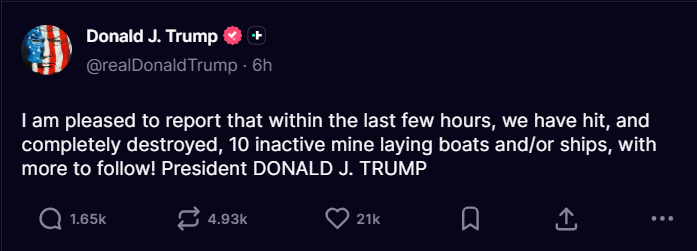
The United States military has destroyed several Iranian vessels believed to be capable of laying naval mines near the strategic Strait of Hormuz, according to the US central command, as concerns grow around Tehran’s attempt to disrupt shipping in the critical waterway.In a post on X, the United States central command (CENTCOM) said US forces targeted and destroyed multiple Iranian naval vessels on Tuesday. “US forces eliminated multiple Iranian naval vessels, March 10, including 16 minelayers near the Strait of Hormuz,” the command said, sharing a video showing some of the strikes.The claim followed comments by US president Donald Trump, who earlier said American forces had struck Iranian vessels capable of laying mines in the area. But interestingly, according to Trump 10 vessels were destroyed, contradictory to the military’s claim of 16. In a post on Truth Social, Trump wrote: “I am pleased to report that within the last few hours, we have hit, and completely destroyed, 10 inactive mine-laying boats and/or ships, with more to follow!”

.

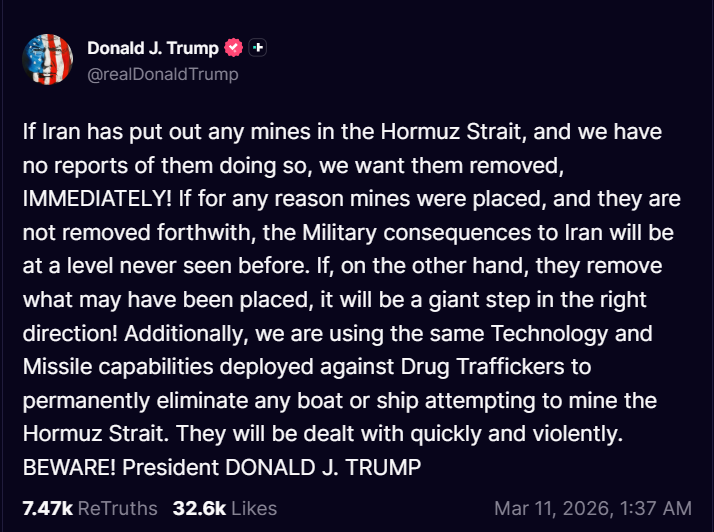
The US president also warned Tehran against deploying naval mines in the key shipping corridor. “If Iran has put out any mines in the Hormuz Strait, and we have no reports of them doing so, we want them removed, IMMEDIATELY!” he wrote.Trump added that failing to remove such mines could lead to a strong military response. “If for any reason mines were placed, and they are not removed forthwith, the Military consequences to Iran will be at a level never seen before,” he said, while adding that removing any devices would help ease tensions. “If, on the other hand, they remove what may have been placed, it will be a giant step in the right direction.”

.

The warning comes after reports by CBS News citing US officials suggested Iran could be preparing to deploy naval mines in the strait. People familiar with US intelligence told CNN that a small number of mines may already have been placed in the waterway. The Strait of Hormuz, located between Iran and Oman, is one of the world’s most important energy chokepoints, with roughly 20 per cent of globally traded oil passing through it each day.Control of the waterway is shared by Iran’s navy and the Islamic Revolutionary Guard Corps (IRGC), which has warned that ships transiting the channel could be targeted.Since the war escalated, officials have described the strait as an increasingly high-risk transit zone for commercial shipping.


Source link

Oil ‘permission’: US repeats India ‘good actors’ claim, says ‘short term measure’ won’t benefit Russian govt


Oil 'permission': US repeats India 'good actors' claim, says 'short term measure' won't benefit Russian govt

The United States said on Wednesday that its decision to allow India to buy limited quantities of Russian oil is a temporary step aimed at easing pressure on global energy supplies during the ongoing Middle East crisis.White House press secretary Karoline Leavitt said the move was designed as a short-term measure to stabilise markets as disruptions linked to Iran and tensions in the region continue to affect supply routes.Responding to a question on the waiver issued last week, Leavitt said the decision reflected India’s earlier cooperation with Western sanctions on Moscow.“They came to this decision because our allies in India have been good actors and have previously stopped buying sanctioned Russian oil,” she said. “So as we work to appease this temporary gap of oil supply around the world because of the Iranians, we have temporarily permitted them to accept that Russian oil and this Russian oil was already at sea.”She added that the shipments involved crude already in transit and would not meaningfully boost Russia’s revenues.“It was already out on the water. So this short term measure, we don’t believe it will provide significant financial benefit to the Russian government at this time,” Leavitt said.The clarification comes as the administration of US President Donald Trump faces questions over the decision to ease restrictions months after imposing punitive measures on India for buying Russian crude.Earlier, US Treasury Secretary Scott Bessent said Washington had agreed to allow Indian refiners to purchase Russian oil that was already loaded on ships and stranded at sea, describing it as a way to quickly inject supply into the market.“The Indians had been very good actors. We had asked them to stop buying sanctioned Russian oil this fall. They did,” Bessent said in an interview with Fox Business. “But to ease the temporary gap of oil around the world, we have given them permission to accept the Russian oil.”US Energy Secretary Chris Wright also described the step as a practical move to stabilise prices while markets adjust to disruptions in the region.“We have implemented short term measures to help keep oil prices down. We are allowing our friends in India to take oil that is already on ships, refine it, and move those barrels into the market quickly,” Wright wrote on X.Washington has made clear that the waiver is limited in scope. The US Treasury issued a 30-day authorisation allowing Indian refiners to purchase Russian crude that had already been loaded onto vessels before March 5, provided it is delivered to Indian ports by early April.Officials have repeatedly said the measure does not represent a shift in the US sanctions policy towards Russia. Instead, they argue it is a stop-gap aimed at keeping global oil flowing and preventing further price spikes as the conflict involving Iran threatens supply routes such as the Strait of Hormuz.


Source link

After staying stuck in India for more than a week, West Indies players finally head home | Cricket News


After staying stuck in India for more than a week, West Indies players finally head home
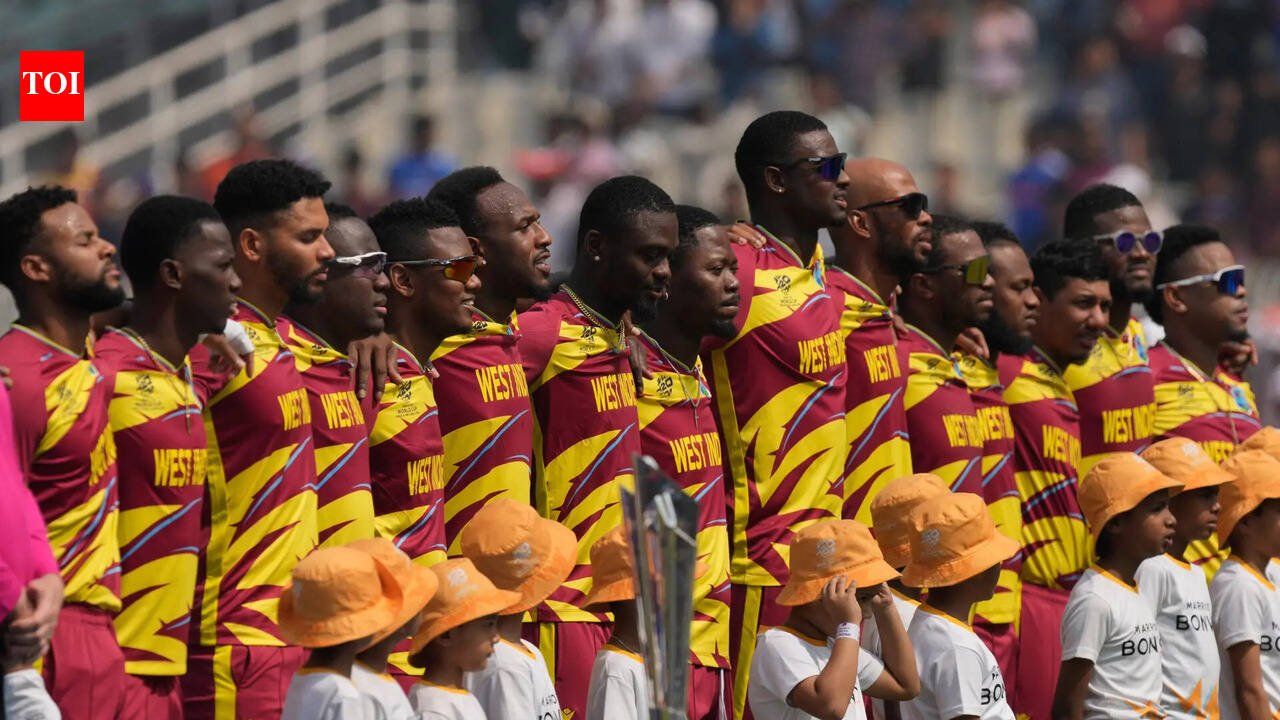
Team West Indies (AP Photo/Bikas Das)

Several cricket teams have faced travel problems after the T20 World Cup in India due to the ongoing Israel–Iran conflict, which has led to airspace closures across parts of West Asia. Because of this, charter flights arranged by the International Cricket Council (ICC) were delayed, leaving teams like the West Indies stranded in India.To resolve the situation, Cricket West Indies (CWI) decided not to wait any longer for the uncertain charter flight and instead arranged commercial travel for their players and support staff. The board said the decision was taken to ensure everyone could return home safely and without further delays.

Sanju Samson opens up on T20 World Cup journey, and title win

In a statement, CWI explained the reasoning behind the move, “In the interest of the well-being and safety of its players and support staff, Cricket West Indies advised the ICC that it was no longer prudent to continue waiting on the charter arrangements, which remain uncertain. Multiple approaches have since been made through CWI, players, and other partners, in coordination with the ICC, to secure commercial travel to facilitate the squad’s safe return. It is important to note that some players and staff have already departed, with the remaining members scheduled to depart today, Tuesday, 10th March, and tomorrow, Wednesday, 11th March 2026.”The board also thanked fans and stakeholders for their patience during the situation. “Cricket West Indies appreciates the concern and interest of fans and key stakeholders in the resolution of this matter and wishes to thank all parties for their support and patience.”The travel disruption has affected other teams as well. Zimbabwe, who played their last match in the tournament on March 1 against South Africa in New Delhi, also faced similar travel complications due to airspace restrictions. Initially scheduled to leave in batches, their plans were cancelled before alternative arrangements were made.


Source link