NEW DELHI: The RSS Friday presented fresh data on its expanding organisational footprint, saying it contacted more than 10 crore households across over three lakh villages and added nearly 6,000 new shakhas in a year, as the meeting of its top decision-making body began at Samalkha in Haryana. The organisation said the number of daily shakhas has risen from 83,129 to 88,949, while its presence has expanded to 55,683 locations nationwide, reflecting what it described as a simultaneous push for organisational growth and wider social outreach during its centenary year. The figures were presented as part of the annual report placed before the Akhil Bharatiya Pratinidhi Sabha. RSS functionary C R Mukund said that centenary-year programmes – which began in Oct 2025 – have been designed around two broad objectives – expanding the organisation’s reach and strengthening engagement with society. “The effort is to bring together constructive forces in society and create an environment for positive social change,” he said. A key component of this outreach has been the ongoing Grih Sampark Abhiyan, a door-to-door campaign aimed at interacting with families across the country. The RSS functionary said volunteers have already contacted more than 10 crore households in over three lakh villages, with the campaign continuing in several states. Mukund cited Kerala as an example of the campaign’s outreach across communities. According to Mukund, volunteers visited over 55,000 Muslim households and more than 54,000 Christian families in the state and received a positive response. The organisation also reported that over 36,000 Hindu conferences have been organised so far across urban, rural and tribal areas.
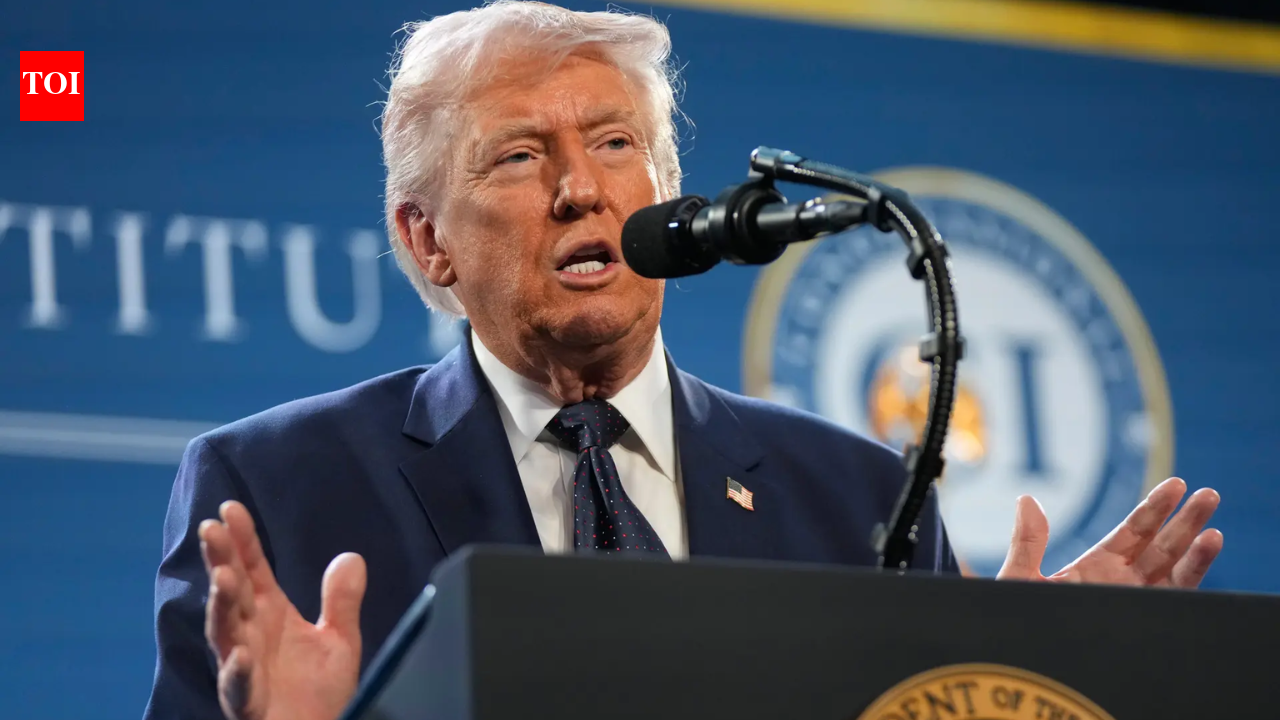
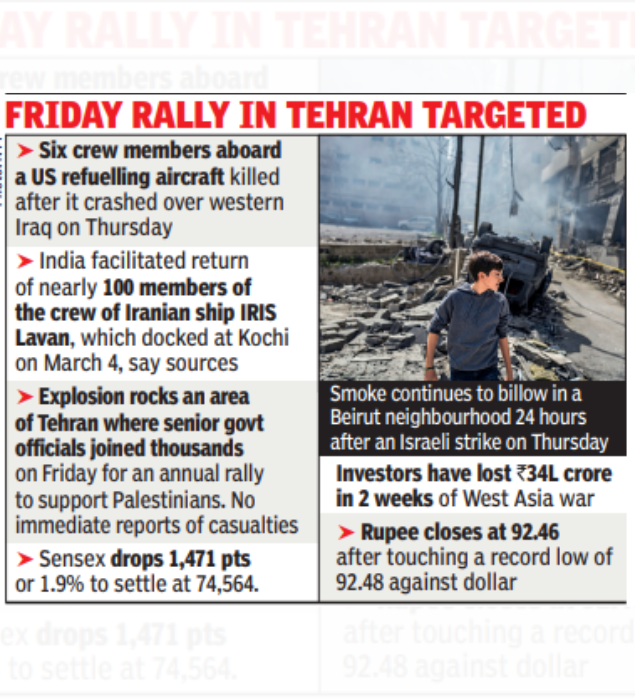
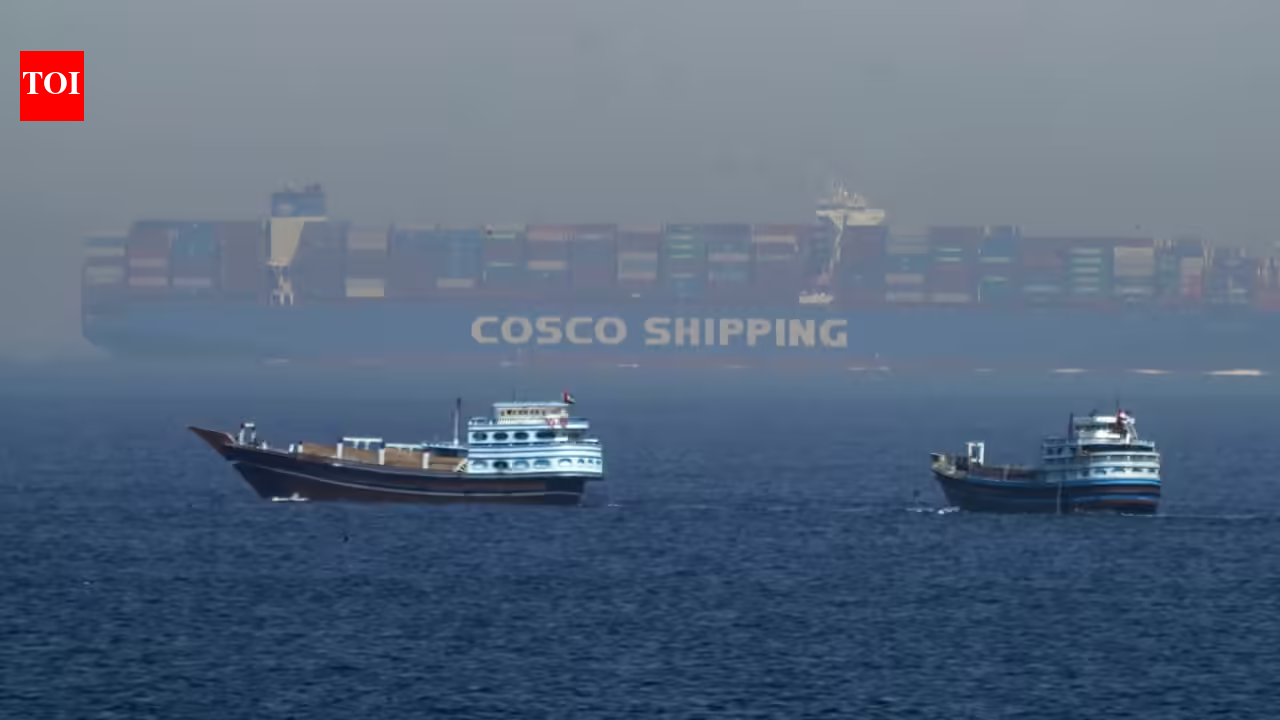
US President Donald Trump on Saturday (US local time) called on nations to send warships to help keep the Strait of Hormuz open for shipping as Iranian forces continue their retaliation campaign amid US and Israeli attacks on Iran.In a post on Truth Social, Trump said, “The countries of the World that receive Oil through the Hormuz Strait must take care of that passage, and we will help — A LOT!” “The U.S. will also coordinate with those Countries so that everything goes quickly, smoothly, and well,” he added.About a fifth of global oil and liquefied natural gas normally passes through the strait, a narrow passage of water between Iran and Oman. Tehran’s ability to stop shipping through the channel could give it enormous leverage over the U.S. and its allies.In an earlier post on Saturday, Trump said that “Many Countries, especially those who are affected by Iran’s attempted closure of the Hormuz Strait, will be sending War Ships, in conjunction with the United States of America, to keep the Strait open and safe,” adding that he hoped China, France, Japan, South Korea, Britain and others would send ships to the area.“In the meantime, the United States will be bombing the hell out of the shoreline, and continually shooting Iranian Boats and Ships out of the water,” he wrote.Trump said on Thursday the US was willing to escort ships through the Strait of Hormuz to protect them from Iranian attack, as his administration searches for ways to ease high oil prices fuelled by the US-Israeli war on Iran.Meanwhile, Western nations have increased their military presence in the eastern Mediterranean during the conflict in Iran. The deployments have focused on the security of Cyprus after an Iranian-made drone hit a British military base on the island on March 2.Britain is also exploring additional options for deployments to the Gulf after Iran stepped up attacks on vessels, defence minister John Healey said on Thursday. The British government is talking to allies and partners about “a range of options to ensure the security of shipping in the region,” a Ministry of Defence spokesperson said on Saturday.The French Navy is deploying about a dozen naval vessels, including its aircraft carrier strike group, to the Mediterranean, the Red Sea and potentially the Strait of Hormuz as part of defensive support to allies threatened by the conflict.France has also been consulting with European, Asian and Gulf Arab states over the past week with a view to putting together a plan for warships eventually to escort tankers through the strait, French officials said.
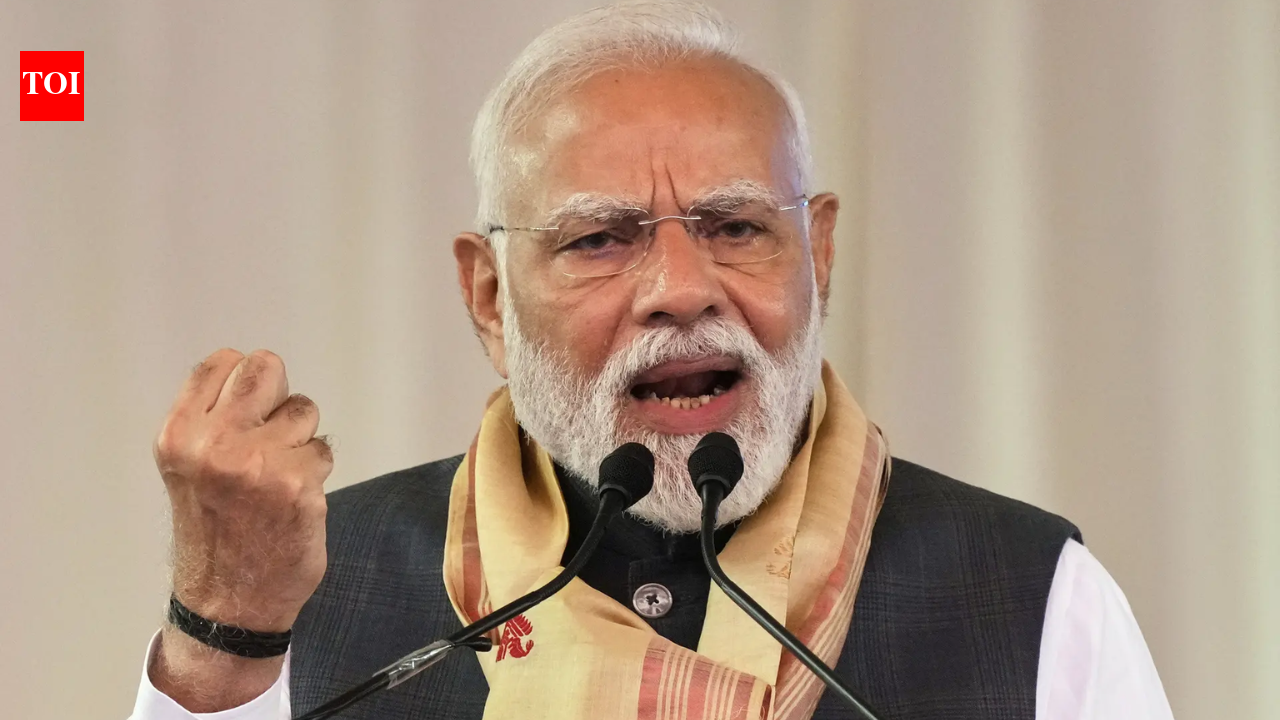
NEW DELHI: PM Narendra Modi stressed in his phone conversation with Iranian President Masoud Pezeshkian late on Thursday India is Iran’s friend and that his government will do all it can to advance diplomacy as escalation is not in anyone’s interest. This is the closest India has come to expressing solidarity with Tehran, which said Friday it would allow Indian ships safe passage through the Strait of Hormuz, after the war broke out with US-Israel attacks and Iranian reprisals.
Poll
Should BRICS take a more active role in promoting peace and security in the Middle East?
The Iranian president also appreciated India’s “balanced and constructive positions” on international issues and its efforts to reduce tensions. Amidst the looming energy crisis, India had intensified engagement with Iran in the past few days to stress the need for unimpeded transit of goods and energy. Iranian ambassador Mohammad Fathali answered in the affirmative when asked if Tehran would let India-flagged ships cross the Strait.
PM Modi Dials Iran President, Flags Indian Safety, Energy Supply Risks Amid Rising Gulf Tensions
“Yes, because India is our friend. You will see it withing 2 or 3 hours. We believe India and Iran share common interests in the region,” said Fathali on Friday evening. Twenty-eight Indian ships had remained stranded in the Persian Gulf because of the Iranian blockade of the Strait of Hormuz. There were reports late on Friday that Iran had already allowed 2 of these ships carrying gas to cross the Strait.
India working with BRICS for consensus on conflict
According to an Iranian readout, Pezeshkian said Iran remained committed to expanding cooperation with New Delhi within frameworks such as BRICS, which is currently chaired by India, and called upon the group of major emerging economies to play an active role in safeguarding peace and security in the region.
The Modi-Pezeshkian talks were followed by external affairs minister S Jaishankar’s 4th conversation in the past 2 weeks with his counterpart Seyed Araghchi, during which BRICS related issues were again discussed. India currently holds the BRICS presidency and Araghchi, as Iran said in a readout, sought condemnation of US-Israel “military aggression” by regional and global organisations. “Referring to the importance of BRICS as a platform for expanding multilateral cooperation, he (Araghchi) said the grouping should play a constructive role at the present juncture in supporting regional and global stability and security,” said an Iranian readout of the foreign ministers’ talks. However, with both Iran and the UAE members of the group, it has been difficult for India as the chair to forge a consensus that could lead to a joint statement on the ongoing conflict. “As Chair of BRICS, India has been facilitating discussions among members through the Sherpa channel. Last virtual BRICS Sherpa meeting was held on 12 March. In addition, Indian leadership has been engaging with leaders of BRICS members in the region. India will continue to engage,” said a government source, speaking on the condition of anonymity.According to Iran, Jaishankar expressed India’s readiness to expand bilateral and multilateral cooperation in regional and international forums. He also emphasised the importance of finding ways to strengthen sustainable stability and security in the region as a “collective necessity”. Jaishankar said in his own post on X that BRICS issues were discussed.Iran joined the BRICS in 2024 and is hoping for support from India in its efforts to ensure that the group condemns the US-Israel attacks. Unlike Russia and China, India has so far not condemned the attacks on Iran but Modi, in his talks with the Iranian president, did express deep concern over the escalation of tensions and the loss of civilian lives as well as damage to civilian infrastructure. Without naming Iran, the PM has strongly condemned Iran’s attacks in the Gulf where India has deep energy and diaspora interests. According to Iran, in his talks with Modi, Pezeshkian raised the killing of supreme leader Ali Khamenei and the attack on a girls’ school in which, the president said, 168 students died. “Indian Prime Minister Narendra Modi also expressed deep concern over the tensions in the Middle East and emphasized that India is a friend of Iran. New Delhi, he said, will make its maximum effort to play a role in advancing diplomacy, noting that escalation of conflict is not in the interest of any party,” said the Iranian statement on the talks. Pezeshkian told Modi, according to Tehran, that despite the recent crimes targeting infrastructure, Iran remained committed to expanding cooperation with India and other friendly countries within frameworks such as BRICS and the Shanghai Cooperation Organization, and stressed the need for BRICS to play an active role in safeguarding peace, stability, and security in the region.
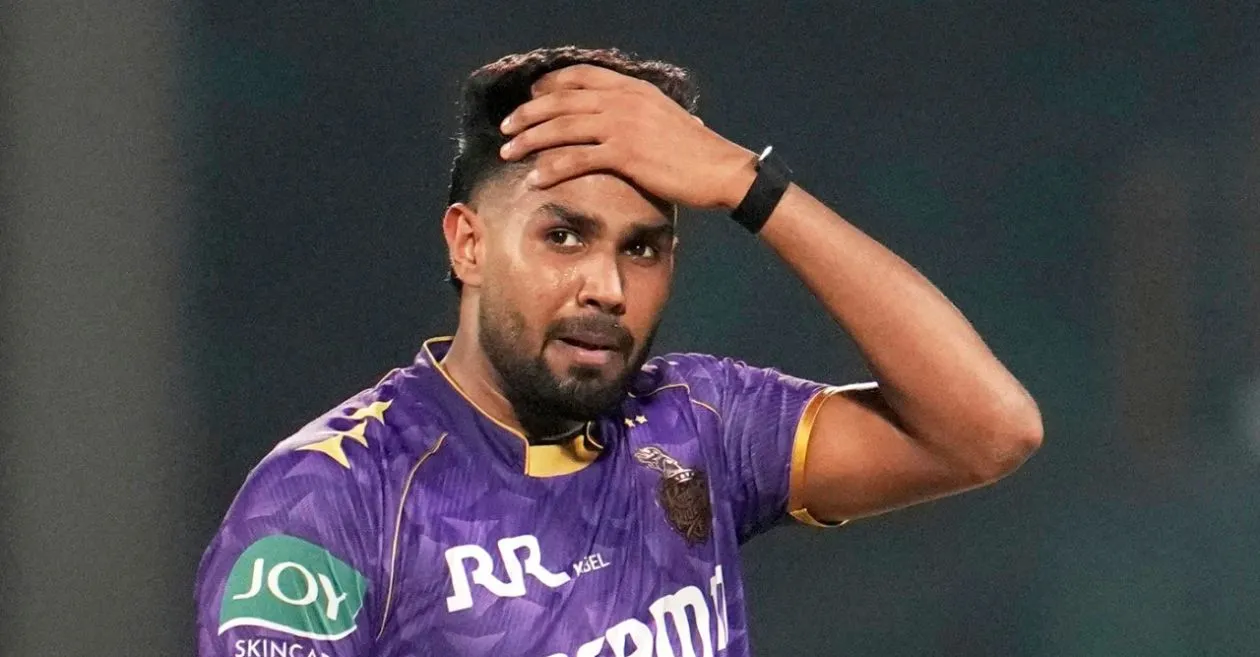
The 2026 edition of the Indian Premier League (IPL) is just around the corner, but the Kolkata Knight Riders (KKR) camp has been hit with a wave of uncertainty. The three-time champions, known for their aggressive brand of cricket and tactical depth, are currently scrambling to fix their bowling blueprints. In what is being described as a major blow to their title aspirations, star Indian pacer Harshit Rana has been officially ruled out of the entire tournament.
Rana, whose meteoric rise saw him become a linchpin of the KKR attack, was expected to lead the domestic pace battery alongside the likes of Vaibhav Arora and Akash Deep. However, a cruel twist of fate during the warm-up matches for the recently concluded T20 World Cup 2026 has sidelined the Delhi-born speedster. While KKR fans were hoping for a miracle recovery, recent medical reports and franchise updates have confirmed the worst: Rana is headed for a long rehabilitation period, leaving a massive 140kmph-sized hole in the KKR starting XI.
Harshit Rana’s injury: A setback for Kolkata Knight Riders
The injury occurred during a high-stakes warm-up fixture against South Africa in Navi Mumbai. Rana, who was part of the national squad, suffered a significant knee injury while fielding. Subsequent scans revealed the necessity of a surgical procedure, which he underwent in February 2026. Given the intensity of the IPL schedule and the physical demands on a fast bowler, the medical team advised against a premature return.
For KKR, losing Rana is more than just losing a bowler; they are losing a wicket-taker who mastered the art of the slow-ball bouncer and provided crucial breakthroughs in the death overs. Since his breakout 2024 season, where he picked up 19 wickets to help KKR clinch the trophy, Rana has been the heart of their pace attack. With the IPL 2026 campaign set to begin on March 29 against Mumbai Indians at the Wankhede Stadium, the KKR management led by Captain Ajinkya Rahane and Coach Abhishek Nayar must now look toward their current squad and the pool of unsold players to fill the void.
3 players who can replace Harshit Rana in IPL 2026
With the tournament fast approaching, the franchise is looking at a mix of internal promotions and potential injury replacements from the unsold list. Here are the three most likely candidates to step into Rana’s shoes for the 2026 season:
Akash Madhwal
(Image source: X)
If KKR decides to dip into the pool of unsold players, Akash Madhwal stands out as the prime candidate. Madhwal, who rose to fame with the Mumbai Indians, became a household name after his legendary 5/5 spell in the 2023 Eliminator. Despite his proven pedigree in high-pressure situations, he surprisingly went unsold in the IPL 2026 auction.
Madhwal is a direct tactical replacement for Rana. While Rana relied on bounce and cutters, Madhwal brings pin-point yorkers and a natural ability to bowl at the death. Inserting Madhwal into the XI would allow KKR to maintain their strategy of having a specialist Indian pacer who can handle the final four overs, freeing up the likes of Sunil Narine and Varun Chakaravarthy to attack in the middle overs.
Umran Malik
(Image source: X)
Internal to the KKR squad, the Jammu Express Umran Malik is the most exciting alternative. Malik was already part of the roster as a potential Impact Player, but Rana’s absence likely elevates him to a frontline role. Known for consistently clocking speeds above 150 kmph, Malik provides the sheer intimidation factor that KKR needs at the Eden Gardens.
In the current setup, Malik would likely slot in as the primary middle-overs enforcer. While Arora and Deep handle the new ball, Malik can be used in short, sharp bursts to break partnerships. His role would shift from a luxury impact sub to a necessity in the starting XI, ensuring that KKR doesn’t lose the aggressive edge that Rana provided.
Chetan Sakariya
(Image source: X)
Chetan Sakariya is another name heavily linked with the KKR camp as a replacement. Having been part of the KKR setup in 2025 as a replacement for Umran Malik, Sakariya is familiar with the team culture and the demands of the Eden Gardens surface. His left-arm angle offers a point of difference that the current KKR pace attack desperately lacks.
Sakariya is a tactical master who relies on deception rather than raw pace. If the pitches in the early half of the 2026 season are slightly slower, Sakariya’s back-of-the-hand slower balls and natural swing could be more effective than a traditional hit-the-deck bowler. He would likely share the new ball with Arora, allowing KKR to exploit the angle against right-handed openers.
Mumbai: Police arrested a 58-year-old man for allegedly killing his wife after a suspicion that she had performed ‘black magic’ on him. Amrut Solanki used to fight with his wife repeatedly. On Friday, when the couple’s 33-year-old son reached their Dharavi room and asked to open the door, the accused video-called the son and showed him the victim lying on the floor. Police said that the son, Shivram Solanki, a Mulund resident, lodged the complaint. The police broke open the door and sent the victim to the hospital, where she was declared dead.
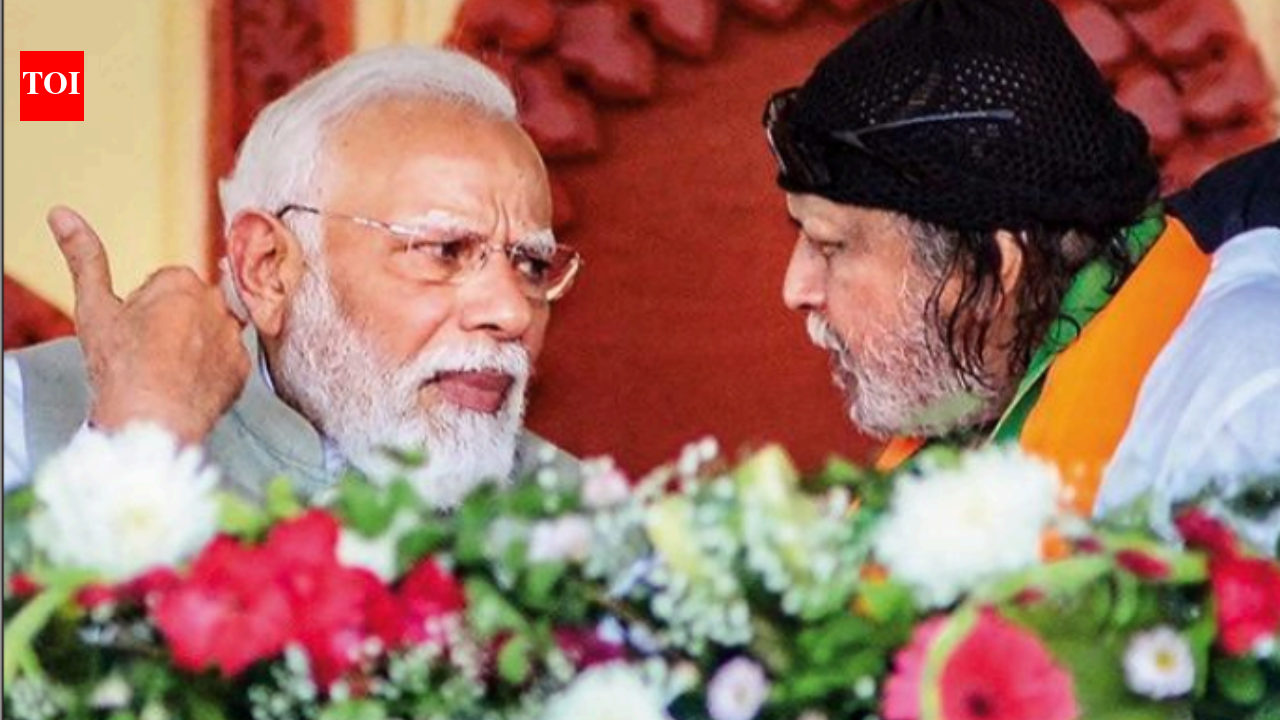
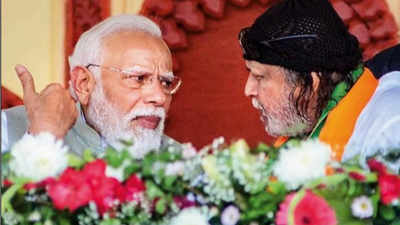
PM Modi with BJP’s Mithun Chakraborty during a rally in Kolkata on Saturday
KOLKATA: Chun-chun ke hisab liya jayega (One by one, everyone will be held accountable),” PM Modi said at BJP’s Brigade Parade Ground rally here on Saturday, calling for “change” at state secretariat Nabanna in upcoming polls. He touched on BJP’s key themes, “demographic change, lack of security for women and nirmam sarkar’s (cruel govt’s) violence and corruption”.Creators of ‘maha jungle raj’ in Bengal will pay, says PM ModiPM Modi’s speech laid out the template for the party’s poll campaign in a state it wants to add to its showcase of spectacular election victories since 2014. Saturday’s rally was also probably the last to be addressed by the BJP’s biggest vote-catcher before the EC’s likely announcement of the poll schedule next week. “The countdown has started for those who have brought maha jungle raj to Bengal. Those who flout the law and torture people will not be spared. We will make them pay for their crimes. BJP will bring development if voted to office. Sabka hisab liya jayega (We will make everyone accountable),” he said in his 49-minute speech. “Intimidation and threats have become TMC’s weapon. It is running with the help of goons,” he said. “This nirmam sarkar will not be able to stop change this time. BJP has the blessings of Mahishashurmardini (Durga),” he added, mentioning several of Bengal’s icons, including Rishi Bankim Chandra, Rabindranath Tagore, Ramakrishna Paramahamsa, and Swami Vivekananda, to undercut Trinamool’s narrative of BJP being a “party of outsiders” in Bengal. PM Modi then focused on what he described as “demographic change happening in Bengal” and Trinamool’s alleged role in it. “Bengal’s roti, beti and mati (bread, daughter and soil) are under threat now. Their land is being grabbed by infiltrators. The demography of the state has changed and has made Bengal unsafe. Bengali Hindus are being made a minority,” he said. “Criminals have a free run. Seven and eight-year-olds and tribal women are being raped and the nirmam sarkar is protecting the rapists. It is the same mentality that has caused the highest number of acid attacks in Bengal,” PM Modi alleged, adding that BJP will make Bengal safe for women. “This is PM Modi’s guarantee.” PM Modi then used the recent exchange between the state administration and President Droupadi Murmu to question Trinamool’s “attitude towards tribals”. “Dalits are the most deceived people in the state. A few days ago, the state administration was responsible for the mismanagement of President Murmu’s visit to Bengal. Trinamool could never accept a tribal woman in such a high position,” he alleged, adding: “Murmu is known for her simplicity and she expressed her pain. It was an insult to thousands of Dalit women and the Indian Constitution. Bengal will give a befitting reply.” Murmu’s criticism about the way she was treated at a Siliguri event earlier this week had prompted CM Mamata Banerjee to accuse BJP of using President’s office for politics. PM Modi also referred to Banerjee’s recent remarks about a community. “People are being threatened. It is being said that members of a specific community will kill them. How can anyone holding a constitutional position make a comment like that,” he asked, attributing Trinamool’s opposition to the SIR of electoral rolls as another example of its “vote-bank politics”. He also slammed TMC for trying to stop people from attending his rally. “Those coming to this rally were abused as ‘thieves’. But the people of Bengal know who the real thief is. This nirmam sarkar stopped vehicles and blocked bridges but could not stop the deluge of people. This crowd reflects the mood of Bengal.” PM Modi accused TMC of blocking several central schemes and being “anti-development”. “This administration has cursed the youth with migration. Bengal’s youths are talented and hardworking but are forced to go to other states for work. Development has taken a back seat. Investments have stopped and industries shut down. Jobs are being sold here. It is PM Modi’s guarantee to give jobs to the youth of Bengal,” he added. Before his rally, PM Modiinaugurated infrastructure projects worth Rs 18,680 crore.
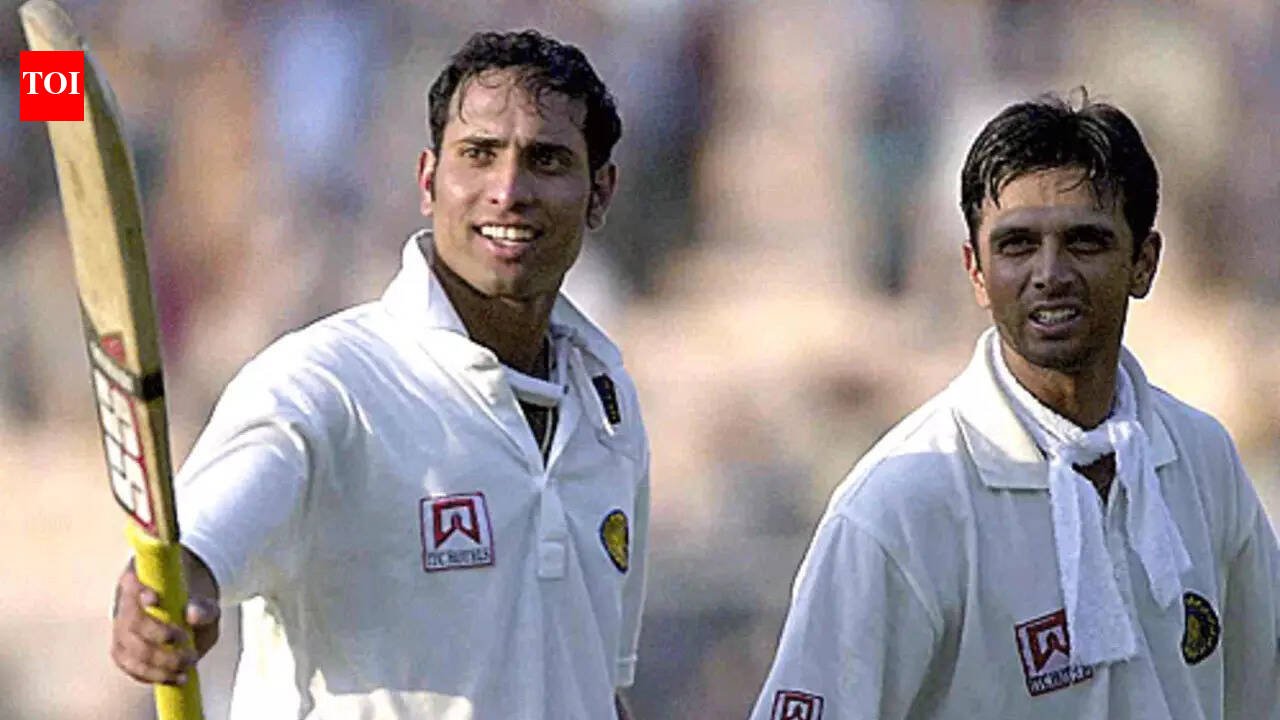
NEW DELHI: VVS Laxman, former India batter and current head of the Board of Control for Cricket in India Centre of Excellence, looked back on the 25th anniversary of the famous fourth day of the historic India vs Australia Test at Eden Gardens 2001 — a match remembered as one of the greatest comebacks in cricket history.Go Beyond The Boundary with our YouTube channel. SUBSCRIBE NOW!On March 14, 2001, India were on the brink of a crushing defeat on home soil. After losing the first Test of the series heavily, the hosts were forced to follow on in the second match at Eden Gardens.
EXCLUSIVE: Rahul Dravid on iconic Eden Gardens win against Australia in 2001
When play began on the fourth morning in Kolkata, India’s situation looked dire. The team were 254 for 4 in their second innings — still trailing by 20 runs with six wickets remaining. Australia appeared to have complete control and an Indian defeat seemed inevitable.What followed, however, was one of the most remarkable batting performances in Test history. Laxman, who had resumed on 109 overnight, produced a masterclass with the bat that transformed the course of the match. By the end of the day’s play, he had raced to a stunning 275 not out.At the other end, Rahul Dravid provided the perfect support. Starting the day on just seven runs, Dravid went on to compile a magnificent 155 not out, building a legendary partnership with Laxman that would ultimately turn the Test on its head and earn a permanent place in cricket folklore.“25 years ago at Eden Gardens Rahul and I shared a partnership that will forever remain special. In a moment when the game looked beyond us we chose belief, patience and resilience. That stand was not just about runs but was about trust, teamwork and fighting for every session. Grateful to have shared that journey with Rahul and to be part of a Test that reminded us all that in cricket comebacks are always possible,” Laxman wrote on X while sharing a picture of him and Dravid.Laxman was eventually dismissed for a brilliant 281, which at the time was the highest individual Test score by an Indian batter. Dravid, his partner in the epic stand, also produced a marathon effort before being run out for 180. India eventually declared their second innings at a commanding 657/7.Chasing a daunting target, Australia collapsed in the fourth innings and were bowled out for just 212. Harbhajan Singh starred with the ball, picking up six wickets as India completed one of the most extraordinary victories in Test cricket history.
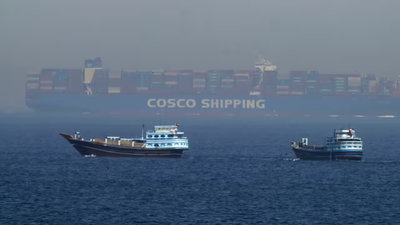
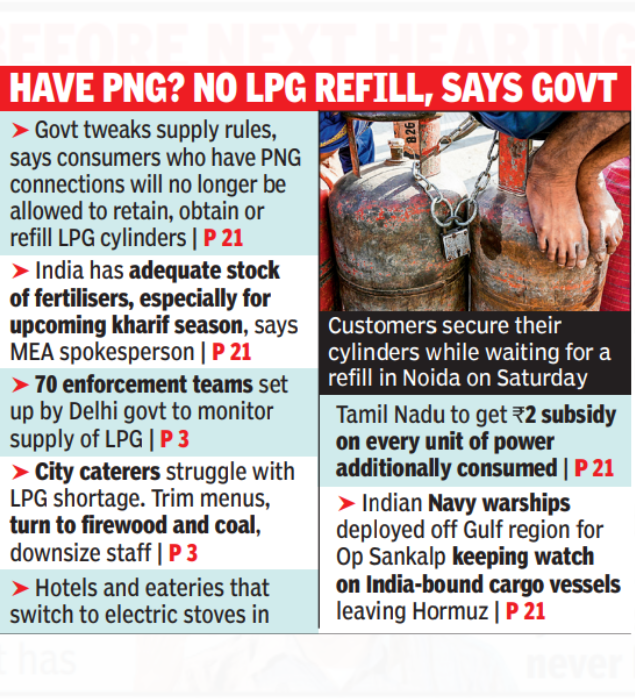
NEW DELHI: 92,700 tonnes of LPG — equivalent to 1.25 days of India’s cooking gas demand — have crossed the Strait of Hormuz, blocked by Iran for a fortnight, and are scheduled to reach Indian ports on Monday and Tuesday. Another 10 ships carrying crude and gas remain on standby in the Persian Gulf. Although it is still early days, the movement of the ships — Shivalik and Nandadevi — towards Mundra and Kandla signals easing of curbs in the war-torn corridor amid India’s efforts to intensify engagement with Iran that included PM Modi’s conversation with President Masoud Pezeshkian Thursday. Indian authorities are in contact with govts in West Asia and are coordinating with them to ensure safe passage of the ships, a top official said on Saturday. The LPG in transit on the two ships can fill around 68 lakh cylinders, against average daily demand of 55 lakh. “As a result of multiple contacts with all concerned, some ships destined for India have been able to cross the Strait of Hormuz… Several remain on standby in Gulf region,” MEA spokesperson Randhir Jaiswal said.
22 Indian-flagged ships near Hormuz waters We propose to continue to remain in touch and coordinate with all countries concerned to ensure safe and unimpeded transit for them in our effort to ensure our energy security, MEA spokesperson Randhir Jaiswal said. He added that India has emphasised unimpeded transit of goods and energy and urged Iran to avoid targeting civilian infrastructure, including energy infrastructure across the region. With supply remaining short of overall demand, govt acknowledged the “concern” but urged people to avoid panic booking of LPG cylinders. The number of bookings spiked to 88.8 lakh on Friday. India imports 60% of its LPG needs, with 85-90% of this being sourced from the Gulf countries,which use the Strait to ship oil and gas to users. Ports are according priority berthing to LPG vessels to ensure continuity of energy supply, said Rajesh Kumar Sinha, special secretary in the shipping ministry. During the last three days, six LPG carriers from other parts of the world were given priority berthing at major ports, which are also providing safe anchorage areas for loaded vessels that are bound for the Gulf but are currently unable to transit. “There were 24 Indian-flagged vessels to the west of Hormuz on Friday; out of these, two vessels crossed the Strait safely early and are heading towards India. Now there are 22 Indian-flagged vessels in the Persian Gulf,” Sinha said, adding that Indian seafarers in the region are safe. “Of the 22 remaining Indian-flagged ships to the west of Hormuz, six are LPG vessels; one is a liquefied natural gas carrier; four are crude oil tankers; one is carrying chemical products; three are container ships; and two are bulk carriers. Among the remaining, one is a dredger, another is empty (holding no cargo) and three others are on dry docks, which means routine maintenance,” Sinha said. He said all major and minor ports have been directed to offer relief in anchorage, berth hire and storage charges to West Asia-bound cargo of shipping lines, agents and exporters. Lease extensions have also been granted in certain cases to accommodate cancelled or returned export cargo
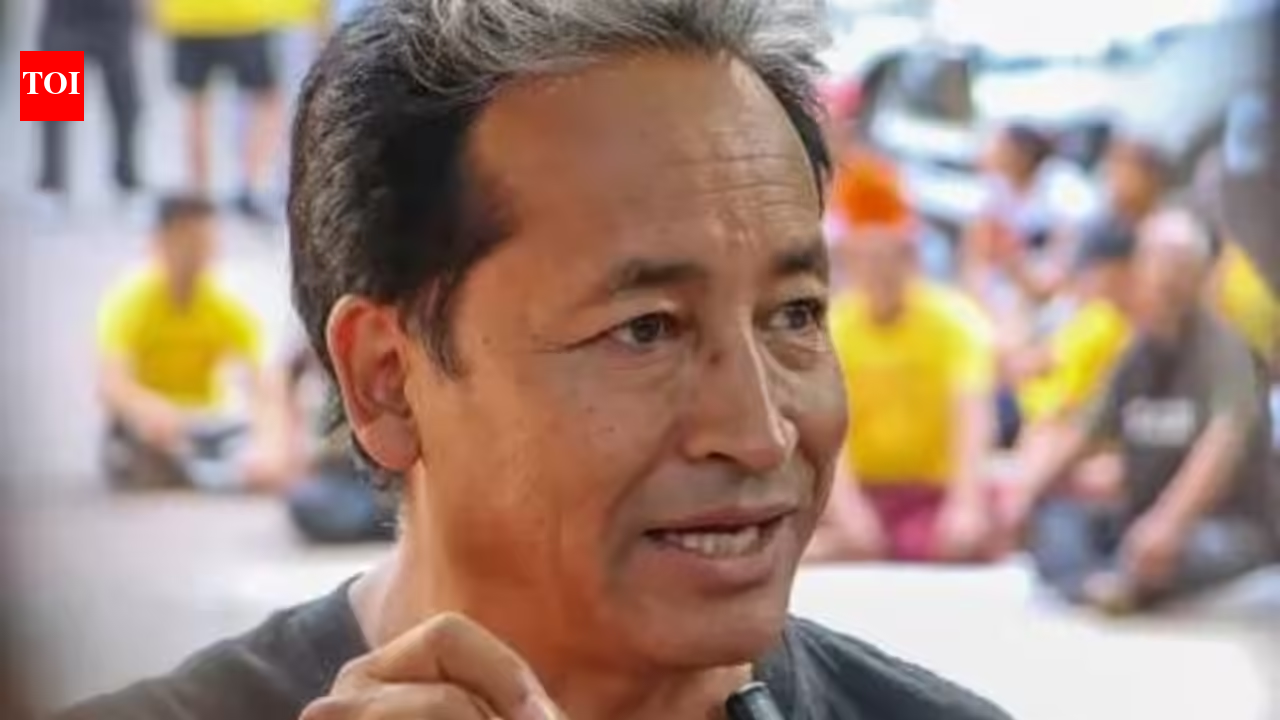
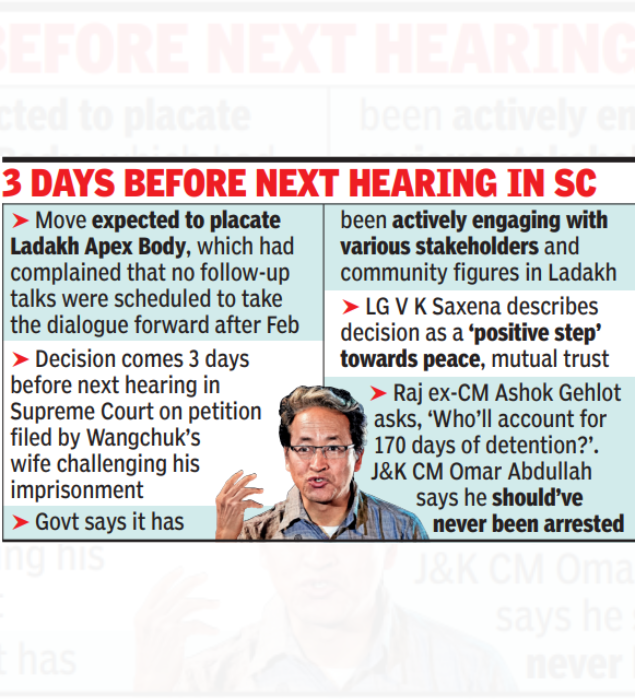
JODHPUR/NEW DELHI: Ladakh social and climate activist Sonam Wangchuk was released from Jodhpur Central Jail Saturday afternoon after the Centre revoked his detention under the National Security Act. His release comes almost six months after he was detained on Sept 26, 2025, two days after protests had broken out in the region while he was on a hunger strike seeking statehood and Sixth Schedule status for Ladakh. Police had opened fire on protesters, killing four people and injuring over 80. Wangchuk left prison in the company of his wife, Gitanjali Angmo, who had arrived Saturday morning to receive him. Ratanada SHO Dinesh Lakhawat said police escorted the couple, who were in a private vehicle, out of the prison premises at about 1.30pm. A Union home ministry statement had earlier announced the Centre’s decision to rescind his detention “with immediate effect”, citing its commitment to “fostering an environment of peace, stability and mutual trust in Ladakh so as to facilitate constructive and meaningful dialogue with all stakeholders”.
The end of Wangchuk’s incarceration six months short of the permissible detention period under NSA comes ahead of a March 16 protest called by Ladakh Apex Body to press for resumption of dialogue with the Centre on constitutional and other safeguards.Govt eyes trust reset with Ladakh leaders after Wangchuk’s releaseThe Centre’s move to free activist Sonam Wangchuk is expected to placate members of the Ladakh Apex Body, who had been complaining that no follow-up talks were scheduled to take the dialogue forward on constitutional and other safeguards for the Union territory after the round in early Feb. The decision came just three days before the next hearing in Supreme Court on the habeas corpus petition filed by Wangchuk’s wife challenging his imprisonment. Sources said the govt’s stance in letting Wangchuk walk free is expected to heal any mistrust in LAB regarding the former’s intention to find an amicable solution that takes care of the interests of all sections of Ladakh, adding that it would, simultaneously, strengthen locals’ belief in LAB’s ability to extract the best terms. A source said the home ministry heard the latter’s demands, including for statehood and Sixth Schedule status, and had explained their legal and financial limitations, at last month’s meeting. The Ladakh representatives were told to come back with a revised proposal indicating the financial viability of their demands. However, a senior govt official claims, they instead accused the Centre of failing to call them for the next round of dialogue. “The politicisation of the dialogue through bandhs/protests and the legal challenge to Wangchuk’s detention only added to the atmosphere of mistrust. Freeing Wangchuk should ease the protests and put the dialogue process back on track,” the senior govt official told TOI. The Centre said Saturday it has been actively engaging with various stakeholders and community figures in Ladakh with a view to addressing the aspirations and concerns of the people of the region. “However, the prevailing atmosphere of bandhs and protests has been detrimental to the peace-loving character of the society and has adversely affected various sections of the community, including students, job aspirants, businesses, tour operators and tourists, and the overall economy,” the govt conceded. The govt said it “reiterates its commitment to providing all necessary safeguards for Ladakh. It remains hopeful that the issues concerning the region will be resolved through constructive engagement and dialogue, including through the mechanism of the high-powered committee as well as other appropriate platforms”. Ladakh LG Vinai Kumar Saxena described the decision to release Sonam Wangchuk as a “positive step” by the Centre towards fostering peace and mutual trust. Saxena said all concerns can be resolved amicably through constructive dialogue and mutual understanding, and that there was no place for agitation, bandhs, or violence in Ladakh. Wangchuk had reiterated his commitment to Ladakh in a post on X on March 12: “I have not stepped away from activism. My commitment to Ladakh remains unchanged. But activism must serve a larger purpose: a just, lasting future for Ladakh. It will require clarity, unity, and sincere dialogue. Our struggle has always been for Ladakh’s protection, dignity, and long-term wellbeing and shall continue to be!!” Welcoming his release, former Rajasthan chief minister and Congress politician Ashok Gehlot also took to social media, writing, “The news of activist Sonam Wangchuk’s release is welcome, but the entire episode raises serious questions about the functioning of the Modi-led central govt. The person who, a few months ago, was put behind bars after being described as a ‘threat to the nation’s security’ is now suddenly being released, which implies that no evidence was found against him. In such a situation, who will account for the 170 days of his detention? Why was he arrested in the first place?”
UAE’s Best Savings Tools in 2026: Apps, Budget Rules and Smart Money Hacks Explained
As the cost of living rises across the Gulf, many residents in the UAE are searching for smarter ways to save money without sacrificing their lifestyle. From digital budgeting apps to automated savings tools and simple financial rules, a new wave of personal finance strategies is helping people track spending and build savings more efficiently.Financial experts say that technology is now playing a central role in how residents manage their money, particularly in a fast-paced economy where digital payments, food delivery apps and lifestyle spending can quickly eat into monthly income. Here’s a closer look at the best savings tools and strategies that the UAE residents are increasingly turning to in 2026.
Why saving money in the UAE can be challenging
Managing finances in the UAE can feel difficult for many residents, especially in cities like Dubai and Abu Dhabi where lifestyle temptations, from luxury shopping to frequent dining out, are everywhere. Experts say that the key challenge is balancing high living costs with long-term financial goals.A widely recommended strategy is the 50/30/20 rule, which divides income into three categories:
50% for essential expenses such as rent, groceries, utilities and transport
30% for lifestyle spending like travel, entertainment and dining
20% for savings or investments.
This framework helps individuals maintain financial discipline while still enjoying their income.
Budgeting apps are becoming essential for saving money in the UAE
One of the fastest-growing savings tools in the UAE is personal finance apps, which allow users to track spending and set financial goals. Several apps have become particularly popular among residents:
Wally – A budgeting app that allows users to monitor spending habits, compare income with expenses and set savings targets. It also supports multi-currency tracking, making it useful for expats managing finances across different countries.
Spendee – Spendee focuses on visual budgeting and expense categorisation. The app enables users to track spending patterns and create shared wallets for families or roommates managing joint expenses.
Wallet by BudgetBakers – This app connects with thousands of banks globally and helps users monitor spending, recurring payments, and financial goals in one place. It is particularly helpful for expats who need multi-bank and multi-currency support.
Monefy – For users who prefer simplicity, Monefy offers a straightforward interface to manually track income and expenses with minimal complexity.
UAE digital banking tools are expanding
Several UAE-based digital banking platforms now include built-in budgeting and savings tools. For example, digital finance platforms allow users to automatically track transactions, categorise expenses and set savings goals directly through their banking apps.
UAE’s Cost of Living Crisis: Are Budget Apps a Band-Aid or a Real Solution?
Some services even offer automatic transfers into savings accounts or investment wallets, helping users save money without actively thinking about it. These tools are designed to make budgeting easier for residents who rely heavily on digital payments.
Deal and rewards apps that help you save money in the UAE
Another popular category of savings tools involves reward-based apps that provide discounts, cashback, or loyalty points on everyday spending.For example:
Apps offering discounts on dining, groceries and entertainment
Loyalty programmes that convert spending into reward points
Deal platforms that compare prices across retailers.
These apps effectively turn everyday purchases into savings opportunities. Financial advisers suggest that before using any savings tool, residents should first understand where their money actually goes each month. Tracking every expense, whether rent, food deliveries, transport or subscriptions, can reveal surprising spending habits.Many budgeting apps automatically categorise transactions, helping users identify areas where they may be overspending. For instance, people often discover that small purchases such as food delivery, streaming subscriptions, or ride-hailing services add up to a significant portion of their monthly expenses.
Can UAE Residents Really Save Money in 2026? Top Tools and Strategies Revealed
Automation is the future of saving. One of the most effective strategies recommended by financial planners is automated saving. Instead of waiting until the end of the month to save money, experts suggest setting up automatic transfers to savings accounts or investment funds as soon as a salary is received. Automation ensures that saving becomes a habit rather than an afterthought.Many digital banks now offer features such as:
automatic savings transfers
goal-based saving plans
round-up savings, where small amounts from transactions are saved automatically.
The rise of AI-driven financial tools in the UAE
Artificial intelligence is also beginning to shape the future of personal finance. Some newer finance apps use AI to analyse spending behaviour and provide personalised recommendations on how to reduce expenses or increase savings. These tools can alert users when they are overspending in certain categories and suggest alternative budgeting strategies.Such innovations are expected to become increasingly common as fintech companies expand across the UAE. While technology can make budgeting easier, experts say the most important factor remains financial discipline. Even the best tools cannot replace good money habits.Key principles for long-term financial health include:
tracking spending regularly
avoiding unnecessary debt
building an emergency fund
investing for long-term growth.
For UAE residents, this often means balancing a high-spending lifestyle with careful financial planning.
A new era of smart money management in the UAE
With fintech innovation accelerating across the Middle East, managing personal finances is becoming easier than ever. From budgeting apps and automated savings platforms to loyalty programmes and AI-driven tools, residents now have more options than ever to take control of their money.For many people living in the UAE, the challenge is no longer access to savings tools—but choosing the right ones and using them consistently. As the cost of living continues to evolve in the emirates, the ability to track spending, automate savings and build financial resilience is quickly becoming an essential life skill.