Breaking News
‘Yet another act of aggression’: India condemns Pakistan air strikes in Afghanistan | India News


'Yet another act of aggression': India condemns Pakistan air strikes in Afghanistan

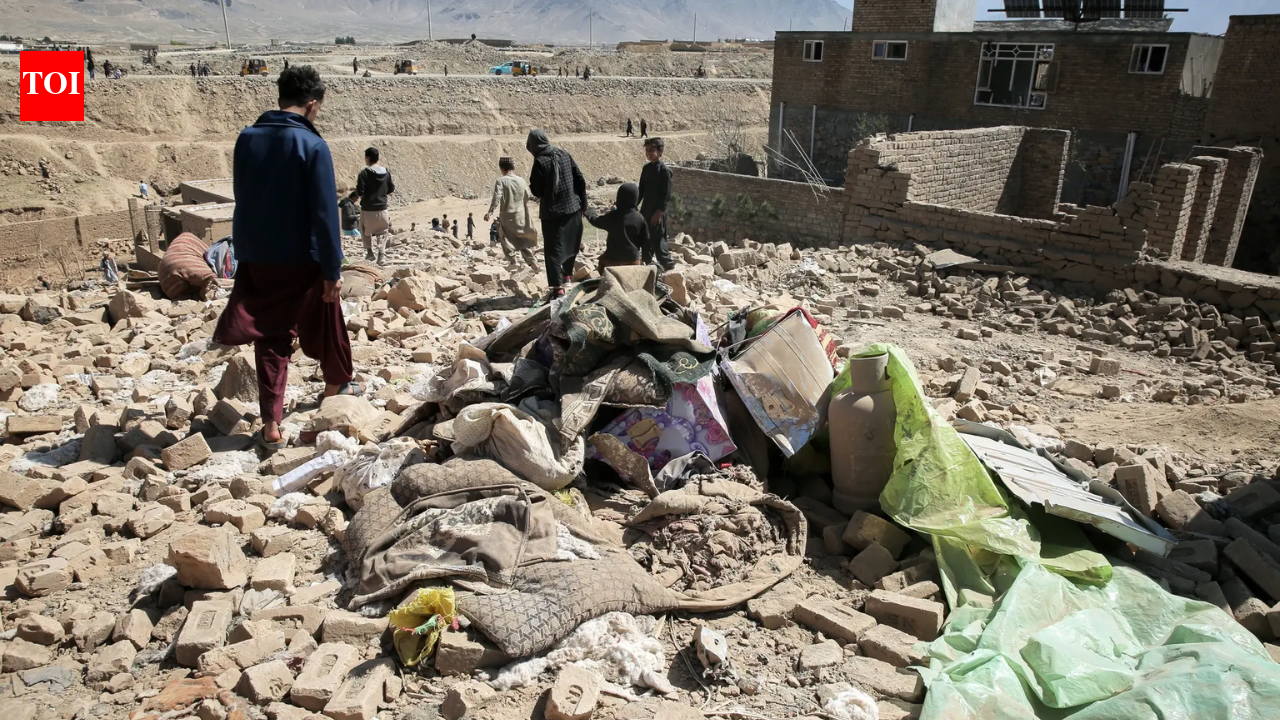
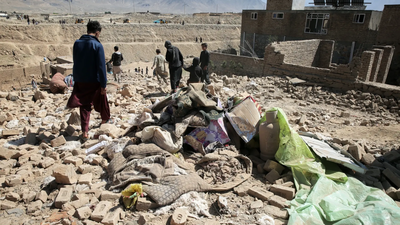
NEW DELHI: India on Saturday strongly condemned recent airstrikes by Pakistan in Afghanistan, which reportedly caused civilian casualties and damage to infrastructure. Ministry of external affairs official spokesperson Randhir Jaiswal said that the strikes constitute “yet another act of aggression by a Pakistani establishment that remains hostile to the idea of a sovereign Afghanistan” and reaffirmed India’s stance that Afghanistan’s sovereignty and territorial integrity must be respected.Addressing a media query, Jaiswal shared the statement on X saying, “India condemns the airstrikes by Pakistan in Afghanistan’s territory, leading to the death of several civilians and destruction of civilian infrastructure. This is yet another act of aggression by a Pakistani establishment that remains hostile to the idea of a sovereign Afghanistan. India reiterates that Afghanistan’s sovereignty and territorial integrity should be fully respected.”The remarks came after the Afghan Taliban government accused Pakistan on Friday of conducting airstrikes in Kabul and other areas in eastern Afghanistan, claiming at least six civilians were killed and 15 others injured.Hours later, Kabul said its air force responded by targeting military installations near Islamabad and in northwestern Pakistan.According to AP, Pakistan denied targeting civilians, stating that its operations focus on Pakistani Taliban militants and their support networks. Islamabad has described the conflict as an “open war,” raising concerns among the international community about regional stability amid the ongoing US-Israeli war with Iran in the Middle East.Afghan government spokesman Zabihullah Mujahid said Pakistani aircraft also struck fuel depots belonging to the private airline Kam Air near the airport in Kandahar, which supplies civilian and UN flights.Pakistan accuses the Afghan Taliban government of harboring Pakistani militant groups, mainly the Pakistani Taliban, that cross the porous border to attack Pakistani forces and of allying with its archrival, India. Kabul denies harboring militant groups.


Source link

Govt ready to meet summer surge as rising heat lifts power needs, says Kishan Reddy


Govt ready to meet summer surge as rising heat lifts power needs, says Kishan Reddy

Union Coal and Mines Minister G Kishan Reddy on Saturday said coal demand could rise further in the coming weeks with temperatures climbing, but asserted that the government is prepared to manage the situation through higher domestic production, PTI reported.He said coal companies are stepping up output and the Centre is in constant coordination with them to ensure that any spike in demand is addressed.“All coal requirements we produce domestically. In the coming days, rising heat could push coal demand even higher, but we are ready to fulfil the demand. Demand for coal increases in summer. Similarly, in winter, increased use of heaters boosts electricity needs, particularly in hilly areas where power demand spikes sharply,” he told PTI.The minister was in Chandrapur to inaugurate the sustainable and scientific closure and repurposing of Western Coalfields Limited’s Murpar underground coal mine at Chimur. He also reviewed the progress of closure activities at the mine, which began production in 2003 and was shut in 2022 after the area was notified as part of the Eco-Sensitive Zone of Tadoba-Andhari Tiger Reserve.Addressing the event, Reddy said mine closure should be seen as an opportunity for sustainable development rather than an endpoint. He emphasised that the process must be carried out in a scientific and systematic manner to restore ecological balance and conserve natural resources once mining operations cease.He added that the interests of local communities must remain central to mine closure plans and said the Union government is working to transform closed mines into socially, economically and environmentally useful assets through various initiatives.Responding to queries on Western Coalfields Limited’s discovery of eight significant strategic minerals across six mines in Maharashtra, Reddy said demand for such resources is rising sharply amid the current geopolitical situation.“Accordingly, the Union government has launched the National Critical Minerals Mission, with a programme offering incentives worth around Rs 32,000 crore. The mission’s objectives include exploring critical minerals, boosting mining activities, and advancing the development of these resources from abroad as well,” he said.


Source link

Lokesh Sathyanathan breaks national record, wins long jump gold at NCAA Indoor Championships | More sports News


Lokesh Sathyanathan breaks national record, wins long jump gold at NCAA Indoor Championships

NEW DELHI: Indian long jumper Lokesh Sathyanathan achieved a major breakthrough by winning the men’s long jump gold at the NCAA Division I Indoor Track and Field Championships in Fayetteville, Arkansas. The young athlete, who studies at Tarleton State University, secured victory with a jump of 8.21m, setting a new Indian indoor record. The effort also placed him third on India’s all-time long jump list behind Jeswin Aldrin and Murali Sreeshankar.Lokesh produced the winning leap on his fourth attempt in the final. He narrowly edged past De’Aundre Ward of the University of Southern Mississippi, who jumped 8.20m, while Tafadzwa Chikomba from Kansas State University finished third with 8.15m. The victory made Lokesh only the fourth Indian athlete after Mohinder Singh Gill, Vikas Gowda and Tejaswin Shankar to win this prestigious NCAA indoor title.Speaking after the win, Lokesh credited his faith, family and coach for the achievement. “I’m grateful and thankful to God because I know nothing is possible without Him and of course my family back home (in Bengaluru) and my coach, who is my family here,” he said, as quoted by PTI.Reflecting on the competition, he explained how his winning jump came at the perfect moment. “I think 26’11” was the leading jump until the fourth (attempt) and then I got 26’11-1/2″, which is like 8.21m — which is my personal best as well… so that is it,” he said.The win also carried deep personal meaning for him. Lokesh dedicated the achievement to his mother, who passed away from COVID-19 in 2021. He added, “It’s got to be a very special moment because I always dedicate everything for my mom up there… My mom would be proud; I’m know she is proud up there.”Recalling her encouragement before he left to pursue athletics abroad, he said: “go follow your dreams” and prove what he could achieve. Now, with a national title and record jump, Lokesh believes even bigger achievements are ahead.

Banner Insert


Source link

LPG shortage affects food availability for doctors, staff in Mumbai’s public hospitals | Mumbai News


Mumbai: The ongoing LPG cylinder shortage crept into the city’s public hospitals, with food availability for doctors and staff affected. Food preparation for patients was not affected so far, said officials of the state govt-run J J Hospital in Byculla and central govt-run Advanced Centre for Treatment, Research and Education in Cancer (ACTREC), Tata Memorial Centre’s Kharghar unit, which were affected.A senior doctor at ACTREC said staff and students were asked to be accommodating and manage with khichdi. “Patients get the usual plate,” he said, adding the hospital got only 8 cylinders per day.In J J Hospital, too, patients’ food was not affected. “The canteens where food for patients is prepared are registered for a domestic LPG connection whose distribution was not affected,” said J J Hospital Dean Dr Ajay Bhandarwar. The canteens attached to the boys’, girls’ and nursing hostels have commercial connections whose supply was affected. Each of these 3 canteens needs 3 to 4 cylinders a day. Students are being given dry options such as sandwiches as a result.However, Dr Bhandarwar said he wrote to the department of medical education, and the matter will be resolved soon.


Source link

‘That’s all you need’: Ricky Ponting reveals ‘big decision’ behind India’s T20 World Cup title | Cricket News


'That's all you need': Ricky Ponting reveals 'big decision' behind India's T20 World Cup title
Ricky Ponting speaks about Team India’s T20 World Cup-winning campaign

NEW DELHI: Former Australia captain Ricky Ponting has praised India’s decision to back Sanju Samson as an opener during their victorious campaign in the ICC Men’s T20 World Cup. According to Ponting, the trust shown in Samson by captain Suryakumar Yadav and the coaching staff played a major role in India’s success.Samson’s tournament did not start smoothly. Before the World Cup, he had scored only 46 runs in five T20Is against New Zealand national cricket team. He initially got a chance in the league match against Namibia national cricket team in New Delhi after Abhishek Sharma fell ill. Later, he was brought back for a key Super Eight game against Zimbabwe national cricket team and turned his tournament around with a series of brilliant performances.

IPL 2026 should be audition for the next India T20I captain

Samson played some crucial knocks as India advanced in the competition. He scored an unbeaten 97 against West Indies national cricket team in Kolkata, followed by 89 in the semifinal against England national cricket team in Mumbai and another 89 in the final against New Zealand national cricket team in Ahmedabad. His total of 321 runs in five innings became the most by an Indian batter in a single T20 World Cup edition and earned him the Player of the Tournament award.“For India to stick with him at the top there, that was a big call to make. A big decision, but one that worked out really well in the end. If you get the backing of the coaching staff and the captain, then that’s all you need,” Ponting said on The ICC Review show.“Just a pat on the back or an arm around the shoulder to say, ‘we’re sticking with you, we believe in you.’ When you’ve got the quality that Sanju’s got, and the confidence of the captain and coach behind you, that’s when great things can happen.”Ponting also praised Suryakumar’s leadership and how he managed his players during the tournament. “It would have been really interesting to see how Surya has interacted with Abhishek (Sharam) and Sanju (Samson) over the last few weeks. That’s where the real stories will come out on true leadership.”Despite not scoring heavily himself apart from an unbeaten 84 against the United States national cricket team, Suryakumar guided India to the title. Ponting concluded, “It’s about a lot more than what they do off the field, the things that people don’t see and how they interact with their players. He didn’t have a great time himself as a player, but still, he’s standing at the end holding up a World Cup trophy.”

Banner Insert


Source link

India’s Goldilocks under threat? How US-Iran war, crude oil above $100 may deal a blow to growth story – explained


India’s Goldilocks under threat? How US-Iran war, crude oil above $100 may deal a blow to growth story - explained
The persistence and sustainability of high oil prices will play a key role in shaping the scale of the economic impact on countries. (AI image)

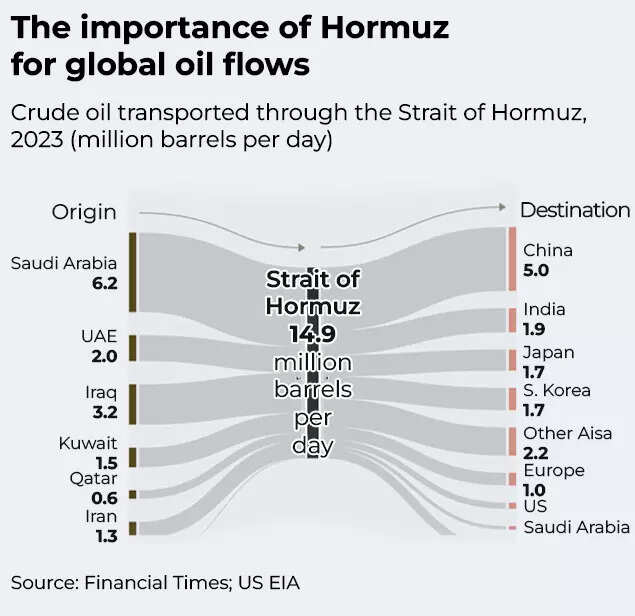
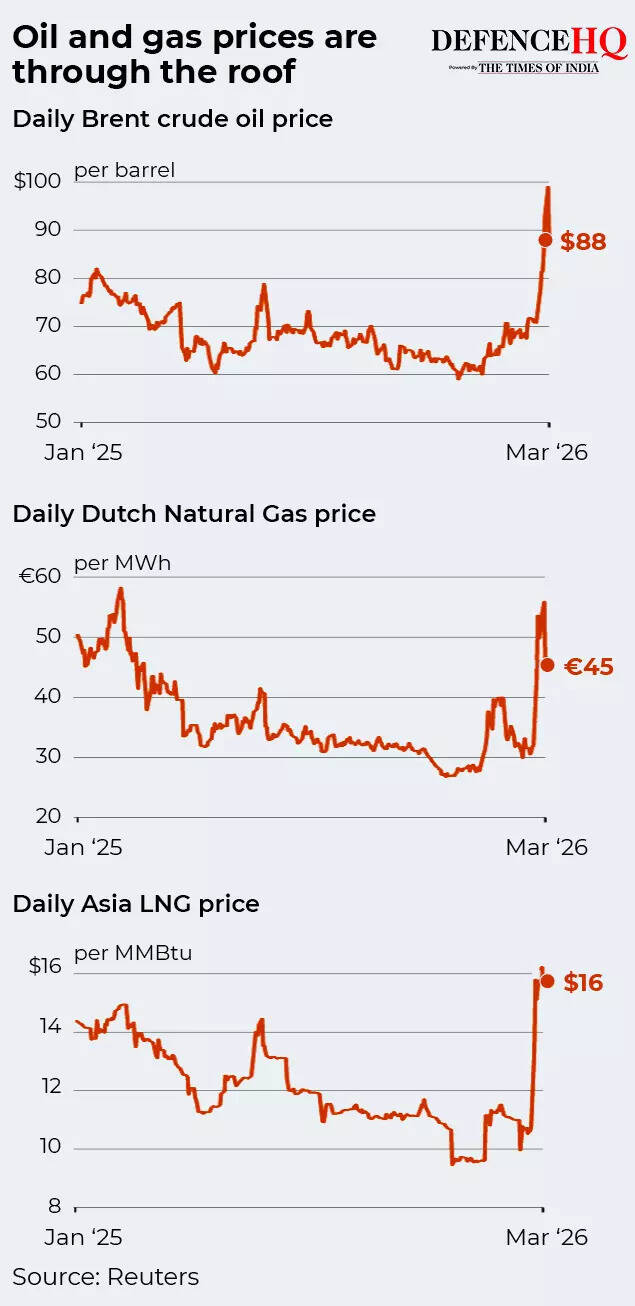
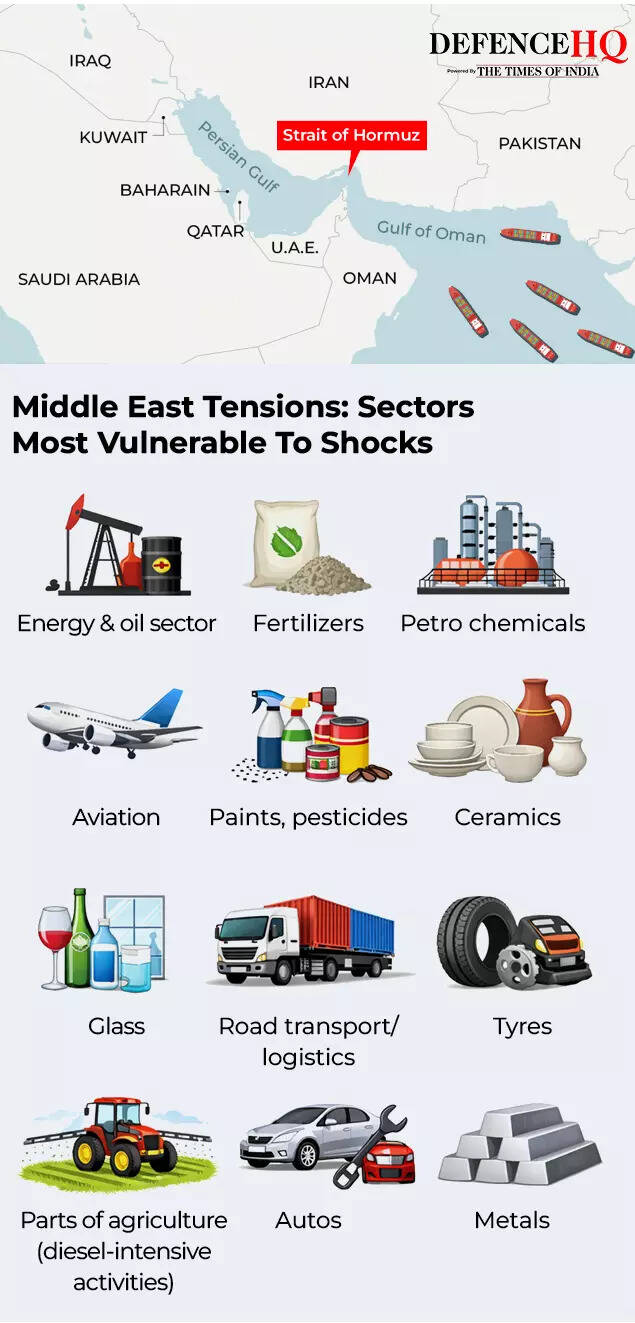
Inflation at a benign 2.2% and growth at 8.0% in the first half of 2025-26 present a rare goldilocks period – that’s what RBI governor Sanjay Malhotra said in the central bank’s December monetary policy review. Three months later, India’s economy – the world’s fastest growing major economy – faces the prospect of slipping out of this golden period – its high growth may be hit by the economic fallout from the ongoing war, and rising oil prices may mean higher inflation soon. This is not to say that India’s long-term growth story is not intact. Economists believe that GDP growth may take a hit of around 30-50 basis points, and inflation may rise in the short-term.The US-Israel-Iran war has dealt a crude blow to the world economy in the form of oil prices rising above $100 per barrel. The entire Middle East has been engulfed in the conflict, choking the Strait of Hormuz from which key oil and trade supplies get routed. Middle East countries are also important exporters of crude oil, and with refineries coming under attack, oil supply globally may see an unprecedented hit. Iran has even warned that oil prices may hit $200 levels if the conflict doesn’t see a resolution soon.What does this mean for us back home? India is among the world’s largest importers of crude oil, meeting around 90% of its needs through imports. A big chunk of these supplies come from Middle East countries and make their way to Asia through the Strait of Hormuz. The vulnerability is not just limited to oil – LPG and LNG supplies which feed into household and industrial needs have also been curtailed.

Importance of Hormuz

What do rising crude oil prices spell for India’s GDP growth, inflation, current account deficit, rupee, and fiscal deficit? Economists say that the answer lies in the length of the war. The persistence and sustainability of high oil prices will play a key role in shaping the scale of the economic impact on countries.

Current Account Deficit Under Pressure

The most immediate hit to the economy comes in the form of current account deficit (CAD) widening. Current account deficit happens when the value of imports into a country is more than the exports, implying that it spends more foreign currency than it earns.With oil prices rising the crude import bill will go up – which in turn will feed into a rising CAD. Economists believe that if oil prices stay above $100, it would deal a blow to the balance of payments.Madan Sabnavis, Chief economist at Bank of Baroda estimates that CAD will be affected by $18 bn for every $10 increase in price of oil. “This is the direct impact. Exports of refinery products also get directed to the Gulf region which can take a hit. Further, prolonged war can affect the entire dynamics of global trade. Add to this the fact that remittances from the GCC countries can get affected due to the ongoing conflict and the potential hit to the CAD can be 0.5-0.75% of GDP,” he cautions.Sujan Hajra, Chief Economist & Executive Director, Anand Rathi Group that in case of persistently high levels of oil, the CAD would rise. “For a large, persistent move, CAD can rise by roughly 0.4 percentage points of GDP for every $10 increase in oil, other things equal. Therefore, from the pre-war level of $70/barrel, if crude oil prices remain at $100/barrel on a sustained basis, India’s CAD would increase by 1.2% point of GDP and reach 2.5-2.7% of GDP,” he tells TOI.

Oil and gas prices through the roof

Ranen Banerjee, Partner and Leader, Economic Advisory Services, PwC India sees a drain on foreign exchange if oil prices continue to rise. “A sustained increase in oil prices would cause a serious drain on forex and consequently the current account deficit. The situation is exacerbated as the underlying cause for higher oil prices is conflict and by deduction, if the conflict continues longer then it will impact both goods and services exports as well as investment climate,” he tells TOI.“This will have an adverse impact on remittances, portfolio flows and FDI and that would further stress the exchange rate. The imports will thus become more expensive in rupee terms adding imported inflation in the economy,” he explains.Radhika Rao, Senior Economist, DBS Bank notes that encouragingly, the economy’s oil intensity has reduced from the past, as signaled by the moderation in the net oil imports. However, she points out that with the Middle East region making up approximately 40% of total remittances, inflows balance of payments faces a second order impact if the conflict prolongs.

Sectors vulnerable to shocks

Rupee: No Respite From Depreciation

The Indian rupee had a bad 2025, with the currency being the worst performer in Asia. 2026 is not turning out to be any better, and the Middle East tensions have added to the pressure. From an economics standpoint, a wider CAD, higher imported inflation and risk off sentiment usually mean a weaker rupee.“The currency tends to depreciate more if oil stays high and capital flows soften, although forex reserves and occasional intervention can smooth the move,” says Sujan Hajra. The expert doesn’t expect the rupee to depreciate more than 2-3%, unless the situation deteriorates significantly.Madan Sabnavis acknowledges that the rupee will tend to be under pressure and can depreciate depending on the dollar index and intervention by the RBI. As of now Rs 91.5-93 is the short-term forecast till March end, he says.

Inflation: How Long Can Prices Be Kept Stable?

Fundamentally, if the cost of imports goes up – whether due to rising prices internationally (such as in the case of oil), or due to depreciating rupee, it all feeds into prices of goods and services going up. India has seen a period of benign inflation for some quarters now – but now with oil prices skyrocketing, this math will change.For Madan Sabnavis, the impact on WPI inflation is straightforward. “10% increase in fuel prices leads to WPI going up by 1%. Add another 0.5% as secondary impact and it will be up by 1.5%. CPI will depend a lot on how the government deals with the fuel prices. In extreme cases, the prices at pump may rise by Rs 2-3/litre which combined with higher LPG prices as well as other consumer products like paints, chemicals, etc. can add 0.5% to CPI,” he tells TOI.
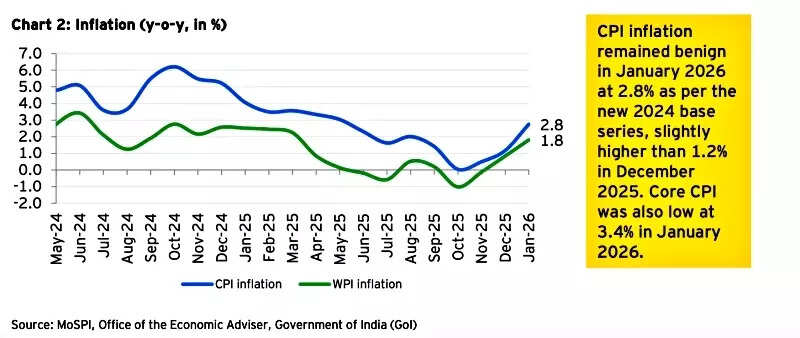
CPI inflation trajectory

CPI inflation trajectory (Source: EY India)

Experts point to two important aspects of the situation: one – how long will the conflict last? Secondly, will the government pass on the increase in oil prices to consumers or absorb the shock?Radhika Rao of DBS Bank says, “The extent of impact on inflation will be dictated by who picks the incremental cost burden. India had undertaken measures to reform its fuel sector by deregulating petrol and diesel prices, allowing them to align with market rates to reduce fiscal deficits and losses of the upstream oil marketing companies. This helped to lower the fiscal burden on the government’s books, with total subsidies accounting to 1.2-1.3% of GDP, of which petroleum is almost negligible at less than 3% of the total. However, in the event of a sharp rise in global fuel prices, authorities are likely to be cautious about fully passing on higher costs to consumers.”The need to protect household purchasing power and support businesses as well as a packed state election calendar in the first half of 2026 may prompt a more measured approach to retail fuel price adjustments, with the initial rise likely to be absorbed by the oil marketing companies. As an alternative to raising retail prices, excise duty cuts might be considered,” she tells TOI.With full pass-through of higher crude feeds into fuel, transport and input costs, Sujan Hajra says that retail inflation increases by roughly 25 basis points for every 10 dollar sustained increase in oil prices. Therefore, sustained increase in crude oil prices by $30/barrel (from $70 to $100) can increase inflation by 75 basis points, he says, adding that the government is unlikely to implement a full pass-through. With even 50% pass-through the impact on retail inflation would be around 40 basis points, he forecasts.But, for how long can the oil shock be absorbed if the conflict continues? Ranen Banerjee explains that while the oil companies have a buffer to hold the pump prices at current level for some time, the pressure on the fiscal owing to the same cannot be sustained if oil remains above $100 a barrel.“The fertiliser subsidy will go up as fertiliser prices will be higher. With consequent increase in food inflation, food subsidy requirements will also go up,” he says.

Fiscal Deficit And Management Under Strain

In a developing economy like India, managing fiscal math is a challenge every year, and the situation has been exacerbated by the oil shock. How does this happen? The fiscal gets affected by subsidy bills going up, non-tax revenue coming down as OMCs will not be able to transfer the same quantum of profit, excise collections coming down in case excise is lowered by the centre to keep petrol, diesel prices the same. Sourav Mitra, Partner – Oil & Gas at Grant Thornton Bharat elaborates on the channel through which higher oil prices feed into the economy.Elevated oil prices increase the cost of fertilizer, LPG, and kerosene subsidies, as the government often absorbs part of the price shock to protect end consumers. The central government’s expenditure could significantly increase, primarily due to higher fertilizer subsidies, he tells TOI. “Higher crude prices also constrain the government’s revenue sources, particularly on fuel taxation. While excise duties on petrol and diesel are a key revenue source, the ability to raise fuel taxes goes away when global prices rise sharply, limiting fiscal flexibility. The government may even be forced to cut excise duties to control inflation, leading to revenue losses. Combined with slower economic growth and higher borrowing needs, this can push the fiscal deficit above budgeted targets, increase public debt, and crowd out private investment,” he says.Sujan Hajra tells TOI, “If the government absorbs part of the shock via lower excise or higher subsidies, the fiscal deficit and borrowing needs widen and fiscal consolidation can get delayed. Higher inflation can also keep interest rates higher for longer, pushing up government interest costs.”However Madan Sabnavis believes that the fiscal deficit will be maintained as other expenses can be fine-tuned. At most the impact can be 0.1-0.2% of GDP, he says.

GDP: Blow To Growth Story?

Economists and experts warn that a prolonged war-like situation would weigh on India’s growth story, impacting several sectors and the growth momentum.“The impact on the economy in a scenario where conflict drags longer will have several levels of adverse impact and would impact our growth rate too. In a scenario where conflict is resolved in a short time frame, we should not expect much impact. However, if the duration stretches to a quarter, then we should expect a 50-75 bps downward impact on growth,” says PwC India’s Ranen Banerjee.“Any continuation beyond that time frame will cause disruptions of a magnitude that the global economy could possibly not afford and hence is a very pessimistic scenario,” he adds. Sujan Hajra points out that India is more vulnerable than net oil exporters like the US or some West Asian economies, and somewhat more exposed than many advanced economies, but broadly comparable to other large, oil‑importing emerging markets; strong services exports and remittances provide a partial cushion.“The rule‑of‑thumb estimates suggest every $10 sustained rise in crude can shave about 0.4 percentage points off India’s real GDP growth through weaker consumption, higher input costs and tighter monetary policy. Therefore, under the current situation, India’s growth could go down to around 6-6.5% versus earlier expectations of 7-7.5%. This, however, assumes continuation of the conflict at the current intensity for a prolonged period,” he tells TOI.Madan Sabnavis of Bank of Baroda is more optimistic about India’s prospects, predicting that the economy may still manage a 7% GDP growth rate.“GDP impact will be limited and a hit of 0.1-0.2% can be a possibility due to supply disruptions and higher prices of oil – which come in as higher input costs for user industries. Growth can be closer to 7% than 7.5%,” he says.High oil prices is a nightmare scenario for most of the global economy – and India is no different. The impact on major economic indicators, especially GDP growth and inflation may be contained in the short-term. India’s potential of 7% GDP growth and inflation within RBI’s target range may well still be achievable in the upcoming financial year.But, a medium to long-term continuation of the conflict would have more widespread consequences.As Ranen Banerjee of PwC India concludes: India will be impacted significantly as any other economy in the world and the only extra cushion we would have is the large domestic consumption base. But private consumption will also be challenged in a disrupted scenario that lasts longer than a quarter. “The ensuing panic and uncertainty would lead to consumption deferral for non-essentials and thus impact almost all sectors negatively,” he says.

Source link

Access Denied


Access Denied

You don’t have permission to access “http://www.ndtv.com/world-news/legitimate-targets-iran-asks-people-to-leave-port-areas-in-uae-11215761” on this server.

Reference #18.c7f5d217.1773501968.44193541

https://errors.edgesuite.net/18.c7f5d217.1773501968.44193541


Source link

‘Child trusted him as a grandfather’: 3-year jail to 79-year-old man in Pocso case | Mumbai News


Mumbai: Observing that the child only accompanied him because she trusted him as a grandfather, a special court convicted and sentenced a 79-year-old man to three years of simple imprisonment for sexually assaulting a 10-year-old girl in 2019. The court found the accused guilty of luring a neighbour’s daughter into his home and kissing her. Special judge S V Sahare clarified the legal requirements for conviction under the Protection of Children from Sexual Offences (Pocso) Act, stating, “Touch with sexual intent is necessarily proved by the prosecution. The offence under the said section also covers physical contact with the child.”The incident occurred on June 13, 2019, when the child was playing near a temple during her school vacation. The accused called her to his residence under the pretext of offering her wafers and a cold drink. Once inside, he pushed the door shut and kissed the girl on her lips. The child immediately fled home and informed her mother, a flower seller, who then confronted the accused with the help of local residents before alerting the police.During the trial, the defence argued that the accused had been falsely implicated and pointed to CCTV footage from the house—provided by his daughter-in-law— which they claimed showed no such incident. However, the court found the oral testimony of the child to be “heavily reliable” and noted that the absence of footage did not disprove the crime, suggesting the possibility of tampering before the device was handed over to the investigators. The court also observed that the accused specifically targeted a minor girl while other children were playing nearby, indicating sexual intent.While convicting the accused for sexual assault, the court acquitted him of the charge of outraging modesty under the Indian Penal Code, reasoning that the specific elements of criminal force required for that section were not distinct from the sexual assault already established. Regarding the final sentence, the judge observed, “The accused was aged about 74 years at the time of filing of the charge sheet. Considering his advanced age, the court deems it appropriate to award simple imprisonment instead of rigorous imprisonment.In addition to the three-year prison term, the accused was ordered to pay a fine of Rs 5,000. Out of this amount, Rs 3,000 of that amount was directed to be paid to the child as compensation.


Source link

DU dismisses Rahul’s allegation that it uses interviews to eliminate students | India News


DU dismisses Rahul's allegation that it uses interviews to eliminate students

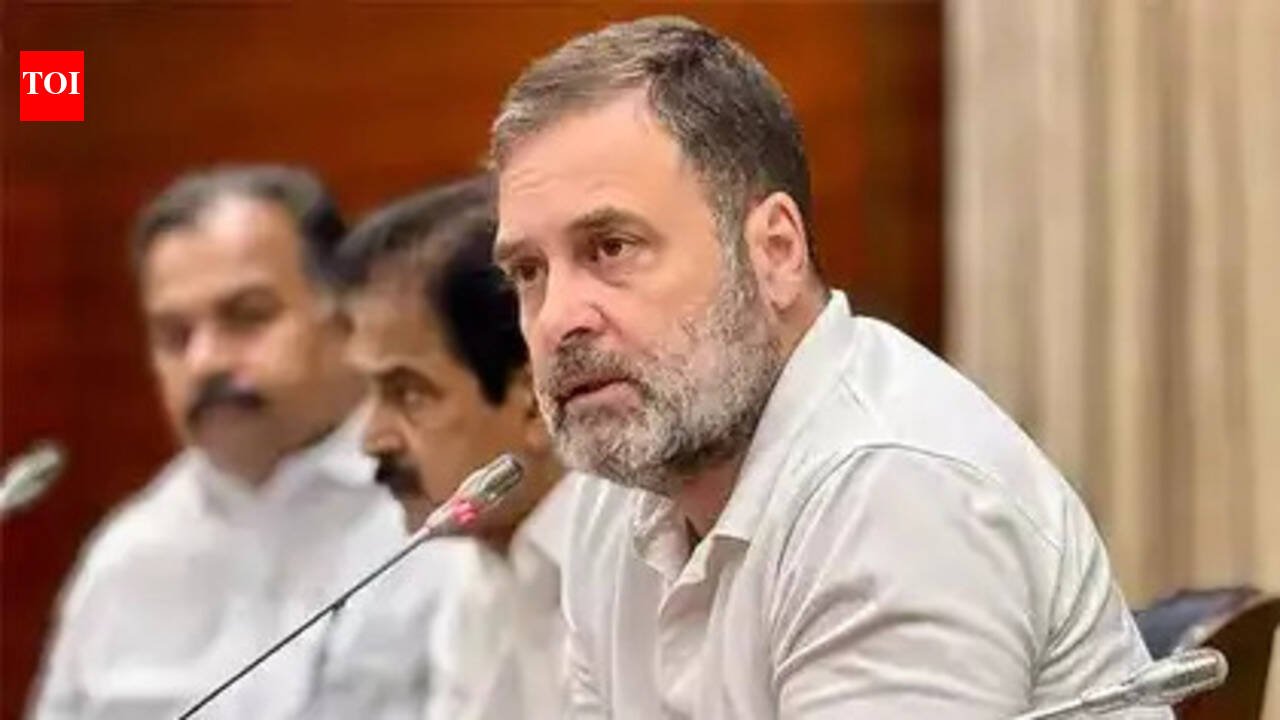
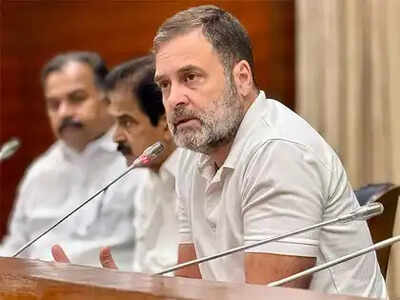
NEW DELHI: The Delhi University (DU) has dismissed Congress leader Rahul Gandhi’s allegation that it uses interviews to eliminate students.In a post on X late on Friday, it said: “The University of Delhi admits students primarily based on the CUET scores, and the standard admission process does not mandate interviews for most undergraduate and postgraduate programmes.“If the Leader of Opposition was referring to recruitments (such as faculty positions), the University in the recent past has recruited thousands of teachers across all categories. We strongly object to such comments, as they create a non-conducive environment in the University. The Leader of Opposition should have verified the facts before making such a statement. @EduMinOfIndia,” it added.This was in response to the remarks of Gandhi, the leader of opposition in the Lok Sabha, alleging that the DU eliminates students on the basis of caste.“I had gone to the Delhi University. Interview is just a way to eliminate students. They ask what your caste is and then you fail in the interview,” Gandhi said on Friday while addressing an event in Lucknow to mark the birth anniversary of Bahujan Samaj Party (BSP) founder Kanshi Ram.Targeting the Rashtriya Swayamsevak Sangh (RSS), the Congress leader further said, “Take out the list of the RSS. Those who are their pracharaks and seniors in the organisation, you will not find one OBC, one Dalit, one Adivasi among them. This is completely against the Constitution.” This has triggered a further controversy, with the Indian National Teachers’ Congress (INTEC), along with some DU professors, including academic and executive council members, pointing out that public record shows that in several departments of the university, despite a large number of teaching posts being advertised under the Scheduled Caste (SC), Scheduled Tribe (ST) and Other Backward Classes (OBC) categories, qualified candidates were declared “not found suitable (NFS)” after the interview stage. PTI


Source link

Government bars LPG supply access for consumers with piped gas connections


Government bars LPG supply access for consumers with piped gas connections

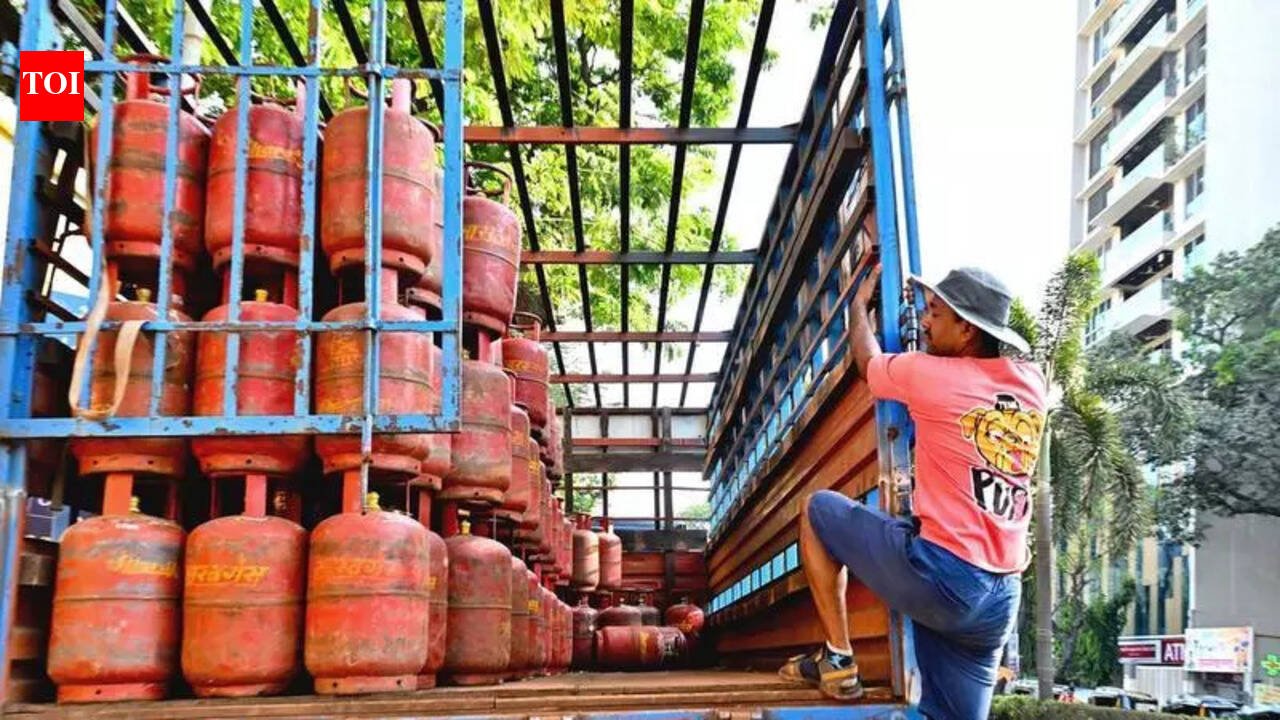
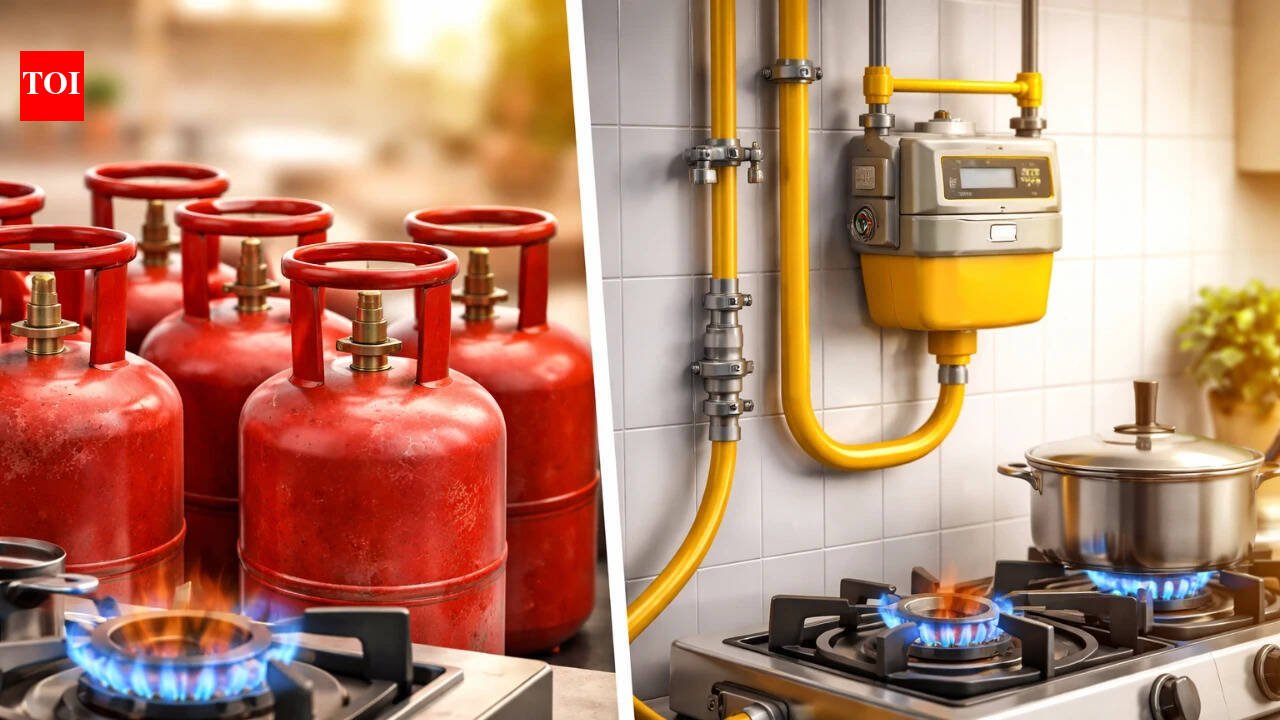
NEW DELHI: The Ministry of Petroleum and Natural Gas on Saturday said consumers with piped natural gas (PNG) connections will no longer be allowed to retain, obtain or refill domestic LPG cylinders under an amended supply order.The ministry, in amendment order, said that it will bar government-run oil marketing companies from issuing new LPG connections or refills to consumers who already have PNG connections. “No person having a Piped Natural Gas connection and also having domestic LPG connection shall retain a domestic LPG connection, or take refills of domestic LPG cylinders from any Government oil company, or through their distributors. Such persons will be required to immediately surrender their domestic LPG connection,” it said.

As LPG Shortage Panic Spreads, Centre Urges Citizens Not To Hoard Cylinders And Opt For PNG

“No person having a Piped Natural Gas connection, shall obtain a domestic LPG connection, or take refills of domestic LPG cylinders from any Government oil company, or through their distributors,” it further clarified. This comes amid concerns around LPG availability concerns across the country as supply is disrupted amid the ongoing conflict between Iran and US, Israel. The govt, however, has assured stable supply in multiple statements in the past few days. Addressing an inter-ministerial briefing on Saturday, joint secretary (marketing & oil refinery) Sujata Sharma said assured, “As far as crude oil and refineries are concerned, we have a sufficient supply of crude and our refineries are operating at full capacity. There have been no reports of any dry-out at retail outlets. Adequate petrol and diesel are available.”She added that India does not need to import petrol and diesel at present. “We produce enough petrol and diesel in the country according to our requirements, and therefore there is no need for us to import them,” Sharma said.Additionally, the govt also confirmed that two Indian-flagged LPG carriers safely crossed the conflict-hit Strait of Hormuz early Saturday and are now on course for ports in Gujarat.LPG carriers Shivalik and Nanda Devi are heading to Mundra and Kandla, respectively, Rajesh Kumar Sinha, Special Secretary in the Ministry of Shipping, said at the media briefing. The ships are carrying a combined 92,700 tonne of LPG and are expected to dock at Indian ports on March 16 or 17.


Source link