Breaking News
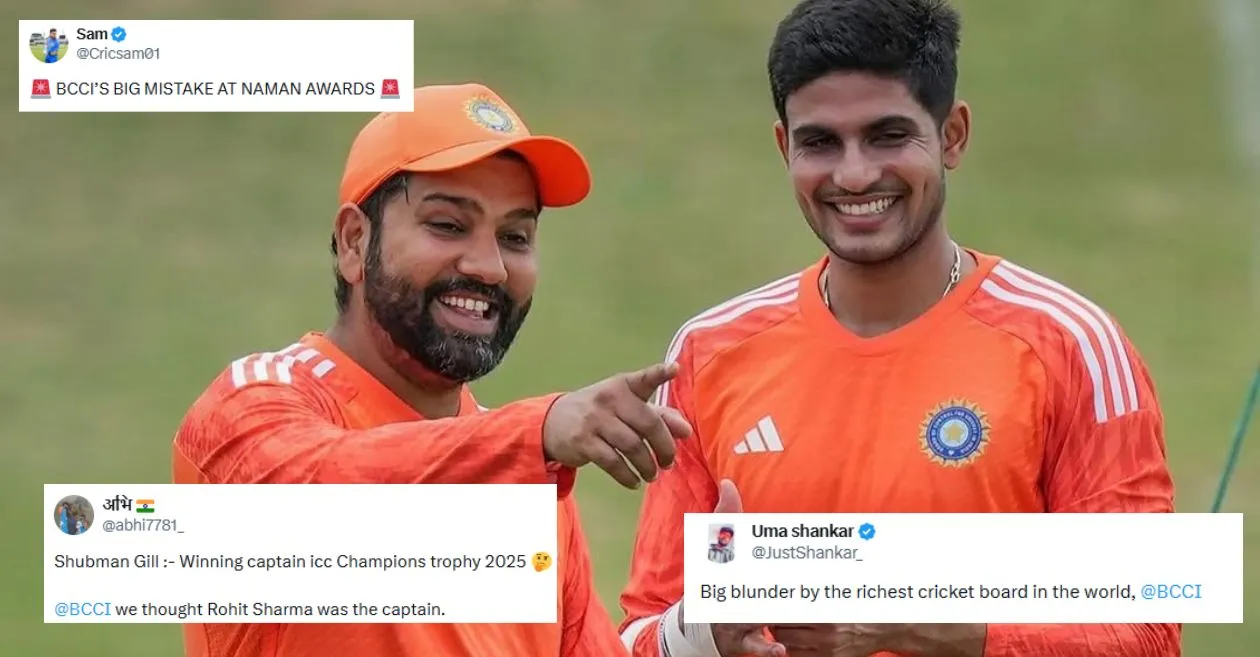
Rohit Sharma fans slam BCCI’s graphic error after Shubman Gill shown as India’s Champions Trophy winning team’s captain at Naman Awards


The BCCI Naman Awards 2026, held this past Sunday, was intended to be a grand celebration of a golden era in Indian cricket. Following a historic season where India secured an unprecedented five ICC trophies, the stars descended upon the red carpet to honour the architects of these victories. However, what should have been a night of seamless tribute quickly turned into a social media firestorm. A significant technical oversight during the live broadcast has left fans of Rohit Sharma disillusioned, overshadowing the prestigious ceremony with a heated debate over captaincy credits.

Rohit Sharma fans fume over Graphic blunder involving Shubman Gill at Naman Awards 2026

While the evening honoured legends like Roger Binny, Rahul Dravid, and Mithali Raj with the Col. C. K. Nayudu Lifetime Achievement Award, the atmosphere shifted when the on-screen graphics flashed during a segment featuring Shubman Gill. As Gill, the current Indian ODI and Test captain, appeared on screen, the broadcast banner labeled him as the “Winning Captain, Champions Trophy 2025.”

The error was immediately flagged by eagle-eyed supporters of Rohit. In reality, it was Rohit who led the Men in Blue to their Champions Trophy glory in 2025, culminating in a tactical masterclass against New Zealand in the final. While Gill was undoubtedly a cornerstone of that victory, entering the tournament as the world’s No. 1 ranked ODI batter and delivering a vital unbeaten century against Bangladesh, he was not the man at the helm during that specific tournament.

Rohit fans took to X (formerly Twitter) to slam the BCCI for what they perceived as ‘disrespectful erasure’ of the veteran opener’s leadership legacy. Though Gill has since taken over the captaincy reins and led India with distinction, including a dominant five-Test series win in England, the mix-up touched a nerve regarding how the contributions of transitional captains are documented.

Here’s how fans reacted:

Also READ: From Rahul Dravid to Shubman Gill: BCCI unveils list of winners for Naman Awards

Shubman clinches Polly Umrigar Award amidst historic season

Despite the digital drama, the night remained a professional milestone for Gill, who was named the Best International Cricketer (Men). By bagging the prestigious Polly Umrigar Award, Gill solidified his status as the heir apparent to India’s batting throne. This marks his second “Cricketer of the Year” title, following his first win in 2023, reflecting a 2025 season where he amassed 754 runs in the Test series against England alone, averaging a staggering 75.40.

Many greats and legends of Indian cricket have received this award before, so it is a huge honour,” Gill stated during his acceptance speech. He was quick to deflect individual praise toward the collective achievement of the squad, noting that winning five ICC trophies in a single cycle was a feat likely never to be repeated.

The ceremony also celebrated the phenomenal Smriti Mandhana, who secured the Best International Cricketer (Women) award for a record fifth time. Mandhana’s 2025 was nothing short of legendary, as she became the first woman in history to score over 1,000 ODI runs in a single calendar year. As the BCCI honored the five trophy-winning sides, the event served as a reminder of India’s current global dominance, even if a temporary graphic glitch briefly stole the headlines.

Also READ: Captain Shubman Gill reveals Team India’s ultimate goal


Source link

West Bengal polls: Left front announces first list of 192 candidates | India News


West Bengal polls: Left front announces first list of 192 candidates

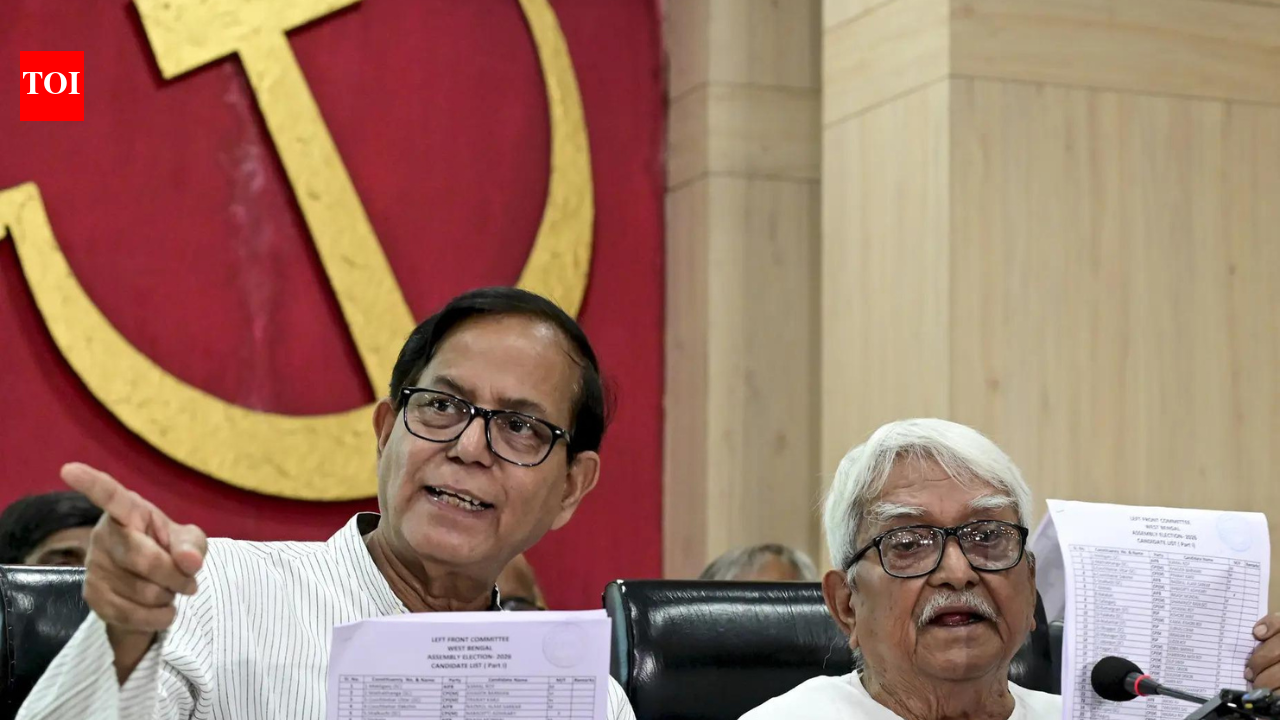
NEW DELHI: The Left front on Monday released its first list of candidates for the upcoming assembly elections, fielding leaders like outgoing Rajya Sabha MP Bikash Ranjan Bhattacharya and CPI(M) central committee member Minakshi Mukherjee .Out of 192 seats, CPI(M) will contest 142, the Forward Bloc (21), RSP (13), CPI (14), RCPI (1) and MCP (1).Bhattacharya will contest from Jadavpur constituency in south Kolkata, while Mukherjee, a youth face of the Left Front, will fight from Uttarpara in Hooghly district.Mukherjee was fielded from Nandigram in the 2021 elections and came third after BJP’s Suvendu Adhikari and Trinamool Congress supremo Mamata Banerjee.The Left Front has also fielded Sabina Yasmin from Kaliganj.Yasmin’s six-year-old daughter Tamanna was killed in a crude bomb blast allegedly from a victory rally during bypoll counting in June last year, which was won by the TMC.Left Front chairman Biman Bose said the candidates for the remaining seats will be finalised and announced within three to four days.“The fight this time is against the neo-Fascist forces in the country, the autocratic activities in our state, and the hardships faced by the people owing to these,” Bose said while announcing the 192 nominees at a press conference here.“We will also be fighting to revive Leftist politics and strengthen Left forces in the state,” he added.Stating that women candidates have been fielded in 28 constituencies, Bose said, more women will be named for the remaining seats.Bose said CPI(ML)-Liberation and the Indian Secular Front (ISF) will field candidates as associates, adding that apart from these, some independents and important names will also feature on the Left Front’s list.The ISF, which contested the 2021 assembly polls in a seat-sharing arrangement with the Left Front, won a single seat – Bhangar in South 24 Parganas. PTIThe upcoming election is seen as a battle for survival for the CPI(M)-led front in West Bengal, which ruled the state uninterruptedly for 34 years until 2011 and failed to win a single seat in the 2021 assembly polls.The assembly polls will be held in the state on April 23 and 29, and votes will be counted on May 4.


Source link

‘Distorted picture of India’: MEA slams US report recommending sanctions on RSS, R&AW | India News


MEA Confirms Safe Exit Of 600+ Indians From Iran Via Armenia, Azerbaijan Amid West Asia Conflict

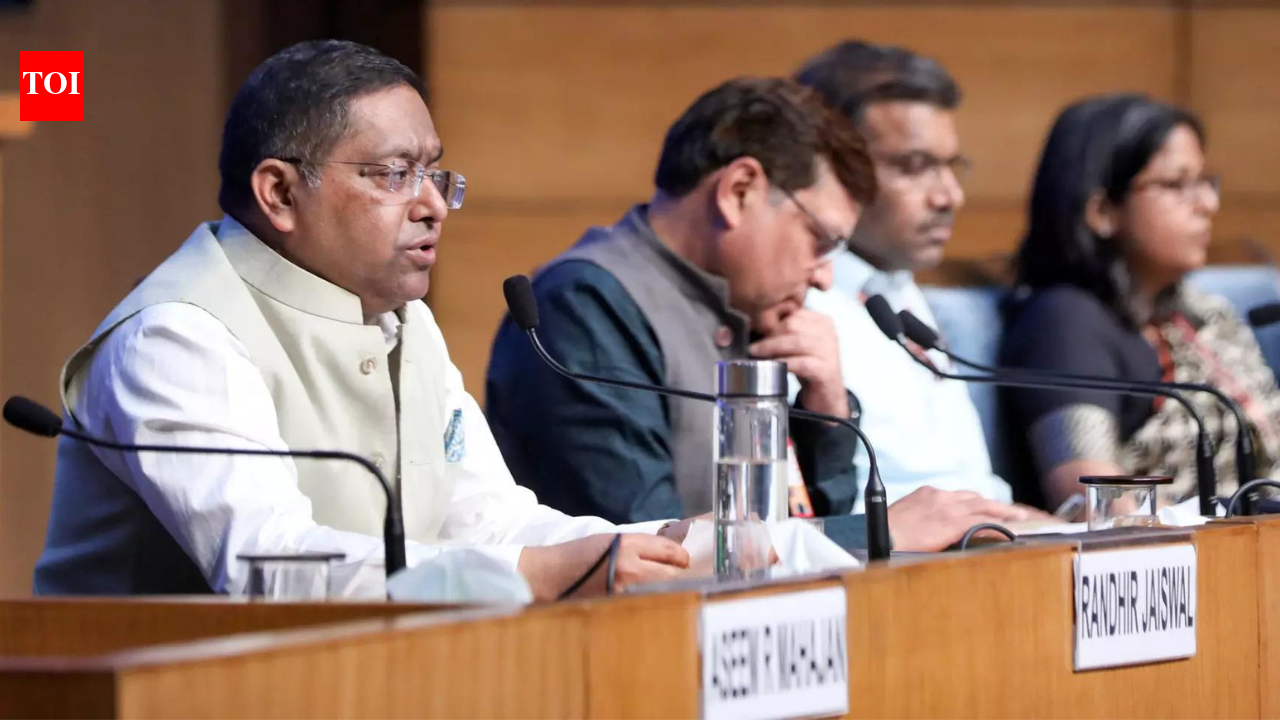
NEW DELHI: The ministry of external affairs on Monday rejected the annual report of the United States Commission on International Religious Freedom for 2026, which recommended targeted sanctions on the Rashtriya Swayamsevak Sangh and Research and Analysis Wing for violations of religious freedom.MEA spokesperson Randhir Jaiswal, in a statement, said that the commission has persisted in presenting a distorted, selective picture of India by relying on questionable sources and ideological narratives rather than objective facts.

MEA Confirms Safe Exit Of 600+ Indians From Iran Via Armenia, Azerbaijan Amid West Asia Conflict

“We have taken note of the latest report of the US Commission on International Religious Freedom (USCIRF). We categorically reject its motivated and biased characterization of India. For several years now, USCIRF has persisted in presenting a distorted and selective picture of India, relying on questionable sources and ideological narratives rather than objective facts. Such repeated misrepresentations only undermine the credibility of the Commission itself,” Jaiswal said.“Instead of persisting with selective criticism of India, USCIRF would do well to reflect on the disturbing incidents of vandalism and attacks on Hindu temples in the United States, selective targeting of India, and growing intolerance and intimidation of members of the Indian diaspora in the United States, which merit serious attention,” he added.This comes after USCIRF designated India as a “country of particular concern” and asked United States to link arms sales and trade policies to religious freedom.USCIRF said its report, Systematic Religious Persecution in India, provides an overview of India’s social, political, and criminal justice systems as they relate to issues regarding freedom of religion or belief (FoRB).“It also examines the relationship between Hindu nationalist groups like the Rashtriya Swayamsevak Sangh (RSS) and the ruling Bharatiya Janata Party (BJP), and the implications of this dynamic for FoRB. Despite offering some constitutional protections for FoRB, India’s political system facilitates a climate of discrimination toward religious minority communities,” the report alleged.USCIRF also argued that conditions for religious freedom in India have “continued to deteriorate” and accused the Indian government of “targeting” religious minorities and houses of worship.“Several states undertook efforts to introduce or strengthen anti-conversion laws to include harsher prison sentences. Indian authorities also facilitated widespread detention and illegal expulsion of citizens and religious refugees and tolerated vigilante attacks against religious minority communities,” the report said.Created in 1998 by an act of the United States Congress, the USCIRF “monitors the universal right to freedom of religion or belief (FoRB) abroad” and makes recommendations to the President of the United States, the United States Department of State, and Congress.The agency says it acts independently, but the US President and senior political leaders in the House of Representatives and the Senate appoint its nine commissioners.In its 2025 Annual Report, USCIRF had recommended that the US Department of State designate India as a Country of Particular Concern (CPC) “for engaging in systematic, ongoing, and egregious religious freedom violations”.Jaiswal noted in March this year that India is home to 1.4 billion people who are adherents of all religions known to mankind.He had said that USCIRF should be designated as an entity of concern.“We have no expectation that the USCIRF will engage with the reality of India’s pluralistic framework or acknowledge the harmonious coexistence of its diverse communities. Such efforts to undermine India’s standing as a beacon of democracy and tolerance will not succeed. In fact, it is the USCIRF that should be designated as an entity of concern,” he said.MEA had earlier termed USCIRF “a biased organisation with a political agenda” and said it continues to misrepresent facts and peddle a motivated narrative about India.


Source link

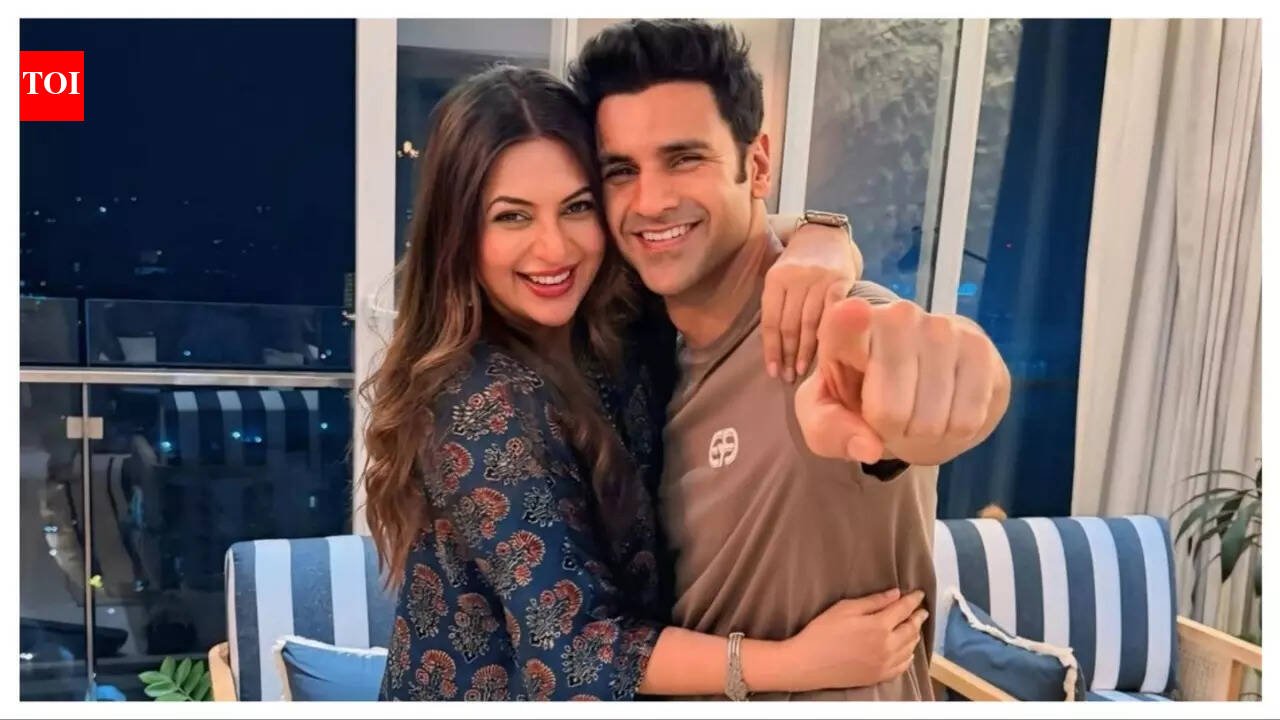
Divyanka Tripathi and Vivek Dahiya expecting their first child – Exclusive |


Divyanka Tripathi and Vivek Dahiya expecting their first child - Exclusive
Divyanka Tripathi and Vivek Dahiya

Television’s much-loved couple, Divyanka Tripathi and Vivek Dahiya, are set to embrace a new chapter in their lives as they are expecting their first child. The news has brought immense joy to their families and close friends who have followed their journey together over the years.Divyanka and Vivek first met on the sets of the popular television show Yeh Hai Mohabbatein, where their friendship gradually blossomed into a romance. The couple tied the knot on July 8, 2016, in a grand yet intimate ceremony in Bhopal attended by close friends and members of the television fraternity. Their wedding soon became one of the most talked-about celebrity weddings on Indian television.Nearly a decade into their marriage, the couple is now preparing to welcome their first child. According to sources close to them, the families are thrilled and have already begun making preparations for the arrival of the newest member. While Divyanka and Vivek have largely kept their personal lives private, those close to them share that the couple is currently enjoying this special phase quietly with their loved ones.Adding to the excitement, a baby shower ceremony is expected to be organised soon. The intimate celebration is likely to be attended by close friends and family from the television fraternity, coming together to celebrate the happy news.Over the years, Divyanka and Vivek have often shared glimpses of their strong bond, mutual respect and playful camaraderie, making them one of television’s most admired couples. As they prepare to step into parenthood, this new milestone marks a special moment in their journey together.


Source link

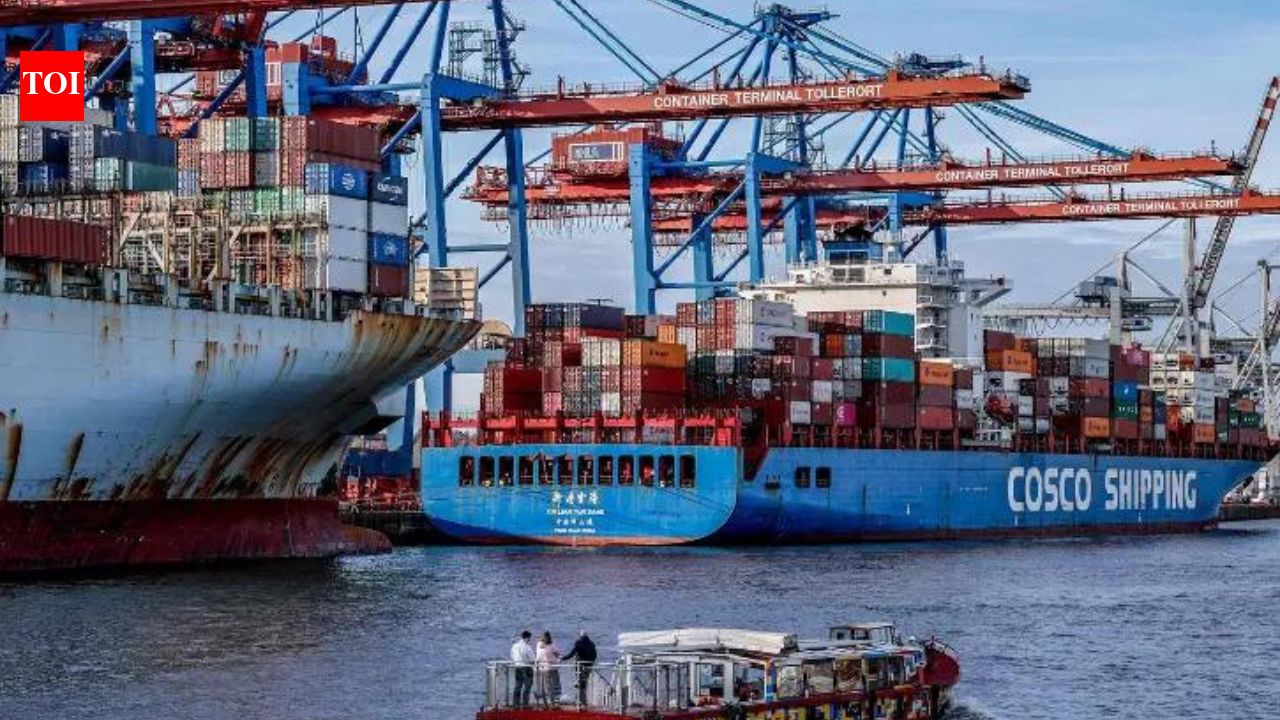
US-bound exports decline 13%, India’s trade deficit with China crosses $100 billion


US-bound exports decline 13%, India’s trade deficit with China crosses $100 billion

India’s exports to the US declined 12.88 per cent year-on-year to $6.88 billion in February, weighed down by high tariffs, while the country’s trade deficit with China widened past $100 billion during the April-February period of the current fiscal, according to commerce ministry data released on Monday.Exports had contracted in September, October, December and January, although they registered a 22.61 per cent rise in November. Indian goods were attracting sweeping 50 per cent levies in the US. After the US Supreme Court struck down the Trump tariffs, however, US President Donald Trump imposed a 10 per cent duty on all countries from February 24 for 150 days. The impact of the lower tariffs is expected to be reflected in March trade data to be released in mid-May.Imports from the US rose 36.53 per cent to $4.48 billion in February. During the April-February period, India’s exports to the US increased 3.84 per cent to $79.29 billion, while imports climbed 15.65 per cent to $48.4 billion.Trade with China remained sharply imbalanced. India’s exports to China rose 32.37 per cent to $1.67 billion in February, while imports surged 30.49 per cent to $11.95 billion. For the first 11 months of the fiscal year, exports to China increased 37.66 per cent to $17.54 billion, whereas imports rose 15.21 per cent to $119.55 billion, pushing the trade deficit to $102.01 billion.Exports recorded growth to markets such as Germany, Hong Kong, Italy, Nepal, France, Brazil, Spain, Belgium, Malaysia and Vietnam during February. However, shipments to the UK, the Netherlands, Saudi Arabia, Bangladesh, Singapore, Australia and South Africa declined.On the import side, shipments fell from the UAE, Russia, Germany, Thailand and Qatar, but increased from Saudi Arabia, Iraq, Switzerland, Singapore, Hong Kong, Japan, Korea and Indonesia. Imports from Switzerland– largely gold– surged nearly seven-fold to $2.71 billion during the month.


Source link

Access Denied


Access Denied

You don’t have permission to access “http://www.ndtv.com/opinion/assembly-polls-the-story-of-bengals-real-outsiders-11223612” on this server.

Reference #18.c7f5d217.1773669733.debf008

https://errors.edgesuite.net/18.c7f5d217.1773669733.debf008


Source link

All restrictions under GRAP in Delhi-NCR revoked as air quality improves significantly | India News


All restrictions under GRAP in Delhi-NCR revoked as air quality improves significantly

All restrictions imposed in Delhi-NCR under the Graded Response Action Plan (GRAP) have been revoked after a significant improvement in air quality, officials said on Monday.The Commission for Air Quality Management (CAQM) said that owing to favourable meteorological conditions, the air quality index (AQI) of Delhi was recorded at 119 on Monday.

Delhi’s Air Pollution Gets Attention, But Most Indian Cities Are As Bad Or Worse | I Witness

“Further, the forecast by IMD and IITM indicates that AQI is likely to remain in the moderate category in the coming days,” an official said.GRAP-1 restrictions had been in force under an order issued on October 14, 2025.The revocation of the restrictions means that curbs such as a ban on the use of coal and firewood as fuel in tandoors in hotels, restaurants and open eateries, and the use of diesel generators only in emergency or essential situations will no longer be in place.There are four stages in GRAP, each linked to the AQI at the time.The first stage, GRAP-1, kicks in when the AQI is between 201 and 300; the second stage, GRAP-2, is invoked when the AQI is between 301 and 400; GRAP-3 kicks in between 401 and 500; and GRAP-4 is invoked when the AQI is more than 450.This year, GRAP-4 restrictions were implemented on January 17. Since then, as air quality improved, lower stages of GRAP kicked in.GRAP-4 was revoked on January 20. Two days later, restrictions under GRAP-3 were lifted, and GRAP-2 measures were removed on February 18. PTI


Source link

Stock market today (March 16, 2026): Which are the top gainers and losers in Nifty50 and BSE Sensex? Check list


Stock market today (March 16, 2026): Which are the top gainers and losers in Nifty50 and BSE Sensex? Check list

Benchmark equity indices rebounded strongly on Monday, rising over 1 per cent each after three consecutive sessions of steep losses, as investors returned to blue-chip banking and domestic-focused stocks amid bargain buying.The 30-share BSE Sensex surged 938.93 points, or 1.26 per cent, to close at 75,502.85. During the session, it touched an intra-day high of 75,805.27 and a low of 73,949.76.The broader NSE Nifty also advanced 257.70 points, or 1.11 per cent, to settle at 23,408.80.

Nifty50 top gainers

  • UltraTech Cement (4.55%)
  • M&M (3.59%)
  • Grasim Industries (3.35%)
  • Trent (3.11%)
  • Eternal (2.95%)
  • HDFC Bank (2.89%)
  • Bajaj Finance (2.71%)
  • JSW Steel (2.35%)
  • ITC (2.26%)
  • Bajaj Auto (2.24%)

Nifty50 top losers

  • Kwality Wall’s (-2.38%)
  • BEL (-2.26%)
  • Max Healthcare (-1.96%)
  • Coal India (-1.44%)
  • ONGC (-1.39%)
  • Wipro (-1.26%)
  • Dr Reddy’s (-1.20%)
  • Shriram Finance (-1.16%)
  • Cipla (-1.12%)
  • Power Grid (-1.07%)

BSE Sensex top gainers

  • UltraTech Cement (4.55%)
  • M&M (3.59%)
  • Trent (3.11%)
  • Eternal (2.95%)
  • HDFC Bank (2.89%)
  • Bajaj Finance (2.71%)
  • ITC (2.26%)
  • Bajaj Finserv (2.07%)
  • SBI (1.89%)
  • Tata Steel (1.87%)

BSE Sensex top losers

  • Kwality Wall’s (-2.38%)
  • BEL (-2.26%)
  • Power Grid (-1.07%)
  • Sun Pharma (-1.03%)
  • Bharti Airtel (-0.81%)
  • NTPC (-0.54%)
  • TCS (-0.06%)

“The equity market staged a late-session rebound, supported by value buying in domestically oriented sectors such as auto, banking, and FMCG, a relief rally following the recent sell-off.“In the near term, investor sentiment will hinge on developments in the Strait of Hormuz, where any easing of supply chain disruptions could provide further support,” Vinod Nair, Head of Research, Geojit Investments Limited, said, PTI quoted.In Asia, Japan’s Nikkei 225 and Shanghai’s SSE Composite index ended lower, while South Korea’s Kospi and Hong Kong’s Hang Seng closed in positive territory. European markets were trading mostly lower during afternoon deals.The US market had ended in the red on Friday.Meanwhile, Brent crude — the global oil benchmark–rose 1.41 per cent to USD 104.4 per barrel in futures trade.Foreign Institutional Investors (FIIs) sold equities worth Rs 10,716.64 crore on Friday, according to exchange data, while Domestic Institutional Investors (DIIs) purchased shares worth Rs 9,977.42 crore.On Friday, the Sensex had ended at 74,563.92, down 1,470.50 points, or 1.93 per cent. The Nifty had fallen 488.05 points, or 2.06 per cent, to close at 23,151.10.


Source link

Is Russia supplying Shahed-136 drones to Iran for attacks on US bases? Zelenskyy says ‘100% facts’


Ukrainian President Volodymyr Zelenskyy on Saturday claimed that Russia is supplying Iran with Shahed drones that are being used against the United States and Israel.In an interview with CNN, Zelenskyy told journalist Fareed Zakaria that it was “100% fact” that Iran had used Russian-made Shahed drones in attacks on American bases.

Swarm Drones vs Stealth Bombers: 10 Powerful Weapons Shaping the U.S.-Iran-Israel War | Explained

Shahed drones have been linked to several attacks across the Middle East, although the exact manufacturer of some drones used in these strikes has not always been confirmed.Earlier this week, Zelenskyy also made similar claims in a post on the social media platform X stating that “Russia has started supporting the Iranian regime with drones. It will definitely help with missiles, and it is also helping them with air defense.”However, he did not provide specific details about the assistance.Russia has also shared imagery from its satellite network with Iran. It remains unclear what Moscow is receiving in return for its support, CNN reported. However, Moscow has previously denied sharing intelligence with Iran.

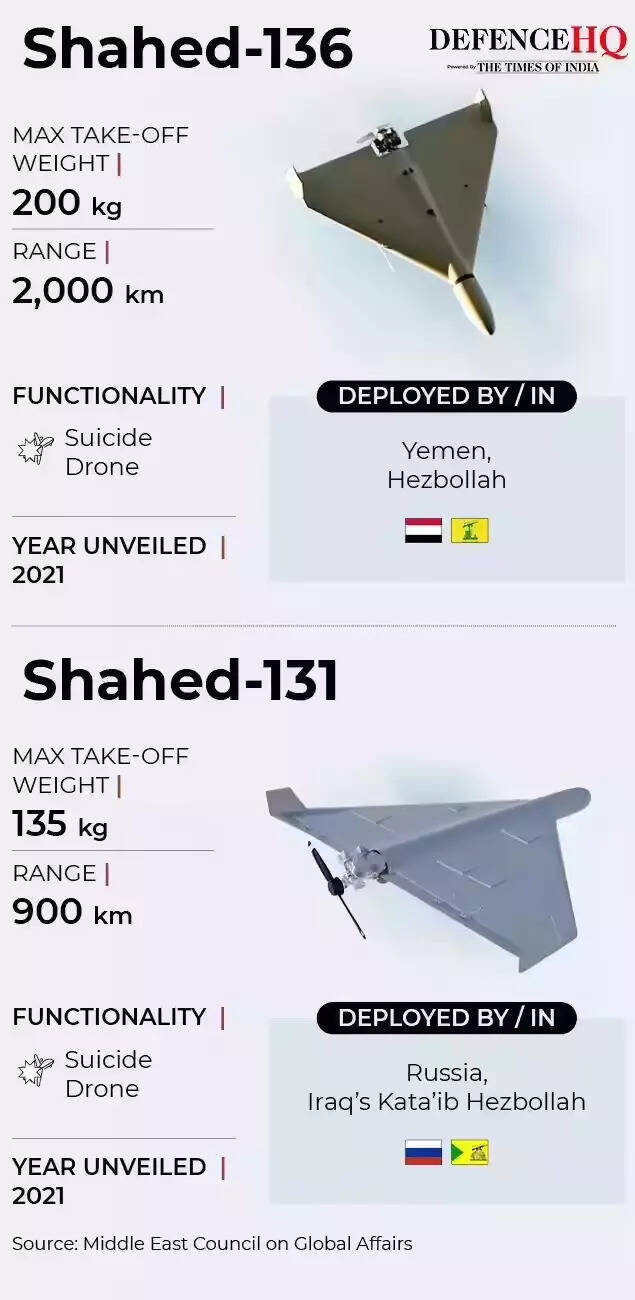
What are Shahed-136 drones?

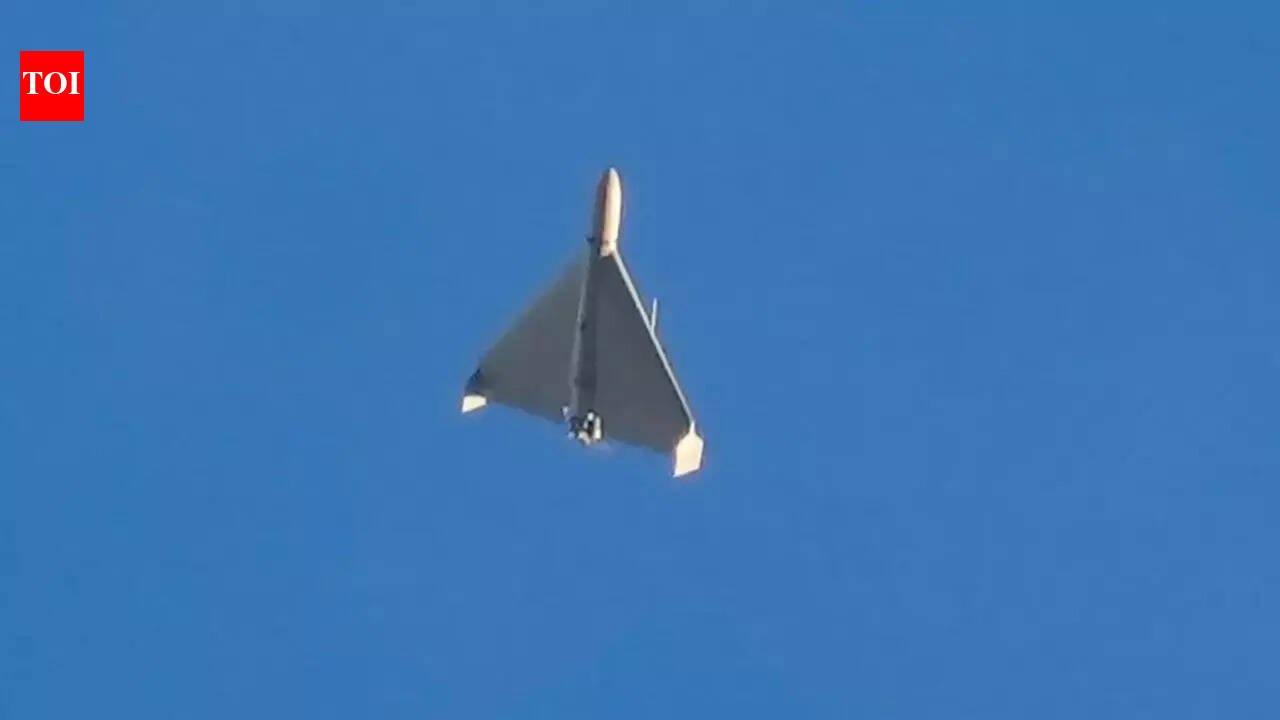
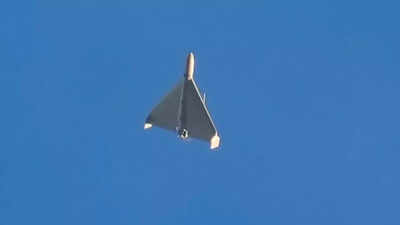
The Shahed-136 drone is a loitering munition originally developed by Iran as a cheaper alternative to traditional missiles. Designed with a delta-wing structure, the drone can travel long distances toward a target area before diving into it and detonating its explosive payload.

shahed-136-and-shahed-131

According to analysts at the Center for Strategic and International Studies, the drone has a range of around 1,000 miles, can reach speeds of about 114 miles per hour and carries a warhead weighing between 66 and 123 pounds.Each unit is estimated to cost between $20,000 and $50,000, making it far cheaper than conventional missile systems while still capable of causing significant damage.The affordability of such drones allows militaries to launch them in large numbers at once, overwhelming air-defence systems and forcing opponents to use far more expensive interceptor missiles.Shahed drones first saw large-scale use during Russia’s invasion of Ukraine, where thousands have been launched by Russian forces since late 2022, according to Ukrainian officials.Although Iran initially supplied the drones to Russia, Moscow has since begun producing its own versions domestically. Similar Shahed-type drones have also been adopted by other militaries, including the United States.Iran has deployed large numbers of drones across the Middle East, targeting sites in countries such as Kuwait, Qatar, Saudi Arabia, Bahrain and the United Arab Emirates. Regional authorities say hundreds of drones have been intercepted, though some have managed to strike infrastructure including airports, ports, hotels and residential buildings. The growing use of low-cost drones has also pushed the United States to rethink its defence strategy.


Source link

WATCH: Sanju Samson hilariously mimics Vaibhav Suryavanshi while recalling his IPL chat with Rahul Dravid


In the high-pressure cauldron of the Indian Premier League (IPL), where veteran internationals often lose their nerves, a 14-year-old from Bihar has redefined the meaning of ‘playing with freedom.’ The 2025 season will be remembered for many things, but perhaps nothing captured the imagination of the cricketing world quite like the meteoric rise of Vaibhav Suryavanshi.

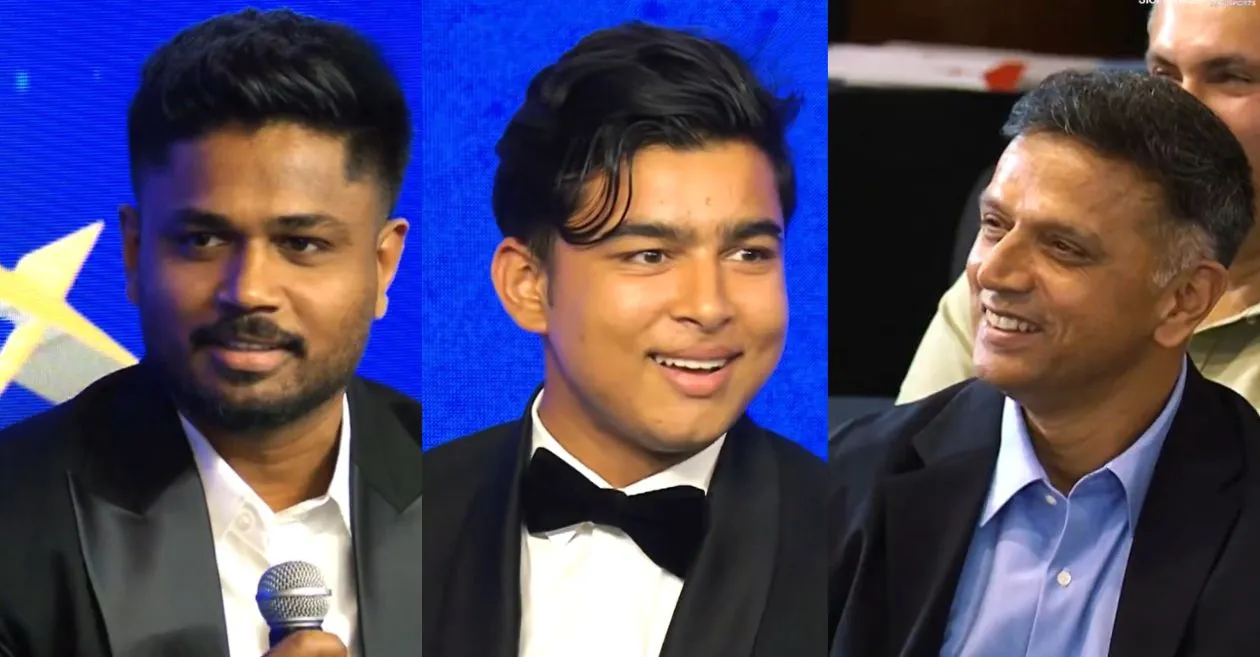
During the recent BCCI Naman Awards, Rajasthan Royals’ stalwart Sanju Samson shared a delightful behind-the-scenes anecdote that perfectly encapsulates the shift in Indian cricket’s generational mindset. Samson, known for his own flair and calm demeanour, couldn’t help but chuckle as he mimicked the young prodigy, narrating a pre-debut meeting that left even the legendary Rahul Dravid—the ‘Wall’ of technical precision, momentarily speechless.

Sanju Samson recreates Vaibhav Suryavanshi’s style while narrating his IPL conversation with Rahul Dravid

The story begins in a hotel room in Jaipur, just before the Royals took on Lucknow Super Giants on April 19. Concerned about the immense pressure on a 14-year-old making his global debut, Dravid and Samson called Suryavanshi in for a tactical briefing. They expected a nervous teenager seeking guidance on strike rotation or handling world-class pacers. Instead, they met a boy who viewed the IPL through the lens of a video game.

When Dravid, the epitome of structured batting, asked the youngster about his game plan, Suryavanshi’s response was disarmingly simple. Speaking in his native accent, which Samson mimicked to perfection at the awards ceremony, the teenager reportedly said, “Agar hume pehle mila to hum pehla hi uda denge” (If I get the first ball in my zone, I’m sending it over the ropes). True to his word, Suryavanshi faced Shardul Thakur on his very first ball in the IPL and dispatched it for a massive six, signalling the arrival of a new era of fearless batting.

Here’s the video:

Also READ: Robin Uthappa explains why IPL 2026 will be a challenging season for Vaibhav Suryavanshi

From Bihar to the record books: Suryavanshi’s impact as the youngest centurion

The sheer audacity of Suryavanshi’s approach isn’t just a charming story; it is backed by historic statistical dominance. After his explosive debut, the left-hander went on to achieve the unthinkable: becoming the youngest player in history to score an IPL century. His 101 off just 38 balls against the Gujarat Titans was a masterclass in clean hitting, effectively rendering tactical field placements obsolete.

What makes Suryavanshi’s 2025 campaign statistically significant is the efficiency of his aggression. Over the course of seven matches, he amassed 252 runs at an average of 36. However, the standout figure remains his strike rate of 206.55. In a league where a strike rate of 150 is considered elite, Suryavanshi operated at a frequency that disrupted the opposition’s bowling rhythm entirely.

The Rajasthan Royals’ decision to secure him for ₹1.10 crore in the auction now looks like one of the greatest bargains in the tournament’s history. His success highlights a broader trend in Indian domestic cricket: the decentralization of talent. Emerging from the cricketing hinterlands of Bihar, Suryavanshi arrived on the big stage without the baggage of traditional technical constraints. As Samson noted, the kid wasn’t playing against a world-class bowling attack; he was simply playing a “video game of his own.”

This “see-ball, hit-ball” mantra, while seemingly simplistic, requires an extraordinary level of hand-eye coordination and mental fortitude. By mimicking Suryavanshi’s carefree attitude, Samson didn’t just provide a moment of levity at an awards show; he highlighted the psychological evolution of the modern Indian cricketer.

Also READ: From Rahul Dravid to Shubman Gill: BCCI unveils list of winners for Naman Awards


Source link