Breaking News
Rolling roomalis longer, more time spent on sigri: On their toes ahead of Eid | Mumbai News


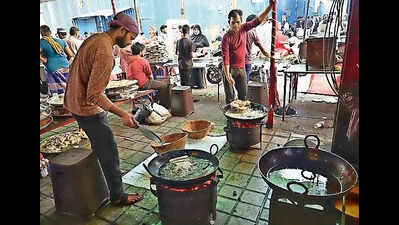
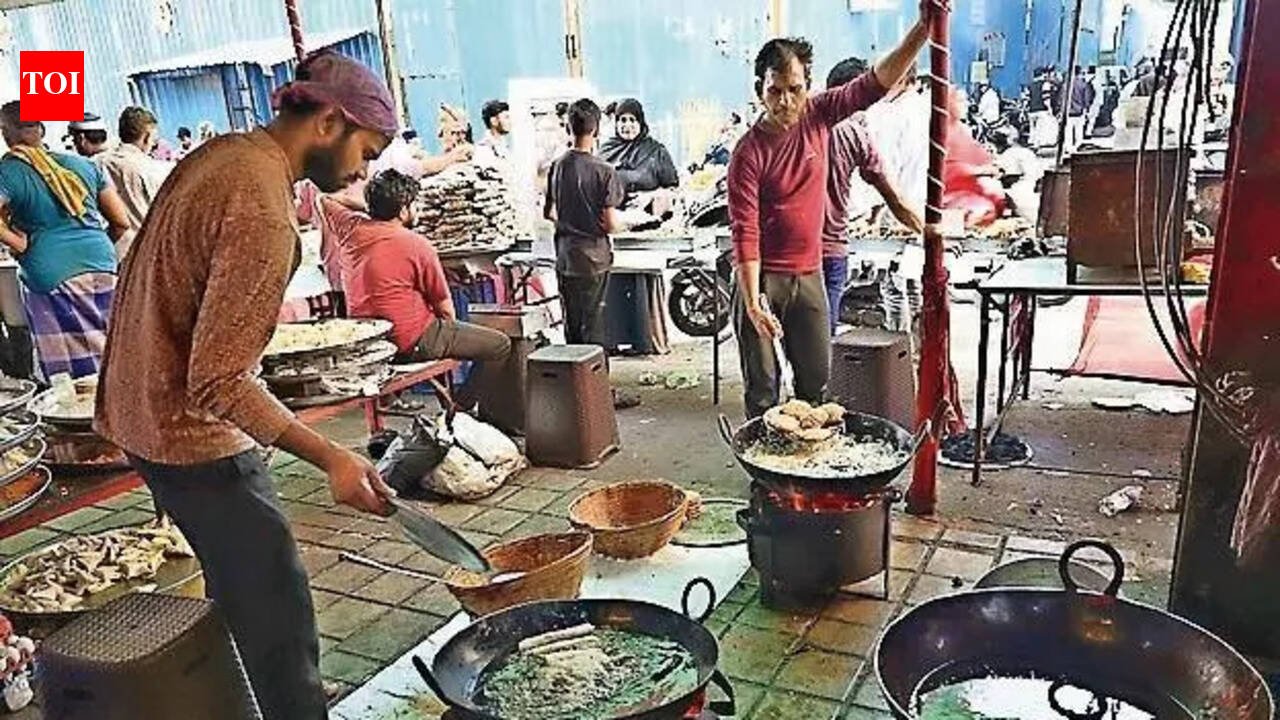
Mumbai: Mohammed Naseer rolls roomali roti and waits for the sigri, a charcoal-fired metal pan, to warm up. Unlike the multi-burner gas stove which heats up quickly and rapidly cooks food, it takes 10-15 minutes to heat and longer to cook.“If I made 50 roomali rotis in 30 minutes on gas burner, now it takes 45 minutes to prepare as many,” said Naseer, in between baking the thin, flatbread in the kitchen of the Shalimar restaurant at Mohammed Ali Road. At Hindustan Hotel opposite Minara Masjid, owner Abdul Aziz said work begins earlier now, around six in the morning, because it takes longer to cook on coal-fired ovens. “Our kheema and mughlai dishes are ready by 12 noon followed by preparation of iftar delicacies. We have stopped serving fried rice, paya and daal gosht (mutton),” said Aziz.Commercial LPG shortage has impacted supply and operations of eateries lining the streets of Mohammed Ali Road-Bhendi Bazaar amid the holy month of Ramzan. Close to Eid festivities, both restaurants and roadside stalls struggle to deliver on orders by switching to charcoal stoves and induction stoves. Some have trimmed the menu to leave out dishes which need cooking on high flame. At the Chinese N Grill near the iconic Minara Masjid, the most famous dish—Crispy Thread Chicken—is no longer served. Mercifully, other popular items like Chicken Shanghai Sizzler, Nalli Nihari and Bheja Fry are still around. “Somehow we are running the kitchen with sigdi (charcoal). But this is costlier. If commercial LPG supply is not restored soon, most of us will have to shut down,” said Aquib, Chinese N Grill’s supervisor.Chapatis and Chinese dishes have also taken a hit. “They are off the menu. We are cooking Mughlai dishes on sigri and frying malpuas on a diesel-fired stove,” said Shalimar’s owner Umair Shaikh.Many hoteliers complain against the govt’s decision to prioritise domestic LPG consumers over users of commercial LPG. “If someone does not eat at home, he can eat at a restaurant. But if all restaurants are closed, where will those who have no homes eat?” asked Shashidhar Shetty of Govind Shree Durga Bhavani, a vegetarian eatery opposite J J Hospital. “Our AHAR (Indian Association of Hotels and Restaurants) president Vijay Shetty has written to the PMO and ministers Piyush Goel and Hardeep Puri. We are only getting assurances,” said Shetty who dropped dosa and medu vada from his menu, but retained idli and misal pao. Khalid Hakim of the century-old Noor Mohammadi restaurant on Mohammed Ali Road said he has stopped preparing rabri. “The LPG shortage comes at a time when business is supposed to be booming. These are the last days of Ramzan and most of our customers are non-Muslims who come even from far-off suburbs. It looks bad to tell them some of our dishes are unavailable,” said Hakim. Many said they are losing sleep and even if they catch a few winks after sehri (a light pre-dawn meal during Ramzan), they wake up worrying about insufficient fuel in their kitchens. “Every morning I wake up worrying. Gas cylinders are not available and induction stoves cannot cook tawa delicacies like baida roti, bhoona gosht and cutlets. Sigdi is slow,” said Asif Shaikh of the Indian Hotel at Bhendi Bazar. At the famous Tawakkal Sweets (founded in 1945), Mustafa Mithaiwala said sweets like rasmalai and doodhi halwa are off his menu. “We are managing somehow. Tell the govt to make it better,” he pleaded while attending to a bevy of Bohra Muslim customers. The Dawoodi Bohras celebrated Eid on Thursday as they follow the Egyptian calendar. Now with Eid festivities set to begin on Saturday, most hoteliers are taking stock of what they can offer over the weekend. Sounding a bit rueful, Hassan Jaffer Mansuri of Jaffer Bhai’s Delhi Darbar Catering Division said kapsa rice, mutton paya and mutton khichda have been dropped from the menu from the list of delicacies.


Source link

‘Does anyone really think someone can tell Trump what to do?’ Netanyahu denies ‘dragging’ US ‘into Iran war’


‘Does anyone really think someone can tell Trump what to do?’ Netanyahu denies 'dragging' US 'into Iran war'
Netanyahu holds press briefing

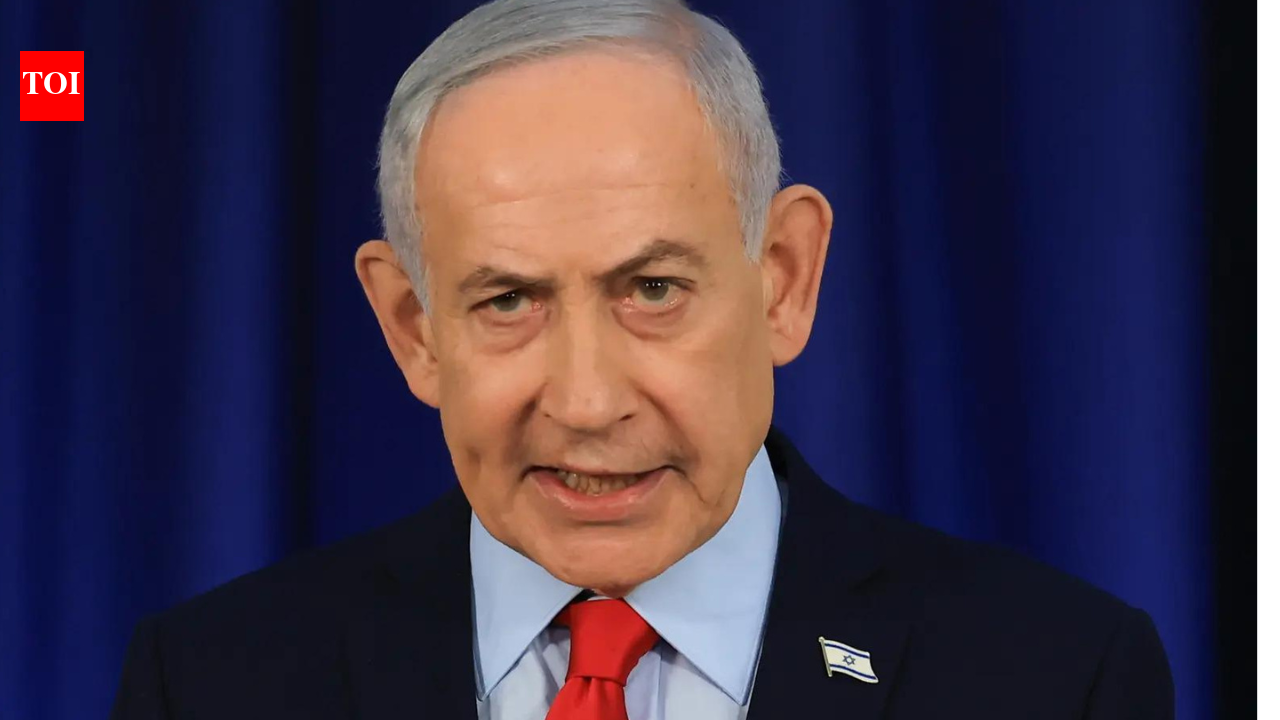
Israeli Prime Minister Benjamin Netanyahu on Thursday asserted Israel’s independent military decision-making even as he emphasised close coordination with the United States amid the ongoing conflict with Iran. However, he denied claims that Israel “dragged” US into a war, during a media briefing. “Does anyone really think that someone can tell President Trump what to do? Come on. President Trump always makes his decisions on what he thinks is good for America,” Netanyahu said on being questioned by reporter. He confirmed that Israel had carried out a strike on Iran’s Assaluyeh gas compound on its own, while acknowledging Washington’s position on further such attacks. “Fact number one: Israel acted alone against the Assaluyeh gas compound. Fact number two: President Trump asked us to hold off on future attacks, and we’re holding off,” he said. Netanyahu also projected confidence in Israel’s military campaign, saying, “We are winning and Iran is being decimated,” and added, “I also see this war ending a lot faster than people think.” On Iran’s internal situation, he pointed to signs of strain but stopped short of predicting regime collapse. “A lot of signs… I wish I could divulge all of them,” he said, adding, “We’re working to create the conditions for it to collapse. But it may survive, it may not.” He further claimed that Iran’s military capabilities had been severely degraded. “We are taking action to destroy the industries that make it possible to build missiles. Iran no longer has the capacity to enrich uranium and manufacture ballistic missiles,” Netanyahu said. Reaffirming ties with Washington, Netanyahu said, “In partnership with our American allies, we can do amazing things… It’s the two most amazing air forces in the world… the two most amazing intelligence services in the world.”


Source link

Indigenous drone production ecosystem needed for strategic autonomy: Rajnath | India News


Indigenous drone production ecosystem needed for strategic autonomy: Rajnath

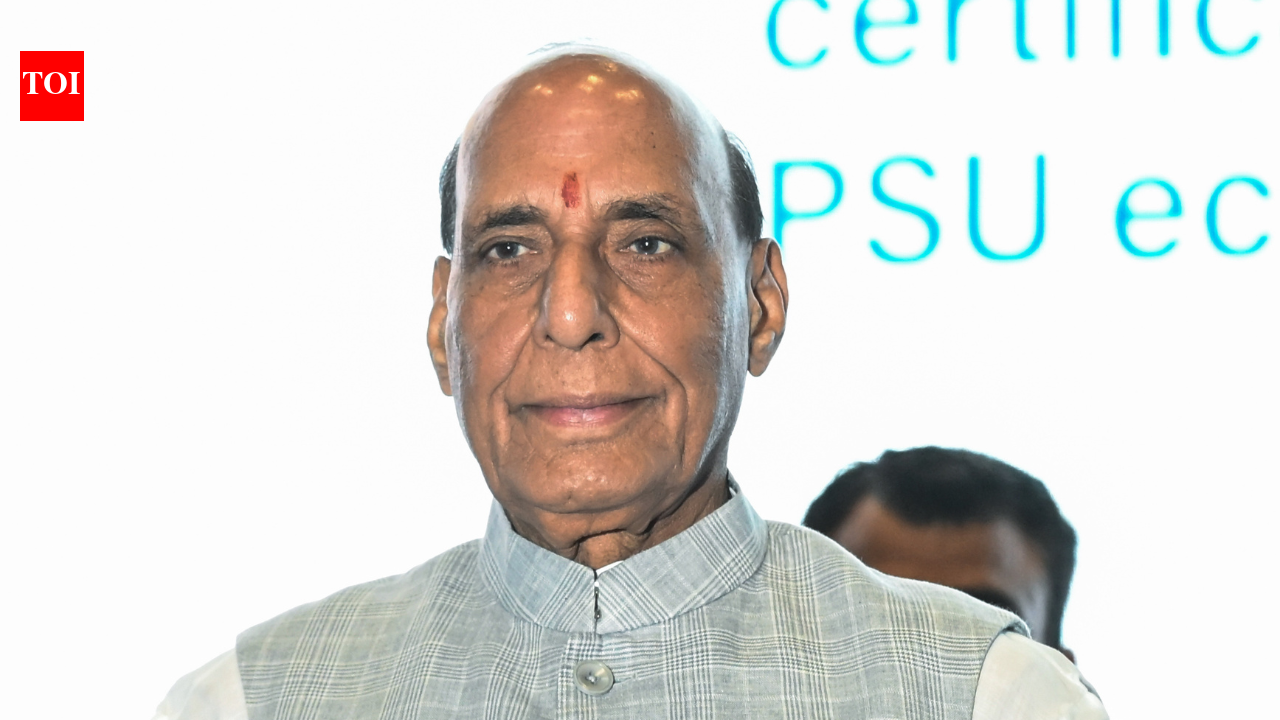
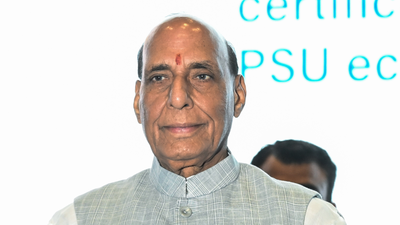
NEW DELHI: Defence minister Rajnath Singh on Thursday stressed the urgent need to build a drone production ecosystem in the country to ensure strategic autonomy, enhance defence preparedness and make the nation self-reliant in the field in view of present geopolitical uncertainties.“India must work in a mission mode to emerge as a global hub of indigenous drone manufacturing in the next few years,” Rajnath said during the inaugural session of the National Defence Industries Conclave here.He said the ongoing conflicts, ranging from the Russia-Ukraine was to the tensions between Iran and Israel, are proof that drones and counter-drone technologies are destined to play a pivotal role in future warfare, and ‘atmanirbharta’ in drone manufacturing is essential not merely at the product level, but at the component level as well.“From drone moulds to its software, engines and batteries, everything must be manufactured in India. This is no easy task. In most countries where drones are manufactured, a significant number of critical components are currently imported from China,” he said.Rajnath said that while the creation of any nation’s defence industrial ecosystem relies on contributions of large industries, MSMEs, startups and innovators, it is equally driven by a clear policy push from the govt, tailored to meet the country’s specific defence requirements. While he called for active contribution from the private sector, he extended the govt’s full support to transform India into a global hub for indigenous drone manufacturing.The minister described iDEX (Innovations for Defence Excellence) and ADITI (Acing Development of Innovative Technologies with iDEX) as game-changer initiatives, through which start-ups, innovators, and MSMEs are provided with the opportunity to develop novel solutions to meet the specific requirements of the defence forces.He said that “as of Feb 2026, 676 startups, MSMEs and individual innovators have joined the defence innovation ecosystem since inception of iDEX in 2018. In total, 548 contracts have been signed; and 566 challenges launched”. Of these, 58 prototypes have received clearance for procurement, valued around Rs 3,853 crore, he said.“Further, 45 procurement contracts have already been signed, worth nearly Rs 2,326 crore. These figures demonstrate that innovation is gradually materialising into tangible products and technologies, and the role played by our startups and MSMEs in this transformation is steadily gaining strength,” Rajnath said.


Source link

India eyes joining one of Europe’s 6th-gen fighter projects: Parliamentary report


India eyes joining one of Europe’s 6th-gen fighter projects: Parliamentary report

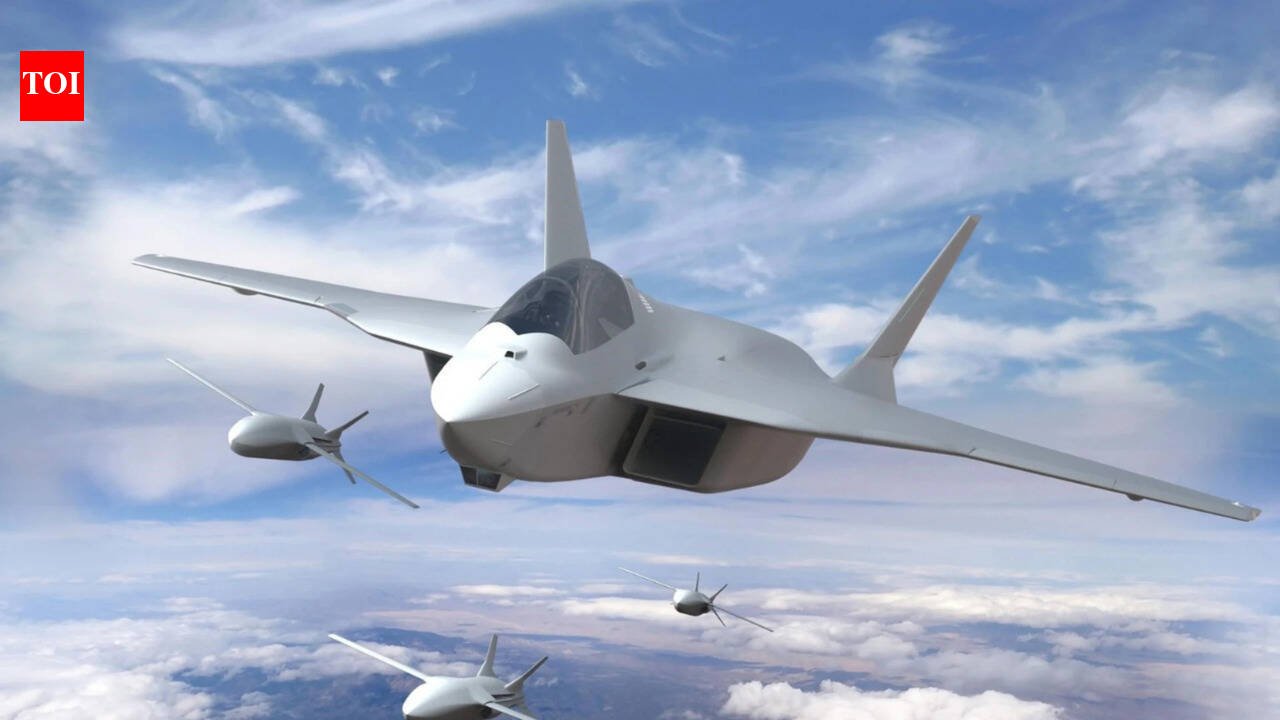
New Delhi: India is considering joining one of Europe’s ambitious ‘sixth-generation’ fighter jet programmes, marking the first official acknowledgement that the Indian Air Force (IAF) could partner in the development of a next-generation combat aircraft besides the ongoing indigenous 5th-generation Advanced Medium Combat Aircraft (AMCA) development project, the defence ministry has informed parliamentary standing committee on defence.The 20th report of the standing committee on defence said the IAF is exploring collaboration with one of two European consortia currently working on sixth-generation fighters. “The committee has been informed that two consortia are working on the sixth-generation aircraft. One is a consortium of the UK, Italy and Japan and the other is a consortium of France and Germany, and both are developing aircraft. The committee has also been informed that Air Force (IAF) will try to join forces with one of the consortia and begin considering a sixth-generation fighter right away with a view to ensure that they do not lag behind in achieving the target for advanced aircraft.Though the authorised strength of the IAF is 42 fighter squadrons, it has only 31 active fighter squadrons now. Joining Europe’s 6th-gen jet programme and speeding up AMCA indigenous project are critical for India at this juncture as China has already deployed J-20 fifth-generation fighters and is rolling out J-35 stealth fighters, which Pakistan is planning to buy 40 of such jets, and has tested two sixth-generation platforms designated J-36 and J-50.“The committee understands that in view of technical advancement of fighter aircraft globally and to meet the present security scenario, technical upgradation of aircraft is required on top priority for enhancement of its combat capability. The committee recommends the ministry to chalk out a trajectory in this regard and step forward the planning process for development and acquisition of sixth-generation (6G) aircraft which would eventually enhance India’s air domain capabilities in today’s highly air-centric modern warfare,” it further said.The report said the “committee has also been informed furthermore that IAF is fully participating in the development and design of LCA Mark 2 and AMCA.The committee also notes that “among the combat-capable helicopters, Apache, Prachand and ALH Mark 4 are also fully operational in the IAF and apart from these, surface-to-surface missiles like BrahMos and light ammunition along with under development space systems also enhance our strike capability”.


Source link

LSG owner fuels speculation with ‘output counts’ post; fans ask ‘Rahul ke liye ya Pant?’ | Cricket News


LSG owner fuels speculation with 'output counts' post; fans ask 'Rahul ke liye ya Pant?'

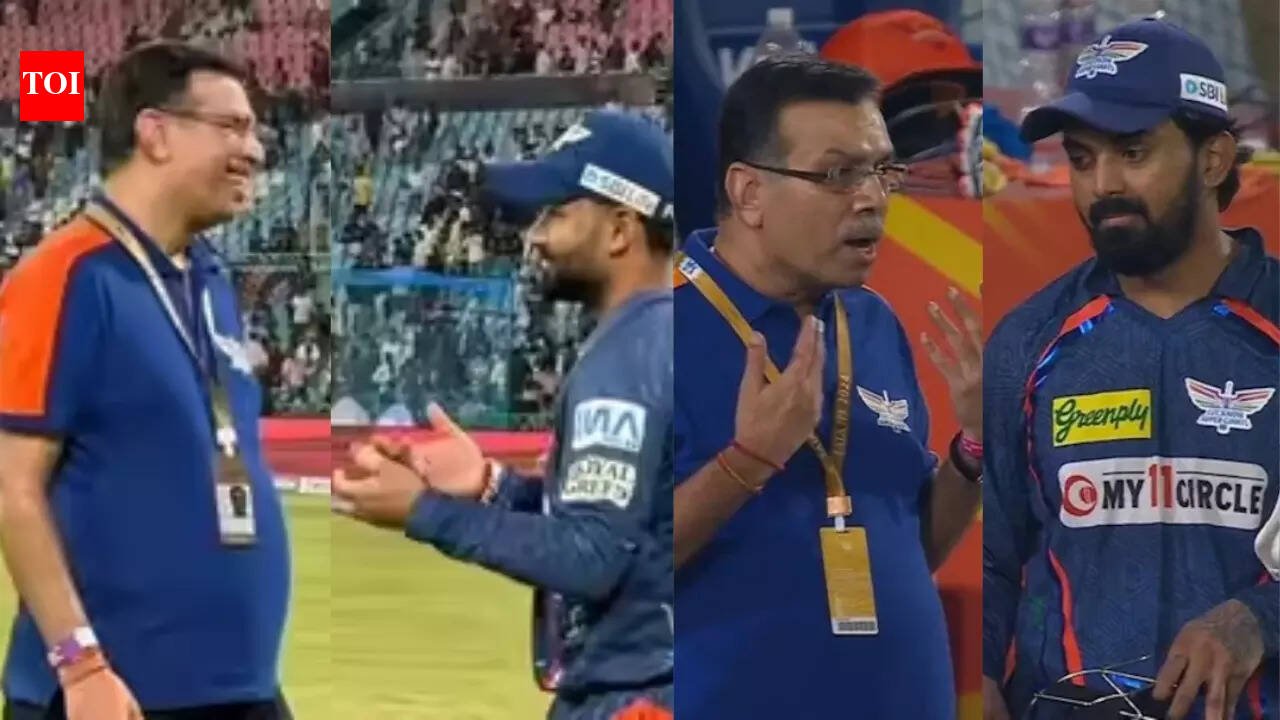
A few days before the start of the IPL 2026 season, Sanjiv Goenka, owner of Lucknow Super Giants (LSG), shared a message on social media that drew attention online.“I measure people by the results they deliver, not by the hours they sit behind a desk without delivering. Output is the only honest metric,” Goenka said in a post on X.The post did not mention any individual, but several users linked it to former LSG captain KL Rahul, who is no longer part of the franchise setup, while some linked it to current LSG captain Rishabh Pant.

Watch

IPL 2026 should be audition for the next India T20I captain

“Ye pant ke liye tha ki kl rahul ke liye,” asked a user. “Dig at Rishabh Pant?” wondered another.The timing of the post comes close to the new IPL season, where LSG will begin with a changed squad composition.Goenka and Rahul were earlier involved in a heated moment during IPL 2024 that had drawn attention. After a match, visuals showed Goenka in an animated conversation with Rahul on the field, which led to discussion around the team environment and leadership. Rahul later moved on from the franchise ahead of the last season. KL Rahul will play for Delhi Capitals (DC) in IPL 2026.There has been no confirmation linking the recent post to any player.LSG will begin their IPL 2026 season on April 1 against Delhi Capitals. In 2025, they finished seventh in the points table. The team is still looking for their first IPL trophy and will aim for a strong and consistent performance this season. The BCCI has announced that the first phase of IPL 2026 will take place from March 28 to April 12.

Banner Insert


Source link

Israel flags Iran ‘naval terror’, briefs India | India News


Israel flags Iran 'naval terror', briefs India

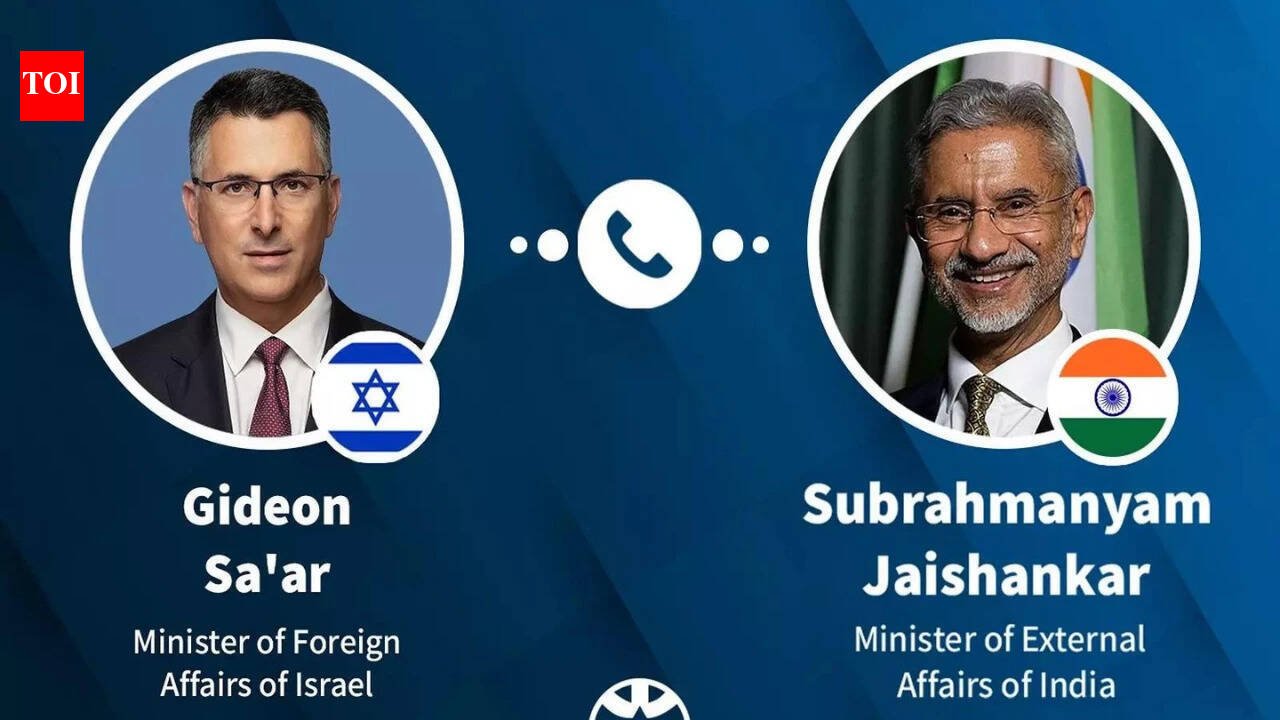
Israeli foreign minister Gideon Sa’ar spoke with external affairs minister S Jaishankar on Thursday and briefed him about the ongoing conflict in West Asia. “We value our special strategic partnership with India, the world’s largest democracy,” he said on X. Sa’ar said he briefed the Indian minister on developments in Israeli operation against Iran. “I said that the (Iranian) regime is carrying out naval terrorism in the Strait of Hormuz. This is not an American or Israeli issue, it’s a fundamental problem affecting global economy. If this grave phenomenon is not addressed now, it could spread worldwide,” he said.


Source link

Shrimp exports to US from state battling tide of tariffs | Mumbai News


Mumbai: Seafood exporters say that “not a single prawn” has been exported from Mumbai to the US since Sept 2025 owing to the sanctions imposed on India by American president Donald Trump. MPEDA (Marine Products Export Development Authority) says exporters are at their wits’ end as America’s tariff rates and conditions are changing ever so often.State fisheries minister Nitesh Rane raised the issue in the assembly Wednesday. He particularly pointed to the travails faced by shrimp exporters. The US has a large market for shrimp from many countries including India.Irfan Khan, director, Harbour Exports, said, “We have not shipped a single container to the US since Sept 2025. Not a single prawn —let alone a container. Thankfully, I have a factory in Dubai so we are reworking our packaging and trying to finish our orders, just to hold on to one big client. We have even incurred costs on setting up an office in Vietnam to export fish to the US as a Vietnamese exporter — even at a loss. What pains me is that the revenue and foreign exchange that could have been earned by India’s farmers and fishermen are being lost.” An MPEDA official said, “Fisheries exports from Maharashtra are currently minimal. There are hardly two or three units registered with US FDA. Most of our consignments go to Europe. Shrimp exports are done from Andhra Pradesh, since that is where most of the aquaculture cultivation is done. But seafood exporters nationwide are confounded because the US tariff rates and conditions are changing so rapidly.”Among the fortunate few is Kader Exports whose consignments are still travelling to the US. Mohammed Farid Khan, GM, corporate exports, of the company, said, “Our shrimp exports to the US have not stopped. The earlier situation was different when tariff was 50%. But that is now lowered to 10%. Moreover, the US Supreme Court has questioned the tariffs. So our shrimp exports are normal.”


Source link

Rajya Sabha Billionaires: 31 Rajya Sabha MPs billionaires, 73 face criminal cases: ADR analysis | India News


31 Rajya Sabha MPs billionaires, 73 face criminal cases: ADR analysis

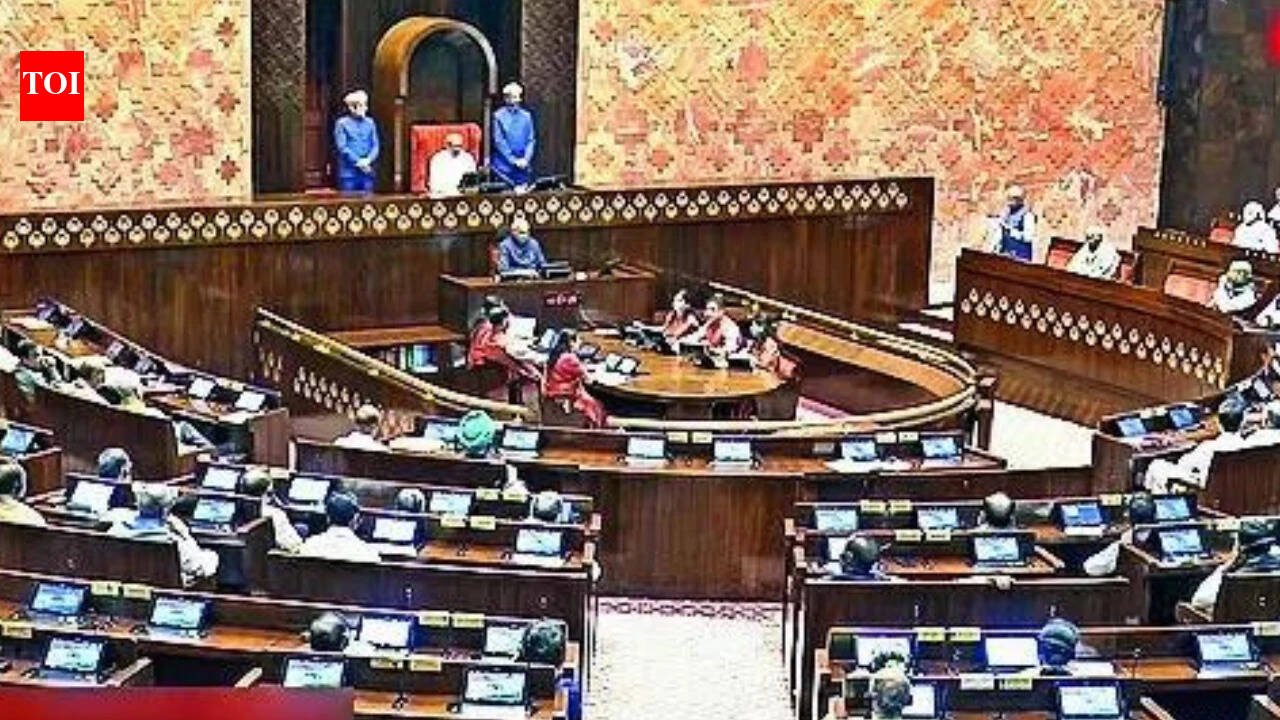
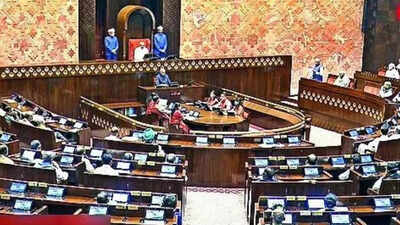
NEW DELHI: An analysis of affidavits of 229 out of 233 Rajya Sabha MPs shows that 73 (32%) MPs have declared criminal cases against themselves and 31 (14%) are billionaires.As many as 36 (16%) MPs have declared serious criminal cases. One MP has declared a case of murder, four have cases of attempt to murder, and three have cases related to crimes against women.Party-wise data shows that 27 (27%) out of 99 MPs from BJP, 12 (43%) out of 28 from Congress, four (31%) out of 13 from Trinamool Congress, four (40%) out of 10 from Aam Aadmi Party, all three MPs from CPM, and the three MPs from Bharat Rashtra Samithi have declared criminal cases against themselves in their affidavits. This number is two out of eight MPs from DMK, two out of seven MPs from YSRCP, two out of five MPs from AIADMK, two out of four MPs from Samajwadi Party, and two out of three MPs from RJD.In the report the Association for Democratic Reforms (ADR) and National Election Watch have analysed and updated the criminal, financial and other background details of 229 out of 233 Rajya Sabha MPs. In the current Rajya Sabha, one seat from Jharkhand is vacant. Three MPs have not been analysed, as their affidavits were unavailable. The analysis includes 37 recently elected members.In terms of financial background, out of the 229 sitting RS MPs analysed, 31 (14%) are billionaires. Among major parties, six BJP MPs, five Congress members, four MPs from YSRCP, two from AAP, two from BRS, and three from NCP have declared assets valued at more than Rs 100 crore.While the total assets of 229 sitting MPs stand at Rs 27,638 crore, the average assets of Rajya Sabha sitting MPs is Rs 120.6 crore.BRS MP Bandi Partha Saradhi, has declared the highest assets at over Rs 5,300 crore, followed by AAP’s Rajinder Gupta with over Rs 5,053 crore, and YSRCP’s Alla Ayodhya Rami Reddy with over Rs 2,577 crore.On the other end, AAP MP Sant Balbir Singh is the poorest, with assets worth about Rs 3 lakh. He is followed by Maharaja Sanajaoba Leishemba, of Manipur, with around Rs 5 lakh, and TMC’s Prakash Chik Baraik with around Rs 9 lakh.


Source link

Unapproved drops for dry eyes pose risks: Govt | India News


Unapproved drops for dry eyes pose risks: Govt

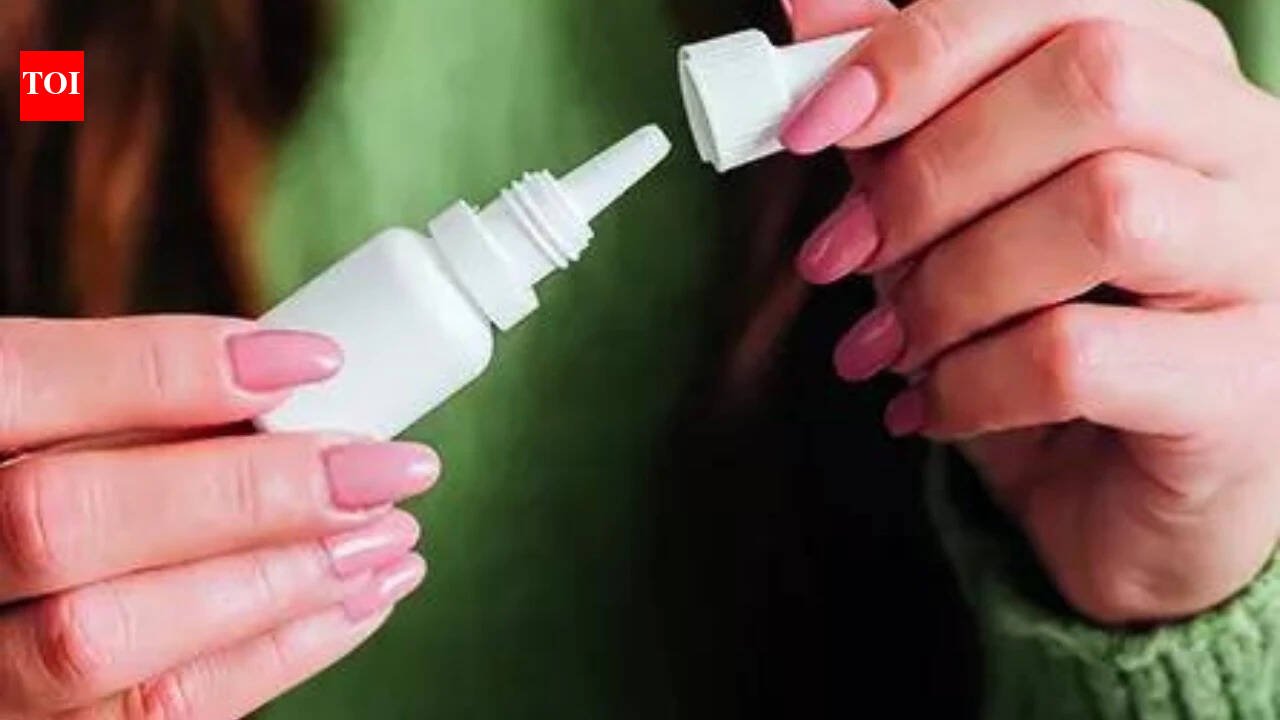
NEW DELHI: Flagging that certain yet-to-be-approved dry eye relief drops are being sold in the market, the central drugs regulator has asked states to cancel any permissions granted for these products and take action against manufacturers.In a communication to drug controllers in states and UTs, the Central Drugs Standard Control Organisation (CDSCO) said that ‘sodium hyaluronate eye drops 0.3%’ is being manufactured and sold without mandatory clearance from the central authority.Officials said the formulation falls under the category of “new drug”, meaning it must be approved before it can be sold in the market. Without approval, its safety and effectiveness are not verified.These eye drops are commonly used to treat dry eyes and irritation, acting like artificial tears to keep the eyes moist and reduce discomfort. But experts warn that using unapproved products – even for routine conditions – can lead to complications.For the public, the CDSCO’s advise was clear – use eye drops only on a doctor’s advice and buy medicines from reliable sources. What may seem like a simple remedy can carry risks if it has not been properly cleared.“Using unapproved eye drops for dry eyes is risky as they can worsen irritation, increase dryness and raise the risk of infections like conjunctivitis. Since dry eyes already have a compromised surface, untested products can cause more harm than benefit. Even approved eye drops should be discarded a month after opening to avoid contamination,” said Dr Namrata Sharma, Prof in ophthalmology at Dr Rajendra Prasad Centre for Ophthalmic Sciences, AIIMS-Delhi.“Unapproved eye drops are unsafe as their quality, sterility and formulation are not assured. Poor manufacturing can lead to infections and reduced effectiveness due to improper formulation. Patients should use only doctor-prescribed products from reliable companies,” said Dr Ashu Agarwal, ophthalmologist, Apollo Hospital, Delhi.


Source link

‘I’ve stopped drinking’: Star India player’s honest admission before IPL 2026 | Cricket News


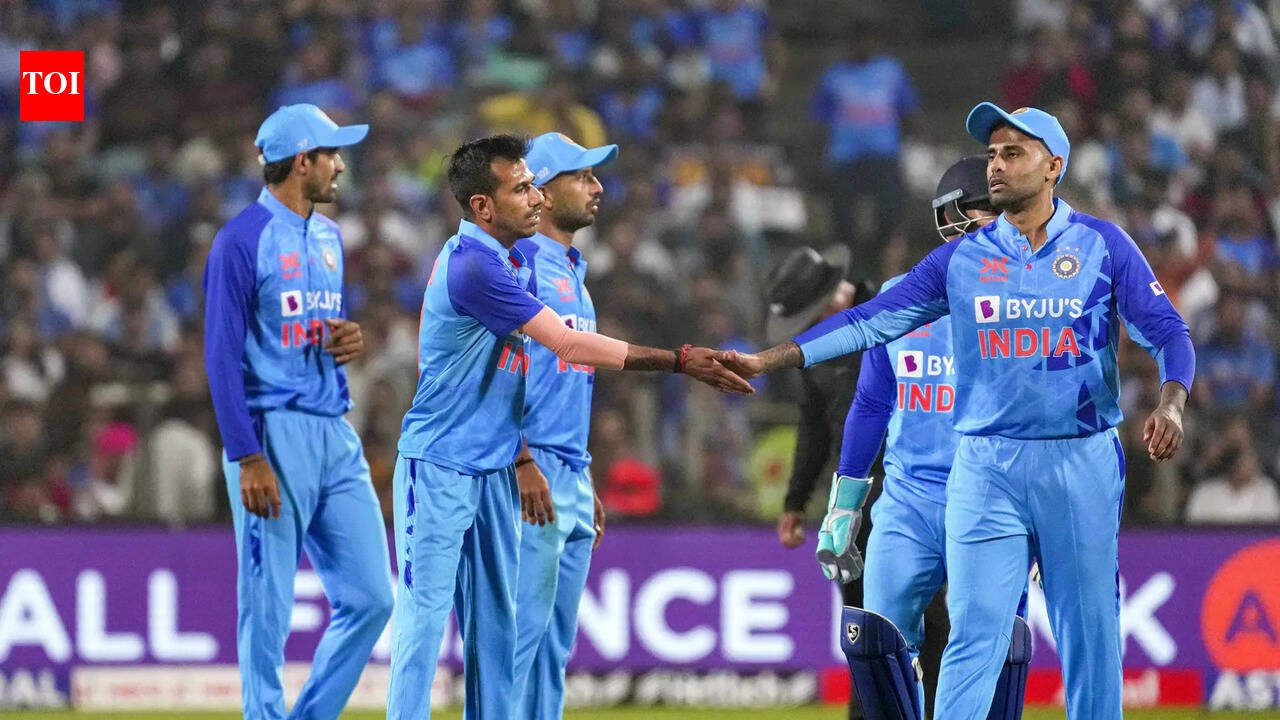
Yuzvendra Chahal celebrates with teammates (PTI Photo/Shashank Parade)(

Yuzvendra Chahal is heading into IPL 2026 with a renewed mindset and a strong focus on fitness, hoping to turn a difficult phase in his career into a fresh start with Punjab Kings. The 35-year-old leg-spinner, who has not featured for India since 2023, revealed a major personal change that he believes will help him extend his career and perform at a higher level.Speaking to AB de Villiers on his YouTube show, Chahal shared that he has completely given up alcohol. “This year, my mind has said that I will take care of my body first. And I have some good news for you: I stopped drinking alcohol.

Watch

IPL 2026 should be audition for the next India T20I captain

“It’s been more than six months. I am 35 now. I want to be more active, and I want to give 150 per cent for my team. As a senior bowler, if I go to the IPL, I want people to see me and think ‘we have to learn something from him’,” said Chahal.

Poll

Do you believe Chahal can overcome his past setbacks and reclaim his spot on the Indian team?

The decision comes after a challenging couple of years, both professionally and personally. Once on the verge of becoming India’s first bowler to reach 100 T20I wickets, Chahal remains stuck on 96, with Arshdeep Singh, Jasprit Bumrah and Hardik Pandya having since crossed the milestone.Off the field too, Chahal endured a tough period, including a high-profile divorce from Dhanashree Verma last year after months of public attention.Despite those setbacks, he played a key role in Punjab Kings’ strong IPL 2025 campaign. Featuring in 14 matches, he picked up 16 wickets at an economy rate of 9.56 and became the league’s all-time leading wicket-taker during the season. Punjab, led by Shreyas Iyer, reached the final but fell short against Royal Challengers Bengaluru.Chahal admitted the defeat still lingers, pointing to the absence of all-rounder Marco Jansen as a crucial factor. “In the final, we missed Jansen as he was not there. If he were there, we would have definitely won the championship,” Chahal said.The leg-spinner also revealed he was not fully fit during the business end of the tournament. “I was a bit disappointed with myself. After the KKR game, I had a rib fracture, and later, my knuckle got fractured. So in the semifinal and final, I wasn’t able to bowl my proper leg-spin. This year, I want to take care of my body first,” he said.With 221 wickets in 174 matches, Chahal remains the IPL’s highest wicket-taker and will once again be central to Punjab’s title ambitions. As the franchise prepares to begin its IPL 2026 campaign on March 31 against Gujarat Titans, Chahal’s renewed discipline and focus could prove decisive in their pursuit of a maiden title.

Banner Insert


Source link