Breaking News
Assam assembly elections 2026: From eviction drives to NRC debate, issues set to dominate state poll campaign | India News


Assam assembly elections 2026: From eviction drives to NRC debate, issues set to dominate state poll campaign

With the schedule for the Assam Assembly elections now announced, a range of key issues like eviction, infiltration, and development project is expected to dominate the campaign rhetoric of political parties in the run-up to the polls.The 126-member Assam Assembly currently has 64 legislators from the BJP. Among its allies, the Asom Gana Parishad (AGP) has nine MLAs, the United People’s Party Liberal (UPPL) seven, and the Bodoland People’s Front (BPF) three.In the opposition ranks, the Congress has 26 MLAs, followed by the All India United Democratic Front (AIUDF) with 15. The CPI(M) and an Independent each have one member in the Assembly.Eviction: The state government’s policy of evicting alleged encroachers, many of whom belong to the Muslim community, is expected to emerge as a key campaign issue, with both the ruling alliance and the opposition likely to raise it during the election campaign.Another major point of contention is the government’s crackdown on child marriage, which has led to numerous arrests and cases being filed under the Protection of Children from Sexual Offences (POCSO) Act. The ruling alliance is expected to project the measures as a significant step toward eliminating the social menace, while the opposition is likely to accuse the government of disproportionately targeting the Muslim community, as cited by PTI.The ruling alliance is also expected to highlight its efforts to reclaim forest land, satra and temple property, and other government land from alleged encroachment. The opposition, however, is likely to frame the drive as a humanitarian crisis, pointing to demolitions that have left many people homeless and forced to live on the streets, with some also losing their livelihoods.Infiltration: Illegal immigration is another long-standing issue in Assam that is likely to feature prominently in the election campaign. The matter has been central to state politics for decades and was a key factor behind the Assam Agitation and the subsequent signing of the Assam Accord, as cited by PTI.The BJP-led government maintains that it has taken steps to implement the provisions of the Accord. The opposition, however, is expected to highlight what it calls the government’s failure to fulfil promises of providing constitutional, legislative and administrative safeguards to protect and promote the cultural, social and linguistic identity of indigenous Assamese people.Two key aspects linked to the immigration debate, the updating of the National Register of Citizens (NRC) and the Citizenship Amendment Act (CAA), are also likely to feature prominently during the campaign. The ruling party is expected to argue that opposition to the CAA was misplaced, noting that only a limited number of Hindus from Bangladesh have applied for citizenship under the law.Development projects/welfare schemes: The state government is expected to highlight major development initiatives in Assam, particularly infrastructure projects in roads, railways, airports and waterways. It is also likely to showcase investments such as the Tata semiconductor unit and other agreements signed during the second edition of the ‘Advantage Assam’ business summit. The opposition, however, is expected to argue that development has been concentrated in select areas and has come at the cost of indigenous communities, alleging that their land has been acquired for such projects.The BJP and its allies are also likely to emphasise the state government’s welfare schemes for women, including the monthly financial assistance of Rs 1,250, support for women entrepreneurs and various health initiatives. With women making up nearly half of the electorate, the opposition is expected to counter by claiming that crimes against women have not declined and that the distribution of benefits has been uneven.The ruling alliance will also highlight its recruitment drive across government departments, which it says has resulted in the appointment of more than 1.6 lakh youths. In addition, it is likely to focus on welfare measures for tea garden workers, a sizeable voting bloc that traditionally supported the Congress but has largely shifted its allegiance to the BJP since 2016.Zubeen Garg’s death: Another issue that drew significant attention was the death of popular singer Zubeen Garg in Singapore in September 2025, followed by demands for justice in connection with his alleged murder. Opposition parties are expected to accuse the BJP-led government of lacking commitment to ensuring justice in the case. The ruling dispensation, however, is likely to point out that it constituted a Special Investigation Team (SIT), arrested the accused, and that the matter is currently before the court.


Source link

5 sixes, 9 fours! KKR young gun unleashes carnage with blistering ton ahead of IPL 2026


Just days before IPL 2026 gets underway, Kolkata Knight Riders (KKR) have found themselves buzzing with excitement – thanks to a stunning performance from their 21-year-old rising star, Angkrish Raghuvanshi.

Angkrish Raghuvanshi sends strong statement to opposition ahead of IPL 2026

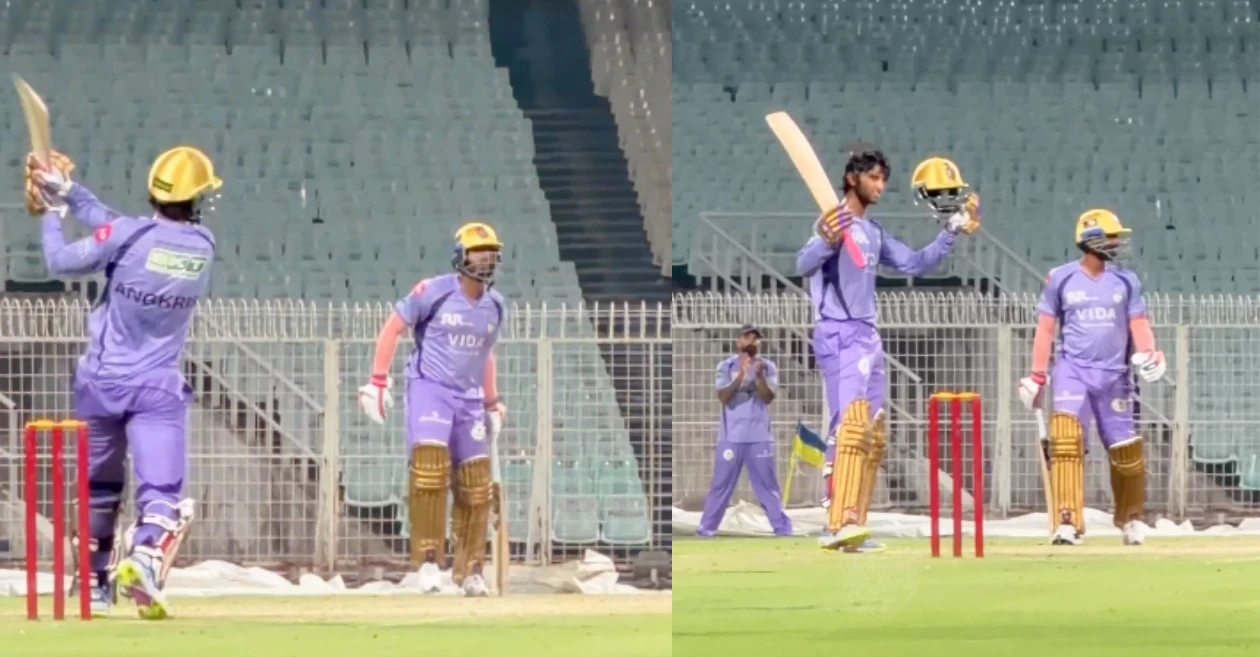
In an intra-squad practice match at Eden Gardens, Raghuvanshi delivered a sensational unbeaten century that has not only caught the attention of the team management but also sent a warning to rival franchises.

Batting at his preferred No. 3 position, Raghuvanshi showcased a perfect blend of composure and aggression. His innings of 103* off just 55 balls was nothing short of spectacular, featuring nine fours and five massive sixes. It wasn’t just the numbers that impressed—it was the way he built the innings.

Instead of going all-out from the start, Raghuvanshi took his time to settle in, displaying maturity well beyond his age. He reached his half-century in 29 balls, carefully pacing his innings before shifting gears. Once set, he unleashed a flurry of attacking strokes, dominating the bowlers and taking complete control of the game.

The highlight of his innings came during a brutal over against express pacer Umran Malik, where Raghuvanshi smashed 23 runs. It was a defining moment – one that underlined his confidence and ability to take on even the fastest bowlers in the competition.

Also READ: IPL 2026 – KKR head coach Abhishek Nayar gives big update on Matheesha Pathirana’s availability

Selection headache for KKR as young star pushes for spot

While Raghuvanshi’s innings has given KKR a major boost, it has also created a tricky situation for the team management. With a squad packed with experienced names and overseas stars, finding a place for the young batter in the playing XI won’t be straightforward.

The No. 3 position, where Raghuvanshi looks most comfortable, is already a highly contested spot. Players like Finn Allen, Tim Seifert, Cameron Green and even Sunil Narine offer multiple options in the top and middle order. Add to that captain Ajinkya Rahane’s presence at the top, and the selection puzzle becomes even more complex.

However, Raghuvanshi’s willingness to adapt could work in his favour. He has previously expressed that he is ready to bat in any position for the team – a flexibility that could make him a valuable asset in different match situations.

For KKR, this is a good problem to have. Their middle order struggled for consistency last season, and Raghuvanshi’s ability to anchor the innings while also accelerating when needed could be exactly what the team has been missing.

The practice game also saw strong performances from others. Rinku Singh continued his fine touch with a quick 45, while Seifert added valuable runs. On the bowling side, Kartik Tyagi impressed with three wickets, and Blessing Muzarabani chipped in as well – offering positive signs for the team’s balance.

As KKR prepare to kick off their campaign against Mumbai Indians (MI) on March 29, the spotlight will firmly be on team selection. Whether Raghuvanshi makes the starting XI or not, one thing is clear – he has made a statement that cannot be ignored.

Also READ: Will Preity Zinta’s Punjab Kings punish Lockie Ferguson for missing early part of IPL 2026?


Source link

IPL MVPs since 2008: From Sachin Tendulkar to Sunil Narine, how the system works | Cricket News


IPL MVPs since 2008: From Sachin Tendulkar to Sunil Narine, how the system works
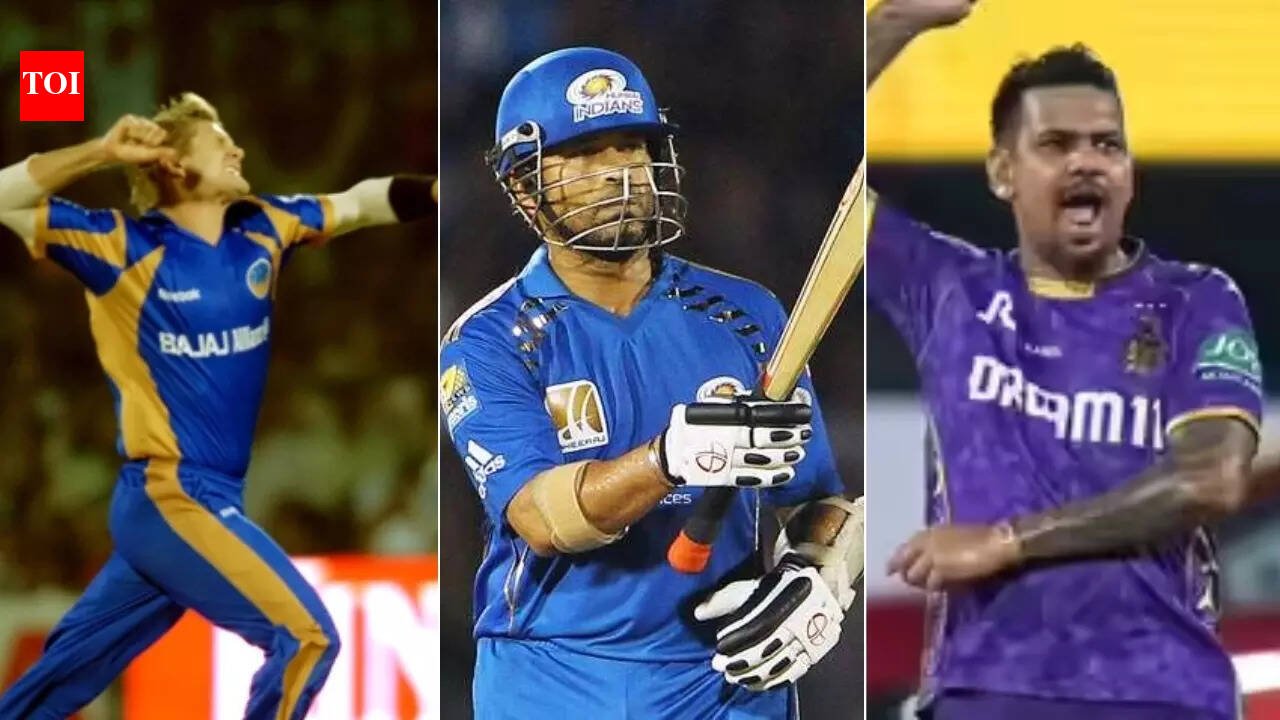
Shane Watson, Sachin Tendulkar, Sunil Narine

The Indian Premier League (IPL) 2026 season is scheduled to begin on March 28, with defending champions Royal Challengers Bengaluru (RCB) taking on Sunrisers Hyderabad (SRH) at the M Chinnaswamy Stadium.

How is the Most Valuable Player selected?

The league’s Most Valuable Player (MVP) is decided through a points system that measures a player’s overall contribution during the season. Players do not earn points for runs directly. Instead, each four earns 2.5 points and each six fetches 3.5 points. Bowlers receive 3.5 points per wicket and one point for every dot ball. Fielding efforts are also counted, with 2.5 points awarded for each catch and stumping. The player with the highest points total at the end of the season is named MVP.The concept was introduced in 2017, replacing the earlier Player of the Tournament award. Under this system, performance across batting, bowling and fielding is factored into a single points tally.The highest points recorded in a single IPL season stands at 450, achieved by Sunil Narine in the 2024 edition.Shane Watson was the first recipient of the Player of the Tournament award in 2008, playing a key role in Rajasthan Royals’ title win. He won it again in 2013 with the same franchise, becoming the first player to claim the honour twice. That season also marked the introduction of the points-based system. He remains one of three players to have won the award more than once.Among others, Kolkata Knight Riders players Andre Russell and Sunil Narine have won the award multiple times, with Narine holding the record with three wins in 2012, 2018 and 2024. Players such as Adam Gilchrist, Sachin Tendulkar, Chris Gayle, Glenn Maxwell, Virat Kohli, Ben Stokes, Jofra Archer, Harshal Patel, Jos Buttler and Shubman Gill have each won it once.Suryakumar Yadav of Mumbai Indians was named the Player of the Tournament (MVP) in the 2025 season.

Full list of MVPs from IPL 2008-2025

Year Player Team
2008 Shane Watson Rajasthan Royals
2009 Adam Gilchrist Deccan Chargers
2010 Sachin Tendulkar Mumbai Indians
2011 Chris Gayle Royal Challengers Bangalore
2012 Sunil Narine Kolkata Knight Riders
2013 Shane Watson Rajasthan Royals
2014 Glenn Maxwell Punjab Kings
2015 Andre Russell Kolkata Knight Riders
2016 Virat Kohli Royal Challengers Bangalore
2017 Ben Stokes Rising Pune Supergiant
2018 Sunil Narine Kolkata Knight Riders
2019 Andre Russell Kolkata Knight Riders
2020 Jofra Archer Rajasthan Royals
2021 Harshal Patel Royal Challengers Bangalore
2022 Jos Buttler Rajasthan Royals
2023 Shubman Gill Gujarat Titans
2024 Sunil Narine Kolkata Knight Riders
2025 Surya Kumar Yadav Mumbai Indians

Banner Insert


Source link

‘Condemn attack on critical infrastructure’: PM Modi speaks to Iran president, says ‘shipping lanes must stay open’ | India News


'Condemn attack on critical infrastructure': PM Modi speaks to Iran president, says 'shipping lanes must stay open'

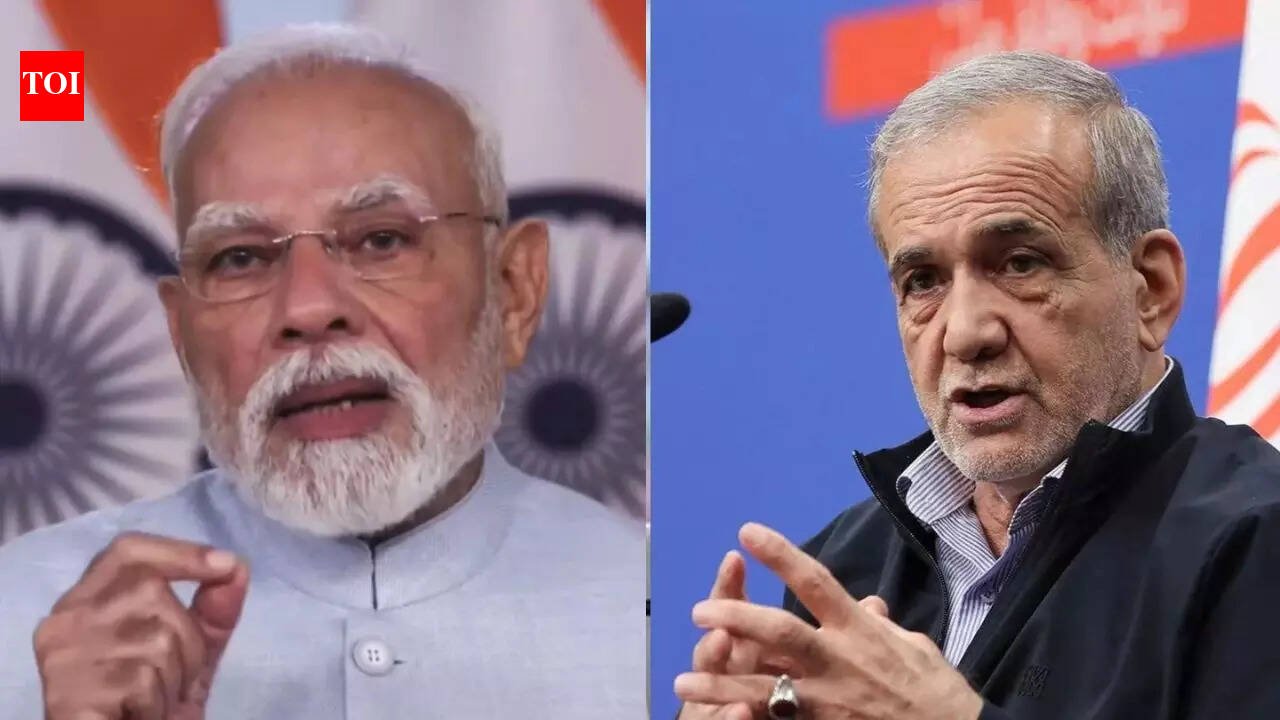
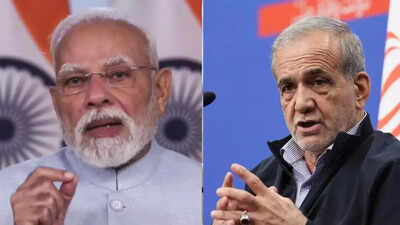
NEW DELHI: Prime Minister Narendra Modi on Saturday spoke with Iranian President Masoud Pezeshkian, conveying greetings on Eid al-Fitr and Nowruz amid the ongoing Middle East crisis.Sharing a post on X, Modi said, “we expressed hope that this festive season brings peace, stability and prosperity to West Asia.”“Condemned attacks on critical infrastructure in the region, which threaten regional stability and disrupt global supply chains. Reiterated the importance of safeguarding freedom of navigation and ensuring that shipping lanes remain open and secure,” he added.The Prime Minister also appreciated Tehran’s support for Indians in the country, saying, “Appreciated Iran’s continued support for the safety and security of Indian nationals in Iran.”Earlier in the day, United States and Israel carried out fresh strikes on Iran’s Natanz uranium-enrichment facility on Saturday, according to Iranian state-linked media. Tasnim news agency reported that the site was targeted in the joint attack, but there were no immediate signs of radioactive leakage and nearby residents were not at risk. Iran had earlier reported strikes on the same facility in previous rounds of US-Israeli operations, underlining its strategic importance.This marked the second telephonic conversation between the two leaders since the conflict escalated on February 28. Earlier, on March 12, Prime Minister had spoken to Pezeshkian and expressed “deep concern” over the rising tensions.“Had a conversation with Iranian President Masoud Pezeshkian, to discuss the serious situation in the region. Expressed deep concern over the escalation of tensions and the loss of civilian lives as well as damage to civilian infrastructure,” he had posted on X.


Source link

Salman Khan led ‘Maatrubhumi’ delayed as Prashant Tamang’s death impacts key film scenes – Reports |


Salman Khan’s eagerly awaited project, ‘Maatrubhumi’, has hit a snag, grappling with unexpected production obstacles. The tragic passing of actor-singer Prashant Tamang, who was set to play a pivotal villain, has introduced significant artistic and logistical setbacks. The team is currently contemplating various solutions, including recasting or deploying AI technology to finish his pivotal scenes.

Salman Khan’s ‘Maatrubhumi’, earlier titled ‘Battle of Galwan’, has been delayed after fresh production hurdles hit the film. According to reports, the project was initially planned for an early April release, but script changes and the death of actor-singer Prashant Tamang forced the team to rework the schedule. Tamang, winner of ‘Indian Idol 3’, was reportedly cast as the main antagonist and had already shot several important portions. His death in January has now left the makers facing major creative and logistical challenges.

‘Maatrubhumi’ release delay and Prashant Tamang’s death

According to India Today, Tamang had already shot several key scenes, but a few crucial portions were still pending, the report said. “The team had a couple of planned schedules where Prashant had to shoot some really key scenes. With him gone, the team is absolutely in crisis,” the report said, citing a source close to the film. The makers initially explored reshooting his scenes, but that option now looks difficult both practically and financially.

Watch

Indian Idol fame Prashant Tamang passes away at 43, tributes pour in nationwide

The report further said, “Close-ups could still be managed, but he was also part of extensive action sequences. It would not only be financially unviable but also a logistical nightmare.” The team is now weighing other options to complete the film.

Salman Khan film ‘Maatrubhumi’ production challenges

Salman Khan’s date availability and the continuity of his look have added to the challenge. The makers are considering either bringing in another actor to complete the role, like Paresh Rawal replacing Rishi Kapoor in ‘Sharmaji Namkeen’, or using AI and VFX to recreate Tamang in the remaining scenes. That step, however, would require his family’s approval.“A decision will be taken by the end of this month as the film needs to wrap up and begin post-production,” the report added. The film does not yet have a new release date, though it could target an Independence Day window.Directed by Apoorva Lakhia, ‘Maatrubhumi’ also stars Chitrangada Singh. The film was initially linked to the 2020 Indo-China Galwan clash and now carries the tagline, “May War Rest In Peace.”


Source link

Jasjeet Sekhon joins Google DeepMind as Chief Strategy Officer; gets a welcome note from CEO Demis Hassabis; says I feel a moral obligation to …


Jasjeet Sekhon joins Google DeepMind as Chief Strategy Officer; gets a welcome note from CEO Demis Hassabis; says I feel a moral obligation to ...

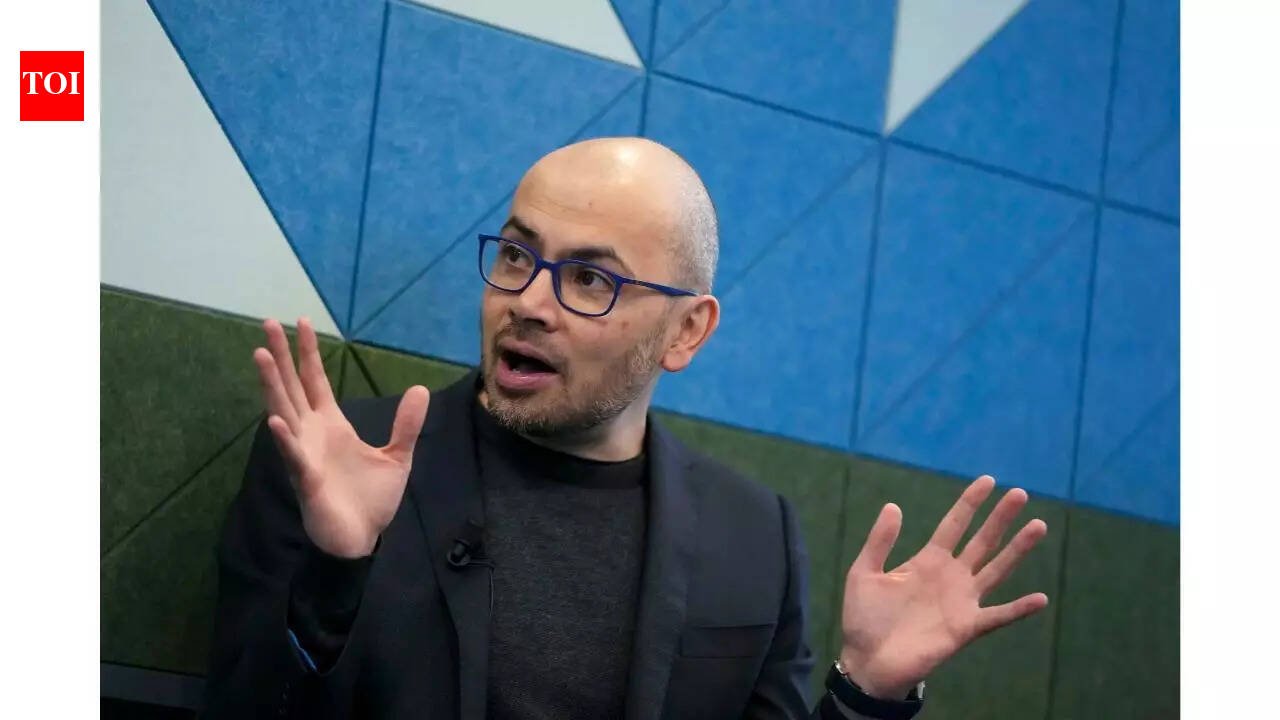
As Google takes on ChatGPT-maker OpenAI and Anthropic in the artificial intelligence market, company’s AI unit, DeepMind, has hired Jasjeet Sekhon as its new chief strategy officer. Sekhon will work directly with Google DeepMind CEO Demis Hassabis to drive the company’s AI innovation and R&D efforts. He has previously held professorships at some of the world’s top universities, including Harvard; University of California, Berkeley; and most recently as a data and political science professor at Yale. Sekhon announced he is joining Google DeepMind in posts on X, formerly Twitter and LinkedIn. “I’m excited to share that I will be joining @demishassabis and @GoogleDeepMind as Chief Strategy Officer! I feel a moral obligation to shepherd AGI into the world responsibly, benefiting everyone. I am looking forward to doing this with the team at DeepMind,” he wrote. Hassabis replied to his post, saying: Thrilled to welcome Jas Sekhon to @GoogleDeepMind as Chief Strategy Officer! The path to AGI requires exceptional thoughtfulness and foresight – Jas’ incredible experience as former Chief Scientist & Head of AI at Bridgewater makes him uniquely suited to advise us on the mission.

Jasjeet Sekhon’s ‘joining announcement’ on LinkedIn

I am excited to announce that I am joining Google DeepMind as Chief Strategy Officer, partnering directly with Demis Hassabis to lead cross-cutting strategic initiatives spanning research, commercialisation, and policy.AGI will be a world-changing technology without precedent, accelerating science, medicine, and human productivity in profound ways. I am committed to shepherding this technology responsibly to benefit everyone. I am joining Google DeepMind because I believe it is the frontier lab best positioned to develop AGI safely to empower humans.In 2023, I co-founded AIA Labs at Bridgewater alongside co-CIO Greg Jensen. I was drawn to developing AI for markets because markets are the ultimate game: they cannot be solved, and their benchmarks cannot be saturated. Today, AIA Labs manages billions of dollars and generates alpha in global markets. Being Bridgewater’s Chief Scientist and Head of AI has been a privilege, and I am honored to join the Bridgewater board.I am deeply grateful to everyone at Bridgewater, Yale, Berkeley, and people across the AI community who have made the last several years so meaningful. I look forward to my next chapter at Google DeepMind.”Google DeepMind co-founder and CEO Demis Hassabis’ welcome note for Jasjeet SekhonHassabis welcomed Jasjeet Sekhon in a LinkedIn post. He wrote, “We started DeepMind back in 2010 because even then we believed Artificial General Intelligence (AGI) would be the most transformative technology ever invented. It has the potential to be the ultimate tool to accelerate science and medicine, and improve productivity. The impact will be profound, but the challenges and complexities are also enormous.Thoughtfulness and foresight will be critical as we seek to steward this technology safely into the world to benefit everyone. As part of our contribution to that effort, I’m thrilled to welcome Jasjeet Sekhon to Google DeepMind as Chief Strategy Officer to partner with me on strategy cutting across research, commercialisation, policy and more. Jas is uniquely experienced for this role, having served as Chief Scientist and Head of AI at Bridgewater Associates, where he now joins the board.Super excited to be working with Jas to accelerate this important work at such a critical time for this technology.”


Source link

BCCI confirms date, match time and venue for Ireland vs India T20I series 


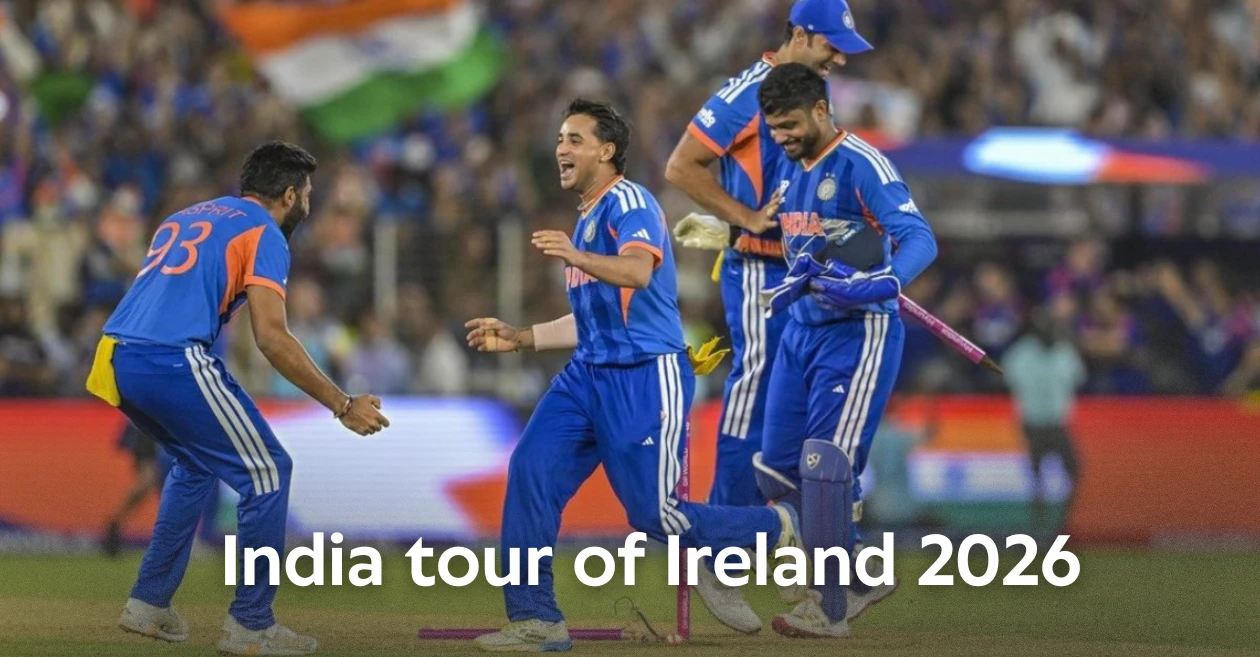
The Board of Control for Cricket in India (BCCI) has officially confirmed the schedule for India’s upcoming tour of Ireland, bringing clarity to what promises to be an exciting short series in June. The reigning T20 world champions will play a two-match T20I series in Belfast, marking their return to the Northern Irish city after nearly two decades.

BCCI confirms Team India’s T20I series schedule for Ireland tour

The announcement came from BCCI Secretary Devajit Saikia on Saturday, following Cricket Ireland’s earlier confirmation of their summer calendar. Both matches will be played at the same venue in Belfast, with identical timings – making it a compact yet high-intensity series.

The fixtures are scheduled as follows:

  • 1st T20I: June 26, 2026 (Friday) – 7:30 pm IST / 3:00 pm local time
  • 2nd T20I: June 28, 2026 (Sunday) – 7:30 pm IST / 3:00 pm local time

What makes this tour particularly special is India’s return to Belfast after 19 years. While India have toured Ireland multiple times in recent years – specifically in 2018, 2022 and 2023 – all those matches were played in Malahide near Dublin. This time, Belfast gets its moment in the spotlight, adding a fresh dimension to the cricketing relationship between the two nations.

“Team India (Senior Men) will travel to Ireland for a two-match T20I series in June 2026. Having toured Ireland three times in the past eight years (2018, 2022 and 2023). This tour will mark India’s return to Belfast for the first time since 2007,” the BCCI stated in its official release.

For fans in Northern Ireland, this is a rare opportunity to witness top-tier international cricket, especially featuring a team as high-profile as India.

Also WATCH: Shubman Gill trolls Abhishek Sharma and SRH in fun segment with Sahiba Bali

Crucial series for both India and Ireland amid packed international calendar

Beyond the schedule, the timing of this series makes it significant for both teams – but for very different reasons.

For India, this will be their first T20I assignment after lifting the T20 World Cup 2026 title. Fresh off that triumph, the team will look to maintain momentum and fine-tune combinations ahead of a bigger challenge – a full-fledged white-ball tour of England starting in July. In many ways, the Ireland series acts as a bridge between tournaments, offering players a chance to stay in rhythm and experiment with strategies.

India’s calendar leading up to this series is already packed. Before heading to Ireland, they will host Afghanistan for a one-off Test and a three-match ODI series, which concludes on June 20. Shortly after the Ireland tour, the team will travel to England for a demanding series featuring five T20Is and three ODIs across multiple venues, including Lord;s.

For Ireland, however, the series represents something deeper – a fresh start. The team is currently in a transition phase following a disappointing T20 World Cup campaign, where they exited in the group stage with just one win. Long-time T20I captain Paul Stirling has stepped down from leadership, opening the door for a new captain to take charge.

On the field, Ireland’s cricketing calendar is also expanding rapidly. The India series is part of a busy home summer that includes a one-off Test against New Zealand and a five-match ODI series against Afghanistan later in August. Additionally, the Irish side is strengthening its global presence with tours to Nepal and the UAE, along with a historic multi-format tour of Pakistan scheduled for early 2027.

Also READ: IPL 2026 – BCCI announces schedule for the first phase; RCB to take on SRH in the opening contest


Source link

Oil at $175 a barrel? United Airlines CEO paints grim picture, to cut more flights


Oil at $175 a barrel? United Airlines CEO paints grim picture, to cut more flights

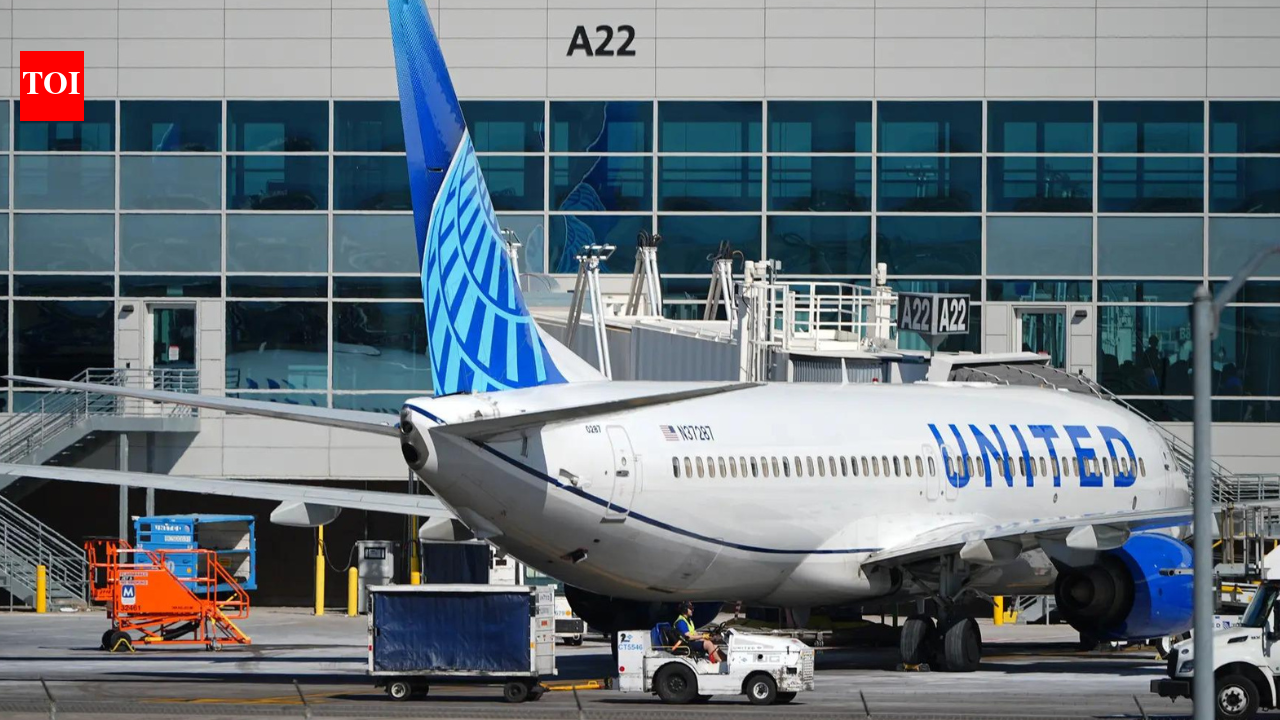
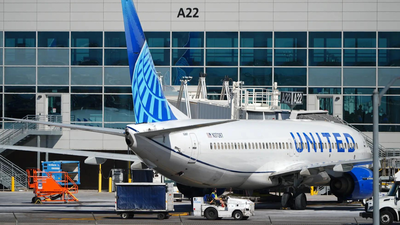
United Airlines will cut more unprofitable flights over the next two quarters as it braces for a prolonged period of elevated jet fuel prices linked to the war involving Iran. However, strong travel demand continues to allow US carriers to raise fares.In a staff memo on Friday, chief executive Scott Kirby said the airline is preparing for oil prices to rise as high as $175 a barrel and remain above $100 through the end of 2027, as cited by Reuters.At those levels, United’s annual fuel bill could increase by about $11 billion, more than twice the profit the airline earned in its best year on record, he said.US airlines have so far managed to push through fare increases, supported by resilient travel demand and tighter capacity, even as the war has triggered a fresh fuel price shock for the industry.“There’s a good chance it won’t be that bad,” Kirby wrote of the airline’s fuel assumptions. “But… there isn’t much downside for us in preparing for that outcome.”The airlines had already begun trimming less profitable flights, including some midweek, Saturday and overnight services.Kirby said the airline would cancel about three percentage points of off-peak flying in the second and third quarters, targeting routes and time periods with weaker demand. United will also remove about one percentage point of capacity from its Chicago O’Hare hub and keep services to Tel Aviv and Dubai suspended, bringing the total reduction to roughly five percentage points of its planned capacity for the year.Kirby said the airline currently expects to restore its full schedule in the fall. The latest cuts build on his comments earlier this week that United would rather leave some demand unmet than continue operating routes that lose money if fuel prices remain high.Jet fuel prices have nearly doubled since late February, driving up costs across the airline industry and disrupting global flight patterns through reroutings and airspace restrictions.Major US airlines say strong travel demand is giving them room to raise fares, helping offset the impact of higher fuel costs. Capacity cuts such as those announced by United are also expected to support the industry’s pricing power.Rival Delta Air Lines, which raised its first-quarter revenue forecast this week, has said it also has flexibility to trim capacity if fuel prices remain elevated.US carriers are particularly exposed to fuel price swings because most do not hedge their fuel costs. In contrast, some European and Asian airlines use hedging strategies to cushion price shocks. Instead, US airlines have been relying on fare increases and tighter capacity to recover part of the additional expense.


Source link

Access Denied


Access Denied

You don’t have permission to access “http://www.ndtv.com/science/how-python-blood-molecule-could-help-reduce-weight-scientists-say-11247200” on this server.

Reference #18.c7f5d217.1774090001.acc14400

https://errors.edgesuite.net/18.c7f5d217.1774090001.acc14400


Source link

Has oil crisis Trumped US? Inside the war-time paradox of fighting Iran and funding its crude


Has oil crisis Trumped US? Inside the war-time paradox of fighting Iran and funding its crude

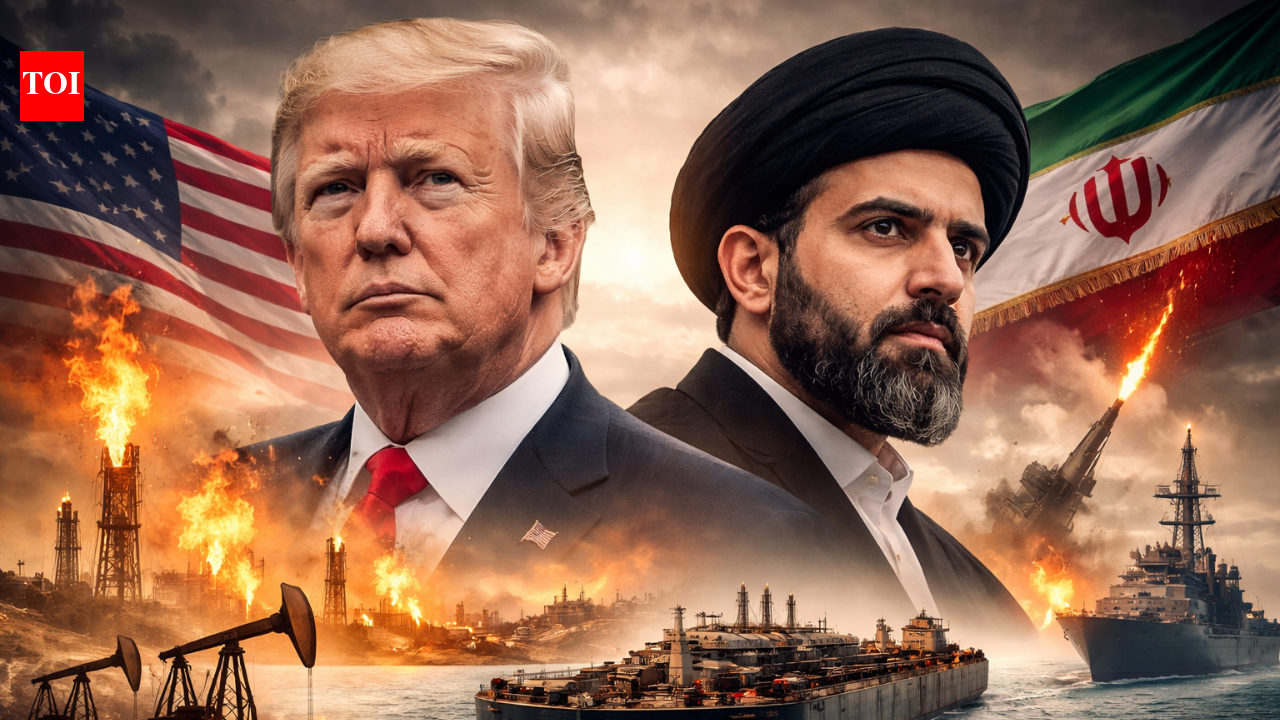
The United States is fighting Iran on the battlefield, and turning to its oil to keep the global economy afloat. As war in the Middle East chokes supplies through the Strait of Hormuz and sends prices soaring, the Donald Trump administration has begun easing restrictions on Iranian crude, allowing allies to buy the very resource that funds Tehran. For a president who came to power vowing to avoid “stupid” wars, the moment is especially fraught, a conflict he helped set in motion now risks slipping beyond his control, both on the battlefield and in its economic fallout.The move lays bare a stark war-time paradox — in trying to weaken Iran, Washington is being forced to rely on it.Though the move has been framed as “very temporary”, Mike Waltz, speaking at a CNN town hall, defended it as necessary to counter Iran’s strategy of driving up global energy prices.Even the administration’s messaging has been mixed — de-escalation in rhetoric, escalation in action. Trump said he was considering “winding down” military operations in the Middle East, even as the United States deployed three more amphibious assault ships and roughly 2,500 additional Marines to the region. Moreover, it attacked Iran’s nuclear facility Natanz again, even as Tehran has clearly warned against any attacks on its energy infrastructure, else bear oil shocks. Then what explains this sanctions shift?

World’s energy lifeline hit

Three weeks into the war with Iran, the United States is confronting a supply disruption of a scale few policymakers had anticipated. The near-total shutdown of the Strait of Hormuz has choked one of the world’s most critical oil arteries, sending shockwaves through global markets.The crisis has been compounded by direct attacks on critical energy infrastructure across the region. Strikes on Iran’s South Pars gasfield, part of the world’s largest natural gas reserve, were followed by missile attacks on Qatar’s Ras Laffan LNG facilities, causing extensive damage to one of the world’s biggest gas export hubs. Additional targets have included refineries in Saudi Arabia, Kuwait, and the UAE, raising fears of a broader energy war. With some of these facilities expected to take three to five years to fully repair, the disruption is no longer temporary — it threatens to lock in a prolonged global supply crunch. Brent crude, the international benchmark, has surged to around $106 per barrel, up sharply from roughly $70 before the conflict, underscoring how rapidly the crisis has escalated and how tightly global prices are tied to Middle East stability. Inside the administration of Donald Trump, officials are scrambling for solutions that can meaningfully ease supply pressures. A newly announced pause in sanctions applies only to Iranian oil already loaded on ships and is set to expire by April 19, limiting its immediate impact. Crucially, the move does not increase actual production, a central factor behind soaring prices, and much of Iran’s oil was already finding its way to buyers despite sanctions. That reality mirrors earlier steps, including a temporary pause on restrictions on some Russian shipments, which critics said offered only modest relief while exposing the limits of Washington’s options.

Policy levers pulled with little effect

Washington has already deployed nearly every conventional mechanism to cushion the blow. Hundreds of millions of barrels have been released from strategic reserves, sanctions on Russian oil have been partially eased, and domestic crude flows have been accelerated in an effort to boost supply. Yet these measures have barely dented rising prices. Global benchmarks continue to surge, and US consumers are feeling the impact at the pump. Officials privately acknowledge that the tools at their disposal are either insufficient in scale or too slow to counter the immediacy of the crisis, exposing the limits of state intervention in a tightly wound global oil market. The strain is also evident in Washington’s shifting diplomatic posture. After initially insisting the US did not need Nato’s help to secure the Strait of Hormuz, Donald Trump publicly urged allies to “step up” and help reopen the vital route. The appeal has met a muted response, with many countries reluctant to be drawn into a conflict they did not start, further complicating efforts to stabilize the situation and underlining the limits of US leverage even among its partners.Trump has criticized Nato countries as “cowards” for refusing to assist while insisting the campaign is unfolding according to plan, even declaring the battle “militarily won.” Yet those claims sit uneasily against the reality of a defiant Iran continuing to choke off Gulf energy flows and launch missile strikes across the region, underscoring the widening gap between rhetoric and conditions on the ground.

Finally, turning to enemy’s oil

With options dwindling, the administration has turned to a controversial stopgap: allowing allies to purchase Iranian oil already at sea. The move is designed to inject roughly 140 million barrels into a market starved of supply, offering short-term relief even as the broader conflict rages on. Officials argue that this oil would have likely been sold regardless, particularly to countries willing to bypass sanctions. Redirecting those flows to US allies, they contend, helps stabilize markets without fundamentally altering the pressure campaign against Tehran. Still, the decision lays bare an uncomfortable truth, that immediate economic needs are forcing Washington into choices that cut against its own strategic posture.

But is it enough to solve the energy crisis?

Even with Iranian barrels entering the market, the relief is expected to be fleeting. The additional supply amounts to barely a day and a half of global consumption, underscoring how limited the impact will be if disruptions persist. Energy experts warn that without a reopening of key shipping routes, the imbalance between supply and demand will continue to widen. That leaves the administration facing a stark choice: find a way to restore passage through the Strait of Hormuz or brace for prolonged economic fallout. For now, officials appear to be managing rather than resolving the crisis, navigating a war where the battlefield extends far beyond missiles and troops, deep into the fragile mechanics of the global economy.

Will the war end?

Beyond the immediate energy crisis, the conflict is pushing Donald Trump toward a deeper strategic crossroads. Analysts say the administration now faces a narrowing set of choices under what it has called Operation Epic Fury, with no clear indication of which path it is prepared to take, Reuters reported. One option is escalation — intensifying the offensive, potentially targeting critical infrastructure such as Iran’s oil hub at Kharg Island or expanding the US military footprint along Iran’s coast to neutralize missile threats. But such a move risks drawing Washington into a prolonged conflict, one that could face significant resistance from an American public wary of another long war in the Middle East. The alternative is to claim victory and scale back operations. Yet that, too, carries risks. It could leave Gulf allies exposed to a weakened but still defiant Iran, capable of disrupting shipping lanes and projecting power across the region. With diplomacy stalled and neither side showing signs of backing down, the administration is left navigating a conflict where every option deepens the very uncertainty it is trying to contain.


Source link