Breaking News
War-hit schedule sees Iran’s Tractor travel to Saudi for ACL quarterfinal berth | Football News


War-hit schedule sees Iran's Tractor travel to Saudi for ACL quarterfinal berth

The Asian Football Confederation (AFC) has confirmed revised plans for its club competitions after disruptions caused by the ongoing conflict in West Asia, with key matches now set to be held in Saudi Arabia.Iran’s Tractor FC will travel to Saudi Arabia to face Shabab Al Ahli in a playoff. The winner will move into the quarterfinals of the Asian Champions League Elite, where they will meet Buriram United.The AFC conducted the quarterfinal draw on Wednesday, a day after announcing that the postponed western zone playoffs would take place on April 13 and 14 in Jeddah. The same city will also host the quarterfinals, semifinals and final from April 16 to 25.In another draw, Japan’s Vissel Kobe, which finished second in the east zone, will face the winner of the playoff between Al-Hilal and Al-Sadd.Defending champions Al-Ahli Saudi will play Al-Duhail, with the winner advancing to face Johor Darul Ta’zim in the quarterfinals.Saudi Pro League champions Al-Ittihad are set to take on Al-Wahda, and the winner will go on to meet Japan’s Machida Zelvia, which topped the east zone league stage.The AFC also said that the quarterfinals of the AFC Champions League Two and the AFC Challenge League, which were postponed due to the conflict, will now be played on April 19 and 22 at centralised venues that will be announced later.Cristiano Ronaldo’s club Al-Nassr is among the teams competing in the AFC Champions League Two.


Source link

‘LPG charge’ not legal, will invite action, CCPA warns eateries | India News


'LPG charge' not legal, will invite action, CCPA warns eateries

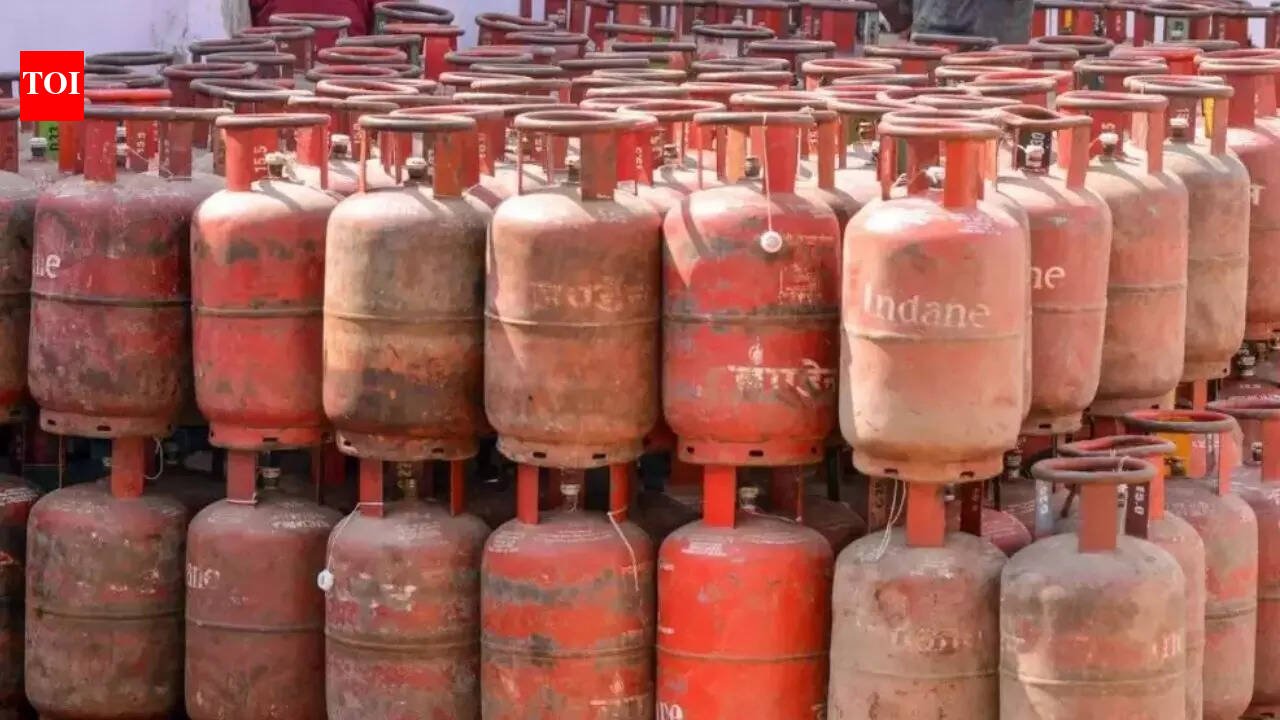
NEW DELHI: The Central Consumer Protection Authority (CCPA) on Wednesday warned hotels and restaurants of action in case it found them levying additional charges under heads such as “LPG charges,” “gas surcharge,” and “fuel cost recovery” in food bills.The authority issued an advisory invoking provisions of the Consumer Protection Act observing that such charges are being imposed by default to circumvent existing guidelines on service charges. It said that no such charges shall be levied automatically, and warned that violations may invite “strict action” as this constituted “unfair trade practice”.The CCPA said grievances received on the National Consumer Helpline (NCH), and media reports, show that certain hotels and restaurants were levying such charges in the consumer bill by default, over and above the price of food and beverages displayed in the menu and applicable taxes. The authority said input costs such as fuel, LPG, electricity, and other operational expenses are part of the cost of running a business and must be factored into the pricing of menu items. It said the price displayed in the menu shall be the final price, exclusive only of applicable taxes. Consumers should not be misled or compelled to pay any additional charge that is not voluntary in nature. The CCPA said consumers who encounter such practices may request the hotel or restaurant to remove the charge from the bill; lodge a complaint by calling 1915 or through its app and can also file a complaint before the appropriate consumer commission through e-Jagriti portal.


Source link

Middle East crisis: Amit Shah heading informal GoM on ‘overall strategic issues’ | India News


Middle East crisis: Amit Shah heading informal GoM on 'overall strategic issues'

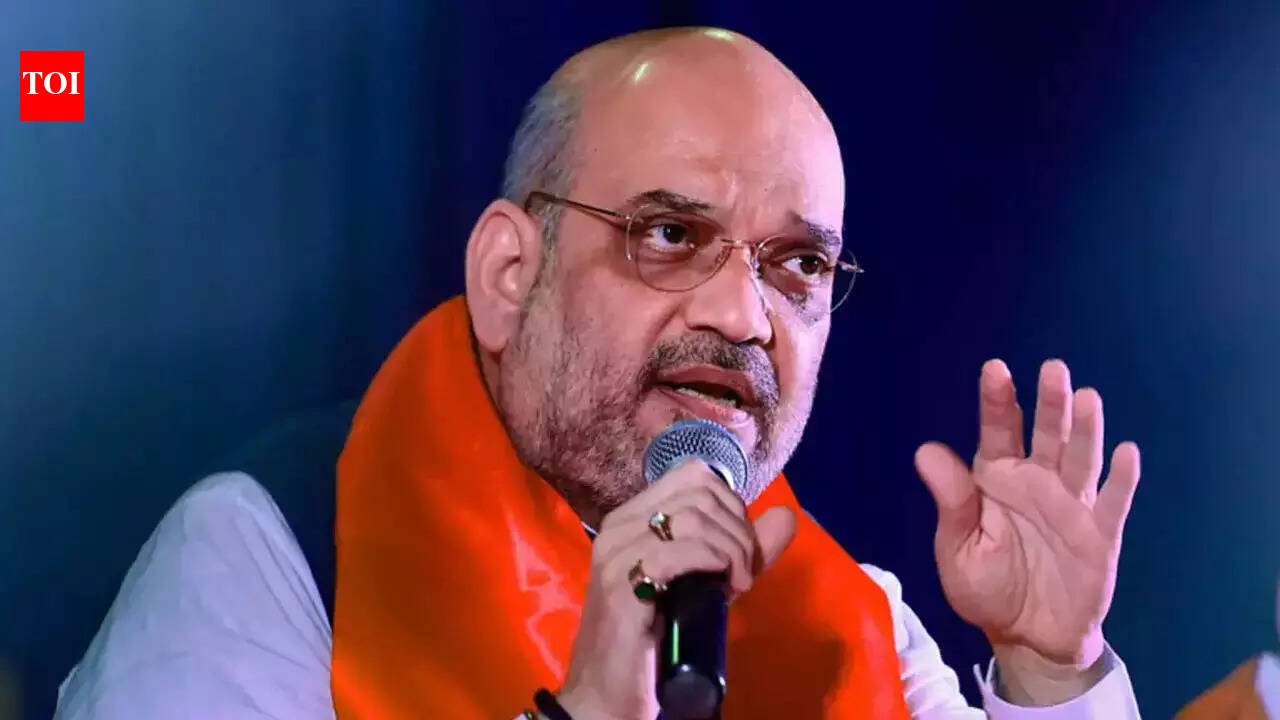
NEW DELHI: Home minister Amit Shah is heading an informal Group of Ministers (GoM) dealing with “overall strategic issues” that have emerged because of the ongoing conflict in West Asia, including fall in supply of cooking gas and LNG, the primary feedstock for urea production.Shah has already held a meeting with other ministers, including fertiliser minister JP Nadda and external affairs minister S Jaishankar, to assess the status of fertiliser and petroleum gas supplies.TOI has learnt another informal GoM, headed by power and urban affairs minister Manohar Lal, has been set up to deal with matters related to energy supply. The group held a meeting Wednesday where issues related to “piped gas supply to homes” were discussed at length. It was attended by food and renewable energy minister Pralhad Joshi, heavy industries minister HD Kumaraswamy and petroleum minister Hardeep Singh Puri. This is significant since the govt is focussed on shifting more households to PNG use in place of LPG.Chairing the meeting of Cabinet Committee on Security on Saturday, PM Modi had directed that a group of ministers and secretaries be created to work dedicatedly with a whole-of-govt approach. He had also sought sectoral groups to work in consultation with all stakeholders.On Tuesday, Modi announced the setting up of seven empowered groups of secretaries to deal with different issues arising out of the crisis; some of the groups held their first round of meeting on Wednesday. “There will be greater clarity on the course of action in the next couple of days,” said an official.


Source link

BRO entrusted with task of developing infra along 1600-km Myanmar border: Rajnath at parl panel meet | India News


BRO entrusted with task of developing infra along 1600-km Myanmar border: Rajnath at parl panel meet

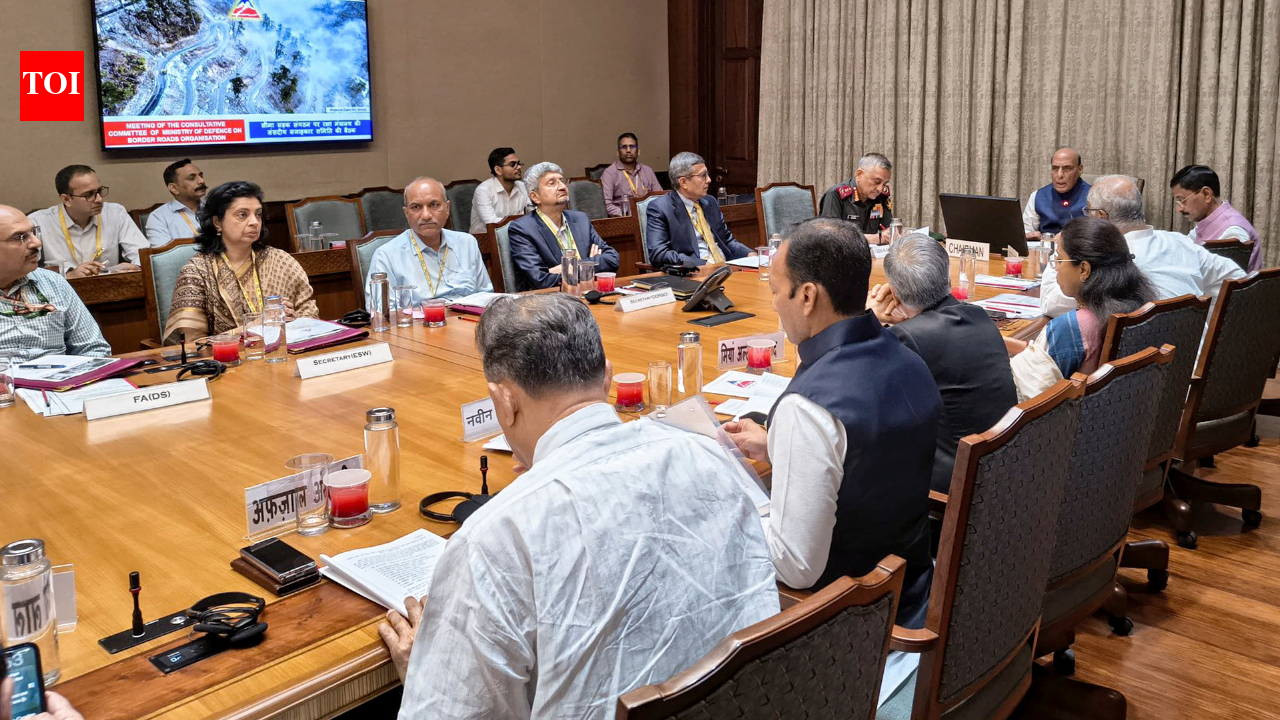
NEW DELHI: Stressing the need for robust infrastructure along the borders, defence minister Rajnath Singh on Wednesday said Border Roads Organisation (BRO) has been entrusted with the task of developing infrastructure along the Indo-Myanmar border, spanning approximately 1,600 km, an initiative that will further bolster the border management capabilities.Rajnath, who chaired a parliamentary consultative committee meeting for the defence ministry on BRO here on Wednesday, asserted that through this network, all-weather connectivity is being ensured even in remote and high-altitude regions, thereby strengthening the operational mobility and defence preparedness. The progress under Border Roads Development Programme 2023-28, under which over 1,000 road and infrastructure projects are being executed, including new construction, upgradation and maintenance works to further strengthen border connectivity, was also discussed during the meeting.The minister also hailed the efforts of the BRO towards enhancing connectivity in the north-eastern region and in areas affected by Left-wing extremism, thereby contributing to security and regional development. “The BRO has facilitated the mobility of defence forces, and worked towards bringing a positive transformation in the lives of the residents,” he said. Insightful deliberations were held on issues pertaining to defence, infrastructure development and ongoing strategic initiatives aimed at strengthening national security and operational preparedness.Drawing the attention of the parliamentary consultative committee members to the crucial aspect of ‘technology utilisation’, the minister said BRO is rapidly adopting modern construction techniques by making best use of technologies such as high altitude equipment, modular bridges, and precast technologies.“The BRO has enhanced both the quality and the pace of its work. This demonstrates that we are building future-ready infrastructure,” he said. He reiterated the govt’s commitment to strengthen the BRO in terms of budgetary support, modern equipment and initiatives aimed at the welfare of their personnel. BRO, established in 1960, has constructed over 64,000 km of roads, 1,179 bridges, 22 airfields and seven tunnels, significantly enhancing operational readiness and socio-economic development in border areas.


Source link

Space co Agnikul successfully tests 3D-printed ‘Agnite’ booster engine | India News


Space co Agnikul successfully tests 3D-printed ‘Agnite’ booster engine

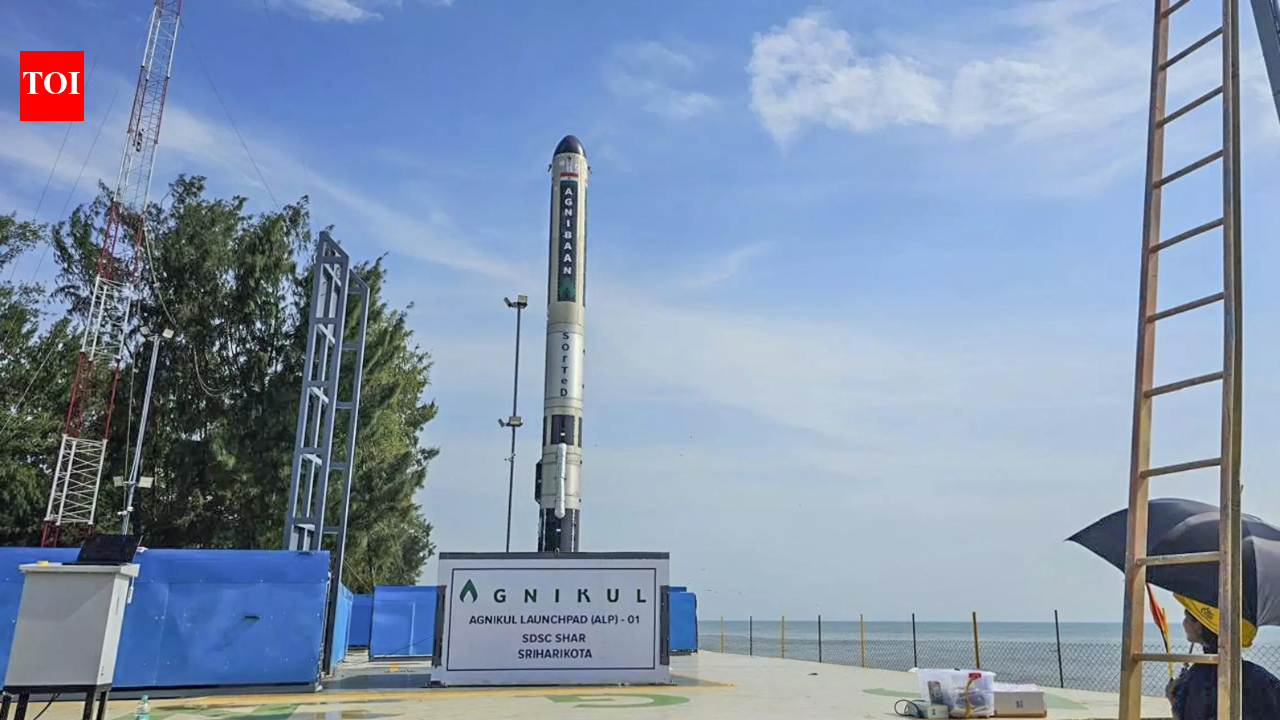
NEW DELHI: Indian space company Agnikul Cosmos on Wednesday announced that it has successfully tested its 3D-printed booster engine, ‘Agnite’, which can reduce production complexity and turnaround time for missions.The engine, which is a single-piece architecture, can be fully printed within a week, unlike traditional booster engines that comprise thousands of parts and can take months to manufacture.“Humbled to announce the successful firing of our single piece Agnite engine. Agnite engines power Agnibaan’s booster stage. These engine chambers are a full meter long, fully 3d printed as a single piece of hardware and made of Inconel. Agnite engines are driven by pumps that are controlled and operated by electric motors. Thanks to Isro and INSPACe for their constant support and to IIT Madras for being our home turf from which this kind of technology is built,” Agnikul posted on X on Wednesday.This milestone is significant because it completes one end-to-end cycle of design, manufacturing, assembly and testing of our larger engines, in-house, the company said. With the successful testing of Agnite, the company will now focus on building more such engines by setting up a production line.


Source link

Op Urja Suraksha: Navy deploys 5 warships to guide cargo vessels exiting troubled Strait of Hormuz | India News


Op Urja Suraksha: Navy deploys 5 warships to guide cargo vessels exiting troubled Strait of Hormuz

NEW DELHI: Amid the conflict in West Asia, the Indian Navy has “deployed more than five frontline warships under a mission named Operation Urja Suraksha” to ensure safe movement of India-bound cargo ships after they exit the Iran-controlled choke point at the Strait of Hormuz, sources in the defence establishment confirmed to TOI.The operation focuses on securing critical maritime routes and protecting ships carrying essential supplies, such as LPG, LNG and crude oil, to India. Currently, there are 20 India-bound cargo vessels that are stranded near the Strait due to the conflict.

Watch

India Built A Naval Network But Missed The Red Sea’s Key Chokepoint

“Once an India-bound cargo vessel clears the Strait, the Navy’s warships in the Gulf of Oman escort and guide the vessel out of the troubled zone towards the Arabian Sea,” a source in DG Shipping told TOI.Senior risk analyst Martin Kelly, head of advisory at EOS Risk Group, a security firm based in the Gulf, said, “It seems that Iran is allowing select vessels to transit Hormuz after verification which takes place during the ships’ transit inside Iranian waters.”The Navy remains in constant contact with the India-bound cargo vessels preparing to exit the Persian Gulf. Once a cargo vessel moves out of the chokepoint — with Iran’s consent — Indian Navy destroyers and frigates take over, escorting them out of the danger zone through a layered-security arrangement.This effort is being supported by an increased Indian naval presence in the Gulf of Oman, where adequate warships come in handy for the escort missions.According to media reports, US Intelligence agencies have alleged that Iran has deployed underwater mines in and around the Strait. These mines, capable of causing severe damage, put navigating vessels in danger. By directing Indian-flagged vessels along carefully-identified safe routes, the Navy helps the crew, who are mostly Indians, of the vessels chart a safe navigation path towards the Arabian Sea.The mission has already achieved key successes, with LPG carriers Pine Gas and Jag Vasant safely passing through the Strait under naval protection. Together, these vessels are carrying nearly 92,000 tonnes of LPG and are expected to reach Indian ports within days.


Source link