Breaking News
US drops 900kg bomb on Isfahan: How ‘bunker buster’ dismantled Iran’s defences


US drops 900kg bomb on Isfahan: How 'bunker buster' dismantled Iran's defences

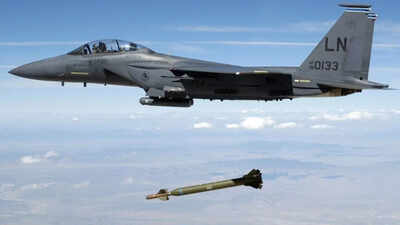
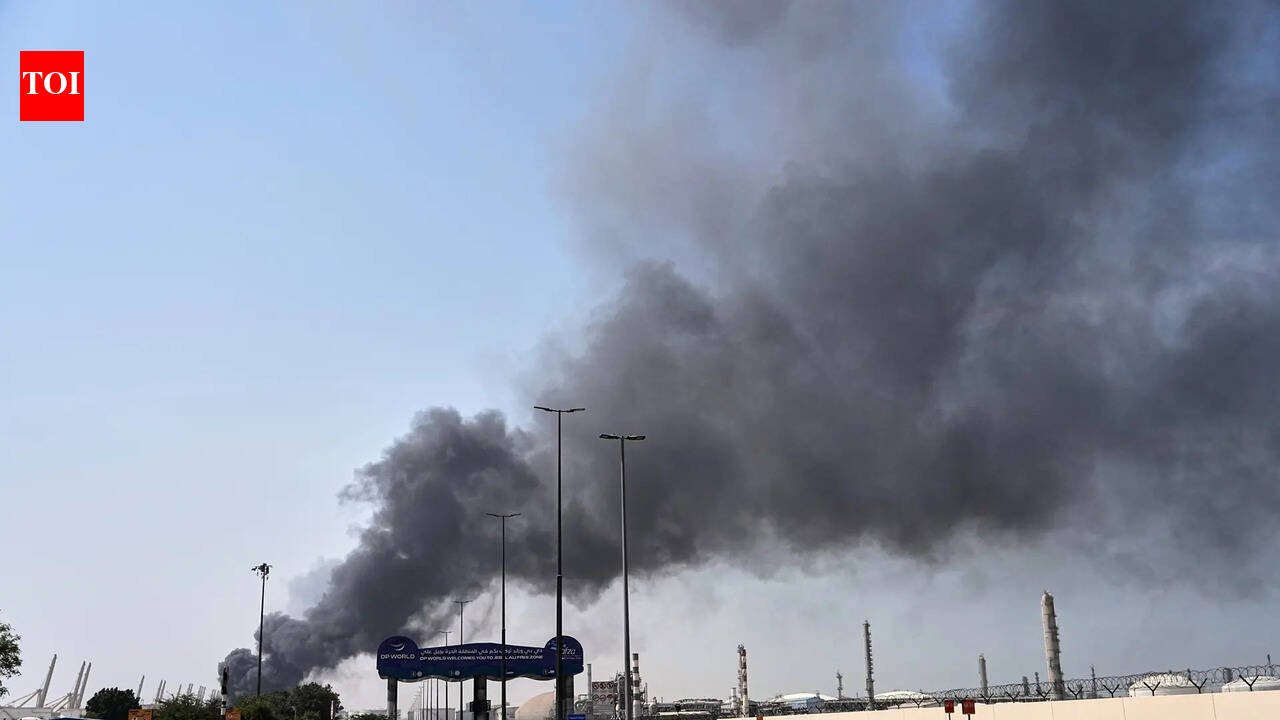
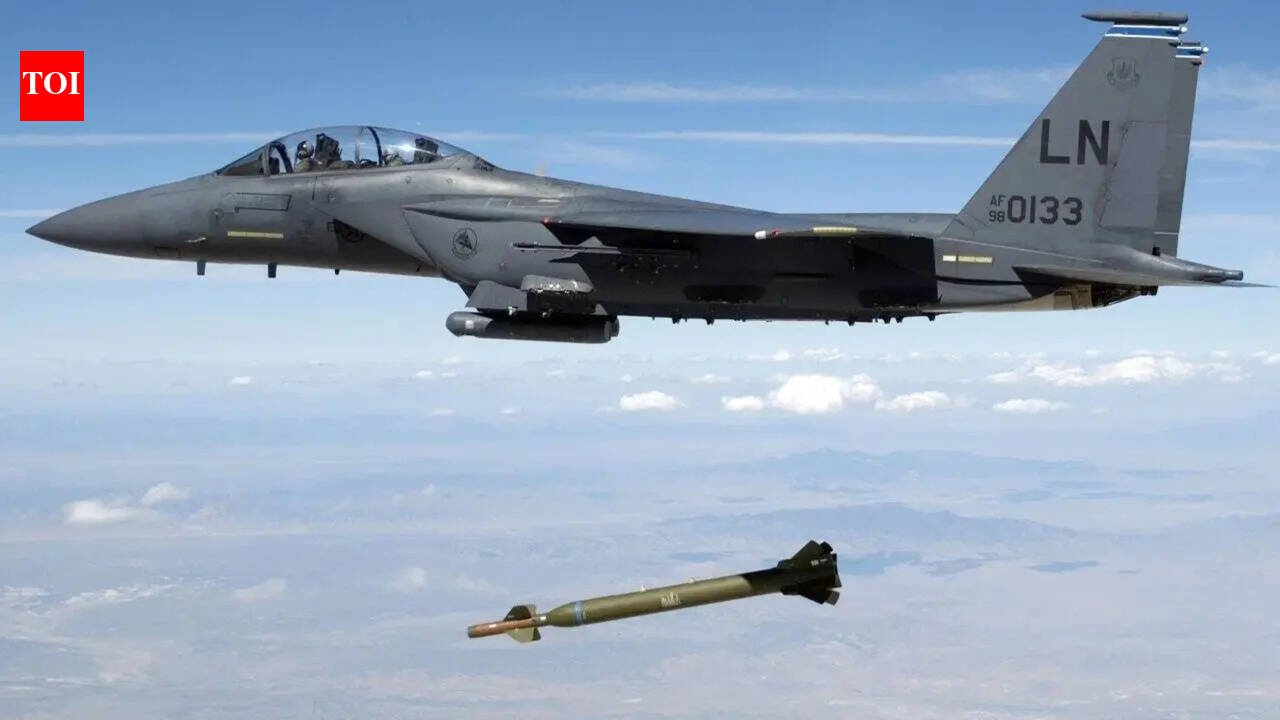
The night skies of the ancient city of Isfahan turned to blinding brightness after an airstrike. It is reported that a 2,000 pound or 900 kg bunker buster bomb hit an Iranian ammunition dump near the city. The current conflict has seen a tremendous use of bunker buster bombs as the Iranian forces have built an elaborate subterranean tunnel network in order to prevent the destruction of vital war waging assets as well as command and control networks under what the perceived would be protection from targeting from the air.The advantage for the defender here is that a defender who’s infrastructure is underground is removed from observation of targeting apparatus and is also protected from the effects of regular bombs. The practice of using underground structures for protection from exploding projectiles was most extensively used during the First World War in which fixed trenches were the targets of heavy artillery and aerial bombing.In the inter-war period and during the Second World War underground bunkers and defences such as the French Maginot line and the underground bunker complex in Berlin (where Hitler died were) built specifically for protection from threats from air and artillery. Aware of this extensive network, the American-Israeli coalition has made an extensive use of bunker buster weapons to hit these underground targets. The Israelis have been using bunker buster bombs deployed by air to fight expansive tunnel and bunker networks in both Gaza and Lebanon. The Israelis depend on their vast intelligence network to target these bunkers using specialised bunker buster guided bombs.In June of last year US Air Force B-2 stealth bombers dropped specialised GBU-57 Massive Ordnance Penetrator (MOP) on the Fardow and Natanz underground nuclear facilities in order to debilitate Iran’s nuclear program. The facility was deliberately carved in to a mountain as perceived protection from airstrikes.These specialised bombs are made of thick metal that helps them penetrate concrete and have a mechanism in their fuses that allows for detonation after a set distance after impacting the surface. Unlike a regular bomb, whose fuse is at the nose of the projectile, the fuse of a bunker buster is kept either in the centre or at the back so as to protect it as it goes through the concrete protecting a target.Bunker busters are now in the arsenals of most air forces today, as many key pieces of equipment as well as command and control centres are either buried deep underground or are protected by well constructed hardened overground shelters, that are designed to provide protection against regular bombs.
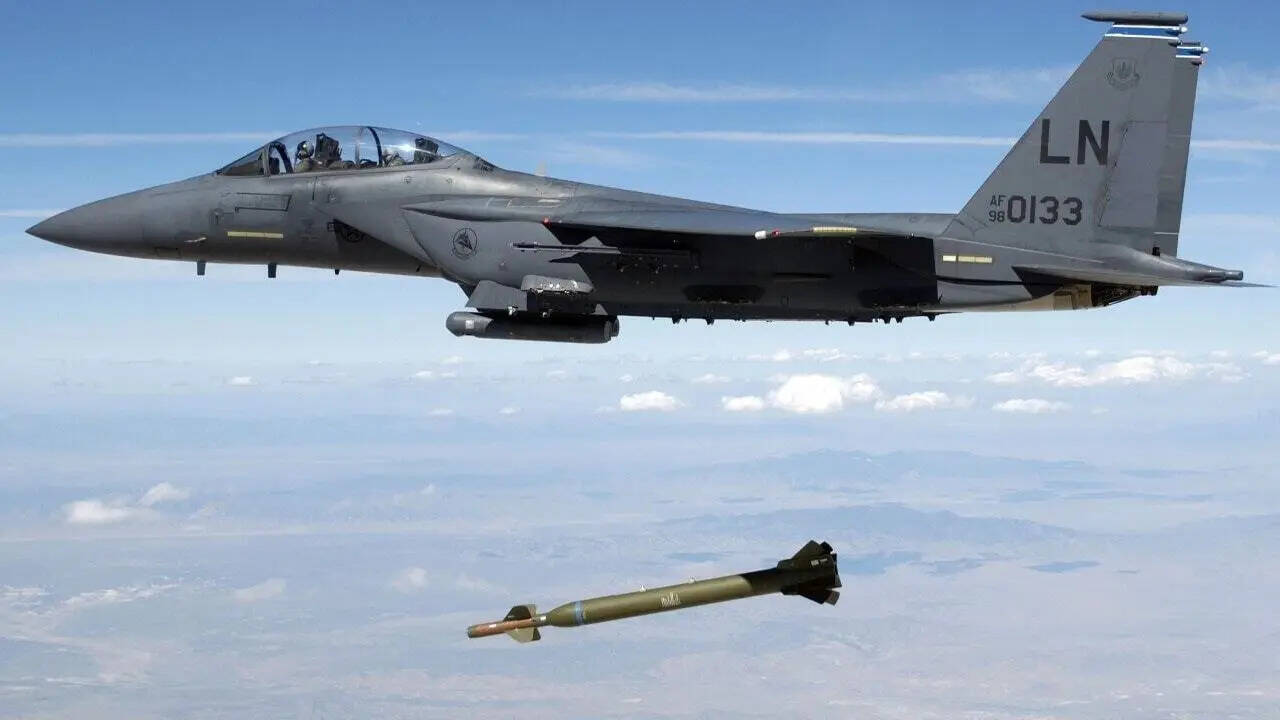
US drops 'bunker buster' bombs on Iran missile sites near Strait of Hormuz: What is it


Source link

PWD junior engineer held in Maharashtra’s Raigad for taking Rs 2.5 lakh bribe, caught red-handed by ACB | Thane News


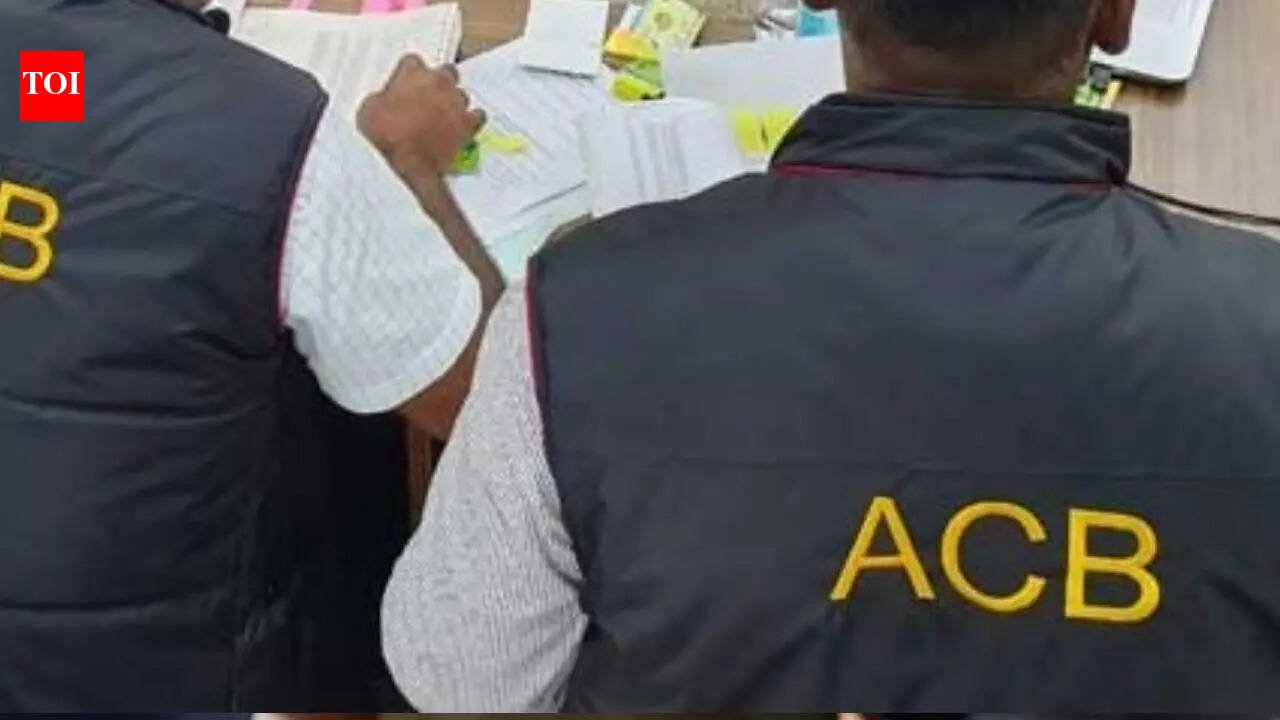
THANE: The Anti-Corruption Bureau (ACB) has arrested a 29-year-old junior engineer from the Public Works Department in Maharashtra’s Raigad district for allegedly accepting a bribe of Rs 2.5 lakh from a contractor, officials said on Tuesday. The contractor had carried out work related to the construction of a roadside drain slab at Murud-Ekdara, Rajapuri and Khokhri in 2024. After completing the project, he approached the department for clearance of his final bill. Police said the accused, identified as Shraddha D. Borhade, allegedly demanded Rs 3 lakh to process the payment. The amount was later negotiated down to Rs 2.5 lakh, said Sarita I. S. Bhosale, Deputy Superintendent of Police, ACB Raigad. The contractor then lodged a complaint with the ACB, following which officials laid a trap. On Monday, Borhade was caught red-handed while accepting the bribe at her office. She has been booked under relevant provisions of the Prevention of Corruption Act, officials said.


Source link

IPL 2026: Kris Srikkanth lambasts KKR spinner Varun Chakaravarthy for dismal bowling peformance against MI


Mumbai Indians began their IPL 2026 campaign with a commanding win over Kolkata Knight Riders at the iconic Wankhede Stadium, successfully chasing down a daunting 221-run target with surprising ease. What was expected to be a closely fought contest turned into a one-sided affair as MI’s batters dominated proceedings, handing KKR a tough start to their season.

The chase was headlined by a blistering opening stand led by Rohit Sharma, whose aggressive approach in the powerplay set the tone early. With contributions flowing from the top order, Mumbai Indians cruised to victory in just 19.1 overs, losing only four wickets in the process. However, amid KKR’s disappointing bowling display, one player who came under heavy scrutiny was their mystery spinner Varun Chakaravarthy.

Kris Srikkanth criticises Varun Chakaravarthy’s disappointing show against Mumbai Indians

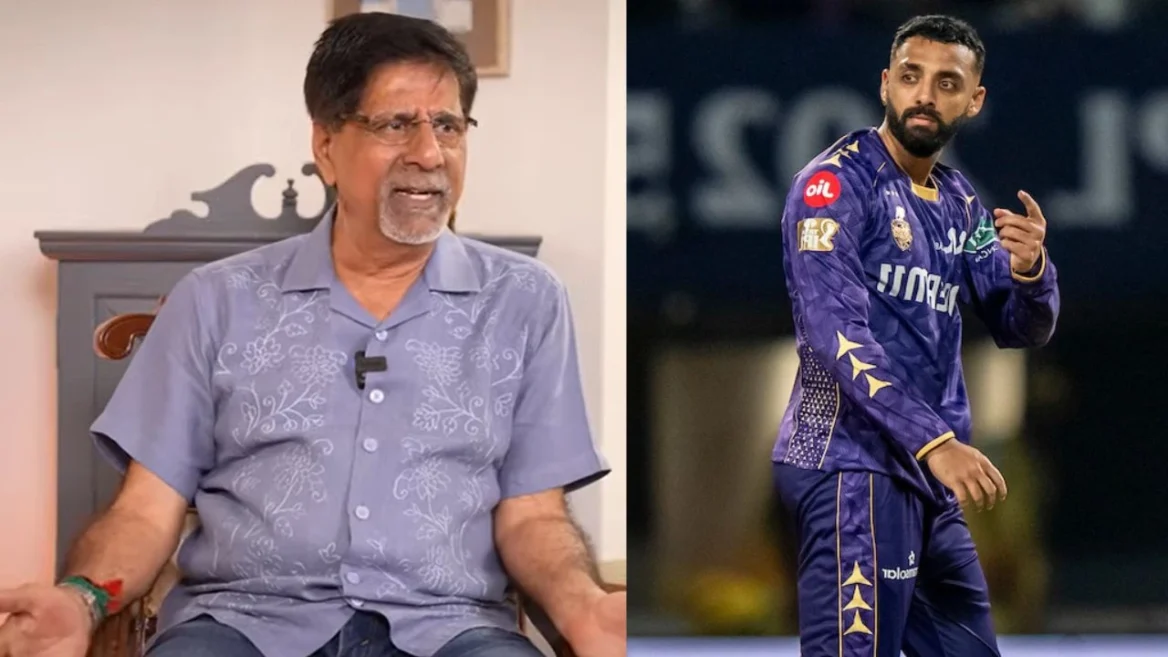
Former India captain Kris Srikkanth did not hold back in his assessment of Chakaravarthy’s performance, openly criticising the spinner for his ineffective bowling and lack of variety. Speaking on his YouTube channel after the match, Srikkanth pointed out that Varun’s over-reliance on googlies has made him predictable in the eyes of modern batters. He stressed the need for the spinner to rediscover his leg-spin and bring more variation into his game.

According to Srikkanth, Varun’s “mystery” factor has faded significantly, making it easier for batters to read him. He added that unless the spinner evolves and develops a fuller range of deliveries, he could continue to struggle at the highest level. The criticism comes after a disappointing outing where Varun conceded 48 runs in his four overs without picking up a single wicket—figures that proved costly in a high-scoring encounter.

“Unless Varun Chakaravarthy learns to spin the ball and bowl leg-spin, he will struggle. Just bowling googlies all the time will not sustain. He has to get some variations and get the leg-spin going. There is no mystery with him anymore. Your mystery has become history,” said Srikkanth.

Also WATCH: IPL 2026 – Heartwarming proposal in the stands steals the show during MI vs KKR game at Wankhede

Powerplay gamble backfires against Rohit Sharma

Srikkanth also questioned KKR’s tactical decision to introduce Chakaravarthy during the powerplay, particularly against a batter of Rohit’s calibre. The move backfired almost immediately, as Rohit took the spinner on, striking boundaries and a six to seize momentum. The former Indian captain believes that bowling Varun early in the innings dented his confidence. Once put under pressure, the spinner appeared to lose control, resorting to quicker deliveries that further played into the hands of Mumbai’s batters.Srikkanth emphasised that spinners like Varun are more effective when they operate outside the powerplay, where they can rely on deception rather than pace.

“Bowl leg-spin and take the ball away from the batters. That’s when batters will fear you. Firstly, he should not be given the ball in the powerplay. Rohit Sharma finished the match in his over itself in the powerplay. Varun Chakaravarthy’s confidence got dented there itself, and after that, he started bowling fast,” added Srikkanth.

Chakaravarthy’s struggles are not limited to this match alone. The spinner has endured a difficult run in recent months, including a challenging phase during the latter half of the T20 World Cup 2026, despite India eventually lifting the trophy.

Also READ: MI Coach Mahela Jayawardene explains why Suryakumar Yadav played as impact player in IPL 2026 clash against KKR


Source link

Big drop! Why bench strength of TCS, Infosys, Wipro & other IT companies has fallen by around 75,000 people


Big drop! Why bench strength of TCS, Infosys, Wipro & other IT companies has fallen by around 75,000 people
Historically, companies maintained a sizeable bench by hiring in anticipation of future projects. (AI image)

Indian IT sector majors – Tata Consultancy Services (TCS), Wipro, Infosys, HCL Tech, and Tech Mahindra – have seen their bench strength drop by 25% in the last two years. Bench strength acts as a traditional reserve workforce with an aim to be a cushion during demand fluctuations. This buffer has contracted sharply, declining by roughly one-fourth over the past two years, and industry observers believe it may not return to earlier levels even if growth revives.Across major firms such as TCS, Infosys, Wipro, HCLTech and Tech Mahindra, the number of employees on the bench has dropped by around 75,000, falling from nearly three lakh to about 2.25 lakh, according to industry estimates cited by experts in an ET report.The proportion of unassigned employees has also narrowed considerably. “The bench across IT services is currently between 8-15% of the workforce compared to over 20% earlier,” said Pareekh Jain, CEO of EIIRTrend. Similarly, TeamLease Digital estimates the current range at 8-12%, down from 20-30% in previous years.

Deeper Shift In IT Sector Bench Strength Trends

Historically, companies maintained a sizeable bench by hiring in anticipation of future projects, ensuring that skilled personnel were readily available when demand materialised. This approach was viable during periods of rapid expansion. However, firms are now moving away from that model and tightening workforce utilisation.Companies that once operated with 4-5% of employees on the bench are now targeting significantly lower levels, often between 1% and 1.5%. In some cases, stricter policies have been introduced. For instance, in TCS bench duration has been capped at around 35 days annually, after which performance evaluations are initiated, and employees who remain unallocated may be asked to exit.Experts indicate that this shift is not merely cyclical but reflects a deeper structural change. “The concept of bench does not make sense unless an IT services firm can predict skill or role-based demand with 90% accuracy three months in advance,” said Gaurav Vasu, founder of UnearthInsight.Slower industry growth has been identified as the primary driver behind this contraction, rather than technological disruption. “Low growth is the bigger factor in bench reduction today. When growth returns, firms may not need to rebuild their bench because local hiring in different countries has increased significantly over the last five to six years,” Jain said.Over the past two years, hiring patterns have undergone a clear shift. Demand for traditional mid-level delivery roles has declined by roughly 20–30 per cent, while requirements for skills in artificial intelligence, generative AI, data, and cloud technologies have increased by about 30–40 per cent across the same firms, according to Neeti Sharma, CEO of TeamLease Digital.Global capability centres, however, present a more varied trend, with mid-level recruitment showing relatively greater resilience. “Leadership hiring has grown in line with overall demand, with the share of such roles increasing from around 15% in 2024 to around 20% in 2025. What has changed is the nature of these roles. Today, more than 50% of job demand is driven by emerging skills, especially in AI, cloud, and platform engineering,” said Kapil Joshi, CEO of IT staffing at Quess Corp. In contrast, hiring at the entry level has declined by around 30–35 per cent during the same period, he added.The changes are also affecting how quickly professionals are placed. The average time required to assign a benched engineer with 8–12 years of experience has lengthened to 60–90 days, compared with 30–45 days earlier, Sharma told ET.

Salary Trends

Compensation trends are diverging as well. Premiums for lateral hiring in non-AI roles have reduced to 10–20 per cent, down from 25–35 per cent in FY 2022–23. In contrast, professionals with AI capabilities continue to command premiums of 20–30 per cent and tend to secure offers more quickly, Sharma said. According to Quess data, premiums for generative AI roles range between 15–40 per cent depending on the position.The broader career structure within IT services firms is also evolving. “The people manager role is not disappearing, but its responsibilities are narrowing, shifting toward revenue expansion and profitability management away from headcount oversight,” Vasu said.


Source link

Dhurandhar 2 Full Movie Collection: ‘Dhurandhar: The Revenge’ box office collection day 13 [LIVE]: Ranveer Singh film eyes Rs 900 crore net milestone on second Tuesday |


'Dhurandhar: The Revenge' box office collection day 13 [LIVE]: Ranveer Singh film eyes Rs 900 crore net milestone on second Tuesday
‘Dhurandhar 2: The Revenge’ continues its record-breaking run on day 13, surpassing the lifetime India net of ‘Dhurandhar Part 1’ in just 11 days. With a domestic net of Rs. 873.99 crore and a worldwide gross nearing Rs. 1,400 crore, the Ranveer Singh starrer is successfully defying the IPL 2026 season craze. Directed by Aditya Dhar, the film is now chasing the Rs. 900 crore and eventually the Rs. 1000 crore India net milestone, a feat previously seen only by the Allu Arjun starrer ‘Pushpa 2.’

‘Dhurandhar: The Revenge’, directed by Aditya Dhar and starring Ranveer Singh, continues its historic box office run as it enters day 13 of its theatrical release on Tuesday, March 31, 2026.’Dhurandhar 2 continues its phenomenal global run, amassing a worldwide gross of Rs. 1,392.23 crore. This massive total includes Rs. 1,042.23 crore from the Indian market and an additional Rs. 350 crore from overseas territories. On the domestic front, the film has recorded a staggering Rs. 872.17 crore in net collections by end of day 12 which marked the second Monday since its release. After a historic second weekend, the film is now on a steady march toward the Rs. 900 crore India net milestone. Notably, on Sunday, the spy thriller broke a nine-year-old record previously held by the Prabhas starrer ‘Baahubali 2,’ becoming the highest-grossing Indian film in North America by crossing the USD 22.7 million mark.Dhurandhar 2 Movie ReviewWith its strong word-of-mouth appreciation and repeat viewership despite the ongoing IPL season, ‘Dhurandhar 2’ continues to reign. The film has shown remarkable strength against the 19th season of the Indian Premier League (IPL), which began on March 28, 2026. Even with high-profile opening weekend clashes like RCB vs. SRH and MI vs. KKR, theater attendance for ‘Dhurandhar 2’ remained impressively steady. This indicates that the film’s drawing factor is compelling enough to withstand the massive viewership of major cricket tournaments. Here is a full live tracking update for day 13.

‘Dhurandhar: The Revenge’ first week and second week projections

The film’s opening week set the tone with an extraordinary preview haul of Rs 43 crore, followed by a historic opening day of Rs 102.55 crore which marked the milestone of being the biggest opening day in Hindi film history. The momentum held powerfully through the extended weekend, closing Week 1 at Rs 674.17 crore. The second week continued strongly with Rs 49.70 crore on day 8, Rs 41.75 crore on day 9, Rs 62.85 crore on day 10, and the record-breaking Rs 68.10 crore on day 11, before settling at Rs 25.30 crore on day 12.The film’s performance on its second Sunday was nothing short of legendary as it officially pushed its cumulative India net past the Rs. 840.20 crore lifetime collection of its predecessor, ‘Dhurandhar Part 1.’ With the ongoing IPL 2026 season, it usually causes a dip in evening cinema footfalls. However, the film has continued to retain massive footfalls even during prime match hours of 7:30 PM IST.

‘Dhurandhar: The Revenge’ day 13 live tracking

According to Sacnilk, on its thirteenth day, ‘Dhurandhar 2: The Revenge’ is maintaining a robust presence with 6,384 active shows nationwide. Live tracking reveals the film has already added Rs. 4.97 crore to its total today, pushing its domestic net collection to Rs. 877.14 crore.With this steady Tuesday performance, the film’s cumulative India gross has climbed to Rs. 1,048.09 crore, as the final official figures are tallied for the day.

Day wise collections for ‘Dhurandhar: The Revenge’

Day 0: Rs. 43 croreDay 1: Rs. 102.55 croreDay 2: Rs. 80.72 croreDay 3: Rs. 113 croreDay 4: Rs. 114.85 croreDay 5: Rs. 65 croreDay 6: Rs. 56.60 croreDay 7: Rs. 48.75 croreDay 8: Rs. 49.70 croreWeek 1 collection: Rs. 674.17 croreDay 9: Rs. 41.75 croreDay 10: Rs. 62.85 croreDay 11: Rs. 68.10 croreDay 12: Rs. 25.30 croreDay 13: Rs. 4.97 croreTOTAL: Rs. 877.14 crore

More about ‘Dhurandhar: The Revenge’

Directed by Aditya Dhar, this sequel serves as a gritty origin story for Jaskirat Singh, tracing his transformation into Hamza, India’s most lethal intelligence asset operating deep within Pakistan. The film features Ranveer Singh in a career-defining role, alongside Arjun Rampal as Major Iqbal and Sanjay Dutt as SP Chaudhary Aslam. The supporting cast includes R. Madhavan, Rakesh Bedi, Danish Pandor, Udaybir Sandhu and Sara Arjun. Yami Gautam appears in a key special role. To achieve the gritty aesthetic of Lyari, Karachi, the team redesigned Ballard Estate in South Mumbai and utilized massive sets in Bangkok.Originally planned as a single movie, the scale of the footage led to a two-part duology. It currently holds a U/A certificate with a massive runtime of 3 hours and 49 minutes. The film’s climax features Jaskirat’s identity arc unanswered which was reportedly a conscious creative choice by director Aditya Dhar. The film features several timelines with historical moments such as the 2014 general elections and the 2016 demonetization included into the narrative.DISCLAIMER: The box office numbers and data in this article are compiled from diverse public and industry sources. All figures are approximate unless explicitly mentioned, offering a fair representation of the movie’s box office performance. These totals may change as official studio data is updated or as additional international market reports are finalized. This data is provided for informational and entertainment purposes only.


Source link

Pressure, not peace yet: How Saudi, UAE, Kuwait want the Iran war to go


Pressure, not peace yet: How Saudi, UAE, Kuwait want the Iran war to go
The US-Israel war on Iran, which has prompted retaliatory strikes on US allies in West Asia, including the UAE, Qatar, Bahrain and Saudi Arabia, entered day 32 on March 31

The United States’ Gulf allies, led by Saudi Arabia and the UAE, have reportedly urged US President Donald Trump to continue military action against Iran, arguing that Tehran has not been sufficiently weakened by the monthlong US-led bombing campaign, according to American, Gulf, and Israeli officials.Click here for live updatesThis development represents a stark reversal in the stance of Middle Eastern states. At the outset of the conflict, they privately criticised the lack of advance notice for the US-Israeli strikes and warned that the war could have “catastrophic consequences” across the region. Now, they are pressing the White House to seize what they see as a “historic opportunity” to dismantle Tehran’s clerical regime “once and for all.

Watch

Iran Missile Hits ‘Israeli-Linked’ Vessel In Gulf; Blaze Erupts As Tensions Spike Near Hormuz

“Saudi Arabia, the UAE, Kuwait, and Bahrain have conveyed that they do not want the military operation to end until there are significant changes in Iranian leadership or a dramatic shift in Iran’s behaviour,” one official told the AP.The push from the Gulf nations comes as Trump alternates between suggesting that the Islamic Republic’s “weakened” leadership is ready for a settlement and threatening to further escalate the conflict if a deal is not reached swiftly.Also Read: Willing to end war without re-opening Hormuz, Donald Trump tells aides as Iran refuses to budgeSeveral Middle Eastern countries host US forces and bases used for strikes on Iran, but they have not taken part in the attacks. In retaliation for the February 28 strikes, Iran has targeted these US bases and also hit Israeli territory.Which Gulf ally stands where in war supportWhile regional leaders are now generally supportive of Washington’s efforts, divisions remain, with Saudi Arabia and the UAE leading calls to increase military pressure on Tehran.According to Gulf diplomat, the UAE has emerged as perhaps the “most hawkish” of the Gulf states. The UAE, which claims to have faced more than 2,300 missile and drone attacks from Iran, is pushing for a ground invasion, the diplomat added. Kuwait and Bahrain are also reported to back such a move.Oman and Qatar, historically intermediaries between Iran and the West, continue to advocate for a diplomatic solution.Also Read: Trump shares video of massive explosions in Iran’s Isfahan following US-Israeli strikes; bunker-busters used?Saudi Arabia has told the US that ending the war now would not produce a “good deal” that guarantees security for Iran’s Arab neighbors. Riyadh is demanding that any eventual settlement neutralize Iran’s nuclear programme, destroy its ballistic missile capabilities, end support for proxy groups, and prevent the Islamic Republic from shutting down the Strait of Hormuz, as it has during the current crisis. About 20% of the world’s oil flows through the Strait of Hormuz.Senior Emirati officials have also taken a sharper tone toward Iran. Noura Al Kaabi, a UAE minister of state, wrote in a column for the state-linked English-language newspaper The National: “An Iranian regime that launches ballistic missiles at homes, weaponizes global trade and supports proxies is no longer an acceptable feature of the regional landscape. We want a guarantee that this will never happen again.”Saudi Arabia’s Crown Prince Mohammed bin Salman, the kingdom’s de facto leader, has told officials in the Trump administration that further weakening Iran’s military capabilities and its clerical leadership would serve the long‑term interests of the Gulf region and beyond, according to a person briefed on those conversations.Will Gulf allies join the fight?Trump has not called on Middle Eastern nations to join offensive operations.One possible reason is that the administration may have judged it too complicated to add more militaries into the skies alongside Israel. Early in the conflict, friendly fire downed three American F-15E Strike Eagles during an Iranian air assault, though all six crew members ejected safely. On March 12, six American service members were killed when a KC-135 refuelling aircraft crashed in western Iraq.Another factor is that only the UAE and Bahrain among the Gulf states have formal diplomatic relations with Israel, complicating any potential coordination.Meanwhile, Iran has threatened to target its neighbours’ critical infrastructure, including desalination plants, if the US strikes Iranian power plants to force the reopening of the Strait of Hormuz by April 6. Last week, Trump walked back on a 48-hour “ultimatum” for Tehran to reopen the waterway, then later extended it by 10 days.


Source link

‘To be continued … ‘: Ravindra Jadeja reveals story behind ‘gun’ celebration vs CSK | Cricket News


'To be continued ... ': Ravindra Jadeja reveals story behind 'gun' celebration vs CSK
Ravindra Jadeja (Image credit: BCCI/IPL)

NEW DELHI: Rajasthan Royals kicked off their IPL 2026 campaign in dominant fashion, registering a crushing eight-wicket win over five-time champions Chennai Super Kings at the Barsapara Cricket Stadium in Guwahati on Monday.During the high-intensity clash, among several key moments, one that stood out was Ravindra Jadeja’s animated celebration after taking a wicket.

Watch

Angkrish Raghuvanshi focused only on team’s wins

Jadeja, after dismissing a CSK all-rounder, came up with a ‘gun’ celebration.After Rajasthan Royals’ win, former India cricketers Suresh Raina and Anil Kumble, part of the expert panel on JioStar, asked Jadeja if this was a new celebration.“Jadeja, ye naya aaya hai market mein?” the experts asked.To this, Jadeja said: “Ye mai CSK se jab khela karta tha, tab mai ye celebration karta tha. Maine socha to be continued karein”.“Dube ka mujhe pata tha wo spinners ko pehle ball se maarne ko sochta hai. Wo mere dimaag mein kahin na kahin tha but at the same time wo bhi soch rha tha ki agar uska wicket gya to CSK ka middle order khali ho jayega. Positive mindset se ball daalne ka soch rha tha mai bass,” he said.Jadeja also reflected on an emotional outing against his former team Chennai Super Kings.“I’m liking the pink colour. The yellow had started to feel a bit old, but I’m just joking. Obviously, leaving a franchise like CSK, where I had played for 12-13 years, was a little difficult initially. It was very emotional. But I told myself that changes like these are also part of the journey. The good thing was that I’m now with the team where I had first won an IPL title,” Jadeja said.“That memory has always stayed with me, that after the Under-19 World Cup, I started my IPL career there and won the title in my very first season. I have carried those memories along with a positive mindset, and my aim is to learn as much as I can with the new group and also share my experience with the team,” he added.Jadeja’s impact was felt with the ball as RR bundled CSK out for 127, setting up a comfortable chase that was headlined by a blistering knock from Vaibhav Sooryavanshi.“The wicket was a bit sticky, so it suited my kind of bowling. My job was simply to bowl in the right areas. When you hit the right areas on a wicket that is holding up slightly, the ball tends to grip and come slower, which feels good as a bowler. Getting such a surface to bowl on in the very first match boosts your confidence as a bowler.“I was thinking of bowling it at the stumps, as I wanted to take a chance in case he didn’t middle it. But when he hit me for a six, I quickly changed my strategy to bowling wide, as he would have kept hitting me on a straight line. So, I decided to finish on the fifth-sixth-stump line, thinking that if he went across, he might not get his timing right, and that’s what happened. Luckily, he did not get the elevation he was looking for, and it was a big wicket for us.Rajasthan Royals will now face Gujarat Titans at the Narendra Modi Stadium on April 4.


Source link

Bank holidays in April 2026: When will banks remain closed? Check state-wise list


Bank holidays in April 2026: When will banks remain closed? Check state-wise list

April 2026 bank holidays: As April 2026 approaches, several banks across India will remain closed for national and state-specific holidays. Customers planning branch visits are advised to check holiday schedules in advance to avoid inconvenience. They should also plan for transactions like cheque clearances, large cash deposits, or demand drafts in advance. Banks will also remain closed on the second and fourth Saturdays of each month, as per Reserve Bank of India (RBI) guidelines.

State-wise bank holidays in April 2026

  • April 1: Banks will be closed nationwide for year-end account finalisation, except in Mizoram, Sikkim, Nagaland, Jharkhand, Meghalaya and Himachal Pradesh.
  • April 2: Banks in Kerala will remain closed on Maundy Thursday.
  • April 3: Banks across the country will be closed for Good Friday, except in Tripura, Chandigarh, Assam, Rajasthan and Jammu & Kashmir.
  • April 14: Banks will remain closed in Tripura, Gujarat, Maharashtra, Karnataka, Odisha, Tamil Nadu, Uttarakhand, Sikkim, Assam, Andhra Pradesh, Manipur, Rajasthan, Jammu & Kashmir, Kerala, West Bengal, Goa, Bihar, and Jharkhand, on account of Dr Babasaheb Ambedkar Jayanti, Maha Vishuva Sankranti, Biju/Buisu Festival, Tamil New Year’s Day, Bohag Bihu, Cheiraoba and Baisakhi.
  • April 15: Banks will remain closed in Tripura, Assam, Manipur, Kerala, West Bengal, and Himachal Pradesh for Bengali New Year’s Day (Nababarsha), Bohag Bihu, Vishu and Himachal Day.
  • April 16: Banks in Assam will remain closed for Bohag Bihu.
  • April 20: Banks in Karnataka will remain closed on the occasion of Basava Jayanti and Akshaya Tritiya.
  • April 21: Banks in Tripura will remain closed for Garia Puja.

Digital banking services remain active

Even though physical branches will be closed, customers can continue routine transactions through online banking, mobile apps, ATMs and UPI services. Fund transfers, bill payments and other standard digital operations will remain available.Services that require branch visits, such as cheque clearances, large cash deposits and demand draft issuance, will not be accessible on these dates. Customers are advised to plan transactions in advance and make use of digital banking to avoid inconvenience.


Source link

Assam assembly elections 2026: What is BJP offering in its poll manifesto | India News


Assam assembly elections 2026: What is BJP offering in its poll manifesto
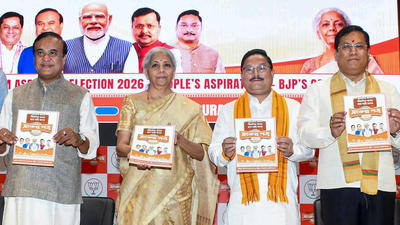
BJP releases manifesto ahead of polls (Image/PTI)

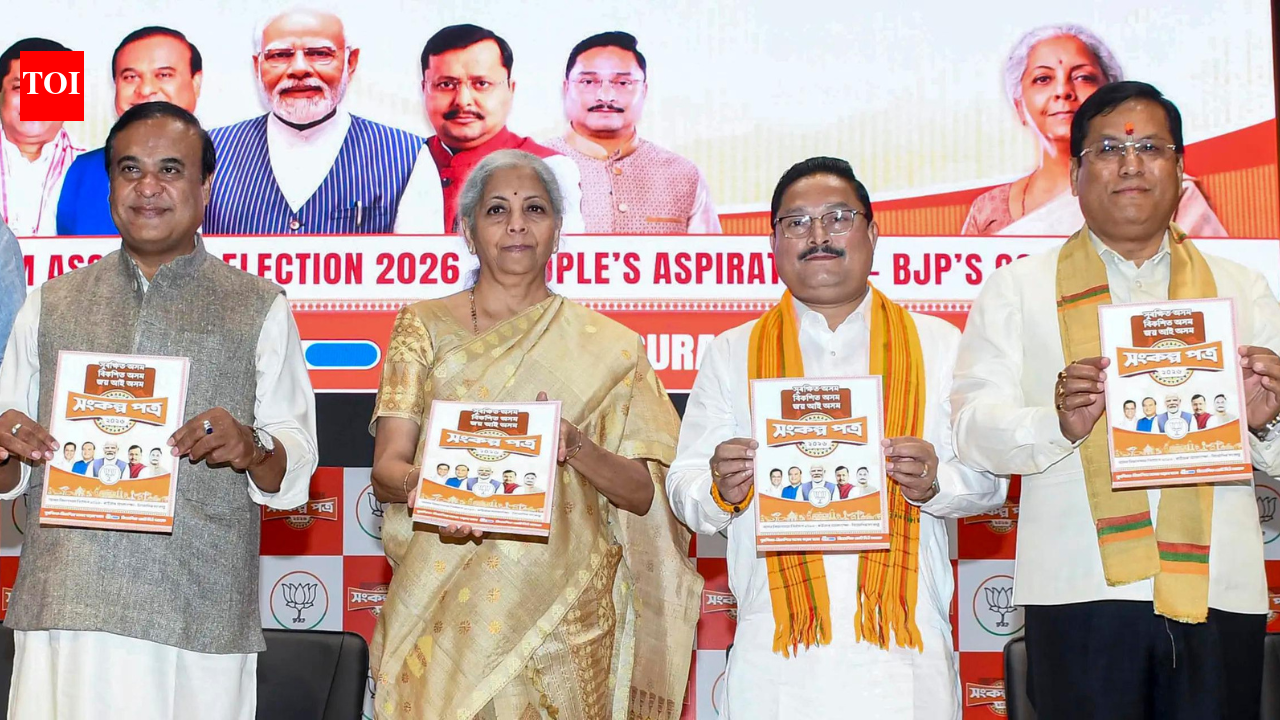
NEW DELHI: The Bharatiya Janata Party on Tuesday unveiled its manifesto for the Assam assembly elections 2026, outlining an ambitious mix of cultural, economic and governance promises aimed at consolidating its position in the state. The document, released by finance minister Nirmala Sitharaman, lays out 31 commitments under the party’s “Sankalp Patra.”A central plank of the manifesto is the promise to safeguard the land, heritage, and dignity of Assam’s indigenous communities. The BJP has also pledged firm action against encroachment, including the recovery of land allegedly occupied by illegal settlers. In addition, the party has proposed the implementation of a Uniform Civil Code and measures to strengthen law and order, framing these as essential for long-term stability.

Watch

EXCLUSIVE: ‘Congress Wants To Create New Assam, End BJP’s Tyrannical Rule,’ Says Gaurav Gogoi

On the economic front, the BJP has promised investments worth Rs 5 lakh crore to transform Assam into a key economic hub and India’s eastern gateway. The manifesto emphasises infrastructure expansion, job creation for youth, and sustained development, with the leadership highlighting what it calls a decade of transformation under its rule. The party also claims that improved opportunities are encouraging Assamese youth to return to the state from global careers.

What are 31 commitments promised in BJP’s ‘Sankalp Patra‘?

BJP has promised the following commitments in its manifesto:

  1. We will protect the land, heritage and dignity of theindigenous people of Assam
  2. We will strengthen the legislative protections to preservethe civilisation, heritage and rights of the people ofAssam
  3. We will invest Rs 5 lakh crore to position Assam as India’sEastern Gateway, backed by an Asom Gati ShaktiMaster Plan to ensure the timely completion of projects
  4. In collaboration with the Central Government, we will launch Asom Nagar Unnayan Abhijan
  5. We will launch the Badh Mukt Assam Mission withan investment of Rs 18,000 crore+ to make Assamflood-free
  6. We will provide employment and self-employmentopportunities for the youth
  7. We will empower the youth of Assam to becomeself-relian
  8. We will continue to provide rice, masur dal, sugar and salt 08at a subsidised rate, including mustard oil and also providefree ration to the poorest of the poor families.
  9. We will launch the One District, One University initiative andensure a comprehensive coverage of medical and engineeringcolleges in each district to enhance quality higher education in Assam
  10. We will transform education in Assam by ensuring education forall, building world-class institutions and expanding the teacherworkforce
  11. We will strengthen the dignity, security and economicindependence of the women of Assam
  12. We will ensure the promotion, protection andpreservation of the indigenous culture of Assam
  13. We will strengthen income security for farmers
  14. We will provide financial assistance to fish farmers,ensuring income support during the non-fishing period.
  15. We will launch the Asom Krishi Unnayan Abhijan tomodernise and strengthen agricultural market infrastructureand supply chain management
  16. We will actively pursue the Central Government to implementthe recommendation of the Group of Ministers (GoM) inrespect of scheduling the six communities of KochRajbongshi, Tai Ahom, Adivasis & Tea Tribes,Chutia, Moran and Matak while safeguarding theconstitutional, social and economic rights of existing STcommunities.
  17. We will pursue the Central Government to consider the inclusion ofseven communities, Bishnupriya Manipuri, Bhar orRajbhar, Newar, Bhujel, Sabar, Satnami and KiranSheikh, in the Central List of Other Backward Classes,in line with their existing recognition in the State OBC list.
  18. We will work towards granting constitutional status to the Autonomous Councils of the Mising, Rabha, Sonowal Kachari,Thengal Kachari, Deori, Tiwa and Boro Kachari tribes.
  19. We will ensure inclusive development and land security for the tribaland indigenous people
  20. We will ensure the holistic development of tea tribe communities
  21. With 22 lakh+ houses completed under the Pradhan MantriAwas Yojana (Gramin and Urban), we will construct anadditional 15 lakh houses to ensure every family has accessto a pucca house with basic amenities.
  22. We will launch Nijut Sipini to provide financialassistance to 10 lakh traditional weavers to supporttheir livelihoods and strengthen handloom production.
  23. Building on our rapid economic growth since 2016, we will doubleAssam’s economy to $150 billion by 2031 and scale it to $300billion by 2036
  24. We will provide a wage subsidy of Rs 10,000 peremployee to new industries investing in Assam to support thetraining and employment of local youth, with enhanced incentivesfor enterprises established under Advantage Assam.
  25. We will launch the Asom Parjyatan Bikash Abhijan to position Assam as a leading tourism destination.
  26. We will ensure time-bound implementation of all signed peace accords
  27. We will focus on the welfare of the government employees, promoting good governance and strengthening law and order
  28. We will ensure holistic development of sports across the state with targeted intervention
  29. To develop Dibrugarh as the second capital of Assam
  30. To ensure the holistic development of Barak Valley
  31. Building on Assam’s rising health investment of Rs 2,600 crore in 2016 to Rs 8,900 crore in 2025, we will strengthen the medical infrastructure in the state


Source link

Shabbir Ahmed Lone, Raja Kashmiri, Lashkar-e-Taiba, LeT commander arrest, Delhi Police Special Cell, New Delhi, Bangladesh LeT cell, ISI directions, cross-border terror network, radicalisation of youth, terror module busted, Bangladeshi nationals arrested, anti-national posters, AI summit Delhi, Kolkata base, Ghazipur arrest, Nepal open border entry, Nepali SIM card, foreign currency seizure, Pramod Kushwaha, Praveen Tripathi, Sunil Rajain, central intelligence agencies, Kalkaji temple recce, Gauri Shankar temple Chandni Chowk recce, Chandni Chowk, Hatiara Kolkata, Malda, Umar Farukh, Saidul Islam, Sumama Babar, Hizbul Mujahideen, Burhan Wani, pro-Pakistan slogans, Kashmir Solidarity Day, Kashmir inflammatory messages, illegal immigrants in India, five-day police remand, Pakistan-based handlers, foreign currency dealers, Tamil Nadu-based group, garment industry recruitment | Delhi News


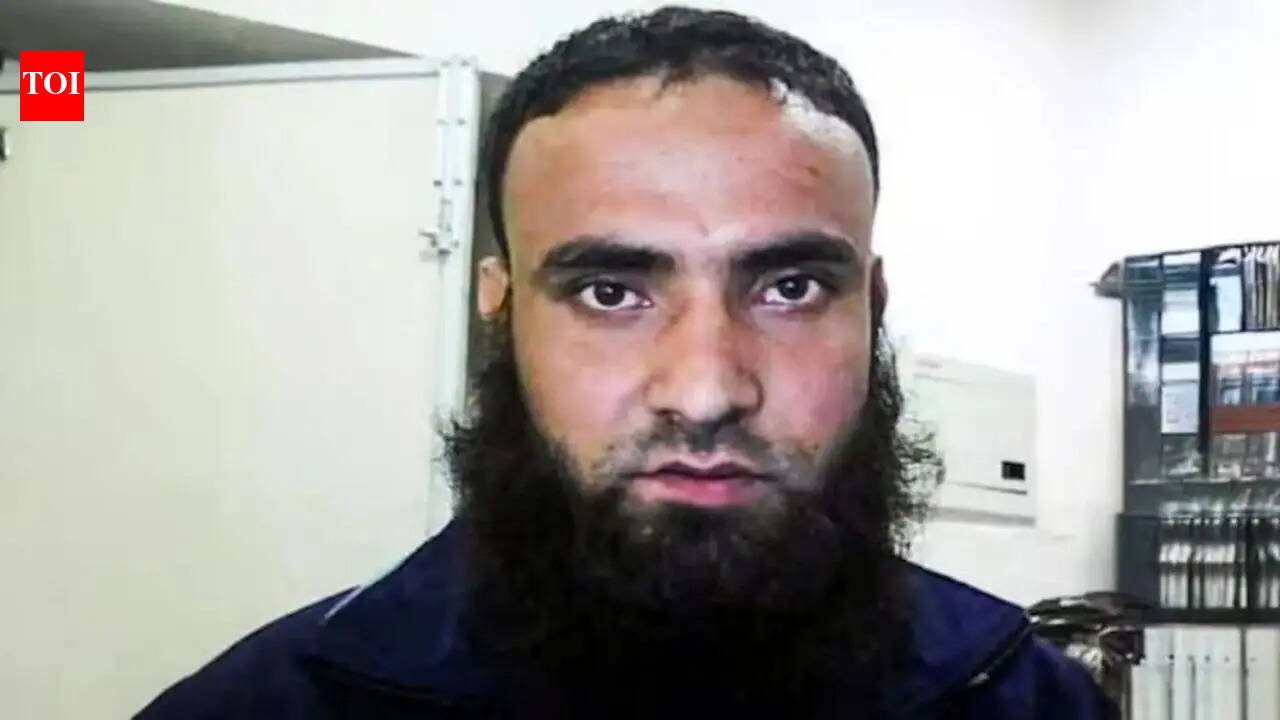
Shabbir Ahmed Lone, a ‘most wanted’ Lashkar-e-Taiba (LeT) commander (File photo)

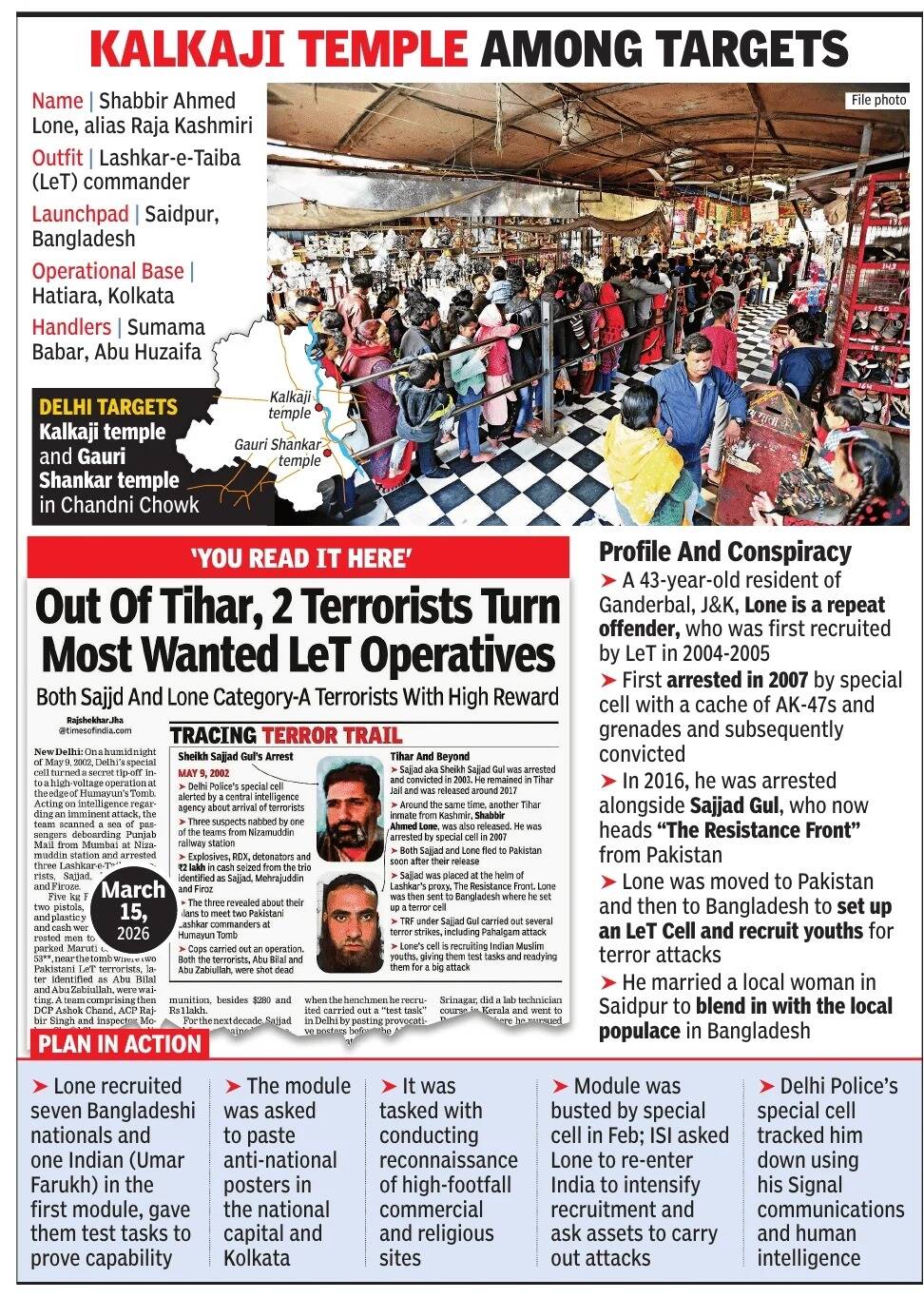
NEW DELHI: Shabbir Ahmed Lone, a ‘most wanted’ Lashkar-e-Taiba (LeT) commander, was arrested on Sunday nightfollowing a month-long operation by the Delhi Police special cell.Lone alias Raja Kashmiri had allegedly set up a Lashkar’s cell in Bangladesh on ISI’s directions and was running a cross-border terror network aimed at radicalising Indian and Bangladeshi youth to carry out terror attacks. Previously arrested in 2007 in Delhi and in 2016 in J&K, his arrest is being considered significant, as it effectively severs a revived terror pipeline that was being orchestrated from Bangladesh.

Watch

LeT Commander Shabbir Lone, Who Handled Terror Modules From Bangladesh, Arrested By Delhi Police

“Lone was the mastermind behind a recently busted terror module in which eight operatives, including seven Bangladeshi nationals, were arrested. They were the first set of recruits who were sent to Delhi and asked to paste anti-national posters before the AI summit as a ‘test task’,” additional CP (special cell) Pramod Kushwaha told TOI.

-

According to police, the recruits established a base in Kolkata, completed the task in Delhi and flew back. However, their journey helped the cops identify and nab them last month. Rattled by the arrests, Lone was tasked by his Pakistan-based handlers to re-enter India, intensify the recruitment drive and meet assets to carry out an attack, said police. The arrested recruits had allegedly conducted a recce of Kalkaji temple and Gauri Shankar temple in Chandni Chowk.Acting on precise inputs on Lone’s movements, a special team comprising DCP Praveen Tripathi, inspector Sunil Rajain and others, in coordination with central intelligence agencies, intercepted him in Ghazipur and apprehended him. The high-ranking LeT handler had crossed over to Nepal and entered India through the open border.Police seized his mobile handset and a Nepali SIM card, besides a variety of foreign currencies, including 2,300 Bangladeshi taka, 5,000 Pakistani rupees and 1,400 Nepalese rupees, alongside Indian currency.Interrogation uncovered a sophisticated operational structure. Under the directions of Sumama Babar, Lone managed the distribution of anti-national posters in Delhi and Kolkata to test the capabilities of new recruits, said police. The posters carried pro-Pakistan slogans, inflammatory messages about Kashmir and images of Hizbul Mujahideen militant Burhan Wani, text in Urdu that read “We are Pakistanis, Pakistan is ours”, and a mention of “Kashmir Solidarity Day”, which is observed in Pakistan. The recruits recorded videos of their act and sent them to Lone, who praised them on chats and asked to move on to the next stage, said police.The module members, including Malda-based Umar Farukh and several Bangladeshi nationals staying illegally in India, then conducted reconnaissance of high-footfall commercial and religious sites. A local operational base was established in Kolkata’s Hatiara area to facilitate these activities, according to police.Lone is in five-day police remand and is being interrogated about ISI’s setup in Bangladesh. Police told the court that he was a convicted terrorist and his custodial interrogation was required to bust the rest of the network. Cops said they needed to trace the operation handlers and dealers of foreign currency.

Poll

What should be the top priority in counter-terrorism?

Police said they also identified Lone’s accomplice — Saidul Islam, a Bangladeshi national who facilitated his illegal entry into Bangladesh and arranged his logistics and hideouts. Islam was also the primary link who provided the details of the Tamil Nadu-based group to Lone and Umar Faruq, arrested earlier.Lone first indoctrinated Faruq and appointed him to spearhead LeT operations within India, said police. Lone allegedly aimed to use Bangladeshi nationals who could blend into the local population by assuming Indian identities, thereby evading the scrutiny typically applied to known Kashmiri or Pakistani operatives. They first recruited a few illegals working in the garment industry and asked them to bring others onboard in lieu of money and better life.


Source link