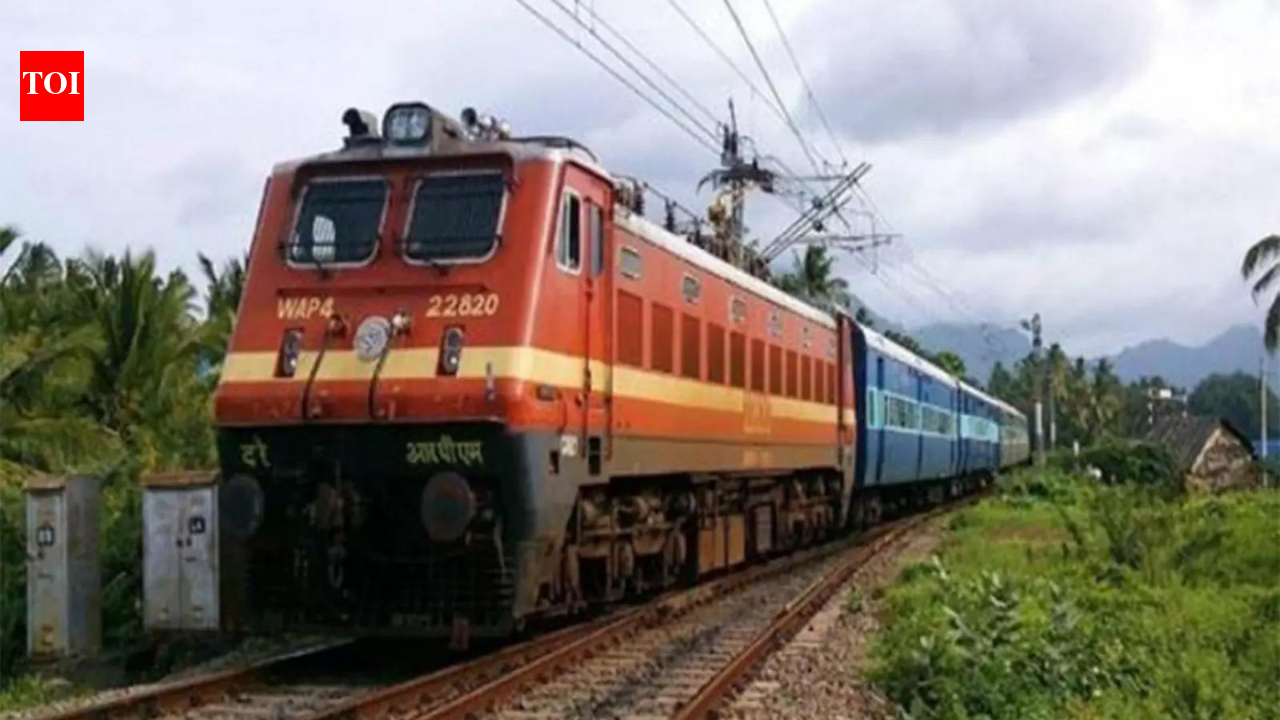
NEW DELHI: Effective from Jan 2024, Indian Railways has increased the rates of Kilometrage Allowance and Allowance in lieu of Kilometrage (ALK) by 25% for all running staff across its system. The updated rates will benefit over two lakh railway personnel, including loco pilots, assistant loco pilots, firemen, guards and other running staff. The decision follows the hike in Dearness Allowance to 50%.While other Indian Railway employees received an increase in travelling allowance earlier, the kilometrage allowance had remained stagnant until now, leading to discontent among affected personnel. The issue had been raised by All India Loco Running Staff Association and railway federations.“The revision will benefit running staff across Indian Railways by ensuring better compensation aligned with the current Dearness Allowance levels. It reflects Indian Railways’ continued commitment to the welfare and financial betterment of running staff, who form the backbone of its operations,” an official statement said. TNN
RAJAMAHENDRAVARAM: The death toll in the suspected milk adulteration case in East Godavari district has risen to 16, while three persons are undergoing treatment at hospitals in Rajamahendravaram, officials said on Sunday. The incident dates back to mid-February, when adulterated milk supplied in parts of Lalacheruvu allegedly caused severe health complications among consumers, including vomiting, abdominal pain, anuria and acute renal dysfunction, leading to multiple hospitalisations. The case came to light on February 22 after a cluster of patients showing symptoms of acute kidney failure was reported from Chowdeswaranagar and Swaroopanagar areas, prompting health authorities to initiate an epidemiological investigation. According to an official press release issued on Sunday, laboratory findings revealed that all 16 victims died of multi-organ failure triggered by acute renal failure after consuming milk contaminated with the toxic substance ethylene glycol.“Preliminary findings indicate that the victims suffered acute renal failure with elevated blood urea and serum creatinine levels, suggesting toxic exposure likely linked to contaminated milk consumption,” the release said. Milk supplied to over 100 families from a dairy unit in Narasapuram village under Korukonda mandal has been identified as the suspected source. Authorities said supply from the unit was immediately halted after it came under scrutiny.
Spencer Johnson, the left-arm speedster from Australia, has been signed by the CSK franchise as a replacement for Nathan Ellis. Johnson left the PSL just a week ago after citing personal reasons.
The PSL was supposed to grow in its magnitude, but it hasn’t. Many players who were signed with the PSL franchises left the league, citing one reason or another, and were seen returning to the IPL. Shahid Afridi’s statement seems to be real, as he had claimed that only the unsold IPL players play the PSL.
PSL features many big names in 2026, but the likes of Steve Smith, David Warner, and Devon Conway had all gone unsold in the IPL before turning to the Pakistan Super League. Hence, the difference in standards and money is evident.
Your daily dose of cricket!
Spencer Johnson signed by CSK days after leaving PSL
Spencer Johnson had signed with the Quetta Gladiators as a direct signing ahead of the 2026 PSL season; however, he later withdrew before the start of the contest, citing some personal reasons. This decision was made official on the 15th of March.
CSK, the most followed IPL franchise, was then starting to look for Nathan Ellis’ replacement for the upcoming season. Ellis could have been their lead pacer in Matheesha Pathirana’s absence, but now he has been ruled out.
Just a week after withdrawing from the PSL, the Australian speedster has been signed by the Super Kings, and he confirmed it with an Instagram Story.
Spencer Johnson is Nathan Ellis’s like-for-like replacement
Australian pacer Nathan Ellis was picked as a crucial player in the deck following the release of Matheesha Pathirana; his importance had piled up to a new level. However, the 31-year-old from Australia injured his hamstring and was ruled out of the competition.
The injury that flared up during the recent One Day Cup final in Australia has made him miss the IPL season in 2026. However, this gave Spencer Johnson a clear chance to feature in the IPL once again, after a not-so-promising season for KKR in 2025.
He is a like-for-like replacement, as the left-arm pacer also has a stunning stock ball that shapes away from right-handers, a slower ball that could deceive anyone, and lastly, a toe-crushing yorker, which he can land to perfection in the death overs.
Who will lead the CSK bowling deck in 2026?
Chennai Super Kings will have Anshul Kamboj and Khaleel Ahmed, who will be heading the IPL 2026 pace bowling deck. Jamie Overton, on the other hand, will be a seam bowling all-rounder who can add variety to the side.
PC: X
CSK are loaded with left-armers, as Gurjanpreet Singh and Mukesh Choudhary would also be on the bench for the Super Kings. The Stephen Fleming-coached side will have Matt Henry available for the series as a backup for Ellis.
Spinners Noor Ahmed and Rahul Chahar were both picked into the side and will be part of the XI, especially when matches are played at their home ground at the M. Chidambaram Stadium.
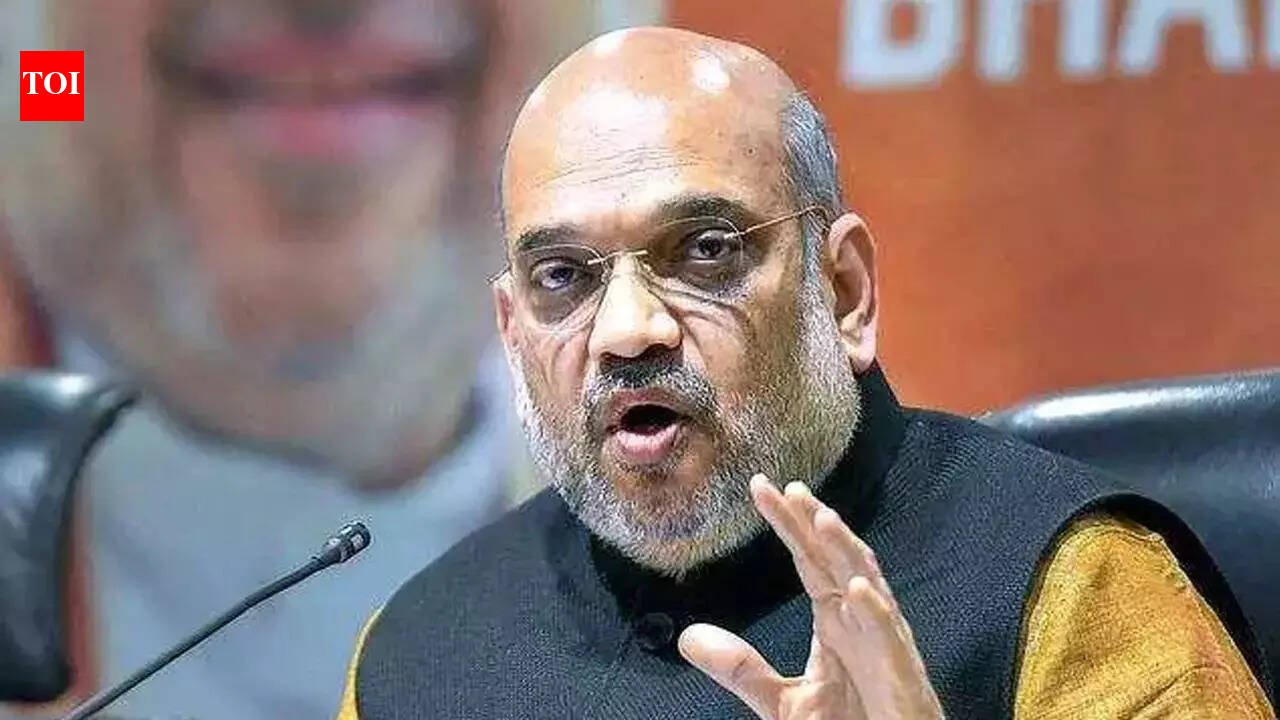
NE DELHI: The March 31 deadline set by home minister Amit Shah for the elimination of Left-wing extremism (LWE) from the country may pass uneventfully, after having served its purpose of creating the right psychological mindset among all the stakeholders – security and police forces, local administration, political brass of affected states, Maoist leadership and cadre, and the common people.Sources said that even though the March 31 deadline has dominated the discourse on LWE for the past one-and-a-half years, the actual date is unlikely to see any victory processions or chest-thumping. At most, there may be references to it in political speeches and public addresses by dignitaries, especially during visits to states once affected by LWE.“The purpose of the deadline was to set a definite goal… so that all hands were on deck and the counter-Naxal machinery could work in mission mode, with time-bound planning of operations to decimate the leadership and launch of initiatives aimed at rehabilitating ex-Maoists and rebuilding villages…” said a central govt officer.The results are there for all to see: the entire CPI(Maoist) leadership – barring one politburo member, Misir Besra, and one key commander, Papa Rao – have either been neutralised or have surrendered. CPI(Maoist) is now no longer a cohesive unit but a loose bunch hiding in the forests.“Obviously, the deadline created a psychological pressure to decide between facing bullets and taking the chance to lead a normal life… As senior colleagues fell to bullets, the remaining politburo and central committee members started leaning towards the latter option,” P Sundarraj, inspector general (Bastar range), Chhattisgarh police, told TOI.
Nagpur: Datta Meghe, one of Vidarbha’s most enduring political figures and also the founder of one of the state’s largest private education networks, passed away on Sunday at the age of 89. Meghe’s younger son Sameer Meghe, a BJP MLA from Hingna, said, “My father never refused to help anyone who came to him.” He said that is how he wanted people to remember his father.Meghe’s passing marks the end of a public life that stretched across five decades, two houses of Parliament, the Maharashtra legislative council, and three national parties. Born on Nov 11, 1936, in Pawnar in Wardha district, Meghe graduated with a BA from Nagpur University in 1963 and worked briefly as a development officer with LIC before entering public life. He entered the Maharashtra legislative council in 1978 and served three consecutive terms there until 1991, a run of over 13 years. During that stretch, he served as minister of state for housing and civil supplies and technical education, and later as cabinet minister for energy and forests. He also served as leader of opposition in the legislative council.
Mumbai: Several street lights along the Mahim beach are non-functional, leaving large stretches of the area in darkness after sunset, said local activists. Mahim social worker Syed M. Ismail has urged the BEST electricity wing and the Brihanmumbai Municipal Corporation to immediately restore and expand street lighting at Mahim’s Reti Bunder Beach, warning that poor illumination is putting public safety at risk. Govt officials were unavailable for comment. Activists said the lack of proper lighting has created an unsafe atmosphere for residents, visitors and families who frequent the beach, particularly during the evening hours. The absence of adequate lighting increases the possibility of untoward incidents or criminal activity. They also pointed out that the current lighting infrastructure is insufficient, with only a few working lamps covering the beach. In addition to repairing faulty lights, Ismail has called for the installation of more street light poles in the inner sections of Reti Bunder Beach.
Palghar: Police have registered a case against more than 15 persons for allegedly obstructing a construction work and demanding money from a sub-contractor in Palghar district, officials said on Sunday. The accused allegedly threatened labourers and forced them to flee the site where he was overseeing the construction.
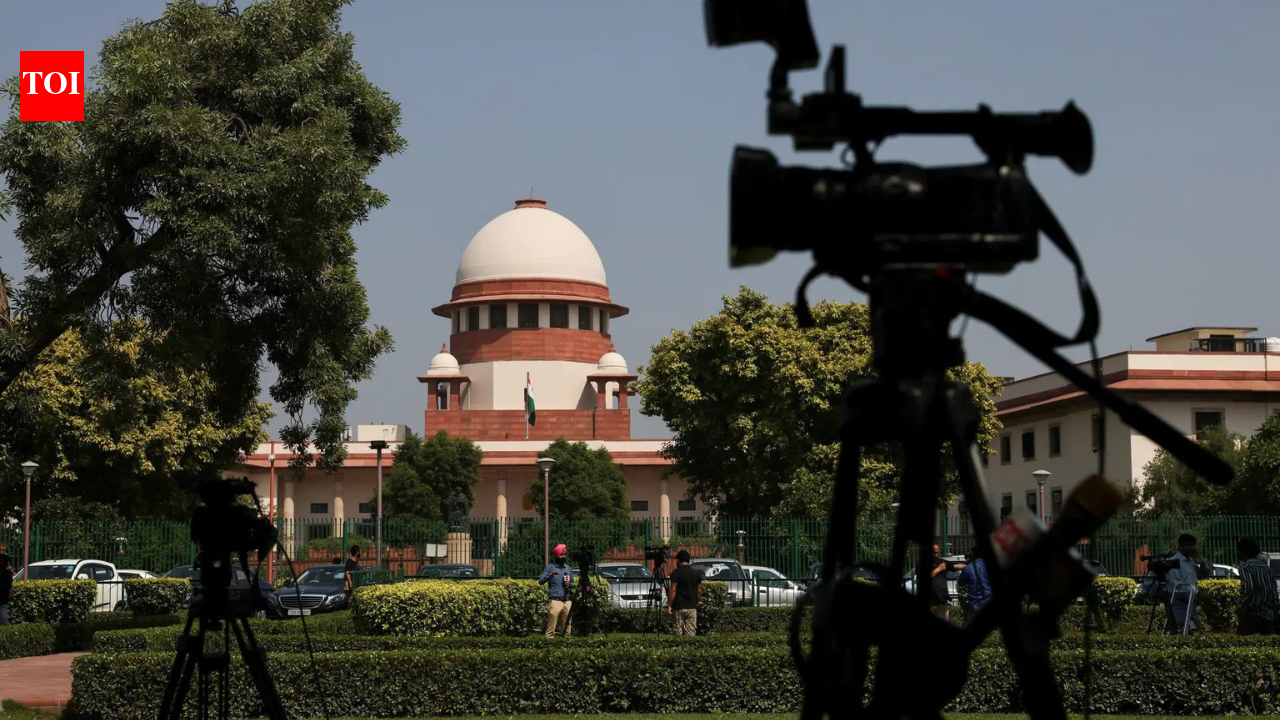
NEW DELHI: Supreme Court’s most senior judge, Justice Vikram Nath, on Sunday said artificial intelligence could at best be a facilitator for the justice delivery system but could never replace the core task – writing judgments – which would always remain with judges.Speaking on ‘Challenges, innovations and role of AI in judicial governance’ at the Supreme Court Bar Association’s first national conference in Bengaluru, Justice Nath said, “AI can be used as a tool to augment the judicial system, but it cannot replace the judgment or judges’ minds as to what is to be decided.” Justice Nath said, “There can be no fixed data set in millions of cases dealt by courts. Take, for example, matrimonial cases, settlement of commercial cases, balancing equities – the court can understand the nuances of each case, which is factually different from the other, by reading papers and hearing the counsel. Judges alone know how to strike a balance in family partition suits.”He added, “AI cannot decide cases involving constitutional issues. There are innumerable complexities in criminal cases – how to appreciate the evidence, when to grant bail; in the same FIR there can be 10 accused, court may grant bail to nine but deny one. AI can’t deal with all these. AI is there to help us in several aspects – collate data, categorise cases, translations etc. But the judgment will remain with judges only.“Justice Nath also commended the initiative taken by SCBA president Vikas Singh on the conference.SC judge A G Masih said, “AI is not here to replace lawyers and judges. Data-driven intelligence cannot replace human conscience. The act of the courts rests on public faith to deliver justice by carefully balancing rights and liabilities and undertaking an assessment of factual circumstances with a human heart. Feelings cannot be replicated by AI, which can facilitate judicial activities but cannot substitute them.“The judge said there seemed to be a need to institutionalise guidelines for court technology and, perhaps, create a judicial-tech oversight board to maintain and check AI tools for bias and to review an automated draft. Senior advocate Sajan Poovayya said hallucination was implicit in mankind and mankind made AI. Therefore, hallucination was also implicit in AI and it was that which made it dangerous for the judiciary as it presented case law and logic that was non-existent or imaginary, he said.Delhi HC Chief Justice D K Upadhyay brought up the use of AI-assisted judgment drafting software in countries like Brazil, Argentina, Singapore, the UK, the UAE and China. “Collectively, AI is increasingly integrated in multiple domains of judicial governance from administrative efficiency to substantive support functions, while simultaneously raising important questions about accountability, fairness and limits of automation in the judicial system,” he said.Justice Upadhyay added, “AI-manipulated images, deepfakes deployed maliciously undermine the integrity of evidence and adversely impact administration of justice. Courts may have to re-examine the traditional reliance on photographs and videos… Burden on parties to establish authenticity will increase and the judiciary would have to rely more on forensic tests of such evidence.”
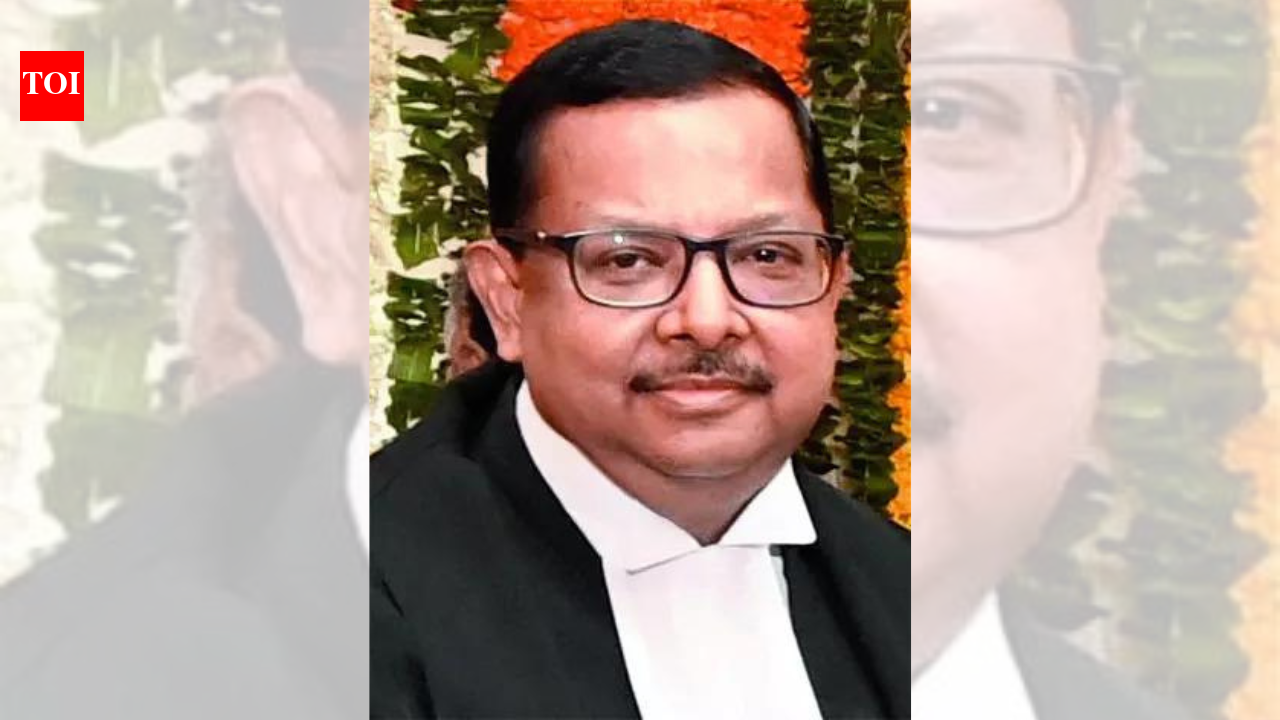
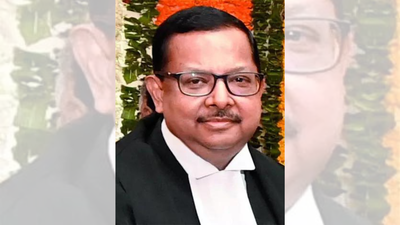
NEW DELHI: Supreme Court judge Justice Ujjal Bhuyan on Sunday said in merit-based selections, women secure more than 50% of judicial officers’ posts across states, but in the collegium’s subjective assessment criteria, only a minuscule get selected as judges of high courts and SC.Addressing the Supreme Court Bar Association’s first national conference at Bengaluru, Justice Bhuyan said that judicial services across states had a very good representation of women, some even crossing the 50% mark. “But has it been replicated in constitutional courts? That is the question. That is where the scrutiny of the collegium system comes in. Why is it that when the assessment becomes subjective, women do not make the grade? Out of 287 SC judges since 1950, we had a total of only 11 women judges. Why? Starting with Fathima Beevi and now Justice Nagarathna, it is some 2%,” he said.Justice Bhuyan said women made up only 14% of HC judges. “In the 25 HCs, we have only two women chief justices (CJs) – Gujarat and Meghalaya. One more will become CJ in a month’s time. That is also highly inadequate, three out of 25 HCs,” he said. “My research shows that whenever the recruitment process is objective, more women enter the judicial space. When India becomes a developed nation (Viksit Bharat by 2047), there should be more parity in gender representation in judiciary. SC must be a rainbow institution, truly reflecting the diversity of the nation,” Justice Bhuyan said.Former CJI B R Gavai said there were multiple SC rulings that stated if the name of a person recommended for judgeship in an HC was returned for reconsideration by govt and reiterated by the collegium, govt had no option but to appoint them. “But there are many instances where even after repeated reiterations, the persons have not been appointed,” he said, adding, “The collegium is not a perfect system but at least for the time being, it is best suited for the country.“He said the judiciary had been criticised mainly for its inability to tackle arrears and backlogs, delay in disposal of cases at various levels, lack of transparency in administrative decision-making (appointment of judges), long vacations, and lack of diversity, particularly representation of women in constitutional courts.The former CJI said SC had erred on many instances, including in the first major judgment related to right to life in the A K Gopalan case to the Emergency-era A D M Jabalpur case. “Criticism is important for any institution, including the judiciary,” he said.He recalled the first speech of the first CJI, Harilal Jekisondas Kania, who had said SC must operate independent of the legislature and the executive while interpreting the Constitution as a living document.Justice Bhuyan said, “SC must earn the respect of citizens, not demand it… Judicial power relies not just on law but trust and legitimacy. Accountability, integrity and transparency must be made essential for the judiciary to function effectively in a democratic society. The judiciary neither has the purse nor the sword. Its only asset is the goodwill of people, which is the core of judicial strength.”He said in a developed nation, institutions must have functional autonomy. “Investigating agencies as well as the media should be able to discharge their duties without any political interference or control. Development should be in accordance with directive principles of state policy and no one should be left out of development, especially those who have been historically neglected.”
NEW DELHI: SC judge Ujjal Bhuyan Sunday said the political executive’s goal of Viksit Bharat by 2047 requires more room for debate and dissent without criminalising these, and erasure of “deep social fault lines” reflected in caste-based discrimination and atrocities on Dalits. Addressing the first national conference of SC Bar Association in Bengaluru, Justice Bhuyan said mindless arrests under anti-terrorism law Unlawful Activities (Prevention) Act with minuscule convictions “cannot be a model of Viksit Bharat”. He said, “My model of Viksit Bharat is equal distribution of wealth and disappearance of acute disparity… which is also the goal set in directive principles of state policies in Constitution.” He said in Viksit Bharat, “judiciary must remain judiciary… it can’t be an eternal critic or a cheerleader.”‘Low convictions under UAPA show overuse, if not misuse, of the law’Presenting data — from 2019 till 2023 — of people arrested under UAPA, he said thousands have been arrested, but the average conviction rate hovered around 5%. “It shows consistently low conviction. What does it indicate — overuse if not misuse (of the law) and its impact on the criminal justice system. How much burden does it put on courts? This shows the vast majority were arrested but could not be convicted. This indicates many arrests were premature and unsupported by sufficient evidence,” he said.“With a general conviction rate of 5% or less, and acquittal of more than 95% of UAPA cases, why should an accused be kept in jail without even filing a chargesheet against him? This can’t be a model of Viksit Bharat,” said Justice Bhuyan, adding that such case overload causes backlog, pendency, and delay in justice delivery, together impacting the general principle of ‘bail is the norm and jail the exception’.
Watch
Owaisi Blames Congress, Hits Out at UAPA After SC Denies Bail To Umar Khalid
He said in Viksit Bharat there should be more room for debate and dissent. “Debate should not be criminalised. There should be more tolerance towards diverse views. Divergent views should be respected. There should be more tolerance towards diverse views and criticism,” he said.Justice Bhuyan said the political executive has fixed a goal for a developed India. “With all key players in the economic and social sector performing well, this is certainly an achievable target. After all, why should India not be a developed country for so long.” But, he said at the end of the day it is a political statement, recalling that the political executive had created a catchy slogan like ‘garibi hatao’ in the 1970s.“I have doubts whether the judiciary, though an organ of the State, but separate and distinct from other organs, should join this bandwagon. Without meaning any disrespect, the appropriate target for the judiciary should be the year 2050.”“By then, both our Constitution and SC would have completed 100 years, which is a significant milestone to look back and take stock of how we have travelled this far and what is the roadmap ahead,” he said.Referring to the Aug 1986 SC judgment in the Bijoe Emmanuel case in which the court had ruled in favour of children from Jehovah’s Witnesses sect refusing to sing the national anthem in school, Justice Bhuyan said only a courageous judge like O Chinnappa Reddy could have penned such a judgment. He said tolerance, which is taught by our tradition and Constitution, must be practiced.On societal imbalances caused by atrocities on Dalits coupled with caste-based discriminations, Justice Bhuyan said, “Deep social fault lines are there. Viksit Bharat cannot countenance such fault lines.”“Parents cannot insist that their children will not have food prepared by a Dalit woman. That cannot be a Viksit Bharat model. We cannot have Viksit Bharat when Dalit people are made to stand in the corridor and people urinate on them. This can’t be the model of development. Respect for the individual must be protected.”