Breaking News
IPL 2026 | Prithvi Shaw’s homecoming: ‘Delhi, your boy is home’ – WATCH | Cricket News


IPL 2026 | Prithvi Shaw's homecoming: ‘Delhi, your boy is home' - WATCH

Indian opener Prithvi Shaw made an emotional return to the Arun Jaitley Stadium as he rejoined the Delhi Capitals (DC) camp ahead of the Indian Premier League (IPL) 2026 season, set to begin on March 28.Shaw’s long-standing association with Delhi Capitals came to an end after seven seasons when the franchise released him ahead of the IPL 2025 auction. The 26-year-old endured a difficult phase, going unsold as Delhi chose not to re-sign him. His wait for another opportunity continued into the IPL 2026 auction, where he was initially overlooked in the main rounds. However, fortunes turned during the accelerated phase, as Shaw was among the final set of players picked, securing a Rs 75 lakh deal with his former franchise.

Watch

Ajit Agarkar knocks BCCI door, makes a huge extension request | World Cup

“Delhi, Your Boy is Home”

Delhi Capitals marked Shaw’s return with an emotional video on social media, captioned “Our Boy is back home.”In the video, Shaw reflected on his bond with the franchise and the stadium:“You don’t forget a place like Kotla. Not the noise. Not the silence. Not what it made you. Some stories don’t end. They come back. Delhi, your boy is home.”

Shaw’s Journey with Delhi Capitals

Shaw was originally signed by Delhi Capitals for Rs 1.2 crore following India’s triumph in the 2018 U-19 World Cup, where he captained the side. Over seven seasons, he featured in 79 matches, scoring 1,892 runs at an average of 23.5, including 14 half-centuries. Delhi Capitals narrowly missed out on a playoff spot last season, finishing fifth with seven wins in 14 matches. Still chasing their maiden IPL title, the franchise will be eager to turn things around in the upcoming edition.As per the schedule, Delhi Capitals will kick off their IPL 2026 campaign against the Lucknow Super Giants at the Ekana Cricket Stadium in Lucknow on April 1. Delhi Capitals Squad: Axar Patel(C), KL Rahul, Karun Nair, Mitchell Starc, David Miller, Ben Duckett, Pathum Nissanka, Sahil Parakh, Prithvi Shaw, Abhishek Porel, Tristan Stubbs, Sameer Rizvi, Ashutosh Sharma, Vipraj Nigam, Ajay Mandal, Tripurana Vijay, Madhav Tiwari, Auqib Dar, Nitish Rana, T. Natrajan, Mukesh Kumar, Dushmantha Chameera, Lungisani Ngidi, Kyle Jamieson, Kuldeep Yadav.

Banner Insert


Source link

Beyond a diagnosis: Rethinking Down Syndrome in a more inclusive world | India News


Beyond a diagnosis: Rethinking Down Syndrome in a more inclusive world

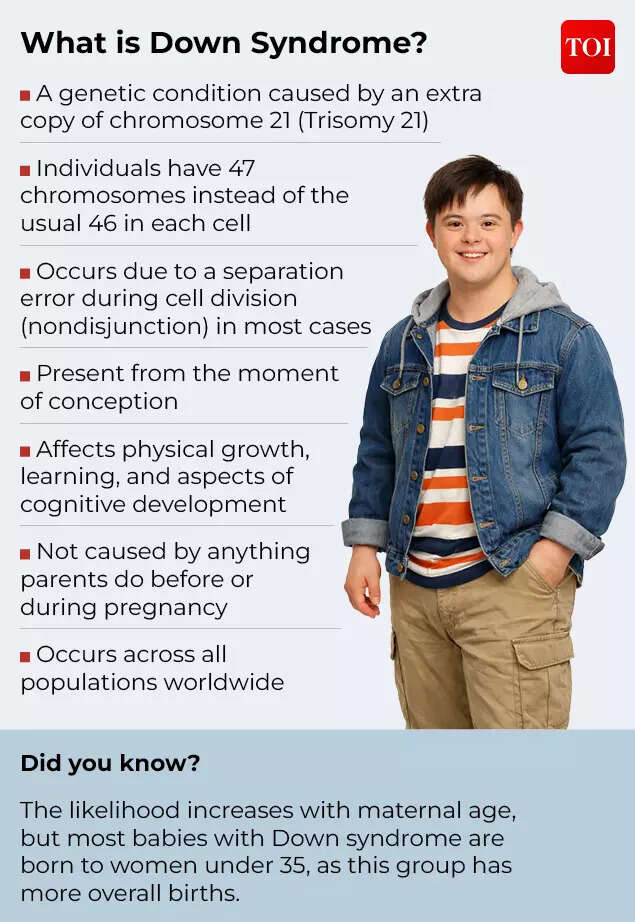
Every year on March 21, the world observes World Down Syndrome Day, a date that reflects the very nature of the condition it represents. The symbolism of 3/21 marks the presence of three copies of chromosome 21, a genetic variation that shapes millions of lives across the globe.Down syndrome, or Trisomy 21, is the most common chromosomal condition worldwide. It occurs when an individual has an extra copy of chromosome 21, resulting in 47 chromosomes instead of the usual 46 in each cell, influencing physical growth, cognitive development, and aspects of social skill development. It is present from the moment of conception and occurs sporadically, meaning it is not caused by anything a parent does during or before pregnancy. Only a small proportion of cases, around 1%, are hereditary, typically due to translocation, where genetic material is passed on to the child from a parent.According to the Down Syndrome Federation of India, it affects approximately one in every 800 to 1,000 live births in India, amounting to nearly 30,000 children each year.Yet, while its biology is relatively well understood, the story of Down syndrome is not defined by chromosomes alone. It is shaped by access to care, early intervention, inclusion, and, perhaps most importantly, by how society chooses to see it.
Down

What is Down Syndrome?

Understanding the genetics

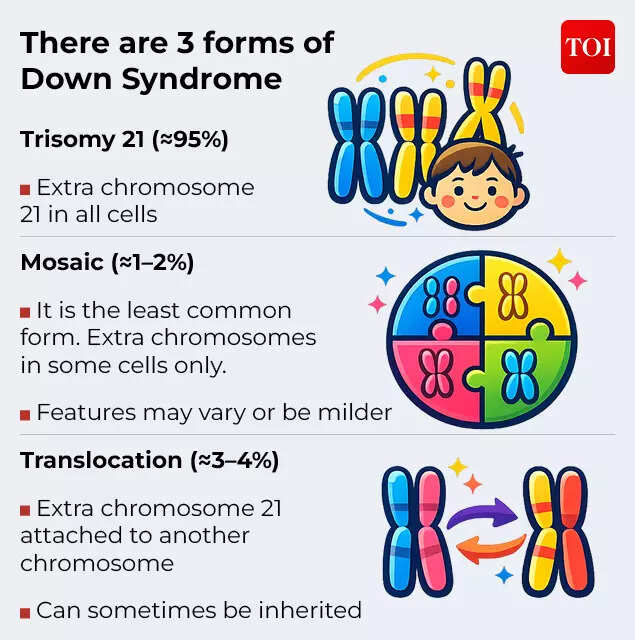
In nearly 95% of cases, Down syndrome occurs due to nondisjunction, a process that occurs when the two copies of chromosome 21 fail to separate during egg or sperm formation, leading to a fertilized egg with three copies of chromosome 21 instead of two (trisomy 21). This is why it is the predominant cause.However, there are two less common forms: mosaic and translocation.Mosaic Down syndrome – Here, the nondisjunction event happens after fertilization in one of the early cell divisions. As a result, only a proportion of cells carry the extra chromosome. The degree of mosaicism can influence the severity of physical and cognitive traits, often making them less pronounced than in full trisomy 21.Translocation Down syndrome – In this form, an extra copy of chromosome 21 attaches to another chromosome (often chromosome 14). Unlike nondisjunction, this form can sometimes be inherited from a parent who carries a balanced translocation, meaning the parent has no extra chromosome material and may be unaffected.
Down 2

The 3 forms of Down Syndrome

Though less common, both forms highlight an important reality that Down syndrome is not uniform.

Recognising early signs and confirming diagnosis

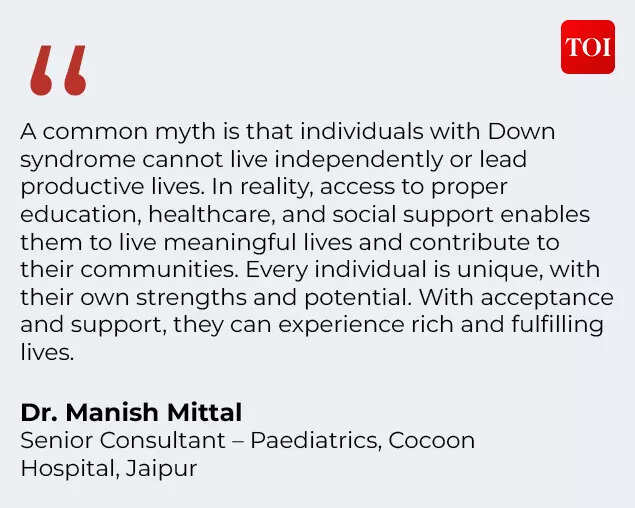
In infancy, early signs often present as developmental delays or certain physical features.“Early signs of Down syndrome in infants may include certain physical features and developmental delays, such as slower head control or delayed response to stimuli,” explains Dr. Manish Mittal, senior consultant-paediatric.However, these signs can overlap with typical developmental variations.“A definitive diagnosis cannot rely on observation alone. Genetic testing is essential to confirm the condition,” he says.Doctors typically confirm the diagnosis through a karyotype test, a chromosomal analysis performed on a blood sample. During pregnancy, screening methods such as ultrasound markers and maternal blood tests may indicate the likelihood, followed by confirmatory procedures like amniocentesis or chorionic villus sampling (CVS).“Early screening, along with timely medical evaluation and intervention, plays a crucial role in ensuring better health and developmental outcomes,” Dr. Mittal adds.
Down 4

.

Physical traits and developmental differences

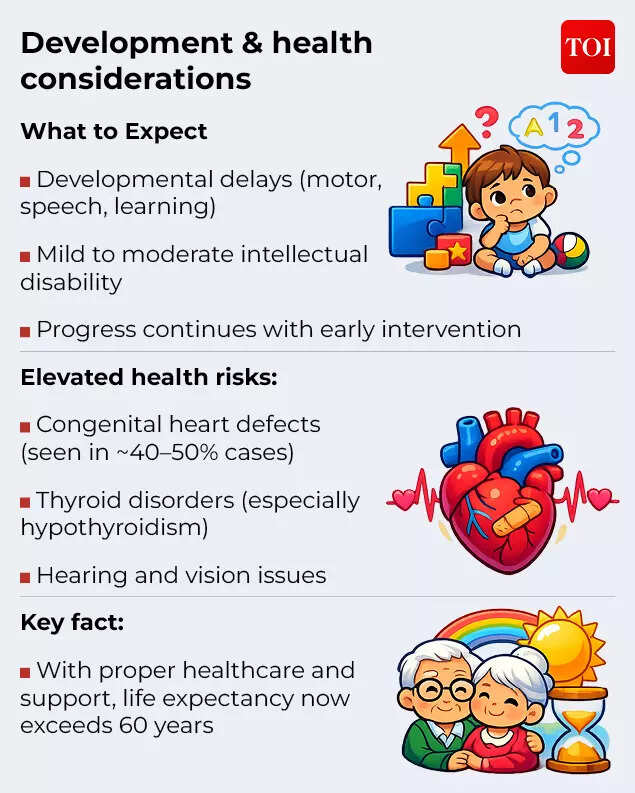
Down syndrome is associated with a range of physical characteristics, though not all individuals will display all of them.Common features may include a flat facial profile, small head, flat nasal bridge, upward-slanting eyes, a small mouth with a relatively larger tongue, and most commonly low muscle tone. Individuals may also have smaller, low-set ears, short stature, broad hands with a single deep crease across the palm, a curved fifth finger, and a noticeable gap between the toes. Increased joint flexibility is also frequently observed.Alongside these physical traits, developmental delays are common such as mild to moderate intellectual disability.“Children with Down syndrome are delayed in achieving their motor and cognitive milestones,” says Dr. Ratna Dua Puri, chairperson, Institute of Medical Genetics and Genomics, Sir Ganga Ram Hospital.
Down 3

.

However, she emphasizes that these delays should not be seen as limitations. “Children with Down syndrome are capable of achieving all major life milestones and are increasingly participating in a wide range of activities. “However, these children can do everything in life. They will walk, they can go to school, and now they are doing various activities” Dr. Ratna adds.Thus, it is important to recognize that developmental delays in individuals with Down syndrome should not be treated as absolute developmental limits for their potential as the pace of development may differ, but progress is still there.While some individuals may not pursue higher education, many attend school and acquire life skills, and increasingly find employment opportunities.

The critical window: Why early intervention matters

Prenatal screening methods, including ultrasound markers and maternal blood tests, can help identify the likelihood of Down syndrome during pregnancy, allowing families to allowing families to better understand the condition and prepare for early care and supportEarly intervention plays a defining role in shaping outcomes.“This involves helping them with their muscle tone so that they can sit, stand and hold their heads,” explains Dr. Puri. “It is also important for assisting them in developing language and communication.”Therapies such as occupational therapy, physical therapy, and speech therapy form the backbone of this support, often delivered through specialised child development centres that bring together multidisciplinary care.But these structured sessions are only part of the process.“These are just one-hour sessions. Parents need to incorporate what they learn into their daily interactions with the child, in a fun and engaging way. That is what leads to the best outcomes,” she says.She also emphasises reducing passive screen exposure and encouraging direct engagement, talking, playing, and stimulating the child’s senses.It is in these everyday moments that development gathers momentum.The United Nations also emphasises that access to adequate healthcare, early intervention programmes, inclusive education, and appropriate research is vital to the growth and development of individuals with Down syndrome.

Pregnancy, fertility, and recurrence

One of the most common misconceptions around Down syndrome relates to maternal age. While the likelihood increases with age, the broader picture is more complex.A significant proportion, around 85%, of children with Down syndrome are born to mothers under 35, largely because more births occur in this age group.For families who already have one child with Down syndrome, the chance of having another child with the condition is slightly higher than the general population, in addition to the baseline risk associated with maternal age.Fertility patterns also differ in individuals with Down Syndrome. Males with Down syndrome typically have reduced sperm counts and as a result they may experience infertility. Females, however, can have regular menstrual cycles and may conceive and carry a pregnancy to term, making appropriate counselling and healthcare guidance essential.

Health considerations across the lifespan

Individuals with Down syndrome may face a range of associated health conditions, particularly if not monitored early.Congenital heart defects are among the most common, often requiring medical or surgical management in infancy. Thyroid disorders, especially hypothyroidism, are also frequently observed. Hearing and vision impairments, recurrent infections, and low muscle tone can further influence early development.As individuals grow older, the risk profile evolves. There is a higher likelihood of obesity, diabetes, and metabolic syndrome, along with conditions such as cataracts and other visual problems. Mental health concerns, including depression, may emerge, particularly during life transitions.There is also an increased risk of early-onset dementia, with symptoms similar to Alzheimer’s disease. In many cases, early signs may first appear as subtle changes in behaviour rather than memory alone, making close observation essential.At the same time, individuals with Down syndrome appear to be less prone to certain conditions common in the general population, including atherosclerosis and some solid tumour cancers.With consistent medical care and monitoring, many individuals today live longer, healthier lives, with life expectancy now extending to around 60 years and beyond.

Education, transition, and adulthood

The landscape of education is steadily evolving. Increasingly, children with Down syndrome are included in mainstream classrooms, sometimes partially, often fully, depending on individual abilities.Many go on to complete school education, pursue vocational training, and in some cases, engage in post-secondary education.As they transition into adulthood, new challenges and opportunities emerge. Some individuals move into supported housing or independent living arrangements, take up employment, and build social relationships.This transition, however, requires careful support. What determines these outcomes is not just ability, but access to early support and inclusive environments.

Inclusion in education and society

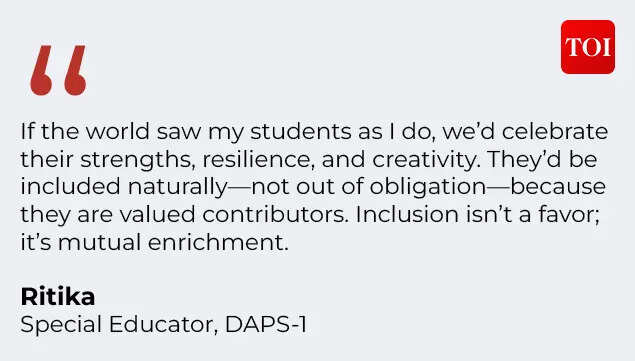
The conversation around Down syndrome is increasingly shifting, from care to inclusion.Children today are part of classrooms, playgrounds, and communities. Adults are entering workplaces, contributing across sectors, and building independent lives.Yet, true inclusion is not just about access, it is about perception.Ritika, a special educator, points out that many societal beliefs continue to underestimate what individuals with Down syndrome are capable of achieving.She beautifully captures this perspective, “If the world could see my students the way I do, we would shift our focus from their limitations to their incredible strengths. We would celebrate their resilience, creativity, and infectious enthusiasm. Inclusion would no longer be an obligation, but a natural choice, because they are valuable contributors to society.My students would be asked about their dreams, their ideas, and their passions, not just their condition. We would learn from their unique ways of problem-solving, their ability to find joy in simple moments, and their deep capacity for empathy and love. Ultimately, we’d realise that inclusion isn’t a favour; it’s a mutual enrichment”, she adds.
Down 5

.

As conversations around Down syndrome continue to evolve, the shift that is needed is not just in awareness, but in action and acceptance. Inclusion must move beyond policy into everyday practice, in education, healthcare, workplaces, and communities. Ultimately, the question is not what individuals with Down syndrome can achieve, but whether society is willing to create the supportive conditions that allow them to reach their full potential and be truly supported and accepted as they are.


Source link

Virat Kohli reacts to viral ‘chartered London flights’ rumour ahead of IPL 2026 | Cricket News


Virat Kohli reacts to viral ‘chartered London flights’ rumour ahead of IPL 2026
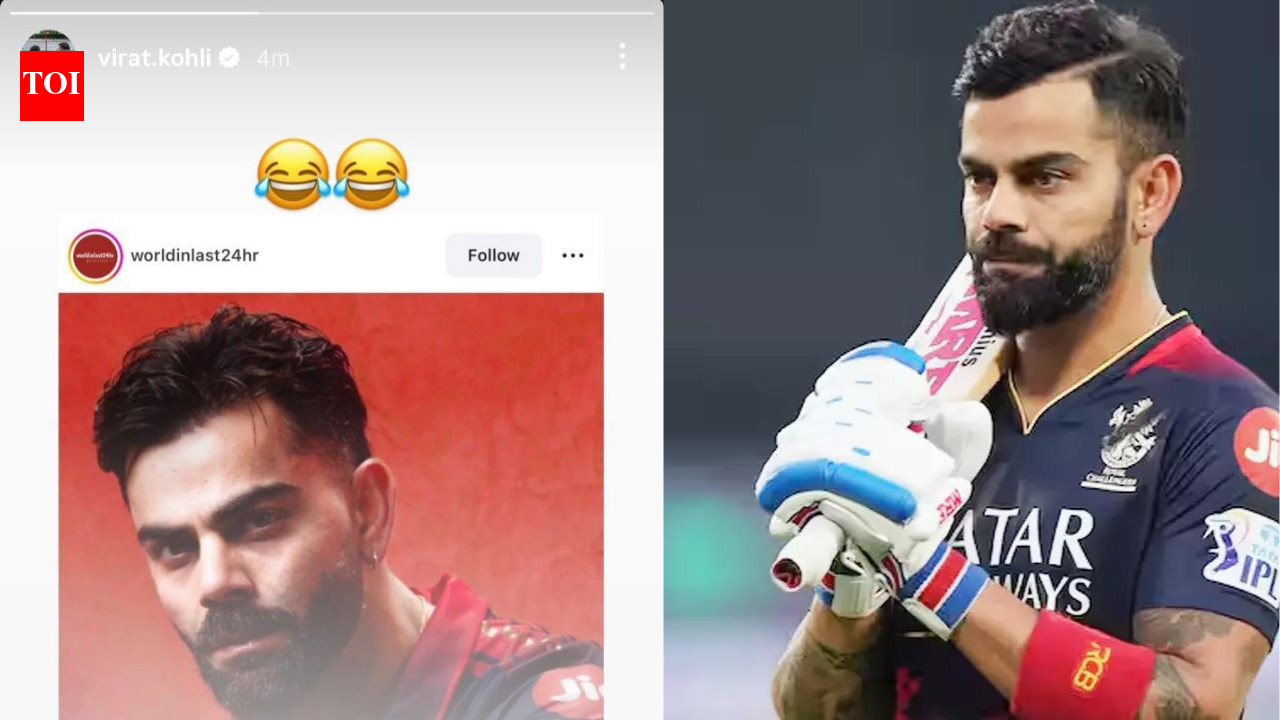
Virat Kohli laughs off (Screen Grab)

Indian cricket superstar and Royal Challengers Bengaluru (RCB) icon Virat Kohli has put an end to speculation suggesting he requested special travel arrangements during the Indian Premier League (IPL) 2026 season.Reports had earlier claimed that Kohli, who has been spending considerable time in London in recent years, had asked the RCB management for access to chartered flights between India and the UK. The reports further suggested that he planned to travel back to London during breaks of more than three days to spend time with his family.

Watch

IPL 2026: RCB confirm their home venue for upcoming edition

However, Kohli swiftly dismissed these claims. Taking to Instagram, he shared one such report on his story along with laughing emojis, making it clear that the rumours were baseless and untrue.Taking to Instagram, Virat posted one of these reports on his story along with laughing emojis, indicating that these reports are, after all, false.

RCB Begin Title Defence

The IPL 2026 season is set to begin on March 28, with defending champions RCB taking on Sunrisers Hyderabad in Bengaluru. After finally lifting their maiden IPL title last season, Kohli will once again be central to RCB’s campaign. Currently at 8,661 runs in 267 matches with eight centuries and 63 fifties, Virat will also be aiming to become the first player to reach the 9,000 run mark in IPL history.Having made 9,085 runs in 282 matches for RCB across IPL and now-defunct Champions League T20, Virat is one extraordinary season away from becoming the first-ever player to score 10,000 runs for a single IPL team in all of T20 cricket.Having made 13,543 runs in 414 T20Is, including nine centuries and 105 fifties, Virat will also be aiming to join West Indies titans Chris Gayle (14,562 runs), Kieron Pollard (14,482 runs), England’s Alex Hales (14,449 runs), and Australian legend David Warner (14,028 runs) as the fifth member of the 14,000-run club in T20 cricket.

Poll

Which aspect of Kohli do you admire the most?

Stellar Form Continues

Kohli enjoyed an outstanding IPL 2025 season, scoring 657 runs in 15 innings at an average of 54.75 and a strike rate of 144.71. With eight half-centuries, he finished as RCB’s leading run-scorer and the third-highest run-getter overall.

Banner Insert


Source link

​Blue saree brigade: Women at the heart of India’s water systems | India News


​Blue saree brigade: Women at the heart of India’s water systems
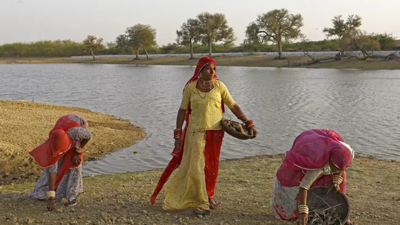
World Water Day 2026: How India’s Jal Sahelis are leading the way (Image credits: Unicef)

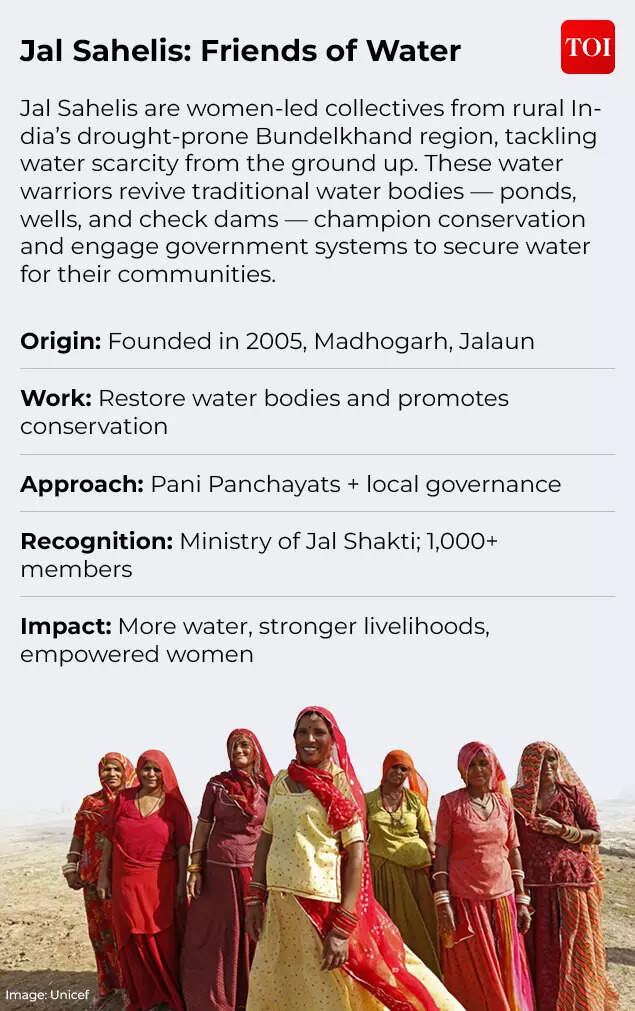
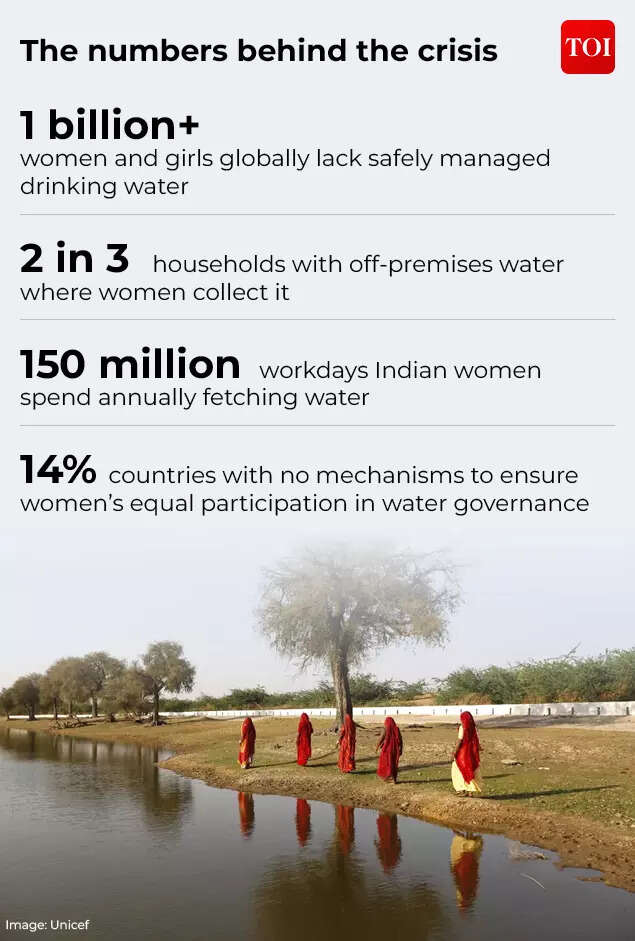
In the parched flatlands of Bundelkhand, one of India’s most water-stressed regions, a woman wakes before sunrise. She does not head to a well. She heads to a meeting. As a Jal Saheli — a “Friend of Water” — she is part of a network of roughly 1,530 women across 321 villages who have spent the last decade digging check dams, reviving ancient ponds, repairing handpumps, and holding councils on groundwater. They are mostly illiterate. They are entirely indispensable.On this World Water Day, the United Nations has made its message unambiguous: the global water crisis is, at its core, a gender crisis — and the solution runs through women. The 2026 campaign, themed “Water and Gender: Where Water Flows, Equality Grows,” calls for a transformative, rights-based approach where women have equal voice, leadership, and opportunity in water decision-making. Across India, quietly and without ceremony, that transformation is already underway.

The Jal Saheli Movement

When the rains failed for the thirteenth time in Bundelkhand, Shirkunwar Rajput – woman who led the Paani Panchayat in Udguwan (Lalitpur)- did not wait for the government. She gathered the women of her village and said something that would eventually be carved in stone on a check dam: “In Bundelkhand, fetching water is entirely a woman or girl’s job. Hence, women have the first right on water resources,” as quoted by Mongabay.The Jal Saheli movement, founded in 2005 from Madhogarh in Jalaun, Uttar Pradesh, grew from that conviction. By 2024, around 1,530 Jal Sahelis were active across 321 villages in the states of Uttar Pradesh and Madhya Pradesh. These women — aged between 18 and 70, clad in simple blue sarees have built over one hundred check dams, revived traditional ponds, installed new handpumps and created soak pits that reduce run-off waste.The impact has been agricultural as well as domestic. Before the Jal Sahelis intervened, farmers in some of these villages could grow only a single crop of wheat per year. Assured irrigation has since enabled two to three annual harvests. Groundwater recharge from the check dams has brought functioning wells back to communities where children used to share a single pump among 1,200 people.Welthungerhilfe, working alongside the NGO Parmarth Samaj Sevi Sansthan, trained these women volunteers in water resource planning, water table monitoring, and conservation techniques before sending them back to their villages as experts. The model has since drawn the attention of government departments in Uttar Pradesh and Madhya Pradesh, both of which have expressed interest in scaling it to 5,000 villages.

.

Governing the underground: Atal Bhujal Yojana

India’s aquifers are in crisis. The Central Ground Water Board classified 256 districts as water-stressed as recently as 2020, and the country’s average per-capita water availability is projected to decline sharply by 2050. Against this backdrop, the Government of India launched the Atal Bhujal Yojana (Atal Jal) in 2020 — a Rs. 6,000 crore ($756 million) scheme co-funded by the World Bank, targeting 8,562 gram panchayats across seven water-stressed states: Gujarat, Haryana, Karnataka, Madhya Pradesh, Maharashtra, Rajasthan, and Uttar Pradesh.What makes Atal Jal distinctive is not just its budget but its politics. The scheme mandates that at least 33 percent of members of Village Water and Sanitation Committees (VWSCs) must be women. In practice, the representation has gone further: women now hold an average of 44 percent of seats across the scheme’s gram panchayats. Crucially, 33 percent of women are occupying actual decision-making positions — President, Vice President, Secretary, and Treasurer — within Water User Associations.By the scheme’s own figures, the results are material: an area of 670,802 hectares has been covered under demand-side water efficiency activities, saving an estimated 1,716 million cubic metres of water through micro-irrigation, crop diversification, and rainwater harvesting. A further 642 million cubic metres of groundwater has been recharged through the construction of 77,052 structures. Around 30 million people have benefited, at a per-beneficiary cost of roughly Rs. 2,627.In Haryana, the scheme has taken on a distinctly feminine face through the figure of the Jal Saheli — a local resource person, usually a woman from a self-help group, trained to conduct water quality tests, communicate groundwater data to communities, and advocate for efficient irrigation practices. In Rajasthan’s Phalodi district, Jal Sahelis working under UNICEF and the NGO Unnati revived a centuries-old village pond, raising Rs. 1.5 million in community funds alongside MGNREGA allocations.

Bhubaneswar ‘caller club’

The water revolution in India is not only happening in fields and check dams. It is also happening through smartphones in urban slums.Between January 2023 and December 2024, the Centre for Advocacy and Research (CFAR), supported by the Australian Government’s Water for Women Fund, ran a landmark urban WASH initiative across 215 informal settlements in Bhubaneswar, Odisha. At its heart was a “Caller Club”: trained community members who called on behalf of residents to log and escalate water, sanitation, and hygiene grievances through the Janhit-Vaani Interactive Voice Response System (IVRS).Community members made a total of 18,750 calls over the two-year period. Women led the effort, accounting for 10,419 calls — and providing the majority of feedback, with 5,610 calls on water-related issues specifically. Of the 8,517 water-related grievances recorded, 4,550 (53.4 percent) were formally addressed, benefiting 8,696 people. Sanitation grievances fared even better: 4,783 of 6,767 reported issues (70.7 percent) were resolved, and hygiene-related complaints saw a 98.4 percent resolution rate.The urban local body, the Public Health Engineering Department, and Watco responded positively to online grievances, working with communities to both resolve issues and educate residents on infrastructure maintenance. The project also funded climate-resilient infrastructure upgrades across 126 settlements: elevated toilets to prevent monsoon flooding, stormwater drains, and solar-powered water filtration plants — all designed with input from the women who use them.Laxmipriya Lenka, President of the Slum Development Association in Bhubaneswar, was among the voices that made this feedback loop work. Her leadership exemplifies what the UN Women’s 2026 World Water Day campaign calls for: not just access to water, but agency over it.

Evidence for women’s leadership

The case for women’s centrality in water governance is not merely moral — it is empirical. A landmark study on India’s panchayats, cited by UN Women, found that the number of drinking water projects in areas with women-led local councils was 62 percent higher than in those led by men. Research across 44 water projects in Asia and Africa, cited by the World Resources Institute, found that when women helped shape water policies and institutions, communities used water more sustainably and equitably.Yet the structural barriers remain significant. Fewer than 50 countries globally have laws or policies that specifically mention women’s participation in water resources management. In India, the national water policies of 1987, 2002, and 2012 consistently sidelined women — policies drafted, largely, by men who did not traditionally carry water home. It is only with schemes like Jal Jeevan Mission and Atal Bhujal Yojana, and the grassroots pressure of movements like the Jal Sahelis, that this omission is beginning to be corrected.

.

The economic case is equally compelling. In India alone, productivity losses attributable to women’s water-collection duties are estimated to be equivalent to approximately Rs. 10 billion — or roughly $160 billion, nearly 4.7 percent of GDP. Every tap closer to home, every check dam that holds monsoon water through March, translates into hours returned to women: for school, for work, for rest, for leadership.Chandrakant Kumbhani, chief operating officer, Community Development, Ambuja Foundation, underscores this transformation: “Water resource development is one of the most powerful drivers of women’s empowerment in rural India. But the real shift happens when women move beyond being beneficiaries to becoming decision-makers — involved in planning, managing, and governing water systems at the village level. This participation builds confidence, visibility, and leadership, enabling them to influence not just water-related decisions, but broader community priorities. As climate pressures intensify, this role becomes even more critical. Women’s involvement strengthens how communities plan for and manage water resources, making systems more adaptive and sustainable.”

A movement in stone

The check dams of Bundelkhand carry inscriptions. In the local dialect, chiselled into concrete, they read: “Women have the first right on water resources.” This is not poetry. A declaration that the women who suffer most from scarcity are the ones who have earned the authority to manage abundance.Leela Khatun, Leader of the Jal Sahelis, described the work of reviving a village pond. “The pond is a lifeline for the villagers, particularly during the summer, drought, and periods of scanty rainfall. We undertook the task of cleaning the pond, using both manual labour and excavators,” she told UNICEF proudly. “Some of the desilting work was carried out under MGNREGA. We held discussions with the village head and the villagers to ensure a sustainable water supply.Across India — from the slum settlements of Bhubaneswar to the gram panchayats of Rajasthan, from the overexploited aquifers of Haryana to the drought-scarred plateaus of Madhya Pradesh — women like Devwati Sharma are doing the technical, political, and physical labour of water governance. They are holding meetings, filing grievances, repairing infrastructure, and teaching water literacy to communities that the formal sector has yet to reach.On this World Water Day, the United Nations has a slogan: “Where Water Flows, Equality Grows.” In India, the women who have spent years with their hands in the earth already know it to be true. The question now is whether the world’s governments, donors, and institutions will carve it into their own policies — with the same permanence that a Jal Saheli chisels it into stone.


Source link

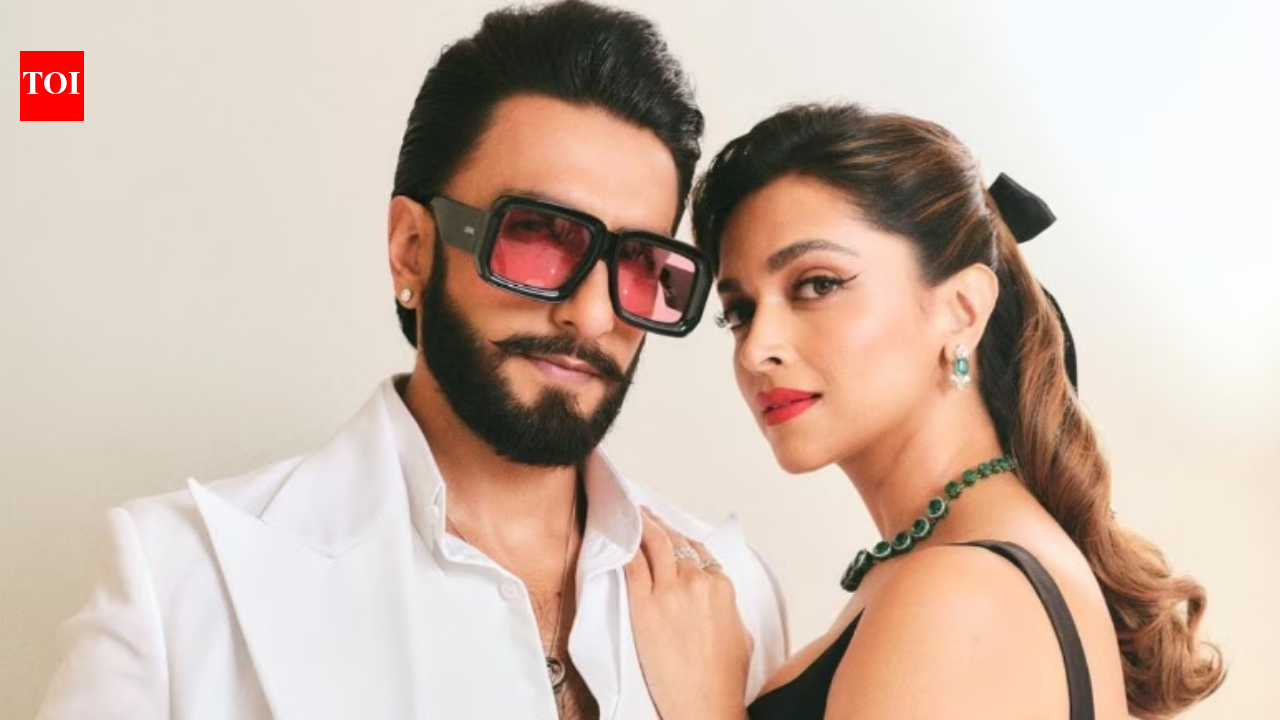
Ranveer Singh Properties: From Rs. 119 crore Bandra Quadruplex to Alibaug retreat: Decoding Ranveer Singh and Deepika Padukone’s luxury properties | Hindi Movie News


In the glamorous realm of Bollywood, Ranveer Singh and Deepika Padukone shine not just on screen but also in the real estate market, amassing a stunning property portfolio valued at roughly Rs. 181 crore. Highlights of their luxurious assets include a breathtaking Rs. 119 crore quadruplex with mesmerizing sea views in Bandra, a chic Rs.

Ranveer Singh and Deepika Padukone’s reported real estate holdings are worth roughly Rs. This totals 181 crore, based on the figures cited for their Bandra, Prabhadevi, and Alibaug homes. Their property portfolio includes a sea-facing Bandra home reportedly worth around Rs. 119 crore, a Prabhadevi apartment estimated at Rs. 40 crore, and an Alibaug villa pegged at nearly Rs. 22 crore. Together, these homes reflect both scale and exclusivity across prime addresses tied to the couple’s lifestyle.

Ranveer Singh’s house in Bandra

Ranveer Singh’s most talked-about property is his sea-facing quadruplex in Bandra. MagicBricks reports that the home is located in Sagar Resham and spreads across multiple floors. IndexTap adds that the property offers sweeping views of the Arabian Sea and stands in one of Mumbai’s most premium neighborhoods. The Bandra residence has also drawn attention for its size. According to MoneyTree Realty, the property covers about 11,266 square feet and includes a large private terrace. MagicBricks describes the home as a lavish residential space that matches the premium value often attached to celebrity properties in Bandra.

Watch

Deepika Wears Hijab & Ranveer Sports Beard In New Ad — Fans Praise Cultural Respect

Its reported price has also made headlines. MagicBricks says the deal was valued at around Rs. 119 crore. IndexTap also notes that the purchase ranks among the most expensive celebrity-linked residential transactions in Mumbai in recent years. That mix of price, scale, and location has made the Bandra home the centerpiece of Singh’s real estate profile.

Prabhadevi home and Alibaug villa details

Before acquiring the Bandra property, Ranveer Singh and Deepika Padukone were associated with a luxury apartment in Prabhadevi. MagicBricks says the couple’s earlier home was in Beaumonde Towers, a high-end residential complex known for housing several public figures. The report describes it as a stylish apartment with elegant interiors and a polished look, reflecting refined city living.

Poll

If you could own any of Ranveer Singh and Deepika Padukone's homes, which would it be?

Outside Mumbai, the couple also owns a home in Alibaug. MoneyTree Realty reports that the property serves as a holiday retreat and offers a more private setting away from the city. IndexTap describes the Alibaug villa as spacious and well suited for leisure living, with a layout that balances comfort and luxury. Taken together, these homes point to a carefully built luxury portfolio. The Bandra quadruplex speaks to scale and status. The Prabhadevi apartment reflects polished urban living. The Alibaug villa adds privacy and calm. Through each property, Ranveer Singh’s housing choices show a blend of location, exclusivity, and comfort.DISCLAIMER: Figures presented in this article are derived from various public sources and are considered approximate unless explicitly noted. We may include direct input from celebrities or their teams when available. We are open to feedback on toientertainment@timesinternet.in.


Source link

350 volunteers remove 3,000 kg plastic waste at Manori Beach on World Water Day | Mumbai News


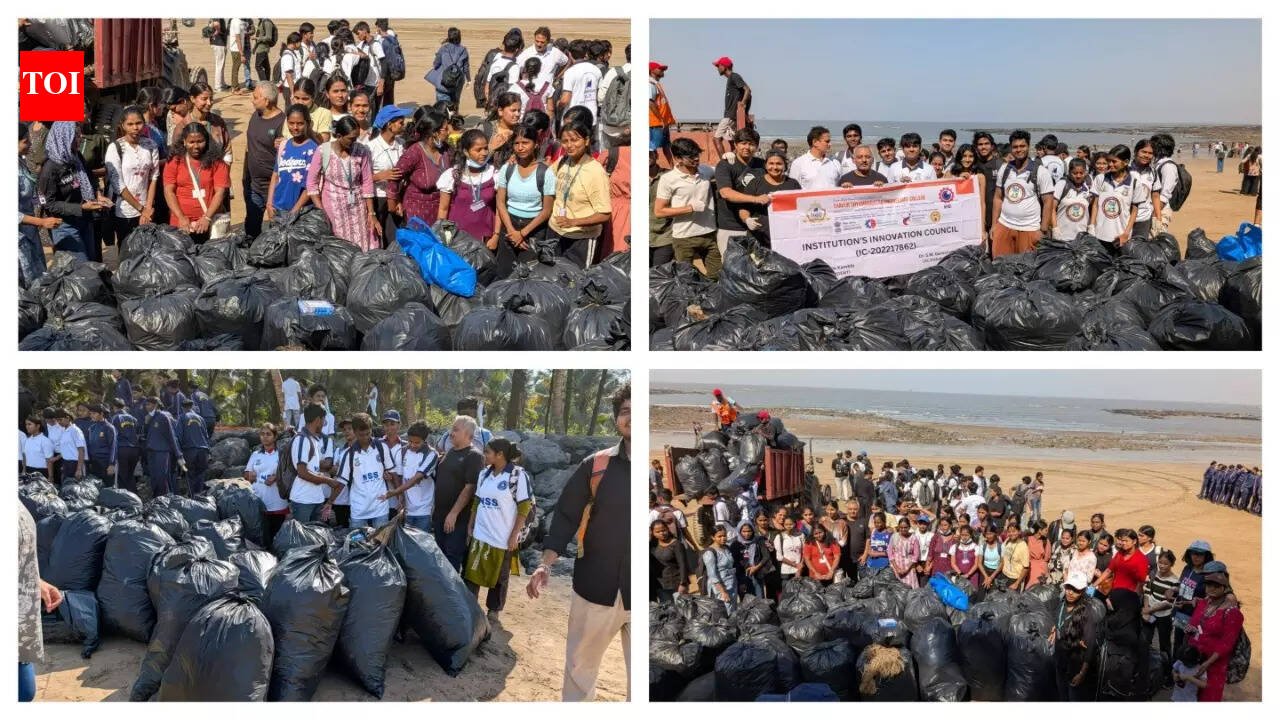
On World Water Day, 350 volunteers, led by environmentalist Subhajit Mukherjee, removed 3,000 kg of plastic from Manori Beach. This significant cleanup, involving students and various groups, filled over 400 garbage bags. The initiative, supported by Leave India, marks the start of a year-long mission to tackle the 100 tonnes of plastic still polluting the coastline.

In a powerful show of collective action on World Water Day, as many as 350 volunteers came together at Manori Beach to remove an astonishing 3,000 kilograms of plastic waste, highlighting both the scale of coastal pollution and the urgency to address it. Led by environmentalist Subhajit Mukherjee, popularly known as Mumbai’s “Green Man,” the large-scale cleanup drive was conducted on the morning of March 22, 2026, drawing participation from students, citizens and environmental groups across the city. A MORNING OF IMPACT The initiative began early, around 7:30-8:00 am, and continued till late morning, with volunteers working tirelessly for nearly four hours. By the end of the drive, more than 400 garbage bags had been filled with single-use plastic waste collected from the shoreline. Participants included students from 11 educational institutions, with active involvement from NSS, NCC and Green Clubs, underscoring the growing role of youth in environmental action. TACKLING A MOUNTING CRISIS The waste collected, ranging from plastic bottles and wrappers to other disposable material, was sent for recycling, ensuring that the effort extended beyond collection to responsible disposal. Subhajit, who has built a reputation for sustained environmental work, said the drive is only the beginning of a much larger mission. “This is the beginning of a movement and we will work throughout the year to keep the beach clean because we still have nearly 100 tonnes of plastic that needs to be removed,” he said, urging more citizens to join the effort. A CONTINUING MOVEMENT Known for his extensive work in climate action, including planting over 82,000 trees and organising regular clean-up drives, Subhajit emphasised that consistent community participation is key to restoring Mumbai’s fragile coastal ecosystems. The Manori Beach drive stands as a reminder that while the scale of pollution is daunting, collective civic action can create visible, measurable impact. As the city marked World Water Day, the message from its shores was clear: the fight against plastic pollution must be sustained, inclusive and urgent.


Source link

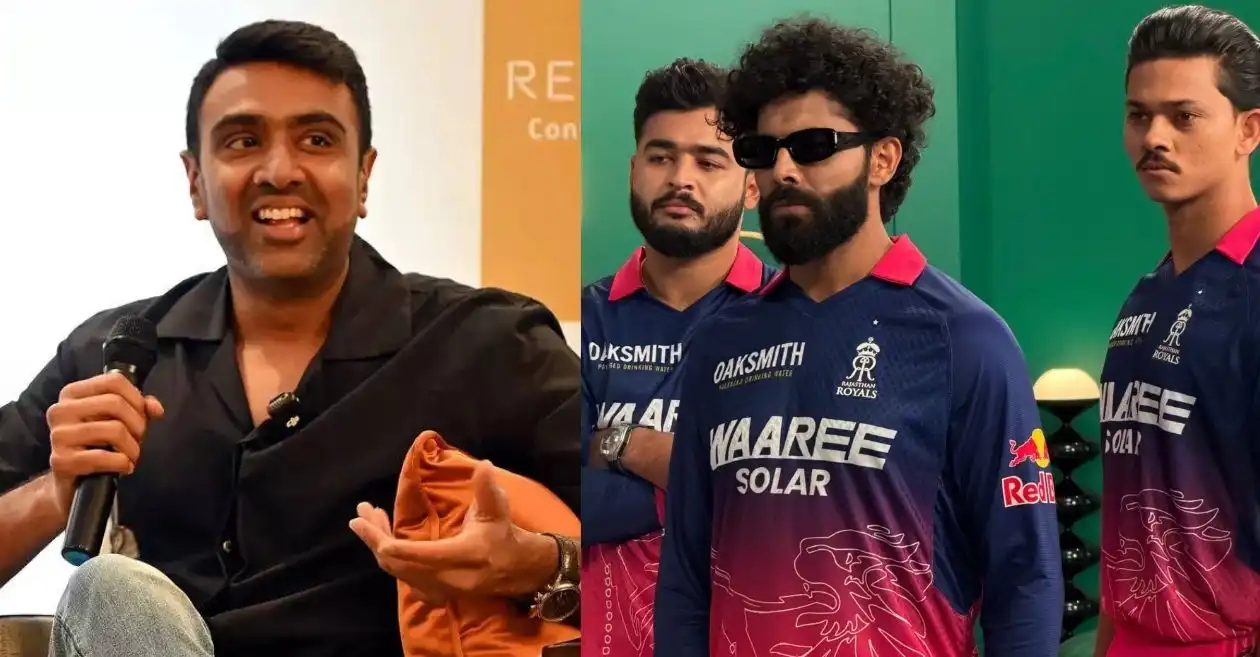
Ravichandran Ashwin names Rajasthan Royals’ probable XI for IPL 2026


The countdown to the 2026 edition of the Indian Premier League (IPL) has officially begun, with the tournament scheduled to kick off on March 28. As always, the buzz among fans is at an all-time high, with franchises unveiling new combinations, fresh strategies, and revamped squads. Among the teams generating significant interest this season are the Rajasthan Royals (RR), who appear to be entering a new era.

RR have undergone a major transformation ahead of IPL 2026. The franchise made headlines with the departure of their long-time captain Sanju Samson, who has been traded to Chennai Super Kings. In a bold move, the Royals have handed over leadership duties to young all-rounder Riyan Parag, marking a shift towards a more youthful and dynamic core.

With a mix of experienced international stars and promising Indian talent, Rajasthan Royals are being widely viewed as one of the teams to watch out for this season. Their new-look squad reflects both ambition and a long-term vision, making them one of the most intriguing sides heading into the tournament.

Ravichandran Ashwin picks RR’s probable XI

Former India spinner Ravichandran Ashwin has shared his thoughts on Rajasthan Royals’ strongest playing XI for IPL 2026, offering a balanced lineup that combines firepower with versatility.

Ashwin’s selected XI features young sensation Vaibhav Suryavanshi alongside the explosive Yashasvi Jaiswal at the top of the order. The duo is expected to provide aggressive starts, with Suryavanshi coming off a record-breaking season in 2025.

Riyan Parag, the newly appointed captain, slots in at No. 3, where he will not only anchor the innings but also play a key leadership role. The middle order boasts power hitters like Shimron Hetmyer and Dhruv Jurel, both capable of accelerating the scoring rate in crucial phases.

Further strengthening the batting depth are Shubham Dubey and Donovan Ferreira, who add flexibility and finishing ability. In the all-rounder department, Ravindra Jadeja brings immense experience, offering balance with both bat and ball.

The bowling attack looks well-rounded, featuring pace spearhead Jofra Archer, dependable seamer Sandeep Sharma, and leg-spin specialist Ravi Bishnoi. Jadeja’s presence further enhances the spin department, making RR a formidable unit in all conditions.

Also READ: After Harshit Rana, another Indian KKR pacer ruled out of IPL 2026

High expectations under new leadership

Rajasthan Royals’ aggressive approach in the build-up to IPL 2026 has raised expectations significantly. Ahead of the auction, the franchise executed high-profile trades, most notably exchanging Sanju Samson for seasoned all-rounders Jadeja and Sam Curran from Chennai Super Kings. However, in a setback, reports suggest that Curran has been ruled out of the season due to injury.

Despite this, RR made a strong statement at the auction table by securing Indian leg-spinner Bishnoi for ₹7.20 crore, underlining their intent to build a potent bowling attack. With Jadeja complementing Bishnoi in the spin department, the Royals appear well-equipped to dominate in the middle overs.

The franchise has also retained faith in its young Indian core. Jaiswal continues to be a key figure at the top, while Suryavanshi’s emergence as a batting sensation has added a new dimension to their lineup. Wicketkeeper-batter Jurel remains a crucial component in the middle order.

Also READ: Kevin Pietersen picks his dream IPL XI, names MS Dhoni as captain


Source link

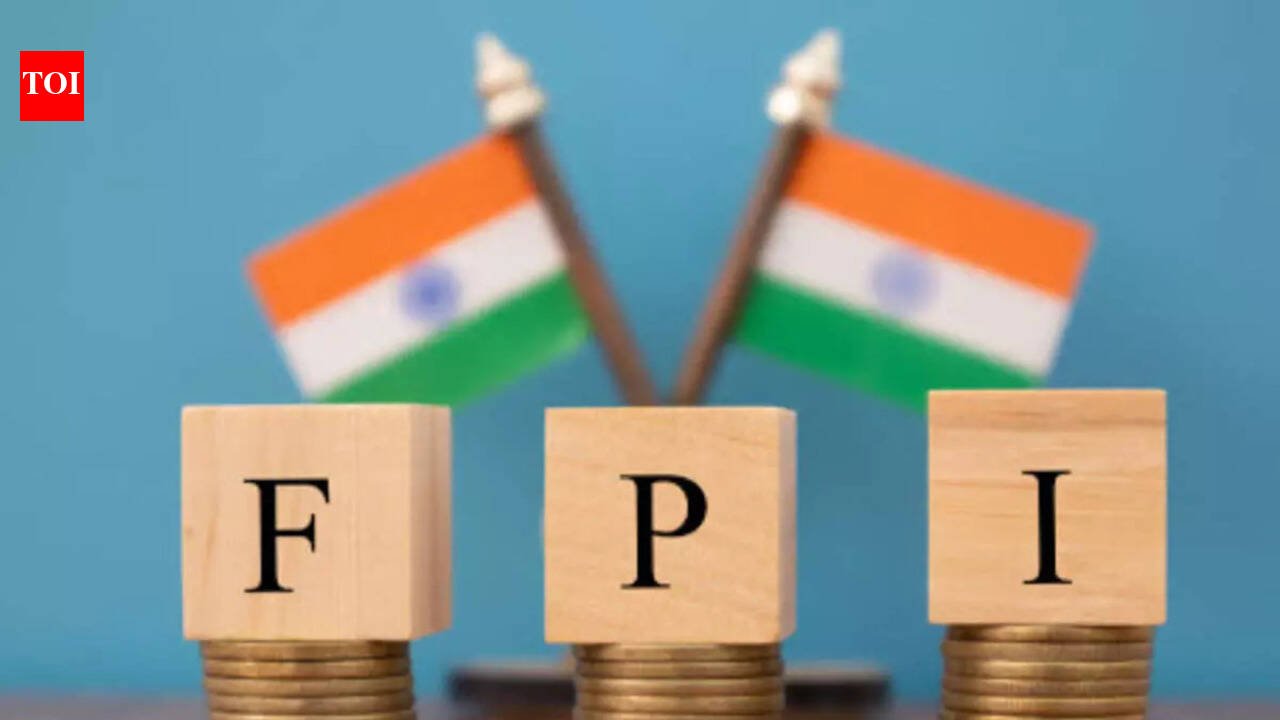
March FPI outflow: Foreign investors pull out Rs 88,180 cr amid Middle East tensions; over Rs 1 lakh cr withdrawn so far in 2026


March FPI outflow: Foreign investors pull out Rs 88,180 cr amid Middle East tensions; over Rs 1 lakh cr withdrawn so far in 2026

Foreign investors have turned cautious on Indian equities this month, pulling out Rs 88,180 crore so far as rising global tensions, a weakening rupee and high oil prices dent sentiment. The sharp outflow comes just weeks after a strong February, when foreign portfolio investors (FPIs) had pumped in Rs 22,615 crore, the highest in 17 months. With the latest selling, total FPI outflows for 2026 have now crossed Rs 1 lakh crore. So far in March (till March 20), FPIs have been net sellers on every trading day, steadily exiting the market. While the pace of selling is significant, it is still below the record outflow seen in October 2024. Market participants say a mix of global and domestic factors is behind the shift. Tensions in West Asia have pushed crude oil prices above $100 per barrel, raising concerns about inflation and growth, and prompting a more cautious, risk-off approach among investors. Vaqarjaved Khan, Senior Fundamental Analyst at Angel One, said fears of a prolonged conflict and possible disruption in the Strait of Hormuz have played a key role. He added that the pressure has been worsened by the rupee hovering near Rs 92 against the US dollar, rising US bond yields and profit booking after February’s rally. There are also concerns around corporate earnings, with expectations of margin pressure in several sectors adding to the unease. Himanshu Srivastava, Principal Manager Research at Morningstar Investment Research India, said higher US Treasury yields are making dollar assets more attractive, drawing funds away from emerging markets like India. This is also strengthening the dollar and tightening global liquidity, further affecting sentiment. V K Vijayakumar, Chief Investment Strategist at Geojit Investments, highlighted similar concerns, saying the ongoing conflict, weak global markets and a depreciating rupee have all contributed to the sustained selling. Financial stocks have been hit the hardest, with FPIs offloading shares worth Rs 31,831 crore in the fortnight ended March 15. Looking ahead, analysts expect markets to remain volatile in the near term. Continued tensions or high oil prices could keep investors cautious, while any easing of geopolitical risks, support from domestic investors or better-than-expected earnings may help stabilise flows. For now, a clear turnaround in foreign investor sentiment is likely only when global uncertainties begin to ease.


Source link

Mumbai artist Bina Aziz curates Alchemy of Light with eight contemporary artists | Mumbai News


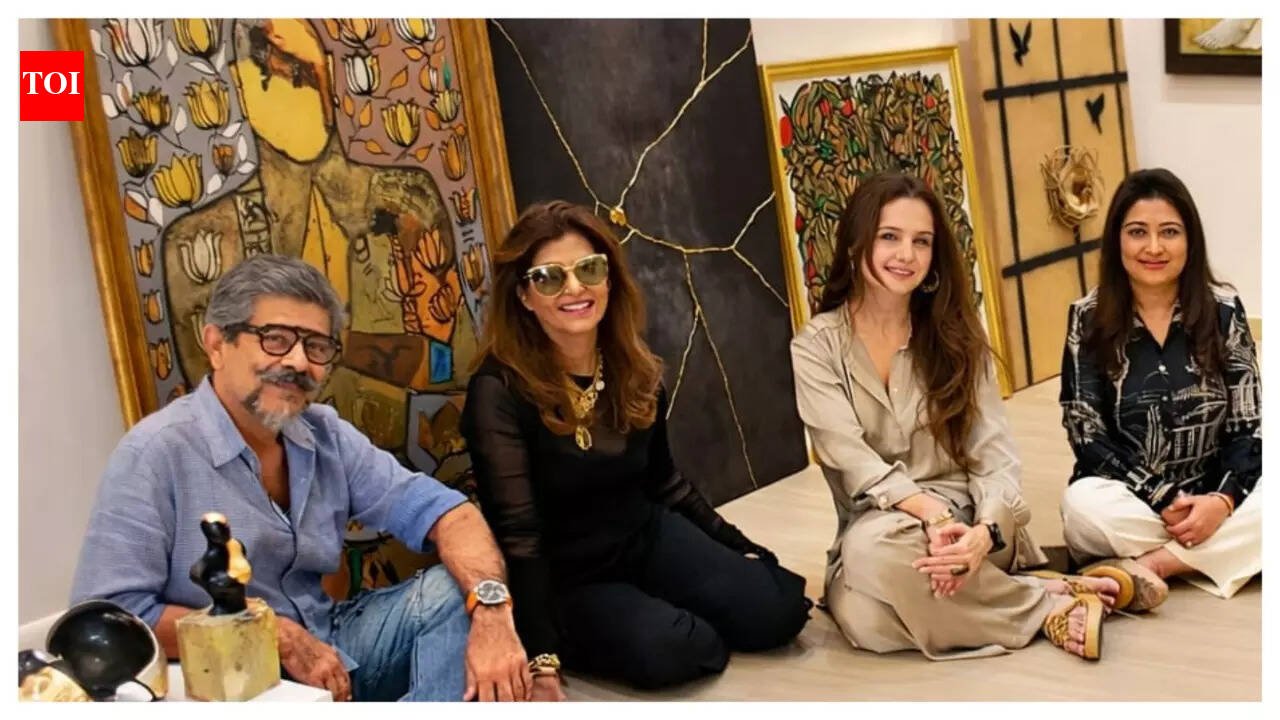
An upcoming exhibition in Worli, ‘Alchemy of Light,’ will showcase eight artists exploring metal leafing techniques from April 12 to May 11, 2026. Curated by Bina Aziz, the show features artists like Arzan Khambatta and Laila Khan, who use gold, silver, and copper leaf to create works that dynamically respond to light, highlighting texture, fragility, and renewal.

A luminous exploration of material, texture and inner expression is set to unfold in the city next month, as eight artists come together for a unique exhibition titled ‘Alchemy of Light’. Scheduled from April 12 to May 11, 2026, the show will be held in Worli and promises to be a first-of-its-kind showcase centred on the intricate technique of metal leafing. Curated by artist Bina Aziz, the exhibition brings together a diverse roster of creators including Arzan Khambatta, Venkatesh Pate, Sharvari Luth, Archana Srivastava, Laila Khan, Jaya Lamba and Shola Carletti, each interpreting the theme through their own visual language. A SHARED LANGUAGE OF LIGHT AND METAL At the heart of ‘Alchemy of Light’ lies the transformative quality of metal leafing, using gold, silver, copper and champagne finishes to create works that respond dynamically to light. “Each artist brings their own aura, their own creativity and their own colour to the canvas and the art that glitters here is, in essence, gold,” says curator Bina Aziz, describing the conceptual core of the show. “The materials, provided by Shehzad Khan, have enabled artists to experiment with a wide spectrum of tones and textures. The use of gold, silver, copper and champagne leafing brings a sense of opulence while allowing the works to remain fluid and alive, shifting with perspective and light itself,” Bina adds. EXPERIMENTATION ACROSS MEDIUMS For sculptor Arzan Khambatta, the exhibition marks yet another step in an ongoing journey of creative exploration. “Every creative show like this is a starting point for me… if you have done something and you love it, it becomes the beginning of many more works,” he says. His pieces for the show combine wood, resin, metal and leafing, resulting in layered, tactile forms. Meanwhile, artist Laila Khan approaches the theme from a more introspective space. “A painting or sculpture represents the inner being of an artist over many days. I am working towards an inner flame where materials like gold leaf reflect light. Through meditation and quiet depth, I am trying to bring that luminosity into my work,” she explains, adding that gold leafing lends a sense of sacredness to Indian art traditions. TEXTURE, FRAGILITY AND RENEWALHosting the exhibition at Les Trésors Art Gallery, artist Archana Srivastava, has spent months developing the concept alongside Bina. “We both have discussed the concept for the last few months. This is the first exhibition using gold leafing in my gallery, and I am excited about it,” she says. Her own series, titled ‘Broken Yet Blossoming’, explores contrasts, juxtaposing the rough texture of jute with the smooth sheen of gold. “We are all broken in some way, yet there is immense potential to blossom,” she reflects. ART THAT SHIFTS WITH LIGHT What sets ‘Alchemy of Light’ apart is not just its material focus but its interaction with the viewer. As light falls on each piece, surfaces shimmer, shift and transform, making the experience fluid and ever-changing. With its blend of introspection, experimentation and visual opulence, the exhibition aims to offer audiences more than just a viewing, it invites them into a dialogue with light itself. As Mumbai’s art calendar gears up for the summer, ‘Alchemy of Light’ promises to stand out as a radiant confluence of creativity, material innovation and spiritual depth.


Source link

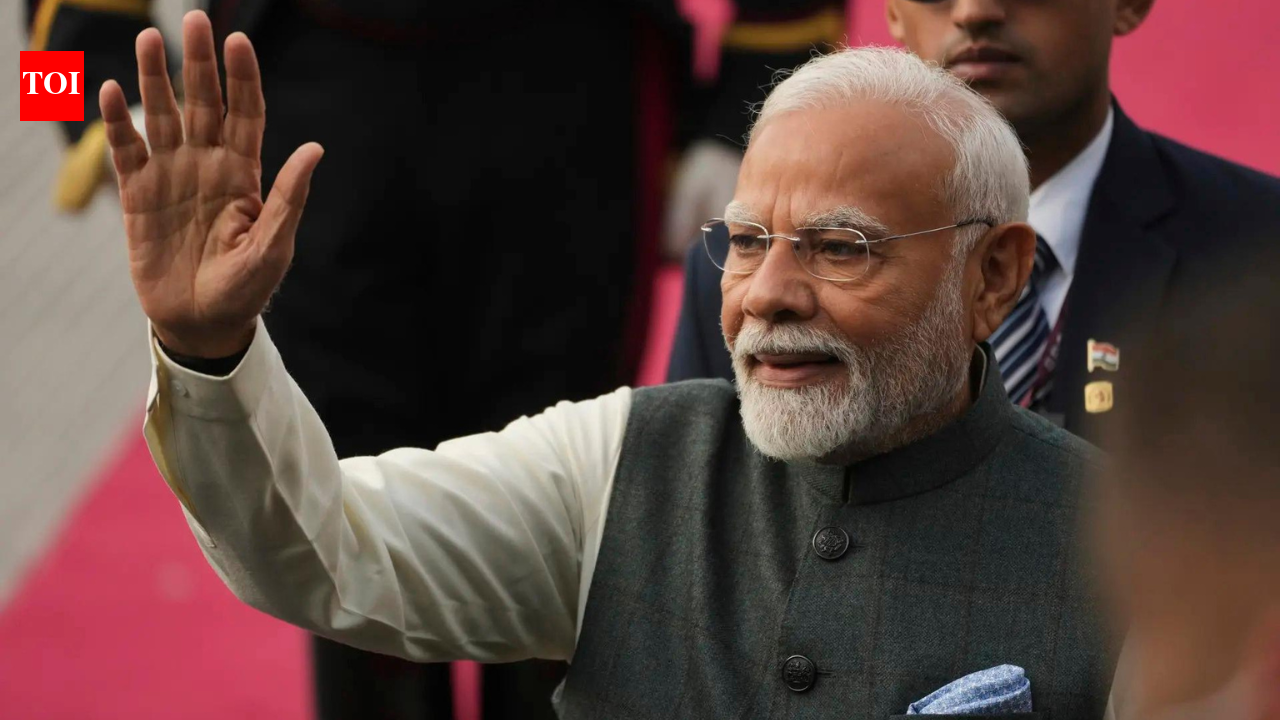
8,931 days milestone! PM Modi overtakes Pawan Kumar Chamling to become longest-serving head of government | India News


8,931 days milestone! PM Modi overtakes Pawan Kumar Chamling to become longest-serving head of government
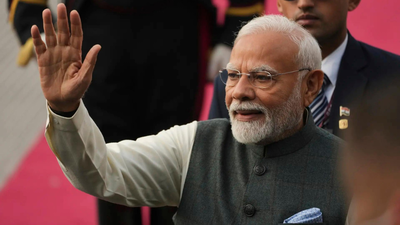
PM Narendra Modi (Image/PTI)

NEW DELHI: Prime Minister Narendra Modi on Sunday became the longest-serving head of a government, completing 8,931 days in office. He surpassed the previous record held by Pawan Kumar Chamling who served as Sikkim’s chief minister for over 24 years, remaining 8930 days in office.PM Modi served as the chief minister of Gujarat for over 13 years from October 7, 2001 to May 21, 2014. During this period, he became the longest-serving chief minister of the state, winning four consecutive terms in 2001, 2002, 2007 and 2012.He later assumed office as the Prime Minister of India in 2014 and has since been re-elected in 2019 and 2024, making him a three-term PM.Defence minister Rajnath Singh congratulated PM Modi for achieving a significant milestone in his long public service.“Prime Minister Narendra Modi is now the longest-serving head of a government in India. Pure devotion to the nation and its people defines PM Modi Ji. From his unwavering commitment as the Chief Minister of Gujarat to his dedicated leadership as the Prime Minister, his life has been a continuous journey of service,” Singh wrote in a post on X.Home minister Amit Shah called PM Modi’s service in governance as ‘hard work and unwavering commitment.’In a post on X, Shah wrote: “A milestone rooted in service, hard work and unwavering commitment. Today, PM Narendra Modi ji surpasses the 8,930-day record of former Sikkim CM Pawan Kumar Chamling, becoming the longest-serving head of a government in India. PM Modi Ji’s 8,931 days in public life, first as Gujarat CM and now as Prime Minister reflect a deep dedication to nation-first governance, integrity in action, and tireless service to every citizen. A rare legacy built on unprecedented trust and unparalleled Seva.”The milestone comes alongside PM Modi’s growing global digital presence. Earlier, he became the first world leader to cross 100 million followers on Instagram. He has more than double the followers of US President Donald Trump, who has over 43 million followers.


Source link