Breaking News
Govt sends additional warships to Strait of Hormuz to ensure safe passage of Indian vessels: Report

Govt sends additional warships to Strait of Hormuz to ensure safe passage of Indian vessels: Report

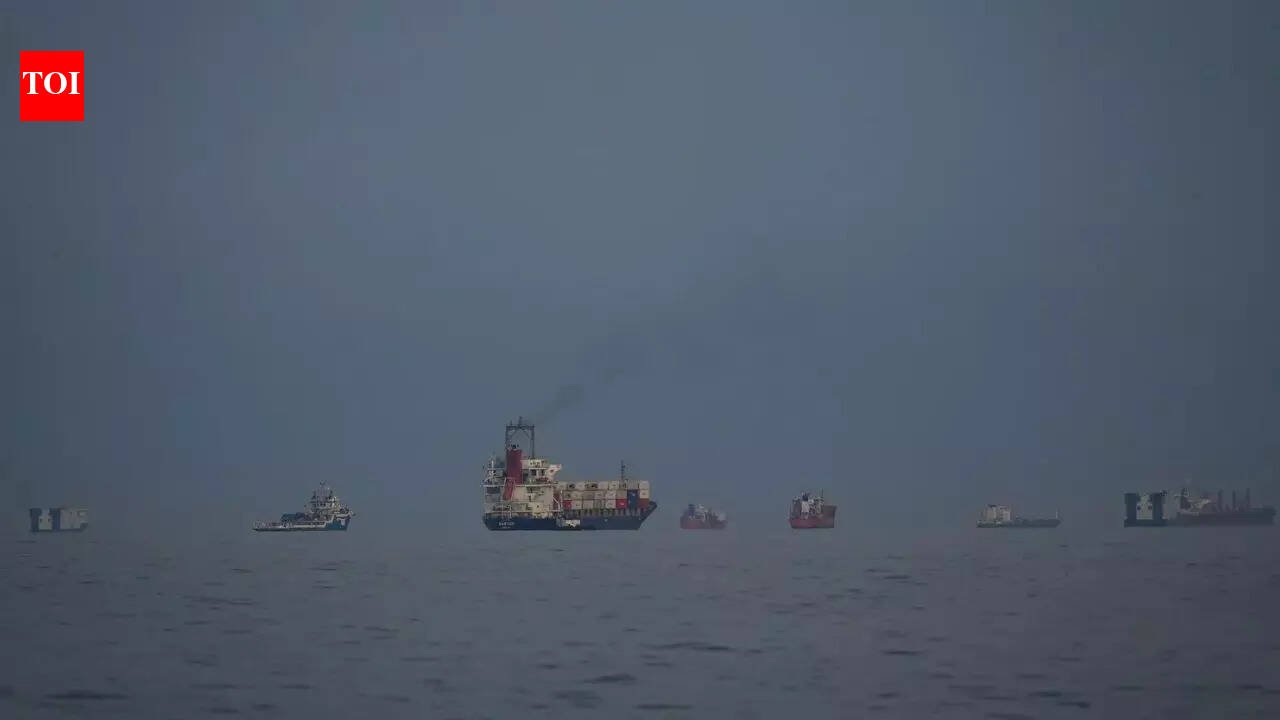
NEW DELHI: India is deploying additional warships in the Arabian Sea and the Gulf of Oman to ensure safe passage for its fuel and LPG carrying vessels as tensions escalate around the Strait of Hormuz, Bloomberg reported citing sources.The Indian Navy has positioned more than half a dozen warships, including logistics vessels, as a precautionary measure.

Watch

India Secures Oil Supply As Jag Laadki Ship Survives War Threat At Hormuz, Reaches Gujarat Safely

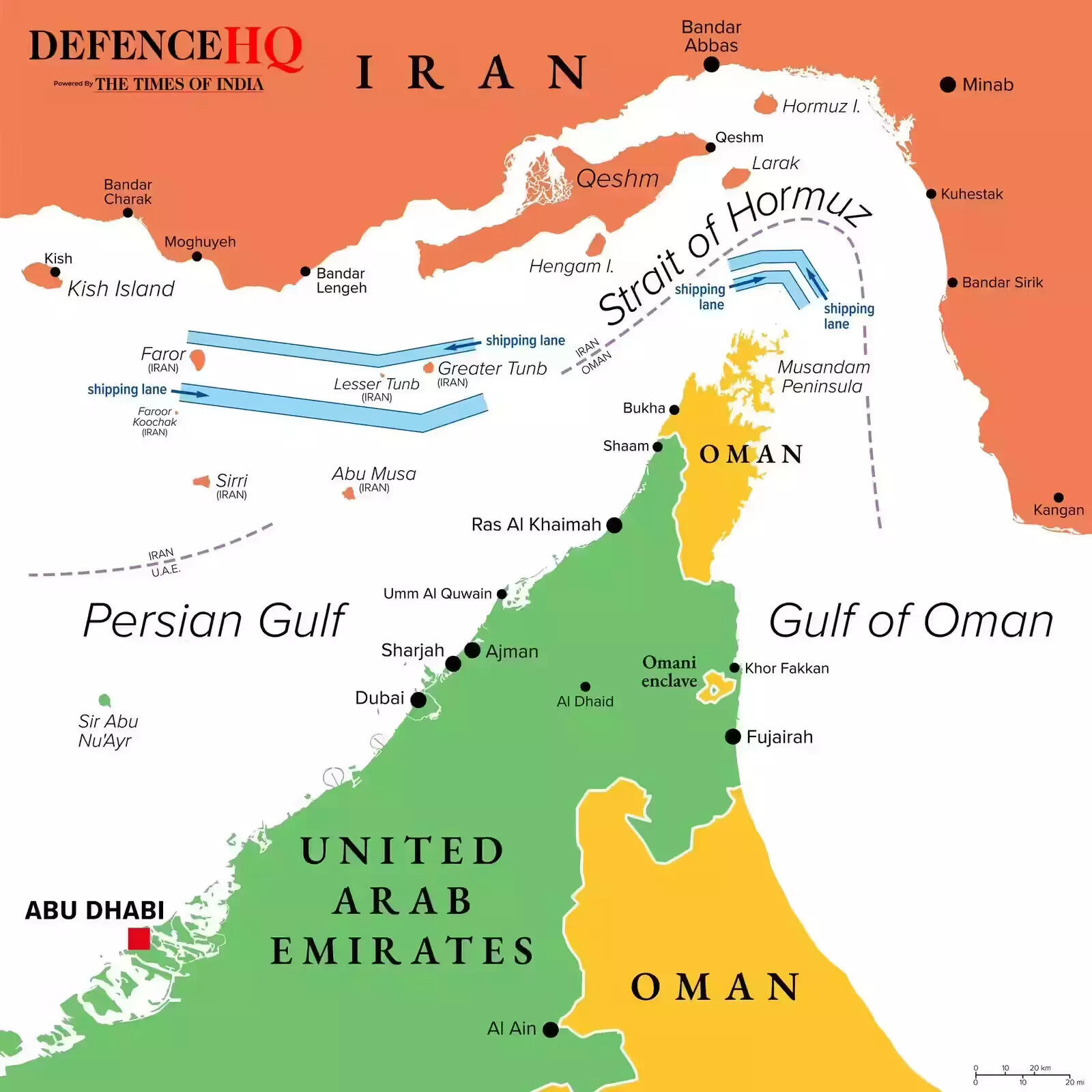
The ships will remain east of the Strait of Hormuz and will not enter the sensitive waterway. Their primary role will be to escort Indian vessels to safer waters in the northern Arabian Sea, the people familiar with the matter told the agency.The deployment comes as India anticipates that Iran may allow more fuel tankers to exit the strait. In recent days, New Delhi has already secured safe passage for two state-owned LPG tankers and is in talks with Tehran to facilitate movement of more vessels.
,

The Strait of Hormuz has effectively been shut since US-Israel airstrikes on Iran in late February, triggering supply disruptions. India, which relies heavily on the region for energy imports, has been particularly affected, with about 90% of its LPG imports sourced from the Middle East.India has not directly responded to US calls for allied naval participation in securing the strait. External affairs ministry spokesperson Randhir Jaiswal said the issue was not discussed with Washington “in a bilateral setting.”The current deployment is part of Operation Sankalp, launched in 2019 to safeguard Indian merchant shipping and maritime interests in the Gulf region.According to government data, 22 India-flagged vessels remain stranded in the Persian Gulf, carrying critical energy supplies. These include LPG carriers, LNG tankers, crude oil ships, and other cargo vessels.Earlier in the day, the shipping ministry spokesperson, Rajesh Kumar Sinha said that, “India’s 1.67 million tonnes of crude oil, 3.2 lakh tonnes of LPG and about 2 lakh tonnes of LNG are stuck on the 22 Indian-flagged ships stranded in the Persian Gulf, waiting to transit through the Strait of Hormuz.” He added that all 611 seafarers onboard these vessels are safe. Efforts are underway to secure safe passage for the ships.The Strait of Hormuz, a narrow but vital link between the Persian Gulf and open seas, handles nearly one-fifth of global oil shipments. Its closure has disrupted global energy flows, with nearly 500 tanker vessels currently stranded in the region.India imports around 88% of its crude oil, 50% of its natural gas, and 60% of its LPG. A significant portion of these supplies, up to 95% of LPG and about 30% of gas, typically pass through the strait.While crude oil disruptions have been partly offset by alternative sources such as Russia, West Africa and the US, supplies of LPG and gas have been hit, especially for industrial and commercial users.Earlier, under the watchful eyes of the Indian Navy, two Indian-flagged LPG tankers belonging to Shipping Corporation of India (SCI), Shivalik and Nanda Devi, have successfully crossed the Strait of Hormuz and reached India. Another Indian-flagged oil tanker, Jag Prakash, which is carrying gasoline from Oman to Africa, has also set sail from east of the Strait of Hormuz.


Source link

Us Petrol Prices Rise: ‘To mitigate short-term disruptions’: Donald Trump suspends Jones Act for 60 days as Iran war drives up US fuel costs – what it means


‘To mitigate short-term disruptions’: Donald Trump suspends Jones Act for 60 days as Iran war drives up US fuel costs - what it means

File photo: US President Donald Trump (Picture credit: AP)

US President Donald Trump has temporarily waived the century-old Jones Act for 60 days in a bid to ease rising energy costs in the United States, after the US-Israeli war with Iran sent oil markets sharply higher and pushed up petrol prices.As per news agency AFP, the move allows foreign-flagged ships to transport cargo between US ports during the waiver period, temporarily setting aside a long-standing restriction under the 1920 law.

White House says move aims to ease oil market disruption

The White House framed the decision as an emergency step to soften the economic fallout from the conflict.

Watch

‘Will Get Back…’: Pentagon’s Humire Dodges Questions On Gas Price Rise For Americans | Iran War

“This is just another step to mitigate the short-term disruptions to the oil market as the US military continues meeting the objectives of Operation Epic Fury,” White House press secretary Karoline Leavitt said in a statement.Leavitt was referring to the joint US-Israeli military campaign against Iran launched on February 28.“This action will allow vital resources like oil, natural gas, fertiliser and coal to flow freely to US ports for sixty days,” she added.She also said the administration “remains committed to continuing to strengthen our critical supply chains.”

What the Jones Act waiver means

The Jones Act was originally designed to protect the US shipping and shipbuilding industry by requiring goods moved between American ports to be carried on US-built and US-flagged vessels.Critics have long argued that the law restricts competition and raises transport costs, especially during supply shocks.By temporarily lifting that rule, the administration hopes to make it easier and cheaper to move key energy and industrial commodities across the country at a time when supply chains are under pressure.The White House announced the 60-day waiver separately as part of a wider effort to contain soaring oil prices, with the law often blamed for making fuel more expensive.

Petrol prices jump as war hits global energy flows

According to AAA motor group data cited by AFP, US gasoline prices have climbed by more than 27 per cent since the war began.The spike comes as global oil markets have been rattled by the conflict.Oil prices surged again on Wednesday after Israeli strikes hit facilities linked to Iran’s South Pars/North Dome gas field, the world’s largest known gas reserve and a site that supplies roughly 70 per cent of Iran’s domestic natural gas.Brent crude rose more than five per cent to $108.60 a barrel, while US benchmark West Texas Intermediate gained 1.9 per cent to $98.01.Pressure on prices has intensified after Iran halted traffic through the Strait of Hormuz, a key global chokepoint through which roughly one-fifth of the world’s oil normally passes.

Broader push to boost supply

The Jones Act waiver came alongside another major energy move by the Trump administration.The US treasury on Wednesday also eased sanctions on Venezuela’s state-owned oil company PDVSA, allowing US companies to buy Venezuelan oil under certain restrictions in an effort to increase global supply during the Iran war.That licence does not fully remove sanctions but it reopens access for US firms that existed before January 29, 2025, while ensuring payments go into a US-controlled account rather than directly to sanctioned Venezuelan entities.Taken together, the steps underline how aggressively the White House is trying to counter the war’s impact on fuel prices and energy security.


Source link

US PPI data: Wholesale inflation jumps to 3.4% in February; food costs drive biggest rise in a year


US PPI data: Wholesale inflation jumps to 3.4% in February; food costs drive biggest rise in a year

US wholesale prices rose more than expected in February, reflecting mounting inflationary pressures even before the recent surge in global energy prices linked to the Iran conflict, according to data released by the Labor Department as reported news agency AP.The department reported on Wednesday that its producer price index (PPI), which measures inflation at the wholesale level before it reaches consumers, increased 0.7% from January and rose 3.4% from February 2025. The year-on-year increase was the highest since February 2025.The gains exceeded economists’ forecasts and came before the US and Israel’s attack on Iran pushed oil prices sharply higher, raising concerns about further inflationary risks.“These are some mighty big increases, adding fuel to the political conversation about affordability,” wrote Carl B. Weinberg, chief economist at High Frequency Economics. “And of course, energy prices will spike higher in the March report, thanks to the war in Iran and the blockade of the Strait of Hormuz.”Oil prices have climbed nearly 50% since the Iran war began, with gasoline prices also rising sharply. The average price for a gallon of gasoline in the US spiked again overnight to $3.84, compared with well under $3 last month before the US and Israel attacked Iran. Diesel prices, widely used in transportation, are rising even faster.Excluding volatile food and energy components, so-called core wholesale prices increased 0.5% from January, down from a 0.8% rise in the previous month but still more than twice what economists had anticipated. On an annual basis, core prices rose 3.9%, the steepest gain since January 2025.Food prices rose 2.4% during the month, led by a sharp 49% surge in vegetable prices and a 10% increase in fruit prices. Although food costs remain lower than a year ago, some economists warned that emerging cost pressures could worsen inflation trends in the months ahead.Wholesale inflation had also risen unexpectedly in January. While the earlier uptick was initially seen as temporary, the February data pointed to deeper concerns, analysts said.Stephen Stanley, chief US economist at Santander, described the latest increase as a “sign of trouble.” He noted that companies had largely absorbed higher costs linked to tariffs introduced by the Trump administration.“The problem is the (producer price index) is signaling that this is not a one-off wave of costs that would necessitate a single set of consumer price adjustments,” Stanley wrote. “Instead, the pipeline pressures continue to build.”The inflation data came as policymakers at the Federal Reserve met in Washington to decide on the benchmark interest rate. The central bank had cut rates three times last year when inflation appeared to be moderating, but is now expected to keep borrowing costs unchanged again.The Fed is assessing whether price pressures will ease and whether weakness in the labour market may warrant lower rates. However, the war with Iran has complicated the outlook by pushing energy prices higher, prompting investors to react cautiously to the latest inflation figures.US equity markets also reflected the concerns. The S&P 500, Dow Jones Industrial Average and Nasdaq Composite reversed early gains and slipped into negative territory after the release of the producer price data and renewed increases in oil prices.Recent government reports have already indicated that consumer inflation remains above the Fed’s 2% target. Consumer prices rose 2.4% last month compared with February 2025, while the Fed’s preferred inflation gauge, the personal consumption expenditures (PCE) price index, increased 2.8% in January from a year earlier. Core PCE inflation rose 3.1%, the largest rise in nearly two years.


Source link

Retirement soon? Jos Buttler makes honest admission after horrible T20 World Cup | Cricket News


Retirement soon? Jos Buttler makes honest admission after horrible T20 World Cup

NEW DELHI: Former England captain Jos Buttler has admitted he had a disappointing T20 World Cup but insists his international career is not over. The experienced batter scored just 87 runs in eight innings as England cricket team reached the semi-finals before losing to India cricket team. Despite the setback, he believes he can return to his best form.

Watch

Rajasthan Royals captain Riyan Parag watches West Ham vs Man City in London

Reflecting on his performance, Buttler said, “Obviously I had a poor tournament, which is disappointing,” but remained hopeful, adding, “But I have been playing some of the best cricket of my (career) in recent years, so hopefully I can get back to playing my best.” He also made it clear he still wants to play for England, saying, “I certainly have ambitions (to play for England again), but no longer being a captain, I am not a selector and whatever, so what will be, will be.”

‘It just didn’t quite happen’: Jos Buttler

After the World Cup, Buttler took a break in France with his family to mentally reset. “I couldn’t have been further away from cricket, which for me at the time was just perfect,” he said, explaining the need to step back. He added, “It is exactly what I needed,” he continued. The break helped him reflect on his game and mindset. “It was really refreshing, I really enjoyed it, a complete sort of release,” he said. Accepting that things didn’t go his way, Buttler concluded, “It wasn’t for a lack of effort, it just didn’t quite happen.”

Banner Insert


Source link

Eid truce: Pakistan pauses Afghanistan operations after deadly Kabul strike | World News


Eid truce: Pakistan pauses Afghanistan operations after deadly Kabul strike

Pakistan on Wednesday announced a temporary pause in its military operations against Afghanistan, according to a reuters report quoting information minister Attaullah Tarar.The minister said the decision was taken in view of Eid, and also following requests from Turkey, Saudi Arabia and Qatar.There was no immediate clarity on the duration of the pause or whether further de-escalation measures are under consideration.The development comes amid heightened tensions along the Pakistan-Afghanistan border after Kabul attack that killed over 400 people.The site in Kabul hit by a Pakistani airstrike this week was used for storing drones and military grade ordnance, and to train suicide bombers, the Pakistani military said on Wednesday.The strike was the deadliest in an escalating conflict between the two neighbours, now in its third week. Afghan officials have put the death toll at 408 people, with 265 wounded. The toll could not be independently verified.


Source link

Rain lashes several parts of Delhi-NCR; thunderstorms, gusty winds likely this week, says IMD | India News


Rain lashes several parts of Delhi-NCR; thunderstorms, gusty winds likely this week, says IMD

NEW DELHI: Parts of the Delhi-NCR witnessed rainfall on Wednesday, bringing a noticeable change in weather conditions along with a dip in temperatures. Visuals from Indira Bhawan showed steady rain under cloudy skies, while scenes from Moolchand Metro Station captured commuters moving through light to moderate showers. In the Palam area, rainfall and gusty winds were also reported, indicating widespread weather activity across Delhi.According to news agency PTI, high-velocity winds sweeping through Delhi caused power outages and disruptions across several parts of the capital. The India Meteorological Department (IMD) issued advisories, urging residents to remain indoors and avoid vulnerable structures. People were cautioned to stay away from windows, electrical poles, and overhead power lines, while securing loose objects to prevent accidents.Farmers were advised to halt outdoor work temporarily and move livestock to safer areas, while motorists caught in the storm were told to pull over safely and remain inside their vehicles instead of driving through strong winds and flying debris.According to the India Meteorological Department, the city is likely to continue witnessing light rain, thunderstorms, lightning and gusty winds till March 20. Wind speeds may range between 20–30 kmph, gusting up to 40–50 kmph, especially during afternoon and evening hours.The change in weather is attributed to active western disturbances and cyclonic circulations affecting northwest India, leading to increased thunderstorm activity over the region.The rainfall has led to a fall in temperatures, with the maximum expected to drop from around 32–34°C to 26–28°C over the next two days, remaining below normal for this time of year. Minimum temperatures are likely to stay between 16°C and 20°C.The brief spell of rain has provided relief from the early onset of summer heat and improved overall weather conditions in the city.The IMD has advised residents to take precautions and to remain cautious during thunderstorms, avoid waterlogged areas and trees, and drive carefully.


Source link

US stock markets today (March 18, 2026): Dow, S&P 500 fall as oil surge stokes inflation fears


US stock markets today (March 18, 2026): Dow, S&P 500 fall as oil surge stokes inflation fears

US equities edged lower in early trade on Wednesday as a fresh surge in crude oil prices reignited worries about inflation and dampened investor sentiment ahead of the Federal Reserve’s policy decision.The S&P 500 fell 0.3 per cent and was on course for its first decline this week. The Dow Jones Industrial Average dropped 180 points, or 0.4 per cent, while the Nasdaq Composite also slipped 0.3 per cent in morning trade, AP reported.Markets came under pressure after benchmark US crude prices rose 2.2 per cent to $97.69 a barrel. Brent crude, the global benchmark, jumped 4.2 per cent to $107.69 per barrel. Energy prices have been volatile since the outbreak of the Iran conflict, amid disruptions to production and transportation across the Persian Gulf.Concerns intensified after Qatar blamed Israel for an attack on an offshore natural gas field jointly operated with Iran. Prolonged supply disruptions, analysts warn, could push global inflation sharply higher and weigh on economic growth.Adding to inflationary worries, data released on Wednesday showed wholesale prices in the United States accelerated unexpectedly to 3.4 per cent last month. The increase suggests producers may pass on higher costs to households in the coming months.The inflation print reinforced expectations that the Federal Reserve will keep interest rates unchanged at the conclusion of its policy meeting later in the day. While rate cuts could support the job market and financial assets, they also risk stoking inflation — a point that has remained central to the ongoing policy debate. US President Donald Trump has repeatedly called for lower borrowing costs.Investors will also watch whether Fed officials continue to project the possibility of a rate cut during 2026. The outlook remains uncertain, particularly as the geopolitical situation complicates economic forecasts. Rising fuel prices are already beginning to feed into consumer costs, with average gasoline prices climbing to $3.84 per gallon after remaining below $3 just a month ago.Global energy flows continue to face constraints, even as there are tentative hopes that more vessels could eventually pass through the Strait of Hormuz — a key shipping route for about one-fifth of the world’s crude oil.Corporate earnings updates offered mixed cues. Macy’s rose 4.7 per cent after reporting better-than-expected quarterly profit and revenue, while General Mills slipped 1.6 per cent following weaker earnings.In the bond market, Treasury yields edged higher after the inflation data. The yield on the 10-year US Treasury note rose to 4.22 per cent from 4.20 per cent in the previous session.Overseas markets presented a mixed picture. European indices were largely subdued after reacting to rising crude prices, while Asian markets ended higher, with Japan’s Nikkei 225 gaining 2.9 per cent and South Korea’s Kospi jumping 5 per cent.US equities edged lower in early trade on Wednesday as a fresh surge in crude oil prices reignited worries about inflation and dampened investor sentiment ahead of the Federal Reserve’s policy decision.The S&P 500 fell 0.3 per cent and was on course for its first decline this week. The Dow Jones Industrial Average dropped 180 points, or 0.4 per cent, while the Nasdaq Composite also slipped 0.3 per cent in morning trade, AP reported.Markets came under pressure after benchmark US crude prices rose 2.2 per cent to $97.69 a barrel. Brent crude, the global benchmark, jumped 4.2 per cent to $107.69 per barrel. Energy prices have been volatile since the outbreak of the Iran conflict, amid disruptions to production and transportation across the Persian Gulf.Concerns intensified after Qatar blamed Israel for an attack on an offshore natural gas field jointly operated with Iran. Prolonged supply disruptions, analysts warn, could push global inflation sharply higher and weigh on economic growth.Adding to inflationary worries, data released on Wednesday showed wholesale prices in the United States accelerated unexpectedly to 3.4 per cent last month. The increase suggests producers may pass on higher costs to households in the coming months.The inflation print reinforced expectations that the Federal Reserve will keep interest rates unchanged at the conclusion of its policy meeting later in the day. While rate cuts could support the job market and financial assets, they also risk stoking inflation — a point that has remained central to the ongoing policy debate. US President Donald Trump has repeatedly called for lower borrowing costs.Investors will also watch whether Fed officials continue to project the possibility of a rate cut during 2026. The outlook remains uncertain, particularly as the geopolitical situation complicates economic forecasts. Rising fuel prices are already beginning to feed into consumer costs, with average gasoline prices climbing to $3.84 per gallon after remaining below $3 just a month ago.Global energy flows continue to face constraints, even as there are tentative hopes that more vessels could eventually pass through the Strait of Hormuz — a key shipping route for about one-fifth of the world’s crude oil.Corporate earnings updates offered mixed cues. Macy’s rose 4.7 per cent after reporting better-than-expected quarterly profit and revenue, while General Mills slipped 1.6 per cent following weaker earnings.In the bond market, Treasury yields edged higher after the inflation data. The yield on the 10-year US Treasury note rose to 4.22 per cent from 4.20 per cent in the previous session.Overseas markets presented a mixed picture. European indices were largely subdued after reacting to rising crude prices, while Asian markets ended higher, with Japan’s Nikkei 225 gaining 2.9 per cent and South Korea’s Kospi jumping 5 per cent.US equities edged lower in early trade on Wednesday as a fresh surge in crude oil prices reignited worries about inflation and dampened investor sentiment ahead of the Federal Reserve’s policy decision.The S&P 500 fell 0.3 per cent and was on course for its first decline this week. The Dow Jones Industrial Average dropped 180 points, or 0.4 per cent, while the Nasdaq Composite also slipped 0.3 per cent in morning trade, AP reported.Markets came under pressure after benchmark US crude prices rose 2.2 per cent to $97.69 a barrel. Brent crude, the global benchmark, jumped 4.2 per cent to $107.69 per barrel. Energy prices have been volatile since the outbreak of the Iran conflict, amid disruptions to production and transportation across the Persian Gulf.Concerns intensified after Qatar blamed Israel for an attack on an offshore natural gas field jointly operated with Iran. Prolonged supply disruptions, analysts warn, could push global inflation sharply higher and weigh on economic growth.Adding to inflationary worries, data released on Wednesday showed wholesale prices in the United States accelerated unexpectedly to 3.4 per cent last month. The increase suggests producers may pass on higher costs to households in the coming months.The inflation print reinforced expectations that the Federal Reserve will keep interest rates unchanged at the conclusion of its policy meeting later in the day. While rate cuts could support the job market and financial assets, they also risk stoking inflation — a point that has remained central to the ongoing policy debate. US President Donald Trump has repeatedly called for lower borrowing costs.Investors will also watch whether Fed officials continue to project the possibility of a rate cut during 2026. The outlook remains uncertain, particularly as the geopolitical situation complicates economic forecasts. Rising fuel prices are already beginning to feed into consumer costs, with average gasoline prices climbing to $3.84 per gallon after remaining below $3 just a month ago.Global energy flows continue to face constraints, even as there are tentative hopes that more vessels could eventually pass through the Strait of Hormuz — a key shipping route for about one-fifth of the world’s crude oil.Corporate earnings updates offered mixed cues. Macy’s rose 4.7 per cent after reporting better-than-expected quarterly profit and revenue, while General Mills slipped 1.6 per cent following weaker earnings.In the bond market, Treasury yields edged higher after the inflation data. The yield on the 10-year US Treasury note rose to 4.22 per cent from 4.20 per cent in the previous session.Overseas markets presented a mixed picture. European indices were largely subdued after reacting to rising crude prices, while Asian markets ended higher, with Japan’s Nikkei 225 gaining 2.9 per cent and South Korea’s Kospi jumping 5 per cent.


Source link

Who is winning so far? How Iran is turning Donald Trump’s war into an ‘epic failure’


Who is winning so far? How Iran is turning Donald Trump’s war into an 'epic failure'

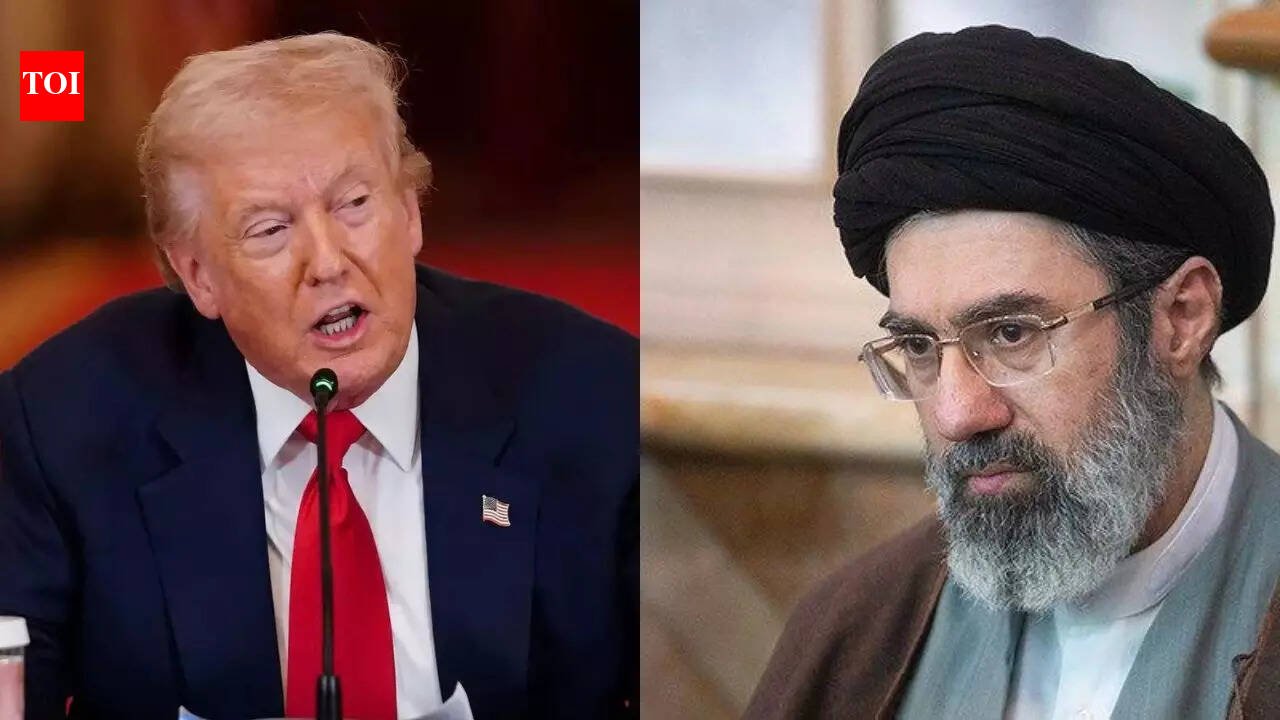
On the war’s 19th day, the numbers still flatter the US and Israel. More Iranian officials are dead. More launchers are wrecked. More command nodes have been hit. Israel says it has penetrated deep into Iran’s security structure and is now going after the machinery that keeps the Islamic Republic in power at home as well as abroad. From the air, it looks like the operation “Epic Fury” is going on in “cruise control” mode.Driving the newsAnd yet wars have a way of humiliating arithmetic.The war is no longer just a US-Israeli air campaign against Iran. It is now a broader regional confrontation touching Lebanon, the Gulf, global shipping and energy markets.That matters because the core question has shifted. The issue is no longer whether the US and Israel have inflicted severe damage. They plainly have. The question now is whether President Donald Trump can turn that military dominance into a political outcome that looks like victory – or whether Iran is succeeding in making the war longer, wider and more costly than Trump expected.

.

Why it mattersOn the battlefield, Trump has a case. Iran’s top leadership, including Supreme Leader Ayatollah Ali Khamenei, was obliterated on Day 1. Since then, US-Israeli forces have killed many other important political and military figures too. Israel and the US have degraded Iranian military infrastructure, targeted the internal security forces that suppress dissent, and pushed Tehran onto the defensive.But wars are not scored only by body counts, destroyed launchers or command bunkers. They are also scored by endurance, economic pain, alliance cohesion and the ability to shape the terms of peace.That is where Trump’s position looks shakier.Reuters reported that the Strait of Hormuz remains largely closed, that oil prices are up around 45% since the war began on February 28, and that Gulf Arab states have been hit by more than 2,000 missile and drone attacks on US diplomatic missions, military bases, oil infrastructure, ports, airports and residential buildings. Reuters also cited the International Energy Agency saying the conflict has caused the worst oil crisis since the 1970s. Global airlines, Reuters reported, have warned of soaring fuel costs, higher fares and route cuts.Those are not side effects. They are central to Iran’s strategy.According to an FT analysis by Emile Hokayem, Iran “has taken a beating” but still retains three major advantages: “geography, time and asymmetry.” The FT’s argument is that Tehran does not need to win conventionally. It only needs to impose enough cost on everyone else to turn apparent military success into strategic ambiguity.That is the danger for Trump. He may be winning the opening phase of the war while losing the ability to define its ending.Between the linesPolitico reported that Trump has been enraged by the refusal of many allies to join the effort to restore shipping through Hormuz. After publicly pressing allies for help, he swung back to insisting he never needed them in the first place. “Because of the fact that we have had such Military Success, we no longer ‘need,’ or desire, the NATO Countries’ assistance – WE NEVER DID!” he wrote on Truth Social, “WE DO NOT NEED THE HELP OF ANYONE!”That rhetorical reversal matters. It suggests Trump is confronting one of the central limits of his Iran campaign: the US can dominate the skies and still struggle to assemble a coalition for the consequences.Politico reported that Germany’s defense minister said, “We did not start this war,” while Luxembourg’s deputy prime minister described Trump’s push for European help as “blackmail.” British Prime Minister Keir Starmer said the UK “will not be drawn into a wider war,” according to Politico. Sen Lindsey Graham, after speaking with Trump, wrote on X that he had “never heard him so angry in my life.”Trump’s problem is not only Iran. It is also the optics of isolation. If Washington cannot persuade allies to share the burden, the war starts to look less like a coalition campaign and more like a unilateral gamble with global costs.The big pictureThe most persuasive argument that the war may be backfiring on Trump comes from Foreign Affairs, where Nate Swanson wrote that “Trump likely wants to declare victory soon,” but “he cannot force surrender on a government that refuses it.” In Swanson’s telling, the war’s first phase has badly damaged Iran, but the second phase may still favor Tehran because the regime has incentives and enough residual capability to sustain a war of attrition.That is the strategic paradox. Trump and Netanyahu may have destroyed much of Iran’s immediate capacity. But unless they can force capitulation, install a new deterrent order or engineer a stable ceasefire, Iran can still shape the peace by refusing to lose on Washington’s timetable.Swanson’s central point in Foreign Affairs is that Tehran does not need daily military success. It only needs to keep regional partners, global markets and the American public nervous. A few drone attacks on tankers, enough missile strikes to keep Gulf states on edge, and enough disruption in Hormuz to keep oil elevated may be sufficient to turn Trump’s “little excursion” into a politically draining war with no clean off-ramp.The FT makes a similar case from a more operational angle. Hokayem argues that “good strategy is the alignment of ends and means,” and by that standard, “the Iranians haven’t done badly.” Tehran, in the FT’s view, has sensibly prioritized vulnerable regional targets and energy chokepoints over trying to break Israel directly. For Iran, success is not conquering territory. It is keeping everyone else off balance.There is another way the war may be backfiring. In Foreign Affairs, Akbar Ganji argued that the assassination of Ali Khamenei and wartime pressure from the US and Israel may have solved Iran’s succession crisis in favor of Mojtaba Khamenei. Ganji wrote that Trump’s interventions and Israeli threats made Mojtaba “the only viable option for regime survival.” In other words, a campaign partly justified as a blow against the regime may also have hardened it.Zoom inIsrael’s hope, according to a New York Times report by Adam Rasgon, Ronen Bergman and David M Halbfinger, is that strikes on the Basij, the Ministry of Intelligence and other coercive institutions can weaken the regime enough to open space for a popular uprising.That is one of the biggest unresolved bets in this war.The New York Times reported that some former Israeli officials think the strategy is unrealistic because Iran’s internal security services remain deeply entrenched. Vali Nasr told the Times, “There’s enormous hatred of the Islamic republic,” but also “considerable hatred of the United States and Israel and considerable worry about the future of the country itself.”That gets to the central political reality inside Iran. Many Iranians may despise the regime and still refuse to rise up while under foreign bombardment. National humiliation can unify even fractured societies. War can suppress dissent as effectively as repression can.If that is true, then the regime-change theory behind part of the Israeli and US strategy is weak. And if regime change is not coming, Trump is left with a narrower set of choices: keep bombing, negotiate a cease-fire, or accept a murky partial victory.What next: Trump now faces a scoreboard that cuts in two directionsOn one side, the US and Israel are clearly ahead militarily. Iran’s leadership has been decapitated. Its security apparatus has taken severe hits. Its missile operations are under pressure. Its proxies are being pulled into a fight from a position of weakness, not strength.On the other side, Iran may still be doing enough to deny Trump the one outcome he most wants: a quick, unmistakable victory that reinforces deterrence, calms markets and proves his judgment.So, who is winning so far?In an opinion piece for the Greek newspaper eKathimerini, Endy Zemenides aptly described Operation Epic Fury as an “Epic Failure.”The honest answer is this: Trump is winning the war’s first chapter. Iran may still be writing the ending.That is why the war is not clearly backfiring on Trump in military terms. But in strategic, diplomatic and economic terms, the warning lights are flashing. If the conflict drags on, keeps oil high, leaves Hormuz contested and shows Trump unable to rally allies or force Tehran to fold, the question will stop being whether the war is backfiring.It will be how much.(With inputs from agencies)


Source link

Doping scare at National Open Jumps meet after syringes found in venue toilets | More sports News


BENGALURU: Despite continued efforts by the Athletics Federation of India and the National Anti-Doping Agency (NADA), the use of banned performance-enhancing drugs persists among some of the country’s top athletes and promising youngsters. The latest evidence emerged at the 5th National Open Jumps competition, which concluded here on Sunday.Go Beyond The Boundary with our YouTube channel. SUBSCRIBE NOW!According to sources, several syringes and vials allegedly used for doping were found in the restrooms used by athletes at the venue, located on the outskirts of the city.“NADA officials were present during the meet and were conducting routine checks, but they went on high alert after syringes were found in the toilets,” a source told TOI. “Many of the bottles had labels in Russian language, pointing to the use of banned substances. One label in English was almost entirely peeled off, but it was still possible to make out that it was a mephentermine injection — a prohibited stimulant under WADA rules,” the source added.NADA officials were alerted about the findings on the first day of the competition. Organisers subsequently put up posters outside the restrooms warning athletes: “Do not take any syringes inside the toilet. Our volunteers are watching you,” a poster, which also had the same message in Hindi, read.A coach said the warning had an immediate impact, with the number of syringes recovered falling sharply on the second day. Another senior coach present at the venue struck a cautionary note and said, “Some senior athletes are encouraging juniors to use banned substances. We need to create greater awareness among young athletes, so they do not look for short-cuts to success.” India topped the 2024 WADA Testing Figures report with 260 adverse analytical findings from 7,113 samples tested — a positivity rate of 3.6 per cent, the highest among all major nations. France ranked second in absolute numbers.

Banner Insert


Source link

Pakistan not safe? PCB reacts to Australian players’ security and travel concerns ahead of PSL 2026


With tensions rising in the region following the Kabul airstrike, questions around player safety – especially for overseas stars – have taken centre stage ahead of PSL 2026. But the Pakistan Cricket Board (PCB) has moved quickly to calm nerves, firmly stating that there is no reason for concern and that the tournament will go ahead as planned.

PCB dismisses security fears as PSL 2026 preparations continue

Reports had suggested that Australian players were hesitant about traveling, particularly after their government issued advisories related to certain areas. However, the PCB has dismissed these claims, maintaining that everything is on track.

“All travel arrangements and plans are in place, and we will have all the Australian players who have signed for the PSL 11 start arriving from next week,” a PCB source stated.

The board has made it clear that speculation around withdrawals or reluctance is being overstated. Officials insist that overseas players remain committed and that the league has handled similar situations in the past without disruption.

“The news reports in the media are not correct. There is no concern regarding Australian players coming to Pakistan,” another PCB source said, reinforcing confidence in the security framework.

Behind the scenes, the PCB has reportedly strengthened its safety protocols and logistical planning, aiming to ensure a smooth tournament despite the geopolitical backdrop. From their perspective, PSL 2026 is business as usual.

Peshawar fixture raises questions as contingency plans stay ready

While the PCB remains confident, one specific concern continues to draw attention – the scheduled fixture in Peshawar. The city has been marked as a “do not travel” zone by Australian authorities due to its proximity to the Afghanistan border and the risk of escalation.

This has put the March 28 match between Peshawar Zalmi and Rawalpindi Pindiz under the spotlight. With Australian players like Aaron Hardie and Jake Fraser-McGurk part of those squads, there is uncertainty over whether they will be available for that particular game.

Despite this, the PCB appears well-prepared for any scenario. Reports suggest that contingency measures, including emergency evacuation plans via private charter flights, have been put in place to reassure players and teams.

Also READ: PSL 2026 – Australian government issues urgent travel warning to its players following deadly Kabul airstrike

A PCB source acknowledged the backup arrangements, stating that “if things go wrong, players could be flown out instantly,” while also expressing confidence that such measures would not be needed.

The broader context, however, cannot be ignored. The Kabul airstrike, which reportedly resulted in heavy casualties, has heightened tensions between Pakistan and Afghanistan, leading to diplomatic strain and increased caution from foreign governments. This naturally impacts how players and boards assess risk.

Still, PSL 2026 is shaping up to be one of the most ambitious editions yet. With eight teams, 44 matches, and new venues like Faisalabad and Peshawar making their debut, the tournament is expanding its footprint significantly.

Adding to the intrigue is the strong Australian presence across teams, featuring big names like Steve Smith, David Warner, Glenn Maxwell and Marnus Labuschagne, alongside experienced coaches such as Tim Paine and Jason Gillespie.

At the same time, the league has had to deal with other challenges, including the withdrawal of several Afghanistan players following backlash over certain signings. Yet, the PCB remains unfazed, pointing to its track record of successfully hosting international cricket even in difficult circumstances.

With the tournament set to begin on March 26 in Lahore, the focus now shifts to execution. While uncertainties remain in the background, the PCB’s message is clear – they are confident, prepared and determined to deliver a successful PSL season.

Ultimately, much will depend on how the situation evolves in the coming days. But for now, PSL 2026 is firmly on track, with teams, players, and fans hoping that cricket once again takes centre stage.

Also READ: From Glenn Maxwell to Tim Paine – Complete list of Australian players and coaches in PSL 2026


Source link