Breaking News
US stock markets today (March 30, 2026): Wall Street rebounds after selloff amid Iran war, oil and inflation worries persist


US stock markets today (March 30, 2026): Wall Street rebounds after selloff amid Iran war, oil and inflation worries persist

Wall Street’s main indices edged higher in choppy trade on Monday, recovering from the previous session’s sharp losses, even as the Middle East conflict widened and kept investors cautious.The Dow Jones Industrial Average rose 0.48 per cent, the S&P 500 gained 0.32 per cent, and the Nasdaq Composite advanced 0.19 per cent in early trade, according to Reuters.The rebound came after US President Donald Trump said Washington was in serious discussions with a “more reasonable regime” to end the war, while reiterating warnings that Iran must reopen the Strait of Hormuz or face US strikes on its oil and power infrastructure.Tensions escalated further after Yemen’s Iran-backed Houthi militia entered the conflict over the weekend.Energy stocks led gains, with the S&P 500 Energy Index rising 1.5 per cent. Shares of Exxon Mobil climbed 3 per cent, while Chevron added 1.5 per cent.“The S&P 500 is still down less than 10% (since the war began). In many ways, investors have been affected less by the implications of the Strait of Hormuz being closed than I would have thought,” said Sam Stovall, chief investment strategist at CFRA Research, quoted Reuters.“Today’s action is probably more of a technical bounce because many sectors and sub-industries are in oversold condition,” he added.Financial stocks also moved higher, with the sector gaining 0.8 per cent after the US Department of Labor issued guidelines clarifying how trustees can include alternative assets such as private equity and cryptocurrencies in 401(k) retirement plans.Asset managers advanced, with Blackstone up 1.7 per cent, KKR gaining 1.4 per cent, and Apollo Global Management rising 1 per cent.Overall, nine of the 11 major S&P 500 sectors traded in positive territory.Despite the uptick, major US indices including the Dow, Nasdaq and Russell 2000 remain in correction territory since the conflict began.Morgan Stanley downgraded global equities to “equal weight” from “overweight”, but noted that capital flows into US equities and bonds have strengthened, suggesting the US may regain its safe-haven appeal.Investors are now awaiting remarks from Federal Reserve Chair Jerome Powell and New York Fed President John Williams later in the day, alongside key labour market data this week, including March nonfarm payrolls.Rising oil prices linked to the conflict have reignited inflation concerns, with market participants now pricing out any Federal Reserve rate cuts this year, compared to expectations of two cuts before the war, according to CME Group’s FedWatch Tool.Among individual stocks, Sysco plunged 12 per cent after announcing a $29 billion acquisition of Jetro Restaurant Depot, including debt.Metal stocks rallied as aluminium prices hovered near four-year highs, with Alcoa and Century Aluminum surging 12 per cent and 13.6 per cent, respectively.US markets will remain closed on Friday for the Good Friday holiday.Advancing stocks outpaced decliners by a ratio of 2.69-to-1 on the NYSE and 1.49-to-1 on the Nasdaq. The S&P 500 recorded 19 new 52-week highs and four lows, while the Nasdaq saw 17 new highs and 121 new lows.


Source link

Post office small savings schemes: What is the latest interest rate for PPF, NSC, SSY, SCSS for April-June 2026 quarter?


Post office small savings schemes: What is the latest interest rate for PPF, NSC, SSY, SCSS for April-June 2026 quarter?
Small Savings Schemes Interest rates (AI image)

Latest Small Savings Interest Rates: The Finance Ministry announces the interest rates for post office and small savings schemes every quarter after a review. The interest rates for Public Provident Fund (PPF), Sukanya Samriddhi Yojana (SSY), Senior Citizens Savings Scheme (SCSS), National Savings Certificates (NSC) etc are decided on a quarterly basis.The Finance Ministry has released the latest interest rates for the first quarter of the new financial year FY 2026-27 from April to June. The interest rates for all small savings schemes have been kept unchanged.

Latest Small Savings Interest Rates (Q1 FY 2026-27)

The existing rates will continue to apply for the April–June 2026 quarter. In an official notification, the ministry said that the interest rates for various small savings schemes for the first quarter of FY 2026–27, beginning April 1, 2026 and ending June 30, 2026, will remain the same as those announced for the preceding quarter of FY 2025–26.According to the notification, the Sukanya Samriddhi Scheme will continue to offer an interest rate of 8.2%, while the rate on three-year term deposits remains unchanged at 7.1%.

Instruments Rate of Interest w.e.f 01.04.2026 to 30.06.2026 Compounding Frequency
Post Office Savings Account 4.00% Annually
1 Year Time Deposit 6.9% (Annual Interest ₹708 for ₹10,000/-) Quarterly
2 Year Time Deposit 7.0% (Annual Interest ₹719 for ₹10,000/-) Quarterly
3 Year Time Deposit 7.1% (Annual Interest ₹729 for ₹10,000/-) Quarterly
5 Year Time Deposit 7.5% (Annual Interest ₹771 for ₹10,000/-) Quarterly
5 Year Recurring Deposit Scheme 6.70% Quarterly
Senior Citizen Savings Scheme 8.2% (Quarterly Interest ₹205 for ₹10,000/-) Quarterly and Paid
Monthly Income Account 7.4% (Monthly Interest ₹62 for ₹10,000/-) Monthly and paid
National Savings Certificate (VIII Issue) 7.7% (Maturity Value ₹14,490 for ₹10,000/-) Annually
Public Provident Fund Scheme 7.10% Annually

Experts say that interest rates on small savings schemes are often influenced by several key factors. Among these, yields on government securities are the most critical, as higher bond yields generally lead to higher returns on these schemes. Inflation also plays a role, as the government aims to maintain attractive real returns for investors. Additionally, monetary policy actions by RBI, particularly changes in the repo rate and liquidity conditions, impact G-Sec yields and, in turn, small savings rates.However, despite the market-linked framework, experts are of the view the government does not strictly adhere to the formula every quarter. Protecting small savers, particularly senior citizens and retirees who rely on these schemes for stable income, is a key factor behind maintaining steady rates.Interest rates on these schemes have remained unchanged for an extended period. The last revision was made for the January–March quarter of FY 2023–24.


Source link

Access Denied


Access Denied

You don’t have permission to access “http://www.ndtv.com/offbeat/chinese-woman-spends-rs-1-6-lakh-on-dogs-kindergarten-internet-reacts-11287046” on this server.

Reference #18.c4f5d217.1774882028.456681bb

https://errors.edgesuite.net/18.c4f5d217.1774882028.456681bb


Source link

Marble Waste Dumping: ‘Toxic tourist destination’: Asia’s largest marble waste dumping yard in Rajasthan draws visitors, experts flag health hazard | Jaipur News


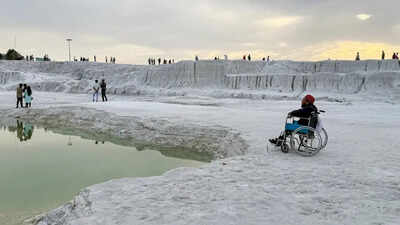
KISHANGARH: Endless white plains shimmer under the sun—no pine trees, no chill in the air—yet the landscape looks like a scene straight out of a winter postcard. Many mistake it for Bolivia’s Salt Flats, snow-covered Gulmarg, or even scenic Switzerland.But this striking location, now a popular spot for social media reels, is actually Asia’s largest marble waste dumping site, located in Kishangarh in Ajmer district, arid Rajasthan.Here, over 700 tankers carrying around 22 lakh litres of marble slurry are emptied every day. The site attracts at least 5,000 visitors daily, with footfall soaring to 20,000 on weekends and holidays.Due to its pristine white appearance, the dumping yard, spread over 350 acres, has also become a popular destination for pre-wedding and commercial shoots. Environmentalists and health experts, however, have flagged it as not just a health hazard but also a pollution hotspot.Scientific studies conducted by the Central University of Rajasthan have flagged it as a “toxic tourist destination”, documenting the health and ecological impacts of this unregulated dumping. The concerns also reached the National Green Tribunal (NGT), which set up a joint committee including members from state and central pollution control boards.“Despite its scale and impact, the dumping yard is being operated in rampant violation of basic environmental safeguards. There is no engineered liner system, no decanting wells, no dust suppression mechanisms, no monitoring of air or groundwater, and no protective green belt.“These failures have led to severe contamination of groundwater, degradation of agricultural land and high levels of fugitive dust pollution, thereby endangering public health,” Laxmi Kant Sharma, Environmental Science professor at Central University of Rajasthan, told PTI.Sharma noted that the university’s studies have found that the toxic contamination of water sources in the vicinity is reflected in total dissolved solid escalating 10 times above the safe limit in a 6-km radius of the dumping site.“The concentration of lead silicate in soil and nitrate and fluoride concentrations in water were found several times higher than normal levels, indicating extreme contamination. Our study also found that the concentration of PM2.5 exceeds the limit of ambient air quality standards of PM2.5,” he said.“Since the waste particles are smaller than 75 micrometres, they can spread far and wide, making the soil infertile. Several people may be suffering from silicosis. The government needs to take immediate action to prevent the situation from getting out of hand,” he added.The Kishangarh marble industry took shape in the 1980s. Around 30 years ago, the Rajasthan State Industrial Development and Investment Corporation (RIICO) allotted two dumping plots to the Kishangarh Marble Association (KMA). That marked the beginning of marble waste being dumped here, and over time, the slurry accumulated to form vast white plateaus and mountains.Today, the city is home to over 1,200 marble cutting units.For years, the site went unnoticed, until comedian Kapil Sharma filmed a song here for his debut film Kis Kisko Pyaar Karoon in 2016, bringing it into the spotlight. Since then, more celebrities have flocked to the location—Nora Fatehi shot her hit song Chhor Denge, Honey Singh and Nushrratt Bharuccha filmed the Saiyaan Ji music video, and Tiger Shroff with Shraddha Kapoor shot Dus Bahane for Baaghi 3.The stunning white landscapes and blue ponds also caught the attention of pre-wedding photographers, who began bringing couples here for shoots.Recognising its potential, the KMA developed an innovative model to turn the dumping yard into a tourist destination, now equipped with a helipad. While entry is free, visitors must obtain a pass from the KMA office, located about a kilometre away. A visitor with a single digital camera pays Rs 500, pre-wedding shoots cost Rs 5,100 per day, and commercial shoots can go up to Rs 21,000 per day.“The revenue is used to maintain the dumping yard. We have made changing rooms for those coming for shoots. There is a helipad too. There are restaurants and options for recreational activities. The dumping yard has put Kishangarh on the national tourism map,” said KMA president Sudhir Jain.“We have not received any health-related complaints from any tourist. In fact, the NGT also did not find anything hazardous here. We have been issued some guidelines for maintaining the area and we will follow them,” Jain added.When this PTI reporter visited the site, she could not find a single person wearing a mask. Several children, who came with their parents and grandparents, were seen rubbing their eyes.The dumping yard has it all for its visitors — horses, jeeps, kiosks for sunglasses and other photo props. Those managing these activities were seen covering their faces with towels and eyes with sunglasses.Lined on the side are several restaurants with a ‘chaupati’ theme where visitors relish delicacies, even as winds blow marble dust. The place also has a dedicated kids zone with various swings and activities available for children to enjoy a fun day.Tankers carrying marble waste could be seen arriving every 10 minutes to offload the slurry waste, but it meant little to tourists who come here nonetheless to click perfect selfies.“We saw so many videos online where people were calling this place mini Switzerland. So, when we were taking a trip to Rajasthan, we had to come here for sure. It is beautiful and amazingly scenic,” said Ashok Puri from Ahmedabad, who was visiting the dumping yard with his family.Farmers from nearby villages such as Tokra, Bhojiyawas, Rahimpura, Phaloda, Mohanpura, and Kali Dungri say that marble dust frequently settles on their fields and contaminates irrigation water, negatively impacting crop yields.“A white layer of marble dust often covers our crops. Ultimately, the production is low. Since my farms are very close to the dumping yard, last year the slurry ran into them and formed a thick layer on my field, making it unfit for sowing,” said Mandraj, who now runs a tea stall.Kishangarh MLA Vikas Chaudhary, however, said the dumping yard is maintained well by the KMA and attracts tourists from across the country.“The machinery that is being used by the industry now generates less waste. The marble association is doing a very good job of maintaining the dumping yard and Kishangarh is being seen as a popular tourist destination. However, if there are any pollution or health concerns, we are open to addressing them,” he said. (With agency inputs)


Source link

Fact Check: Will PCB head Mohsin Naqvi succeed Jay Shah as ICC chairman?


The corridors of international cricket administration are rarely quiet, but the latest buzz has sent social media into a tailspin. A series of viral claims suggest that Mohsin Naqvi, the current Chairman of the Pakistan Cricket Board (PCB) and Pakistan’s Federal Interior Minister, is positioned to take over the mantle of the International Cricket Council (ICC) from the incumbent, Jay Shah.

Given the historically frosty relations between the cricketing boards of India and Pakistan, the news has sparked intense debate among fans. However, before the narrative gains further momentum, it is essential to peel back the layers of these viral assertions and look at the hard facts governing the ICC’s leadership transitions.

Viral social media post cites a report claiming Mohsin Naqvi as next ICC chairman

The spark for this digital wildfire was a post on X (formerly Twitter) that gained massive traction on March 29, 2026. The post cited a supposed report from ESPN, claiming that Naqvi is all set to succeed Shah. According to the viral claim, Naqvi would serve as the ICC Chairman for a four-year term spanning from 2028 to 2032.

The timing of this rumour is particularly sensitive. It follows a period of significant friction within the Asian Cricket Council (ACC), where Naqvi serves as President. Following the Asia Cup 2025, a bizarre controversy unfolded when the Indian team, led by Suryakumar Yadav, reportedly refused to accept the trophy from Naqvi due to diplomatic tensions. In a move that dominated headlines, Naqvi allegedly took the trophy to the ACC office in Dubai, stating it would only be handed over if the Indian captain collected it personally from him.

Also READ: Ahmed Shehzad blasts Mohsin Naqvi and PCB over Pakistan’s poor 2026 campaign

Fact Check: Is Naqvi set to become next ICC Chairman after Jay Shah?

Despite the ESPN citation in the viral posts, a deep dive into official archives reveals that no such report exists. ESPN and its affiliate, ESPNcricinfo, have published no news regarding a pre-determined succession plan for 2028. The social media post appears to be a classic case of circular reporting, where an unverified claim is given a false sense of authority by attributing it to a reputable news outlet.

To understand why these claims are factually hollow, one must look at the current ICC timeline and the organization’s constitution. Shah officially assumed the role of ICC Chairman on December 1, 2024, succeeding Greg Barclay. Under the current ICC rules, a Chairman is elected for a term of two years, which can be renewed twice for a maximum of six years.

Currently, Shah is at the helm during a critical era for the sport, focusing on cricket’s inclusion in the 2028 Los Angeles Olympics. There is no waiting list or inheritance system for the ICC top job. The process is strictly democratic:

  1. Nominations: A candidate must be nominated by at least one current ICC director.
  2. Election: If there are multiple candidates, a secret ballot is held among the 16 board directors.
  3. Majority: A simple majority is required to win.

While Naqvi is indeed an influential figure as the head of the PCB and the ACC, his path to the ICC Chair would require a formal election process that hasn’t even begun for the 2028 cycle. Furthermore, the PCB is currently grappling with internal challenges, including a disappointing T20 World Cup 2026 campaign and ongoing debates regarding Naqvi’s dual role as a government minister and cricket administrator.

In conclusion, the reports of Naqvi being the next ICC Chairman are false and unverified. There is no official backing for these claims, and the purported ESPN report is non-existent.

Also READ: Pakistan not safe? PCB reacts to Australian players’ security and travel concerns ahead of PSL 2026


Source link

Nagastra-1 to Project KAL: Can India scale its drone warfare capability?


Nagastra-1 to Project KAL: Can India scale its drone warfare capability?

The ongoing confrontation between the United States and Iran has once again demonstrated a stark truth about modern warfare: the decisive edge no longer lies in tanks, fighter jets, or even missiles alone, but increasingly in swarms of cheap, expendable, and intelligent unmanned systems. From the deployment of Iran’s Shahed-series loitering munitions to America’s reverse-engineered low-cost strike platforms, the conflict has underlined a structural shift in how wars are fought and sustained.Unmanned aerial systems are no longer auxiliary assets. They are shaping strategy, dictating tempo, and redefining cost equations. A drone costing tens of thousands of dollars can now neutralise assets worth millions, if not more. In such a scenario, endurance, scalability, and production capacity matter as much as technological sophistication.It is within this rapidly evolving global battlefield that India is attempting to define its own drone doctrine. The country’s experience during Operation Sindoor in May 2025 marked a transition point. For the first time, drones were not merely surveillance tools but central to operational planning, execution, and battlefield outcomes. Yet, even as India demonstrated capability, a deeper question emerged: can it scale?

The age of cheap precision: Why drones are redefining warfare

The defining lesson from recent conflicts, particularly the Russia-Ukraine war and the US-Iran confrontation is simple. Warfare has entered an era where affordability and mass production are as critical as precision.Loitering munitions, often described as kamikaze drones, exemplify this shift. These systems combine the persistence of surveillance platforms with the lethality of guided munitions. They can loiter over a target area, identify opportunities, and strike with minimal warning. Unlike traditional missiles, they are relatively inexpensive and can be deployed in large numbers.

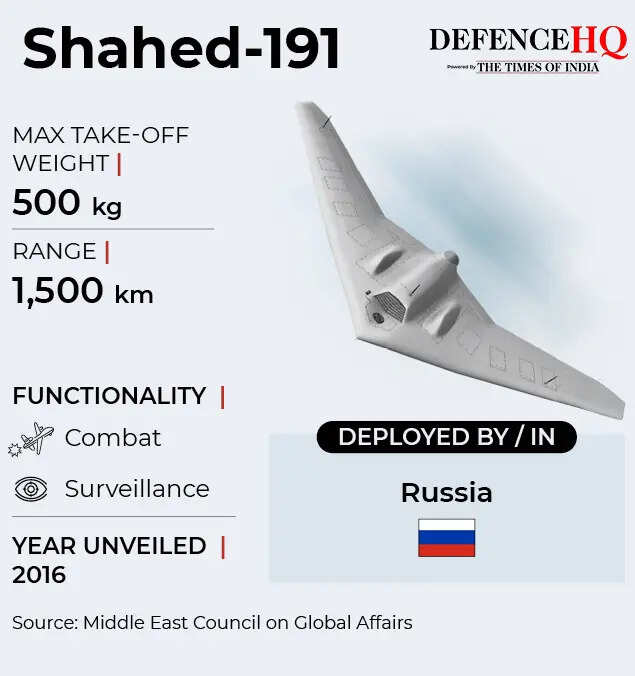
Shahed-191

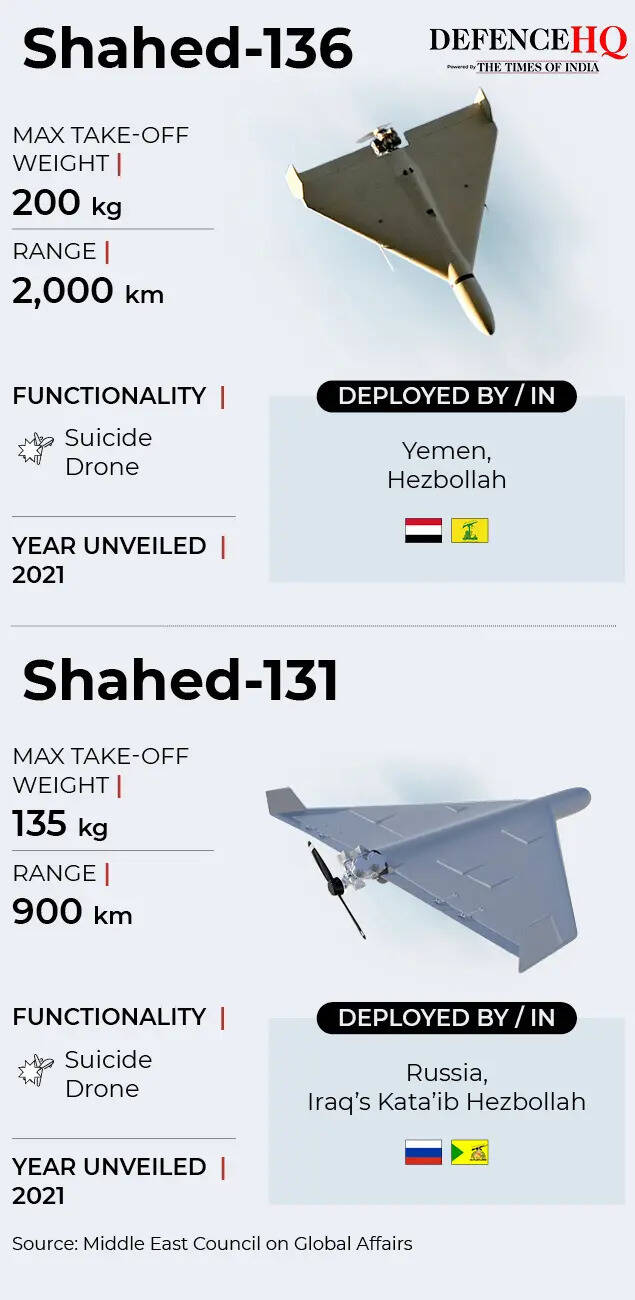
Iran’s Shahed-136 has become the archetype of this model. With a range of around 2,000 kilometres and a modest warhead, it is not technologically advanced. Yet its strength lies in its simplicity and scalability. Produced in large numbers, it has altered the economics of air defence by forcing adversaries to expend costly interceptors on low-cost threats.

Shahed-136 and Shahed-131

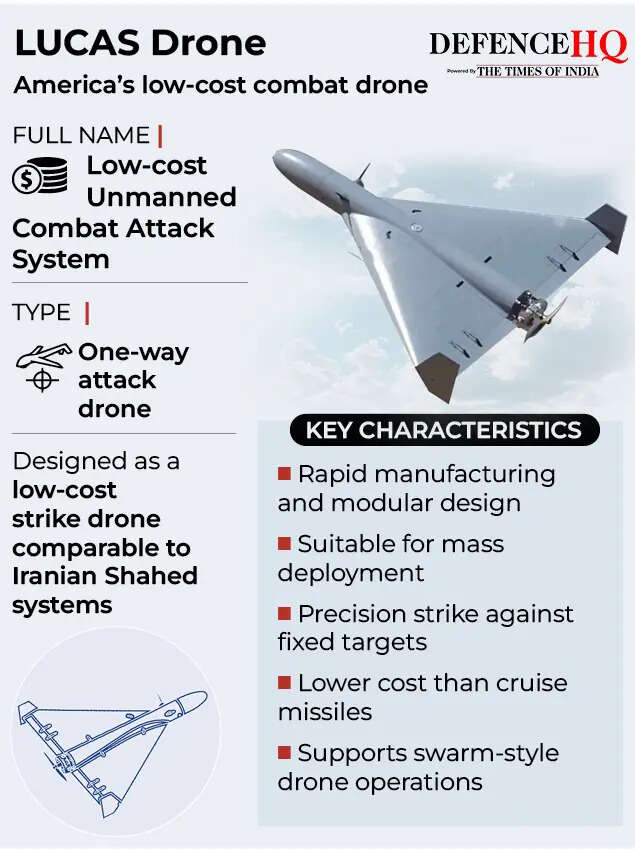
The United States has acknowledged this shift. Its Low-cost Unmanned Combat Attack System, developed by reverse-engineering captured Shahed drones, reflects a pragmatic recognition that the future of warfare lies not in exquisite platforms alone but in mass-producible systems.This is the benchmark against which all emerging drone powers, including India, are now measured.

Where India stands in the global drone race

India today occupies a transitional space in the global drone hierarchy, positioned somewhere between technological competence and industrial under-preparedness. It is neither a laggard nor a leader. Instead, it is a capable but constrained player attempting to bridge the gap between innovation and scale in an ecosystem that is rapidly being defined by mass production and cost efficiency.At a capability level, India has made undeniable progress. Over the past decade, it has developed or inducted systems across the entire drone spectrum, from high-altitude long-endurance platforms to tactical surveillance UAVs, loitering munitions, and counter-drone technologies. Indigenous programmes such as Nagastra, ALS-50, and Switch UAVs demonstrate that Indian industry can design and deploy mission-ready systems tailored to diverse terrains, from deserts to high-altitude borders. Operation Sindoor reinforced this reality by showing that Indian forces can integrate drones into real-time combat scenarios with measurable impact.However, global leadership in drone warfare is no longer determined by the ability to build a few advanced systems. It is defined by the capacity to produce thousands of affordable, expendable platforms and sustain their deployment over extended periods. This is where India’s position becomes more complex.The United States continues to dominate the high-end segment, with platforms such as the MQ-9 Reaper and now newer low-cost experimental systems that blend precision with affordability. At the same time, it is rapidly adapting to the economics of mass drone warfare, as seen in its reverse-engineering of Iranian-style loitering munitions. Russia and Ukraine, through the ongoing conflict, have demonstrated what industrial-scale drone warfare looks like, deploying hundreds of thousands of units annually, particularly first-person view and kamikaze drones.Turkey has carved out a niche by combining affordability with export-driven scale. Its Bayraktar series has become a global benchmark for cost-effective combat drones. Iran, perhaps the most instructive example, has mastered the art of producing simple but effective long-range kamikaze drones in large numbers, fundamentally altering battlefield economics. Even Pakistan has moved aggressively, leveraging Chinese collaboration to build and induct armed drones and loitering munitions at relatively low costs.Against this backdrop, India’s challenge is not one of design but of depth. Its production runs remain limited, often in the hundreds, which constrains both operational flexibility and deterrence value. Without large-scale orders, manufacturers struggle to justify investments in assembly-line production, leading to a cycle where low demand limits supply capacity, and limited capacity restricts demand.Another dimension of this gap lies in supply chains. While India has increased indigenous content in many systems, critical components such as sensors, semiconductors, and communication modules often rely on external sources. In a prolonged conflict scenario, such dependencies could create vulnerabilities, particularly if global supply chains are disrupted.That said, India is not static. Policy interventions, including production-linked incentives, easing of drone regulations, and increased defence procurement from domestic players, are gradually reshaping the landscape. The entry of private players and startups has injected agility into the ecosystem, accelerating innovation cycles. Programmes like iDEX and emergency procurement during Operation Sindoor have also demonstrated that when required, the system can respond quickly and at scale, at least in the short term.The emerging projects such as long-range kamikaze drones and swarm systems indicate that India is acutely aware of where the future lies. The focus is shifting from standalone platforms to networked systems, from individual drone performance to collective operational effect. This conceptual shift aligns with global trends, where the emphasis is on swarming, autonomy, and resilience in contested electronic environments.In essence, India stands at a crossroads in the global drone race. It has crossed the threshold of technological viability but has yet to achieve industrial maturity. The next phase will determine whether it can convert its growing innovation base into a scalable manufacturing ecosystem capable of competing with established drone powers.The distance between India and the leaders is no longer measured in technology alone. It is measured in numbers, production speed, and the ability to sustain a drone-intensive conflict. Bridging that gap will define India’s position in the future battlespace.

Operation Sindoor: India’s drone moment

Operation Sindoor marked a doctrinal shift in India’s military thinking. Rather than treating drones as supplementary assets, the Indian armed forces integrated them across multiple layers of combat operations.From frontline reconnaissance to deep-strike missions, drones played a central role. The operation demonstrated the effectiveness of a networked drone ecosystem, where different categories of unmanned systems worked in tandem to achieve tactical and strategic objectives.

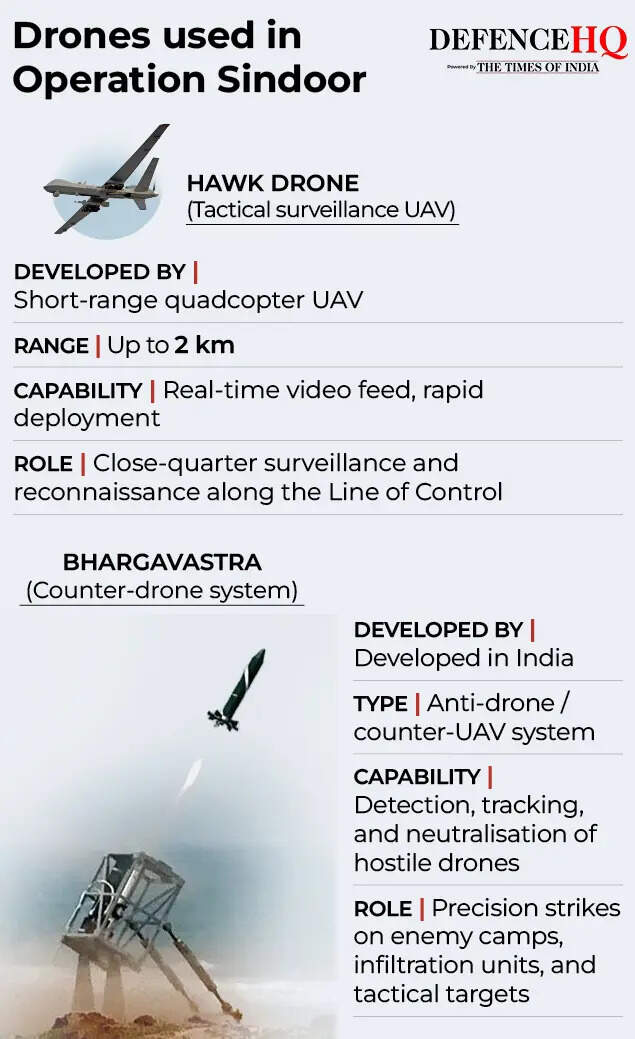
Drones used in Operation Sindoor

First-person view drones provided real-time situational awareness to troops on the ground. Loitering munitions conducted precision strikes against high-value targets. Surveillance UAVs extended operational visibility beyond line-of-sight constraints. Counter-drone systems ensured protection against hostile unmanned threats.This layered approach reduced risk to personnel, improved response times, and enhanced battlefield efficiency. However, the scale of deployment remained limited. India reportedly used around 100 drones during the operation, a fraction of the numbers seen in contemporary conflicts elsewhere.The lesson was clear: capability exists, but scale does not.

Nagastra-1: India’s indigenous loitering munition

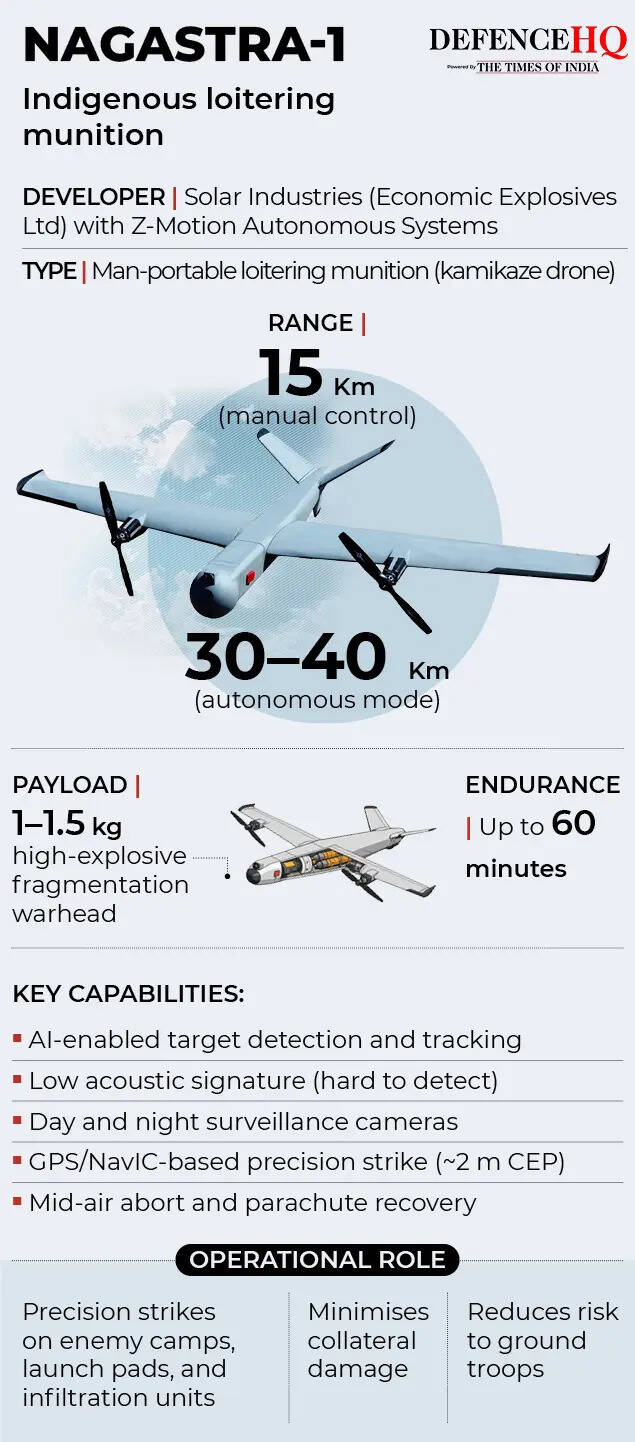
At the heart of India’s indigenous drone capability lies the Nagastra-1, a loitering munition developed through collaboration between private industry and defence startups. Designed as a portable, precision-strike system, it represents India’s attempt to build a homegrown equivalent to global kamikaze drones.The Nagastra-1 is a lightweight, man-portable system that can be carried in two backpacks. It combines a fixed-wing UAV with a pneumatic launcher, a ground control station, and communication systems. With a flight endurance of up to 60 minutes and a range of 15 kilometres in manual mode, extendable to 30–40 kilometres autonomously, it offers flexibility across operational scenarios.

Nagastra-1

What distinguishes the system is its emphasis on precision and adaptability. Equipped with day and night surveillance cameras, it can identify and track targets before executing a strike. Its warhead, weighing between 1 and 1.5 kilograms, is designed for targeted engagements, minimising collateral damage.The drone operates with a man-in-loop system, allowing operators to make real-time decisions. It can abort missions mid-flight and be recovered using a parachute mechanism, a feature that enhances cost efficiency. Its electric propulsion system ensures low acoustic signatures, making it difficult to detect at higher altitudes.During Operation Sindoor, the Nagastra-1 was deployed for precision strikes against selected targets, including launch pads and infiltration units. Its performance validated the concept of indigenous loitering munitions in operational conditions.However, the scale of deployment remains limited. Orders for a few hundred units, while significant, fall short of the thousands required for sustained high-intensity conflict.

Beyond Nagastra: The broader drone ecosystem in Sindoor

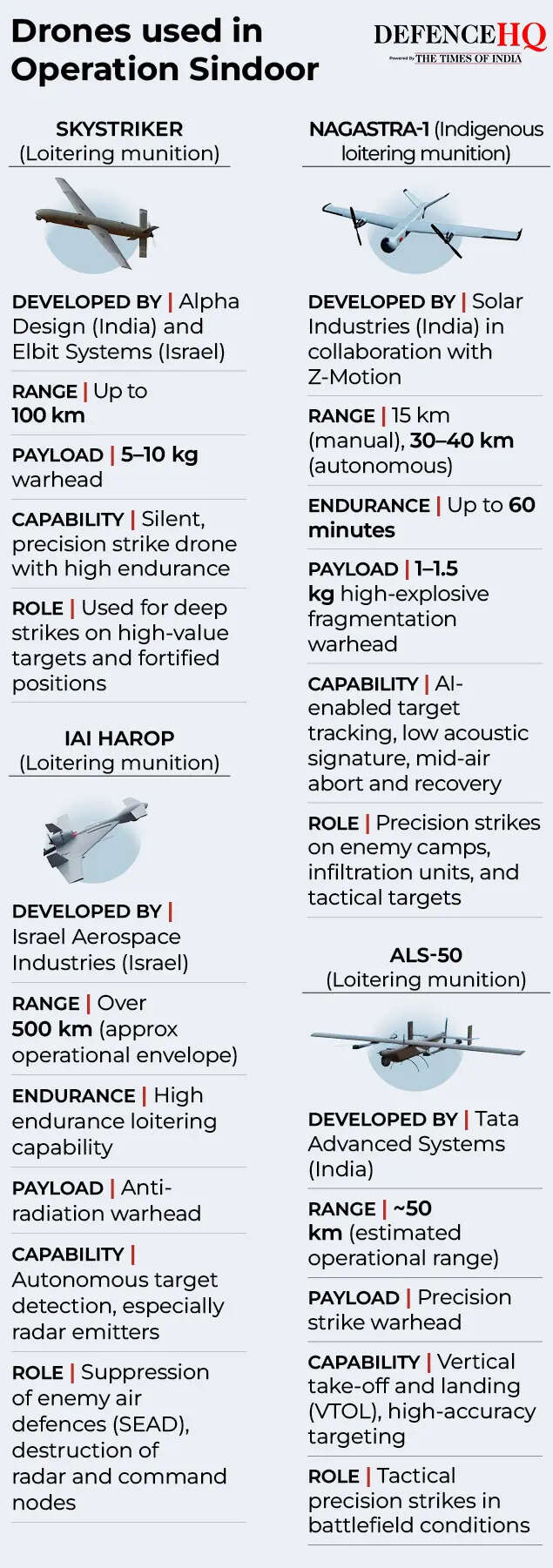
Operation Sindoor was not built around a single breakthrough platform. Its significance lay in creating a layered, multi-platform drone ecosystem where different unmanned systems performed specialised roles within an integrated operational framework. This marked a shift from earlier doctrines, where drones were largely limited to surveillance. In Sindoor, they became central to decision-making, strike execution, and defensive operations.At the higher end, India deployed loitering munitions such as the Israeli-origin Harop for suppression of enemy air defences. With long endurance and advanced targeting, these systems were used to neutralise radar sites and command nodes, enabling safer follow-on operations. However, their high cost and import dependence limit their use at scale in prolonged conflicts.

Drones used in  Operation Sindoor

Mid-tier systems like SkyStriker provided a balance between range, payload, and affordability, enabling precision strikes at distances of up to 100 kilometres. Indigenous platforms such as ALS-50 added depth to this layer, reflecting growing domestic capability in precision strike systems, even if production remains limited.At the tactical level, short-range surveillance drones, including quadcopter-based systems, delivered real-time intelligence to troops in complex terrains. First-person view drones further enhanced battlefield agility, enabling precise engagement of small and moving targets at low cost.Equally critical was the defensive layer. Counter-drone systems like Bhargavastra, supported by electronic warfare tools and jammers, ensured protection against hostile UAVs, highlighting the dual nature of modern drone warfare.What made this ecosystem effective was its integration. Surveillance, strike, and defence systems operated in coordination, reducing response times and improving accuracy. Yet, a key constraint persists. High-end capabilities still rely on imports, and overall deployment remains limited by production capacity.Operation Sindoor demonstrated that India has the foundations of a modern drone warfare architecture. The challenge now is to deepen this ecosystem, reduce dependencies, and scale it for sustained, high-intensity conflict.

The cost dilemma: MQ-9B vs mass drones

India’s acquisition of 31 MQ-9B Predator drones represents a significant enhancement in surveillance and strike capability. These high-altitude, long-endurance UAVs can operate for over 40 hours and carry substantial payloads, making them valuable assets for strategic missions.However, their cost raises important questions. At an estimated $3.5 billion for 31 units, the investment reflects a focus on high-end capability rather than mass deployment.

LUCAS Drone

In contrast, the economics of drone warfare increasingly favour low-cost, expendable systems. For the same cost, tens of thousands of kamikaze drones could potentially be produced, offering greater flexibility in prolonged conflicts.This is not to suggest that high-end platforms lack value. Rather, it highlights the need for balance. A modern drone force requires both sophisticated systems for strategic missions and large numbers of affordable platforms for tactical operations.

Project KAL and Sheshnaag-150: India’s answer to Shahed

Recognising the need for long-range, low-cost strike capabilities, Indian defence startups have begun developing systems that mirror the operational philosophy of the Shahed-136.Project KAL, developed by a Noida-based company, is designed as a long-range kamikaze drone with an endurance of three to five hours. Its ability to loiter over target areas, gather intelligence, and execute precision strikes aligns with the emerging requirements of deep-penetration warfare.

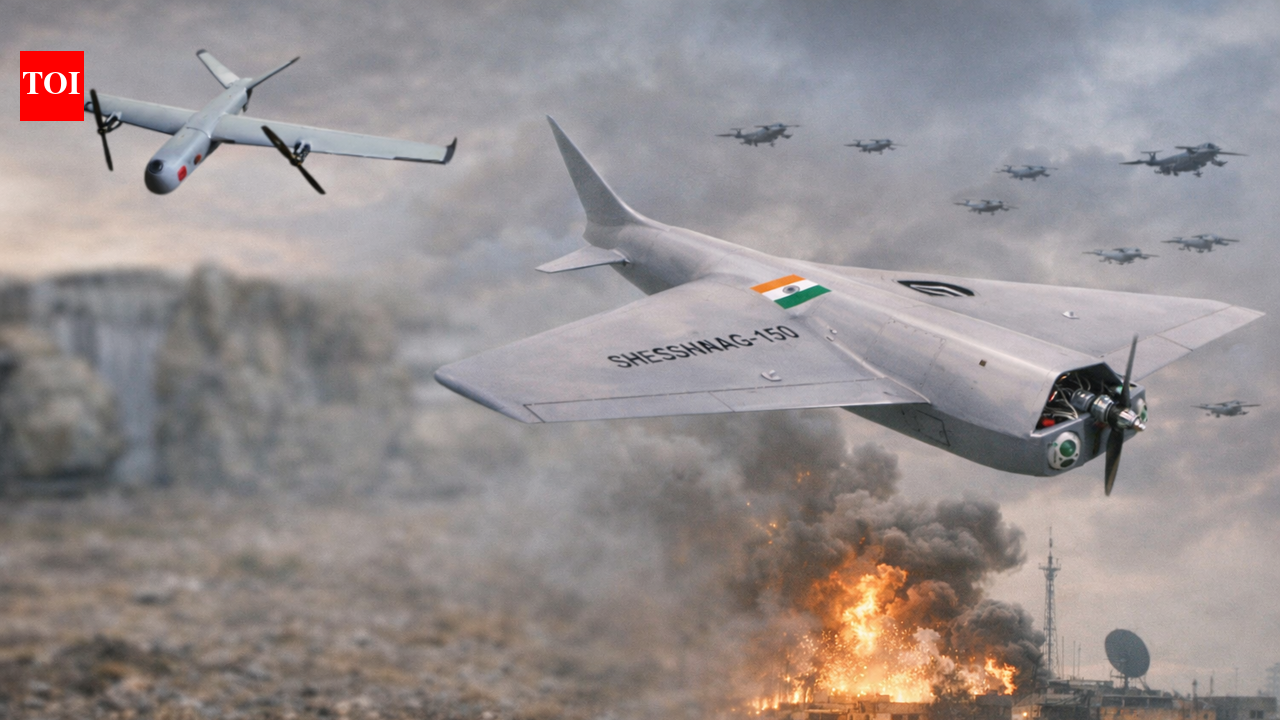
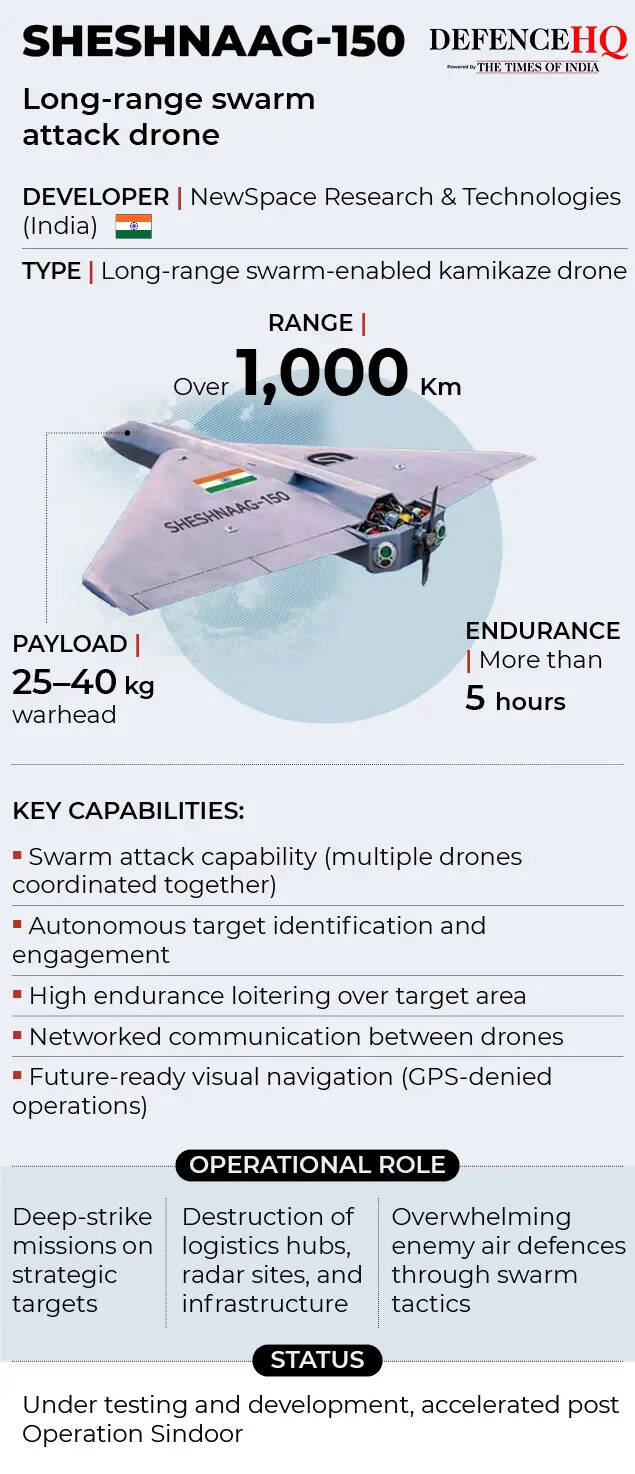
Sheshnaag-150

The Sheshnaag-150 represents a more ambitious evolution. Designed as a swarm-capable attack drone, it combines long range, high payload capacity, and autonomous coordination. With an operational range exceeding 1,000 kilometres and an endurance of over five hours, it is intended to strike strategic targets such as logistics hubs and radar installations.What sets the Sheshnaag-150 apart is its swarm capability. Multiple drones can operate in coordination, overwhelming enemy air defences through sheer numbers and synchronised behaviour. This approach reflects the next stage of drone warfare, where individual platforms are less important than the collective intelligence of the swarm.The system also incorporates advanced software architecture, enabling drones to communicate, adapt, and execute missions with minimal human intervention. Future iterations are expected to include visual navigation systems, allowing operation in GPS-denied environments.Both Project KAL and Sheshnaag-150 remain in development. Their success will depend not only on technological performance but also on the ability to scale production.

Vayu Baan and the evolution of air-launched drones

Another significant development in India’s drone ecosystem is the Vayu Baan programme, which focuses on air-launched unmanned systems and signals a shift towards deeper integration of drones within combat operations. Designed to be deployed from helicopters, these compact unmanned platforms can function both as surveillance assets and precision-guided munitions, expanding the tactical reach of existing air assets without increasing risk to personnel.India’s Vayu Baan programme marks a decisive move towards integrating unmanned systems with traditional manned platforms, reflecting the transition from standalone drone usage to networked, multi-domain warfare. Developed by the Indian Air Force’s Directorate of Aerospace Design, the project centres on air-launched effects, where drones are released mid-flight and then transition into independent surveillance or strike roles.Once deployed, these drones unfold their wings, activate propulsion, and begin autonomous operations. With an expected range of over 50 kilometres and an endurance of around 30 minutes, they are suited for missions such as real-time reconnaissance, target acquisition, and precision engagement. Equipped with electro-optical and infrared sensors, they are designed to operate in contested environments, including GPS-denied scenarios.The concept aligns with a broader global trend of manned-unmanned teaming, enhancing battlefield flexibility while improving survivability. For India, Vayu Baan represents not just a platform, but a doctrinal shift towards faster, more adaptive, and network-centric warfare.

The scale problem: Hundreds vs thousands

Perhaps the most critical challenge facing India’s drone programme is scale. Modern conflicts have demonstrated that effectiveness is not determined solely by technological superiority but by the ability to sustain operations over time.Ukraine and Russia have deployed hundreds of thousands of drones in a single year. These numbers are not anomalies but indicators of the future trajectory of warfare.India’s deployment during Operation Sindoor, while operationally significant, remains modest by comparison. Orders for systems like Nagastra-1 in the hundreds do not justify the establishment of large-scale production lines. Without such infrastructure, scaling up during a conflict becomes difficult.The issue is not merely industrial but strategic. A country that cannot produce drones at scale risks being outpaced in prolonged engagements.

Where is India’s Shahed?

India’s push for indigenous defence manufacturing has begun to deliver visible results, particularly in the drone segment. Platforms such as Nagastra-1, ALS-50, and emerging systems like Sheshnaag-150 reflect a growing domestic capability to design and deploy mission-ready unmanned systems. Much of this progress has been driven by the increasing role of the private sector, with startups and established firms contributing to rapid innovation, supported by government initiatives, procurement reforms, and programmes aimed at boosting self-reliance.Yet, despite these gains, the central question remains: where is India’s equivalent of the Shahed-136?The answer lies in the gap between capability and scale. While India has demonstrated that it can build effective loitering munitions and long-range strike drones, it has not yet translated this into mass production. Supply chain dependencies continue to pose a challenge, particularly for critical components such as sensors, semiconductors, and communication systems. Regulatory complexities and fragmented demand further constrain the ability to establish large, sustained production lines.The Shahed is not just a drone. It is a model of warfare built on simplicity, affordability, and industrial-scale manufacturing. This is where India still lags. Projects such as KAL and Sheshnaag-150 show that the technological foundation exists, and the industrial ecosystem is evolving to support it.However, without the urgency and scale that define leading drone powers, India’s progress remains incomplete. Its drone programme is still transitioning from developing capable systems to deploying them in large numbers. Until that shift happens, India will continue to trail in a domain where numbers, not just technology, define battlefield advantage.

The road ahead: From capability to capacity

Operation Sindoor marked the beginning of India’s drone-centric warfare doctrine. It demonstrated that the country can design, deploy, and integrate unmanned systems effectively.The next phase will be defined by scale, integration, and innovation. Building assembly-line production capabilities, investing in swarm technologies, and developing resilient communication systems will be critical.Equally important will be the integration of drones into everyday military operations. Plans to establish dedicated drone units within infantry formations indicate a shift towards institutionalising unmanned systems.The future battlefield will not be dominated by a single platform but by networks of interconnected systems operating across domains. In this environment, adaptability and scalability will be as important as technological sophistication.India has taken the first steps. The challenge now is to accelerate.




Source link

Why MS Dhoni and Dewald Brevis are not playing in CSK’s IPL 2026 opener | Cricket News


Why MS Dhoni and Dewald Brevis are not playing in CSK’s IPL 2026 opener
MS Dhoni and Dewald Brevis (Agency Image)

Chennai Super Kings have begun their IPL 2026 campaign without two key players, with both MS Dhoni and Dewald Brevis unavailable for their opening clash against Rajasthan Royals in Guwahati.Brevis has been ruled out of the match due to a side strain, with head coach Stephen Fleming confirming that the young South African is currently undergoing rehabilitation. “He is rehabbing and hopefully won’t be for too long,” Fleming said on the eve of the game. His absence is a setback for CSK, given his ability to provide explosive firepower in the middle order.

Watch

CSK host fan engagement event at Chepauk ahead of IPL 2026

Dhoni’s absence, meanwhile, is part of a slightly longer-term concern. The former CSK captain is expected to miss the first two weeks of the tournament due to a calf strain. In recent years, Dhoni has already been managing knee issues while playing only in the IPL, but he has remained a constant presence in the side, even leading them to their fifth title in 2023. This time, however, CSK will have to navigate the early phase without him.With Dhoni unavailable, Ruturaj Gaikwad continues as captain, while Sanju Samson steps in as wicketkeeper and opener.The toss also reflected the conditions, with Rajasthan Royals opting to bowl first after rain in Guwahati left moisture in the surface. Both teams acknowledged the impact of the weather, but for CSK, the bigger challenge will be adjusting to life without two important players at the start of their campaign. Rajasthan Royals (Playing XI): Yashasvi Jaiswal, Vaibhav Sooryavanshi, Riyan Parag(c), Dhruv Jurel(w), Shimron Hetmyer, Ravindra Jadeja, Jofra Archer, Nandre Burger, Sandeep Sharma, Ravi Bishnoi, Brijesh SharmaChennai Super Kings (Playing XI): Sanju Samson, Ruturaj Gaikwad(c), Ayush Mhatre, Matthew Short, Shivam Dube, Kartik Sharma(w), Jamie Overton, Noor Ahmad, Matt Henry, Anshul Kamboj, Khaleel Ahmed


Source link

Only 5 in 253! Matches MS Dhoni has missed for CSK in IPL | Cricket News


Only 5 in 253! Matches MS Dhoni has missed for CSK in IPL

MS Dhoni will miss Chennai Super Kings‘ (CSK) IPL 2026 opener against Rajasthan Royals (RR) on Monday in Guwahati, marking a rare absence for the wicketkeeper-batter who has been a constant presence for the team over the years.Dhoni has long been central to CSK as captain, finisher and wicketkeeper, but this match at the Baraspara Cricket Stadium will go ahead without him. His absence brings focus on the last time he missed a game and how often he has been unavailable since the IPL began in 2008.The last time Dhoni did not feature in a CSK match in IPL was during the 2019 season. He missed the April 26 game against Mumbai Indians at the M A Chidambaram Stadium due to fever, with Suresh Raina leading the side. He also sat out a match earlier that season against Sunrisers Hyderabad on April 17 due to a back spasm.Across his IPL career, Dhoni has missed only five matches. Monday’s fixture will only be the sixth instance of Dhoni missing an IPL match for CSK. The Chennai Super Kings (CSK) have played 253 total matches in the Indian Premier League (spanning 2008–2025). Three of those came in the 2010 season — against Delhi Daredevils in Delhi, Kings XI Punjab in Chennai, and Royal Challengers Bengaluru in Bengaluru.Dhoni’s five prior misses were extremely sparse and spread across nearly a decade:2010 season (three matches):

  • vs Delhi Daredevils (Delhi)
  • vs Kings XI Punjab (Chennai)
  • vs Royal Challengers Bengaluru (Bengaluru)

2019 season (two matches):

  • vs Sunrisers Hyderabad (Hyderabad, April 17) – back spasm.
  • vs Mumbai Indians (Chennai, April 26) – fever.

Since 2020, Dhoni has played every match he was available for, including leading CSK to titles in 2021 and 2023. He also featured in all 14 matches during the 2025 season. The only gap in his IPL participation came during the 2016 and 2017 seasons when CSK were suspended and he played for Rising Pune Supergiant.

Poll

In your opinion, what should strategy should CSK follow to compensate the absence of Dhoni?

The 44-year-old is currently dealing with a calf injury and is expected to be unavailable at least until mid-April, though a return later in the month remains possible.With 278 appearances, Dhoni is the most-capped player in IPL history, and he has led a side in 235 matches, the most by any captain. His absence leaves a younger CSK side without one of its most experienced players.


Source link

‘Only country that dignifies this subject’: Trump reignites birthright citizenship debate, slams US courts


'Only country that dignifies this subject': Trump reignites birthright citizenship debate, slams US courts

US President Donald Trump once again talked against birthright citizenship, arguing that the policy was originally intended for “the babies of slaves” and is now being misused by wealthy foreigners seeking US citizenship for their children. In the post on Truth Social, Trump criticised the practice of so-called “birth tourism,” claiming that people from countries like China are exploiting the system “for pay” to secure citizenship. He also took aim at the US judicial system, saying, “Dumb Judges and Justices will not a great Country make,” while linking the issue to broader concerns over tariffs and economic policy. Trump further asserted that the United States is unique in continuing to debate birthright citizenship, suggesting other countries benefit from the current system while “laughing” at the US legal framework.“Birthright Citizenship is not about rich people from China, and the rest of the World, who want their children, and hundreds of thousands more, FOR PAY, to ridiculously become citizens of the United States of America. It is about the BABIES OF SLAVES! We are the only Country in the World that dignifies this subject with even discussion. Look at the dates of this long ago legislation – THE EXACT END OF THE CIVIL WAR! The World is getting rich selling citizenships to our Country, while at the same time laughing at how STUPID our US Court System has become (TARIFFS!). “Dumb Judges and Justices will not a great Country make!” Trump said on Truth Social. Birthright citizenship is the principle of jus soli, or “right of the soil,” under which nearly anyone born on US territory automatically becomes a citizen. It is guaranteed by the 14th Amendment to the Constitution, adopted in 1868 to ensure citizenship for formerly enslaved people, and later reinforced by the Supreme Court’s 1898 ruling in United States v. Wong Kim Ark, which extended the right to children born to non-citizen parents. While broadly applied, it excludes a few categories such as children of foreign diplomats, and remains a central, constitutionally protected feature of US citizenship law.


Source link

Iran Minab School Strike: ‘Remember these two criminals’: Iran names US officers responsible for Minab school strike


Iran on Sunday named US Navy Officers Commander Leigh R Tate and Executive Officer Jeffrey E York of the USS Spruance, as responsible for a missile strike on a school in Minab which claimed 168 lives.According to a post shared by Iran, the officers ordered the launch of Tomahawk missiles three times.

Watch

IRAN IRGC Vs US MARINES: Thousands Of Elite Soldiers Storm Middle East For Ground Invasion

“Remember these two criminals. Leigh R. Tate, the commander, and Jeffrey E. York, the executive officer of the USS Spruance, who ordered the launch of Tomahawk missiles three times, killing 168 innocent children at a school in #Minab,” the post on X read.Earlier this month, a precision strike on an elementary school in Minab, Iran, killed at least 165 people, according to reports. US and Israeli forces carried out the attack on the first day of Operation Epic Fury, targeting the school simultaneously with a strike on a nearby naval base operated by the Islamic Revolutionary Guard Corps (IRGC). US media indicated that the school was damaged as part of coordinated precision operations against military installations in the area.According to The New York Times, official US statements targeting naval facilities near the Strait of Hormuz, where the IRGC base is located, indicate that American forces were the likely perpetrators of the school strike. CBC News reported that the damage was caused by a precision airstrike on a military complex adjacent to the school, noting that the building was part of an IRGC installation.Meanwhile, a preliminary US military investigation found that the missile strike which killed scores of children at the outset of the conflict, was likely the result of an American targeting error, highlighting the possibility of misidentification amid operations against nearby military facilities.The missile strike on the school had become a major controversy in the early days of the conflict. Iranian state media reported funerals for at least 165 victims, including students, after the attack occurred during the school’s morning session. Broadcast images showed mourners gathered over coffins draped in the Iranian flag, some bearing photographs of children. President Masoud Pezeshkian blamed the United States and Israel for the strike, though Israel has denied involvement, with military spokesman Lt Col Nadav Shoshani stating there was “no connection between the IDF and whatever happened in that school.”In Washington, the incident drew growing scrutiny. More than 45 Democratic senators have written to defence secretary Pete Hegseth, seeking clarity on whether the US was responsible and what precautions were taken before targeting the building. Lawmakers also questioned recent cuts to Pentagon programs designed to reduce civilian casualties, including initiatives at US Central Command and the Civilian Protection Center of Excellence, established in 2022 to prevent harm to civilians during military operations.


Source link