Breaking News
‘Hisab liya jayega’: PM Modi slams Didi in Kolkata rally | India News

‘Hisab liya jayega’: PM Modi slams Didi in Kolkata rally
PM Modi with BJP’s Mithun Chakraborty during a rally in Kolkata on Saturday

KOLKATA: Chun-chun ke hisab liya jayega (One by one, everyone will be held accountable),” PM Modi said at BJP’s Brigade Parade Ground rally here on Saturday, calling for “change” at state secretariat Nabanna in upcoming polls. He touched on BJP’s key themes, “demographic change, lack of security for women and nirmam sarkar’s (cruel govt’s) violence and corruption”.Creators of ‘maha jungle raj’ in Bengal will pay, says PM ModiPM Modi’s speech laid out the template for the party’s poll campaign in a state it wants to add to its showcase of spectacular election victories since 2014. Saturday’s rally was also probably the last to be addressed by the BJP’s biggest vote-catcher before the EC’s likely announcement of the poll schedule next week. “The countdown has started for those who have brought maha jungle raj to Bengal. Those who flout the law and torture people will not be spared. We will make them pay for their crimes. BJP will bring development if voted to office. Sabka hisab liya jayega (We will make everyone accountable),” he said in his 49-minute speech. “Intimidation and threats have become TMC’s weapon. It is running with the help of goons,” he said. “This nirmam sarkar will not be able to stop change this time. BJP has the blessings of Mahishashurmardini (Durga),” he added, mentioning several of Bengal’s icons, including Rishi Bankim Chandra, Rabindranath Tagore, Ramakrishna Paramahamsa, and Swami Vivekananda, to undercut Trinamool’s narrative of BJP being a “party of outsiders” in Bengal. PM Modi then focused on what he described as “demographic change happening in Bengal” and Trinamool’s alleged role in it. “Bengal’s roti, beti and mati (bread, daughter and soil) are under threat now. Their land is being grabbed by infiltrators. The demography of the state has changed and has made Bengal unsafe. Bengali Hindus are being made a minority,” he said. “Criminals have a free run. Seven and eight-year-olds and tribal women are being raped and the nirmam sarkar is protecting the rapists. It is the same mentality that has caused the highest number of acid attacks in Bengal,” PM Modi alleged, adding that BJP will make Bengal safe for women. “This is PM Modi’s guarantee.” PM Modi then used the recent exchange between the state administration and President Droupadi Murmu to question Trinamool’s “attitude towards tribals”. “Dalits are the most deceived people in the state. A few days ago, the state administration was responsible for the mismanagement of President Murmu’s visit to Bengal. Trinamool could never accept a tribal woman in such a high position,” he alleged, adding: “Murmu is known for her simplicity and she expressed her pain. It was an insult to thousands of Dalit women and the Indian Constitution. Bengal will give a befitting reply.” Murmu’s criticism about the way she was treated at a Siliguri event earlier this week had prompted CM Mamata Banerjee to accuse BJP of using President’s office for politics. PM Modi also referred to Banerjee’s recent remarks about a community. “People are being threatened. It is being said that members of a specific community will kill them. How can anyone holding a constitutional position make a comment like that,” he asked, attributing Trinamool’s opposition to the SIR of electoral rolls as another example of its “vote-bank politics”. He also slammed TMC for trying to stop people from attending his rally. “Those coming to this rally were abused as ‘thieves’. But the people of Bengal know who the real thief is. This nirmam sarkar stopped vehicles and blocked bridges but could not stop the deluge of people. This crowd reflects the mood of Bengal.” PM Modi accused TMC of blocking several central schemes and being “anti-development”. “This administration has cursed the youth with migration. Bengal’s youths are talented and hardworking but are forced to go to other states for work. Development has taken a back seat. Investments have stopped and industries shut down. Jobs are being sold here. It is PM Modi’s guarantee to give jobs to the youth of Bengal,” he added. Before his rally, PM Modiinaugurated infrastructure projects worth Rs 18,680 crore.



Source link

‘A partnership that will forever remain special’: VVS Laxman on Eden Gardens miracle with Rahul Dravid | Cricket News


'A partnership that will forever remain special': VVS Laxman on Eden Gardens miracle with Rahul Dravid
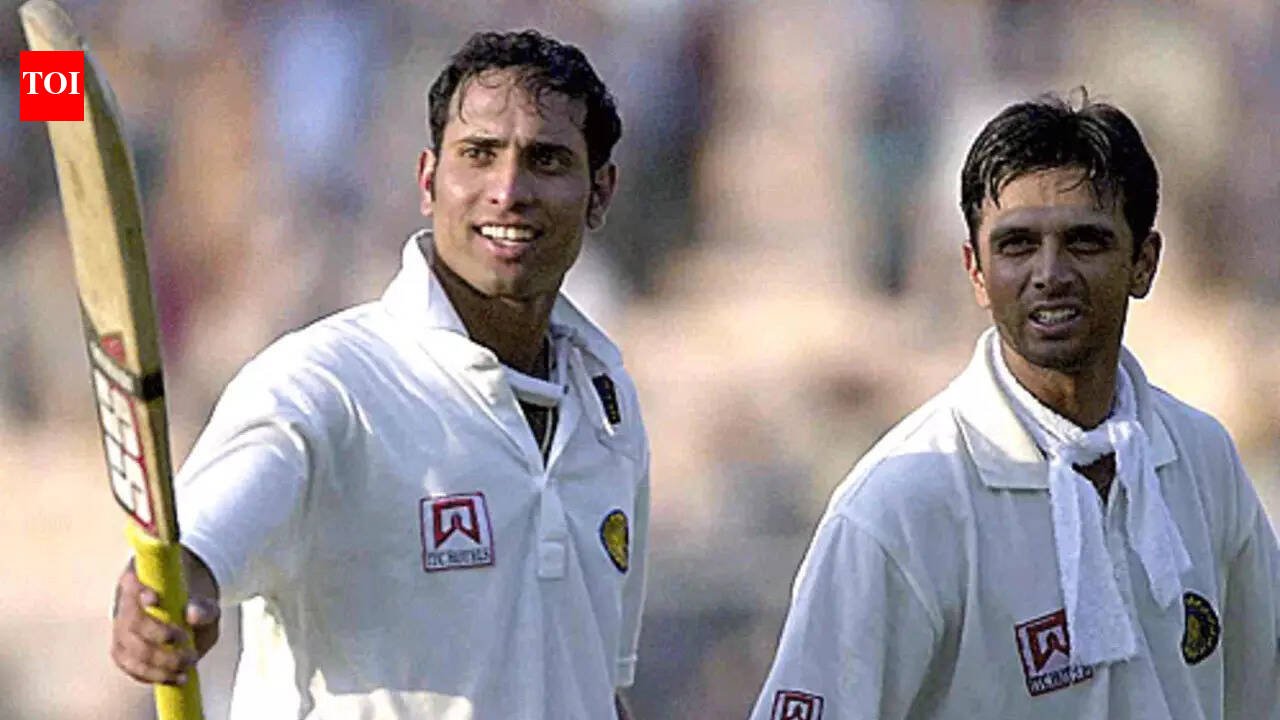
VVS Laxman and Rahul Dravid (AFP Photo)

NEW DELHI: VVS Laxman, former India batter and current head of the Board of Control for Cricket in India Centre of Excellence, looked back on the 25th anniversary of the famous fourth day of the historic India vs Australia Test at Eden Gardens 2001 — a match remembered as one of the greatest comebacks in cricket history.Go Beyond The Boundary with our YouTube channel. SUBSCRIBE NOW!On March 14, 2001, India were on the brink of a crushing defeat on home soil. After losing the first Test of the series heavily, the hosts were forced to follow on in the second match at Eden Gardens.

EXCLUSIVE: Rahul Dravid on iconic Eden Gardens win against Australia in 2001

When play began on the fourth morning in Kolkata, India’s situation looked dire. The team were 254 for 4 in their second innings — still trailing by 20 runs with six wickets remaining. Australia appeared to have complete control and an Indian defeat seemed inevitable.What followed, however, was one of the most remarkable batting performances in Test history. Laxman, who had resumed on 109 overnight, produced a masterclass with the bat that transformed the course of the match. By the end of the day’s play, he had raced to a stunning 275 not out.At the other end, Rahul Dravid provided the perfect support. Starting the day on just seven runs, Dravid went on to compile a magnificent 155 not out, building a legendary partnership with Laxman that would ultimately turn the Test on its head and earn a permanent place in cricket folklore.“25 years ago at Eden Gardens Rahul and I shared a partnership that will forever remain special. In a moment when the game looked beyond us we chose belief, patience and resilience. That stand was not just about runs but was about trust, teamwork and fighting for every session. Grateful to have shared that journey with Rahul and to be part of a Test that reminded us all that in cricket comebacks are always possible,” Laxman wrote on X while sharing a picture of him and Dravid.Laxman was eventually dismissed for a brilliant 281, which at the time was the highest individual Test score by an Indian batter. Dravid, his partner in the epic stand, also produced a marathon effort before being run out for 180. India eventually declared their second innings at a commanding 657/7.Chasing a daunting target, Australia collapsed in the fourth innings and were bowled out for just 212. Harbhajan Singh starred with the ball, picking up six wickets as India completed one of the most extraordinary victories in Test cricket history.

Banner Insert


Source link

Out of Hormuz: 2 ships with 93k tonnes LPG head for Gujarat


Out of Hormuz: 2 ships with 93k tonnes LPG head for Gujarat

NEW DELHI: 92,700 tonnes of LPG — equivalent to 1.25 days of India’s cooking gas demand — have crossed the Strait of Hormuz, blocked by Iran for a fortnight, and are scheduled to reach Indian ports on Monday and Tuesday. Another 10 ships carrying crude and gas remain on standby in the Persian Gulf. Although it is still early days, the movement of the ships — Shivalik and Nandadevi — towards Mundra and Kandla signals easing of curbs in the war-torn corridor amid India’s efforts to intensify engagement with Iran that included PM Modi’s conversation with President Masoud Pezeshkian Thursday. Indian authorities are in contact with govts in West Asia and are coordinating with them to ensure safe passage of the ships, a top official said on Saturday. The LPG in transit on the two ships can fill around 68 lakh cylinders, against average daily demand of 55 lakh. “As a result of multiple contacts with all concerned, some ships destined for India have been able to cross the Strait of Hormuz… Several remain on standby in Gulf region,” MEA spokesperson Randhir Jaiswal said.

.

22 Indian-flagged ships near Hormuz waters We propose to continue to remain in touch and coordinate with all countries concerned to ensure safe and unimpeded transit for them in our effort to ensure our energy security, MEA spokesperson Randhir Jaiswal said. He added that India has emphasised unimpeded transit of goods and energy and urged Iran to avoid targeting civilian infrastructure, including energy infrastructure across the region. With supply remaining short of overall demand, govt acknowledged the “concern” but urged people to avoid panic booking of LPG cylinders. The number of bookings spiked to 88.8 lakh on Friday. India imports 60% of its LPG needs, with 85-90% of this being sourced from the Gulf countries,which use the Strait to ship oil and gas to users. Ports are according priority berthing to LPG vessels to ensure continuity of energy supply, said Rajesh Kumar Sinha, special secretary in the shipping ministry. During the last three days, six LPG carriers from other parts of the world were given priority berthing at major ports, which are also providing safe anchorage areas for loaded vessels that are bound for the Gulf but are currently unable to transit. “There were 24 Indian-flagged vessels to the west of Hormuz on Friday; out of these, two vessels crossed the Strait safely early and are heading towards India. Now there are 22 Indian-flagged vessels in the Persian Gulf,” Sinha said, adding that Indian seafarers in the region are safe. “Of the 22 remaining Indian-flagged ships to the west of Hormuz, six are LPG vessels; one is a liquefied natural gas carrier; four are crude oil tankers; one is carrying chemical products; three are container ships; and two are bulk carriers. Among the remaining, one is a dredger, another is empty (holding no cargo) and three others are on dry docks, which means routine maintenance,” Sinha said. He said all major and minor ports have been directed to offer relief in anchorage, berth hire and storage charges to West Asia-bound cargo of shipping lines, agents and exporters. Lease extensions have also been granted in certain cases to accommodate cancelled or returned export cargo


Source link

Wangchuk freed as govt revokes NSA detention | India News


Wangchuk freed as govt revokes NSA detention

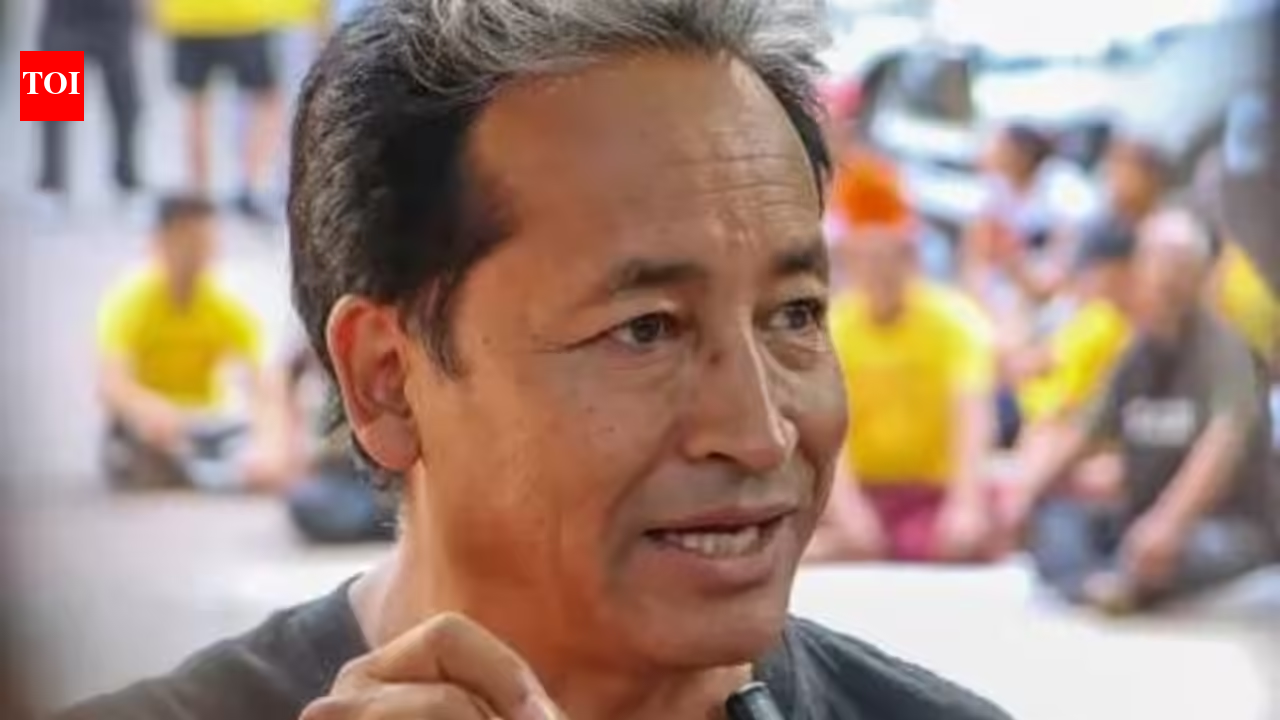
JODHPUR/NEW DELHI: Ladakh social and climate activist Sonam Wangchuk was released from Jodhpur Central Jail Saturday afternoon after the Centre revoked his detention under the National Security Act. His release comes almost six months after he was detained on Sept 26, 2025, two days after protests had broken out in the region while he was on a hunger strike seeking statehood and Sixth Schedule status for Ladakh. Police had opened fire on protesters, killing four people and injuring over 80. Wangchuk left prison in the company of his wife, Gitanjali Angmo, who had arrived Saturday morning to receive him. Ratanada SHO Dinesh Lakhawat said police escorted the couple, who were in a private vehicle, out of the prison premises at about 1.30pm. A Union home ministry statement had earlier announced the Centre’s decision to rescind his detention “with immediate effect”, citing its commitment to “fostering an environment of peace, stability and mutual trust in Ladakh so as to facilitate constructive and meaningful dialogue with all stakeholders”.

.

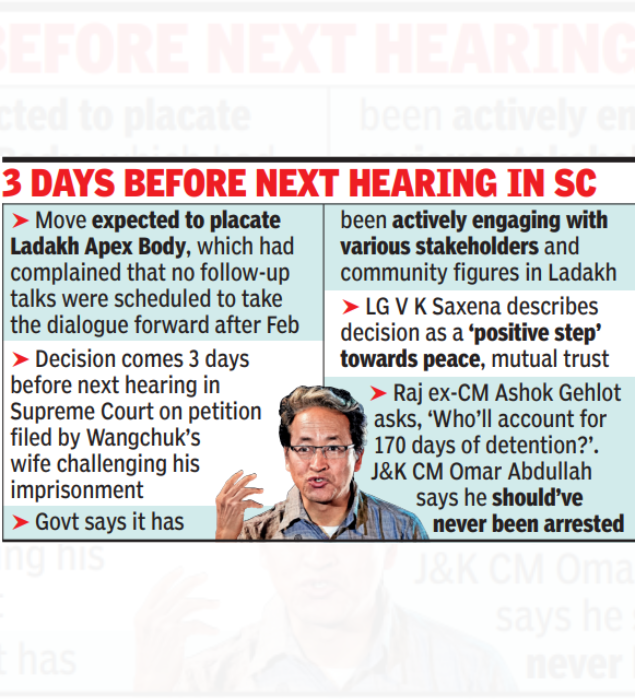
The end of Wangchuk’s incarceration six months short of the permissible detention period under NSA comes ahead of a March 16 protest called by Ladakh Apex Body to press for resumption of dialogue with the Centre on constitutional and other safeguards.Govt eyes trust reset with Ladakh leaders after Wangchuk’s releaseThe Centre’s move to free activist Sonam Wangchuk is expected to placate members of the Ladakh Apex Body, who had been complaining that no follow-up talks were scheduled to take the dialogue forward on constitutional and other safeguards for the Union territory after the round in early Feb. The decision came just three days before the next hearing in Supreme Court on the habeas corpus petition filed by Wangchuk’s wife challenging his imprisonment. Sources said the govt’s stance in letting Wangchuk walk free is expected to heal any mistrust in LAB regarding the former’s intention to find an amicable solution that takes care of the interests of all sections of Ladakh, adding that it would, simultaneously, strengthen locals’ belief in LAB’s ability to extract the best terms. A source said the home ministry heard the latter’s demands, including for statehood and Sixth Schedule status, and had explained their legal and financial limitations, at last month’s meeting. The Ladakh representatives were told to come back with a revised proposal indicating the financial viability of their demands. However, a senior govt official claims, they instead accused the Centre of failing to call them for the next round of dialogue. “The politicisation of the dialogue through bandhs/protests and the legal challenge to Wangchuk’s detention only added to the atmosphere of mistrust. Freeing Wangchuk should ease the protests and put the dialogue process back on track,” the senior govt official told TOI. The Centre said Saturday it has been actively engaging with various stakeholders and community figures in Ladakh with a view to addressing the aspirations and concerns of the people of the region. “However, the prevailing atmosphere of bandhs and protests has been detrimental to the peace-loving character of the society and has adversely affected various sections of the community, including students, job aspirants, businesses, tour operators and tourists, and the overall economy,” the govt conceded. The govt said it “reiterates its commitment to providing all necessary safeguards for Ladakh. It remains hopeful that the issues concerning the region will be resolved through constructive engagement and dialogue, including through the mechanism of the high-powered committee as well as other appropriate platforms”. Ladakh LG Vinai Kumar Saxena described the decision to release Sonam Wangchuk as a “positive step” by the Centre towards fostering peace and mutual trust. Saxena said all concerns can be resolved amicably through constructive dialogue and mutual understanding, and that there was no place for agitation, bandhs, or violence in Ladakh. Wangchuk had reiterated his commitment to Ladakh in a post on X on March 12: “I have not stepped away from activism. My commitment to Ladakh remains unchanged. But activism must serve a larger purpose: a just, lasting future for Ladakh. It will require clarity, unity, and sincere dialogue. Our struggle has always been for Ladakh’s protection, dignity, and long-term wellbeing and shall continue to be!!” Welcoming his release, former Rajasthan chief minister and Congress politician Ashok Gehlot also took to social media, writing, “The news of activist Sonam Wangchuk’s release is welcome, but the entire episode raises serious questions about the functioning of the Modi-led central govt. The person who, a few months ago, was put behind bars after being described as a ‘threat to the nation’s security’ is now suddenly being released, which implies that no evidence was found against him. In such a situation, who will account for the 170 days of his detention? Why was he arrested in the first place?”


Source link

UAE savings strategies 2026 explained: Best apps, tools, budget rules and smart money hacks to beat rising cost of living in emirates


UAE savings strategies 2026 explained: Best apps, tools, budget rules and smart money hacks to beat rising cost of living in emirates
UAE’s Best Savings Tools in 2026: Apps, Budget Rules and Smart Money Hacks Explained

As the cost of living rises across the Gulf, many residents in the UAE are searching for smarter ways to save money without sacrificing their lifestyle. From digital budgeting apps to automated savings tools and simple financial rules, a new wave of personal finance strategies is helping people track spending and build savings more efficiently.Financial experts say that technology is now playing a central role in how residents manage their money, particularly in a fast-paced economy where digital payments, food delivery apps and lifestyle spending can quickly eat into monthly income. Here’s a closer look at the best savings tools and strategies that the UAE residents are increasingly turning to in 2026.

Why saving money in the UAE can be challenging

Managing finances in the UAE can feel difficult for many residents, especially in cities like Dubai and Abu Dhabi where lifestyle temptations, from luxury shopping to frequent dining out, are everywhere. Experts say that the key challenge is balancing high living costs with long-term financial goals.A widely recommended strategy is the 50/30/20 rule, which divides income into three categories:

  • 50% for essential expenses such as rent, groceries, utilities and transport
  • 30% for lifestyle spending like travel, entertainment and dining
  • 20% for savings or investments.

This framework helps individuals maintain financial discipline while still enjoying their income.

Budgeting apps are becoming essential for saving money in the UAE

One of the fastest-growing savings tools in the UAE is personal finance apps, which allow users to track spending and set financial goals. Several apps have become particularly popular among residents:

  1. Wally – A budgeting app that allows users to monitor spending habits, compare income with expenses and set savings targets. It also supports multi-currency tracking, making it useful for expats managing finances across different countries.
  2. Spendee – Spendee focuses on visual budgeting and expense categorisation. The app enables users to track spending patterns and create shared wallets for families or roommates managing joint expenses.
  3. Wallet by BudgetBakers – This app connects with thousands of banks globally and helps users monitor spending, recurring payments, and financial goals in one place. It is particularly helpful for expats who need multi-bank and multi-currency support.
  4. Monefy – For users who prefer simplicity, Monefy offers a straightforward interface to manually track income and expenses with minimal complexity.

UAE digital banking tools are expanding

Several UAE-based digital banking platforms now include built-in budgeting and savings tools. For example, digital finance platforms allow users to automatically track transactions, categorise expenses and set savings goals directly through their banking apps.

UAE's Cost of Living Crisis: Are Budget Apps a Band-Aid or a Real Solution?

UAE’s Cost of Living Crisis: Are Budget Apps a Band-Aid or a Real Solution?

Some services even offer automatic transfers into savings accounts or investment wallets, helping users save money without actively thinking about it. These tools are designed to make budgeting easier for residents who rely heavily on digital payments.

Deal and rewards apps that help you save money in the UAE

Another popular category of savings tools involves reward-based apps that provide discounts, cashback, or loyalty points on everyday spending.For example:

  • Apps offering discounts on dining, groceries and entertainment
  • Loyalty programmes that convert spending into reward points
  • Deal platforms that compare prices across retailers.

These apps effectively turn everyday purchases into savings opportunities. Financial advisers suggest that before using any savings tool, residents should first understand where their money actually goes each month. Tracking every expense, whether rent, food deliveries, transport or subscriptions, can reveal surprising spending habits.Many budgeting apps automatically categorise transactions, helping users identify areas where they may be overspending. For instance, people often discover that small purchases such as food delivery, streaming subscriptions, or ride-hailing services add up to a significant portion of their monthly expenses.

​Can UAE Residents Really Save Money in 2026? Top Tools and Strategies Revealed​

Can UAE Residents Really Save Money in 2026? Top Tools and Strategies Revealed

Automation is the future of saving. One of the most effective strategies recommended by financial planners is automated saving. Instead of waiting until the end of the month to save money, experts suggest setting up automatic transfers to savings accounts or investment funds as soon as a salary is received. Automation ensures that saving becomes a habit rather than an afterthought.Many digital banks now offer features such as:

  • automatic savings transfers
  • goal-based saving plans
  • round-up savings, where small amounts from transactions are saved automatically.

The rise of AI-driven financial tools in the UAE

Artificial intelligence is also beginning to shape the future of personal finance. Some newer finance apps use AI to analyse spending behaviour and provide personalised recommendations on how to reduce expenses or increase savings. These tools can alert users when they are overspending in certain categories and suggest alternative budgeting strategies.Such innovations are expected to become increasingly common as fintech companies expand across the UAE. While technology can make budgeting easier, experts say the most important factor remains financial discipline. Even the best tools cannot replace good money habits.Key principles for long-term financial health include:

  • tracking spending regularly
  • avoiding unnecessary debt
  • building an emergency fund
  • investing for long-term growth.

For UAE residents, this often means balancing a high-spending lifestyle with careful financial planning.

A new era of smart money management in the UAE

With fintech innovation accelerating across the Middle East, managing personal finances is becoming easier than ever. From budgeting apps and automated savings platforms to loyalty programmes and AI-driven tools, residents now have more options than ever to take control of their money.For many people living in the UAE, the challenge is no longer access to savings tools—but choosing the right ones and using them consistently. As the cost of living continues to evolve in the emirates, the ability to track spending, automate savings and build financial resilience is quickly becoming an essential life skill.


Source link

North Korea fires around 10 ballistic missiles toward Sea of Japan amid military drill tensions


North Korea launched about ten unidentified ballistic missiles toward the Sea of Japan, according to South Korea’s Joint Chiefs of Staff. The missiles were detected around 1.20pm from the Sunan area, heading toward the East Sea. The launch follows Pyongyang’s warning of “terrible consequences” over ongoing annual military exercises by South Korea and the United States.

Poll

Do you believe diplomatic talks between the US and North Korea will be successful?

Seoul’s military confirmed the launch in a brief statement but did not immediately provide further details about the projectile or its range.Japan also confirmed the launch shortly afterwards. The country’s coast guard, citing information from the defence ministry, said a possible ballistic missile had been fired from North Korea at around 1:30pm local time. Officials believe the missile landed in waters outside Japan’s exclusive economic zone. Tokyo set up an emergency response team at the prime minister’s crisis management centre to assess the situation and check for potential damage.The launch comes just days after Pyongyang warned of “terrible consequences” over the annual military drills conducted by South Korea and the United States. The exercises, known as Freedom Shield, began earlier this week and are scheduled to run until March 19. The largely computer-simulated drills test joint operational capabilities and are accompanied by field training activities involving thousands of troops.North Korea has long described such exercises as rehearsals for an invasion and often responds with its own military demonstrations. In recent years, Pyongyang has carried out missile and artillery launches during allied drills, sometimes describing them as simulations of nuclear strikes on targets in South Korea.Earlier this week, Kim Yo Jong, the influential sister of North Korean leader Kim Jong Un, criticised the exercises and warned that any challenge to the country’s security would bring “unimaginably terrible consequences”. She also argued that the drills were taking place at a time when global security was deteriorating and conflicts were spreading across different regions.The latest launches also come amid renewed diplomatic speculation involving the United States. South Korean Prime Minister Kim Min-seok recently said that US President Donald Trump believes a meeting with Kim Jong Un “would be good” following discussions in Washington.


Source link

Force majeure explained: Why Gulf countries are invoking it amid Iran vs US-Israel war


Force majeure explained: Why Gulf countries are invoking it amid Iran vs US-Israel war
What is force majeure and why have some Gulf countries invoked it during the Iran vs US-Israel war?

As the Middle East conflict between Iran, the United States and Israel intensifies, a legal term rarely discussed outside corporate boardrooms has suddenly become headline news and that is force majeure. Several Gulf energy producers, including Qatar, Bahrain and Kuwait, have invoked force majeure on oil and gas exports after attacks, shipping disruptions and infrastructure risks caused by the ongoing war.What exactly does force majeure mean? Why are countries using it now and why does it matter for global energy markets? Read on as we give you a simple breakdown of the concept and its global implications.

What “force majeure” actually means during the Iran vs US-Israel war

Force majeure is a legal clause used in contracts that allows a company or government to suspend or cancel obligations when extraordinary events make it impossible to fulfil them. The phrase comes from French and literally means “superior force.” It refers to events beyond anyone’s control, such as wars, natural disasters, government actions or major infrastructure damage. When force majeure is invoked, a company can temporarily stop deliveries or operations without being penalised for breaking a contract. In the energy sector, this usually means halting shipments of oil, gas or other commodities when conflict, attacks or logistical breakdowns make exports unsafe or impossible.

Why Gulf countries are invoking force majeure during the Iran vs US-Israel war

The latest declarations are directly tied to the regional war that erupted after US–Israeli strikes on Iran on February 28, 2026. Since then, the conflict has spilled across the Gulf, with missile strikes, drone attacks and naval tensions affecting energy infrastructure and shipping routes.Several Gulf producers have invoked force majeure because:

  • Shipping routes through the Strait of Hormuz are disrupted
  • Energy facilities have been targeted
  • Security risks make exports unpredictable

Countries including Qatar, Bahrain and Kuwait have declared force majeure on energy shipments after these disruptions. The Strait of Hormuz is especially critical because roughly 20% of global oil and LNG shipments pass through it, making any disruption there a global economic concern.

Qatar’s gas shutdown amid Iran vs US-Israel war triggered global alarm

One of the biggest shocks came when Qatar halted natural gas production and declared force majeure on contracts with buyers after attacks on energy infrastructure early in the conflict. Qatar is the world’s second-largest exporter of liquefied natural gas (LNG), meaning disruptions to its supply immediately ripple through global energy markets. Following the shutdown, several international companies that buy Qatari gas also declared force majeure on their own deliveries to customers. This cascading effect shows how quickly supply disruptions can spread across global energy networks.

Bahrain’s refinery attack amid Iran vs US-Israel war escalated the crisis

Another major trigger came when Bahrain’s state oil company declared force majeure after an Iranian strike hit its main refinery complex. The attack disrupted oil operations and made it impossible for the company to meet export commitments. Energy analysts say incidents like these highlight how vulnerable Gulf energy infrastructure can be during regional conflict. Since the Gulf region supplies a significant share of the world’s oil, even temporary disruptions can send shockwaves through markets.

The domino effect of Force majeure on global energy markets amid Iran vs US-Israel war

Force majeure declarations often create a domino effect across supply chains. When producers stop shipments, buyers scramble to find alternative suppliers, shipping schedules collapse and prices spike due to uncertainty.During the current crisis, oil prices surged past $100 per barrel amid fears of supply shortages and instability in the Gulf. Energy companies worldwide are now reassessing contracts, stockpiles and shipping routes. Some countries have even begun preparing emergency reserves in case disruptions continue.

Why the Strait of Hormuz matters in the Iran vs US-Israel war

A major reason behind the crisis is the Strait of Hormuz, one of the world’s most important maritime chokepoints. The narrow waterway connects the Persian Gulf with the Arabian Sea and is used by tankers carrying oil and gas from countries including:

  • Saudi Arabia
  • Qatar
  • Kuwait
  • the UAE
  • Iraq

Since such a large share of global energy flows through this route, any threat to it can have immediate global consequences. In the current conflict, attacks and security threats around the strait have forced companies to rethink shipping routes and export schedules.

Could more countries declare force majeure amid Iran vs US-Israel war?

Energy experts warn that if the war escalates further, more producers could suspend exports. Officials in Qatar have already warned that prolonged disruptions could push other Gulf energy producers to declare force majeure as well.If that happens, the world could face a significant supply shock in oil and natural gas. Such a scenario would likely push fuel prices higher, increase inflation in importing countries, and intensify economic uncertainty worldwide.

Why this legal term, force majeure, suddenly matters globally amid Iran vs US-Israel war

Although force majeure is a legal concept usually buried deep inside contracts, the current conflict has turned it into a key factor shaping global energy markets. When countries invoke it, they are essentially acknowledging that war or extraordinary events have made normal trade impossible.For consumers, the impact may eventually show up as higher fuel prices, rising electricity costs and/or supply shortages in energy-dependent industries. The sudden surge in force majeure declarations across the Gulf highlights how quickly geopolitical crises can disrupt the global economy.What began as a regional conflict has now begun affecting energy supply chains, commodity markets and international trade. Whether the situation stabilises or spreads further will determine how long the world continues to hear this once-obscure legal term dominating global headlines.


Source link

WATCH: LSG captain Rishabh Pant gifts bat to Ayush Badoni with hilarious warning


As the Indian Premier League (IPL) 2026 approaches, fans are already getting glimpses of the lighter side of team life. A recent video shared by Lucknow Super Giants (LSG) on social media captured a fun dressing-room moment between captain Rishabh Pant and teammate Ayush Badoni. In the short clip, Pant gifts one of his bats to Badoni – along with a humorous warning that quickly went viral among cricket fans.

The moment highlights the strong camaraderie within the LSG squad as they gear up for the upcoming season. With just weeks left before the tournament begins, the playful exchange between the two cricketers has given supporters a refreshing look at the bond shared inside the team.

Rishabh Pant’s funny advice to Ayush Badoni

The video, which runs for about 30 seconds, shows Pant handing over a bat to Badoni during a practice session. As the young batter accepts the gift, Pant adds a cheeky instruction that immediately drew laughs online.

“Short-handle hai, tujhe pasand hai waisa. Todiyo mat yeh, bahut achha bat hai [It’s a short-handle bat, just the way you like it. Don’t break it, it’s a very good bat],” Pant told Badoni.

“Yeh bat sambhal ke rakhna, Ayush bhai.”

The lighthearted exchange quickly gained attention on social media, with fans praising the relaxed and friendly atmosphere within the LSG camp.

Beyond the humour, the moment also reflects the growing bond between Pant and Badoni within the LSG setup. Pant joined the franchise ahead of the 2025 season in a record-breaking deal worth ₹27 crore, making him one of the most high-profile signings in IPL history. He now leads the team as captain and remains one of its biggest stars.

Badoni, meanwhile, has steadily built his reputation since making his IPL debut in 2022. Retained by LSG for ₹4 crore, the middle-order batter has evolved from a promising youngster into a dependable performer for the franchise.

Over the course of 56 IPL matches, Badoni has scored 963 runs at an average of 26.75 and an impressive strike rate of 138.56, including six half-centuries. Last season proved particularly encouraging for him, as he accumulated 329 runs in 14 matches, striking at nearly 148.

Also READ: IPL 2026 Auction – Salary of Lucknow Super Giants (LSG) players; check out how much Rishabh Pant and Josh Inglis earn

Badoni’s rising stock in Indian cricket

Badoni’s performances have not gone unnoticed at the national level either. Earlier this year, Badoni received his first ODI call-up for India as a replacement for Washington Sundar during a series against the New Zealand national cricket team. The call-up marked a significant milestone in his career and placed him firmly on the radar of the national selectors.

In that context, Pant’s gesture carries deeper significance. The LSG captain’s decision to gift his bat can be seen as a small but meaningful show of support for a younger teammate who has been steadily earning his place in the national squad.

LSG will begin their IPL 2026 campaign on April 1 against Delhi Capitals (DC) at the Ekana Cricket Stadium in Lucknow. The match carries extra significance for Pant, as he will be facing his former team.

With a squad that includes international stars like Nicholas Pooran, David Miller, Mitchell Marsh and Mohammed Shami alongside emerging Indian talents like Badoni, the Super Giants will be hoping to mount a serious challenge for the title.

Also READ: Sanjay Bangar picks the ‘finisher’ of Lucknow Super Giants (LSG) for IPL 2026


Source link

Kuldeep Yadav ties knot with Vanshika Chadha – pics out | Cricket News


Kuldeep Yadav ties knot with Vanshika Chadha - pics out
Kuldeep Yadav ties know with Vanshika Chadha (ANI Photo)

Indian spinner Kuldeep Yadav has tied the knot with longtime partner Vanshika Chadha in a grand ceremony held in the scenic hill town of Mussoorie, Uttarakhand. The wedding comes shortly after Kuldeep was part of India’s victorious campaign in the ICC Men’s T20 World Cup, making it a particularly special time in his life.The ceremony took place at The Savoy Hotel Mussoorie, where family members, close friends and several personalities from the cricketing world gathered to celebrate the occasion.

Kuldeep Yadav delighted for Sanju Samson | From Under-12 days to World Cup glory

In the days leading up to the wedding, traditional pre-wedding ceremonies such as haldi, mehendi and sangeet were held, with pictures and videos from the celebrations quickly circulating on social media.After the wedding ceremony in Mussoorie, the couple is expected to host a grand reception in Lucknow on March 17. The reception is likely to be attended by several prominent names from cricket, politics and business.Here are a few viral clips and photos from the event:Many current and former members of the India national cricket team were invited to the celebrations. According to reports, the guest list included stars like Virat Kohli, Rohit Sharma, Jasprit Bumrah, Suryakumar Yadav, Sunil Gavaskar, Rinku Singh, Tilak Varma, Suresh Raina, Mohammad Kaif and Piyush Chawla.Close friend and fellow spinner Yuzvendra Chahal, who arrived in Dehradun for the wedding, shared his excitement about the celebrations.“I am very excited for my brother’s marriage. I will dance a lot and enjoy,” Chahal had earlier said.Meanwhile, Tilak Varma had mentioned that he had the plans to enjoy the wedding before turning his attention to cricket again.“We’re going to Kuldeep’s wedding to have fun. After that, we’ll prepare for IPL,” Tilak had shared.

Banner Insert


Source link

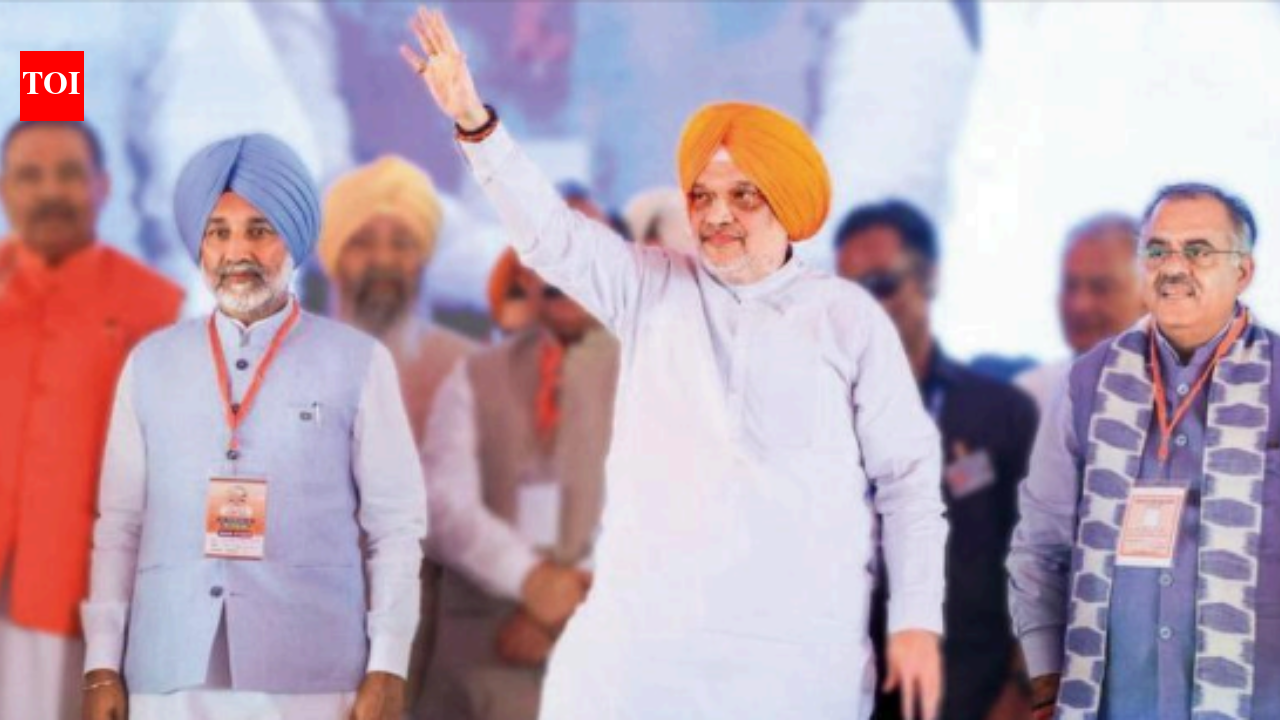
Will ban conversions if BJP forms govt In Punjab: Shah | India News


Will ban conversions if BJP forms govt In Punjab: Shah
The home minister indicated that the party would go alone in 2027 polls

KILLI CHAHAL (MOGA): Union home minister Amit Shah sounded the bugle for the 2027 Punjab assembly election with a ‘badlav rally’ in Moga, urging people to give BJP “ik mauka” (one chance), and promising that the party’s first legislation would be an anti-conversion bill. Shah also promised to rid the state of debts, drugs and corruption, while indicating that BJP was no longer looking at piggybacking on Akali Dal in the state. “Under AAP, religious conversions have reached alarming levels. A BJP govt in Punjab will bring its first bill to ban religious conversions,” Shah told a large gathering in Killi Chahal village on Saturday. Shah indicated that BJP would go it alone in 2027, and expressed confidence that the party would form govt in Punjab. “It is the beginning of BJP’s campaign. Whenever we came to Punjab, we came as the younger brother, but today I say, BJP is fighting 2027 election to make its govt,” he said. Training guns on Aam Aadmi Party and Congress, Shah said the two parties had pushed Punjab into a financial mess, drugs and corruption. “Only PM Modi and BJP can build a drug-free and development-oriented Punjab. BJP will make Punjab drug-free within two years of forming govt in the state,” he said. Shah said Punjab was the granary of the country and its jawans protected the nation, but today the state had “only became an ATM for (AAP national convener Arvind) Kejriwal”. “This govt represents breaking of promises. This is a govt that’s neck-deep in corruption. The CM should be ashamed that four ‘subedars’ from Delhi are sitting here and looting the state, and he can’t utter a word,” he further said. There was complete lawlessness in Punjab under AAP, Shah said, citing the murders of three sarpanches earlier this year. CM Bhagwant Mann’s “only job is to take Arvind Kejriwal along on Punjab govt plane wherever he would go in the country. The CM is reduced to just a pilot”, he said. Shah also accused AAP and Congress, particularly Rahul Gandhi, of “telling lies” and misleading farmers on the India-US trade deal. He said industry was leaving Punjab and farmers were left in the lurch. “You gave opportunities to Congress, Akalis and AAP in the past. Now, give an opportunity to BJP. We shall bring a change in Punjab,” the home minister added. “Congress sent tanks to Akal Takht, damaging Sikh-Hindu unity. Punjab’s development is possible only through unity of both communities. Had Congress truly respected the gurus, Gurdwara Darbar Sahib Kartarpur would not have been in Pakistan. Modi govt opened the Kartarpur Corridor, enabling devotees to visit the shrine,” Shah said. After opening his speech with “Jo Bole So Nihal”, he paid respect to the Sikh Gurus and said: “This turban (pointing to his saffron coloured turban) symbolises the debt the entire country owes the Gurus.” There would have been no Hindus in India if Guru Teg Bahadur had not been there. “His sacrifice sustained the country,” Shah said. He also paid respects to Maharishi Valmiki, Guru Ravidas, and Maharaja Ranjit Singh.


Source link