Breaking News
India’s Goldilocks under threat? How US-Iran war, crude oil above $100 may deal a blow to growth story – explained


India’s Goldilocks under threat? How US-Iran war, crude oil above $100 may deal a blow to growth story - explained
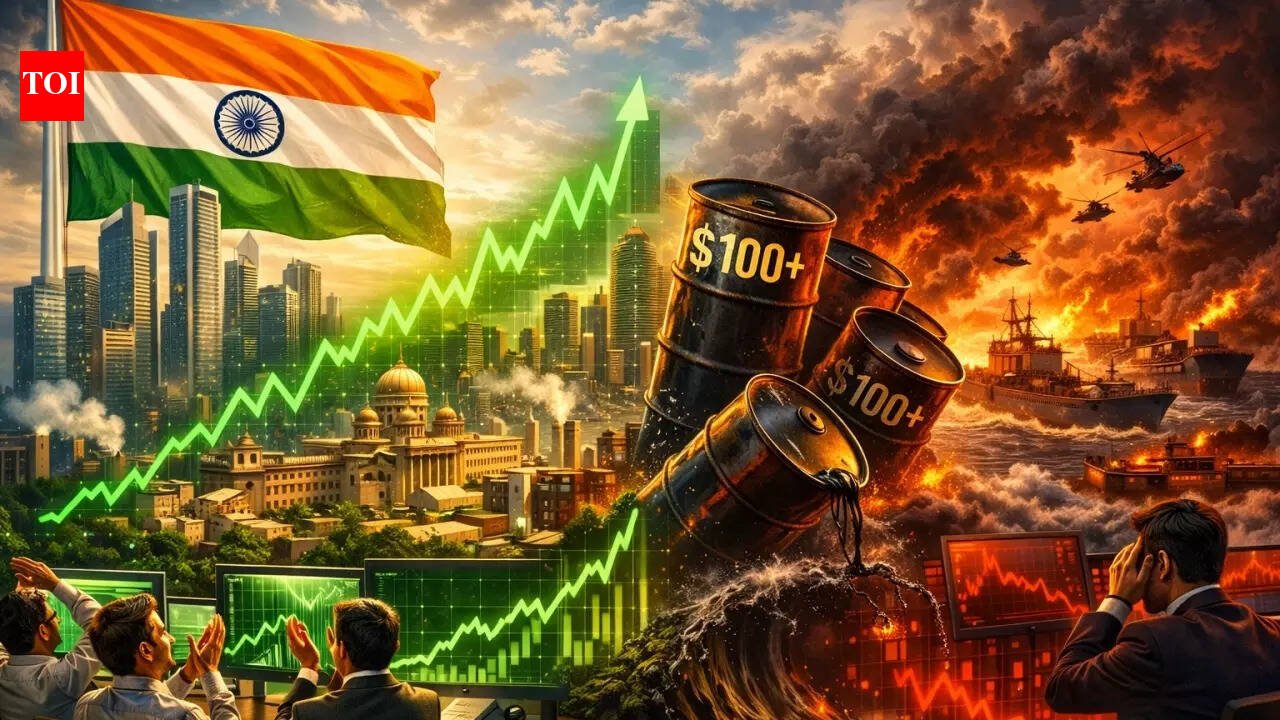
The persistence and sustainability of high oil prices will play a key role in shaping the scale of the economic impact on countries. (AI image)

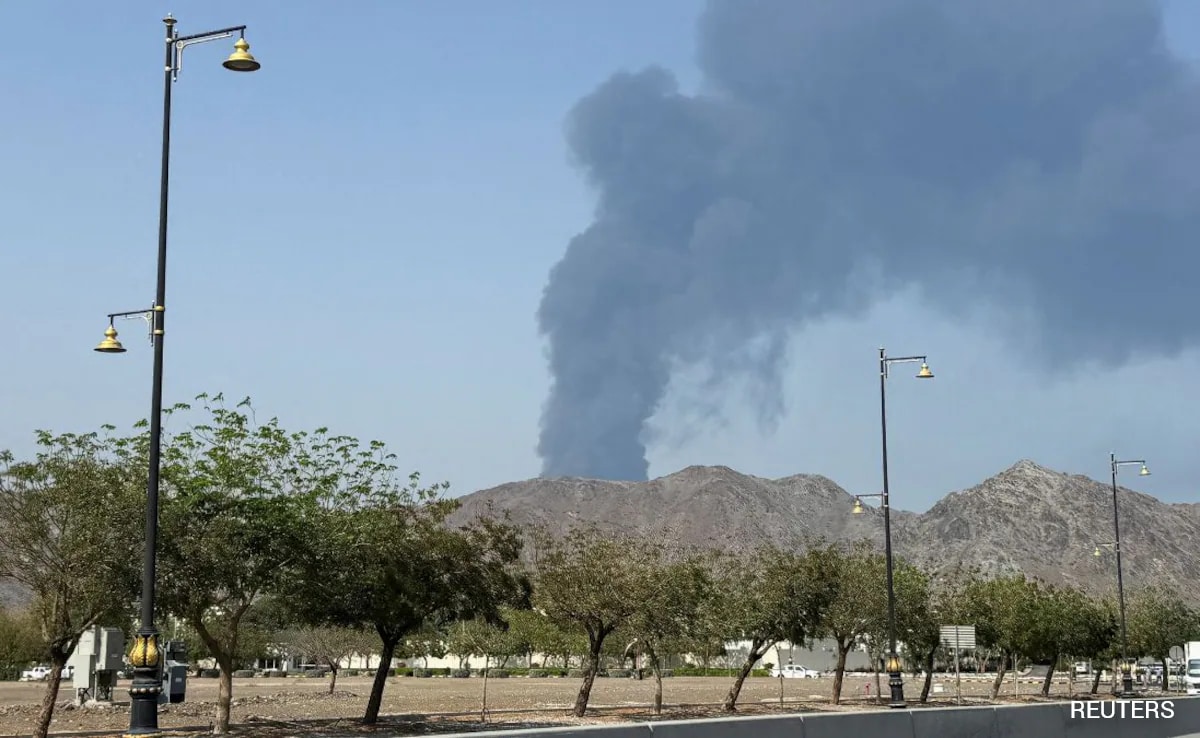
Inflation at a benign 2.2% and growth at 8.0% in the first half of 2025-26 present a rare goldilocks period – that’s what RBI governor Sanjay Malhotra said in the central bank’s December monetary policy review. Three months later, India’s economy – the world’s fastest growing major economy – faces the prospect of slipping out of this golden period – its high growth may be hit by the economic fallout from the ongoing war, and rising oil prices may mean higher inflation soon. This is not to say that India’s long-term growth story is not intact. Economists believe that GDP growth may take a hit of around 30-50 basis points, and inflation may rise in the short-term.The US-Israel-Iran war has dealt a crude blow to the world economy in the form of oil prices rising above $100 per barrel. The entire Middle East has been engulfed in the conflict, choking the Strait of Hormuz from which key oil and trade supplies get routed. Middle East countries are also important exporters of crude oil, and with refineries coming under attack, oil supply globally may see an unprecedented hit. Iran has even warned that oil prices may hit $200 levels if the conflict doesn’t see a resolution soon.What does this mean for us back home? India is among the world’s largest importers of crude oil, meeting around 90% of its needs through imports. A big chunk of these supplies come from Middle East countries and make their way to Asia through the Strait of Hormuz. The vulnerability is not just limited to oil – LPG and LNG supplies which feed into household and industrial needs have also been curtailed.
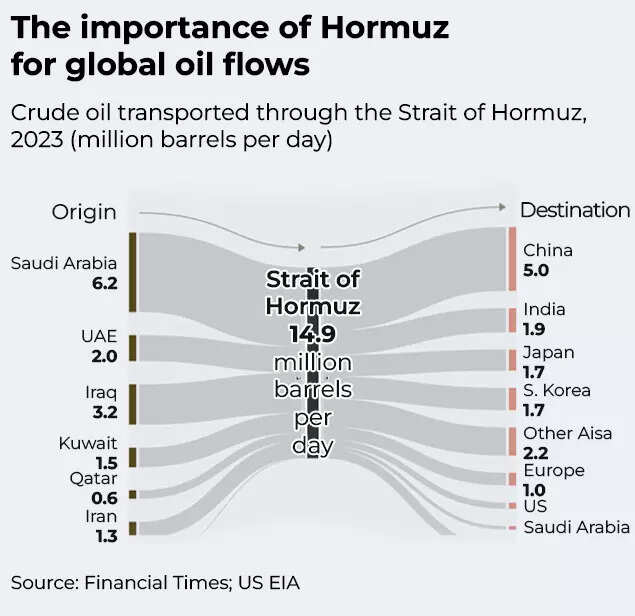
Importance of Hormuz

What do rising crude oil prices spell for India’s GDP growth, inflation, current account deficit, rupee, and fiscal deficit? Economists say that the answer lies in the length of the war. The persistence and sustainability of high oil prices will play a key role in shaping the scale of the economic impact on countries.

Current Account Deficit Under Pressure

The most immediate hit to the economy comes in the form of current account deficit (CAD) widening. Current account deficit happens when the value of imports into a country is more than the exports, implying that it spends more foreign currency than it earns.With oil prices rising the crude import bill will go up – which in turn will feed into a rising CAD. Economists believe that if oil prices stay above $100, it would deal a blow to the balance of payments.Madan Sabnavis, Chief economist at Bank of Baroda estimates that CAD will be affected by $18 bn for every $10 increase in price of oil. “This is the direct impact. Exports of refinery products also get directed to the Gulf region which can take a hit. Further, prolonged war can affect the entire dynamics of global trade. Add to this the fact that remittances from the GCC countries can get affected due to the ongoing conflict and the potential hit to the CAD can be 0.5-0.75% of GDP,” he cautions.Sujan Hajra, Chief Economist & Executive Director, Anand Rathi Group that in case of persistently high levels of oil, the CAD would rise. “For a large, persistent move, CAD can rise by roughly 0.4 percentage points of GDP for every $10 increase in oil, other things equal. Therefore, from the pre-war level of $70/barrel, if crude oil prices remain at $100/barrel on a sustained basis, India’s CAD would increase by 1.2% point of GDP and reach 2.5-2.7% of GDP,” he tells TOI.
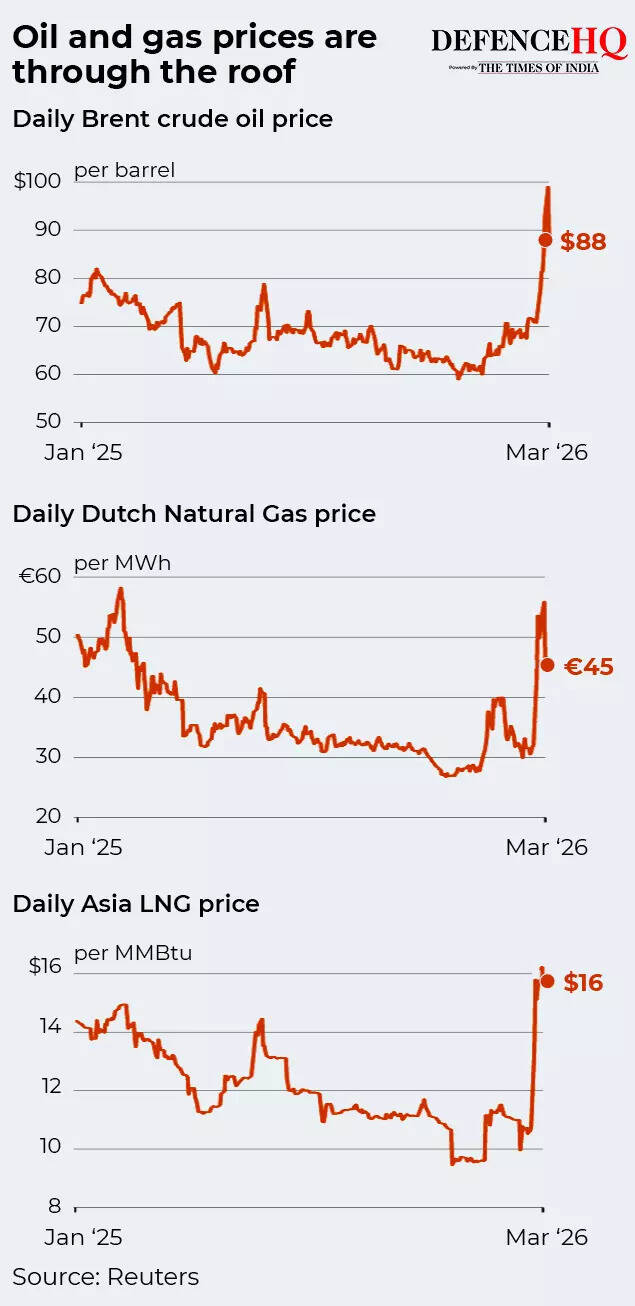
Oil and gas prices through the roof

Ranen Banerjee, Partner and Leader, Economic Advisory Services, PwC India sees a drain on foreign exchange if oil prices continue to rise. “A sustained increase in oil prices would cause a serious drain on forex and consequently the current account deficit. The situation is exacerbated as the underlying cause for higher oil prices is conflict and by deduction, if the conflict continues longer then it will impact both goods and services exports as well as investment climate,” he tells TOI.“This will have an adverse impact on remittances, portfolio flows and FDI and that would further stress the exchange rate. The imports will thus become more expensive in rupee terms adding imported inflation in the economy,” he explains.Radhika Rao, Senior Economist, DBS Bank notes that encouragingly, the economy’s oil intensity has reduced from the past, as signaled by the moderation in the net oil imports. However, she points out that with the Middle East region making up approximately 40% of total remittances, inflows balance of payments faces a second order impact if the conflict prolongs.
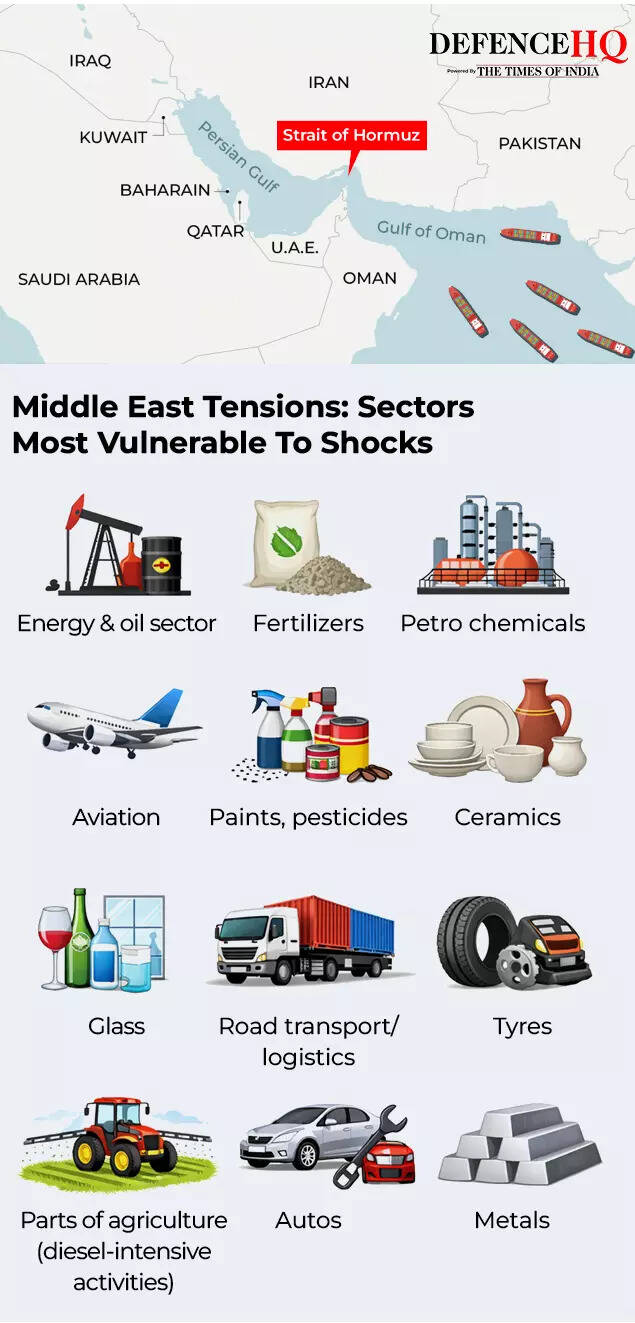
Sectors vulnerable to shocks

Rupee: No Respite From Depreciation

The Indian rupee had a bad 2025, with the currency being the worst performer in Asia. 2026 is not turning out to be any better, and the Middle East tensions have added to the pressure. From an economics standpoint, a wider CAD, higher imported inflation and risk off sentiment usually mean a weaker rupee.“The currency tends to depreciate more if oil stays high and capital flows soften, although forex reserves and occasional intervention can smooth the move,” says Sujan Hajra. The expert doesn’t expect the rupee to depreciate more than 2-3%, unless the situation deteriorates significantly.Madan Sabnavis acknowledges that the rupee will tend to be under pressure and can depreciate depending on the dollar index and intervention by the RBI. As of now Rs 91.5-93 is the short-term forecast till March end, he says.

Inflation: How Long Can Prices Be Kept Stable?

Fundamentally, if the cost of imports goes up – whether due to rising prices internationally (such as in the case of oil), or due to depreciating rupee, it all feeds into prices of goods and services going up. India has seen a period of benign inflation for some quarters now – but now with oil prices skyrocketing, this math will change.For Madan Sabnavis, the impact on WPI inflation is straightforward. “10% increase in fuel prices leads to WPI going up by 1%. Add another 0.5% as secondary impact and it will be up by 1.5%. CPI will depend a lot on how the government deals with the fuel prices. In extreme cases, the prices at pump may rise by Rs 2-3/litre which combined with higher LPG prices as well as other consumer products like paints, chemicals, etc. can add 0.5% to CPI,” he tells TOI.
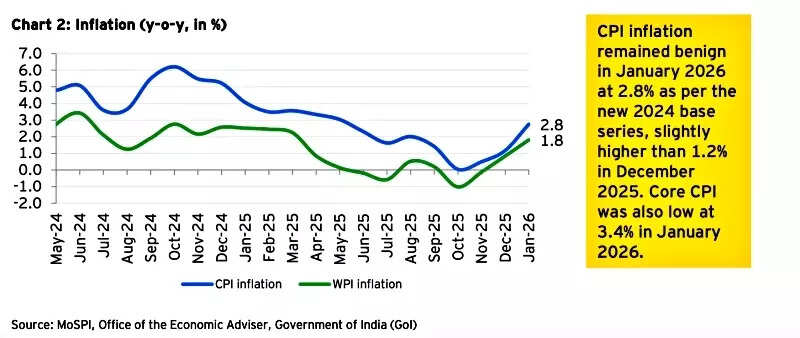
CPI inflation trajectory

CPI inflation trajectory (Source: EY India)

Experts point to two important aspects of the situation: one – how long will the conflict last? Secondly, will the government pass on the increase in oil prices to consumers or absorb the shock?Radhika Rao of DBS Bank says, “The extent of impact on inflation will be dictated by who picks the incremental cost burden. India had undertaken measures to reform its fuel sector by deregulating petrol and diesel prices, allowing them to align with market rates to reduce fiscal deficits and losses of the upstream oil marketing companies. This helped to lower the fiscal burden on the government’s books, with total subsidies accounting to 1.2-1.3% of GDP, of which petroleum is almost negligible at less than 3% of the total. However, in the event of a sharp rise in global fuel prices, authorities are likely to be cautious about fully passing on higher costs to consumers.”The need to protect household purchasing power and support businesses as well as a packed state election calendar in the first half of 2026 may prompt a more measured approach to retail fuel price adjustments, with the initial rise likely to be absorbed by the oil marketing companies. As an alternative to raising retail prices, excise duty cuts might be considered,” she tells TOI.With full pass-through of higher crude feeds into fuel, transport and input costs, Sujan Hajra says that retail inflation increases by roughly 25 basis points for every 10 dollar sustained increase in oil prices. Therefore, sustained increase in crude oil prices by $30/barrel (from $70 to $100) can increase inflation by 75 basis points, he says, adding that the government is unlikely to implement a full pass-through. With even 50% pass-through the impact on retail inflation would be around 40 basis points, he forecasts.But, for how long can the oil shock be absorbed if the conflict continues? Ranen Banerjee explains that while the oil companies have a buffer to hold the pump prices at current level for some time, the pressure on the fiscal owing to the same cannot be sustained if oil remains above $100 a barrel.“The fertiliser subsidy will go up as fertiliser prices will be higher. With consequent increase in food inflation, food subsidy requirements will also go up,” he says.

Fiscal Deficit And Management Under Strain

In a developing economy like India, managing fiscal math is a challenge every year, and the situation has been exacerbated by the oil shock. How does this happen? The fiscal gets affected by subsidy bills going up, non-tax revenue coming down as OMCs will not be able to transfer the same quantum of profit, excise collections coming down in case excise is lowered by the centre to keep petrol, diesel prices the same. Sourav Mitra, Partner – Oil & Gas at Grant Thornton Bharat elaborates on the channel through which higher oil prices feed into the economy.Elevated oil prices increase the cost of fertilizer, LPG, and kerosene subsidies, as the government often absorbs part of the price shock to protect end consumers. The central government’s expenditure could significantly increase, primarily due to higher fertilizer subsidies, he tells TOI. “Higher crude prices also constrain the government’s revenue sources, particularly on fuel taxation. While excise duties on petrol and diesel are a key revenue source, the ability to raise fuel taxes goes away when global prices rise sharply, limiting fiscal flexibility. The government may even be forced to cut excise duties to control inflation, leading to revenue losses. Combined with slower economic growth and higher borrowing needs, this can push the fiscal deficit above budgeted targets, increase public debt, and crowd out private investment,” he says.Sujan Hajra tells TOI, “If the government absorbs part of the shock via lower excise or higher subsidies, the fiscal deficit and borrowing needs widen and fiscal consolidation can get delayed. Higher inflation can also keep interest rates higher for longer, pushing up government interest costs.”However Madan Sabnavis believes that the fiscal deficit will be maintained as other expenses can be fine-tuned. At most the impact can be 0.1-0.2% of GDP, he says.

GDP: Blow To Growth Story?

Economists and experts warn that a prolonged war-like situation would weigh on India’s growth story, impacting several sectors and the growth momentum.“The impact on the economy in a scenario where conflict drags longer will have several levels of adverse impact and would impact our growth rate too. In a scenario where conflict is resolved in a short time frame, we should not expect much impact. However, if the duration stretches to a quarter, then we should expect a 50-75 bps downward impact on growth,” says PwC India’s Ranen Banerjee.“Any continuation beyond that time frame will cause disruptions of a magnitude that the global economy could possibly not afford and hence is a very pessimistic scenario,” he adds. Sujan Hajra points out that India is more vulnerable than net oil exporters like the US or some West Asian economies, and somewhat more exposed than many advanced economies, but broadly comparable to other large, oil‑importing emerging markets; strong services exports and remittances provide a partial cushion.“The rule‑of‑thumb estimates suggest every $10 sustained rise in crude can shave about 0.4 percentage points off India’s real GDP growth through weaker consumption, higher input costs and tighter monetary policy. Therefore, under the current situation, India’s growth could go down to around 6-6.5% versus earlier expectations of 7-7.5%. This, however, assumes continuation of the conflict at the current intensity for a prolonged period,” he tells TOI.Madan Sabnavis of Bank of Baroda is more optimistic about India’s prospects, predicting that the economy may still manage a 7% GDP growth rate.“GDP impact will be limited and a hit of 0.1-0.2% can be a possibility due to supply disruptions and higher prices of oil – which come in as higher input costs for user industries. Growth can be closer to 7% than 7.5%,” he says.High oil prices is a nightmare scenario for most of the global economy – and India is no different. The impact on major economic indicators, especially GDP growth and inflation may be contained in the short-term. India’s potential of 7% GDP growth and inflation within RBI’s target range may well still be achievable in the upcoming financial year.But, a medium to long-term continuation of the conflict would have more widespread consequences.As Ranen Banerjee of PwC India concludes: India will be impacted significantly as any other economy in the world and the only extra cushion we would have is the large domestic consumption base. But private consumption will also be challenged in a disrupted scenario that lasts longer than a quarter. “The ensuing panic and uncertainty would lead to consumption deferral for non-essentials and thus impact almost all sectors negatively,” he says.

Source link

Access Denied


Access Denied

You don’t have permission to access “http://www.ndtv.com/world-news/legitimate-targets-iran-asks-people-to-leave-port-areas-in-uae-11215761” on this server.

Reference #18.c7f5d217.1773501968.44193541

https://errors.edgesuite.net/18.c7f5d217.1773501968.44193541


Source link

‘Child trusted him as a grandfather’: 3-year jail to 79-year-old man in Pocso case | Mumbai News


Mumbai: Observing that the child only accompanied him because she trusted him as a grandfather, a special court convicted and sentenced a 79-year-old man to three years of simple imprisonment for sexually assaulting a 10-year-old girl in 2019. The court found the accused guilty of luring a neighbour’s daughter into his home and kissing her. Special judge S V Sahare clarified the legal requirements for conviction under the Protection of Children from Sexual Offences (Pocso) Act, stating, “Touch with sexual intent is necessarily proved by the prosecution. The offence under the said section also covers physical contact with the child.”The incident occurred on June 13, 2019, when the child was playing near a temple during her school vacation. The accused called her to his residence under the pretext of offering her wafers and a cold drink. Once inside, he pushed the door shut and kissed the girl on her lips. The child immediately fled home and informed her mother, a flower seller, who then confronted the accused with the help of local residents before alerting the police.During the trial, the defence argued that the accused had been falsely implicated and pointed to CCTV footage from the house—provided by his daughter-in-law— which they claimed showed no such incident. However, the court found the oral testimony of the child to be “heavily reliable” and noted that the absence of footage did not disprove the crime, suggesting the possibility of tampering before the device was handed over to the investigators. The court also observed that the accused specifically targeted a minor girl while other children were playing nearby, indicating sexual intent.While convicting the accused for sexual assault, the court acquitted him of the charge of outraging modesty under the Indian Penal Code, reasoning that the specific elements of criminal force required for that section were not distinct from the sexual assault already established. Regarding the final sentence, the judge observed, “The accused was aged about 74 years at the time of filing of the charge sheet. Considering his advanced age, the court deems it appropriate to award simple imprisonment instead of rigorous imprisonment.In addition to the three-year prison term, the accused was ordered to pay a fine of Rs 5,000. Out of this amount, Rs 3,000 of that amount was directed to be paid to the child as compensation.


Source link

DU dismisses Rahul’s allegation that it uses interviews to eliminate students | India News


DU dismisses Rahul's allegation that it uses interviews to eliminate students

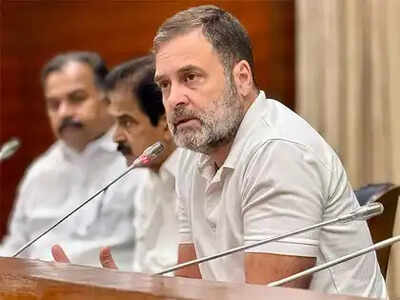
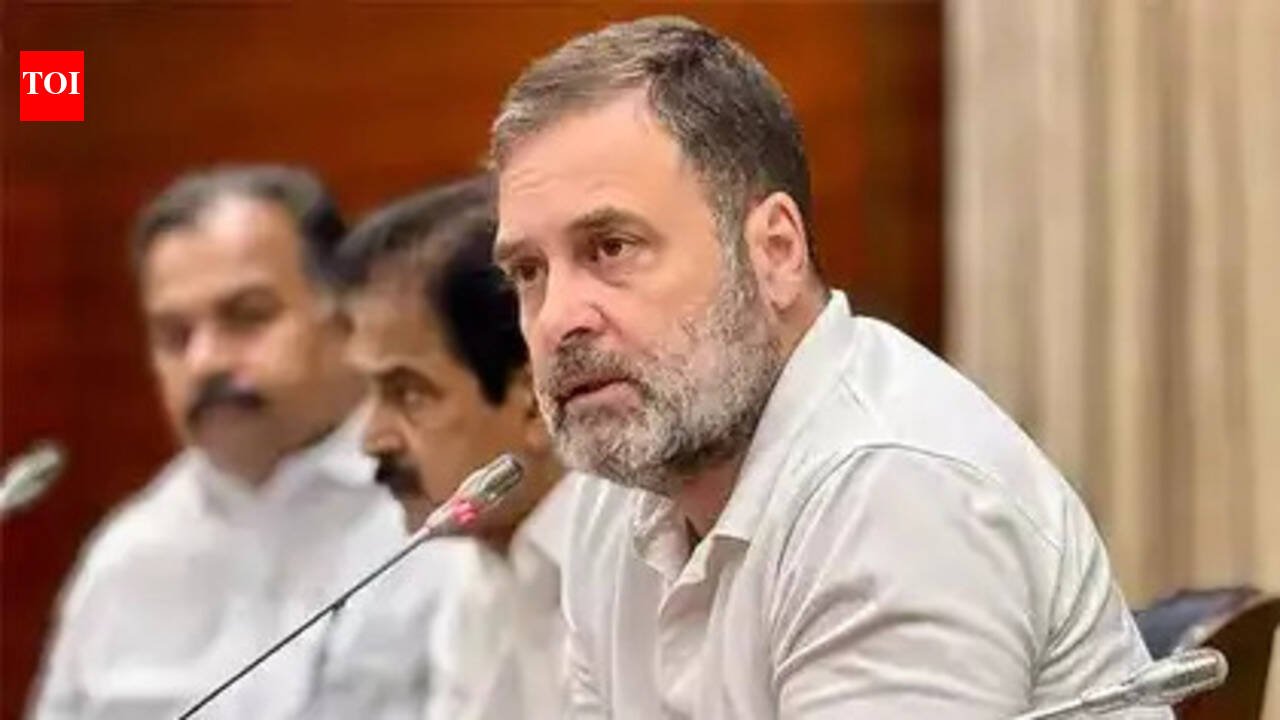
NEW DELHI: The Delhi University (DU) has dismissed Congress leader Rahul Gandhi’s allegation that it uses interviews to eliminate students.In a post on X late on Friday, it said: “The University of Delhi admits students primarily based on the CUET scores, and the standard admission process does not mandate interviews for most undergraduate and postgraduate programmes.“If the Leader of Opposition was referring to recruitments (such as faculty positions), the University in the recent past has recruited thousands of teachers across all categories. We strongly object to such comments, as they create a non-conducive environment in the University. The Leader of Opposition should have verified the facts before making such a statement. @EduMinOfIndia,” it added.This was in response to the remarks of Gandhi, the leader of opposition in the Lok Sabha, alleging that the DU eliminates students on the basis of caste.“I had gone to the Delhi University. Interview is just a way to eliminate students. They ask what your caste is and then you fail in the interview,” Gandhi said on Friday while addressing an event in Lucknow to mark the birth anniversary of Bahujan Samaj Party (BSP) founder Kanshi Ram.Targeting the Rashtriya Swayamsevak Sangh (RSS), the Congress leader further said, “Take out the list of the RSS. Those who are their pracharaks and seniors in the organisation, you will not find one OBC, one Dalit, one Adivasi among them. This is completely against the Constitution.” This has triggered a further controversy, with the Indian National Teachers’ Congress (INTEC), along with some DU professors, including academic and executive council members, pointing out that public record shows that in several departments of the university, despite a large number of teaching posts being advertised under the Scheduled Caste (SC), Scheduled Tribe (ST) and Other Backward Classes (OBC) categories, qualified candidates were declared “not found suitable (NFS)” after the interview stage. PTI


Source link

Government bars LPG supply access for consumers with piped gas connections


Government bars LPG supply access for consumers with piped gas connections

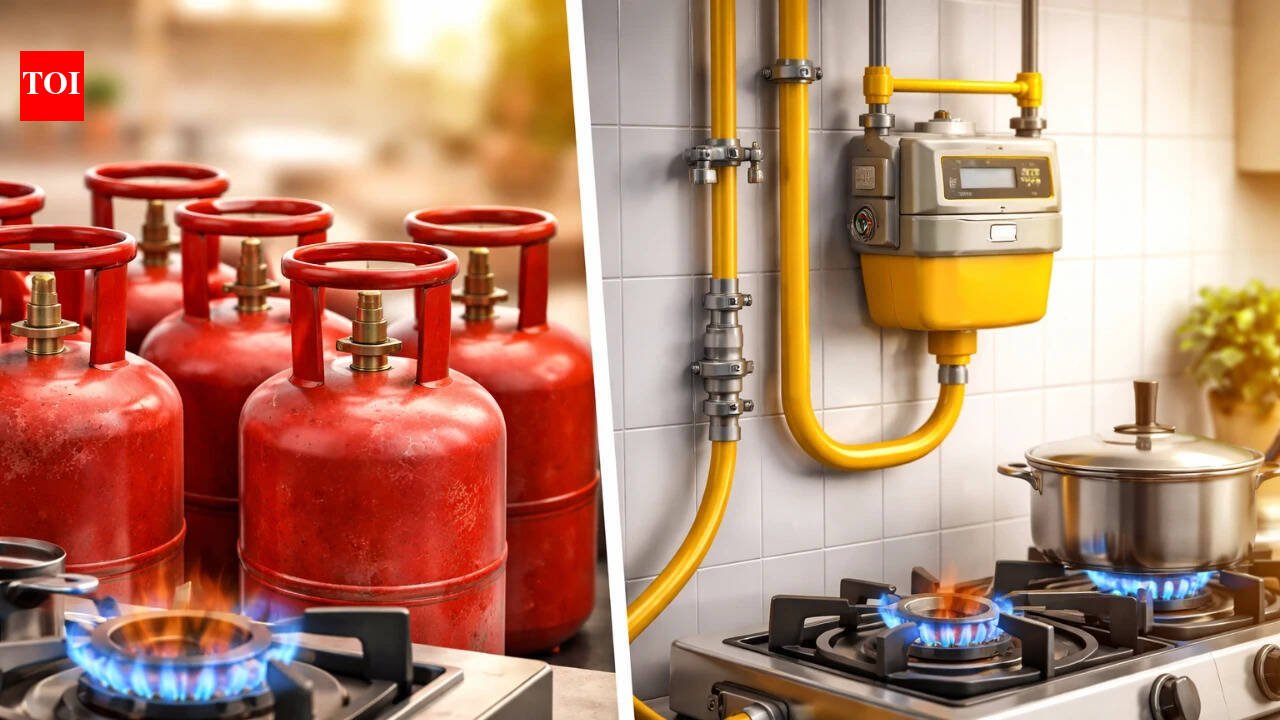
NEW DELHI: The Ministry of Petroleum and Natural Gas on Saturday said consumers with piped natural gas (PNG) connections will no longer be allowed to retain, obtain or refill domestic LPG cylinders under an amended supply order.The ministry, in amendment order, said that it will bar government-run oil marketing companies from issuing new LPG connections or refills to consumers who already have PNG connections. “No person having a Piped Natural Gas connection and also having domestic LPG connection shall retain a domestic LPG connection, or take refills of domestic LPG cylinders from any Government oil company, or through their distributors. Such persons will be required to immediately surrender their domestic LPG connection,” it said.

As LPG Shortage Panic Spreads, Centre Urges Citizens Not To Hoard Cylinders And Opt For PNG

“No person having a Piped Natural Gas connection, shall obtain a domestic LPG connection, or take refills of domestic LPG cylinders from any Government oil company, or through their distributors,” it further clarified. This comes amid concerns around LPG availability concerns across the country as supply is disrupted amid the ongoing conflict between Iran and US, Israel. The govt, however, has assured stable supply in multiple statements in the past few days. Addressing an inter-ministerial briefing on Saturday, joint secretary (marketing & oil refinery) Sujata Sharma said assured, “As far as crude oil and refineries are concerned, we have a sufficient supply of crude and our refineries are operating at full capacity. There have been no reports of any dry-out at retail outlets. Adequate petrol and diesel are available.”She added that India does not need to import petrol and diesel at present. “We produce enough petrol and diesel in the country according to our requirements, and therefore there is no need for us to import them,” Sharma said.Additionally, the govt also confirmed that two Indian-flagged LPG carriers safely crossed the conflict-hit Strait of Hormuz early Saturday and are now on course for ports in Gujarat.LPG carriers Shivalik and Nanda Devi are heading to Mundra and Kandla, respectively, Rajesh Kumar Sinha, Special Secretary in the Ministry of Shipping, said at the media briefing. The ships are carrying a combined 92,700 tonne of LPG and are expected to dock at Indian ports on March 16 or 17.


Source link

‘I can’t’: England legend Kevin Pietersen quits Delhi Capitals role – here’s why | Cricket News


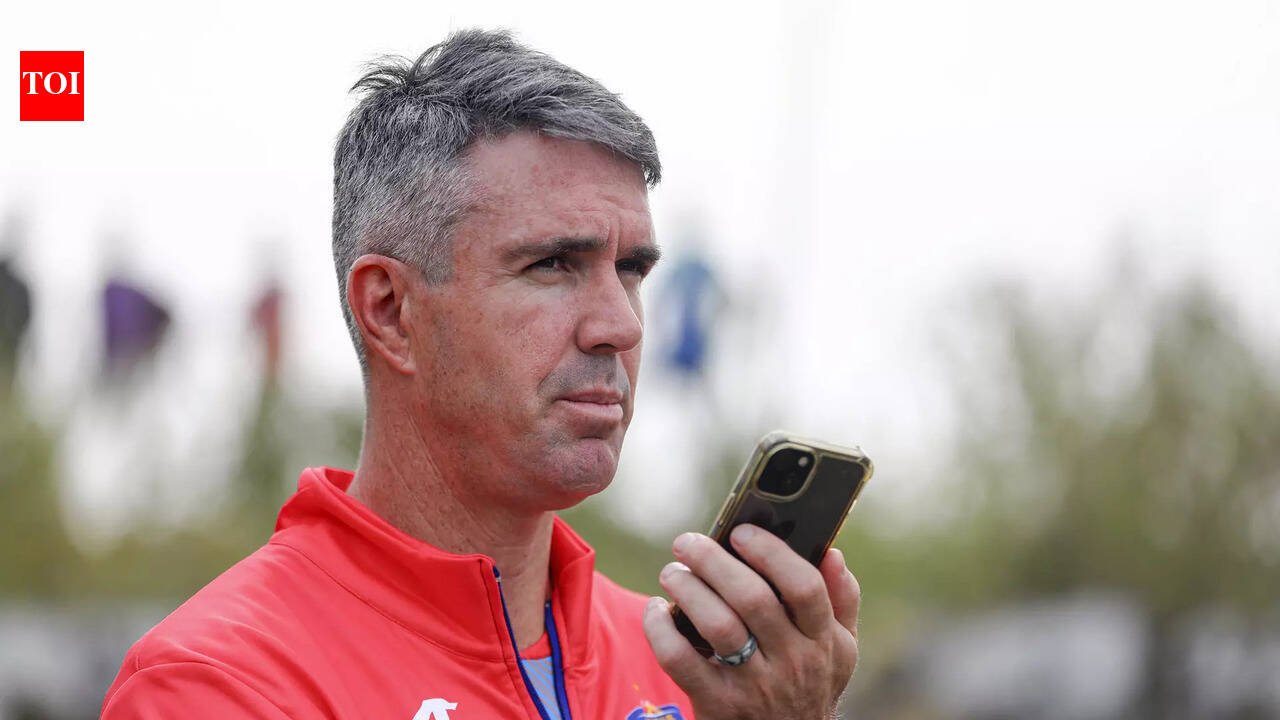
Kevin Pietersen (PTI Photo)

NEW DELHI: Former England cricketer Kevin Pietersen has stepped down as mentor of Delhi Capitals ahead of the 19th season of the Indian Premier League. The 45-year-old said he would not be able to give the role the time it demands, though fans will still see him during the tournament as a commentator.

Poll

Which aspect of the IPL 2026 are you most looking forward to?

Pietersen had joined the franchise as a mentor in February last year for the 2025 season.

EXCLUSIVE: Rahul Dravid on iconic Eden Gardens win against Australia in 2001

In that role, he worked closely with the coaching staff that included Director of Cricket Venugopal Rao, head coach Hemang Badani, assistant coach Matthew Mott and bowling coach Munaf Patel.Confirming his decision on social media, Pietersen explained that his schedule would not allow him to continue in the position. “I cannot be a mentor for Delhi Capitals in this IPL season,” he wrote on X. “I can’t commit to the time that the job requires. Best wishes to all the players for this season! However, I’ll see you back in the commentary box! IPL is the world’s best league, and I can’t wait to see all of you soon!”Pietersen remains one of England’s most recognised cricketers. During his international career with the England national cricket team, he scored more than 8,000 runs in Tests and over 4,000 runs in ODIs. He also played 36 IPL matches for teams including Delhi Daredevils, Royal Challengers Bengaluru (then Royal Challengers Bangalore), Sunrisers Hyderabad and Pune Warriors India, scoring 1,001 runs in the league. Meanwhile, the Board of Control for Cricket in India (BCCI) has announced the first phase of the IPL 2026 schedule, which will run from March 28 to April 12. The season will begin with defending champions Royal Challengers Bengaluru facing Sunrisers Hyderabad at the M. Chinnaswamy Stadium in Bengaluru.

Banner Insert


Source link

BAN vs PAK: Mohammad Kaif shares his verdict on Salman Agha’s controversial run-out


The second ODI between Pakistan and Bangladesh at the Sher-e-Bangla National Stadium was billed as a comeback opportunity for the visitors, but it quickly transformed into a global debate over cricketing ethics. While Pakistan managed to level the series with a commanding victory, the match headlines were dominated by a spirit of cricket controversy that has polarized fans and experts alike. The primary catalyst was a bizarre run-out involving Pakistan’s Salman Ali Agha, which prompted a stern rebuke from former Indian cricketer Mohammad Kaif.

Mohammad Kaif reacts on Salman Agha’s run-out controversy

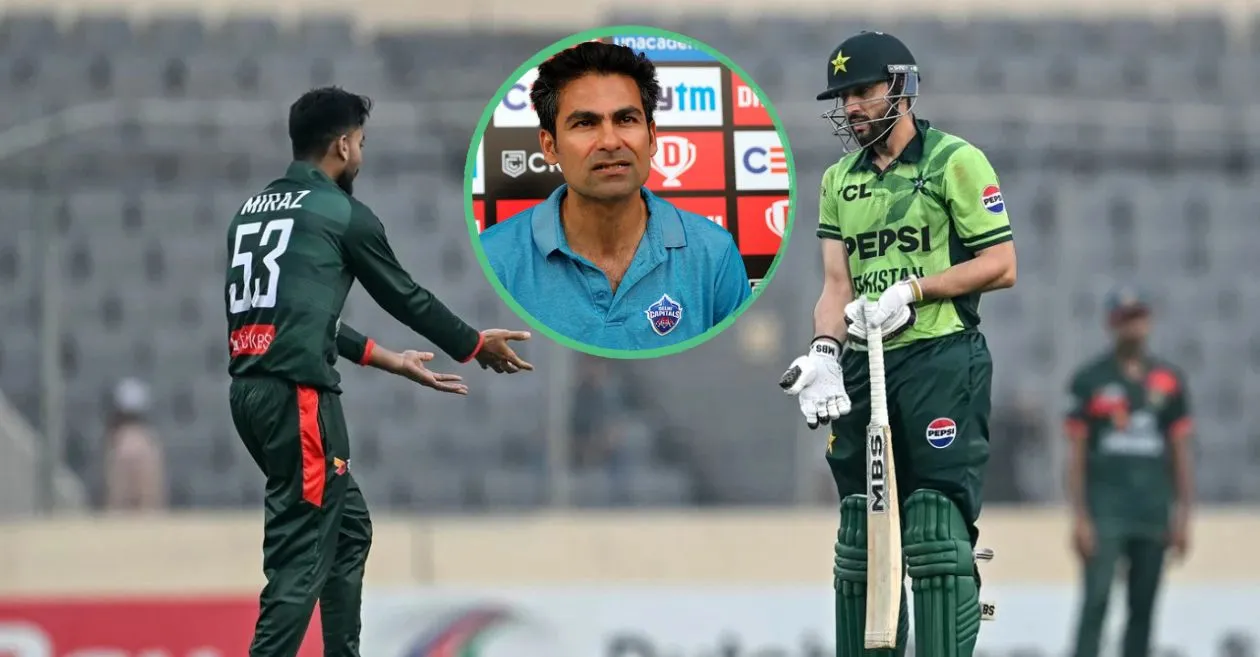
The focal point of the controversy occurred in the 39th over of Pakistan’s innings. Agha, batting fluently on 64, was at the non-striker’s end when Mohammad Rizwan drove the ball back toward the bowler, Mehidy Hasan Miraz. The ball struck Agha’s pads and trickled to a stop. In a gesture of routine courtesy, Agha picked up the ball to hand it back to Miraz.

However, seeing Agha outside his crease, Miraz snatched the ball and whipped off the bails, appealing for a run-out. The third umpire, sticking to the literal interpretation of the laws, declared him out. The decision left Agha fuming, leading to a heated exchange with the Bangladesh skipper and Litton Das before the batter threw his helmet in disgust upon reaching the dugout.

Mohammad Kaif took to X (formerly Twitter) to voice his sharp disapproval of the tactic. Kaif, a staunch advocate for fair play, argued that such desperation has no place in the sport. He wrote:

This is so not done. No desperation of getting wickets can justify this run out. That too from a captain. Youngsters please remember, even if the World Cup final is on the line, never do what the Bangladesh skipper did. Sports without fair play is no sports.”

While the dismissal fell within the technicality of MCC Law 37.4, Kaif’s sentiment resonated with those who believe that a captain should uphold the game’s traditional values over opportunistic gains.

Also WATCH: Salman Agha loses cool after unusual run out by Mehidy Hasan Miraz in BAN vs PAK 2nd ODI

Pakistan bulldozed Bangladesh in 2nd ODI to level the series 

Despite the friction and a late-innings collapse triggered by Agha’s exit, Pakistan’s performance with both bat and ball was clinical. After being bundled out for just 114 in the first ODI, the visitors flipped the script entirely. Driven by a blistering 75 off 46 balls from youngster Maaz Sadaqat and Agha’s solid 64, Pakistan posted a competitive 274.

The second half of the match saw Bangladesh’s batting lineup completely dismantled. Pakistan’s pace battery, led by Shaheen Afridi and Haris Rauf, utilized the damp conditions following a rain delay to perfection. Chasing a DLS-revised target, the Tigers never found their footing.

Sadaqat proved to be the MVP of the match, backing up his half-century with a 3-wicket haul. Bangladesh was skittled for a meager 114, ironically the same score, Pakistan made in the series opener handing the visitors a massive 128-run victory. With the series now tied at 1-1, all eyes turn to the final decider on March 15.

Also WATCH: Tawhid Hridoy plucks a spectacular catch to remove Sahibzada Farhan during 2nd ODI


Source link

Amit Shah Punjab Elections 2027: Punjab: Amit Shah rules out Akali alliance revival, says BJP will fight 2027 polls to form own government | India News


Punjab: Amit Shah rules out Akali alliance revival, says BJP will fight 2027 polls to form own government

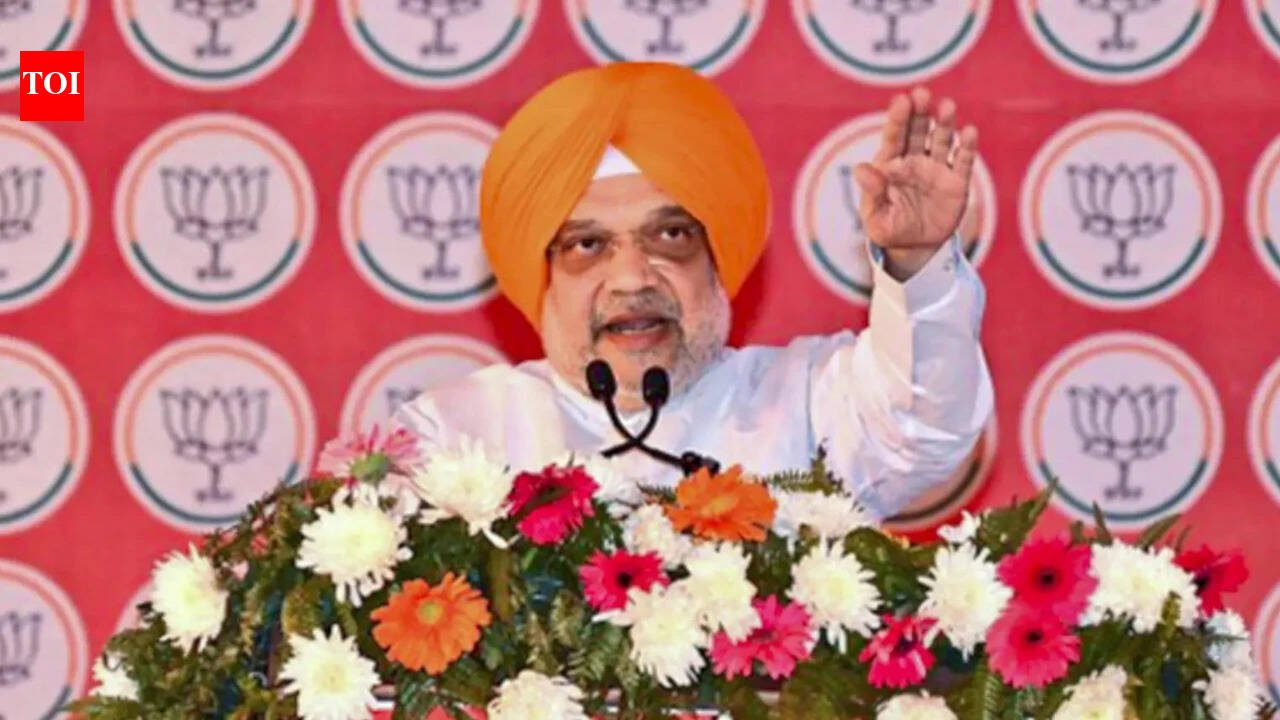
NEW DELHI: Virtually ending speculation over any revival of the Bharatiya Janata Party’s alliance with the Shiromani Akali Dal, Union home minister Amit Shah on Saturday declared that the BJP will contest the 2027 Punjab Assembly elections on its own and seek to form its own government in the state.Addressing the party’s “Badlav” rally at Killi Chahlan village in Moga, Shah said the BJP had effectively launched its campaign for the Punjab polls, due early next year, and appealed to voters to give the party a chance after supporting the Congress, the Akalis and the Aam Aadmi Party (AAP).“Whenever we came before you, we came in the role of a younger brother. We could not have formed the government (on our own),” Shah said, referring to the BJP’s past alliance with the Shiromani Akali Dal.“Magar aaj mein keh kar jaata hu 27 (2027) kay chunav mein, Bharatiya Janata Party apni sarkar banane kay liye chunav ladne ja rahi hai (The BJP is now going to fight the 2027 election to form its government in Punjab),” he said, reported news agency PTI.

BJP sounds poll bugle from Moga

Shah said Punjab had given multiple chances to the Congress, the Akalis and the AAP, and should now give the BJP an opportunity.“We will bring change in Punjab,” he said.Shah claimed the BJP had secured 19 per cent of the vote in the 2024 Lok Sabha elections in Punjab and argued that wherever the party reached that mark, it eventually went on to form the government.“In 2024, the BJP got 19 per cent of the votes. And it is our track record, where the BJP gets 19 per cent of the vote, the next government formed there is of the BJP. And this happened in Odisha, Assam, Manipur, Tripura, Uttarakhand, and now it is the turn of Punjab,” he said.The BJP unsuccessfully contested all 13 parliamentary seats in Punjab in 2024, but its vote share rose from 9.6 per cent in 2019 to nearly 19 per cent.

Sharp attack on Mann government

Using the broader “Badlav” rally to target the Bhagwant Mann-led AAP government, Shah accused it of presiding over a breakdown in law and order and failing to tackle drugs, corruption and unemployment.“Today, Punjab has been destroyed due to debt, drugs, religious conversions, corruption and terror of gangsters,” Shah alleged.Shah also claimed the Mann government had become an “ATM” for AAP chief Arvind Kejriwal and said the chief minister was merely acting as Kejriwal’s “pilot”.“There is no government in this state. Had there been a government, the law and order situation would not have been so; the state would not have been reeling from the drug menace and farmers would not have been suffering…. Mann has only been acting as Kejriwal’s pilot,” he said.He also promised that if the BJP comes to power, it would eliminate the drug trade in Punjab within two years.“Give us your blessing in February, and we will root out the drug trade in Punjab within two years,” Shah said, reported PTI.

Religious conversion pitch also surfaces

While the main thrust of Shah’s speech was the BJP’s solo 2027 push, he also raised the issue of religious conversions in Punjab. Shah said that if the BJP forms the government in 2027, it will bring a law to check religious conversions in the state.“All of Punjab is facing the issue of religious conversions. I am saying this to all Hindu and Sikh brothers and sisters, you form the BJP government once, we will bring a Bill to check religious conversions,” he said.

Akali split backdrop

Shah’s remarks are politically significant because they strongly suggest the BJP is not looking to revive its long-standing partnership with the Shiromani Akali Dal.The SAD had ended its 24-year-old alliance with the BJP in September 2020 over the now-repealed farm laws.Before the split, the two parties had jointly contested elections for years, with the BJP usually fighting 23 Assembly seats and the Akalis contesting 94. The alliance formed governments in Punjab in 1997-2002, 2007-12 and 2012-17.The BJP currently has two MLAs in the 117-member Punjab Assembly.


Source link

Abhimanyu Puranik, Aronyak Ghosh clinch Blitz and Rapid titles at National Chess Championship | Chess News


Abhimanyu Puranik, Aronyak Ghosh clinch Blitz and Rapid titles at National Chess Championship
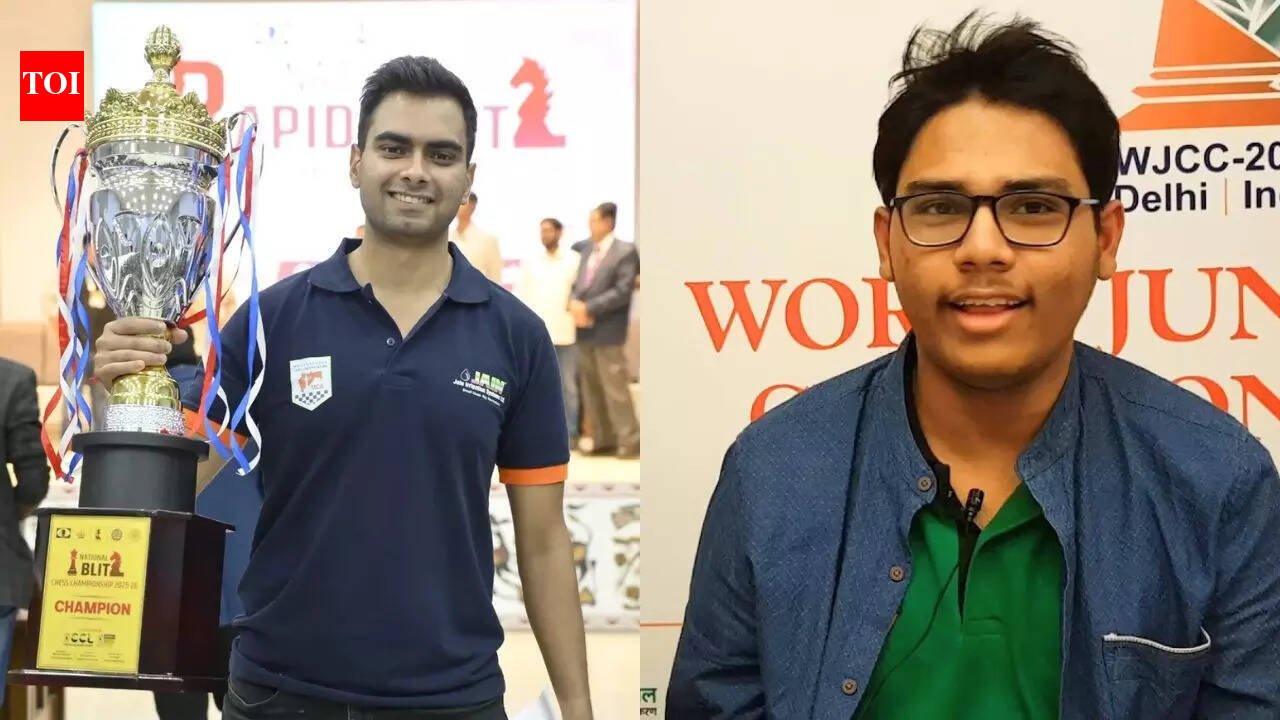
Abhimanyu Puranik and Aronyak Ghosh

NEW DELHI: The National Rapid and Blitz Chess Championship concluded at Sarala Birla University in Ranchi, where more than 400 players from across the country competed in intense matches that tested both speed and strategy. The tournament featured two formats in Blitz and Rapid and saw impressive performances from several top Indian players.In the Blitz section, Grandmaster (GM) Abhimanyu Puranik emerged as the champion after a thrilling finish.

Abhimanyu Puranik Exclusive: Chess Journey, Helping Divya Deshmukh in World Cup, Grand Swiss, & More

The Maharashtra player scored 9 points in 11 rounds to secure the title. The competition was extremely tight at the top, with GM Sayantan Das from the Railway Sports Promotion Board also finishing with 9 points. However, Puranik, hailing from Mumbai, clinched the championship thanks to a better tie-break score. International Master (IM) Madhavan N B from Tamil Nadu finished third with 8.5 points, edging out several players who also ended with the same score.The Blitz format required quick thinking and lightning-fast moves, making it a challenging contest even for experienced grandmasters. Puranik showed remarkable composure under time pressure to come out on top in a field packed with strong contenders.In the Rapid section, IM Aronyak Ghosh delivered a standout performance to claim the title. Representing the Railway Sports Promotion Board, the West Bengal player scored an impressive 9.5 points out of 11 rounds and remained undefeated throughout the tournament.The victory marks an important milestone for Ghosh, who is currently working towards achieving his final Grandmaster norm. Meanwhile, Puranik’s triumph in the Blitz category further strengthens his reputation as one of India’s top players in fast-paced chess formats.

Banner Insert


Source link

Kuldeep Yadav wedding: When and where is the ceremony? All you need to know | Cricket News


Kuldeep Yadav wedding: When and where is the ceremony? All you need to know
The much-awaited wedding celebrations of Kuldeep Yadav and Vanshika Chadha are set to begin with grand festivities this week

Indian spinner Kuldeep Yadav is set to begin a new chapter in his life as he marries his longtime partner Vanshika Chadha on March 14, 2026, in the scenic hill town of Mussoorie, Uttarakhand. The wedding comes just days after Kuldeep was part of India’s historic triumph in the ICC Men’s T20 World Cup.Preparations for the grand ceremony are already underway at the historic Savoy Hotel in Mussoorie, where pre-wedding festivities have begun with traditional ceremonies including haldi, mehendi and sangeet. After the wedding, a grand reception will be hosted in Lucknow on March 17, where several prominent personalities from cricket, politics and business are expected to attend.

Star-studded Guest List

Several current and former members of the India national cricket team are expected to attend the wedding celebrations.According to reports, the guest list includes:Virat Kohli, Rohit Sharma, Jasprit Bumrah, Suryakumar Yadav, Sunil Gavaskar, Rinku Singh, Tilak Varma, Suresh Raina, Mohammad Kaif and Piyush Chawla

Chahal and Tilak Varma share excitement

Meanwhile, fellow Indian spinner Yuzvendra Chahal arrived in Dehradun on Friday and expressed his excitement about attending the wedding of his close friend.“I am very excited for my brother’s marriage. I will dance a lot and enjoy,” Chahal said.Meanwhile, Tilak Varma said he plans to enjoy the wedding celebrations before shifting his focus to the upcoming Indian Premier League 2026 season with Mumbai Indians.“We’re going to Kuldeep’s wedding to have fun. After that, we’ll prepare for IPL,” Tilak said.

A special moment after World Cup glory

Kuldeep’s wedding celebrations come at a particularly memorable time in his career. The spinner was part of the Indian team that recently won the T20 World Cup 2026, defeating New Zealand in the final to claim India’s third title in the tournament’s history.

Banner Insert


Source link