Breaking News
Ladakh protest: Climate activist Sonam Wangchuk to be released as govt revokes NSA detention | India News


Ladakh protest: Climate activist Sonam Wangchuk to be released as govt revokes NSA detention

NEW DELHI: Centre on Saturday revoked the detention of climate activist Sonam Wangchuk with immediate effect by exercising powers under the National Security Act, the ministry of home affairs said.In a statement released, the ministry said that the “government remains committed to fostering an environment of peace, stability, and mutual trust in Ladakh so as to facilitate constructive and meaningful dialogue with all stakeholders.”“In furtherance of this objective, and after due consideration, the Government has decided to revoke the detention of Shri Sonam Wangchuk with immediate effect by exercising the powers available under the National Security Act,” it added.“Wangchuk has already undergone nearly half of the period of detention under the said Act,” the ministry noted announcing his immediate release.The government said that it has been actively engaging with stakeholders and community leaders in Ladakh to address the aspirations and concerns of people in the region.“The Government has been actively engaging with various stakeholders and community leaders in Ladakh with a view to addressing the aspirations and concerns of the people of the region. However, the prevailing atmosphere of bandhs and protests has been detrimental to the peace-loving character of the society and has adversely affected various sections of the community, including students, job aspirants, businesses, tour operators and tourists and overall economy,” the statement added.The government’s decision comes days after the Supreme Court adjourned the hearing on a petition challenging the detention of Sonam Wangchuk to March 17. A bench of Justices Aravind Kumar and P. B. Varale made it clear that no further arguments would be heard beyond that date.The court had also asked the Centre whether it could reconsider or review the activist’s detention, noting that “his medical condition is not that good.”During the proceedings, government authorities told the court that Wangchuk’s remarks had encouraged young people to organise protests similar to movements seen in Nepal and Bangladesh, and had even referenced an uprising similar to the Arab Spring.The government argued that such statements could trigger instability in the strategically sensitive border region. Officials also linked him to violence in Leh on September 24 last year that left four people dead and more than 160 injured.Wangchuk was detained on September 26, 2025 under the provisions of the National Security Act following an order issued by the District Magistrate of Leh, two days after violent protests erupted in the city over demands for statehood for Ladakh and its inclusion under the Sixth Schedule of the Constitution.He was taken into preventive custody under the NSA to “maintain public order” and was later transferred to a prison in Jodhpur.His wife, Gitanjali Angmo, had approached the Supreme Court challenging the detention. The court first took up the petition on October 6 last year and issued a notice to the authorities.
Source link

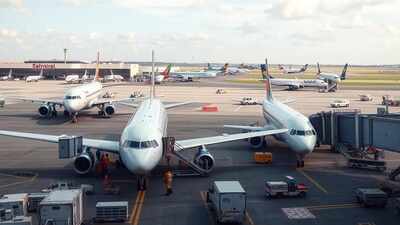
Summer travel to get costlier: Jet fuel prices jump amid Middle East conflict


Summer travel to get costlier: Jet fuel prices jump amid Middle East conflict

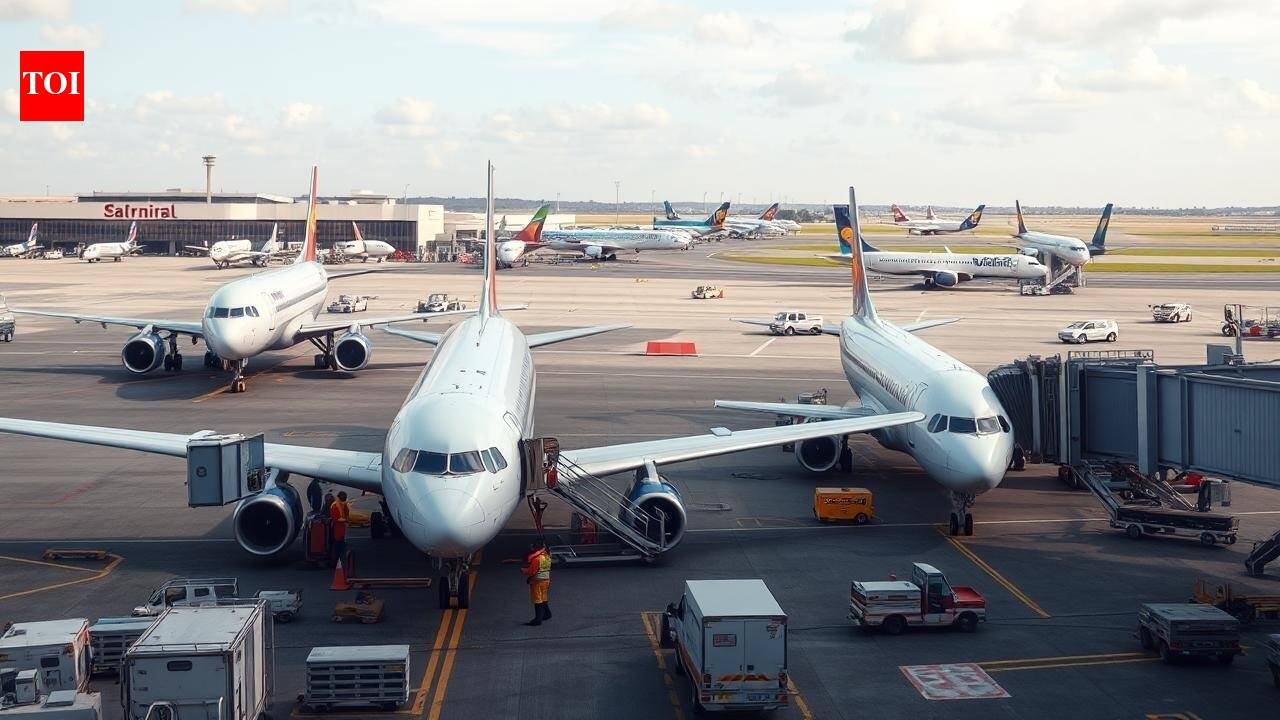
Air travellers, brace yourselves for costlier tickets! You might soon be charged higher amounts for flight fares as the Middle East crisis continues to push fuel prices higher. The conflict has disrupted global oil supplies, and with the summer travel season just around the corner, industry experts say fare hikes are becoming inevitable. However, when the price hikes will kick in and how steep the increase will is still unclear.The pressure is expected to be most visible on long-haul international flights, which consume far more fuel than shorter domestic routes. While some airlines have already announced price adjustments, others are warning that rising fuel costs will soon make their way into ticket prices.United Airlines CEO Scott Kirby recently signalled that fare increases in the United States could arrive quickly as fuel costs continue to climb across the industry. “Probably start quick,” he said, referring to when higher airfares could begin appearing.

Conflict pushing fuel costs higher

The surge in jet fuel prices follows disruptions in global oil supply caused by the conflict in the Middle East. Oil exports have been constrained as shipments face continuous difficulties, prompting major producers including Kuwait, Saudi Arabia and Iraq to cut back production.The situation has been further complicated by attacks carried out by Iran on commercial ships in the Persian Gulf and on oil infrastructure in Gulf Arab countries following US and Israeli strikes. These developments have effectively stopped traffic through the Strait of Hormuz, a narrow maritime corridor through which about one-fifth of the world’s oil supply typically passes.The instability in crude oil markets has pushed up jet fuel prices sharply. According to the Argus US Jet Fuel Index, the average price airlines paid for jet fuel in the United States reached $3.99 per gallon on Friday. Two weeks earlier, the day before the war began, the average price stood at $2.50 per gallon. The index measures average jet fuel prices across major US airports.Government data also shows that airlines were paying significantly less for fuel earlier in the year. Figures from the US department of transportation’s bureau of transportation statistics indicate that US airlines paid roughly $2.36 per gallon in January, the latest month for which data is available.

Airlines face growing operating costs

Some carriers use fuel hedging strategies to protect themselves from sudden price increases, locking in prices months or even years in advance. However, this protection is often limited and does not cover all fuel needs. Many airlines also no longer rely heavily on hedging, which means extended periods of high fuel prices could push more carriers to raise fares.Kirby addressed the challenges of hedging during a Harvard event last week. “No one hedges anymore, and even if you do, hedging the crack spread is really hard to do,” he said. The crack spread refers to the difference between the price of crude oil and the cost of refined products such as petrol.Operational challenges are also adding to the burden. Airspace closures across parts of the Middle East have forced airlines to reroute flights, often requiring longer journeys that burn additional fuel and increase operating expenses.

Potential impact on passengers

Travellers could see the effects of rising fuel costs in several ways. Airlines outside the United States often impose fuel surcharges that are added to the base ticket price, and these charges can be increased when fuel becomes more expensive.Major US airlines typically do not use separate fuel surcharges. Instead, they include fuel expenses within the total fare, meaning passengers are more likely to see higher ticket prices rather than a separate fee, according to Tyler Hosford, security director at global risk management firm International SOS.Airlines may also look at other ways to offset costs by adjusting prices for optional services such as extra legroom seats, seat upgrades, checked baggage and priority boarding. As a result, the overall cost of a trip could rise even if base ticket prices remain unchanged initially.Christopher Anderson, a professor at Cornell University’s business school who studies operations and information management in the airline and hospitality industries, said prolonged high fuel prices could also prompt airlines to change schedules or reduce certain routes.

Fuel costs already driving fare increases

Airlines in the Asia-Pacific region have been among the first to respond with fare increases and fuel surcharges. If high jet fuel prices continue, analysts expect more airlines, particularly those without fuel hedging arrangements, to follow.Cathay Pacific, Hong Kong’s flag carrier, announced that it will raise its fuel surcharge beginning Wednesday.“The price of jet fuel has approximately doubled since March amid the latest developments in the Middle East,” the airline said in a statement Thursday.Several other airlines have also introduced price changes. Air France-KLM said that round-trip economy tickets on long-haul routes could increase by about 50 euros (around $57). Air India introduced fuel surcharges on certain routes on Thursday and said the charge will rise by up to $50 for tickets to Europe, North America and Australia after March 18. Hong Kong Airlines also raised fuel surcharges on several routes from Thursday, while South Africa’s FlySafair announced a temporary fuel surcharge.

Advice for travellers

Industry experts say travellers planning summer holidays may still be able to manage costs by booking flights earlier rather than waiting for last-minute offers.Locking in ticket prices sooner, especially when flexible booking options allow changes, can help secure fares before airlines adjust them further.Hosford recommends that travellers remain flexible with travel dates, compare prices from nearby airports and set alerts to monitor fare changes. He also suggested using frequent flyer miles or credit card points to book flights instead of waiting for the ideal deal.


Source link

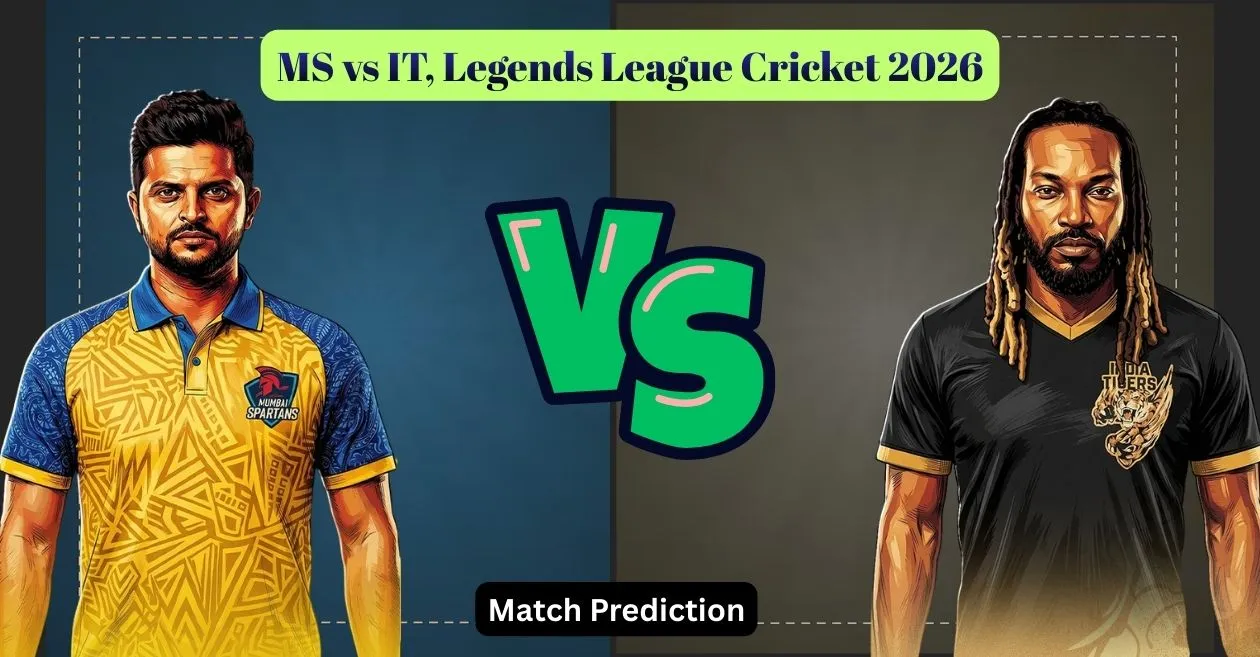
MS vs IT, Legends League Cricket 2026 Match Prediction: Who will win today’s game between Mumbai Spartans and India Tigers?


The stage is set in Haldwani as the fourth match of the Legends League Cricket 2026 brings together a star-studded clash between Mumbai Spartans and India Tigers.

With the Spartans looking to bounce back from an opening loss and the Tigers aiming to maintain their winning momentum, tonight’s encounter under the lights at the Indira Gandhi International Cricket Stadium promises high-octane nostalgia and vintage brilliance.

Led by the fiery S Sreesanth, the Mumbai Spartans head into this clash hungry for their first points of the season. Despite a spirited effort in their opening fixture against India Captains, they ultimately fell 23 runs short, leaving them eager to prove their mettle tonight. The team’s core strength lies in a formidable middle order anchored by the Mr. IPL himself, Suresh Raina, and bolstered by the raw finishing power of Carlos Brathwaite. However, the spotlight will be firmly on Bharat Chipli, after looking in sublime touch with a brisk 47 in the first game, his ability to provide a flying start will be vital if the Spartans are to dictate the tempo of the innings.

On the other side of the ring, India Tigers arrive with the wind in their sails following a clinical 20-run victory over Royal Riders Punjab. Under the shrewd leadership of Tillakaratne Dilshan, the Tigers resemble a well-oiled machine that perfectly balances veteran power with craftiness. Their greatest asset is a deep pool of all-rounders, epitomized by Pawan Negi, whose MVP performance of 41 runs and two wickets in the previous match showcased their tactical flexibility. While Negi provides the balance, the x-factor remains Chris Gayle, the Universe Boss is always just one boundary away from turning the game on its head and demoralizing any bowling attack.

Mumbai Spartans vs India Tigers: Match Details

  • Date and Time: March 14; 2:00 pm GMT/ 7:30 pm IST
  • Venue: Indira Gandhi International Cricket Stadium, Haldwani

Mumbai Spartans vs India Tigers Head to Head Record

Mumbai Spartans and India Tigers are set to face each other for the first time, with no previous head-to-head record between the two sides.

Indira Gandhi International Cricket Stadium Pitch Report

The pitch at the Indira Gandhi International Cricket Stadium is likely to provide a balanced contest between bat and ball. Fast bowlers may find some early help with the new ball, as the surface could offer a bit of seam movement and bounce in the opening phase of the innings. However, once batters spend some time at the crease and adjust to the conditions, run-scoring should gradually become easier. The consistent bounce is expected to aid stroke-makers, allowing them to play their shots with confidence and build substantial innings.

As the game progresses, the character of the surface may change slightly, bringing spinners more into play. A touch of turn could emerge later on, which might make batting a little more challenging in the latter stages of the match. Overall, the conditions at the venue are set to produce an engaging contest, where both batters and bowlers can influence the game depending on how effectively they adapt to the evolving nature of the pitch.

Squads

India Tigers: Kirk Edwards, Tillakaratne Dilshan (c), Milinda Siriwardana, Samit Patel, Kuldeep Hooda, Jeevan Mendis, Pawan Negi, Amit Paunikar (wk), Akalanka Ganegama, Abu Nechim, Sumit Singh, Robin Uthappa, Chris Gayle, Ravi Bopara, Thilan Thushara, Aaron Finch, Shadab Jakati, Abhimanyu Mithun, Ambati Rayudu, Shahbaz Nadeem, Amitoze Singh

Mumbai Spartans: Asad Pathan, Bharath Chipli, Shoaib Khan, Amit Verma, Mausif Khan, Manan Sharma, Rahul Yadav (wk), Jaykishan Kolsawala, S Sreesanth (c), Suboth Bhati, KC Cariappa, Ishwar Chaudhary, Carlos Brathwaite, Bipul Sharma, Chadwick Walton, Isuru Udana, Faiz Fazal, Suresh Raina

Also READ: Legends League Cricket (LLC) 2026 Squads: Players list and Captains of all six teams

Mumbai Spartans vs India Tigers: Today’s match prediction

Case 1:

  • Mumbai Spartans wins the toss and bats first
  • Mumbai Spartans’ powerplay score: 50-60 (6 overs)
  • Mumbai Spartans’ total score: 190-200

Case 2:

  • India Tigers wins the toss and bats first
  • India Tigers’ powerplay score: 40-50 (6 overs)
  • India Tigers’ total score: 170-180

Match result: Mumbai Spartans to win the contest.

Also READ: Legend League Cricket 2026 Schedule, Broadcast and Live Streaming details: When and where to watch in India, Australia & USA


Source link

‘He wasn’t saying nice things’: Salman Ali Agha on war of words with Bangladesh captain Mehidy Hasan Miraz | Cricket News


'He wasn't saying nice things': Salman Ali Agha on war of words with Bangladesh captain Mehidy Hasan Miraz
Image credit: Bangladesh Cricket Board

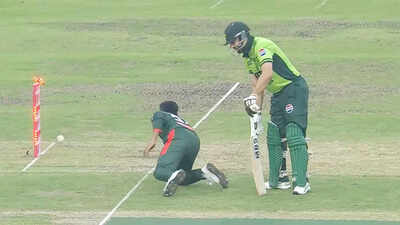
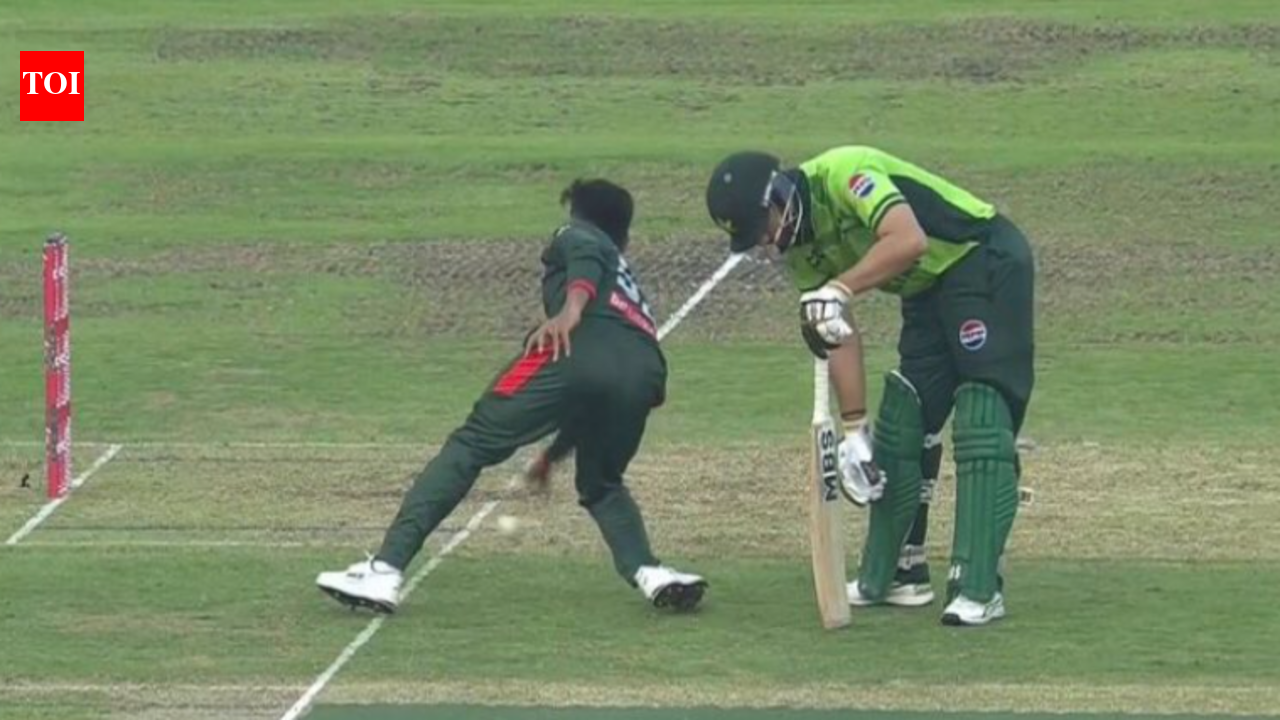
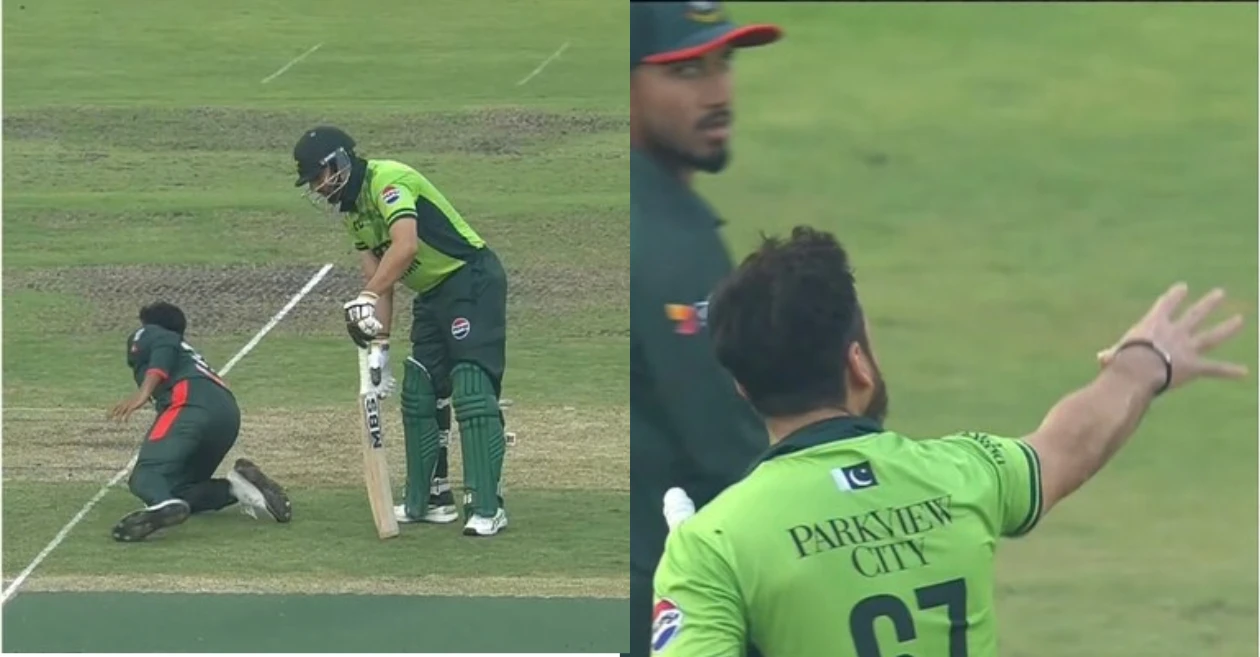
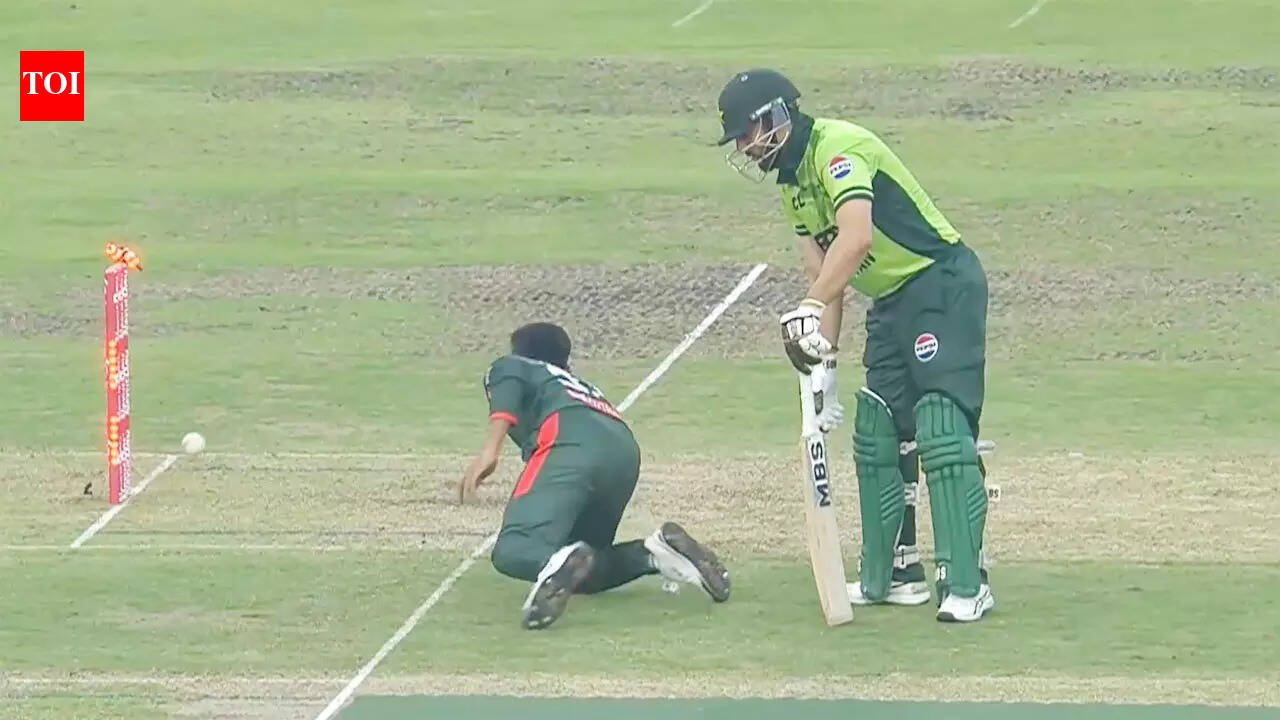
NEW DELHI: The debate around the “spirit of cricket” resurfaced after the controversial run-out of Salman Ali Agha by Mehidy Hasan Miraz during the second ODI between Pakistan national cricket team and Bangladesh national cricket team at the Sher-e-Bangla National Cricket Stadium in Dhaka.The incident unfolded in the 39th over of Pakistan’s innings when the visitors were in the middle of a steady recovery. Agha and Mohammad Rizwan had put together a 109-run partnership for the fourth wicket after Pakistan lost three early wickets. On the fourth delivery of the over, bowled by Bangladesh captain Miraz, Rizwan pushed the ball gently down the ground. The ball rolled towards Agha, who had stepped out of his crease at the non-striker’s end after backing up.

EXCLUSIVE: Rahul Dravid on iconic Eden Gardens win against Australia in 2001

As the ball struck his pads, Agha bent down to pick it up and appeared to hand it back. Miraz, however, quickly collected the ball and dislodged the bails while Agha was still outside the crease before appealing for a run-out.The on-field umpire referred the appeal to the third umpire, who ruled in Bangladesh’s favour and confirmed the dismissal. The decision left Agha visibly frustrated as he walked back to the pavilion, with television visuals showing the Pakistan batter expressing his displeasure.The moment also triggered a brief exchange between Agha and Miraz on the field, while Rizwan was seen engaging in a discussion with the Bangladesh players.Despite the controversy, Pakistan went on to win the match by 128 runs via the DLS method. Speaking after the game, Agha reflected on the dismissal and the circumstances around it.“What he has done is in the law. I think if he thinks it’s right, it’s right, but from my perspective, I would have done it differently. I would have gone for sportsman’s spirit. We haven’t done this type of thing previously, we would never do that in the future as well,” Agha said.“Actually, the ball hit on my pad and then my bat. So I thought he can’t get me run-out now, because the ball already hit on my pad and my bat. I was just trying to give him the ball back. I was not looking for the run or anything like that, but he already decided to make the run-out,” he added.“It was just heat-of-the-moment kind of stuff. If you ask me what I would have done, I would have done things differently. But it was everything, whatever happened after that, it was in the moment,” said Agha.When asked about the exchange between the two players during the incident, Agha admitted that neither side used “nice words”.“I can’t remember what I was saying, and I can’t remember what he was saying. I’m sure I wasn’t saying nice things, and I’m sure he wasn’t saying nice stuff as well. But it was just the heat of the moment, so we are fine,” he said.

Banner Insert


Source link

Watch: Iran strikes US embassy in Baghdad, smoke rises over compound


Watch: Iran strikes US embassy in Baghdad, smoke rises over compound
Blasts rock US embassy in Baghdad (AP photo)

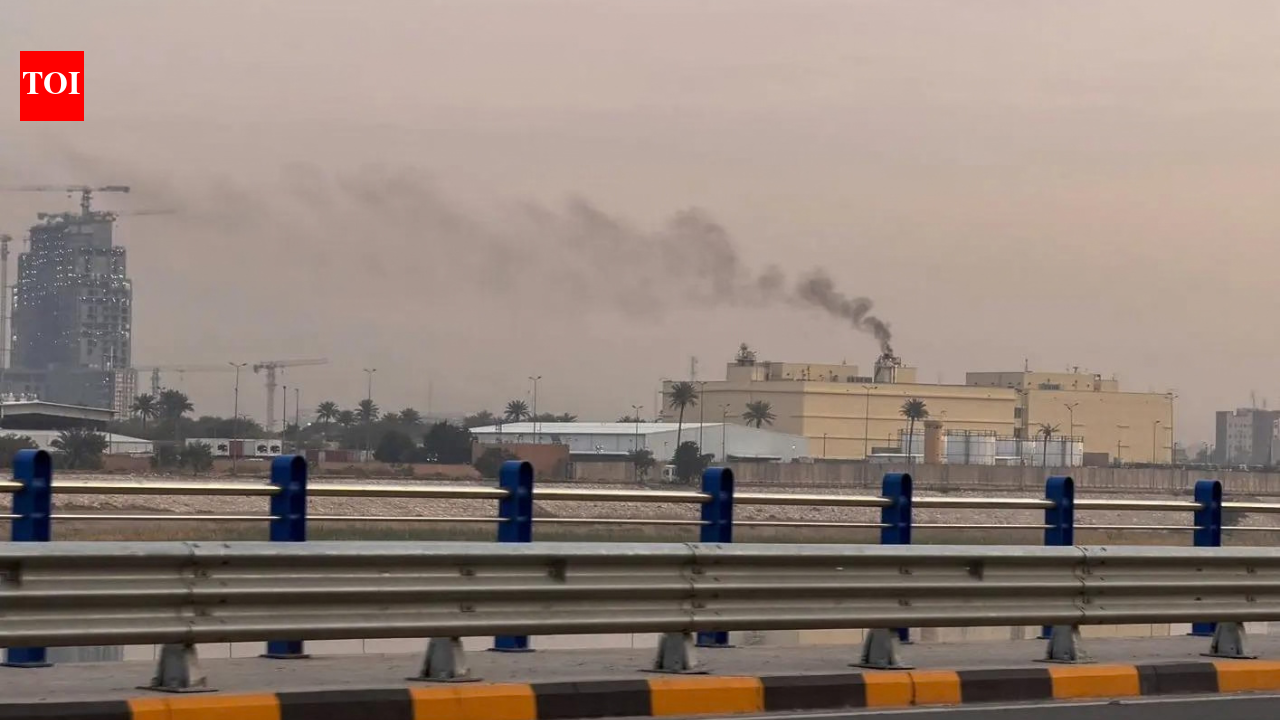
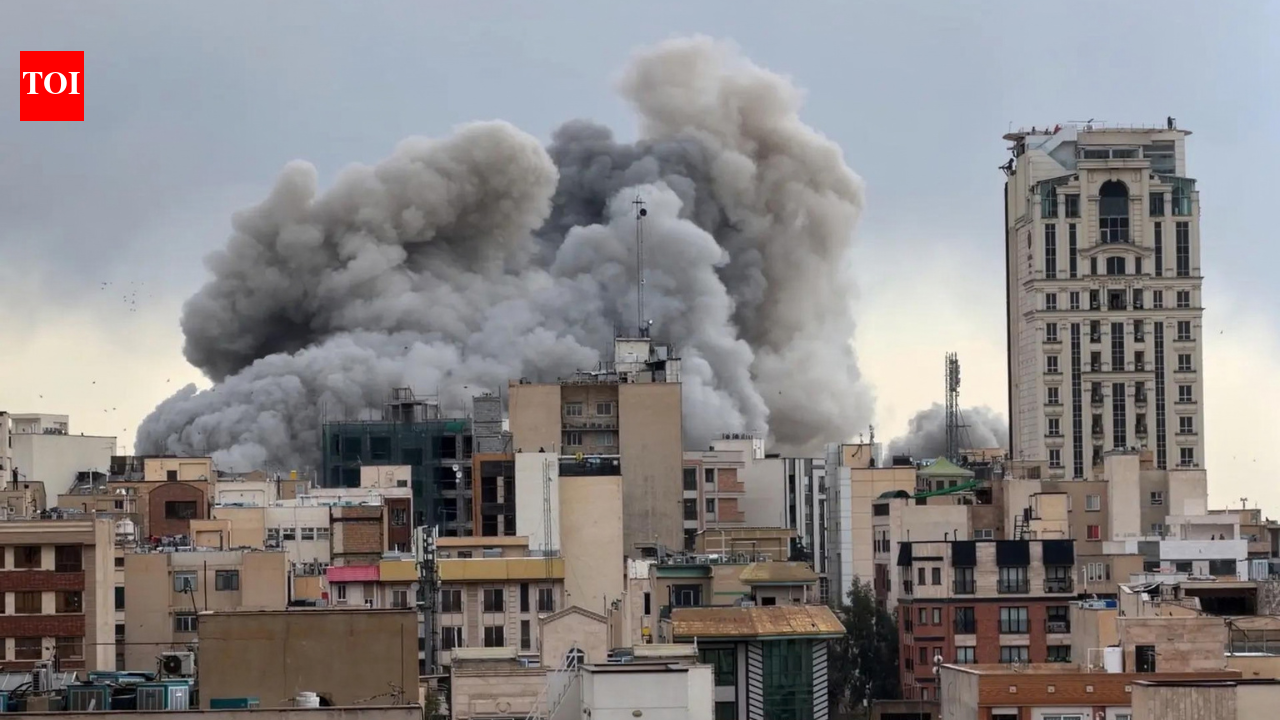
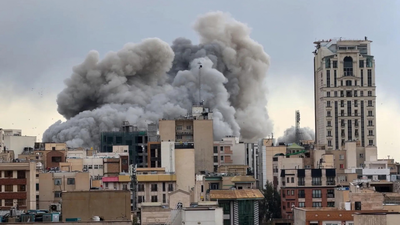
After issuing a strong warning that it would target American oil and military facilities in the region, Iran struck the United States embassy in neighbouring Iraq, escalating tensions in the Middle East conflict.The embassy compound in Baghdad was targeted by Iranian drones, according to multiple videos shared on social media. Thick black smoke could be seen rising from the complex after the strikes reportedly hit the helipad of the fortified US mission.Iraq, which has long been a proxy battleground between the United States and Iran, was quickly drawn deeper into the wider Middle East war triggered by US and Israeli strikes on Iran on February 28.A cloud of black smoke rose above the US diplomatic mission shortly after explosions were heard on Saturday morning, an AFP journalist reported.Two security officials told AFP that the embassy complex was struck in the attack, though the exact cause remained unclear. One source said a drone had hit the embassy, while another said a projectile, believed to be a rocket, had fallen on the diplomatic complex.Another security source said “a projectile, believed to be a rocket, had fallen near the embassy’s airbase.”The US embassy did not immediately respond to AFP’s request for comment on the incident.It is the second time the US embassy in Baghdad has come under attack since the start of the war.Several Tehran-backed armed groups, which Washington has designated as “terrorist organisations”, and which operate under an umbrella movement known as the Islamic Resistance in Iraq, have claimed responsibility for daily drone and rocket attacks against US bases in the region.Since the start of the war, several attacks targeting members of those groups across Iraq have been blamed on the United States and Israel.Saturday’s attack came shortly after two strikes targeted the powerful Iran-backed group Kataeb Hezbollah and killed two of its members, including a “key figure”, according to security sources.AFP journalists heard explosions in the Iraqi capital followed by ambulance sirens, while witnesses reported seeing smoke rising from the Arasat neighbourhood, where several Iran-backed groups are believed to have a presence.“At 02:15 am (2315 GMT Friday), a missile struck a house that was being used by Kataeb Hezbollah,” a security source said, adding that “a key figure was martyred,” and two members of the group were wounded.Two hours later, an airstrike hit a vehicle in eastern Baghdad, killing “a member of the Hashed al-Shaabi,” another security source said.A Hashed al-Shaabi official told AFP that the person killed belonged to Kataeb Hezbollah.The Hashed al-Shaabi, or the Popular Mobilisation Forces (PMF), is a former paramilitary group that has since been integrated into Iraq’s regular armed forces.The force also includes brigades from Iran-backed groups, including Kataeb Hezbollah.None of the sources said who was believed to be behind the strikes, and the Kataeb Hezbollah group has not commented on the incident.


Source link

PAK vs BAN: Salman Ali Agha run-out sparks controversy during 2nd ODI – Watch | Cricket News


Bangladesh vs Pakistan 2nd ODI( Image Credit: Screengrab)

An unusual and controversial run-out involving Salman Ali Agha during the second ODI between Bangladesh national cricket team and Pakistan national cricket team in Dhaka has sparked intense discussion on social media, with many fans debating the spirit of cricket surrounding the dismissal.Pakistan are currently touring Bangladesh for a three-match ODI series, with the hosts already leading the series after winning the opening match. However, the second ODI witnessed a dramatic moment that quickly went viral online.

EXCLUSIVE: Rahul Dravid on iconic Eden Gardens win against Australia in 2001

Controversial moment during the 39th over

The incident took place in the 39th over of Pakistan’s innings when a mix-up and quick thinking from Bangladesh skipper Mehidy Hasan Miraz resulted in Agha’s dismissal.Mohammad Rizwan nudged the ball to the right of the bowler, where Mehidy moved across to stop it with his boot. At that moment, Agha was standing out of his crease and the two players collided slightly as the ball trickled to a halt near their feet.Believing the ball was effectively dead, Agha bent down to pick it up and return it to the bowler. However, Mehidy reacted quickly, grabbed the ball and underarmed it onto the stumps, catching Agha outside his crease.The on-field umpire, Tanvir Ahmed, referred the decision to the third umpire.After reviewing the footage, the third umpire ruled that the ball was still in play, meaning Mehidy’s action was completely within the laws of the game. Agha was therefore given out.The dismissal led to heated exchanges between Agha and Mehidy, while Bangladesh wicketkeeper Litton Das also appeared involved in the discussion before players stepped in to calm the situation.Agha departed after a well-made 64 off 62 balls, including seven fours and two sixes.

Pakistan collapse after strong start

Pakistan’s innings eventually ended before the 50-over mark despite a dominant start earlier in the game. Young opener Maaz Sadaqat set the tone for Pakistan with an explosive knock, reaching his half-century in just 31 balls while taking on Bangladesh’s pace attack.Pakistan raced to a 100-plus opening partnership, providing the perfect platform for a big total. Later, another century stand between Rizwan and Agha put Pakistan firmly in control. However, the controversial run-out of Agha proved to be a turning point.After his dismissal, Pakistan’s innings collapsed dramatically as they lost their final seven wickets for just 43 runs as they were bowled out for 273.

Banner Insert


Source link

Tata, Parle, M&M canteens feel LPG squeeze; India Inc redesigns menu — less tea, no samosas or dosas


Tata, Parle, M&M canteens feel LPG squeeze; India Inc redesigns menu — less tea, no samosas or dosas

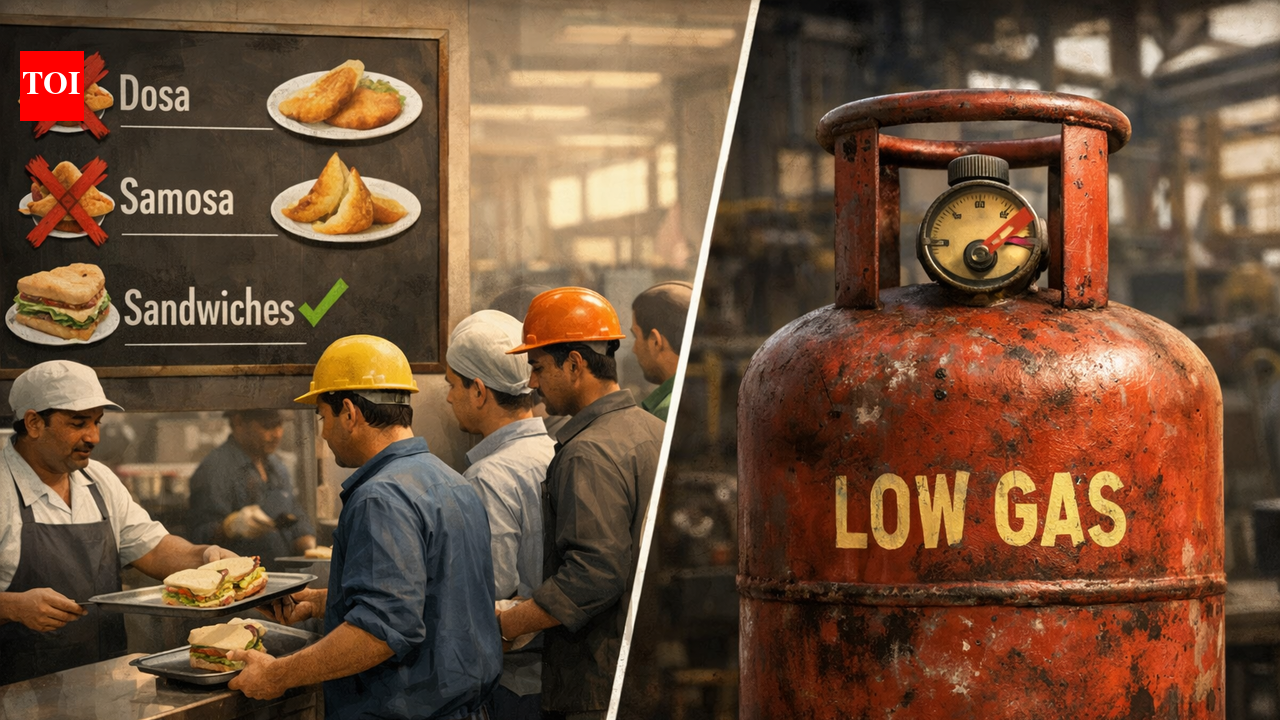
Craving that dosa cooked to a perfect crisp? Off the menu. Those freshly fried canteen samosas? Gone as well. Ongoing tensions in the Middle East have begun to ripple into everyday industrial activity in India, as shortages of commercial LPG start to disrupt factory operations. Manufacturers said that tightening supply is creating hurdles not only for production processes but also for routine worker facilities such as factory canteens. “Every day has become a new challenge now,” Satish NS, president of Haier India, a maker of refrigerators and televisions, told ET. “Component suppliers are facing challenges with low LPG supplies, which will impact final production. Brazing operations in factories are getting affected. And even running factory canteens has become difficult, which is why we are now electrifying all equipment.”

India Inc redesigns menu

The strain is being felt in staff kitchens, where menus are being pared back as dishes that require significant gas consumption are removed. Meals that require little or no cooking, including packaged foods and sandwiches, are increasingly being served to workers, while in a few plants even the supply of tea has been reduced. Items such as dosa, samosa and non-vegetarian dishes are gradually disappearing from factory canteens. In many plants, they are being replaced with simpler options that require minimal cooking. Executives described the situation as “hand-to-mouth,” saying that some facilities now have LPG stocks that may last only until the weekend.The impact is visible across several large manufacturers. Parle Products, the country’s biggest packaged food company, has scaled down the variety of food served at its 10 company-run factories and 125 third-party plants. The canteen menu, which earlier included multiple items, has now been restricted to only a few dishes. Foods such as chapati, dosa and fried snacks are being replaced by simpler preparations like sandwiches. The company employs close to 4,500 people across these plants. “Workers understand the problem at hand,” said Mayank Shah, vice president at Parle Products. “Even production is being impacted in plants that run on fuels such as LPG, propane, and butane, with some shifts or lines not operating. We are trying to balance overall production with the plants that are least impacted.”

It’s not just food industry!

Other companies have also begun adjusting their operations. At Mahindra & Mahindra, canteens have removed live counters and fried foods to reduce gas consumption. Tata Motors similarly warned participants attending a supplier event at its Pune plant that the food menu would be restricted. Manufacturing facilities in the country generally employ between 3,000 and 5,000 workers, including contract and indirect staff, while the management of canteens is usually outsourced to external vendors.Kamal Nandi, head of the appliances business at Godrej Enterprises, said the shortage has severely affected brazing work involved in sheet metal operations. “It has become a hand-to-mouth situation,” he said. “We are trying alternatives to LPG as we have supplies only until Saturday. This is when demand for cooling appliances such as air-conditioners and refrigerators is peaking.”

Chulhas make a comeback as India Inc turns to alternatives

To ensure workers continue to receive meals, the company has revived the use of firewood stoves in its canteens. To cope with the shortage, factories are introducing electric alternatives including induction cooktops, electric rice cookers and electric roti makers. In some locations, firewood chulhas have also returned. GK Sharma, India region chairperson at French auto parts maker OP Mobility, said the company has been exploring alternatives such as electricity and solar power. However, LPG shortages are still affecting certain operations. “We are navigating a tough phase,” he said, referring to the impact on paint shop processes.However, not all factories have faced disruptions as many had already switched to alternatives. At Daimler India Commercial Vehicles, which manufactures trucks and buses under the Bharat Benz brand, canteen operations have continued normally. The facility’s kitchen runs entirely on electricity after the plant switched to 100% solar power, shielding it from the current LPG shortage.

Here’s what the government is doing to cushion the impact:

The government has moved to prioritise LPG supply for households as the energy crunch deepens amid the ongoing Middle East conflict. Earlier on Thursday, Centre announced a 20% cap on the average monthly supply of commercial LPG by oil marketing companies, which will coordinate the distribution with state governments. Refineries have also been asked to maximise LPG production. Some have already increased output by diverting propane and butane streams towards LPG production. Manufacturing companies will receive up to 80% of the average supply they had received during the previous six months.


Source link

WATCH: Salman Agha loses cool after unusual run out by Mehidy Hasan Miraz in BAN vs PAK 2nd ODI


A dramatic moment in the second ODI between Bangladesh and Pakistan at the Sher-e-Bangla National Cricket Stadium in Mirpur triggered heated scenes on the field and reignited the long-standing debate around the Spirit of Cricket.

Salman Agha’s fiery reaction: Throws gloves and helmet in anger

Pakistan batter Salman Ali Agha lost his cool after being run out in an unusual fashion by Bangladesh skipper Mehidy Hasan Miraz during a crucial phase of Pakistan’s innings.

The controversial moment occurred in the 39th over and quickly became the talking point of the match. What initially seemed like a routine piece of play soon turned into a tense exchange between players from both sides.

At that stage of the innings, Pakistan were rebuilding strongly after an early wobble. Agha and Mohammad Rizwan had put together a valuable 109-run partnership for the fourth wicket, stabilizing the innings and putting their team in a strong position.

The drama unfolded when Mehidy Hasan Miraz delivered the fourth ball of the 39th over. Rizwan gently nudged the ball toward mid-on, and as it rolled toward the non-striker’s end, Mehidy moved across in his follow-through and stopped it with his boot.

Seeing the ball close to him, Agha – who had backed up outside his crease – appeared to act instinctively. In what seemed like a gesture of sportsmanship, he bent down as if to pick up the ball and hand it back to the bowler.

However, Mehidy reacted instantly. The Bangladesh captain grabbed the ball and underarmed it onto the stumps at the non-striker’s end while Agha was still outside his crease. Mehidy immediately appealed for a run-out.

On-field umpire Tanvir Ahmed referred the decision to the third umpire. After a quick review, TV umpire Kumar Dharmasena ruled that the ball had remained in play and that Agha had not grounded his bat behind the crease in time. The decision confirmed the Pakistan captain was run out.

The dismissal sparked immediate frustration from Agha. Normally known for his calm demeanor, the Pakistan skipper reacted angrily to the decision. Cameras showed him throwing his gloves and helmet to the ground in visible frustration.

He also engaged in a heated verbal exchange with Mehidy Hasan Miraz and Bangladesh wicketkeeper Litton Das. The confrontation briefly escalated before Mohammad Rizwan stepped in to calm the situation, physically separating the players and preventing the argument from getting out of hand.

Even as he walked off the field, Agha continued to show his displeasure, tossing his gloves and helmet aside again near the boundary rope.

Here’s the video:

Interestingly, the dismissal – while controversial – did not ultimately work in Bangladesh’s favour. Before the incident, Pakistan had been in a comfortable position at 231 for 3 in 38.3 overs, with Agha scoring a well-compiled 64 off 62 balls and the partnership with Rizwan gaining momentum.

The run-out briefly disrupted Pakista’’s progress. Rizwan was dismissed just two balls later, and the remaining wickets fell quickly, with the final seven wickets adding only 43 runs.

However, Bangladesh failed to capitalize on that opportunity during their chase.

Rain interruptions meant Bangladesh were set a revised DLS target of 243 runs in 32 overs. But Pakistan’s bowlers dominated the contest, and Bangladesh collapsed dramatically.

The hosts were eventually bowled out for 114 runs, handing Pakistan a convincing 128-run victory and leveling the three-match ODI series at 1-1.

Also WATCH: Tawhid Hridoy plucks a spectacular catch to remove Sahibzada Farhan during BAN vs PAK 2nd ODI

The incident has once again sparked discussion among cricket fans and experts about the balance between the rules of the game and its unwritten values. Under the laws of cricket, the decision was legally correct. The ball was still in play, and Agha had not made his ground when the stumps were broken.

However, critics have debated whether Mehidy’s movement may have distracted or impeded the batter’s attempt to return to the crease. Others argued that Agha’s decision to attempt to pick up the ball created the unusual situation in the first place.

Also READ: Amid Kavya Maran backlash, Daniel Vettori explains Sunrisers’ decision to sign Abrar Ahmed in The Hundred Auction 2026


Source link

Middle East conflict: India grants one-month visa extension to stranded foreigners


Middle East conflict: India grants one-month visa extension to stranded foreigners
Middle East crisis (AP photo)

NEW DELHI: India has announced an extension of visas and a waiver of overstay penalties for foreign nationals stranded in the country due to the ongoing conflict in the Middle East region.The Indian Consulate in Dubai said in a notification that all visas and e-visas that are expiring or due to expire soon will be extended for one month free of charge through the jurisdictional foreigners regional registration offices (FRROs).Authorities also said that penalties for any overstay by affected foreign nationals after February 28 will be waived if the delay was caused by the conflict.They added that exit permits will be issued free of charge to foreign nationals affected by travel disruptions so they can leave India once routes reopen.The consulate further clarified that if a foreign national is unable to apply for an exit permit or visa extension because of the situation, it will not be treated as a violation of immigration rules.Authorities also said that a Temporary Landing Permit (TLP) will be granted free of cost to foreign nationals whose flights are diverted to India.The move comes as the conflict in West Asia continues, with the United States and Israel carrying out drone and missile strikes on Iran. Iran has retaliated by targeting US strategic bases in the Gulf region and launching direct strikes on Israel.Meanwhile, nearly 500 Indian nationals travelled from Qatar to India and other global destinations on flights operated by Qatar Airways, the Indian Embassy in Doha said in an advisory.In a post on X, the embassy on Friday said the passengers travelled on Qatar Airways flights to Kochi and other destinations. The airline also helped transport the mortal remains of two Indian nationals who died of natural causes, along with their accompanying family members, to Kochi on humanitarian grounds.The embassy said Qatar’s airspace is only partially open, which has limited flight operations by Qatar Airways.“One flight to Mumbai is planned for operations by Qatar Airways on March 14,” the advisory said.The limited flight operations come amid the escalating security crisis in Middle East, triggered by Iranian missile and drone strikes targeting US military bases, embassies, and civilian infrastructure across the Gulf region, including the UAE, Saudi Arabia, Qatar, Kuwait, Bahrain, and Jordan.The conflict has also disrupted global energy supplies, particularly around the Strait of Hormuz, through which about 20 per cent of the world’s oil passes.


Source link

‘That sensational partnership changed everything’: John Wright on VVS Laxman–Rahul Dravid epic | Cricket News


'That sensational partnership changed everything': John Wright on VVS Laxman–Rahul Dravid epic
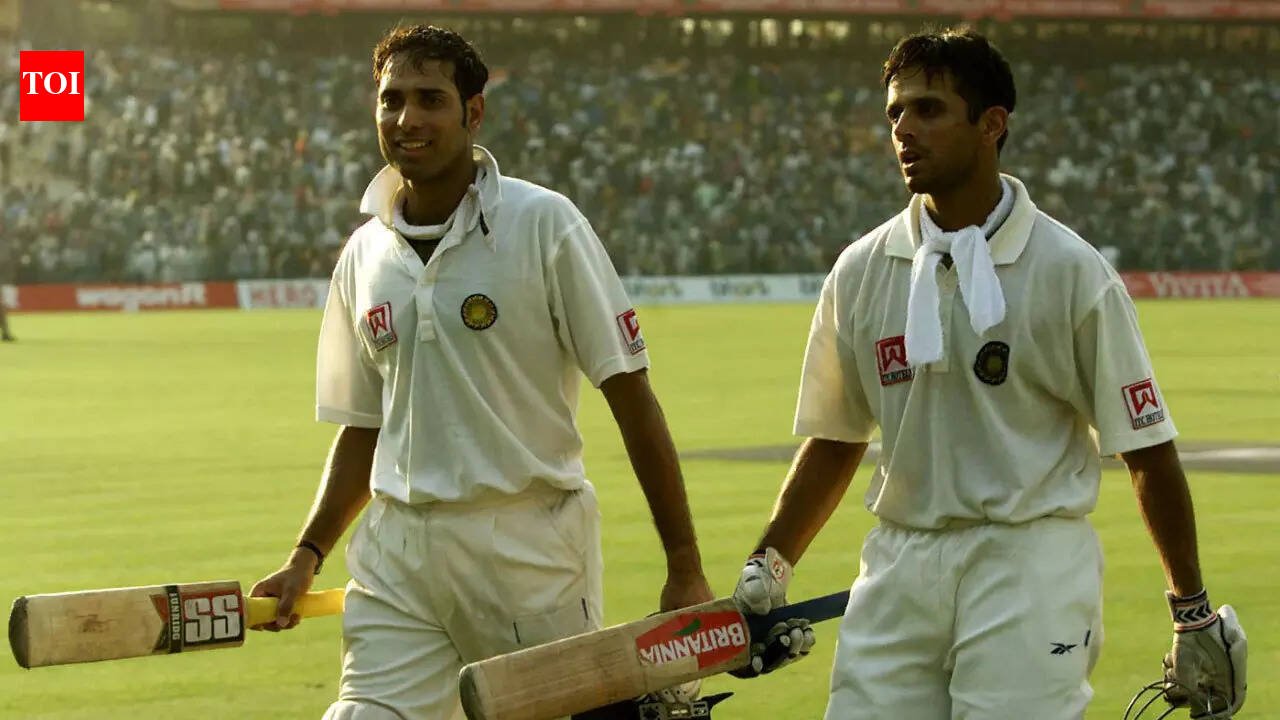
VVS Laxman and Rahul Dravid (AFP Photo)

In the cauldron that was the Eden Gardens in March 2001, John Wright — the first foreigner to coach India — witnessed the ebb and flow of the Test, with all its drama, emotion and sheer improbability. Twenty-five years later, the New Zealander tells TOI from Christchurch, of the pressure, the tactical decisions and the far-reaching impact of beating Australia.When you look back at that Eden Gardens Test, 25 years later, what stands out the most for you?

EXCLUSIVE: Rahul Dravid on iconic Eden Gardens win against Australia in 2001

I can’t believe it’s 25 years already! I had never seen crowds like that before. It was packed to the rafters. Things looked bleak for us on Day 3. But then came that incredible turnaround over the next two days, thanks largely to that sensational partnership between VVS Laxman and Rahul Dravid. It eventually culminated in Harbhajan Singh’s bowling heroics on the final day. The pressure on us was enormous. Australia were the world champions and they had been winning everything.What were the circumstances around the Indian team before that match?It was still my early days as the first foreign coach of the Indian team, and Sourav Ganguly was also a relatively new captain. The odds were stacked against us. Before the series we had a preparatory camp in Chennai with our physio Andrew Leipus. The big question we kept asking ourselves was simple: how do we beat Australia? I think we prepared extremely well for that challenge.How did the absence of Anil Kumble shape the team’s plans?Our most experienced spinner, Anil Kumble, was injured and unavailable. The selectors had identified a young off-spinner named Harbhajan Singh, and this series ended up defining his career. Looking back, I would rank this series with the 2004 series win against Pakistan in terms of its importance.The turning point of the Test was VVS Laxman’s promotion up the order. How did that decision come about?After the first innings we were asked to follow on, but Laxman had already batted beautifully and scored 59. We were also trailing 1–0 in the series, so in a sense we had nothing to lose. I remember listening to Ian Chappell on television commentary. He’s one commentator whose views I value greatly. Ian suggested that India should promote Laxman up the order because he was in terrific form. What he said made a lot of sense.We wanted someone who could play aggressively and put pressure on Glenn McGrath and Shane Warne. Sourav and I sat down after the first innings and agreed that promoting VVS (Laxman) was the best way forward. I’ve always believed that the captain is the central figure in a team. The coach is more on the periphery. But in this case, our collective decision worked perfectly.What made VVS Laxman’s innings so remarkable?What fascinated me the most was the way he played Shane Warne. He often played him against the spin and also got to the pitch of the ball so effortlessly. It was a masterclass on how to play spin. After tea that day he played two glorious off drives on the up: one against McGrath and the other off Jason Gillespie. I remember thinking: how on earth does he play like that? It was so regal.Apart from his batting, how else did Laxman contribute to the team’s dynamics and development?Laxman was the bridge between the younger players and the seniors in the squad. If I remember correctly, he was sharing a room with Zaheer Khan. We had a policy at the time where a bowler would room with a batter. Laxman spent a lot of time giving Zak (Zaheer) advice on his batting. During my early stint as coach, Sourav and I focused on three key areas: improving close catching, sharpening running between the wickets, and raising overall fitness levels. We also wanted the lower order to contribute more so that we wouldn’t collapse after being 200/5. The only thing missing in that squad was a genuine all-rounder.How crucial was Rahul Dravid’s contribution?Absolutely. Rahul deserves enormous credit. He was pushed down to No.6 in the second innings. It was a demotion, but he was a sport. His 180 was monumental. Laxman and Dravid were a terrific pair. They were also involved in another remarkable partnership against Australia in Adelaide in 2003. Rahul was in an incredibly productive phase of his career then. Whether it was Headingley in 2002, Adelaide in 2003 or Lahore in 2004. He was truly our rock.Harbhajan Singh’s bowling on the final day was legendary. Who were the other unsung heroes?Harbhajan’s performance, including that famous hat-trick, is rightly remembered. But we shouldn’t forget Sachin Tendulkar’s spell either. He picked up three crucial wickets. The pitch was gripping on the final day, and it was a masterstroke from Sourav to give Sachin the ball. I also remember SS Das taking two outstanding catches. There were contributions from everyone in that match.What do you recall about that manic final day?It was incredibly tense. I watched from a distance as the drama unfolded. Eden Gardens had turned into a cauldron. The ebb and flow made it riveting. I’ve always believed India has the best cricket fans in the world and they deserved every bit of the entertainment they got.How important was that win for the team?The victory at Eden Gardens gave us enormous confidence heading into the third Test in Chennai, which we also went on to win. It also extended my tenure as Team India’s coach. I stayed with the team for another four years. If we had lost that series, I would have packed my bags and returned home. At the time, everything was happening so quickly that you didn’t fully absorb it. Looking back, I think that victory injected self-belief in the team. It also paved the way for the overseas successes that followed.

Banner Insert


Source link