Breaking News
Bihar CM Nitish Kumar and BJP national presidient Nitin Nabin resign from legislative council ahead of Rajya Sabha entry | India News


Bihar CM Nitish Kumar and BJP national president Nitin Nabin resign from legislative council ahead of Rajya Sabha entry

PATNA: Bihar CM Nitish Kumar and BJP national presidient Nitin Nabin on Monday vacated their seats in the state legislative council and assembly, respectively, 14 days after being elected as member of the Rajya Sabha. Both were elected to the Rajya Sabha on March 16.While Nitish sent his resignation letter to the Bihar legislative Council’s chairman, Nitin sent his letter to the Bihar assembly speaker.Nitish Kumar’s resignation letter was brought to the lgislative council by the state’s parliamentary affairs minister Vijay Kumar Choudhary and JD(U) MLC Sanjay Kumar Singh alias Gandhiji.BJP national president Nitin Nabin’s resignation was submitted by the state BJP president Sanjay Saraogi to the Vidhan Sabha Speaker Prem Kumar. Nitin had handed over his resignation to the Saraogi before leaving for Assam on Sunday.The Vidhan Sabha Speaker Prem Kumar, however, clarified that if Nitish Kumar wishes, he can continue as the chief minister for the next six months.Nitish was elected to the Rajya Sabha on March 16, along with four other NDA leaders namely Nitin Nabin, Union minister Ram Nath Thakur, RLM President Upendra Kushwaha and BJP state general secretary Shivesh Kumar.As per the provisions in the Prohibition of Simultaneous Membership Rules-1950, the members are required to vacate their seats in the Bihar Legislative Council or the state assembly within 14 days of being elected to the Rajya Sabha.Reacting over Nitish’s resignation from the council, the parliamentary affairs minister Vijay Kumar Choudhary said, “The Chief Minister has been elected as a member of the Rajya Sabha. This is a constitutional process. He had to resign today.”


Source link

Income tax overhaul: Key changes you should watch for from April 1, 2026


Income tax overhaul: Key changes you should watch for from April 1, 2026
One of the most notable changes is the introduction of a unified ‘Tax Year’. (AI image)

By Sunil BadalaAs we approach FY 2026-27, the country stands at the cusp of one of the most significant overhauls of its income-tax framework in decades. With the introduction of the new Income-tax Act, 2025 and the Income-tax Rules, 2026, the Government aims to make the system even further simplified, streamlined, transparent, and taxpayer-friendly.For salaried individuals, this transition marks more than just a procedural change. It signals quite a shift in how income is reported, assessed, and taxed. The reforms seek to simplify compliance, reduce ambiguity, and align India’s tax administration with global best practices.Some key changes that salaried individuals should look out for are mentioned below:A unified ‘Tax Year’ conceptOne of the most notable changes is the introduction of a unified ‘Tax Year’, replacing the long-standing distinction between Previous Year (PY) and Assessment Year (AY). This move is expected to eliminate confusion, particularly among individual taxpayers, by aligning income earnings, assessment periods and other aspects (like due dates, time limits etc.) with a single reference point.Expanded house rent allowance (HRA) benefits and disclosure normsThe HRA benefits have also been expanded. Salaried taxpayers residing in rented premises in cities such as Bengaluru, Hyderabad, Pune, and Ahmedabad may now be eligible for higher exemption limits (reference amount being increased from 40 per cent of basic salary to 50 per cent of basic salary), bringing them at par with traditionally classified metro cities like Mumbai, Delhi, Chennai, and Kolkata.Additionally, a stricter disclosure requirement has been introduced. Taxpayers must now declare their relationship with the landlord. This measure is aimed at curbing potential misuse and improving transparency in claims.Enhanced allowances for education and meal expensesIn a move likely to benefit middle-class households, the tax exemption limits for children’s education and hostel allowances have been significantly increased. Education allowance limits have been increased from Rs 100 per month to Rs 3,000 per month per child, while hostel allowance limits have been increased from Rs 300 to Rs 9,000 per month per child. While this may still be only a fraction of the cost of education in certain cities and towns it is a welcome move to enhance these age-old limits.Similarly, the tax-free limit for employer provided meals and non-alcoholic beverages as well as food coupons has been enhanced from Rs 50 per meal to Rs 200 per meal. This increase reflects inflationary trends and aims to improve employees’ take-home pay.Revised perquisite valuation for employer provided carsThe valuation of perquisites for employer provided cars has also been substantially revised and a valuation mechanism has been introduced for electric vehicles as well. Monthly taxable values range from Rs 2,000 to Rs 7,000 per month, with an additional Rs 3,000 per month where a chauffeur is provided. These updated slabs replace the earlier valuations of Rs 600 to Rs 2,400 (plus Rs 900 for chauffeur), potentially increasing the tax liability for employees availing such benefits.Broader changes to perquisites and exemptionsSeveral employee related exemptions and perquisite thresholds have been revised upward. These include higher transport allowances for differently abled employees, increased limits for tax-free employer provided gifts and vouchers, updated valuation rules for education benefits, and expanded exemptions for employer provided loans.Procedural overhaul and new compliance requirementsThe reforms are not just limited to tax computation, they also introduce procedural changes. Key tax forms have been replaced or consolidated, for instance, Form 130 has replaced Form 16 (popularly known as salary certificate), while Form 124 has taken the place of Form 12BB (employee declaration). Additionally, various TDS forms and PAN application processes have been streamlined.A new declaration requirement under Form 157 has been introduced for individuals leaving India, enhancing reporting obligations in cross-border scenarios where either no PAN or income below taxable limit. Furthermore, taxpayers claiming foreign tax credit exceeding Rs 100,000 would now need certification from a Chartered Accountant in Form 44 which is a replacement of Form 67 under the current law required when a taxpayer is claiming foreign tax credit.Additionally, certain Budget 2026 recommendations (which is yet to receive the Presidential assent) are also noteworthy, which are expected to impact the salaried taxpayers effective 1 April 2026:Extended timelines for filing ReturnsTo provide greater flexibility, revised tax returns filing deadline is proposed to be extended to March 31 of the next tax year, instead of the earlier December 31 deadline, subject to a nominal fee.Similarly, the due date for filing original returns for taxpayers with non-audit business income is proposed to be extended from July 31 to August 31, offering additional time for compliance.Rationalisation of TCS and relief measuresIt is also proposed that for overseas tour packages and education/ medical purposes remittances, TCS rates may be reduced to 2% from the current 5% or 20%. This change is expected to provide cash flow relief to families incurring such expenses.Foreign Assets Disclosure SchemeAnother noteworthy initiative is the proposed Foreign Assets Disclosure Scheme for small taxpayers. This would offer a six-month window for voluntary disclosure of previously unreported foreign assets, allowing taxpayers to regularise their filings upon payment of applicable taxes and levies.The proposed reforms signal a decisive shift toward simplification, transparency, and improved compliance. While the transition may require adjustment, these changes are aimed to reduce complexity and enhance efficiency, ultimately aimed at creating a more streamlined and taxpayer friendly system aligned with India’s evolving economic landscape.(Sunil Badala is Partner and National Head of Tax, KPMG in India)


Source link

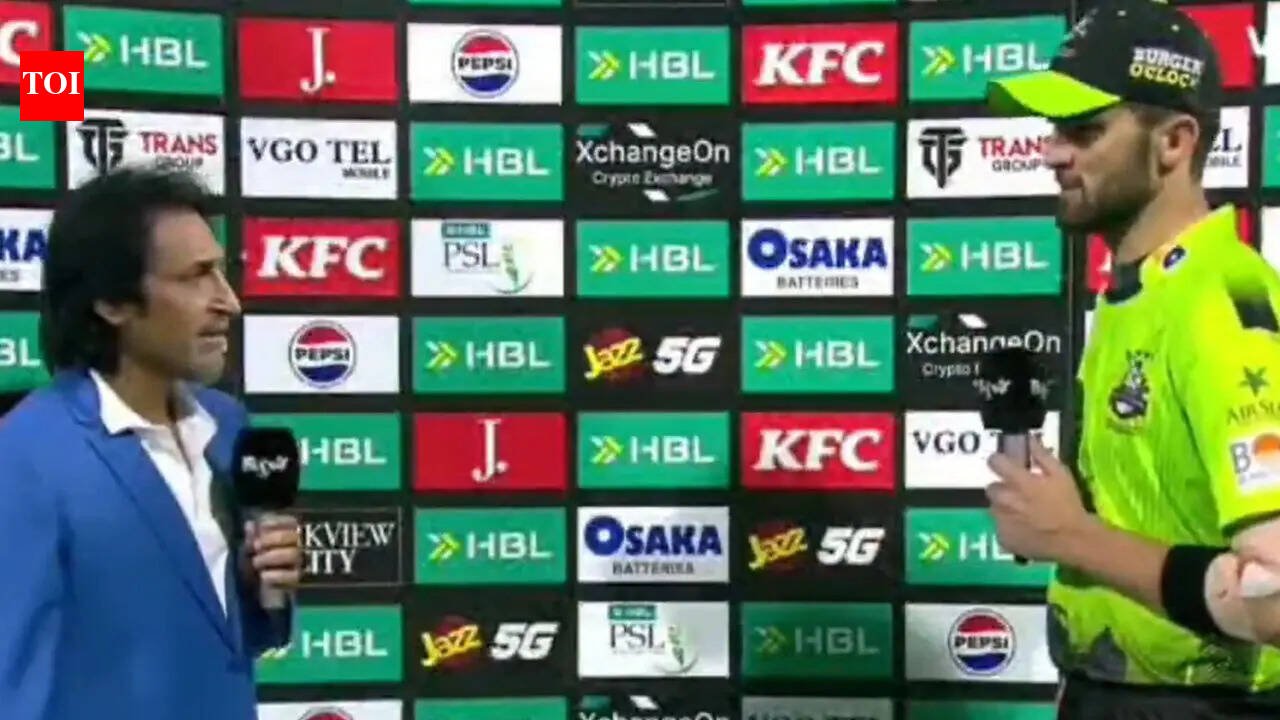
Rameez Raja questions PSL ball-tampering on air; Afridi says ‘we’ll check camera’ | Cricket News


Rameez Raza and Shaheen Afridi (PSL Photo)

NEW DELHI: After the ball-tampering scandal rocked the Pakistan Super League (PSL), Lahore Qalandars captain Shaheen Afridi expected the burning question to come his way – and it did. Following Lahore Qalandars’ defeat, Afridi was asked about the dramatic final over that involved alleged ball tampering by his teammate and star opener Fakhar Zaman.Here’s how the post-match presentation conversation went:Rameez Raja: That last over was quite dramatic, especially with the ball being changed due to suspected ball tampering. Your thoughts on that incident?

Watch

Axar Patel questions Impact Player rule: ‘All-rounders lose value’

Afridi: Actually, I don’t know much about it. We’ll have to check what exactly happened on camera. We’ll discuss it and see who did what, because it did hurt us badly. The five penalty runs made a big difference. But right now, we can’t say much until we are sure.The incident took place during a PSL match between Lahore Qalandars and Karachi Kings, with Fakhar finding himself at the centre of the controversy.The issue surfaced when Lahore Qalandars fast bowler Haris Rauf was set to bowl the final over, with Karachi Kings needing 14 runs for victory.Rauf was preparing to bowl when captain Shaheen Afridi and Fakhar joined him for a brief discussion to chalk out a plan for the final over.What raised eyebrows was that Fakhar appeared to be caught on camera altering the ball.On-field umpire Faisal Afridi then called for the ball, inspected it, and held a lengthy discussion with fellow umpire Sharfuddoula of Bangladesh.After deliberation, the umpires concluded that the ball had been deliberately altered and awarded five penalty runs to Karachi, reducing the target to nine runs off the final six balls.

Poll

Should there be stricter rules against ball tampering in cricket?

The ball was also changed.Lahore Qalandars eventually lost the match by four wickets.


Source link

Petrol, diesel price today (March 30, 2026): Global crude oil prices rise; what’s the situation in India?


Petrol, diesel price today (March 30, 2026): Global crude oil prices rise; what's the situation in India?
In the national capital, petrol continued to be priced at Rs 94.77 per litre, while diesel held steady at Rs 87.67 per litre. (AI image)

Petrol, diesel prices today: Amid US-Iran war and continued transit issues via the Strait of Hormuz, countries around the world have been forced to either raise petrol, diesel, gas prices or announce rationing measures. In India, so far petrol and diesel prices have not been hiked by state-run refiners despite global crude oil prices climbing to around $120 per barrel.Last week, the government announced a big excise duty cut on petrol and diesel prices, in effect cushioning consumers from a hike, while also reducing the blow for oil marketing companies.To strengthen domestic supply, the government has reduced excise duty on petrol and diesel by Rs 10 per litre and introduced export duties of Rs 21.50 per litre on diesel and Rs 29.50 per litre on aviation turbine fuel.

Petrol, diesel prices today

Despite a rise in global oil prices on Monday amid growing concerns over escalating tensions in the Middle East, retail prices of petrol and diesel in major Indian cities remained unchanged on March 30, 2026. In the national capital, petrol continued to be priced at Rs 94.77 per litre, while diesel held steady at Rs 87.67 per litre. In Mumbai, petrol was unchanged at Rs 103.54 per litre and diesel at Rs 90.03 per litre.With the excise duty cut in place, retail prices of petrol and diesel will remain unchanged. The reduction is aimed at easing the financial burden on public sector oil marketing companies such as Indian Oil Corporation, Bharat Petroleum Corporation and Hindustan Petroleum Corporation. These companies have been selling fuel domestically at prices significantly below their cost of supply. At prevailing global crude levels, their losses are estimated at about Rs 26 per litre on petrol and Rs 81.90 per litre on diesel, translating into a combined daily under-recovery of nearly Rs 2,400 crore. The excise duty cut of Rs 10 per litre helps absorb part of these losses, allowing continued supply without altering pump prices.In comparison with global trends, the situation stands out. Fuel prices have climbed between 30 and 50 per cent across South and South-East Asia, risen by around 30 per cent in North America, and increased by about 20 per cent in Europe since the current crisis began. Meanwhile, the government has intensified efforts to ensure steady availability of fuel and gas following the disruption at the Strait of Hormuz, while appealing to the public not to engage in panic buying after isolated surges were reported at some fuel stations.In an official update on the evolving situation linked to the West Asia conflict, the oil ministry said on Sunday that domestic refineries are operating at elevated capacity levels with sufficient crude stocks, and supplies of petrol and diesel remain adequate across the country. Fuel outlets continue to function normally, although misinformation led to brief spikes in demand in certain regions.“There were certain rumours, which led to panic buying at some retail outlets in a few states, resulting in unusually high sales and heavy crowding at retail outlets. However, it is informed that there are adequate stocks of petrol and diesel available at all petrol pumps in the country,” the ministry said.

LPG, LNG availability

In the natural gas segment, priority allocation has been given to essential sectors, with full supply directed towards piped natural gas and CNG consumers, while industrial and commercial users are receiving around 80 per cent of their usual consumption. Fertiliser units are being supplied at 70 to 75 per cent levels, alongside efforts to procure additional LNG cargoes.The ministry also noted that expansion of city gas networks is being fast-tracked by simplifying approvals and encouraging a transition from LPG to piped natural gas. Over 2,90,000 new PNG connections were added in March, with companies such as Indraprastha Gas, Mahanagar Gas, GAIL Gas and BPCL offering incentives to accelerate adoption.While LPG supply has been affected by geopolitical developments, distribution continues without reported shortages. Daily refill deliveries have exceeded 55 lakh cylinders, and monitoring measures have been tightened to prevent diversion. Supply of commercial LPG has recovered to about 70 per cent of pre-crisis levels, with priority given to hospitality, food services and key industrial users.Additionally, kerosene allocations to states have been increased, and enforcement action against hoarding and black marketing has been stepped up, with nearly 2,900 inspections carried out and around 1,000 cylinders seized recently.State governments have been instructed to enhance oversight, conduct daily reviews, counter misinformation and expedite approvals for gas infrastructure.“The government reiterates its advice to the public not to believe rumours,” the statement said.“The government is making all efforts to ensure the availability of petrol, diesel and LPG. Avoid panic purchases of petrol, diesel and booking of LPG.”


Source link

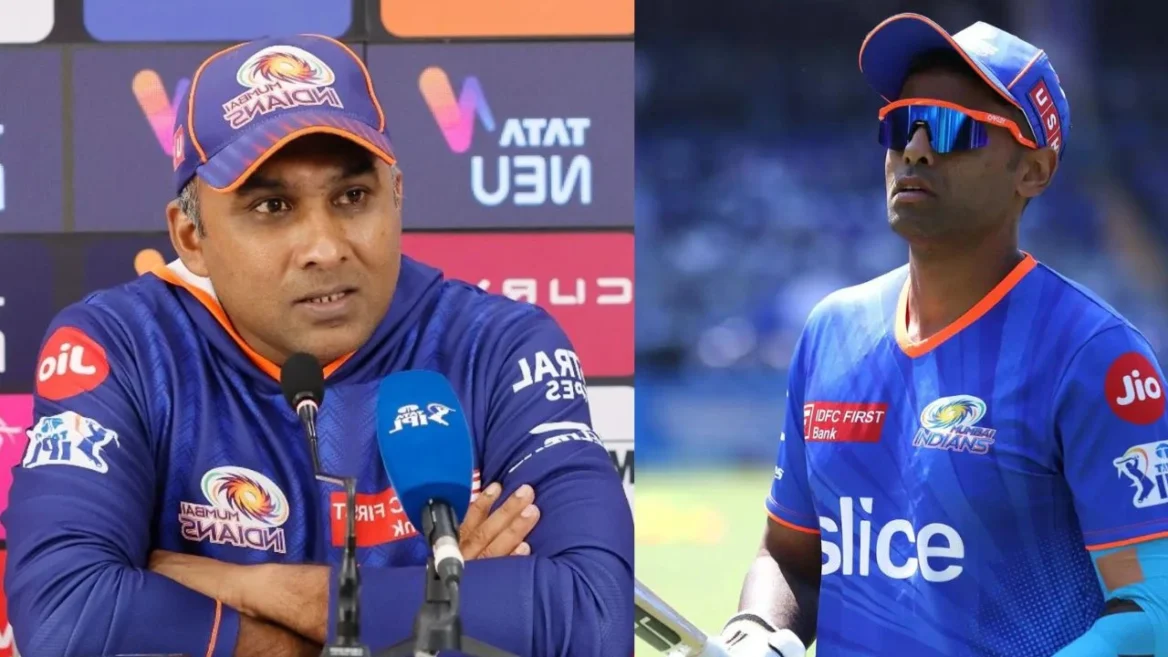
MI Coach Mahela Jayawardene explains why Suryakumar Yadav played as impact player in IPL 2026 clash against KKR


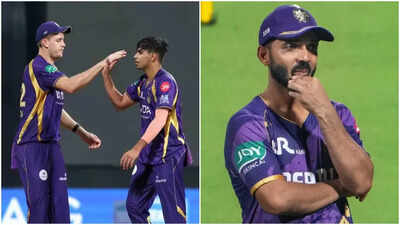
Mumbai Indians kicked off their IPL 2026 campaign with an emphatic six-wicket victory over Kolkata Knight Riders at the Wankhede Stadium, but the spotlight quickly shifted from the result to a tactical decision involving Suryakumar Yadav. Despite the commanding win, questions arose after the Indian T20 captain was used as an impact substitute rather than featuring in the starting XI.

Chasing a daunting 221, Mumbai Indians made it look surprisingly comfortable, riding on a record-breaking opening stand. However, Suryakumar’s delayed entry into the game became a major talking point among fans and pundits alike.

Mahela Jayawardene reveals reason behind Suryakumar Yadav’s impact player move

Head coach Mahela Jayawardene addressed the speculation in the post-match press conference, putting to rest any rumours surrounding the decision. He clarified that Suryakumar was dealing with a minor groin issue, and the team management opted to manage his workload carefully.

Jayawardene stressed that the move was purely precautionary, aimed at ensuring the batter remains fully fit for the long tournament ahead. He also expressed disappointment over unnecessary speculation, urging observers not to misinterpret routine tactical decisions.

“I hope you don’t create unwanted stories. The camp is very happy. Everyone’s happy. Sky came, joined us. He had an extra couple of days he wanted as well. He joined. He had a little tight groin. He was doing fielding and all that. I knew I had another 5 days from this game to the other game. I just wanted to give him that extra bit of time. He was even keen at the end to go for 3-4 overs,” Jayawardene told reporters at the post-match press conference.

According to the coach, Suryakumar had recently joined the squad and was eager to contribute, even offering to take the field earlier. However, the management chose to be cautious, highlighting the importance of preserving key players across a demanding IPL season.

“I said, no, just fine. It’s okay. It was a change. Please don’t create any stories. It’s just that I have to take precautions. These are very valuable players for me to have them going throughout the season. These are calculated decisions that I make, and the management makes. There’s nothing beyond that,” he added.

Also READ: Fans erupt as Rohit Sharma, Ryan Rickelton guide MI to record-breaking win over KKR in IPL 2026

Rohit Sharma-Ryan Rickelton partnership seals the chase

While the debate around Suryakumar continued, the on-field action was dominated by Mumbai’s explosive opening pair. Rohit Sharma and Ryan Rickelton stitched together a stunning 148-run partnership that laid the foundation for the successful chase.

Rohit looked in sublime touch, scoring a fluent 78, while Rickelton complemented him brilliantly with an aggressive 81. Their partnership effectively took the game away from Kolkata, leaving little pressure on the middle order. Suryakumar eventually walked in at No. 3 after Rohit’s dismissal but managed a quickfire 16 off just eight deliveries before being dismissed by Kartik Tyagi.

Earlier in the evening, Kolkata Knight Riders posted a formidable 220/4 in their 20 overs. Skipper Ajinkya Rahane led from the front with a composed 67, anchoring the innings with authority. Youngster Angkrish Raghuvanshi provided crucial support with a brisk 51 off 29 balls, helping KKR set what appeared to be a challenging target.

Despite the strong total, Mumbai’s batting firepower proved too much to handle. The chase was eventually completed with five balls to spare, as Naman Dhir sealed the win with a boundary at the start of the final over.

Also WATCH: Shardul Thakur’s slower ball masterclass dismisses Finn Allen in MI vs KKR IPL 2026 clash


Source link

‘KKR fully aware’: Cricket Australia forced to clarify on Cameron Green after Rahane’s ‘ask CA’ jibe | Cricket News


‘KKR fully aware’: Cricket Australia forced to clarify on Cameron Green after Rahane’s ‘ask CA’ jibe
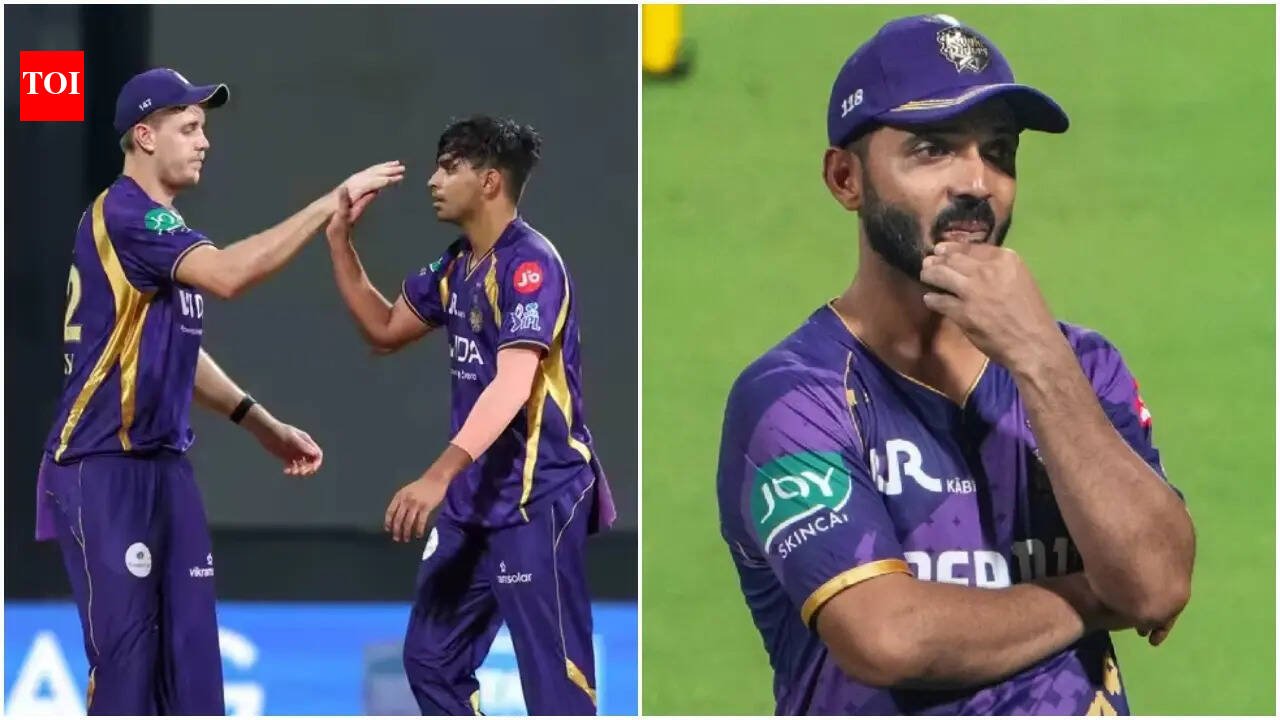
Cameron Green’s non-availability as a bowler had trigged a sharp response from KKR skipper Ajinkya Rahane (IPL/BCCI)

Cricket Australia have been forced to put out a clarification on why Australian allrounder Cameron Green is not allowed to bowl for his franchise Kolkata Knight Riders in IPL 2026, after skipper Ajinkya Rahane took a swipe at the Australian board when asked about Green’s abstinence from bowling duties during KKR’s opening fixture against Mumbai Indians at the Wankhede Stadium, Mumbai, on Sunday.KKR failed to defend a total of 220, with Rahane blaming it on the inexperienced bowling unit and the true nature of the Wankhede track – the same strip which saw nearly 500 runs being scored in the T20 World Cup 2026 semifinal between India and England earlier this month.KKR have been grappling with injuries, and Rahane conceded that the non-availability of Green as a bowler dented the team’s balance.“I think when hopefully Green starts to bowl soon, the combination will be slightly different,” said Rahane during the post-match interaction. “At the moment, we have to see the balance and who can bowl well for us. Batting-wise, as I said, we batted really well, but finding that balance with the ball is really important. So, hopefully, Green starts to bowl soon, then we can find out whether the combination will be okay.And when asked why the 26-year-old was not bowling, he shot back, saying, “That question you need to ask Cricket Australia,” leaving the on-air commentators Ravi Shastri and Kevin Pietersen speechless for a bit.However, Cricket Australia responded to Rahane’s remarks, stating that Green is suffering from a lower back injury and KKR were made fully aware of the situation beforehand.“Cameron has a lower back injury which is being managed but requires him to abstain from bowling for a short period,” a CA spokesperson said, as quoted by FOX Sports.“Cameron is currently rebuilding his bowling loads in India with a view to return in around 10–12 days’ time. KKR has been communicated with and is fully aware of this information,” the report further stated, attributing it to the spokesperson.Green, the most expensive buy of the IPL 2026 auction at INR 25.20 Cr, came out to bat at one-down, scoring 18 off 10 balls, but was not pressed into action with the ball as Mumbai Indians batters made merry against an inexperienced KKR bowling unit. Every KKR bowler was taken to the cleaners by Rohit Sharma and Ryan Rickelton of Mumbai Indians, who combined for an opening stand of 148 in just 11.1 overs.Vaibhav Arora was taken for 52 runs in his four overs, while Blessing Muzarabani leaked 34 runs in his three overs. Kartik Tyagi, the impact sub, returned figures of 4-0-43-1. But the biggest letdown for KKR were their spin twins — Sunil Narine and Varun Chakaravarthy — who proved ineffective on the Wankhede track, giving away 78 runs between them in seven overs.


Source link

Pakistan a base for major terror groups, some active since 1980s: US Congress report


Pakistan a base for major terror groups, some active since 1980s: US Congress report

Pakistan has once again found itself facing the consequences of long-standing support for terror groups, as highlighted in a US Congressional research report dated March 25. The report presents a stark picture of Pakistan as a base for numerous armed and terrorist organisations, some of which have been active since the 1980s.According to the report, these groups fall into different categories—globally focused, Afghanistan-oriented, India-focused, domestic, or sectarian. Twelve of them are designated as Foreign Terrorist Organizations under US law, and most follow Islamist extremist ideologies.

Watch

Pakistan’s Terror Links Under Global Lens, US Congressional Report Echoes India’s Claim On Terrorism

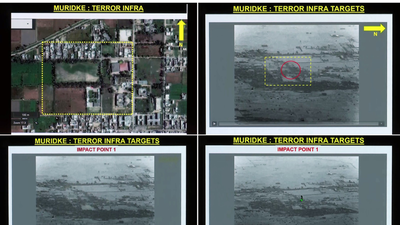
The report notes that despite major military operations, including airstrikes and hundreds of thousands of intelligence-based actions, Pakistan has been unable to eliminate these groups. Many organisations designated by the US and the United Nations continue to operate from its soil.Among them is Lashkar-e-Taiba, formed in the late 1980s and designated as a terrorist organisation in 2001. Led by Hafiz Saeed and based in Pakistan’s Punjab province and Pakistan-occupied Kashmir, it later operated under the name Jamaat-ud-Dawa to bypass sanctions. The group, which has thousands of fighters, was responsible for the 2008 Mumbai attacks and several other major incidents.Jaish-e-Mohammed, founded in 2000 by Masood Azhar and also designated in 2001, has around 500 fighters active across India, Afghanistan and Pakistan. Other groups such as Harakat-ul Jihad Islami, Harakat ul-Mujahidin and Hizbul Mujahideen are also said to operate from Pakistan.The report supports India’s long-held position that Pakistan continues to back such groups. It also mentions The Resistance Front, believed to be linked to Lashkar-e-Taiba, which carried out the Pahalgam attack that killed 26 people. The group has been declared a global terrorist organisation.In response to that attack, India launched Operation Sindoor in May 2025. The Indian Armed Forces carried out coordinated strikes on nine terrorist camps in Pakistan and Pakistan-occupied Kashmir, killing over 100 militants, trainers and associates. Officials said the strikes targeted groups like Jaish-e-Mohammed, Lashkar-e-Taiba and Hizbul Mujahideen while minimising civilian harm.On May 10, Pakistan retaliated by targeting Indian air force bases, army depots, airports and military areas using missiles and drones. However, India’s air defence and counter-drone systems successfully intercepted the attacks, preventing damage.

Poll

Should stricter global action be taken against countries linked to terror groups?

India then carried out strikes on Pakistani airbases, command centres and defence systems along the western front. Key bases including Chaklala, Sargodha, Rafiqui, Rahimyar Khan, Jacobabad, Sukkur and Bholari were hit.Following this escalation, Pakistan’s director general of military operations contacted his Indian counterpart on May 10 to seek a halt in fighting. Formal talks were held on May 12, and both sides agreed to stop military operations.The latest US report, however, reinforces concerns that Pakistan’s links to terrorist groups remain active.


Source link

Sergey Brin: Google cofounder Sergey Brin to employees at town hall: This year a big role will be played by … |


Google cofounder Sergey Brin to employees at town hall: This year a big role will be played by ...

Google employees have been buzzing about a new internal tool called Agent Smith, named after the antagonist in The Matrix. The tool is created to automate various tasks such as coding, run asynchronously in the background, and even be accessed via mobile phones. According to a report by Business Insider, the tool became so popular within the organisation that Google had to restrict access in order to manage demand. Designed on Google’s existing agentic coding platform Antigravity, Agent Smith interacts with various internal tools and can autonomously plan and execute workflows. Unlike earlier assistants, it can pull up documents linked to employee profiles and be used directly from Google’s internal chat platform.

Google cofounder Sergey Brin’s message to employees

As per the BI reports, at a recent town hall with sales employees, Google cofounder Sergey Brin also stressed on the fact that AI agents will be a major focus for Google in 2026. Brin, who returned to hands-on work at Google in 2023, said agents represent the next big leap in productivity. Along with this, he also hinted at tools similar to “OpenClaw,” though it’s unclear if he was referring to Agent Smith or another project.In the same meeting, Google’s business chief Philipp Schindler also joked that he could tell when Brin’s agent was responding to messages on his behalf underscoring how deeply these tools are already being integrated into workflows.

AI adoption becoming mandatory at Google

Google’s leadership, including CEO Sundar Pichai, has been pressing employees to adopt AI tools across technical and non-technical roles. In some cases, usage of AI is now factored into performance reviews. Engineers were told last year that AI adoption was expected, and more recently, non-technical staff have been given the same directive.Beyond top-down mandates, employees themselves are experimenting with initiatives like Project EAT, aimed at standardizing AI adoption across Google’s infrastructure teams.The comments made by Brin highlight the boarder industry trend as Meta CEO Mark Zuckerberg is also reportedly building his own AI agent to help run the company, while other tech giants are racing to embed agentic AI into daily operations.


Source link

Gold price prediction today: Is gold in bearish territory? Key levels to watch out for March 30, 2026 week


Gold price prediction today: Is gold in bearish territory? Key levels to watch out for March 30, 2026 week
Gold is witnessing sharp swings in a broad range amidst mixed signals. (AI image)

Gold price prediction today: Gold prices seem to be exhibiting a corrective phase with a bearish tone, feels Manav Modi, Senior Analyst, Commodity Research at Motilal Oswal Financial Services Ltd. The analyst shares his outlook on the yellow metal:Gold is witnessing sharp swings in a broad range amidst mixed signals around a potential US–Iran ceasefire, with optimism fading after Iran denied negotiations despite positive remarks from Donald Trump. Prices later rebounded on bargain buying following a sharp 15% monthly decline driven by ETF outflows and reduced investor exposure. While geopolitical tensions and risks around the Strait of Hormuz offered support, gains remained capped by a stronger dollar and elevated bond yields amid “higher-for-longer” rate expectations. Physical demand showed slight improvement in India, while China stayed subdued. Focus now shifts US consumer confidence and jobs market data later this weekGold on MCX daily chart reflects a corrective phase after a steep rally, forming a potential bearish continuation structure with volatility still elevated. Immediate resistance is seen at 148,500–150,000 (near the middle Bollinger Band), while stronger resistance lies at 158,000; on the downside, support is placed at 136,000, followed by a crucial level at 128,500. Fibonacci retracement of the broader up move highlights 143,000 as a key pivot (38.2%), 135,000 as strong support (50%), and 127,000 as major demand (61.8%). Price recently touched the lower Bollinger Band and is attempting a mean reversion, but wide bands suggest continued high volatility. Overall bias remains sell-on-rise unless gold sustains above 150,000, while a break below 136,000 could accelerate downside pressure toward deeper support zones.(Disclaimer: Recommendations and views on the stock market, other asset classes or personal finance management tips given by experts are their own. These opinions do not represent the views of The Times of India)


Source link

Ball-tampering in PSL! Fakhar Zaman caught on camera, Afridi reacts – WATCH | Cricket News


Shaheen Afridi and Fakhar Zaman (Image credit: X)

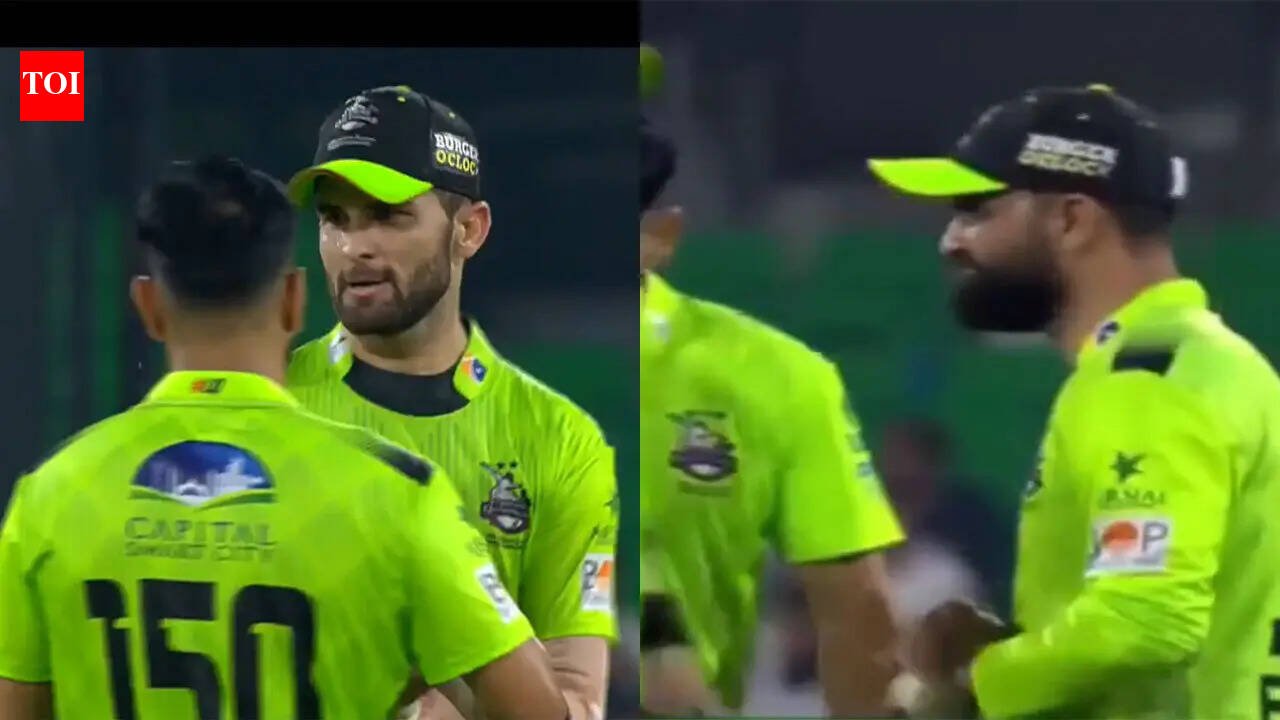
NEW DELHI: It seems Pakistan cricket and controversies go hand in hand. Now, a fresh row has erupted – this time over alleged ball-tampering by Pakistan cricketers in the ongoing Pakistan Super League (PSL). The incident took place during a PSL match between Lahore Qalandars and Karachi Kings, with Lahore Qalandars’ Fakhar Zaman finding himself at the centre of the controversy.The issue surfaced when Lahore Qalandars fast bowler Haris Rauf was set to bowl the final over, with Karachi Kings needing 14 runs for victory.Rauf was preparing to bowl when captain Shaheen Afridi and Fakhar joined him for a brief discussion to chalk out a plan for the final over.

Watch

IPL 2026 should be audition for the next India T20I captain

What raised eyebrows was that Fakhar appeared to be caught on camera altering the ball.On-field umpire Faisal Afridi then called for the ball, inspected it, and held a lengthy discussion with fellow umpire Sharfuddoula of Bangladesh.WATCH:After deliberation, the umpires concluded that the ball had been deliberately altered and awarded five penalty runs to Karachi, reducing the target to nine runs off the final six balls.The ball was also changed.Karachi batter Khushdil Shah holed out off the first delivery of the final over, but Rauf followed it up with a wide. Abbas Afridi then struck a four and a six to seal a four-wicket win for Karachi in 19.3 overs.

Poll

Who do you think has the most responsibility in preventing ball-tampering?

“Fakhar denied the charge leveled against him during a disciplinary hearing led by the match referee Roshan Mahanama,” the Pakistan Cricket Board said in a statement. “Another hearing is set to take place within the next 48 hours after which the match referee will share his verdict.” If found guilty, the minimum punishment for a Level 3 offense is a one-match ban.


Source link