Breaking News
‘Women must think like for-profit cos with their own definition of success’


'Women must think like for-profit cos with their own definition of success'

In her recent book ‘Having It All’ gender economist and associate professor of business economics and public policy at the Wharton School, University of Pennsylvania, Corinne Low talks about how women are caught in a ‘squeeze’ and what they must do to escape it.What made you write this book?I was caught in “the squeeze”- that period when women are at the height of their career growth, while becoming new parents and shouldering responsibilities that come with it. I was commuting, chasing tenure, and raising a newborn, all the while feeling like I was failing at everything. But, my research was examining the very dynamics that I was living in. It wasn’t just me, stretched too thin and falling short – it was women everywhere, facing the same impossible constraints on their time. Seeing this in the data made me feel profoundly seen. I wanted women to come to the same realisation I did: It’s universal, it’s structural – and we need to start creating our own solutions.What are the three big myths you would debunk?First, ‘things will get better on their own’- while we’ve seen a lot of progress for women around the world, there are several trends that I think we need to be aware of. One is an explosion of parenting time that’s leaving working moms squeezed, and two is that we’re not really seeing men’s gender roles change at home at the same time as women’s roles have changed at work.Second, that women need to act like men to get ahead at work – there’s no evidence that men’s styles are better from a profit perspective. My research shows women are better negotiators than men. And finally, that you need to do it all to be a good parent. Kids crave genuine connection, not frantic chauffeuring or Instagram-worthy birthday cupcakes. So, saying no to over-scheduled activities and trading them for higher-quality, lower-stress time together can be the better deal for everyone.Women have for so long been fed images of perfection both at home and work…I’m arguing that trying to be 110% in both domains is structurally impossible. Seamlessly combining a more than full-time career in what Claudia Goldin calls a “greedy” job, which demands 50-plus hours a week and constant availability, while also trying to be a domestic goddess at home is never going to add up. But, that doesn’t mean we can’t carve out lives for ourselves that are sustainable and meaningful, and I hope my book offers women lots of strategies for doing that.You suggest looking at life’s decisions as an investment plan or thinking of happiness like an economist…I think the economics idea of a utility function is a helpful framework for thinking about what we truly care about – and how those priorities shape our happiness, both in the short and long term. Just as for-profit companies are assumed to make choices that maximise their bottomline, economists view human beings as agents who maximise their own personal “profit” function: Utility. Crucially, you can’t compare yourself to people whose utility functions are different from yours. You might find the most fulfillment in volunteer work or travel, even if those activities leave you with little time at home. There’s absolutely nothing wrong with that. But here’s where the trap appears: When you visit a friend who finds deep utility in home-making or cooking from scratch, you start to feel as if you’re somehow falling short. That’s not failure – it’s simply a difference in utility functions.You have some unconventional advice for women…My advice is – understand what truly matters to you – your own personal definition of success and happiness – and make choices that maximise your well-being, not the version society has prescribed for women. Too often, the expectations placed on women are contradictory and impossible to satisfy. Real empowerment comes from rejecting those imposed standards and focusing on what genuinely aligns with your values and goals.How does squeeze impact women’s participation in the economy and what policy decisions should be taken to improve it?The “squeeze” doesn’t just affect individual women, it has broader economic costs, including the loss of skilled labour, slower productivity growth, and reduced diversity in leadership. Policies like subsidised childcare, paid parental leave for both parents, structured work arrangements, and stronger protections against career penalties during child rearing years can help ensure women aren’t forced to choose between family and career.




Source link

Reporting change to lift bank credit growth in FY26


Reporting change to lift bank credit growth in FY26

MUMBAI: A technical tweak in the way banks report fortnightly balance-sheet data may swell India’s credit numbers by more than Rs 2 lakh crore this year and lift measured loan growth by over a percentage point. The change concerns the date on which banks report credit and deposit figures to the RBI, a schedule that also determines the base used to calculate the cash reserve ratio, the share of deposits lenders must keep with the central bank.Until recently banks reported their “statement of position” every alternate Friday, known as the reporting Friday. From Dec 15, 2025, the RBI replaced this rotating schedule with fixed calendar cut-offs. Banks must now report data as on the 15th and the last day of each month. If the fortnight ends on a holiday, banks report the previous working day’s figures, though these still count for that fortnight.The shift aligns regulatory reporting with conventional accounting periods. Under the old system, the last reporting Friday for FY25 fell on March 28. Under the new rule, banks will report figures for March 31 in the current financial year, effectively capturing a few extra days of business at the close of the fiscal year.The change follows amendments to banking laws. In the Banking Regulation (Amendment) Rules 2025, Rule 15B was omitted, and sub-clauses in reporting forms were updated to shift frequency from “alternate Fridays” (roughly bi-weekly) to fixed dates. They were set at the 15th and last day of each month.Banks tend to accelerate lending toward the end of March to meet annual targets, and sometimes adjust balances for year-end reporting. “That additional lending period could artificially add about 1.5-2 percentage points to reported credit growth. After adjusting for the reporting-date change, reported growth could look closer to 13.5-14%,” said Karthik Srinivasan of credit rating agency Icra.


Source link

Gulf crisis fallout: US temporarily allows sale of some Russian oil


Gulf crisis fallout: US temporarily allows sale of some Russian oil

The United States has temporarily permitted the sale of Russian oil already in transit, according to a treasury department notice issued on Friday. This comes as energy prices surged following US-Israeli strikes on Iran that pushed the Middle East into war.The treasury granted a license allowing transactions involving Russian crude oil and petroleum products loaded onto vessels on or before 12.01am on March 12, with the authorization remaining in effect until April 11.The announcement came after Iran threatened to set region’s oil and gas on fire if its energy infrastructure was targeted.“We will set the region’s oil and gas on fire with the slightest attack on Iran’s energy infrastructure and ports,” said a spokesman for the Iranian military’s central operational command, known as Khatam al-Anbiya.Oil prices surged, with Brent crude closing above $100 a barrel for the first time since August 2022, after Iran vowed the United States would “regret” launching military action against it.Brent crude rose 9.2 per cent to settle at $100.46 a barrel, while the US benchmark, West Texas Intermediate, jumped 9.7 per cent to $95.73.Equity markets slipped as concerns mounted over a prolonged Middle East conflict. US and Israeli strikes on Iran continued, while Tehran’s retaliation effectively halted most trade through the Strait of Hormuz.Investors also found little reassurance in US President Donald Trump’s statement that preventing Iran from obtaining a nuclear weapon was a greater priority for him than keeping oil prices under control.


Source link

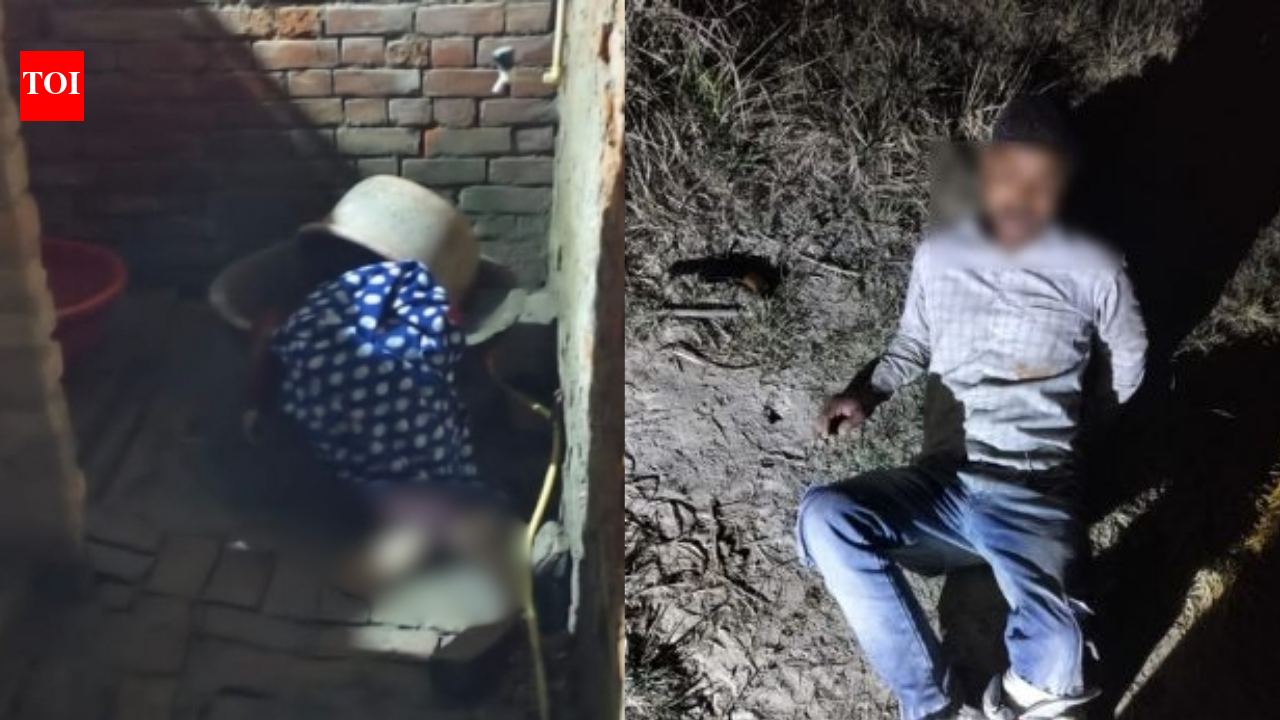
Lucknow double murder: Man rapes, kills woman, strangles partially blind son who tried to save her | Lucknow News


Accused Kishan Rawat, arrested after a police encounter in Lucknow, is linked to the March 9 double murder of a woman and her partially blind son in Sisendi village.

LUCKNOW: The accused in the sensational double murder case in Sisendi village of Mohanalalganj on March 9 was arrested after an encounter late Wednesday night.A policeman was also injured in the exchange of fire.The accused, Kishan Rawat (35) of Sisendi, had allegedly raped the woman and later killed her and her son, who was partially blind.According to DCP, south, Nipun Agarwal, a team led by the station house officer of Mohanlalganj, along with surveillance and field units, intercepted him.As the police closed in, Rawat allegedly opened fire in a bid to escape. A police constable suffered injury in firing.“Police retaliated in self-defence during which the accused suffered a bullet injury on his leg and was overpowered. He was taken into custody and taken to a hospital for treatment,” he added.

Poll

Do you believe the police acted appropriately during the encounter with the accused?

Senior officers, including additional DCP Rallapalli Vasanth Kumar, and ACP Vikas Pandey, reached the spot and supervised the operation.Police said preliminary investigation revealed that there was a financial dispute between the accused and the woman. Rawat had allegedly lent her some money and had been repeatedly asking her to return it.Police said that suspicion of rape came to light when the post-mortem report revealed injuries on the private parts of the woman. Later, CCTV footage confirmed that Rawat had visited the woman a few hours before the murder. During the attack, the woman’s visually impaired son tried to save her, but the accused allegedly strangled him to death.


Source link

Pitch Tampering? BCCI BANS shared nets for IPL franchises


BCCI (Board of Control for Cricket in India) has issued a fresh bunch of guidelines ahead of the IPL 2026 season. The main purpose of the board’s guidelines is to protect the main pitch as much as possible before the main match. To keep the tracks in pristine conditions, the Indian cricket governing body has issued some advisories for every participating team in the league.

In a five-page communique, the board has issued guidelines for the practice sessions as well. In the official announcement, it is clearly mentioned that teams will have to arrange separate nets for their training if one team comes for practice after another.

The same nets will not be allowed for back-to-back practice sessions of different teams

“Fresh nets should be provided to each team for their allocated practice session. In any event of simultaneous practice sessions or when one team practises after the other, the first team shall not be permitted to use the other team’s nets (including for throw downs). If one team finishes practice early, the other team is not permitted to use their range-hitting wicket”, the part of the guidelines reads.

Your daily dose of cricket!

next

To keep the players prepared for an upcoming match, teams often arrange practice matches. Now, the franchises will have to arrange practice matches according to the BCCI’s latest notification.

Practice matches will not be allowed inside the main square of the ground: BCCI guidelines

The board has mentioned that teams are allowed to arrange practice matches only on one of the side wickets of the main square, after taking permission from the authority. A team will be allowed to arrange up to two practice matches. And, if any team wants to play their practice games under the lights, then they will have to complete it within three and a half hours.

“To prepare the pitch for the season, no practice sessions or practice matches may be played on the main square in the four days leading up to the relevant franchise’s first home match of the season”, the BCCI notice mentioned.

“During this period, if requested by the home franchise, the State Association should make an alternative practice ground available to the franchise at no cost to the franchise”, it also added.

The home team will have an advantage over the away team before a match

The board also mentioned that the home will have some advantages over the visiting teams. Though, the visiting sides’ requests will be taken seriously.

“Though the home team should get the first choice of a preferred session, the away team’s request will be taken into account, particularly if it has played a match on the previous day, and taking into consideration the travel arrangements of the away team”, BCCI states.

“If the home and away teams wish to practice at the same time, BCCI will ask the two team managers to try and resolve the double booking – either by one of the teams taking another session or by the two teams sharing the session”, according to the guidelines.

Read More: Not Virat Kohli and Chris Gayle! Ex-India wicket-keeper picks Rohit Sharma as best T20 batter of all time


Source link

The birder who refuses to let a hill disappear in Pune: How a quiet community of birdwatchers continue to save Pune’s highest hill |


The birder who refuses to let a hill disappear in Pune: How a quiet community of birdwatchers continue to save Pune's highest hill
Vetal Tekdi in Pune, Maharashtra (PC: Ranjeet Rane)

Cities often lose their natural spaces gradually. A road appears where a trail once existed, a construction site replaces a grove of trees, and over time a landscape that people once knew simply fades away. In rapidly expanding urban centres, such changes are often accepted as inevitable. Yet sometimes a place survives because people begin to see it differently. The story was the same for Vetal Tekdi, Pune’s highest hill.But we are talking about Vetal Tekdi because a change in perception came for the gentle, quiet hill, not through aggressive protests and morchas, but through binoculars, bird calls, and the persistence of a small group of nature lovers. At the centre of this story is Pune-based avid birder Ranjeet Rane, a public policy professional, and a birder and nature lover by choice. His curiosity about the hill gradually evolved into a community-driven effort that highlighted the ecological value of the landscape.

Leading the trail: Ranjeet Rane

Leading the trail: Ranjeet Rane

The backdrop of an unusual ‘public movement’

Ranjeet’s involvement with Vetal Tekdi began after he moved back to Pune from the Delhi–NCR region. Returning to the city meant reconnecting with familiar places, and like many Punekars, he felt a strong connection to the city’s hills. Vetal Tekdi was one of those landscapes that had always been part of the city’s identity. Sometimes ignored, misused, but always present. Then came the day Ranjeet observed something unusual on the way to Vetal Tekdi. The road leading to the tekdi had been blocked with construction barricades. Access to the hill was restricted. Period.Curious and concerned, Ranjeet began asking questions. Through platforms like X he reached out to members of the Vetal Tekdi Bachav Kruti Samiti (VTBKS), a loosely bound group of citizen volunteers engaged in conservation of the tekdi. The explanations he heard were troubling: three infrastructure projects cutting across the tekdi would spell doom for the rich biodiversity of this hill complex.

Nature at its best at Vetal Tekdi

Nature at its best at Vetal Tekdi (PC: Ranjeet Rane)

For Ranjeet, the moment was unsettling. A place that had been freely accessible since his childhood was suddenly off limits. The hill that had always been part of Pune’s open landscape was now under restriction. Instead of accepting the situation and walking away, he decided to understand the hill more deeply. And there was only one way to do that. Walk the landscape.

Looking at the hill through a birder’s eyes

Ranjeet had long been an avid birdwatcher. For him, exploring a landscape meant observing it carefully, listening to bird calls, scanning the skyline for raptors, and paying attention to the subtle movements of wildlife. As he began spending more time on Vetal Tekdi, he started noticing something remarkable. The old hill was full of birds, not at all your run-of-the-mill hill. The hill had character.

Oriental honey buzzard

Oriental honey buzzard (PC: Ranjeet Rane)

His silent walks around the tekdi made one thing clear to him – Vetal Tekdi was not simply open land, it was a functioning ecosystem. Raptors circled above the ridges, smaller birds moved through the scrub forests and grasslands, migratory species appeared during the winter months…Soon he realised that sharing the experience could help others appreciate the hill in a new way.He began inviting a few people along on informal birding walks. In the early days, participation was modest, sometimes just two or three curious individuals who joined him on weekend mornings. Ranjeet started spreading the word about these bird walks through social media, using platforms like @IndiAves on X, and through WhatsApp groups and Facebook communities. He began announcing small birdwatching outings scheduled for weekends and public holidays.

Ranjeet leading a group of birders at Vetal Tekdi

Ranjeet leading a group of birders at Vetal Tekdi

The idea was simple: gather a few people, walk the hill slowly, and observe the birds.At first, the walks remained small and informal. But something interesting happened as word spread. Participants who joined the walks began discovering birds they had never noticed before in their own city. To others, suddenly, the hill began to look different. He won’t admit it now, but it sure started to look like the growth of a quiet movement, and in a good way. More people began joining the bird walks—students, photographers, families, curious residents who wanted to learn more about the wildlife around them, and sometimes, an odd one or two who just wanted to see what the fuss was all about.

Spotted owlet

Spotted owlet (PC: Ranjeet Rane)

Over time, birdwatchers would document more than 160 bird species in the broader hill complex, an impressive number for a landscape located inside a major Indian city. The European honey buzzard sighted at this location is the only record of this species in the state of Maharashtra. The increase in data also helped establish Vetal Tekdi as an important birding site in Pune. Bird walks that earlier had only two or three participants at Vetal Tekdi now have large numbers. Today, there are bird walks that have as many as 50 participants, from diverse age groups. And to manage these increased numbers, there is now a dedicated team of about 10 volunteers who help manage these bird walks and guide participants on the trails.

Birders at Vetal Tekdi, Pune

Birders at Vetal Tekdi, Pune

What had once been a solitary birder exploring a hill had gradually grown into a community of observers.

Vetal Tekdi and the Great Backyard Bird Count

The annual Great Backyard Bird Count is a global citizen science initiative organised by institutions such as the Cornell Lab of Ornithology and the National Audubon Society. Birders from across the world record birds they observe over a four-day period and then upload the data online on platforms like eBird. The results help scientists monitor bird populations and migration trends globally.

Pied kingfisher

Pied kingfisher (PC: Ranjeet Rane)

In Pune, birdwatchers, including Ranjeet and his fellow volunteers, organised observation sessions across the city during the count. Vetal Tekdi quickly emerged as one of the most productive birding hotspots during these events. During the 2026 Great Backyard Bird Count, the city of Pune recorded 248 species of birds. Under this umbrella figure, Vetal Tekdi recorded 132 species of birds. Such as the Eurasian hobby, Indian Thick-knee, white-eyed buzzard, rock-bush quail to name a few.Participants who once visited the hill simply for exercise began noticing wildlife they had previously overlooked. But perhaps the hill’s greatest success lies in how people have come to see it. Thanks to the quiet persistence of birdwatchers, and the efforts of people like Ranjeet, Vetal Tekdi is no longer seen as something that is also there today but more of something that needs to be there tomorrow.


Source link

Bahrain news: Drone strike sparks fire at airport fuel tanks during Iran vs US–Israel war


Iran Unleashes Fury: Dubai Tower, Bahrain High-Rise On Fire; Saudi Diplomatic Area Attacked | WATCH

Airport Fuel Tanks in Bahrain Hit by Drone as Iran vs US-Israel War Spreads Across The Gulf

A dramatic escalation in the widening Iran vs US–Israel conflict has reached the island kingdom of Bahrain, after an Iranian drone reportedly struck fuel storage facilities near Bahrain International Airport on Muharraq Island, triggering a massive blaze and raising fears that critical civilian infrastructure across the Gulf is increasingly becoming a target in the regional war. The attack reportedly occurred late at night in Muharraq Governorate, where Bahrain’s main international airport and several energy storage facilities are located.According to Bahraini authorities, the drone strike hit fuel tanks in the area, igniting a large fire that sent thick plumes of smoke into the sky and prompted emergency warnings to nearby residents. Officials urged people living in surrounding neighbourhoods to remain indoors and close windows to avoid inhaling smoke from the burning fuel.

Iran Unleashes Fury: Dubai Tower, Bahrain High-Rise On Fire; Saudi Diplomatic Area Attacked | WATCH

Emergency services and firefighters were deployed quickly to contain the flames, while security forces secured the site to prevent further damage. Videos circulating online showed towering flames and heavy smoke rising from the fuel storage facility as firefighters battled the blaze through the night.

Strategic Iran vs US-Israel target near Bahrain International Airport

The strike’s location raised alarm across the Gulf because the targeted fuel facility sits close to Bahrain International Airport, one of the country’s most critical transport hubs. The storage tanks in the Muharraq area are used for aviation fuel and other petroleum products that support airport operations and the broader energy infrastructure of the island nation.Authorities confirmed that the attack occurred amid an expanding regional conflict involving Iran, the United States and Israel, which has already triggered missile and drone strikes across several Middle Eastern countries. While officials did not immediately report casualties from the Muharraq incident, the attack underscores growing concerns about the vulnerability of civilian infrastructure, especially airports, ports, and energy facilities, in the increasingly volatile Gulf region.

Bahrain Already on the Frontlines amid Iran vs US-Israel war

The drone strike near Bahrain’s airport is not an isolated incident but part of a broader pattern of attacks linked to the ongoing regional war. Since late February 2026, Iran has reportedly launched multiple missile and drone strikes across the Gulf targeting military bases, ports, oil infrastructure and transport hubs. Bahrain, which hosts the United States Navy’s Fifth Fleet, has been a particularly sensitive target due to its strategic military role and proximity to Iran across the Persian Gulf.In recent weeks, Bahraini air defences have intercepted dozens of drones and missiles aimed at the country. Officials say that since the start of the conflict, Bahrain has shot down more than 100 missiles and over 180 drones, reflecting the scale of the aerial threat facing the kingdom. Despite these interceptions, several attacks have still caused damage to infrastructure and civilian areas.

Gulf region facing expanding drone warfare amid Iran vs US-Israel war

The Bahrain incident comes as drone warfare becomes one of the defining features of the ongoing conflict. Across the Middle East, unmanned aerial vehicles have been used to target energy facilities, shipping routes, and strategic infrastructure. Recent weeks have seen similar attacks in Oman, where drones struck fuel storage tanks at the Port of Salalah, as well as incidents in the United Arab Emirates, where intercepted missiles and drones caused debris to fall on buildings in Dubai.Analysts say these strikes appear designed to disrupt the Gulf’s economic lifelines—particularly oil infrastructure and shipping routes. The Gulf region handles a large portion of the world’s energy exports, with tankers passing through the Strait of Hormuz, one of the most critical chokepoints for global oil supply. Any sustained attacks on ports, airports, or fuel facilities could have major implications for global energy markets and international trade.

Regional tensions continue to escalate amid Iran vs US-Israel war

The drone strike on Muharraq comes amid one of the most serious Middle East conflicts in recent years. Fighting began after the United States and Israel launched coordinated strikes against Iranian military and nuclear targets earlier this year. Iran responded with a series of retaliatory attacks across the region, targeting what it describes as military and strategic sites linked to its adversaries.However, Gulf governments have condemned the strikes on their territory as violations of sovereignty and threats to civilian safety. Bahrain’s government has repeatedly warned that attacks on its infrastructure risk dragging the wider region deeper into conflict.

Security concerns grow in Gulf capitals amid Iran vs US-Israel war

The latest incident has heightened anxiety across Gulf capitals as residents watch the conflict spread beyond traditional battle zones. Airports, energy facilities, and shipping hubs are all considered high-value targets in modern warfare, especially during conflicts where drones and long-range missiles can travel hundreds or even thousands of kilometres. The growing frequency of such attacks has forced Gulf states to strengthen air defence systems and increase coordination with regional allies.For Bahrain, the drone strike near its main airport is a stark reminder that the widening Iran vs US–Israel conflict is no longer confined to distant battlefields. Instead, the war is increasingly being fought through long-range missiles, drones, and cyber operations capable of reaching deep into the Gulf. Although the fire at the Muharraq fuel facility has reportedly been brought under control, the attack underscores the fragility of regional security as tensions continue to escalate.With drone and missile strikes already reported in multiple countries across the Middle East, analysts warn that further attacks on critical infrastructure could follow—raising the risk that the conflict could disrupt energy markets, aviation routes and global trade. For now, Gulf governments remain on high alert, hoping to prevent the war from spiralling further while preparing for the possibility that the region’s strategic infrastructure may continue to face new threats.


Source link

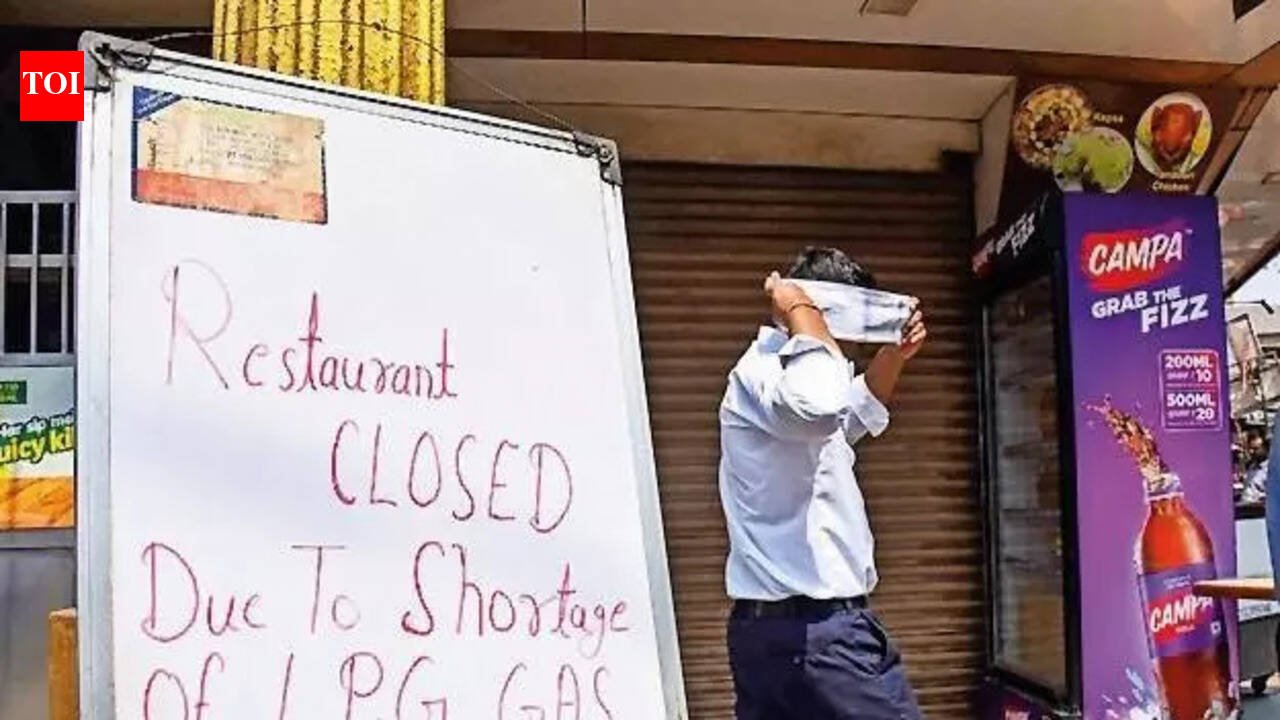
More items off menu; hotels rely on coal, induction stove | Mumbai News


Mumbai: The situation for restaurant owners is getting tougher by the day with the majority—around 60%—all set to pull down shutters till their daily commercial LPG supply is restored. The others will remain operational but with their menu curtailed and a majority of items unavailable.Sandeep Sharma of Pancham Puriwala at Borabazar opposite the CST terminus said they have already scaled their menu down by 70% and curtailed the timings. He said the hotel plans to get an induction stove to continue to serve customers on a limited basis.Krishna Purohit of ShreeThaker Bhojanalay in Kalbadevi said the hotel has already stopped serving dishes such as halwa, daal baati, undhiyu and puris as they consumed a large proportion of gas. “Our situation is like every other restaurant in the city,” he added. However, Nissar Sardar of Sardaar Pav Bhaaji in Tardeo said since their hotel still had coal supply and coal-based chulhas, they have faced no issues so far.Kaustubh Tambe of the popular Aaram Vadapav at CST carried around 50 kg of potatoes home on Wednesday night to get them boiled and will take another 100 kg today night to get them ready for Friday morning. “Today we could not serve upavas misal, pulav, upma, poha, khichadi but we will try serve all our items tomorrow with the help of an induction stove in the absence of cylinders. We plan to ensure that we at least serve fried items such as batata vada, sabudana vada, bhaji, thalipeeth, etc without disruption. We are trying everything to keep the show going,” he said.Vijay Shetty, president of the Indian Hotel and Restaurant Association (AHAR), an apex body of over 15,000 restaurant owners across the Mumbai Metropolitan Region, said several hotel members including him have been unable to get coal and kerosene stocks to feed their chulhas amidst the crisis. “A large number of Mumbaikars who are dependent on restaurant food due to their busy schedules are getting deprived of their breakfasts and dinners,” he added.Congress legislature party leader Vijay Wadettiwar has alleged in the assembly that domestic cylinder prices have risen by Rs 60 since the crisis began and refills now take 25 days instead of 15. About 30% of hotels in cities like Mumbai and Nagpur have shut due to supply disruptions, he added. Wadettiwar warned of black-marketing risks, citing a Rs 18-lakh cylinder truck theft, and demanded the govt clarify stock levels and restore supply.


Source link

Access Denied


Access Denied

You don’t have permission to access “http://www.ndtv.com/india-news/supreme-court-grants-bail-to-separatist-shabir-shah-in-terror-funding-case-11208221” on this server.

Reference #18.34a21ab8.1773362002.9763393

https://errors.edgesuite.net/18.34a21ab8.1773362002.9763393


Source link

Maharashtra forest minister says action being taken against mangrove destruction in Borivli | Mumbai News


Mumbai: State forest minister Ganesh Naik told the assembly on Thursday that the state is taking strong action, including against private companies responsible for destroying mangroves in the Borivali area. He also said that it would work on restoring mangrove cover.The issue was raised by BJP MLA Sanjay Upadhyay who complained about the rampant destruction of mangroves in the Borivali area. “There is rampant corruption among officials and government land is being swallowed with the destruction of mangrove cover,” said Upadhyay.He said that there had been three types of violations: within areas under the mangrove department, cases in privately owned mangrove areas and cases within the 50-metre buffer zone near mangrove areas.Naik said that cases had been registered and encroachments were being removed. In privately owned mangrove areas for instance, permanent houses, mangrove sheds and godowns were found. Cases had been registered under the Environment Protection Act. Encroachments were found in areas under the Mangrove department and within the buffer zone, said Naik. Cases of land filling and dumping of iron materials, cement and sheet godowns were also found, he said.“We are taking strong action in these cases. Even private parties involved in this will not be spared,” said Naik.


Source link