Breaking News
Moonlighting to full-time gigs: Techies widen income sources


Moonlighting to full-time gigs: Techies widen income sources

BENGALURU: From young professionals to experienced developers, techies are increasingly taking up freelance assignments to supplement incomes and build alternative career paths as the industry grapples with slowing hiring, rapid advances in AI, and growing uncertainty around traditional tech roles. For some, these gigs are side hustles alongside full-time jobs-reflecting a rise in moonlighting-while others view them as a potential pathway to full-time independent work if the job market weakens further. For Sharon Suresh, an engineering analyst with nearly a decade of experience, gig work has become a steady source of income. She earns around Rs 2,000 per hour for automation projects, working with clients as far away as Australia and Texas. Many of these assignments run for several months, allowing her to plan workloads and income more predictably.“When getting into gig work, it’s important to know where the opportunities are. I stumbled upon a platform called Superprof when I was in college and signed up initially just to earn some pocket money,” Suresh said. “Through that, I realised many businesses need help with digital transformation but don’t always know where to find the right talent. They turn to such platforms for freelancers, and there are plenty of well-paying projects available.” She says the flexibility of gig work has made it attractive for experienced developers as well.

-

At the other end of the spectrum are young professionals entering the workforce through freelance projects. D S Chinmayi, a final-year mechanical engineering student, began taking up freelance IT assignments to build her portfolio even before graduating. Over the past year, she has completed five projects.Meanwhile, hourly rates for IT gig workers vary widely depending on skills and project complexity. At student-focused gig platform TimbuckDo, the average pay for skilled gig workers ranges between Rs 850 and Rs 1,500 per hour. Roles involving deeper technical expertise or specialised tasks such as cybersecurity or testing tend to command the higher end of the pay spectrum. By contrast, entry-level design or basic development tasks typically fetch around Rs 450 to Rs 550 per hour as AI tools increasingly automate routine work.Globally, freelance rates have increased 11% year-on-year, according to HR consulting firm ManpowerGroup.India’s technology gig economy is set for strong growth in 2026, with hiring expected to rise nearly 60% from last year as companies rely more on project-based talent, according to Randstad Digital.


Source link

World Cup snub and father’s death: RCB star reveals painful journey | Cricket News


World Cup snub and father's death: RCB star reveals painful journey

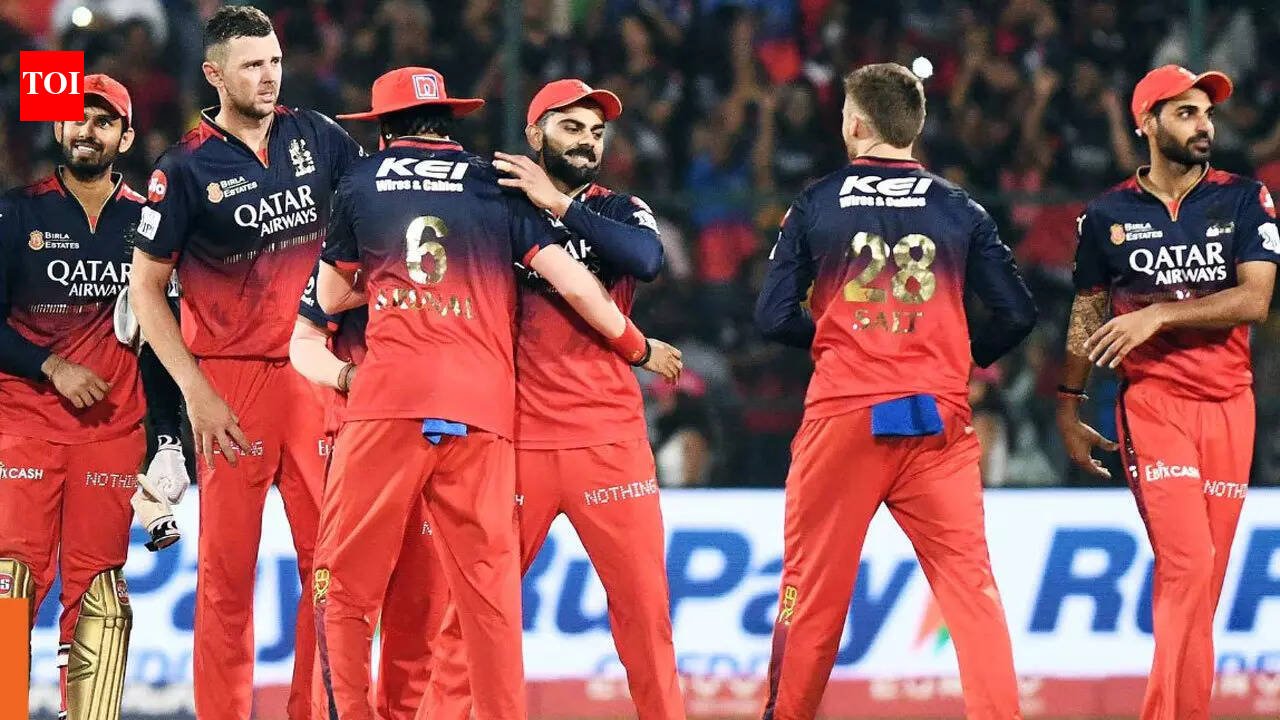
NEW DELHI: Jitesh Sharma admits that being left out of India’s ICC Men’s T20 World Cup squad was disappointing, but that setback soon felt insignificant compared to the personal loss he suffered shortly after. The wicketkeeper-batter lost his father, Mohan Sharma, on February 1 after a brief illness, a moment that changed his perspective on everything.“When I got the news of my non-selection, I was a little bit disheartened. I am also a human. I can feel sad and bad. But later on, as time went by, the sad time becomes short,” Jitesh told PTI during an exclusive interview.

Gautam Gambhir reflects on India’s World Cup win and backing Sanju Samson in the tournament

The disappointment of missing the global tournament soon gave way to a far deeper emotional challenge.“But later on, my dad got ill. And he passed away on 1st of Feb. So, I was with him for seven days. Afterward, I got to know that my dad needed me more than the World Cup. After that, I didn’t have any sad feeling, any regret or anything for anyone or for myself also. I am not angry or anything,” he said, with the sadness evident in his voice.“I was grateful that God gave me the opportunity to stay with my dad for seven days. So, I was able to take care of him. And I enjoyed watching the World Cup on TV at home. It’s a very different feeling. It gives you lots of pressure rather than playing. And I was very happy for the boys.”With his father gone, the responsibility of being the eldest son has become a defining part of his life.“I can’t forget that thing and I don’t want to forget that thing because he is not there anymore. When you lose your dad, after a few days you get to know that you are now responsible for taking decisions in your family as the elder son.“And that’s it – to take care of your mother, brother and family. So, I’m someone who can’t show my feelings to them and can’t be weak in front of them because they are looking at me while playing cricket also. And I have to accept it,” Jitesh said while reflecting on how life sometimes delivers its toughest challenges.Grief, he admits, does not arrive all at once but settles in gradually, leaving behind a permanent void.“It hits after some time. I’m not coping with anything. I’m just accepting that my dad is not there anymore. There is a portion of my heart that is empty now. It will be empty till my death because of my dad.”Cricket, however, has also taught him resilience, helping him move forward despite the pain.“And I have learned to carry myself with that sorrow and that hollowness during practice. Because no matter how much I want, I can’t forget that thing. Because it’s your father, right? He is my hero for my life.”“If he was alive today, he would have told me to go and practice. Don’t worry about me. So I always bring this thing to my mind that if I’m in sorrow or pain, what he would have told me? I think he would have suggested me to go and play the game. And I’m very proud of it.”Jitesh also drew parallels with his India teammate Rinku Singh, saying he understands the emotional strength required to return to the field after personal setbacks.“That’s the same thing Rinku must have felt. That’s why he was able to come on the ground again. And it’s a very big thing.”‘Why can’t three keepers play together?’On the cricketing front, Jitesh remains pragmatic about team combinations. With wicketkeeper-batters like Sanju Samson and Ishan Kishan also in contention, he said he would be happy to adapt to any role if it helps the team.“I think of it from a different perspective. I take it from a different perspective — that by doing my own work, why not two keepers be in the playing XI and the third play as a finisher? Exactly, that can also happen. Why not?”Learning from Virat KohliJitesh also spoke about the inspiration he draws from watching Virat Kohli up close at Royal Challengers Bengaluru, admitting that matching the former India captain’s intensity is not easy.“Just observing small things, you can learn a lot. And it can be a life-turning decision or life-turning observation. Because the way he prepares, starts his day, not just practice, I think it’s very impressive. Still, I’m 32 and I can’t match his energy.”


Source link

SBI partners Mitsubishi to finance projects, M&A


SBI partners Mitsubishi to finance projects, M&A

MUMBAI: Japan’s Mitsubishi UFJ Financial Group and State Bank of India on Wed announced a strategic partnership to structure and finance projects, including mergers and acquisitions, acquisitions, and real estate funding for Indian and global clients.The alliance follows new rules by Reserve Bank of India allowing banks to fund corporate acquisitions up to 75% of deal value for listed and unlisted firms. The rules take effect from April 1.“Through our partnership with SBI, MUFG aims to provide integrated cross-border solutions that support both inbound investment into India and outbound expansion by Indian corporates. This collaboration reflects our long-term commitment to strengthening economic ties between Japan and India,” said Takuya Senoo, Regional Executive for India & Sri Lanka, MUFG BankThe partnership combines SBI’s domestic reach and market leadership with MUFG’s global network and cross-border structuring expertise. The focus is to support Japanese companies expanding in India and Indian firms pursuing overseas growth, including entry into Japan and other markets.


Source link

Gambhir and Agarkar face big calls after T20 World Cup triumph: Reset or continuity? | Cricket News


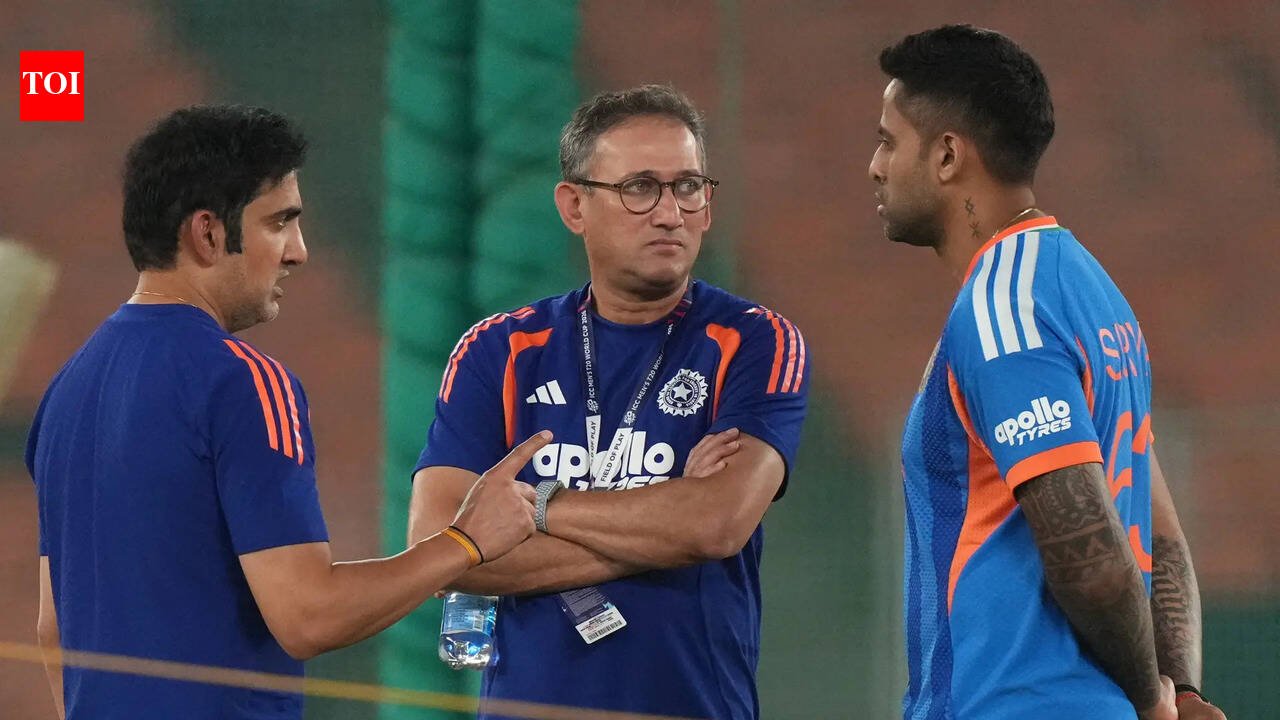
India’s head coach Gautam Gambhir, left, chief selector Ajit Agarkar, center, and captain Suryakumar Yadav. (AP Photo)

Gambhir, Agarkar tasted success taking harsh calls. Will they stick to their principles as they plan for the LA Games & T20 World Cup In 2028? But wait, there’s an ODI World Cup in the interim…Moments after lifting the T20 World Cup on Sunday night, Suryakumar Yadav stated upfront that winning an Olympic gold medal in Los Angeles in 2028 is the next target for India now. Was an all-conquering team getting ahead of themselves in the immediate glow of victory, or were the captain’s comments of future conquests backed by definite plan and philosophy?Go Beyond The Boundary with our YouTube channel. SUBSCRIBE NOW!India’s T20 renaissance began by overhauling the approach on the day England hammered them in the T20 World Cup semifinal in 2022.The triumph in June 2024 vindicated the call taken in Nov 2022. This is where head coach Gautam Gambhir and chief selectors Ajit Agarkar stepped in and announced that the process of becoming a T20 superpower didn’t stop in Barbados with Rohit Sharma lifting India’s first ICC trophy in 11 years.

Dhol, cheers and flowers: How Delhi welcomed Gautam Gambhir

The process got harsher and thankless. Designated vice-captain Hardik Pandya was not considered for leadership role anymore due to his persisting injury concerns. Surya assumed charge as captain. Rishabh Pant and Yashasvi Jaiswal, part of the 2024 World Cup-winning squad, fell down the pecking order. Kuldeep Yadav, lead spinner in 2024, became second choice to Varun Chakravarthy. Enough has been spoken about Shubman Gill’s elevation to T20 vice-captaincy and then his eventual axe from the World Cup team.The blink-and-miss nature of T20 cricket doesn’t give you much time to breathe easy. Gambhir and Agarkar have successfully drilled it into the players they backed to defend India’s T20 crown — the composition of T20 squads were based on the conditions expected in the World Cup.ALSO READ: Team India Report Card: Perfect finish to a not-so-perfect T20 World Cup campaignAs much as the skills of the players were important, the ethos of this management drove the performances. Gambhir, for one, will not tire of his ‘team-over-individual’ and ‘results-over-milestones’ philosophy. He set out to eliminate the ‘superstar culture’ in the dressing room.Perhaps, the true test of Gambhir and Agarkar’s philosophies start from here onwards. The emphatic triumph has given Indian fans a new set of superstars. Surya’s name will be placed next to Kapil Dev, MS Dhoni and Rohit Sharma in the list of World Cup-winning captains.Former India selector Devang Gandhi says people must not confuse superstar culture with privilege. “Indian cricket will always throw up superstars. Every sport will have superstars. People need to understand if the player is exercising undue entitlements like travelling alone and staying separately from the rest of the team. Because all that affects the dressing room culture. Big players will go through an odd slump. I am sure the selectors and the team management understand this. It’s all about what the player brings to the team,” Gandhi said.In the lead up to the ODI World Cup in South Africa in Oct-Nov 2027, the primary focus of Gambhir and Agarkar will understandably shift to stabilising the ODI team, which has been experiencing frequent wobbles of late. But the T20 World Cups keep coming thick and fast. With the Olympics and T20 World Cup in 2028, India will be playing two major T20 events inside a year after the 2027 ODI World Cup.Under Gambhir, India have successfully set a T20 template that other teams will try to replicate. Rational thinking says there needs to be continuity. But the greatest conflict here is that Gambhir himself has advocated flexibility (and countered predictability) as the essence of playing T20 cricket.Surya’s prolonged run of poor form and Varun Chakravarthy’s mystery spin getting found out will be at the top of the concern list for the head coach and chief selector. Winning the trophy has given both Gambhir and Agarkar some breathing space when it comes to identifying the next leader, especially after Project Gill crashed a month before the World Cup.“I don’t see there’s any need to bring about immediate changes. This set of boys are more T20 specialists and are extremely high on confidence. That said, I am sure Gambhir and the selectors will not leave any room for complacency in the dressing room. The focus will be on the ODI team. But I am sure they will be closely monitoring the T20 team’s performances after a couple of series. They are known for taking tough calls and I don’t think they will budge from that philosophy,” former India wicketkeeper Deep Dasgupta told TOI. “Just as they prepared for this World Cup in India, surely they will judge the players’ ability in SENA countries since the next cycle of ICC events will happen in South Africa, Australia and New Zealand. They will surely keep an eye out for players for those conditions.”Gambhir and Agarkar have endured constant criticism for all the bold calls they have taken over the last 18 months. They have been very tough to bring about this cultural shift in Indian cricket. Perhaps, it’s time to get tougher.


Source link

Jasprit Bumrah all set to quit Test cricket? ‘White-ball specialist’ fears emerge


Former Australian pacer Glenn McGrath expressed concerns about Indian fast bowler Jasprit Bumrah following the recently concluded T20 World Cup 2026. McGrath said that Bumrah can become a white-ball specialist to manage his workload, adding that the fast bowler cannot play back-to-back Test matches.

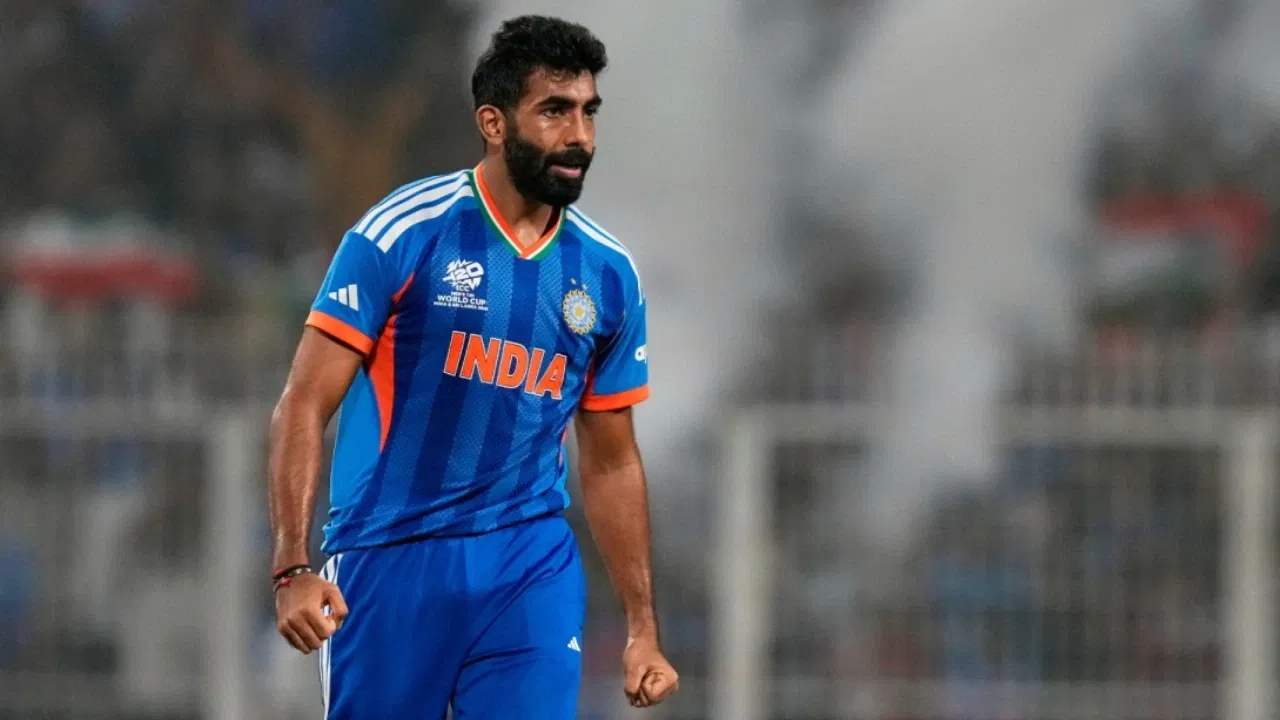
The 32-year-old finished as the joint-leading wicket-taker in the recent T20 World Cup. He took 14 wickets at an incredible average of 12.42 and an economy of 6.21. The bowler was named the Player of the Final after destroying New Zealand. He had also won the Player of the Tournament award in 2024.

Playing Back-To-Back Test Matches Is Getting Tougher For Jasprit Bumrah – Glenn McGrath

Speaking on the Fast Bowling Cartel YouTube channel, Glenn McGrath shared his views on Jasprit Bumrah’s workload. The legendary fast bowler said that Bumrah has unique skills but questioned how long the veteran seamer can survive playing back-to-back Test matches.

Your daily dose of cricket!

next

“My concern, as he’s a little bit older now, is that playing back-to-back Test matches is getting tougher for him. Is he going to just start focusing on white-ball cricket? That’ll be a massive loss to Test cricket if he did. We might only see him rarely in Test matches, maybe against an Australia,” McGrath said.

“Just how good is he. When he comes on, he looks completely different to every other fast bowler. Batters try to lineup every other bowler when they are set, but not him. What I like about Bumrah is how he bowls the really good Test match length successfully in T20s. His other variations are all brilliant as well. He is just a gun,” he added.

Jasprit Bumrah Is Enhancing His Reputation – Damien Fleming

Former Australian fast bowler Damien Fleming hailed Jasprit Bumrah as an absolute freak who constantly keeps enhancing his global reputation. Fleming said that he was completely mesmerized by Bumrah’s magical slower ball during the recent final match.

“That slower ball of his is like a curveball in Baseball. It’s absolutely brilliant. You think with these great fast bowlers, when do they plateau? Bumrah, with each big tournament or big series, is enhancing his reputation. When will it ever stop? He is an absolute freak, Jasprit Bumrah,” said Fleming (via the aforementioned source).

Jasprit Bumrah’s Workload Ahead of the 2027 ODI World Cup

Jasprit Bumrah has been marred by serious injuries, forcing him to miss several Test matches last year. However, the Indian team management has managed his workload by selectively using him. He will focus on 50-over matches and Tests ahead of the 2027 ODI World Cup.

Bumrah will next be seen in action playing for the Mumbai Indians. He will lead the bowling attack in the highly anticipated IPL 2026 season before the management finalizes a long-term plan.

Following the IPL, the national selection committee, VVS Laxman, Gautam Gambhir, and Shubman Gill will discuss Bumrah’s future workload. The core ODI pace-bowling pool will primarily comprise Bumrah alongside Mohammed Siraj, Arshdeep Singh, and Harshit Rana.

Notably, the Men in Blue will play their next Test match against Afghanistan, which is not part of the ICC World Test Championship (WTC) 2025-27 cycle. They will travel to Sri Lanka for a two-match Test series in August.

Also read: Michael Vaughan brutally trolls South Africa as ‘Stupidest team in T20 World Cup 2026’


Source link

Kritika Kamra Wedding Photos, Pictures, Images, Videos : Kritika Kamra and Gaurav Kapur’s wedding: FIRST INSIDE photos from their intimate ceremony at their Mumbai home |


Kritika Kamra and Gaurav Kapur's wedding: FIRST INSIDE photos from their intimate ceremony at their Mumbai home go viral
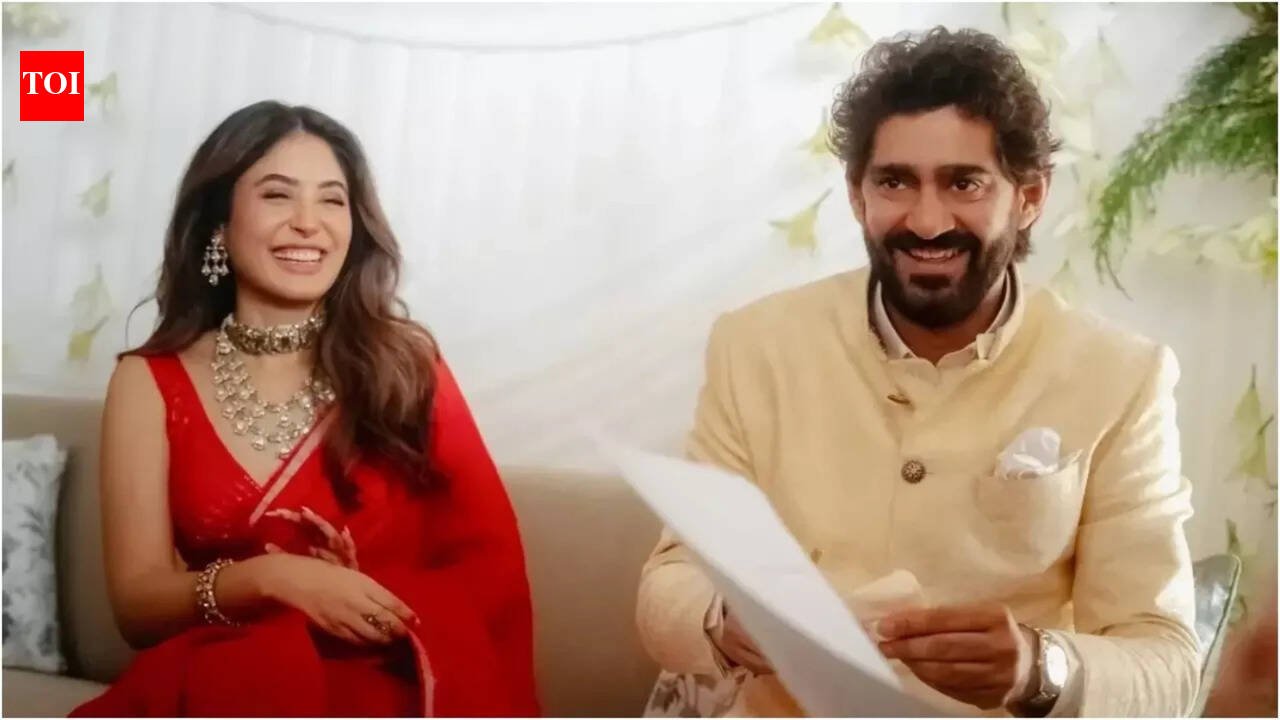
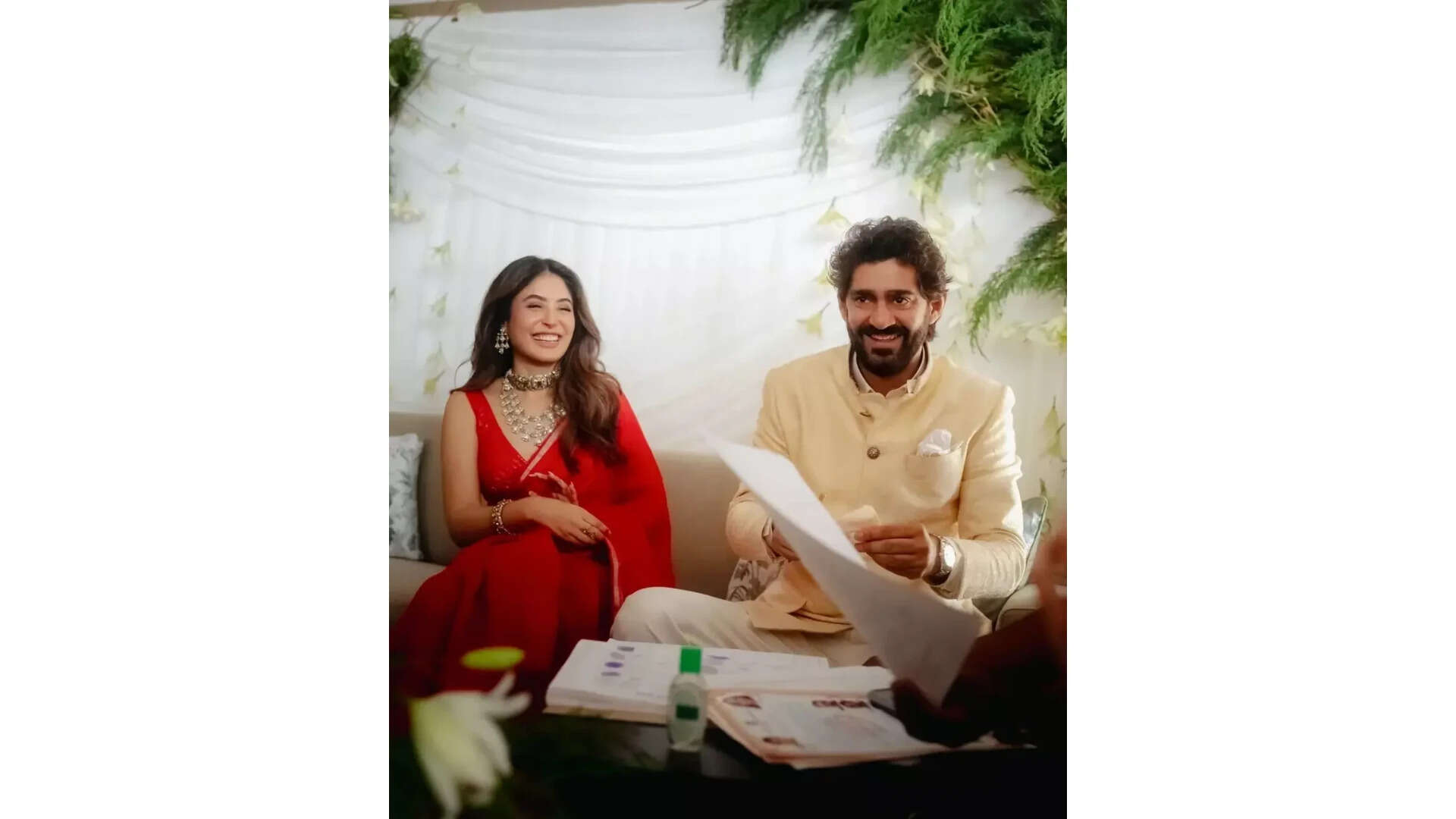
Kritika Kamra and Gaurav Kapur have officially embarked on their journey together, celebrating their love in a private registered marriage ceremony at their Bandra home. The candlelit gathering, filled with warmth and laughter, saw only close family and charming friendships present, with celebrated photographer Joseph Radhik immortalizing the special moments. Read on to know more in details.

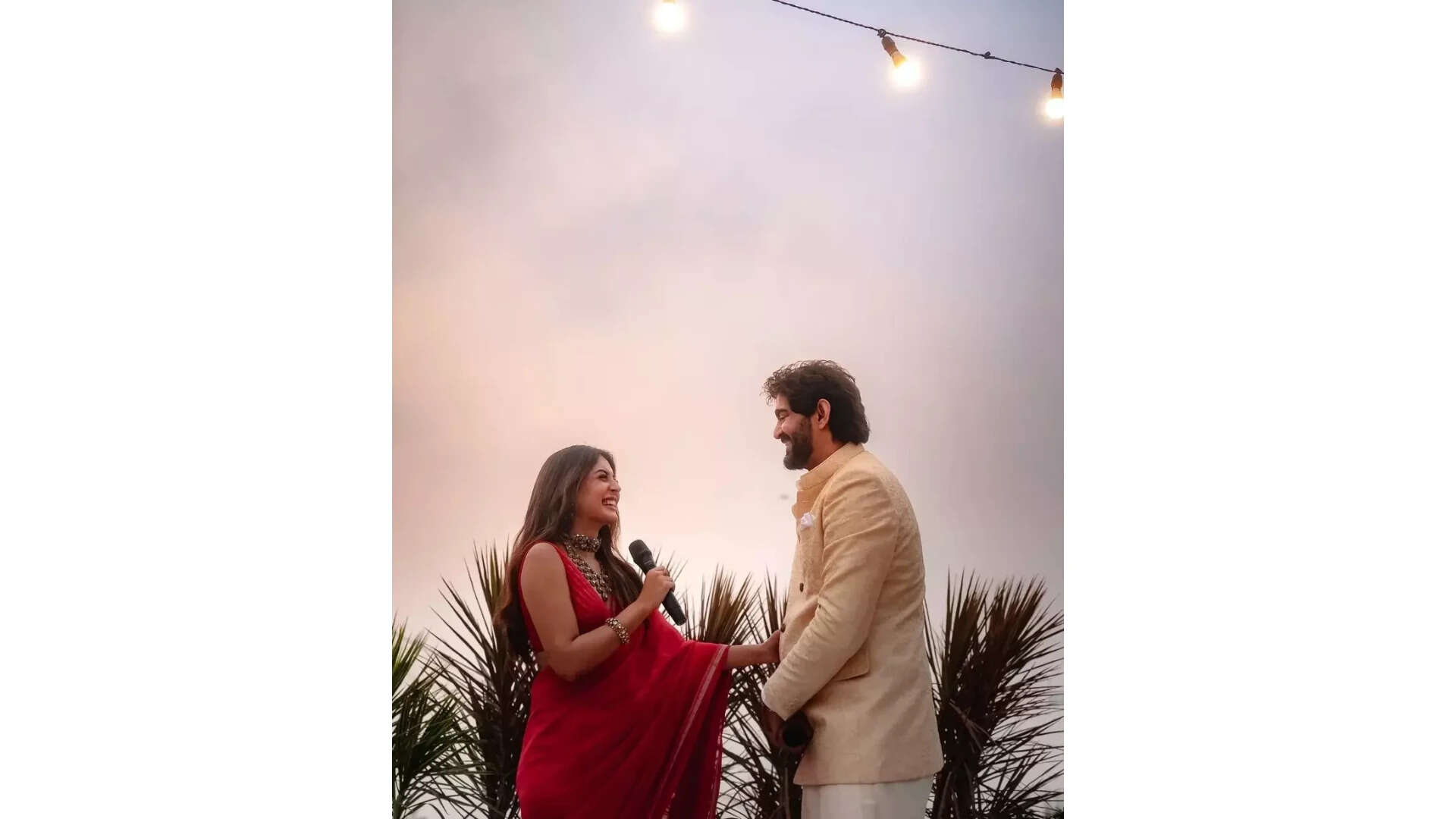
Gaurav Kapur and Kritika Kamra are now officially husband and wife. The duo took the plunge and wed in an intimate ceremony at their Bandra residence. Kritika and Gaurav reportedly decided to solemnize their relationship in a low-key registered marriage ceremony in attendance of their families and close friends. The couple then hosted a sundowner celebration. Now, the photos from bash have made their way onto social media handles.

Inside pictures from Kritika Kamra and Gaurav Kapur’s wedding

Photographer Joseph Radhik dropped the pictures of Kritika Kamra and Gaurav Kapoor on his Instagram profile, giving everyone a glimpse of their intimate celebrations. For the special occasion, Kritika wore a sindoor-red-colored Chanderi sari, woven from tussar silk. On the other hand, Gaurav opted for a custom bandhgala.He captioned the post, “Okay, am still not over today. Kritika and Gaurav, thanks for making heart so full, and for being such sports to all the requests. Photo #4 is by @shreyadhan13, getting a bit of what my life actually looks like.”Take a look.

KG2
KG3
KG4
KG5
KG6
KG1

(Image credits: Joseph Radhik Instagram)

More about Kritika Kamra and Gaurav Kapur’s wedding

After the civil wedding ceremony, the newlyweds stepped out of their residence to meet the paparazzi. Kritika and Gaurav posed for the pictures and distributed sweets to the cameramen stationed outside their house.Former cricketer Yuvraj Singh attended the wedding with his wife, Hazel Keech, and their children, all dressed in traditional attire. Yuvraj and former pacer Ashish Nehra arrived at the same time. Seeing Yuvraj’s children, Nehra was visibly thrilled as he picked up the little boy in his arms and cuddled him.Veteran batter Virender Sehwag also marked his presence. He was seen dressed in a blue kurta paired with white pajamas.Couples Neha Dhupia and Angad Bedi, Amrita Arora and Shakeel Ladak, and Bollywood diva Malaika Arora, too, attended the wedding celebrations.

More about Kriti Kamra and Gaurav Kapur

Kritika Kamra is known for her roles in television shows like ‘Kitani Mohabbat Hai’, ‘Kuch Toh Log Kahenge’, and ‘Reporters’. She also made her mark in films and OTT projects, including ‘Bheed’, ‘Tandav’, ‘Mitron’, and ‘Bambai Meri Jaan’. Meanwhile, Gaurav is a prominent Indian television host, sports presenter, and the creator of the popular YouTube talk show Breakfast with Champions.


Source link

Pakistan cricketer Mohammad Rizwan’s ‘I don’t watch India’s matches’ remark resurfaces after Bangladesh humiliation | Cricket News


Pakistan cricketer Mohammad Rizwan's 'I don't watch India's matches' remark resurfaces after Bangladesh humiliation
Mohammad Rizwan and Team India

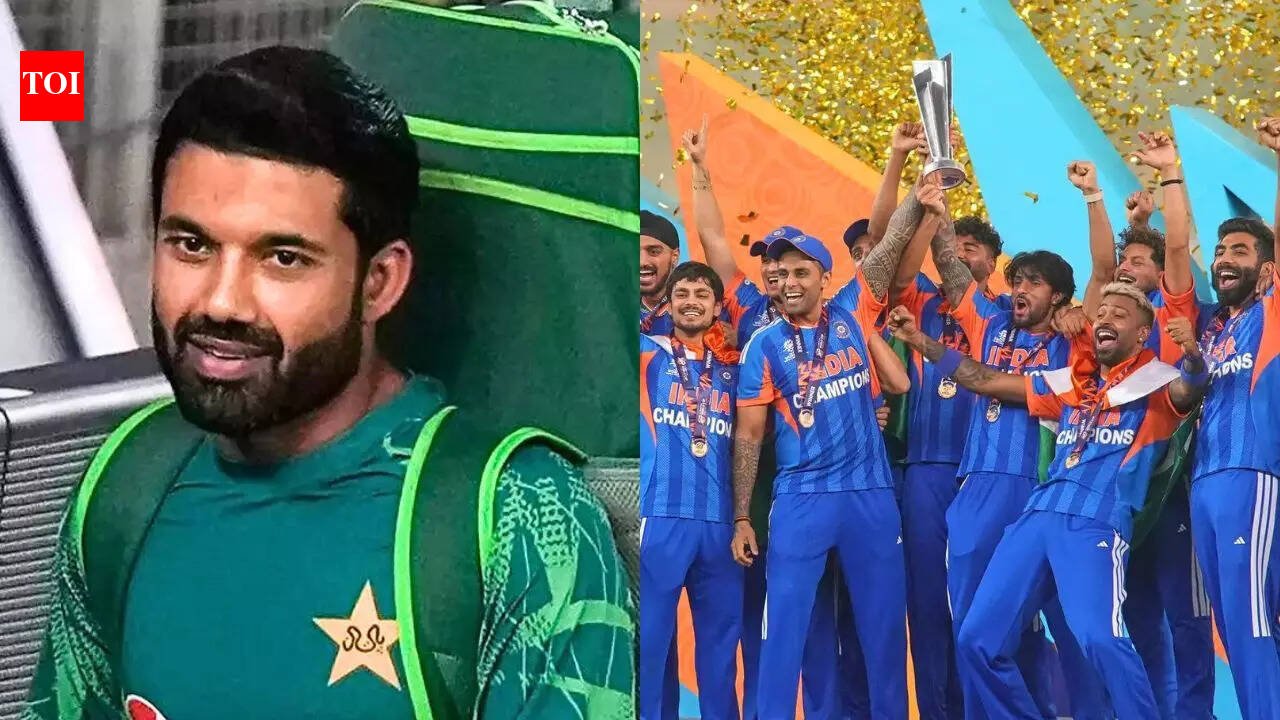
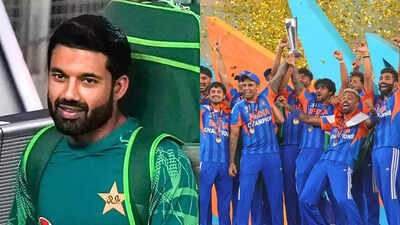
NEW DELHI: Pakistan captain Mohammad Rizwan has come under the spotlight after his earlier remark about not watching India’s matches resurfaced following Pakistan’s heavy defeat to Bangladesh in the first ODI on Wednesday.During a casual conversation with a reporter at a nets session earlier, Rizwan was asked about India’s impressive performance in the T20 World Cup semi-final against England, where they posted a total of more than 250 runs.

Gautam Gambhir reflects on India’s World Cup win and backing Sanju Samson in the tournament

Responding to the question, Rizwan had said, “Sorry, I don’t watch their matches.”The comment gained renewed attention after Pakistan suffered a crushing loss to Bangladesh in the opening ODI of the three-match series. Rizwan himself struggled during the match, scoring just 10 runs off 20 balls, as Pakistan’s batting line-up collapsed under pressure.Batting first in Mirpur, Pakistan were bowled out for just 114 runs in 30.4 overs, marking their lowest ODI total against Bangladesh. The collapse came after a steady start, with the visitors losing wickets in quick succession once the first breakthrough arrived.Young Bangladeshi pacer Nahid Rana was the star of the show, producing a brilliant spell to dismantle Pakistan’s top order. The 23-year-old returned figures of 5 for 24, claiming his first five-wicket haul in ODIs. Rana removed Sahibzada Farhan, Shamyl Hussain, Maaz Sadaqat, Rizwan and Salman Agha, leaving Pakistan reeling at 69-5.Captain Mehidy Hasan Miraz also played a key role with the ball, taking three wickets, while Taskin Ahmed and Mustafizur Rahman chipped in with one wicket each. Only Faheem Ashraf, who scored 37, offered some resistance for Pakistan late in the innings.Bangladesh then made light work of the modest target, chasing down 115 in just 15.1 overs to seal an emphatic eight-wicket victory and take a 1-0 lead in the series.Opener Tanzid Hasan led the charge with an unbeaten 67 off 42 balls, sharing an 82-run partnership with Najmul Hossain Shanto (27) to complete a comprehensive win for the hosts.


Source link

Gulf crisis: Don’t rush-book LPG cylinders, delivery in 2.5 days, says government


Gulf crisis: Don't rush-book LPG cylinders, delivery in 2.5 days, says government
‘Oil Cos Have Ramped Up Output By 25%’

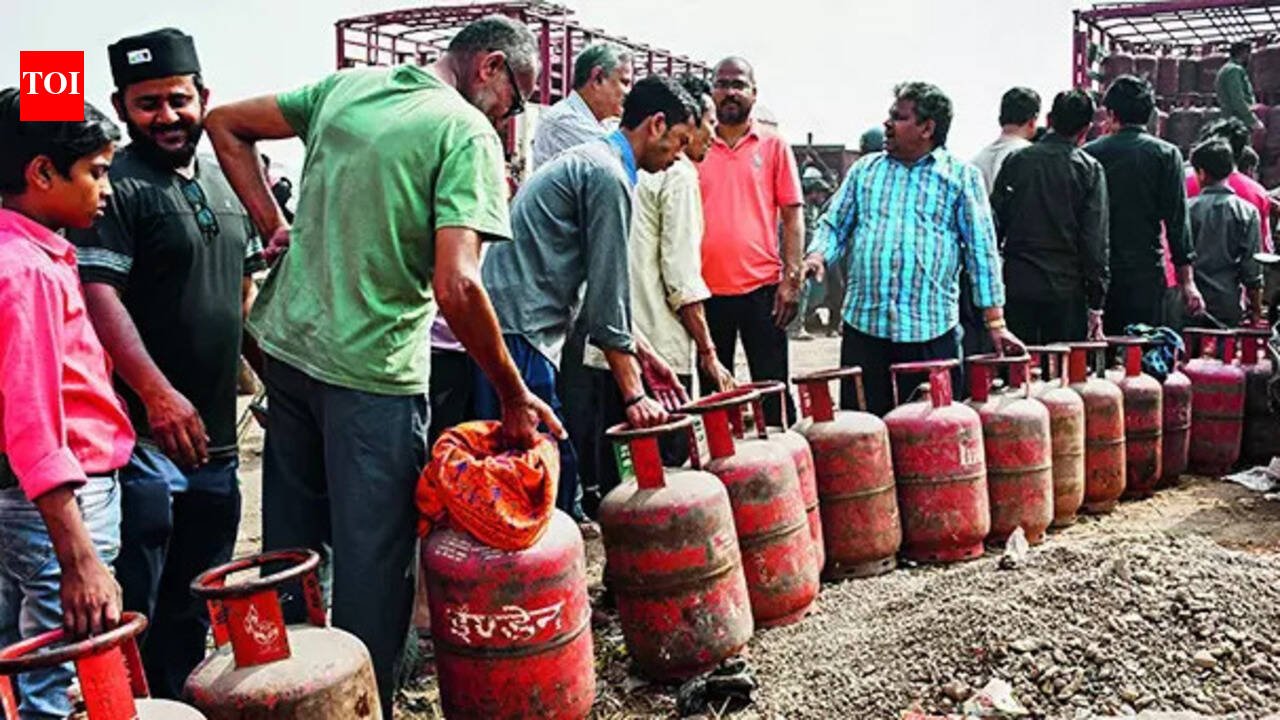
NEW DELHI: Govt on Wednesday said oil companies have ramped up LPG output by 25%, helping bridge a part of the deficit due to deficient imports, and advised against panic buying as cylinders were being delivered in two-and-a-half days. India imports around 60% of LPG. “Feedback suggests panic booking and hoarding behaviour triggered by misinformation. I want to clarify that our normal delivery cycle for domestic LPG remains around two-and-a-half days… there is no need for customers to rush-book cylinders,” Sujata Sharma, joint secretary in the petroleum ministry, said at a press conference. Officials said states had been informed that there was enough stock to meet the requirement of domestic consumers, who are a priority for govt along with hospitals and educational institutions.She said domestic gas prices in India were lower than in other parts of the world. Addressing the issue of domestic cylinders being diverted, Sharma said they could not be delivered without the one-time password sent to the customer’s phone. She added that a three-member committee formed by the ministry was looking into the issue of consumers using commercial LPG cylinders and ensuring fair and transparent distribution.Sharma said India had diversified imports from nearly 40 countries and the supply remained secure. “Our daily consumption is about 55 lakh barrels. Through diversified procurement, the volumes we have secured today exceed what would normally have arrived through Strait of Hormuz in this period,” she said.Oil marketing companies had secured various crude cargoes from different sources and, as a result, about 70% of crude imports now come from routes outside the strait, compared to 55% earlier.“As I speak, two cargoes are headed for India and will arrive within a few days, which will further strengthen the crude supply position in the country,” Sharma said.She added that LNG was also being procured from new sources. Sharma said the supply of about 47.4 mmscmd was affected due to force majeure conditions.Special secretary in shipping ministry Rajesh Sinha said 28 India-flagged ships were in the Persian Gulf with 708 Indian seafarers and their safety remained a priority. Officials said around 10 ships have moved out to safe waters in the past few days.Officials from the external affairs ministry said ambassadors and consuls general were engaged with the Indian community to ensure their safety, and the ministry has established a control room to assist them. “Assistance is also being provided for land border crossings into Armenia and Azerbaijan,” said Aseem R Mahajan, MEA additional secretary.


Source link

Explosions at Oman’s Salalah port: Iran drones hit fuel storage oil tanks? Tehran denies role as war with US-Israel engulfs Middle East


Explosions at Oman's Salalah port: Iran drones hit fuel storage oil tanks? Tehran denies role as war with US-Israel engulfs Middle East
Iranian Drones Hit Fuel Tanks at Oman’s Salalah Port, Massive Fires Erupt, Tehran Denies Role

The widening conflict between Iran, the United States and Israel has now reached one of the Gulf’s most strategically important maritime hubs. On March 11, 2026, multiple drones struck fuel storage tanks at the Port of Salalah in Oman, igniting fires and raising alarm across global energy and shipping markets. Authorities confirmed that while several drones were intercepted, others managed to penetrate air defences and hit oil storage infrastructure at the port.Although the attack caused significant fires in at least two fuel tanks, officials said no casualties were reported among port workers or residents, and merchant vessels docked nearby were not damaged. The incident marks the latest escalation in a regional war that has rapidly expanded beyond Iran, Israel and US targets to threaten Gulf energy infrastructure and maritime trade routes.

Fires at a strategic energy hub in Oman amid Iran vs US-Israel war

Located along the Arabian Sea in Oman’s Dhofar region, the Port of Salalah is one of the Middle East’s key shipping and logistics hubs. The port handles container traffic, oil storage, and bunkering operations serving ships moving between Asia, Europe and Africa. When the drones struck the facility, fuel tanks at the port’s storage area were set ablaze, sending plumes of smoke into the sky. Videos circulating online showed flames engulfing sections of the oil depot.Authorities said emergency services responded quickly to contain the fires, while security forces scrambled to intercept additional drones approaching the area. Several unmanned aerial vehicles were successfully shot down before reaching the port. Despite the quick response, at least one drone managed to strike the storage area, highlighting the growing vulnerability of critical energy infrastructure across the Gulf.

Shipping and port operations disrupted in Oman’s Salalah port amid Iran vs US-Israel war

Following the attack, port operations were temporarily disrupted and shipping companies began reassessing safety conditions in the region. One of the port’s major terminal operators confirmed that container terminal operations were paused until further notice, while vessels in nearby waters were advised to remain alert.Global shipping giant Maersk also halted activities at the port after the strike, citing security concerns around the facility. The shutdown highlights how attacks on a single energy storage facility can ripple through global supply chains, particularly in the Gulf, which handles a significant portion of the world’s oil and container shipping traffic.The Salalah strike is not an isolated incident. It is part of a broader campaign targeting ports, refineries and energy infrastructure across the region since the outbreak of the Iran-US-Israel war on February 28, 2026. Since the conflict began, several Gulf facilities have been hit or threatened by drone and missile strikes. Earlier in March, Oman’s Port of Duqm was also targeted by drones, damaging fuel storage tanks and injuring a foreign worker.In other incidents:

  • A drone struck a fuel tank at Duqm port earlier in the month.
  • An oil tanker near Oman’s coast was also attacked during the escalation.
  • Several Gulf states hosting US military assets have reported aerial threats or interceptions.

These incidents have heightened fears that the conflict is expanding beyond military targets to economic infrastructure, particularly oil storage and shipping facilities.

Iran denies role in Salalah Port drone strike amid war with US-Israel

Iran has suggested that the drone strike on Oman’s Port of Salalah may have been part of a “false flag” operation, raising doubts about who was truly responsible for the attack. In a statement attributed to the Khatam al-Anbiya (Holy Prophet’s) Central Headquarters, which coordinates Iran’s armed forces, a spokesperson described the incident as “suspicious” and said the Islamic Republic was examining the circumstances surrounding the strike.Iranian officials denied that their military had intentionally targeted Oman, emphasising that the Sultanate is considered a “friend and neighbour” and that Iran does not seek confrontation with nearby Muslim countries. Tehran instead warned that the United States and Israel could be attempting false-flag attacks on regional infrastructure in order to blame Iran and widen the conflict across the Gulf.According to the Iranian statement, such actions could involve targeting diplomatic sites or strategic facilities in neighboring states to “tarnish Iran’s image” and draw additional countries into the war.

Why Oman matters in the Iran vs US-Israel conflict

What makes the Salalah strike particularly significant is Oman’s historical role as a neutral mediator in Middle Eastern diplomacy. For decades, the Sultanate has maintained cordial relations with both Iran and Western nations, often hosting secret diplomatic negotiations. Oman played a critical role in facilitating early back-channel talks that eventually led to the 2015 Iran nuclear agreement. Due to this neutral position, Oman has largely avoided becoming a battlefield in regional conflicts.However, the latest drone attacks suggest the war may now be spilling into countries that have traditionally stayed outside the confrontation. Analysts say the targeting of Omani infrastructure could be intended to send a message to Gulf states perceived as cooperating with US or Israeli military activities.

Rising risks for global energy markets amid Iran vs US-Israel war

The strike on Salalah has triggered concerns about the safety of oil infrastructure across the Gulf. The region is home to some of the world’s most critical energy facilities, including major refineries, export terminals and shipping routes. Energy analysts warn that continued attacks on fuel depots and ports could have several consequences:

  • disruptions to global oil supply
  • spikes in fuel prices
  • shipping insurance surcharges
  • rerouting of tankers away from conflict zones

Even relatively small disruptions can cause major ripple effects in global markets because the Gulf region exports a significant portion of the world’s crude oil and liquefied natural gas.

The growing role of drone warfare

The attack also illustrates the increasing role of drones in modern warfare, particularly in the Middle East. Compared with traditional missiles or air strikes, drones are cheaper to deploy, harder to detect, capable of traveling long distances and capable of targeting infrastructure with precision.Many of the drones used in regional conflicts resemble loitering munitions, sometimes called “kamikaze drones,” which hover near targets before striking. Their growing use has transformed how conflicts affect infrastructure, allowing attackers to strike ports, refineries and airports far from traditional battlefields.

Iran’s position and regional claims amid war with US-Israel

While many analysts and security firms attribute the attacks to Iranian retaliation against US and Israeli targets, Tehran has previously denied responsibility for some strikes on neighbouring countries. Iranian officials have argued that attacks against neutral states could be part of attempts by rival actors to widen the conflict and blame Iran.At the same time, Western and Gulf officials say Iran’s military strategy increasingly involves targeting energy infrastructure across the region as part of its broader confrontation with Washington and Tel Aviv. The attack on Salalah highlights how the ongoing war is gradually spreading across the region.According to regional reports, the escalating conflict has already caused significant casualties and damage across multiple countries, with thousands affected. Each new attack increases the risk of further escalation, especially if critical energy infrastructure or shipping routes are repeatedly targeted.The drone strike on Oman’s Port of Salalah marks a dangerous new phase in the Iran vs US-Israel conflict, one that threatens not just military targets but the economic lifelines of the Gulf region. For a country like Oman, long known for its diplomatic neutrality, the attack underscores how the conflict is expanding far beyond its original battlegrounds.With energy facilities, shipping hubs and ports increasingly under threat, the war is no longer confined to missiles and military bases. It is now testing the resilience of global trade routes and energy supply chains and if attacks on strategic ports continue, the ripple effects may soon be felt not just across the Middle East but across the global economy.




Source link

Bro Code dispute: Ravi Mohan drops title | Tamil Movie News


The actor has also withdrawn proceedings he had earlier initiated before the Madras High Court.

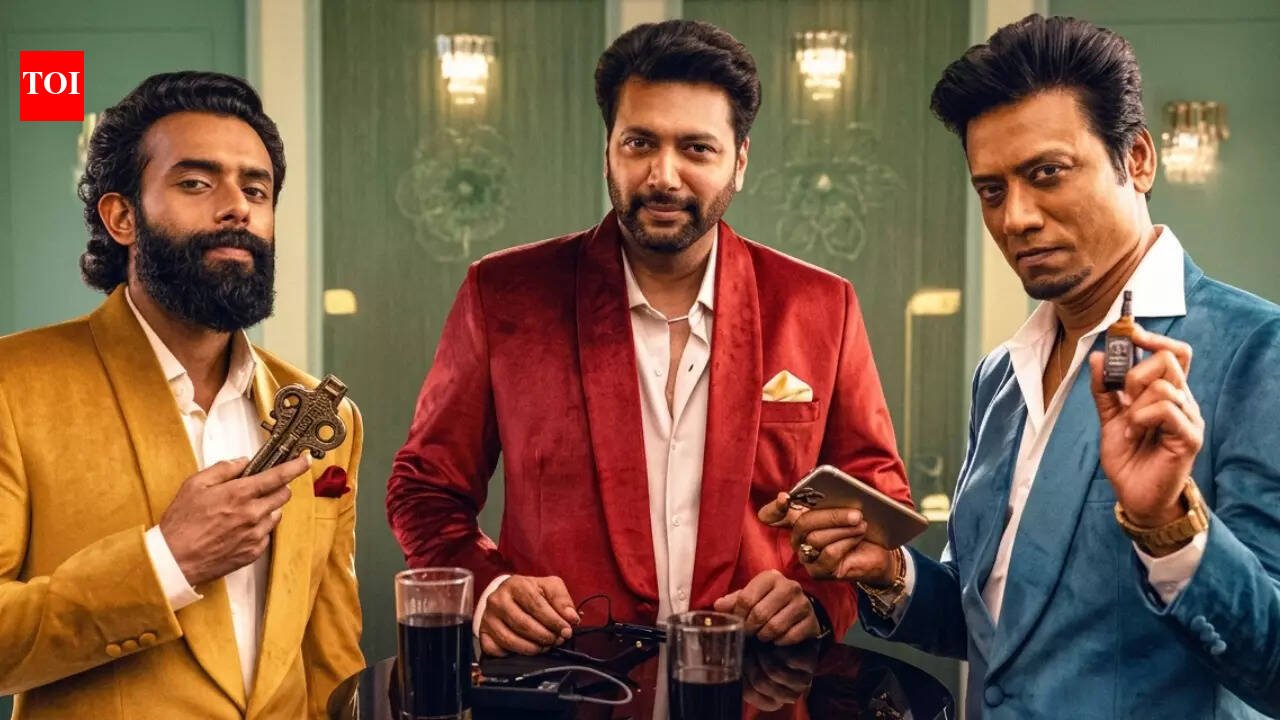
Ravi Mohan’s upcoming film, also starring SJ Suryah and Arjun Ashokan, will no longer be titled Bro Code. The actor’s production house and IndoSpirit Beverages Private Limited are said to have settled the trademark dispute over the use of the title after the latter contended the use of their registered trademark as a film’s title.We hear the Delhi High Court recorded a settlement after both parties participated in mediation under the aegis of the Delhi High Court Mediation and Conciliation Centre. The title will also be removed from the film’s promotional materials and online content. In October last year, the court had granted an ad interim injunction restraining the makers from using the exact title or any deceptively similar title. Additionally, the actor has also withdrawn proceedings he had earlier initiated before the Madras High Court.

Inside Kollywood’s 2025 Crisis and Uncertain Future


Source link