Breaking News
Expats alert: Dubai tightens housing rules, shared apartment violations may cost Dh1 million fines


Expats alert: Dubai tightens housing rules, shared apartment violations may cost Dh1 million fines
Bed-Space Living in Dubai Under Fire as New Law Imposes Dh500K to Dh1 Million Fines

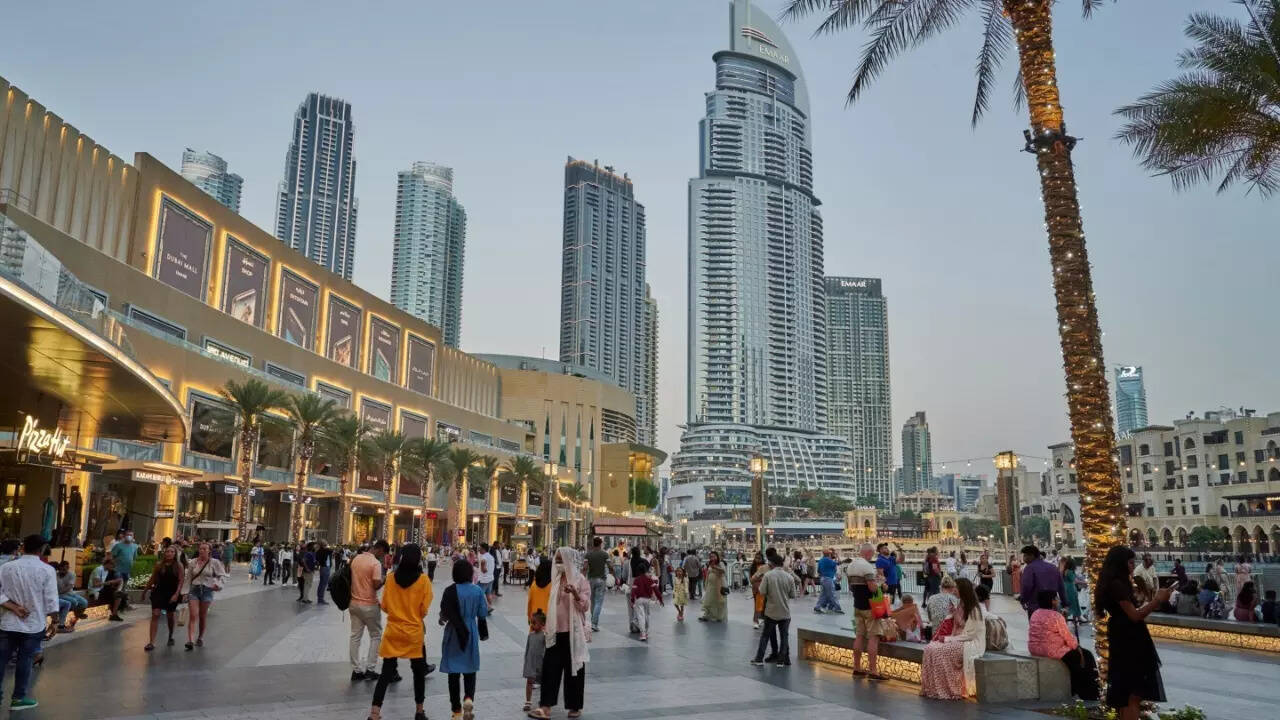
Dubai has introduced a sweeping new law aimed at regulating shared housing and partition-style living arrangements, with violators facing fines of up to Dh500,000 and up to Dh1 million for repeat offences. The legislation marks one of the strongest steps yet by the emirate to tackle overcrowding, illegal “bed-space” rentals and unsafe residential practices in its booming property market.The new regulation comes at a time when Dubai’s population and rental demand are surging, pushing some residents toward shared accommodation arrangements that often fall into legal grey areas. Authorities say the law aims to balance affordability for residents with strict safety and quality standards for housing.

Why Dubai is targeting shared housing now

Shared accommodation, sometimes known locally as “bed space” living, has long been common in Dubai, particularly among low- and middle-income expatriate workers trying to manage rising rents. In many neighbourhoods, landlords or tenants convert apartments into multiple partitions or rented beds, allowing several people to live in a single unit.
Renting a Bed-Space in Dubai? New Law Could Cost You Half a Million Dirhams

Renting a Bed-Space in Dubai? New Law Could Cost You Half a Million Dirhams

However, such setups can create serious safety, hygiene and overcrowding concerns, especially when properties are modified without approval or occupancy limits are ignored. Authorities have previously warned that illegal partitions can block ventilation, compromise fire safety and make emergency evacuations difficult. Dubai’s latest law is designed to curb these risks while bringing greater transparency to the rental market.

Dubai’s core rule: Permits required for shared housing

The central provision of the new law is straightforward: no individual or company may designate a property as shared housing without obtaining an official permit. This means that landlords, property managers and companies must secure regulatory approval before operating or advertising shared accommodation units.Authorities will regulate several aspects of shared housing, including:

  • Occupancy limits
  • Safety standards
  • Hygiene and living conditions
  • Building suitability
  • Licensing of operators

By introducing formal licensing requirements, Dubai aims to shift shared housing from informal arrangements into a regulated segment of the property market.

Dubai housing fines up to Dh500,000 and Dh1 million for repeat offences

The law comes with some of the toughest penalties seen in the emirate’s housing sector. Violations may result in fines ranging from Dh500 to Dh500,000, depending on the severity of the offence. If the same violation is repeated within one year, penalties can be doubled up to a maximum of Dh1 million.Authorities also have the power to impose additional sanctions, including:

  • Suspending the activity for up to six months
  • Cancelling permits
  • Revoking business licences
  • Disconnecting public utilities
  • Evicting occupants from non-compliant units

These measures indicate Dubai’s intent to enforce the new law aggressively.

The problem of overcrowding in Dubai apartments

Overcrowding has long been a major issue in certain districts with high concentrations of shared housing. Dubai’s housing regulations generally require a minimum amount of space per resident, with overcrowding defined as more than one person occupying five square metres of living space.Industry guidance often translates this into practical limits such as –

  • Studio apartments: up to 2 residents
  • 1-bedroom units: about 4 residents
  • 2-bedroom units: about 6 residents
  • 3-bedroom units: about 9 residents

When landlords exceed these limits by renting out partitions or beds, it can create cramped living conditions and raise safety concerns.

A long-running issue in Dubai’s rental market

Illegal partitions and subletting have been a persistent challenge for Dubai authorities. Inspections by municipal teams have previously targeted neighbourhoods such as Al Barsha, Deira, Satwa and Al Rigga, where overcrowded apartments and unauthorised partitions were discovered. In many cases, tenants subdivide rooms using temporary walls or wooden boards to create additional sleeping areas. While this allows residents to share rent costs, it often violates building regulations and tenancy agreements.

Dubai’s New Housing Law Could Shut Down Illegal Bed-Space Rentals

Dubai’s New Housing Law Could Shut Down Illegal Bed-Space Rentals

Under existing rental laws, tenants are already prohibited from subletting or sharing apartments without the landlord’s permission, and all occupants must be registered on the tenancy contract (Ejari). The new shared housing law strengthens these rules and introduces clearer enforcement mechanisms.

Why shared housing exists in Dubai

Despite regulatory concerns, shared housing remains a reality in Dubai’s housing ecosystem. The emirate’s rapid economic growth has attracted millions of expatriate workers, many of whom earn modest salaries and rely on shared accommodation to reduce living costs.For example:

  • A single room in a central Dubai apartment can cost thousands of dirhams monthly.
  • Bed-space rentals, where individuals rent a single bed rather than a full room, can significantly reduce costs.

This has created a thriving informal market for shared living spaces. However, authorities say regulation rather than prohibition is the goal. By licensing shared housing operators, Dubai hopes to allow affordable living options while ensuring safety and compliance.

New housing law’s impact on landlords and property owners in Dubai

The new law will significantly affect landlords and property investors. Property owners who previously allowed informal bed-space rentals may now need to:

  • Apply for permits
  • Modify properties to meet safety standards
  • Limit occupancy numbers
  • Register tenants officially

Failure to comply could lead to hefty fines or the suspension of rental activities. For landlords operating legally, however, the law may actually help by reducing unfair competition from illegal operators.

What Dubai tenants should know

For tenants, the new regulations carry several implications:

  1. Check if your accommodation is licensed – Tenants should ensure that the shared housing arrangement has the required permits.
  2. Avoid illegal bed-space rentals – Living in unauthorised shared housing could lead to eviction if authorities shut down the property.
  3. Ensure your name is on the tenancy contract – Official registration protects tenant rights and avoids legal complications.
  4. Watch for overcrowding risks – Unsafe living conditions may violate the law and expose tenants to penalties.

Dubai’s broader push for housing standards

The shared housing regulation is part of a broader strategy by Dubai to enhance safety, quality and transparency in its property sector. In recent years, the emirate has introduced multiple reforms targeting building safety standards, labour accommodation rules, illegal partitions and subletting and tenant protection mechanisms.Authorities say that these policies are essential as Dubai’s population continues to grow rapidly and demand for housing rises. Industry experts believe the new law could reshape parts of Dubai’s rental market.Possible outcomes include:

  • Fewer illegal partitions and bed-space rentals
  • More regulated shared housing facilities
  • Higher compliance costs for landlords
  • Improved safety standards for residents

Some analysts also predict that stricter enforcement may temporarily reduce the supply of low-cost housing, potentially pushing demand toward regulated shared living developments. Dubai’s new shared housing law sends a clear message that affordable living arrangements are allowed but only if they meet safety and legal standards.By imposing fines of up to Dh500,000 and potentially Dh1 million for repeat violations, authorities are signalling that overcrowded and unlicensed housing will no longer be tolerated. For a city that prides itself on world-class urban planning and high living standards, the crackdown is another step toward ensuring that rapid growth does not come at the expense of safety or quality of life.



Source link

Access Denied


Access Denied

You don’t have permission to access “http://www.ndtv.com/world-news/iran-war-donald-trump-says-us-must-finish-the-job-in-iran-11202864” on this server.

Reference #18.34a21ab8.1773270955.7427102

https://errors.edgesuite.net/18.34a21ab8.1773270955.7427102


Source link

Guard killed in fight over water | Mumbai News


Kalyan: An argument over use of a public water tap allegedly led to the murder of a railway project’s security guard in Dombivli on Tuesday. The alleged killer was arrested. Police said while the guard, Umesh Waghe, was washing his hands and feet, a woman accused him of wasting water. This led to a fight and the woman’s husband, Akshay Jadhav, joined in. Later, he went to Waghe’s worksite and hit him on the head with an iron rod, killing him. —Pradeep Gupta


Source link

US strike likely hit Iran school due to outdated intel: Report


US strike likely hit Iran school due to outdated intel: Report

The US military likely relied on outdated intelligence about a nearby naval base when it accidentally struck Iranian elementary school, CNN reported citing two sources briefed on preliminary findings of an ongoing investigation. The attack on February 28 killed at least 168 children and 14 teachers, according to Iranian state media.United States Central Command generated the strike’s target coordinates using outdated intelligence supplied by the Defense Intelligence Agency, a factor that contributed to the error, the report said.As per a visual probe by NYT, satellite images from 2013 indicated that the school and a nearby base used by the Islamic Revolutionary Guard Corps were once located within the same compound. However, imagery from 2016 showed that a fence had been installed separating the school from the rest of the base, along with the construction of a separate entrance for the school.More recent images from December 2025 showed dozens of people in the school’s courtyard, apparently engaged in recreational activity.The Defense Intelligence Agency and the National Geospatial-Intelligence Agency deploy dozens, and in some cases hundreds, of analysts to combatant commands, where they work with military planners and intelligence units to help identify and develop potential targets.US officials and others familiar with the probe stressed that the investigation remains ongoing and that more details are still emerging, according to people briefed on the inquiry.Although Donald Trump has prioritised targeting Iran’s naval capabilities in the conflict to prevent disruptions to global commerce in the region, the country’s navy has historically not been a primary focus for the Defense Intelligence Agency, which has concentrated more on Iran’s missile programme as well as other strategic priorities such as China and North Korea.


Source link

Access Denied


Access Denied

You don’t have permission to access “http://www.ndtv.com/world-news/iran-war-un-demands-iran-stop-attacks-on-gulf-nations-11202846” on this server.

Reference #18.4cfdd417.1773271304.8c07902b

https://errors.edgesuite.net/18.4cfdd417.1773271304.8c07902b


Source link

Why Shivam Dube had to travel by train after India’s T20 World Cup glory | Cricket News


Why Shivam Dube had to travel by train after India's T20 World Cup glory
Shivam Dube (Getty Images)

NEW DELHI: After India won the 2026 T20 World Cup, most people would expect players to travel home on chartered flights. But all-rounder Shivam Dube had a very different journey back to Mumbai from Ahmedabad. With flights fully booked, he ended up travelling by train with his wife and a friend, taking a 3rd AC ticket like a regular passenger.Dube said he first tried to get flight tickets for himself and his family but couldn’t find any seats. Driving back was an option, but he felt the train would be quicker. “There were no flights available, so I decided to take an early morning train from Ahmedabad to Mumbai. We could have gone by road, but the train was quicker,” he told The Indian Express.

Amritsar erupts as Abhishek Sharma’s family celebrates India’s T20 World Cup triumph

Because he had just won the World Cup with India, Dube worried about being recognised by fans at the station or inside the train. His family and friends were also concerned. Dube added, “Everyone we spoke to-family and friends-was worried. They kept asking, ‘What if someone recognises you at the station or on the train?’”To avoid attention, Dube tried to keep a low profile. He wore a cap, a mask and a long-sleeved T-shirt, and chose a 5:10 am train, hoping the station would be less crowded. He even waited inside the car until the last few minutes before boarding. During the trip, he stayed mostly on the top berth to remain unnoticed. At one point, the ticket checker nearly revealed his identity while checking tickets. “Shivam Dube? Woh kaun hai, cricketer?” he asked. Dube’s wife quickly replied, “No, no. Woh kahan se aayega (where will he come from)?”, and the checker moved on.Despite the risk of being recognised, the journey went smoothly. Dube eventually reached Mumbai safely, with police helping manage his exit from the station. His unusual trip showed that even a World Cup winner sometimes has to travel like any other passenger.


Source link

Accused tries to flee from JJ Hospital in Mumbai, gets caught the same day | Mumbai News


Mumbai: A 46-year-old robber, also a Pocso case accused, who was admitted to the JJ Hospital for sonography, fled while the police personnel were busy in medical paper work on Tuesday. The accused was later traced in Ambernath and arrested the same day.The accused, Shrikant Laxman Gofan, was lodged in Taloja Central Jail. The accused was admitted to JJ Hospital on March 5, after complaining of kidney-related ailments. He fled on Tuesday while the police personnel brought him to the sonography department and were busy in paper work. A case against the accused has been registered at the JJ Marg police station for fleeing from custody.


Source link

Attack on Speaker is Congress’s bid to hide Rahul Gandhi’s inability to be effective MP: Amit Shah in Parliament | India News


Attack on Speaker is Congress's bid to hide Rahul Gandhi's inability to be effective MP: Amit Shah in Parliament

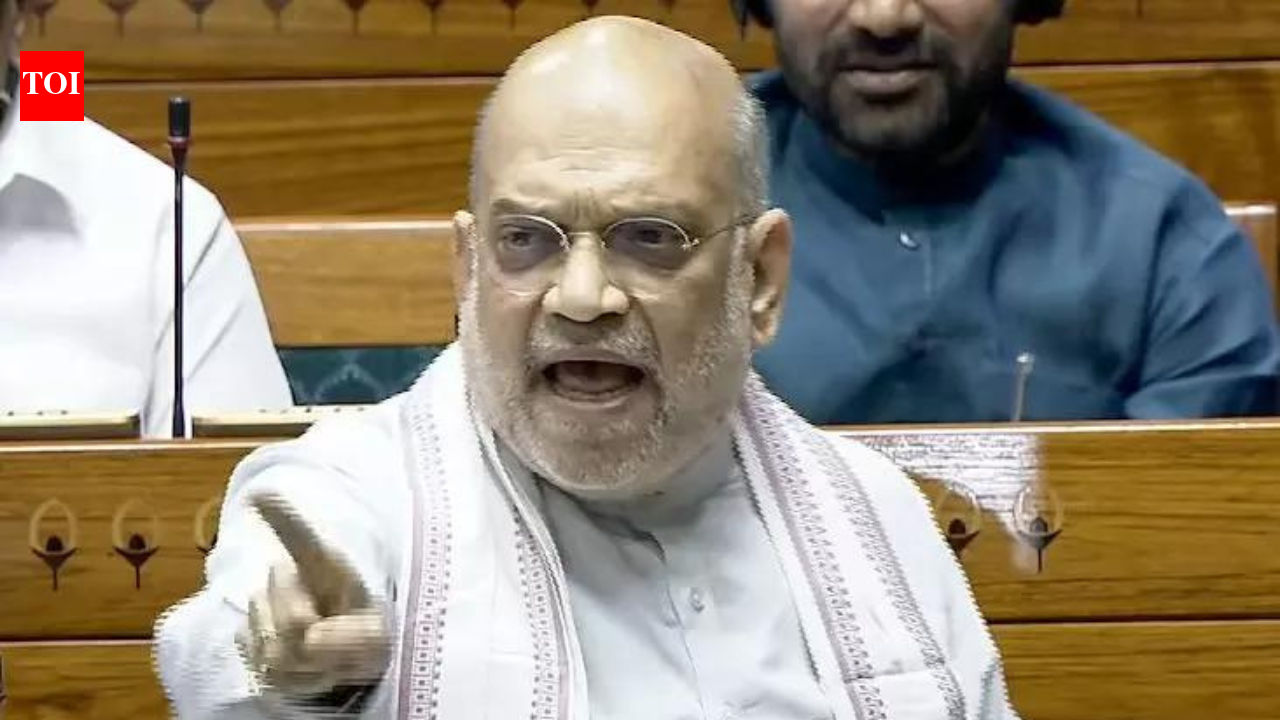
NEW DELHI: Home minister Amit Shah on Wednesday launched a fiery counterattack on the Opposition, targeting Rahul Gandhi, as he ascribed the move to remove Speaker Om Birla to the Leader of Opposition’s pique over frequent electoral losses and a bid to cast doubt on various institutions due to Congress’s turn to a “completely negative mode”.Speaking in the Lok Sabha at the end of the discussion which stretched over two days, Shah sought to turn the tables on the Opposition by framing the dispute as arising from Congress’s attempt to distract attention from what he called Rahul’s inability to be an effective parliamentarian by making the Speaker a scapegoat.He delivered pointed rebuttals to arguments of opposition MPs by citing official figures to assert that Congress was allotted much more time in parliamentary proceedings than was warranted by its actual numbers in the House as an opposition party and contrasted this with the “poor” participation of Rahul Gandhi. “It is not right to say he (Rahul) is not allowed to speak. He does not want to speak, or he cannot speak in accordance with rules,” Shah said in a speech which was marked by repeated protests by opposition members, who rushed to the well to demand his apology for using an “unparliamentary” word. Shah urged Jagdambika Pal, who was in the chair, to remove the word if it was unparliamentary, but protests continued.“He has not participated even in the debate over the motion against the Speaker,” said the home minister.“Constitution has given you rights but no special rights. Those living under the illusion of special rights are being increasingly given the short shrift by people and are shrinking in size,” he said. It is not Emergency that special rights will be given, he said while recalling instances of Rahul forcibly hugging PM, blowing kisses and winking at his colleagues.Parliament is not a “mela” (fair) and members have to abide by rules, the home minister said, blaming the action against opposition MPs, including Rahul not being allowed to speak after his frequent invocation of the unpublished memoir of former army chief M M Naravane and the suspension of eight members, to their disregard for norms. He praised Birla for his conduct and said he allowed every member an opportunity to speak. Shah noted he was the only Speaker of the four who have faced such a motion to take the moral high ground by declining to attend the proceedings after the notice for his removal.Shah questioned Rahul’s record, giving details of his absence on standout dates, ranging from annual motion of thanks to President’s address and budget debates to legislative debates on repeal of Art 370 of the Constitution. He was not even attending his party’s political programmes or campaign but was away in foreign countries, Shah said mockingly.


Source link

CSK CEO Kasi Viswanathan says Dhoni’s role in IPL 2026 still undecided: ‘He will play all the matches’ | Cricket News


MS Dhoni (BCCI/IPL Photo)

Chennai Super Kings (CSK) CEO Kasi Viswanathan said veteran wicketkeeper-batter MS Dhoni is expected to play in all matches of the upcoming Indian Premier League (IPL). However, the final decision about his exact role will be made by the team management.The 19th edition of the IPL will start on March 28, and all teams have already begun their training camps. Players who recently took part in the T20 World Cup will soon join their teams and start preparing for the tournament.

Sanju Samson opens up on T20 World Cup journey, and title win

There were worries that CSK legend Dhoni might not play all IPL 2026 matches because of his age, but CEO Kasi Viswanathan dismissed these concerns and said “He will play all the matches, according to me.”Asked what role he’s likely to takeup in the tournament, with another keeper-batter Samson now in the team, he added, “That I cannot say. That is a cricketing decision which will be taken by the cricketing staff. Not by the administrative staff. So they will decide whether he is going to play as a batsman or as a wicketkeeper-batter, or as an impact player.”He expressed pride in the franchise’s players Sanju Samson and Shivam Dube, who put up match-winning performances in Team India’s T20 World Cup-winning campaign, and said, “We are very happy that India has won the World Cup, that too they’ve won it back-to-back. We are delighted because two of the CSK players, Sanju and Shivam Dube, have performed extremely well. It gives us a lot of confidence in the team doing well for CSK here also,” he said.When asked about the players’ preparations in the camp, he said, “Practice is going on well, no problems so far.”


Source link

Indian traveller flees Doha, drives across desert to Riyadh after Chennai to Barcelona flight stranded amid Iran vs US-Israel war


Indian traveller flees Doha, drives across desert to Riyadh after Chennai to Barcelona flight stranded amid Iran vs US-Israel war
Stranded in Doha as Iran vs US–Israel War Erupts, Indian Man Makes Daring Desert Escape to Riyadh

A dramatic story of an Indian traveller stranded in Qatar has gone viral after he decided to abandon waiting for flights and instead take a long desert road journey to Saudi Arabia in order to continue his trip home. The incident, highlighted in a viral video report, reflects a wider travel crisis unfolding across the Middle East as conflict involving Iran, Israel and the United States disrupts airspace and leaves thousands of passengers stuck at major transit hubs.The traveller, Varun Krishnan, was originally flying from Chennai in India to Barcelona in Spain when the escalation of regional tensions forced airlines to suspend or reroute flights across the Gulf. When his journey stalled in Doha, Krishnan decided the fastest way forward was not through the airport but across the desert.

A routine flight that suddenly stopped amid Iran vs US-Israel war

Krishnan’s journey began as a normal international trip with a flight from southern India to Europe with a connection in Qatar but as he landed in Doha, the region’s security situation deteriorated rapidly. Military strikes linked to the widening Iran-Israel-US conflict triggered widespread airspace restrictions across parts of the Gulf. Airlines began suspending flights, diverting routes and cancelling schedules.Major transit hubs like Doha and Dubai, among the busiest aviation gateways in the world, suddenly faced large-scale disruptions. Tens of thousands of passengers were left stranded as airlines cancelled thousands of flights, one of the largest travel disruptions since the Covid-19 pandemic. For travellers like Krishnan, this meant an indefinite wait at the airport with no certainty of when flights might resume.

Choosing the desert road instead of the airport while stranded amid Iran vs US-Israel war

Faced with growing uncertainty, Krishnan decided not to wait. Instead of remaining in Qatar hoping for flights to restart, he chose an unusual route to drive across the desert from Qatar to Riyadh in Saudi Arabia. The plan involved leaving Doha by road, crossing the Qatar–Saudi Arabia border, reaching Riyadh airport and attempting to continue his international journey from there.The trip meant hours of travel through remote desert highways, a stark contrast to the convenience of modern air travel but in a crisis where flights disappear overnight, such routes can become the only viable option.

Travel chaos across the Middle East amid Iran vs US-Israel war

Krishnan’s story is not an isolated case. Across the region, thousands of travellers, tourists, expatriate workers and transit passengers, have been caught in similar situations as the conflict escalates. Airspace closures and security alerts have forced airlines to cancel flights or reroute aircraft through longer and more expensive paths.In some cases, governments have advised their citizens to remain indoors until the security situation stabilises. The scale of disruption has been enormous. Reports suggest that tens of thousands of travellers scrambled for flights out of the Middle East during the crisis as airlines struggled to restore operations.With airports overwhelmed and tickets selling out quickly, many travellers have resorted to alternative routes, including long road journeys, emergency visas or transit through multiple countries.

Indians among the most affected travellers amid Iran vs US-Israel war

Indian nationals have been particularly affected by the crisis due to the large number of Indian workers and tourists in Gulf countries. Thousands of Indians travel through Gulf airports every day because the region serves as a key transit hub connecting India with Europe, North America and Africa. When the conflict disrupted flights, many Indian passengers found themselves stranded in Doha.Reports suggest over 500 Indians were stuck in Qatar during the crisis, prompting diplomatic efforts and special flights to bring them home. In the days following the disruption, the Indian Embassy in Doha coordinated evacuation flights, helping hundreds of stranded passengers return to cities such as Delhi, Mumbai and Kochi. However, many travellers still had to find their own solutions while waiting for official assistance.Krishnan’s road journey mirrors other remarkable travel stories emerging from the crisis. One widely reported case involved an American doctor stranded in Qatar whose flight was forced to turn back after hostilities escalated. To reach home, he travelled across multiple countries, including Saudi Arabia, Ethiopia and Italy, in a 62-hour journey across four continents before finally arriving in the United States.Such stories highlight how quickly modern travel networks can collapse during geopolitical emergencies. For travellers caught in the middle, returning home can require complex routes involving buses, taxis, multiple flights and long layovers.

Why airspace closures cause global travel chaos

Airspace disruptions in the Middle East have a global impact because the region sits at the crossroads of international aviation. Flights between Europe, Asia and Africa frequently pass through Gulf air corridors. When these routes close, airlines must either cancel flights or reroute planes thousands of kilometres around conflict zones.This leads to several cascading effects:

  • Flight cancellations
  • Longer travel times
  • Higher fuel costs for airlines
  • Massive passenger backlogs at airports

The result is a chain reaction that disrupts global travel far beyond the region itself.

Governments and airlines race to help stranded travellers amid Iran vs US-Israel war

As the crisis unfolded, airlines and governments began launching emergency measures to assist stranded passengers. These efforts include:

  • Special evacuation flights
  • Flexible ticket changes and refunds
  • Consular assistance from embassies
  • Temporary transit arrangements in neighbouring countries

Several airlines operating in the region, including major Gulf carriers, have begun gradually restoring flights as airspace conditions improve. However, officials warn that disruptions could continue as long as regional tensions remain high.

Travel in a conflict zone

For many travellers, the crisis has been a stark reminder of how quickly geopolitics can disrupt everyday life. Air travel has become so routine that most passengers rarely consider the fragile network of air corridors, diplomatic agreements and security conditions that keep planes flying safely across borders but when war erupts near major aviation routes, the consequences can be immediate.Flights disappear from departure boards. Airports fill with stranded passengers and travellers must suddenly improvise new routes across unfamiliar countries. In that sense, Varun Krishnan’s journey from Doha to Riyadh is more than just a dramatic travel story and reflects the larger impact of geopolitical conflict on ordinary people.What began as a routine international flight became an improvised overland expedition across the desert, simply to continue a journey that millions of travellers take every day. As airlines slowly restore operations and governments work to evacuate stranded citizens, the episode stands as a reminder that even in an age of instant global connectivity, the world’s travel networks remain vulnerable to the shocks of war and politics.


Source link