Breaking News
IRCTC may suspend catering on trains over LPG shortage | Mumbai News


Mumbai: A nationwide shortage of LPG cylinders has begun impacting catering operations of the Indian Railway Catering and Tourism Corporation, prompting the railways to consider temporarily suspending cooked meal services on trains and issuing refunds to passengers who had pre-booked meals while reserving tickets.Railway officials said the shortage is affecting IRCTC’s base kitchens where meals for trains are prepared before being loaded onto pantry cars. Pantry cars on trains largely function as distribution and reheating units and do not carry LPG cylinders. However, disruption in LPG supply to base kitchens has begun to affect the preparation of meals meant for long-distance trains.According to railway officials, IRCTC serves nearly 17 lakh meals daily across the country through its network of base kitchens and onboard catering systems. Of this, nearly 20% of the meals are served in the western zone, making the region particularly vulnerable if the shortage persists.A senior railway official said the situation has become serious and could worsen in the coming days.“The issue has become serious and is likely to aggravate if LPG supplies continue to remain tight. Catering services on trains depend on food prepared at IRCTC base kitchens. Any disruption in LPG availability directly impacts meal preparation and supply to trains,” the official said.The railways has already flagged the issue to the Railway Board and suggested a few measures to deal with the emerging crisis.“We have suggested a few measures, including the possibility of temporarily suspending catering services if the shortage continues. In such a situation, passengers who have already booked meals at the time of reservation will be refunded. However, it is for the Railway Board to take a final call and issue guidelines,” the official said.Officials said IRCTC kitchens are closely monitoring LPG supplies and coordinating with vendors, but if the shortage deepens, temporary suspension of cooked meal services on some trains may become unavoidable.


Source link

WATCH: Ishan Kishan reacts after Kirti Azad questions Indian team’s temple visit following T20 World Cup 2026 triumph


The streets of Patna erupted in celebration as local hero Ishan Kishan returned home following India’s historic T20 World Cup 2026 triumph. However, the festive atmosphere at Jay Prakash Narayan International Airport was briefly interrupted by questions regarding a growing social media storm. Former cricketer and politician Kirti Azad recently sparked a national debate by questioning the Indian team’s decision to take the World Cup trophy to a temple, a move Kishan handled with the same composure he showed against world-class bowlers during the tournament.

Ishan Kishan responds to Kirti Azad’s criticism over Indian team’s temple visit

The controversy began when India’s captain Suryakumar Yadav, head coach Gautam Gambhir, and former BCCI Secretary and ICC Jay Shah visited a Hanuman temple in Ahmedabad to offer prayers with the silverware. Azad took to social media to express his reservations, noting that the victory belongs to “1.4 billion Indians of every faith” and suggesting that sports should remain transcendent of specific religious practices.

When pressed by journalists for his take on these comments, Kishan remained unfazed, refusing to let the negativity overshadow the nation’s sporting achievement.

I have just won such a wonderful World Cup, please ask better questions, what can I say about what Kirti Azad said? Please ask some good questions. Tell me how it feels and how much fun it was,” Kishan told the media with a polite but firm smile. By shifting the narrative back to the collective joy of the win, Kishan effectively neutralized the attempt to politicize the team’s personal moments of gratitude.

Here’s the video:

Also READ: Complete list of T20 World Cup Player of the Tournament winners ft. Sanju Samson

Ishan Kishan’s role in India’s dominant campaign in T20 World Cup 2026

While the off-field chatter continues, Kishan’s on-field statistics from the 2026 campaign tell the story of a player who has truly come of age. The left-handed wicketkeeper-batter was the engine room of India’s aggressive new-age T20 blueprint. Over the course of nine matches, Kishan amassed 317 runs at an impressive average of 35.22. What stood out most, however, was his staggering strike rate of 193.29, which consistently put opposition bowlers on the back foot during the powerplay.

Kishan’s tournament was defined by his ability to perform in high-stakes encounters. His masterclass against Pakistan at the R. Premadasa Stadium, a blistering 77, set the tone for a massive 61-run victory that shifted the momentum in India’s favour during the group stages. He proved that he wasn’t just a flat-track bully but a reliable big-match player capable of anchoring an innings while maintaining a high scoring rate.

The pinnacle of his performance arrived in the grand finale against New Zealand. Facing a disciplined Kiwi attack, Kishan smashed 54 runs off just 25 balls. This explosive cameo was the catalyst that propelled India to a record-breaking total of 255/5, the highest ever recorded in a Men’s T20 World Cup final. As the celebrations continue across the country, it is this clinical batting display, rather than social media debates, that fans will remember for years to come.

Also WATCH: Sanju Samson receives grand welcome at Thiruvananthapuram airport after stellar T20 World Cup 2026 show


Source link

FIR against 4 aspirants for possessing empty insulin syringes during police constable recruitment drive | Mumbai News


Navi Mumbai: Four male candidates for the police constable’s job were booked by Kalamboli Police after each of them was found in possession of one empty insulin syringe with a needle, used for injecting a performance-enhancing stimulant or steroid to boost their performance during the physical endurance test conducted at the Navi Mumbai Police headquarters and training ground at Roadpali, Kalamboli, on Monday, reports George Mendonca.Rajendra Kote, senior inspector of Kalamboli, said that the accused male candidates are Pune district resident Akash Pansare (29) and three residents of Ahilyanagar district identified as Suyog Hole (21), Sunil Kaduskar (26) and Sanket Dongare (30). While one of them is 12th class pass, three others are graduates. They were accommodated with other outstation candidates at the multipurpose hall at Navi Mumbai Police headquarters, where the police constable recruitment drive for 2024-2025 is being conducted.DCP (HQ) Sanjay Patil said, “When the male candidates arrive at the ground for the physical endurance test, as per the rules, they have to wear only shorts for measurement of height, weight and chest. They are allowed to carry in hand only a water bottle, fruits and a protein bar. While frisking the candidates, the 4 accused were found in possession of empty insulin syringes with needles. Their bags were checked but no steroid or stimulant drug was found. It is suspected that they might have thrown it before being frisked. Hence, we are checking the CCTV camera footage to trace their movements before reaching the ground for physical endurance tests, including 1600 metres running, 100 metres sprinting and shot put throw.”SI Kote said, “The four accused constable aspirants were booked under relevant sections of the Bharatiya Nyaya Sanhita (BNS) for disobedience of an order duly promulgated by a public servant and attempt to commit offence, along with the Drugs and Cosmetics Act, 1940. They were served with a notice under the provisions of the Bharatiya Nagrik Suraksha Sanhita (BNSS), directing them to co-operate in the police investigation.


Source link

‘This isn’t right’: Michael Vaughan fumes as South Africa, West Indies remain stuck in India | Cricket News


'This isn’t right': Michael Vaughan fumes as South Africa, West Indies remain stuck in India
Michael Vaughan (Photo by Stu Forster/Getty Images)

NEW DELHI: After their early exit from the ICC Men’s T20 World Cup 2026, the West Indies national cricket team and South Africa national cricket team have been stuck in Kolkata for more than a week, sparking criticism from former England captain Michael Vaughan.Vaughan questioned why England national cricket team managed to return home quickly while the other teams remain stranded. England were knocked out on March 5 but reportedly flew home within 36 hours. Meanwhile, West Indies were eliminated on March 1 and South Africa on March 4, yet both squads were still waiting in India days later.

Suryakumar Yadav receives grand homecoming after India’s T20 World Cup win

Frustrated by the situation, Vaughan wrote, “Just to let you all know that the West Indies got knocked out of the World Cup on March 1st .. it’s now March 9th .. they are still stranded in Kolkata .. SA are in the same position .. !!!!!!!!!!!! This isn’t right … England got on a charter 36 hrs after being knocked out .. as should be the case for all teams ..”The issue has also been raised by players such as Quinton de Kock, David Miller, and West Indies coach Daren Sammy, who have expressed concerns about the delay.However, tournament organisers say the problem is not favoritism but travel restrictions. According to the International Cricket Council and Cricket West Indies, the delay is linked to airspace restrictions caused by rising tensions in the Middle East involving the US, Israel, and Iran. Several flight corridors across the Gulf region have been partially closed for safety.Flights heading to the UK can avoid the most affected zones by taking northern routes, which likely helped England return sooner. But routes to the Caribbean and South Africa pass closer to restricted Gulf airspace, leading to cancellations and permit issues. A charter flight planned earlier was reportedly cancelled due to missing overflight approvals.


Source link

New regional passport officer takes charge | Mumbai News


Mumbai: Swapnil Thorat, an Indian Foreign Service officer of the 2017 batch, assumed charge as Mumbai’s regional passport officer on Tuesday. He succeeds Arjun Deore. Thorat was posted in South Korea from 2018-23 and served as an in-charge of the trade and investment and public diplomacy departments in the Indian embassy based in South Korea. He also served in the external affairs ministry’s finance division for over two years. He holds a master’s in biotechnology from Mumbai University and worked in the field of cancer research from Advanced Centre for Treatment Research & Education In Cancer in Navi Mumbai for some time. TNN


Source link

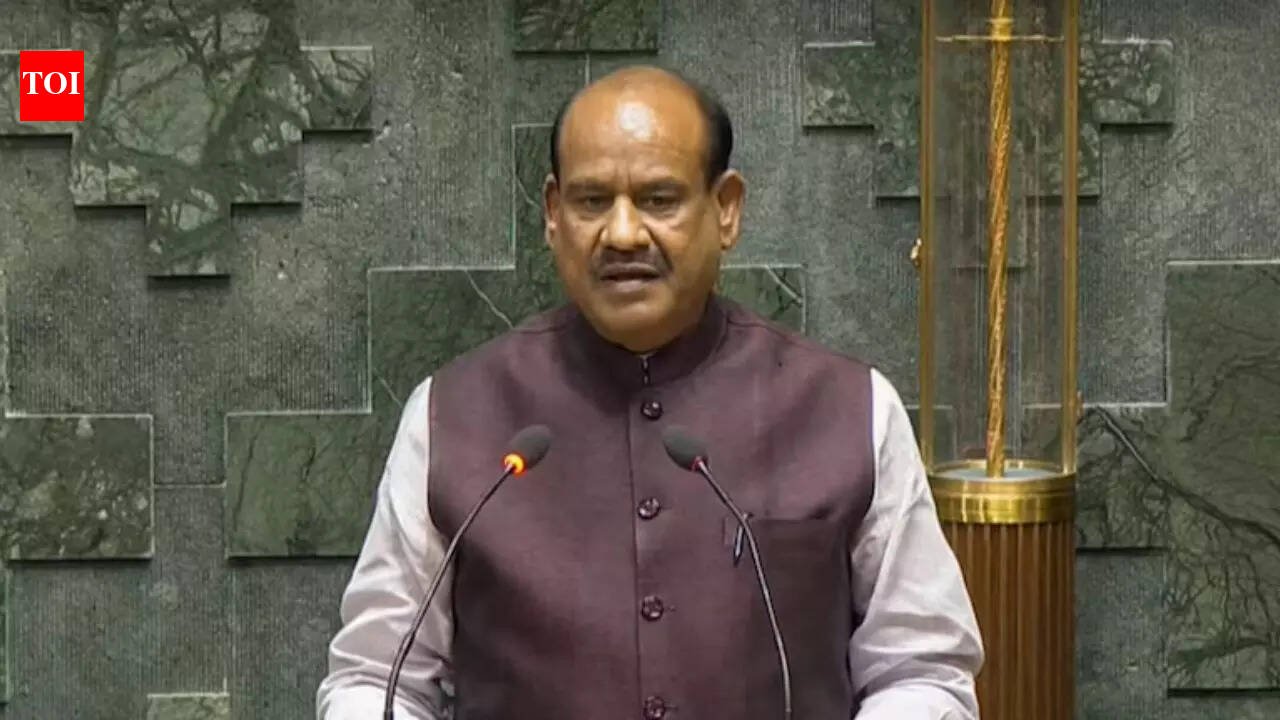
No-confidence motion debate: Opposition accuses Om Birla of partisanship, NDA defends Speaker in Lok Sabha | India News


'Om Birla Perfected Art Of Turning Off Microphones Of Oppn MPs': Explosive Mahua Moitra In Lok Sabha

NEW DELHI: The ruling NDA on Tuesday strongly defended Lok Sabha Speaker Om Birla during a debate on a resolution seeking his removal, while opposition parties accused him of acting under government pressure and failing to conduct House proceedings impartially.The debate began after opposition members moved a resolution to remove Birla as Speaker, alleging bias and claiming he made “baseless” allegations about certain women MPs and did not allow Leader of Opposition Rahul Gandhi to speak on critical issues.

‘Om Birla Perfected Art Of Turning Off Microphones Of Oppn MPs’: Explosive Mahua Moitra In Lok Sabha

Birla did not attend the proceedings, although the Constitution permits the Speaker to be present and defend himself during such debates. The discussion is expected to conclude on Wednesday, when Union Home Minister Amit Shah will respond to the resolution.

Opposition accuses Speaker of bias

Initiating the debate, Congress MP Gaurav Gogoi said the opposition had brought the motion to protect parliamentary democracy.The resolution, he said, was necessary to “save the Constitution” and the “dignity of the House”.“There was an expectation that the chair would be neutral. But research of uncorrected versions would show the number of times the Leader of Opposition (LoP) was interrupted. While the LoP was on his feet, another member was called upon (to speak),” Gogoi said.Citing remarks by former prime minister Jawaharlal Nehru, Gogoi said the Speaker symbolises the freedom and dignity of the House.“Where is the freedom of speech now?” he asked.Gogoi added that opposition members share cordial relations with Birla personally but felt compelled to move the resolution.“But it is our responsibility to protect the dignity of the House and save the Constitution. It is to protect the faith of the people in democracy,” he said.Shiv Sena (UBT) MP Arvind Sawant also questioned the Speaker’s conduct.“Please introspect why we had to bring the no-confidence motion. The House can’t function on anyone’s whims. We respect his authority. But he should not conduct himself under pressure and compromise independence,” Sawant said.Trinamool Congress MP Mahua Moitra described it as “divine karma” that she was supporting a motion to remove Birla as Speaker, alleging she had been “wrongly” expelled from the Lok Sabha in 2023.She said the Speaker had set “less than graceful benchmarks” while presiding over the House.DMK leader T R Baalu called Birla a “gentleman” but criticised what he described as “harsh” action against opposition members and urged him to take corrective steps.

NDA says Speaker acted impartially

Members of the treasury benches rejected the allegations and defended Birla’s conduct, arguing that disciplinary action against opposition MPs was taken due to improper behaviour.Parliamentary Affairs Minister Kiren Rijiju accused the Congress of targeting constitutional institutions since losing power in 2014.He said the resolution was an attempt to undermine the authority of the Speaker.Rijiju said Birla had remained impartial and provided the opposition with ample opportunity to speak in the House.He also quoted former prime ministers Jawaharlal Nehru and Rajiv Gandhi to stress that decisions of the Speaker are final and must be respected by all members.The minister claimed that several opposition MPs had privately expressed discomfort with the resolution.According to Rijiju, 50 opposition members told him personally they were unhappy with the move but were supporting it due to political pressure.During his intervention, Rijiju also criticised Rahul Gandhi’s conduct in Parliament, saying he often skipped proceedings or left the House after delivering his speech.He added that Congress MP Priyanka Gandhi Vadra could be a better Leader of Opposition.Responding to Rijiju’s remarks, Priyanka Gandhi said she found it ironic that members of the ruling side were quoting Nehru.“He mentioned that I was laughing. I wanted to clear that I was laughing because the person they keep criticising day and night, that Nehru ji, they used a quote of Nehru ji for their own argument.”“They have suddenly started respecting Nehruji and that he strengthened democracy and gave such a speech,” she said.

NDA allies back Birla

NDA allies also supported the Speaker and criticised the opposition’s move.TDP MP Lavu Srikrishna Devarayalu praised Birla’s handling of the Lok Sabha since 2019 and said parliamentary productivity had increased under his leadership.He said the resolution was brought “not to succeed but to create spectacular headlines”.JD(U) leader and Union Minister Rajiv Ranjan Singh described the motion as an attempt to pressure the Speaker.Shiv Sena MP Shrikant Shinde attacked Rahul Gandhi and said the Leader of Opposition would face interruptions if he promoted what he called an “anti-India” agenda in Parliament.The debate on the resolution is expected to continue in the Lok Sabha on Wednesday.


Source link

Air India fuel surcharge: Airline to levy Rs 399 charge on domestic tickets from March 12


Air India fuel surcharge: Airline to levy Rs 399 charge on domestic tickets from March 12

Air India and Air India Express will start levying a fuel surcharge of Rs 399 on each domestic flight ticket from March 12, as airlines face rising operating costs following a sharp increase in aviation turbine fuel (ATF) prices amid tensions in Middle East, reported PTI.The airline group said the surcharge will be implemented in phases across domestic and international routes due to the steep rise in jet fuel prices linked to the geopolitical situation in the Gulf region.In the first phase, a fuel surcharge of Rs 399 per domestic ticket will be imposed from March 12. The same surcharge will also apply to flights to SAARC destinations, the airline said in a statement on Tuesday.For West Asia routes, the surcharge will be USD 10 per ticket, while the charge for Africa flights will increase by USD 30 to USD 90. The surcharge for Southeast Asia services will rise by USD 20 to USD 60.The airline also said the surcharge will now apply to flights to and from Singapore, where no such charge was levied earlier.“Air India group today announced a phased expansion of a fuel surcharge on its domestic and international routes, necessitated by the steep rise in jet fuel prices arising from the geopolitical situation in the Gulf region,” the statement said.


Source link

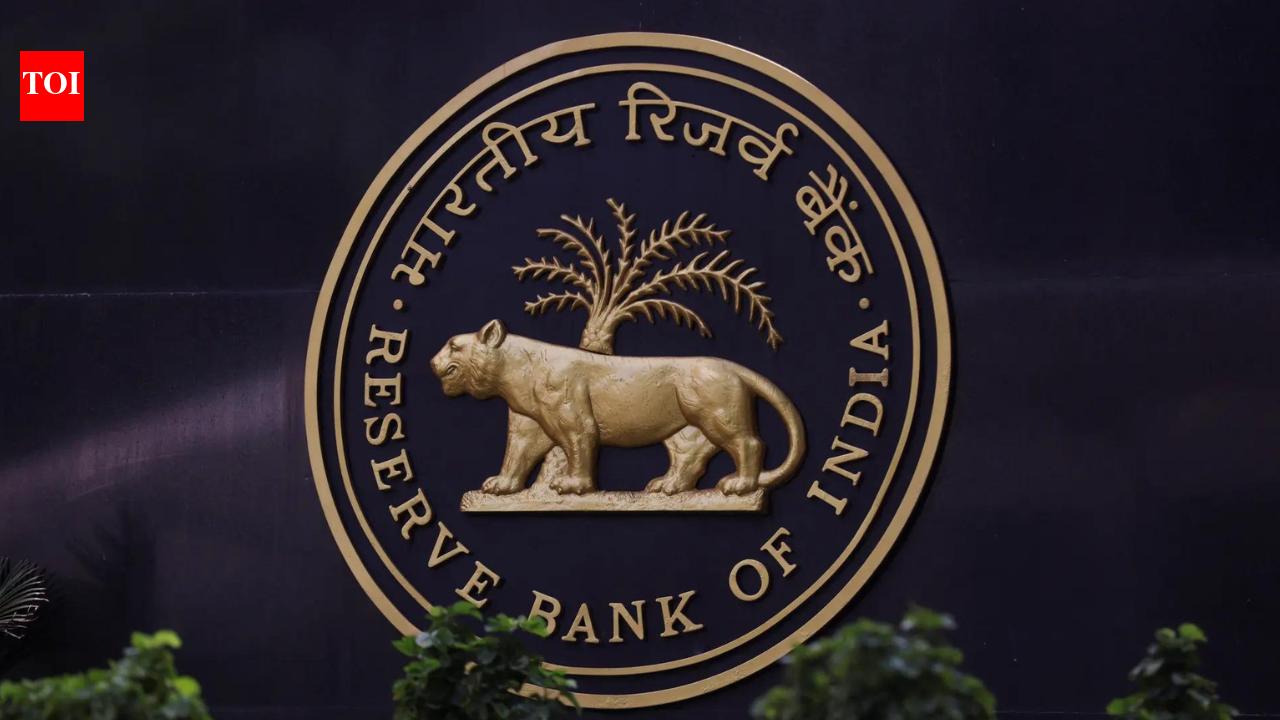
RBI dividend norms: Banks can pay up to 75% of profits as payout from FY27


RBI dividend norms: Banks can pay up to 75% of profits as payout from FY27

The Reserve Bank of India has capped the maximum dividend payout by banks at 75% of profit after tax (PAT), with the new prudential norms set to take effect from the financial year 2026-27.The central bank on Tuesday issued the Reserve Bank of India (Commercial Banks – Prudential Norms on Declaration of Dividend and Remittances of Profits) Directions, 2026, after consultations with stakeholders.Under the new framework, banks will be allowed to declare dividends “up to the limits prescribed… but in aggregate not exceeding 75 per cent of the PAT for the period for which the dividend is being proposed,” the RBI said.The regulator has also stipulated that a bank’s regulatory capital must not fall below the applicable regulatory capital requirement even after payment of dividends.For foreign banks operating in India through the branch mode, the RBI said they must report positive profit after tax for the relevant period before remitting profits to their head offices.The directions also lay down prudential norms governing dividend declaration by small finance banks, local area banks, payments banks and regional rural banks, PTI reported.The revised guidelines will come into force from FY2026-27, forming part of the central bank’s efforts to strengthen capital buffers while allowing banks to distribute profits to shareholders.


Source link

India considering naval escort for ships in Strait of Hormuz amid Iran war: Report | India News


India considering naval escort for ships in Strait of Hormuz amid Iran war: Report

NEW DELHI: India is considering sending naval ships to escort its vessels through the Strait of Hormuz amid the ongoing Middle East tensions, according to a report by The New York Times.The report said the move is being examined following requests from Indian shipowners seeking protection for commercial vessels navigating the strategic waterway.

Iran’s Huge Offer To U.S. Allies In Mideast Over Strait Of Hormuz Passage | ‘Dump Israel, And…’

“India was also considering sending its warships in response to requests from Indian shipowners for naval escorts,” the newspaper reported, quoting Capt. P.C. Meena, a senior official at India’s main maritime authority.The Strait of Hormuz has become a high-risk zone for shipping after tensions escalated in the Middle East following attacks involving Iran, the United States and Israel. The conflict, now in its second week, has disrupted maritime traffic and raised concerns about energy supplies.The Middle East supplies about 55 per cent of India’s crude oil, according to brokerage firm Jefferies. Around 35 per cent of India’s oil imports pass through the Strait of Hormuz.India also depends heavily on liquefied petroleum gas imports from Gulf countries such as the UAE, Qatar, Saudi Arabia and Kuwait. Nearly 80 per cent of the country’s LPG imports transit through the strategic waterway.Reports suggest that several Indian vessels are currently unable to cross the Strait of Hormuz due to security risks linked to the conflict.Around 38 Indian-flagged commercial ships carrying more than 1,100 sailors are stranded in the Persian Gulf and the Gulf of Oman, according to a report earlier this month.Union Shipping Minister Sarbananda Sonowal has directed officials, including the Directorate General of Shipping, to take steps to ensure the safety of Indian seafarers and maritime assets.Meanwhile, Pakistan has deployed naval escorts for its commercial vessels operating in the region. The Pakistani navy said its warships would accompany merchant ships in the Middle East “to ensure the uninterrupted flow of national energy supplies.”Images released by the navy showed a warship escorting a crude oil tanker belonging to Pakistan’s national shipping company.Pakistan imports most of its natural gas from Qatar and crude oil from Saudi Arabia and the United Arab Emirates. Shipping companies have reportedly slowed or halted energy shipments through the Strait of Hormuz due to rising security concerns.(With inputs from The New York Times)


Source link

Donald Trump Ufo Files Release: Obama thinks they are real, Donald Trump has ‘UFO speech ready’: Are we close to finding aliens?


Obama thinks they are real, Donald Trump has 'UFO speech ready': Are we close to finding aliens?

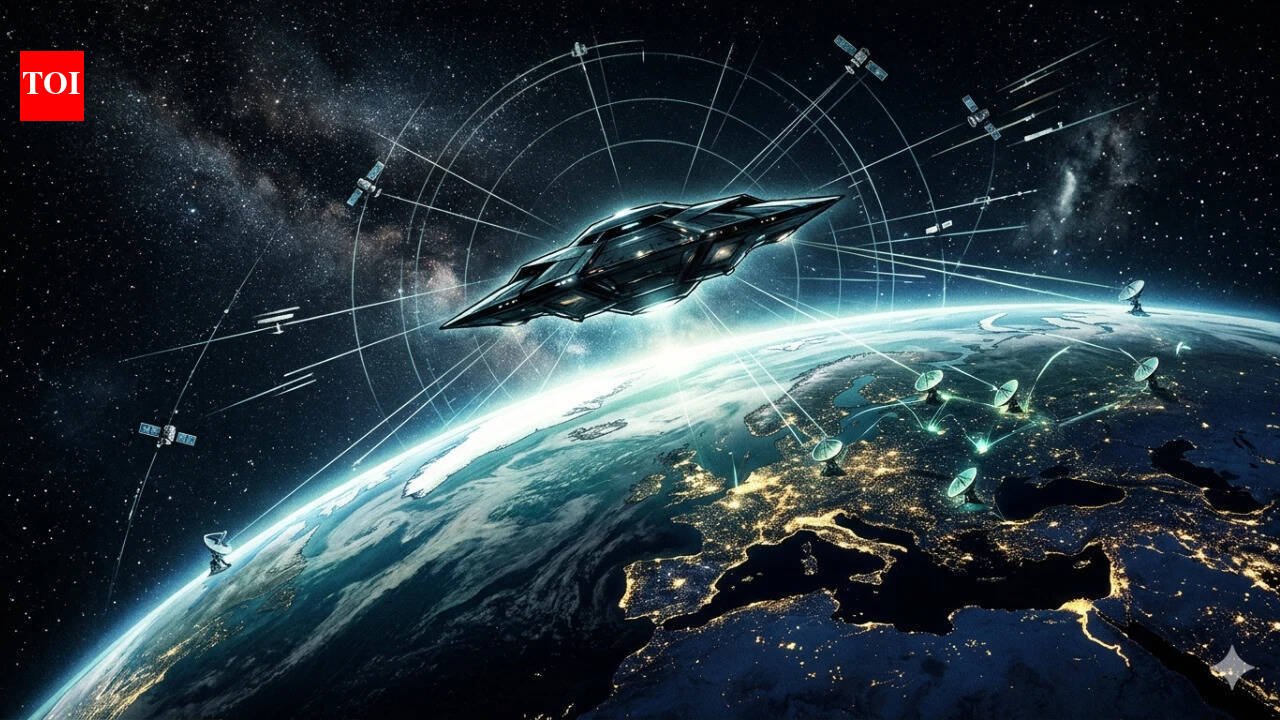
AI image (Picture credit: Google Gemini)

For decades, the idea of alien life has lived somewhere between science and science fiction. From Hollywood & Bollywood films to grainy UFO footage on the internet, the possibility that humanity is not alone in the universe has fascinated people across the world. But in recent years, the conversation has moved increasingly from speculation to scientific inquiry.Renewed interest has been triggered by reports that the United States government may release additional classified records related to unidentified aerial phenomena (UAPs), the modern term for UFOs. The push gained momentum after US President Donald Trump said his administration would direct the Pentagon and other federal agencies to identify and release such records. In a social media post, he cited the “tremendous interest” in extraterrestrial matters following comments by former US president Barack Obama, saying the public deserved greater transparency.These files, expected to come from agencies such as the Pentagon and US intelligence departments, are believed to contain observations of aerial objects that remain unexplained. While scientists caution that such documents are unlikely to confirm alien spacecraft, they have reignited a broader question: are we any closer to discovering life beyond Earth?The answer is complicated: both yes and no. Humanity has learned more about the universe in the last three decades than in the previous three centuries. Thousands of planets have been discovered beyond our solar system.

How big is the universe?

Telescopes can now analyse the atmospheres of distant worlds. Space missions continue to search for microbial life on Mars and icy moons.Yet despite these advances, one puzzling question remains unresolved: if the universe is so vast and old, why have we not found clear evidence of alien civilisations?The fascination with extraterrestrial life is not limited to scientists. At times, it has also reached the highest levels of political power in the United States.

From Carter to Trump: The alien question in American politics

Curiosity about aliens and UFOs has long extended into the highest levels of American politics. For decades, several US presidents have publicly spoken about extraterrestrial life, sometimes seriously, sometimes jokingly, reflecting how deeply the topic has entered public imagination.The debate gained fresh attention recently after former US president Barack Obama said in a podcast interview that aliens are “real,” though he clarified he had seen no evidence of extraterrestrial contact during his presidency. Obama later explained that statistically the universe is so vast that the odds of life existing somewhere else are high, even if visits to Earth are unlikely.Earlier American leaders also showed fascination with the idea. Jimmy Carter once reported witnessing what he believed was a UFO in Georgia in 1969, an experience he later documented with the International UFO Bureau. As president, Carter even placed a message from Earth aboard the Voyager Golden Record, launched on the Voyager 1 and Voyager 2 spacecraft in 1977, intended for any extraterrestrial civilisation that might encounter them.During the Cold War, Ronald Reagan famously used the idea of an alien threat to highlight humanity’s shared destiny. Speaking at the United Nations in 1987, Reagan remarked that global divisions might disappear quickly if humanity faced “an alien threat from outside this world.”Former president Bill Clinton also expressed interest in the mystery. In a 2014 television interview, he said he had asked aides to investigate Area 51, the secretive US Air Force testing facility long associated with UFO speculation, to ensure there was no hidden alien activity there.More recently, the topic resurfaced during the presidency of Donald Trump. Trump previously said he had received briefings about UFOs during his first term but remained sceptical about extraterrestrial visitors.
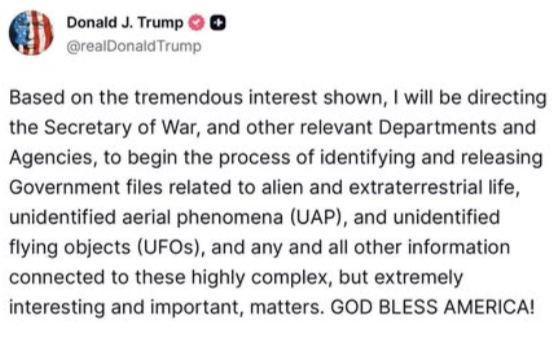
Trump UFO files release announcement

Trump UFO files release announcement (Image Source – Truth/Donald Trump)

However, his daughter-in-law Lara Trump recently suggested in a podcast interview that Trump may have “a speech ready” about extraterrestrial life that could be delivered at the right time.Together, these comments illustrate how the possibility of alien life, once confined largely to science fiction, has occasionally surfaced even in presidential conversations, reflecting both scientific curiosity and the enduring mystery surrounding the universe.This puzzle lies at the heart of one of science’s most famous ideas — the Fermi Paradox.

The great cosmic puzzle

The paradox is named after Italian-American physicist Enrico Fermi, who raised a simple but profound question during a conversation with colleagues in 1950. Looking at the immense scale of the universe, Fermi reportedly asked, “Where is everybody?”

The Fermi Paradox explained

The logic behind the question is straightforward. The Milky Way Galaxy alone contains hundreds of billions of stars. Many of those stars likely host planets. Over billions of years, some of those planets could have developed intelligent life. Given enough time, such civilisations might develop advanced technology and explore space.In theory, even a single technologically advanced civilisation could spread across the galaxy in a few million years — a short period on cosmic timescales. If that is possible, then traces of alien technology, signals or visits should already be visible.Yet humanity has found none.This contradiction between high probability and zero evidence is what scientists call the Fermi Paradox.Over the decades, scientists, philosophers and futurists have proposed many explanations. Some suggest alien life is extremely rare. Others argue that intelligent species often destroy themselves before exploring the stars. A few theories even suggest that aliens may already be aware of humanity but deliberately avoid contact.Here are some of the most intriguing explanations that attempt to solve the mystery.

10 ways scientists explain the Alien silence

The rare Earth hypothesis

One possibility is that intelligent life is extraordinarily rare.The Rare Earth Hypothesis suggests that while microbial life might be common, the conditions required for complex organisms — and eventually intelligent species — are incredibly unlikely.Earth’s history offers several examples of unlikely events that made complex life possible. These include the presence of a large stabilising moon, plate tectonics that regulate climate, a protective magnetic field and a relatively stable star. Even small changes in these conditions could have prevented the emergence of complex life.Under this theory, Earth may simply be one of the very few places where all the necessary factors came together.

The great filter

Another influential idea is known as the Great Filter hypothesis.This theory proposes that somewhere between the formation of planets and the rise of interstellar civilisations lies a difficult barrier, a “filter” that most life forms fail to pass.The filter could occur at many stages. Perhaps life rarely begins in the first place. Maybe complex organisms almost never evolve. Or perhaps intelligent species tend to destroy themselves through nuclear war, environmental collapse or uncontrolled technology.If the Great Filter lies ahead of humanity, it would imply that technological civilisations often collapse before achieving long-term survival.

The distance problem

Even if intelligent life exists elsewhere, the sheer size of space may make contact extremely difficult.The nearest star system, Proxima Centauri, is more than four light-years away. Current spacecraft would take tens of thousands of years to reach it.Human radio signals have travelled only about a hundred light-years into space since the first broadcasts in the early twentieth century. That is a tiny fraction of our galaxy.Civilisations might exist thousands or millions of light-years away, separated by distances too vast for practical communication.

The zoo hypothesis

Some researchers have proposed a more unusual idea: that aliens deliberately avoid contacting humanity.Known as the Zoo Hypothesis, the theory suggests advanced civilisations may observe Earth without interfering, much like humans watch animals in a wildlife reserve.Under this scenario, extraterrestrial societies might follow ethical rules that prevent them from influencing developing worlds until those worlds reach a certain level of technological maturity.While there is no evidence for this idea, it remains a popular concept in discussions about extraterrestrial intelligence.

The dark forest theory

A darker explanation is known as the Dark Forest Hypothesis.According to this theory, the universe may be filled with intelligent civilisations, but they remain silent out of fear. In a galaxy where resources are limited and survival is uncertain, revealing one’s location could invite attack from a hostile civilisation.As a result, every advanced society might hide quietly, avoiding communication with others.This concept has gained popularity in recent years through science fiction but also raises serious philosophical questions about cosmic survival.

The simulation hypothesis

Another controversial idea suggests humanity might not be living in a natural universe at all.The Simulation Hypothesis proposes that reality could be an advanced computer simulation created by a highly advanced civilisation.If that were the case, alien life might not appear simply because the simulation’s creators chose not to include it.While the theory remains speculative, it has been discussed by physicists and philosophers exploring the limits of technological possibilities.

The self-destruction theory

Some scientists believe intelligent civilisations often eliminate themselves through technological risks.Once a species develops advanced technology, it gains the power to alter or destroy its environment. Nuclear weapons, artificial intelligence, bioengineering or environmental collapse could threaten long-term survival.If most civilisations collapse shortly after reaching technological maturity, the window for detecting them may be extremely small.Humanity itself is only about a century into the age of modern technology — a blink of time on cosmic scales.

The ocean worlds hypothesis

Another possibility is that alien life may exist in places that are difficult for humans to observe.Several moons in our solar system, such as Europa and Enceladus, are believed to contain vast oceans beneath thick layers of ice.If microbial life exists in these oceans, it might thrive in darkness far below the surface. Detecting such organisms from Earth would be extremely challenging.Life could therefore be widespread but hidden in environments humans have barely explored.

The technological mismatch

Another theory suggests alien civilisations may communicate using technologies humans cannot detect.The SETI Institute, which leads the Search for Extraterrestrial Intelligence, has traditionally searched for radio signals from space. But advanced societies might use entirely different methods, such as laser communications or technologies not yet understood by human science.If alien signals exist in forms beyond our detection capabilities, humanity might simply be listening to the wrong channels.

The “They Are Already Here” idea

Perhaps the most controversial explanation is that extraterrestrials have already visited Earth.Supporters of this idea often point to mysterious sightings of objects in the sky — commonly known as UFOs.In recent years, governments have begun referring to these sightings as Unidentified Aerial Phenomena, a broader term that includes any unexplained objects observed in the atmosphere.However, scientists stress that unexplained does not necessarily mean extraterrestrial.

The UFO sightings that captured public imagination

Several high-profile incidents have fuelled speculation about alien visitors.One of the most famous is the Roswell Incident in 1947, when debris recovered in New Mexico was initially described by local authorities as a “flying disc”. The US military later said the material came from a secret surveillance balloon.Another widely discussed case involved US Navy pilots encountering an unidentified object during exercises near the Pacific Ocean in 2004. The incident, often called the USS Nimitz UFO encounter, involved radar detections and infrared footage of a fast-moving object that appeared to defy conventional aircraft behaviour.In 2017, several such videos were released publicly by the United States Department of Defence, drawing renewed attention to unexplained aerial sightings.Despite the mystery surrounding some cases, many UFO sightings eventually turn out to be misidentified aircraft, weather balloons, satellites or natural atmospheric phenomena.

UFO reports beyond the West

Unidentified objects in the sky are not limited to the United States.In India, reports of strange lights have occasionally emerged from remote regions. In 2012, residents and military personnel in the Himalayan region of Ladakh reported seeing glowing objects moving across the night sky near the India-China border.Investigations suggested the lights were likely Chinese lanterns or astronomical phenomena, but the sightings attracted widespread media attention.One of the most famous modern cases occurred in November 2023 at Imphal Airport. A bright, white, ball-like object hovered directly over the airfield in broad daylight. The Indian Air Force (IAF) didn’t take it lightly; they scrambled two Rafale fighter jets to intercept it. The pilots saw the object on their sensors, but as they closed in, it simply vanished. The airport was shut down for over three hours, and to this day, no official explanation has been given.Further north, in the Kongka La Pass of the Himalayas, locals have reported “silent, triangular craft” for years. This area is a “no-man’s land” between India and China, making it one of the most remote places on Earth. In 2024 and 2025, reports of glowing orbs emerging from the mountains became so frequent that local Indian Army units reportedly logged them as “unidentified technical observations.” These aren’t just stories; these reports were logged in official military records, though no conclusive explanation has been provided..Similar stories have appeared around the world for decades. Most remain unexplained, though few provide evidence of extraterrestrial technology.

The scientific search for life

While UFO sightings capture public imagination, the real scientific search for alien life focuses on astronomy and planetary science.One of the most promising areas of research involves exoplanets — planets that orbit stars outside our solar system.Since the 1990s, astronomers have discovered thousands of such worlds using telescopes like the Kepler Space Telescope and the James Webb Space Telescope.Some of these planets lie within the “habitable zone” of their stars, where temperatures might allow liquid water to exist.

Where scientists are looking for life

Scientists are now beginning to analyse the atmospheres of distant planets, searching for gases such as oxygen or methane that could indicate biological activity.Meanwhile, robotic missions continue exploring our own solar system.Rovers on Mars are searching for signs that microbial life may once have existed there. Future missions may attempt to drill into the icy crusts of moons like Europa to search for organisms in subsurface oceans.Even microbial life beyond Earth would represent one of the most important discoveries in human history.

What scientists really think

Despite growing public interest in UFOs, most scientists remain cautious.There is currently no verified evidence that extraterrestrial spacecraft have visited Earth. At the same time, many astronomers believe the universe is so vast that it would be surprising if life existed only on our planet.The real challenge lies in detecting that life across immense cosmic distances.Astronomers often compare humanity’s search for alien signals to scooping a glass of water from the ocean and concluding that whales do not exist because none appeared in the sample.Humanity has only just begun to explore the cosmos.

A question that defines our era

The search for alien life is not just about curiosity. It touches on some of the deepest questions humanity can ask.

Three questions scientists still cannot answer

Are we unique in the universe? Is intelligent life a common outcome of evolution? Or is Earth an extraordinarily rare exception?New telescopes, space missions and scientific techniques may begin to answer these questions in the coming decades.For now, the universe remains silent.But as astronomers continue to scan the skies and explore distant worlds, the possibility remains that one day humanity may detect a signal, faint, distant and unmistakably artificial.If that moment comes, it would transform humanity’s understanding of its place in the cosmos.Until then, the mystery remains unresolved.And the question that Enrico Fermi asked more than seventy years ago continues to echo across modern science:“Where is everybody?”




Source link