Breaking News
Smartphones in classrooms Is a complete ban the way forward? | India News


Smartphones in classrooms Is a complete ban the way forward?

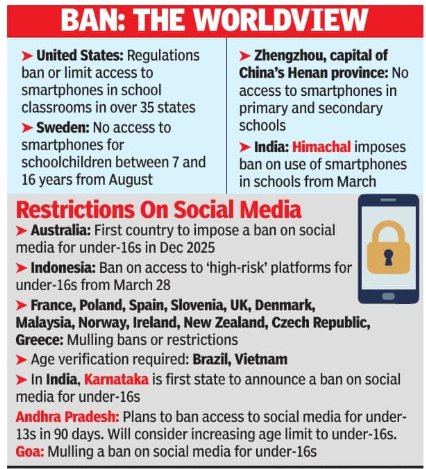
Hamlet’s existential dilemma — ‘To be or not to be?’ — is finding an echo in Indian schools: To ban or not to ban smartphones in classrooms.With Himachal Pradesh chief minister Sukhvinder Singh Sukhu announcing a ban on the use of mobile phones by students in all govt and private schools from March, and his Karnataka counterpart Siddaramaiah in his budget speech on March 6 announcing a ban on social media for under-16 children, concerns over excessive smartphone use and its impact on children’s cognitive abilities are back in the spotlight.These decisions align with a growing global push to curb the use of smartphones in schools amid rising concerns about shrinking attention spans, social media addiction and distraction in classrooms. In the United States, nearly 35 states have enacted laws requiring public schools to restrict or ban the use of mobile phones by students on campus, with exceptions for students with disabilities who have individualised education programmes. Sweden will implement a nationwide mobile phone ban in all schools from Aug to improve security and study conditions for students. The new rule, which will affect children between the ages of seven and 16, will make it compulsory for all schools and after-school clubs to collect students’ phones and hold them until the end of the day.In January 2025, Zhengzhou, capital of Henan province, became the first Chinese city to implement a law, prohibiting the use of mobile phones in primary and secondary schools unless specifically needed for teaching purposes.Restrictions On AccessInstead of imposing a ban on mobile phones for teens, some countries are opting for restrictions on social media. In Dec, Australia became the first country to ban certain social media platforms for teens under the age of 16, while Indonesia announced its decision to ban access to “high-risk” platforms for under-16s from March 28.France’s National Assembly has backed similar plans for children under 15. Poland too is planning to introduce a legislation to prohibit children under the age of 15 from accessing social media, with tech firms directly responsible for age verification.Calls for such measures have been gathering steam in India too, including in the recent Economic Survey. After Kar nataka, Andhra Pradesh govt announced its plan to curb access to social media for under-13s within 90 days and will consider extending the ban to under-16s. Goa also has set up a panel to investigate what such a ban might look like and how it can be implemented.Rules For Smartphone UseIndia is yet to formulate a national policy or a specific law on access to social media apps and smartphone use in educational institutions. However, calls for regulation of smartphone use are growing. The matter reached the Delhi high court last year, but it refused to order a complete ban, calling it impractical and undesirable. Instead, the court issued guidelines for regulating and monitoring use of smartphones.The reasons for concern are obvious, says Jyoti Arora, principal of Delhi-based Mount Abu School, adding that mobile phones can be great tools for learning, communication, and accessing digital resources, but distraction remains a concern. “Almost every day, our office is flooded with several parents complaining about games, social media, and constant notifications diverting the attention of their children from studies. Many of them have started complaining about eye strain and poor posture,” Arora says.
-

Academic PerformanceShe linked excessive use of smartphones to a decline in student academic performance. “We also saw a decline in students’ academic performance if they were too glued to the screen. An even bigger concern is that of exposure to cyber risks, such as online bullying and access to inappropriate content.”A 2023 Unesco report* showed that mere proximity to a mobile device distracted students and led to a negative impact on learning in 14 countries. It cited research studies to point out that “banning mobile phones from schools improves academic performance, especially for lowperforming students.”Finding WorkaroundsAmeeta Mulla Wattal, chairperson of DLF Foundation Schools and Scholarship Programmes, says the word ‘ban’ has never really helped anybody, particularly in school systems. “Anything oppressive is not right, especially for teenagers. The learning ecosystem has become so tech-integrated that even in a classroom, platforms like Whats -App, Instagram, and games are all accessible. Students are very adept at finding workarounds,” she says. The Covid-19 pandemic, which saw education systems across the world shift online, deepened this integration, with everything from classes to parentteacher meetings being conducted remotely.Wattal, who is also the former long-term principal of Delhi’s Springdales School, says the real issue isn’t the device, but teaching responsible digital use and focus. “There are so many WhatsApp groups that teachers use to share resources, homework, and foster discussions. The parent community is all on WhatsApp groups too, receiving notices and updates from school. Many students come by other means of transport or go for private coaching afterwards. A phone, therefore, becomes crucial for communication,” she adds.Need For A Holistic ApproachFinding a middle path is the need of the hour, Wattal emphasises, a process that would require dialogue among teachers, parents, and students.A team of researchers from the University of Birmingham drew a similar conclusion in a Feb 2025 study** of 1,227 students across the UK. Bans in isolation, the study argued, are not enough to tackle the negative impact, and it called for a more holistic approach to lowering phone use among students.Some schools in India are using lockers or sealed pouches to keep phones away from students during lessons, while others require formal requests to be submitted for exceptional cases. Arora says her school does not allow students to bring mobile phones, except on the specific written request of parents, in case they need to use the phone after school hours.Students deposit their phones in the morning and take them when they leave. However, allowing students to use smartphones during school hours is unlikely any time soon. “We need to have more talks, discussions, and digital ethics workshops before we allow that. We are doing our bit by inviting specialists to discuss cyber threats, or even the need for digital detox,” she adds.The Delhi high court ruling in March had also pointed out that schools must educate students on responsible online behaviour, digital manners, and the ethical use of smartphones. Students should be counselled that high levels of screen time and social media engagement can lead to anxiety, diminished attention spans, and cyberbullying, the court had added.However, schools are only a part of the equation, Arora emphasises. “The lessons for responsible use of phones and digital ethics must also be taught at home, with parents shouldering equal responsibility as the teachers.”*Unesco study: Technology in education: https://www.unesco.org/ gem-report/en/publication/ technology**UK study: School bans alone not enough to tackle negative impacts of phone and social media use: https://www.birmingham.ac.uk/ news/2025/school-bans-alone-notenough-to-tackle-negative-impactsof-phone-and-social-media-use


Source link

Pooja in stadium to wild celebrations at team hotel: How India welcomed the T20 World Cup title in Ahmedabad | Cricket News


Pooja in stadium to wild celebrations at team hotel: How India welcomed the T20 World Cup title in Ahmedabad
Thousands had made their way to welcome Team India after their T20 World Cup triumph in Ahmedabad. (Image: Sahil Malhotra/TimesofIndia.com)

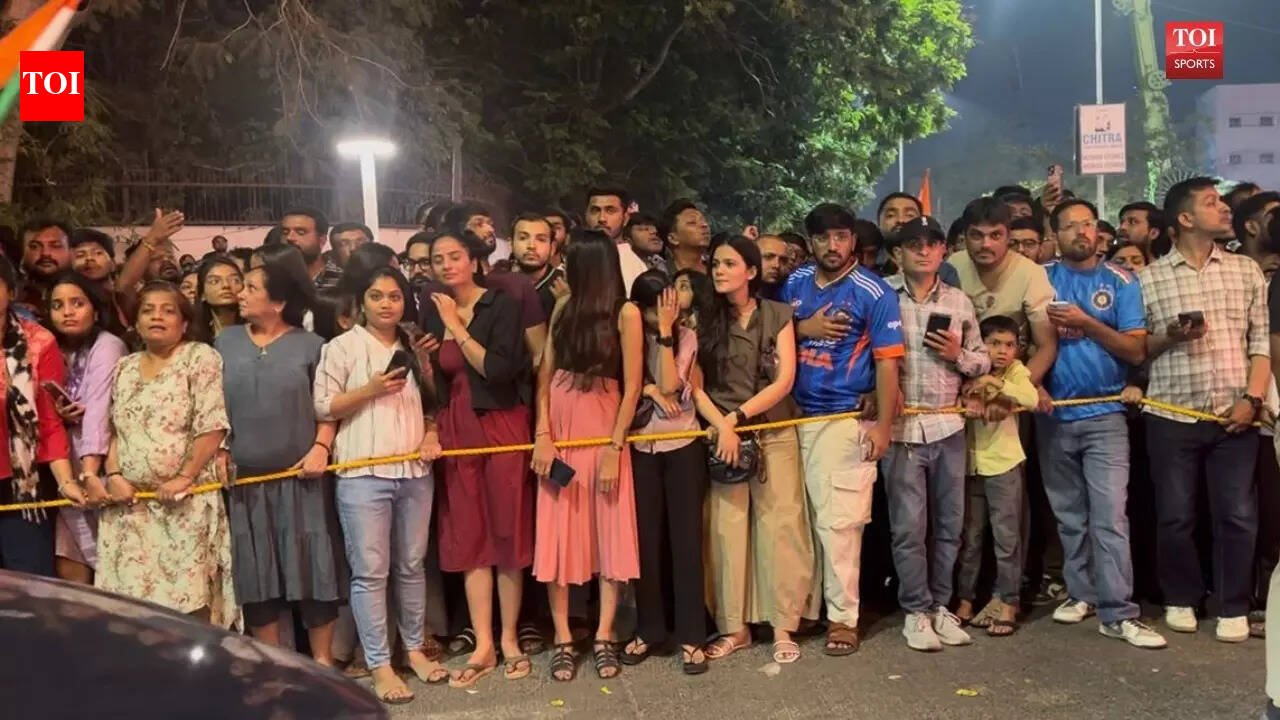
TimesofIndia.com in Ahmedabad: When the fireworks went off at the Narendra Modi Stadium, there wasn’t the expected frenzy outside the venue. The thousands who rushed to their seats before the T20 World Cup final began were in no hurry to leave as India celebrated the 2026 T20 World Cup title. Impromptu bhangra, celebrations with loved ones and the victory laps were the kind of moments every Indian fan would savour for the rest of their lives, and Ahmedabad certainly wasn’t going to let go of the opportunity. Some people without tickets thronged the lanes leading to the gigantic facility. For them, it was about screaming their lungs out while dancing to the tunes of “India! India!” and the beats of the dhol which broke out the moment India completed formalities.Although the night of celebrations was going to be long, Suryakumar Yadav and Gautam Gambhir‘s first priority was taking the trophy to the temple located inside the stadium with ICC Chair Jay Shah. The three offered their prayers and received blessings before moving on to the next set of events.

Ahmedabad erupts as Team India arrive at hotel after T20 World Cup win

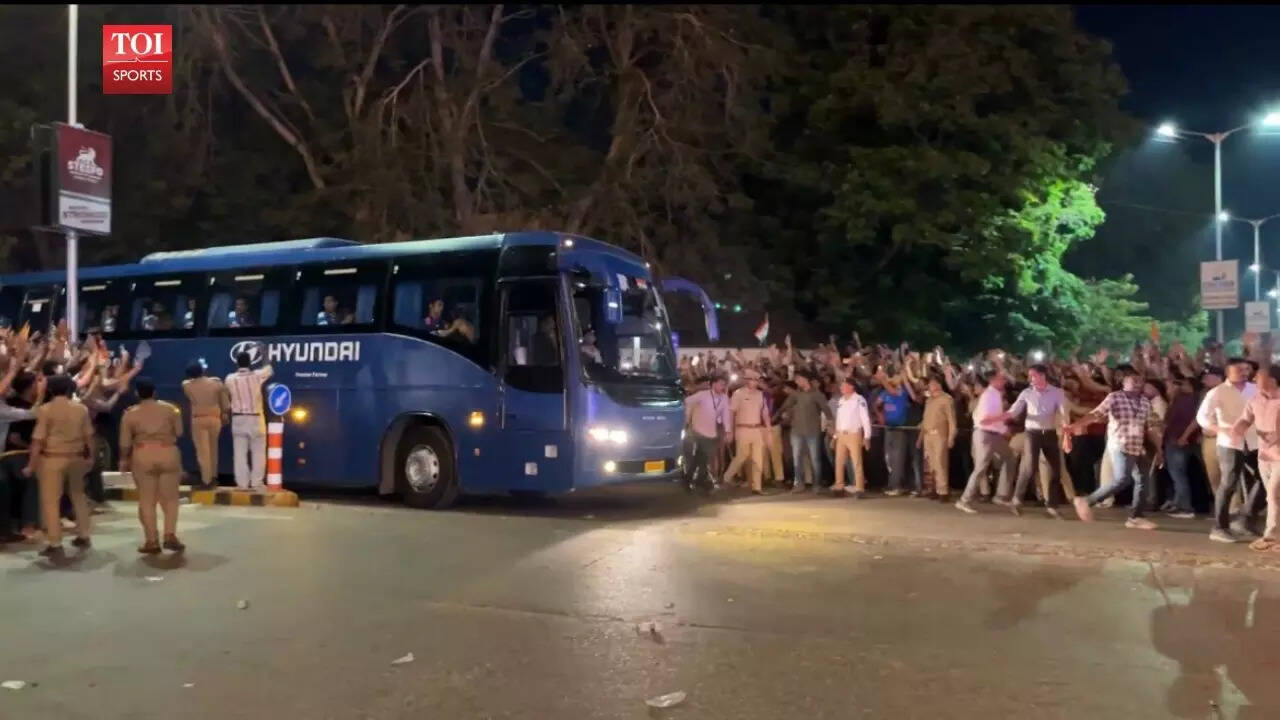
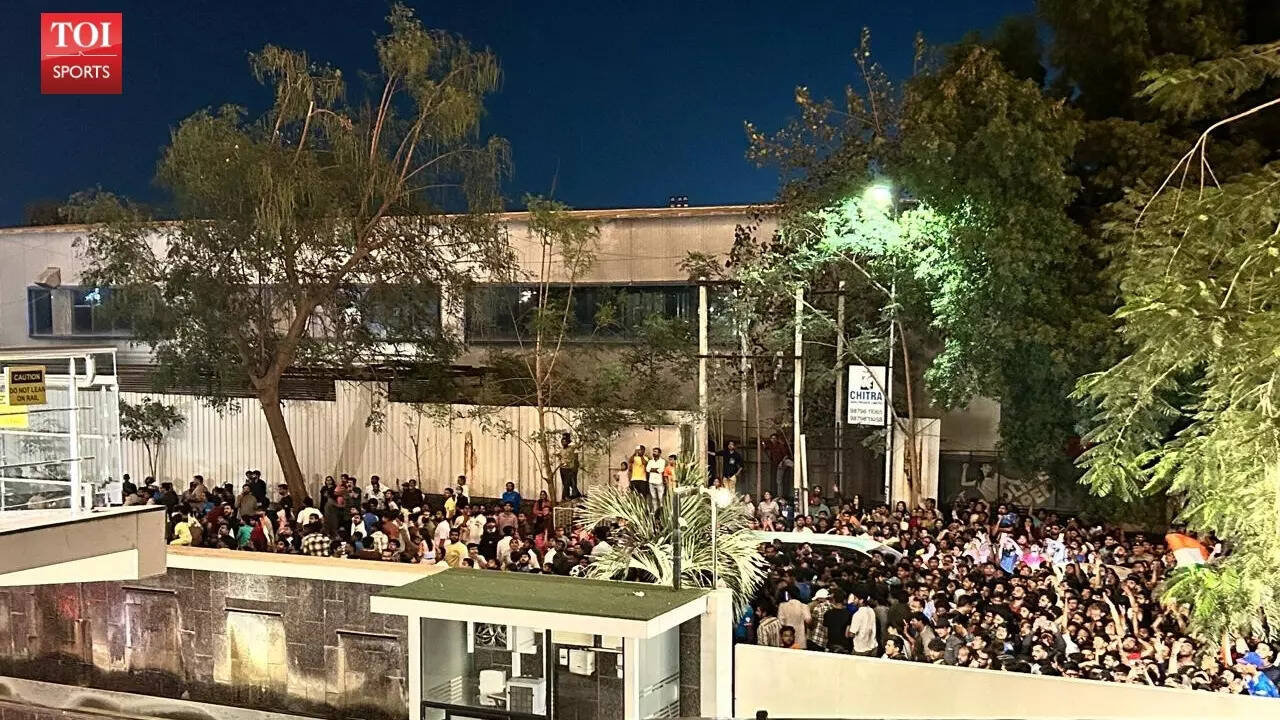
Around 2:30 am, the word had spread that the team was around and the loud sirens made spotting them much easier. Hundreds gathered around the hotel walls to catch a glimpse of their superstars and nearly a thousand people thronged both sides of the heavily secured streets. The police had blocked the straight road to the hotel but Indian cricket fans maneuvered around the home stretch to reach it. The hotel staff prepared for the mayhem by blocking all entry points to the facility, even making guests wait outside before opening the barricades.

India-T20-WC-celebrations-TOI

A massive crowd had collected outside the Team India hotel in Ahmedabad after the T20 World Cup triumph. (Image: Sahil Malhotra/TimesofIndia.com)

When Hardik Pandya got off the team bus holding the trophy, fireworks went off and the players kept ducking for cover because the explosions seemed too close for comfort. The usual flower shower, dhol and music followed but the entire team rushed into the hotel’s ballroom. To avoid the crowd and the madness of in-house guests, the lobby area wasn’t used. While this disappointed some fans waiting for hours, it seemed the most sensible approach.

Mandir-visit-1280

Gautam Gambhir (L), Jay Shah (R) and Suryakumar Yadav (back) after offering the T20 World Cup trophy to Lord Hanuman in Ahmedabad. (PTI)

Even though the entry was smooth, the party wasn’t over yet. Family members and managers of a few players casually roamed near the entrance. However, they also received the message: a party was happening, and the players wouldn’t be free for at least the next couple of hours.

India-Ahmd-TOI

Team India bus makes its way towards the hotel in Ahmedabad after winning the T20 World Cup. (Image: Sahil Malhotra/TimesofIndia.com)

The crowd had also started to clear from around the hotel and the police shooed away the handful who were trying to climb over the walls to get a sneak-peek. Some players had already initiated their return travel plans while most were set to have one of the soundest sleeps of their lives. As Surya and most players said after the title win, “It will take at least 3-4 days to sink in, the feeling of winning T20 World Cup at home. But it feels unreal.”

Poll

What was your initial reaction when India won the T20 World Cup?


Source link

Average health insurance premium for individuals up 23% in 3 years


Average health insurance premium for individuals up 23% in 3 years

NEW DELHI: The average health insurance premium for individuals shot up 23% between 2022-23 and 2024-25, putting pressure on the common man, although govt cited multiple reasons for the rise. In 2024-25, the premium was pegged at Rs 11,188 crore.The increase is seen to be steeper since the Covid-19 pandemic as claims rose, but latest data showed that the companies are raking in profits on individual covers and lower claims are not translating into any gains for policyholders.In case of family floaters, during the three-year period, the average premium per person is estimated to have increased over 18% to Rs 7,020 in 2024-25.“Health insurance premiums generally increase year-on-year due to multiple factors, such as medical inflation, ageing of the insured population, higher sum insured and additional benefits opted by policyholders and enhancement in policy features,” Pankaj Chaudhary, the junior minister for finance, told Lok Sabha on Monday.


Source link

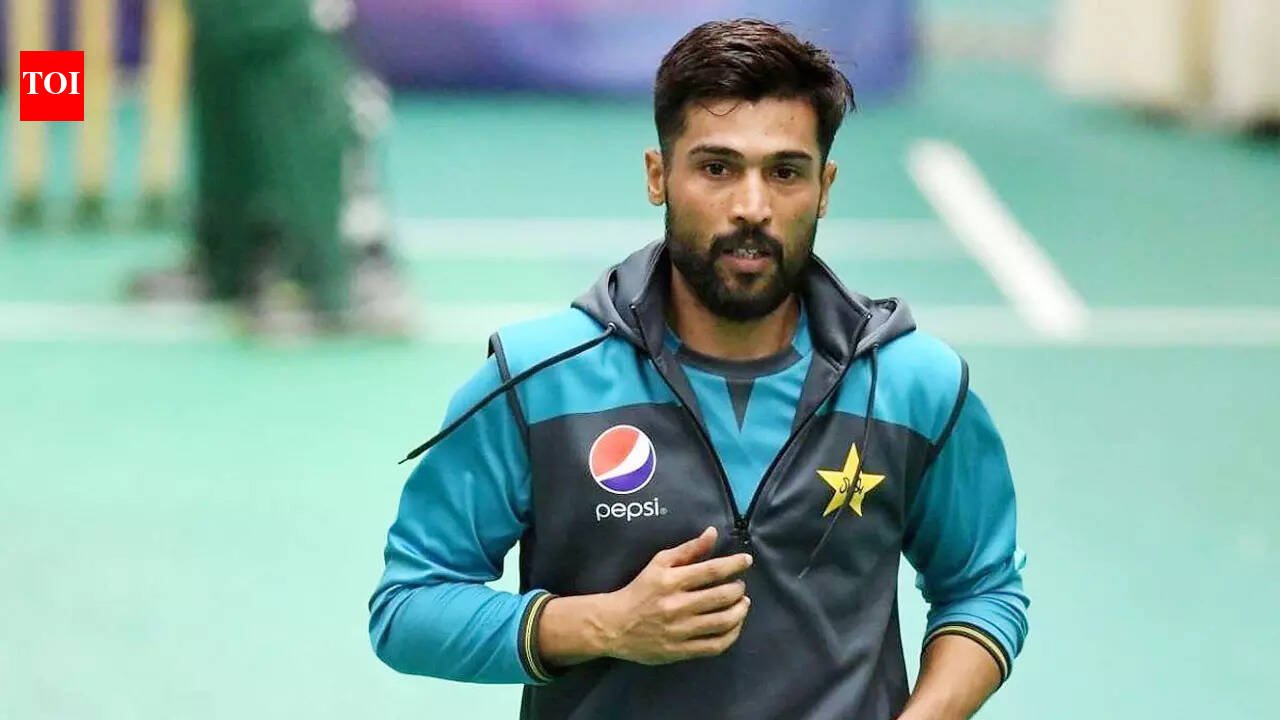
Mohammad Amir slams New Zealand bowlers after T20 World Cup final loss to India: ‘I just didn’t understand…’ | Cricket News


Image credi: Mohammad Amir’s Twitter handle

Mohammad Amir questioned New Zealand’s tactics, saying on the ‘Haarna Mana Hai’ show that he didn’t understand the bowling changes, pointing out that India deserved credit but criticizing the decision to bring in Jacob Duffy against Abhishek Sharma. The Black Caps lost the final by 96 runs at Narendra Modi Stadium on Sunday, giving India their third T20 World Cup title.

T20 World Cup final: Fans in Ahmedabad go wild | India create history

With this win, India became the first team to defend the T20 World Cup and the first to win it on home soil. The match was effectively decided when India posted a huge total of 255 runs.NZ won the toss and elected to field first. However, a return-to-form, record-breaking fifty from Abhishek Sharma (52 in 21 balls, with six fours and three sixes) and his 98-run stand with Samson made NZ regret the decision. Later, Samson stitched a century stand with Ishan Kishan (54 in 25 balls, with four boundaries and four sixes) to take India past the 200-run mark in the 16th over. After a brief slowdown, Shivam Dube (26* in eight balls, with three fours and two sixes) made some valuable runs to take India to 255/5, the highest total in T20 WC finals.In the run-chase of 256 runs, Axar and Bumrah helped India reduce the Kiwis to 72/5, despite a half-century from Tim Seifert (52 in 26 balls, with two fours and five sixes). Despite a brief partnership between Daryl Mitchell (17) and skipper Mitchell Santner (43 in 35 balls, with three fours and two sixes), India kept chipping in with wickets, and the Kiwis were bundled out for just 159 runs.“Credit to New Zealand bowlers. They were bowling wides and were being hit for sixes from there. It’s not like India doesn’t deserve any credit. I just didn’t understand the bowling changes. When you know Abhishek Sharma struggles against spinners, you bring in Jacob Duffy,” said Amir. “I have never seen New Zealand under such pressure. I have been following them since 2005 but I have never seen them under pressure,” he added.


Source link

Not Jasprit Bumrah or Sanju Samson! Kris Srikkanth names India’s real hero after India’s dominant win in T20 WC final


Former Indian captain Kris Srikkanth has been India’s biggest critic in the past year and has constantly been slamming the Indian coach and management. However, after a successful ICC T20 World Cup, he has flipped sides in favour of the Indian management.

India were not only victorious in their campaign, but they also dominated the format with grace. India have formed a side with several staunch hitters from no. 1 to 7. India’s best find was wicket-keeper batters Sanju Samson and Ishan Kishan.

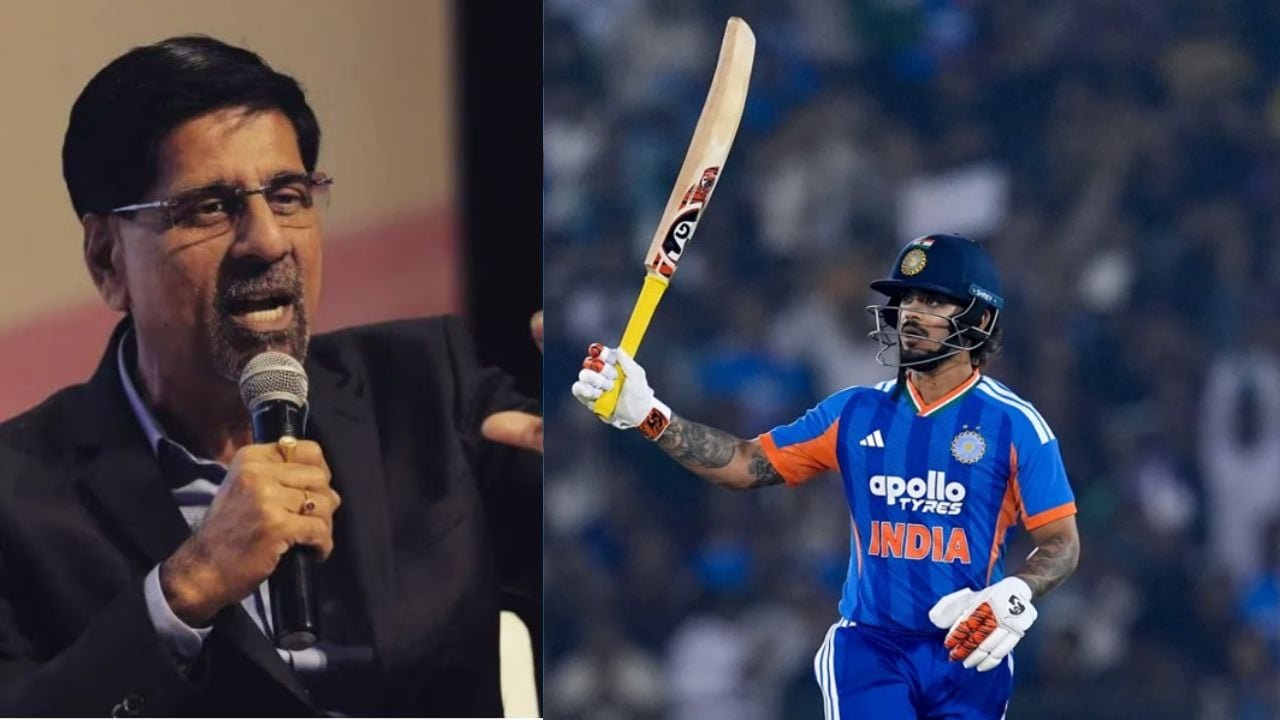
However, the former Indian selector has reserved special praise for the left-handed batter Ishan Kishan, who was a surprise addition to the Indian XI. Kishan was India’s second-highest run-getter in the competition, playing his first T20 World Cup after being out of the team for two years.

Your daily dose of cricket!

next

His knock was very crucial, it took the match away- Kris Srikkanth

Former Indian selector Kris Srikkanth has highlighted the importance of Ishan Kishan in the Indian team and has praised the Team management for bringing in Ishan Kishan just at the right time, which helped India fight back despite Abhishek Sharma‘s poor form in the premier tournament.

The left-handed batter amassed 317 runs at an average of 35.22 and a blistering strike rate of nearly 200 on all occasions. His knock of 54-runs in the final that came off just 25-balls helped them take the upper hand over New Zealand in the middle-overs after Abhishek Sharma and Sanju Samson gave the perfect start India needed.

“Agarkar and the team selection committee, well done, guys. They picked a superb team. Two years back, no one knew where Ishan Kishan was. But he performed domestically and came in and was the actual game changer.

“Apart from Abhishek and Sanju giving a rollicking start, his 54 ensured that they kept the momentum, and New Zealand were out of the game. His knock was very crucial; it took the match away,” he said on his YouTube channel.

Kris Srikkanth reserves special praise for the Indian Selector and Head coach

He then went on to hail the Indian team coach Gautam Gambhir for having provided players with the much-deserved clarity over their role. He was impressed with Dube expressing how his role was to go only for the big hits.

“Dube said his job was only six hitting, which is fantastic. He came in, did his job and went. It was fantastic how the role play was clear. That way, Gautam Gambhir did a brilliant job. Well done, Gautam, for encouraging Abhishek, Samson, and Dube to play their roles. Hats off to Gambhir,” said Kris Srikkanth.

He further highlighted how every Indian player, from openers Sanju Samson and Abhishek Sharma to leg-spinner Varun Chakravarthy, irrespective of their form, knew their role too well and performed to the best of their ability.

Kris Srikkanth lauds the Indian captain

He also credited Suryakumar Yadav for his captaincy moves. After much criticism, the Indian captain finally met the demands and expectations with his captaincy in the knockouts for India. Though he was dismissed for a duck, Kris Srikkanth feels he was a tactical genius in the final.

“At the right time, his captaincy moves were fantastic. Against England as well, he was keeping cool and was not flattered. Guys like Abhishek and Varun, who were going through a tough time, the captain backed them. With the captain and coach’s backing, a player gains confidence. Abhishek proved it. Even Varun got a crucial wicket,” he said.

Kris Srikkanth lastly concluded by bowing down to the ruthless and fearless batting of the Men in Blue, who scored three 250+ totals in their last four World Cup appearances in the tournament.

ALSO READ: He can win you the game-Gautam Gambhir makes honest admission on Sanju Samson’s T20 WC performance


Source link

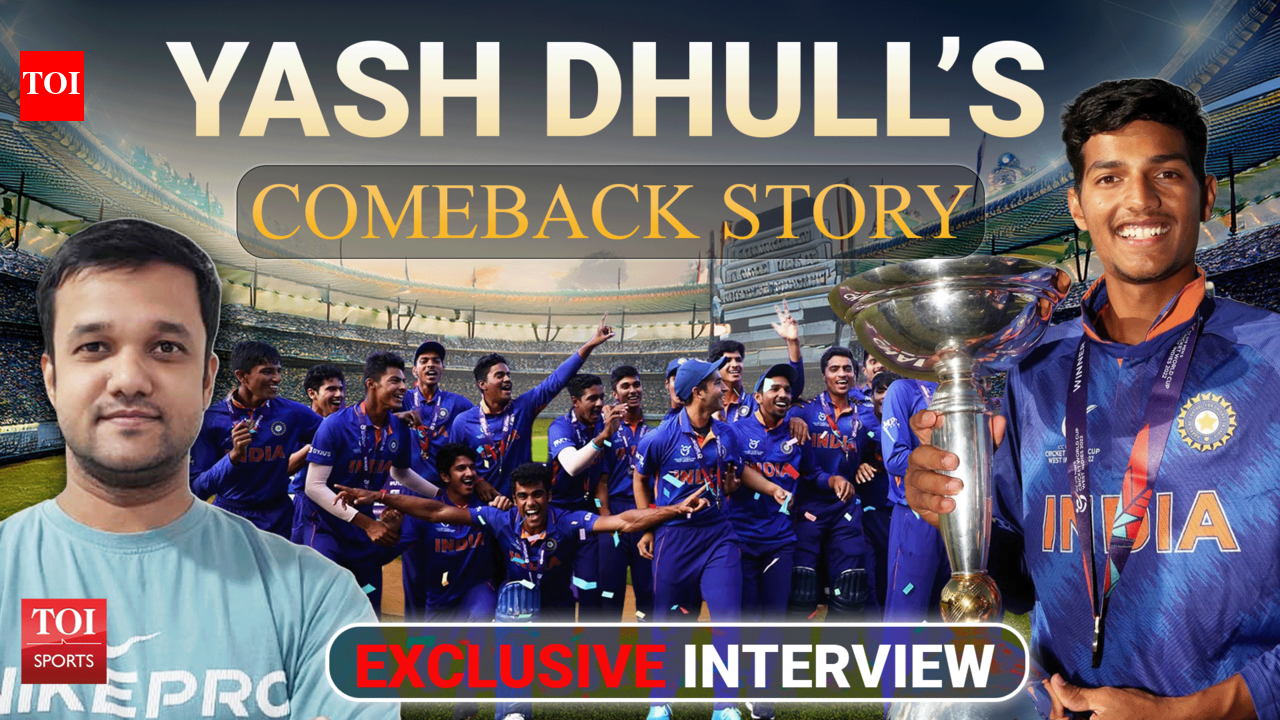
‘Dream is to play senior World Cup’: Yash Dhull opens up on heart surgery and comeback | EXCLUSIVE | Cricket News


Yash Dhull Exclusive: Heart surgery, recovery and senior World Cup dream

Yash Dhull (Image credit: Instagram)

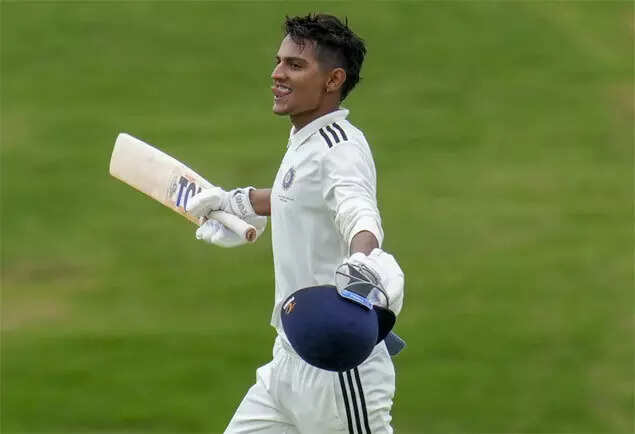
NEW DELHI: Life felt incredibly difficult and frustrating for Yash Dhull as he spent months confined to the four corners of a room. The 2022 Under-19 World Cup-winning captain was bedridden after undergoing heart surgery, slowly recovering while battling the constant urge to return to the middle and resume playing cricket.Dhull was diagnosed with a hole in his heart after his family urged him to consult a doctor. He had been experiencing symptoms for some time — shortness of breath, constant fatigue, lack of energy and sudden weight loss. As the symptoms worsened, medical tests confirmed the condition, forcing the young cricketer to step away from the game and focus on treatment and recovery.

Yash Dhull Exclusive: Heart surgery, recovery and senior World Cup dream

“Many times it happened that after playing a full match, like a national match, I would feel extremely tired and it felt like my fitness was gradually going down. Later, when I was in a camp, the issue was detected there. I got tests done again and that’s when we found out exactly what it was. Even the doctors were a little surprised — they asked how I was still playing. I hadn’t realised it earlier, but once it was detected, it meant there was an option to fix it,” Yash Dhull told TimesofIndia.com in an exclusive interview.“At that time the timeline wasn’t clear because there was no option except surgery. My mindset was clear, and my family also believed that getting it done at the right time was the better option because the problem could have become bigger later. For me, health is everything. My thinking was simple — if I become fit, everything else will slowly come back. It takes time, but things gradually fall into place. When you are not mentally or physically fit and have issues, you cannot move forward properly. So my focus was to finish this issue first and then see how things move ahead,” he said.After the heart surgery, Dhull was bedridden for several days. As per the doctors’ advice, he was told not to travel or play cricket for a while.But the determined youngster had just one question for the doctors — and he asked it almost every day: “Main kab se cricket khel sakta hoon?” (When can I start playing cricket again?)

Yash Dhull (Image credit: PTI)

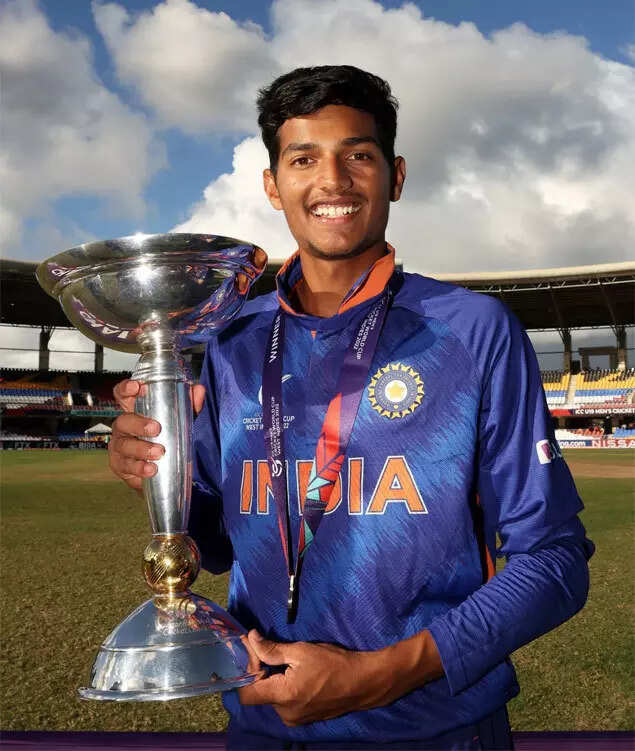
“That time was tough. I was itching to get back in the middle. When I started running again, it just wasn’t happening. Even completing one round was very difficult. Slowly, things began to improve. I even tried to play in the DPL in the first year, but it wasn’t possible because my heart rate and BP were going very high. It was very risky as my BP could suddenly shoot up, so I had to back off. Then I started preparing for the season and praying for recovery. Things improve gradually. If you rush them, they don’t work. When you take it step by step, it takes time, but eventually things come back,” Yash Dhull, who led India to the 2022 Under-19 World Cup title after beating England in the final, said.DHULL’S NEXT TARGET: SENIOR WORLD CUPDhull is among the few captains who have led India to the Under-19 World Cup title.India have won the Under-19 ODI World Cup a record six times — in 2000, 2008, 2012, 2018, 2022 and 2026. The title-winning captains include Mohammad Kaif (2000), Virat Kohli (2008), Unmukt Chand (2012), Prithvi Shaw (2018), Dhull (2022) and Ayush Mhatre (2026).

Yash Dhull (ICC Photo)

For Dhull, however, the Under-19 World Cup is not just a memory. His next target is clear — representing India at the senior World Cup.“I talk to players like Rishabh Pant, Ishant Sharma and Axar Patel. I’m very close to them and you learn a lot just by being around them. You observe what they do and how they go about their work, and that helps a lot. They’ve always told me to prepare in such a way that when an opportunity comes, you don’t miss it,” he said.Due to health issues and the surgery, Dhull — who played for Delhi Capitals in the Indian Premier League from 2022 to 2024 — went unsold at the IPL 2026 auction.“Yes, you do feel a little disappointed, but at the same time you cannot get stuck in that feeling. You have to get back to your work. If you stay stuck on one thing, you won’t be able to focus on the opportunities ahead. Right now, I’m waiting to see what opportunities come my way. Whatever comes, I’m preparing for it and I’m ready. Anything can happen in life at any time — things can change anytime — so I’m preparing for that,” Dhull said.“The dream is to play a senior World Cup. I am confident that I will play one day. Every cricketer dreams of representing India at a World Cup,” he said.


Source link

Sanju Samson: Justice for Sanju: A true Kerala story | Cricket News


Justice for Sanju: A true Kerala story
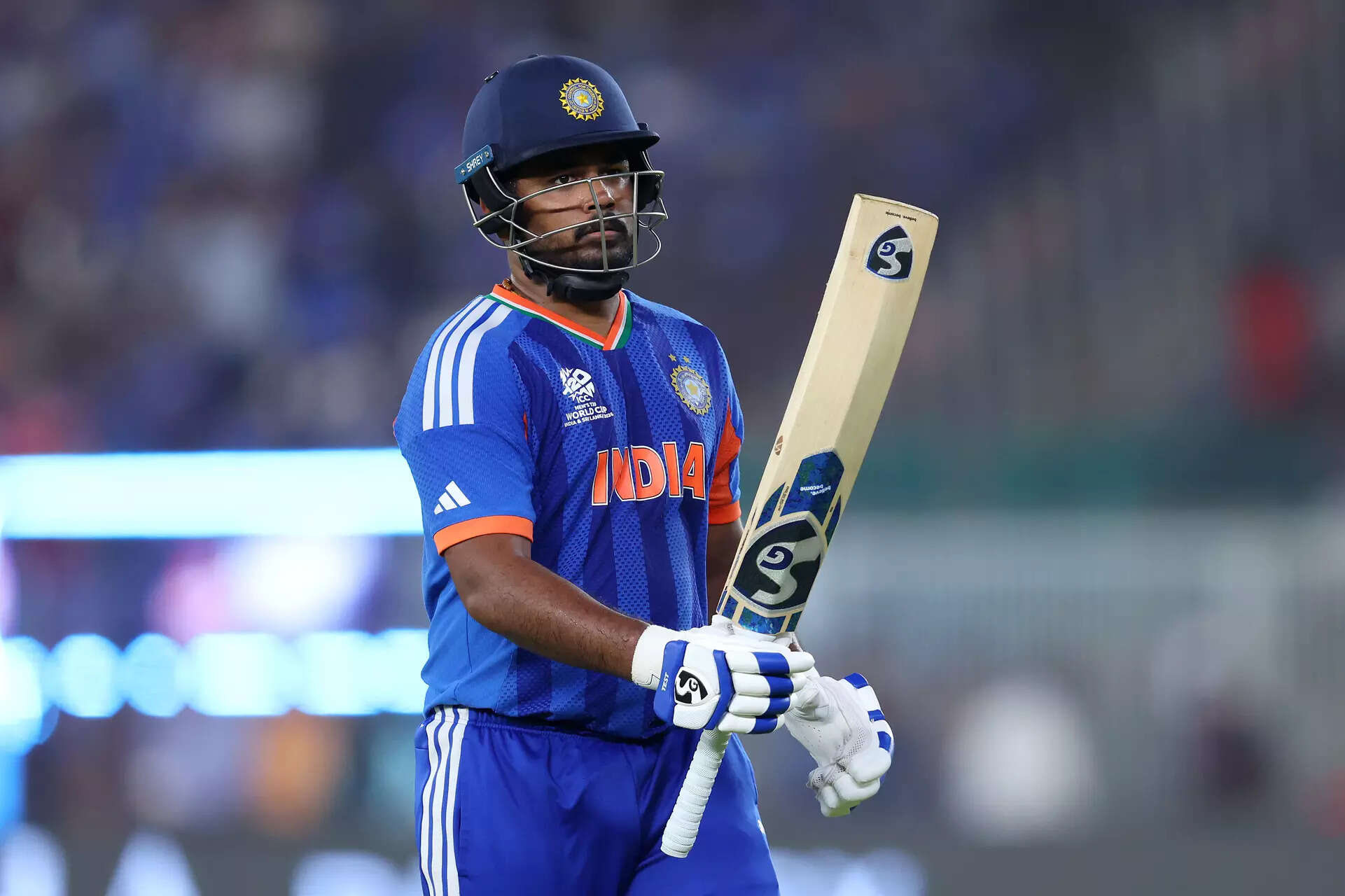
India’s Sanju Samson with teammates greets fans during a victory lap after winning the 2026 ICC Men’s T20 Cricket World Cup final match between India and New Zealand at the Narendra Modi Stadium in Ahmedabad on March 8, 2026. (AFP)

NEW DELHI: Arshdeep Singh has been a ‘character’ on social media ever since India won the 2026 T20 World Cup. With his pranks and banter, the left-arm seamer has spared no one, not head coach Gautam Gambhir, not seniors like Jasprit Bumrah and Axar Patel, and not even Sanju Samson, who stepped up on three big nights on the bounce in this World Cup.

Ahmedabad erupts as Team India arrive at hotel after T20 World Cup win

In one of his many Instagram Reels, with a beaming Sanju beside him, the pacer quips, “O paaji, justice mil gaya.” Arshdeep said it with a laugh, citing the social media trend #JusticeForSanju whenever the opener was benched in the T20 World Cup or in the lead-up to the tournament.ID@undefined Caption not available.This has been the story of Sanju Samson in the past 18 months. Under Gambhir’s regime, the Kerala cricketer either batted like a millionaire or looked bankrupt. He lost his place, he lost self-belief, but he was backed by the team management and it proved to be one of many standout aspects in India’s T20 World Cup triumph.

Poll

Should Sanju Samson have been included in the playing XI earlier in the tournament?

First, there are the milestones of trophies: second straight, third overall, back-to-back, first by hosts. Look deeper and there is the standout bowling even though batting was the much-heralded aspect going into the competition. And when the batting looked a mess, a couple of changes later, things took a sharp upward curve. India produced three 250-plus totals in the last four matches. A total of 106 sixes were hit across the competition, the first time a team crossed a century of maximums.But there is another factor that stands out. It sits underneath this success for the Indian team. And it is the backing shown by the selectors, the coaching staff and the leadership group to multiple players, but arguably none more than Sanju Samson. At the other end, there is also the perseverance shown by him.

India v New Zealand: Final - ICC Men's T20 World Cup India & Sri Lanka 2026

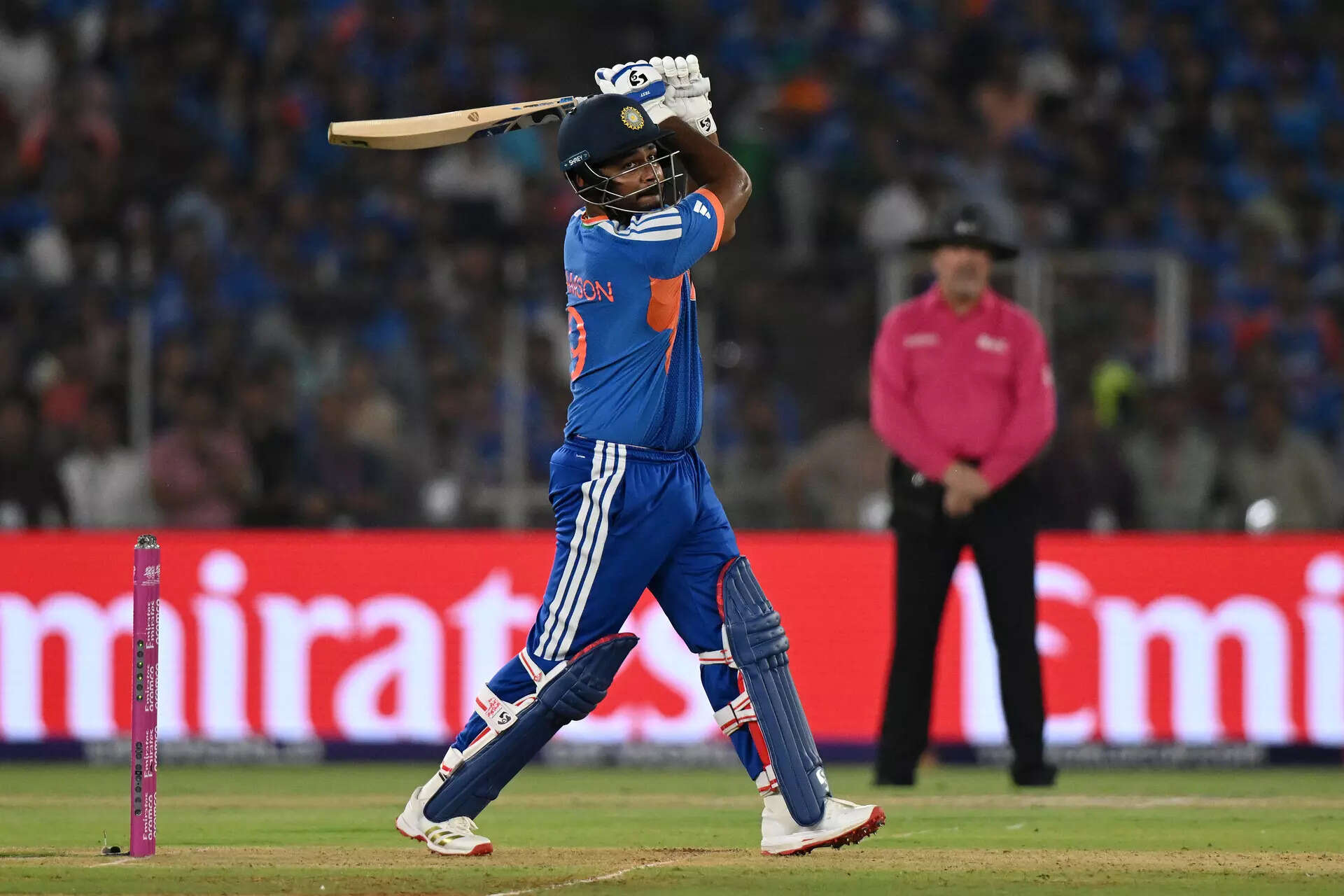
Sanju Samson of India celebrates reaching his half century during the ICC Men’s T20 World Cup India & Sri Lanka 2026 Final between India and New Zealand at Narendra Modi Stadium on March 08, 2026 in Ahmedabad, India. (Photo by Pankaj Nangia/Getty Images)

For teams of the past, the thrashing by South Africa by 76 runs would have resulted in knee-jerk reactions. Instead, it was met with some shrewd strategic changes. Samson came in for the clash against Zimbabwe that followed. After a 15-ball 24 in the opening slot alongside Abhishek Sharma, the template was set.“Performing their roles, understanding their responsibilities, chipping in at the right time, talking to each player when someone is not doing well. That is more important to me. When someone is not doing well, you try to spend time with him, take him out for dinners, talk to him, because those are the players who at the right time will do something special for you, like how Abhishek did just now and Sanju did in the last three games,” said Suryakumar Yadav in the post-match press conference.

A lot of former players have reached out to me and tried to help me out. Over the last couple of months, I hope I can share it here, I have been in constant touch with Sachin sir.

Sanju Samson

Team India coach Gautam Gambhir acknowledged that it was always going to be tough for the 31-year-old, especially with, admittedly, his career on the line.“It takes so much character and courage when you know that maybe your career is on the line. Even if the captain and I can show as much faith and trust in him, deep inside you know that you didn’t have a great series against New Zealand before the start of the World Cup. And then you didn’t start in the playing XI during the World Cup, losing your spot to Ishan Kishan,” said coach Gambhir.

India v New Zealand: Final - ICC Men's T20 World Cup India & Sri Lanka 2026

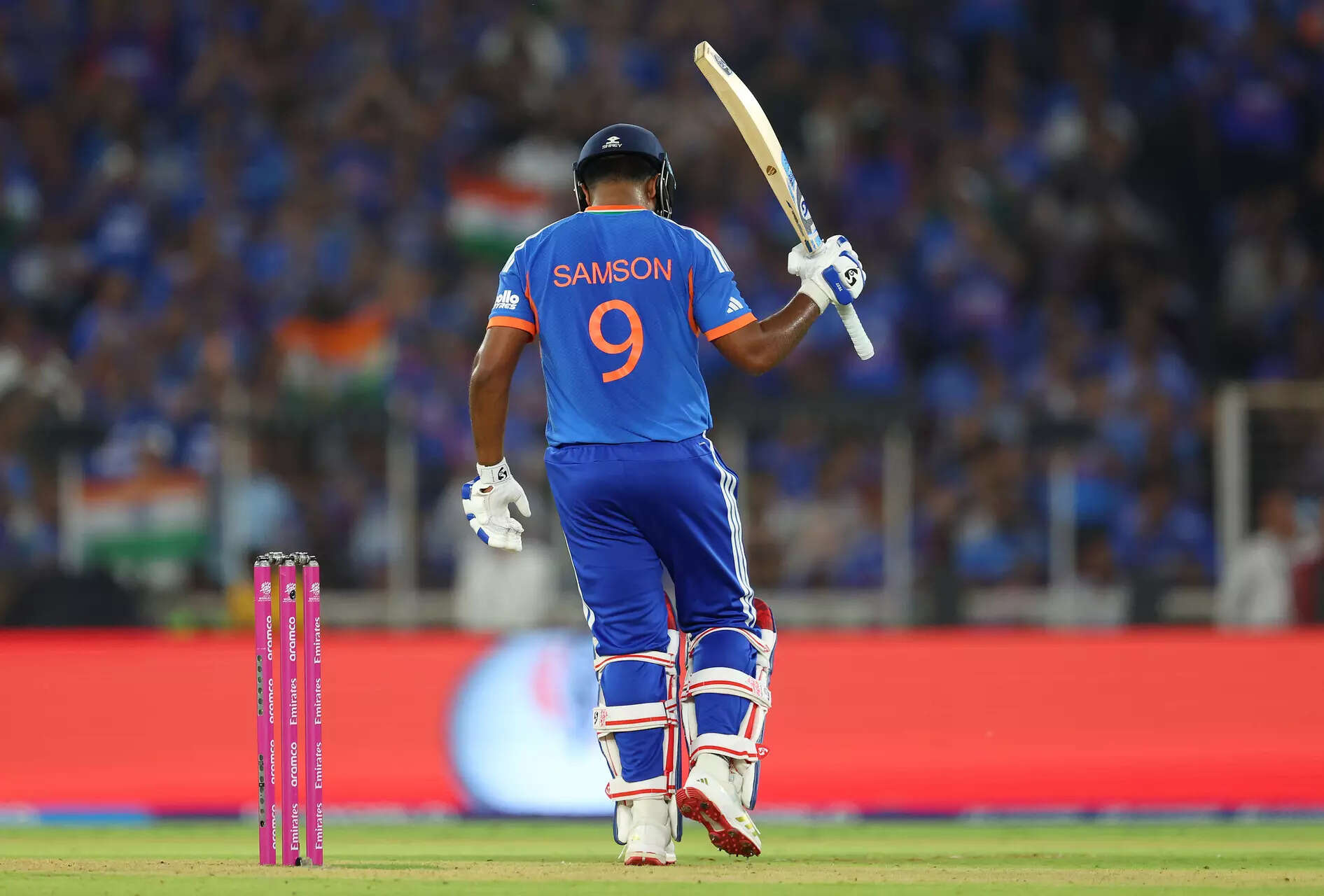
Sanju Samson of India walks off the pitch after losing his wicket during the ICC Men’s T20 World Cup India & Sri Lanka 2026 Final between India and New Zealand at Narendra Modi Stadium on March 08, 2026 in Ahmedabad, India. (Photo by Pankaj Nangia/Getty Images)

The form wasn’t the best. In the New Zealand series, Samson scored only 46 runs at a miserable average of 9.20, with the highest score being 24. Against Namibia in the T20 World Cup, even though India posted 209/9, he contributed a mere 22 runs from eight balls.That might have been that for Sanju and his India ambitions, but with the team’s top order getting exposed time and again, a shuffle in order and approach was the need of the hour. That, coupled with the hammering by South Africa, played into the Trivandrum-born cricketer’s hands.Samson came through on this chance, and the backing was justified. A 50-ball 97 against the West Indies. A 42-ball 89 against England. A 46-ball 89 against New Zealand in the final. In all, 275 runs from 138 balls at a strike rate of nearly 200, including 25 fours and 19 sixes.

This entire process started one or two years earlier when I was with the 2024 World Cup-winning team in the West Indies. I could not get a game, but I kept dreaming, kept visualising, kept working. This is exactly what I wanted to do then.

Sanju Samson

Let’s run down the magnitude of these three innings. The 89 against New Zealand is the highest score in a T20 World Cup final. His fifty-plus scores in the semi-final and final saw him enter a four-man list. His 321-run tally made him the highest Indian run-scorer in a single T20 World Cup edition and the third-highest overall. Finally, he smashed 24 sixes, the most by a player in one tournament, nearly a quarter of India’s overall maximums.Before all this, though, he sat in the dugout. The camera panned to him after every struggle by the Indian top order. Question marks were raised repeatedly, but the noise grew louder after the defeat to the Proteas. In that moment, assistant coach Ryan ten Doeschate admitted that bringing Sanju in was going to be a “talking point.”Sanju, meanwhile, felt his “dreams had shattered” after the New Zealand series. But “huge” conversations with Sachin Tendulkar kept the faith going, ensuring he remained upbeat and hopeful of luck shining on him.

India v New Zealand: Final - ICC Men's T20 World Cup India & Sri Lanka 2026

Sanju Samson of India plays a shot during the ICC Men’s T20 World Cup India & Sri Lanka 2026 Final between India and New Zealand at Narendra Modi Stadium on March 08, 2026 in Ahmedabad, India. (Photo by Prakash Singh/Getty Images)

“A lot of former players have reached out to me and tried to help me out. Over the last couple of months, I hope I can share it here, I’ve been in constant touch with Sachin sir. When I was sitting outside in Australia during the T20Is in October and not playing a game, I thought about what mindset was required.“I reached out to sir and had long conversations with him. Even yesterday night, he called me up to check how I am feeling. Getting guidance from someone like him, that clarity, game preparation, awareness and game sense, I am grateful for everyone who supported me.”The low point, admitted Sanju, came after the New Zealand series. He felt “broke” and “out of my mind”, with his dreams “shattered.” It reminded him of where this desire was born.“This entire process started one or two years earlier when I was with the 2024 World Cup-winning team in the West Indies,” he said. “I couldn’t get a game, but I kept dreaming, kept visualising, kept working. This is exactly what I wanted to do then,” said Samson on being part of that Rohit Sharma-led squad.

Poll

How do you feel about Sanju Samson's performance in the T20 World Cup?

“I thought I needed to put in so much work because this is exactly what I wanted to achieve. By God’s grace today things have turned around,” he continued.The “Justice for Sanju” social media campaign to bring the Keralite into the team might have felt excessive. It might have even looked cringeworthy at times. But now that the script is written, maybe it was God’s plan after all.


Source link

When Marie Curie faced a controversy, Albert Einstein wrote her a letter that reads: “But I’m so furious at the…” |


When Marie Curie faced a controversy, Albert Einstein wrote her a letter that reads: “But I’m so furious at the…”
Albert Einstein’s letter to Marie Curie

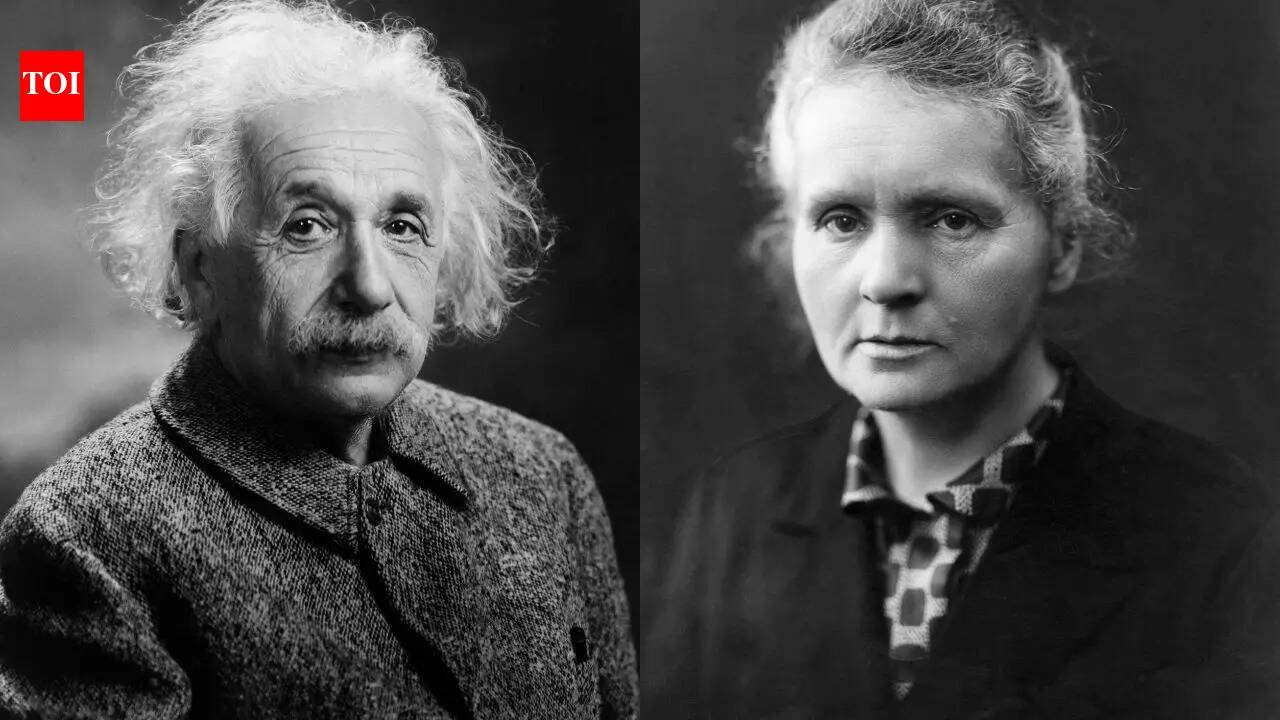
History often only remembers great scientists for what they found. But sometimes, when they are alone together, they show a very different side of the scientific world. One of these stories is about two of the most famous scientists of the 20th century: Albert Einstein and Marie Curie. In 1911, Curie was at the centre of a major public controversy in France. At the same time, she was also preparing to receive her second Nobel Prize. Amid intense criticism and media attention, Einstein wrote her a personal letter. According to academic biographies, the message was not about physics or scientific theory. Instead, it was a note of support and admiration. The letter has since become an interesting part of scientific history because it shows how one scientist defended another at a hard time. The story behind this letter shows how scientists sometimes had to deal with stress outside of the lab and how respect for each other helped them make friends that lasted.

When Marie Curie was facing public controversy

Marie Curie was already one of the most respected scientists in the world by 1911. She and her husband Pierre Curie, as well as physicist Henri Becquerel, won the Nobel Prize in Physics in 1903 for their work on radioactivity. However, academic biographies say that Curie was heavily criticised in public life despite her scientific success. French newspapers started to write about her relationship with physicist Paul Langevin that year. Langevin was married but not living with his wife, and the affair quickly became a big story in the news.When newspapers got hold of private letters between Curie and Langevin, things got even worse. People talked more about her personal life than about her scientific work. At the same time, Curie had just lost a close vote to join the French Academy of Sciences, which had never let a woman in before.

Albert Einstein’s unexpected letter of support to Marie Curie

In November 1911, Albert Einstein wrote a private letter to Marie Curie during this hard time. At the time, Einstein had just met Curie at a scientific meeting in Brussels and thought very highly of her work and character.Einstein began the letter by expressing admiration for Curie’s intellect, determination, and honesty. He wrote that he felt fortunate to have met her personally.He also strongly criticised the way the public and media were treating her. In the letter, Einstein described the sensational coverage as unfair and advised Curie not to pay attention to it. According to the letter’s translation, he suggested that if the public continued to spread rumours, she should simply ignore them rather than read them.The letter was both supportive and direct. It showed that Einstein thought that public gossip shouldn’t take away from Curie’s scientific work.

Here’s the letter:

“Prague, 23 November 1911Esteemed Mrs. Curie,Don’t laugh at me for writing to you without having anything sensible to say. But I’m so furious at the vile [niederträchige] way in which the rabble [Pöbel] at present dares to treat you that I absolutely must give vent to this feeling. I am, however, convinced that you despise this rabble, equally when it’s feigning adoration or when it’s using you to slake its thirst for the sensational! I must tell you how much I’ve come to admire your spirit [Geist], your creativity, and your honesty. I consider myself lucky to have made your personal acquaintance in Brussels. Anyone other than those reptiles is certainly happy, now as before, that we have eminent people like you, and also Langevin, among us—real people [wirkliche Menschen] with whom one feels privileged to be in contact. If the rabble continues to occupy itself with you, then simply don’t read that swill. Rather leave it to the reptile for whom it’s been fabricated.With most friendly regards to you, Langevin, and [Jean] Perrin,Yours very truly,A. EinsteinP.S. I’ve determined the statistical law of [rotational] motion for a diatomic molecule in Planck’s radiation field by means of a merry joke [lustigen Witz], of course on the assumption that the structure’s motion obeys the laws of ordinary mechanics. But I have little hope that this law is valid in reality.”

The scientific meeting that started their friendship

Einstein and Curie first interacted closely during the 1911 Solvay Conference in Brussels. This event brought together many of the leading scientists of the time to discuss new ideas in physics.The conference included figures who later shaped modern physics, including Einstein, Curie, and other pioneers studying radiation, atomic structure, and energy.Although they had just met, Einstein quickly developed a deep respect for Curie’s work and personality. As per academic biographies, historians of science believe that the letter he wrote during the scandal helped strengthen a long-lasting friendship between the two scientists.Their professional relationship continued for many years afterwards.

Marie Curie’s second Nobel Prize during the controversy

The controversy surrounding Curie’s personal life happened at the same time she was about to receive another major scientific honour.In 1911, she was awarded the Nobel Prize in Chemistry for her work on the discovery of the elements polonium and radium and for her research on radioactivity.Some people even said she shouldn’t go to the Nobel Prize ceremony because of the public scandal. Curie chose to go to the ceremony and accept the prize in person anyway, even though there was a lot of pressure on her.She was the first person ever to win Nobel Prizes in two different areas of science.

What Einstein wrote at the end of the letter

Historians have often pointed out one part of the letter because it shows what kind of scientist Einstein was.Einstein wrote a short note at the end about a new scientific idea he was working on, after giving support and encouragement. He talked about a statistical law that has to do with how molecules move in a radiation field.The brief scientific note seemed like an afterthought after the emotional message. This little thing shows how scientists often talked about both personal and scientific things in the same conversation.

Why the letter still attracts attention today

Historians and readers are still interested in the letter between Einstein and Curie for a number of reasons.First, it shows the human side of two important scientists. Most people remember Einstein and Curie for their important theories and discoveries. But this conversation shows how they treat each other and how much they respect each other.Second, the episode shows how hard it was for scientists in the early 1900s, especially women who worked in fields that were mostly men.Finally, the letter shows how the scientific community sometimes stood by each other when they were being criticised in public.


Source link

ICC breaks silence on bias claims after England exit leaves West Indies, South Africa stuck in India | Cricket News


ICC breaks silence on bias claims after England exit leaves West Indies, South Africa stuck in India
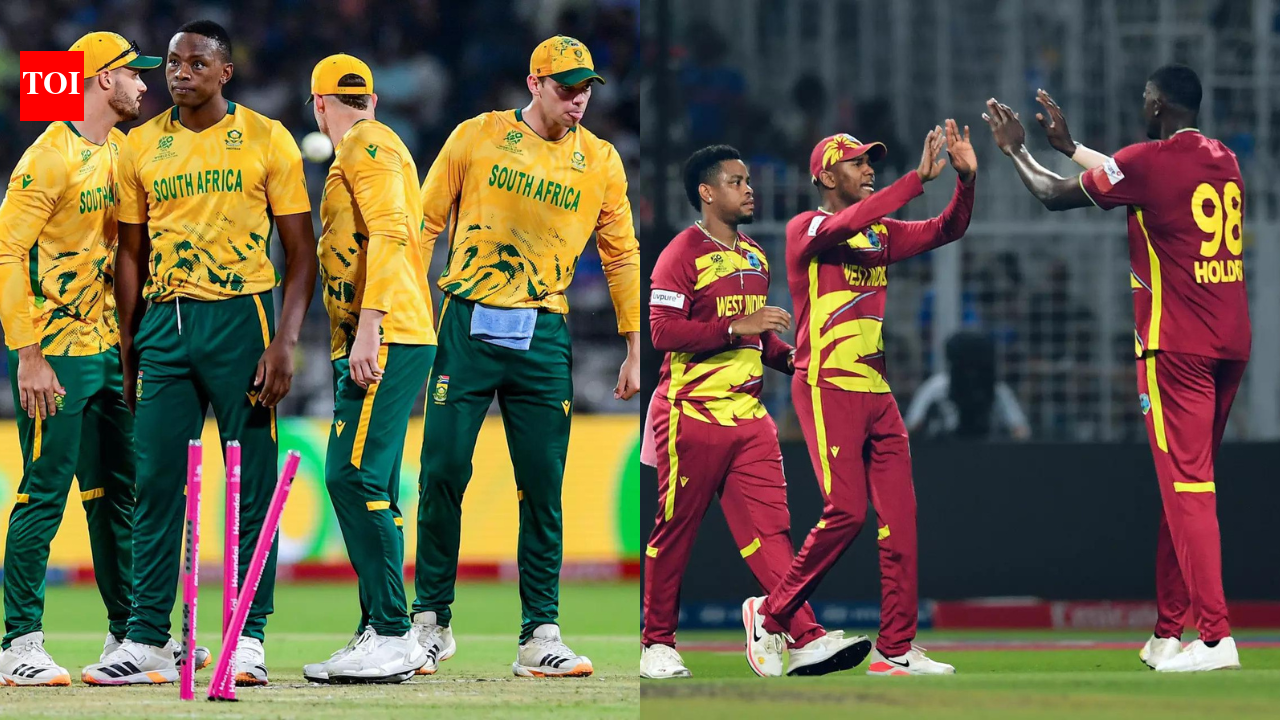
South Africa and West Indies cricket team (Agency Image)

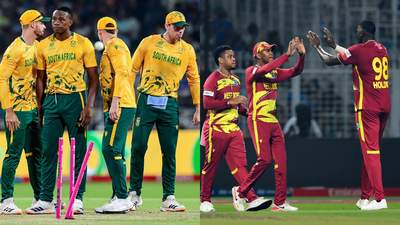
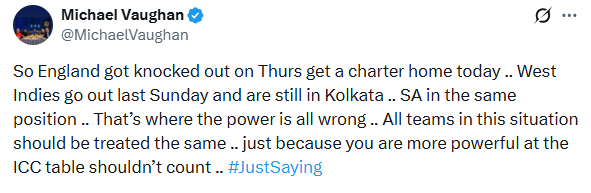
The International Cricket Council has responded to allegations of bias after travel complications following the ICC Men’s T20 World Cup sparked a major controversy involving several teams.Although the tournament concluded on Sunday with India national cricket team defeating New Zealand national cricket team in a one-sided final at Narendra Modi Stadium in Ahmedabad, some participating teams have remained stuck in India due to ongoing airspace restrictions linked to the conflict in the Middle East and West Asia.Among those affected are the West Indies national cricket team and the South Africa national cricket team. The West Indies played their final match of the tournament on March 1 but are still in India, while South Africa have also been unable to leave after their semi-final defeat to New Zealand on March 4.In contrast, the England national cricket team returned home shortly after losing their semi-final to India on March 5. The difference in travel timelines has triggered criticism, with many questioning how England managed to depart while other teams remained stuck.One of the most outspoken voices has been former England captain Michael Vaughan, who accused the ICC of favouring certain teams.“All teams in this situation should be treated the same. Just because you are more powerful at the ICC table shouldn’t count,” he said.

Michael Vaughan post

Michael Vaughan post

According to a report by BBC, the ICC has strongly denied any suggestion of preferential treatment and clarified that logistical factors alone determined when teams could leave.“Decisions on departure sequencing are being driven solely by airspace availability, aircraft routing permissions, visa requirements and operational safety considerations.“Any suggestion that teams have been prioritised based on anything other than these constraints is incorrect,” BBC quoted an ICC spokesperson.The situation had already drawn attention earlier when West Indies head coach Daren Sammy expressed his frustration on X. In one post he wrote, “I just wanna go home”, before sharing additional messages reflecting the team’s growing impatience.Subsequent reports indicated that arrangements had been made for a chartered flight to take the Caribbean side home, with the team expected to depart later today. South Africa’s squad is also likely to leave India today.The ICC also explained why England were able to travel earlier than the other teams.“For instance, the England team and their staff were able to fly out from Mumbai without restriction due to the route’s airspace being unaffected and flights operating as usual.“The ICC categorically refutes any claims of bias in this or other instances, and has been fully accommodating of specific demands and conditions put forth by teams,” it said.


Source link