Breaking News
Middle East Crisis: Middle East crisis: EAM Jaishankar to make statement in Lok Sabha on Monday | India News


Middle East crisis: EAM Jaishankar to make statement in Lok Sabha on Monday

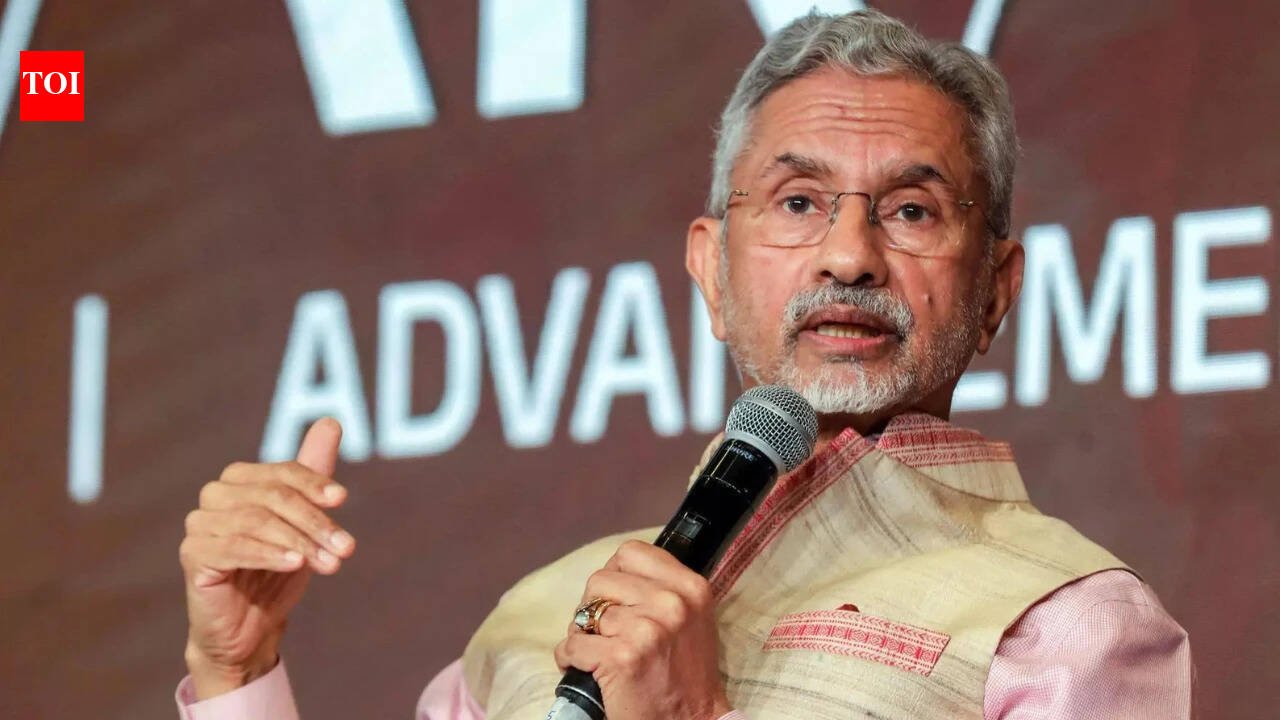
NEW DELHI: External affairs minister S Jaishankar is scheduled to make a statement in the Lok Sabha on Monday regarding the evolving “situation in West Asia”, amid rising regional tensions and security concerns linked to the ongoing conflict in the Gulf.Jaishankar will brief the House on developments in the region and India’s position, including the government’s diplomatic outreach and the safety of Indian nationals living and working in West Asian countries.The statement comes as tensions in West Asia have intensified in recent weeks following missile and drone exchanges across the Gulf region, raising concerns globally about a wider escalation and its potential impact on energy markets, regional stability and expatriate populations.India has been closely monitoring the situation.Jaishankar recently said New Delhi was maintaining “very close contact” with governments across the region while prioritising the safety of Indian citizens. He noted that the government was assessing developments carefully and remained prepared to take necessary steps if the security situation deteriorated.MEA was in touch with Indian missions across West Asia to track the situation on the ground and provide assistance if required.Jaishankar has also previously emphasised India’s broader diplomatic stance on the crisis.Speaking on the escalating tensions, he reiterated the need for restraint and dialogue, warning that further escalation could destabilise an already fragile region.


Source link

Beedi in the loo: Passenger on Delhi-Goa flight booked for smoking mid-air | India News


Beedi in the loo: Passenger on Delhi-Goa flight booked for smoking mid-air

NEW DELHI: A passenger has been booked for allegedly smoking a beedi inside the lavatory of a Delhi-Goa flight, police said on Sunday.The incident occurred on Saturday when the accused, identified as Ashish, a Delhi resident, was travelling on an Akasa Air flight from the national capital to Goa, reported PTI.According to police, the passenger allegedly smoked a beedi inside the aircraft toilet during the journey. He was also found carrying a lighter.In its complaint, the airline said the passenger’s actions posed a potential safety risk to the aircraft and those on board.“During the flight, the passenger allegedly smoked a beedi inside the aircraft lavatory and was also found in possession of a lighter, which could pose a risk to the safety of the aircraft and passengers on board,” the airline stated in its complaint, a police official said, as quoted by the agency.Police added that the act endangered the safety of fellow passengers and crew members during the flight.Following the complaint, a case was registered against the passenger at the Mopa airport police station.Officials said the case has been filed under provisions of the Bharatiya Nyaya Sanhita as well as the Suppression of Unlawful Acts against Safety of Civil Aviation Act.Further investigation into the incident is underway, police said.


Source link

Gold braces for volatile week as Middle East tensions escalate: Analysts | India Business News


Gold braces for volatile week as Middle East tensions escalate: Analysts

After witnessing sharp swings last week, gold prices are expected to remain volatile in the coming days as investors track escalating tensions in the Middle East and key global economic data releases, analysts said on Sunday.Market participants are likely to track developments in the conflict involving Israel and Iran, as any escalation could support safe-haven demand for bullion, while signs of easing tensions may trigger sharp profit booking in the market.“Focus will again be on developments in the Middle East. Any further escalation could be positive for gold prices, but signs of de-escalation may lead to sharp selling,” Pranav Mer, vice president, Commodity and Currency Research at JM Financial Services, told the news agency PTI.Silver is also witnessing heightened volatility, though it is currently in a consolidation phase, analysts noted.“Silver is trading with high volatility but remains capped due to consolidative movements in gold and industrial metals such as copper and zinc,” Mer added.In the domestic market, bullion futures saw sharp swings during the past week. On the Multi Commodity Exchange (MCX), silver plunged by Rs 14,359, or 5.08 per cent, while gold slipped Rs 470, or 0.3 per cent.According to Prathamesh Mallya, deputy vice president, Research (Non-Agri Commodities and Currencies) at Angel One, gold traded within a broad range of Rs 1.59 lakh to Rs 1.70 lakh per 10 grams last week.Geopolitical tensions, strong demand from Asian markets, continued purchases by central banks, elevated US Treasury yields and a firm US dollar are among the key factors currently shaping bullion prices, he said.Globally, silver futures on Comex dropped by USD 8.98, nearly 10 per cent, during the week, while gold prices declined by USD 89.2, or 1.7 per cent.Analysts noted that gold ended the week in negative territory as investors shifted towards alternative safe-haven assets such as the US dollar, Swiss franc and government bonds, even as ongoing geopolitical tensions helped limit deeper losses.Investors will also monitor key economic indicators in the coming week, including inflation and trade data from China, inflation readings from the US, Germany and India, as well as US consumer sentiment and the Personal Consumption Expenditures (PCE) price index, which could influence global growth expectations and monetary policy outlook.


Source link

West Bengal Elections: ‘Supreme commander ignored’: TMC’s Abhishek Banerjee targets Centre over President Murmu’s ‘snub’ | India News


'Supreme commander ignored': TMC's Abhishek Banerjee targets Centre over President Murmu’s ‘snub’

NEW DELHI: Trinamool Congress (TMC) national general secretary Abhishek Banerjee trained guns at the Bharatiya Janata Party (BJP) government, accusing it of humiliating President Droupadi Murmu on caste grounds and ceding India’s strategic autonomy to the United States.Speaking at a party event, the Diamond Harbour MP said, “TMC National General Secretary and MP Abhishek Banerjee says, “When Manipur was burning for 3 years, the President was silent. When the Ram Mandir was inaugurated, she wasn’t invited because of her caste. The same happened when Parliament was inaugurated.”He further remarked that while the President is the one who is the supreme commander of the armed forces, it is the US President who is “dictating” the orders.“The Indian Armed Forces are under the President. When Pakistan and India fight, all orders are supposed to be given by her. But the US president is dictating these orders instead.”Banerjee’s comments come after a political scuffle broke out between the Centre and Bengal CM on Saturday. It followed the President’s displeasure regarding administration decisions made around the International Santhal Conference in Bengal.President Murmu on Saturday expressed her disapproval of the event venue being shifted at the last moment, which turned out to be a location far away from the convenience of the Santhal people.“I don’t know what went through the administration’s mind that they chose a place for the conference where the Santhal people couldn’t go. I am very sad that the people here were unable to reach the conference because it was held so far away,” she said on Saturday.She also added that the absence of the Bengal CM at the event while the President was present there was a departure from the usual protocol.“If the President visits a place, the Chief Minister and the Ministers should also come. But she did not. I am also a daughter of Bengal. Mamata Didi is also my sister, my younger sister. I don’t know if she was angry with me, that’s why this happened,” she said.Echoing the same, PM Modi also attacked the Bengal CM for breaching the protocol.“By showing utter disregard for protocol, they have insulted the President of India. This incident has laid bare the deep rot within the Trinamool government. This affront to the President at an event organised by our tribal brothers and sisters is an insult to our nation and the values of our constitutional democracy,” he said.


Source link

IND vs NZ, T20 World Cup 2026 Final: Ahmedabad Weather Forecast and Dew Factor


The stage is set for a thrilling night of cricket as defending champions India prepare to face New Zealand in the ICC Men’s T20 World Cup 2026 final at the Narendra Modi Stadium in Ahmedabad. While the focus will naturally be on the battle between the two teams, weather conditions and the possibility of dew could also influence how the game unfolds.

India enter the final chasing history as they aim for a record third T20 World Cup title, while New Zealand are hoping to win the trophy for the first time.

Ahmedabad Weather Forecast

There is excellent news for cricket fans heading to the stadium or watching from home – rain is not expected to interfere with the match. According to weather forecasts from agencies such as AccuWeather, the probability of rainfall in Ahmedabad during match time is zero. The skies are expected to remain mostly clear throughout the evening, ensuring the final can proceed without any weather-related interruptions.

The International Cricket Council has scheduled a reserve day on March 9 as a precaution for the final. However, with current forecasts predicting stable weather conditions, it is highly unlikely that the extra day will be required.

Temperatures during the afternoon are expected to be extremely high. Ahmedabad could experience daytime highs of around 41°C, making the hours leading up to the match quite challenging for spectators arriving early at the venue. However, conditions should improve significantly once the sun begins to set.

By the time of the toss at 6:30 pm IST, temperatures are expected to drop to around 30-37°C. As the match begins at 7:00 pm, the weather will likely become much more comfortable, with temperatures settling between 28°C and 30°C. Later in the evening, during the closing stages of the match, the temperature should remain around 30°C, creating relatively pleasant playing conditions.

Humidity levels are also expected to stay moderate at around 23 percent, which falls within a comfortable range for cricket. This combination of clear skies, moderate humidity, and falling evening temperatures should create ideal conditions for a high-quality contest.

Also READ: IND vs NZ, T20 World Cup 2026 Final – Narendra Modi Stadium Pitch Report, T20I Stats and Records

Dew Factor 

One of the most closely discussed aspects ahead of night matches in India is the dew factor, which can sometimes give an advantage to the team batting second. However, reports suggest that dew is unlikely to play a major role during the final in Ahmedabad.

Meteorological projections indicate that humidity levels in the city will remain between 18 and 27 percent, which is generally not high enough to produce heavy dew. Previous matches played at the Narendra Modi Stadium during the tournament have also seen minimal dew, reinforcing the view that it may not significantly affect the game.

That said, there is still a possibility that a light layer of dew could develop later in the evening. Some analysts believe dew could begin to settle around 8:30 pm, roughly when the first innings is approaching its final stages. If that happens, bowlers – particularly spinners – may find it slightly harder to grip the ball.

For players like Axar Patel or New Zealand captain Mitchell Santner, even a small amount of dew could impact their ability to control the ball. However, the overall consensus among experts is that dew will likely remain minimal and should not drastically alter the balance of the contest.

Also READ: From Sunil Gavaskar to Mayanti Langer: Star-studded list of commentators and presenters for IND vs NZ T20 World Cup 2026 final


Source link

Access Denied


Access Denied

You don’t have permission to access “http://www.ndtv.com/world-news/iran-war-iran-israel-us-war-live-news-no-attacks-on-neighbours-iran-president-says-enemys-misconceptions-11185844” on this server.

Reference #18.adf5d217.1772973768.860b683d

https://errors.edgesuite.net/18.adf5d217.1772973768.860b683d


Source link

Sunil Gavaskar wants Abhishek Sharma dropped for T20 World Cup final: ‘Hasn’t learned from his dismissals’ | Cricket News


‘Hasn’t learned from his dismissals’: Sunil Gavaskar wants Abhishek Sharma dropped for T20 World Cup final

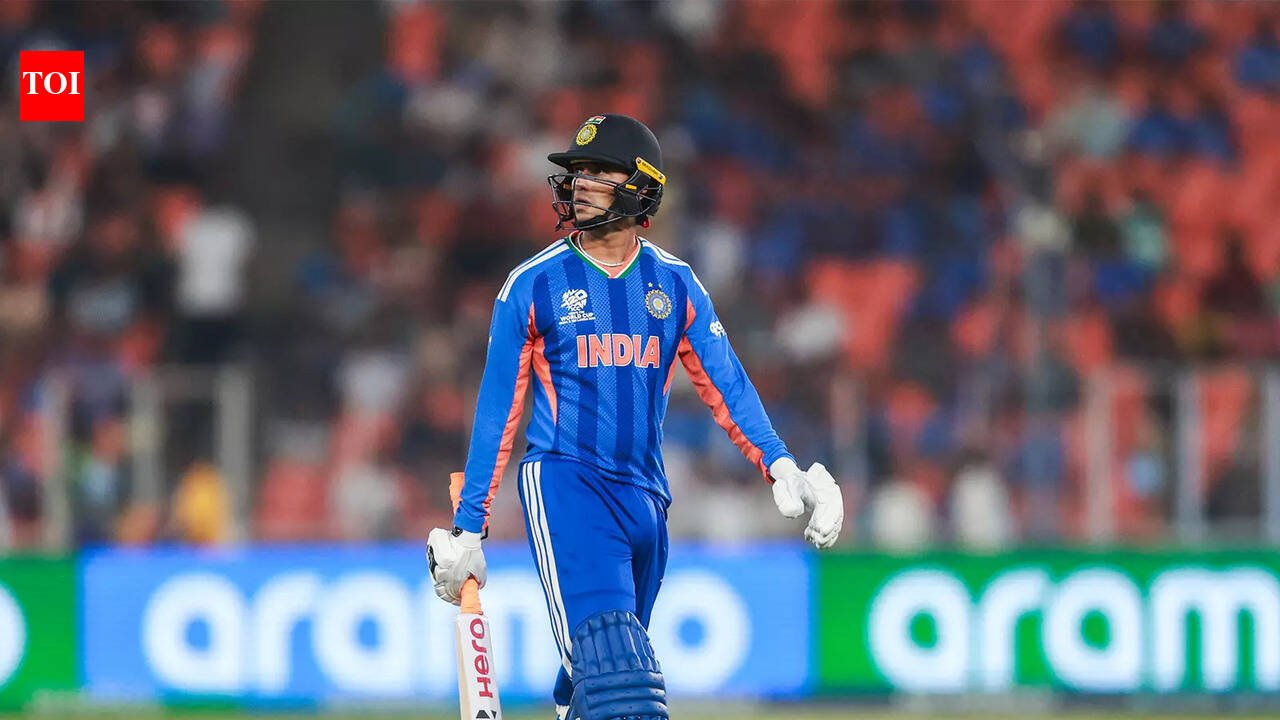
With India preparing to face the New Zealand national cricket team in the T20 World Cup final at the Narendra Modi Stadium, former captain Sunil Gavaskar has suggested a bold change to the playing XI. The 1983 World Cup winner believes India should consider dropping Abhishek Sharma after the opener’s prolonged struggle with the bat in the ongoing tournament.Abhishek has endured a difficult campaign in the tenth edition of the ICC Men’s T20 World Cup 2026. The left-hander has managed only 89 runs so far at an average of 12.71. His figures would have looked even worse had it not been for a half-century against the Zimbabwe national cricket team during the Super 8 stage. Alarmingly for India, Abhishek has been dismissed for a duck three times and has fallen to spin bowling on four occasions in the tournament.Also See: IND vs NZ Live Score T20 World Cup Final 2026

Extra trains and poojas: How India is preparing for T20 World Cup final

Gavaskar pointed out that the bigger issue is not just the lack of runs but the repeated nature of the dismissals. According to him, bowlers have consistently targeted a specific area and the batter has struggled to adapt his approach.

Poll

How confident are you in India's chances against New Zealand in the final?

“It’s a very tough call. Abhishek Sharma is the No. 1 batter in the ICC T20 rankings, but he hasn’t learned from his dismissals. He keeps getting out in the same region where his arms are cramped for room,” Gavaskar told India Today.“Bowlers are targeting that area and forcing mistakes. My concern is that he either hasn’t adjusted yet or is unable to change his approach,” he added.Abhishek’s struggles were evident again in the semi-final against the England cricket team. Attempting to attack early, he fell into the trap set by spinner Will Jacks and was dismissed in just the second over after scoring nine runs.As an alternative, Gavaskar proposed bringing Rinku Singh into the side while reshuffling the top order. In his suggested combination, Ishan Kishan would partner Sanju Samson at the top of the order for the final.“I would like to see Ishan Kishan open the batting with Sanju Samson, with Rinku Singh coming into the side. Rinku has that belief, you’ve probably seen the ‘God’s Plan’ tattoo on his body, and sometimes things just work out for players like him,” Gavaskar said.The legendary batter also hinted at another possible change in the bowling department. Varun Chakravarthy has struggled for rhythm since the Super 8 stage began and endured a particularly tough outing against England, conceding more than 60 runs in his four overs during the semi-final.Gavaskar believes India could consider bringing in Kuldeep Yadav instead, especially given the conditions in Ahmedabad.“The other change I would consider is bringing in Kuldeep Yadav. Varun Chakravarthy’s confidence looks shattered at the moment. Since the Super Eight stage, when he faced stronger teams, he has struggled and conceded a lot of runs. At a ground like the Narendra Modi Stadium, with big boundaries, Kuldeep Yadav could be a good option because he can turn the ball even on flat surfaces,” Gavaskar said.


Source link

Australia hand Alyssa Healy a winning farewell with 10 wickets win over India in the one-off Test


Australian captain Alyssa Healy signed off from international cricket in the most fitting way possible as the hosts secured a commanding 10-wicket victory over India in the one-off day-night Test at the WACA Ground in Perth on Sunday. The emphatic win, completed inside three days, not only marked a perfect farewell for the veteran wicketkeeper-batter but also sealed a dominant win for Australia in the multi-format series against the reigning world champions.

Australia wrap up the multi-format series against India with dominant Test victory

India resumed the third day at 105 for 6 in their second innings, still needing 20 more runs to avoid making Australia bat again. Debutant Pratika Rawal showed admirable resilience, playing a determined knock of 63 off 137 balls, but the visitors struggled to build partnerships around her. Australia’s bowlers tightened the screws early in the day, ensuring that India’s resistance did not last long.

Sneh Rana, who had been supporting Rawal, was eventually bowled by Ashleigh Gardner for 30. Soon after, Healy made an impact behind the stumps, taking a sharp catch at slip to dismiss Kashvee Gautam for a duck off Alana King’s bowling. King struck again shortly after, removing Sayali Satghare, and Rawal’s courageous innings finally came to an end when Annabel Sutherland produced a brilliant diving catch at fine leg.

India’s innings folded soon after, leaving Australia with a modest target of 25 runs to win the match. Openers Georgia Voll (16 not out) and Phoebe Litchfield (11 not out) wasted little time in finishing the job, chasing down the target in just 4.3 overs and sparking emotional celebrations among the home side.

Annabel Sutherland shines with remarkable all-round performance

The standout performer of the match was undoubtedly Annabel Sutherland, who delivered a sensational all-round display. The 24-year-old was named Player of the Match after scoring a magnificent 129 in Australia’s first innings and following it up with impressive bowling figures of 6 for 61 from 23 overs. Her century was yet another milestone in what is already shaping up to be a remarkable Test career. Sutherland now has four Test hundreds, leaving her just one shy of the overall record in women’s Test cricket.

Another experienced star also etched her name into the record books. Ellyse Perry contributed a valuable 76 in the first innings, and in doing so took her tally of Test runs to 1006, surpassing Karen Rolton’s previous Australian record of 1002 runs in the format.

Alyysa Healy’s team-first farewell

Despite the match being all but decided, Alyssa Healy chose to keep the spotlight away from herself in her final appearance. With Australia requiring just 25 runs to win, there were suggestions – including from coach Shelley Nitschke – that Healy could promote herself up the batting order for a memorable last innings. However, the skipper stayed true to her team-first philosophy and declined the opportunity.

“There was a little bit of sadness sitting in the change room and realising I don’t get to come back,” Healy revealed after the match. “I’m not coming back next week and sitting with that group of people. That made me sad more than anything cricket-related.”

She added: “It’s not what I’m about and it’s not what the team’s about either. We pride ourselves on being team-first and I didn’t want anything to be disrupted.”

Emotional farewell for Healy at the WACA

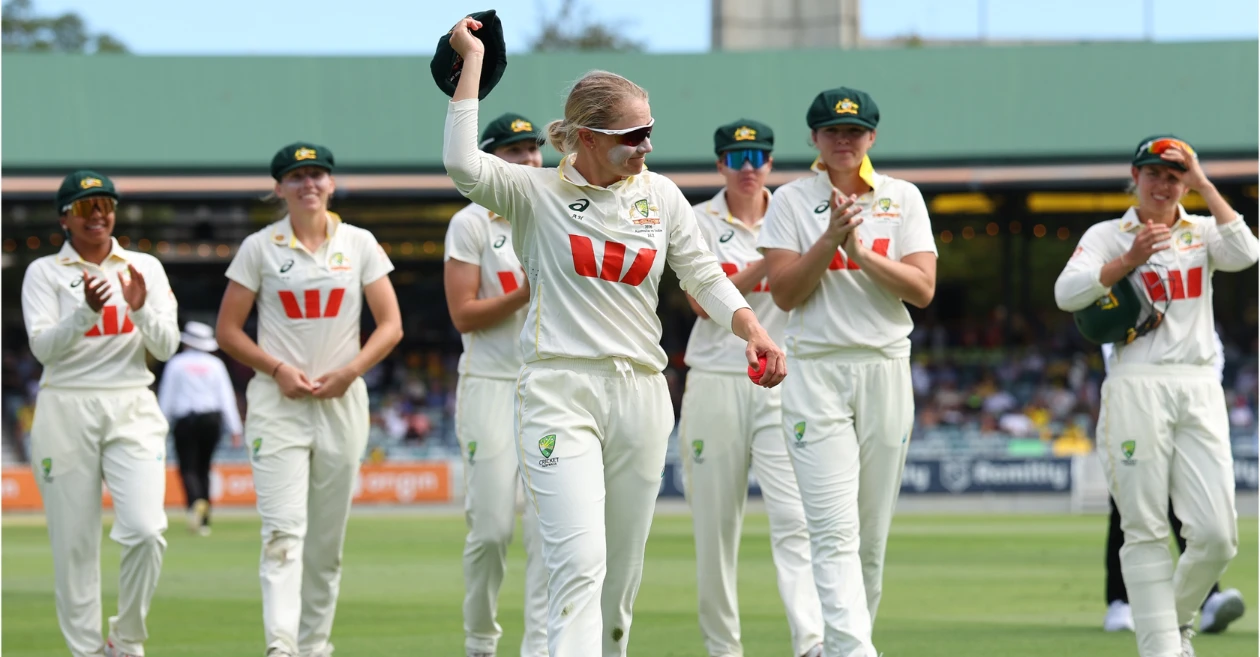
Once the victory was secured, the emotional weight of the moment became clear. Healy was carried off the field by long-time teammates Ellyse Perry and Ashleigh Gardner, a touching gesture that symbolised the end of her 16-year international career.

“It honestly hit me just before… I don’t get to go back in that changeroom and be around the girls again,” an emotional Healy said. “But I’m going to enjoy the next little bit and sing the team song one more time.”

The scenes at the WACA reflected the respect and admiration she commands within the team and across the cricketing world.

India’s young players show promise in the one-off Test

While the result was disappointing for India, the match did provide encouraging signs for the future. The defeat ended India’s nine-Test unbeaten run in women’s cricket dating back to 2006. However, several young players made notable contributions during the game.

Debutants Pratika Rawal, Sayali Satghare, Kranti Gaud and Kashvee Gautam all gained valuable experience at the international level. Rawal’s fighting 63 in the second innings stood out as a particularly promising effort, demonstrating maturity and composure on a challenging WACA pitch.

Also WATCH: Darcie Brown cleans up Harmanpreet Kaur with a beauty in the one-off AUS-W vs IND-W Test

Australia’s comeback in the series

The Test victory also capped a remarkable turnaround for Australia in the multi-format series. The hosts had begun the contest on a disappointing note, losing the T20I leg 2-1, which raised questions about the start of Sophie Molineux’s captaincy era.

However, the return of Alyssa Healy for the ODI leg transformed the team’s fortunes. Australia dominated the ODI series 3-0, and their commanding Test victory ensured they finished the overall contest 12-4 on points. It was also Australia’s first Test win over India since 2006, adding another layer of significance to the result.

Also READ: AUS-W vs IND-W: Fans erupt as Annabel Sutherland lights up Perth with record-breaking century on Day 2 of the one-off Test


This article was first published at WomenCricket.com, a Cricket Times company.


Source link

Missiles, drones and geography: How Iran challenged the US-Israel billion-dollar war machine


Missiles, drones and geography: How Iran challenged the US-Israel billion-dollar war machine

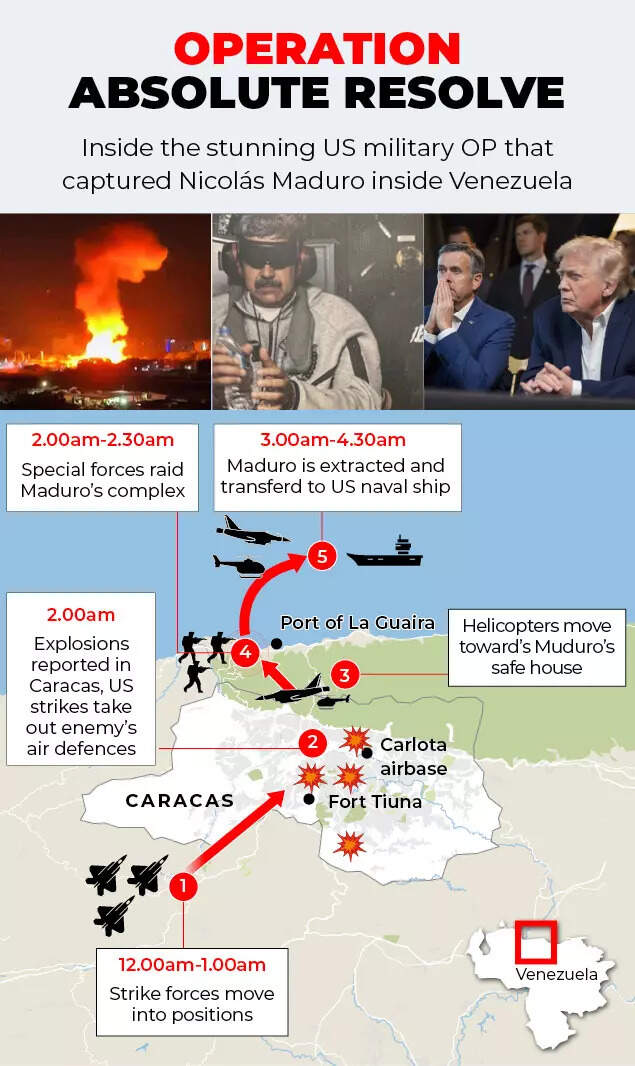
One week into what Donald Trump described as a “four-week operation” against Iran, the war already looks far messier than the confident timelines suggested in Washington. When US and Israeli forces launched Operation Epic Fury on 28–29 February, the opening strikes were designed to decapitate Iran’s leadership and cripple its military infrastructure. American bombers and cruise missiles hit dozens of targets, senior commanders were reportedly killed, and Iran’s Supreme Leader Ayatollah Ali Khamenei was confirmed dead. Yet over a week later the conflict shows no sign of ending.Missiles continue to streak across the Middle East. Iranian drones buzz over Gulf cities. Bahrain, Iraq, Jordan, Kuwait, Oman, Qatar, Saudi Arabia and the UAE have all reported incoming strikes. Western air defences have intercepted most of them, but not all. Fires have broken out near oil facilities, flights have been briefly halted in Dubai, and several missiles have reached Israeli urban areas.Instead of the swift decapitation strike some in Washington envisioned, the conflict is settling into a grinding contest of endurance. As former US President Dwight D. Eisenhower once observed, “plans are useless, but planning is indispensable.”The contrast with the lightning American operation in Venezuela only weeks earlier could not be clearer. There, a single raid toppled Nicolás Maduro’s government in just over two hours. Iran, by contrast, has absorbed the initial blows and continues to fight back.Iran, it turns out, is not Venezuela.

From Caracas to Tehran: Lightning versus marathon

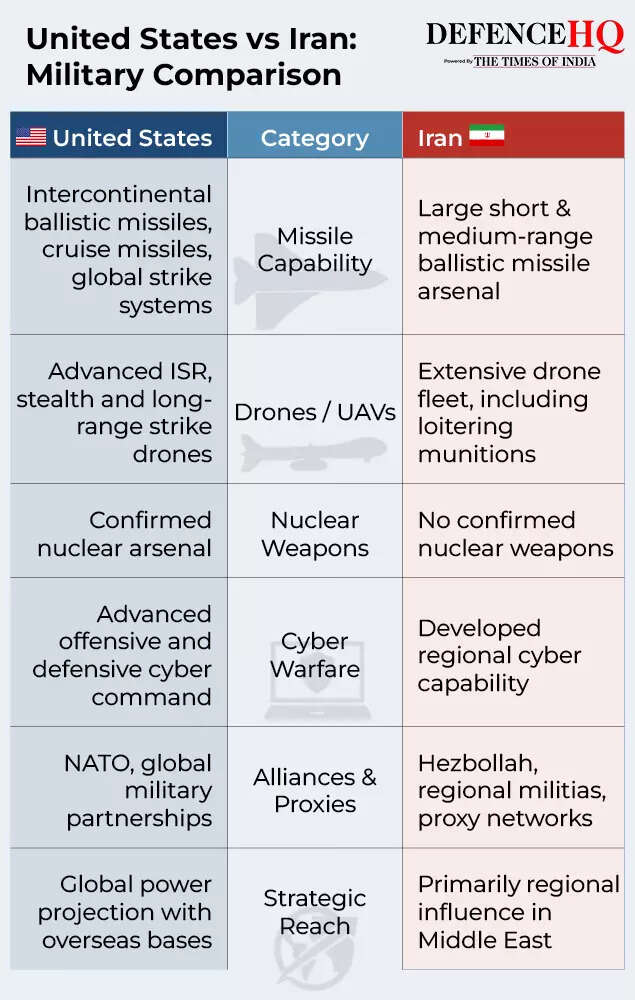
The difference between Venezuela’s quick overthrow and Iran’s grinding war is striking. In Caracas, a single well-timed commando raid in the dead of night toppled a weak administration. By contrast, Iran’s government has weathered massive hits and is still standing, its response still escalating. There are reasons why Iran is not Venezuela. Militarily, Iran is vastly stronger. It possesses thousands of missiles of varying ranges and an enormous drone fleet, whereas Venezuela had virtually no strategic deterrent.

How Maduro was captured

Geographically, Venezuela is a small country with open plains around the capital; Iran is the world’s 17th largest nation with rugged terrain and multiple layers of defense. Politically, Maduro’s government was already crumbling under domestic unrest and loss of army morale – Iran’s regime, in contrast, is tightly controlled by ideological forces (the IRGC) and has endured decades of foreign pressure without falling.Even the US forces and risks involved were radically different. The Venezuelan raid involved about 150 aircraft and a few thousand special forces. By comparison, the air war on Iran has involved dozens of US and Israeli jets (even B-2 bombers) backed by carrier task forces and NATO assets.

Iran’s missile and drone barrages

In response to the US-Israeli attacks, Tehran has thrown almost everything it has at its adversaries. Starting March 1, Iran launched repeated mass salvos of missiles and drones across the Gulf region and at Israel. On the first day alone Iran reported firing 137 ballistic missiles and 209 drones toward the UAE. Some of those struck Dubai and Abu Dhabi, sending plumes of smoke over landmarks like the Palm Jumeirah and Burj Al Arab.

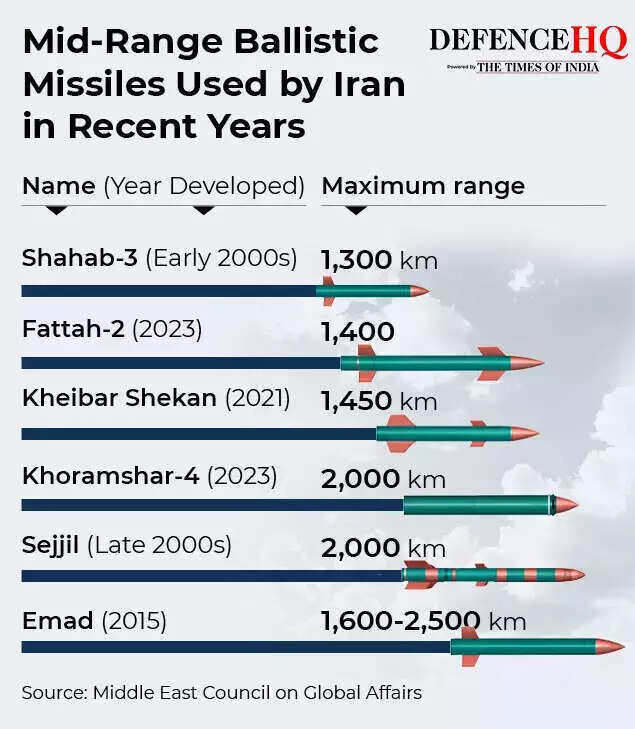
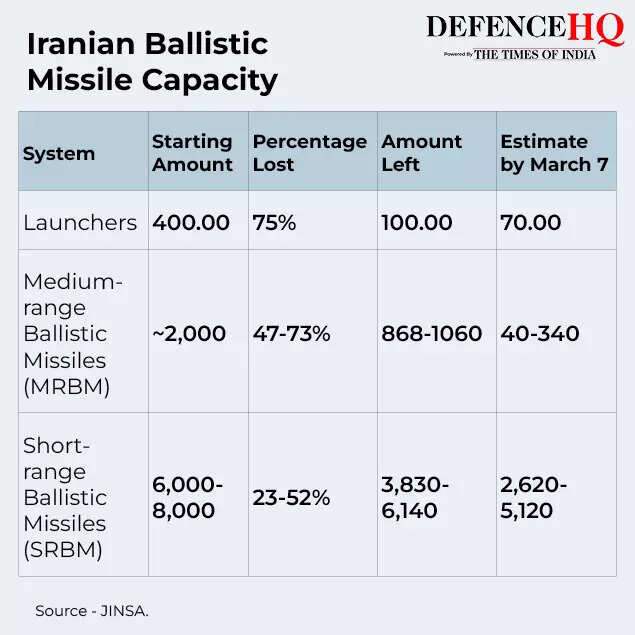
Iran's mid-range ballistic missiles

In Israel, Iranian strikes wounded civilians in Beit Shemesh and other towns. Hezbollah in Lebanon even fired rockets toward northern Israel, saying it was avenging Tehran. Military analysts note that Iran’s recent strategy is exactly about saturation: using “large salvos of ballistic missiles and loitering munitions… alongside actions by Hezbollah and other militias… to stretch Israeli and US missile defences and impose costs region-wide”.Iran has a diverse missile force of its own design, from short-range rockets to medium-range Shahab and Fateh-class missiles and beyond. It also uses “loitering munitions” (suicide drones) in large numbers – chiefly the Shahed series. The Shahed-136, for example, is a small (~2–3 m) propeller-driven drone weighing about 200 kg, with a flying range of up to 2,000–2,500 km and a 40–60 kg warhead. (Variants may carry up to 90 kg). Iran’s stock of these drones is believed to be vastly larger than its stock of ballistic missiles. As one Bloomberg analyst notes, Iran’s emphasis on drones suggests it is consciously preserving its missiles for later phases: “Tehran has launched more than 1,200 projectiles, many of them Shahed drones… analysts say this could indicate that Iran is conserving its ballistic missiles for later stages”. In other words, Iran is playing an endurance game.

Cheap Iranian Drones vs Expensive Defences

What makes Iran’s strategy particularly frustrating for its foes is the cost imbalance between its cheap munitions and Western interceptors. Those Shahed drones and similar UAVs cost on the order of $20,000–$50,000 each. By contrast, every time an allied air-defence system shoots one down, it burns one of America’s or Israel’s multimillion-dollar interceptors. For instance, a Patriot missile interceptor costs roughly $4 million apiece. As analysts point out, this mismatch has turned the conflict into a war of attrition. “It costs five times more to intercept [an Iranian drone] than it does to produce it,” Bloomberg’s Kelly Grieco observes. In practical terms, that means the United States and its partners are bleeding through expensive missiles and rockets just to stop each cheap kamikaze drone.This imbalance is the core of Iran’s strategy. A drone that costs roughly $30,000 can force an interceptor worth millions into the sky. Each engagement drains the defenders’ stockpiles faster than Tehran’s factories.

US-Israeli arsenal and air defences

The US and Israel have countered with their best gear. American forces have deployed an unprecedented array of high-end weapons. US Central Command notes it is using “more than 20 different systems” in the campaign. That list includes B-2 Spirit stealth bombers, F-22 Raptor and F-35 Lightning fighter jets, EA-18G Growler electronic warfare aircraft, and MQ-9 Reaper attack drones. Naval forces launched Tomahawk cruise missiles from destroyers (USS Thomas Hudner, etc.) to strike fixed targets in Iran. They also fired Standard SM-2/SM-6 interceptor missiles from Aegis-equipped destroyers at incoming threats. Army units used HIMARS rocket systems to hit mobile launcher columns inside Iran. In short, every branch of the US military is engaged. Air crews fly continuous combat air patrols over the Middle East, and a US carrier strike group is in the region (the USS Gerald R. Ford and others) in support.

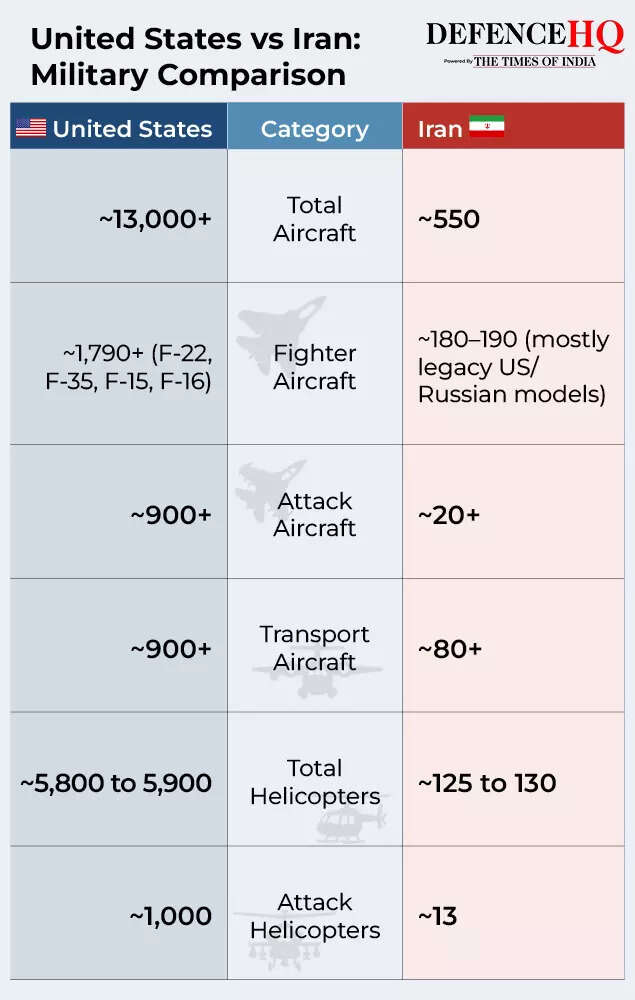
US-Iran military comparison

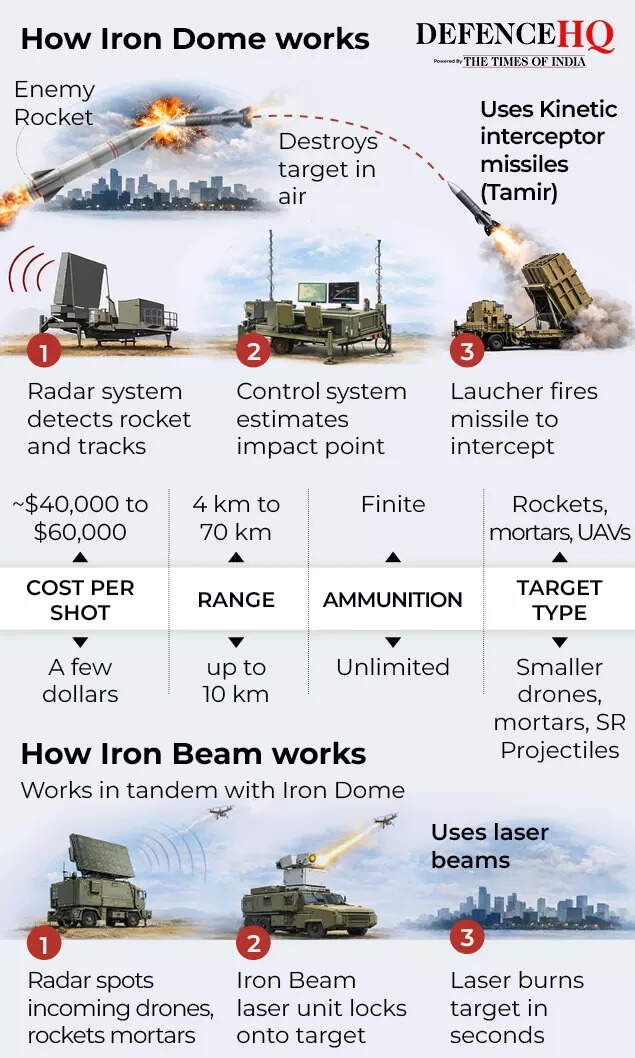
On the Israeli side, the toughest task has been air defence rather than offense. Israel is famed for its multi-tier missile shield. Short-range rockets and drones are handled by Iron Dome batteries; mid-range threats by David’s Sling; and high-altitude ballistic missiles by the Arrow system. This layered defence has mostly worked. Reuters reported on March 2 that “sirens sound across Israel as the country’s multi-layered missile defense system intercepts strikes from Iran,” noting that most incoming projectiles were shot down. Israeli leaders claim their defences have shot down nearly all barrages. Nonetheless, several missiles have slipped through – enough to cause casualties. In the two-week war of June 2025, at least one Iranian missile penetrated the Iron Dome and hit near Tel Aviv, killing over a dozen civilians. In the current war, media in Israel report about a dozen people killed so far and a hundred or more wounded, out of hundreds of rockets fired. By Israeli standards those losses are small, evidence of how robust the air-defence has been; but they also prove the shield is not impenetrable.

How Iron Dome works

The US is also reinforcing Gulf allies with air-defence batteries. Saudi Arabia and the UAE field Patriot and THAAD batteries (some supplied by the US after the 2025 war) to guard their bases and oil facilities. Bahrain and Kuwait likewise rely on Patriots. These systems have so far knocked down a large fraction of Iranian missiles and drones aimed at them. Saudi air defences reported intercepting 2 ballistic missiles and 6 drones launched at its Al-Kharj base on March 6. Qatar’s leaders said they downed 9 of 10 incoming drones in another raid. But, as in Israel, some projectiles have evaded. Debris from intercepted drones has rained on Dubai and other cities, and at least one missile reached a fuel terminal in Oman, causing fires.

Straining the stockpiles: Who will run out first?

This contest is now largely one of inventories. Both sides are hoarding missiles and waiting to see whose “magazine” runs dry. The US insists that it has a near-unlimited stock of bombs and missiles, and that they will outlast Iran’s arsenal. President Trump has boasted that US forces can sustain the fight “as long as needed.” But officials quietly admit they are burning through ordnance at an extraordinary rate. As one Pentagon update reported by the Washington Post put it, in under a week of war the US has “rapidly [burned] through its stocks of precision weapons… expending sophisticated air-defense missiles at a rate that puts the US military potentially ‘days away’ from having to prioritize which targets to intercept”.

US-Iran military comparison

Thousands of Patriot, THAAD and ship-based Standard missiles have already been launched against Iranian drones and rockets, and each one takes months to replace. Adm. Brad Cooper of CENTCOM noted over 2,000 strikes on Iran so far; every bomb dropped and missile fired is one less in the depot.Iran’s side is also counting. The US believes Iran can sustain the current pace for only “several more days” before its supply of missiles starts to dwindle. Pentagon sources say US-Israeli airstrikes on Iran have already damaged launch sites and stockpiles, slowing down the rate of Iranian fire.

-

Indeed, some American analysts speculate that Tehran may begin to ration its missiles – firing fewer volleys to make its arsenal last. The war’s duration will hinge on such calculations: if Iran conserves missiles and cheap drones, it can prolong the conflict; if it keeps launching full salvos, it risks running out. As one Iran specialist cited by The Guardian said, if Iran ever runs out of missiles it might simply “have to sue for peace” and try to rebuild.So far, a tacit balance holds. For weeks US officials have insisted their own stockpiles will not run short before Iran’s do. But they are closely monitoring allies’ inventories too. Gulf countries report some shortages: in the previous clash US-supplied THAAD launchers had to use ~25% of their interceptors just defending Israel, raising concerns about resupply. Even Britain and others have been asked to send additional munitions. In Congress, lawmakers are debating whether to approve billions more for munitions aid to Ukraine and the Middle East. Every party now wonders: which side can afford to keep firing for longer?

Gulf States on the front line

Much of the current action has unfolded far from Iran’s borders – right in the Persian Gulf littoral. Countries like the UAE, Saudi Arabia, Qatar and Bahrain are hosting American bases and therefore have become targets. On multiple nights Sirens wailed across Riyadh, Abu Dhabi and Doha as Iranian missiles arced overhead. In the UAE the authorities reported 60 fires in Dubai landmarks after Iranian drones were intercepted overhead.Ad-Dhafra air base (Abu Dhabi) briefly went on alert, and Riyadh activated its missile batteries as projectiles approached. Qatar’s government said on one occasion that 98 out of 101 incoming ballistic missiles aimed at its territory were shot down. Yet Qatar’s capital endured an attack on its LNG facilities that temporarily shut down exports.

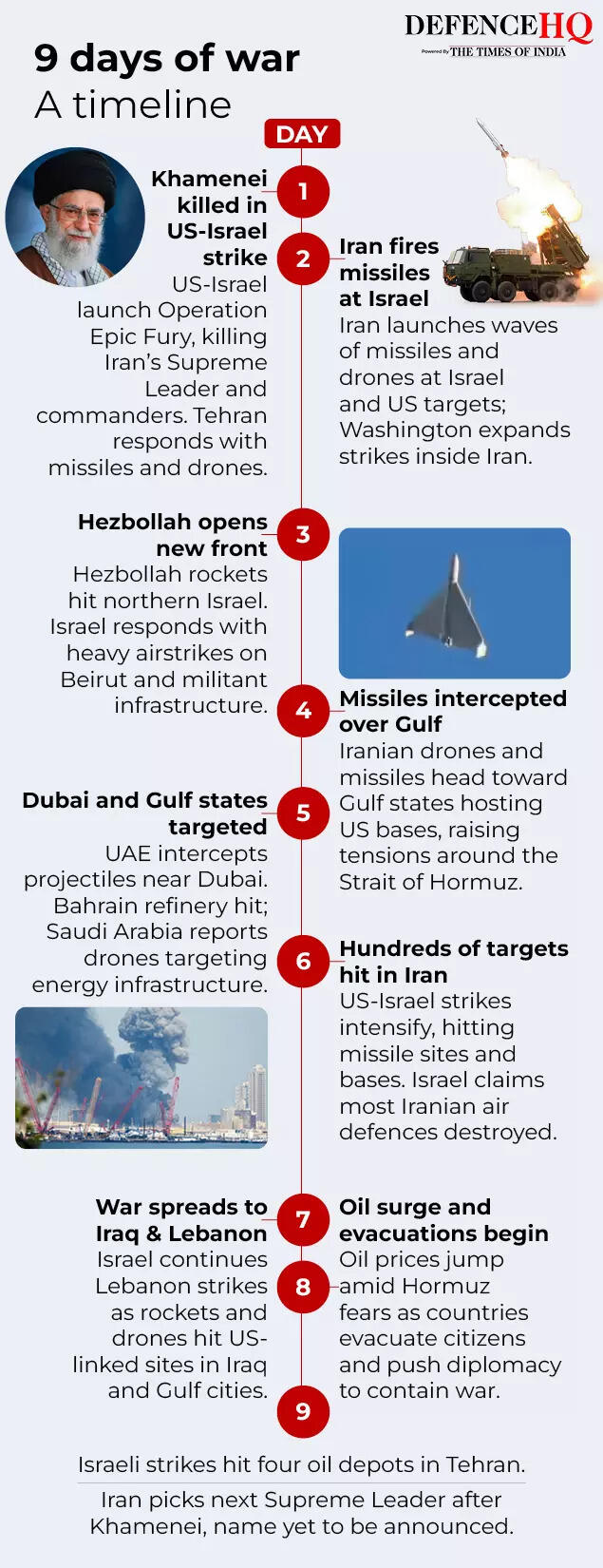
Timeline of US-Israel-Iran war

Beyond the missiles, the threat to shipping is notable. Iran has warned it could close the Strait of Hormuz – a key oil chokepoint. Tankers are already diverting or waiting outside the Gulf to avoid attacks. The risk of hitting a civilian vessel is serious: on March 2 an Iranian missile struck a Maltese-flagged tanker in international waters near Iran, puncturing its hull. While no crew was hurt, shipping insurance spiked. Oil markets are jittery about even minor disruptions in the Gulf.Civilians have been inconvenienced. Airlines temporarily halted flights from Dubai and Doha during the biggest salvos. Tourists and residents spent nights in hotels or bunkers. Markets have been volatile on the slightest hint of escalation.

What’s next?

A week into the war, one lesson is already clear: Iran is not an easy target. The opening strikes killed commanders, destroyed bases and even eliminated the country’s supreme leader, yet the system they built remains intact and fighting back. Missiles are still being launched, drones are still buzzing across the Gulf, and American and Israeli interceptors are still racing skyward every night.Washington may still believe its arsenal, alliances and technology will ultimately prevail. Tehran is betting that patience, geography and sheer volume of cheap weapons can level that advantage.For now, neither side is close to backing down. And with every intercepted missile and every drone that slips through, the same question grows louder: not who can strike harder, but who can endure longer.



Source link

India’s first Ring Metro: PM Modi inaugurates Majlis Park–Maujpur–Babarpur Pink Line; check stations


India’s first Ring Metro: PM Modi inaugurates Majlis Park–Maujpur–Babarpur Pink Line; check stations

Prime Minister Narendra Modi on Sunday inaugurated two new metro corridors, making Delhi home to India’s first fully operational Ring Metro. Alongside these, the PM also other unveiled major infrastructure projects, marking a significant boost to the city’s public transport and housing networks. The total investment across these projects is around Rs 33,500 crore, including Delhi Metro expansions worth Rs 18,300 crore.Chief Minister Rekha Gupta highlighted the broader benefits, saying the metro expansion “is expected to make daily commuting smoother, cut traffic congestion and help tackle pollution in the capital.” She added that the projects would also improve access for residents of the National Capital Region, particularly commuters from Noida and Faridabad, and provide better connectivity to Indira Gandhi International Airport.

India’s first Ring Metro

The highlight was the opening of the Majlis Park–Maujpur–Babarpur stretch of the Pink Line, a 12.3-kilometre corridor with eight elevated stations. With this addition, the Pink Line now stretches to 71.56 kilometres, making Delhi the first city in India with a fully operational Ring Metro. Stations on this route include:

  • Majlis Park
  • Burari
  • Jharoda Majra
  • Jagatpur-Wazirabad
  • Soorghat
  • Nanaksar-Sonia Vihar
  • Khajuri Khas
  • Bhajanpura
  • Yamuna Vihar
  • Maujpur-Babarpur

Pink Line

Alongside the Pink Line, the Deepali Chowk–Majlis Park section of the Magenta Line, spanning 9.9 kilometres, was also inaugurated. Officials said the new corridors would improve connectivity between North-East and North-West Delhi, reduce travel time across several parts of the city, and benefit areas including Burari, Jagatpur-Wazirabad, Khajuri Khas, Bhajanpura, Yamuna Vihar, Madhuban Chowk, Haiderpur Badli Mor, Bhalaswa, and Majlis Park. In addition to the inaugurated stretches, PM Modi also laid the foundation stone for three new corridors under Phase V-A of the Delhi Metro, covering a total length of 16.10 kilometres. Before the main ceremony, PM Modi also visited the GPRA Type-5 quarters at Sarojini Nagar to hand over keys to female allottees. He also inaugurated and laid the foundation stone for projects under the GPRA Redevelopment Plan, valued at Rs 15,200 crore. The redevelopment, taking place in Sarojini Nagar, Netaji Nagar, Kasturba Nagar, and Sriniwaspuri, will modernise government housing and offices, providing over 9,350 flats for government employees and creating 48 lakh square feet of office space. The project is being implemented through a self-sustaining model, where a portion of the area is monetised to fund the overall redevelopment.


Source link