Breaking News
No shortage of funds for development works, no place for laxity: Delhi CM | India News
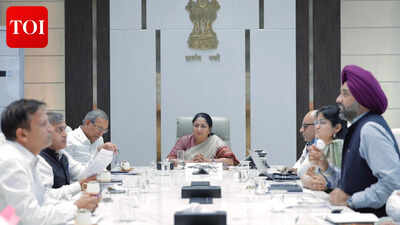

No shortage of funds for development works, no place for laxity: Delhi CM

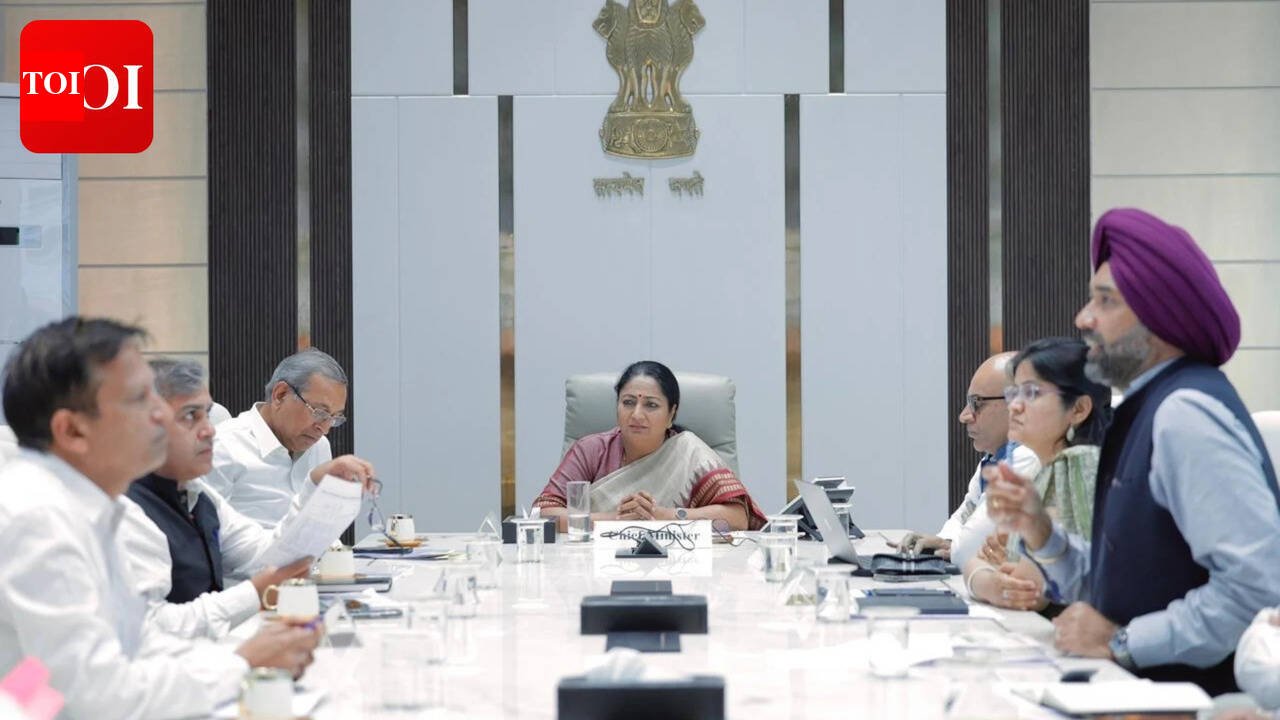
NEW DELHI: Chief minister Rekha Gupta on Friday reiterated that there would be no shortage of funds for development works in Delhi, also asserting that laxity will not be tolerated.Gupta chaired a review meeting on road and drainage works approved earlier and directed the departments concerned to complete tendering processes by March end to ensure that the projects are completed before monsoon.“The pace of development works must be visible on the ground. Development projects worth approximately Rs 3,786 crore in total have been approved so far under three departments. All agencies must work in close coordination and expedite the completion of pending documentation,” the chief minister said.The meeting was held to review works under the Chief Minister Development Fund (CMDF), the Delhi Village Development Board (DVDB) and the Trans-Yamuna Area Development Board.“In order to strengthen basic infrastructure in the capital, a large number of projects have been approved under the CMDF scheme. So far, 3,812 development projects have received administrative approval under this scheme, with a total estimated cost of approximately Rs 1,798.85 crore,” Gupta said.Following the meeting, the chief minister said the Delhi government is taking concrete steps for the holistic development of villages. “In this direction, 707 projects in various rural areas have been approved under the Delhi Village Development Board, with an expenditure of approximately Rs 1,557 crore.” She also said in the trans-Yamuna region, 799 projects have been approved under the Trans-Yamuna Area Development Board , with an expenditure of approximately Rs 430 crore.These projects include construction of roads and drains, works related to water supply, installation of streetlights, development of parks and other basic infrastructure facilities, she added.


Source link

Digital fraud rules: RBI proposes faster complaint resolution, wider protection for banking customers


Digital fraud rules: RBI proposes faster complaint resolution, wider protection for banking customers

The Reserve Bank of India (RBI) has proposed changes to its framework on customer liability in digital banking frauds, aiming to widen protection for users and ensure quicker resolution of complaints related to unauthorised electronic transactions.The central bank on Friday issued draft amendment directions and invited comments from stakeholders and members of the public by April 6, 2026.The move follows the announcement made during the February monetary policy, where the RBI had indicated that it would review and update the existing framework governing customer liability in digital transactions.According to the central bank, the digital payments and banking ecosystem has evolved significantly since the current rules were introduced in 2017, prompting the need to revise the guidelines.Under the proposed amendments, the scope of the framework will be expanded to cover additional categories of fraudulent electronic banking transactions.Banks will also be required to reduce the time taken to process complaints related to fraudulent digital transactions, with the aim of improving the grievance redressal mechanism for customers.The draft rules further propose a compensation mechanism for small-value fraudulent transactions, designed to provide faster financial relief to affected users.The RBI said the compensation arrangement would remain operational for one year from the date the new directions come into force.The mechanism will subsequently be reviewed based on the experience gained, with the objective of increasing the share of compensation borne by banks while reducing or eliminating the portion contributed by the central bank.


Source link

As West Asia conflict rages on, India’s pharma exports stare at Rs 5K crore potential losses


As West Asia conflict rages on, India's pharma exports stare at Rs 5K crore potential losses

Hyderabad: India’s pharmaceutical sector is staring at potential losses of Rs 2,500– Rs 5,000 crore if March exports to the Gulf Cooperation Council (GCC) and the wider West Asia and North Africa (WANA) are completely disrupted by the ongoing West Asia conflict, which is intensifying pressure on freight, shipping routes, and delivery schedules, according to the Pharmaceuticals Export Promotion Council of India (Pharmexcil).GCC countries currently account for 5.58% of India’s total exports, with pharma a growing component of that trade. As per recent industry data, Indian pharmaceutical exports to the WANA region rose from $1,320.44 million in FY 2020-21 to $1,749.68 million in FY 2024-25.

Iran Conflict Presents ‘Huge Opportunity’ For India To Become Clean Energy Exporter: Amitabh Kant

Countries such as the UAE, Saudi Arabia, Oman, Kuwait, and Yemen rely heavily on India for cost-effective medicines, even as momentum grew in emerging markets such as Jordan, Kuwait, and Libya, with increasing demand for vaccines, surgical products, and AYUSH formulations. However, this growth is now at risk due to ongoing challenges in the global freight market.Pharmexcil Chairman Namit Joshi said tensions in West Asia affected critical maritime and air cargo corridors. Key routes such as the Red Sea, Strait of Hormuz, and Gulf shipping corridors are facing heightened risks of rerouting or delays, threatening delivery schedules. This is a concern, especially for temperature-sensitive products that can be damaged by prolonged transit or cold-chain disruptions.According to Pharmexcil, the conflict already put considerable strain on the global freight market, with freight charges for both imports and exports doubling in some cases. “The doubling of freight charges for both imports and exports, accompanied by surcharges of $4,000–$8,000 per shipment, put substantial pressure on Indian pharmaceutical companies,” Joshi said.Another concern is escalating costs across the pharmaceutical supply chain, with major cost drivers including crude oil price fluctuations, rising logistics costs for APIs and finished formulations, and shipping delays that will affect inventory cycles, he said.Pharmexcil said it is monitoring developments and engaging logistics and trade stakeholders for damage control. It recommended closer coordination with govt authorities for possible freight relief measures, diversification of shipping routes and alternative logistics options, and continued dialogue with international regulators to maintain timely availability of medicines in key markets.


Source link

Noida airport update: Jewar airport gets DGCA aerodrome licence, what you need to know


Noida airport update: Jewar airport gets DGCA aerodrome licence, what you need to know

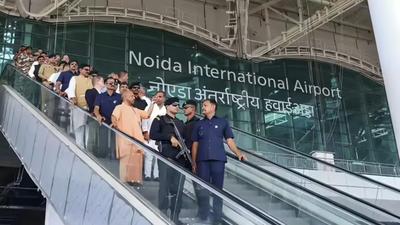
The upcoming Noida International Airport in Jewar has received its aerodrome licence from the Directorate General of Civil Aviation (DGCA), clearing a key regulatory hurdle and bringing the project closer to the start of flight operations.The development was confirmed by Rakesh Kumar Singh, chief executive officer of Noida International Airport Limited (NIAL) and the Yamuna Expressway Industrial Development Authority, reported news agency PTI.NIAL’s nodal officer Shailendra Bhatia said the licence has been issued under civil aviation rules and covers domestic passenger flights as well as cargo operations.

India’s Biggest Airport At Jewar To Be Opened By PM Modi, UP CM Yogi Announces In Singapore

Officials said the remaining operational deployment and arrangements are expected to be completed within about 45 days, adding that the airport infrastructure is now ready.“Receiving the aerodrome license is a key milestone in our journey. It reflects the strong collaboration with our partners and the rigorous work undertaken to ensure readiness for commercial operations. We are committed to delivering a modern, efficient and passenger-centric airport that will serve as a catalyst for regional economic growth,” Christoph Schnellmann, Chief Executive Officer of Noida International Airport (NIA), said in a statement.The airport is expected to be formally inaugurated by Prime Minister Narendra Modi, officials said.

What the licence means

According to the airport authorities, the aerodrome licence issued under Rule 78 of the Aircraft Rules, 1937, certifies that the airport meets regulatory requirements related to operational procedures, safety systems, infrastructure, navigation aids and emergency response standards mandated by the DGCA.The licence follows a recent security clearance from the Bureau of Civil Aviation Security (BCAS) for domestic passenger operations as well as domestic and international cargo handling.Authorities said these approvals mark significant progress towards the airport’s operational readiness. However, commercial flight operations will begin only after the Aerodrome Security Programme (ASP) receives final approval from BCAS.“We look forward to receiving this approval in due course, following which airline schedules, ticket sales, and the formal inauguration will be announced closer to the launch of operations,” the airport said in a statement.

Project scale and capacity

The greenfield airport project, being developed under a public-private partnership (PPP) model in Jewar, Gautam Buddh Nagar, is expected to become one of the largest airports in the country once fully operational.In its first phase, the airport spans about 1,300 hectares and includes one runway and one terminal building, with the capacity to handle around 1.2 crore passengers annually.Passenger services were originally scheduled to begin in September 2024.

Operational preparations underway

Operational readiness activities under the airport’s Operational Readiness Activation and Transition (ORAT) programme are ongoing to ensure systems, processes and personnel are prepared for the launch.A major milestone was achieved in December 2024, when IndiGo operated a validation flight using an Airbus A320, successfully testing the airport’s approach procedures, navigation aids and air traffic control systems.Airport authorities said major operational infrastructure has already been completed, and concessions have been awarded for services such as ground handling, aviation fuel supply, cargo, retail, food and beverage, in-flight catering, mobility services and the airport hotel.They added that communication and navigation systems have been commissioned by the Airports Authority of India, bringing the project closer to full operational readiness


Source link

US-Iran war: Gold being sold at steep cuts in Dubai; available at $30 an ounce discount


US-Iran war: Gold being sold at steep cuts in Dubai; available at $30 an ounce discount
In Dubai, traders have begun offering gold at discounts of up to $30 per ounce compared with the benchmark price in London. (AI image)

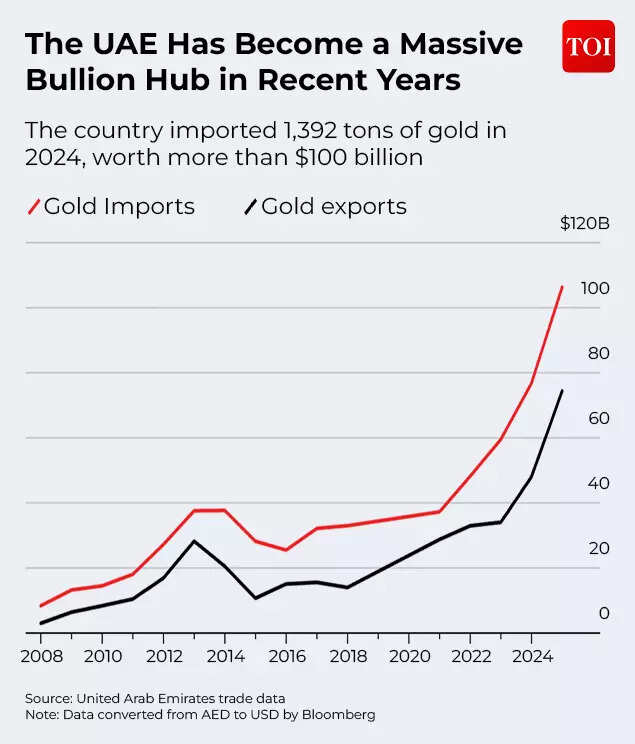
US-Irasel-Iran war impact on gold prices: In UAE’s Dubai, which finds itself in the midst of the escalating Middle East crisis, the yellow metal is now available at very steep discounts. Gold is currently being offered for sale at a substantial discount in Dubai as the conflict in the Middle East disrupts air travel and restricts suppliers’ ability to move bullion out of the major trading hub.The United Arab Emirates, particularly Dubai, serves as a major hub for refining and exporting gold to buyers across Asia. It also acts as a transit point for shipments arriving from Switzerland, the United Kingdom and several African countries.

Gold at steep price cuts in Dubai

As per a Bloomberg report, a number of buyers have postponed fresh purchases, unwilling to bear unusually high freight and insurance charges without certainty over delivery timelines. Consequently, traders have begun offering gold at discounts of up to $30 per ounce compared with the benchmark price in London, the report said. The move helps traders avoid having to continuously pay storage and financing costs.

UAE has become a massive bullion hub

Several shipments were still stranded as of Friday, the sources said, although a limited quantity of bullion had begun leaving Dubai on flights starting in the middle of the week.

US Allows India To Buy Russian Oil As Allies Offer Gas Supplies Amid Iran War And Hormuz Tensions

However, part of the country’s airspace has been shut following a series of Iranian missile strikes as the conflict involving the United States, Israel and Tehran enters its seventh day without any clear resolution.Gold is usually transported in the cargo sections of passenger aircraft. With flights from the UAE heavily restricted, traders and logistics providers have been hesitant to move high-value bullion by road to airports in neighbouring countries such as Saudi Arabia or Oman, citing the logistical challenges and risks involved, especially when crossing land borders.Also Read | Israel-Iran war: What US 30-day waiver on Russian oil means for India – explained“Several shipments of gold cargo have either been delayed or left stranded, creating a temporary squeeze in the supply of physical bullion in India,” said Renisha Chainani, head of research at Augmont Enterprises Ltd., one of the country’s largest gold dealers.

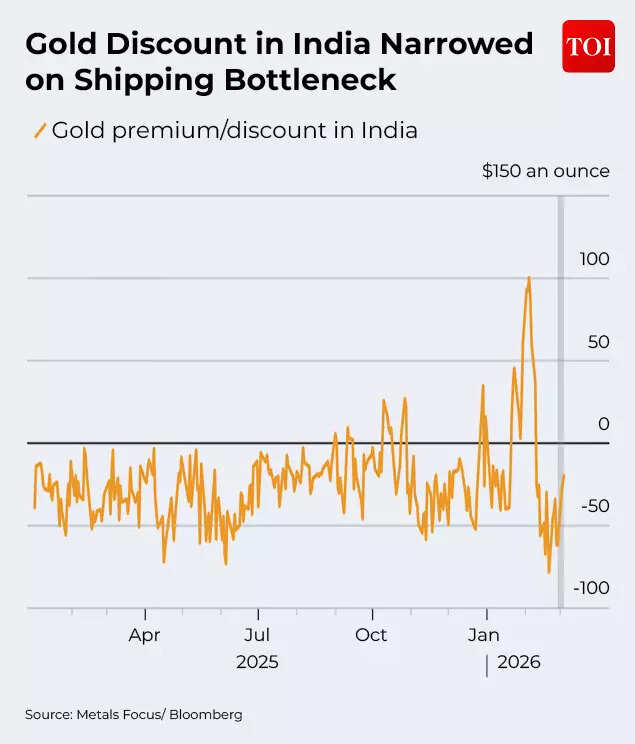
Gold discount in India narrowed on shipping bottleneck

However, buyers in India, which is among the biggest destinations for gold shipped from Dubai, are not under immediate pressure to replenish supplies. Demand in the near term remains subdued and inventories are relatively high following substantial imports recorded in January, Chirag Sheth, principal consultant for South Asia at Metals Focus told Bloomberg.“As of now, there is ample stock,” he said, “but if this drags on for a few months, then there will be a problem.”Spot gold prices have climbed nearly 20% so far this year and are holding above $5,000 an ounce. Even so, trading has been volatile, and the metal has faced pressure this week as the dollar strengthened.At the same time, there are indications that refiners are facing difficulties securing doré, the semi-refined gold bars that are usually cast at mining sites. India’s largest precious metals refinery, MMTC-PAMP, sources roughly 10% of its doré from a mine in the Middle East, but those supplies have been disrupted, said Chief Executive Officer and Managing Director Samit Guha. He added that for new supply agreements sourced from other locations, logistics expenses have surged by about 60% to 70% since the conflict began.


Source link

Politico owner Axel Springer to buy UK’s Telegraph in £575 million deal pending regulatory approval


Politico owner Axel Springer to buy UK’s Telegraph in £575 million deal pending regulatory approval
FILE -The Daily Telegraph newspaper with the front page of French President Emanuel Macron is seen at a supermarket in London, March 21, 2024. (AP Photo/Kin Cheung, File)

German media conglomerate Axel Springer announced Friday that it was purchasing the UK’s Telegraph Media Group for £575 million, in a proposed deal subject to approval by UK authorities.Axel Springer, which owns POLITICO, said it was buying the right-leaning British publication. The company said the transaction required clearance from UK regulators.In a statement, Axel Springer CEO Mathias Döpfner said, “more than 20 years ago, we tried to acquire The Telegraph and did not succeed. We have admired this great publication for decades. Now our dream comes true.”He added: “We want to help it become the most read and intellectually inspiring center-right media outlet in the English-speaking world.”Axel Springer was not the only media company interested in purchasing the Telegraph, as the Daily Mail & General Trust had proposed a £500 million takeover.Döpfner added: “The Telegraph stands for freedom, personal responsibility, democratic values and a belief in open societies and market economies. These convictions closely align with our Axel Springer essential values.”A spokesperson for the UK’s Department for Digital, Culture, Media and Sport, which oversees media mergers in the UK on competition and foreign influence grounds, said Friday: “We note the announcement today on the sale of Telegraph Media Group. The Secretary of State will, as she has throughout, follow the established regulatory process and assess the new deal proposed. We will keep Parliament updated on this process.Döpfner’s statement said that the buyer and seller “believe that the transaction is fully compliant with the UK’s Foreign State Influence regime.”


Source link

Nazi salute costs Real Madrid as UEFA slaps $17,000 fine after fan’s gesture during Champions League game | Football News


Nazi salute costs Real Madrid as UEFA slaps $17,000 fine after fan's gesture during Champions League game
Real Madrid’s Vinicius Junior reacts during a Spanish La Liga football match between Real Madrid and Getafe in Madrid, Spain, Monday, March 2, 2026. (AP Photo)

UEFA has fined Spanish football club Real Madrid 15,000 euros ($17,000) after one of the club’s supporters made a Nazi salute before a recent UEFA Champions League match against Benfica. The governing body also imposed a partial stadium closure of 500 seats at the Santiago Bernabéu, suspended for one year.UEFA said the action was taken after an incident before the second leg of the play-off round between the two sides on February 25. The disciplinary board punished Madrid “for the racist and/or discriminatory behaviour of its supporters,” according to a statement issued by the European football body.The incident took place before Real Madrid’s Champions League match against Benfica. The Spanish club later said the supporter involved had been identified and removed from the stadium.“Real Madrid condemns this type of gesture and expression that incites violence and hatred in sports and society,” the club said at the time.A week before the incident at the Bernabéu, Madrid forward Vinícius Júnior alleged that he was racially abused by Benfica player Gianluca Prestianni. Prestianni has denied the allegation.Real Madrid also removed the supporter who was caught on camera making the Nazi salute before the match began. The first leg of the tie had also seen the alleged racism incident involving Vinicius and Prestianni.Real Madrid advanced to the round of 16 of the Champions League, where they will face Manchester City.


Source link

US stocks today: Dow tumbles 900 points, S&P 500 and Nasdaq slide 1.6% as oil crosses $90; weak jobs data raise stagflation fears


US stocks today: Dow tumbles 900 points, S&P 500 and Nasdaq slide 1.6% as oil crosses $90; weak jobs data raise stagflation fears

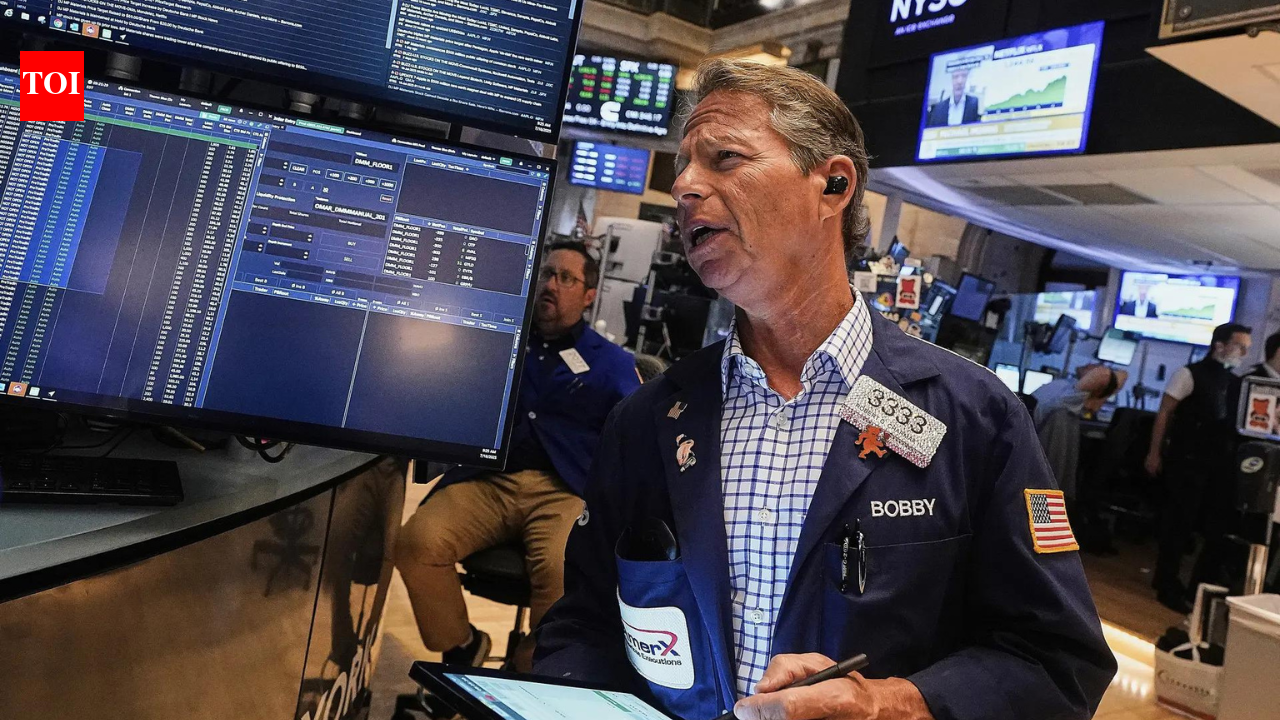
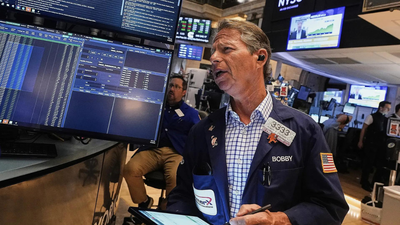
US stocks fell sharply on Friday as surging oil prices and disappointing economic data fuelled concerns about a potential stagflation scenario, where slowing growth combines with rising inflation.The S&P 500 dropped 1.6%, while the Dow Jones Industrial Average fell 909 points, or 1.9%, to 48,338.36 as of 9:35 am Eastern Time, AP reported. The Nasdaq Composite also declined 1.6%, reflecting broad weakness across Wall Street.The selloff followed a report showing that US employers cut more jobs last month than they created, signalling potential weakness in the labour market. At the same time, oil prices surged to their highest levels in nearly two years as the war involving Iran intensified.“You can’t sugarcoat this report,” said Brian Jacobsen, chief economic strategist at Annex Wealth Management. “A negative payrolls number combined with a big jump in oil prices will have traders worrying about stagflation risks.”Stagflation refers to a situation where economic growth stagnates while inflation remains high, making policy responses more difficult.Adding to concerns, a separate report released Friday showed US retailers earned less revenue last month than economists expected, raising questions about the strength of consumer spending, which is a key driver of the US economy.Normally, the Federal Reserve cuts interest rates when economic growth slows to stimulate activity. Lower borrowing costs can make mortgages and business investments cheaper while supporting stock prices. The Fed had already cut rates several times last year and had signalled the possibility of further reductions this year.However, rising inflation driven by higher energy prices could limit the central bank’s room to ease policy.Energy markets remained the key trigger for the volatility. The international benchmark Brent crude jumped 5.7% to $90.25 per barrel, while US benchmark crude surged 8.9% to $88.20 per barrel.Oil prices have climbed sharply from around $70 late last week as the conflict expanded and targeted areas critical to energy production and transportation in the Middle East.Much of the market’s concern centres on the Strait of Hormuz, a narrow shipping corridor near Iran through which roughly one-fifth of the world’s oil supply passes.The conflict has also halted Iranian gas exports to parts of Asia, which could intensify competition for alternative energy supplies.“If that stoppage is drawn out, it will likely lead to a bidding war between Europe and Asia that would send energy prices even higher,” said Fatih Birol, executive director of the International Energy Agency.Some analysts warn that if oil prices climb towards $100 per barrel and remain elevated, the global economy could face significant pressure.Despite the current turmoil, markets have historically recovered relatively quickly after geopolitical conflicts, provided that oil prices do not remain elevated for an extended period.President Donald Trump has recently said that he wants “unconditional surrender” from Iran, signalling a hardline stance and reducing expectations for negotiations in the near term.In the bond market, Treasury yields rose further as higher oil prices increased inflation expectations. The 10-year US Treasury yield climbed to 4.17% from 4.13% late Thursday and from 3.97% before the Iran conflict began.According to CME Group data, traders are increasingly betting that the Federal Reserve may cut interest rates only once this year, instead of the earlier expectation of at least two reductions.Global markets showed mixed performance. In Europe, France’s CAC 40 fell 1.6% and Germany’s DAX declined 1.8%, while Asian markets ended mostly higher, with Hong Kong’s Hang Seng rising 1.7% and Japan’s Nikkei 225 gaining 0.6%.


Source link

Maharashtra budget bets on water security, green cover as El Nino threat looms | Mumbai News


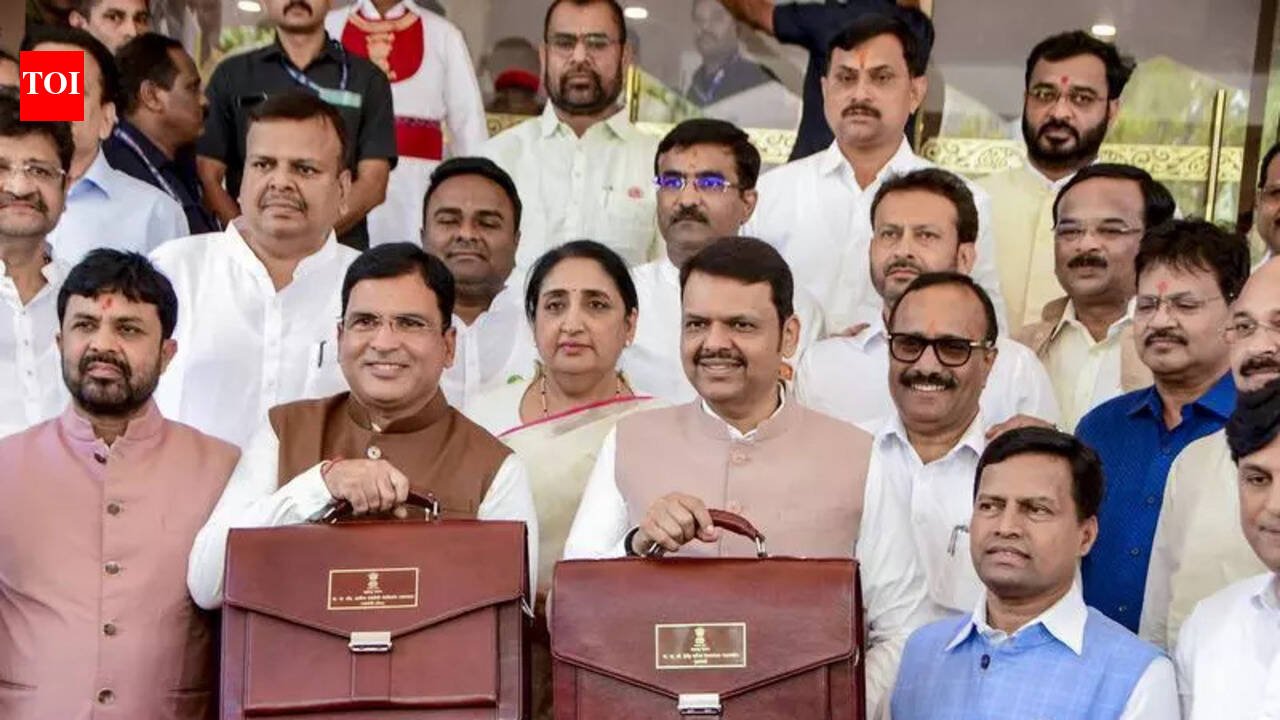
Mumbai: With forecasts hinting at a possible weak monsoon due to the emerging El Niño in 2026, the Maharashtra govt on Friday unveiled a wide-ranging plan to strengthen water security, boost forest cover and expand climate-resilient infrastructure.Presenting the state budget in the assembly, chief minister and finance minister Devendra Fadnavis said the govt will intensify water conservation efforts through the Jalyukt Shivar Abhiyan, along with measures for water storage planning and fodder development to mitigate potential drought conditions.A major urban initiative announced was the Rs 5,860 crore Maharashtra urban water supply, sewage management and reuse project, to be implemented with support from the World Bank. The project aims to ensure 100% treatment and effective reuse of urban sewage while strengthening the financial capacity of urban local bodies.Fadnavis also reiterated the state’s commitment to expanding green cover in line with the National Forest Policy 1988, which recommends that at least 33% of the geographical area be under forest and tree cover. To move towards that goal, the govt plans a campaign to plant 300 crore trees across Maharashtra, linking environmental protection with climate action and rural employment.Minister of state for finance Ashish Jaiswal announced that a Rs 71.2 crore state water information centre will be set up in Nashik to provide certified digital data on water resources.The budget also highlighted several large river-linking projects, including the Rs 94,968 crore Wainganga–Nalganga River Link Project and the Rs 13,497-crore Damanganga–Vaitarna–Godavari River Link Project, aimed at transferring surplus water to drought-prone regions.In addition, the Rs 2,240 crore Maharashtra State Responsive Development Programme will focus on flood mitigation in Kolhapur and Sangli, including diversion of floodwaters from the Krishna basin to water-scarce areas of western Maharashtra and Marathwada.Officials said the combined measures aim to secure water availability for both rural and urban regions up to 2047 while strengthening the state’s climate resilience.


Source link

Crude oil price surge: Brent crosses $90 as escalating Middle East war rattles energy markets


Crude oil price surge: Brent crosses $90 as escalating Middle East war rattles energy markets

Global oil prices surged on Friday as the conflict in West Asia intensified, pushing benchmark crude above the $90 mark amid fears of further supply disruptions.The Brent North Sea crude, the international oil benchmark, rose more than 5% to $90.25 per barrel, its highest level since April 2024, AFP reported.The US benchmark West Texas Intermediate (WTI) climbed even more sharply, advancing 8.1% to $87.56 per barrel.

US Allows India To Buy Russian Oil As Allies Offer Gas Supplies Amid Iran War And Hormuz Tensions

Meanwhile, US President Donald Trump on Friday said the only acceptable outcome to end the ongoing conflict with Iran would be the country’s “unconditional surrender,” while also promising economic rebuilding if Tehran agrees to install new leadership.“There will be no deal with Iran except UNCONDITIONAL SURRENDER,” Trump wrote on his Truth Social platform.His remarks came as Israel carried out strikes on regime targets in Tehran and Hezbollah positions in Beirut, while US Defense Secretary Pete Hegseth said American strikes against Iran were “about to surge dramatically.”Trump said that if the Islamic Republic capitulates, the United States and its allies would help rebuild Iran’s economy, bringing the country “back from the brink of destruction, making it economically bigger, better, and stronger than ever before.”However, he said such support would depend on the installation of what he described as “a GREAT & ACCEPTABLE Leader(s).”The US president ended the post with a new slogan — “MAKE IRAN GREAT AGAIN (MIGA!)” — a play on his well-known “Make America Great Again” political slogan.


Source link