Breaking News
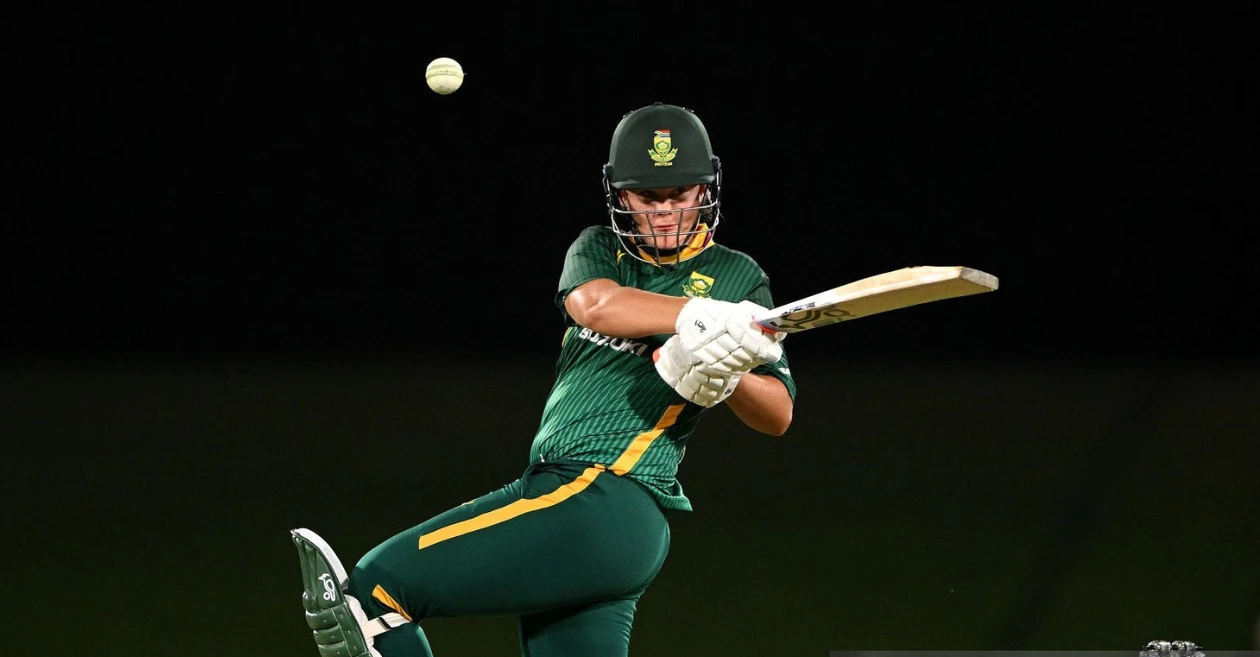
NZ-W vs SA-W, 1st ODI: Kayla Reyneke clinches last-ball thriller for South Africa


In a gripping contest at Hagley Oval, South Africa Women defeated New Zealand Women by two wickets in the opening ODI of the 2026 tour. The match lived up to expectations as it went down to the final ball, with Kayla Reyneke emerging as the hero.

Chasing a competitive 269, South Africa held their nerve despite losing wickets at crucial intervals. Debutant Reyneke’s unbeaten 42 off 32 deliveries ensured the visitors crossed the finish line in dramatic fashion. The victory gives South Africa a 1-0 lead in the series and sets the tone for a fiercely contested tour.

New Zealand post competitive total after middle-order resistance

Put in to bat first, New Zealand posted 268 all out in 50 overs, thanks largely to a strong middle-order effort. After a cautious start, Suzie Bates and Georgia Plimmer built a steady foundation, but regular breakthroughs prevented a dominant start.

Captain Amelia Kerr contributed a composed 36, stabilizing the innings during the early phase. However, it was Maddy Green who anchored the innings with a fluent 85, combining patience with timely aggression.

Support came from Isabella Gaze, who added a valuable 37, helping New Zealand recover from mid-innings pressure. Despite these contributions, the hosts lost wickets in clusters towards the end, limiting their chances of reaching a bigger total beyond 280.

South Africa’s bowling attack, led by disciplined spells, ensured New Zealand were kept within reach.

A standout performance came from Ayabonga Khaka, who delivered a match-defining spell. She picked up 6 wickets for 56 runs, dismantling New Zealand’s batting lineup at key moments.

Khaka’s ability to strike in the middle and death overs proved crucial. She removed set batters, including the dangerous Maddy Green and triggered a late collapse that saw New Zealand lose their final wickets quickly.

Her performance not only restricted the total but also shifted the momentum firmly in South Africa’s favor heading into the chase.

Kayla Reyneke holds nerve to seal last-ball victory

South Africa’s chase began on a shaky note with an early dismissal, but captain Laura Wolvaardt steadied the innings with a fluent 61. Her knock provided the foundation for a competitive chase.

The highlight of the innings was a crucial 123-run partnership between Annerie Dercksen (72) and Sune Luus (53). Their stand revived South Africa after early setbacks and put the team in a strong position.

However, New Zealand fought back with timely wickets. Bowlers like Amelia Kerr and Jess Kerr tightened the screws, creating pressure in the latter half of the innings.

As wickets continued to fall, the match swung unpredictably, setting up a thrilling finish.

With the game hanging in the balance, Reyneke stepped up with a composed and fearless innings. Her unbeaten 42 proved decisive as she guided South Africa through a tense final over.

Also READ: Stafanie Taylor’s century goes in vain as Australia thrash West Indies in the first Women’s ODI

Reyneke displayed remarkable calmness under pressure, finding boundaries when needed and rotating the strike effectively. With 6 runs required off the final ball, she kept her calm and sealing a memorable victory for her team.

Her finishing ability under pressure will be remembered as one of the defining moments of the match.

Also READ: New Zealand vs South Africa, Women’s ODI Series – Schedule, Squads, Broadcast and Live Streaming details

This article was first published at WomenCricket.com, a Cricket Times company.


Source link

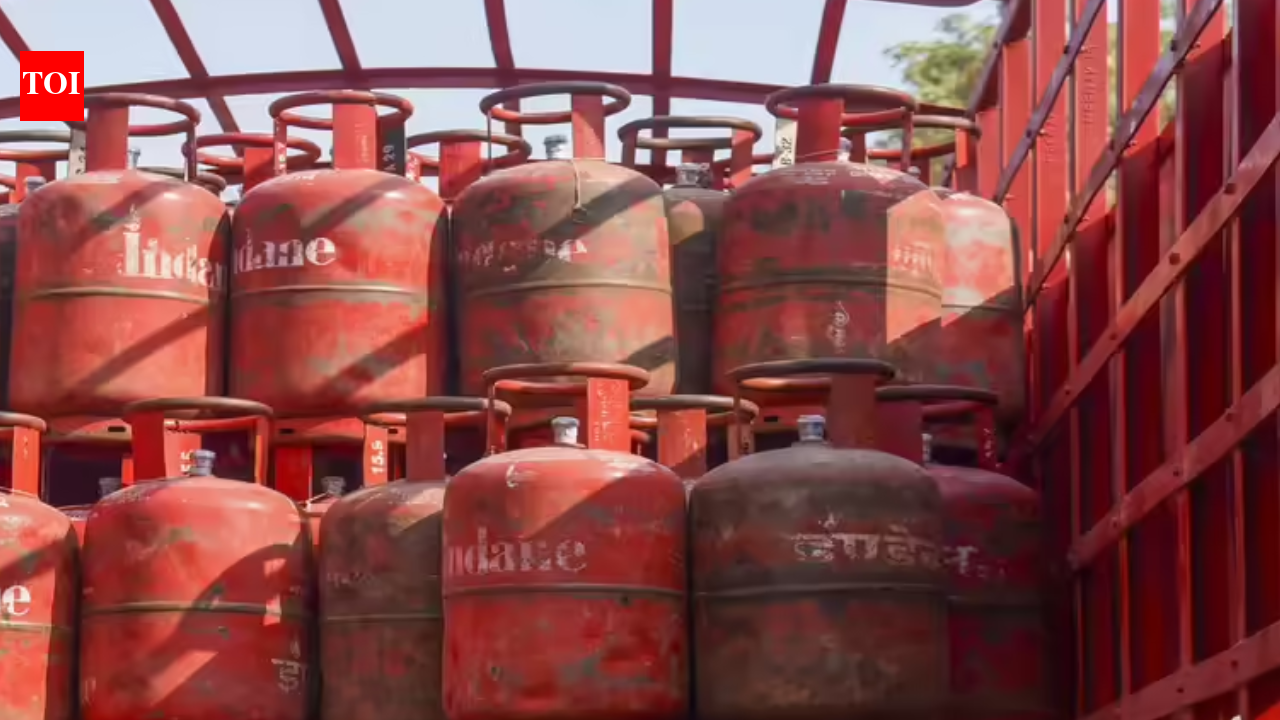
27 LPG cylinders, including five filled ones, stolen from delivery tempo in Mumbai | Mumbai News


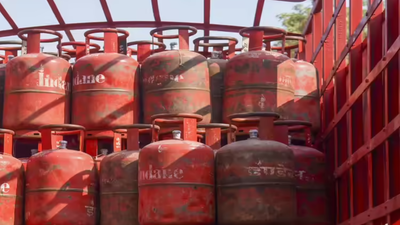
MUMBAI: After 27 LPG cylinders, including five filled ones, were stolen from a delivery vehicle in Kandivali (West) police have launched an investigation, officials said on Saturday.The incident took place in the Charkop area and comes at a time when there are concerns over supply disruptions linked to the ongoing conflict in West Asia, the official said. According to the complaint filed by delivery worker Nandkumar Ramraj Soni, he had parked his tempo carrying the cylinders near Kaka Keni Chowk, close to his house, on Wednesday. When he returned the next day, he found the vehicle damaged, with the glass of the door broken and the rear lock tampered with. All 27 cylinders — five filled and 22 empty — were missing, the official said, quoting the FIR. Police have formed multiple teams to trace those involved in the theft. “CCTV footage from the area has captured several suspects along with vehicles, and efforts are underway to identify them,” he added.


Source link

OpenAI founder Vinod Khosla proposes: Remove income tax on Americans earning less than $100,000 by …


OpenAI founder Vinod Khosla proposes: Remove income tax on Americans earning less than $100,000 by ...

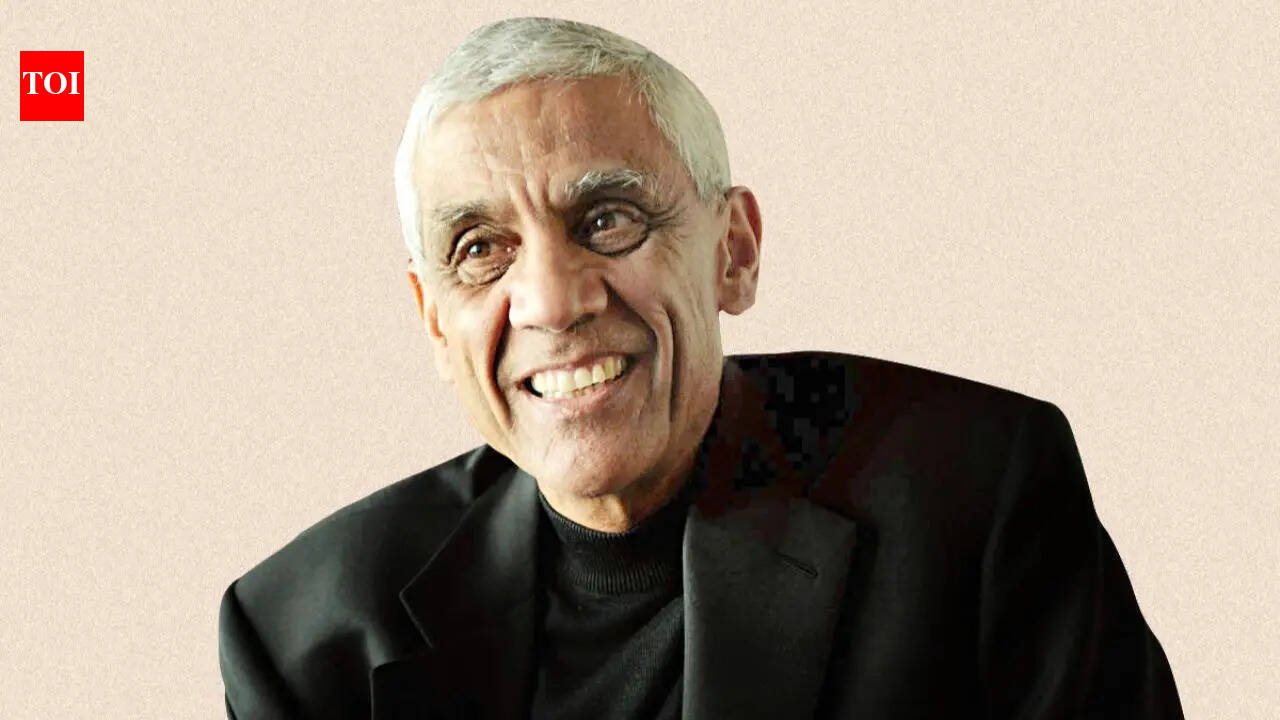
Vinod Khosla has proposed changes to the US tax system to address concerns about job losses linked to artificial intelligence (AI). He suggested eliminating federal income tax for Americans earning less than $100,000 and managing the revenue by increasing taxes on capital gains. Khosla said taxing capital gains at the same rate as income could allow around 125 million lower- and middle-income Americans to avoid paying federal income tax without reducing government revenues. The American venture capitalist and one of OpenAI’s early investors has argued that American policymakers need to respond to growing public anxiety and has outlined the need to rethink how income and capital are taxed as AI reshapes the economy.Speaking at a forum in Washington, Khosla told the Financial Times, “When I talk to people, the biggest thing is fear of AI taking their job by far,” adding that this would be “the single biggest issue” in the 2028 US presidential election cycle.The report notes that AI has moved higher on voters’ list of concerns this year, as its effects on areas such as jobs, the economy, mental health and warfare have become more visible. The Trump administration has opposed attempts by individual states to introduce stricter rules. However, there are signs of a divide within, as some supporters are calling for tighter controls on AI.

What Vinod Khosla said about the current US AI policy

Khosla, who was a major Democratic donor in recent election cycles, said the Trump administration had “generally done a pretty good job” on AI policy, the FT report noted.He pointed to AI and crypto tsar David Sacks and senior State Department official Jacob Helberg, who co-hosts this week’s Hill and Valley Forum. Helberg is married to Keith Rabois, a managing director at Khosla’s firm.At the same time, he said Trump has a “complete lack of values of any sort” and a “negotiating style that destroys credibility”.Khosla added that he had not decided who to support for president in 2028. He criticised two frequently discussed Republican contenders: vice-president JD Vance and secretary of state Marco Rubio for tolerating Trump’s “values”.He also criticised Democrats, saying the party’s weaker fundraising ahead of the November midterm elections reflects donor “frustration with going too far left”.He said he had spoken “briefly” with California governor Gavin Newsom, a Democrat, about AI but was looking for a “surprise” presidential candidate to emerge, the report added.“Democrats are too focused on the wrong thing, which is job preservation, not providing security to those who are displaced. Those are fundamentally different things. So, we’ll see who comes out in the middle. My view is every election cycle we have a surprise. Obama was a surprise. Trump was a surprise . . . So I’m hoping we’ll have a surprise,” Khosla added.


Source link

Virat Kohli ‘changed a lot after retiring from Test cricket’ | Cricket News


Virat Kohli 'changed a lot after retiring from Test cricket'

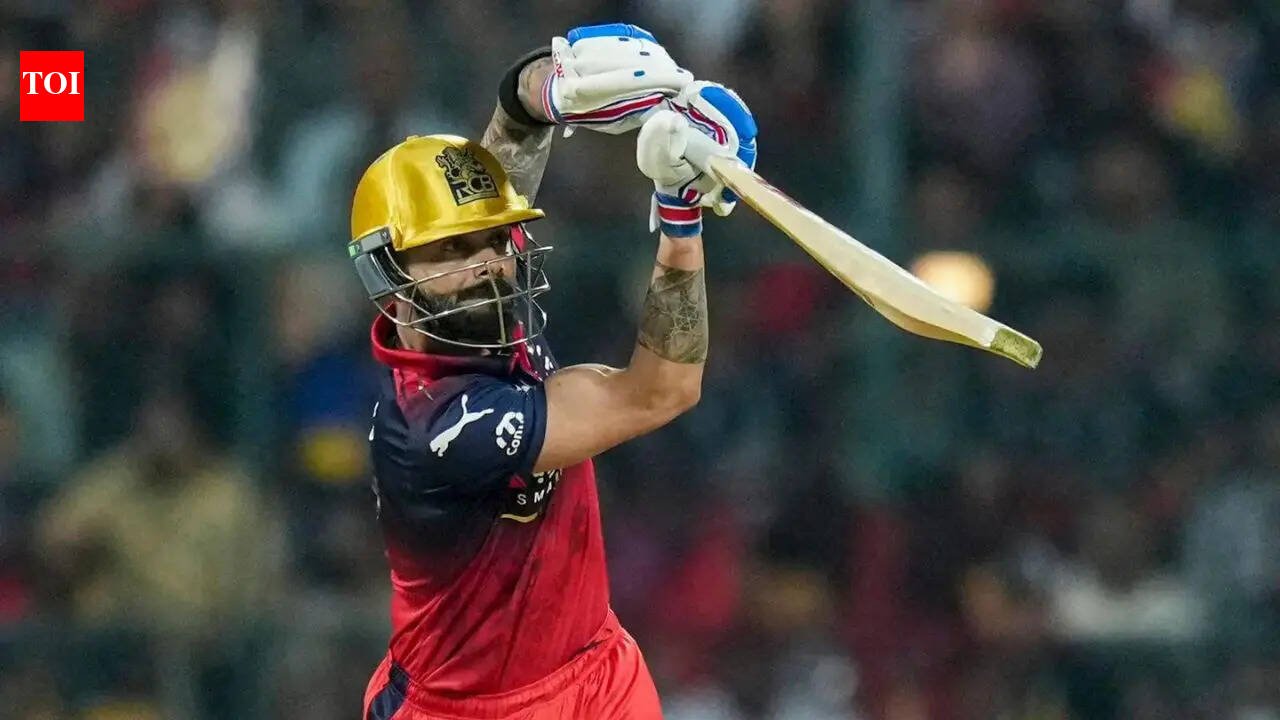
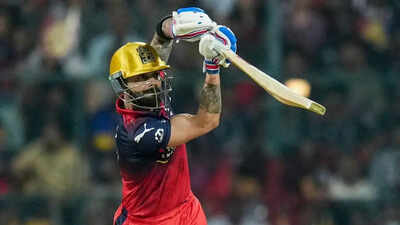
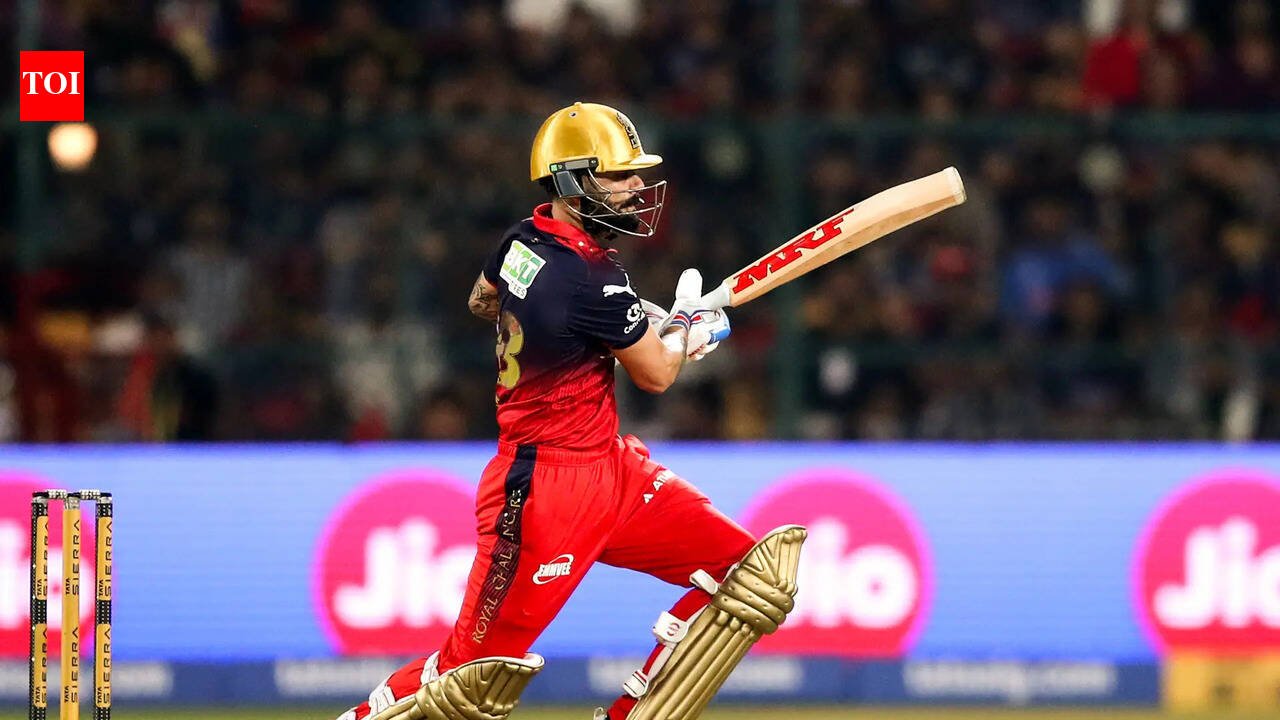
Virat Kohli showed once again why he remains one of the best in the IPL, playing an unbeaten 69 to help RCB chase down 202 comfortably. After a long break from T20 cricket, he looked in top form and played a key role in the team’s strong start to the 2026 season.Former South African pacer Dale Steyn praised Kohli’s growth as a batter, especially his improved six-hitting ability in recent seasons. “A lot of players, when they reach the level Virat Kohli is at right now, look to change their game by a couple of percentages. That is what Virat has been doing every IPL season. He looks for ways to improve himself and the new improvement which he has made in his game is his six-hitting ability, which has increased over the last two seasons,” Steyn said on JioStar.

Watch

Greenstone Lobo predicts IPL 2026 winner

Steyn also explained how Kohli’s mindset has changed over time, adding, “In the past, Virat had a set mindset of playing a particular shot. But now, his mentality has changed a lot after retiring from Test cricket. Virat is so good and backs himself so much that he is able to execute the aerial shots time and again. This just shows the class of the man.”Stats also show Kohli has become more attacking in the powerplay over the years. His intent has steadily increased, making him more dangerous at the top.Devdutt Padikkal highlighted how Kohli’s presence helped him play freely during the chase. “When I came out to bat, Virat bhai’s only instruction was to keep the run-rate up and put pressure on the bowlers. My job was to take risks while he anchored the chase. His presence took the pressure off me and let me play freely,” Padikkal said after the match.“The credit for the evolution and improvement of my game goes to our head coach Andy Flower and our batting coach Dinesh Karthik, bhai. They really worked hard on me.”


Source link

‘Bizarre at this age’: R Ashwin in awe of Virat Kohli’s relentless intensity | Cricket News


‘Bizarre at this age’: R Ashwin in awe of Virat Kohli’s relentless intensity

NEW DELHI: Ravichandran Ashwin has heaped rich praise on Virat Kohli, calling his energy levels “bizarre” for his age while insisting the Indian stalwart continues to “walk the talk” even after stepping away from Tests and T20Is.Kohli marked his return to T20 cricket in style, smashing an unbeaten 69 off 38 balls to guide Royal Challengers Bengaluru to a dominant six-wicket win over Sunrisers Hyderabad in the IPL 2026 opener.

Watch

RCB’s big changes ahead of IPL: New rules, tribute & squad update

Go Beyond The Boundary with our YouTube channel. SUBSCRIBE NOW!Ashwin was particularly struck by Kohli’s approach and intensity at the crease. “He walks the talk,” Ashwin said on a JioHotstar show, highlighting how the veteran continues to set the benchmark.“It’s almost like he’s putting on a show for people to see how the game should be played — play it hard and play it the way it’s meant to be played,” he added.Kohli’s knock came on the back of a prolific run in ODIs, where he had already showcased sublime form against New Zealand and South Africa earlier this year, underlining his consistency across formats.‘Bizarre at this age’What stood out most for Ashwin, however, was Kohli’s unmatched intensity between the wickets. “I find him quite bizarre at this age. I tell him this during our chats,” he revealed.Recalling a moment from the innings, Ashwin said, “He was batting on 40-odd, RCB were coasting, and he ran through for a single. He stopped, and before the other batter had reached halfway, he was already looking for a second.”He added that even with a shorter boundary, Kohli’s eagerness to push for extra runs reflected his enduring hunger. “That shows the enthusiasm he still brings to the game,” Ashwin noted.Backing Duffy’s impactAshwin also praised Jacob Duffy for his match-defining spell, crediting him for setting the tone with the ball.“When Duffy was picked, I said it was an amazing choice. He’s right in the prime of his career,” Ashwin said, adding that the pacer adapted smartly after early setbacks.“Tactically, RCB were superior and he executed those plans beautifully,” he observed.Yet, the spotlight firmly remained on Kohli — whose relentless drive, according to Ashwin, continues to defy age and expectations.


Source link

Access Denied


Access Denied

You don’t have permission to access “http://www.ndtv.com/world-news/us-tightens-visa-rules-adds-social-media-checks-for-h-1b-11281028” on this server.

Reference #18.c7f5d217.1774779406.a733279b

https://errors.edgesuite.net/18.c7f5d217.1774779406.a733279b


Source link

Man decapitates ice vendor, puts severed head on stove in UP | Lucknow News


LUCKNOW: A 50-year-old man beheaded an ice vendor following an argument and took the severed head to his hut where he put it on fire on a stove, in Parshaval village of Barabanki on Sunday morning.Villagers overpowered the accused and handed him over to the police. According to police, a 25-year-old ice vendor was going on a bicycle when he had an argument with a 50-year-old man who lived in a nearby makeshift hut.In a fit of rage, the middle-aged man attacked the ice vendor with a sharp-edged weapon and severed his head.He then took the victim’s severed head to his hut and placed it on a stove. The villagers reached the spot and overpowered the accused.SP Arpit Vijayvargiya said an FIR had been lodged on the complaint of the victim’s father.Preliminary investigation revealed that the accused had a history of violent behaviour and was reportedly mentally unstable. He had disputes with his brothers and wife and had been living separately. Forensic expert Pradeep Saxena said that the act was far beyond ordinary criminal violence and reflected a severe breakdown of mental stability. “This is not a crime of impulse alone. The act of carrying the severed head home and placing it on fire suggests a symbolic or pathological urge. It may indicate cannibalistic ideation, though confirmation requires psychiatric evaluation,” Saxena said. He said that such behaviour was associated with acute psychosis, where the individual loses touch with reality. “Past violent conduct, social isolation, and disputes within family structures often act as triggers. In such cases, the offender may develop delusions, aggression, and a distorted perception of human bodies,” he said.


Source link

WATCH: Suryakumar Yadav’s heartwarming act for KKR’s new deputy Rinku Singh ahead of IPL 2026 clash


The Indian Premier League (IPL) has always been more than just a high-stakes cricket tournament; it is a stage where fierce rivalries meet deep-rooted friendships. As the 2026 season prepares for a blockbuster opening weekend, a touching moment between two of India’s most beloved T20 stars has captured the internet’s attention. Ahead of the highly anticipated clash between Mumbai Indians (MI) and Kolkata Knight Riders (KKR) at the Wankhede Stadium, MI’s talisman Suryakumar Yadav shared a special moment with KKR’s newly appointed vice-captain, Rinku Singh.

Suryakumar Yadav’s special gesture for Rinku Singh steals the spotlight

The transition from a finisher to a formal leader is a massive milestone for Rinku. KKR recently confirmed that the southpaw would serve as deputy to skipper Ajinkya Rahane for the 2026 campaign. Upon Rinku’s arrival in Mumbai, Suryakumar, known for his flair both on and off the field, was seen in a viral video congratulating the youngster. In a display of true sportsmanship, SKY playfully tipped his cap to Rinku, acknowledging his elevation in the KKR hierarchy. The light-hearted exchange, filled with laughter, served as a reminder of the camaraderie that exists within the Indian dressing room, regardless of franchise colors.

There is a poetic symmetry to this interaction. Long before he became the ‘ICC T20I Batter of the Year,’ Suryakumar himself walked in Rinku’s shoes. In 2017, Suryakumar served as the vice-captain of KKR under the mentorship of Gautam Gambhir. While he was later released and became a cornerstone of the Mumbai Indians’ dynasty, his journey from a supporting role to a global superstar mirrors the trajectory Rinku is currently on.

Rinku’s rise is arguably one of the most cinematic stories in IPL history. From a humble background to being a 13-crore retention, his growth has been exponential. KKR head coach Abhishek Nayar emphasized that Rinku’s leadership isn’t just about a title; it’s about his evolution as a character within the squad. Having played a pivotal role in India’s recent T20 successes, including the World Cup, Rinku now brings a ‘winner’s mindset’ to a KKR side looking to reclaim its former glory.

Here’s the video:

Also READ: MI vs KKR, IPL 2026: Probable XI for Match 2, Wankhede Stadium T20 Stats and Records

Mumbai Indians set to take on Kolkata Knight Riders in Match 2 of IPL 2026

While the pre-match vibes are friendly, the battle at the Wankhede will be anything but. Mumbai Indians, starting their campaign at home, are desperate to set a dominant tone for the 2026 season. On the other hand, the new-look KKR leadership duo of Rahane and Rinku represents a blend of calm experience and explosive finishing power.

For Rinku Singh, this match serves as his first tactical test. Being the vice-captain involves more than just batting at the death; it requires managing nerves and supporting Rahane in high-pressure fielding transitions, a task Suryakumar knows all too well. As these two powerhouses collide on Sunday, fans will be watching to see if the warmth shared during practice translates into a clinical performance on the pitch. In the world of the IPL, respect is earned through gestures, but legacy is built through runs.

Also READ: MI vs KKR, IPL 2026, Match Prediction: Who will win today’s game between Mumbai Indians and Kolkata Knight Riders?


Source link

Helium And India: Up, up and away: Is the world running out of Helium gas?


Up, up and away: Is the world running out of Helium gas?

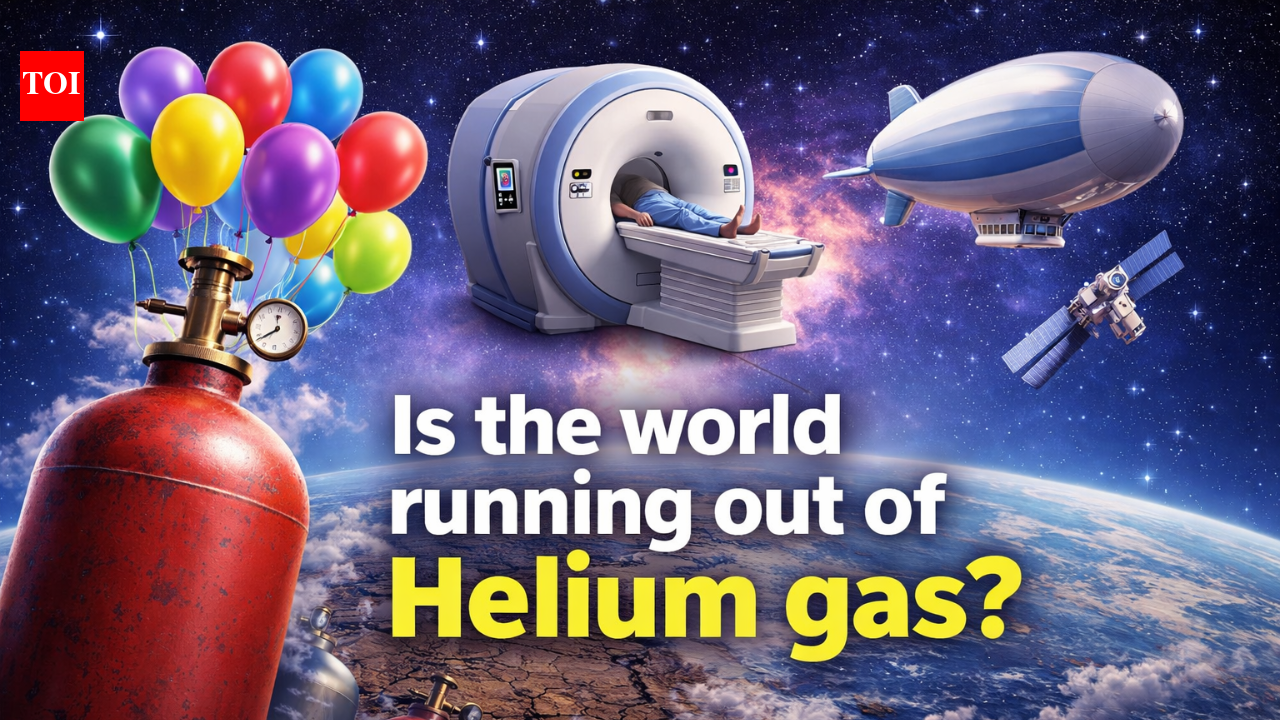
Helium isn’t something most people think about, unless you’re in a lab, running an MRI, building chips, or inhaling it for that squeaky balloon voice. But what if the world suddenly runs out of this invisible gas? As exaggerating as the question may sound, it’s exactly what’s raising concerns right now. As tensions in the Middle East shake up supply chains, helium has quietly floated into the middle of a global crisis, one that could affect everything from hospital scans to high-tech factories in ways few expected.Earlier this month, the global helium supply chain took a big hit. Iranian drone and missile strikes on Qatar’s Ras Laffan industrial city, the world’s largest hub for helium production, forced a shutdown that knocked out nearly one-third of the global supply overnight. The disruption was further compounded by Tehran’s tightened grip on the Strait of Hormuz to Western commercial shipping, forcing vessels to reroute around the Cape of Good Hope, significantly increasing transit times and losses.While this already sounds like a problem, it’s even worse for liquid helium, which has to be kept at extremely low temperatures and can’t easily survive long journeys without significant “boil-off” losses. As a result, the ongoing crisis, often referred to as “helium shortage 5.0,” has moved beyond a theoretical risk to become a systemic global supply disruption.

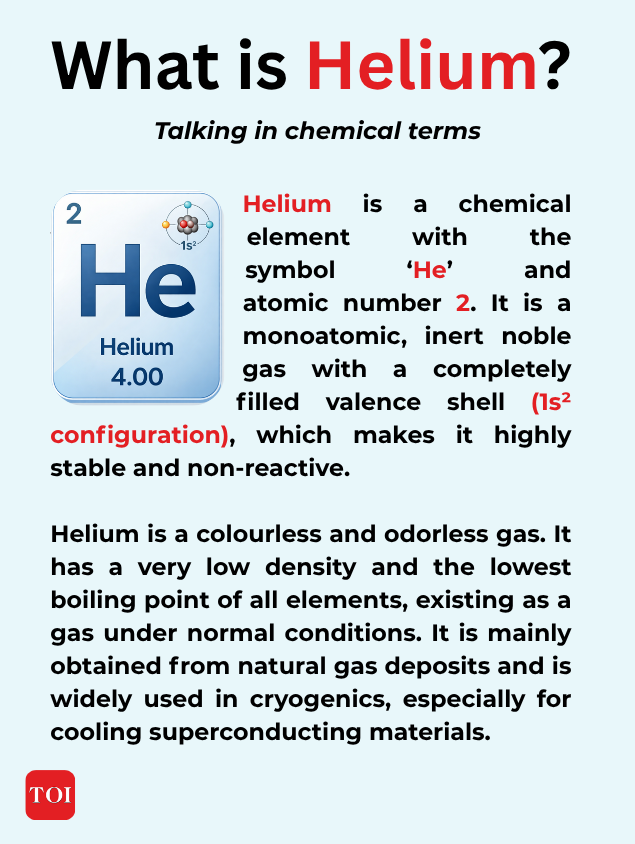
What is Helium?

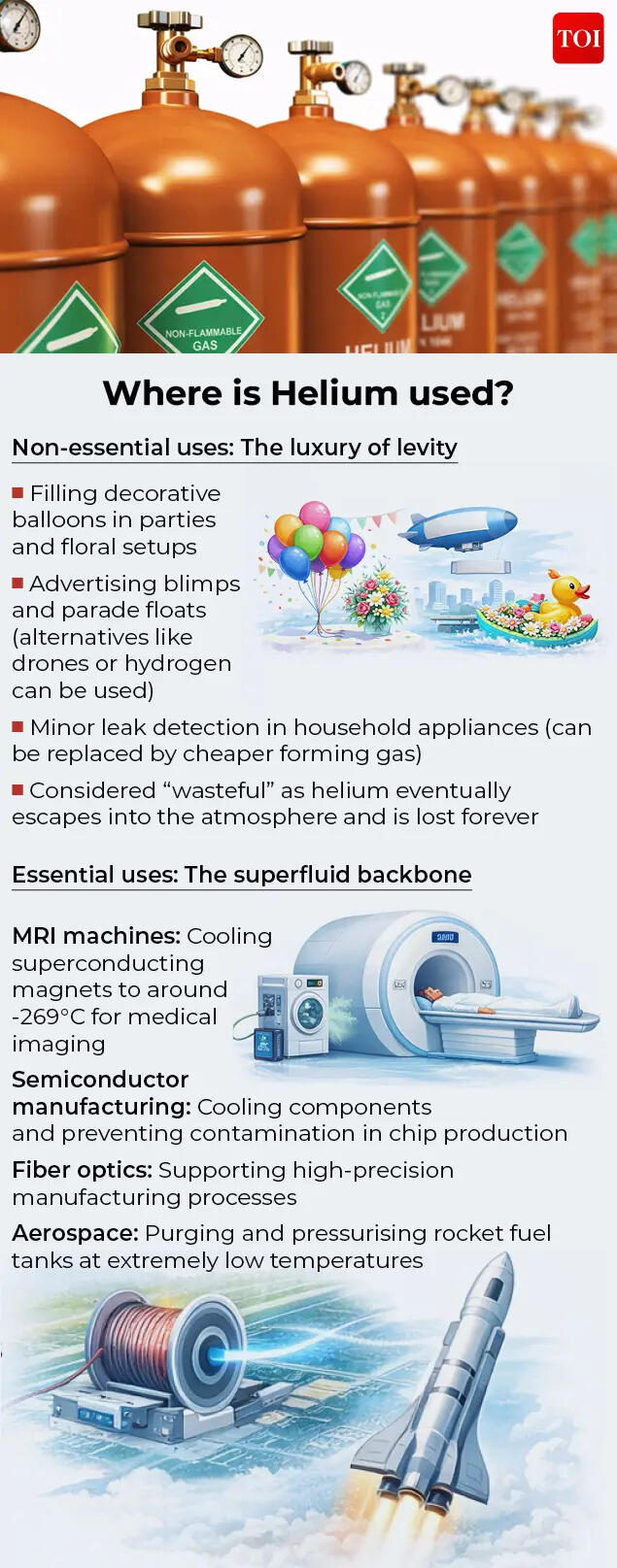
How is Helium used

Non-essential uses: The luxury of levityThe most common non-essential use of helium is in the party and floral industry for filling decorative balloons. While culturally popular, this application is a primary source of “waste,” as the gas eventually leaks into the atmosphere and escapes into space, never to be recovered. Similarly, its use in advertising blimps and parade floats is considered non-essential because these functions can be served by alternative technologies like drone displays or, in some cases, hydrogen gas. Additionally, using helium for minor leak detection in household appliances is often deemed non-critical, as cheaper “forming gas” (nitrogen-hydrogen mixes) can often perform the same task without depleting the world’s rare helium reserves.Essential uses: The superfluid backboneHelium is indispensable in healthcare, specifically for MRI machines. It is the only element capable of cooling superconducting magnets to -269°C, a temperature required to keep the magnets operational for life-saving diagnostic scans. Beyond medicine, it is critical in semiconductor manufacturing and fiber optics. Its inert nature and high thermal conductivity allow it to cool components rapidly and prevent chemical contamination during the production of the microchips that power our global digital infrastructure. Meanwhile in aerospace, helium is used to purge and pressurize rocket fuel tanks, as it remains a gas even at the extreme cryogenic temperatures of liquid oxygen and hydrogen.This raises an important question, especially as countries rush to secure their energy supply: why can’t this element simply be replaced?

Where is Helium used?

The chemistry of scarcity — Can’t we just make more Helium?

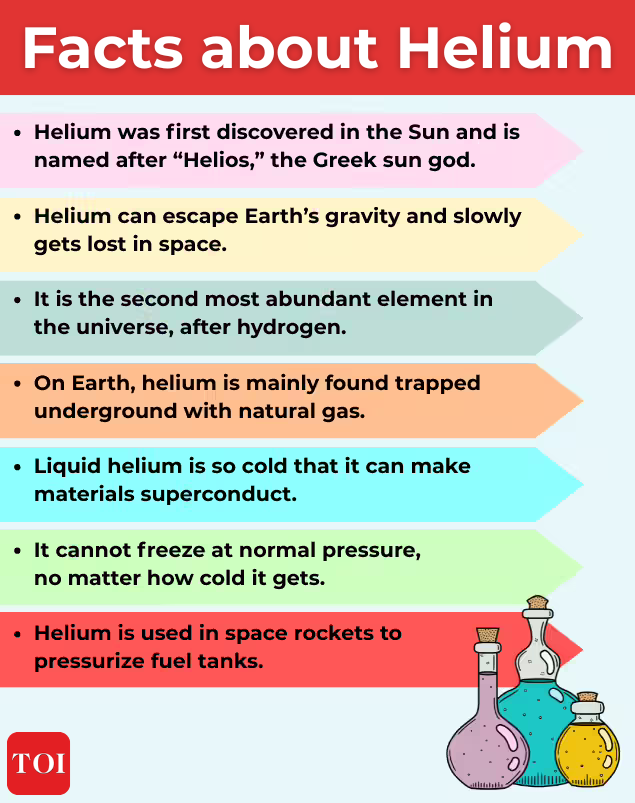
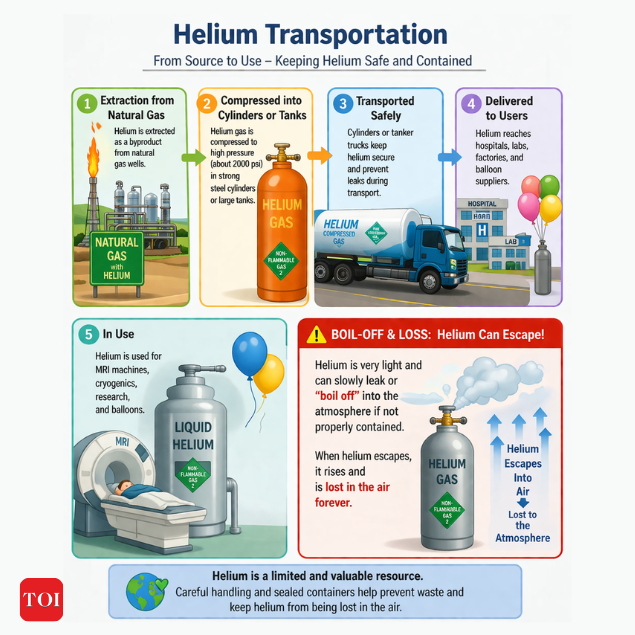
To understand why this shortage is so critical, it is essential to understand helium’s unique physical properties. Although helium is the second most abundant element in the universe, it is extremely rare on Earth. Unlike nitrogen or oxygen, it cannot be extracted from the atmosphere. Instead, helium is a non-renewable by-product formed over billions of years through radioactive decay deep within the Earth’s crust. It becomes trapped in natural gas reservoirs and is recovered during gas processing.Once released into the atmosphere, helium is effectively lost forever. Being extremely light, it escapes Earth’s gravitational pull and drifts into space. There is no known method to manufacture helium at scale, nor any viable substitute for its unique properties. Every unit consumed, whether in industrial applications or even party balloons, is permanently depleted.The impact of the helium crisis is already being felt across major economies. Countries such as South Korea, Japan, Taiwan and China, among Qatar’s largest importers of helium, are facing growing uncertainty over supplies as disruptions in the Middle East ripple through the global market. Even North American consumers, despite domestic production, remain partly dependent on Gulf helium, highlighting the truly global nature of the supply chain strain.

Hormuz trouble hits Helium bubble

This widespread impact has laid bare the structural vulnerability of the global helium market, which remains heavily concentrated in a handful of regions. Historically, supply has rested on a “tripod” of the United States, Qatar and Russia, with Qatar alone contributing around for over 30% of global production, most of it centred in the Ras Laffan industrial complex. At the same time, United States remains the largest producer globally, generating around 81 million cubic metres, over 40% of total supply.

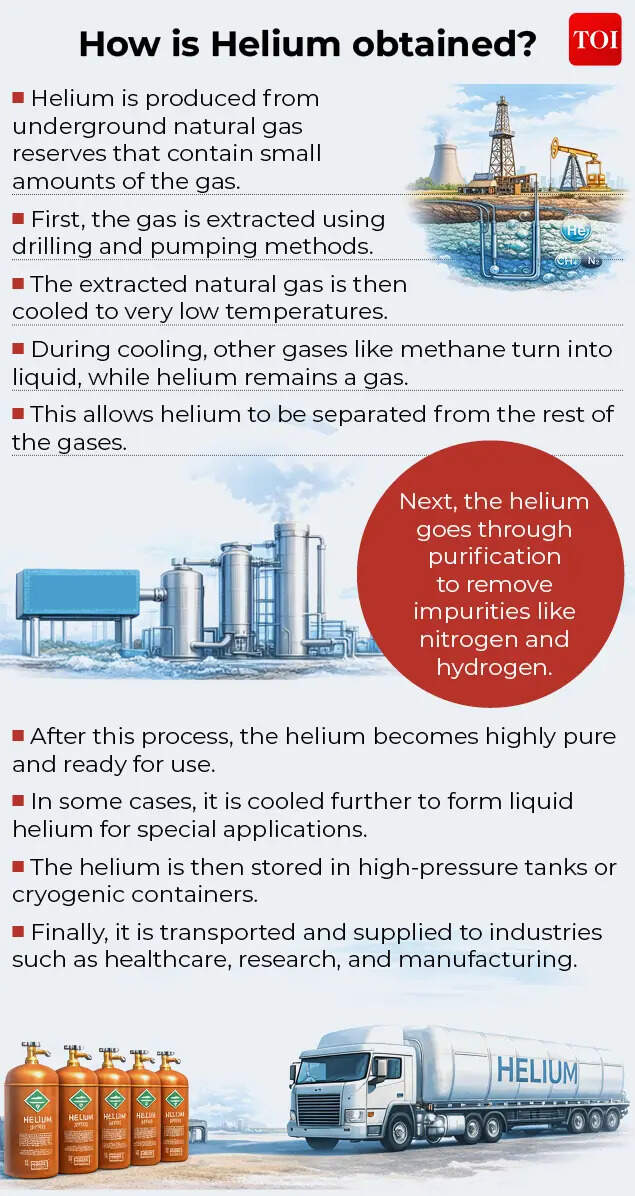
How is Helium obtained?

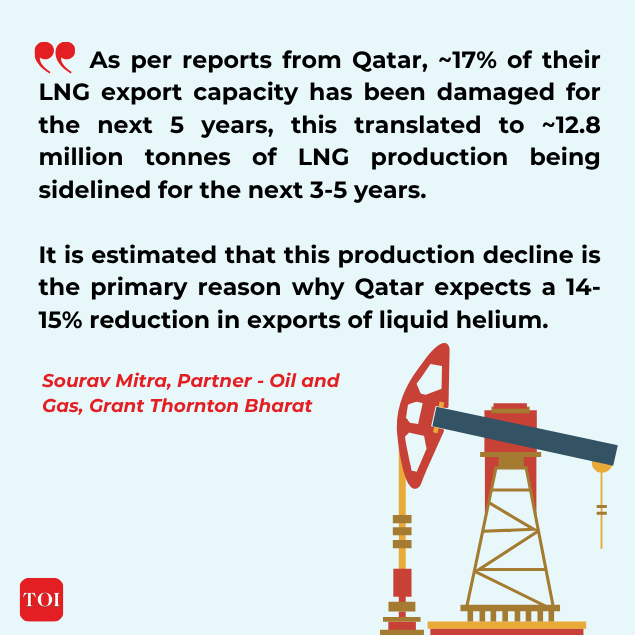
A key reason behind the crisis lies in how helium is produced. It is not extracted independently but as a by-product of liquefied natural gas (LNG) processing, making its availability directly proportional to the stability of gas infrastructure.“The global helium market has a considerable degree of exposure to the Middle East, mainly on Qatar which accounts for somewhere between 30% to 35% of global helium supply,” said Sourav Mitra, partner – oil and gas at Grant Thornton Bharat. “The majority of its output is concentrated in the Ras Laffan industrial complex,” the expert told TOI.Mitra highlighted that helium’s dependence on maritime logistics adds another layer of risk. “Considering that helium is a low-density gas that must be shipped in specialized cryogenic containers, it relies entirely on stable maritime trade routes. Any conflicts that threaten the Strait of Hormuz… create immediate global shortages,” he said. Unlike crude oil, there are no significant global strategic reserves of helium that can cushion such disruptions.The situation has been further complicated by damage to LNG infrastructure. “Helium is obtained as a by-product of gas processing… if the LNG ecosystem slows or shuts down, helium production automatically halts,” Mitra explained.Reports indicate that around 17% of Qatar’s LNG export capacity has been damaged, sidelining approximately 12.8 million tonnes of production for the next three to five years. This is expected to translate into a 14–15% reduction in liquid helium exports. Pranav Master, senior practice leader and director at Crisil Intelligence, told TOI that global helium production, estimated at around 190 million cubic metres annually, is highly concentrated, led by the United States at approximately 43% and Qatar at about 34%.“Qatar’s exports are reliant on the Strait of Hormuz, which is currently a critical chokepoint… recent disruptions in LNG infrastructure, particularly at Ras Laffan, can lead to constrained global supply,” he said, adding that sectors such as semiconductors, MRI systems and other cryogenic applications are particularly vulnerable. He also pointed to the 2017 Qatar blockade as a precedent, when similar disruptions led to production halts and price spikes.

No Helium, try replacing it?

Despite its critical role, helium has no easy substitute, which makes the current crisis even more severe.Helium is a non-renewable resource formed over billions of years through radioactive decay deep within the Earth’s crust. It is trapped in natural gas fields and released during extraction. Once it escapes into the atmosphere, it is lost forever, as its extremely light atoms drift into space.

Helium - Facts

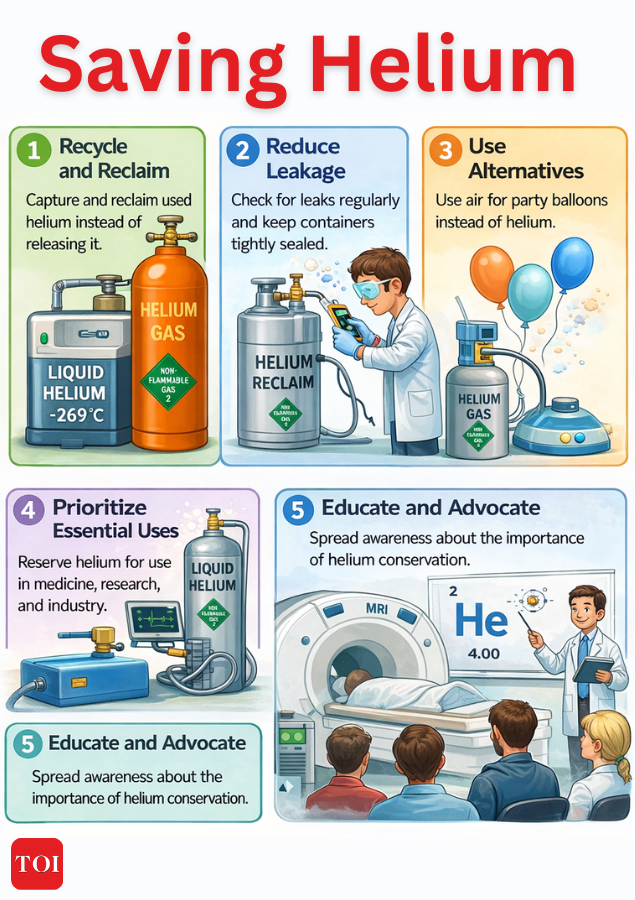
This means existing reserves are all that humanity currently has to meet demand. Unlike other industrial gases, helium cannot be manufactured in a lab at scale, nor can it be easily replaced in applications that require its unique properties, such as ultra-low temperature cooling and inert environments.The ongoing crisis has accelerated efforts to diversify helium supply and develop alternatives.New “primary helium” exploration projects are being pursued in countries such as Tanzania, Canada and the United States, where helium is extracted as the primary resource rather than as a by-product of natural gas.Russia’s Amur gas processing plant, designed to be a major global supplier, is expected to expand capacity with an additional production train by the third quarter of 2026. However, geopolitical tensions and sanctions complicate its accessibility for many countries.In India, Engineers India Limited has signed an agreement to establish the country’s first helium recovery demonstration plant in Kuthalam, Tamil Nadu. Meanwhile, researchers at NIT Durgapur are exploring helium extraction from geothermal hot springs in West Bengal and Jharkhand, where concentrations are significantly higher than typical gas fields.Technological innovation is also underway. Companies such as Siemens and Philips are developing low-helium or helium-free MRI systems using closed-loop cooling technologies. However, these systems currently account for less than 5% of the global installed base, limiting their immediate impact.

Transporting Helium

The 2026 crisis has therefore highlighted a deeper issue, not just scarcity, but the lack of alternatives. As supply chains tighten and disruptions continue, industries across healthcare, semiconductors and advanced technology are left grappling with a resource that is both essential and irreplaceable.

What Helium supply crunch could mean for India

For India, the helium crisis may result in tangible consequences. As the country heavily relies on imports from Qatar for this non-renewable gas used to cool MRI magnets, hospitals and imaging centres are preparing for tighter supplies as inventories stay low and global logistics grow increasingly uncertain. According to Master, “key downstream industries which may get affected due to restricted helium supply include semiconductors, MRI/medical, other industries requiring helium as cryogenic coolant. Consequently, geopolitical disruptions in the Middle East can affect helium supply across critical high-tech and healthcare industries.”Healthcare impact: What will happen to MRI scannings?India’s healthcare system is heavily dependent on helium for magnetic resonance imaging (MRI). Each MRI scanner requires approximately 2,000 litres of liquid helium to maintain superconducting magnets at around 4 kelvin (-269°C).As of March 2026, helium spot prices in India have surged by 70–100%, forcing diagnostic centres to reassess costs and operations. There are growing concerns about “quenched” magnets, a failure that occurs when cooling is lost, causing superconductivity to break down and resulting in expensive repairs.

Helium in MRIs

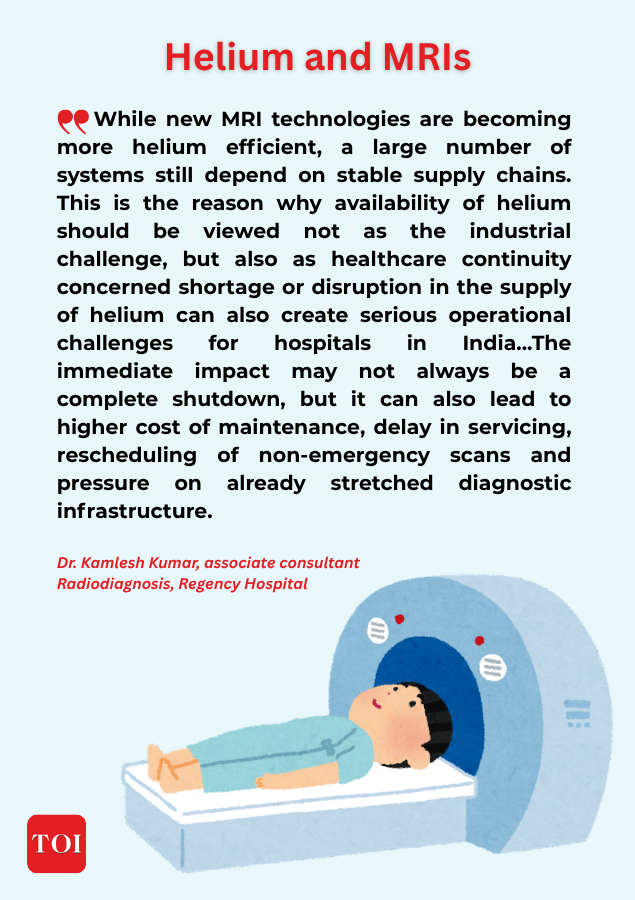
“Helium is not only a technical requirement for MRI systems; it is also important to keep the magnet superconductive and the machine functional,” Dr. Kamlesh Kumar, associate consultant, radiodiagnosis at Regency Hospital told TOI.“Any prolonged shortage or disruption… can create serious operational challenges for hospitals… leading to higher maintenance costs, delays in servicing, rescheduling of non-emergency scans and pressure on diagnostic infrastructure,” the doctor further added.He added that in India, where timely diagnosis often determines treatment outcomes, even temporary disruptions can significantly affect patient care. While newer MRI technologies are becoming more helium-efficient, a large installed base still depends on stable supply chains.India’s semiconductor sector The helium shortage also threatens India’s semiconductor ambitions at a critical juncture. Back in August 2025, the government approved four semiconductor manufacturing units with investments worth Rs 4,600 crore.Helium plays a vital role in semiconductor production. It is used for wafer cooling during high-temperature processes, maintaining inert environments to prevent contamination, and detecting microscopic leaks in high-vacuum systems due to its extremely small atomic size.Without a steady supply of ultra-high-purity helium, these processes cannot function reliably, raising concerns about delays and disruptions in the country’s efforts to become a global chip manufacturing hub.

Qatar's Helium crunch

Global tech ecosystem faces bottlenecks

The impact of the helium shortage is being felt across the global technology ecosystem.High-capacity data storage devices, particularly hard drives above 10 terabytes, rely on helium-filled enclosures to reduce internal friction and improve efficiency. Manufacturers have already indicated that production capacity for 2026 is fully allocated, leaving limited room for additional demand.Helium is also used in advanced cooling systems for large-scale data centres and high-performance computing clusters, including those used to train next-generation artificial intelligence models.In the semiconductor sector, major manufacturers such as those in South Korea depend heavily on Qatari helium supplies. With limited inventory buffers, prolonged disruptions could lead to production slowdowns, potentially affecting the global supply of consumer electronics such as smartphones and laptops.

Helium

Bottom line: Is the world running out of Helium?

And the answer is no, technically. However, logistically and economically, it is almost a strong yes.It all comes down to the nature of the element itself. The Earth isn’t about to run out of helium completely. it is still being produced slowly over time through the radioactive decay of elements like uranium and thorium, which release alpha particles that form helium-4. There are also known reserves in places like Tanzania, Canada and the United States.But here’s the catch: that’s all we have. Helium cannot simply be manufactured in a lab or scaled up on demand, let alone the little element takes million of years to form. Once it’s used and released, it’s gone for good. So while a total wipeout isn’t on the cards, shortages very much are, and already happening.So the world is not really running out of Helium, but scrambling with Helium shortage. The real issue isn’t just how much helium exists, but how fragile the system is that delivers it.Helium production, liquefaction and transport run on a tightly choreographed, just-in-time setup with almost no room for error. The Middle East crisis has shown just how quickly things can fall apart when key infrastructure is hit or critical trade routes are disrupted.And unlike oil, there’s no big emergency stash to fall back on. That leaves industries. from hospitals and chipmakers to AI labs, surprisingly exposed to a tiny, invisible gas that the world can’t afford to lose.


Source link

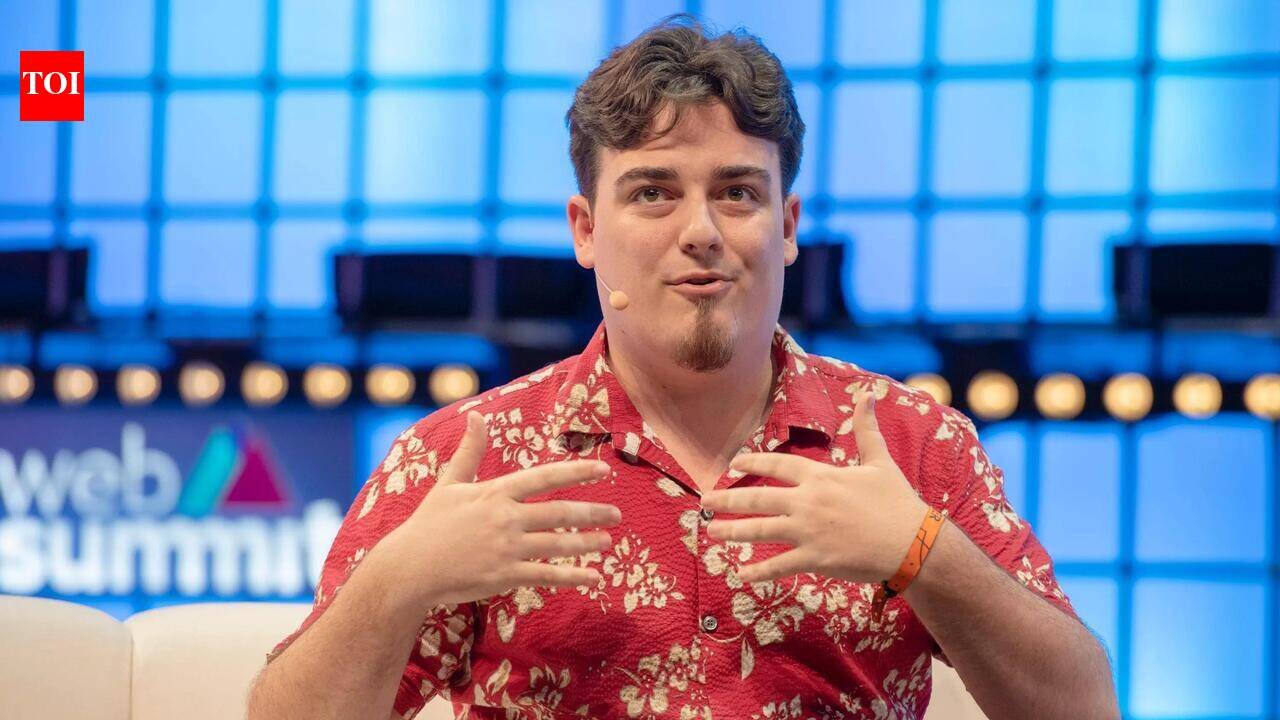
Anduril founder Palmer Luckey is clear on when he would sell weapons to North Korea: If …


Anduril founder Palmer Luckey is clear on when he would sell weapons to North Korea: If ...

Anduril founder Palmer Luckey has now made it clear that his company’s arms sales will always align with US government policy even if it that meant selling weapons to North Korea, according to a report by Fortune. “If the U.S. asks me to, yes,” Luckey told Fortune at the Singapore Airshow in February. He added: “I’m never going to promise to do something the US wouldn’t do.Parlmer Luckey founded Anduril in 2017 after his departure from Facebook. His defense startup quickly became America’s most closely watched defense startups. Anduril’s products include the Fury drone, designed to fly alongside fighter jets, and the Ghost Shark submarine, already contracted by Australia for $1.1 billion. The company is riding a global defense spending boom, with revenues projected at $4.3 billion this year and a potential valuation of $60 billion in upcoming funding rounds.

Anduril to align with US policy

Luckey’s stance that arms markers should act as extensions of US foreign policy which places him at the centre of debates about alliance politics in Asia, the rise of Chinese military hardware, and the role of tech billionaires in matters of war and peace. He also emphasise that Anduril will not act independently of Washington, “If a country asks me ‘commit to supporting this even if the U.S. doesn’t want to,’ all I can say is no. I’m not willing to go to prison to sell you spare parts.”

Anduril’s global expansion plans and pushback

For the uninitiated, Anduril has signed deals with Japan, South Korea, and Taiwan moves which prompted Beijing to sanction both the company and Luckey personally. While allies see Anduril as a partner in strengthening defense, critics worry about the Implications of a private tech firms wielding such influence over military supply chains.Luckey has also reportedly warned that the US risks falling behind China in defense manufacturing. He also stresses on the fact that China focuses on mass producible, easily repairable systems which mirrors America’s World War II strategy, while the U.S. today builds “exquisite systems without regard for manufacturability.” To counter this, Anduril is building a 5-million-square-foot “Arsenal-1” factory in Ohio to mass-produce drones and weapons by 2026.

Luckey’s views reflect a broader shift in Silicon Valley

The latest comments made by Luckey highlight the broader shift in Silicon Valley, where companies are increasingly embracing defense work. He has criticized rivals like Anthropic, which refused Pentagon requests to loosen restrictions on its AI, saying: “At the end of the day, you have to believe…that our imperfect constitutional republic is still good enough to run a country without outsourcing the real levers of power to billionaires and corpos.


Source link