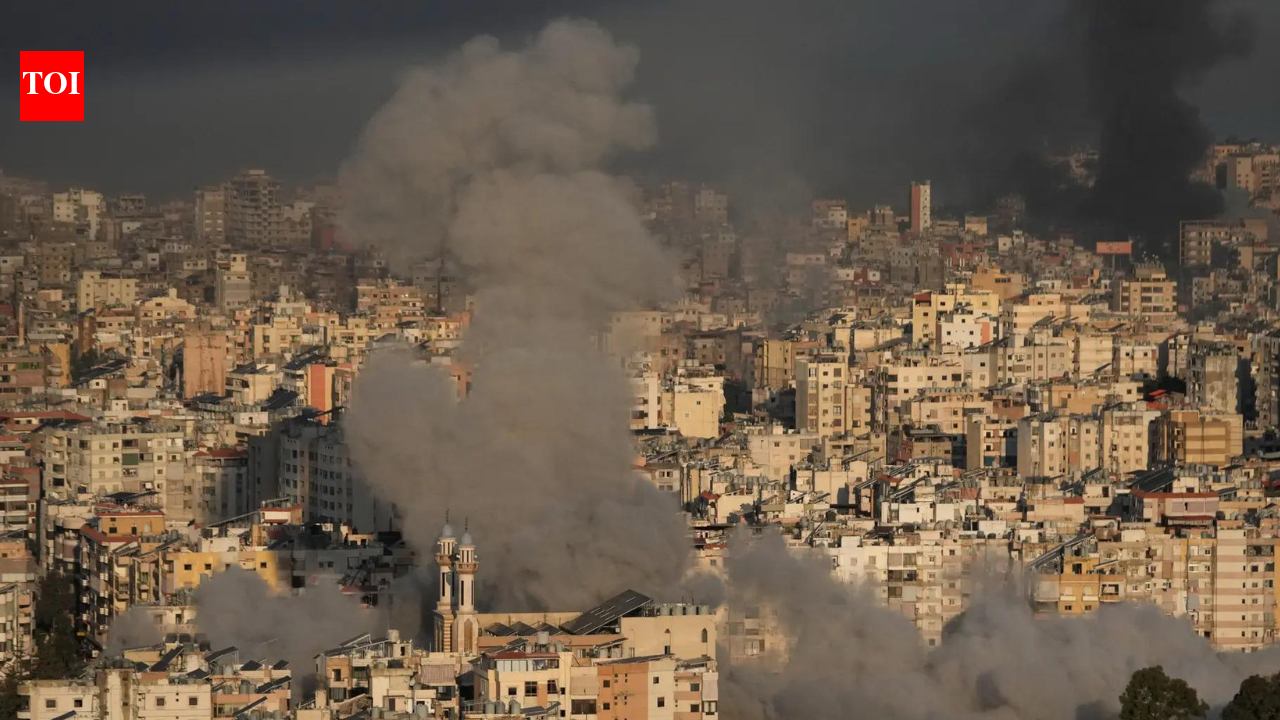
Breaking News
Oil shock for stock markets: Why Indian equities may be among most impacted in Asia by Iran war


Oil shock for stock markets: Why Indian equities may be among most impacted in Asia by Iran war
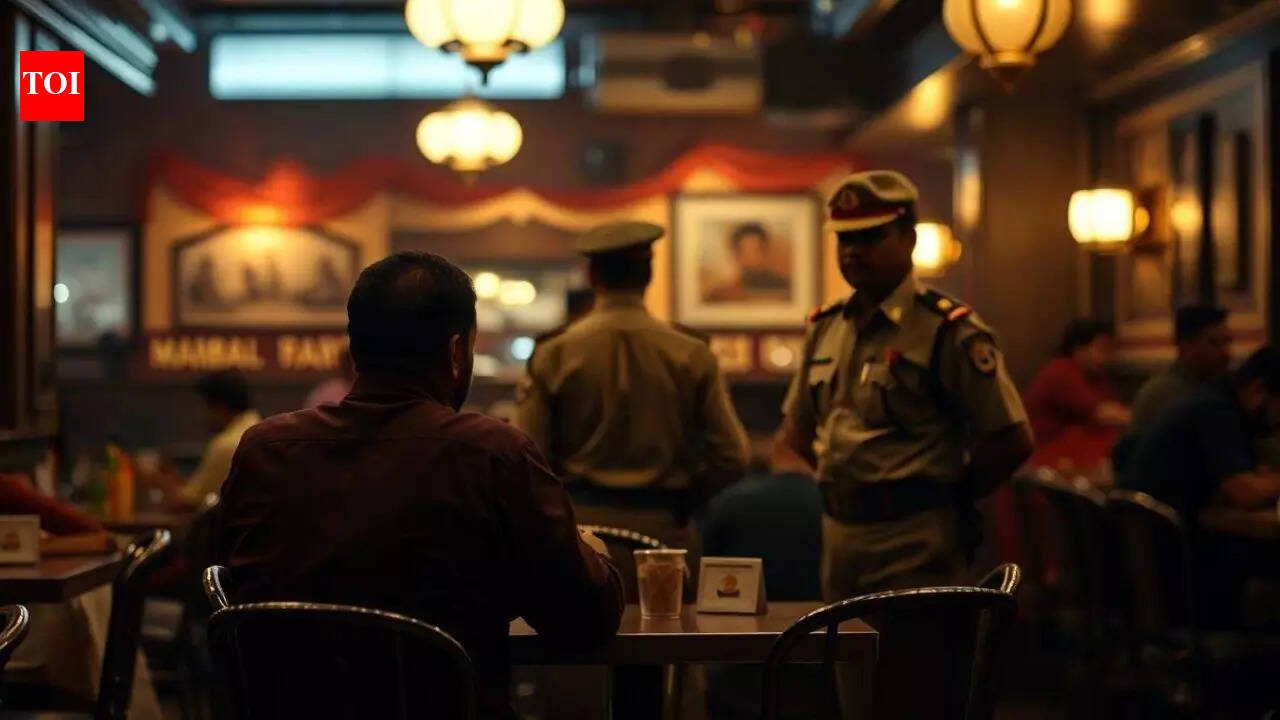
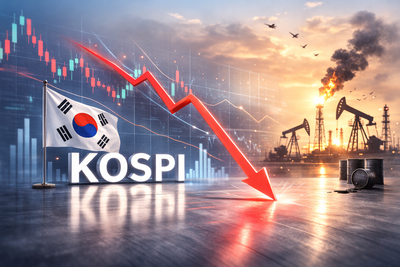
According to Goldman Sachs, Indian companies could be among the hardest hit in Asia by the conflict involving Iran. (AI image)

US-Israel-Iran war impact: Indian equity benchmarks, Nifty50 and BSE Sensex, will see mounting pressure in the coming days if the Middle East crisis persists, feel analysts. Indian stocks, already under pressure, are expected to fall further behind global markets as rising tensions in the Middle East drive crude prices higher, weighing heavily on oil-importing economies, experts have said.India’s equity market, valued at around $5 trillion, has trailed most major global peers since late 2024 due to slower profit growth and limited participation in artificial intelligence-linked stocks. The sharp rise in oil prices, the country’s largest import, has stalled an early rebound in equities that followed India’s trade agreement with the United States. Analysts warn that higher energy costs could stoke inflation and put pressure on economic growth and the rupee.

Indian stocks to bleed more?

According to Goldman Sachs, Indian companies could be among the hardest hit in Asia by the conflict involving Iran. A Bloomberg report quoting Goldman Sachs said that a 20% increase in Brent crude prices would reduce regional earnings by about 2%. Societe Generale also sees scope for India’s relative underperformance to intensify because of its heavy dependence on imported fuel, while Natixis has described Indian assets as the most vulnerable on this front.

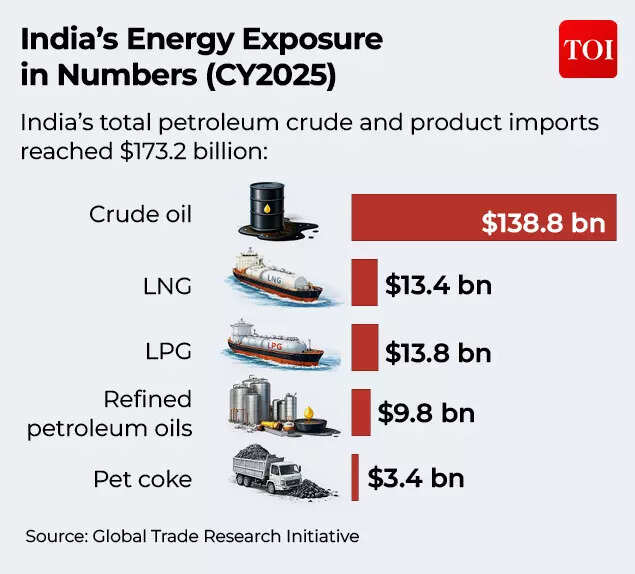
India’s Energy Exposure in Numbers (CY2025)

“With tensions in the Middle East showing little sign of cooling, supply-side risks remain elevated, allowing oil prices to push higher in the near term,” said Dilin Wu, a research strategist at Pepperstone Group. “India’s strong dependence on imported crude, much of it sourced from the Gulf, leaves its markets exposed. If oil prices stay elevated for longer, the import bill could expand, the current account and currency could come under strain, and equities may face added pressure,” Wu was quoted as saying by Bloomberg.Past trends suggest that such weakness could persist in the near term. During the early phase of the Russia-Ukraine conflict, the Nifty declined by roughly 10% in the first half of 2022, Citigroup analysts led by Samiran Chakraborty noted in a report. “A 10% rise in oil prices leads to 30 basis points of upside pressure on inflation and 15 basis points downside on growth,” they said.However, not all market participants share a cautious outlook. BNP Paribas believes Indian equities could outperform in the months ahead, arguing that the balance of risk and reward appears tilted in favour of gains.Even so, a growing number of investors are positioning away from Indian stocks. SocGen has advised taking long positions in Asia excluding Japan while shorting Indian equities. Meanwhile, Sanford C. Bernstein cautioned that a prolonged conflict involving Iran could continue to weigh on the benchmark.A sustained escalation “could push the Nifty below 24,500,” Bernstein analysts led by Venugopal Garre wrote in a note. “In particular, we see higher risk for energy, travel and trade-linked names, and construction companies with meaningful Middle East and North Africa exposure.”(Disclaimer: Recommendations and views on the stock market, other asset classes or personal finance management tips given by experts are their own. These opinions do not represent the views of The Times of India)


Source link

Man Threatens To Kill Girlfriend: 28-year-old man threatens to kill girlfriend during party at Mumbai restaurant; booked | Mumbai News


MUMBAI: A 28-year-old man was booked after he allegedly verbally abused and attempted to assault police personnel at the Santacruz police station on March 1, said police. The man also allegedly damaged a printer at the police station.Police said the man repeatedly threatened to kill his 22 year-old girlfriend after they had a fight at a restaurant in Khar West during a party. Police reached the restaurant after the suspect created a ruckus and repeatedly abused his girlfriend during the party. Police brought them both to the police station.A police officer said the incident occurred at around 3.52am on March 1, when police received a call from the 22-year-old woman saying she felt unsafe with her boyfriend at a restaurant in Khar West, and that he had allegedly physically assaulted her.At the police station, the suspect allegedly threatened to kill his girlfriend, and attempted to attack her inside the police station. “During commotion, the man allegedly pushed a printer at the police station, causing it to fall and break. He also allegedly verbally abused cops and attempted to assault them,” said police.


Source link

Access Denied


Access Denied

You don’t have permission to access “http://www.ndtv.com/education/openai-academy-announces-free-ai-events-and-learning-resources-ahead-of-spring-sessions-11167188” on this server.

Reference #18.c7f5d217.1772617735.212e347e

https://errors.edgesuite.net/18.c7f5d217.1772617735.212e347e


Source link

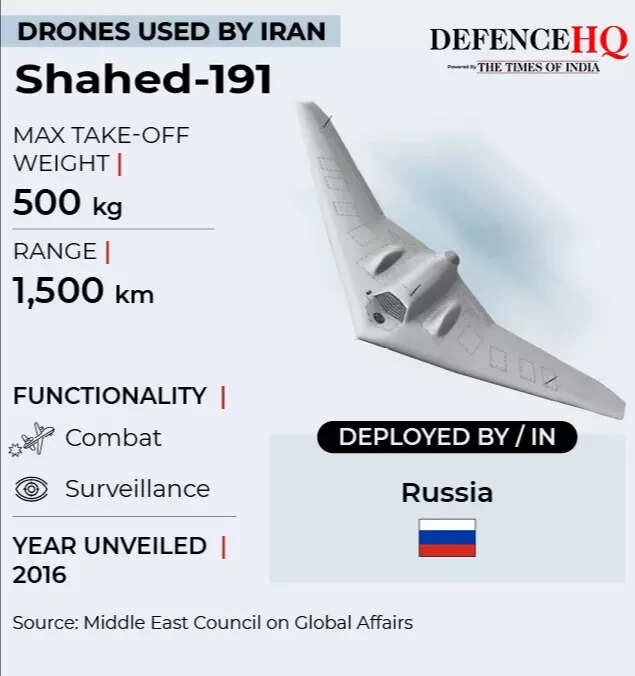
Iran’s Cheap Drones Transforming Warfare Across the Middle East |


Iran is shifting its retaliation strategy from dramatic displays to sustained pressure, utilizing cheap drones to exhaust air defenses and rattle populations across Israel and Gulf states. This approach aims to drain expensive interceptor inventories and destabilize the region, making the conflict a drawn-out endurance test rather than a single event.

Iran’s retaliation strategy is shifting from spectacle to stamina – and cheap drones are the workhorse.Driving the newsInstead of relying mainly on the kind of large, concentrated barrages it used in last year’s 12-day war with Israel, Tehran is now leaning into a steady, repeatable rhythm of launches meant to keep air-defense networks switched on, inventories under pressure, and populations rattled across Israel and multiple Gulf states, according to Financial Times report.

On Cam: IRGC Hits American Base In Bahrain; Missiles, Drones Target American Forces In Manama

FT reported that since the US and Israel began striking Iran, western officials said Tehran responded with ballistic missiles and drones “in over 25 waves” across a wide target set that includes Israel and US partners in the Gulf.

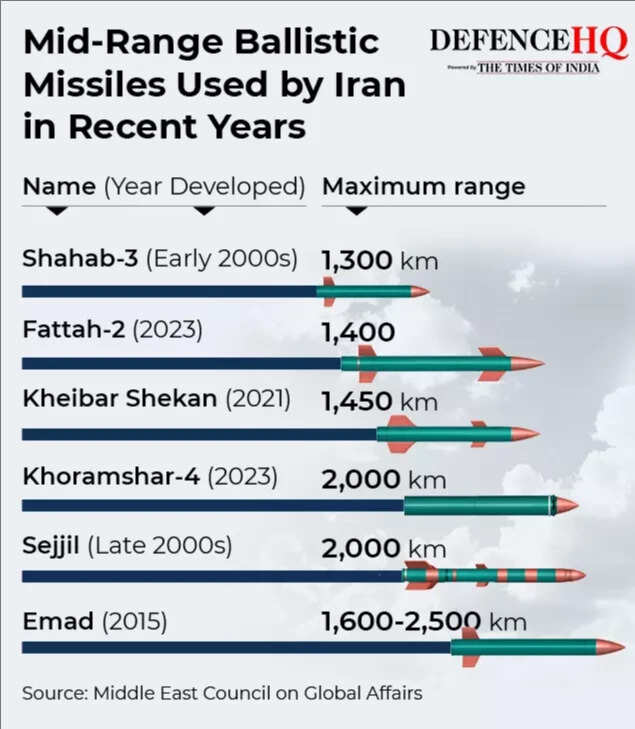
Iran missiles gfx4

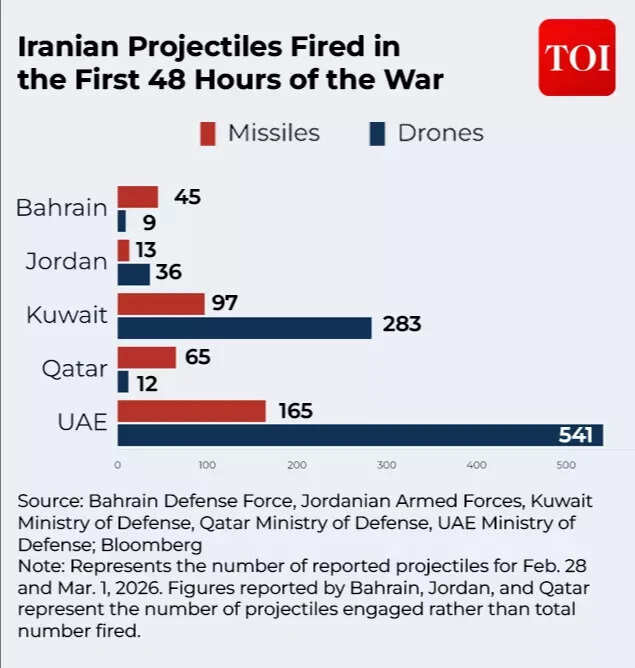
Since the killing of supreme leader Ayatollah Ali Khamenei, Tehran’s retaliation has spilled across nearly the entire Middle East – underscoring how the Islamic Republic has turned cheap drones and missiles into tools of regional terror. In the war’s opening hours, Iran unleashed waves of ballistic missiles and low-cost drones not only at Israel but also at the UAE, Bahrain, Kuwait and Qatar, widening the battlefield almost instantly. By the second day, the campaign expanded to Saudi Arabia, Qatar and Oman. The sheer geographic reach of the conflict is staggering, directly involving at least 11 countries and disrupting oil and gas flows while shaking financial markets worldwide, an Axios report said. The Axios report described it as “earthquake in the Gulf”.

iran missiles bloomberg

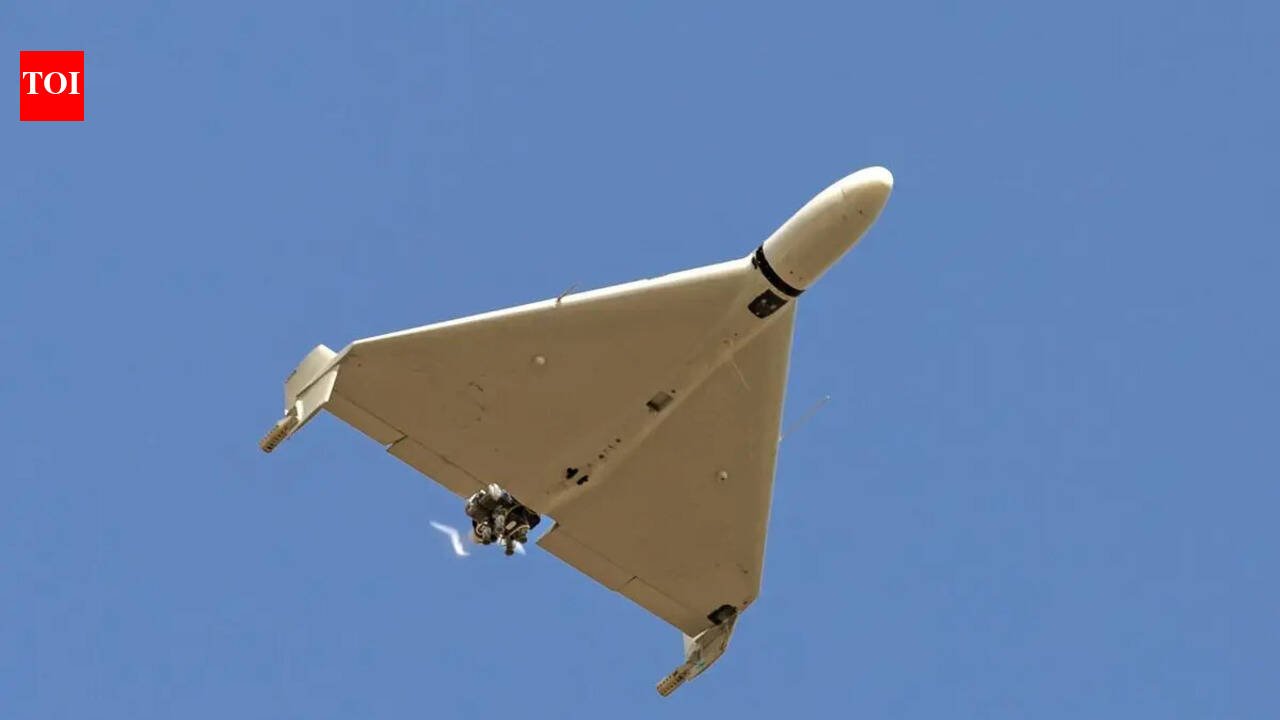
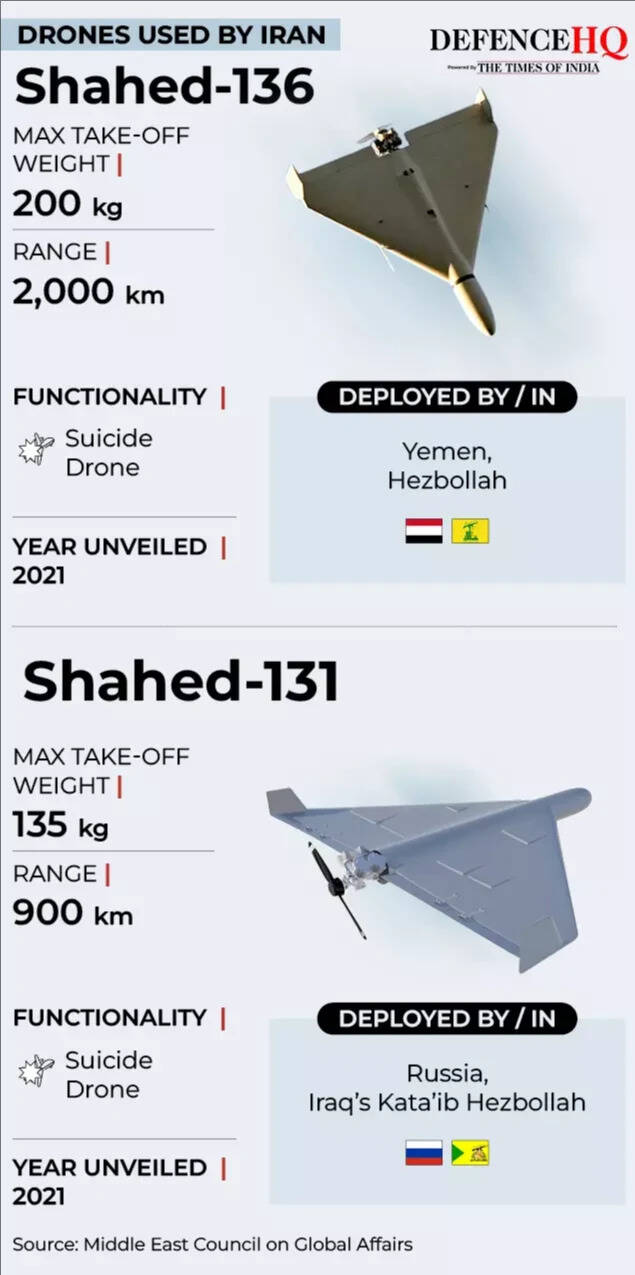
Iran had warned before hostilities that any strike on its soil would prompt retaliation not only against Israel but also against US bases across the Gulf and in Iraq – a threat it quickly made real. As US President Donald Trump said Operation Epic Fury is expected to last four to five weeks, the window for further escalation remains wide – and Iran’s reliance on waves of cheaper drones suggests a strategy designed to spread fear, exhaust air defenses and destabilize the broader Middle East.Why Iran is leaning on cheap dronesIran’s retaliation arithmetic is lopsided by design. Bloomberg framed the dynamic with a brutal simplicity: “Iran’s Missile Math: $20,000 Drones Take on $4 Million Patriots.” In this kind of fight, Iran doesn’t need to win the sky. It just needs to make the sky unaffordable. The Shahed-136 is not, in the usual sense, impressive. It’s slow. It’s loud. It’s relatively easy to spot when air defenses are watching closely. And yet it keeps showing up, because it does three things Iran needs right now.

Iran missiles gfx2

First, it forces defenders to spend money and burn inventory. Patriot interceptors are expensive, and advanced systems like THAAD cost even more. In Bloomberg’s account, Gulf and USdefenses have been highly effective, but effectiveness has its own price tag, and stockpiles don’t refill overnight. Second, drones scale. They can be produced in large numbers and launched in waves that don’t have to be perfect to be disruptive. Seth Frantzman, a drone-warfare analyst, told The New York Times that even when Shaheds underperform compared with more sophisticated weapons, they can still slip through and create panic and disorder. “They give the Iranians a cheap air force-like weapons system,” he said

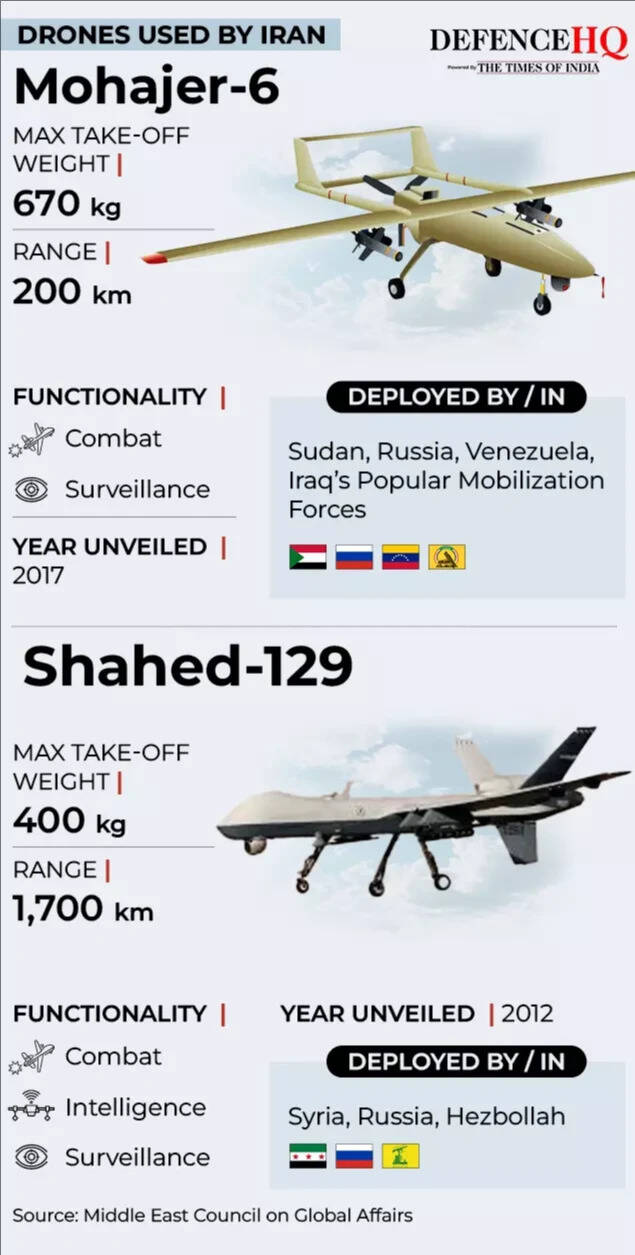
Iran missiles gfx (1)

Third, they widen the map of the war. Ballistic missiles aimed at Israel are one thing. Drones drifting toward Gulf cities, ports, hotels, and oil infrastructure are another. They blur the line between military confrontation and everyday life, turning countries that would prefer to remain mediators into unwilling participants.This is not accidental. The Financial Times described Iran’s emerging approach as a two-track campaign: sustained barrages toward Israel, paired with intensive attacks on US partners in the Gulf, including civilian infrastructure alongside military sites. The drone fits both tracks because it’s cheap enough to expend and politically potent enough to frighten.

Iran missiles gfx3 (1)

What’s new in Iran’s retaliation strategyIn the last major Israel-Iran confrontation, Iran’s attacks were often described as telegraphed: large, dramatic salvos that gave air defenses time to prepare. This time, the rhythm has changed.A former Israeli security official, quoted in the Financial Times, described a deliberate shift toward attrition, “a ‘drizzle’ compared with last year’s attacks.” Then, in a line that captures the anxiety of strategists watching a familiar opponent behave differently, the official added: “Who said the Iranians will play by our rules?” The change isn’t just tempo. It’s also targeting and delegation.1) From spectacle to steady pressureInstead of wagering everything on a few headline-grabbing barrages, Iran appears to be testing whether constant, smaller attacks can stretch defenses, exhaust operators, and force hard choices about what is “worth” intercepting. As the Financial Times noted, some incoming threats were either deemed not dangerous enough to spend premium interceptors on, or they evaded defenses in growing numbers. 2) A broader strike portfolio: civilian disruption as leverageHitting ports, airports, hotels, and residential areas in Gulf states changes the political equation. Benham Ben Taleblu, of the Foundation for Defense of Democracies, suggested in the Financial Times that Iran may be escalating “hard, fast and early” to create a crisis so intense that US partners pressure Washington and Israel to stop. Whether or not that gamble works, the intent is legible: make the war contagious.3) A more decentralized trigger fingerOne of the most revealing windows into Iran’s posture came not from a general, but from its foreign minister. Abbas Araghchi, in an interview referenced widely in reporting on the conflict, described a military operating on pre-set guidance rather than real-time central control: “Our military units are now in fact independent and somehow isolated and they are acting based on instructions, general instructions given to them in advance,” Araghchi said. That statement does two things at once. It signals resilience (decapitation strikes won’t paralyze retaliation) while also planting plausible distance between civilian leaders and whatever lands where it shouldn’t.The most striking version of that distancing is the line also attributed to Araghchi about strikes outside the intended script: “What happened in Oman was not our choice…As a matter of fact, our military units are now in fact independent and somehow isolated,” Aragchi said. If Iran is telling the world its forces may be semi-autonomous, it is also, intentionally or not, warning that escalation could become harder to control.The strategic bet: Drain interceptors, crack coalitions, buy timeIran’s cheap drones are not a replacement for its missile force. They’re a way to sequence it.Analysts quoted by Bloomberg suggested Iran may be using large numbers of Shaheds in part to conserve more damaging ballistic missiles for later phases, while still keeping pressure constant. In the Financial Times, Western officials described retaliatory launches “in over 25 waves” across Israel and multiple Gulf states, with the pattern resembling endurance tactics rather than a single retaliatory “answer.There’s also a psychological layer. In Israel, Danny Citrinowicz described the steady barrages as producing “this overwhelming feeling… that you have to be near your shelter,” according to the Financial Times. In the Gulf, the message is different: even the safest cities can be reached, and the costs of staying out of the war may be rising.Finally, the cheap-drone strategy dovetails with a political goal: shorten the patience of everyone around the battlefield. Kelly Grieco, a senior fellow at the Stimson Center, summed up the operational logic in Bloomberg’s report: “Attrition strategy makes operational sense from Iran’s perspective,” she said, arguing Iran is calculating that defenders will exhaust interceptors and that Gulf political will could fracture. What’s new, then, isn’t that Iran has drones. It’s that Iran is using them as the front edge of a retaliation doctrine built for a world where it expects to be hit first, lose leaders quickly, and still keep launching. The “drizzle” is not a shrug. It’s an attempt to make the war last just long enough for someone else to demand it stop.What’s nextIran’s cheap-drone strategy will be tested by two constraints: launcher survival and defender adaptation.1) Expect air defenses to triage harder – and hunt cheaper intercept optionsThe longer Iran keeps sending low-cost threats, the more pressure there will be to conserve premium interceptors for missiles that pose the greatest danger – and to use cheaper methods against drones when possible (short-range air defenses, electronic warfare, directed-energy systems, fighter patrols, or point-defense guns). Bloomberg noted the region has fewer purpose-built anti-drone defenses than high-end missile shields, which is part of the current stress test. 2) Watch for “phase shifts” from TehranIf Iran believes the attrition approach is working – or if it fears its launch infrastructure is being degraded – it may change the mix: fewer drones and more ballistic missiles, more precise systems, or different target priorities. FT’s reporting underscored that Israel is trying to take out launch capacity, which could push Iran toward “use them or lose them” behavior. 3) The Gulf escalation track is acceleratingA major marker: the drone strike on the US Embassy in Riyadh. Axios reported that Saudi officials said two drones struck the embassy, causing a small fire and minor damage, amid the widening regional confrontationThat sort of incident increases the risk of expanded retaliation cycles – and raises the stakes for Gulf governments weighing how much disruption they will tolerate.4) The political clock matters as much as the military oneAttrition campaigns aim to outlast an opponent’s willingness to keep paying – financially and politically. Cheap drones are central because they make “endurance” a strategy, not just a slogan.(With inputs from agencies)



Source link

India pacer Renuka Singh ruled out of one-off Test against Australia; replacement announced


In a setback for the Indian women’s cricket team ahead of the historic pink-ball Test against Australia, fast bowler Renuka Singh Thakur has been ruled out of the one-off match scheduled to begin on March 6 at the WACA Ground in Perth.

Why Renuka Singh will not play the only Test against Australia?

The BCCI’s decision to withdraw Renuka stems from a proactive workload management strategy rather than any fresh injury concern. The right-arm seamer featured in all three T20Is against Australia, claiming four wickets, and also played in the first and third ODIs, taking one wicket across those appearances.

“Team India pacer Renuka Thakur has been ruled out of the Only-Test at the WACA Ground in Perth, which is part of the ongoing multi-format series against Australia Women. To better manage her workload, Renuka has been advised rest and will be unavailable for selection for the pink-ball Test,” the BCCI stated in an official release.

The board emphasized that the BCCI Medical Team will be closely monitoring Renuka’s fitness progress in the lead-up to the all-important Women’s T20 World Cup 2026, which begins in June. This marks another instance of the BCCI carefully managing the pacer’s workload following her return from injury during the home ODI series against Australia last year.

Renuka Singh’s replacement for the Perth Test

Replacing Renuka is 22-year-old Kashvee Gautam, who receives her maiden Test call-up following a promising start to her limited-overs international career. The BCCI confirmed: “The Women’s Selection Committee has named Kashvee Gautam as her replacement. Kashvee was also part of the ODI squad in the ongoing multi-format series.” 

In the ODI series against Australia, Kashvee showcased her all-round potential, scoring 68 runs in three matches at an average of 22.66 with a strike rate of 85, while also taking three wickets at an economy rate of 6.75. She has played six ODIs for India overall, claiming three wickets, and boasts 19 wickets from 18 Women’s Premier League (WPL) matches.

Also READ: From Tammy Beaumont to Deepti Sharma: Here’s the list of maiden The Hundred Women 2026 auction

Beyond her white-ball credentials, Kashvee impressed in the recent domestic multi-day tournament, scoring an unbeaten 106 off 86 balls against an attack featuring Nandani Sharma, Kranti Gaud and N Shree Charani. She finished as the tournament’s tenth-highest run-getter while also picking up four wickets from three games.

India’s updated Test squad

Harmanpreet Kaur (c), Smriti Mandhana, Shafali Verma, Jemimah Rodrigues, Harleen Deol, Pratika Rawal, Richa Ghosh (wk), Uma Chetry (wk), Amanjot Kaur, Sneh Rana, Sayali Satghare, Deepti Sharma, Kranti Gaud, Kashvee Gautam, Vaishnavi Sharma.

Also READ: ICC Women’s ODI Rankings: Smriti Mandhana and Alana King claim the top spots

This article was first published at WomenCricket.com, a Cricket Times company.


Source link

National Students’ Film Festival 2026: Young voices, bold frames: NSFF 2026 wraps up in Mumbai with spotlight on innovation and ethics in cinema | Mumbai News


MUMBAI: For film enthusiasts looking for the next wave of cinematic voices, the National Students’ Film Festival (NSFF) 2026 offered a promising glimpse. Held on February 28 and March 1 at the University of Mumbai’s Kalina campus, the two-day festival brought together 30 shortlisted student films across languages and genres, combining screenings with masterclasses, jury interactions and discussions on the future of Indian cinema.Organised jointly by Rashtriya Kala Manch (RKM), Akhil Bharatiya Vidyarthi Parishad (ABVP) and Vidyarthi Nidhi Trust, the festival positioned itself as more than a campus showcase. It functioned as a platform where young filmmakers engaged directly with industry professionals on storytelling, technology and ethics.The festival opened in the presence of director Ravi Udyawar, along with ABVP national secretary Payal Kinake, RKM coordinator Abhinav Deep and festival organiser Soumya Chawre. The inauguration set the tone, while a jury briefing later highlighted the festival’s focus on craft and responsibility.Among the mentors were writer Nidhi Singh Dharma, screenwriter Amarnath Jha, music director Rahul Suhas, National Award-winning directors Neeraj Kumar Mishra and Vandita Chakradev, and filmmaker Vishal Chaturvedi. Their sessions explored the changing language of cinema, the evolving media landscape and the social responsibility of filmmaking — themes that resonated with a generation shaped by OTT platforms and algorithm-driven visibility.The festival featured 30 selected films ranging from intimate dramas and socially driven narratives to experimental storytelling. Screenings received strong audience engagement, with post-film discussions often extending beyond scheduled time.Four masterclasses formed the academic core of the event. Writer-editor Abhijeet Deshpande explained storytelling structure and screenplay design. Sudip Lahiri, head of Collective Media, discussed technological changes in filmmaking, including digital workflows and emerging visual formats. Writer-cinematographer Kedar Gaikwad shared insights into cinematography, editing rhythm and sound design, emphasising technical precision. Telugu filmmaker V. N. Aditya spoke about ethics in filmmaking and the responsibility that comes with influence.Each session ended with an open question-and-answer segment, giving students the opportunity to clarify doubts and exchange ideas.Satyajit Mandle, deputy director of the National Museum of Indian Cinema, conducted a networking session that combined historical perspective with practical career guidance, highlighting the importance of understanding cinema’s roots.A widely discussed panel on “AI and the Future of Indian Cinema” featured filmmaker Pooja Kadam and producer Avinash Tripathi. The discussion examined how artificial intelligence is influencing scripting, editing and production design, while also raising concerns about originality and authorship.The valedictory ceremony was attended by Maharshi Shah, creative director of Birla Studios, as chief guest. He encouraged young filmmakers to study Indian cinema deeply before attempting innovation. “Study widely, absorb deeply, then create,” he said.Tarun Rathi, chairman of the Film Development Authority, highlighted the importance of “unique concept, unique character and unique scene”, while ABVP national organisation minister Ashish Chauhan stressed perseverance. RKM head Ankita Shukla spoke about the organisation’s “Triple P Concept” — Passion, Platform and Purpose — as a guiding principle for emerging artists.At the awards ceremony, Panpankh won Best Film. Songti and Seize received the Special Jury Award. Sanjha Kua won Best Music, Riha received Best Editing, Baap Re Baap was named Best Young Director, and The Queue was recognised as Best Promising Voice.For Mumbai’s film community, NSFF 2026 reflected a growing confidence in student cinema — one that is socially aware, technically skilled and creatively bold. As the festival concluded with a collective rendition of “Sampurna Vande Mataram”, it left behind a strong sense that a new generation of storytellers is ready to shape the future of Indian cinema.


Source link

Petronet LNG shares tumble 12% after Qatar production halt reports


Petronet LNG shares tumble 12% after Qatar production halt reports

Shares of Petronet LNG Ltd plunged almost 12% on Wednesday after reports that Qatar, India’s top supplier of imported natural gas, had declared force majeure following a halt in production amid the ongoing crisis in Middle East. On the BSE, the stock dropped 11.69% to Rs 273, while on the NSE it fell 11.95% to Rs 271.75. According to sources, the production halt has forced cuts in supplies to industries of up to 40%. Qatar provides about 40% of the roughly 27 million tonnes of liquefied natural gas (LNG) India imports each year, serving sectors ranging from power generation and fertiliser production to piped cooking gas and CNG distribution. Around 1:30 pm, the stock was trading at 282.45, down 26.70 or 8.64% on the Bombay Stock Exchange. On the NSE, the share stood at 282.30, shedding 26.35 points or 8.54%. Petronet LNG has informed gas marketers that Qatar has stopped its LNG production after Iran continued strikes on Gulf countries in retaliation for Israeli and US attacks. The announcement sent shares of other gas distributors lower as well, with Mahanagar Gas down 8.50%, Indraprastha Gas falling 5%, and Gujarat Gas slipping 4% on the BSE. The strikes have also brought shipments of oil and LNG through the Strait of Hormuz close to a standstill, pushing global energy prices higher and sharply raising war-risk insurance and shipping costs. Iran controls the Strait, a critical route through which roughly half of India’s crude oil imports and more than half of its LNG supplies pass, including shipments from Qatar and the UAE. Petronet has reportedly notified its offtakers, GAIL (India) Ltd and Indian Oil Corporation (IOC), about the disruption. Gas marketers have responded by reducing industrial supplies while maintaining CNG retail flows, with cutbacks ranging from 10 to 40%. Indian buyers of liquefied natural gas are now exploring alternative sourcing options after supplies from Qatar were disrupted due to the Iranian drone strike that forced the Gulf producer to halt output. As the world’s second-largest LNG exporter, any prolonged outage in Qatar is expected to increase global competition for available cargoes. Qatar remains India’s biggest LNG supplier, accounting for nearly half of the country’s imports last year, according to vessel-tracking data compiled by Bloomberg. Under its long-term contract, Petronet buys 8.5 million tonnes per annum of LNG from Qatar and also purchases additional supplies from the spot market. Besides Petronet, IOC and other companies also hold LNG import agreements with the UAE.


Source link

IPL 2026 set for two-phase schedule release; Bengaluru likely to host opener and final | Cricket News


IPL 2026 set for two-phase schedule release; Bengaluru likely to host opener and final

NEW DELHI: The Governing Council of the Indian Premier League has cleared the first phase of the IPL 2026 schedule, with the fixtures expected to be officially announced on March 6 or 7, according to a report by Cricbuzz.Go Beyond The Boundary with our YouTube channel. SUBSCRIBE NOW!The decision was taken during an online GC meeting on Monday, where it was decided that the Season 19 schedule would be released in two phases. The first set of fixtures, covering approximately the opening 13 to 14 days, is likely to be unveiled later this week.

India fans wait for over four hours to see their heroes outside Wankhede

As per the same report, the tournament opener is set to be held at Bengaluru’s M Chinnaswamy Stadium. Royal Challengers Bengaluru confirmed on Tuesday that they will play five home matches at the venue. As per tradition, the defending champions host the opening match, and that convention appears set to continue. Karnataka State Cricket Association secretary Santosh Menon also confirmed that the Chinnaswamy Stadium will stage a playoff fixture as well as the final.While RCB’s opening opponents are yet to be finalised, an earlier Cricbuzz report had indicated that the start of the season could be pushed back slightly, with March 28 or 29 emerging as probable dates. The final, as previously announced, is scheduled for May 31.In a recent communication to franchises, BCCI acting CEO and IPL COO Hemang Amin conveyed that practice session guidelines would be shared next week. Franchises were also informed that No Objection Certificates (NOCs) for overseas players would be issued collectively in the coming days.The delay in releasing the full schedule is linked to the pending announcement of Assembly election dates in West Bengal, Assam and Tamil Nadu. With limited time before the season begins, the BCCI has opted for a staggered release — a strategy previously adopted during election years.


Source link

From record highs to 13% fall: How Middle East crisis hit South Korean benchmark Kospi


From record highs to 13% fall: How Middle East crisis hit South Korean benchmark Kospi

South Korea’s Kospi, which had long stood out as one of the world’s hottest-performing markets over the past year, with a whopping 36% gain, hit a roadblock. The Kospi Index, which recently inched up 3% to its record high, tumbled as much as 13% on Wednesday. This dramatic sell-off follows a 7.2% decline in the previous session amid the escalating Middle East crisis.The sell-off was led by market heavyweights that had powered gains until last month, including Samsung Electronics, SK Hynix, and Hyundai Motor. Trading in both Kospi and Kosdaq shares was halted for 20 minutes after losses exceeded 8% and triggered the circuit breaker.The benchmark fell sharply as heavy selling in index heavyweights dragged the market lower after a prolonged AI-driven rally left valuations stretched. Rising oil prices amid Middle East tensions also dampened sentiment as the outlook for US Federal Reserve easing is uncertain and concerns for import-dependent South Korea continue to rise. At the same time, global investors moved to cut risk exposure, with foreign funds turning net sellers and retail participation weakening, while a spike in volatility intensified the sell-off.“Moves are too extreme so forecasting feels almost impossible – analysis doesn’t really help,” said An Hyungjin, chief executive officer at Seoul-based Billionfold Asset Management. “Retail investors seem to hesitate as well, bids are fading since yesterday. While we are picking quality names and hedging, this isn’t a clear opportunity,” Bloomberg cited the expert.

Kospi’s strong rally – Is it a pause or a turning point?

South Korea’s stock surge had been fuelled by the artificial intelligence boom, with the Kospi climbing nearly 50% this year at its peak. South Korea is the world’s eighth-largest crude consumer, making energy costs a key factor in market sentiment.Over the past year, South Korean equities often bucked regional trends, rising even on days when other markets fell. Strong demand for memory chips drove multi-fold gains in Samsung and SK Hynix, while government-led corporate reforms spurred a re-rating of the market.A further decline could test that resilience. Investors are now debating whether the recent turbulence signals a turning point or merely a pause before the market resumes its upward trajectory.“This reads like a positioning unwind more than a South Korea-specific fundamental break,” Dave Mazza, chief executive officer at Roundhill Investments told Bloomberg. “When global risk appetite turns and energy and foreign exchange volatility jump, you get fast de-risking in the biggest, most liquid index names.”Foreign investors were net sellers of Kospi stocks in morning trading, while retail and local institutional investors increased positions. The Kospi 200 Volatility Index, which tracks option prices, surged to its highest level since March 2020.

Safer segments

Not all sectors were hit. Defence stocks continued to rise amid expectations that instability in the Middle East will persist. LIG Nex1 and Hanwha Systems each climbed more than 25% at their intraday highs.“This may create select opportunities to build positions in companies and industries that are now trading at attractive prices,” said Park Sojung, a portfolio manager at Matthews Asia. “South Korean industrials such as defence and shipbuilding may again be highlighted as beneficiaries of global instability, constrained supply, and South Korea’s growing strategic importance.”In February, the South Korean benchmark had hit a fresh record high, rising 3% to close at 5,677.25. Before the Middle East crisis broke out, Goldman Sachs had predicted a bright rally ahead. “After nearly doubling in 2025, Korea is again the leading market in Asia Pacific…While many investors are asking if they should reduce positions after such strong performance, we think it is still too early.” The investment bank, as cited by CNBC, further forecasted 120% earnings growth for Korean equities in 2026.


Source link

India sets up control room, issues helpline number amid Middle East crisis | India News


India sets up control room, issues helpline number amid Middle East crisis

NEW DELHI: The ministry of external affairs (MEA) has set up a special control room to assist Indian nationals affected by the escalating crisis in West Asia and the Gulf region. The move comes amid growing security concerns as tensions continue to rise across the region.“A Control Room has been set up in the Ministry of External Affairs in view of the current situation in West Asia and the Gulf region,” the MEA said on Wednesday.

PM Modi Reviews Middle East Situation, Orders Support For Indians Stranded In War-Hit Nations

In a statement, the MEA said nearly one crore Indian citizens reside in West Asia, adding that their safety and well-being remain of “utmost priority” for the government.“The Control Room can be contacted from 9.00 am to 9.00 pm at: 1800118797 (Toll Free) +91 11 2301 2113, +91 11 2301 4104, +91 11 2301 7905,” the statement added. The MEA said the government will continue to closely monitor the evolving situation and take appropriate decisions in the national interest. It added that New Delhi remains in contact with governments in the region as well as other key international partners.Meanwhile, the Consulate General of India in Jeddah on Tuesday said it is extending full support to Indian nationals travelling on special flights from the city amid regional travel disruptions caused by the ongoing conflict in West Asia.In a statement, the Consulate said Consul General Fahad Ahmed Khan Suri, along with senior officials, visited King Abdulaziz International Airport to review arrangements for Indian passengers departing on non-scheduled flights to various destinations in India.The special flights, operated by Indian carriers, have been arranged to mitigate the impact of recent disruptions and facilitate the return of affected passengers.The United States and Israel launched coordinated military strikes on Iran on February 28, killing Supreme Leader Ayatollah Ali Khamenei and other senior figures, in what has become one of the most significant escalations in the region in decades.In the days that followed, Iran has carried out a series of retaliatory attacks, primarily targeting Israel and US military bases across several Gulf countries, including the United Arab Emirates, Bahrain, Kuwait, Jordan and Saudi Arabia.


Source link