Breaking News
T20 World Cup 2026: Mammootty, Mohanlal and other film stars hail Sanju Samson after his match-winning knock against West Indies


Sanju Samson’s scintillating 97 not out off just 50 balls against the West Indies at Eden Gardens has not only powered India into the T20 World Cup 2026 semi-finals but also unleashed a wave of celebrations across the country, particularly in his home state of Kerala. Leading the chorus of praise were Malayalam cinema’s biggest superstars, including Mammootty, Mohanlal and Prithviraj Sukumaran, who took to social media to hail the cricketer’s “fearless statement on the biggest stage.” 

Mammootty leads celebrity praise for Sanju Samson

Megastar Mammootty was among the first to react to Samson’s heroic knock, taking to X (formerly Twitter) to express his admiration. “What a knock, @IamSanjuSamson. Pure class. Pure dominance. A fearless statement on the biggest stage. Congratulations to the Indian cricket team for marching into the #T20WorldCup2026 Semi Final,” Mammootty wrote, capturing the sentiment of millions of fans who witnessed the match.

The post quickly went viral, with fans agreeing that Samson’s fearless approach against a formidable West Indian bowling attack exemplified exactly the kind of dominance required in a high-pressure World Cup encounter.

Mohanlal applauds Samson’s “masterful innings” as India storm into the semifinals

Mohanlal, another legendary figure in Malayalam cinema, was equally effusive in his praise. “Exhilarating to watch @IamSanjuSamson in such sublime form! A truly masterful innings that speaks volumes of his character and talent. Hearty congratulations to the entire Indian team for storming into the #T20WorldCup2026 Semi-Finals. Keep the flag flying high!” the actor posted, sharing a picture of Samson looking skyward after sealing the victory.

The message resonated deeply with cricket fans in Kerala, who have long championed Samson’s inclusion in the national team and watched with pride as their homegrown talent delivered on the grandest stage.

“One of the greatest T20 innings ever”: Prithviraj’s shoutout 

Actor-filmmaker Prithviraj Sukumaran took to his Instagram story to give a special shoutout to Samson, describing the knock in remarkable terms. “One of the greatest T20 innings ever! That too in a virtual quarter final on the World Cup stage!” he captioned his post.

Prithviraj’s assessment was echoed by cricket analysts worldwide, who noted that Samson’s ability to remain unbeaten while guiding a record chase of 196 – India’s highest successful T20 World Cup chase – elevated the innings to legendary status.

‘The Kerala Story’: CS Amudhan’s witty tribute 

Adding a touch of humor to the celebrations, Tamil director CS Amudhan, known for the “Tamizh Padam” film series, coined a phrase that quickly gained traction online. “THE KERALA STORY: Sanju Samson takes India to the semis,” Amudhan posted, cleverly repurposing the title of a controversial film to celebrate Samson’s match-winning heroics .

The witty remark captured the essence of the moment—a Kerala cricketer single-handedly steering India to semi-final qualification in front of a capacity crowd at Eden Gardens.

Also READ: T20 World Cup 2026 – Suryakumar Yadav heartwarmingly bows to Sanju Samson after India reaches the semis; video goes viral

Mollywood unites to celebrate Sanju Samson’s record-breaking knock

The outpouring of praise extended across Mollywood’s celebrity spectrum. Nivin Pauly wrote, “India into the SEMIS! What a sensational knock by @imsanjusamson! Take a bow, champion!”  Dulquer Salmaan shared a picture of Samson with clapping and heart-eye emojis, while Tovino Thomas posted simply, “What an innings!!”

Sanju Samson | Instagram

Kalidas Jayaram expressed his pride, writing “Proud of you Macha” , while director Basil Joseph appreciated Samson’s never-give-up attitude, calling it a “statement of an innings.”  Veteran actor Prakash Raj offered a heartfelt “Thank you @IamSanjuSamson.”

Samson’s 97* against the West Indies on Sunday guided India to their highest successful T20I chase in World Cup history at Eden Gardens. The innings surpassed Virat Kohli’s 82 to become the second-highest individual score for India in T20 World Cups .

Remarkably, this marked the first instance in 29 run-chases across T20Is and IPL where Samson remained unbeaten till the end of the innings while opening the batting.

With India now set to face England in the semi-final on March 5 at Mumbai’s Wankhede Stadium, Samson’s form has given the defending champions renewed hope of retaining their title.
Also READ: Gautam Gambhir makes bold statement after India beat West Indies to reach T20 World Cup 2026 semifinals


Source link

$50 bn trade target: India, Canada move closer to trade deal during Carney’s visit; finalise agreements on critical minerals & more


$50 bn trade target: India, Canada move closer to trade deal during Carney's visit; finalise agreements on critical minerals & more

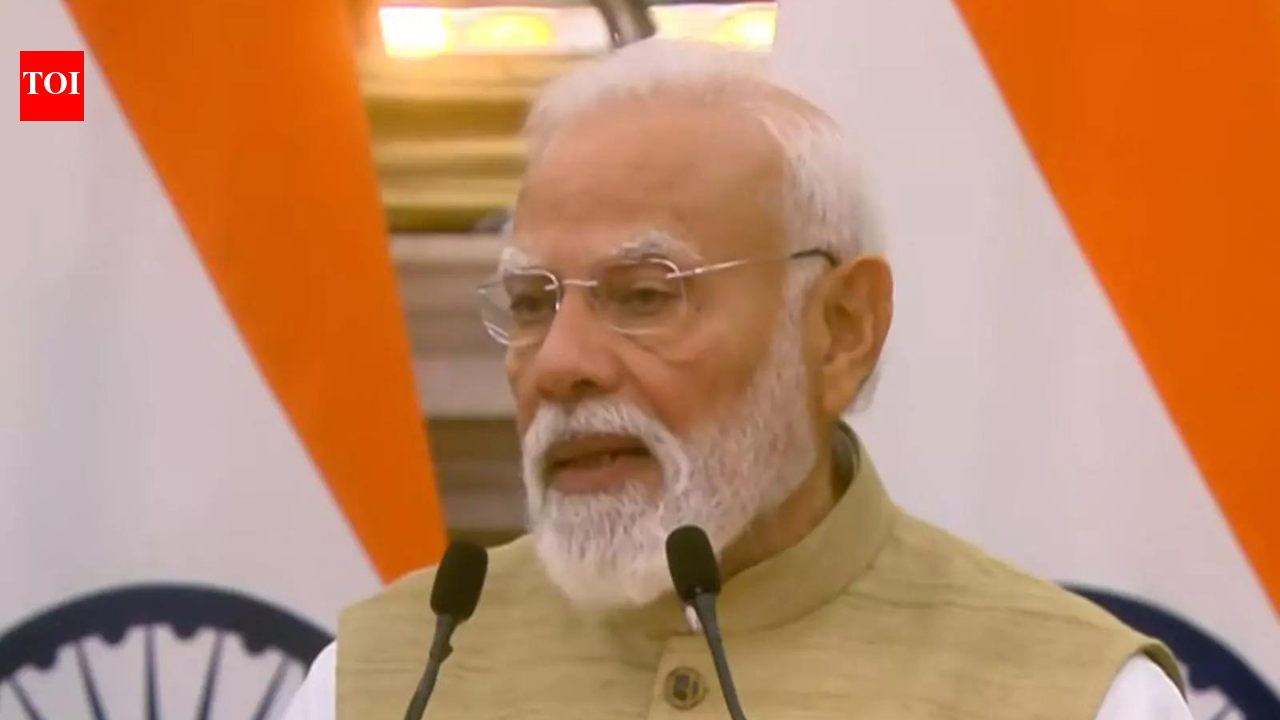
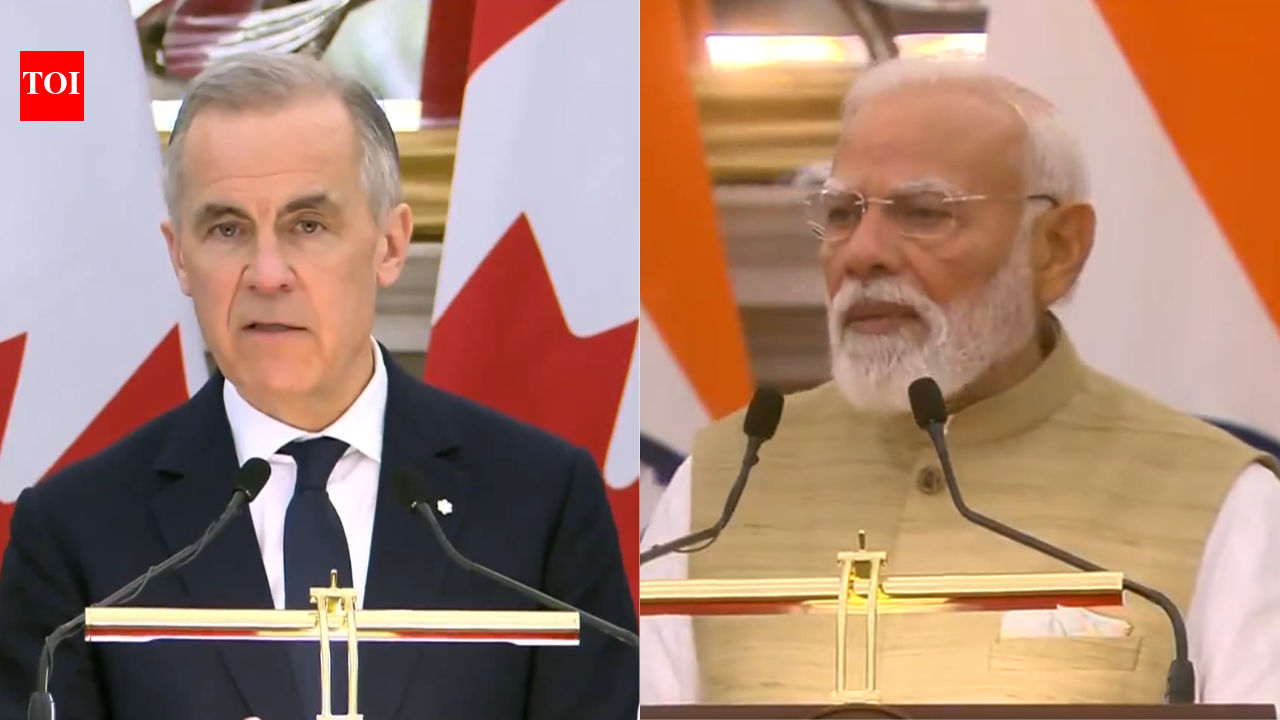
India and Canada took a step towards strengthening their economic ties on Monday, as Prime Minister Narendra Modi and Canadian PM Mark J Carney agreed to pursue a trade-led partnership to boost bilateral trade to $50 billion by 2030 and speed up negotiations on a Comprehensive Economic Partnership Agreement (CEPA). The two leaders held bilateral talks at Hyderabad House in New Delhi, where they discussed critical minerals cooperation, uranium procurement, the exchange of Terms of Reference for CEPA, enhance maritime domain awareness and the establishment of a defence dialogue. Our goal is to reach $50 billion in trade by 2030. Unlocking the full potential of economic cooperation is our priority. Therefore, we have decided to finalise the Comprehensive Economic Partnership Agreement soon. This will create new investment and employment opportunities in both countries. Canadian pension funds have invested $100 billion in India. This is a symbol of their deep belief in India’s growth story. Speaking after the talks, PM Modi emphasised that economic collaboration would anchor the next phase of ties between the two countries. “Today, we discussed transforming this vision into a next-level partnership. Our goal is to reach $50 billion in trade by 2030. Unlocking the full potential of economic cooperation is our priority. Therefore, we have decided to finalize a comprehensive economic partnership agreement soon”, PM Modi said. He also noted that the proposed agreement would generate fresh opportunities across sectors in both economies. “This will create new investment and employment opportunities in both countries. Canadian pension funds have invested $100 billion in India. This is a symbol of their deep belief in India’s growth story,” he added. PM Modi added that the two sides would also engage business leaders later in the day, adding that their recommendations would help shape the future economic roadmap. Several memoranda of understanding were exchanged in the presence of the two leaders. Canada’s Minister of International Trade Maninder Sidhu and Union Commerce Minister Piyush Goyal exchanged documents relating to the CEPA Terms of Reference and a Declaration of Intent on a Joint Pulse Protein Centre of Excellence. In a separate set of agreements, Canadian Foreign Affairs Minister Anita Anand and Jaishankar also exchanged several MoUs covering critical mineral cooperation, promotion of renewable energy use, and cultural cooperation. Another trilateral MoU involving India, Canada and Australia on cooperation in technology and innovation was also exchanged. Recalling his earlier interaction with Carney at the G7 meeting in Canada, Modi also said, “There are very few people in the world whose CVs include central banking leadership in two countries. Since our first meeting, our relationship has been energised, mutual trust and positivity have blossomed.” The visit is being seen as an important step in the ongoing normalisation of India–Canada relations, with both sides placing strong emphasis on trade, investment and long-term economic cooperation.


Source link

Access Denied


Access Denied

You don’t have permission to access “http://www.ndtv.com/world-news/iran-israel-war-ras-tanura-irans-drones-hit-aramco-oil-refinery-in-saudi-arabia-11157608” on this server.

Reference #18.f5493417.1772441118.44db623

https://errors.edgesuite.net/18.f5493417.1772441118.44db623


Source link

Middle East conflict drags down tourism, aviation shares: IndiGo falls almost 7%, Ixigo down 14%


Middle East conflict drags down tourism, aviation shares: IndiGo falls almost 7%, Ixigo down 14%

Aviation and travel stocks were struggling with sharp sell-offs on Monday after Middle East conflict intensified and regional air traffic was disrupted. Shares of InterGlobe Aviation, which operates IndiGo, along with SpiceJet, Ixigo and Easy Trip Planners, dropped by up to 13.5% as multiple countries shut their airspace following US and Israeli strikes on Iran. InterGlobe Aviation fell as much as 7.5% during the session, touching a low of Rs 4,460 on the BSE before recovering to 4,540 around 1:00 pm. SpiceJet declined over 7% to 14.84 per share. Ixigo also added to the downward momentum, plunging 13.5% to Rs 147 before easing to 164. Easy Trip Planners slipped up to 9% to an intraday low of Rs 7.8. As the situation continues to intensify, aviation giant IndiGo has suspended all flights to and from the Middle East, calling the move precautionary. In its passenger advisory, the airline said, “In an endeavour to provide support to our customers, we are extending full flexibility and waivers for travel to/from the Middle East and select international sectors until 7 March 2026, applicable to bookings made on or before 28 February 2026. Customers may opt for a full refund or reschedule at no additional cost.” Air travel across the Gulf region faced major disruption as key hubs, including Dubai, the world’s busiest international airport hub, as well as Abu Dhabi in the United Arab Emirates and Doha in Qatar, were either closed or functioning under heavy restrictions due to widespread airspace shutdowns. The situation intensified after Iran’s attacks reportedly caused damage at Dubai International Airport, while facilities in Abu Dhabi and Kuwait were also struck. Flight-tracking platform FlightAware indicated that thousands of flights across the Middle East have been affected. As the conflict unfolded on Saturday, at least eight countries, Iran, Israel, Iraq, Jordan, Qatar, Bahrain, Kuwait and the United Arab Emirates, announced complete airspace closures. Syria separately said it would shut part of its southern airspace along the border with Israel. The developments are seen weighing on the travel and tourism sector, as widespread rerouting, cancellations and operational disruptions typically push up airline costs, particularly fuel and crew expenses. At the same time, heightened geopolitical uncertainty risks dampening travel demand through booking cancellations and slower fresh reservations, clouding near-term revenue visibility for companies in the sector.


Source link

‘Matter of grave concern’: PM Modi calls for dialogue and diplomacy as Middle East tensions soar | India News


PM Modi Reviews Middle East Situation, Orders Support For Indians Stranded In War-Hit Nations

Prime Minister Narendra Modi (ANI photo)

Prime Minister Narendra Modi on Monday, during a joint statement with his Canadian counterpart Mark Carney, reflected on the ongoing tensions in the Middle East, also referred to as West Asia. He voiced concern over the constantly evolving situation in the region following the massive military action by the United States and Israel against Iran, which led to the killing of its Supreme Leader Ayatollah Ali Khamenei.Speaking after talks with Carney, PM Modi said, “Situation in West Asia is a matter of grave concern for us.”He also stated that India would continue to work with countries in the region to ensure the safety of its citizens. “We will keep working with countries in West Asia to ensure safety of Indians there,” he said.

PM Modi Reviews Middle East Situation, Orders Support For Indians Stranded In War-Hit Nations

PM Modi and the Canadian leadership also highlighted that terrorism and radicalisation remain “shared and serious challenges” not only for India and Canada but for all humanity.“India supports resolution of all conflicts through dialogue and diplomacy,” PM Modi said while referring to situation in West Asia.The joint remarks by the leaders of the two major democracies came after Canada’s neighbour, the United States, carried out a joint military operation with Israel against Iran, striking multiple locations, including the “heart of Tehran”. The strikes killed several top leaders of the Tehran regime and brought an end to Ali Khamenei’s decades-long rule in Iran.


Source link

Access Denied


Access Denied

You don’t have permission to access “http://www.ndtv.com/health/rice-vs-quinoa-which-is-better-for-your-gut-11155493” on this server.

Reference #18.c7f5d217.1772443827.e33f8e11

https://errors.edgesuite.net/18.c7f5d217.1772443827.e33f8e11


Source link

Total lunar eclipse: When and where to watch the celestial event; IMD shares locations, timings |


Total lunar eclipse: When and where to watch the celestial event; IMD shares locations, timings

NEW DELHI: A total lunar eclipse, which will be visible across India, will take place on Tuesday, March 3, 2026. During a total lunar eclipse, the entire Moon passes into the Earth’s umbral shadow. According to the India Meteorological Department (IMD), the March 3 event will have a magnitude of 1.155, making it a deep total eclipse.In India, visibility will differ by region, the IMD said. Most places in the country will see the ending phase of the eclipse at the time of moonrise. However, parts of North-East India and the Andaman and Nicobar Islands will also be able to see the end of the totality phase.As per Indian Standard Time (IST), the eclipse will begin at 15:20 (3:20 PM). Totality will start at 16:34 (4:34 PM) and end at 17:33 (5:33 PM). The eclipse will end at 18:48 (6:48 PM).The eclipse will also be visible in Eastern Asia, Australia and America.A total lunar eclipse happens when the Sun, Earth and Moon are aligned, and the Earth comes between the Sun and the Moon, blocking direct sunlight. During totality, the Moon often appears red because only red light passes through the Earth’s atmosphere, while blue light is scattered.


Source link

Afghanistan Tour India 2026: Indian Cricket Team to host Test and ODI Matches in June 2026 – full schedule announced | Cricket News


India to host Afghanistan for Test and ODI series in June 2026 - full schedule announced
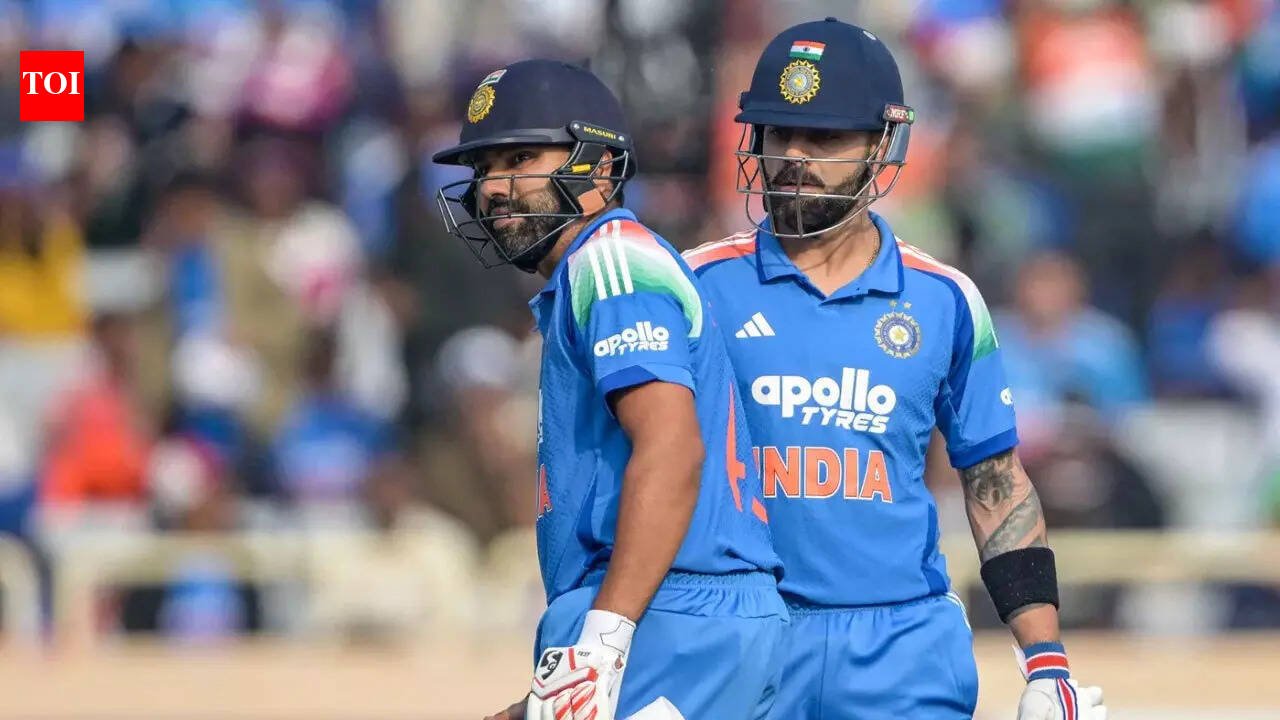
Virat Kohli and Rohit Sharma (AFP Photo)

NEW DELHI: India will host Afghanistan for a multi-format bilateral series in June 2026, featuring a one-off Test and three One-Day Internationals (ODIs), the Board of Control for Cricket in India (BCCI) confirmed on Monday.Go Beyond The Boundary with our YouTube channel. SUBSCRIBE NOW!According to the itinerary released by the BCCI, the tour will run from June 6 to June 20, 2026, with matches scheduled across four venues.The series will begin with a one-off Test in New Chandigarh from June 6 to June 10. It will be followed by a three-match ODI series, starting on June 14 in Dharamshala. The second ODI will be played in Lucknow on June 17, while the final 50-over clash is set for Chennai on June 20. All three ODIs will begin at 1:30 PM IST.

Sanju Samson becomes darling of Eden Gardens | T20 World Cup

The upcoming series will provide both teams crucial preparation time ahead of a packed international calendar. For India, it will also mark a return to red-ball cricket at home following their ongoing T20 commitments.Currently, the Men in Blue are in action at the T20 World Cup 2026, where they have already qualified for the semi-finals. Led by Suryakumar Yadav, India sealed their place in the last four with a five-wicket victory over the West Indies in a high-pressure Super 8 encounter at Eden Gardens in Kolkata.

FULL SCHEDULE: AFGHANISTAN TOUR OF INDIA

Match Date Start Time Venue
One-off Test June 6, 2026 9:30 AM IST New Chandigarh
1st ODI June 14, 2026 1:30 PM IST Dharamshala
2nd ODI June 17, 2026 1:30 PM IST Lucknow
3rd ODI June 20, 2026 1:30 PM IST Chennai


Source link

1970s-style oil shock loading? Crude may hit $100 if Strait of Hormuz shuts amid Middle East tensions – what it means


Energy Expert Taneja Says Crude May Rise To $80 Briefly, Expects Middle East Tensions To Stabilise

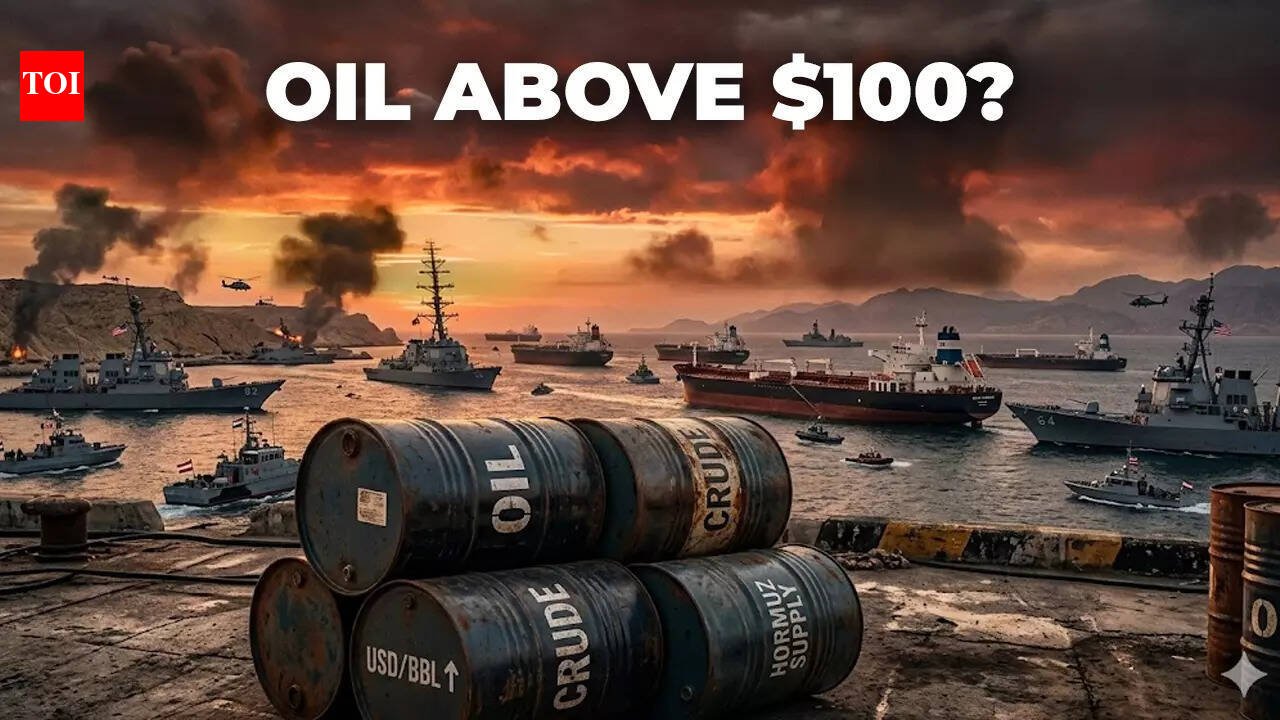
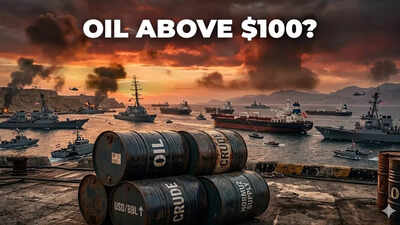
The Strait of Hormuz serves as the primary outlet for most crude exports from the Persian Gulf. (AI image)

Will oil prices hit $100 due to ongoing tensions and conflicts in the Middle East? Oil, quite literally, is the fuel that drives global economies. Rising oil prices in turn can trigger inflation across goods and services in major economies. In fact, the war between US-Israel and Iran have sparked fears that a 1970s style energy shock may be loading!Global oil markets are preparing for potential supply disruptions after US airstrikes on Iran over the weekend revived concerns that shipments through the Strait of Hormuz could be affected.

Energy Expert Taneja Says Crude May Rise To $80 Briefly, Expects Middle East Tensions To Stabilise

US President Donald Trump’s move to launch strikes on Iran has introduced fresh uncertainty for a major chunk of global oil supplies.Iran produces over 3 million barrels of crude per day, accounting for roughly 3% of worldwide output and ranking as the fourth-largest producer within OPEC. However, its strategic position gives it influence that extends well beyond its production share.The more significant concern is whether the situation could escalate into a prolonged disruption of crude exports from the Gulf region.

The 1970s energy shock

During the 1970s, there were two major shocks to the oil markets that sent ripples across global markets. The first crisis happened in 1973–74, when Arab OPEC nations enforced an oil embargo against the United States and other countries that backed Israel during the Yom Kippur War. This led to sharply reduced supplies, causing oil prices to rise substantially resulting in fuel shortages, high inflation and economic hits in many Western nations.Also Read | Middle East on the boil after Khamenei’s death: What does it mean for India’s trade, exports, crude oil & LPG supply?The second problem happened in 1979 in the wake of the Iranian Revolution, which severely affected Iran’s oil production. Concerns over constrained output once again drove crude prices steeply higher.

Strait of Hormuz & its vital role

This time around, if Iran were to successfully shut the Strait of Hormuz, the fallout for global oil markets could be profound.“This could present a scenario three times the severity of the Arab oil embargo and Iranian revolution in the 1970s, and drive oil prices into the triple digits, while LNG prices retest the record highs of 2022,” Saul Kavonic, head of energy research at MST Marquee told CNBC.

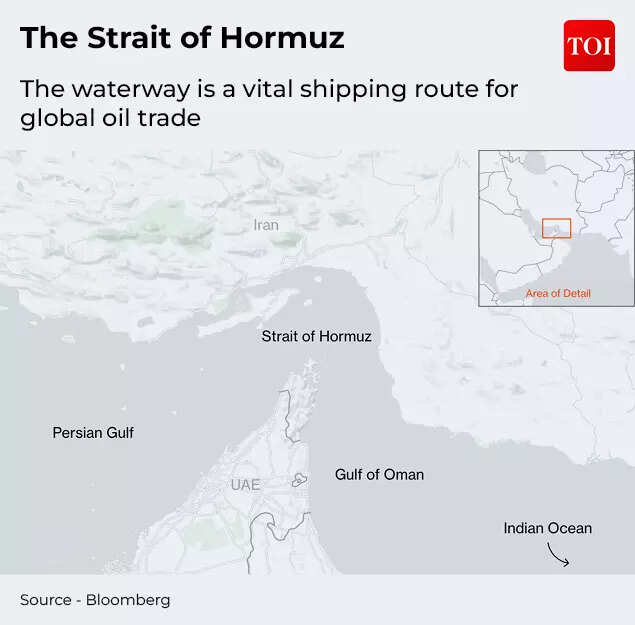
Strait of Hormuz

Strait of Hormuz

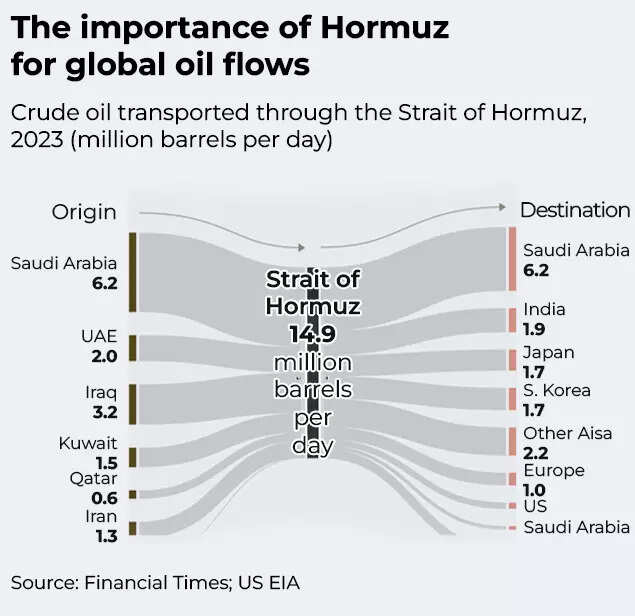
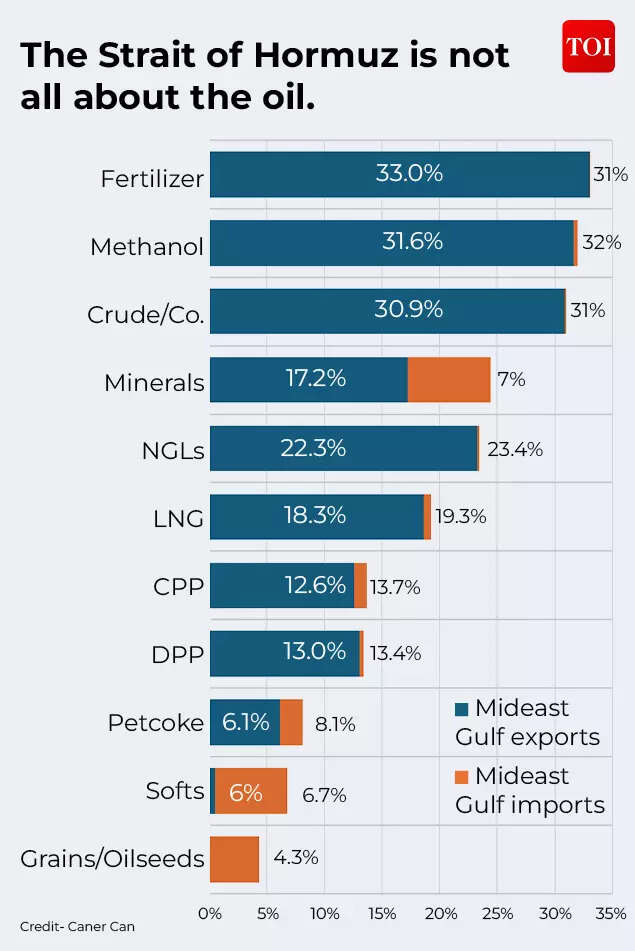
As tensions mount, focus has once again turned to the Strait of Hormuz, where any blockage would have swift and far-reaching implications for global crude and LNG supplies.Located between Oman and Iran, the narrow waterway functions as a vital transit corridor and a potential bottleneck for international oil trade. Data from Kpler indicates that around 13 million barrels per day passed through the strait in 2025, accounting for roughly 31% of total seaborne oil flows.The Strait of Hormuz serves as the primary outlet for most crude exports from the Persian Gulf, along with refined products including diesel and aviation fuel. Qatar, a leading exporter of liquefied natural gas, also depends on this route. Ship-tracking data suggest that LNG shipments through the passage have nearly come to a standstill.

The importance of Hormuz for global oil flows

Iran has on several occasions over the years warned it could shut the narrow Strait of Hormuz in retaliation for attacks against the Islamic Republic.The route connects leading Gulf oil producers such as Saudi Arabia, Iran, Iraq and the United Arab Emirates to the Gulf of Oman and the Arabian Sea.Reuters reported on Saturday that an official from the European Union’s naval mission, Aspides, said commercial ships had received VHF radio warnings from Iran’s Revolutionary Guards stating that “no ship is allowed to pass the Strait of Hormuz.”The official added that Tehran had not officially confirmed any order to shut the passage.Following the attacks in the region that began on Saturday, vessel movement through the passage declined sharply, with reports indicating that three ships were targeted near the entrance to the Persian Gulf.Also Read | US-Israel strikes on Iran: How will India be hit by Strait of Hormuz closure? Explained

Alternative Export Routes

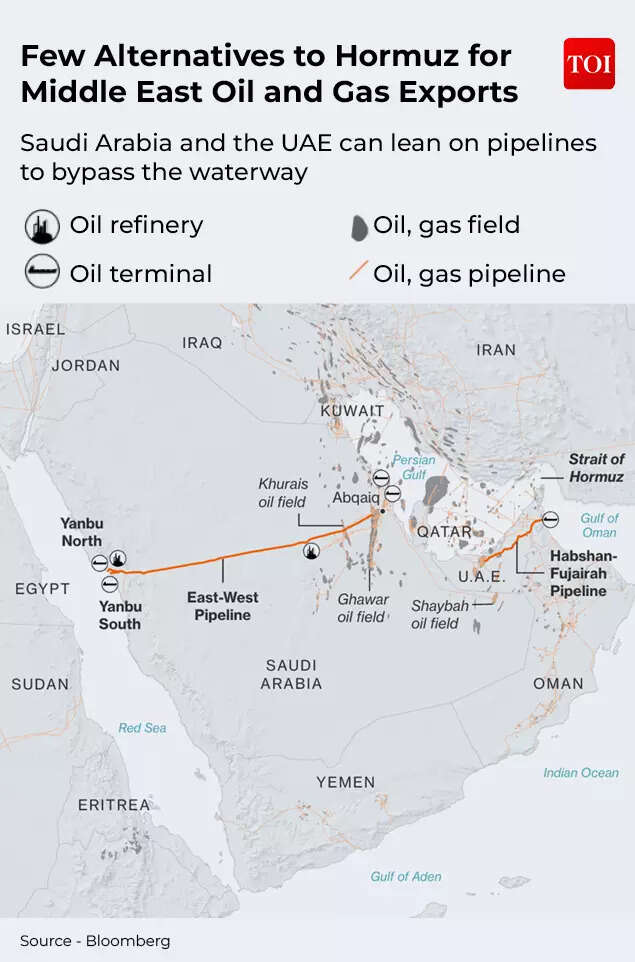
Some OPEC producers, notably Saudi Arabia and the United Arab Emirates, have limited capacity to redirect crude shipments through pipelines that circumvent the Strait of Hormuz.According to a Bloomberg report, Saudi Arabia can channel part of its exports through a 746-mile pipeline stretching across the country to a Red Sea terminal, from where oil can be loaded onto tankers for further transport. The East-West Pipeline has a throughput capacity of up to 5 million barrels per day.

Few alternatives to Hormuz

Few alternatives to Hormuz

The UAE also has a partial workaround. It operates the Habshan-Fujairah pipeline, which links its oil fields to a port on the Gulf of Oman, allowing it to bypass Hormuz to a certain extent. This pipeline can handle around 1.5 million barrels of crude daily.Iraq, the second-largest producer in OPEC, has a pipeline running through Turkey to the Mediterranean. However, this route only carries oil from northern fields. As a result, the vast majority of Iraqi crude exports are shipped from the southern port of Basra and must transit the Strait of Hormuz.Kuwait, Qatar and Bahrain do not have alternative routes and remain entirely dependent on the strait for their oil exports.Despite these pipeline options, a shutdown of the waterway would still significantly disrupt global supply flows and push crude prices higher.

Iran’s Oil Output

Iran’s crude production rose to roughly 3.3 million barrels per day, up from under 2 million barrels per day in 2020, even as international sanctions remain in place. The country has improved its ability to bypass these restrictions, with nearly 90% of its oil exports currently directed to China.For exports, Kharg Island in the northern Persian Gulf serves as the main shipping and storage hub. Kharg Island is equipped with multiple loading berths, jetties, offshore mooring points and storage tanks capable of holding tens of millions of barrels of crude. In recent years, the terminal has managed export volumes of more than 2 million barrels per day.Any direct strike on the Kharg Island export terminal would deal a severe blow to Iran’s economy.

Worst-case scenario: Oil above $100

According to the CNBC report, analysts suggest outcomes could range from minor interruptions to Iranian exports to a complete closure of the Strait of Hormuz.For global markets, the gravest risk is not limited to reduced Iranian supply but extends to a wider breakdown in maritime traffic through the strait.“Early indications are of a broader scale attack on Iran, with counterattacks which could escalate to draw in multiple Gulf countries,” said Saul Kavonic.

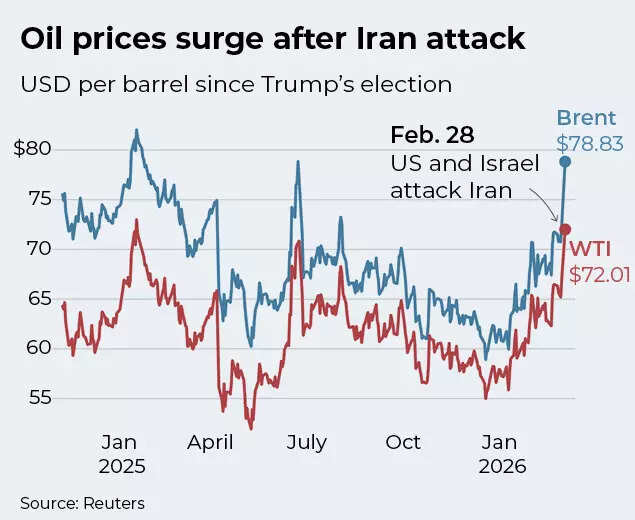
Oil prices surge after Iran attack

Kavonic said traders are likely to factor in a range of possibilities at the outset, from the loss of as much as 2 million barrels per day of Iranian exports to strikes on regional infrastructure or, in the most extreme case, a halt in transit through Hormuz.“If the Iranian regime feels they face an existential threat, attempts to block the Strait of Hormuz cannot be ruled out,” he said, while noting that the United States and its allies would probably deploy naval protection to safeguard shipping routes.

The Strait of Hormuz is not all about oil

The Strait of Hormuz is not all about oil

“At this point, it seems we are looking at a full-scale military conflict between the U.S. and Iran, which would be unprecedented and the trajectory impossible to assess,” said Vandana Hari, CEO of energy research firm Vanda Insights.“If it carries on for days with Iran and its proxies retaliating to the fullest extent, we are looking at the worst-case scenarios for oil, including a major disruption of oil flows through the Middle East,” Hari told CNBC. Bob McNally, president of Rapidan Energy Group described the situation as “a very serious development” for global oil and gas markets, given their heavy reliance on production and transit through Hormuz.Industry experts stressed that the key factor now is how long the tensions persist. McNally said the scale of any surge in oil and LNG prices would hinge on both the duration and the breadth of disruptions to output and shipments from the Gulf.Andy Lipow, president of Lipow Oil Associates, said the recent strikes have materially increased the likelihood of supply disruptions in the region, even though Iranian oil installations have not yet been directly hit.He characterised the most severe scenario as “an attack on Saudi oil infrastructure followed by a complete closure of the Strait of Hormuz.” Lipow placed the probability of such an outcome at around 33 per cent, suggesting Iran could take drastic measures if it feels cornered.(Disclaimer: Recommendations and views on the stock market, other asset classes or personal finance management tips given by experts are their own. These opinions do not represent the views of The Times of India)


Source link

Ayatollah Ali Khamenei Killed: ‘Cynical violation of law’: Russia, China condemn killing of Khamenei in US-Israel strikes; call for end to military action


Russia, China condemn killing of Khamenei in US-Israel strikes (Picture credit: AP)

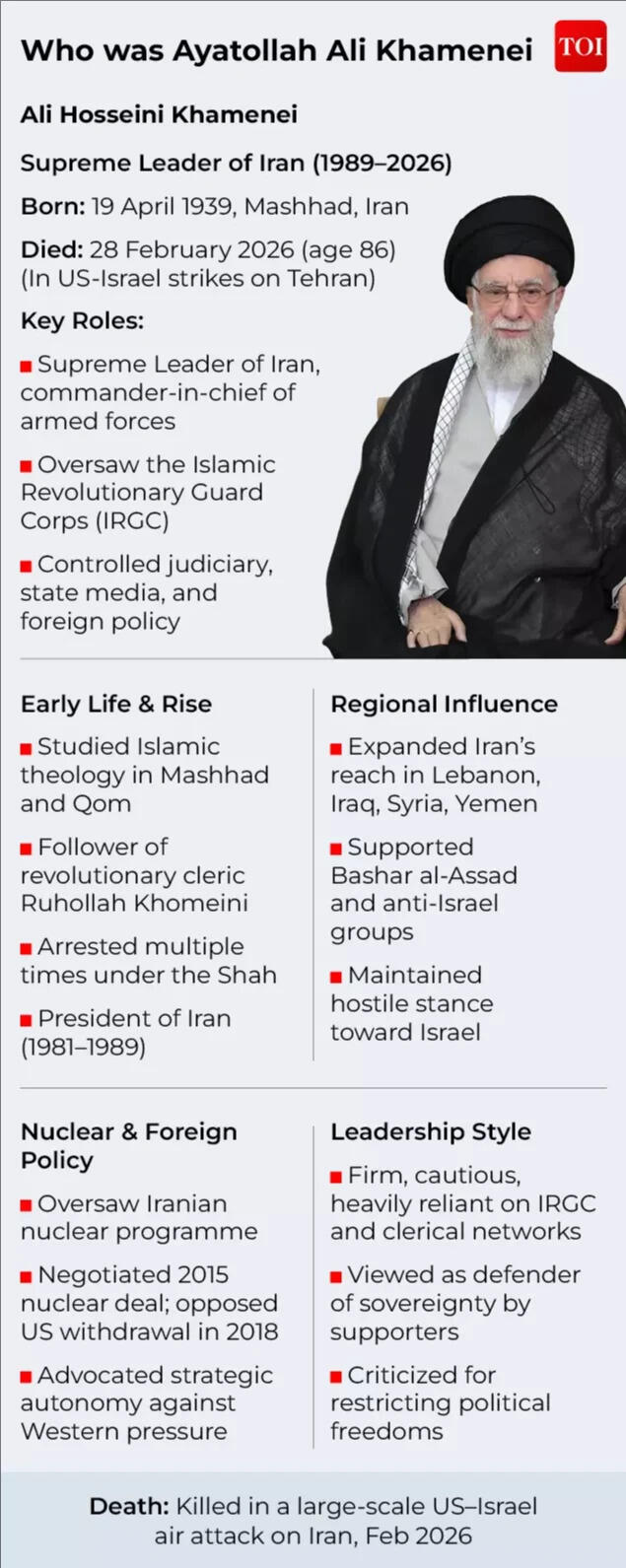
The killing of Iran’s Supreme Leader Ayatollah Ali Khamenei in joint US–Israeli strikes has drawn strong reactions from both Russia and China, with leaders in Moscow and Beijing sharply criticising the move and urging an immediate halt to military operations.Khamenei, 86, was killed in a major aerial assault on Iranian military and government sites.

Russia ENTERS Iran-US War? Putin RAGES After ‘Cynical Murder’ Of Khamenei | ‘Won’t Spare…’

His death has pushed the region into fresh instability, with Iran launching retaliatory missile and drone attacks across the Gulf.

Who was Ayatollah Ali Khamenei

Putin calls killing ‘cynical violation’ of law

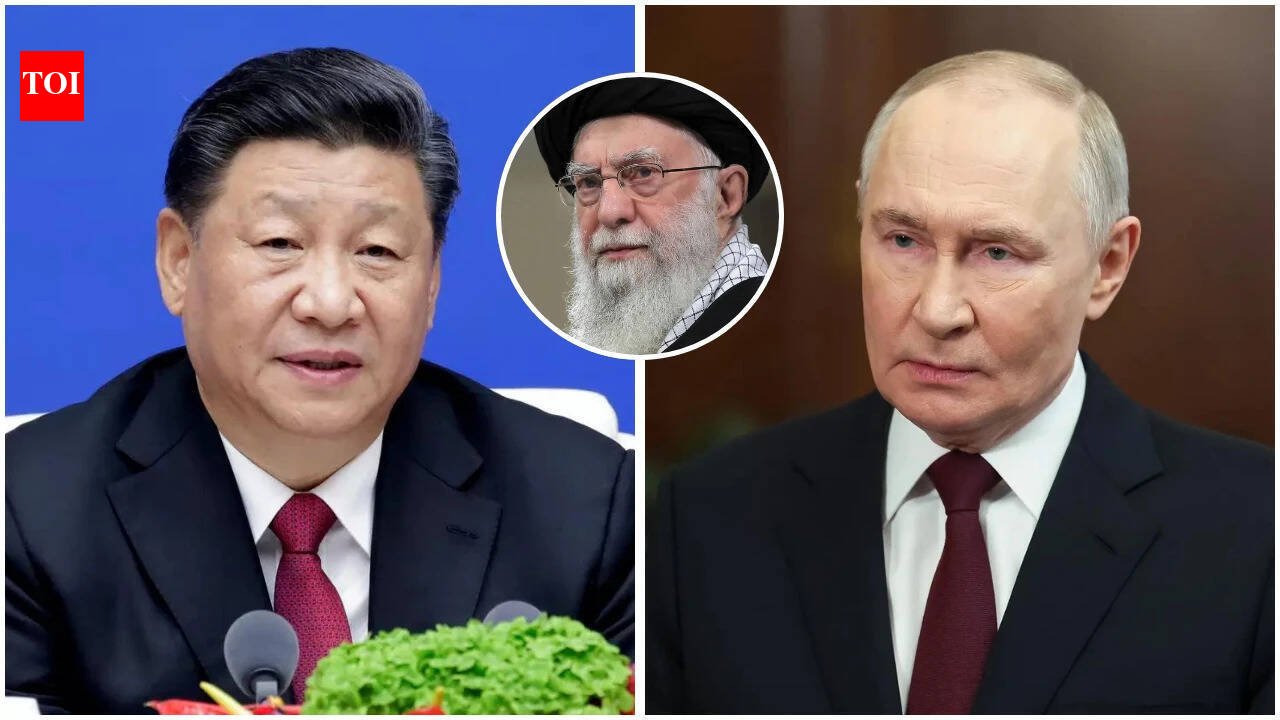
Russian President Vladimir Putin described the assassination as “a cynical violation of all norms of human morality and international law”, as per news agency AFP.In a letter published by the Kremlin and addressed to Iranian President Masoud Pezeshkian, Putin expressed his “deepest condolences for the assassination of” Khamenei. He said the Iranian leader “will be remembered as an outstanding statesman who made an enormous personal contribution to the development of friendly Russian-Iranian relations”.Putin also asked Pezeshkian to “convey my most sincere sympathy and support to the relatives and loved ones of the Supreme Leader, to the government and to the entire people of Iran”.Russia had earlier condemned the US–Israeli strikes as a “dangerous adventure” that could trigger a regional “catastrophe”. Moscow had previously called for restraint in the run-up to the attacks.On Saturday, Russian foreign minister Sergei Lavrov held a phone call with his Iranian counterpart Abbas Araghchi. The Russian foreign ministry stressed that the conversation was held “at the initiative of the Iranian side”.Russia and Iran have strengthened ties in recent years, especially after Moscow’s offensive in Ukraine. In 2025, the two countries signed a strategic partnership treaty aimed at deepening cooperation, including in military matters.

China says killing ‘unacceptable’

China also issued a strong condemnation. According to AFP, Beijing said the killing was “a serious violation of Iran’s sovereignty and security, a trampling on the aims and principles of the UN Charter and the basic norms of international relations”.“China firmly opposes and strongly condemns this,” the foreign ministry said, calling for an “immediate halting of military operations”.Chinese foreign minister Wang Yi spoke by phone with Sergei Lavrov, in a call initiated by the Russian side, Chinese state media reported.During the conversation, Wang said the “blatant killing of a sovereign leader and the incitement of regime change” by the United States and Israel was “unacceptable”, according to China’s Xinhua news agency.He added that China was “highly concerned” the Middle East could be pushed into a “dangerous abyss”. Wang also warned that attacking a sovereign state without UN Security Council authorisation undermines the global order established after the Second World War.“The international community must send a definite and clear message opposing the world’s regression to the law of the jungle,” he said.

Evacuation advisory for Chinese citizens

Amid rising tensions, Beijing has urged its citizens in Iran to leave the country “as soon as possible”. Repeating the call on Sunday, the foreign ministry said Chinese passport holders could exit Iran through visa-free land routes into Azerbaijan, Armenia and Turkey.The warning reflects growing fears that the conflict could widen further after Iran fired drones and missiles at Israel, US military installations and Gulf states, according to news agency AP.

Wider global concern

The killing has sparked alarm beyond Moscow and Beijing. Pope Leo XIV called for an end to the “spiral of violence” and urged all parties to act with “moral responsibility” before the situation becomes “an irreparable chasm”.“Stability and peace are not built through mutual threats or with weapons, which sow destruction, pain, and death, but only through reasonable, genuine, and responsible dialogue,” the Pope said during his Angelus prayer in St Peter’s Square.Meanwhile, the United States has defended the operation. President Donald Trump said the strikes gave Iranians their “greatest chance” to “take back” their country and warned Tehran against escalating attacks further.

Operation Epic Fury

The strong language from Moscow and Beijing portrays a widening geopolitical divide. Both Russia and China have closer ties with Iran and have frequently criticised US and Israeli actions in the region.With Russia and Iran bound by a recent strategic treaty and China warning against “regime change”, the reactions show that the killing of Khamenei is not only a regional issue but one with global diplomatic consequences.


Source link