Breaking News
Yellove reloaded: CSK unveil striking new jersey for IPL 2026 in grand style


Chennai Super Kings (CSK) have officially launched their new jersey for the upcoming Indian Premier League (IPL) 2026 season, offering fans the first glimpse of the kit they will don in what promises to be a redemption campaign. The five-time champions shared an energetic promotional video on social media on Sunday, sparking excitement among supporters eager to see the franchise bounce back after a challenging year.

The Chennai-based outfit unveiled the jersey through their official Instagram handle, captioning the reveal with a message that read: “All new and all for you! Order the CSK Jersey 2026 and let your summer be filled with Yellove!” Within minutes, the post was flooded with reactions from fans celebrating the return of the iconic yellow in a refreshed avatar.

Classic yellow meets modern detailing

The newly launched jersey stays true to CSK’s unmistakable identity — a dominant shade of bright yellow that has become synonymous with the franchise’s legacy. However, subtle design updates give the kit a sharper, more contemporary edge ahead of the 2026 season.

Fine detailing along the shoulders and sleeves adds texture, while refined patterns across the fabric create a sleek finish. The traditional roaring lion emblem remains proudly placed, symbolizing the team’s fighting spirit and rich history in the league. The overall look blends nostalgia with modern aesthetics, ensuring that the jersey feels both familiar and fresh.

For supporters, the color is more than just a design choice — it represents loyalty, resilience, and the passionate ‘Yellove’ culture that has defined CSK since the inception of the tournament.

Here’s the video:

Also READ: 3 reasons why MS Dhoni won’t play every match of IPL 2026

A statement ahead of a crucial season

The jersey launch arrives at a pivotal moment for the franchise. After finishing at the bottom of the points table in the 2025 season, CSK are determined to script a turnaround. The team managed just four wins in 14 matches last year, enduring 10 defeats in what became one of their toughest campaigns in IPL history.

Inconsistency with both bat and ball hurt the side throughout the tournament. Close contests slipped away, combinations failed to click, and momentum proved elusive. For a franchise known for its calm leadership and strategic clarity, the season was a rare low.

Yet, CSK have built their legacy on comebacks. Over the years, they have repeatedly responded to setbacks with strong rebuilds, smart auction strategies, and renewed hunger.

Also READ: IPL 2026: RCB ownership race heats up as US billionaire enters $1.8 billion bidding war


Source link

Mumbai’S Psychologists: Appointment scam hits Mumbai’s psychologists: Fraudsters use fake payment screenshots to demand refunds | Mumbai News


MUMBAI: Psychologists in Mumbai are reporting a payment scam where they are being targeted by fraudsters posing as patients. The caller takes an appointment for therapy over phone or text, and claims he is making prepayment online. He shares a screenshot of the transaction, but later cancels the appointment and seeks a refund. The catch is that the screenshot is fake and the payment was never made. “The scammer rushes the counsellor into making a refund. If one proceeds with the refund without verification, one ends up losing money,” said a counsellor who was defrauded, and did not wish to be identified. Psychologist Kiran Makhijani said a scammer got abusive when she clarified that a refund couldn’t be made as payment was never received.“This individual conversed with me entirely over texts. She claimed she wasn’t from Mumbai and had got my reference during a visit to a reputed hospital here,” said Makhijani. After the individual insisted on making an online prepayment for a counselling appointment, Makhijani shared a QR code. She received a photo with transaction details. Later, the patient said her husband had taken an appointment for her with another doctor and so she wanted a refund. “When we informed that no payment had been received, the individual became aggressive, used abusive language and falsely accused us of cheating. As professionals working with integrity, such interactions are upsetting,” she said.Psychologist Alisha Lalljee said templates for making fake payment screenshots are easily available online. “I was approached by scammers posing as patients on two separate occasions. They were quick to inquire about fees and appointment slots, without going into details about the therapy session,” said Lalljee.After she shared her bank details, a payment screenshot was received. “The image had transaction details, time and even the sender’s phone battery status. The image appeared authentic but no money was received. I uploaded the screenshot to an online image recognition tool and was stunned to discover that it was made from a template,” said Lalljee.Pre-booking mental health care sessions became standard protocol since online consultations started post Covid. Psychologist Shashwati Chavan narrated an incident where a person reached out to her for an emergency counselling session. Chavan provided a payment link which, the person claimed, “wasn’t working.” Chavan then sent a QR code and within moments, received a screenshot that said Rs 2000 had been paid. “Bank statements were checked, but no transaction was found,” Chavan said. The individual kept insisting payment was done. Finally Chavan told the individual to pay after the session, but the latter did not show up for the appointment.Police officials said they are aware of the scam but formal complaints have not been received.


Source link

Stock market crash today: Nifty50 goes below 24,900; BSE Sensex down over 1,000 points on Middle East tensions


Stock market crash today: Nifty50 goes below 24,900; BSE Sensex down over 1,000 points on Middle East tensions
Stock market today (AI image)

Stock market crash today: Nifty50 and BSE Sensex crashed in opening trade on Monday amidst rising Middle East tensions and global market turmoil, with impact on crude oil prices and trade in focus. While Nifty50 went below 24,900, BSE Sensex was done over 1,000 points. At 9:16 AM, Nifty50 was trading at 24,866.00, down 313 points or 1.24%. BSE Sensex was at 80,226.63, down 1,061 points or 1.30%.Analysts warn that sectors sensitive to crude prices such as oil marketing companies, paints, tyres, aviation and chemicals could face pressure on margins due to rising input costs. In contrast, upstream oil producers including ONGC and Oil India may gain from improved realisations, while defence stocks such as HAL and BEL could witness positive sentiment.Dr. VK Vijayakumar, Chief Investment Strategist, Geojit Investments Limited says, “The uncertainty related to the war in West Asia will loom large over the market in the near-term. The major risk from the market perspective is the energy risk arising from the surge in crude. Indications are that a sharp spike in crude by, say 20%, is likely only if the Hormuz Strait is closed, obstructing oil transport through the strait. There is no official confirmation of this yet. If Brent crude remains around $ 76 equity markets may remain weak but are unlikely to witness a big crash. Experience tells us that panic selling during a crisis is the wrong strategy. Investors should refrain from selling and watch how things evolve. Data from crises during the last many decades tells us that an event like the present crisis will not have any impact on the market six months later. This is the takeaway from the market behaviour after the recent crises like the Covid crisis, Russia-Ukraine war and the Gaza conflict. The ongoing West Asian crisis is unlikely to be different. However, since a war can spring unexpected surprises, investors have to be cautious.Weakness in the market can be used to slowly accumulate high quality stocks in domestic consumption themes like banking, automobiles, capital goods and defense.”Asian markets also came under strain, falling 1.1 per cent, while equity index futures for the US and Europe dropped as tensions intensified after the US-Israeli military action against Iran. Brent crude briefly surged as much as 13 per cent before trimming gains, as turmoil in the global oil market intensified amid the effective closure of the Strait of Hormuz.Crude prices extended gains on Monday, rising more than 8 per cent to multi-month highs as Iran and Israel increased attacks in the region, damaging tankers and disrupting supplies from a key oil-producing corridor.Gold climbed up to 2 per cent after the United States and Israel carried out major strikes on Iran, killing Supreme Leader Ayatollah Ali Khamenei, heightening geopolitical tensions and amplifying global economic uncertainty.Foreign portfolio investors were net sellers of Indian equities worth Rs 7,536 crore on Friday. Domestic institutional investors offset part of the outflows, purchasing shares worth Rs 12,293 crore on a net basis.(Disclaimer: Recommendations and views on the stock market, other asset classes or personal finance management tips given by experts are their own. These opinions do not represent the views of The Times of India)


Source link

Heatwave across India: IMD forecasts above-normal heatwave days in several states; What you need to know | Delhi News


IMD forecasts above-normal heatwave days in several states: What you need to know
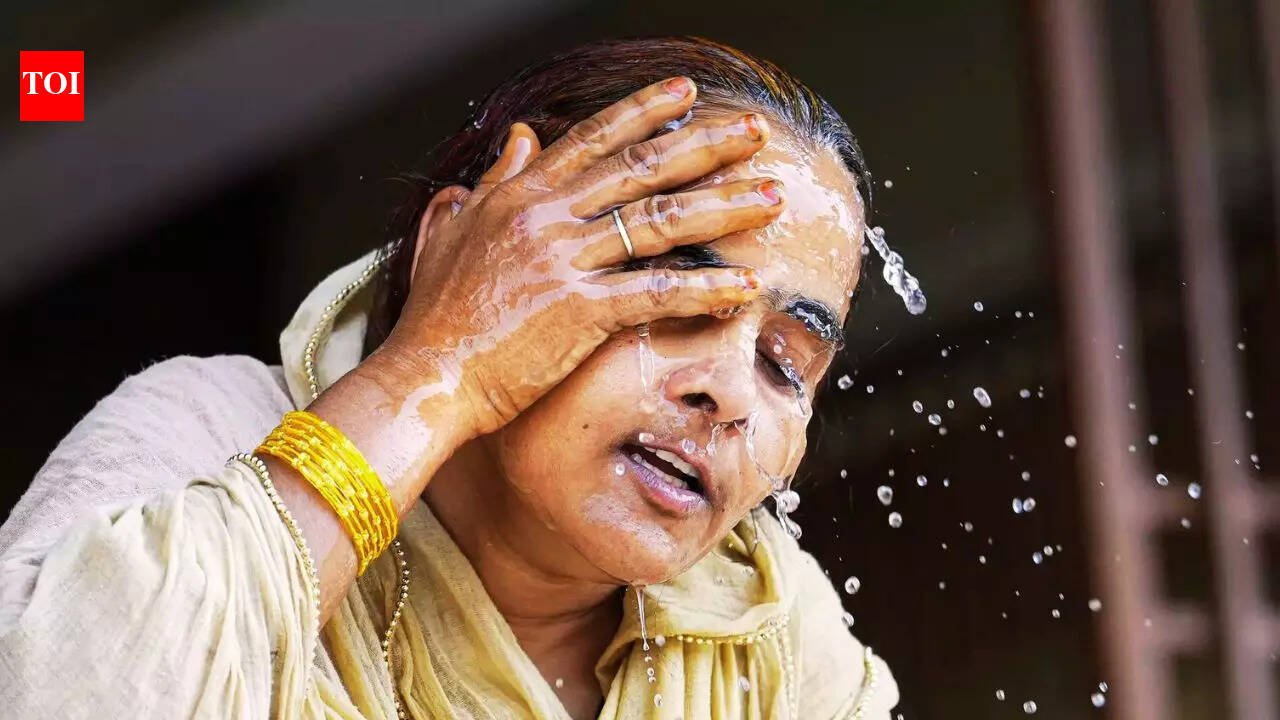
A woman splashes water on her face on a hot summer day amid heatwave, in New Delhi. (PTI (File Photo))

NEW DELHI: An above-normal number of heatwave days is expected across large parts of India between March and May, the India Meteorological Department (IMD) has said, warning that several states could see prolonged spells of high temperatures as summer sets in, news agency PTI reported.However, March is expected to begin on a relatively moderate note for much of the country. “In March, however, maximum temperatures are likely to be normal to below normal over many parts of India, except northeast, east, and some parts of Western Himalayan region, central and peninsular India. “This could be because rainfall averaged over India is most likely to be normal during March,” IMD said. The IMD defines “normal” rainfall as 83% to 117% of the long period average (LPA). For March, the LPA — based on data from 1971 to 2020 — stands at 29.9mm. While below-normal rainfall is forecast over parts of northeast India and some areas of northwest India, most regions are expected to see near-normal precipitation.List of states to face more heatwave days than usual during the three-month period

  • West Rajasthan
  • Gujarat
  • Haryana
  • Punjab
  • South and East Maharashtra
  • Eastern Uttar Pradesh,
  • Bihar
  • Jharkhand
  • Gangetic West Bengal
  • Odisha
  • Chhattisgarh
  • Telangana
  • Andhra Pradesh
  • North Karnataka
  • North Tamil Nadu

Chandigarh: No significant heat risk in March

In Chandigarh, the IMD has forecast largely normal weather conditions for March 2026, with rainfall expected to remain within the normal range and temperatures likely to stay near average levels. The monthly outlook indicates no significant increase in heatwave activity for the city. The IMD has indicated that Chandigarh is unlikely to face heat spells this March, with maximum temperatures expected to remain broadly normal. While parts of central and peninsular India and the western Himalayan region may see above-normal daytime temperatures, northwest India — including the UT— is likely to experience normal to slightly below-normal trends. Minimum temperatures across most regions are also expected to stay normal, with some pockets of northwest India likely to record normal to slightly belownormal night temperatures. IMD also stated that heatwave activity in the city is likely to remain normal, indicating no immediate risk of prolonged heat conditions this month. Meteorologists said weak La Niña conditions persist over the equatorial Pacific and are expected to weaken further, while neutral conditions continue over the Indian Ocean. These broader oceanic patterns are not expected to significantly influence Chandigarh’s weather in March.

Tamil Nadu: Hotter summer ahead

In contrast, Tamil Nadu is likely to see hotter conditions as the season progresses. The city of Chennai and the rest of the state may have to brace for hotter days this summer, as the IMD has forecast heatwave spells between March and May. The seasonal outlook suggests above-normal maximum temperatures over most parts of the state. Heatwave days are likely to range from three to nine days along much of coastal Tamil Nadu, including Chennai, and could extend to nine to 15 days in some adjoining northern districts. Minimum temperatures during the season are expected to remain largely near normal. According to the IMD, a heatwave is declared when the maximum temperature reaches at least 40°C in plains (30°C in hilly regions) and is 4.5°C to 6.4°C above normal, or when the actual maximum temperature is 45°C or higher irrespective of departure from normal. May is typically the peak summer month in Chennai, with average maximum temperatures touching 37.3°C. For March, however, the outlook is relatively moderate. Maximum temperatures across Chennai and districts up to the delta region are likely to remain near normal, while some interior districts may record below-normal daytime temperatures. Night temperatures are expected to stay near normal over most parts of the state, except some central districts.


Source link

Middle East tensions: Gold prices jump 2% on Iran conflict; India braces for diamond supply crunch


Middle East tensions: Gold prices jump 2% on Iran conflict; India braces for diamond supply crunch

Gold began March on a strong note after the US and Israel carried out major strikes on Iran that killed Tehran’s Supreme leader Ayatollah Ali Khamenei. As geopolitical tensions continue to intensify and fears of economic instability gain ground, spot gold jumped 1.72% to $5,368.09 an ounce by 0010 GMT, reaching its highest level in more than four weeks. Meanwhile, US gold futures went even higher, soaring 2.58% to $5,382.60 per ounce.The attacks prompted a new wave of Israeli strikes on Tehran on Sunday, followed by retaliatory missile barrages from Iran, stoking further instability in the Middle East and beyond.“Unlike previous escalations in this conflict, there is fairly strong incentive here for both sides to continue to escalate potentially – and that runs the risk of leading to a pretty chaotic, uncertain and therefore volatile environment for more ⁠than just ‌a few days … the dynamic for gold is pretty positive,” Kyle Rodda, senior financial market analyst at Capital.com told Reuters.Bullion, long viewed as a safe-haven asset, has already reached successive record highs this year, reflecting widespread economic and political uncertainty. The current rally adds to a 64% increase in 2025, driven by central bank buying, strong inflows into exchange-traded funds, and expectations of US monetary policy easing.Last week, major banks reinforced the prospect of higher prices. JP Morgan and Bank of America said gold could climb towards the $6,000 mark, with JP Morgan forecasting that combined central bank and investor demand may push prices to $6,300 an ounce by the end of 2026.Economic data added to market caution, with US producer prices in January rising more than anticipated, suggesting inflation may intensify in the coming months, according to the agency. Investors are also monitoring key labour market reports this week, including the ADP employment report, weekly jobless claims, and the non-farm payrolls data.Precious metals also recorded gains on Monday. Spot silver increased 1.68% to $95.35 an ounce following a monthly rise in February. Platinum rose 0.74% to $2,382.15 an ounce, while palladium edged up 0.25% to $1,790.60 an ounce.

Gold and diamond crunch looms for India

Amid the escalating conflict in the Middle East, India is bracing for potential shortages of gold and rough diamonds as supply routes through Dubai are disrupted. The Gulf hub, which serves as the country’s largest source of rough diamonds and second-biggest supplier of gold bars, plays a crucial role in the country’s bullion and gemstone trade.India imports between 800 and 850 tons of gold each year, with as much as 50–60% passing through Dubai, according to ET. The city also supplies the majority of rough diamonds that feed India’s extensive polishing industry, making the disruption a significant concern for traders and manufacturers alike. As the airspace continues to be closed, experts have warned that delays could ripple across the domestic market, affecting both availability and prices of gold and polished diamonds.


Source link

Middle East Crisis: US-Israel attack Iran: Flyers stranded at Mumbai, Delhi, Kochi airports as Middle East crisis disrupts travel | Mumbai News


MUMBAI: Passengers were left stranded at Chhatrapati Shivaji Maharaj International Airport, Indira Gandhi International Airport, Cochin International Airport Limited, and other airports across the country on Monday after multiple flights were cancelled amid the escalating situation in the Middle East.At IGI Airport in Delhi, several passengers were seen waiting for hours as services were disrupted due to the ongoing Israel–Iran conflict.

Massive Flight Cancellations Hit India As Iran War Disrupts West Asia Airspace

Delhi Airport said in a post on X, “Due to the evolving political situation in the Middle East, westbound international flights continue to experience disruptions and schedule changes.”A passenger at IGI Airport says, “The Air India flight to Muscat, which was supposed to take off around 10 am, was just cancelled. I work in the travel industry. An Air India flight from Mumbai, in which a few of my clients were supposed to travel, has also been cancelled. We are not getting any updates on rescheduling. People from here go to Mecca and Medina for worship during Ramadan. Almost all flights to the Middle East are currently being cancelled.One passenger, who identified himself as being from Gaya in Bihar, said he had been stranded at Mumbai airport for more than 24 hours. ‘I’m from Gaya, Bihar. I’ve been waiting here since 1 pm yesterday, and IndiGo told us to wait. It’s been more than 24 hours, and we’re still waiting. We have to go to Kuwait,’ he said.In Kerala, at least 16 Gulf-bound flights were cancelled at Cochin International Airport in Nedumbassery on Monday, leaving several passengers stranded.Flight operations to Gulf countries from airports in the state have been affected, with several airlines suspending or cancelling services in view of the ongoing conflict in the Middle East.Indian airlines cancelled 350 international flights on Sunday as operational disruptions continued for the second consecutive day due to the escalating Middle East conflict.Amid airspace closures in parts of the Middle East and heightened security concerns, Air India and IndiGo cancelled flights operating through the affected airspaces.“In view of airspace restrictions arising from geopolitical developments in the Middle East, a total of 350 flights operated by Indian domestic carriers have been cancelled on 01.03.2026,” the Civil Aviation Ministry said in a post on X at 1634 hours on Sunday.Earlier, on February 28, the ministry had said that 410 flights operated by domestic carriers were cancelled.Airlines also shared individual cancellation details on social media. Air India said on Sunday morning that it had cancelled 22 international flights, in addition to the 28 cancellations announced on February 28 due to the Middle East crisis.According to SpiceJet, 33 flights to and from the UAE were cancelled.Meanwhile, Air India Express extended the suspension of flights to and from Bahrain, Kuwait, Oman, Qatar, Saudi Arabia and the United Arab Emirates until 2359 hours IST on March 2.IndiGo also said that the temporary suspension of select international flights operating through Middle East airspace has been extended until 2359 hours IST on March 2.(With agency inputs)


Source link

‘Good things happen to good people who wait’: Suryakumar Yadav’s emotional tribute to Sanju Samson | Cricket News


‘Good things happen to good people who wait’: Suryakumar Yadav’s emotional tribute to Sanju Samson
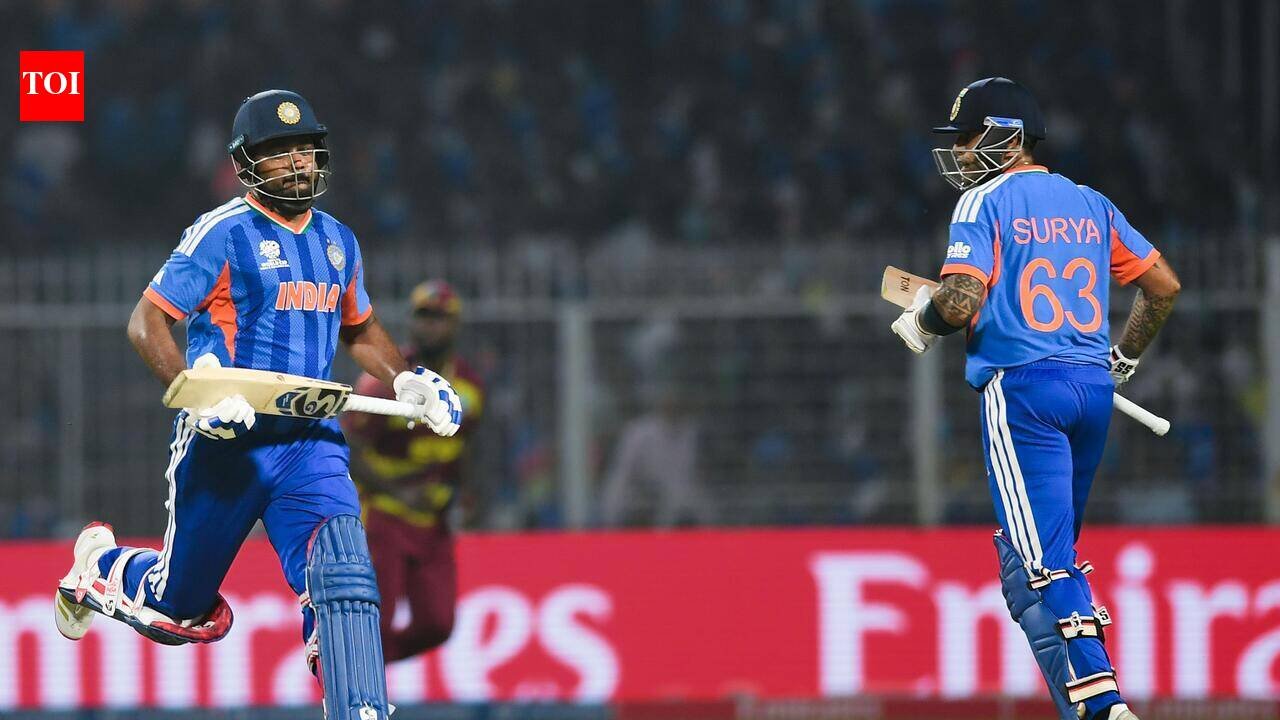
Sanju Samson and skipper Suryakumar Yadav run between wickets. (ANI Photo)

NEW DELHI: A night of reckoning at the Eden Gardens turned into a night of redemption for Sanju Samson, and skipper Suryakumar Yadav could not have scripted it better.Go Beyond The Boundary with our YouTube channel. SUBSCRIBE NOW!With India’s T20 World Cup Super Eight campaign hanging by a thread, Samson smashed an unbeaten 97 off 50 balls to power India to a five-wicket win over West Indies, sealing a semifinal berth. Under scrutiny after a lean run, Samson answered every question in style — and his captain made sure the world knew it.

T20 World Cup: Gautam Gambhir on Sanju Samson, Jasprit Bumrah and record chase vs West Indies

“Obviously, it’s a great feeling. The way we played, it was a do-or-die, like a quarter-final game, and the way the boys showed character, I think it was a great thing,” Suryakumar said after the match.But it was his heartfelt words on Samson that stole the spotlight.“See, I always say, good things happen to good people who wait, who have a lot of patience. I said it just now as well when I met him. But then it’s all his hard work, what he’s been doing behind the doors when he was not playing, and he’s got the fruit of it at the perfect stage. And the way he batted, took the side completely to victory.”Chasing 196 after West Indies posted 195/4 — powered by late fireworks from Jason Holder and Rovman Powell — India stumbled early to 41/2 in the powerplay. But Samson stood tall, blending timing with audacity. Small partnerships, especially a crucial 42-run stand with Tilak Varma (27 off 15), kept the chase alive.Suryakumar revealed the clarity in the dressing room. “I feel everyone bowled according to plans. We knew 200 is always a good score to chase here with the dew and the ball coming on nicely. And the way the batters responded later on with small partnerships, that was the key.”The skipper also addressed the mounting pressure. “Expectations will always be there, but you should always know what you have to do on the field. I told the boys that there will be pressure… but in games like this, you have to be courageous and take positive options whenever under pressure. When there’s no pressure, there is no fun.”Samson’s 97* is now India’s second-highest individual score in T20 World Cups, behind only Suresh Raina’s 101, and marks the first time he has remained unbeaten in a T20I chase.“Very happy to be there,” Surya smiled about the semifinals. “The way we played in the first game, we deserve that spot.”India next face England in the semi-final at Wankhede stadium in Mumbai on Thursday.


Source link

Gold, Silver Rate Today Live Updates: Gold climbs 2% on rising Middle East tensions; oil up 10%


“Gold and silver prices are expected to remain extremely volatile, with a likely gap-up opening on Monday as the Middle East conflict, involving renewed US and Israeli military action against Iran, continues to weigh heavily on global risk sentiment,” said Jateen Trivedi, VP Research Analyst – Commodity and Currency, LKP Securities.

He added that escalating hostilities and fading prospects of a swift diplomatic breakthrough are prompting investors to gravitate toward traditional safe-haven instruments such as gold and silver, increasing expectations of a strong opening in bullion markets.

“As pressure mounts on global equities and other risk-oriented assets, funds typically rotate into precious metals, which are viewed as a hedge during periods of uncertainty,” Trivedi said.

Meanwhile, domestic commodity markets will remain shut on Tuesday on account of Holi.


Source link

Pakistan, Venezuela & now Iran: Why Chinese-made weapons keep failing


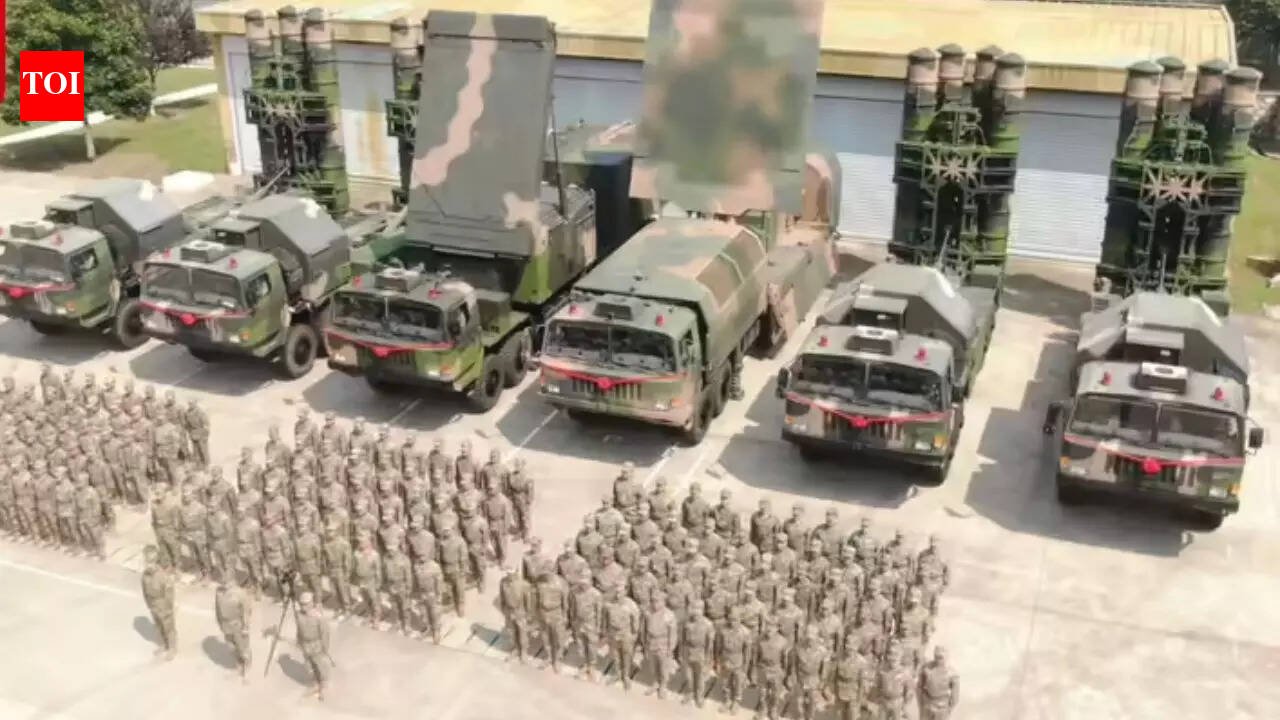
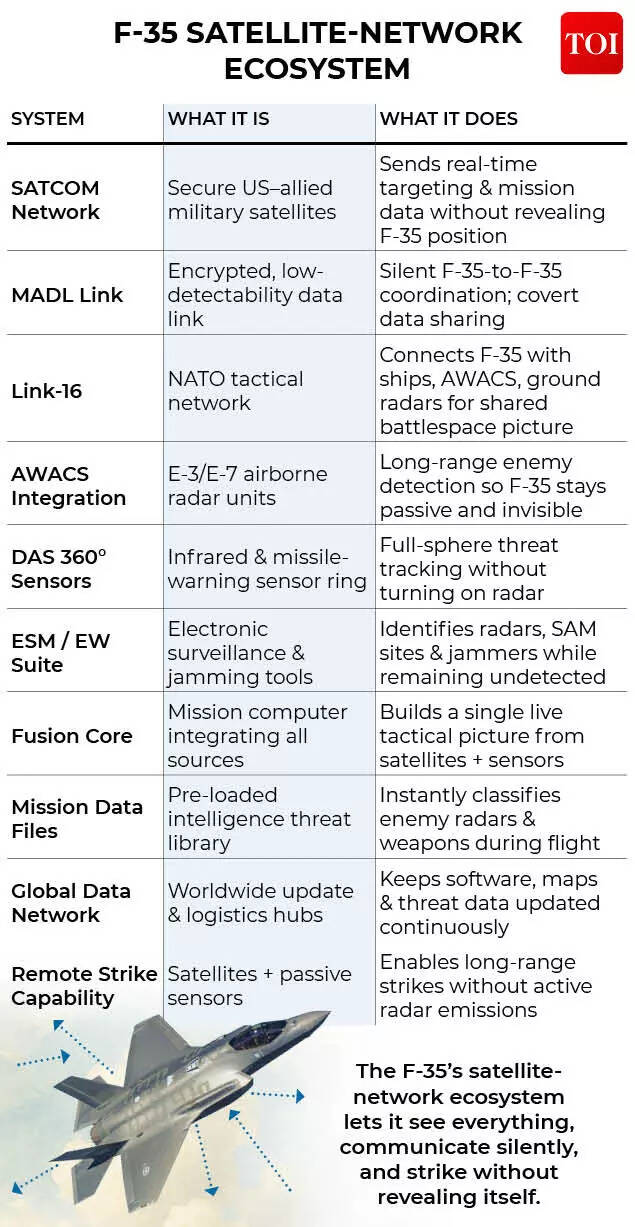
Chinese-manufactured weaponry — long touted as cheaper but equally powerful alternative to Western arsenals — has imploded spectacularly in recent conflicts.From India dismantling Pakistan‘s defenses during Operation Sindoor; America’s surgical raid snatching Venezuela’s Maduro; to US-Israeli strikes pulverising Iran’s shields, Beijing’s gear has proven inept. What was hyped as “battle-tested innovation” now reeks of shoddy engineering, weak software, and zero real-war grit.In Pakistan, Chinese-dependent forces watched helplessly as IAF BrahMos missiles shredded YLC-8E “anti-stealth” radars and HQ-9 batteries. Venezuela’s JY-27A radars and HQ-9s were blind during the US Delta Force extraction. Chinese-supplied HQ-9B defence systems in Iran crumbled against F-35 stealth barrages.
F35 gfx5

.

The repeated failures suggest that these aren’t mere glitches, but a sign of systemic rot.

Operation Sindoor: Piercing Pakistan’s Chinese shield

On May 7, 2025, India launched Operation Sindoor, retaliating against the horrific Pahalgam terror attack that killed 28 civilians. The Indian Air Force (IAF) executed precision strikes on nine Pakistani military bases — including Chunian, Rafiqui, Murid, and Sukkur — and terror camps linked to Jaish-e-Mohammed, using BrahMos supersonic cruise missiles and air-launched munitions without crossing the LoC. The 23-minute mission showcased India’s SEAD (Suppression of Enemy Air Defences) prowess, bypassing Pakistan’s Chinese-dominated defenses.Pakistan, sourcing 82% of its arms from China, deployed the YLC-8E anti-stealth radar at Chunian Air Base, 70km south of Lahore. China boasted that its radar has a 450km-detection range, and enhanced sensitivity for stealth targets like Rafales, and anti-jamming via frequency agility. Yet, IAF’s ELM-2090U Green Pine radars and Growler-like EW (electronic warfare) jammed it, enabling BrahMos missiles to obliterate the site undetected. Lahore’s HQ-9 SAM — mimicking Russia’s S-300 system — failed to engage, crippled by poor integration and EW vulnerability.Pakistan countered with Wing Loong-II MALE UAVs armed with AR-1 laser-guided missiles but India’s Akash-NG and MRSAM systems intercepted them mid-flight. A PL-15E air-to-air missile (export variant of China’s PL-15) fired by PAF JF-17s missed and was recovered intact by India. Fragments revealed flaws in the rocket motor and guidance system errors.These failures exposed Chinese tech’s core issues: Inferior stealth detection (YLC-8E hyped F-35 detection but faltered vs. decoys), sluggish software updates, and no real combat hardening. India’s indigenous air defence systems and electronic warfare dominance routed the Chinese-made systems. Operation Sindoor validated BrahMos’ low-altitude evasion (10m height) and multi-sensor fusion, eroding Beijing’s propaganda.

Venezuela: Maduro’s capture exposes Chinese weapons

In January 2026, the US unleashed “Operation Absolute Resolve,” a daring midnight raid in Caracas that snatched Venezuelan strongman Nicolás Maduro from his fortified presidential residence without firing a shot. Delta Force teams, inserted via stealth MH-60M Black Hawk helicopters, extracted the target amid a labyrinth of Chinese and Russian defenses — exposing Beijing’s arsenal as a house of cards. Venezuelan air defenses, bloated with hype but starved of competence, registered zero intruders despite a $2 billion+ investment in Chinese gear.The backbone of Venezuela’s air defence — Chinese JY-27A “meter-wave” anti-stealth radars — were blinded. These AESA arrays, meant to spot F-22s or F-35s buckled under EA-18G Growler electronic attacks. Growlers’ ALQ-99 pods and Next Generation Jammers exploited JY-27A’s sluggish frequency hopping. HQ-9 SAMs and shorter-range HQ-12s stayed mute; their illuminators couldn’t lock amid barrage jamming.Layered with rusty Russian S-300PMU-2 batteries, the network imploded. Over 60% of Venezuela’s 22 Chinese radars — procured since 2019 — were offline pre-raid due to Beijing’s stingy spares policy and zero on-site tech support. Corrosion, power surges, and untrained crews rendered JY-27V variants scrap. The raid also netted intact HQ-9 guidance sections. Analysis revealed that the detection system was too weak for advanced jammers and there was a fire-control software lag.

Trump‘s jab before Iran strikes

In his record-breaking 2026 State of the Union address, President Donald Trump mocked adversaries’ reliance on foreign tech. Referring to the operation in Venezuela, Trump said there was a “major military installation protected by thousands of soldiers and guarded by Russian and Chinese military technologies,” questioning, “How did that go for them?” Delivered amid rising tensions with Iran, the remark foreshadowed events, tying into prior failures like Pakistan’s.Trump’s rhetoric underscored perceived weaknesses in Chinese and Russian systems, boosting US confidence ahead of operations. While not naming Iran explicitly then, it aligned with his warnings on Tehran’s nuclear ambitions and missile threats.

Iran: HQ-9B Crumbles under US-Israel strikes

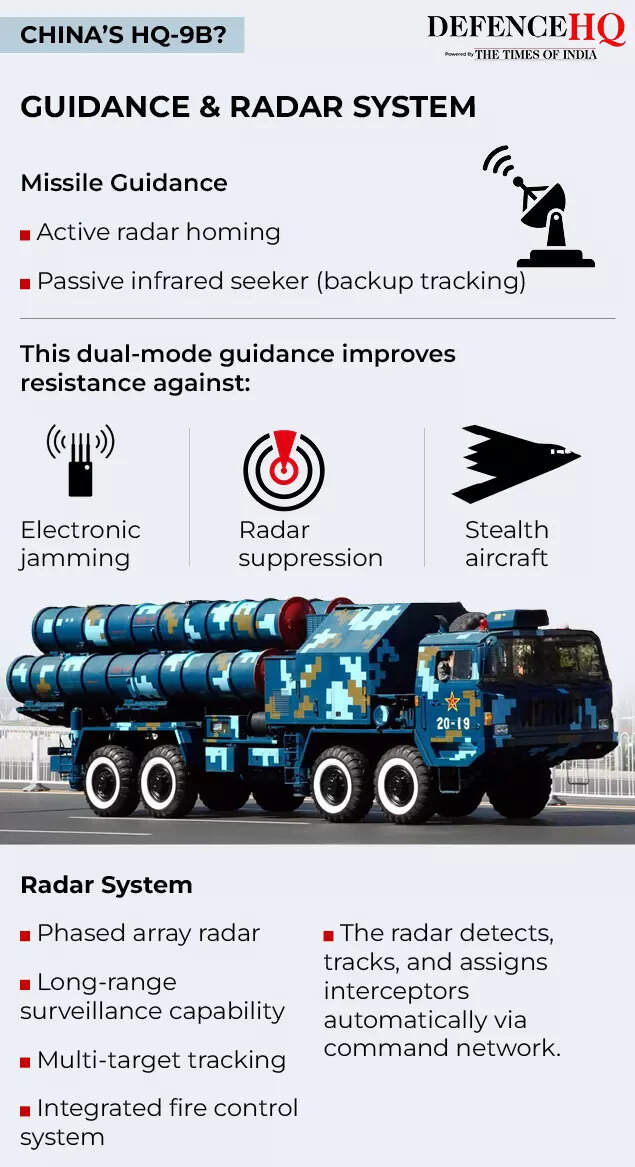
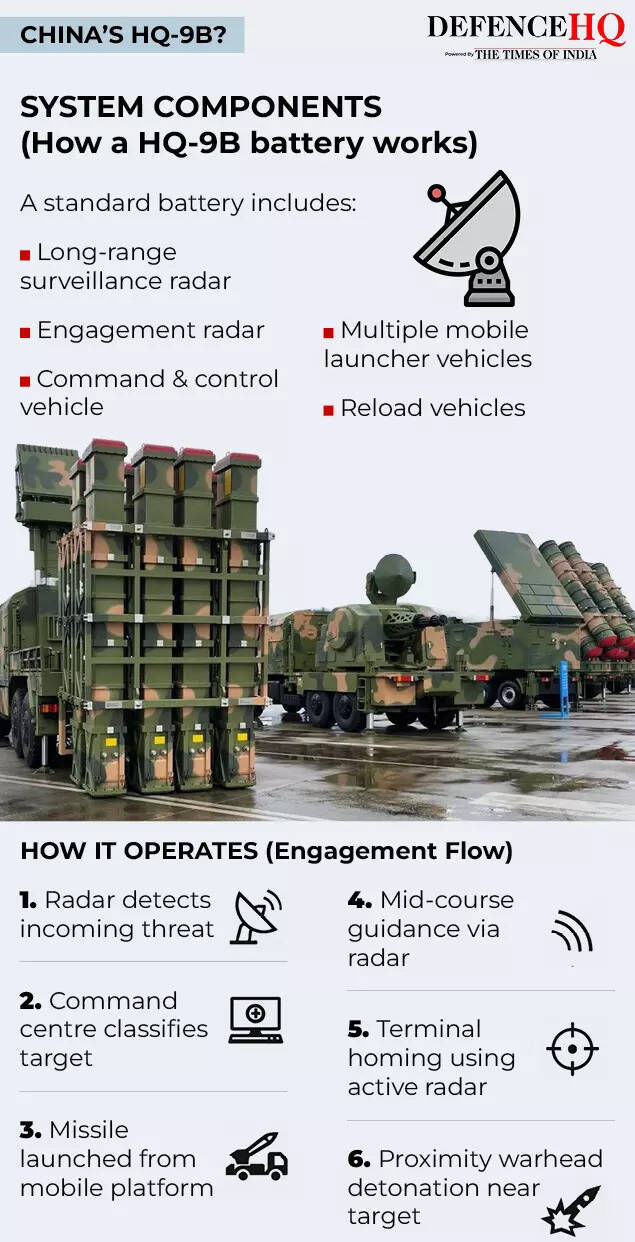
The ongoing US-Israeli airstrikes have further exposed falws in Chinese-made weaponry. Acquired in 2025 after Russian S-300s flopped against Israeli F-35s, China’s HQ-9B SAM — Beijing’s S-400 clone — promised 260km engagement range with active radar homing. Reality delivered humiliation: zero intercepts amid onslaught by stealth F-35s and AGM-158C LRASM stand-off munitions.The HQ-9B’s targeting seekers and two-stage rocket motors couldn’t cope with Israeli ALQ-322 jamming devices. Big holes in its radar coverage let stealthy F-35s get within 50 nautical miles undetected, due to weak side-radar cleanup and sluggish signal changes (stuck in rigid patterns). Sea-skimming Tomahawk missiles at 30m height slipped past blind spots from the HQ-9’s fixed launch positions.Poor system integration made things worse: Iran’s command centers lacked smooth data-linking like NATO’s, slowing handoffs from Bavar-373 radars (a homegrown copycat, untested) to Pantsir-S1 close-range defenses—taking 20 seconds to react versus the US Patriot’s 6 seconds. F-35s’ advanced radars spotted and locked enemy targeting first, guiding Rampage missiles that destroyed six batteries before launch. Wreckage showed the seekers’ jamming defenses were weak against US wide-band jammers (10-40GHz blasts), just like Pakistan’s HQ-9 failures in Operation Sindoor.US teams recovered HQ-9B fragments, exposing rocket motor inconsistencies and software bugs. These failures mirror Venezuela’s JY-27A blindness.

Why Chinese weapons keep failing

China, the world’s third-largest arms exporter, faces a credibility crisis. Sales to Pakistan (82% Chinese), Venezuela, and Iran highlight battlefield humiliations, deterring potential clients like Middle Eastern states. US dominance in stealth, EW, and precision strikes amplifies the gap.Chinese weapons prioritise export volume over battle-testing, lacking the rigorous trials of US or Russian counterparts. Design flaws, like HQ-9’s radar vulnerabilities, make them easy targets for jamming and anti-radiation missiles. Poor integration hinders multi-layer defenses, as seen in all three cases.

CHINA’S HQ-9B3

Maintenance issues further plague users. Venezuela’s radars failed from parts shortages, while Pakistan and Iran struggled with operator training. Chinese tech lags in electronic warfare resistance and stealth detection against fifth-gen threats. These shortcomings erode buyer confidence, prompting shifts away from Beijing.
CHINA’S HQ-9B4

.

Allies like Russia, strained by Ukraine, leave China exposed. Future deals may demand upgrades, but unproven claims risk further embarrassments.




Source link

Mushfiqur Rahim struck in Jeddah after Israel and US strike Iran


Bangladesh cricket legend Mushfiqur Rahim has been left stranded at King Abdulaziz International Airport in Jeddah, after US and Israeli military strikes on Iran triggered widespread airspace closures and flight cancellations across the Gulf region. The star wicketkeeper-batter, returning home after performing Umrah in Makkah, shared an emotional social media post describing the anxiety and uncertainty facing thousands of stranded passengers.

Mushfiqur Rahim flight turned back mid-air as regional airspace closes

Rahim completed his pilgrimage in Makkah and was scheduled to return to Dhaka via Dubai on Saturday (February 28), aboard Emirates flight EK 0806. However, shortly after departure from Jeddah, the flight was forced to turn back as regional airspace became restricted following the escalation of hostilities.

The United States and Israel launched major combat operations against Iran on Saturday, with US President Donald Trump announcing that the objective “is to defend the American people by eliminating imminent threats” from Iran . The Israeli Defense Ministry described the action as a “pre-emptive” strike against Iran “to remove threats to Israel,” involving some 200 fighter jets in what military officials called the largest flyover in Israeli Air Force history .

Iran swiftly retaliated with counterattacks against Israel and US targets across the region, with explosions reported in Bahrain, Qatar, Kuwait, Jordan, the United Arab Emirates and Saudi Arabia. At least 201 people were killed and 747 injured in the strikes on Iran, with up to 160 casualties reported from an airstrike on a girls’ school in southern Iran alone.

“Only Almighty Allah knows when we will return”: Mushfiqur Rahim’s emotional post

Taking to Facebook to share his ordeal, the 38-year-old former Bangladesh captain wrote: “Assalamu Alaikum. A few days ago, I came to Makkah to perform Umrah. Alhamdulillah, after completing Umrah, I was scheduled to return to Bangladesh today by Emirates via Dubai.” 

He continued, describing the moment his journey was interrupted: “We have flown this morning from Jeddah to Dubai via EK 0806 but unfortunately due to the war between USA, ISRAEL AND IRAN all the flight has return to Jeddah and now i am in jeddah airpot including thoushand of passengers.” 

The post reflected the helplessness felt by thousands in similar situations: “Only Almighty Allah knows when and how we will able to go to Dhaka along with other Bangladeshi people. I seek your prayers.” 

Also READ: Bangladesh Cricket Board unveils central contracts for the 2026 season

Bangladesh Government monitoring the situation in Middle-East

State Minister for Youth and Sports Aminul Haque confirmed that authorities are closely monitoring Rahim’s situation. Speaking to journalists after inspecting Kamalapur Stadium in Dhaka, the minister provided an encouraging update: “I am well aware of Mushfiqur Rahim’s situation. I have already spoken with him. He is in good health and is expected to depart tonight on an available flight. We hope he will return to the country soon.” 

Rahim is not alone among cricket personalities caught in the regional disruption. England Lions coach and former wicketkeeper Jonny Bairstow also found himself stranded in Abu Dhabi.

Also READ: Jonny Bairstow stuck in Abu Dhabi amid Iran-Israel & US tensions, seeks help


Source link