Breaking News
PMO seeks third-party audits for road, rail projects; highway ministry asked to study GQ-era construction | India News


PMO seeks third-party audits for road, rail projects; highway ministry asked to study GQ-era construction

New Delhi: Amid the increased pace of construction and the laying of new road and rail corridors, the PMO has directed the road transport and railway ministries to introduce independent third-party audits to ensure high-quality work. They have also been asked to eliminate delays in project execution.TOI has learnt that PM Narendra Modi has also asked the road transport ministry to study Golden Quadrilateral-era construction practices, taking note of why there were very few quality-related complaints during the execution of the country’s first flagship highway development programme.PMO has also suggested that the ministry study the practice of third-party independent audits in Indonesia, which has institutionalised the mechanism to improve quality and accountability in large infrastructure projects. Last year, Malaysia too introduced “external audits” for the purpose.Both ministries have been directed to take measures for faster movement of trains and vehicles on their corridors, considering the high investment being made in these sectors. As per the directives, road ministry will identify constraints and gaps that result in average speed of freight trucks on high-speed corridors being around 50 kmph as against the desired speed of 70 kmph and address them. Similarly, railways will set phased targets for increasing train speed on corridors from 110 kmph to 130 kmph and further to 160 kmph and above 200 kmph.Officials involved in highway projects admitted the need to focus on quality issues considering that the next phase of highway development will have more expressways and economic corridors for faster movement of freight and passengers.They added that ministry has already identified issues relating to quality and started the process to address them. Revising the timeline for construction of highways in contract documents from the current 2-2.5 years to three years and doing away with the provision of bonus to contractors for early completion of works are some of the first steps being taken.Engineers who have been involved in both GQ and current highway projects said that though the scale of construction during that phase was lower, the monitoring of material and work quality was stringent. “The authority engineers and consultants were mostly from abroad, and they wouldn’t compromise on quality. There were big and credible highway builders, and even govt engineers were strict when it came to quality,” said a former NHAI member.In fact, the chief of a major highway construction firm, while participating in a meeting on quality improvement chaired by top officials, had shared how govt engineers and consultants wouldn’t budge on any pressure to compromise on quality during implementation of GQ.“Objective and strict monitoring of quality of material and construction by field staff is the only solution. We must give enough time for preparation of project reports and construction rather than rushing for completion,” said an official overseeing the sector.A former director general of roads said the quality of construction has taken a backseat with the sudden increase in number of highway builders, including many that were earlier into subcontracting and maintenance contracts.“Good engineers and independent consultants supervising projects face pressure from different quarters over being strict and often contractors complain against them. There should be clarity — that the authorities will not spare those into mischief-making and will stand by competent govt employees and consultants. We also need to have more credible quality testing agencies that don’t compromise at any cost,” he added.

PM Modi Unveils Seva Teerth, A New PMO Hub Marking Governance Shift In National Capital Delhi


Source link

Angel Reese: Angel Reese sends heartfelt message after brother Julian Reese signs inspiring two-way deal with Washington Wizards | NBA News


Angel Reese sends heartfelt message after brother Julian Reese signs inspiring two-way deal with Washington Wizards
Angel Reese posts heartfelt message as brother Julian Reese makes NBA Summer League debut (Image Source: Getty Images)

The Washington Wizards will host the Toronto Raptors at home on Saturday night in Washington, D.C. The Wizards have just lost to the Atlanta Hawks twice in a row. In the meantime, the Wizards announced the signing of a new player prior to their game against the Raptors on Saturday.Julian Reese is finally returning home after making his professional debut with the Toronto Raptors franchise. WNBA player Angel Reese’s younger brother, Julian, played for the University of Maryland, which is located close outside of Washington, for four seasons in college. WNBA player Angel Reese now posted a message for her brother in response to the news.

Angel Reese celebrates brother Julian Reese’s achievement after Washington Wizards two-way signing

The Washington Wizards have signed rookie forward Julian Reese to a two-way contract. Reese has been a mainstay of Toronto’s G League affiliate, the Raptors 905, this season. Through the PR for the Washington Wizards: “The Washington Wizards announced today they have signed forward Julian Reese to a two-way contract. Reese (6-9, 230) has appeared in 39 games for the G League’s Raptors 905 this season, averaging 7.8 points and 7.0 rebounds in 17.2 minutes per game.”When Julian Reese got a contract with the Washington Wizards, his big sister gave him a shoutout. Angel Reese said on X, “so proud of you!” after the Wizards revealed on Saturday that Reese had agreed to a two-way contract.She wrote:“My baby brother Ugh I’m so proud of you! Your journey has never been easy & you’ve always stayed the course! Let’s go Juju! @Reese10Julian..”With 38 appearances this season, the 22-year-old from Baltimore ascended swiftly up the depth 905’s depth chart, averaging 7.9 points, 7.2 rebounds, and 1.1 assists on 17.2 minutes per game. Reese finished second in total rebounds and topped the Raptors 905 in both offensive and average field goal %.In 2025, Julian, then 22 years old, was not selected out of Maryland. In October, he agreed to an Exhibit 10 deal with the Toronto Raptors.Reese averaged 7.8 points and 7.0 rebounds in 39 games with the Raptors’ G League club. Over the last six weeks of the regular season, he will probably have the opportunity to play a big role for the Wizards in the NBA.

Julian Reese eyes NBA debut as Angel Reese continues to show support

Reese played collegiate basketball at Maryland, where he shot 55.7% from the field and 29.2% from three-point range in 134 games, averaging 11.1 points, 7.6 rebounds, 1.0 assists, and 1.3 blocks per game.Josh Robbins of The Athletic wrote: “The Wizards’ expectation is that Julian Reese, whose two-way contract became official today, could be in uniform as early as Tuesday’s game in Orlando. Reese, a 6-foot-9 big, attended Baltimore’s St. Frances Academy and the University of Maryland & is the brother of Angel Reese.”Teams can keep a player active with the NBA club for up to 50 games under a two-way deal. This season, the Wizards have just 24 games left. When the Wizards play the Raptors at Capital One Arena on Saturday night, Reese might make his NBA debut against his previous parent organization.As she recently rejoined Unrivaled to play for the rest of the Rose BC squad, Angel expressed her admiration for her brother. The Chicago Sky star lost to Phantom BC on Friday, scoring 17 points.


Source link

‘Ignoring messages, made me insecure’: Bengaluru woman stabs gym trainer after he stopped taking calls | Bengaluru News


BENGALURU: Police at Bidadi station were stunned Thursday night when a 30-year-old woman walked in and calmly confessed to stabbing her former boyfriend with a kitchen knife.The woman, identified as Sudha, reportedly told police officers in a casual tone: “He could be dead now; his intestines had come out during the attack.”

Bengaluru: Flyers’ Protest, By-poll Battles, Law Enforcement Actions & More

Sudha was taken into custody and a police team rushed to the victim’s residence at Silk Farm, Bidadi. They found 26-year-old Venugopal, a gym trainer, suffering from severe stab wounds in his abdomen and hands. He was rushed to a nearby hospital where doctors said he is stable and responding to treatment.Sudha, a private firm employee, was arrested on charges of attempted murder and remanded in judicial custody at Ramanagara district prison. Sudha said she and Venugopal were in a relationship for two years. “But Venugopal started ignoring me, which made me insecure,” Sudha told investigators, adding: “For the last 10 days, he stopped taking my calls or replying on WhatsApp. I suspected he was seeing someone else.Sudha went to his house Thursday night and when Venugopal attempted to walk away, she attacked him with a kitchen knife she had brought from her home.


Source link

Fans raise questions over Shimron Hetmyer’s controversial dismissal in IND vs WI Super 8 clash at T20 World Cup 2026


In a high-voltage Super 8 encounter of the T20 World Cup 2026 between India and West Indies, the spotlight was not only on the explosive batting display but also on a controversial dismissal that triggered a heated debate online. After India won the toss and elected to bowl first, the Caribbean side responded in commanding fashion, piling up 195/4 in their 20 overs. However, Shimron Hetmyer’s dismissal off Jasprit Bumrah became the major talking point of the evening.

West Indies delivered a powerful batting performance, with multiple batters chipping in at crucial moments. Roston Chase anchored the innings with a fluent 40, while Shai Hope added a steady 32 at the top. The real acceleration came towards the end, as Rovman Powell (34 not out) and Jason Holder (37 not out) provided the finishing touches, launching an assault in the death overs to push the total close to the 200-run mark.

Jasprit Bumrah strikes but controversy follows

The turning point — and the moment of controversy — came when Bumrah bowled to Hetmyer. It was a short-of-length delivery angling across the left-hander. Hetmyer attempted to slog across the line but appeared to miss. The ball was collected cleanly by Sanju Samson behind the stumps, and Bumrah immediately went up in appeal.

On-field umpire Chris Gaffaney raised his finger, adjudging Hetmyer caught behind. The West Indies batter looked uncertain and opted for the review. The third umpire carefully examined the UltraEdge replay. The technology showed a spike as the ball passed the bat, and the decision was upheld. “Clear spike with the ball on the bat,” remarked the third umpire while confirming the dismissal.

Despite the technological backing, the decision did not sit well with a section of fans.

Within minutes, social media platforms were flooded with reactions. Some fans argued that there appeared to be a visible gap between the bat and ball in the replay. They questioned the spike on the snickometer and assumed the ball did not make contact with the willow.

Several users shared slowed-down clips and screenshots, claiming the evidence was inconclusive. Others defended the decision, pointing out that UltraEdge has been a reliable tool throughout the tournament and that the spike aligned with the ball’s passage past the bat.

The debate quickly gained traction, with opinions sharply divided. While many backed the third umpire’s reliance on technology, others felt the benefit of doubt should have gone to the batter in such a high-stakes Super 8 fixture.

Also WATCH: Sikandar Raza cleans up Aiden Markram with a carrom ball stunner in ZIM vs SA T20 World Cup 2026 clash

Here’s how fans reacted

Also READ: T20 World Cup 2026: Here’s why Brandon King is not playing today’s IND vs WI Super 8 match


Source link

India vs West Indies Live Score, T20 World Cup 2026: Sanju Samson’s heroics lead India to semi-finals


As anticipation builds for this winner-take-all clash, Samuel Badree and Matthew Hayden perfectly captured the electric atmosphere surrounding the contest. With a semifinal spot on the line, the tension is unmistakable. The weather is ideal, the stands are buzzing, and the venue looks magnificent under the lights. Everything is set for a blockbuster.

They highlighted that this is traditionally a high-scoring ground, one that rewards bold stroke play. From the clubhouse end, the straight boundary measures 73 metres, while the square boundaries are almost equal on both sides, offering balance for both right- and left-handed batters.

The dimensions encourage big hitting, and plenty of sixes have already been struck here during the tournament. However, it’s not just about clearing the ropes. The outfield is among the fastest in world cricket, meaning well-timed shots along the ground can race away just as quickly. Placement and timing will be as valuable as raw power.

Turning to the pitch, both commentators were impressed with its quality. There is healthy, living grass on the surface, but it is not overly dry. One end appears slightly drier with marginally less grass coverage, which could offer subtle variations for bowlers willing to adapt. Overall, though, the surface looks excellent for batting.

Badree and Hayden described it as a “six-hitting paradise,” a strip designed for aggressive cricket. Both teams have already shown their ability to dominate in the powerplay and middle overs, particularly the West Indies, who have made strong use of fresh surfaces earlier in the tournament.

With perfect weather, true bounce, and lightning pace off the bat, all signs point toward a high-octane showdown. If the pitch plays as expected, fans could be treated to a run-fest where fearless stroke play takes center stage.


Source link

Ban, regulate or reform? Social media & under-15s – The India question | India News


Ban, regulate or reform? Social media & under-15s – The India question

At 9, Aahana checks her mother’s phone before brushing her teeth. By the time she leaves for school in Gurugram, she has scrolled through multiple short-video feeds, probably texted in two group chats. Her mother says she worries about how much she is engaged now to what happens on a screen.Across India’s cities and small towns, this scene is no longer unusual. Smartphones are often handed to children before they enter their teens, at times when they are toddlers. Social media accounts, sometimes created despite platform age limits, follow soon after. What began as a tool for communication has become an ecosystem where friendships, validation and identity increasingly take shape.

.

Australia Enforces World’s First Under-16 Social Media Ban, Sparks Global Debate| Global Pulse

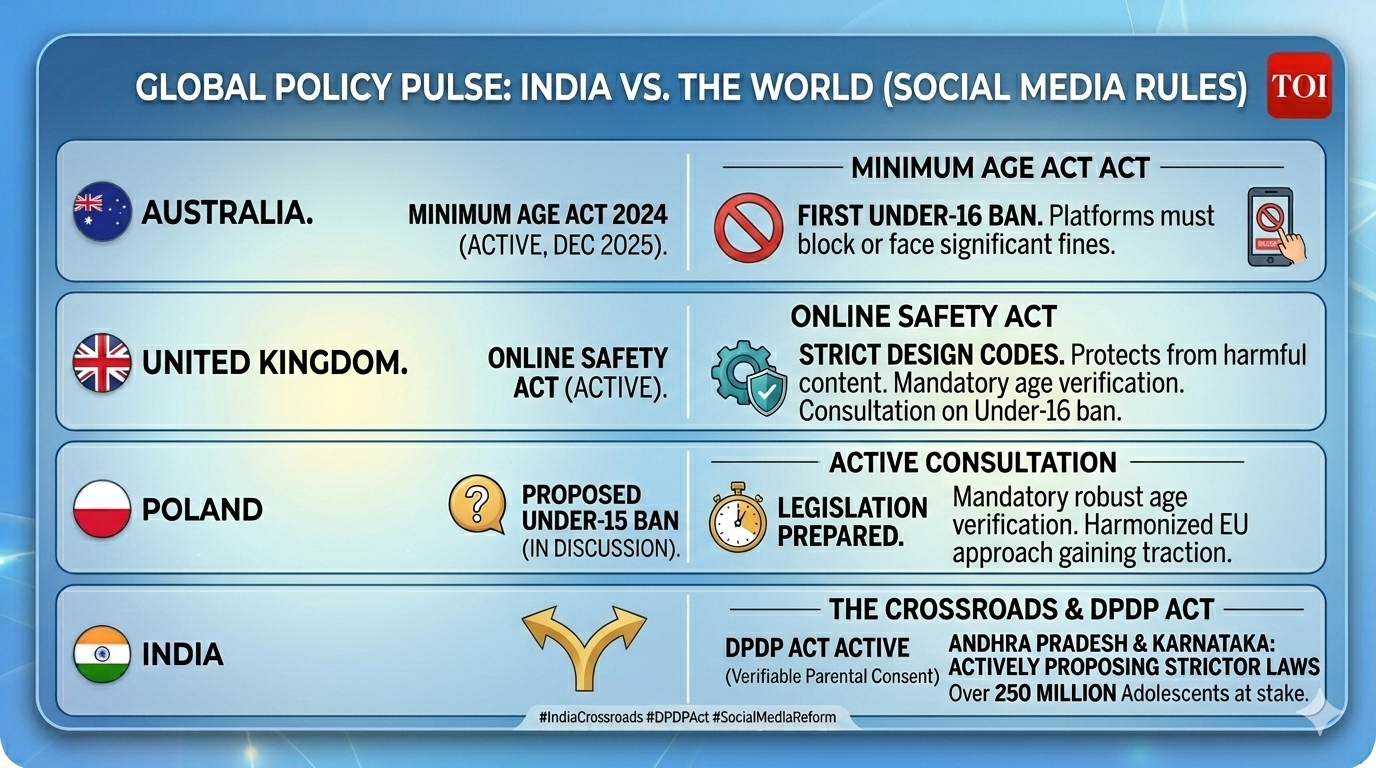
Now, as countries from Australia to the United Kingdom tighten digital safety norms for minors, India faces a policy crossroads: confronting a difficult question: should social media platforms be off-limits for those under 15? The debate is no longer theoretical, rather have shifted from anecdotal parental anxiety to a public health and regulatory conversation backed by research. Mental health professionals are reporting patterns. Concerns around screen addiction, online bullying, harmful content and declining mental health indicators among adolescents have pushed policymakers to study global precedents worldwide to consider stricter age-gating laws. In India, home to over 250 million adolescents and one of the world’s largest internet user bases, the stakes are significantly higher. For millions of Indian children, the smartphone is no longer a device of privilege but of routine. Classrooms moved online during the pandemic. Friendships migrated to messaging apps. Entertainment, identity formation and peer validation increasingly unfold through short videos and algorithm-driven feeds. Yet, alongside opportunity lies unease: how much exposure is too much, and at what age? The question is no longer whether social media affects children. It is whether prohibition is the answer, or whether regulation, design reform and digital literacy can achieve better outcomes.

Global regulatory shifts: A growing policy trend

Governments have begun responding to mounting evidence linking heavy social media use to mental health challenges among adolescents. And in effect have moved toward stronger age restrictions on social media use.In Australia, the government has moved from debate to implementation. The Online Safety Amendment (Social Media Minimum Age) Act 2024 took effect on 10 December 2025, making Australia the first country to ban social media accounts for users under 16, with platforms required to take “reasonable steps” to block access or face significant fines. Early evaluation of the law’s impacts, on youth wellbeing, family dynamics and usage patterns, has begun, with findings to be published through 2026 and beyond. In the United Kingdom, the Online Safety Act continues to impose stricter obligations on platforms to protect children from harmful or explicit material and enforce age-appropriate design. Regulators have fined major services for failing to adequately verify users’ ages, and the government is now consulting on potentially raising age restrictions or even exploring a formal under-16 ban after Australia’s example. Elsewhere in Europe, several countries are actively pushing similar measures. Poland’s ruling party is preparing legislation to ban social media for children under 15 and mandate robust age verification, while France, Denmark and other EU states are debating or enacting age limits between 15–16 years. Efforts toward a harmonised EU approach are gaining political traction amid rising concern over youth mental health, as reported by Reuters.

.

In the United States, the picture remains complex and contested. Multiple state laws aimed at age verification, parental consent or outright limits on minors’ social media use have been introduced. Notably, a Virginia law that would have limited under-16 usage to one hour daily and required age checks was blocked by a federal court in February 2026 for infringing constitutional speech rights, illustrating the legal challenges such measures face. While outright bans are still uncommon and legally fraught in the US, the direction of travel is clear: policymakers are increasingly shifting accountability from families to technology companies through design rules, verification obligations, and platform-level safeguards.The global policy shift is emphasised by mounting research linking heavy social media use among adolescents to anxiety, depression, sleep disturbances and body image issues, concerns now cited widely on public health grounds rather than purely moral arguments.For India, observing these global experiments offers both cautionary and instructive lessons. Enforcement challenges, the privacy implications of stringent age verification, and constitutional protections around free speech and access to information complicate the feasibility of blanket prohibitions. Ongoing debate reflects these tensions, with commentators urging a balanced focus on digital literacy, safer defaults, and family-oriented safeguards rather than top-down bans alone.

The impact of social media on children: Evidence and counterpoints

Screen time, mental health and behavioural risks

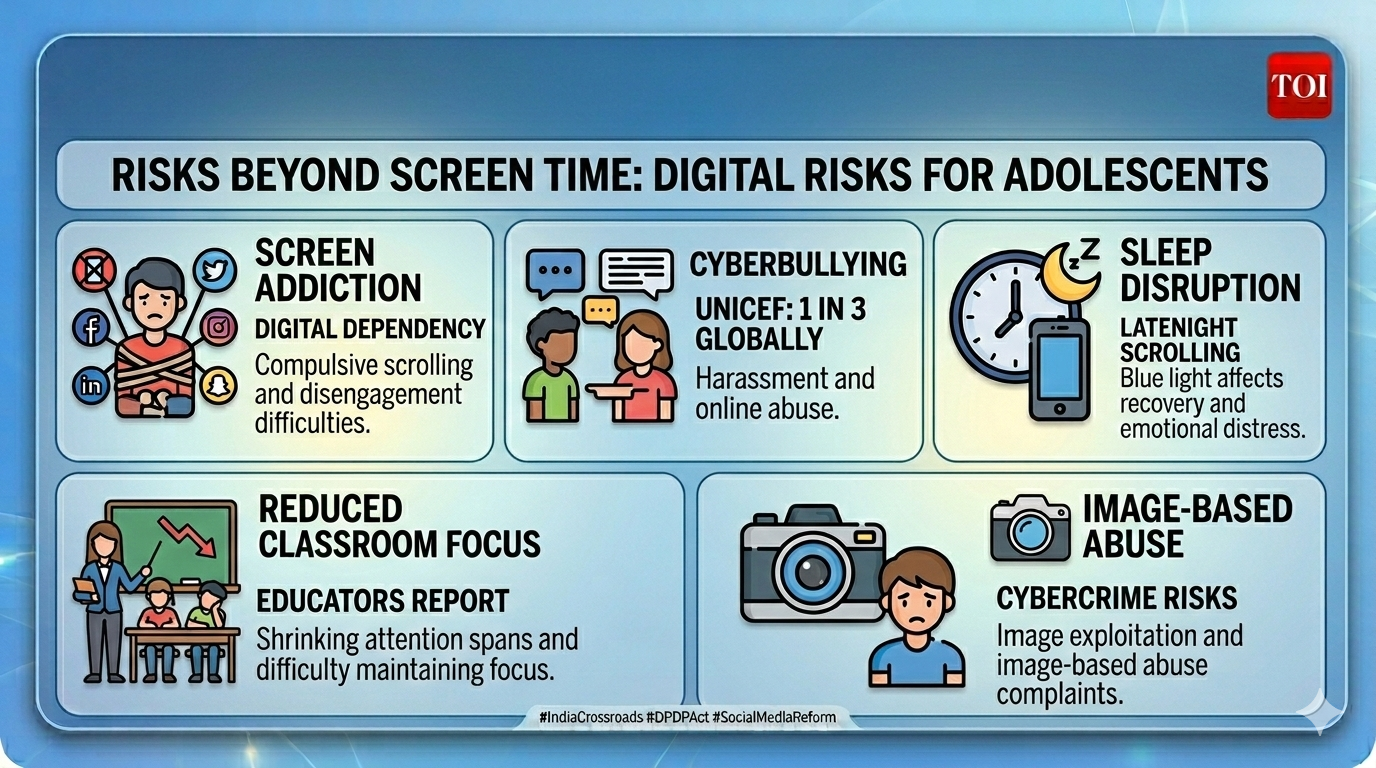
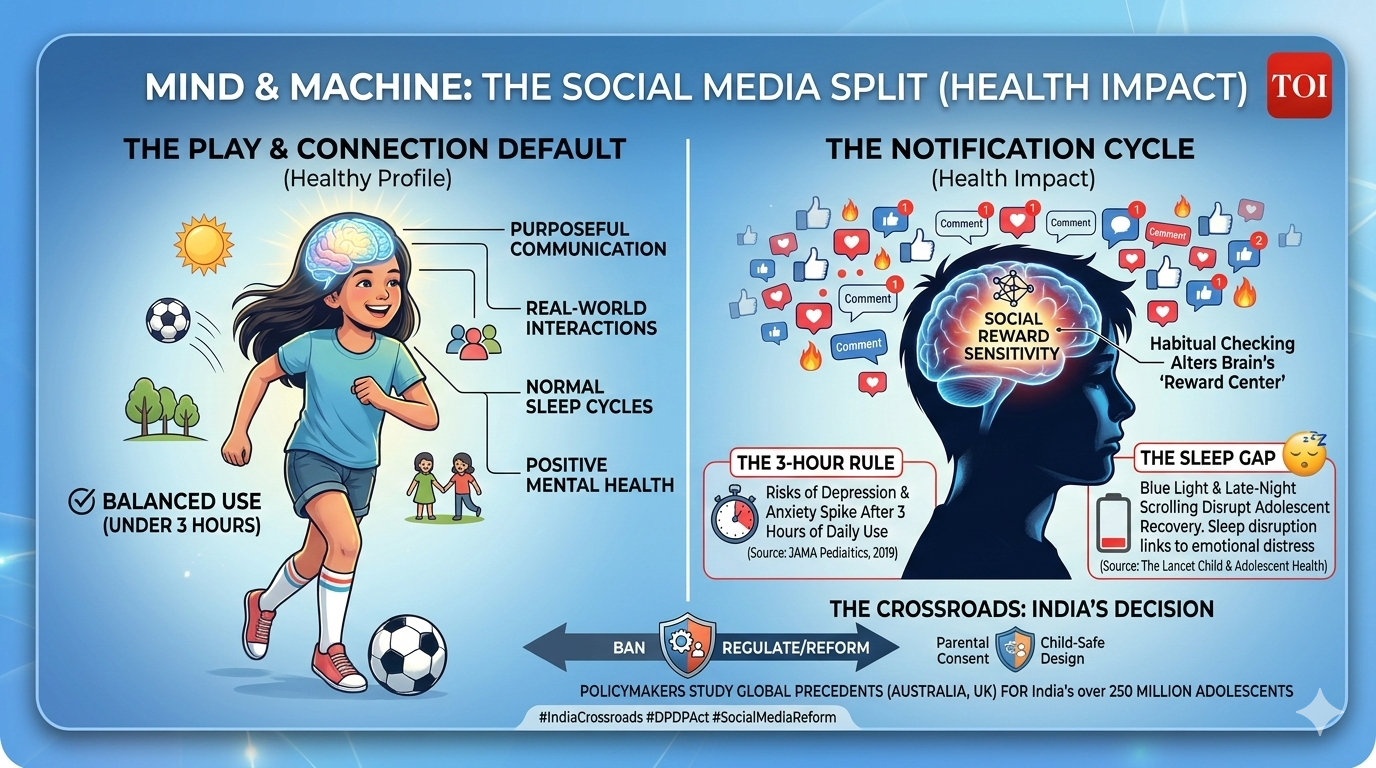
Research has consistently flagged correlations between excessive social media use and adverse psychological outcomes in adolescents.A 2019 study published in JAMA Pediatrics tracked nearly 6,600 adolescents and found that those spending more than three hours a day on social media faced a significantly higher risk of mental health problems, particularly internalising symptoms such as anxiety and depression.In 2023, another study in the same journal reported that habitual checking of social media was associated with changes in brain development patterns related to social reward sensitivity in early adolescence. While researchers cautioned that correlation does not prove causation, they noted measurable neural differences in frequent users.Similar research published in The Lancet Child & Adolescent Health has found that heavy social media use among teenage girls was associated with poorer sleep, lower self-esteem and higher rates of depressive symptoms. Sleep disruption emerged as a key pathway linking screen exposure to emotional distress.

.

The WHO has flagged problematic digital use as a growing behavioural concern, noting associations with sedentary lifestyles, cyberbullying and compulsive use patterns.Dr Rhea Mehra, a Delhi-based child psychiatrist, says she has observed a steady increase in digital dependency cases among children aged 11 to 15. “We are seeing children who struggle to disengage from their devices, whose mood fluctuates based on online interactions,” she says. “In some cases, sleep cycles are severely disrupted because screen time extends past midnight (when left unchecked).”She adds that early adolescence is a vulnerable developmental stage. “Impulse control and emotional regulation are still developing. Social media platforms are designed around instant feedback and comparison, which can amplify insecurities.”

Cyberbullying and exposure risks

The risks are not limited to screen duration.A UNICEF report has highlighted that one in three young people globally reports experiencing cyberbullying. In India, cybercrime data show increasing complaints involving minors, including harassment and image-based abuse.Parents recount similar concerns. “It’s not just about time,” says Mohit, a Delhi-based father of an 11-year-old. “It’s about what they are seeing. There are trends and challenges that can be dangerous. And sometimes we don’t even know what’s circulating in their groups.”Another parent, Prathamesh Singh from Pune, says monitoring has become a daily task. “You don’t want to invade privacy, but you can’t be completely hands-off either. It’s a constant balancing act.”

.

Academic and developmental concerns

Educators report shrinking attention spans and difficulty maintaining classroom focus. Studies have linked excessive device use to reduced academic performance, though causation remains debated.Dr Mehra notes, “Some children show signs of reduced face-to-face social skills. They are comfortable online but anxious in real-world interactions.”

The counterpoint: Not all use is harmful

Research also cautions against sweeping conclusions.Studies have shown that moderate, purposeful use, such as communicating with known peers, does not uniformly predict poor mental health. For some adolescents, online communities provide support, particularly for those who feel isolated offline.The American Psychological Association has stated that the impact of social media depends on content, duration and individual vulnerability factors.“Blanket demonisation of technology is not helpful,” Dr Mehra says. “The question is how it is used, at what age and with what safeguards.”

India’s regulatory landscape: What exists

India does not currently ban social media for minors under 15. Most platforms prohibit users under 13, consistent with global standards, but enforcement relies largely on self-declared age.The Digital Personal Data Protection Act, 2023, mandates verifiable parental consent for processing children’s data and places obligations on data fiduciaries to protect minors’ information.The IT Rules, require intermediaries to remove unlawful content and establish grievance mechanisms. However, age verification remains technically and administratively complex. India’s vast user base, with hundreds of millions of internet subscribers, makes enforcement challenging.Legal experts also note that any outright ban would have to withstand scrutiny under constitutional protections related to speech and access to information, as interpreted by the Supreme Court of India.Enforcement, however, is India’s perennial challenge. With millions of new internet users each year and widespread access to shared devices, age-based prohibitions could prove difficult to implement uniformly. Rural-urban divides, digital literacy levels and socio-economic disparities further complicate the regulatory equation.

Should India impose a ban?

Among parents of children under 15, opinion is divided.Those advocating a ban argue that children under 15 lack the cognitive maturity to navigate algorithm-driven ecosystems designed for engagement maximisation. Some favour stricter age barriers, citing distraction, exposure to inappropriate content and peer pressure. Others worry that an outright ban would push usage underground, making monitoring harder.

.

Parents describe a daily negotiation: balancing academic needs with leisure use, setting screen-time limits and modelling digital discipline themselves. Many acknowledge that devices have become integral to schooling and social belonging, making complete prohibition unrealistic.“Regulation has not kept pace with platform design,” says Dr Mehra. “Younger adolescents are particularly susceptible to peer comparison and online validation cycles.On the regulation front, the argument in policy circles is also that, don’t wait for regulations, as current regulations are neither adequate, nor sufficient, nor can be termed as over -regulations.Parents like Mohit support stricter age thresholds. “If there was a clear law, it would make it easier for parents to say no,” he says. However, critics question feasibility. Children may bypass age checks using older relatives’ credentials. Overly intrusive verification could compromise privacy. And educational, creative and social benefits may be curtailed. Prathamesh believes prohibition could backfire. “If you ban it outright, they will find workarounds. It might push things underground.”Public health experts increasingly suggest a layered approach rather than an absolute ban.Child psychiatrists in metropolitan centres report an uptick in consultations linked to excessive gaming, social media dependency and anxiety triggered by online comparison. At the same time, mental health professionals caution against attributing complex psychological issues solely to social media. Family dynamics, academic stress, urban isolation and pandemic after-effects also play substantial roles.

What India could consider

Borrowing from the UK’s age-appropriate design code, India could mandate that platforms default minors to private accounts, disable targeted advertising, remove public follower counts for young users, and limit algorithmic amplification of sensitive content. This approach shifts focus from access to environment.There is also a case for time-bound restrictions rather than outright bans, for instance, limiting usage hours for verified minor accounts or mandating built-in digital well-being tools. However, such measures depend heavily on platform cooperation and technical integration.Digital literacy is another lever. Experts argue that equipping children with critical thinking skills, teaching parents to set boundaries, and integrating online safety modules into school curricula may prove more sustainable than prohibition. The ministry of education’s ongoing digital awareness programmes could be expanded to include structured modules on cyberbullying, misinformation and privacy.

The constitutional and social balancing act

Any move toward a ban would likely invite legal scrutiny. Access to the internet has been described by courts as integral to freedom of expression and trade in certain contexts. While reasonable restrictions to protect minors are permissible, proportionality would be tested.India’s demographic reality adds complexity. A large chunk of its population is under 18. A uniform prohibition for under-15s could affect tens of millions of users, a scale unmatched by most Western nations experimenting with similar policies. Socio-economic context matters too. For children in resource-constrained settings, free digital platforms often double as learning tools, networking spaces and gateways to opportunities. Restrictive policies could inadvertently widen inequality if alternative safe platforms are not simultaneously developed.

Policy options include:

Public health experts increasingly advocate a layered approach:

  • Stronger age-verification systems, balanced against privacy concerns.
  • Age-appropriate design mandates, such as disabling targeted ads for minors and limiting algorithmic amplification.
  • Increase transparency in algorithms that recommend content to young users.
  • Default privacy settings for verified minor accounts.
  • Enforce stricter data protection norms for minors.
  • Strengthen reporting mechanisms for cyberbullying and harmful material.
  • Invest in digital literacy education for both children and parents.
  • Clearer parental control frameworks built into platforms.

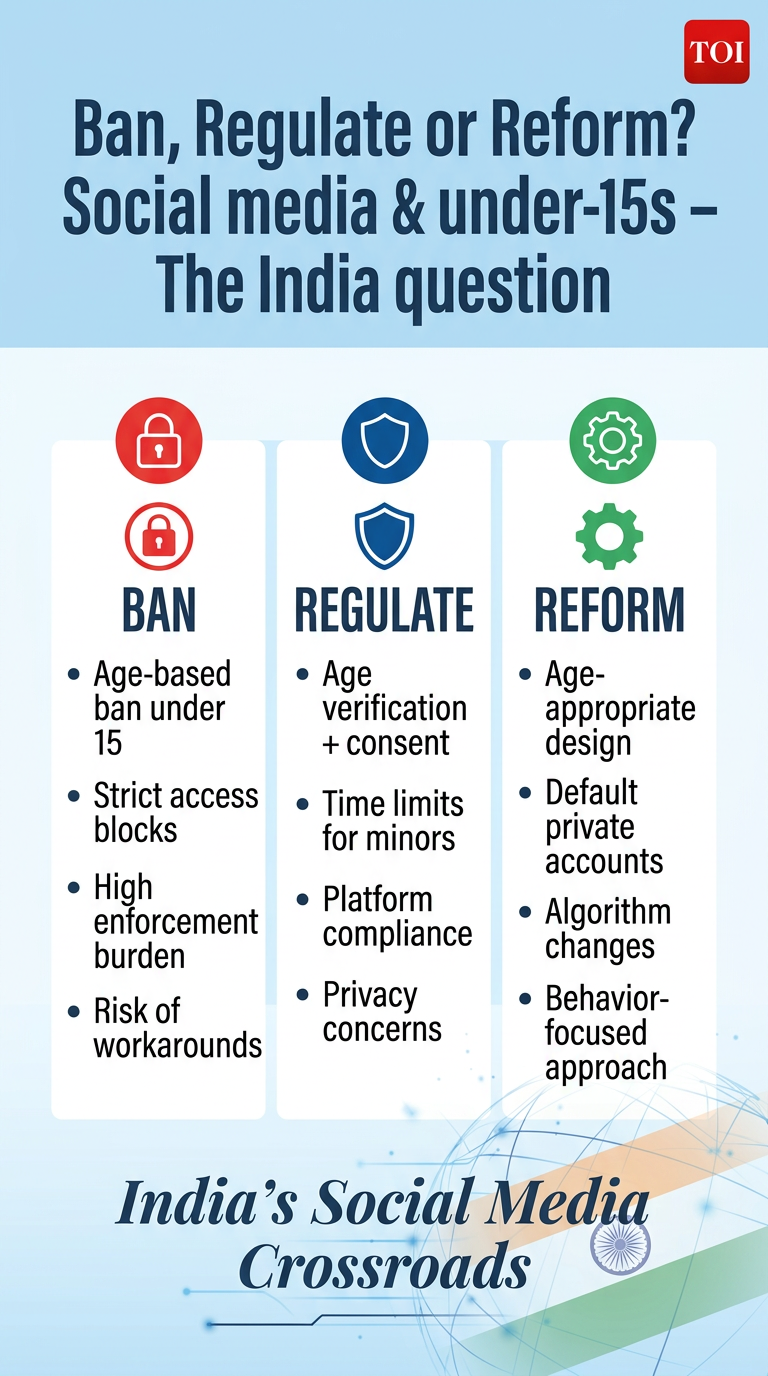
Dr Mehra supports design reform. “If platforms reduced visible metrics like follower counts for minors, it could lower comparison anxiety,” she says.Research published in JAMA Pediatrics and The Lancet Child & Adolescent Health suggests that intensity and type of engagement matter more than mere access. Policymakers may therefore need to focus on the environment rather than outright exclusion.Such a framework recognises that the digital ecosystem is unlikely to recede. Instead of attempting to eliminate children’s access entirely, regulation could focus on reshaping the environment in which that access occurs.

Conversation already underway

Within India, the conversation is no longer theoretical. Andhra Pradesh has emerged as one of the most proactive states examining whether social media access should be restricted for school-going children. During a recent Assembly session, state home minister Vangalapudi Anitha informed lawmakers that a proposed law could limit social media use among minors. A government sub-group has since begun reviewing regulatory models, including age-based access controls and mechanisms to curb misinformation.IT and HRD minister Nara Lokesh publicly articulated the state’s concerns. In a post on X, he wrote:“Trust in social media is breaking down. Children are slipping into relentless usage, affecting their attention spans and education. Women are facing non-stop online abuse. This cannot be ignored.”He further noted that children below a certain age may lack the emotional maturity to process harmful online content, adding that the government is studying global best practices, including Australia’s under-16 framework. Official data cited by the state indicates over 1,300 cases linked to inappropriate online content, with more than 1,000 individuals taken into custody before court proceedings, figures that underscore enforcement challenges already underway.At the national level, TDP parliamentary party leader Lavu Sri Krishna Devarayalu has submitted a memorandum to Union minister Ashwini Vaishnaw seeking structured consultations on age-based regulation for minors. The Centre is expected to consider forming an expert panel before advancing any nationwide framework.Karnataka, meanwhile, is adopting a consultative approach. Chief minister Siddaramaiah recently sought feedback from university vice chancellors on restricting mobile phone use among students, referencing measures discussed in countries such as Australia, Finland and the UK.“Today we are discussing this… I want your opinion on this. We are looking at this,” he said, clarifying that any proposal would focus on minors rather than adult learners.Deputy chief minister DK Shivakumar has also raised concerns over rising screen dependence among youth. At the same time, Karnataka has rolled out a digital wellbeing initiative in partnership with Meta, covering nearly three lakh students and one lakh educators. The programme emphasises responsible and mindful technology use rather than outright bans, with outcomes currently under review. Together, these state-level experiments illustrate India’s emerging dilemma: whether to impose strict age-based bans, strengthen regulatory oversight, or prioritise digital literacy and behavioural reform. As debates intensify, the country appears to be testing multiple pathways before settling on a unified national position.

The balancing act ahead

The debate over banning social media for under-15s in India is ultimately about more than apps or algorithms. It reflects a broader anxiety about childhood in a hyperconnected age.India has one of the world’s youngest populations. Any move affecting under-15 users would impact tens of millions of families. The global momentum toward tighter regulation provides reference points, but India’s scale and diversity demand context-specific solutions.The evidence shows associations between heavy social media use and mental health risks, particularly among early adolescents. It also shows nuance: not every user experiences harm, and not every platform interaction is detrimental.For parents like Mohit, the question remains immediate. “We didn’t grow up like this. We are learning as we go,” he says.For clinicians like Dr Mehra, the trend is visible but complex. “This is not a single-cause issue. But social media is now a significant variable in childhood development.”Whether India chooses to ban, regulate or redesign access for under-15s, the policy must rest on evidence, enforceability and proportionality. The debate is less about whether children are online, they already are, and more about what kind of digital environment the country is willing to permit for them.



Source link

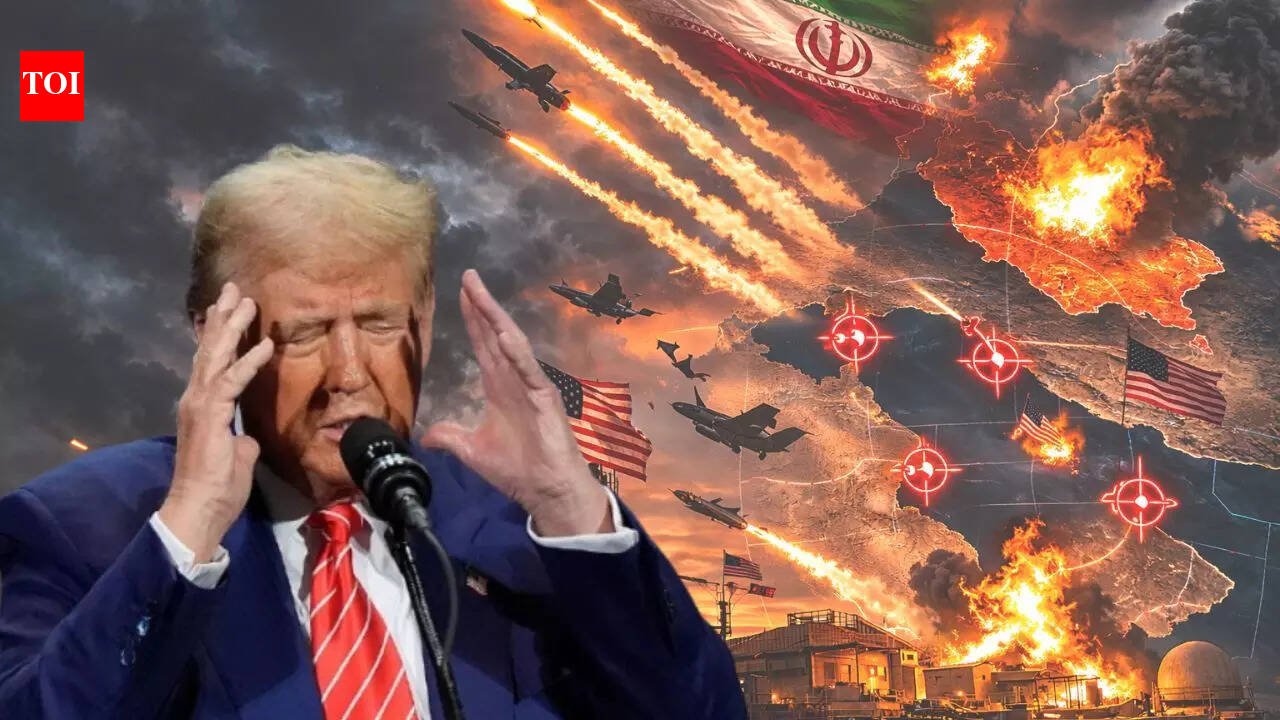
Us-Israel Strikes In Iran: America First, Diplomacy Last: The Peace President who went to war


Iran Strikes U.S. Forces; At Least 3 American Troops Killed, 5 Seriously Wounded In Escalation

TOI Correspondent from Washington: For nearly a decade, US President and MAGA supremo Donald Trump fashioned his political identity around a simple, potent pledge: end America’s “endless wars.” He derided the foreign policy establishment as reckless interventionists and insisted he alone could resist the military-industrial complex. “I am the most militaristic person there is, but I don’t want to use it,” he often said, branding himself a “peace president.”Yet as 2026 unfolds, Trump’s second term tells a sharply different story — one marked by muscular interventions in Venezuela and now Iran, open threats against Greenland, Mexico, and Canada, and a worldview that fuses red-blooded nationalism with high-stakes brinkmanship.

Iran Strikes U.S. Forces; At Least 3 American Troops Killed, 5 Seriously Wounded In Escalation

The most dramatic rupture with Trump’s earlier peacenik posture came in January, when US forces launched a lightning operation in Venezuela that culminated in the capture of its President Nicolás Maduro and his wife, Cilia Flores. The raid — described by the White House as a “counternarcotics mission” — effectively decapitated the government in Caracas. But that was “small beer” compared to the action in Iran, where he has eviscerated the country’s top leader. Trump framed the action in Venezuela as law enforcement. “We are taking out narco-terrorists who threaten American communities,” he said, adding that the United States would oversee a “stable transition.” Critics, including many Democrats on Capitol Hill, called it regime change by another name.Behind the counternarcotics rationale lay broader geopolitical calculations. Maduro’s government had deepened ties with Moscow and Beijing, offering both a strategic foothold in the Western Hemisphere. The operation, dubbed by critics as part of a “Donroe Doctrine” — an amped-up reinterpretation of the Monroe Doctrine — signaled that Trump sees the Americas as a sphere where US dominance will be enforced, if necessary, by force.This assertiveness has extended northward. Trump revived his long-standing ambition to “acquire” Greenland from Denmark, at one point suggesting military options if negotiations stalled. “We are going to do something on Greenland whether they like it or not,” he said in January, before softening the rhetoric at Davos amid NATO backlash. The episode rattled European allies and underscored a foreign policy that treats territory less as sovereign ground than as strategic real estate.Nowhere is the contradiction between Trump’s rhetoric and actions more glaring than in Iran. In June 2025, after “Operation Midnight Hammer,” Trump declared that US strikes had “completely and totally obliterated” Tehran’s nuclear capabilities. “They will never have a nuclear weapon,” he said triumphantly, presenting the mission as a decisive end to the threat.But eight months later, he authorized “Operation Epic Fury,” a sweeping joint assault with Israel targeting nuclear and missile facilities and senior regime figures. In a televised address, Trump offered a starkly different assessment. “The regime has continued to develop its nuclear program and plans to develop missiles to reach US soil,” he said. “We will ensure that Iran does not obtain a nuclear weapon… this regime will soon learn that no one should challenge the might of the US Armed Forces.The juxtaposition is jarring: a president who claimed to have eradicated the threat now invoking its “imminent” resurgence as justification for further war. US intelligence assessments last year suggested Iran was not actively pursuing a weapon, raising questions about the immediacy of the danger. Administration officials argue Tehran attempted to rebuild capabilities after the 2025 strikes, necessitating renewed force. For Trump, the distinction may be less about technical intelligence judgments than about projecting strength. In his framework, peace is achieved not through negotiated equilibrium but through overwhelming dominance.Layered atop these actions is Trump’s long-running preoccupation with the Nobel Peace Prize. He has repeatedly argued that diplomatic efforts such as the Abraham Accords merited recognition and has publicly lamented that “Norway foolishly chose not to give me the prize.” He has repeatedly claimed he had “ended eight wars” and saved “tens of millions of lives,” suggesting that his critics ignore the stabilizing effects of his assertiveness. In messages to Norwegian officials, he hinted that perceived slights diminish his incentive to “think purely of Peace.”The irony is unmistakable. Trump equates peace with submission — conflicts concluded through coercion or decisive force. By that logic, escalating crises to a breaking point and then imposing outcomes can be cast as peacemaking. The result is a presidency that is simultaneously isolationist and interventionist. Trump remains skeptical of multilateral institutions, has slashed foreign aid, and demands allies shoulder more burdens. Yet he has demonstrated a readiness to deploy American power unilaterally in pursuit of strategic leverage. Supporters see decisive leadership restoring deterrence. Detractors see erosion of alliances and a pattern of regime-change operations once denounced as folly.The central paradox endures: a leader who rose to prominence condemning foreign entanglements now presides over an era of expanding military engagements. In Trump’s evolving doctrine, “America First” does not mean withdrawal from the world. It means reshaping it — forcefully if necessary — while insisting the ultimate aim is peace, and perhaps, a medal, which he may well pin on himself, to prove it.


Source link

Fadnavis invites Canada to set up edu campuses | Mumbai News


Mumbai: There are numerous opportunities for Canada to invest in Maharashtra, CM Devendra Fadnavis said while inviting its educational institutions and entrepreneurs to explore investment prospects in the state.At a welcome reception organised at a city hotel for Canada’s minister of national revenue François-Philippe Champagne, premier of New Brunswick Susan Holt, and members of the Canadian delegation, Fadnavis said large-scale infrastructure projects are underway in the state. He said the Navi Mumbai international airport is expected to unlock significant development opportunities in the region. “An international ‘EduCity’ is also being developed in Navi Mumbai, where reputable global universities will establish campuses. TNN


Source link

Almost all US bases hit by Iran: Is America unable to safeguard its Middle East military assets?


Iran’s Salvos RIP OPEN U.S. Air Defence Umbrella; After Iron Domes, America Defence Shield ‘Smashed’

NEW DELHI: Hours after the killing of Iran’s Supreme Leader Ayatollah Ali Khamenei in a sweeping US–Israel operation, Tehran launched what it described as a broad retaliatory campaign targeting American and Israeli military assets across the Middle East.Iran’s Islamic Revolutionary Guard Corps (IRGC) claimed that all Israeli and US military targets in the region had been struck “by the powerful blows of Iranian missiles”.

Iran’s Salvos RIP OPEN U.S. Air Defence Umbrella; After Iron Domes, America Defence Shield ‘Smashed’

“This operation will continue relentlessly until the enemy is decisively defeated,” the IRGC said, adding that all US assets throughout the region were now considered legitimate targets.The scale and geography of the attacks have triggered a pressing question: is the United States struggling to safeguard its military footprint in the Gulf, and are its layered air defence systems being stretched to their limits?

A multi-front retaliation across the Gulf

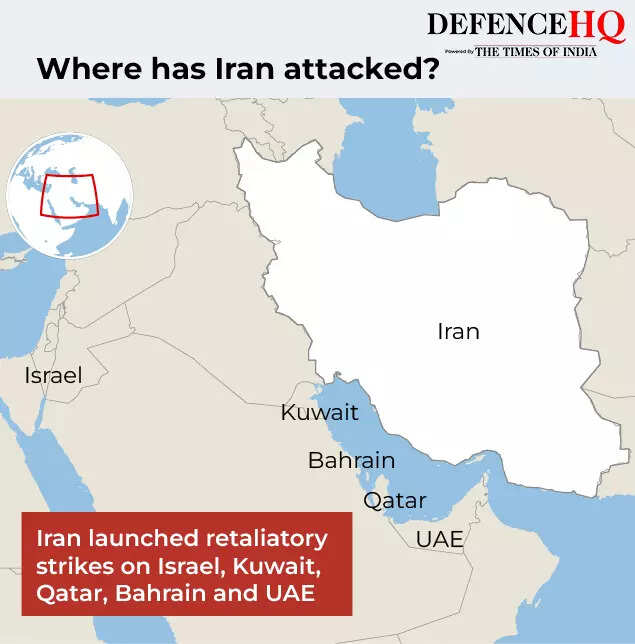
Iran’s retaliation was not confined to a single theatre. According to Iranian state-linked outlets and regional media, missiles and drones were launched towards US-linked assets in Bahrain, Kuwait, Qatar, the United Arab Emirates and Iraq’s Kurdish region.In Abu Dhabi, at least one person was reported killed after several missiles launched from Iran were intercepted, according to the UAE’s state news agency. A fire broke out near a hotel on Dubai’s Palm Jumeirah after what officials later described as an “incident” in a building that injured four people.Footage verified by BBC showed thick smoke rising from a luxury hotel in Dubai, while other videos captured loud explosions and interceptions in the skies over Doha and Manama.

maps3

.

In Bahrain, the government confirmed that a missile attack targeted the headquarters of the US Navy’s Fifth Fleet in Manama. The kingdom described it as a “treacherous attack” and “a blatant violation of the kingdom’s sovereignty and security”.Video circulating on social media appeared to show a drone striking a tower block near the naval headquarters, setting it ablaze. Bahrain’s Interior Ministry said several residential buildings had been hit and civil defence teams were engaged in rescue and firefighting operations.

CENTCOM confirms US casualties

Amid the barrage of claims and counterclaims, US Central Command issued an update from Tampa, Florida.“As of 9:30 am ET, March 1, three US service members have been killed in action and five are seriously wounded as part of Operation Epic Fury,” CENTCOM said.Several others sustained minor shrapnel injuries and concussions and were being returned to duty, it added, noting that major combat operations continued and the situation remained fluid.The confirmation of American fatalities marks a significant escalation, raising the stakes for Washington and reinforcing concerns over the vulnerability of forward-deployed US forces.

Kuwait and Qatar: Bases under fire

In Kuwait, the defence ministry said Ali al-Salem Air Base came under attack by ballistic missiles, all of which were intercepted by Kuwaiti air defence systems. However, a drone targeted Kuwait International Airport, leaving employees with minor injuries and causing material damage.Kuwait’s Foreign Ministry said the country maintained its right to defend itself.In Qatar, the defence ministry said it had “thwarted” attacks under a “pre-approved security plan”, intercepting all missiles before they reached the country’s territory. Sources speaking to Al Jazeera reported that a long-range early warning radar in northern Qatar had been targeted.The Qatari foreign ministry called the attack “a flagrant violation of its national sovereignty” and “an unacceptable escalation”, noting that Doha had sought to distance itself from regional conflicts.

Saudi Arabia and Iraq drawn in

Saudi Arabia confirmed that Iran had targeted Riyadh and the kingdom’s eastern region, adding that the attacks were repelled.“These attacks cannot be justified under any pretext or in any way,” the Saudi foreign ministry said, stressing that the kingdom had previously confirmed it would not allow its territory to be used to target Iran.In Iraq, Erbil International Airport in the Kurdish region was reportedly targeted twice. US air defences shot down a drone near a US military base close to Erbil, according to Reuters. The Iraqi government later confirmed air strikes on Jurf al-Nasr, a military base housing Kataib Hezbollah elements integrated into the regular army.Kataib Hezbollah warned that it would soon begin attacking American bases “in response to their aggression”.

Iran claims strike on USS Abraham Lincoln, US denies hit

Iran’s Islamic Revolutionary Guard Corps escalated its rhetoric by claiming it had directly struck a major US naval asset in the Gulf.“The US aircraft carrier Abraham Lincoln was struck by four ballistic missiles,” AFP quoted the Guards as saying, as Tehran sought to portray the attack as a significant blow to American military power in the region.However, the United States swiftly rejected the claim.“Iran’s IRGC claims to have struck USS Abraham Lincoln with ballistic missiles. LIE. The Lincoln was not hit. The missiles launched didn’t even come close. The Lincoln continues to launch aircraft in support of CENTCOM’s relentless campaign to defend the American people by eliminating threats from the Iranian regime,” US Central Command said.Despite Washington’s denial, the IRGC maintained its hardline tone, warning that “the land and sea will increasingly become the graveyard of the terrorist aggressors”.In a separate development, US Central Command said an Iranian Jamaran-class corvette was struck during the opening phase of Operation Epic Fury and was sinking near Chah Bahar in the Gulf of Oman.The naval dimension of the confrontation, involving aircraft carriers, destroyers and support vessels, has introduced a new layer of strategic risk to an already volatile regional conflict, raising concerns about further escalation at sea.

“Will keep the gates of hell open”: Iran

Iran signalled that the campaign was far from over. In what it called the fifth wave of “Operation True Promise 4”, the IRGC said a ship carrying ammunition for American vessels at Jebel Ali anchorage had been hit and “completely disabled”.It also claimed that “The American naval base in the Abdullah Mubarak area of Kuwait was hit by 4 ballistic missiles and 12 drones, and all the infrastructure was destroyed, and a large number of American forces were killed and injured.”“The IRGC Navy, along with the air force, will keep the gates of hell open to enemy units,” it added.Independent verification of the scale of damage remains limited, but the rhetoric underscores Tehran’s intent to broaden the battlefield.

US Air defence under strain?

Across the region, Patriot systems and other missile defence batteries were activated repeatedly. In Doha, Accroding to Al Jazeera witnesses reported hearing at least a dozen explosions that sounded like Patriot interceptors engaging incoming missiles.The United States maintains about 13 military bases across the Middle East, with between 30,000 and 40,000 troops typically deployed.While many missiles were intercepted, the sheer number of launches and the geographic spread of targets have raised questions about the sustainability of constant high-alert operations and the strain on interceptor inventories.Even successful interceptions come at a cost. Patriot missiles and other high-end interceptors are expensive and finite, and saturation attacks can test the limits of layered defences.

Strait of Hormuz: A global chokepoint at risk

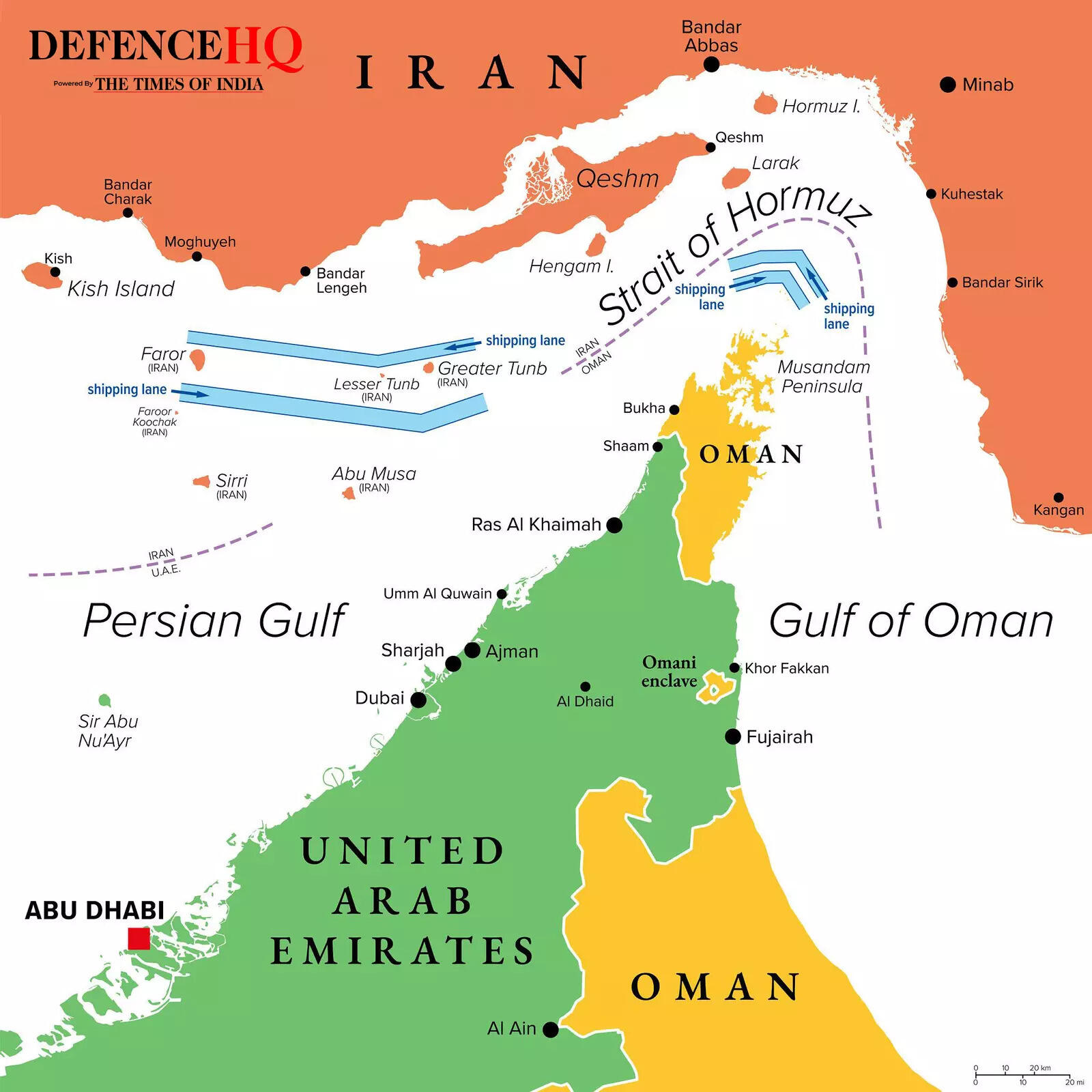
The conflict also reverberated across global energy markets. The UK Maritime Trade Operations agency said vessels in the Gulf had received warnings about the possible closure of the Strait of Hormuz.Roughly one fifth of the world’s oil and gas passes through the strait, making it one of the most critical maritime chokepoints globally. Any prolonged disruption could trigger sharp spikes in oil prices and destabilise global markets.

Strait of Hormuz copy (1)

.

Qatar, Kuwait, Bahrain and the UAE temporarily closed their airspace, further signalling the severity of the escalation.

Iran’s diplomatic defence

Iran’s Deputy foreign minister Hamid Ghanbari told Al Jazeera that Tehran had the right to defend itself and regretted any humanitarian losses caused by the escalation.Foreign Minister Abbas Araghchi wrote to the UN Security Council and Secretary-General Antonio Guterres, stating that Iran would “continue ⁠to exercise its right of ⁠self-defence decisively and without ⁠hesitation until ⁠the aggression ceases fully and unequivocally”.Araghchi later said the killing of Khamenei was “a very serious and unprecedented act and a blatant violation of international law”, adding: “We have no restrictions or limits in defending ourselves.”He confirmed that a Transitional Council had been established to manage affairs following the leadership vacuum.


Source link

BMC House seeks property tax relief for 700sqft homes | Mumbai News


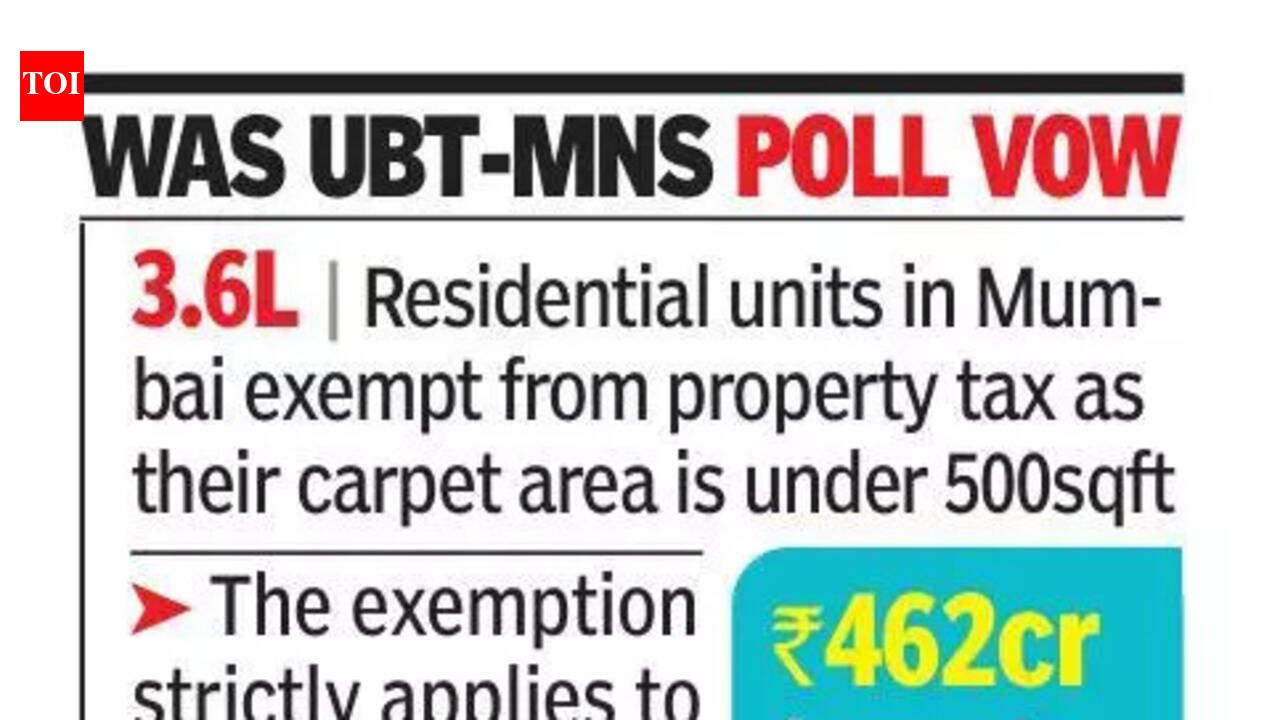
Mumbai: The civic House passed a notice of motion (NoM) last Friday seeking to increase the exemption limit for property taxes for residential units from 500sqft to 700sqft. BMC officials clarified that an NoM is not binding on the administration, and that the proposal will be sent to the civic administration for deliberation, following which it may be approved, modified, referred to committees or merely noted.Currently, around 3.6 lakh properties in Mumbai are exempt from property tax as their carpet area is under 500sqft—a policy implemented since 2022 by BMC following a state govt directive. Property tax is one of the major revenue sources for the civic body. In 2024-25, the BMC administration collected property taxes of Rs 6,198 crore.

Mumbai: Flight Disruptions, Digital Arrest, Urban Challenges & More

The NoM was moved by Shiv Sena (UBT) corporator Yashodhar Phanse, who said middle-class families rehabilitated through slum and chawl redevelopment schemes are finding it increasingly difficult to bear property tax and maintenance costs. While such beneficiaries receive homes free of cost, he said recurring expenses such as society maintenance, repairs, healthcare and education have made living in Mumbai unaffordable, forcing many to sell their flats and move out of the city. The NoM said increasing the exemption limit is necessary to ensure that “original Mumbaikars” are able to continue living in the city. A property tax waiver for residential units up to 700 sqft was one of Sena (UBT) and MNS’s key assurances made in their joint manifesto ahead of the BMC elections. BJP’s former MP Manoj Kotak, who had moved a similar proposal during his tenure as Mulund corporator in 2018, the NoM is redundant since his proposal is still pending with the state govt. He said were Sena (UBT) been serious about the issue, it should have secured approval when it headed the state govt.


Source link