Breaking News
Ayatollah Ali Khamenei: Satellite image shows impact of US-Israel strike on Iran Supreme Leader Khamenei’s palace | World News


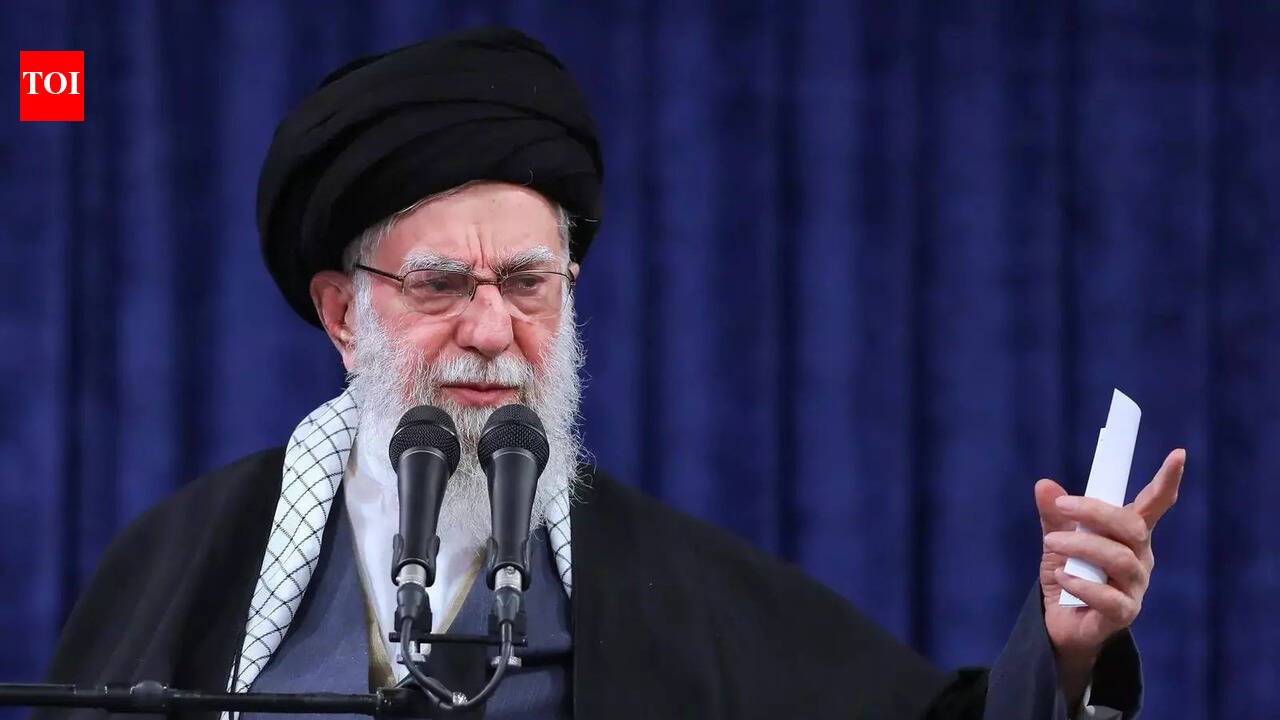
Ayatollah Ali Khamenei (File photo)

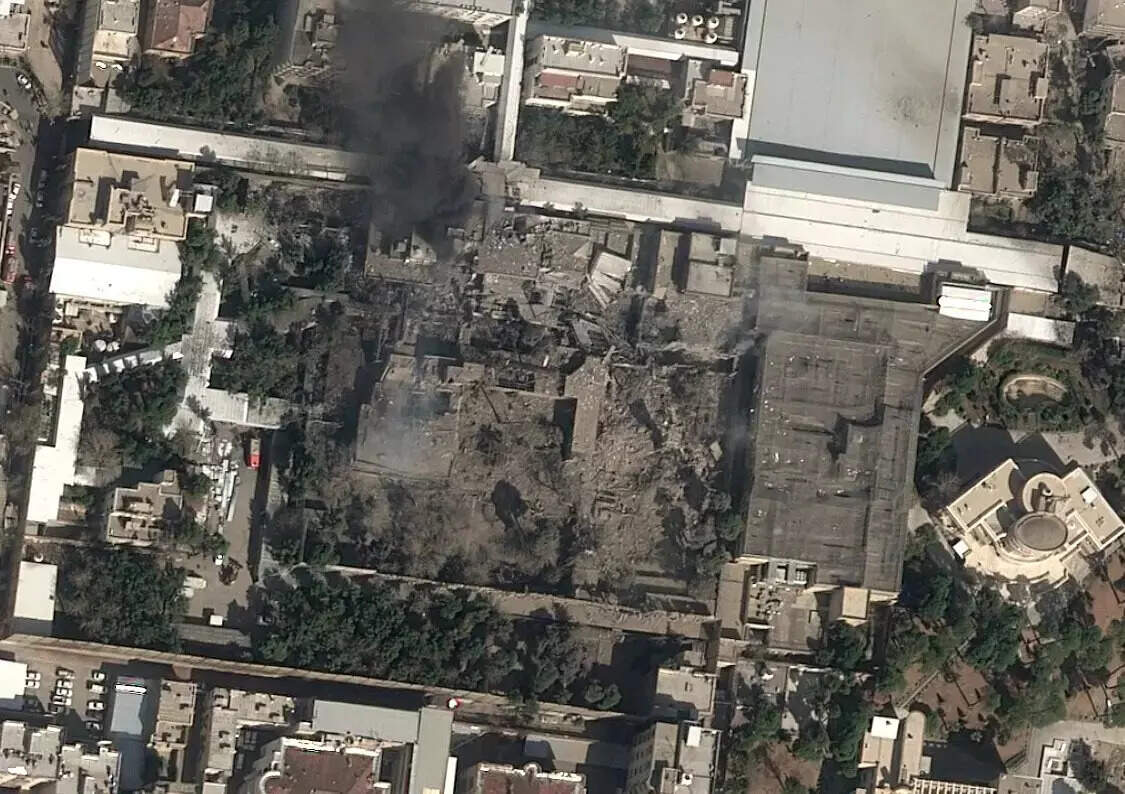
A newly released high-resolution satellite image revealed significant destruction at the official residence compound of Iran’s Supreme Leader Ayatollah Ali Khamenei in Tehran, following US-Israeli military strikes early Saturday morning.The image, captured by Airbus Defence and Space and obtained by The New York Times, shows multiple collapsed buildings, heavy structural damage, and a prominent black plume of smoke rising from the secure government complex.

‘Won’t Spare Americans’: IRGC’s First Declaration As Missiles Rain Over US Bases, Israel | Iran War

Several key structures within the compound, long used as Khamenei’s primary official residence and a central hub for leadership functions, appear obliterated or severely compromised.

HCPZIPZXQAA1CJF

Satellite image

Iran struck American military bases across the Middle East in retaliatory strikes against Israel and the United States, hours after the two arch-rivals rocked Tehran Saturday morning.Iran’s paramilitary Revolutionary Guard said the military struck several facilities across the region in what they named operation “Truthful Promise 4.”The Revolutionary Guard said in a statement that in the first phase of the operation, named “Truthful Promise 4,” Iran’s military struck the command of the US 5th Fleet in Bahrain, as well as US bases in Qatar and the United Arab Emirates and military targets in Israel.However, the extent of the damage at the headquarters of the United States Fifth Fleet was not immediately clear. The base lies just southeast of central Manama, capital of the island nation of Bahrain.There have been no reports of damage in these areas apart from one death in the United Arab Emirates.Shrapnel from an Iranian missile attack on the capital of the United Arab Emirates killed one person Saturday.The state-run WAM news agency reported the fatality, the first known in the Iranian counterattack following the United States and Israeli launching a major airstrike campaign targeting Iran. The buildup of tensions in West Asia erupted on Saturday morning as multiple explosions thundered across Tehran, with the United States and Israel launching coordinated daylight strikes on the Iranian capital. The offensive was aimed at deterring the Ayatollah Ali Khamenei-led regime from advancing its nuclear ambitions.In what appeared to be preparation for a decisive confrontation, Washington named its military campaign “Operation Epic Fury,” while Israel called its offensive “Operation Lion’s Roar.”Hours after the strikes, Iran’s paramilitary Islamic Revolutionary Guard Corps said it launched a “first wave” of drones and missiles targeting Israel and American bases across the region.


Source link

T20 World Cup 2026: Irfan Pathan explains how Varun Chakaravarthy can trigger his beast mode against West Indies


After a commanding victory over Zimbabwe, India have kept their T20 World Cup 2026 campaign alive and breathing. The Men in Blue are now firmly in the race for a semi-final berth, but their path is far from easy. The upcoming clash against West Indies is a virtual knockout — whoever wins will punch their ticket to the semis.

With the stakes sky-high, former India all-rounder Irfan Pathan has shared his insights on how mystery spinner Varun Chakaravarthy can elevate his game and deliver a match-defining performance.

Irfan Pathan on how Varun Chakaravarthy can unleash his ‘A game’ in the clash against West Indies

Chakaravarthy’s tournament statistics reflect consistency. He currently stands as the fifth-highest wicket-taker in the competition with 11 wickets in six matches at an impressive economy rate of 7.20. Those are solid numbers in a high-scoring T20 era. However, despite the encouraging figures, the Tamil Nadu spinner hasn’t quite looked at his intimidating best and had produced concerning performances in the recent few games. The sharp bite off the pitch, the unplayable variations, and the aura of unpredictability that once rattled batters seem slightly muted.

With India heading into a do-or-die contest, the team will hope their mystery weapon rediscover his most lethal version. Speaking on his YouTube channel, Pathan highlighted minor technical adjustments that could transform Chakaravarthy’s impact against West Indies.
According to Pathan, it’s all about subtle refinements rather than major overhauls.

“Against West Indies in Kolkata — a pitch he knows well — he can bounce back. Just a slight adjustment in length, maybe come closer to the stumps around the wicket to left-handers, and he’ll be back. If he picks up an early wicket, he can create serious pressure,” Pathan said.

The advice centers around bowling a fraction fuller or shorter depending on conditions and attacking from tighter angles, especially against left-handers. By coming closer to the stumps and operating around the wicket, Chakaravarthy could cramp batters for room and force mistakes. On a Kolkata surface that traditionally offers grip and turn, those minor tweaks could prove decisive.

Also READ: T20 World Cup 2026 [EXPLAINED]: Why Matt Henry is returning home after the England vs New Zealand match?

Recent dip in Varun’s form raises questions

Chakaravarthy’s overall figures in the tournament still look impressive on paper, but his last two outings have sparked a bit of concern. In the clash against South Africa in Ahmedabad, he leaked 47 runs at a steep economy rate of 11.75, managing just a single wicket. The trend continued in the next game versus Zimbabwe, where he conceded 35 runs in three overs, going at 8.75 per over.

These performances stood in sharp contrast to his strong showing in the group stage, where his clever variations and tight control played a key role in providing India with timely breakthroughs.

Also READ: T20 World Cup 2026: Pakistan’s semi-final qualification scenario after England’s win over New Zealand


Source link

Mumbai Suburban Sections: Central Railway to operate megablock on Mumbai suburban sections | Mumbai News


MUMBAI: Central Railway, Mumbai Division, will operate a megablock on its suburban sections on Sunday to carry out various engineering and maintenance works.On the Main line, the block will be in effect on the Up and Down slow lines between CSMT Mumbai and Vidyavihar from 10.55 am to 3.55 pm.Down slow services departing CSMT Mumbai between 10:48 am and 3:45 pm will be diverted to the Down fast line between CSMT Mumbai and Vidyavihar stations. These trains will halt at Byculla, Parel, Dadar, Matunga, Sion, and Kurla stations before returning to the Down slow line at Vidyavihar.Up slow services departing Ghatkopar between 10.19 am and 3.52 pm will be diverted to the Up fast line between Vidyavihar and CSMT Mumbai, halting at Kurla, Sion, Matunga, Dadar, Parel, and Byculla stations.On the Harbour line, the block will be between Kurla and Vashi stations from 11:10 am to 4:10 pm. Special suburban trains will operate on the CSMT Mumbai–Kurla and Panvel–Vashi sections during the block period.Harbour line passengers are allowed to travel via Thane–Vashi or Nerul stations until 6.00 pm.


Source link

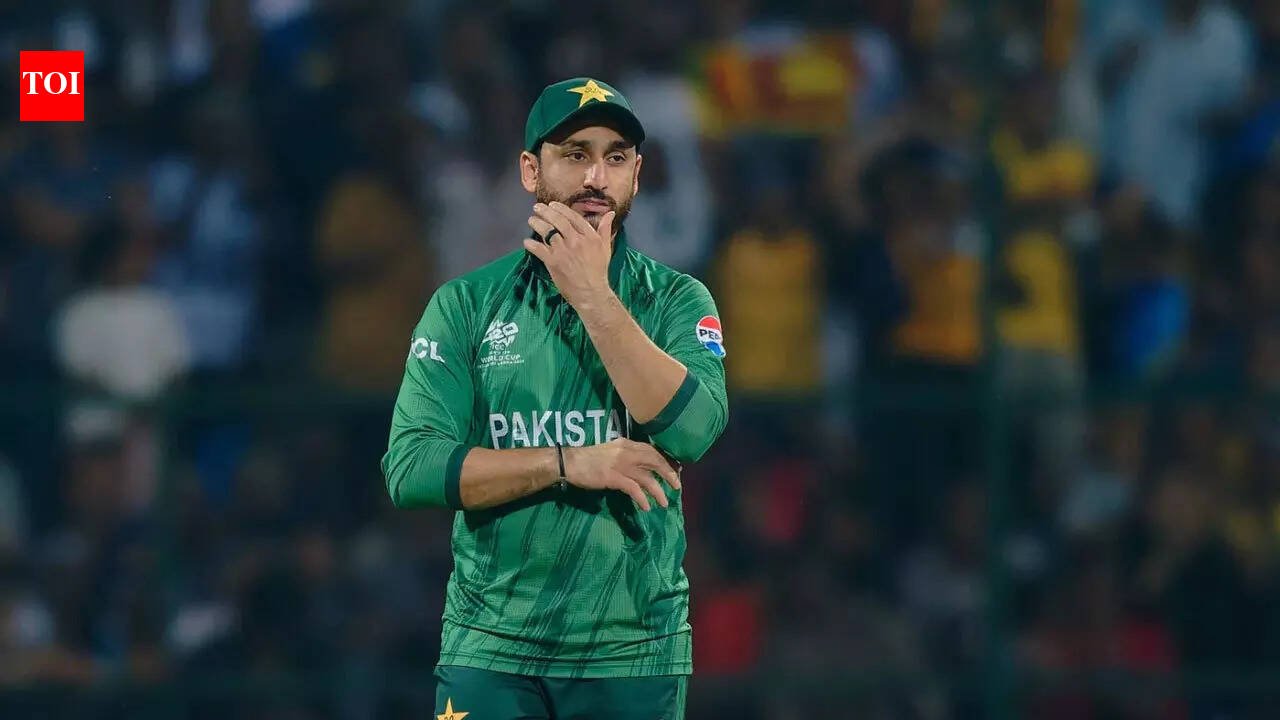
‘Couldn’t finish the way we wanted to’: Salman Agha’s emotional admission after Pakistan’s T20 World Cup exit | Cricket News


'Couldn't finish the way we wanted to': Salman Agha's emotional admission after Pakistan's T20 World Cup exit
Salman Ali Agha (Getty Images)

NEW DELHI: Pakistan’s campaign at the ICC Men’s T20 World Cup came to a disappointing end despite a win over Sri Lanka national cricket team on Saturday, with captain Salman Ali Agha conceding that the team’s batting frailties proved costly.While Sahibzada Farhan stood out with a superb hundred, the rest of the batting unit failed to deliver consistently through the tournament. Agha admitted that Pakistan’s middle-order woes have lingered for years. Senior batters Babar Azam and Saim Ayub were left out of the Super Eights clash owing to poor form.

T20 World Cup: Ryan ten Doeschate press conference before IND vs WI

“We couldn’t bat well throughout the tournament. If Farhan had more support, it’d have been better. Middle order has been a problem for a few years now, we’ll have to look at that,” Agha said at the post-match presentation.At one stage, Farhan (100) and Fakhar Zaman (84) had Sri Lanka on the ropes, raising hopes of a 225-plus total. However, Pakistan eventually finished at 212 for 8, falling short of fully capitalising on their blistering start.“Couldn’t finish the way we wanted to. We batted well 18 overs, opposition did well in the other two. Even 160 would’ve been difficult to defend,” Agha said.He also pointed to conditions playing a part in the contest.“(It) was always challenging after losing the toss because of dew. Could’ve been a different story had we won the toss. Dew was a factor. We couldn’t execute plans. Usman (Tariq) had an off-day, it can happen.”Asked to bat first, Pakistan piled up a formidable 212 for 8, riding on the heavy lifting done by Farhan and Zaman. To edge past New Zealand national cricket team on net run rate and qualify for the semifinals from Group 2, Pakistan needed to restrict Sri Lanka to 147 or fewer.That scenario never materialised. The co-hosts, already out of semifinal contention, mounted a strong chase to finish on 207 for 6.Both Pakistan and New Zealand ended the Super Eights stage with three points apiece, but the Kiwis advanced as the second-placed side from the group courtesy of a superior net run rate. England cricket team had already sealed their semifinal berth after winning all three of their Super Eights matches.Farhan, who was named Player of the Match, expressed mixed emotions after his century went in vain.“(I) wanted to do well for the team, wanted Fakhar to ton up actually. The ton didn’t work for the team, that’s why I’m sad,” he said.“I have been feeling well, that brings confidence. Knew I could hit whatever was in my arc. All credit goes to domestic cricket, it’s brought out the habit of scoring at pace and scoring big.”Sri Lanka skipper Dasun Shanaka, who nearly pulled off a stunning win with a blistering 76 not out off 31 balls, felt he let the opportunity slip.“It was a close game, I could’ve finished it. Well bowled to Shaheen,” said Shanaka who needed just six runs from the last two balls to win the match.“Yes, we’re disappointed. I want to say sorry to the fans. Unfortunately, we fell down to injuries. In the future, I hope there are no injuries. Missing two key bowlers in (Wanindu) Hasaranga and (Matheesha) Pathirana. Hope they’ll return soon and do well for Sri Lankan cricket.“Sometimes, as players, we feel pressure. It was a mistake, I’m sorry to fans for disheartening them. We’re all thankful for all the support. (Pavan) Rathnayake is consistent, uses the crease well. We (also) have (Dunith) Wellalage, they (young players) are growing.”


Source link

Access Denied


Access Denied

You don’t have permission to access “http://www.ndtv.com/world-news/iran-us-tensions-live-updates-explosion-rocks-iran-amid-heightened-nuclear-tensions-with-us-iran-israel-tensions-tehran-tel-aviv-tensions-11148388” on this server.

Reference #18.c4f5d217.1772350064.553a256c

https://errors.edgesuite.net/18.c4f5d217.1772350064.553a256c


Source link

Rajpal Yadav BREAKS SILENCE on cheque bounce case; says complainant rejected property documents, wanted him behind bars |


Actor Rajpal Yadav, accompanied by his legal counsel, addressed a cheque-bounce case, asserting that lender Madhav Gopal Agarwal sought to have him jailed. Yadav’s lawyer alleged that Agarwal refused to accept security and ownership documents in 2018, insisting on imprisonment. Yadav claimed Agarwal threatened to sell his property if the full Rs 10.40 crore. Let’s learn more about in detail.

On Saturday, Rajpal Yadav held a press conference with his lawyer, Bhaskar Upadhyay, to share his side of the story in the Rs 9 crore cheque bounce case. During the media interaction, the actor shed light on a lot of topics related to his case. His lawyer alleged that Madhav Gopal Agarwal, from whom the actor borrowed the amount, wanted to see him in Rajpal in jail. Let’s learn more about it in detail.

Rajpal Yadav’s lawyer claims the lender wanted to see the actor in jail

During the press conference in Mumbai, Rajpal Yadav, along with his lawyer, clarified that the actor had borrowed Rs 5 crore from Madhav Gopal Agarwal of M/s Murali Projects Pvt Ltd as an investment in the film ‘Ata Pata Laapata’.

Rajpal Yadav Walks Out Of Jail With Bold Comeback Message Amid Explosive Rs 9 Crore Case

According to the Indian Express report, Rajpal Yadav’s lawyer alleged that a high rate of interest was charged against the loan. Hence, the total amount went on to reach Rs 10.40 crore. The actor’s advocate further claimed that the complainant wanted to see Rajpal Yadav in jail. He added that the lender didn’t accept the security money and property documents offered by Rajpal and emphasized sending the actor to the prison.The publication quoted Rajpal Yadav’s lawyer saying, “They had said in the press conference that they never intended to send Rajpal to jail. That is not true. In 2018, Rajpal had submitted a security amount in court, and he was also ready to attach his property papers, but Madhav Gopal Agarwal refused the same and chose to send him to jail.”The legal counsel added, “He is spreading lies and maligning Rajpal’s image. If he would have taken the security amount, the case would have closed in 2018 itself. His intention was never the money; it was to see Rajpal in jail.”

Rajpal Yadav on Madhav Gopal Agarwal

Talking about Madhav Gopal Agarwal during the press conference, Rajpal Yadav said, “They have done this out of revenge. They had told me, and if I had a recording, I would have shown it to you. They told me, ‘If you don’t send us Rs 10.40 crore, toh tumhara ek ek inch bekwa dunga (If you don’t send us Rs 10.40 crore, we will sell every inch of you).'”Rajpal expressed that he has no intention to dupe anyone or get out of the situation through false means.

More about Rajpal Yadav

Apart from the case, Rajpal Yadav is in the news for his upcoming film ‘Bhooth Bangla’, headlined by Akshay Kumar. Directed by Priyadarshan, the film also stars Wamiqa Gabbi. It is scheduled to release on April 10, 2026.


Source link

T20 World Cup 2026: Final-over wide triggers debate in Pakistan vs Sri Lanka Super 8 clash


In one of the most dramatic finishes of the ICC Men’s T20 World Cup 2026, Pakistan’s five-run victory over co-hosts Sri Lanka was overshadowed by a major umpiring controversy surrounding the final delivery at Pallekele International Stadium on Saturday. The match ended in contentious circumstances when Sri Lankan captain Dasun Shanaka left the last ball expecting a wide call that never came, sparking heated debate across the cricketing world.

Dasun Shanaka’s heroic onslaught against Pakistan falls just short 

Chasing a formidable target of 213, Sri Lanka needed 28 runs from the final over bowled by Pakistan’s pace spearhead Shaheen Shah Afridi. What followed was pure mayhem. Shanaka, already on 58 off 27 balls, launched three consecutive sixes off the second, third and fourth deliveries, bringing the equation down to a tantalizing six runs needed from the final two balls and sending the home crowd into delirium.

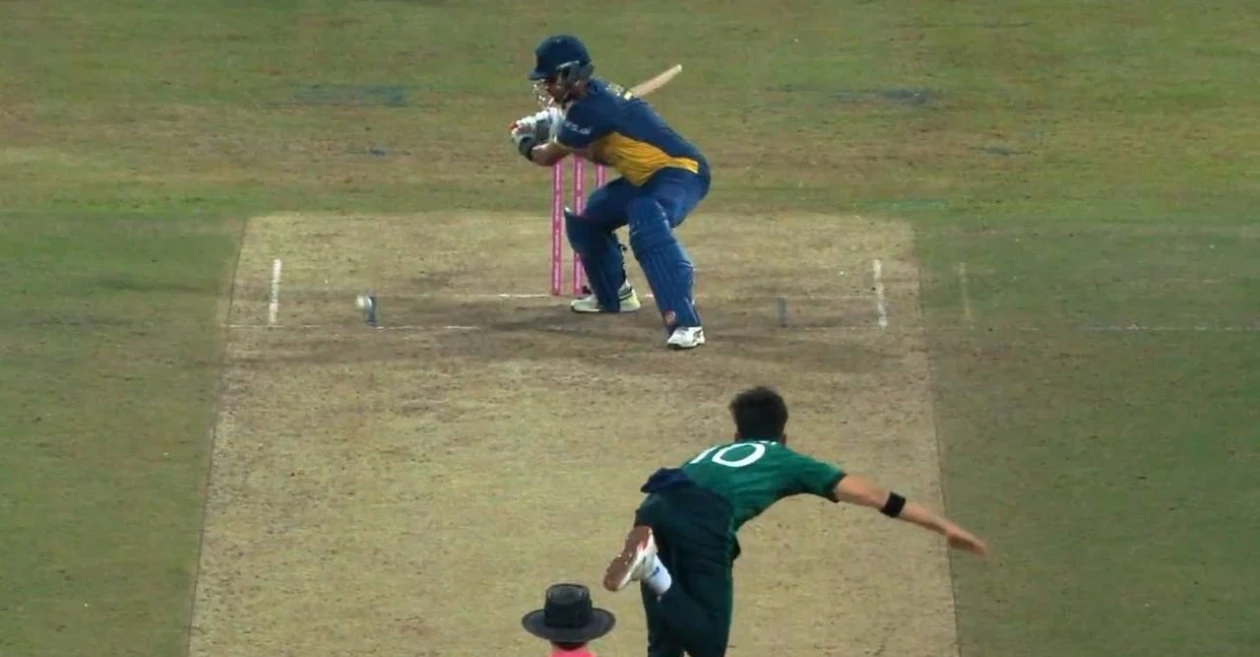
The fifth ball proved pivotal. Afridi delivered a low full-toss angling away outside off stump. Shanaka attempted an ambitious scoop but missed completely. He immediately appealed for a wide, believing the ball was beyond the tramline, but umpire Rod Tucker remained unmoved.

The controversial final delivery

With six still needed off the last ball, tension reached fever pitch. Afridi delivered another low full-toss, this time landing on the off-side tramline – the painted blue line that indicates a wide. Shanaka left it alone, fully expecting the umpire to signal a wide that would have given Sri Lanka another delivery with six still required. When no signal came, Pakistan erupted in celebration while Sri Lankan players stood in disbelief.

Television replays showed the ball pitched on or outside the designated wide line, leaving fans and experts questioning why the decision wasn’t referred or reviewed .

Why wasn’t it given wide?

According to cricket’s laws, the wide line ultimately falls under the umpire’s discretion. As the Free Press Journal explained, when a ball pitches on the blue wide line, the umpire has the authority to either call it wide or deem it a legal delivery – both decisions would be technically within the rules. In this instance, umpire Tucker decided against signalling wide, a call that effectively ended Sri Lanka’s miraculous comeback attempt.

Sri Lankan head coach reacts angrily at the on-field umpire

The controversy didn’t end on the field. Live visuals captured Sri Lankan head coach Sanath Jayasuriya confronting umpire Rod Tucker immediately after the match, gesticulating angrily while questioning why the last two deliveries weren’t called wide. Jayasuriya was seen watching replays on the big screen, shaking his head in disbelief at the decision that denied his team a potential victory.

Shanaka, who remained unbeaten on a breathtaking 76 off just 31 balls with eight sixes and two fours, closed his eyes in disappointment before graciously acknowledging the crowd’s support . His heroic effort – nearly pulling off one of the greatest chases in T20 World Cup history – ultimately went in vain.

Also READ: IND vs WI, T20 World Cup 2026 Super 8 – Kolkata’s Hourly Weather Forecast

Pakistan face elimination despite win over Sri Lanka

The irony of the situation wasn’t lost on observers. Despite securing the victory, Pakistan were eliminated from the tournament because they failed to restrict Sri Lanka below 147-the target required to surpass New Zealand’s net run rate and qualify for the semifinals. New Zealand progressed instead, celebrating their fortune from their team hotel in Colombo.

The match itself featured remarkable performances, including Sahibzada Farhan’s historic second century of the tournament (100 off 60 balls) and his record 176-run opening partnership with Fakhar Zaman (84 off 42) – the highest for any wicket in T20 World Cup history. Farhan also surpassed Virat Kohli’s 12-year-old record for most runs in a single T20 World Cup edition, finishing with 383 runs .

The umpiring decision sparked intense debate across social media platforms. Fans posted side-by-side images showing the final ball’s trajectory clearly outside the off-stump line, with many questioning why the third umpire didn’t intervene. Some users sarcastically suggested “even umpires were given money,” while others debated whether Sri Lanka should have reviewed the call. The controversy added another layer of drama to what was already a fittingly chaotic end to Pakistan’s turbulent campaign.

Also READ: Fans erupt as Sahibzada Farhan outduels Dasun Shanaka but Pakistan’s semifinal dream ends in T20 World Cup 2026


Source link

‘Delivering decisive action as directed’: US releases new videos of strikes on Iran


'Delivering decisive action as directed': US releases new videos of strikes on Iran

“The Iranian regime was warned,” the United States Central Command said hours after coordinated strikes by the US and Israel shook the Tehran establishment, killing long-time Supreme Leader Ayatollah Ali Khamenei early on Sunday.In an extensive display of military power, the Donald Trump-led US launched Operation Epic Fury, a mission designed to directly target the Khamenei-led rule. The US Central Command also released a video showing a visual display of the military operation, including missiles being launched in precision strikes aimed at the heart of Iran — Tehran and other key locations across the country.The video reportedly showed the HIMARS, or High Mobility Artillery Rocket System, which is operated by US ground forces.Israel also joined the operation alongside the US, acting as a key regional ally in the strikes against Iran and the Khamenei-led regime in the oil-rich country.The missiles and other weapons used in the strikes did not spare the Supreme Leader. Among those reported killed were Khamenei’s daughter and a grandchild.The American strikes relied on a range of modern military systems. With the world’s largest defence budget, the US deployed stealth fighter jets, suicide drones and Tomahawk missiles during the operation.Meanwhile, another video posted hours earlier reportedly captured Tomahawk missiles being launched from a US cruise vessel.The X post of central command’s caption read: “As the President stated, our objective is to defend the American people by eliminating imminent threats from the Iranian regime. The President ordered bold action. CENTCOM forces are delivering an overwhelming and unrelenting blow.”Meanwhile, with the launch of the strikes, Trump once again made clear his long-standing opposition to Khamenei and his rule in Iran, saying it did not serve US interests in the region. Trump announced the operation in an eight-minute video, declaring that the United States was conducting “major combat operations” to prevent Iran from threatening America and its core national security interests. He stated, “We’re going to destroy their missiles and raze their missile industry to the ground.The US military used a combination of missiles and drones to strike targets in Iran while relying on advanced air defence systems to protect its bases in the Middle East from possible retaliation.According to a US official who spoke on condition of anonymity to discuss military developments, American warships launched Tomahawk cruise missiles at Iranian targets, while ground forces deployed the High Mobility Artillery Rocket System, or HIMARS.US forces also used drones and other undisclosed standoff weapons designed for long-range attacks beyond the reach of enemy air defences. The coordinated strikes began on Saturday morning and were carried out using US military assets operating from land, sea and air.


Source link

T20 World Cup 2026 upcoming matches: Full schedule, semifinal dates and venues | Cricket News


T20 World Cup 2026 upcoming matches: Full schedule, semifinal dates and venues

NEW DELHI: The race to the knockouts at the ICC Men’s T20 World Cup 2026 has reached its decisive stage, with three semifinal spots already secured and one final berth still up for grabs.England cricket team, South Africa national cricket team, and New Zealand national cricket team have officially booked their places in the last four of the 10th edition of the tournament.

T20 World Cup: Ryan ten Doeschate press conference before IND vs WI

The fourth semifinalist will be determined after the high-stakes Super 8 clash between India national cricket team and West Indies cricket team on Sunday, with the winner advancing to the knockout stage.T20 WORLD CUP 2026: KNOCKOUT DATES CONFIRMEDThe semifinals are slated for March 4 and March 5, while the final will be played on March 8.T20 WORLD CUP 2026: QUALIFIED TEAMSEngland, South Africa, New Zealand and TBD (between India and West Indies)

Date Match Time Venue
March 4, Wednesday Semi-final 1 7:00 PM Kolkata
March 5, Thursday Semi-final 2 7:00 PM Mumbai

ENGLANDEngland became the first side to seal a semifinal berth from Super 8 Group 2. The two-time T20 champions registered crucial wins, including a commanding 51-run triumph over Sri Lanka, a two-wicket victory against Pakistan, and a four-wicket win over New Zealand to confirm their progression.SOUTH AFRICASouth Africa advanced from Super 8 Group 1 after impressive performances, highlighted by key victories against India and West Indies.NEW ZEALANDNew Zealand emerged as the third semifinalist, progressing from Group 2 of the Super 8 stage with consistent performances.THE FINAL SPOT: INDIA OR WEST INDIESThe last remaining semifinal place will go to either India or West Indies from Group 1. Their Super 8 encounter effectively serves as a virtual quarterfinal, with qualification on the line.SEMIFINAL FORMAT: EXPLAINEDAs per tournament rules:The Group 2 winners will face the Group 1 runners-upThe Group 1 winners will take on the Group 2 runners-up


Source link

Iran Strike News: Dubai, Abu Dhabi, Bahrain, Kuwait: Gulf countries targeted by Iran after US-Israel strikes


Dubai, Abu Dhabi, Bahrain, Kuwait: Gulf countries targeted by Iran after US-Israel strikes

Iran has launched attacks on US assets across the Gulf in retaliation for a major joint strike by the United States and Israel, raising fears of a wider regional conflict.On Saturday, the Iranian government confirmed the attacks, according to the Fars news agency, citing targets in Bahrain, Kuwait, Qatar, and the United Arab Emirates, countries hosting airbases with US forces.

Iran Missiles Target Riyadh, Abu Dhabi & Doha; US & Israeli Attack Triggers Bigger Conflict

The United States maintains around 13 military bases in the Middle East, with 30,000 to 40,000 troops typically deployed across the region.Iran’s paramilitary Revolutionary Guard on Sunday threatened to launch its “most intense offensive operation” in response to the killing of Supreme Leader Ayatollah Ali Khamenei.“The most intense offensive operation in the history of the Islamic Republic’s armed forces will begin shortly, targeting Israel and US military bases,” the Guard said.In a letter to the United Nations Security Council and Secretary-General António Guterres, Iran’s foreign minister Abbas Araghchi stated that the country would “continue to exercise its right of self-defence decisively and without hesitation until the aggression ceases fully and unequivocally.”

United Arab Emirates

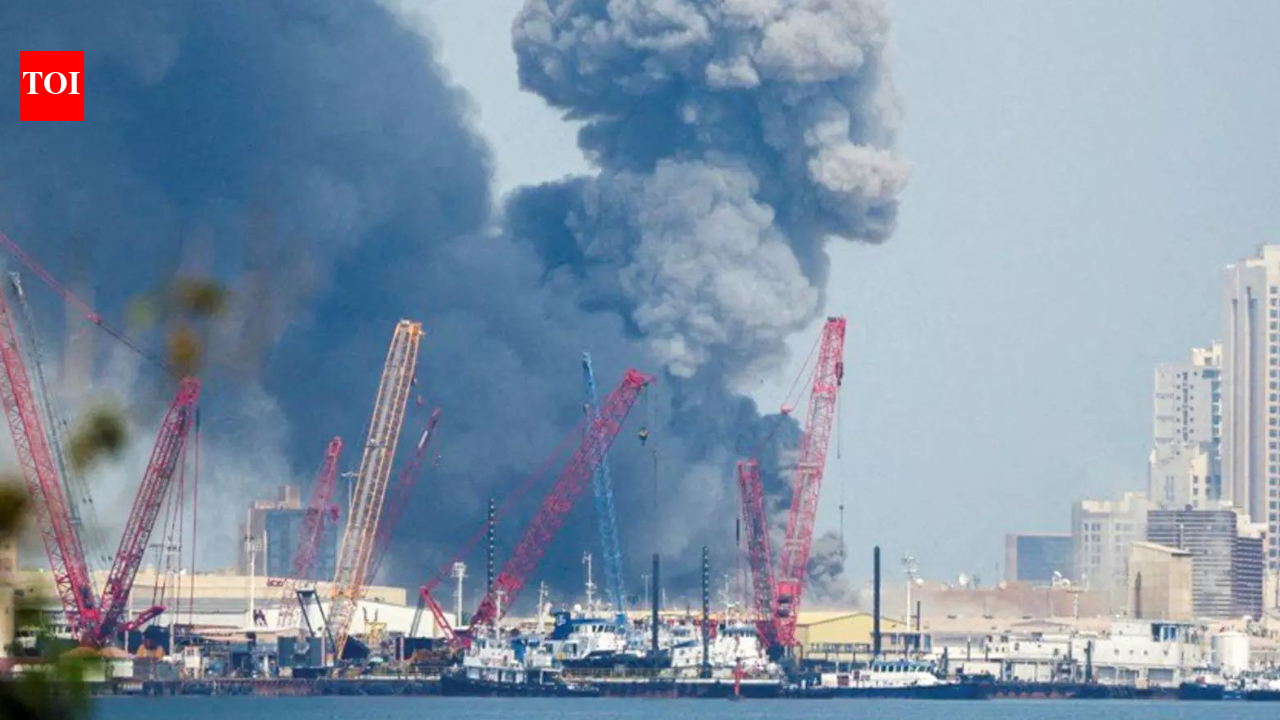
At least one person was killed in Abu Dhabi after several missiles launched from Iran were intercepted, according to the UAE’s state news agency, which provided no further details.In Dubai, a fire broke out near a hotel on the Palm Jumeirah Islands, sending plumes of smoke into the sky as multiple blasts were heard across the city. The Dubai Media Office later confirmed the “incident” in a building on Palm Jumeirah, which left four people injured. A luxury hotel was also hit during Iran’s strikes, carried out in retaliation for what Tehran described as a “massive” and ongoing attack by the United States and Israel.Earlier Sunday, the Dubai Media Office reported four injuries in an “incident” at Dubai International Airport, a major transport hub, noting only minor damage to the airport’s concourse.

Bahrain

Bahrain said a missile strike targeted the headquarters of the US Navy’s 5th Fleet in Manama, calling it a “treacherous attack” and “a blatant violation of the kingdom’s sovereignty and security.”Footage shared on social media appeared to show an Iranian Shahed drone hitting a nearby tower block, sparking a fire. The interior ministry reported that several residential buildings in Manama were also affected, with civil defence teams conducting firefighting and rescue operations, according to posts on X.Bahrain’s ambassador to the United States, Shaikh Abdullah bin Rashid Al Khalifa, described the assaults on “sites within the Kingdom” as a “blatant violation of sovereignty” in a statement on X.

Kuwait

Kuwait’s defence ministry reported that Ali al-Salem Air Base came under attack by multiple ballistic missiles, all of which were intercepted by the country’s air defence systems.Abdullah al-Rajhi, spokesperson for the General Authority of Civil Aviation, said a drone targeted Kuwait International Airport, causing “minor injuries to several employees” and inflicting material damage to the passenger terminal. Explosions were heard across the city as the attack unfolded.The official KUNA news agency cited a statement from the Ministry of Foreign Affairs affirming that Kuwait “maintains its right to defend itself.”

Qatar

Qatar’s defence ministry said it “thwarted” attacks on the country in line with a “pre-approved security plan,” intercepting “all missiles” before they reached Qatari territory.Sources speaking to Al Jazeera reported that an Iranian missile targeted a long-range early warning radar in northern Qatar, but no injuries were reported.The Qatari foreign ministry condemned the attacks, saying that targeting Qatar by a neighbour “cannot be accepted under any justification or pretext” and noting that the country has consistently sought to remain distanced from regional conflicts.Qatar has faced similar strikes in the past year, including an Iranian attack on the US Al Udeid Air Base in June and an Israeli strike on a Hamas meeting in Doha in September.

Saudi Arabia

Saudi Arabia’s Foreign Ministry confirmed that Iran targeted Riyadh and the kingdom’s eastern region, but said the attacks were repelled.“These attacks cannot be justified under any pretext or in any way, and they came despite the Iranian authorities knowing that the Kingdom had confirmed that it would not allow its airspace and territory to be used to target Iran,” the ministry said.

Iraq

Erbil Airport in Iraq’s Kurdish region was targeted twice on Saturday, an Al Jazeera correspondent reported. A drone aimed at Erbil International Airport was intercepted and shot down by air defences. The United States maintains troops in Iraq’s autonomous Kurdish region as part of an international coalition against ISIL (ISIS), which is set to conclude by September under a deal between Washington and Baghdad.Meanwhile, a drone strike hit a headquarters of the Kataeb Hezbollah armed group southwest of Baghdad, killing two, according to The Associated Press. Later, additional strikes targeted Jurf al-Nasr, an Iraqi military base that houses the former paramilitary group, now integrated into the regular army, a source told AFP. Iraq’s security media cell confirmed that “at 7.25 pm (local time), the Jurf al-Nasr area … was targeted by two air strikes.A Kataib Hezbollah official confirmed the new attack and warned in a statement that “we will soon begin attacking American bases in response to their aggression.”

Oman spared

Oman, which has long acted as a regional and international liaison with Iran, played a central role in recent indirect talks between Tehran and Washington in Oman and Geneva.Oman’s Foreign Minister Badr Albusaidi had expressed optimism on Friday that peace was “within reach” after Iran agreed during the talks not to stockpile enriched uranium, describing the development as a major breakthrough. Hours later, Israel and the United States launched their attacks, effectively ending the negotiations.Albusaidi voiced “dismay” at the outbreak of violence and urged Washington to “not get sucked in further” into the conflict. “This is not your war,” he said.Qatar, Kuwait, Bahrain, and the UAE temporarily closed their airspace and condemned Iran’s attacks on their territories.Sea vessels operating in the Gulf reported receiving notices of a closure of the Strait of Hormuz, according to the UK Maritime Trade Operations agency, as cited by Reuters. The Strait of Hormuz, a vital oil export route, connects major Gulf producers, including Saudi Arabia, Iran, Iraq, and the UAE, with the Gulf of Oman and the Arabian Sea.


Source link