Let’s begin with the opening acts of Dhurandhar The Revenge. No, this article does not contain spoilers but it does give you an insight into the first chapter of this eagerly-awaited second part to the juggernaut called Dhurandhar, that released last December. This is the story of Jaskirat Singh Rangi before he became Hamza Ali Mazari. The opening scene shows Jaskirat, and his family, in a happy moment trying to fit everyone in a frame for a family photo. In the next scene, when we watch Jaskirat, there’s a sense that something’s amiss. And this is a long scene. Then there’s another that shocks the audience to the core. In fact, the shock is so brutal that for a moment one may think “is this violence for violence’s sake?”. This is one criticism that has been prevalent since the first part came out. More on that later. But you’d be wrong to think on those lines. It’s the scene that follows the mind-boggling and gory action sequence, where the audience truly gets to know what actually happened to Jaskirat Singh Rangi. This is not a justification of any kind of violence; rather a deep-dive into the craft of writing that forgoes every expected formulaic, tedious scripts that have preceded Dhurandhar.You see, our Bollywood-trained minds think, and understand scenes and stories in sequence – what cinema experts call a linear form of storytelling. That’s also how we humans have evolved. The story shouldn’t jump back and forth. So we get surprised when a master storyteller jumps back and forth and still keeps us engaged. We have been hearing of director Aditya Dhar “flipping the Bollywood-formula script” since the first Dhurandhar released December 5 last year…
… But what is a script flip?
Compared to all the ways Dhar has torn apart any audience expectations and handed the audience a new rule book (that actually has intelligent craft and no rules), Jaskirat’s first chapter of revenge was a small deviation. But a deviation that must have had hours of great writing and a steadfast focus on the art of storytelling. If you aren’t paying attention, you won’t think much of this script-flip except in hindsight. In hindsight, it’ll come to you that a particularly violent scene had an immense impact – not for the sake of violence, but because the director didn’t give you the explanation as to why it was happening before it happened. Because those are the kind of movies we have been used to watching – build all the scenarios that lead to justifying the hero’s anger, pump up the audience who bays for revenge, and then give them the expected catharsis, with gravity defying action sequences. This movie that’s actually titled, Dhurandhar The Revenge, ironically, doesn’t do that. For the sake of avoiding spoilers, nothing more can be said about the story; but a lot can be said about how much time was spent writing this film. This is what director of ’90s gritty gangster flicks, like Satya, Company, and Shiva, Ram Gopal Varma meant when he wrote on his account on X: “Unlike how most films explain, Dhurandhar withholds. Long stretches of silence explode what pages of exposition cannot do in other films. It treats violence not as spectacle but as a psychological blow… the action director doesn’t care about giving claptrap moments but he integrates the characters and their current states of mind into every ounce of its violence.” That is why Varma called this film “the reset button for Indian cinema that establishes a new benchmark, that renders typical templated films completely obsolete.”
Iron throne to the throne of Lyari
The last time such a seismic shift occurred, albeit not in the world of cinema but in the world of books, was when author George RR Martin wrote the first book in his series called the The Song of Ice and Fire. The name of the first book is also the name of the now world-famous TV series called Game of Thrones. Sci-fi and fantasy writer Martin’s book is set in a medieval world full of gore, violence and corruptible people vying for power (the Iron Throne). He established a righteous hero called Lord Eddard Stark (fondly called Ned Stark) amidst powerful antagonists, and then killed him at the end of the first book, in a shocking twist that no one saw coming. The year was 1996. We all watched it on TV in 2011. A beheaded Ned Stark still haunts us, as does The Red Wedding, and everything that followed. Martin, apart from being an author, was also a journalism professor and script writer for Hollywood. When asked about writing the unexpected and the relentless violence that makes an impact with readers, he said in a NYT interview in 2014, “I will say that my philosophy as a writer…has been one of ‘show, don’t tell’. Whatever might be happening in my books, I try to put the reader in the middle of it, rather than summarizing the action.” Dhar followed the same idea.
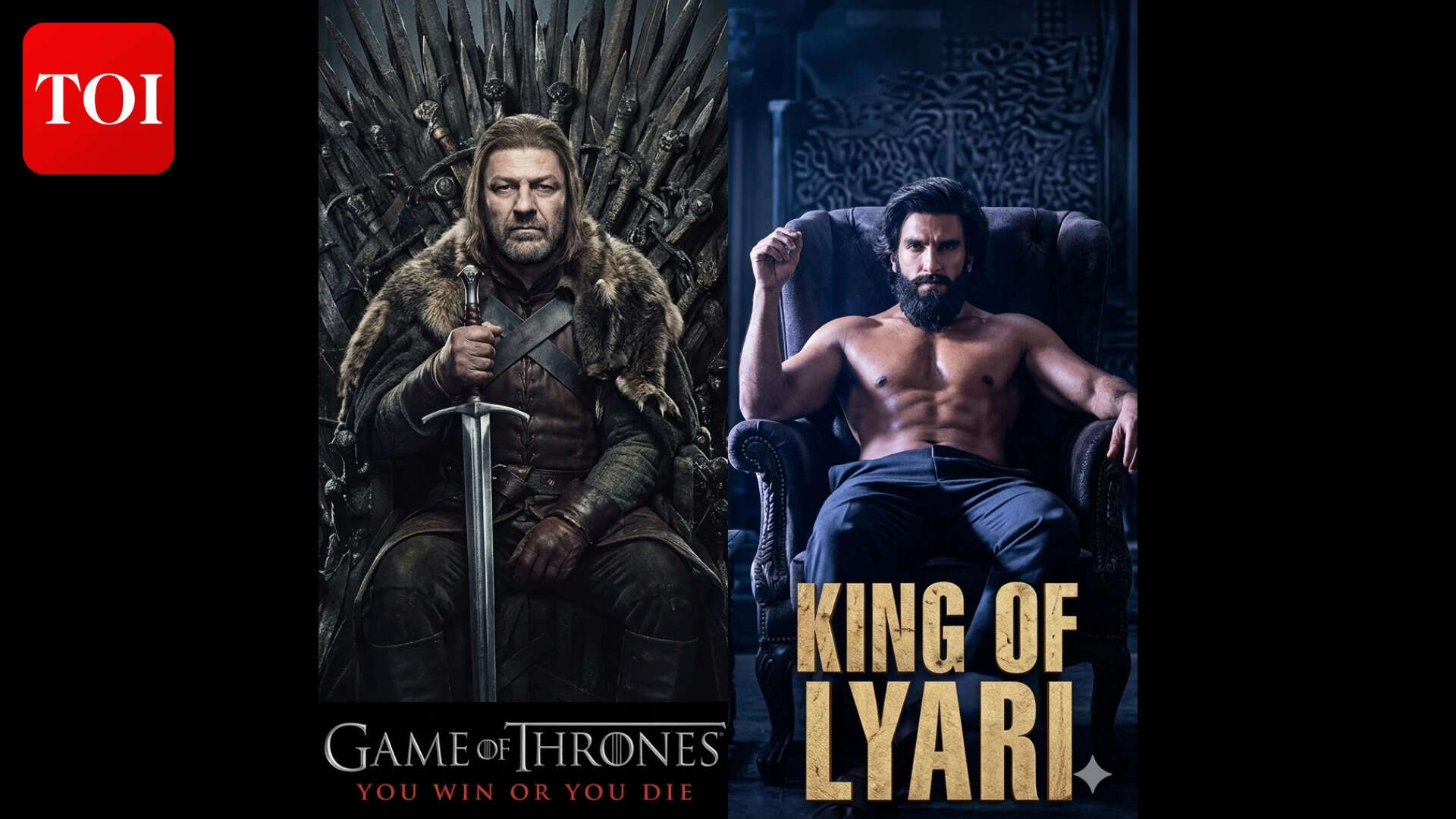
From the Iron Throne to the throne of Lyari, uneasy lies the head that wears the crown (AI Generated)
The reason for comparing this particular book series to Dhurandhar is because gratuitous violence is a criticism that Martin has faced several times over the years, just as Dhar is facing for his film. Martins’s answer to completely undoing or redoing what was expected of the fantasy genre was: “I don’t like predictable books, predictable TV shows, predictable movies.” He was talking about the fantasy genre in books and Hollywood scripts. Bollywood, too, has been in a rut of predictable and formulaic scripts for a long time. Just like Martin flipped the book on it, Dhar has flipped the script of Indian cinema with Dhurandhar. At times, a seismic change is required to reset a button that’s become so rusty that it’s not attracting people to cinema halls.
Flip the script on everything
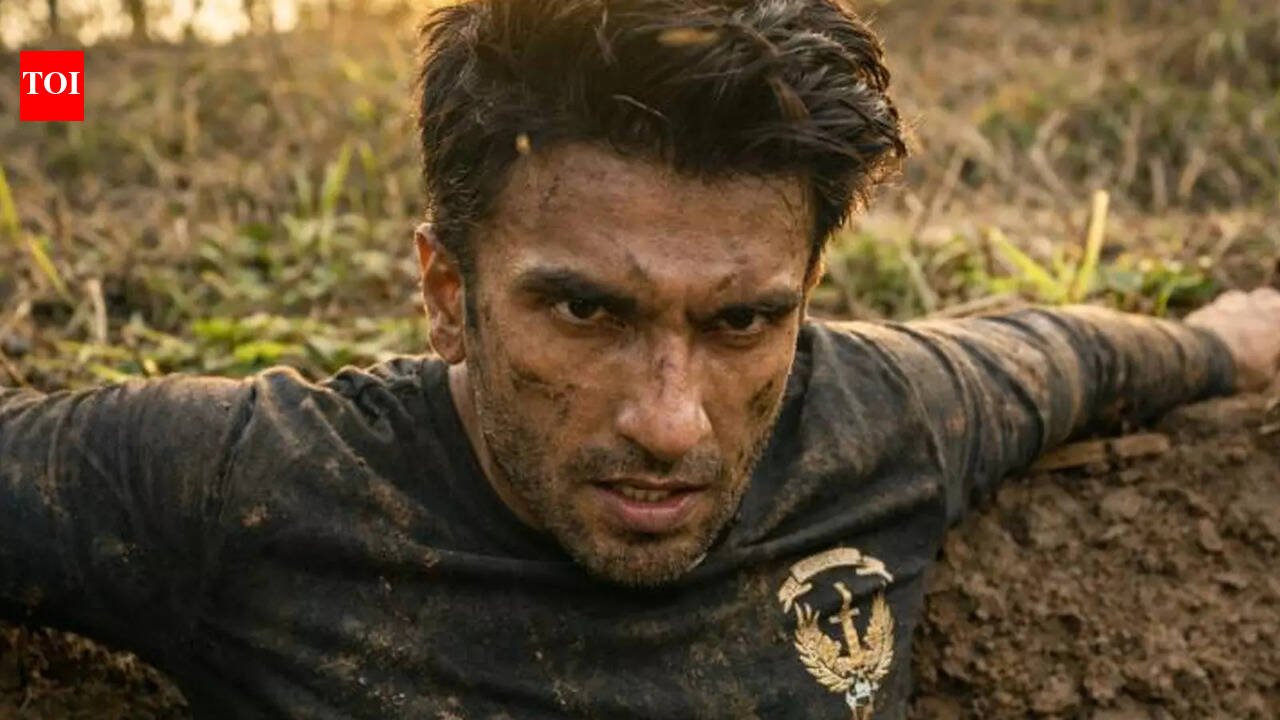
The “script-flip” in the above-mentioned paras is most evident in how Dhar handles the protagonist’s agency – be it Jaskirat Singh Rangi or Hamza Ali Mazari. For Dhar, the same agency belongs to his whole team that was a part of his film, but mostly, it belongs to the audience for whom the movie was made. They are the ones who will buy tickets to watch the film. He has given everyone a free rein to think and take back what they seem fit. The retrospective realisation of the first chapter of the film, named ‘A Burnt Memory’, forces the viewer to engage actively with the writing, rather than passively consuming a pre-justified revenge arc. In the superhit formula world of Bollywood, where heroines swirl in rainbow lehengas and heroes punch through glass ceilings to thumping beats, audiences have long been fed a predictable diet: three hours of songs, dances, overblown action, and glycerine tears. Formulaic plots recycle the same tropes: romantic misunderstandings, larger-than-life villains, and cathartic monologues… all the while the script makes sure that the star power eclipses substance. This is done by design because there is this general attitude: “India mein yahi sab chalta hai” Or worse, “the star/actor wants it that way”.Yet, last December, something shifted. Dhar’s Dhurandhar, a gritty spy thriller starring Ranveer Singh, stormed the box office to the tune of over 1,300 crore and became a Netflix phenomenon. Its success wasn’t accidental. It tapped into a deep, unspoken hunger. A hunger for cinema that respects the viewer’s intelligence, that trades spectacle for craft, and that weaves real-world complexity into a taut, immersive narrative. Dhar’s movie directly challenges the previous Indian cinema status quo by prioritising craft over celebrity, and atmospheric dread over easy catharsis. The first installment, a staggering 3 hours and 34 minutes long, eschewed the standard intermission-to-intermission pacing in favour of a procedural, almost documentary-like immersion into the underworld of Karachi’s Lyari district. It did so by sewing retro songs and even an item number, a romantic subplot into the plot, not as pacing interruptions. This set a new benchmark for narrative cohesion.By prioritising writing as king, sidelining the main character in service of the story, and elevating editing and music over easy emotional manipulation, Dhurandhar—and its 2026 sequel—did what few recent Bollywood films have dared: it broke barriers and proved that substance can sell. So much so that Akshaye Khanna emerged as a larger character than the protagonist, played by Ranveer Singh. For example, in Dhurandhar, the setting of Lyari is portrayed not as a stylised backdrop but as a suffocating, living entity. The dialogue is stripped of artifice, using expletives and technical jargon that reflect the harsh reality of its characters. The character of Rehman Dakait, played by Khanna, serves as a primary example of this shift. Dakait is not a caricatured villain but a layered antagonist whose intelligence and “clique-lipped” delivery command the screen. The dynamic between Hamza and Dakait is one of calculated observation, a choice that respects the viewer’s patience and demand for realism.The success of Part 1 was underpinned by a collaboration across technical departments that prioritised the story’s “internalised” nature. Now, this is a point to note because our typical passive audience-trained minds aren’t ideally supposed to understand technical details that add to the movie’s canvas. Except, everyone did. Dhar didn’t treat his audience as passive watchers, he respected their intelligence. If the Twitter chatter on this film seems over-the-top even for a moment, we are quickly reminded WHY. It’s because cinematographer Vikas Nowlakha utilised a visual language mirroring Hamza’s psychological state and his transition from an outsider to a central figure in the Lyari nexus. Editor Shivkumar V. Panicker’s choices were described as “insanely creative” by fans, particularly in sequences where the camera lingers on a character’s face to capture silent, internal transformations, such as Hamza’s gradual adoption of his Pakistani identity. Dhar told the audience that there’s a reason cinema is an audio-visual medium. A plot can be taken forward through smart editing and cinematography without a single dialogue by the protagonist. He brought to the fore what was thus far behind the scenes – cinematographers, editors, costume designers, make-up team et al. He made all of his team as much a part of the storytelling, as the script he had written. So when we watched a mostly silent Ranveer Singh as Hamza in Part 1, we were taken aback, but in a good way. In a way never seen before.
Now, let’s come to the soundtrack…
Traditional Bollywood treats songs and dances as mandatory pit stops and lavish interruptions that halt momentum. Dhurandhar flips the script musically too. There are no choreographed extravaganzas. Every single frame is part of the story. It’s not a break where you can go out and grab popcorn. Instead Dhar and music composer Shashwat Sachdev integrate retro Hindi songs seamlessly into the fabric of the characters and their world. A character hums a forgotten melody during a tense stakeout; a radio crackles with an old tune as blood spills in the shadows. These aren’t distractions. They heighten the atmosphere, reveal psyche, and root the story in a lived-in cultural reality. Music here isn’t filler; it’s a narrative tool, much like the haunting background score by Sachdev that pulses with dread and precision. In this film, Sachdev’s score was not merely background music but a throbbing force that heightened the sense of dread without relying on orchestral swells to manipulate emotion. We all love Bollywood music, but what Sachdev did with his retro-meet-hip-hop hybrid, is that he utilised retro Hindi tracks in a way that felt organic to the setting of Karachi. Instead of elaborate dance sequences, these songs appear as part of the world’s texture. For e.g., ‘Na Toh Karvan Ki Talash Hai’, a classic qawwali from ‘Barsaat Ki Raat’, was remixed with cinematic swells and atmospheric synths. It was used not for a romantic moment, but to underscore the spiritual intensity and the moral grey areas of Hamza’s mission. In the same way, ‘Hawa Hawa’, the iconic track by Hasan Jahangir, was used to introduce SP Aslam (Sanjay Dutt), effectively establishing his flair and style as he confronts criminals in a stark desert landscape. This is filmmaking that trusts the audience to connect dots, not spoon-feed them.
The audience is the biggest superstar
While Part 1 focused on the quiet erosion of a man’s soul, Dhurandhar: The Revenge embraced a maximalist approach. It leaned into stylised violence and a hyper-masculine hero arc, yet maintained a level of intelligent craft that separated it from typical action film. The narrative choice to open with the character of Jaskirat Singh Rangi, long before his transformation into Hamza Ali Mazari, also serves as a pivotal deviation from standard sequel structures. The audience took note of all of it. They didn’t need to be told anything in terms of lazily-written dialogues by the protagonist or antagonists. Every department of filmmaking was a tool to take this story forward. The Indian audience finally heaved a sigh of relief that they were treated as equals to the superstars on screens. They were trusted to understand silences as much as any unexplained bout of violence because they too have agency. And to Dhar, the audience was the biggest superstar.
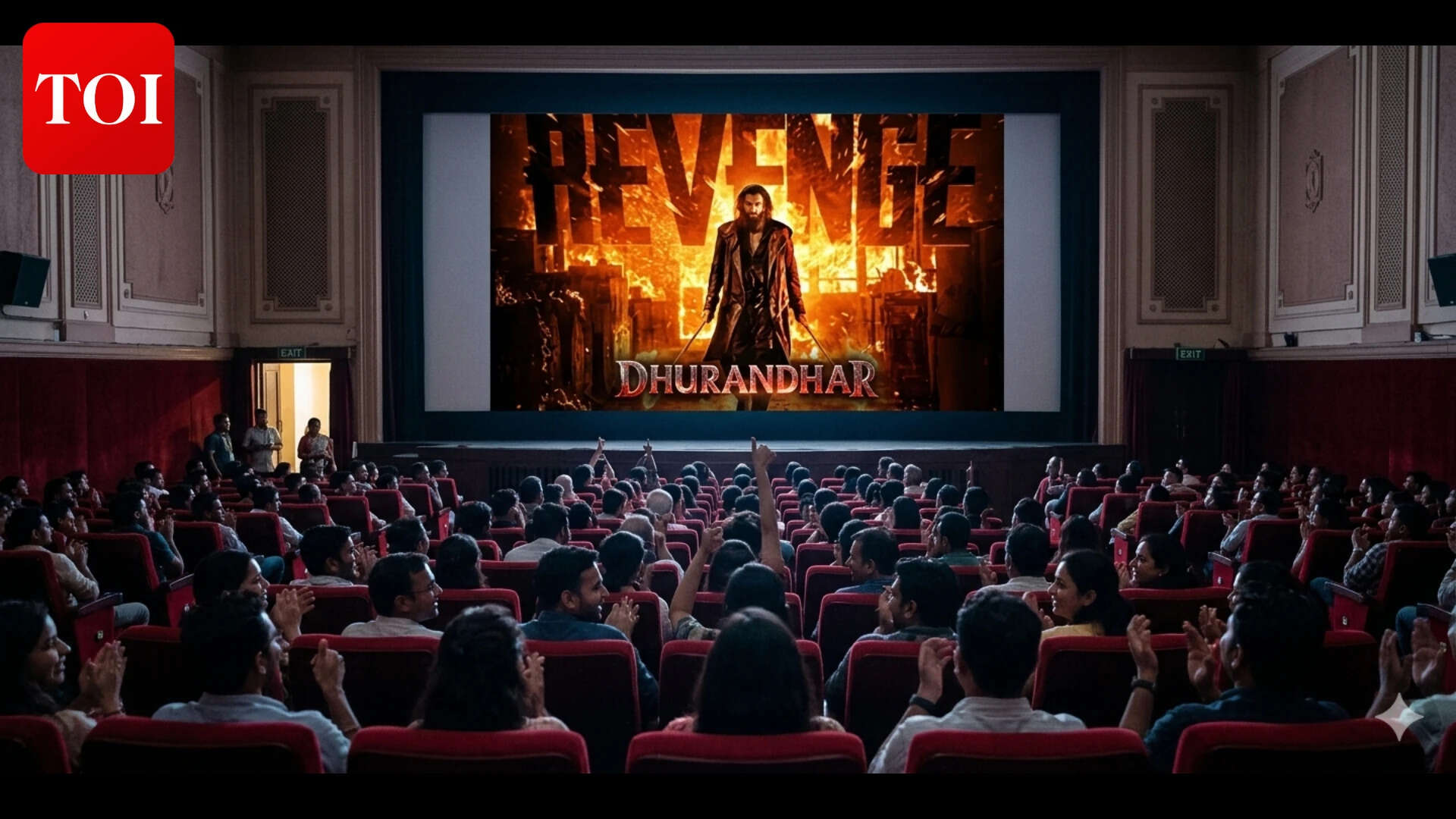
In Aditya Dhar’s Dhurandhar, the audience is the real superstar (AI generated)
At its core, Dhurandhar is a masterclass in “show, don’t tell”. Dhar presents a sequence of real-life-inspired events—echoes of the 1999 IC-814 hijacking, the 2001 Parliament attack, and the 2008 Mumbai assaults—folded into a tight espionage narrative. By now, we all know that the story follows Hamza Ali Mazari, an undercover Indian operative, who infiltrates the crime-ridden lanes of Lyari to dismantle an ISI-linked terror nexus. But unlike the chiselled heroes of yore, Hamza starts in the background. He’s not the flashy saviour striding into frame with a one-liner. Instead, he’s a ghost in the machine: observing, adapting, rising through the ranks with lethal precision while the camera lingers on the ecosystem around him – the power struggles, the betrayals, the banal evil of everyday brutality. This mirrors the raw authenticity of Varma’s Satya (1998), which the film openly nods to in its first half. Lyari feels alive and ominous, a dog-eat-dog underworld where crime isn’t glamorous but a currency of survival. Dialogue is sparse, cold, and organic, laced with loose language that feels earned, not shocking. The two-hour build-up in Part 1 is patient, procedural, documentary-like in its detail. No grand speeches about the right path; just the quiet erosion of a man’s soul as he becomes what he hunts. Writing reigns supreme here, distilling geopolitical complexities—Pakistan’s terror infrastructure, proxy wars, institutional complicity —into a visceral, character-driven thriller. Viewers aren’t lectured; they’re embedded.
Shock & awe and slow burn move hand-in-hand
This restraint establishes Dhar’s credentials and primes audiences for what comes next. Dhurandhar The Revenge leans further into stylised violence and gratuitous gore. The director, now assured of his grip on viewers, broadens the canvas. Where Part 1 whispered threats, Part 2 roars with choreographed carnage: slow-motion bullets ripping through flesh, close-ups of shattered bones, and a hyper-masculine hero’s arc that delivers the bloody satisfaction action fans crave. Yet even here, Dhar doesn’t fully abandon intelligence for pandering. He tones down just enough—shifting from pure “show, don’t tell” to “show and tell” with descriptive dialogues and explanatory sequences—to make the labyrinth of ISI operations accessible. The politics of it all, Indian and Pakistani, is not brushed under the carpet but exposed in their full glory. This is done on purpose so that people unfamiliar with Pakistan’s underworld or cross-border espionage can follow the threads without a PhD in geopolitics. If you look at Part 1 and Part 2 at one glance, it may seem like Dhurandhar was the setting of the stage and Dhurandhar The Revenge is the climax. In one sense, it’s true. But in hindsight, this script is also flipped. Dhurandhar was actually the shock, a shock to jolt the audience out of formulaic Bollywood nuisance. Dhurandhar The Revenge, is actually the slow burn despite the relentless and ruthless action sequences. It’s only in hindsight that one realizes that Hamza’s anger is actually a very long stretch of unending grief. If Part 1 humanized the antagonist, Dakait, Part 2, gives you a second or so to ask whether Major Iqbal, played brilliantly by Arjun Rampal, would have been as ruthless and heartless if not goaded into violence from his childhood by someone close to him. One might think it was inevitable. That genetic memory and trauma makes all of us who we are. The real smartness and empathy of the moviemaker lies in the fact that both the protagonist, Hamza and the antagonist, Iqbal, are displayed as people capable of inflicting the same degree of violence—though their targets are different. Varma points this out in an interview. He says, “Take the countries and geopolitics away, and how different is Hamza from a Dakait or an Iqbal? They are all violent men, living in morally grey zones.” This is the realism that cinephiles are rooting for.
Collective fatigue with Bollywood’s emotional shorthand
Ranveer’s transformation, once subtle, becomes a force of nature in Part 2, but the story never cedes center stage to star wattage. Real events remain the backbone. Fictionalised yet grounded. We have seen the headlines that turn into human stakes in Part 2. What makes Dhurandhar resonate so profoundly is how it satisfies a collective fatigue with Bollywood’s emotional shorthand. For decades, films have leaned on predictable fare: the teary family reunion, the item song to titillate, the climax fight scored to dhinchak BGM. Emotions are manufactured. Big close-ups of quivering lips, swelling strings to cue tears, rather than earned through lived moments. Action is cartoonish, detached from consequence. Dhurandhar demands more from its audience and rewards them for it. The A-certificate rating signals maturity; its 214-minute runtime in Part 1 dares you to stay immersed. No comic relief sidekicks cracking jokes mid-tension. No forced romance to soften the edges. Instead, it delivers intellectual thrill: the slow dread of infiltration, the moral gray of espionage, the quiet horror of systemic terror. Audiences, long starved for this, are responding in droves. Word-of-mouth has amplified its reach: families debating its politics, cinephiles dissecting its craft on social media. It wasn’t just a hit; it was a cultural reset, proving that intelligent storytelling isn’t niche. It’s commercial gold when executed with vision.The duology’s success signals a wider audience ready for realism. Even its controversies, from debates over political messaging to real-life inspirations has fuelled discourse rather than derailing it. In the end, Dhurandhar didn’t just catch the audience’s thirst. It ignited it. Not just for the songs living rent free in our minds, but for the stories that linger in our minds too. As sequels and imitators loom, one thing is clear: Bollywood’s future belongs to those bold enough to prioritise the pen, the cut, and the subtle note over the spectacle. Dhurandhar hasn’t just raised the bar. It has shot the bar high up in the sky. And the audiences are more than ready to leap and meet it. The only question that remains is, ladies and gentlemen, are Bollywood Bigwigs ready for this change?