Breaking News
UDAN 2.0 scheme: How will it benefit consumers? Check key features of the aviation initiative


UDAN 2.0 scheme: How will it benefit consumers? Check key features of the aviation initiative

Imagine boarding a flight from a small city airport that barely existed a few years ago, that’s the kind of connectivity India is now aiming to expand. The Centre has given the green signal to UDAN 2.0, a revamped version of the Ude Desh ka Aam Nagrik scheme, with an outlay of over Rs 28,000 crore to further boost regional air travel.The modified scheme focuses on strengthening regional air connectivity through new airport infrastructure, enhanced financial support for airlines, and operational assistance for smaller aerodromes. It builds on the original UDAN initiative launched in 2016, which has already connected 95 airports and facilitated over 3.41 lakh flights, carrying more than 162 lakh passengers.The Union Cabinet, chaired by Prime Minister Narendra Modi, has approved the launch and implementation of the Regional Connectivity Scheme – Modified UDAN (UDAN 2.0) for a 10-year period from FY 2026–27 to FY 2035–36, with a total outlay of Rs 28,840 crore.

How will UDAN 2.0 benefit consumers?

Aimed at significantly expanding affordable air connectivity across the country, especially in underserved and unserved regions, UDAN 2.0 is expected to bring wide-ranging benefits for consumers and the broader economy. The scheme will improve air connectivity to Tier-2 and Tier-3 cities, making air travel more accessible and affordable for a larger section of the population. It is also likely to boost tourism, trade and local economies by improving regional access and mobility. For consumers, it will enhance access to healthcare and emergency services in remote areas by reducing travel time to major centres. In addition, the scheme will strengthen regional aviation infrastructure, support indigenous aerospace manufacturing under the vision of Atmanirbhar Bharat, and contribute to the long-term goal of Viksit Bharat 2047 by building a more connected and inclusive transport network across the country.

Key features of the UDAN 2.0 scheme

Expansion of airport infrastructureIn a major push to bring unserved and underserved regions of India onto the aviation map, the Modi government on Wednesday approved a modified Regional Connectivity Scheme (RCS) for a 10-year period with a budget outlay of Rs 28,840 crore. Under the plan, 100 airports will be developed at existing unserved airstrips to strengthen regional connectivity, at a cost of Rs 12,159 crore.Support for aerodrome operation and maintenanceTo ensure sustainability of low-traffic regional airports, the government will provide Operation & Maintenance (O&M) support for three years. The assistance is capped at Rs 3.06 crore per airport annually and Rs 0.90 crore per heliport/water aerodrome. The total allocation for this component is Rs 2,577 crore for around 441 aerodromes.Development of modern helipadsThe scheme includes the construction of 200 modern helipads in hilly, remote, island and aspirational districts to improve emergency response and connectivity. Each helipad will cost around Rs 15 crore, taking the total outlay for this segment to Rs 3,661 crore.Viability gap funding (VGF) for airlinesAirline operators will continue to receive financial support under the scheme to operate regional routes. The government has proposed Rs 10,043 crore in VGF support over 10 years, helping improve route viability and encourage wider participation by carriers.Atmanirbhar Bharat aircraft acquisitionTo address the shortage of small aircraft and strengthen domestic manufacturing, the scheme includes procurement of indigenous aircraft and helicopters, including two HAL Dhruv helicopters for Pawan Hans and two HAL Dornier aircraft for Alliance Air.Since its launch in October 2016, the UDAN scheme has operationalised 663 routes across 95 airports, heliports and water aerodromes (as of February 28, 2026). It has enabled over 3.41 lakh flights and carried 162.47 lakh passengers, significantly improving connectivity in remote, hilly and island regions while promoting regional aviation growth.


Source link

‘It was already open’: Pakistan’s Khawaja Asif jabs US’ ‘shifted war goal’ on Strait of Hormuz


'It was already open': Pakistan’s Khawaja Asif jabs US’ ‘shifted war goal’ on Strait of Hormuz
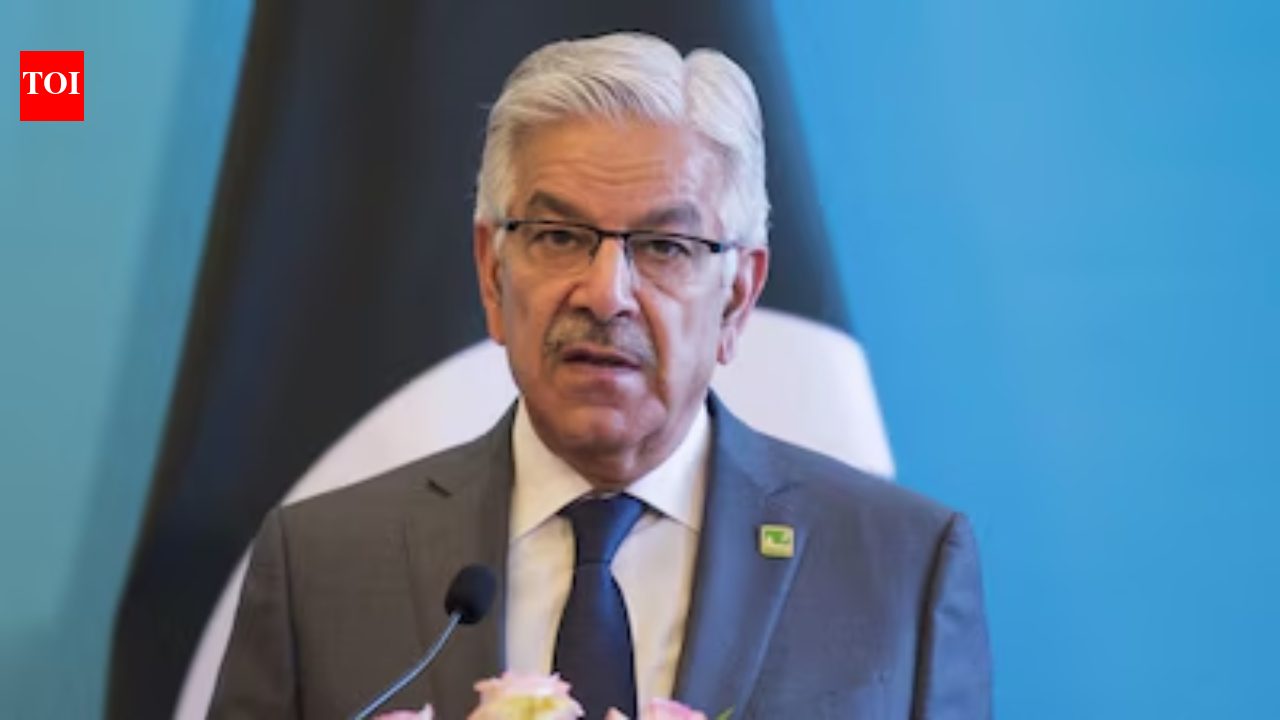
Khawaja Asif (File photo)

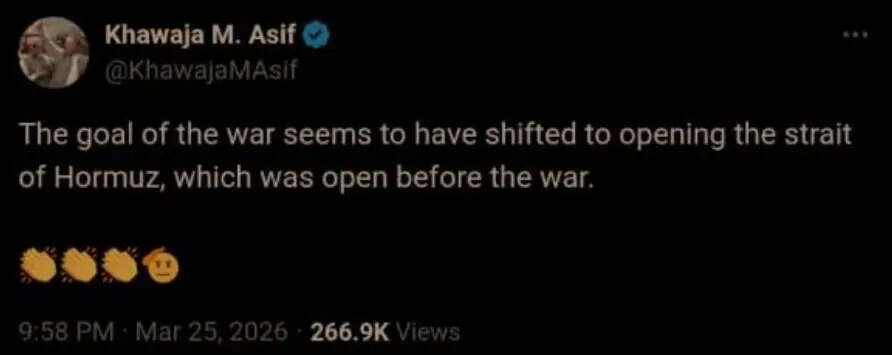
NEW DELHI: Pakistan defence minister Khawaja Asif took a jibe at the United States and Israel, saying that the goal of their war against Iran has “shifted to reopening the Strait of Hormuz.”Click here for live updates“The goal of the war seems to have shifted to opening the Strait of Hormuz, which was open before the war,” Asif posted on X on Wednesday.

Khawaja Asif  X post

Khawaja Asif X post

Iran has effectively blocked the Strait of Hormuz in retaliation for the US and Israeli strikes on February 28. The waterway is a key global route, carrying about 20% of the world’s crude oil shipments, making it crucial for international energy supplies.Also Read | ‘Friendly nations’ only: Iran allows India, Pakistan, 3 other countries to use Strait of Hormuz amid warOn Monday, US President Donald Trump backed off his threat to “hit and obliterate” Iran’s power plants after giving Tehran a 48-hour “ultimatum” to reopen the Strait of Hormuz. He announced a five-day pause, saying there were “productive talks” between Washington and Tehran.Iran, however, rejected that claim.Previously, Trump pressed US allies to send their navies to help escort vessels through the Strait of Hormuz, but many countries declined to commit warships despite his calls.Iran has maintained that the waterway remains open for international shipping except for its “enemies” — a not‑so‑veiled reference to the US and Israel.Pakistan has reportedly offered to mediate between the United States and Iran, with US Vice President JD Vance expected to travel to Islamabad for the talks.Also Read | Iran wants to negotiate with JD Vance, rejects Kushner, Witkoff: Who’s involved in peace talks?According to reports, Pakistan is positioning itself as a “neutral venue,” with contacts underway to hold a meeting in the neighbouring country’s capital.Pakistan’s powerful army chief, Asim Munir, is also said to have spoken with Trump, while Prime Minister Shehbaz Sharif has held multiple conversations with Iranian President Masoud Pezeshkian.


Source link

‘Potential to mislead’: FIR registered against X for AI video on PM Modi, ECI chief Gyanesh Kumar | India News


'Potential to mislead': FIR registered against X for AI video on PM Modi, ECI chief Gyanesh Kumar
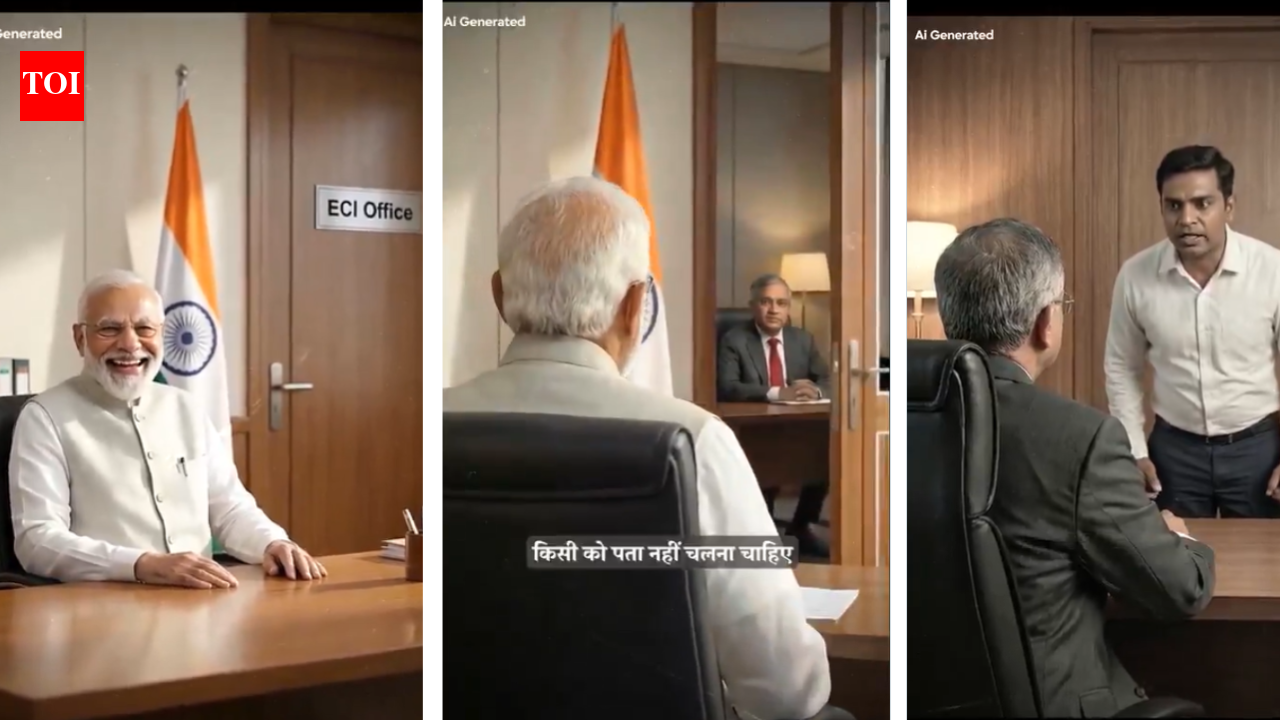
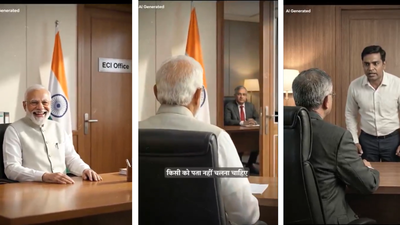
Case registered against X platform over ‘defamatory’ AI video against PM, ECI.

NEW DELHI: Kerala Police have launched a criminal probe into an AI-generated video allegedly targeting Prime Minister Narendra Modi and the Election Commission of India, booking both the platform X Corp and a user account for its circulation.The cyber wing said the video, flagged by authorities including the ECI, appeared designed to mislead viewers and erode confidence in key constitutional institutions at a sensitive election time.An FIR has been filed in Thiruvananthapuram against the handle Laxmi N Raju (@valiant_Raju), along with other unidentified individuals and X Corp. Investigators are examining who created and amplified the clip, and whether there was coordinated intent behind its spread.According to police, the 77-second video was shared with the potential to trigger public unrest. Authorities have also alleged that the platform failed to act despite being asked to take it down.The case invokes provisions of the Bharatiya Nyaya Sanhita related to provocation, forgery and public mischief, as well as identity theft under the IT Act.Officials said takedown notices have been issued and steps taken to contain further circulation, in line with election rules.Issuing a public advisory, police warned against sharing unverified or manipulated content during the polls, saying any attempt to distort the electoral process would invite strict legal action.


Source link

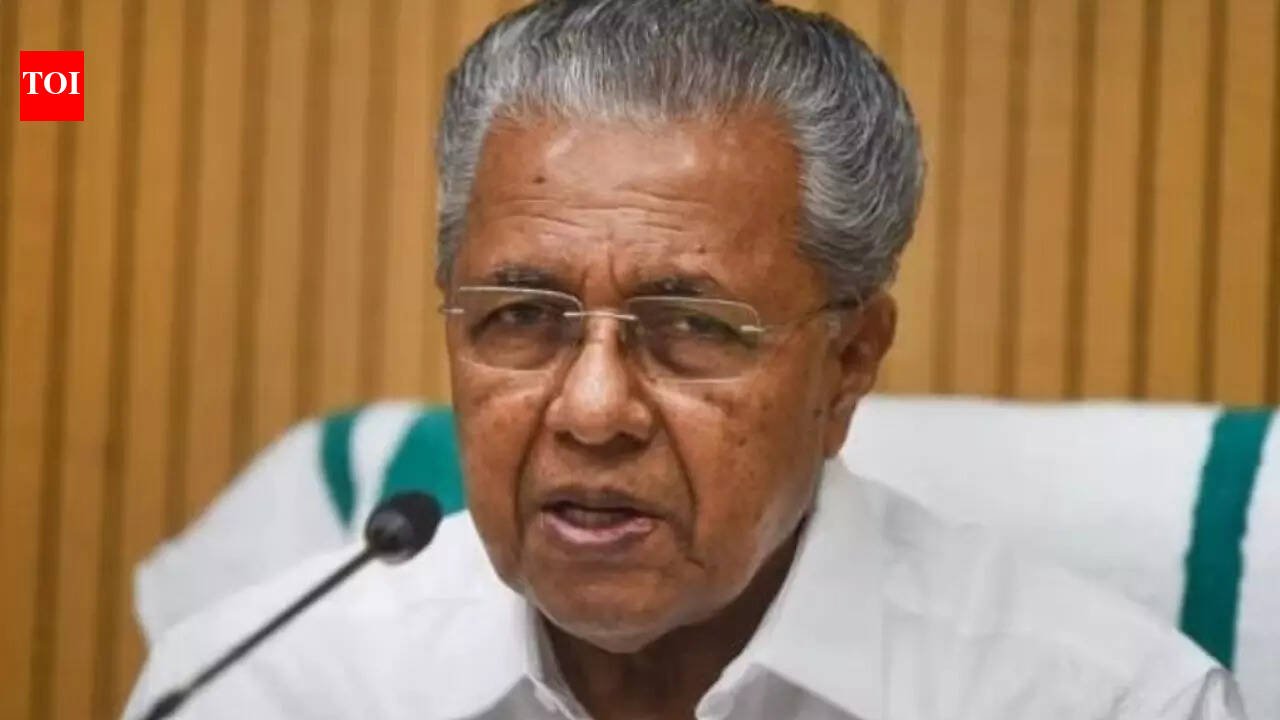
Pinarayi Vijayan: ‘Misogynistic and insulting’: Keralam CM Pinarayi Vijayan slams UDF leader A Irshad’s ‘beauty’ remark on MLA Pratibha | India News


Keralam Chief Minister Pinarayi Vijayan on Wednesday condemned remarks made by a UDF leader against Kayamkulam MLA U Prathibha, calling them “misogynistic and insulting”. The comments were made by IUML leader A Irshad during an election event ahead of the April 9 polls, where he alleged that Prathibha was “selling” her eloquence and beauty for a third win and accused her of not working for the people.

Watch

Kerala Poll Row: BJP Seal Appears on EC Letter, Opposition Alleges Collusion

“Now she is again seeking a win from the constituency by selling her eloquence and beauty,” Irashad had alleged.Vijayan said attacking a woman with derogatory words because she is a public representative shows “a collapse of the political culture”. In a statement, he said such “character assassinations” were being used as the opposition could not politically counter the development work done in the constituency. He added that the remarks were not just against one person, but an insult to all women in public life, and said the opposition was mistaken if it thought it could gain votes by insulting women instead of discussing real issues.Meanwhile, Prathibha said she would take legal action after informing the Election Commission. She said she was shocked by the remarks and called them “beyond character assassination”“During elections, people look at the heart and mind of the candidate and not their body. I have given my heart and my energy to Kayamkulam and worked hard for it. The mindset that a woman is only a body is wrong. It was a shameful statement,” she said.Speaking to a TV channel and later at a press conference in Kayamkulam, Prathibha became emotional and questioned how such remarks could be made by a leader of a major political front. “I was deeply hurt by what I heard,” she said as tears flowed down her cheeks.


Source link

As new Nepal PM takes charge, panel seeks prosecution of Oli over deadly Gen Z protests | India News


As new Nepal PM takes charge, panel seeks prosecution of Oli over deadly Gen Z protests
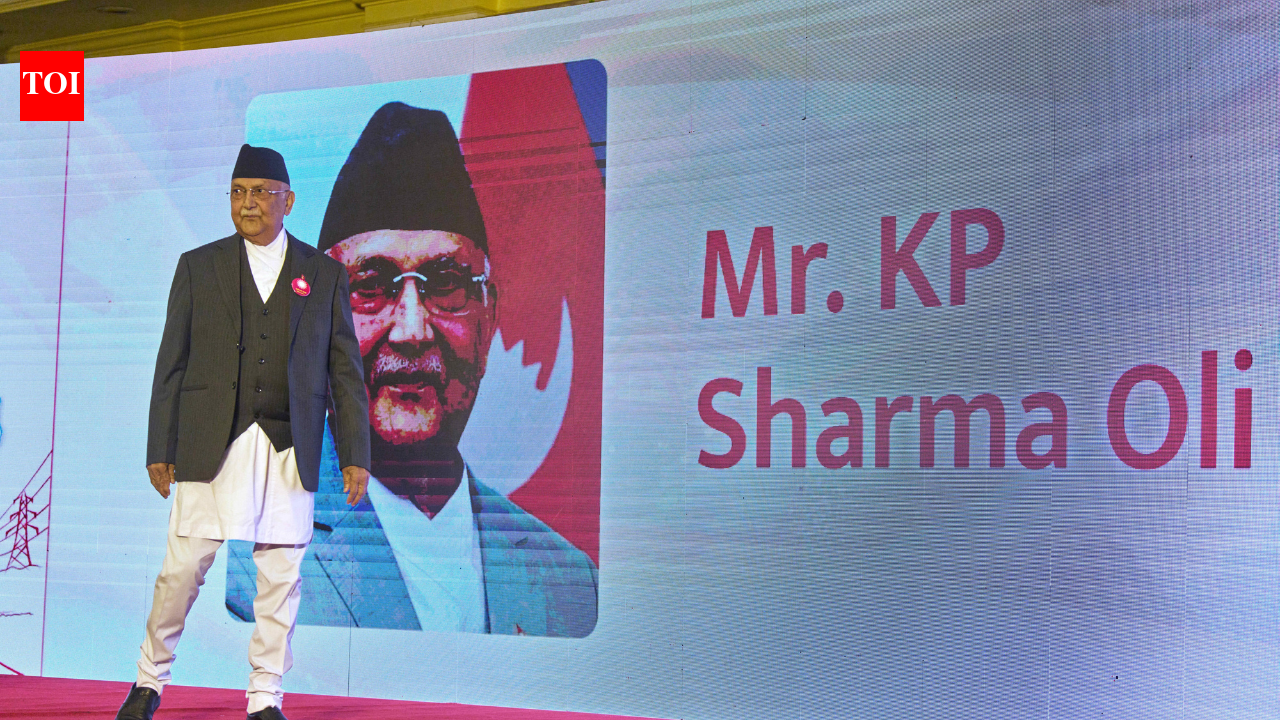
Khadga Prassad Oli. (AP photo)

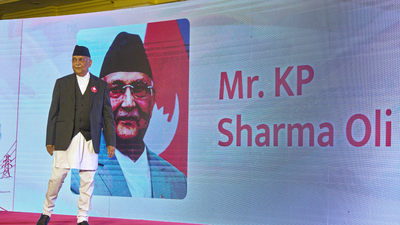
A government-backed inquiry in Nepal has recommended prosecuting former prime minister KP Sharma Oli and senior officials over the deadly September 2025 uprising, according to a leaked report.The protests, triggered by a brief social media ban but fuelled by deep economic discontent, left at least 77 people dead. Nineteen of them — mostly young protesters — were killed on the first day as security forces cracked down.The report, according to AFP, finds that Oli and then interior minister Ramesh Lekhak failed to act to prevent escalating violence. It also recommended action against former police chief Chandra Kuber Khapung.While investigators found no clear order to open fire, they concluded that authorities made no effort to halt the shooting, and that “negligent conduct” led to civilian deaths, including minors.The unrest spiralled the next day, with government buildings set ablaze and the crisis ultimately forcing the government to collapse.Oli, a four-time prime minister, lost elections earlier this month. A new government led by Balendra Shah is set to take office on Thursday.In the immediate aftermath of the violence, former chief justice Sushila Karki was appointed interim prime minister and set up the inquiry.The commission interviewed more than 200 people and compiled a 900-page report with thousands of pages of supporting material. Though the government has indicated it will release the findings, the report has not yet been made public — even as victims’ families demand accountability.


Source link

Vijay Mallya reflects on RCB’s historic ₹16,700 sale ahead of IPL 2026


The Indian Premier League (IPL) has entered a new stratosphere of financial dominance following the landmark acquisition of the Royal Challengers Bengaluru (RCB). In a deal that has sent shockwaves through the global sports market, a high-powered consortium led by the Aditya Birla Group completed a 100% buyout of the franchise for a staggering $1.78 billion (approximately ₹16,700 crore). This historic transaction not only crowns RCB as the most expensive franchise in IPL history but also signals a seismic shift in how premier sporting assets are valued in India.

The acquisition, which includes both the men’s IPL team and the reigning Women’s Premier League (WPL) champion side, was finalized in March 2026. The winning consortium brings together a formidable blend of Indian industrial heritage and global private equity, featuring the Aditya Birla Group, Blackstone, David Blitzer’s Bolt Ventures, and the Times of India Group. Under the new leadership, Aryaman Vikram Birla, a former professional cricketer and director at the Aditya Birla Group, is set to take the helm as Chairman.

Vijay Mallya shares his views on RCB’s record-breaking ₹16,700 crore pact

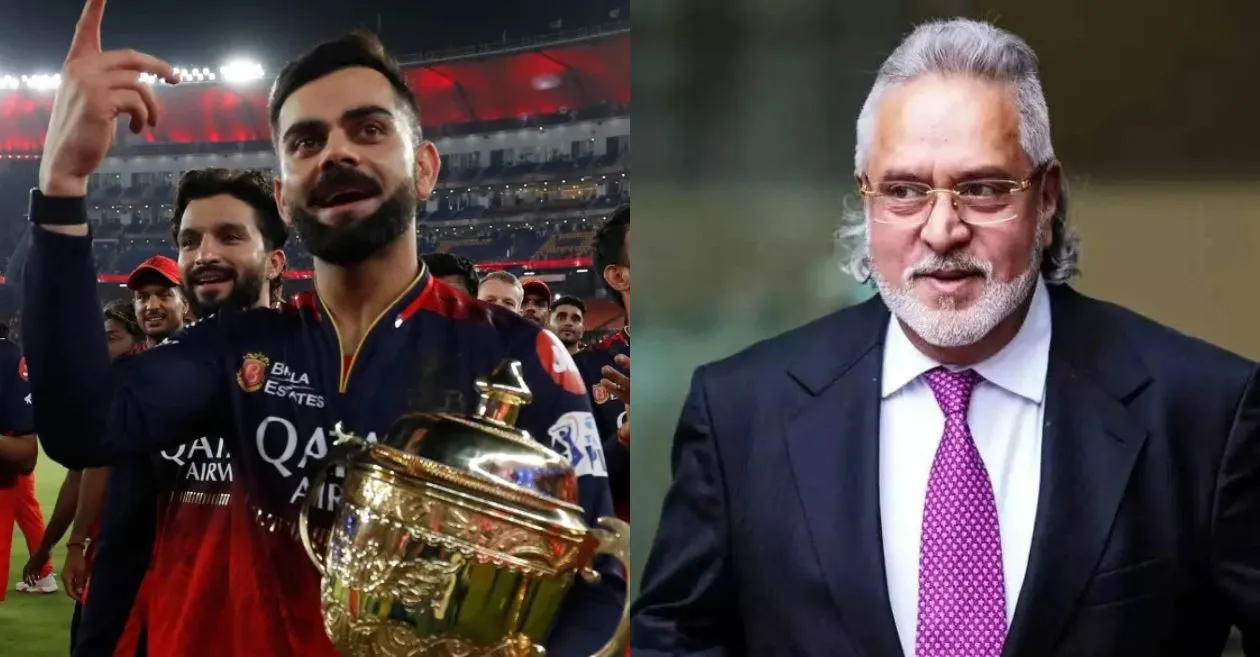
Reacting to the news from the UK, the franchise’s founding father, Vijay Mallya, took to social media to reflect on the team’s meteoric rise. Mallya, who originally purchased the franchise in 2008 for ₹450 crore ($111.6 million), noted with a sense of ‘immense gratification’ how his initial investment has grown nearly 37 times over 18 years. He recalled the scepticism he faced during the league’s inception, noting that many critics dismissed his bid as a mere ‘vanity project.’

I would like to heartily congratulate the new owners of RCB. I wish them the very best and Godspeed with the most valuable IPL franchise. When I bought the franchise in 2008 for INR 450 crores, most people laughed at me and criticised my investment as a vanity project. Behind my much touted madnesses was building the Royal Challenge brand and hence I named the franchise RCB. Immensely gratifying to see my INR 450 crore investment grow to INR 16,500 crores. RCB will always remain a part of my DNA with indelible memories including picking the young Virat Kohli who is now amongst the best in the World. To all RCB fans who came on board during my stewardship and beyond, a grateful thank you and please continue to support RCB the Lion of Bengaluru. Namaskara,” Mallya posted on X.

He emphasized that the franchise remains part of his “DNA,” particularly highlighting his role in the 2008 signing of a young Virat Kohli. Kohli, who led the team to its first-ever IPL title in 2025, has become the face of a brand that now commands a premium valuation 15% to 20% higher than other top-tier teams.

Also READ: Consortium led by Aditya Birla Group acquires RCB in record-breaking deal ahead of IPL 2026

A new era of global investment in Indian sports

The RCB deal was the second half of a historic ‘double-header’ for IPL business. Just days earlier, the Rajasthan Royals were acquired for $1.63 billion (approx. ₹15,300 crore) by a consortium led by US-based tech entrepreneur Kal Somani. This group included heavyweights like Rob Walton (heir to the Walmart fortune) and the Hamp family (owners of the NFL’s Detroit Lions).

The sale by United Spirits Limited (Diageo India) marks a strategic exit for the beverage giant, which categorized the sports asset as ‘non-core.’ For the new owners, the appeal lies in the IPL’s resilient brand equity, which was recently valued at over $18.5 billion. With the inclusion of global giants like Blackstone and Bolt Ventures, who hold stakes in the Philadelphia 76ers and Crystal Palace, RCB is expected to transition into a ‘global sporting institution’ while maintaining its deep-rooted connection to the fans in Karnataka.

Also READ: IPL 2026: Who is Aryaman Birla? Meet the new chairman of RCB


Source link

PSL 2026 live streaming: When and where to watch matches, full details | Cricket News


PSL 2026 live streaming: When and where to watch matches, full details
Pakistan Super League trophy: (Image credit: PSL)

The Pakistan Super League (PSL) 2026 begins under unusual circumstances, with the tournament returning to a closed-door, broadcast-first model due to the ongoing regional crisis. With rising fuel costs and government advisories restricting travel, the Pakistan Cricket Board has taken the tough call to stage the league without spectators, turning it into a television-driven spectacle.Go Beyond The Boundary with our YouTube channel. SUBSCRIBE NOW!Despite the limitations, the PSL remains Pakistan’s biggest cricket event, drawing global attention with its mix of international stars and local talent. This year’s edition will be held across just two venues — Lahore and Karachi — instead of the originally planned multi-city format. The move significantly reduces logistical demands while ensuring the tournament goes ahead uninterrupted.

Watch

RCB’s big changes ahead of IPL: New rules, tribute & squad update

PCB chairman Mohsin Naqvi acknowledged the difficulty of the decision, stating it wouldn’t be appropriate to host thousands of fans while the public is being urged to stay home. The situation brings back memories of the COVID-19 era, when empty stadiums became the norm. For players and fans alike, the focus now shifts to screens, with broadcast and streaming becoming the only way to follow the action.With eight teams, overseas stars, and 44 matches lined up, PSL 2026 promises competitive cricket even in a restricted setting. Here’s all you need to know about when and where to watch the matches live:

PSL 2026 Live Streaming: Full Details

When is PSL 2026 starting?PSL 2026 begins on Thursday, March 26.Which teams will play the opening match?Lahore Qalandars will face Hyderabad Kingsmen in the opening fixture.What time does the opening match start?The match starts at 7:30 pm IST, with the toss at 7:00 pm IST.Where will the opening match be played?The opening game will be held at Gaddafi Stadium in Lahore.Where can you watch PSL 2026 live in India?There is no official TV broadcast or live streaming platform available in India for PSL 2026.PSL 2026 SQUADSRawalpindiz: Mohammad Rizwan (c), Sam Billings, Jalat Khan, Yasir Khan, Naseem Shah, Rishad Hossain, Daryl Mitchell, Mohammad Amir, Abdullah Fazal, Amad Butt, Dian Forrestor, Laurie Evans, Asif Afridi, Kamran Ghulam, Fawad Ali, Mohammad Amir Khan, Shahzaib Khan, Cole McConchie, Saad Masood.Multan Sultans: Ashton Turner (c), Mohammad Nawaz, Shehzad Gul, Faisal Akram, Imran Randhawa, Arafat Minhas, Sahibzada Farhan, Steve Smith, Peter Siddle, Tabraiz Shamsi, Lachlan Shaw, Delano Potgieter, Josh Philippe, Shan Masood, Momin Qamar, Muhammad Awais Zafar, Muhammad Shahzad, Arshad Iqbal, Mohammad Wasim Jnr, Muhammad Ismail, Atizaz Habib Khan.Karachi Kings: David Warner (c), Hasan Ali, Mohammad Abbas Afridi, Khushdil Shah, Saad Baig, Moeen Ali, Azam Khan, Haroon Arshad, Salman Ali Agha, Shahid Aziz, Mir Hamza, Adam Zampa, Mohammad Hamza Sohail, Aqib Ilyas, Khuzaima Bin Tanveer, Reeza Hendricks, Muhammad Waseem, Ihsanullah, Rizwanullah.Lahore Qalandars: Shaheen Shah Afridi (c), Abdullah Shafique, Sikandar Raza, Mohammad Naeem, Mustafizur Rahman, Asif Ali, Haris Rauf, Usama Mir, Fakhar Zaman, Ubaid Shah, Haseebullah, Mohammad Farooq, Daniel Sams, Parvez Hussain Emon, Hussain Talat, Tayyab Tahir, Dunith Wellalage, Rubin Hermann, Maaz Khan, Shahab Khan, Gudakesh Motie.Peshawar Zalmi: Babar Azam (c), Sufyan Moqim, Abdul Samad, Ali Raza, Aaron Hardie, Aamir Jamal, Khurram Shahzad, Khalid Usman, Mohammad Haris, Abdul Subhan, James Vince, Michael Bracewell, Kusal Mendis, Iftikhar Ahmed, Nahid Rana, Mirza Tahir Baig, Kashif Ali, Shahnawaz Dahani, Farhan Yousuf, Shoriful Islam, Tanzid Hasan Tamim, Brian Bennett.Hyderabad Kingsmen: Marnus Labuschagne (c), Usman Khan, Akif Javed, Maaz Sadaqat, Saim Ayub, Mohammad Ali, Saad Ali, Kusal Perera, Muhammad Irfan Khan, Hassan Khan, Shayan Jahangir, Glenn Maxwell, Hammad Azam, Riley Meredith, Sharjeel Khan, Asif Mehmood, Hunain Shah, Rizwan Mehmood, Tayyab Arif, Ahmed Hussain, Maheesh Theekshana.Islamabad United: Shadab Khan (c), Salman Irshad, Andries Gous, Devon Conway, Faheem Ashraf, Mehran Mumtaz, Max Bryant, Mark Chapman, Nisar Ahmed, Mir Hamza Sajjad, Sameen Gul, Sameer Minhas, Imad Wasim, Richard Gleeson, Haider Ali, Mohammad Hasnain, Dipendra Singh Airee, Mohammad Faiq, Mohammad Salman Mirza.Quetta Gladiators: Saud Shakeel (c), Usman Tariq, Hasan Nawaz, Shamyl Hussain, Alzarri Joseph, Rilee Rossouw, Ahmed Daniyal, Abrar Ahmed, Jahanzaib Sultan, Jahandad Khan, Khawaja Mohammad Nafay, Wasim Akram Jnr, Khan Zeb, Bismillah Khan, Saqib Khan, Ahsan Ali, Brett Hampton, Sam Harper, Bevon Jacobs, Ben McDermott, Tom Curran, Khalil Ahmed.


Source link

How Iran’s hit on Qatar LNG will impact global supply to buyers like India, Pakistan; China largely secure


How Iran’s hit on Qatar LNG will impact global supply to buyers like India, Pakistan; China largely secure
Around 80% of Qatar’s LNG exports are directed to Asia, but higher prices are forcing India to look for alternative supplies. (AI image)

The US-Iran war has had far reaching implications beyond the immediate rise in global oil and gas prices. The Middle East conflict has led to hits on key energy infrastructure in Gulf countries, impacting future production and supply of liquefied natural gas (LNG).The conflict is disrupting the global LNG market, as rising prices, damage to key export infrastructure in Qatar, and possible delays in new supply projects cast uncertainty over demand projections, particularly from price-sensitive buyers in Asia.“We expect this gas price crisis will lead some countries to reconsider growing their gas demand at the rate we previously forecast and so LNG demand growth will be lower than our pre-war forecast,” said Lucien Mulberg, an analyst at S&P Global.

LNG Supply Constraints To Persist

Iran’s closure of the Strait of Hormuz, a critical route accounting for about 20% of global LNG trade, along with damage to Qatar’s liquefaction facilities that could sideline 12.8 million tonnes per year of capacity for three to five years, has led consultancies such as S&P Global, ICIS, Kpler and Rystad Energy to lower their global supply forecasts by as much as 35 million tonnes.This reduction is roughly 500 LNG cargoes, enough to cover more than half of Japan’s annual LNG imports or meet Bangladesh’s demand for about five years!Also Read | How Iran’s strikes on Qatar’s Ras Laffan, world’s largest LNG hub & other Middle East oil & gas infra, will impact IndiaPrior to the conflict, analysts had projected global LNG supply to increase by up to 10% this year, reaching between 460 million and 484 million metric tonnes, supported by new capacity additions, mainly from the United States and Qatar, with demand expected to grow at a similar pace, according to a Reuters report.S&P Global estimates that exports from Qatar and the United Arab Emirates could drop by about 33 million tonnes this year. It has also reduced its supply projections by an additional 19 million tonnes annually between 2027 and 2029, citing anticipated delays in Qatar’s North Field expansion and ADNOC’s Ruwais LNG projects currently under development.

LNG prices surge beyond Asian demand comfort levels

Amid the supply disruption, LNG prices in Asia have surged 143% since the US-Israeli conflict with Iran began on February 28, marking the second major spike in four years after Russia’s invasion of Ukraine.Prices have climbed to a more than three-year high of $25.30 per million British thermal units, significantly above the $10 per mmBtu level typically associated with stronger demand from emerging markets. Analysts expect prices to remain above this threshold through 2027.Rabobank has projected that Asian LNG prices will average $16.62 per mmBtu this year and $13.60 in 2027, while UBS has raised its forecast to $23.60 per mmBtu for the current year and $14.50 for the next.“In the near term, the market rebalances primarily through higher prices and demand destruction in South Asia,” said Laura Page, manager of LNG Insight at Kpler.

Industrial demand weakens across South and Southeast Asia

Around 80% of Qatar’s LNG exports are directed to Asia, but higher prices are forcing cost-sensitive buyers such as Bangladesh and India to look for alternative supplies while increasingly shifting to coal and domestic gas, the Reuters report said.Pakistan, which depends heavily on LNG imports from Qatar, has introduced measures such as a four-day work week to manage energy shortages. Demand has declined in energy-intensive industries including fertilisers and textiles.“There is a demand destruction process going on,” said Iqbal Ahmed, Chairman and CEO of Pakistan GasPort, which co-owns an LNG import terminal.In India, industrial players said sectors such as petrochemicals and ceramics have also been affected.The United States, currently the world’s largest LNG exporter, is unlikely to compensate for the shortfall, as its export facilities are operating close to full capacity and most volumes are tied up in long-term agreements.“There’s just no way to easily replace the lost volumes, and no amount of portfolio optimisation or cargo swaps will bridge the gap between the lost supply and current demand… which is a significant blow to energy security for those countries that are relying on those volumes,” said Seb Kennedy, an independent analyst at Energy Flux News.According to Sam Reynolds, LNG research lead at Institute for Energy Economics and Financial Analysis, the situation could accelerate efforts in Asia to adopt domestic energy alternatives, potentially resulting in a lasting reduction in LNG demand.

China remains largely unaffected

China, the world’s leading LNG importer, had already begun reducing its dependence on the fuel. After a decade of rapid growth in imports, Beijing shifted its strategy toward boosting domestic gas production, increasing pipeline supplies from Russia, and expanding renewable energy capacity.A state-run Chinese gas trader said that rising domestic output, additional inflows through the Power of Siberia pipeline, and continued volumes from Russia’s Arctic LNG 2 project are expected to more than compensate for any disruption in Qatari shipments, which make up about 6% of China’s annual gas consumption of roughly 400 billion cubic metres.In contrast, markets that are less sensitive to price fluctuations, such as Japan and South Korea, are unlikely to significantly alter their LNG procurement strategies. As the second- and third-largest importers globally, both countries have limited domestic gas production and lack access to pipeline supplies.JERA, Japan’s largest LNG buyer, said it continues to view Qatar as a dependable supplier and does not plan to change its contracting strategy.“I don’t think the fundamental fact that the Middle East – and Qatar in particular – plays an important role will change,” said executive Ryosuke Tsugaru.


Source link

85+ year Harvard study reveals people with THIS kind of job are the unhappiest


85+ year Harvard study reveals people with THIS kind of job are the unhappiest

Some of the unhappiest jobs are also some of the loneliest, according to an 85‑year‑long study led by Harvard researchers. While it’s hard to pin down any single job title as the “most miserable,” the researchers have found that certain job features seem to reliably wear people down – especially when work feels emotionally isolating. The problem isn’t just long hours or low pay; it’s the quiet absence of real human connection that often leaves employees feeling empty, exhausted, and stuck.Dr. Robert Waldinger, a professor of psychiatry at Harvard Medical School and director of the famous Harvard Study of Adult Development—one of the longest‑running investigations into happiness—explained to CNBC Make It that jobs with little human interaction and almost no chance to form real relationships with colleagues very often end up with the most dissatisfied workers. The Harvard study, which has followed more than 700 people since 1938, has found that money, prestigious titles, intense exercise routines, or even a strict healthy diet don’t hold a candle to positive relationships when it comes to living a longer, healthier, and genuinely happy life. And that rule applies just as much to work as it does to the rest of life.“It’s a basic social need that should be met in every area of our lives,” Waldinger says. “When people feel more connected at work, they tend to be more satisfied with their jobs and actually do better work.”

The hidden loneliness of modern work

Workplace loneliness is far more widespread than most of us realise. Some of the most isolating jobs involve long stretches of independent work and very few real conversations, such as truck driving, night‑shift security work, or solitary roles in large warehouses. In tech‑driven fields like package and food delivery, workers often move from one drop‑off to the next with no colleagues in sight. In online retail or big‑box warehouses, the pace is so relentless that people on the same shift may never learn each other’s names.Loneliness isn’t only a problem for people in solo roles, though. Even those in busy, social‑feeling jobs can feel profoundly alone if their interactions are shallow or stressful. Customer‑service workers, especially those in call centres, often bear the brunt of this. “We know that people in call centres are often enormously stressed by their jobs, mainly because they’re on the phone all day with frustrated, impatient people,” Waldinger explains. Constant demands without emotional support can create a kind of social isolation that feels just as heavy as physical solitude.And the emotional toll isn’t just psychological. Recent research suggests that chronic loneliness as we age can increase the risk of early death as much as smoking, obesity, and physical inactivity. Feeling disconnected from others at work isn’t just an “off‑day” issue; over time, it can quietly chip away at both mental health and physical well‑being.

Social connection: a quiet superpower at work

The Harvard team’s findings point to a surprisingly simple antidote: small, intentional moments of connection. Creating even brief opportunities for socialising at work can be deeply restorative. A five‑minute catch‑up with a friendly colleague, joining a workplace book club, or signing up for an intramural sports league can give exhausted employees a sense of belonging they may not get from their actual tasks.The way a company is structured also matters. “If you’re encouraged to work in teams, it’s much easier to build positive relationships,” Waldinger says. “But if you’re expected to keep your head down, compete with others, and stay constantly focused on your own tasks, that becomes a very different experience.”Some managers still see chatting and laughter at the office as a sign that people aren’t working hard enough. Waldinger and his colleague, Dr. Marc Schulz, the associate director of the Harvard study, push back against this idea in their book The Good Life. In fact, research shows the opposite: a 2022 Gallup report found that employees who say they have a “best friend” at work are more engaged and more productive than those who don’t.When people look for jobs, they usually focus on salary, benefits, or commute time. But Waldinger and Schulz argue that the potential for real, positive relationships at work is another kind of benefit—one that can dramatically shape the day‑to‑day experience of work. “Positive relationships at work lead to lower stress levels, healthier employees, and fewer evenings spent coming home upset,” they conclude. In the end, strong, caring connections aren’t just a “nice to have”—they’re one of the quiet but powerful keys to a happier, more meaningful working life.


Source link

‘Lacks basic understanding’: Keralam CM Pinarayi Vijayan slams Rahul Gandhi, calls Congress ‘B-team’ of BJP | India News


Kerala Assembly Elections 2026: Cong Demands Public Debate on Manifesto, Targets LDF Governance

Pinarayi Vijayan, Rahul Gandhi

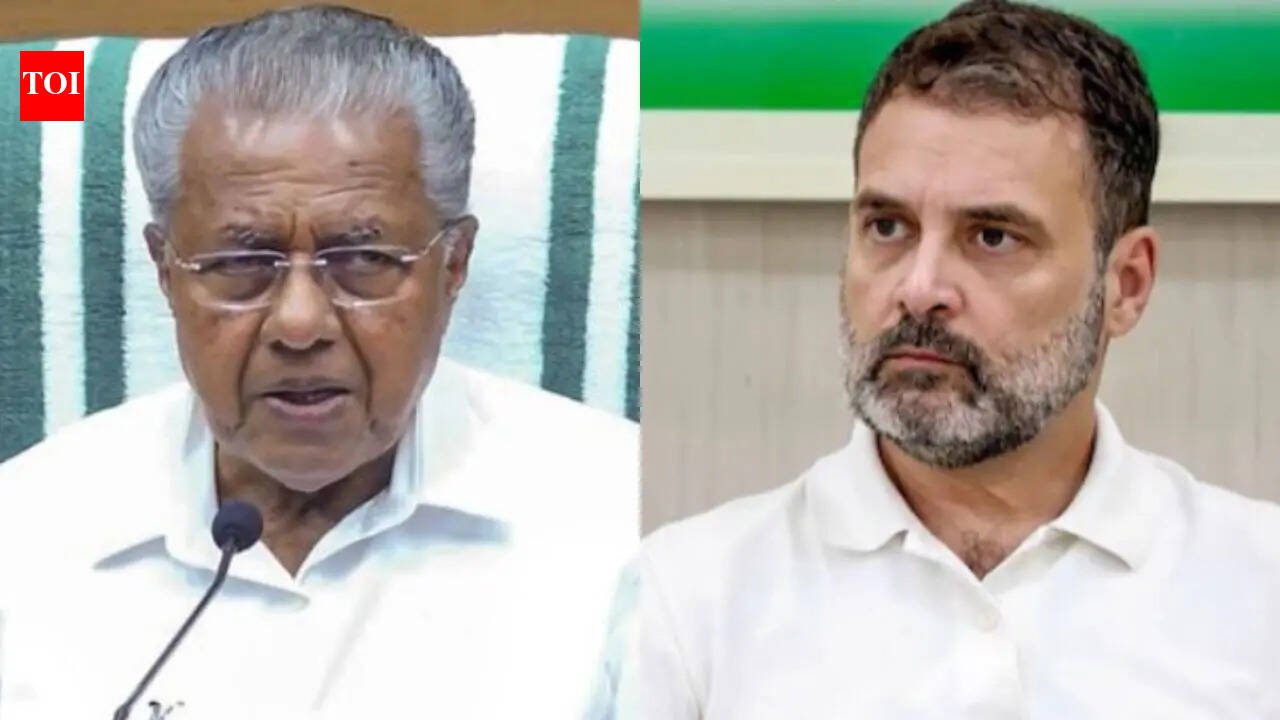
NEW DELHI: Keralam Chief Minister Pinarayi Vijayan on Thursday targeted Rahul Gandhi and the Congress, calling them the “B-team” of the BJP, as the political fight ahead of the state elections intensifies.Addressing a press conference in Ernakulam, Vijayan said Rahul Gandhi lacked even the basic understanding expected from a Congress worker in Kerala.

Watch

Kerala Assembly Elections 2026: Cong Demands Public Debate on Manifesto, Targets LDF Governance

“Rahul Gandhi is a national leader, yet he lacks the basic awareness of even a common local worker of Congress in Kerala; he simply refuses to learn from experience or mistakes. It is hard to understand how such a downfall is happening to him,” he said. “Rahul Gandhi and his Congress are the ‘B-team’ of the BJP in the country, and yet its stance is being adopted across India,” he added.The remarks came a day after Rahul Gandhi accused the ruling Left Democratic Alliance (LDF) of having a hidden understanding with the BJP. Launching the United Democratic Alliance (UDF) campaign in Kozhikode, Rahul said there were only two sides in Kerala politics.“There are actually only two sides fighting here in Keralam. One is the UDF alliance, and the other is the partnership between the BJP and the LDF. The UDF unites people, listens to them, and embraces and empowers them. The LDF and their hidden partner divide people and crush them,” Rahul said.He also questioned the state government’s job promises. Referring to Prime Minister Narendra Modi’s national employment pledge and the Keralam government’s commitments, he said, “Modi ji promised 2 crore jobs at the national level. Keralam Chief Minister promised 40 lakh jobs in the state, and after a decade, you find that they have not given a single job to the people; in fact, they have destroyed jobs.”The Congress leader further said that both the BJP and the LDF do not see themselves as accountable to the people. “Neither the BJP nor the LDF believes they are answerable to the people. They do not believe that the people of Keralam should be able to ask them questions,” he said.Keralam will go to polls in a single phase on April 9, with counting scheduled for May 4. The term of the current assembly ends on May 23.


Source link