Breaking News
The Seat of Power: Depicting the history of India through chairs | Mumbai News


Mumbai: At first glance, it appears to be a furniture exhibition. Look closer, and ‘A History of India Through Chairs’ unfolds as a quiet, rigorous reading of the subcontinent’s past through what has long been taken for granted. Opened this Saturday and running until March 8th at the House of Mahendra Doshi in Wadala, the exhibition approaches seating not as décor, but as evidence.Conceptualised by Vivek Gandhi and curated alongside father Anand Gandhi and uncle Chiki Doshi, the show draws from a lifetime of proximity. Vivek grew up navigating warehouses stacked with chairs, playing hide-and-seek among them. “Growing up around these pieces and hearing stories about royal families and different eras… I was already of the opinion that this is not just furniture, but art and history,” he says. Under the exhibition design of Architect Supriya Gandhi (The Workshop Architects), these pieces are repositioned at the intersection of art, memory, and history.

Mumbai: Flight Disruptions, Digital Arrest, Urban Challenges & More

That impulse shapes the exhibition’s central proposition: chairs are treated as an archive that records transitions often absent from written documents. A Rosewood Indo-Portuguese chair, for instance, carries an Ashoka emblem crudely inserted into its headrest. The emblem is carved from teak, a material that stands in stark contrast to the refined rosewood craftsmanship around it. “The entire area for the emblem has been chiselled roughly and crudely,” Vivek explains. This rough chiselling reveals a physical erasure and replacement, a colonial or religious symbol removed to assert a post-independence identity. Faded government inventory codes on the back suggest the chair’s later life in a bureaucratic office, where multiple regimes quietly coexist in a single object.The selection process was part intuition, part “detective work.” From a holding of over 3,000 chairs, the curators pulled 500 based on visual intrigue. This was followed by painstaking research using old auction catalogues, hand-drawn sketches from the 80s and 90s, and specialist texts on Indian vernacular furniture to locate each chair within its specific era and geography.Together, the chairs map changing ideas of power. Pre-colonial India favoured baithaks and charpais, where conversations and meals were shared. “It was more communal… less ‘one individual per chair,’ which is how the Europeans did it,” Vivek says. Hierarchy still existed, but it was encoded subtly: the “head” versus the “foot” of a seat, or a raised platform. The arrival of European forms altered this grammar; individual chairs, aligned with tables and formal posture, introduced a more rigid spatial ordering. Authority began to sit alone.Colonial administrators brought prototypes, but Indian craftsmen provided the soul, creating hybrid forms where local aesthetics seeped into borrowed typologies. Portuguese-era chairs feature grape and wine motifs rendered with Indian sensibilities, while climate shaped the furniture’s anatomy. European Oak gave way to Teak, Mahogany, and Rosewood, timbers that enabled thinner legs and greater durability in humid conditions. To combat the heat, rattan (cane) replaced heavy upholstery, enabling ventilation in plantation and campaign chairs.Restoration posed its own ethical questions. While many chairs retain their nicks and watermarks to preserve the “patina of usage,” others demanded a near-miraculous revival. One extraordinary example is a chair bought 30 years ago in tatters, covered in tiny, 1mm ceramic motifs. Restoring it required six months of searching before a collective in Gujarat agreed to take on the work, led by a 78-year-old artisan who was the only one willing to handle the intricate, irregular handmade beads. The result is not perfection, but continuity.What ultimately makes the exhibition resonate is its refusal to monumentalize. These chairs were sat on, moved, altered, and repurposed. They witnessed shifts from church to office, from colony to nation, and from community to individual. In reading India through chairs, the exhibition reminds us that history often resides at eye level, directly beneath our weight, waiting to be noticed.


Source link

Middle East on the boil after Khamenei’s death: What does it mean for India’s trade, exports, crude oil & LPG supply?


Middle East on the boil after Khamenei’s death: What does it mean for India’s trade, exports, crude oil & LPG supply?
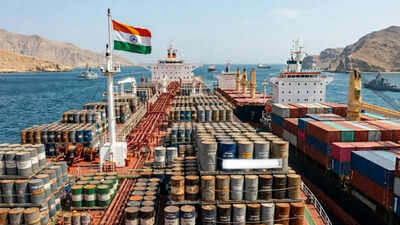
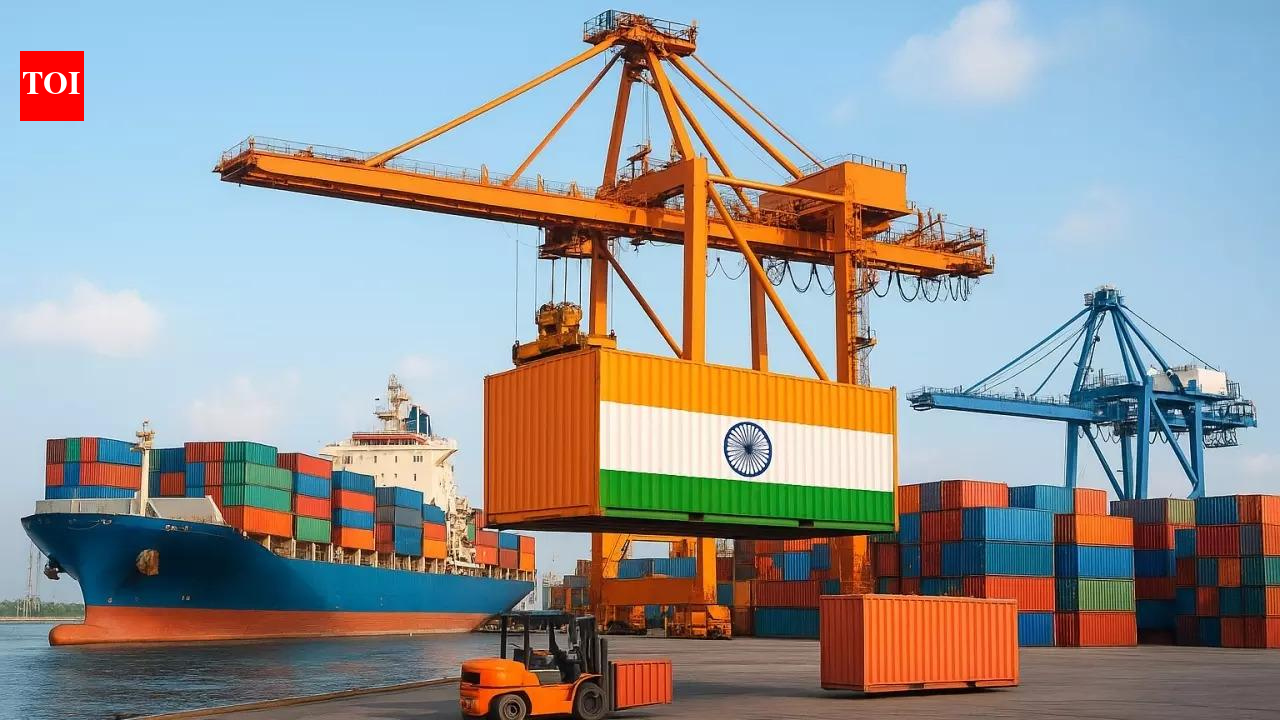
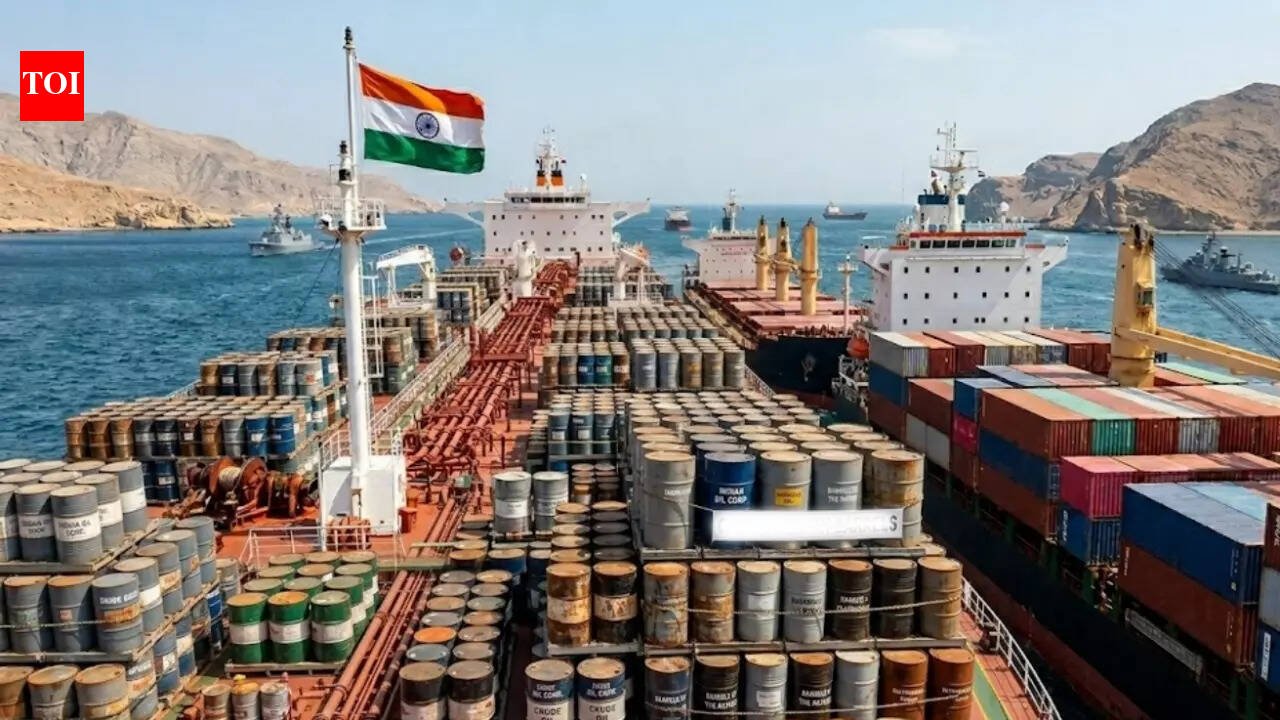
Exporters have raised strong concerns that the conflict could disrupt shipping through the Strait of Hormuz. (AI image)

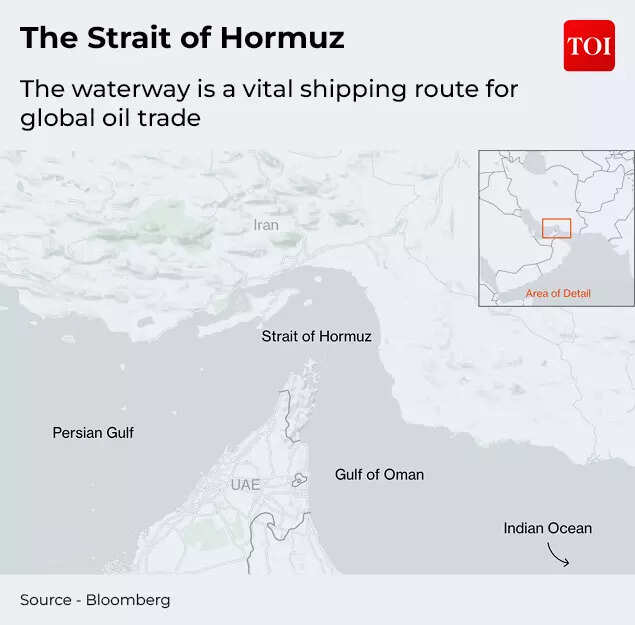
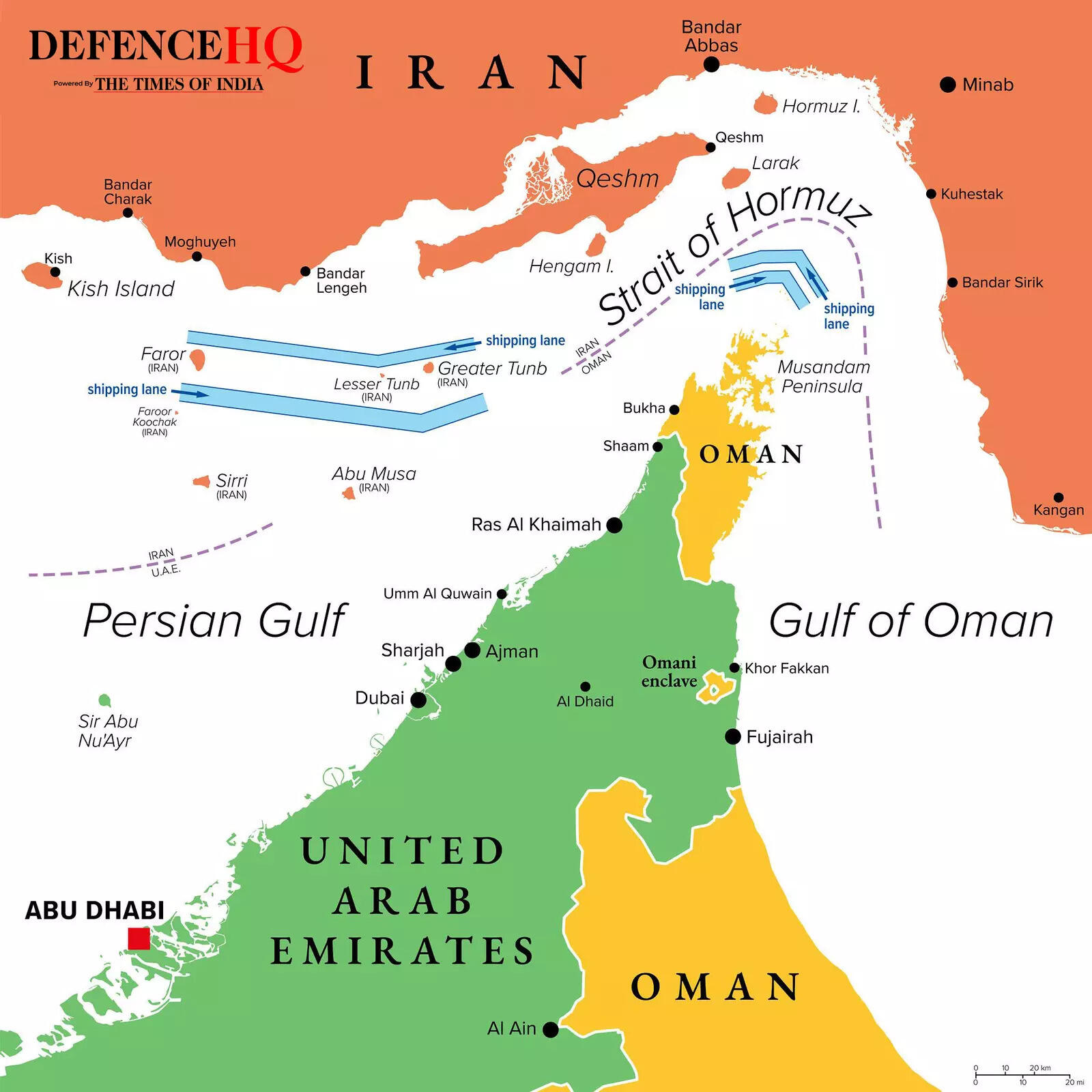
What will be the impact of the ongoing tensions in the Middle East on India’s trade, exports, crude oil and LPG supply? Growing geopolitical tensions in the Middle East following military strikes by the United States and Israel on Iran could disrupt global trade, increase freight and insurance charges, delay cargo movements and trigger a rise in international crude prices, which in turn may inflate India’s import bill, according to experts.The Commerce Ministry has scheduled a meeting on Monday with exporters, shipping companies, freight forwarders and representatives from various ministries to evaluate how rising tensions in the Middle East could affect India’s trade flows.Exporters have raised strong concerns that the conflict could disrupt shipping through the Strait of Hormuz and the Bab el-Mandeb Strait, both of which are crucial maritime corridors. These routes serve as important links connecting India with the Gulf region as well as major markets in North America and Europe.The Strait of Hormuz is a narrow 33-kilometre-wide channel linking the Persian Gulf with the Arabian Sea. While oil is in focus, with regards to disruption in shipments through the Strait of Hormuz, it is important to understand that the passageway is also crucial for other trade as well.According to Ajay Srivastava, founder of Global Trade Research Initiative (GTRI), the immediate impact on India is economic and strategic. “Disruption in the Strait of Hormuz threatens a major share of its crude oil and LNG imports, raising freight costs, insurance premiums, and fuel prices, while a surge in global oil prices could widen the current account deficit and fuel inflation,” he says.Reports indicate that Iran has halted maritime traffic through the Strait of Hormuz, a critical route through which a substantial share of India’s crude oil and liquefied natural gas supplies from Iraq, Saudi Arabia, the UAE and Qatar are transported. Estimates suggest that around 35–50% of India’s crude imports, along with a considerable volume of LNG shipments, move through this strategic corridor.

The Oil Price Spike Risks & LPG Vulnerability:

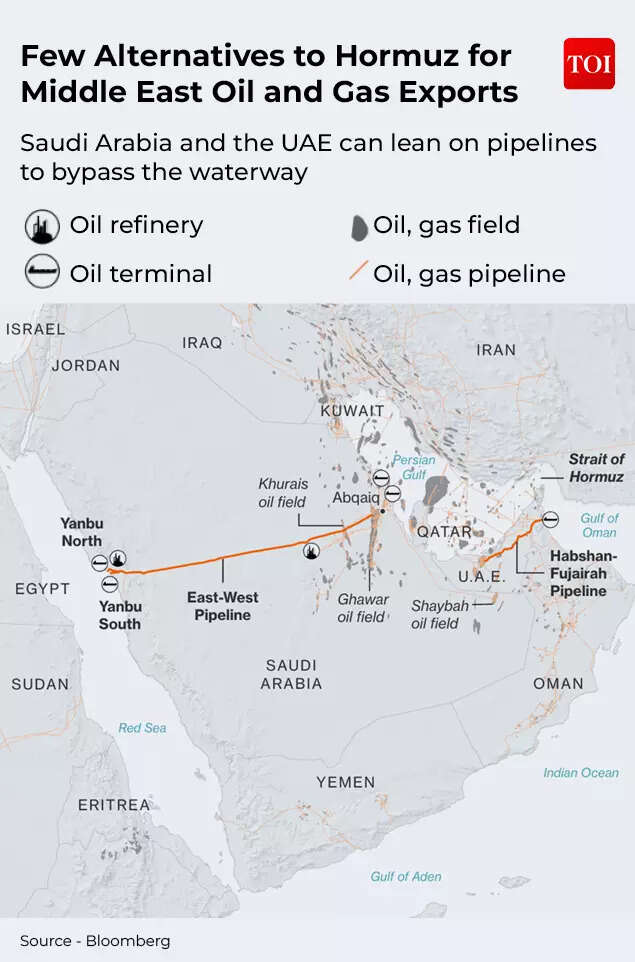
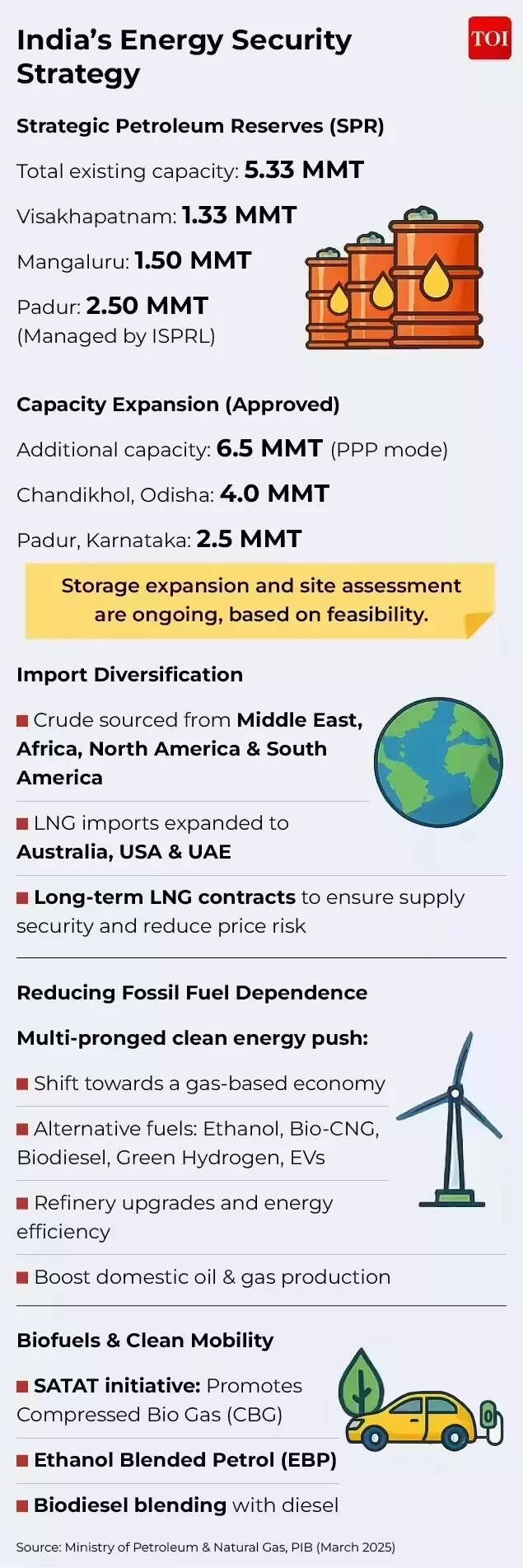
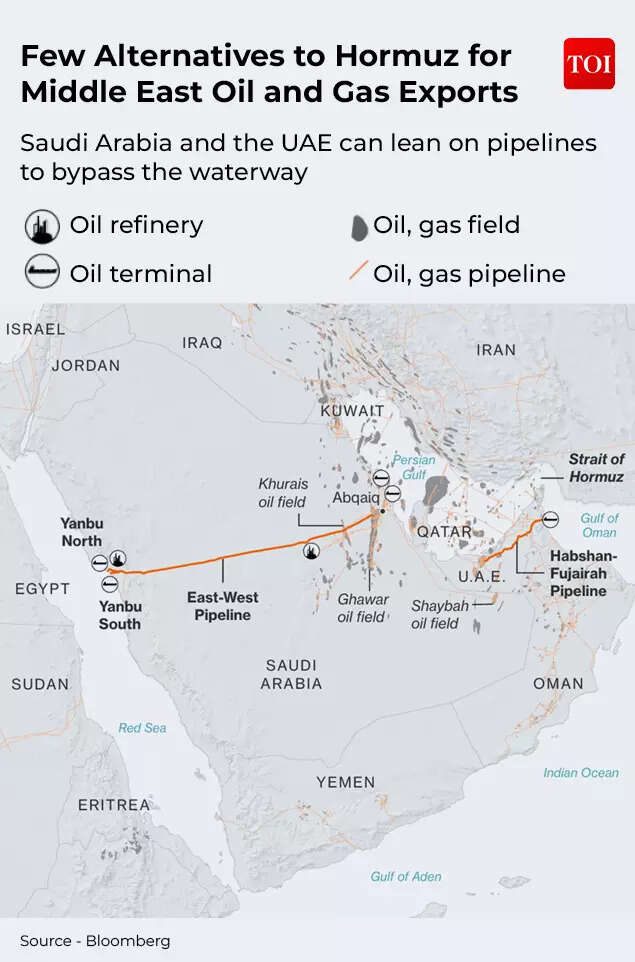
GTRI notes that in response to the closure of the Strait of Hormuz, refiners may reroute cargoes via pipelines to Red Sea ports. India may even source more oil from Russia, the United States, West Africa and Latin America. Finally, there is the option of drawing on strategic petroleum reserves to cushion short-term shocks.

Strait of Hormuz

However, as GTRI points out: these alternatives increase costs and transit times. “The impact would be global, not just Indian. Nearly one-fifth of the world’s oil and a major share of LNG trade flows through the strait, and most shipments are destined for Asian economies including China, Japan and South Korea,” says GTRI.According to GTRI, global crude oil prices are expected to rise sharply, as markets price in the risk of supply disruptions. Brent crude had already climbed to around $70–73 per barrel amid rising tensions, and limited conflict could add $5–$20 per barrel, while disruption to Iranian exports or tanker traffic could push prices above $90 per barrel, the think tank predicts.Sumit Ritolia, Lead Research Analyst, Refining and Modelling at Kpler believes that while India may be able to handle rise in oil prices and short-term crude supply disruptions, the LPG supply is at a greater risk of vulnerability.“Escalating Middle East tensions once again highlight a structural reality: India remains materially exposed to the Strait of Hormuz – not just for crude, but even more so for LPG and LNG,” says Sumit Ritolia.

Few alternatives to Hormuz

Approximately 2.5–2.7 million barrels per day of India’s crude oil imports pass through the Strait of Hormuz, with major supplies originating from Iraq, Saudi Arabia, the United Arab Emirates and Kuwait. Over the past few months, the share of Middle Eastern crude in India’s import mix has grown as refiners reduced part of their intake of Russian oil. This shift has increased the relative importance of Gulf supplies, making India more sensitive in the near term to any disruption in Hormuz transit.Shipping data from Kpler indicates that Russian crude cargoes remain available in waters around the Indian Ocean and Arabian Sea, including supplies held in floating storage. If flows from the Middle East were to tighten, Indian refiners could potentially increase purchases of Russian grades within a short period, says Ritolia.Although India sources crude from multiple regions, Gulf supplies continue to hold a logistical edge, with shipping times typically ranging from five to seven days compared with approximately 25 to 45 days for cargoes arriving from the Atlantic basin.

India's energy security

Importantly, India imports roughly 80–85% of its LPG requirements, with most of these supplies coming from Gulf producers and moving almost entirely through the Strait of Hormuz. In contrast to crude oil, India does not maintain strategic reserves of LPG on a comparable scale, making supply chains for this fuel more vulnerable to logistical disruptions.

Risks To Trade & Exports

As GTRI notes, India’s trade with Iran remains modest due to long-standing US sanctions that restrict banking channels, shipping, and energy transactions. “In 2025, India exported goods worth about $1.2 billion to Iran, dominated by agricultural products — rice alone accounted for roughly $747 million, followed by bananas ($61 million) and tea ($51 million). On the import side, India bought about $408.6 million worth of goods from Iran, including petroleum coke ($135.7 million), apples ($71.5 million), and dates ($33.3 million). India’s trade with Iran is limited but further instability may disrupt these flows,” GTRI says.However, trade and exports to other parts in the region, and transiting through the Strait of Hormuz face risks.The Commerce ministry has arranged the discussions to review how the rapidly changing situation may influence India’s external trade.The Federation of Indian Export Organisations President SC Ralhan has said the hostilities have already started affecting established global logistics networks. He noted that airlines are modifying flight paths, while sea trade across the Red Sea and vital Gulf passages is facing increased uncertainty.If diversions continue, cargo bound for Europe and the United States may have to be routed around the Cape of Good Hope, extending transit times by an estimated 15 to 20 days. Such disruptions are expected to push up freight charges and insurance costs for exporters.Industry representatives have said it may take several days before there is clarity regarding shipping capacity, revised routes, insurance cover and freight pricing.

Basmati exports

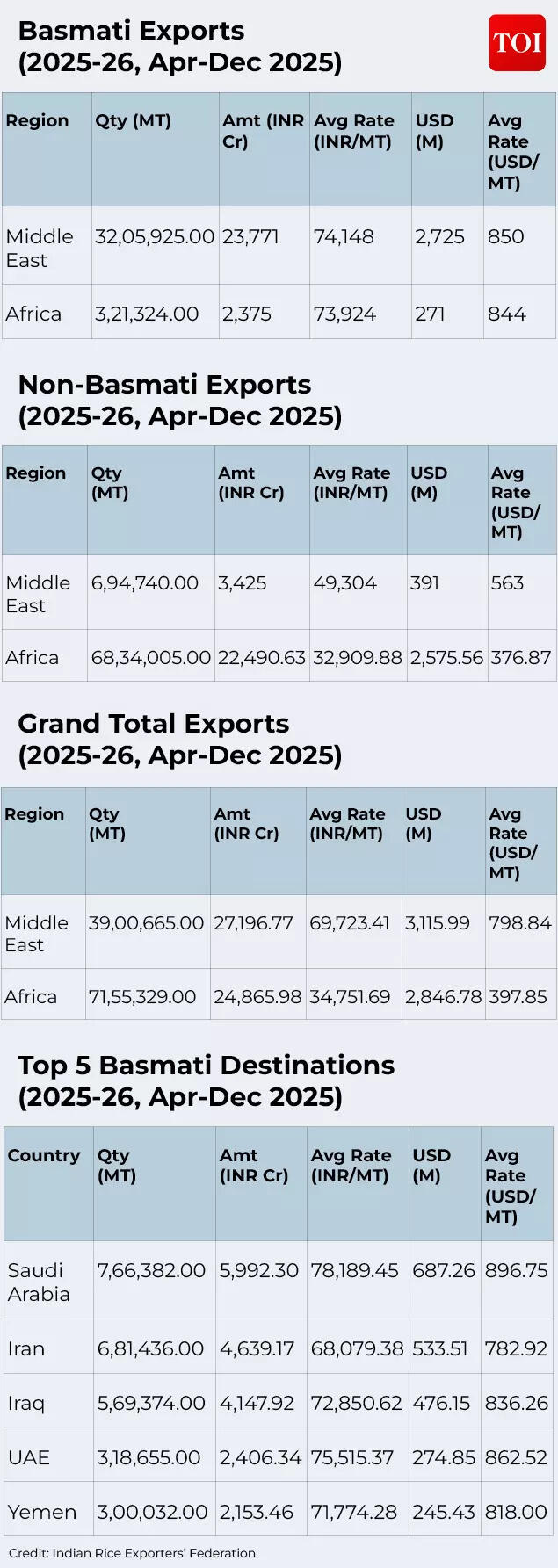
The Indian Rice Exporters Federation on Sunday urged its members to refrain from taking on fresh cost, insurance and freight obligations for shipments to Iran and other Gulf markets, cautioning that the situation could disrupt logistics and drive up transportation and insurance expenses.The organisation cautioned that developments in Iran and the United Arab Emirates could quickly influence bunker fuel prices and affect the availability of both container ships and bulk carriers. It warned that freight charges for containers and bulk cargo could rise sharply at short notice, leaving exporters vulnerable to losses on contracts with fixed delivered prices.The federation pointed out that five major destinations for Basmati rice – Saudi Arabia, Iran, Iraq, the United Arab Emirates and Yemen – are located in West Asia and together account for nearly half of India’s Basmati exports.West Asia hosts key maritime corridors through which a significant portion of India’s exports to major destinations such as the United States and Europe are transported. Together, these markets account for roughly 56% of the country’s merchandise exports.Trade analyst Biswajit Dhar said that the conflict has already affected shipping operations and could create difficulties for Indian exporters.“Oil prices may rise to $120-130 per barrel, and it would push our import bill, and may hurt inflation,” Trade analyst Biswajit Dhar told PTI, adding that a prolonged crisis could also affect remittance inflows.He further noted that negotiations for a free trade agreement with the Gulf Cooperation Council (GCC) could slow if instability persists. India has recently initiated discussions for a trade pact with the GCC, which comprises Saudi Arabia, the UAE, Qatar, Kuwait, Oman and Bahrain.Around 10 million Indians currently live and work across GCC countries.India’s free trade agreement with the UAE came into effect May 2022 and it has recently concluded a Comprehensive Economic Partnership Agreement with Oman.The Bab-el-Mandeb Strait serves as an essential maritime link connecting the Red Sea and the Mediterranean region with the Indian Ocean. Ships that depart from Indian ports typically travel west across the Arabian Sea, go through the Red Sea, pass through the Suez Canal and then continue into the Mediterranean before reaching their European destinations.The alternative route via the Cape of Good Hope is longer and slower but reduces exposure to disruptions in the Suez Canal region. It is generally preferred for bulk cargo movements or during periods of political instability in the Middle East.



Source link

T20 World Cup: South Africa coach’s ‘cupcake’ jibe after another ‘chokers’ reminder | Cricket News


T20 World Cup: South Africa coach's 'cupcake' jibe after another 'chokers' reminder
South Africa’s Marco Jansen and teammates (ANI Photo)

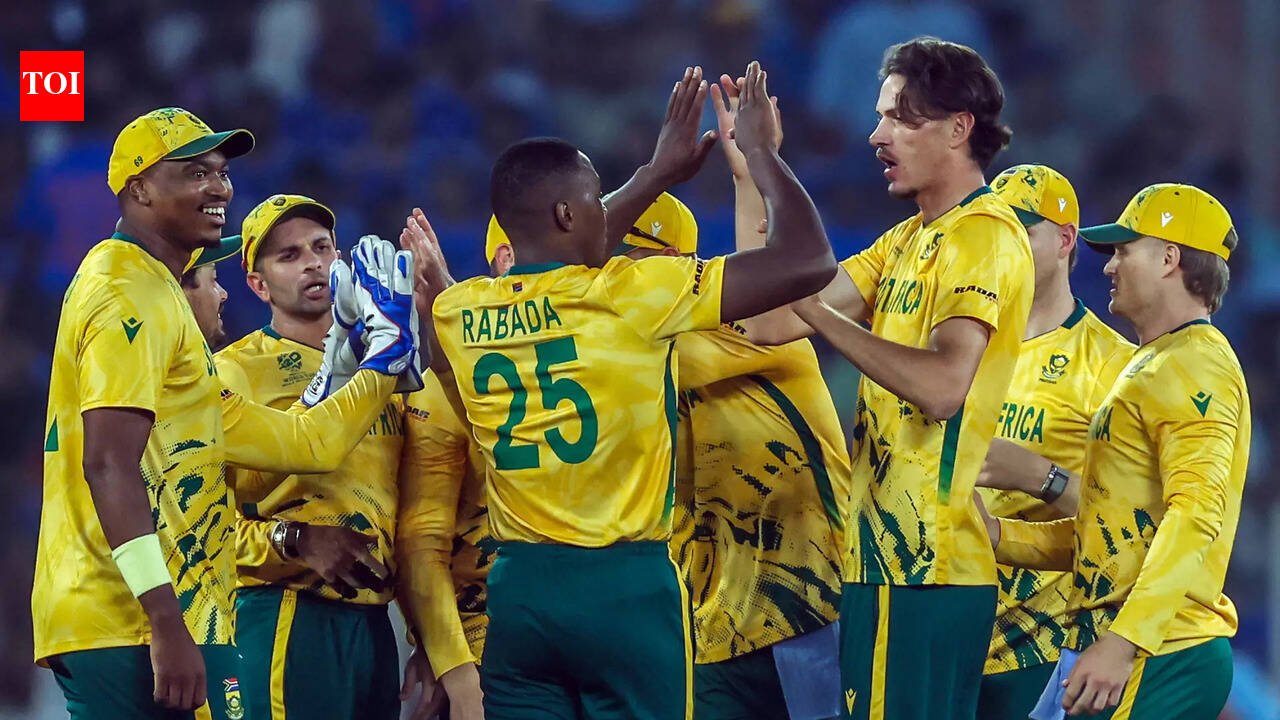
TimesofIndia.com in New Delhi: South Africa are on an unbeaten run in the T20 World Cup. Except for the double Super Over against Afghanistan, they’ve steamrolled top teams, including India, whom they beat by 76 runs. On a seven-match winning streak, South Africa hopes to shed their ‘chokers’ tag.The legacy of that tag has followed the Proteas for the past two decades. It started with the 1999 World Cup loss to Australia and persisted until the 2024 T20 World Cup, losing the final to India in the Caribbean.

T20 World Cup: Ashwell Prince press conference before SA vs ZIM

Now, the reigning World Test Championship winners are the team to beat in the T20 World Cup being played in India and Sri Lanka. Their winning run continued with a 5-wicket win over Zimbabwe on Sunday. Coach Shukri Conrad was asked if this brings pressure and the much-dreaded reminder of being chokers?“There’s always pressure. I think it’s what you do with that pressure and how you shift the pressure. As for the C-word [chokers], I think there’s another one for that – ‘cupcakes.’ I’m sure we kind of enjoyed that,” said Conrad.The cupcake reference relates to a TV advert in the lead-up to the India vs South Africa Super Eight match where an Indian fan jokingly told a South Africa supporter about “repeating history” from the 2024 T20 World Cup while teasing them over a cupcake. But after South Africa’s resounding win against India in Ahmedabad, that dig flipped on its head.“No, there’s always pressure and it’s really about embracing that pressure. And we don’t do things any differently. We’re going to prepare exactly the same way for New Zealand. Whether we start as favourites? Probably because we’re the only unbeaten side in the competition. But I don’t know if that adds to the pressure,” continued Conrad.“I think the semi-final is pressure enough. Playing a tough side in New Zealand is pressure enough. So there’s no added pressure.“I’m glad that we’re favourites because I always felt that as a South African team you want to be able to play as a favourite because it’s easy being an underdog. The expectation isn’t that much. But if we can continue doing what we’re doing then we need a little bit of luck along the way as well.“Hopefully that will give us the result on Wednesday and then on to our ‘home ground’ in Ahmedabad,” he finished cheekily.


Source link

Gold, silver rate outlook: Will Middle East tensions trigger a fresh bullion rally? Here’s what experts say


Gold, silver rate outlook: Will Middle East tensions trigger a fresh bullion rally? Here's what experts say

Gold and silver prices are expected to begin the week on a strong note when trading resumes on Monday, as escalating tensions in the Middle East push investors toward safe-haven assets, analysts said.The surge in risk aversion follows US President Donald Trump’s announcement of “major combat operations” in Iran after Israeli strikes on Tehran. Iranian state media confirmed on Sunday the death of Supreme Leader Ayatollah Ali Khamenei, triggering retaliatory strikes by Iran on US military installations and Israeli targets in the region, PTI reported.Market experts said the trajectory of bullion prices will depend on the duration and intensity of the conflict, as global investors reassess risk exposure amid fears of prolonged instability.“Gold and silver prices are set to remain highly volatile with gap-up on the opening session on Monday as the Middle East conflict involving renewed US and Israeli military action against Iran — continues to dominate global risk sentiment,” Jateen Trivedi, VP Research Analyst – Commodity and Currency, LKP Securities, said.He added that escalating hostilities and fading hopes of a swift diplomatic resolution are driving investors towards traditional safe-haven assets. “As global equities and risk assets come under pressure, capital tends to shift into precious metals, which act as a hedge against uncertainty,” Trivedi said.The domestic commodities market will remain closed on Tuesday for Holi.On the Multi Commodity Exchange (MCX), silver futures for March delivery surged Rs 22,054 or 8.72 per cent last week, while gold futures for April delivery rose Rs 5,228 or 3.33 per cent.Pranav Mer, Vice President, EBG – Commodity & Currency Research, JM Financial Services, said bullion ended another week in positive territory, with silver rising over 8 per cent and gold gaining 3.2 per cent.“Bullion remains supported by a safe-haven bids, persistent buying from central banks and exchange-traded funds, amid rising geopolitical and economic uncertainty in the global markets,” Mer said.He noted that the recent US Supreme Court ruling against Trump’s trade tariffs, terming most of them illegal, has added to global uncertainty, with several companies filing refund lawsuits.In international markets, Comex silver futures jumped USD 10.34 or 12.55 per cent over the past week, while gold gained USD 167 or 3.3 per cent.Trivedi also pointed to energy market developments, saying rising crude oil prices due to fears of supply disruptions through the Strait of Hormuz are further supporting bullion interest.“However, the impact may not be uniform — if over the weekend there are diplomatic developments or indications of de-escalation, precious metals could see profit-taking after an initial spike of 3-6 per cent,” he cautioned.Analysts added that macroeconomic data releases this week, including manufacturing and services PMI readings, US retail sales, non-farm payrolls and employment data, as well as Eurozone inflation and the European Central Bank meeting, will also influence global market sentiment.(Disclaimer: Recommendations and views on the stock market, other asset classes or personal finance management tips given by experts are their own. These opinions do not represent the views of The Times of India)


Source link

‘900 strikes during first 12 hours’: All about the US-Israel operation that killed Iran’s Khamenei


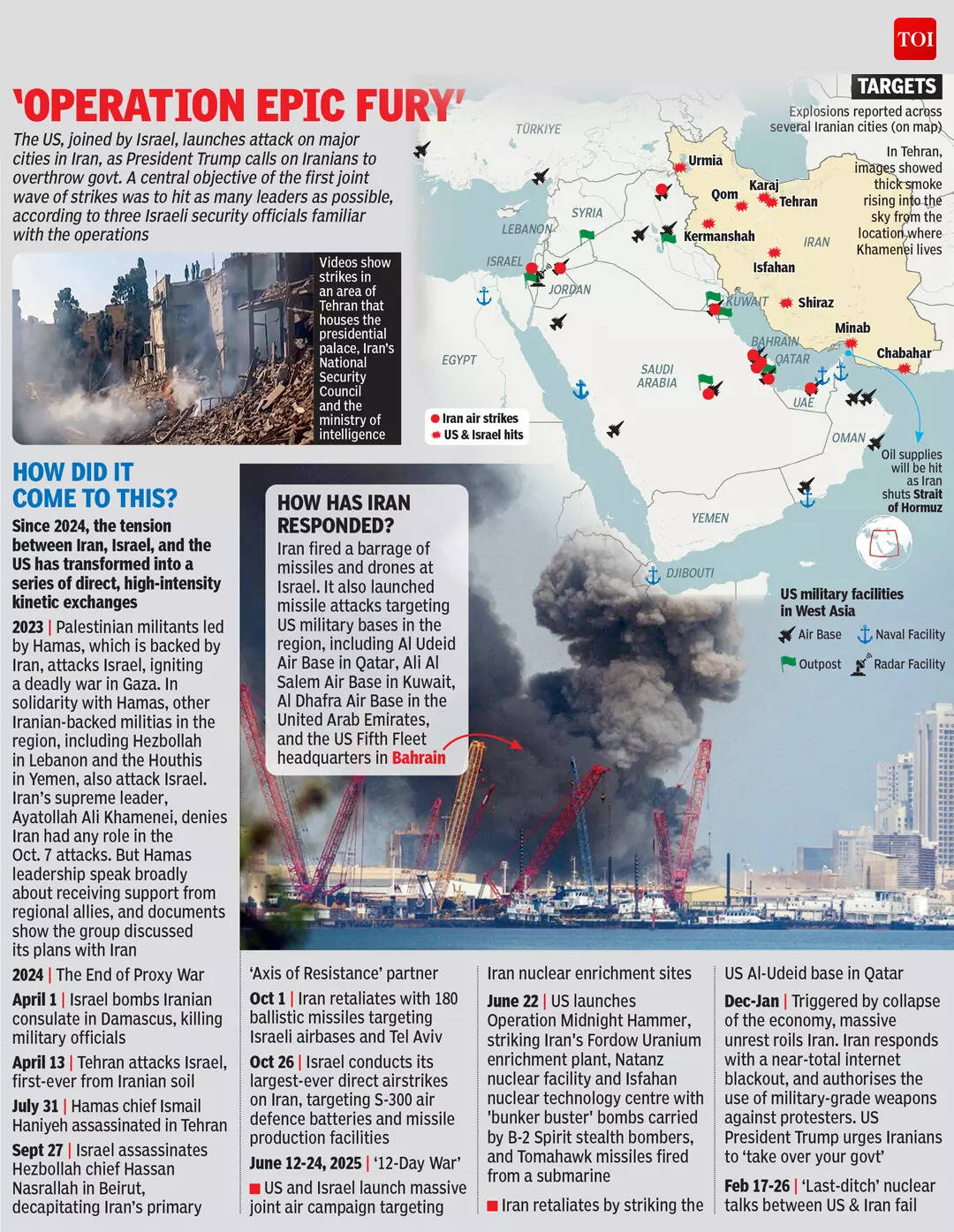
The United States launched nearly 900 strikes within the first 12 hours of a joint operation with Israel that officials say killed Iran’s Supreme Leader, Ayatollah Ali Khamenei, in one of the most dramatic escalations in Middle East tensions in decades.Dubbed Operation Epic Fury, the assault began at around 9:30am local time in Tehran and involved coordinated attacks from land, air and sea. An unnamed US official told Fox News that the strikes were carried out while American forces simultaneously defended against hundreds of incoming Iranian ballistic missiles.

‘KHAMENEI IS DEAD!’: Trump Declares End Of Iran Supreme Leader In Israel-US Attack

President Donald Trump described the campaign as “major combat operations”, aimed at dismantling Iran’s military capabilities and eliminating what he called the threat of Tehran developing a nuclear weapon.Iran later formally confirmed his death.

900 strikes in 12 hours: How Operation Epic Fury unfolded

According to the US official cited by Fox News, American forces carried out nearly 900 strikes in the first half-day of fighting. The targets included Revolutionary Guard command facilities, missile and drone launch sites, air defence systems and military airfields.One of the earliest targets was near Khamenei’s compound. The 86-year-old cleric had ruled Iran since 1989 and wielded ultimate authority over the country’s political and military structures.The official said Iran fired around 300 missiles during the same 12-hour period. Despite what the US military described as “hundreds of Iranian missile and drone attacks”, American bases reported no casualties and only minimal damage.

-

Iran’s arsenal is believed to include roughly 2,000 long-range missiles and another 2,000 shorter-range systems, replenished after previous US and Israeli strikes last summer. The stated objective of Operation Epic Fury, the official said, is to ensure Iran no longer has the “capability to attack its neighbours: no drones, no missiles, no navy”.Washington also claims it knows where Iran is stockpiling highly enriched uranium, though the official admitted the sites are difficult to reach. Several Iranian air defence systems remain operational, meaning further suppression efforts are expected before US and Israeli aircraft can operate freely over Iranian skies.The campaign could last “a couple of weeks”, though Trump retains the option of ending it sooner.

Iran strikes back as region braces for wider conflict

Tehran responded with missile and drone attacks targeting Israel and US installations in Bahrain, Kuwait and Qatar. Bahrain said a missile targeted the headquarters of the US Navy’s Fifth Fleet, though the US official claimed the strikes hit “empty warehouses” and did not affect operational aims.Kuwait reported a drone strike on its main international airport, injuring several employees, while shrapnel wounded troops at Ali Al-Salem air base. Explosions were also reported in Qatar, and Jordan said it intercepted dozens of drones and ballistic missiles. Saudi Arabia said it repelled attacks targeting Riyadh and its eastern region.Inside Israel, the military said “dozens” of Iranian missiles were fired, many intercepted. Emergency service Magen David Adom reported 89 people lightly injured.

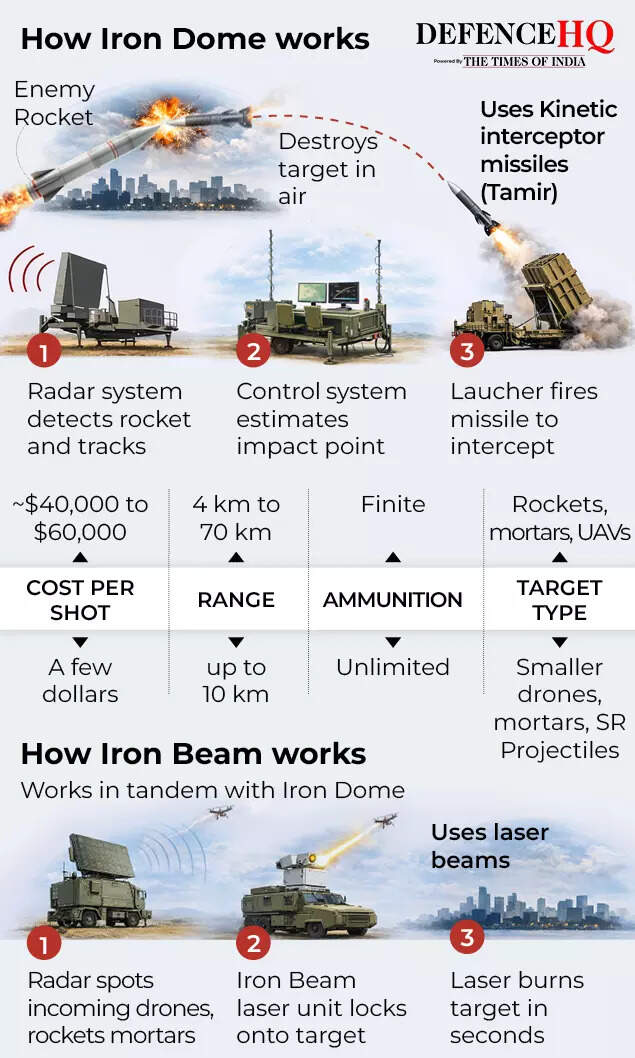
How Iron Dome Beam works

Iranian state media, citing the Red Crescent, said at least 201 people were killed and more than 700 injured in the initial wave of strikes. A local governor told state television that more than 80 people were killed at a girls’ school in the south, with dozens wounded. The US military said it was reviewing reports of civilian casualties.

.

Trump calls on Iranians to rise up

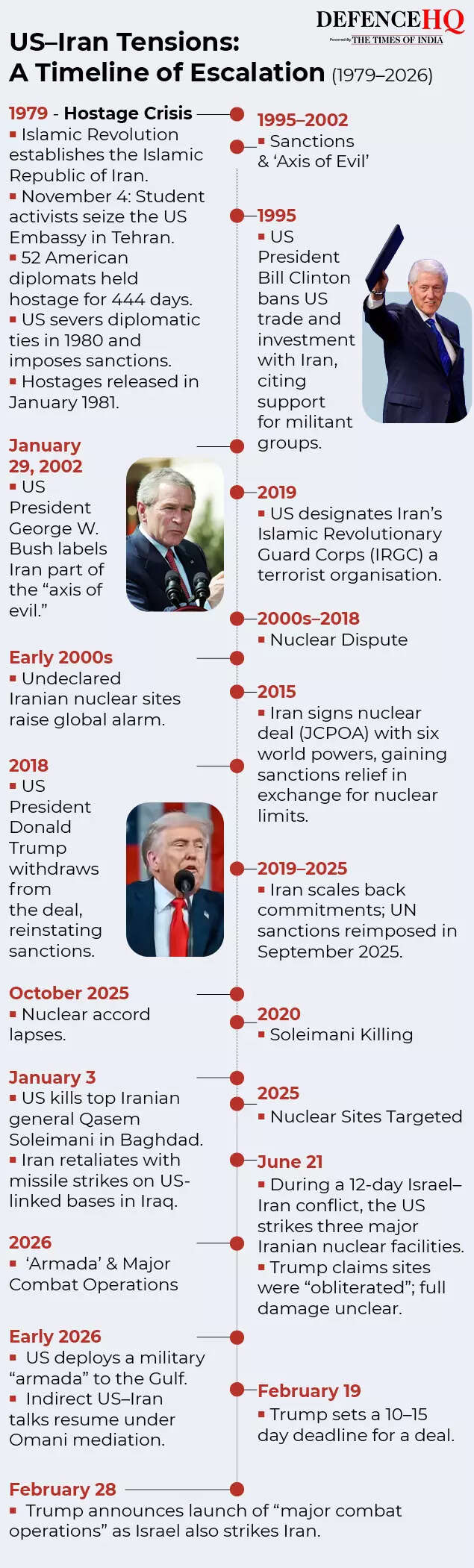
In an eight-minute video posted online, Trump framed the operation as part of a broader confrontation with Iran’s leadership dating back to the 1979 Islamic Revolution.

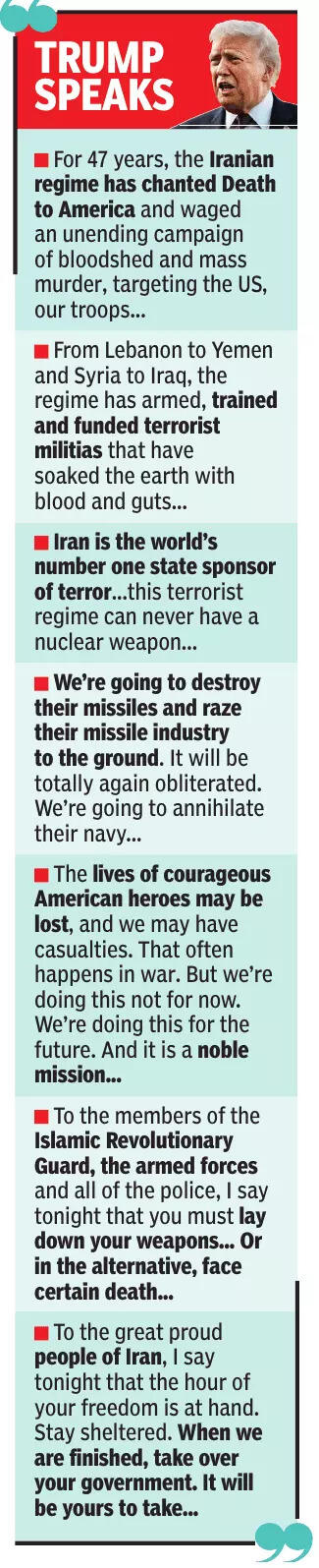
Trump speaks

“When we are finished, take over your government,” he said. “It will be yours to take. This will be probably your only chance for generations.”

Strait of Hormuz copy (1)

.

The strikes came days after renewed US-Iran talks over Tehran’s nuclear programme stalled. In recent months, Washington had built up a substantial military presence in the region, including deployments of the aircraft carriers USS Abraham Lincoln and USS Gerald R. Ford, alongside guided-missile destroyers and more than 10,000 additional troops.

.

Airspace closures across Israel, Iran, Qatar, Kuwait, Bahrain, Iraq and Syria left tens of thousands of travellers stranded, while markets braced for potential disruption to shipping through the Strait of Hormuz, through which roughly a third of the world’s seaborne oil exports pass.


Source link

Will PCB sack him? Pakistan captain Salman Ali Agha responds after T20 World Cup debacle


In the aftermath of Pakistan’s embarrassing exit from the T20 World Cup 2026 Super 8 stage – marking the fourth consecutive ICC tournament without a semi-final appearance – captain Salman Ali Agha faced a hostile press conference where he was grilled with pointed questions about his future and whether he was merely a “dummy captain” for head coach Mike Hesson. Despite mounting pressure and reports that PCB chairman Mohsin Naqvi has already decided to remove him regardless of results, Agha navigated the stormy waters with remarkable restraint.

Pakistan face elimination in Pallekele

The Men in Green’s campaign ended in cruel fashion on Saturday despite defeating co-hosts Sri Lanka by five runs at Pallekele International Stadium. Chasing a semifinal berth, Pakistan needed to restrict Sri Lanka to 147 or less to overhaul New Zealand’s net run rate. However, Dasun Shanaka’s blistering unbeaten 76 off 31 balls powered the home side to 207, sealing Pakistan’s fate despite their 212 total.

This elimination follows previous failures in the 2023 ODI World Cup, 2024 T20 World Cup, and 2025 Champions Trophy – a dismal streak that has pushed Pakistani cricket into crisis mode .

‘Will you leave captaincy yourself or will PCB remove you?’

During the tense post-match media interaction, a journalist delivered a blunt question in Hindi: “Khud kaptani chhodenge ya PCB hatayega?” (Will you leave captaincy yourself or will the board remove you?).

Agha, who managed just 60 runs in six innings during the tournament, responded with composure: “I think we haven’t played as well as we should have in the World Cup. Right now, I think any decision taken right now will be emotional. We will go back and take some time and then make the required decision.”

The 32-year-old accepted responsibility for the team’s performance: “We will take full responsibility. Why not? We were involved in selecting the team and we were responsible for the players. I will take responsibility and I’m sure the coach will also take.”

‘Dummy captain’ accusation stirs press conference

A second reporter posed an even more provocative question, suggesting head coach Mike Hesson had reduced Agha to a figurehead. The journalist referenced Hesson’s public criticism of Babar Azam’s strike rate and his influence over selection and team strategy .

“The problem is that if I don’t answer this, you will take disrespect,” Agha responded, visibly agitated but maintaining dignity. “When a team is formed, it is a team game. It is not formed by one person’s decision. It is the result of the decisions of all stakeholders.” 

Defending the controversial decision to demote Babar Azam to number four, Agha explained: “Babar had a different role in this World Cup. He was a number 4; he had better experience. We needed a batsman who could come in the middle order and provide stability and save us from collapse.” 

Agha candidly identified the root cause of Pakistan’s recurring ICC tournament failures: an inability to handle pressure situations.

“You are absolutely right that we didn’t reach the semi-finals in the last four ICC tournaments. The reason is that we have to improve our game playing under pressure. When the pressure increases, how to improve our decision making? I think that matters more right now.” 

He added: “If you see the entire tournament, we have under-performed. In the 20 over game, we played 18 overs very well, and the other team is allowed to play two overs well. But, yes our last three overs execution was not good. We are a better bowling unit than this. We were missing our execution.” 

Also READ: Former Pakistan cricketers react after Men in Green knocked out of T20 World Cup 2026

PCB Chairman ‘unhappy’ – Major overhaul expected

Behind the scenes, PCB chairman Mohsin Naqvi has reportedly made up his mind to remove Agha from T20 captaincy, regardless of the World Cup outcome. Multiple reports indicate Naqvi is “unhappy” after being assured by selectors and management that the team was primed for success .

A PCB source confirmed: “Naqvi is not happy at all because this time he was assured by the selectors, team management and his close aides in the board that the team was set to do well in the World Cup.” 

Also WATCH: Mitchell Starc cheers as Alyssa Healy signs off with an ODI century against India


Source link

Sly Saudi-Israel alliance set up US attack on Iran


Sly Saudi-Israel alliance set up US attack on Iran

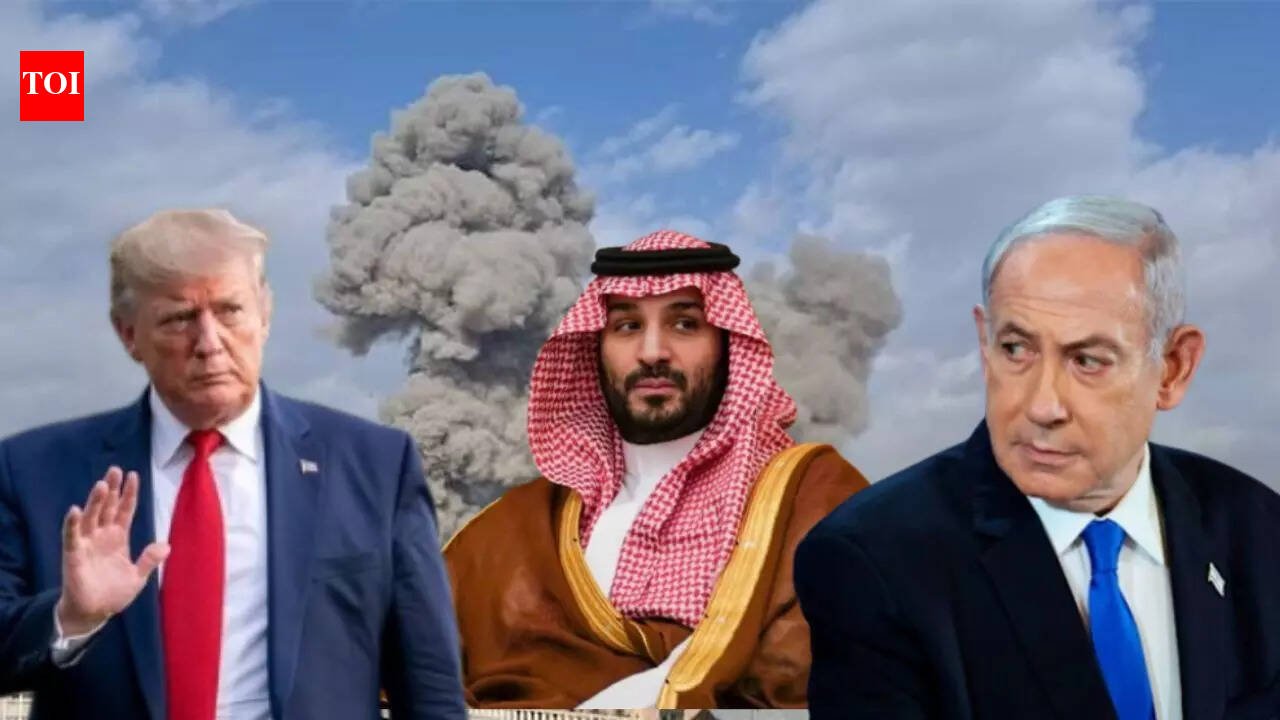
TOI correspondent from Washington: In the volatile chessboard of Middle-East and Gulf politics, few alignments have been as striking as the quiet convergence between Sunni-majority Saudi Arabia and Jewish state of Israel over the question of Shia-dominated Iran. Long divided by ideology, history, and the unresolved Palestinian question, the two countries have found common cause in what they view as Tehran’s expanding arc of influence — and in the months leading to Washington’s military strike on Iran, their parallel lobbying efforts in the US reached an intensity rarely seen.According to media reports, Saudi Crown Prince Mohammed bin Salman made multiple private phone calls to US President Donald Trump over the past month advocating a US. attack, despite his public support for a diplomatic solution, including pledging, following a phone call with Iranian President Masoud Pezeshkian, that Saudi airspace or territory would not be used in an attack on Iran. In his discussions with US. officials, the Saudi leader actually warned that Iran would come away stronger and more dangerous if the US did not strike now, the Washington Post reported on Sunday, suggesting a double game.

‘WILL GO ALL-OUT’: Saudi Leads Arab Fury As Missiles Bombard 5 Gulf States Amid Iran Vs Israel-War

For Riyadh, the calculus is rooted in a decade-long rivalry that is as much geopolitical as it is sectarian. Saudi Arabia, the self-proclaimed leader of the Sunni Arab world and custodian of Islam’s two holiest mosques, sees Iran’s revolutionary Shiite theocracy as a direct ideological and strategic challenger. Since the 1979 Islamic Revolution, Tehran has sought to export its model of governance and build influence through a network of allied militias and political movements across the region — from Iraq to Lebanon and Yemen.Israel’s motivations, though framed differently, converge on the same focal point: Iran’s nuclear ambitions and its sponsorship of armed groups hostile to the Jewish state. Israeli leaders have long warned that a nuclear-capable Iran would alter the regional balance irreversibly. Over time, that concern evolved into a broader campaign to curb Iran’s regional footprint, including its support for Hezbollah in Lebanon and militias in Syria.The unusual alignment between Riyadh and Jerusalem was not born overnight. Shared intelligence assessments, quiet security dialogues, and a mutual anxiety about US. retrenchment in the Middle East laid the groundwork. Both capitals viewed Washington’s earlier diplomatic outreach to Tehran as a strategic error that legitimized Iranian power without constraining its regional activism. As Iran’s influence deepened in Baghdad, Damascus, and Beirut, Saudi and Israeli officials amplified their warnings in Washington, arguing that deterrence had failed and that only decisive action could reset the equation.According to the Post, the US attack came despite intelligence assessments in Washington that Iran’s forces were unlikely to pose an immediate threat to the US . mainland within the next decade. The strike on Iran, including the stunning assassination of its leader, is a break from decades of American policy to hold back from a full-scale effort to depose the Iranian regime. In fact, there have been times when President Trump spoke even of engaging the Iranian leadership.The motivations behind Tel Aviv and Riyadh urging a US. strike are layered. Saudi Arabia sought to blunt Iran’s capacity to project power into the Arab heartland and to reassert its own claim to leadership in the Islamic world. Israel aimed to degrade Iran’s military infrastructure and nuclear facilities, buying time and restoring what it calls credible deterrence. For both, an American strike offered the advantage of overwhelming force without the political and military costs of unilateral action.Yet the implications are profound and unpredictable. The Middle East’s sectarian map remains a fault line. Iran is the largest Shiite-majority country, but significant Shiite populations also reside in Iraq, Bahrain, Lebanon, Pakistan, and parts of Saudi Arabia’s Eastern Province. Sunni-majority states — including Saudi Arabia, Egypt, Jordan, and most Gulf monarchies — have historically aligned, formally or informally, to counterbalance Iranian influence. An attack on Iran risks hardening these divides. In Iraq, where a Shiite-led government governs a fractured polity, public opinion could tilt sharply against Washington and its Gulf partners. In Lebanon, Hezbollah would face pressure to respond, potentially widening the conflict.At the ideological level, the strike intensifies the contest for leadership of the Islamic world. Saudi Arabia’s claim rests on religious custodianship and financial clout; Iran’s rests on revolutionary legitimacy and its narrative of resistance against Western and Israeli power. A US-led attack — especially if perceived as encouraged by Riyadh — may allow Tehran to recast itself as the aggrieved defender of Muslim sovereignty, potentially galvanizing Shiite communities and even segments of Sunni opinion disillusioned with Gulf monarchies. The energy dimension adds another layer of global consequence. Iran sits astride the Strait of Hormuz, a chokepoint through which roughly a fifth of the world’s traded oil passes. Even limited military exchanges in or near the waterway could disrupt shipping lanes, spike insurance costs, and send crude prices soaring. Saudi Arabia, the world’s largest oil exporter, has spare capacity that could cushion supply shocks, but sustained instability would test global markets already sensitive to geopolitical risk. Asian importers — from India to China — would feel the brunt of any prolonged disruption.For Washington, the decision to act — under pressure from two unlikely partners — underscores the enduring pull of Middle Eastern alliances on American policy, now driven by Trump principals with deep financial ties to Riyadh. The deeper story is not merely about a military strike. It is about a struggle for regional primacy, identity, and narrative in a fractured Islamic world. In aligning to confront Iran, Saudi Arabia and Israel have reshaped regional diplomacy. Whether that alignment brings stability or ignites a wider conflagration may determine the Middle East’s trajectory — and the stability of global energy markets — for years to come.


Source link

Perfect farewell: Alyssa Healy finishes on a high as Australia sweep India 3-0 in ODI series | Cricket News


Perfect farewell: Alyssa Healy finishes on a high as Australia sweep India 3-0 in ODI series
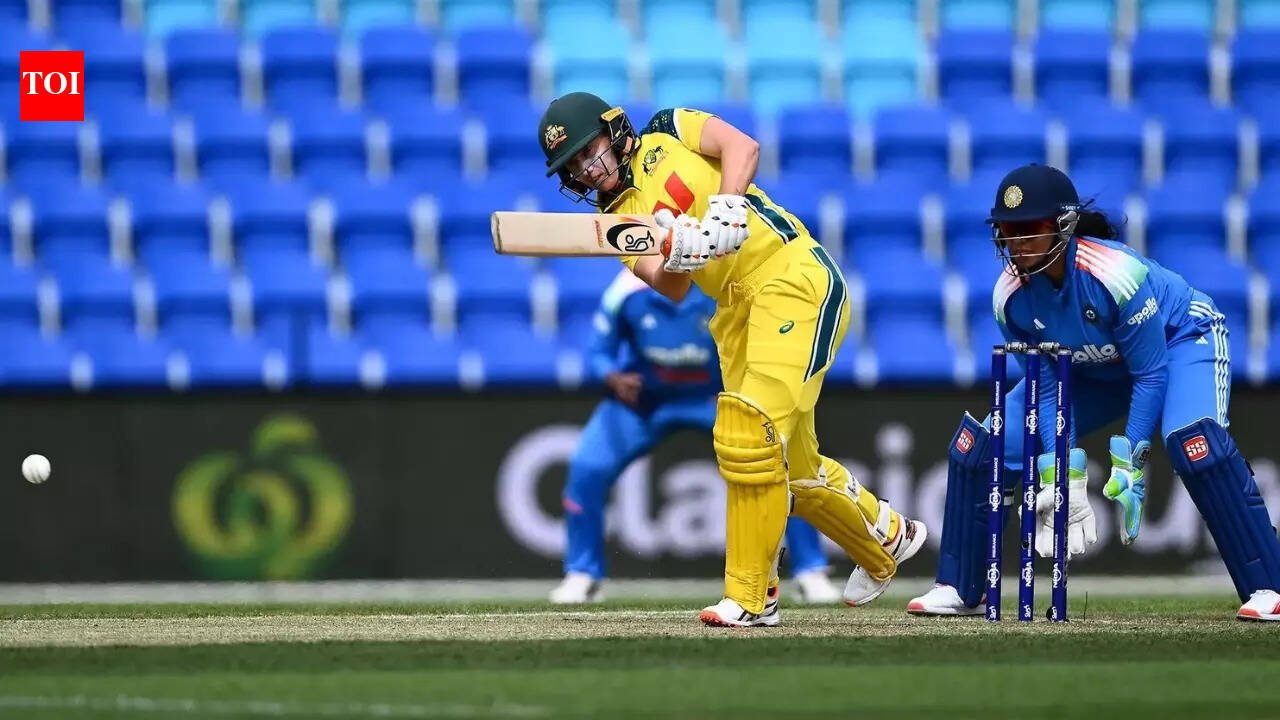
Alyssa Healy of Australia bats during game three of the Women’s One Day International series between Australia and India at Bellerive Oval on March 01, 2026 in Hobart, Australia. (Photo/Getty Images)

Alyssa Healy ended her ODI career with a century as Australia completed a 3-0 sweep over India, defeating the world champions by 185 runs in the third and final match on Sunday.Asked to bat, Australia posted 409 for seven, built around Healy’s 158 and an unbeaten 106 from Beth Mooney. India, chasing 410, were bowled out for 224 in 45.1 overs.

T20 World Cup: Salman Ali Agha press conference after PAK vs SL

The 35-year-old Healy, playing her 126th ODI, hit 27 fours and two sixes in her 98-ball knock. It was her eighth ODI hundred. She will retire from international cricket after the one-off pink-ball Test against India in Perth from March 6. Across 126 ODIs, she has scored 3,777 runs with eight centuries and 19 fifties.Australia lost Phoebe Litchfield (14) early, but Healy and Georgia Voll (62 off 52) added 134 for the second wicket. Healy then shared a 145-run stand with Mooney for the third wicket to set up the total. Voll struck seven fours and a six, while Mooney’s innings included 10 boundaries and one six. Annabel Sutherland (23) and Nicola Carey (34 off 15) added runs in the closing overs.For India, Sneh Rana (2/66) and Shree Charani (2/106) took two wickets each. Charani became only the third bowler to concede more than 100 runs in an ODI.India’s chase never gathered pace. Smriti Mandhana fell in the second over. Pratika Rawal (27 off 21) and Jemimah Rodrigues (42 off 29) added 54 for the second wicket before Rawal was dismissed in the eighth over, given out in front to Annabel Sutherland.Rodrigues, who hit nine boundaries, was caught at short fine-leg by Hamilton off Ashleigh Gardner while attempting a sweep. Harleen Deol (14) also fell without a major score. Captain Harmanpreet Kaur made 25 off 33 balls before being trapped LBW by Alana King. Richa Ghosh (18) and Kashvee Gautam were dismissed as the required rate climbed.Deepti Sharma (29 off 47) and Rana added 63 for the eighth wicket, but the effort came too late. Deepti was dismissed LBW by King in the 40th over. Rana, who had earlier returned figures of 2/66, scored 44 off 74 balls.India had lost the first two ODIs by six and five wickets. They had won the preceding three-match T20 series 2-1.Australia now lead the multi-format series 8-4 on points. Each T20 and ODI win carries two points, while a Test victory is worth four.


Source link

Govt calls exporters, shipping firms meet on Monday to assess trade risks amid Middle East tensions


Govt calls exporters, shipping firms meet on Monday to assess trade risks amid Middle East tensions

With tensions escalating in West Asia after US and Israeli strikes on Iran and retaliatory attacks by Tehran, the Commerce Ministry has convened a meeting on Monday with exporters, shipping lines and freight forwarders to assess the potential impact on India’s trade flows, PTI reported citing officials.The US and Israel jointly launched military strikes on Iran on Saturday, prompting Iran to fire drones and missiles at Israel, US military installations in the Gulf and the global business hub of Dubai.An official said the ministry has called the meeting in hybrid mode to evaluate the evolving situation and its implications for shipments, freight rates and logistics corridors critical to Indian exports.Exporters have raised concerns that the conflict could disrupt trade routes through the Strait of Hormuz and the Bab el-Mandeb Strait, both key maritime passages connecting India to the Gulf, North America and Europe.Federation of Indian Export Organisations (FIEO) President SC Ralhan said the hostilities have already started affecting established global logistics networks.“Air routes are being altered, and maritime trade through the Red Sea and key Gulf straits faces heightened uncertainty. If diversions become prolonged, shipments may increasingly have to reroute via the Cape of Good Hope, adding an estimated 15–20 days to transit time for Europe and the United States,” Ralhan said earlier.Exporters warned that prolonged disruption could push up freight rates and marine insurance premiums, adding to trade costs. Industry representatives said it may take a few days to get clarity on shipping capacity, alternative routes and revised insurance and freight charges.West Asia hosts major maritime corridors through which a large portion of India’s exports to its key markets pass. India’s exports to the US stood at USD 86.5 billion, USD 98.4 billion to Europe and USD 58.8 billion to West Asia. Together, these regions account for nearly 56 per cent of India’s merchandise exports.During the 2023–2025 Israel-Hamas conflict, freight rates had surged sharply as shipping lines avoided the Red Sea route and diverted vessels via the Cape of Good Hope, increasing transit time between India and Western markets by 15–20 days.Industry players said that unlike the earlier episode, the current situation appears broader in scope and could pose deeper risks if tensions persist.Freight rates are typically revised at the start of each month by major shipping lines, and fresh rates are expected to be published on Monday. At the beginning of 2026, rates had been contracting, exporters said.The outcome of Monday’s meeting is expected to determine whether additional policy support or trade facilitation measures may be required to cushion the impact on exporters.


Source link

Iran says interim leadership is functioning; hints at new leader appointment ‘in a day or two’


Iran says interim leadership is functioning; hints at new leader appointment 'in a day or two'

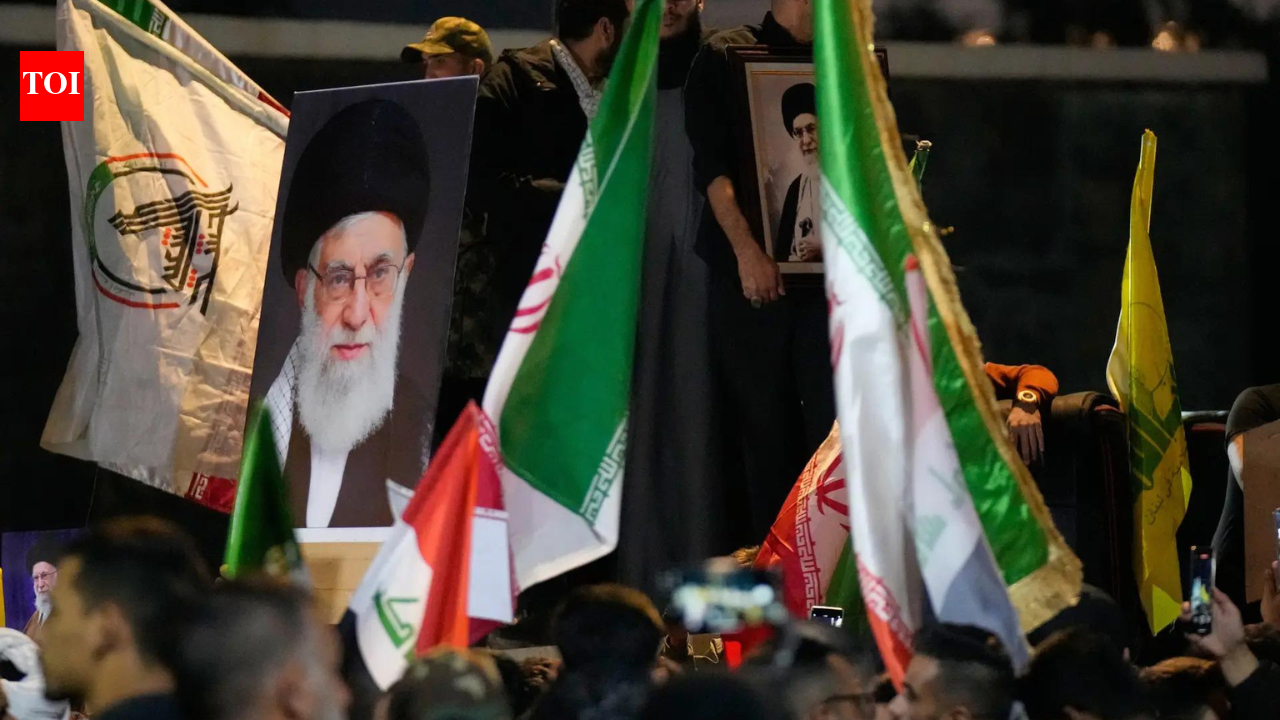
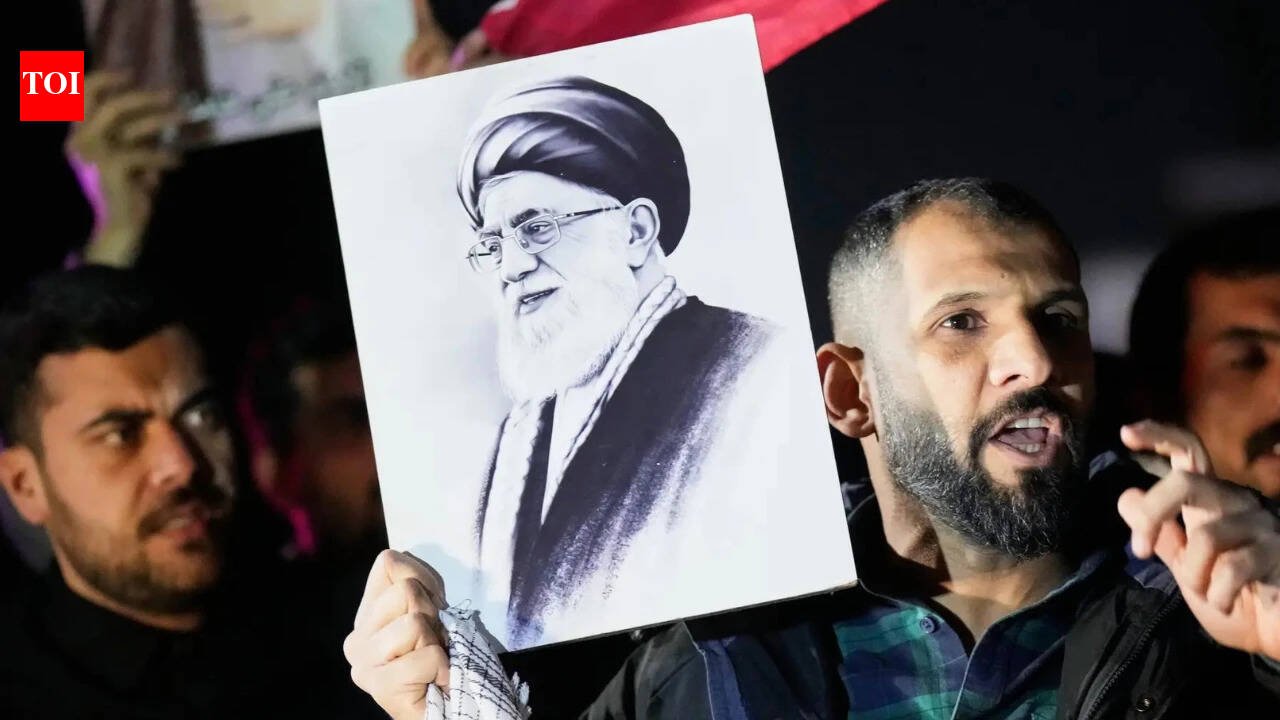
Iran’s President Masoud Pezeshkian on Sunday announced that a new interim leadership council has formally begun functioning. This comes after the killing of Supreme Leader Ayatollah Ali Khamenei in US and Israeli strikes.In a recorded video statement broadcast on state television, Pezeshkian said, “The interim leadership council started its work. We will continue with all our strength along the path set by Imam Khamenei, the founder of the Islamic Republic.”He added ““We will continue the path of the Leader with strength. Our Armed Forces are crushing the bases of the enemies.”Iran’s foreign minister Abbas Araghchi indicated that the process to appoint a new Supreme Leader could be completed within days, Al Jazeera reported.Speaking to the news outlet on Sunday, he said state institutions were functioning, and succession procedures were underway.“You may see the selection of a supreme leader in a day or two,” Araghchi said, adding that “Iran’s institutions are functioning” and that the country “has constitutional procedures in place.”Describing the killing as a watershed moment, Araghchi said, ““It is absolutely unprecedented and a major violation of international law for a leader of another country to be assassinated by foreign forces.”He further warned, “That would make this conflict – this war of aggression by the Americans against us – even more dangerous and more complicated, and it would perhaps add new aspects to it.”The foreign minister also confirmed that Tehran had activated constitutional provisions to ensure continuity of governance.“We have begun a constitutional process, and the Transitional Council was established today and will work to manage affairs,” he said. Emphasising Iran’s stance on retaliation and self-defence, Araghchi added, “We have no restrictions or limits in defending ourselves.”

How is Iran’s leader selected?

Under Iran’s constitution, the Supreme Leader is the highest authority in the country, wielding control over the armed forces, judiciary, state broadcasting and key appointments, while also setting overarching state policy.In the event of a vacancy, the Assembly of Experts — an elected clerical body — is tasked with selecting a successor.If the post becomes suddenly vacant, a temporary leadership arrangement is activated to ensure continuity. This typically involves senior constitutional authorities assuming interim responsibilities until a new Supreme Leader is chosen.


Source link