Breaking News
PMI watch: India’s services growth eases in February as demand softens, costs rise


PMI watch: India's services growth eases in February as demand softens, costs rise

India’s services sector growth eased marginally in February as new business expansion slowed to a 13-month low, reflecting softer demand conditions and a rise in inflation, according to a monthly survey released on Wednesday. The seasonally adjusted HSBC India Services PMI Business Activity Index edged down to 58.1 in February from 58.5 in January. In PMI terminology, readings above 50 denote expansion, while those below 50 indicate contraction. “India’s Services PMI registered 58.1 in February, largely unchanged from January’s 58.5, signalling another month of robust expansion in the sector.” “While new order growth slowed to a 13-month low amid rising competition, service providers saw a notable pick-up in international sales and responded with increased hiring to meet operational needs,” said Pranjul Bhandari, Chief India Economist at HSBC. According to respondents, some firms benefited from stronger client enquiries and targeted marketing efforts, which supported sales. However, others reported that an increasingly competitive landscape limited the pace of growth. External demand stood out during the month. Services companies recorded improved business from several overseas markets, including Canada, Germany, mainland China, Singapore, the UAE, the UK and the US. Overall, international sales rose at the quickest pace since last August. Cost pressures intensified for service providers in February. Operating expenses increased at the sharpest rate in two-and-a-half years, prompting firms to raise their selling prices at the fastest pace in six months. “Input and output price inflation accelerated, with firms passing higher expenses — particularly for food and labour — on to customers, yet business confidence climbed to its highest level in a year as companies looked to broaden their market presence,” Bhandari said. At the combined level, private sector activity strengthened further. Total business output across manufacturing and services expanded at the fastest rate in three months, supported by improved demand and higher new business inflows. The HSBC India Composite PMI Output Index climbed to 58.9 in February from 58.4 in January. “Overall, the composite PMI rose to 58.9, reflecting the fastest pace of private sector activity growth in three months, buoyed by strong momentum in manufacturing,” Bhandari said. Composite PMI figures represent weighted averages of manufacturing and services indicators, with the weights reflecting their respective shares in official GDP data. While the pace of new order growth at the composite level was broadly similar to that seen around the start of the year, hiring activity strengthened to its highest level since last October. Inflationary trends were also evident in the broader private sector, with both input costs and output charges rising at quicker rates. These increases reached nine-month and six-month highs, respectively.


Source link

Indian Doctors Survey 2025: Medicos under strain: 91% doctors would discourage their children from choosing medicine in the current climate, claims study | Mumbai News


MUMBAI: A new nationwide survey of 1,200 doctors claims that India’s medical workforce is under mounting strain. 91% of doctors would discourage their children from choosing medicine as a profession in the current climate. Nearly half, 47%, said they had actively considered leaving the profession.The study reports that 67% doctors have faced medico-legal complaints and 84% fear assault. Doctors report burnout, legal exposure and career doubt. This raises concerns about long-term doctor-patient ratio gap and workforce sustainability.Patients, of course, would hold a different viewpoint from the study given the rampant commercialisation of healthcare in India, which was once affordable and benevolent. Doctors were looked upon as extended family, but that trust has severely eroded with the advent of corporatisation.The nationwide study in question was conducted by the Debabrata Mitalee Auro Foundation (DAF) between January and June 2025. 91.4% doctors surveyed said they would not encourage their children to pursue medicine as a career.The foundation claims this reflects concern about present working conditions and systemic pressures rather than a loss of faith in medicine as a vocation.With India facing challenges in maintaining the doctor-to-patient ratio, the study raises concerns that this gap may widen if fewer high-performing students choose medicine or if more doctors consider early exit.The study surveyed 1,208 doctors across Tier 1, Tier 2 and Tier 3 cities in both private and govt practice. Of the respondents, 63% were male and 37% female. 78% were from the private sector and 22% from govt hospitals. The respondents specialised in general medicine, surgery, paediatrics, gynaecology, dermatology, orthopaedics, ENT, etc.The findings indicate strain and disillusionment. 78% respondents reported high levels of burnout in the past year. 56% said they experienced symptoms consistent with anxiety or depression.84% said they feel more likely than the general population to face physical or verbal assault by patients or their families. And 67% reported having been named in some form of medico-legal complaint, which is a shocking statistic.61% believe public perception of doctors has worsened over the past five years. In fact nearly half, 47%, said they had actively considered leaving the profession. Prof. Dr Debraj Shome, founder of the Debabrata Mitalee Auro Foundation, commented on the findings, “When 91.4% of doctors say they would not want their children to enter medicine, it signals something deeper than routine burnout. This study shows that 78% are experiencing high burnout, and 56% report symptoms of anxiety or depression. Add to that the fact that 84% express concern about physical or verbal assault, and you begin to see how the practice environment has altered.“Clinical decisions are increasingly made with an awareness of potential litigation, public scrutiny, and personal vulnerability, factors that did not shape everyday practice to the same extent in previous decades. That sustained pressure inevitably influences behaviour, be it communication patterns or risk-taking, and it raises important questions about long-term workforce stability.”He said that viewed against global benchmarks, the contrast is notable. A 2022 study published in the Journal of the American Medical Association found that 29% of doctors worldwide report symptoms of depression. In the United Kingdom, one in four doctors has considered quitting due to stress, according to the British Medical Association (2023). The Indian data signals deeper levels of stress and attrition.The foundation says that “the report aims to initiate dialogue on systemic reform, including structured mental health support for doctors, stronger legal and institutional protections against violence and harassment, public sensitisation efforts to rebuild trust, and healthcare workplace policies that enable recovery and respite”.This study has been released alongside a book titled ‘Doctors Are Not Murderers’, authored by Dr Shome and Dr Aarti Heda. It compiles 23 essays by well known medical practitioners from India and abroad including Dr Nikhil Datar, Dr Kuldeep Raizada, Dr Rajan Bhonsle, Dr John Adler and Dr Pankaj Singh.“The book reflects how medical practice is increasingly shaped by fear — fear of litigation, fear of violence and fear of public misjudgment. Several essays address the rise of defensive medicine, the psychological toll of litigation and media scrutiny, and the moral injury experienced by practitioners who operate in high-stakes environments where uncertainty is inherent. Other essays explore violence against doctors, the pressures of regulatory oversight, and the widening gap between public expectation and clinical reality. Rather than arguing for immunity from accountability, the book calls for proportionality, context and due process in assessing medical error,” a press release said Wednesday.


Source link

500 million and counting! T20 World Cup 2026 shatters viewership records in India | Cricket News


Why this T20 World Cup could well see a 300 plus total | Will India create history?

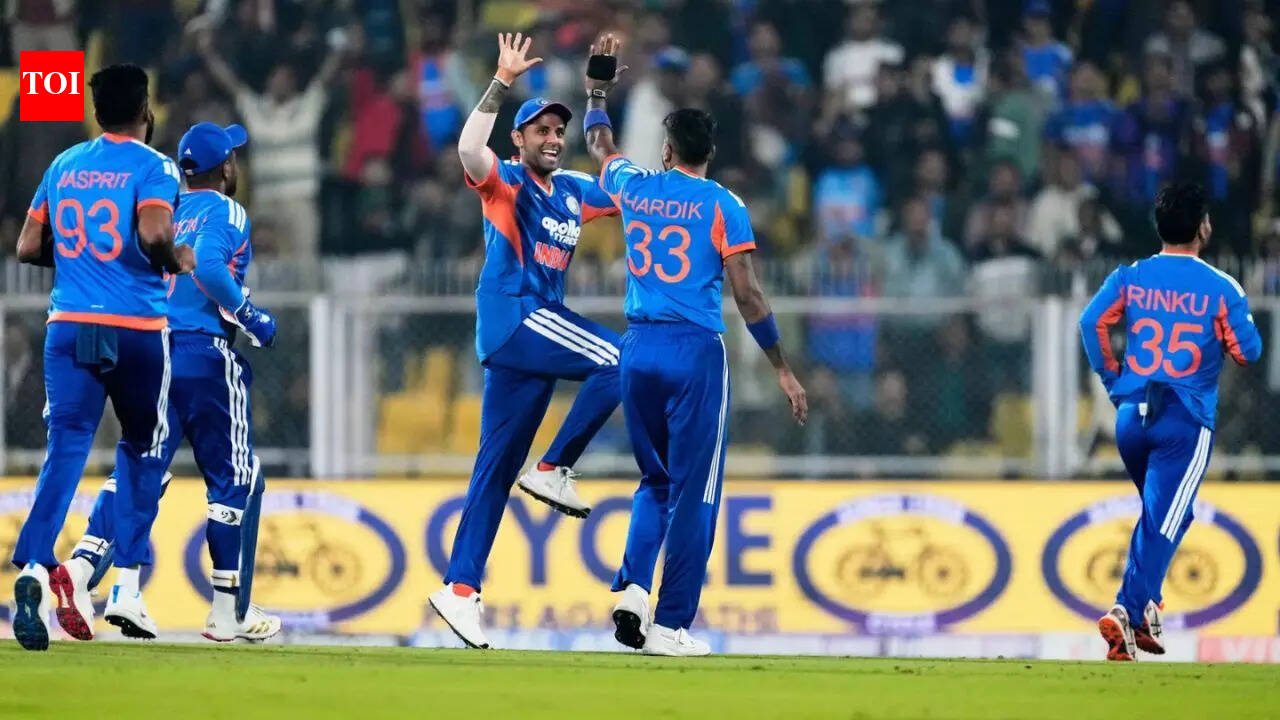
India will take on England in the second semifinal at the Wankhede stadium. (AP)

NEW DELHI: The ICC T20 World Cup 2026 has smashed viewership records in India, with more than 500 million fans tuning in — the highest ever for any T20 World Cup in history. ICC chairman Jay Shah celebrated the milestone, calling it a moment of pride for the global game.Go Beyond The Boundary with our YouTube channel. SUBSCRIBE NOW!

Why this T20 World Cup could well see a 300 plus total | Will India create history?

In a post on X, Shah revealed that the tournament was conceptualised with the ambition of making it the most “global” and “accessible” cricket event ever. That vision, he said, is already bearing fruit.

India fans wait for over four hours to see their heroes outside Wankhede

“The journey of the @ICC #T20WorldCup 2026 began with the ambition to make it the most #global & #accessible Cricket event ever. I am humbled that viewership for the event in India has crossed 500 million, the highest ever for any T20 World Cup in history. It was also heartening to see concurrent viewers @JioHotstar hit a peak of 60.5 million. With Knock-out matches for the tournament starting tonight, we hope that the immeasurable love our events receive from Indian fans helps break more records,” Shah wrote.The digital numbers were equally staggering, with concurrent viewership on JioHotstar peaking at 60.5 million — underlining the tournament’s massive online engagement.The World Cup now moves into its high-voltage knockout phase. The first semifinal will be held at Eden Gardens, where Mitchell Santner-led New Zealand take on an unbeaten South Africa under Aiden Markram. The Proteas, the only side yet to lose a match, will aim to extend their dominant run and book a second successive T20 World Cup final berth.India face England in the second semi-final at Mumbai’s Wankhede Stadium. India enter the clash after a commanding win over West Indies in a must-win Super 8 fixture, while Harry Brook’s England arrive on a five-match winning streak.


Source link

IND vs ENG: Team India seeks blessings at Siddhivinayak ahead of semifinal — Watch | Cricket News


IND vs ENG: Team India seeks blessings at Siddhivinayak ahead of semifinal — Watch
Team India players at Shree Siddhivinayak Ganapati Temple. (Video grab)

Hours before stepping into a high-pressure T20 World Cup semifinal against England, members of the Indian team sought divine intervention at Mumbai’s iconic Shree Siddhivinayak Ganapati Temple on Wednesday.Go Beyond The Boundary with our YouTube channel. SUBSCRIBE NOW!In a video that quickly went viral on social media, Axar Patel, Ishan Kishan and Abhishek Sharma were seen offering prayers and taking darshan at the revered temple, a day before India’s knockout clash at the Wankhede Stadium.WATCH:The spiritual visit comes at a crucial juncture for India, who have not exactly cruised into the semifinals. Overwhelming favourites at the start of the tournament, they have struggled to piece together a flawless performance against stronger opponents. However, the side showed resilience after a heavy defeat to South Africa in their Super 8 opener.The reintroduction of Sanju Samson proved a masterstroke. More than a decade after his India debut, the 31-year-old delivered a career-defining unbeaten 97 in a virtual quarterfinal against West Indies, reigniting India’s campaign. His confidence will be key, especially for opening partner Abhishek Sharma, who is still searching for his explosive best despite a Super 8 fifty against Zimbabwe.

India arrive for final net session before T20 World Cup semifinal

England, riding on five straight wins, will pose a stern test. Jofra Archer’s pace, Will Jacks’ off-spin in the powerplay and Adil Rashid’s middle-overs craft could challenge India’s top order. Harry Brook and Sam Curran have been pivotal for England, while questions remain over Jos Buttler’s form heading into the big clash.India’s core group, including Suryakumar Yadav, Hardik Pandya and Tilak Varma, put in extended hours at training earlier this week. With spin twins Axar Patel and Varun Chakaravarthy expected to play a major role on a potentially tricky surface, execution will be crucial.


Source link

Relief to vehicle owners, hypothecation removal now to be online | India News


Relief to vehicle owners, hypothecation removal now to be online

NEW DELHI: In a major relief, the removal of hypothecation from vehicles will now happen automatically through an online system once loan is fully repaid, saving people from the hassle of multiple visits to transport offices and reaching out to banks. The road transport ministry has rolled out this new system, starting March 1 (Monday), initially with one nationalised bank and five Non-Banking Financial Companies (NBFC). More will be roped in soon.The move is aimed at eliminating procedural delays, and reducing inconvenience faced by borrowers in getting their vehicle records updated after clearing their loans and visiting regional transport offices to initiate removal of hypothecation from vehicle registration certificate. The process often involved multiple visits and significant paperwork.Officials said the system operates using RBI’s Unified Lending Interface (ULI), which enables secure and real-time data exchange between lenders and govt platforms. “The online interface interacts among banks, ULI and the Vahan system. So, the entire process, including the verification, happens without any human intervention. Once the process is complete, the owner gets an SMS from Vahan informing him/ her about the removal of hypothecation. This is part of govt’s initiative to improve ease of living,” said an official.Separately, after the vehicle owner repays the loan, the bank will send the ‘No Objection Certificate (NOC)’ to the owner.At present, SBI and five NBFCs, including Cholamandalam, Shriram Finance and Sundaram Finance, have started implementing this system. Officials said more banks and financial institutions will be onboarded onto the system in phases to ensure wider coverage and seamless implementation nationwide. They added that initiative will significantly reduce processing time and improve transparency.Welcoming the initiative, transport services expert Anil Chhikara said while banks and financing institutions take care of all hypothecation issue when one takes a loan to buy a vehicle, these institutions don’t help customers in the process when they repay the loans.


Source link

Oil shock for stock markets: Why Indian equities may be among most impacted in Asia by Iran war


Oil shock for stock markets: Why Indian equities may be among most impacted in Asia by Iran war
According to Goldman Sachs, Indian companies could be among the hardest hit in Asia by the conflict involving Iran. (AI image)

US-Israel-Iran war impact: Indian equity benchmarks, Nifty50 and BSE Sensex, will see mounting pressure in the coming days if the Middle East crisis persists, feel analysts. Indian stocks, already under pressure, are expected to fall further behind global markets as rising tensions in the Middle East drive crude prices higher, weighing heavily on oil-importing economies, experts have said.India’s equity market, valued at around $5 trillion, has trailed most major global peers since late 2024 due to slower profit growth and limited participation in artificial intelligence-linked stocks. The sharp rise in oil prices, the country’s largest import, has stalled an early rebound in equities that followed India’s trade agreement with the United States. Analysts warn that higher energy costs could stoke inflation and put pressure on economic growth and the rupee.

Indian stocks to bleed more?

According to Goldman Sachs, Indian companies could be among the hardest hit in Asia by the conflict involving Iran. A Bloomberg report quoting Goldman Sachs said that a 20% increase in Brent crude prices would reduce regional earnings by about 2%. Societe Generale also sees scope for India’s relative underperformance to intensify because of its heavy dependence on imported fuel, while Natixis has described Indian assets as the most vulnerable on this front.

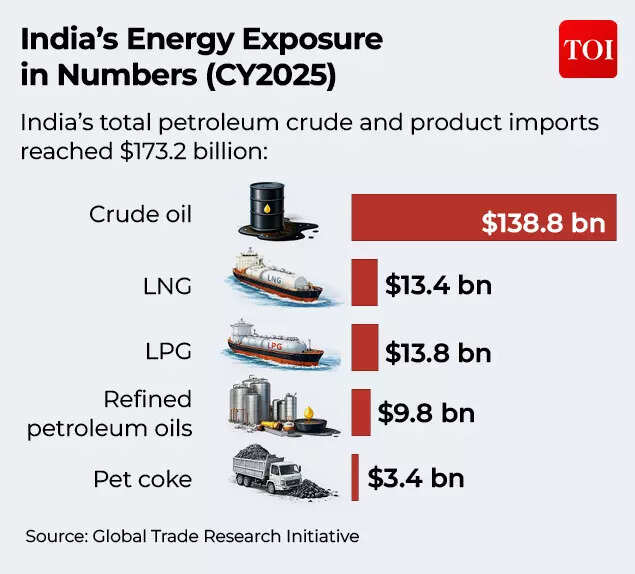
India’s Energy Exposure in Numbers (CY2025)

“With tensions in the Middle East showing little sign of cooling, supply-side risks remain elevated, allowing oil prices to push higher in the near term,” said Dilin Wu, a research strategist at Pepperstone Group. “India’s strong dependence on imported crude, much of it sourced from the Gulf, leaves its markets exposed. If oil prices stay elevated for longer, the import bill could expand, the current account and currency could come under strain, and equities may face added pressure,” Wu was quoted as saying by Bloomberg.Past trends suggest that such weakness could persist in the near term. During the early phase of the Russia-Ukraine conflict, the Nifty declined by roughly 10% in the first half of 2022, Citigroup analysts led by Samiran Chakraborty noted in a report. “A 10% rise in oil prices leads to 30 basis points of upside pressure on inflation and 15 basis points downside on growth,” they said.However, not all market participants share a cautious outlook. BNP Paribas believes Indian equities could outperform in the months ahead, arguing that the balance of risk and reward appears tilted in favour of gains.Even so, a growing number of investors are positioning away from Indian stocks. SocGen has advised taking long positions in Asia excluding Japan while shorting Indian equities. Meanwhile, Sanford C. Bernstein cautioned that a prolonged conflict involving Iran could continue to weigh on the benchmark.A sustained escalation “could push the Nifty below 24,500,” Bernstein analysts led by Venugopal Garre wrote in a note. “In particular, we see higher risk for energy, travel and trade-linked names, and construction companies with meaningful Middle East and North Africa exposure.”(Disclaimer: Recommendations and views on the stock market, other asset classes or personal finance management tips given by experts are their own. These opinions do not represent the views of The Times of India)


Source link

Man Threatens To Kill Girlfriend: 28-year-old man threatens to kill girlfriend during party at Mumbai restaurant; booked | Mumbai News


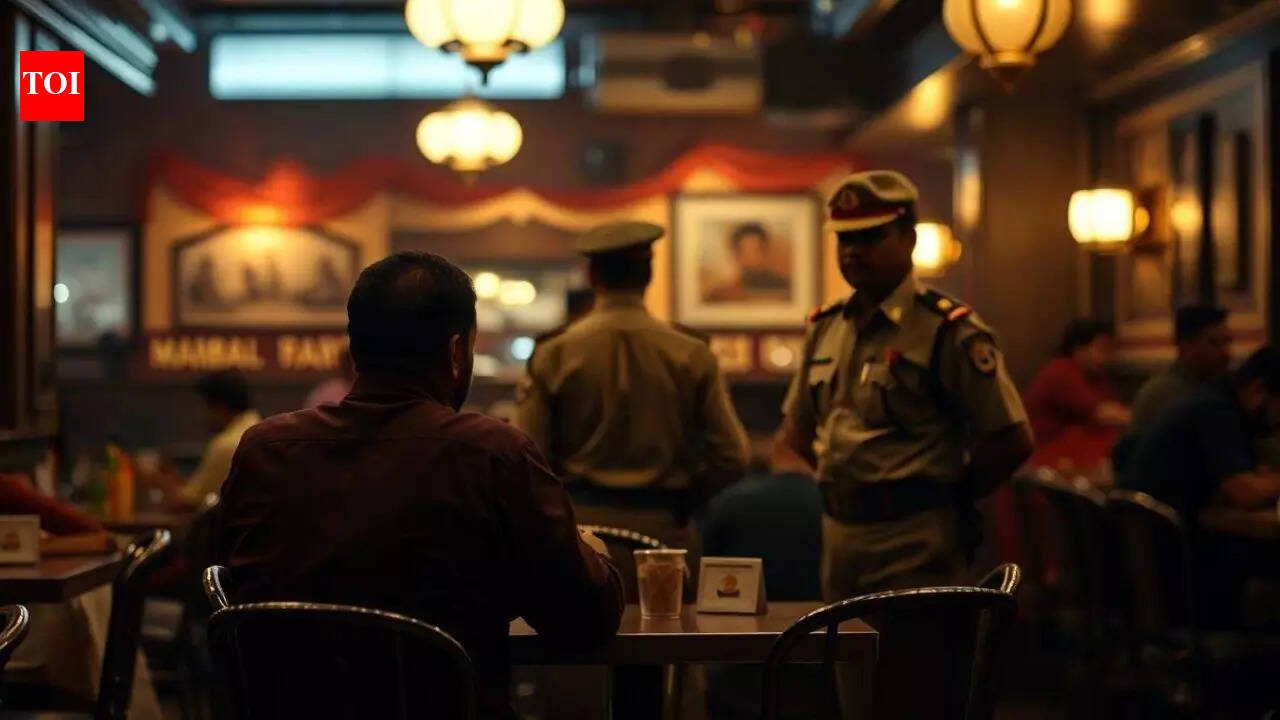
MUMBAI: A 28-year-old man was booked after he allegedly verbally abused and attempted to assault police personnel at the Santacruz police station on March 1, said police. The man also allegedly damaged a printer at the police station.Police said the man repeatedly threatened to kill his 22 year-old girlfriend after they had a fight at a restaurant in Khar West during a party. Police reached the restaurant after the suspect created a ruckus and repeatedly abused his girlfriend during the party. Police brought them both to the police station.A police officer said the incident occurred at around 3.52am on March 1, when police received a call from the 22-year-old woman saying she felt unsafe with her boyfriend at a restaurant in Khar West, and that he had allegedly physically assaulted her.At the police station, the suspect allegedly threatened to kill his girlfriend, and attempted to attack her inside the police station. “During commotion, the man allegedly pushed a printer at the police station, causing it to fall and break. He also allegedly verbally abused cops and attempted to assault them,” said police.


Source link

Access Denied


Access Denied

You don’t have permission to access “http://www.ndtv.com/education/openai-academy-announces-free-ai-events-and-learning-resources-ahead-of-spring-sessions-11167188” on this server.

Reference #18.c7f5d217.1772617735.212e347e

https://errors.edgesuite.net/18.c7f5d217.1772617735.212e347e


Source link

Iran’s Cheap Drones Transforming Warfare Across the Middle East |


Iran is shifting its retaliation strategy from dramatic displays to sustained pressure, utilizing cheap drones to exhaust air defenses and rattle populations across Israel and Gulf states. This approach aims to drain expensive interceptor inventories and destabilize the region, making the conflict a drawn-out endurance test rather than a single event.

Iran’s retaliation strategy is shifting from spectacle to stamina – and cheap drones are the workhorse.Driving the newsInstead of relying mainly on the kind of large, concentrated barrages it used in last year’s 12-day war with Israel, Tehran is now leaning into a steady, repeatable rhythm of launches meant to keep air-defense networks switched on, inventories under pressure, and populations rattled across Israel and multiple Gulf states, according to Financial Times report.

On Cam: IRGC Hits American Base In Bahrain; Missiles, Drones Target American Forces In Manama

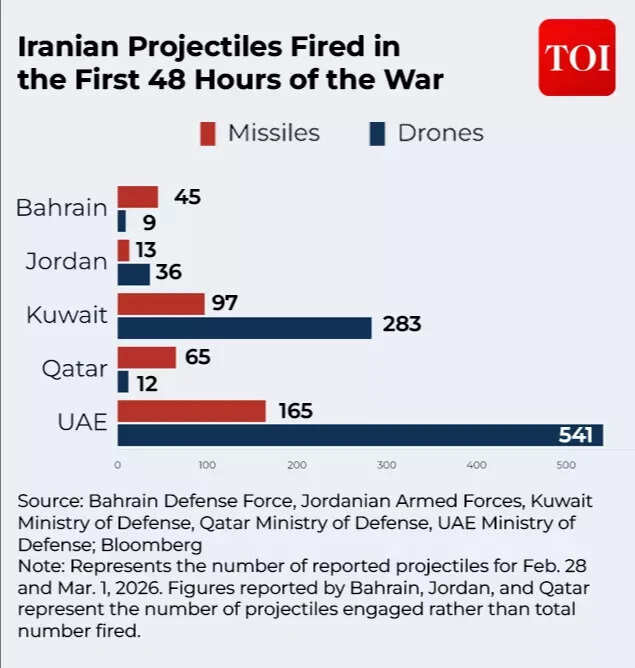
FT reported that since the US and Israel began striking Iran, western officials said Tehran responded with ballistic missiles and drones “in over 25 waves” across a wide target set that includes Israel and US partners in the Gulf.

Iran missiles gfx4

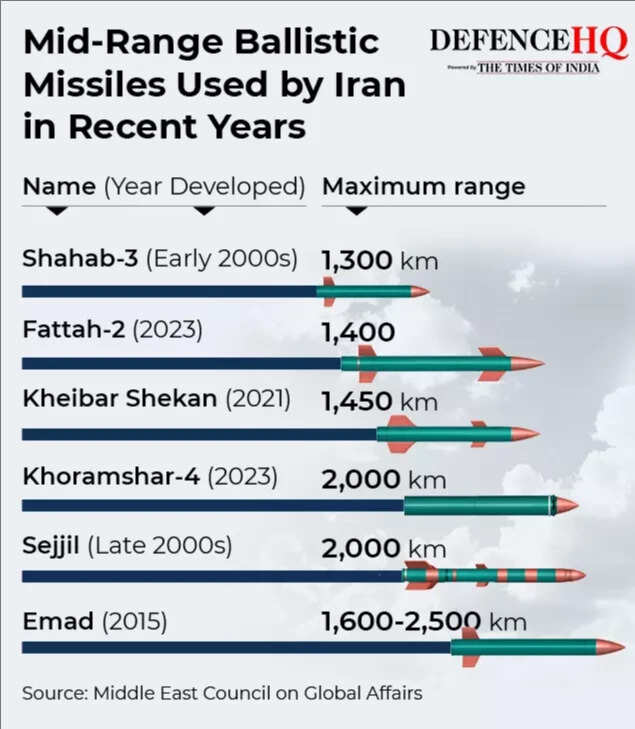
Since the killing of supreme leader Ayatollah Ali Khamenei, Tehran’s retaliation has spilled across nearly the entire Middle East – underscoring how the Islamic Republic has turned cheap drones and missiles into tools of regional terror. In the war’s opening hours, Iran unleashed waves of ballistic missiles and low-cost drones not only at Israel but also at the UAE, Bahrain, Kuwait and Qatar, widening the battlefield almost instantly. By the second day, the campaign expanded to Saudi Arabia, Qatar and Oman. The sheer geographic reach of the conflict is staggering, directly involving at least 11 countries and disrupting oil and gas flows while shaking financial markets worldwide, an Axios report said. The Axios report described it as “earthquake in the Gulf”.

iran missiles bloomberg

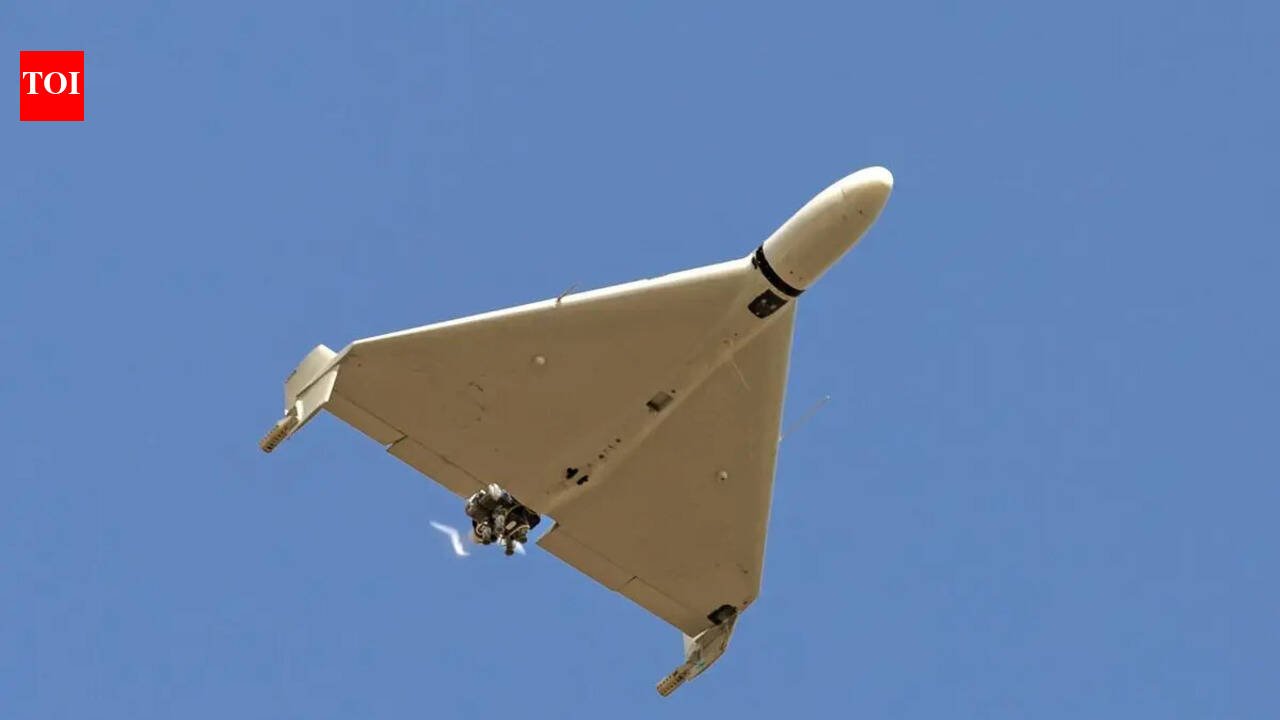
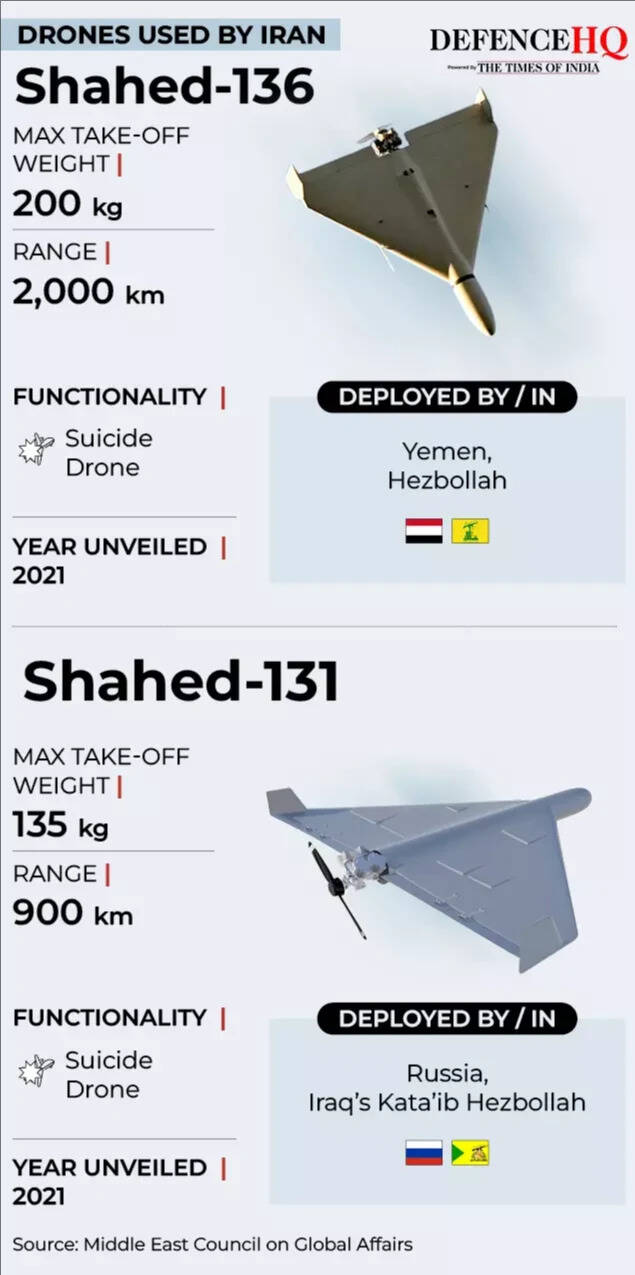
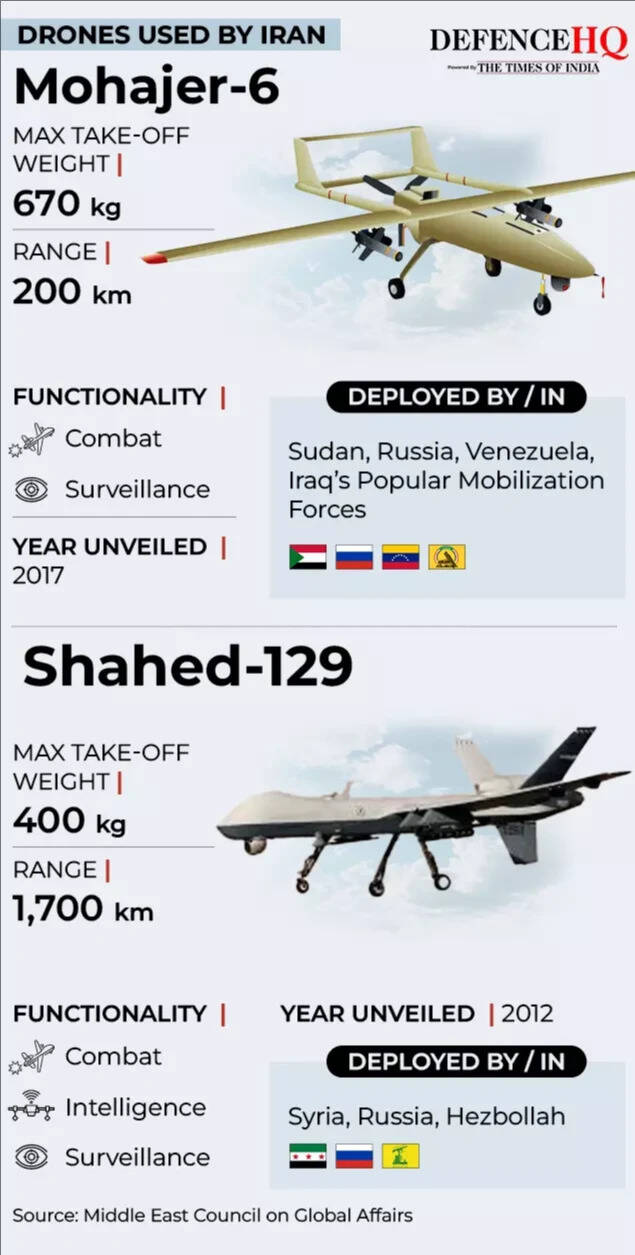
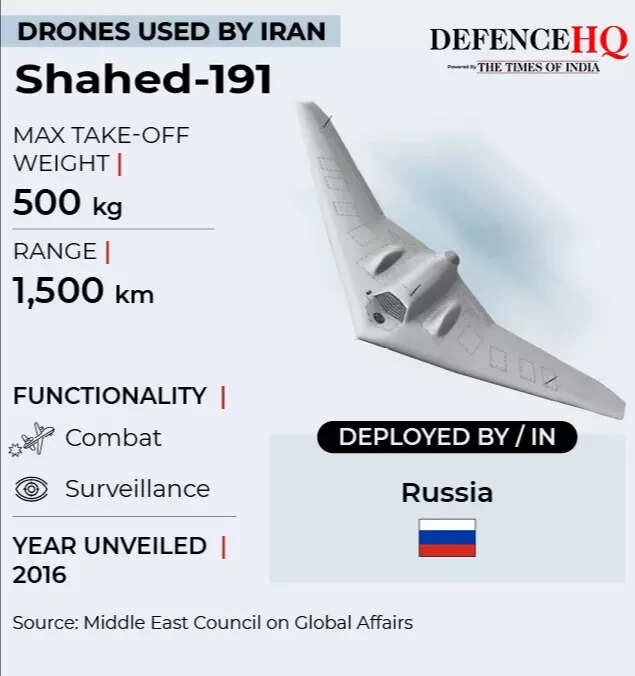
Iran had warned before hostilities that any strike on its soil would prompt retaliation not only against Israel but also against US bases across the Gulf and in Iraq – a threat it quickly made real. As US President Donald Trump said Operation Epic Fury is expected to last four to five weeks, the window for further escalation remains wide – and Iran’s reliance on waves of cheaper drones suggests a strategy designed to spread fear, exhaust air defenses and destabilize the broader Middle East.Why Iran is leaning on cheap dronesIran’s retaliation arithmetic is lopsided by design. Bloomberg framed the dynamic with a brutal simplicity: “Iran’s Missile Math: $20,000 Drones Take on $4 Million Patriots.” In this kind of fight, Iran doesn’t need to win the sky. It just needs to make the sky unaffordable. The Shahed-136 is not, in the usual sense, impressive. It’s slow. It’s loud. It’s relatively easy to spot when air defenses are watching closely. And yet it keeps showing up, because it does three things Iran needs right now.

Iran missiles gfx2

First, it forces defenders to spend money and burn inventory. Patriot interceptors are expensive, and advanced systems like THAAD cost even more. In Bloomberg’s account, Gulf and USdefenses have been highly effective, but effectiveness has its own price tag, and stockpiles don’t refill overnight. Second, drones scale. They can be produced in large numbers and launched in waves that don’t have to be perfect to be disruptive. Seth Frantzman, a drone-warfare analyst, told The New York Times that even when Shaheds underperform compared with more sophisticated weapons, they can still slip through and create panic and disorder. “They give the Iranians a cheap air force-like weapons system,” he said

Iran missiles gfx (1)

Third, they widen the map of the war. Ballistic missiles aimed at Israel are one thing. Drones drifting toward Gulf cities, ports, hotels, and oil infrastructure are another. They blur the line between military confrontation and everyday life, turning countries that would prefer to remain mediators into unwilling participants.This is not accidental. The Financial Times described Iran’s emerging approach as a two-track campaign: sustained barrages toward Israel, paired with intensive attacks on US partners in the Gulf, including civilian infrastructure alongside military sites. The drone fits both tracks because it’s cheap enough to expend and politically potent enough to frighten.

Iran missiles gfx3 (1)

What’s new in Iran’s retaliation strategyIn the last major Israel-Iran confrontation, Iran’s attacks were often described as telegraphed: large, dramatic salvos that gave air defenses time to prepare. This time, the rhythm has changed.A former Israeli security official, quoted in the Financial Times, described a deliberate shift toward attrition, “a ‘drizzle’ compared with last year’s attacks.” Then, in a line that captures the anxiety of strategists watching a familiar opponent behave differently, the official added: “Who said the Iranians will play by our rules?” The change isn’t just tempo. It’s also targeting and delegation.1) From spectacle to steady pressureInstead of wagering everything on a few headline-grabbing barrages, Iran appears to be testing whether constant, smaller attacks can stretch defenses, exhaust operators, and force hard choices about what is “worth” intercepting. As the Financial Times noted, some incoming threats were either deemed not dangerous enough to spend premium interceptors on, or they evaded defenses in growing numbers. 2) A broader strike portfolio: civilian disruption as leverageHitting ports, airports, hotels, and residential areas in Gulf states changes the political equation. Benham Ben Taleblu, of the Foundation for Defense of Democracies, suggested in the Financial Times that Iran may be escalating “hard, fast and early” to create a crisis so intense that US partners pressure Washington and Israel to stop. Whether or not that gamble works, the intent is legible: make the war contagious.3) A more decentralized trigger fingerOne of the most revealing windows into Iran’s posture came not from a general, but from its foreign minister. Abbas Araghchi, in an interview referenced widely in reporting on the conflict, described a military operating on pre-set guidance rather than real-time central control: “Our military units are now in fact independent and somehow isolated and they are acting based on instructions, general instructions given to them in advance,” Araghchi said. That statement does two things at once. It signals resilience (decapitation strikes won’t paralyze retaliation) while also planting plausible distance between civilian leaders and whatever lands where it shouldn’t.The most striking version of that distancing is the line also attributed to Araghchi about strikes outside the intended script: “What happened in Oman was not our choice…As a matter of fact, our military units are now in fact independent and somehow isolated,” Aragchi said. If Iran is telling the world its forces may be semi-autonomous, it is also, intentionally or not, warning that escalation could become harder to control.The strategic bet: Drain interceptors, crack coalitions, buy timeIran’s cheap drones are not a replacement for its missile force. They’re a way to sequence it.Analysts quoted by Bloomberg suggested Iran may be using large numbers of Shaheds in part to conserve more damaging ballistic missiles for later phases, while still keeping pressure constant. In the Financial Times, Western officials described retaliatory launches “in over 25 waves” across Israel and multiple Gulf states, with the pattern resembling endurance tactics rather than a single retaliatory “answer.There’s also a psychological layer. In Israel, Danny Citrinowicz described the steady barrages as producing “this overwhelming feeling… that you have to be near your shelter,” according to the Financial Times. In the Gulf, the message is different: even the safest cities can be reached, and the costs of staying out of the war may be rising.Finally, the cheap-drone strategy dovetails with a political goal: shorten the patience of everyone around the battlefield. Kelly Grieco, a senior fellow at the Stimson Center, summed up the operational logic in Bloomberg’s report: “Attrition strategy makes operational sense from Iran’s perspective,” she said, arguing Iran is calculating that defenders will exhaust interceptors and that Gulf political will could fracture. What’s new, then, isn’t that Iran has drones. It’s that Iran is using them as the front edge of a retaliation doctrine built for a world where it expects to be hit first, lose leaders quickly, and still keep launching. The “drizzle” is not a shrug. It’s an attempt to make the war last just long enough for someone else to demand it stop.What’s nextIran’s cheap-drone strategy will be tested by two constraints: launcher survival and defender adaptation.1) Expect air defenses to triage harder – and hunt cheaper intercept optionsThe longer Iran keeps sending low-cost threats, the more pressure there will be to conserve premium interceptors for missiles that pose the greatest danger – and to use cheaper methods against drones when possible (short-range air defenses, electronic warfare, directed-energy systems, fighter patrols, or point-defense guns). Bloomberg noted the region has fewer purpose-built anti-drone defenses than high-end missile shields, which is part of the current stress test. 2) Watch for “phase shifts” from TehranIf Iran believes the attrition approach is working – or if it fears its launch infrastructure is being degraded – it may change the mix: fewer drones and more ballistic missiles, more precise systems, or different target priorities. FT’s reporting underscored that Israel is trying to take out launch capacity, which could push Iran toward “use them or lose them” behavior. 3) The Gulf escalation track is acceleratingA major marker: the drone strike on the US Embassy in Riyadh. Axios reported that Saudi officials said two drones struck the embassy, causing a small fire and minor damage, amid the widening regional confrontationThat sort of incident increases the risk of expanded retaliation cycles – and raises the stakes for Gulf governments weighing how much disruption they will tolerate.4) The political clock matters as much as the military oneAttrition campaigns aim to outlast an opponent’s willingness to keep paying – financially and politically. Cheap drones are central because they make “endurance” a strategy, not just a slogan.(With inputs from agencies)




Source link

India pacer Renuka Singh ruled out of one-off Test against Australia; replacement announced


In a setback for the Indian women’s cricket team ahead of the historic pink-ball Test against Australia, fast bowler Renuka Singh Thakur has been ruled out of the one-off match scheduled to begin on March 6 at the WACA Ground in Perth.

Why Renuka Singh will not play the only Test against Australia?

The BCCI’s decision to withdraw Renuka stems from a proactive workload management strategy rather than any fresh injury concern. The right-arm seamer featured in all three T20Is against Australia, claiming four wickets, and also played in the first and third ODIs, taking one wicket across those appearances.

“Team India pacer Renuka Thakur has been ruled out of the Only-Test at the WACA Ground in Perth, which is part of the ongoing multi-format series against Australia Women. To better manage her workload, Renuka has been advised rest and will be unavailable for selection for the pink-ball Test,” the BCCI stated in an official release.

The board emphasized that the BCCI Medical Team will be closely monitoring Renuka’s fitness progress in the lead-up to the all-important Women’s T20 World Cup 2026, which begins in June. This marks another instance of the BCCI carefully managing the pacer’s workload following her return from injury during the home ODI series against Australia last year.

Renuka Singh’s replacement for the Perth Test

Replacing Renuka is 22-year-old Kashvee Gautam, who receives her maiden Test call-up following a promising start to her limited-overs international career. The BCCI confirmed: “The Women’s Selection Committee has named Kashvee Gautam as her replacement. Kashvee was also part of the ODI squad in the ongoing multi-format series.” 

In the ODI series against Australia, Kashvee showcased her all-round potential, scoring 68 runs in three matches at an average of 22.66 with a strike rate of 85, while also taking three wickets at an economy rate of 6.75. She has played six ODIs for India overall, claiming three wickets, and boasts 19 wickets from 18 Women’s Premier League (WPL) matches.

Also READ: From Tammy Beaumont to Deepti Sharma: Here’s the list of maiden The Hundred Women 2026 auction

Beyond her white-ball credentials, Kashvee impressed in the recent domestic multi-day tournament, scoring an unbeaten 106 off 86 balls against an attack featuring Nandani Sharma, Kranti Gaud and N Shree Charani. She finished as the tournament’s tenth-highest run-getter while also picking up four wickets from three games.

India’s updated Test squad

Harmanpreet Kaur (c), Smriti Mandhana, Shafali Verma, Jemimah Rodrigues, Harleen Deol, Pratika Rawal, Richa Ghosh (wk), Uma Chetry (wk), Amanjot Kaur, Sneh Rana, Sayali Satghare, Deepti Sharma, Kranti Gaud, Kashvee Gautam, Vaishnavi Sharma.

Also READ: ICC Women’s ODI Rankings: Smriti Mandhana and Alana King claim the top spots

This article was first published at WomenCricket.com, a Cricket Times company.


Source link