Breaking News
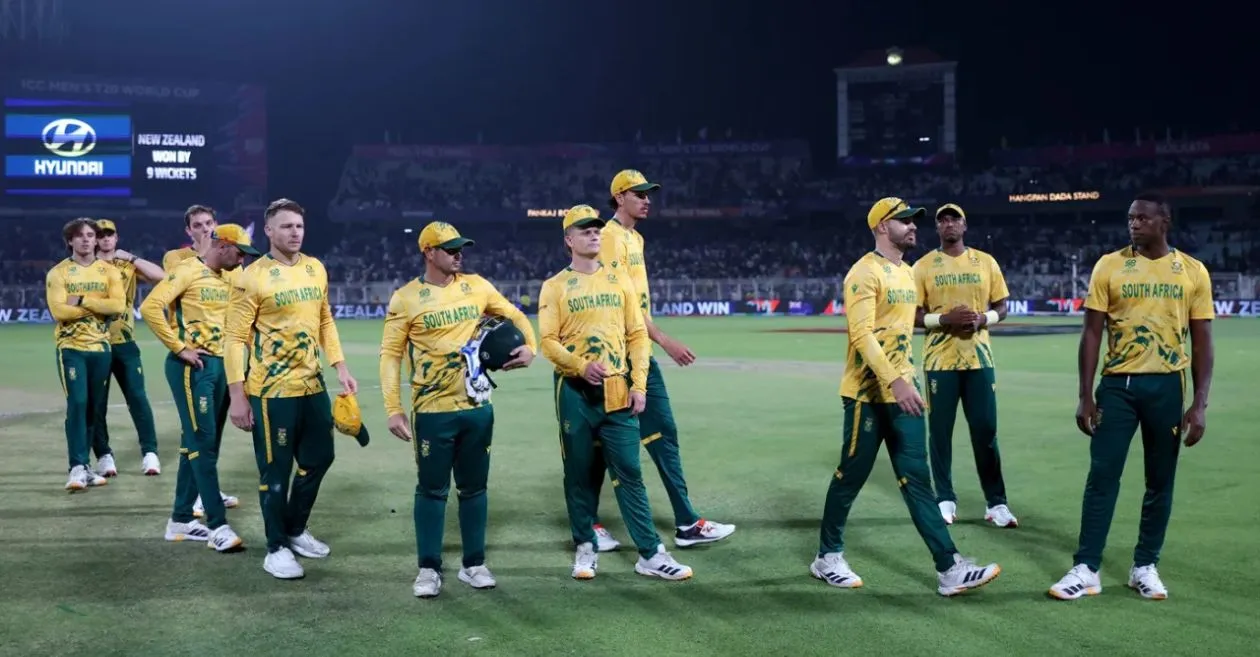
3 reasons behind South Africa’s crushing defeat against New Zealand in T20 World Cup 2026 Semi-Final clash


In a stunning turn of events at the iconic Eden Gardens in Kolkata, South Africa’s unblemished run in the T20 World Cup 2026 came to a screeching halt on March 4, 2026. Entering the first semi-final as the heavy favorites, the Proteas were not just defeated; they were dismantled by a clinical New Zealand side that secured a 9-wicket victory with a staggering 43 balls to spare. While South Africa managed to post a fighting 169/8 behind Marco Jansen’s late-innings heroics, the total proved to be mere target practice for a Kiwi batting lineup that seemed to be playing on a different surface altogether.

The loss has once again sparked the ‘chokers’ debate, though head coach Shukri Conrad was quick to dismiss the term, calling the defeat a bloody walloping rather than a collapse under pressure. From a tactical perspective, several factors contributed to this lopsided result that sent the Black Caps into their second T20 World Cup final.

Three primary reasons behind South Africa’s big defeat against New Zealand

  1. Top-order paralysis against tactical spin

The foundation of South Africa’s defeat was laid in the first two overs of the match. Mitchell Santner pulled off a masterstroke by introducing off-spinner Cole McConchie as early as the second over. The gamble paid off instantly as McConchie removed the dangerous Quinton de Kock and Ryan Rickelton on consecutive deliveries. This double-blow left the Proteas reeling at 12/2, stripping them of the aggressive start they had relied on throughout the tournament.

The struggle continued as New Zealand’s spin trio—Santner, McConchie, and Rachin Ravindra—strangled the middle order. The Proteas found it impossible to generate momentum on a pitch that offered subtle grip, crawling to 77/5 by the 11th over. By the time Jansen (55* off 30) and Tristan Stubbs (29) staged a recovery, the damage to the run rate was already terminal.

Also READ: IND vs ENG: Ravichandran Ashwin names the decisive player battle for T20 World Cup 2026 semifinal

  1. The Finn Allen hurricane

If the first half of the match was a slow burn, the second half was an explosion. New Zealand opener Finn Allen produced what many are calling the greatest T20 World Cup innings of all time. Chasing 170, Allen decimated the South African pace attack, reaching his century in a record-breaking 33 balls, the fastest in the history of the T20 World Cup.

Allen’s assault was so comprehensive that it rendered South Africa’s bowling plans obsolete within the powerplay. Alongside Tim Seifert (58 off 33), Allen put on a 117-run opening stand in just 9.1 overs. The sheer velocity of this partnership meant that by the time Kagiso Rabada finally bowled Seifert, the required run rate had plummeted to a point where a New Zealand victory was a mathematical formality.

  1. Failure to adapt to Eden Gardens’ conditions

A subtle but significant reason behind the defeat was South Africa’s inability to adapt to the Kolkata conditions after spending much of the tournament playing in Ahmedabad. Captain Aiden Markram admitted post-match that the team expected the wicket to play more consistently. Instead, the ball stopped and held in the surface during the first innings, catching the South African batters off guard.

In contrast, New Zealand’s bowlers exploited the surface perfectly, using cutters and varying pace to prevent the Proteas from hitting through the line. By the time the dew set in during the chase, making the ball slide onto the bat for Allen and Seifert, South Africa had already left 20–30 runs on the table, a deficit that proved impossible to defend against such an aggressive onslaught.

Also READ: Daryl Mitchell’s catch to dismiss Aiden Markram in T20 World Cup 2026 semi-final triggers debate among fans


Source link

Stock market today: Which are top gainers and losers in Nifty50 and BSE Sensex on March 5? Check list


Stock market today: Which are top gainers and losers in Nifty50 and BSE Sensex on March 5? Check list

Benchmark indices Sensex and Nifty rebounded sharply on Thursday, rising more than 1 per cent as Indian equities tracked a rally in global markets following recent heavy losses triggered by the conflict in West Asia.Snapping a four-session losing streak, the 30-share BSE Sensex surged 899.71 points or 1.14 per cent to close at 80,015.90. During the session, the index climbed as much as 1,187.64 points or 1.50 per cent to 80,303.83.The NSE Nifty also ended higher, gaining 285.40 points or 1.17 per cent to settle at 24,765.90, breaking its three-day decline.

Nifty50 top gainers

  • Adani Ports SEZ (4.53%)
  • L&T (4.03%)
  • Hindalco (3.60%)
  • NTPC (3.35%)
  • RIL (3.31%)
  • Coal India (3.28%)
  • BEL (2.95%)
  • Shriram Finance (2.93%)
  • JSW Steel (2.90%)
  • InterGlobe Aviation (2.73%)

Nifty50 top losers

  • Tech Mahindra (-1.33%)
  • HCL Tech (-0.73%)
  • Kwality Wall’s (-0.60%)
  • ICICI Bank (-0.58%)
  • SBI (-0.43%)
  • TCS (-0.35%)
  • HUL (-0.28%)
  • Eternal (-0.25%)
  • ONGC (-0.22%)
  • Axis Bank (-0.17%)

BSE Sensex top gainers

  • Adani Ports SEZ (4.53%)
  • L&T (4.03%)
  • NTPC (3.35%)
  • RIL (3.31%)
  • BEL (2.95%)
  • InterGlobe Aviation (2.73%)
  • Power Grid (2.57%)
  • M&M (2.57%)
  • Tata Steel (1.96%)
  • Sun Pharma (1.95%)

BSE Sensex top losers

  • Tech Mahindra (-1.33%)
  • HCL Tech (-0.73%)
  • Kwality Wall’s (-0.60%)
  • ICICI Bank (-0.58%)
  • SBI (-0.43%)
  • TCS (-0.35%)
  • HUL (-0.28%)
  • Eternal (-0.25%)
  • Axis Bank (-0.17%)

“Indian equity markets ended the session with over 1 per cent gain, managing to snap a sharp multi-day losing streak. With the Middle East conflict entering its sixth day, uncertainty over whether the situation will move toward resolution or further escalation kept market participants cautious, resulting in a consolidation-driven trading session. The extreme panic that characterised previous sessions began to ease, reflected in India VIX plunging more than 15% from recent highs,” Ponmudi R, CEO of Enrich Money, an online trading and wealth tech firm, said, PTI quoted.Broader markets also ended higher. The BSE smallcap index advanced 1.74 per cent, while the midcap index gained 1.36 per cent.Among sectoral indices, services rose the most by 2.84 per cent, followed by utilities (2.58 per cent), power (2.41 per cent), metal (2.32 per cent), industrials (2.32 per cent), auto (1.95 per cent), realty (1.91 per cent), energy (1.83 per cent) and commodities (1.72 per cent).Information Technology and BSE Focused IT were the only laggards.On the BSE, 2,803 stocks advanced, while 1,453 declined and 141 remained unchanged.Asian markets also ended higher. South Korea’s Kospi rebounded sharply by 9.63 per cent, while Japan’s Nikkei 225, China’s Shanghai SSE Composite and Hong Kong’s Hang Seng index also closed with gains.European markets were trading higher, while US markets had ended Wednesday’s session in positive territory.Foreign Institutional Investors (FIIs) sold equities worth Rs 8,752.65 crore on Wednesday, while Domestic Institutional Investors (DIIs) bought stocks worth Rs 12,068.17 crore, according to exchange data.


Source link

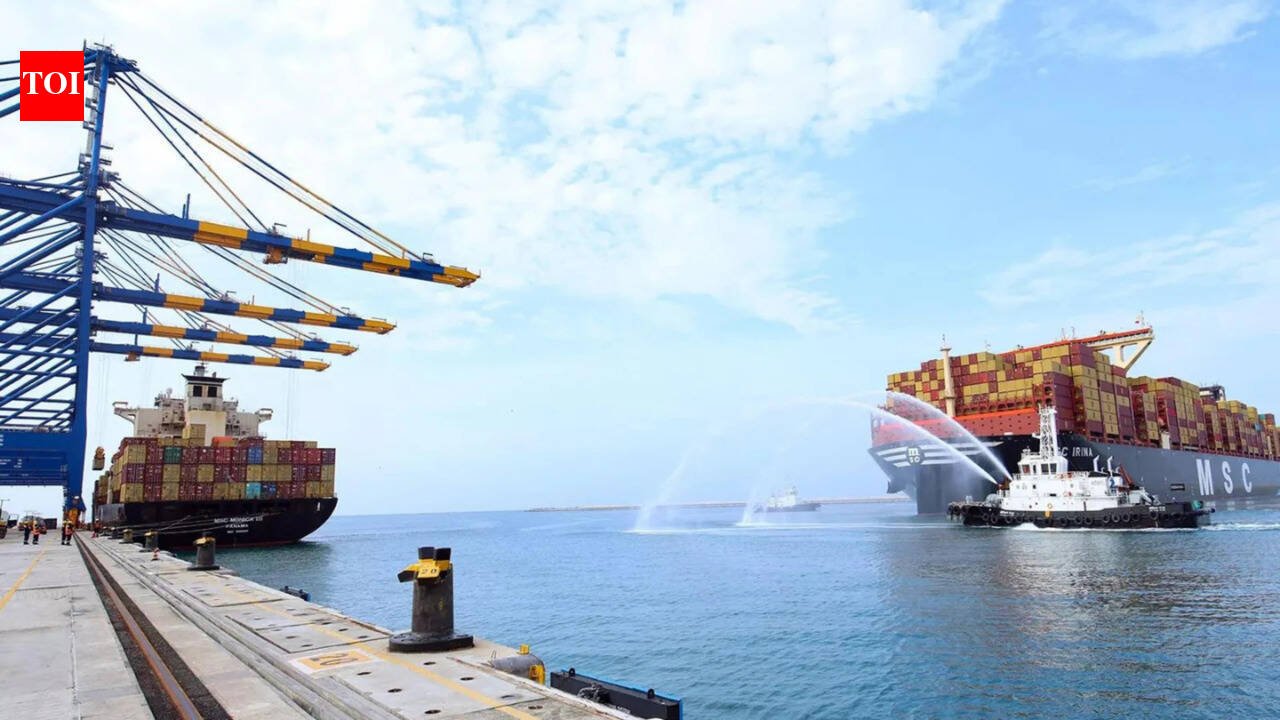
India in ‘comfortable position’ on energy amid Middle East crisis; Australia, Canada offer gas supplies: Report


India in ‘comfortable position’ on energy amid Middle East crisis; Australia, Canada offer gas supplies: Report

NEW DELHI: India on Thursday reiterated that it’s in a comfortable position with regards to energy supply, amid the Middle East tensions.Country’s energy situation is being reviewed twice a day and remains in a comfortable position on energy security despite the escalating tensions in West Asia, government sources, cited by ANI, said.Officials maintained that there is no global shortage of crude oil, LNG or LPG, and India continues to engage with multiple suppliers to ensure steady inflows. Only about 40 per cent of India’s crude imports pass through the Strait of Hormuz, reducing the country’s vulnerability to potential disruptions in the region. The remaining 60 per cent is sourced through alternative routes.India currently holds nearly eight weeks of total inventory cover for crude oil and petroleum products, including strategic reserves. This includes approximately 25 days of crude oil stocks and around 25 days of petrol and diesel inventory.ANI sources also said diversified sourcing and adequate reserves have positioned India to manage any short-term supply-side shocks, even as it continues to closely monitor developments in the region.Government sources further clarified that there are no plans to ration petrol or diesel, reiterating that sufficient stocks are available across the country to meet domestic demand. Officials maintained that fuel supplies remain stable and that there is no cause for public concern.Sources also noted that Qatar accounts for nearly 20 per cent of global LNG supplies. QatarEnergy has declared force majeure, a contractual provision that allows a supplier to suspend or reduce obligations due to extraordinary circumstances beyond its control.In this context, GAIL (Gas Authority of India Limited) is also expected to invoke force majeure in order to manage supply commitments and prioritise deliveries to critical sectors.Officials added that these measures are precautionary and aimed at ensuring uninterrupted supplies to essential sectors amid evolving regional uncertainties.

Offers from other countries

Australia and Canada have offered to supply gas to India as New Delhi explores alternative energy sources amid the escalating tensions in West Asia, further stated the government sources.India currently imports around 195 million metric standard cubic metres per day (mmscmd) of gas, of which approximately 60 mmscmd comes from Qatar. With supply risks under watch, the government is actively scouting additional markets to ensure continuity and diversification.Officials said India is also engaging with major oil producers and global traders for crude oil and LPG procurement. Discussions are underway with the International Energy Agency (IEA) and the Organization of the Petroleum Exporting Countries (OPEC) to assess market stability and supply outlook. In parallel, talks with the US are focused on securing insurance coverage for Indian vessels operating in sensitive maritime corridors.As part of its broader diversification strategy, India recently signed new energy agreements with the UAE and the US to strengthen and rebalance its energy basket.Earlier reports also suggested that Russia also also offered help to send crude oil to India. “We have been open to supplying crude oil to India,” said Russian Ambassador Denis Alipov.Additionally, according to a Bloomberg report, ship-tracking data shows that two Russian crude cargoes originally destined for East Asia have changed course and are now headed to India.Vessel monitoring data from Kpler and Vortexa indicate that the two tankers are carrying a combined 1.4 million barrels of Urals crude and are expected to discharge at Indian ports later this week. Earlier voyage signals had pointed to East Asian destinations before the ships altered their route.Read more: Russian crude to rescue! Ships carrying Russia’s oil head to India amid Middle East supply shock – Report


Source link

MS Dhoni to Yuvraj Singh: Cricket’s biggest names attend Arjun Tendulkar’s wedding – Full list | Off the field News


From MS Dhoni to Yuvraj Singh: Cricket’s biggest names attend Arjun Tendulkar’s wedding - Full list
From MS Dhoni to Yuvraj Singh: Cricket’s biggest names attend Arjun Tendulkar’s wedding (Photo- X)

The wedding of Arjun Tendulkar, son of legendary India batter Sachin Tendulkar, turned into a grand gathering of cricket’s biggest names as several stalwarts from across generations arrived in Mumbai on Thursday to celebrate the occasion.Among the most prominent guests was former India captain Mahendra Singh Dhoni, who attended the ceremony with his wife Sakshi Dhoni. Former India all rounder Suresh Raina was also present at the celebrations alongside his wife Priyanka Raina.

Stars shine at Arjun Tendulkar’s Sangeet | Mumbai witnesses grand celebration

India head coach Gautam Gambhir made an appearance at the wedding with his wife Natasha Jain Gambhir, just hours before India’s T20 World Cup semifinal against England cricket team.The guest list also featured several key administrators and cricket officials. Jay Shah, chairman of the International Cricket Council, was among the dignitaries who attended the ceremony. Former India head coach Ravi Shastri arrived with his family, while Rajiv Shukla, vice president of the Board of Control for Cricket in India, was also present.Former India captain and ex head coach Rahul Dravid, who guided India to the ICC Men’s T20 World Cup 2024 title, attended the ceremony with his wife. Veteran commentator Harsha Bhogle was also among the notable guests.Several former India cricketers marked their presence at the celebration. These included Kiran More, Venkatesh Prasad, Ajit Agarkar, who currently serves as India’s chief selector, Zaheer Khan and Ashish Nehra. Current India batter Ajinkya Rahane and former opener turned commentator Aakash Chopra were also present along with their spouses.Former World Cup winning all rounder Yuvraj Singh, Irfan Pathan also joined the celebrations, adding further star power to the gathering of Indian cricket personalities.Arjun tied the knot with Saaniya Chandhok, who comes from a prominent business background. She is the granddaughter of industrialist Ravi Ghai, chairman of the Graviss Group, and has shared a close bond with the Tendulkar family for several years, especially with Arjun’s sister Sara Tendulkar.The 26 year old left arm pacer has played five matches in the Indian Premier League, picking up three wickets during his stint with Mumbai Indians. He was first bought by the franchise in the 2021 mini auction and eventually made his IPL debut in the 2023 season.Arjun later continued with Mumbai Indians across multiple seasons before being traded to Lucknow Super Giants ahead of the IPL 2026 mini auction. He is set to represent the franchise in the upcoming season.Currently playing domestic cricket for the Goa cricket team after making his debut for the Mumbai cricket team in 2021, Arjun now begins a new chapter in his personal life with a wedding that brought together some of the biggest names in Indian cricket.


Source link

Lasers, satellites and cyberattacks: How US is crippling Iran’s arsenal


Lasers, satellites and cyberattacks: How US is crippling Iran's arsenal

Fragments of Iranian weapons, shattered in flight or rendered useless by electronic disruption, have been falling from the skies across the Middle East. Behind many of these failures is a network of advanced technology developed in the US, including heat-tracking satellites, cyber warfare tools and cutting-edge laser systems designed to neutralise aerial threats.Military observers believe some of these capabilities are being used in Operation Epic Fury, a campaign that began on 28 February. One of the most closely watched developments is the suspected deployment of a ship-mounted laser weapon aboard a US Navy destroyer operating off the Middle Eastern coast.Videos released by US Central Command appear to show a vessel equipped with the High-Energy Laser with Integrated Optical Dazzler and Surveillance system, commonly known as HELIOS. The system features a steerable laser that can focus a powerful beam of energy on aerial targets, enabling it to disable drones and other threats within seconds.Laser-based defence is not limited to US forces. Footage circulating from the skies near the Israel–Lebanon border shows rockets being launched only to explode seconds later. Analysts widely believe these interceptions may involve Israel’s experimental Iron Beam system, an advanced laser defence designed to destroy rockets before they reach their targets.Neither the US Navy nor the Israeli military has officially confirmed the use of laser weapons in the current operation. However, the Navy acknowledged earlier in February that HELIOS successfully destroyed four drones during testing, suggesting that the technology is already operational.The opening phase of the campaign has been intense. Within the first 72 hours, US forces reportedly struck around 1,700 targets. More than 200 Iranian ballistic missile launchers, roughly half of the country’s inventory, were destroyed while dozens more were rendered inoperable. Hundreds of missiles were eliminated before they could be launched.Much of this precision has been enabled by assets operating far above the battlefield. The US Space Force, established in 2019, plays a crucial role in providing real-time intelligence for air and naval operations.According to Brent David Ziarnick, a former US Air Force officer and past lecturer in the Space Force programme at Johns Hopkins University, satellites equipped with infrared sensors detect the heat signatures produced when missiles launch.“These sensors can immediately identify where rockets are fired from,” he explained. “Once the launch point is located, missile defence systems can intercept the projectile and field units receive early warnings to take shelter.”The detection happens within seconds. Infrared sensors track the intense heat generated by missiles, allowing defence networks to calculate their trajectory and likely destination almost instantly. Reports suggest this system has already helped destroy hundreds of Iranian missiles during the conflict.Although the fighting is taking place in the Middle East, much of the monitoring work is carried out thousands of kilometres away. Personnel in the United States operate from facilities housing large radar domes known as radomes. These spherical structures resemble giant golf balls and collect satellite data in real time. Analysts use the information to determine missile trajectories and likely targets.Sam Eckhome, host of the YouTube programme Access Granted, describes the arrangement as a layered defence system combining satellites, radar installations and command centres.“The network is designed so that if a missile is ever launched, the United States will know first,” he said.Another important dimension of the operation is cyber warfare. Working alongside Space Force units is US Cyber Command, which focuses on disrupting enemy systems before missiles or aircraft are launched.Ziarnick said that once surveillance systems identify key radar installations, cyber teams attempt to disable them digitally.“They infiltrate the systems and shut them down,” he said. “In some cases they can even take control of the software, essentially turning the enemy’s equipment into a useless piece of hardware.”Joint Chiefs of Staff chairman General Dan Caine confirmed that cyber operations began even before the first missiles were fired. Cyber Command targeted communications networks and sensor systems across Iran to “disrupt, disorient and confuse the enemy”.Israeli intelligence operations appear to have played a role as well. Reports suggest cyber operatives spent years quietly accessing traffic cameras across Tehran, allowing them to monitor the movements of Iranian Supreme Leader Ayatollah Ali Khamenei and identify members of his security detail.By analysing footage from these cameras, intelligence agencies were reportedly able to map the guards’ routines, their vehicles and even their home addresses.One unusual aspect of the conflict involves Iran’s own response to the attacks. As soon as the operation began, Iranian authorities shut down internet access across much of the country. The tactic has previously been used during domestic protests to prevent citizens from organising demonstrations.While the shutdown may limit public communication, experts believe Iranian leadership continues to operate through secure internal networks. Such systems would likely become prime targets for cyber infiltration.“Cyber Command can reach out and touch systems anywhere,” Ziarnick warned. “It has become a formidable force.”The relatively low number of casualties among US and allied forces reflects the technological nature of the campaign. Former Space Force officer Bree Fram believes modern warfare increasingly relies on sophisticated systems rather than large ground armies.“The absence of mass formations of troops on the battlefield shows how advanced the technology has become,” she said. “It is a combination of powerful systems and the expertise required to operate them.”Together, satellites, lasers, cyber weapons and precision intelligence illustrate how modern conflict is increasingly fought across invisible domains far beyond the traditional battlefield.


Source link

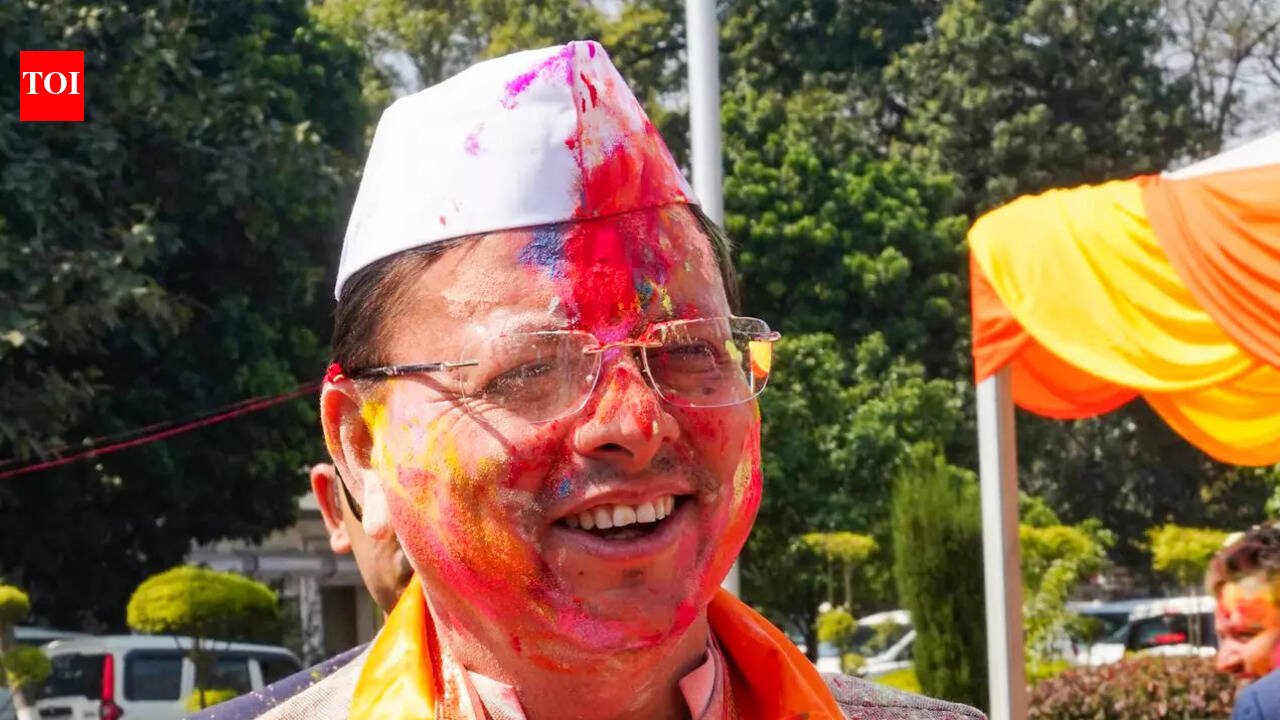
Uttarakhand CM Pushkar Singh Dhami celebrates Holi with public at official residence | India News


Uttarakhand CM Pushkar Singh Dhami celebrates Holi with public at official residence
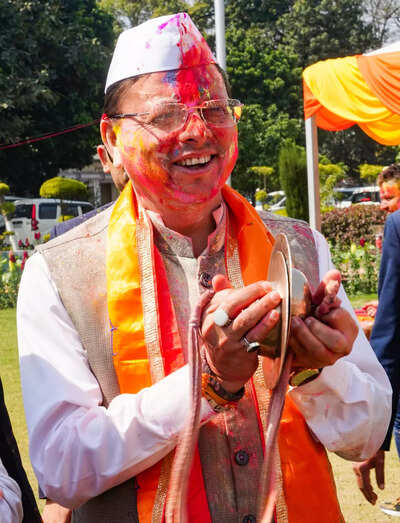
Dehradun, Mar 04 (ANI): Uttarakhand CM Pushkar Singh Dhami celebrates Holi during a Holi Milan Samaroh, at his official residence, in Dehradun on Wednesday. (@pushkardhami X/ANI Photo)

Uttarakhand chief minister Pushkar Singh Dhami on Wednesday participated in various programmes and celebrated Holi with the people of the state, conveying his commitment to promoting folk culture, faith, and development.The festival of Holi in Uttarakhand this year was not merely a celebration of colours but also reflected the message of the state’s culture, faith, and development.A unique glimpse of Uttarakhand’s rich folk culture was seen during the Holi Milan ceremony organised at the chief minister’s residence in Dehradun. Folk artists from different regions of the state, Garhwal, Kumaon, Jaunsar, and the Terai, presented their traditional performances, creating a festive atmosphere.According to the Uttarakhand CMO, artists from the Jaunsar region performed the traditional Harul dance, while Holyar groups from Kumaon filled the environment with joy through their traditional Holi songs. The beats of drums, manjira, and other traditional musical instruments echoed with folk songs, immersing the chief minister’s residence in the vibrant colours of Uttarakhand’s cultural heritage.During the event, CM Dhami enthusiastically joined the folk artists. He danced with them, played traditional musical instruments, and enjoyed the folk songs. The moment was not only a celebration but also reflected the government’s commitment to preserving the state’s folk culture and traditional art forms.Alongside the Holi Milan ceremony, the chief minister also carried forward the tradition of political courtesy and respect for senior leadership. He visited the residences of former chief ministers Bhuvan Chandra Khanduri, Ramesh Pokhriyal Nishank, and Trivendra Singh Rawat to extend his Holi greetings.The chief minister’s visit to Champawat during the Holi period was also significant in many ways. The large gatherings at various events reflected the public’s strong confidence in the work of the Dhami government.During the visit, the chief minister inaugurated the fair at Maa Purnagiri Dham and informed the public about the ongoing development works in the temple area. Facilities such as parking, drinking water, and crowd management are being modernised for the convenience of devotees.Chief Minister Pushkar Singh Dhami also participated in the Kali Kumaon Holi Rang Mahotsav and the Holi Milan ceremony organised in Lohaghat. He interacted warmly with the public. The beats of traditional drums and songs, along with the large crowd present at the events, created a vibrant and festive atmosphere.The Holi Milan ceremony organised in Khatima also became a strong symbol of public support and trust.A large number of people gathered to celebrate Holi with their chief minister. The sound of drums, the colourful atmosphere, and slogans of “Dhami Zindabad” reflected a deep emotional connection between the people and their leader.In his address, the chief minister said that the state government is continuously working for the protection and development of Sanatan culture and religious centres.He emphasised that preserving the original character and cultural identity of Devbhoomi Uttarakhand is the government’s top priority.The programmes organised on the occasion of Holi were not merely festive celebrations but also conveyed a message of harmony between faith, culture, development, and public trust. The large participation of people in these events indicated that the people of Uttarakhand are ready to move forward together with their chief minister towards development, while preserving their cultural identity.


Source link

Protests over Ayatollah Khamenei’s killing in Kashmir: Meta blocks media pages, MP Ruhullah Mehdi booked for ‘misleading content’ | Srinagar News


As Protests Break Out In India, A Look At Why Ayatollah Khamenei Was Spiritual Anchor For Shia Muslims

Syed Ruhullah Mehdi (File Photo)

SRINAGAR: After large-scale protests over the past two days against the killing of Iran’s supreme leader, Ayatollah Ali Khamenei, the Jammu and Kashmir government extended the closure of schools and colleges across the Valley until Saturday.At the same time, Meta blocked several newspaper accounts in the Valley, evoking condemnation from political parties.Former chief minister Mehbooba Mufti and Peoples Conference leader Sajad Lone asked Meta to uphold freedom of expression.

As Protests Break Out In India, A Look At Why Ayatollah Khamenei Was Spiritual Anchor For Shia Muslims

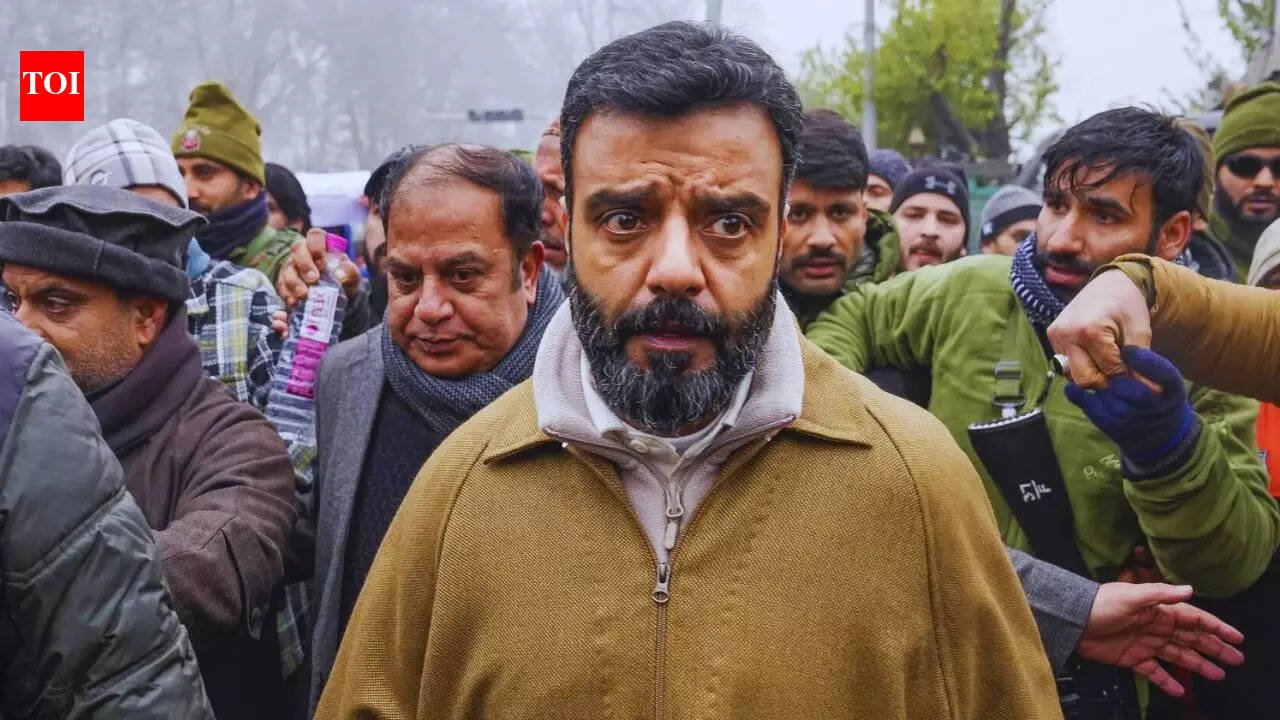
Mehbooba said she was concerned over the recent censorship of news organisations such as @GreaterKashmir, @KashmirLife, and @RisingKashmir, whose Facebook and Instagram pages have been taken down.“Such actions not only silence legitimate voices but also undermine the fundamental right to freedom of expression. The Jammu & Kashmir government must also immediately end any censorship of media in the region,” she said.Sajad Lone said that the Facebook and Instagram handles of some media institutions had been blocked. “Most of them are responsible, mature institutions and include Greater Kashmir, Kashmir Life and Rising Kashmir. Their absence will do more harm,” he said.In a statement issued here, weekly newspaper Kashmir Life said that its verified Facebook and Instagram pages had become inaccessible in India since Monday afternoon after Meta restricted access at the request of law enforcement authorities.The paper said Meta posted an auto-response to the page stating that it had restricted access to the content in India “pursuant to a notice from ‘The Government of India – Law Enforcement’ under Section 79(3)(b) of the Information Technology Act, 2000.”The communication advised the organisation to contact the issuing authority for further information and stated that details regarding content restrictions based on local law are available through Meta’s Transparency Centre. Section 79(3)(b) of the Information Technology Act, 2000, empowers authorities to require intermediaries to disable access to content upon receiving actual knowledge through a court order or government notification.NC MP, former mayor bookedPolice late Tuesday evening registered cases against National Conference MP Aga Syed Ruhullah Mehdi and former Srinagar mayor Junaid Azim Mattu, accusing them of being involved in “the circulation of false, fabricated and misleading content across digital and social media platforms with the intent to create fear, disturb public order, and incite unlawful activities.” The FIR was registered under various sections of the Bharatiya Nyaya Sanhita (BNS) at the Cyber Police Station, Srinagar.Early Wednesday, Mehdi responded, saying that “the same administration that couldn’t find the courage to condemn a sovereign nation’s leader being martyred now finds the courage to book the one man who did.” “The people of Srinagar did not elect their MP to recite government-approved condolences. They elected him to speak the truth. That mandate does not expire with an FIR,” he added.LG asks for calmIn a related development, Lieutenant Governor Manoj Sinha chaired two high-level meetings on Tuesday. He chaired a meeting at the Police Control Room in Srinagar to review the law-and-order situation. Sinha, who oversees law and order in J&K, appealed to citizens and community leaders to uphold harmony and contribute to an atmosphere of calm and goodwill in society.He also chaired a high-level meeting at Lok Bhawan, holding “in-depth deliberations on the prevailing security scenario in the UT of J&K.” The meeting was attended by Lieutenant General Pratik Sharma, General Officer Commanding-in-Chief (GoC-in-C), Northern Command; Nalin Prabhat, DGP, J&K; Lieutenant General Prashant Srivastava, GoC 15 Corps; and Major General Balbir Singh, MGGS, Northern Command.Jammu and Kashmir Police on Tuesday stated that some elements were systematically attempting to spread distorted narratives and unverified content with the clear intent to incite unrest, disturb public order, and create disharmony in society. “Such malicious misinformation campaigns pose a grave threat to peace, security, and the integrity of the nation,” the police said, adding that they had registered an FIR at the Cyber Police Station and that strict legal action would follow.Protests in KashmirProtests erupted across Kashmir on Sunday morning as news of Khamenei’s death spread, with large numbers of people in Srinagar marching toward Lal Chowk. Chanting anti-U.S. and anti-Israel slogans, protesters turned the iconic Clock Tower at Lal Chowk into the centre of demonstrations.Many protesters carried black and red flags symbolising grief and martyrdom, beat their chests in mourning, and held portraits of Khamenei and Iran’s founding leader, Ayatollah Ruhollah Khomeini. Some banners were placed at the clock tower.It was the first time since the abrogation of Article 370 on August 5, 2019, that such large-scale protests have erupted in the Valley. Police have now sealed Lal Chowk.Despite heavy restrictions on Monday and Tuesday, demonstrations continued in several areas. Police fired tear gas at multiple locations to disperse crowds. Police sources said incidents of stone-throwing were reported in some places. More than a dozen people were injured in Monday’s protests.Ruling National Conference spokesperson Tanvir Sadiq on Tuesday appealed to the Union home minister and LG Sinha to consider releasing the youths who have been detained over the past two days. He also appealed to Shia protesters to “confine our protest and expression of grief and anger to peaceful means within our homes, mosques, and Imambaras, so that no unrest or unfortunate situation arises.”


Source link

T20 World Cup 2026: Dinesh Karthik calls on Gautam Gambhir to back India’s star opener before IND vs ENG semi-final


The stage is set at the iconic Wankhede Stadium in Mumbai for a high-octane showdown as England face defending champions India in the second semi-final of the ICC Men’s T20 World Cup 2026 this Thursday, March 5. While the ‘City of Dreams’ prepares for a repeat of the 2022 and 2024 semi-final fixtures, the primary conversation surrounding the Indian camp isn’t just about the opposition, but the volatile form of their young opening sensation, Abhishek Sharma.

Despite India’s successful surge into the knockouts, Abhishek’s tournament has been a statistical nightmare. The left-hander, who entered the World Cup as the world’s top-ranked T20I batter, endured a horrific group stage with three consecutive ducks against the USA, Pakistan, and the Netherlands. While a fighting 55 off 30 balls against Zimbabwe offered a glimpse of his destructive potential, a meagre score of 10 in the virtual quarter-final against the West Indies have left fans and pundits questioning his spot in the XI.

Dinesh Karthik advises Gautam Gambhir to stick with India’s star opener ahead of semi-final

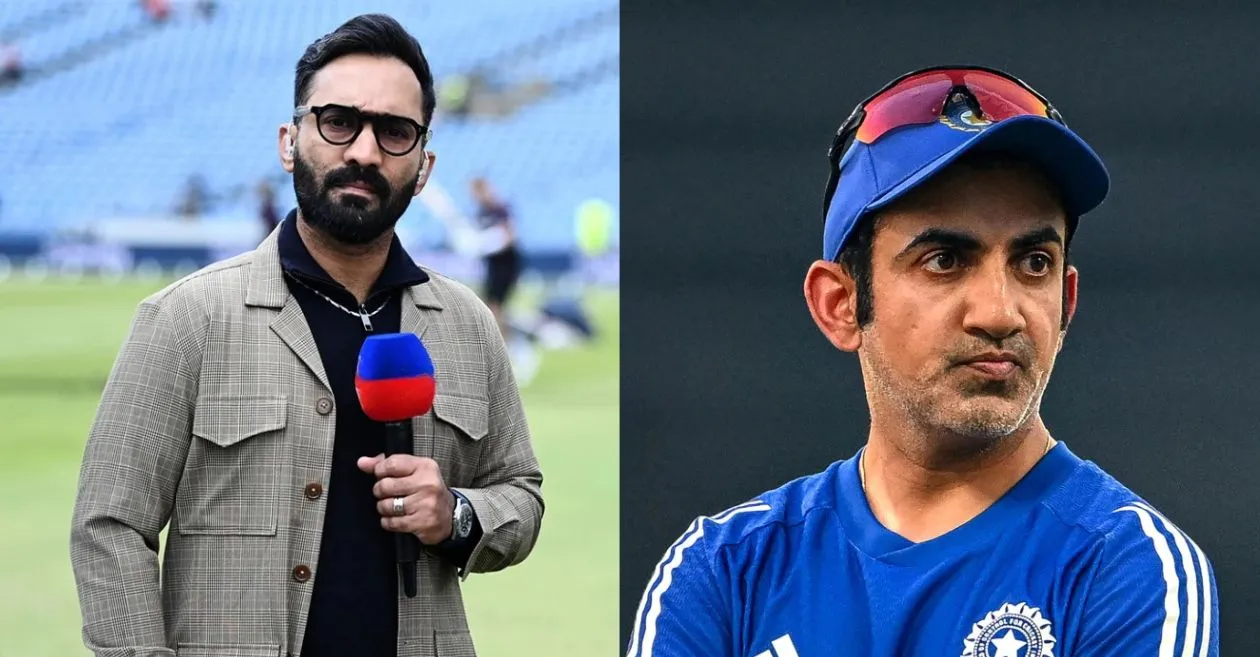
Amidst growing calls to reshuffle the top order, former India wicket-keeper and ICC expert Dinesh Karthik has issued a firm ‘stick to your guns’ message to head coach Gautam Gambhir. Speaking at the JioStar Media Day ahead of the clash, Karthik dismissed the notion of dropping the youngster for such a monumental game. He argued that the tactical advantage of the Abhishek-Sanju Samson left-right opening combination is too valuable to discard based on recent individual blips.

In a big tournament like a World Cup, you have to trust the players who have got you there, I believe they need to stick to Abhishek, Sanju, and Ishan Kishan. Give themselves the best chance of success on the big day,” Karthik emphasized.

Karthik’s reasoning stems from Abhishek’s unique ‘X-factor’, the ability to take the game away from the opposition within the Powerplay, a trait Gambhir himself famously championed during his playing days.

Also READ: Top 5 fastest centuries in T20 World Cup history ft. Finn Allen

Wankhede stadium memories and the Sanju Samson factor

The decision to retain Abhishek is bolstered by his historic record at the Wankhede. It was at this very venue last year that the Punjab batter dismantled the English attack, smashing a record-breaking 135 off just 54 deliveries. Even England’s Sam Curran has admitted that the defending champions remain wary of the threat Abhishek poses, recalling that 37-ball century from the pre-World Cup bilateral series.

While Abhishek seeks redemption, his partner Samson has become the bedrock of the Indian innings. Samson’s ‘Kohli-esque’ unbeaten 97 at Eden Gardens was the catalyst that secured India’s semi-final berth. By absorbing pressure when early wickets fell and finishing the chase with surgical precision, Samson has provided the stability that allows the team management to take a calculated risk on Abhishek’s high-risk, high-reward approach. For Gambhir and captain Suryakumar Yadav, the choice is clear: back the explosive potential of their young opener to fire on the grandest stage of them all.

Also READ: Aiden Markram reveals key reasons behind South Africa’s crushing defeat to New Zealand in T20 World Cup 2026 semi-final


Source link

Middle East heat may ripple across India’s energy supply chain, flags Goldman Sachs


Middle East heat may ripple across India's energy supply chain, flags Goldman Sachs

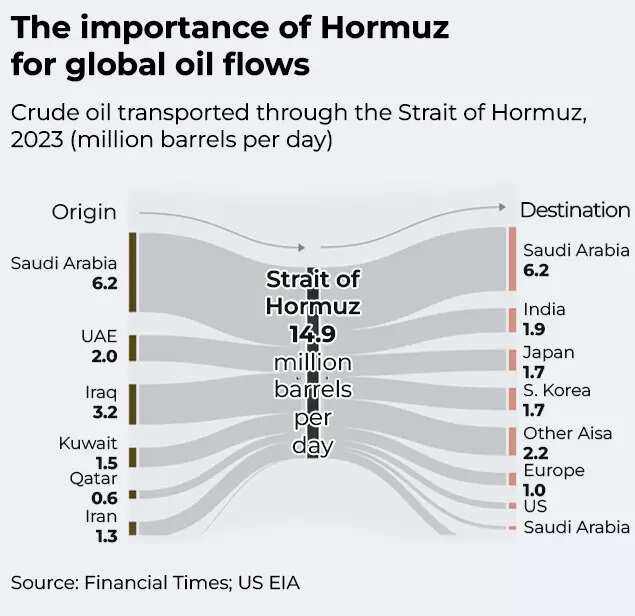
As tensions continue to heat up in the Middle East, concerns are raising about disruptions to one of the world’s most critical energy shipping routes, the Strait of Hormuz. Any disruption could significantly affect major oil-importing countries such as India, as the narrow Strait of Hormuz is central to global energy trade. The strait sees almost 20 million barrels of oil passing through each day, or about a fifth of the world’s consumption, pass through the route. The waterway also carries roughly 19% of global liquefied natural gas (LNG) shipments, making it a crucial corridor for energy-importing economies.A recent report by Goldman Sachs has flagged early signs of stress in the region. The report warned that tanker traffic through the Strait of Hormuz has already begun showing signs of disruption, with shipping firms, oil producers and insurers adopting a cautious approach following reports of damaged vessels in nearby waters.

India Confident To Evade Fuel Crisis Amid War As Russia Offers Energy Support Despite Trump Threats

According to the firm, financial markets have already begun factoring in the geopolitical risk. Oil prices currently carry an estimated risk premium of $18-per-barrel, reflecting the potential market impact if energy flows through the Strait of Hormuz were disrupted for about a month.

The importance of Hormuz for global oil flows

Even is the oil facilities are not directly damaged, a shutdown of the shipping route could expose a significant portion of global supply. The report estimates that in an event of full closure, about 16 million barrels per day of oil flows could be affected, despite the availability of some pipeline routes designed to bypass the strait.And the risks are not limited to crude oil shipments with almost 80 million tonnes of LNG exports annually, much of it from Qatar, moving through the passage. Any prolonged disruption could tighten gas supply globally and potentially drive European benchmark gas prices back to levels seen during the 2022 energy crisis.

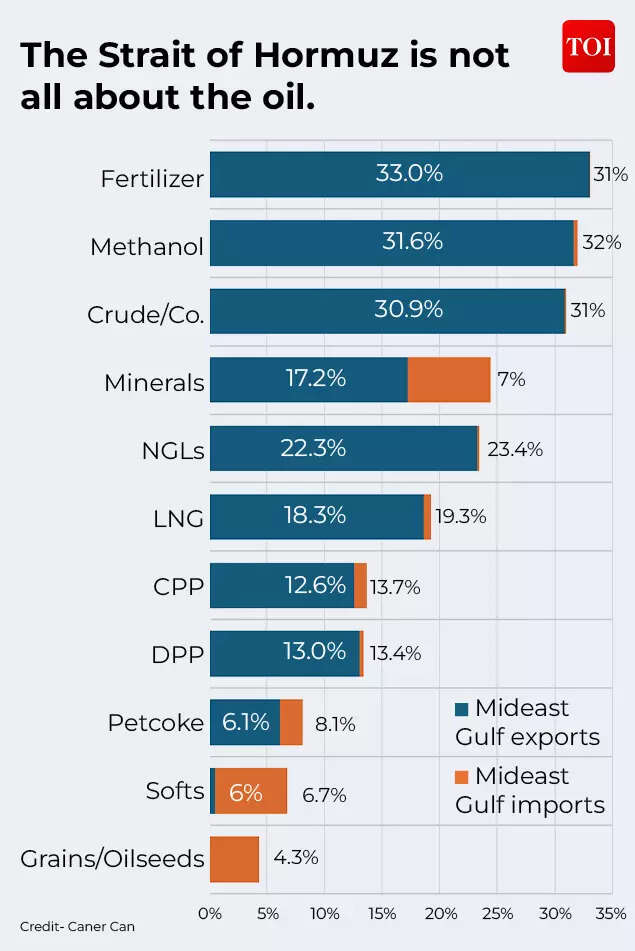
The Strait of Hormuz

Asian economies stand among the most exposed to such disruptions. Major importers such as China, India, Japan and South Korea depend heavily on oil and LNG shipments that transit through the strategic corridor.While global oil inventories and spare production capacity could help cushion short-term shocks, the report warned that sustained disruption to Gulf shipping routes could trigger sharp volatility in global energy markets and push prices higher across oil, gas and refined fuel products.Market participants and governments are closely watching tanker traffic in the Strait of Hormuz, along with diplomatic and military developments involving the United States, Iran and Gulf nations, to assess whether the current disruptions remain temporary or escalate into a broader energy supply shock.


Source link

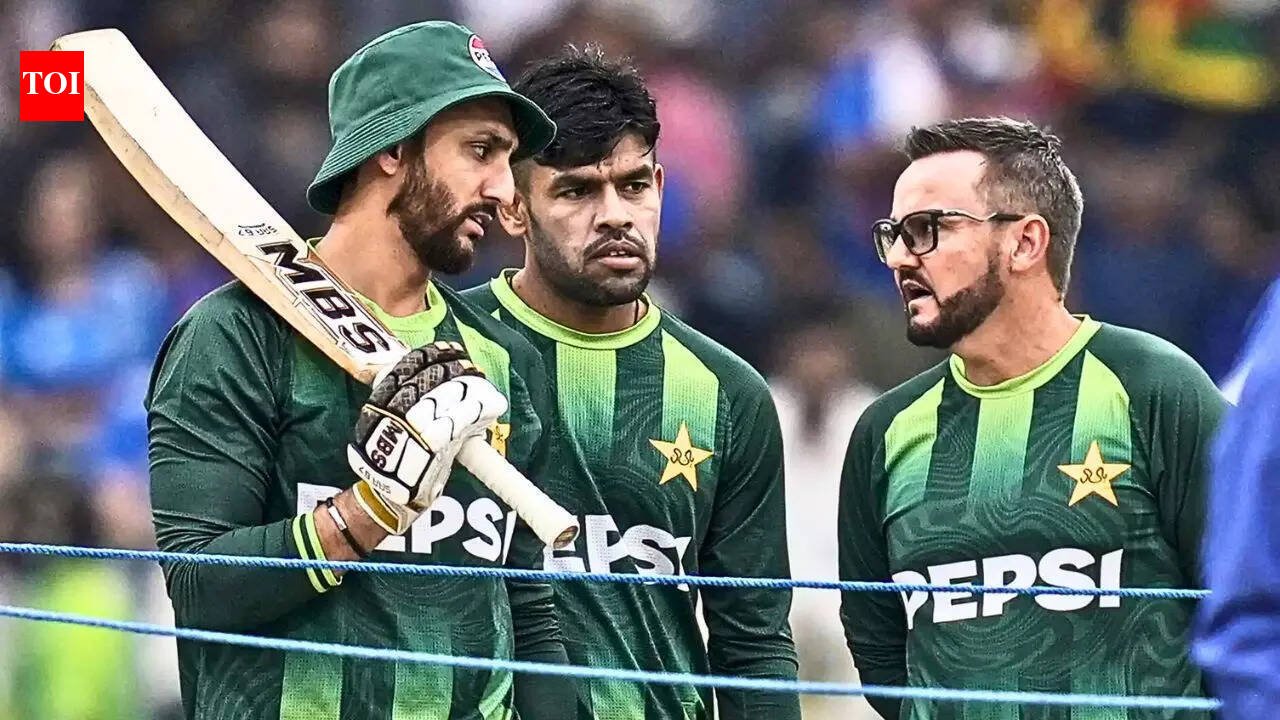
Mike Hesson under fire as Pakistan players unhappy after T20 World Cup fiasco | Cricket News


Chaos in Pakistan camp! Players unhappy with Mike Hesson after T20 World Cup fiasco
Pakistan cricket team (AP Photo)

NEW DELHI: Pakistan’s early exit from the T20 World Cup Super 8 stage has pushed the team into another period of uncertainty. Led by captain Salman Ali Agha, the side delivered disappointing performances and suffered heavy defeats against archrivals India and England. Because of the poor campaign, reports say players could face heavy fines and the captain’s position might also be under threat, while discussions about possible changes in the coaching setup have begun.

Reliving 2024 T20 WC win with Vimal Kumar: How Rohit Sharma, Virat Kohli created history

Amid the fallout, a report by Geo Super claimed that tensions inside the dressing room grew during the tournament, with several players unhappy with head coach Mike Hesson’s way of running the team. According to the report, some players directly raised their concerns with Pakistan Cricket Board (PCB) officials while the tournament was still going on.“During the tournament, several Pakistan players are said to have individually approached PCB officials to complain about the coach’s behaviour,” the report stated.Sources quoted in the report said Hesson’s strict style and the way he made decisions without discussing them with players created discomfort in the team environment. “Insiders allege that his rigid approach and decisions taken without consultation unsettled the dressing room. It is further claimed that key matters were decided without consulting the captain, with Hesson frequently intervening in all aspects of team management,” it added.PCB officials are now reviewing what happened during the tournament and examining Hesson’s conduct before deciding the next steps. “Senior officials are currently reviewing his conduct with the squad and are expected to examine the tour report before holding detailed discussions with the coach,” the report stated.The report also suggested that neither the selection panel nor captain Salman Ali Agha felt able to challenge Hesson’s authority during the World Cup.It continued, “Well-placed sources claim that both the selection panel and captain Salman Ali Agha were unable to challenge Hesson’s authority, with the coach reportedly exercising sweeping control over team affairs.”However, despite the controversy, Hesson may still keep his job because he recently signed a long-term deal. “Hesson is understood to have signed a two-year contract with the PCB, and the board remains committed to maintaining stability in the head coach’s role,” the report concluded.


Source link