Breaking News
What is DME? Scientists look to scale up output to offset LPG supply blow


What is DME? Scientists look to scale up output to offset LPG supply blow

As the Middle East conflict continues to spill across global oil markets, India is looking to expand the production of dimethyl ether (DME), an alternative that could help deal with ongoing LPG disruptions. A government-run research institute is examining ways to boost the output of the fuel, which scientists say could help address supply challenges linked to LPG. The CSIR-National Chemical Laboratory (NCL) has recently established a pilot plant for DME and is now planning to scale up the facility. Researchers at the laboratory told ET that the fuel has the potential to act as an indigenous alternative to liquefied petroleum gas, which is widely used for cooking. The push comes at a time when LPG prices have risen sharply following disturbances in global supply chains.

As LPG Shortage Panic Spreads, Centre Urges Citizens Not To Hoard Cylinders And Opt For PNG

“Substituting LPG with DME does not require any change in the existing infrastructure such as cylinders, gaskets, regulators, hoses or burners,” Ashish Lele, director of NCL told ET.Standards for blending DME with LPG have already been established by the Bureau of Indian Standards (BIS) for domestic, commercial and industrial applications.

What is DME?

DME or Dimethyl ether is produced synthetically from methanol, which can be obtained from dry biomass, coal or even captured carbon dioxide. The fuel shares similar characteristics with LPG and can be blended with liquefied petroleum gas in different proportions. According to scientists involved in the project, replacing LPG with DME would not require modifications to the current cooking fuel infrastructure. Cylinders, gaskets, regulators, hoses and burners already in use would continue to function without changes.


Source link

‘He is riding his luck’: Robin Uthappa’s big comment on Vaibhav Sooryavanshi ahead of IPL 2026 | Cricket News


'He is riding his luck': Robin Uthappa's big comment on Vaibhav Sooryavanshi ahead of IPL 2026

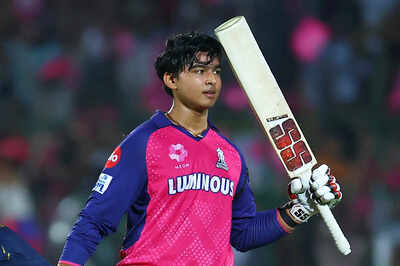
Indian Premier League (IPL) is set for his blockbuster start from March 28, and fans are eagerly waiting for the thrilling performance of Vaibhav Sooryavanshi who heads into his second IPL season after an impressive breakthrough campaign with Rajasthan Royals. While expectations around the young batter are high, former India cricketer Robin Uthappa believes the upcoming season could prove to be a learning phase for the youngster.

From fearless newcomer to studied opponent

Vaibhav made his debut last season and emerged as the fearless teenager who surprised opposition bowlers with his aggressive batting and quickly became a key part of the Rajasthan Royals lineup.

A Father’s Pride: How RR, Dravid & Vikram Shaped Vaibhav Suryavanshi

However, things could be different this year as teams now have more information about his strengths and weaknesses. According to Uthappa, Sooryavanshi is entering a phase where opponents have started analysing his game and building strategies to counter him.“I have been keenly observing every game Vaibhav is playing over the last 12 months. He is phenomenal. But if you are going to watch him bat, I feel he is riding his luck a little bit. And when the standard gets a little bit higher, little tougher, and people now know where to bowl to him. The novelty has worn off. I think that right now, he is riding that luck a little bit, which is fine. I think this season will be educational for him and will serve him in the long run. He will still score runs, but I don’t think he will be all that he was last year,” Uthappa said on Star Sports.

Why Uthappa’s warning matters

Unlike last season, when he entered the tournament as a relatively unknown youngster with little pressure, Sooryavanshi now returns with greater expectations and increased scrutiny. Opposition teams have had time to analyze his batting approach, meaning the young opener will likely face more calculated bowling strategies this year.

All eyes on Sooryavanshi in IPL 2026

As the IPL gears up for another blockbuster season, the spotlight will once again be on the league’s emerging stars. For Vaibhav Sooryavanshi, IPL 2026 represents an opportunity to prove that his debut season was not just about surprise and luck, but the beginning of a promising career.

Banner Insert


Source link

Lpg Cylinder Shortage: Low on gas? Here’s how you can cook just as well with fireless meals and kitchen hacks | Chennai News


Oil cos say India’s petrol & diesel supply is stable and authorities urge consumers not to hoard, still families and businesses have been running scared, from paring down menus to performing ‘Opparis’ around cylindersThe day she heard about the LPG cylinder crisis, Preetha Rengaswamy decided to go fireless. And first up for breakfast in her raw new menu was the Indian flag — a sandwich of carrots, cheese and coriander — that heralded that the stove was now off-limits.Over the past few days bhelpuri has replaced puris, chapathis have made way for chatpata salads; as for dosas, they’re just a distant dream now in the Rengaswamy household.

Centre Urges Citizens To Avoid Panic Booking As India Assures Stable LPG, Fuel Supply Amid War

With cylinder deliveries delayed by up to 25 days across the city, households such as the Rengaswamys are being forced to rethink the way they cook, rationing gas, reviving old induction stoves and rediscovering meals that need little or no fire.“We’re living on a staple of salads, sprouts and teamwork,”says Preetha. “We’re eating healthier, feeling lighter, sleeping better, and most important, cooking together, because I’ve realised over the past week that salads are a heck of a lot of work for a family of six with all the grating and dicing and chopping,” she says.

LPG cylinder crisis

After her booking attempts failed, R Saraswathi dusted off an old induction stove, which she was pleased to note worked to her advantage. “I am cooking dal in half the time that it took on my gas stove. The LPG crisis is making me look at cooking in a different light. Spurred by herinduction stove rediscovery, the West Mambalam resident is now considering roof-top solar panels.If there is one person unfazed by the LPG crisis, it’s Krish Ashok, techie and author of ‘Masala Lab’, a book on the science of Indian cooking. Ashok says he went the induction route a long time ago, finding it to be 30% more efficient than LPG, calling it “the single biggest kitchen hack”. “I change my cylinder once every 10 months now,” says Ashok, who uses the stove only to puff up his chapathis.“The physics behind an induction stove is different from LPG. With gas, the flame first heats the burner and the vessel, and only then does the heat transfer to the food. Much of the heat is lost in that process. In induction cooking, electromagnetic induction generates heat in the vessel itself. That is why water can boil up to 70% faster.”The Chinese, says Ashok, mastered the art of cooking with less energy. “There is a reason behind cutting vegetables into small pieces in many Asian cuisines. In China, cooking fuel was historically scarce. So, people developed methods that used high heat for short periods in a wok. The actual cooking time could be as little as 30 seconds.”Shorter cooking times preserve more micronutrients such as vitamins C and B, which degrade with prolonged heat and leach into water during boiling. Steaming, microwaving, or stir-frying minimises losses compared to long boils, says Meenakshi Bajaj, chief dietitian at Tamil Nadu Government Multi Super Speciality Hospital. “A microwave cooks food from the inside out, whereas a stove heats from the outside. Because the cooking time is shorter, fewer nutrients are lost overall.


Source link

Explosion damages Jewish school in Amsterdam; mayor calls it targeted attack


Explosion damages Jewish school in Amsterdam; mayor calls it targeted attack

An explosion damaged a Jewish school in Amsterdam, the Netherlands, on Saturday, Sky News reported, citing Dutch media.Amsterdam mayor Femke Halsema said she believed the overnight blast was a targeted attack against the Jewish community.Police and fire services responded quickly to the incident, and the damage to the school was reported to be limited.It is not yet clear whether there were any casualties.This attack came as the Middle East remains in crisis, with heavy bombardment and military action between the United States and Israel on one side and Iran-Hezbollah on the other, alongside continued retaliatory strikes.

Poll

Should there be stricter laws against hate crimes in Europe?

The incident came a day after an explosion caused a small fire at the entrance of a synagogue in the Dutch port city of Rotterdam early Friday. Police said the case is being treated as arson.Authorities reported no injuries in the synagogue attack, and the fire that broke out after the explosion was quickly brought under control.Police later said four teenagers were detained in a car near another synagogue in Rotterdam.A Jewish organisation in the Netherlands said in a message on X that an Islamist group had posted a video online of the Rotterdam explosion and claimed responsibility for the incident. The organisation added that the same group had earlier claimed responsibility for a synagogue attack in the Belgian city of Liege earlier in the week.


Source link

‘Acting as puppet of forces against India’s growth’: PM Modi’s big attack on Congress from Assam


PM Modi Launches Mega Assam Infra Projects, Takes Sharp Dig At Congress Over Rs 24,000 Crore Push

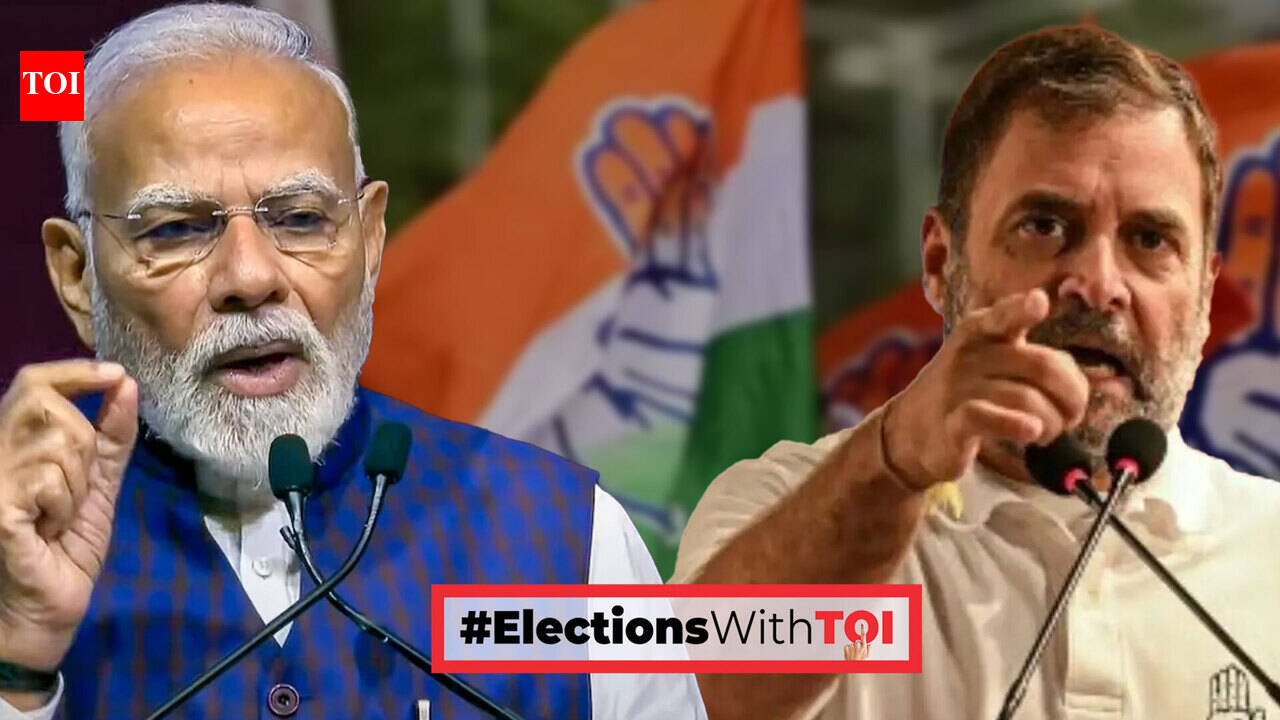
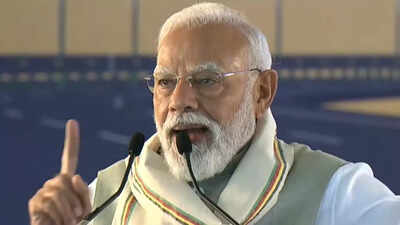
Prime Minister Narendra Modi on Saturday criticised Congress during a public address in Silchar, Assam, saying it was acting as a puppet of forces against India’s growth.Speaking on the second day of his Assam visit, the Prime Minister said, “The forces across the globe that are unable to digest India’s rapid development, the Congress is increasingly becoming a mere puppet in the hands of these very forces,” he said.

PM Modi Launches Mega Assam Infra Projects, Takes Sharp Dig At Congress Over Rs 24,000 Crore Push

The prime minister further accused Congress of neglecting the Barak Valley for decades after independence. PM Modi said the region once played a key role in trade but lost its strength after the country’s borders were drawn in a way that cut off its connection to the sea.

Poll

Do you agree with PM Modi's statement that Congress is acting as a puppet of forces against India's growth?

“The Congress party had left the North East to its own fate. When the country attained independence, the Congress permitted the drawing of the boundary in such a manner that the Barak Valley’s vital link to the sea was completely severed,” he said.The Prime Minister said the BJP’s double-engine government was now working to change the situation by improving infrastructure and connectivity in the region.PM Modi inaugurated projects worth around Rs 24,000 crore in Silchar, including the Shillong–Silchar high-speed corridor.“Just ask the Congress leaders about this. Hand them a pen and paper, and ask them to write down Rs 24,000 crore, and they won’t even be able to do it,” he said.The 166 km corridor, with an investment of around Rs 22,860 crore, is supposed to significantly improve connectivity between Meghalaya and Assam. Speaking at the occasion, Chief Minister of the poll-bound state, Himanta Biswa Sarma, said, “Elections in Assam are just around the corner. On behalf of the Barak Valley and the people of Assam, I wish to convey this message to the Prime Minister: The people of Assam will bring back the Modi government”. The Prime Minister is scheduled to hold a rally in Bengal in the afternoon.


Source link

Ladakh protest: Climate activist Sonam Wangchuk to be released as govt revokes NSA detention | India News


Ladakh protest: Climate activist Sonam Wangchuk to be released as govt revokes NSA detention

NEW DELHI: Centre on Saturday revoked the detention of climate activist Sonam Wangchuk with immediate effect by exercising powers under the National Security Act, the ministry of home affairs said.In a statement released, the ministry said that the “government remains committed to fostering an environment of peace, stability, and mutual trust in Ladakh so as to facilitate constructive and meaningful dialogue with all stakeholders.”“In furtherance of this objective, and after due consideration, the Government has decided to revoke the detention of Shri Sonam Wangchuk with immediate effect by exercising the powers available under the National Security Act,” it added.“Wangchuk has already undergone nearly half of the period of detention under the said Act,” the ministry noted announcing his immediate release.The government said that it has been actively engaging with stakeholders and community leaders in Ladakh to address the aspirations and concerns of people in the region.“The Government has been actively engaging with various stakeholders and community leaders in Ladakh with a view to addressing the aspirations and concerns of the people of the region. However, the prevailing atmosphere of bandhs and protests has been detrimental to the peace-loving character of the society and has adversely affected various sections of the community, including students, job aspirants, businesses, tour operators and tourists and overall economy,” the statement added.The government’s decision comes days after the Supreme Court adjourned the hearing on a petition challenging the detention of Sonam Wangchuk to March 17. A bench of Justices Aravind Kumar and P. B. Varale made it clear that no further arguments would be heard beyond that date.The court had also asked the Centre whether it could reconsider or review the activist’s detention, noting that “his medical condition is not that good.”During the proceedings, government authorities told the court that Wangchuk’s remarks had encouraged young people to organise protests similar to movements seen in Nepal and Bangladesh, and had even referenced an uprising similar to the Arab Spring.The government argued that such statements could trigger instability in the strategically sensitive border region. Officials also linked him to violence in Leh on September 24 last year that left four people dead and more than 160 injured.Wangchuk was detained on September 26, 2025 under the provisions of the National Security Act following an order issued by the District Magistrate of Leh, two days after violent protests erupted in the city over demands for statehood for Ladakh and its inclusion under the Sixth Schedule of the Constitution.He was taken into preventive custody under the NSA to “maintain public order” and was later transferred to a prison in Jodhpur.His wife, Gitanjali Angmo, had approached the Supreme Court challenging the detention. The court first took up the petition on October 6 last year and issued a notice to the authorities.


Source link

Summer travel to get costlier: Jet fuel prices jump amid Middle East conflict


Summer travel to get costlier: Jet fuel prices jump amid Middle East conflict

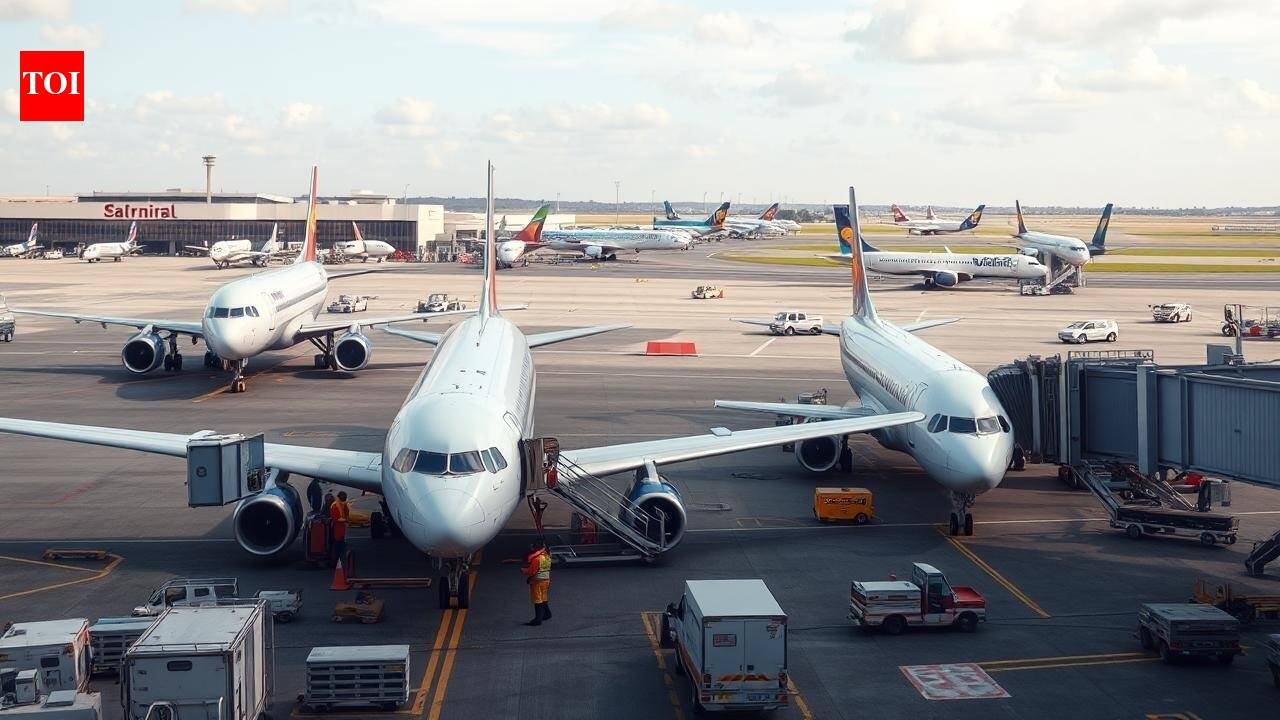
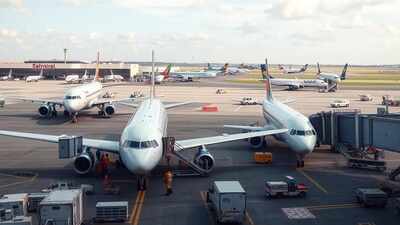
Air travellers, brace yourselves for costlier tickets! You might soon be charged higher amounts for flight fares as the Middle East crisis continues to push fuel prices higher. The conflict has disrupted global oil supplies, and with the summer travel season just around the corner, industry experts say fare hikes are becoming inevitable. However, when the price hikes will kick in and how steep the increase will is still unclear.The pressure is expected to be most visible on long-haul international flights, which consume far more fuel than shorter domestic routes. While some airlines have already announced price adjustments, others are warning that rising fuel costs will soon make their way into ticket prices.United Airlines CEO Scott Kirby recently signalled that fare increases in the United States could arrive quickly as fuel costs continue to climb across the industry. “Probably start quick,” he said, referring to when higher airfares could begin appearing.

Conflict pushing fuel costs higher

The surge in jet fuel prices follows disruptions in global oil supply caused by the conflict in the Middle East. Oil exports have been constrained as shipments face continuous difficulties, prompting major producers including Kuwait, Saudi Arabia and Iraq to cut back production.The situation has been further complicated by attacks carried out by Iran on commercial ships in the Persian Gulf and on oil infrastructure in Gulf Arab countries following US and Israeli strikes. These developments have effectively stopped traffic through the Strait of Hormuz, a narrow maritime corridor through which about one-fifth of the world’s oil supply typically passes.The instability in crude oil markets has pushed up jet fuel prices sharply. According to the Argus US Jet Fuel Index, the average price airlines paid for jet fuel in the United States reached $3.99 per gallon on Friday. Two weeks earlier, the day before the war began, the average price stood at $2.50 per gallon. The index measures average jet fuel prices across major US airports.Government data also shows that airlines were paying significantly less for fuel earlier in the year. Figures from the US department of transportation’s bureau of transportation statistics indicate that US airlines paid roughly $2.36 per gallon in January, the latest month for which data is available.

Airlines face growing operating costs

Some carriers use fuel hedging strategies to protect themselves from sudden price increases, locking in prices months or even years in advance. However, this protection is often limited and does not cover all fuel needs. Many airlines also no longer rely heavily on hedging, which means extended periods of high fuel prices could push more carriers to raise fares.Kirby addressed the challenges of hedging during a Harvard event last week. “No one hedges anymore, and even if you do, hedging the crack spread is really hard to do,” he said. The crack spread refers to the difference between the price of crude oil and the cost of refined products such as petrol.Operational challenges are also adding to the burden. Airspace closures across parts of the Middle East have forced airlines to reroute flights, often requiring longer journeys that burn additional fuel and increase operating expenses.

Potential impact on passengers

Travellers could see the effects of rising fuel costs in several ways. Airlines outside the United States often impose fuel surcharges that are added to the base ticket price, and these charges can be increased when fuel becomes more expensive.Major US airlines typically do not use separate fuel surcharges. Instead, they include fuel expenses within the total fare, meaning passengers are more likely to see higher ticket prices rather than a separate fee, according to Tyler Hosford, security director at global risk management firm International SOS.Airlines may also look at other ways to offset costs by adjusting prices for optional services such as extra legroom seats, seat upgrades, checked baggage and priority boarding. As a result, the overall cost of a trip could rise even if base ticket prices remain unchanged initially.Christopher Anderson, a professor at Cornell University’s business school who studies operations and information management in the airline and hospitality industries, said prolonged high fuel prices could also prompt airlines to change schedules or reduce certain routes.

Fuel costs already driving fare increases

Airlines in the Asia-Pacific region have been among the first to respond with fare increases and fuel surcharges. If high jet fuel prices continue, analysts expect more airlines, particularly those without fuel hedging arrangements, to follow.Cathay Pacific, Hong Kong’s flag carrier, announced that it will raise its fuel surcharge beginning Wednesday.“The price of jet fuel has approximately doubled since March amid the latest developments in the Middle East,” the airline said in a statement Thursday.Several other airlines have also introduced price changes. Air France-KLM said that round-trip economy tickets on long-haul routes could increase by about 50 euros (around $57). Air India introduced fuel surcharges on certain routes on Thursday and said the charge will rise by up to $50 for tickets to Europe, North America and Australia after March 18. Hong Kong Airlines also raised fuel surcharges on several routes from Thursday, while South Africa’s FlySafair announced a temporary fuel surcharge.

Advice for travellers

Industry experts say travellers planning summer holidays may still be able to manage costs by booking flights earlier rather than waiting for last-minute offers.Locking in ticket prices sooner, especially when flexible booking options allow changes, can help secure fares before airlines adjust them further.Hosford recommends that travellers remain flexible with travel dates, compare prices from nearby airports and set alerts to monitor fare changes. He also suggested using frequent flyer miles or credit card points to book flights instead of waiting for the ideal deal.


Source link

MS vs IT, Legends League Cricket 2026 Match Prediction: Who will win today’s game between Mumbai Spartans and India Tigers?


The stage is set in Haldwani as the fourth match of the Legends League Cricket 2026 brings together a star-studded clash between Mumbai Spartans and India Tigers.

With the Spartans looking to bounce back from an opening loss and the Tigers aiming to maintain their winning momentum, tonight’s encounter under the lights at the Indira Gandhi International Cricket Stadium promises high-octane nostalgia and vintage brilliance.

Led by the fiery S Sreesanth, the Mumbai Spartans head into this clash hungry for their first points of the season. Despite a spirited effort in their opening fixture against India Captains, they ultimately fell 23 runs short, leaving them eager to prove their mettle tonight. The team’s core strength lies in a formidable middle order anchored by the Mr. IPL himself, Suresh Raina, and bolstered by the raw finishing power of Carlos Brathwaite. However, the spotlight will be firmly on Bharat Chipli, after looking in sublime touch with a brisk 47 in the first game, his ability to provide a flying start will be vital if the Spartans are to dictate the tempo of the innings.

On the other side of the ring, India Tigers arrive with the wind in their sails following a clinical 20-run victory over Royal Riders Punjab. Under the shrewd leadership of Tillakaratne Dilshan, the Tigers resemble a well-oiled machine that perfectly balances veteran power with craftiness. Their greatest asset is a deep pool of all-rounders, epitomized by Pawan Negi, whose MVP performance of 41 runs and two wickets in the previous match showcased their tactical flexibility. While Negi provides the balance, the x-factor remains Chris Gayle, the Universe Boss is always just one boundary away from turning the game on its head and demoralizing any bowling attack.

Mumbai Spartans vs India Tigers: Match Details

  • Date and Time: March 14; 2:00 pm GMT/ 7:30 pm IST
  • Venue: Indira Gandhi International Cricket Stadium, Haldwani

Mumbai Spartans vs India Tigers Head to Head Record

Mumbai Spartans and India Tigers are set to face each other for the first time, with no previous head-to-head record between the two sides.

Indira Gandhi International Cricket Stadium Pitch Report

The pitch at the Indira Gandhi International Cricket Stadium is likely to provide a balanced contest between bat and ball. Fast bowlers may find some early help with the new ball, as the surface could offer a bit of seam movement and bounce in the opening phase of the innings. However, once batters spend some time at the crease and adjust to the conditions, run-scoring should gradually become easier. The consistent bounce is expected to aid stroke-makers, allowing them to play their shots with confidence and build substantial innings.

As the game progresses, the character of the surface may change slightly, bringing spinners more into play. A touch of turn could emerge later on, which might make batting a little more challenging in the latter stages of the match. Overall, the conditions at the venue are set to produce an engaging contest, where both batters and bowlers can influence the game depending on how effectively they adapt to the evolving nature of the pitch.

Squads

India Tigers: Kirk Edwards, Tillakaratne Dilshan (c), Milinda Siriwardana, Samit Patel, Kuldeep Hooda, Jeevan Mendis, Pawan Negi, Amit Paunikar (wk), Akalanka Ganegama, Abu Nechim, Sumit Singh, Robin Uthappa, Chris Gayle, Ravi Bopara, Thilan Thushara, Aaron Finch, Shadab Jakati, Abhimanyu Mithun, Ambati Rayudu, Shahbaz Nadeem, Amitoze Singh

Mumbai Spartans: Asad Pathan, Bharath Chipli, Shoaib Khan, Amit Verma, Mausif Khan, Manan Sharma, Rahul Yadav (wk), Jaykishan Kolsawala, S Sreesanth (c), Suboth Bhati, KC Cariappa, Ishwar Chaudhary, Carlos Brathwaite, Bipul Sharma, Chadwick Walton, Isuru Udana, Faiz Fazal, Suresh Raina

Also READ: Legends League Cricket (LLC) 2026 Squads: Players list and Captains of all six teams

Mumbai Spartans vs India Tigers: Today’s match prediction

Case 1:

  • Mumbai Spartans wins the toss and bats first
  • Mumbai Spartans’ powerplay score: 50-60 (6 overs)
  • Mumbai Spartans’ total score: 190-200

Case 2:

  • India Tigers wins the toss and bats first
  • India Tigers’ powerplay score: 40-50 (6 overs)
  • India Tigers’ total score: 170-180

Match result: Mumbai Spartans to win the contest.

Also READ: Legend League Cricket 2026 Schedule, Broadcast and Live Streaming details: When and where to watch in India, Australia & USA

Source link

‘He wasn’t saying nice things’: Salman Ali Agha on war of words with Bangladesh captain Mehidy Hasan Miraz | Cricket News


'He wasn't saying nice things': Salman Ali Agha on war of words with Bangladesh captain Mehidy Hasan Miraz
Image credit: Bangladesh Cricket Board

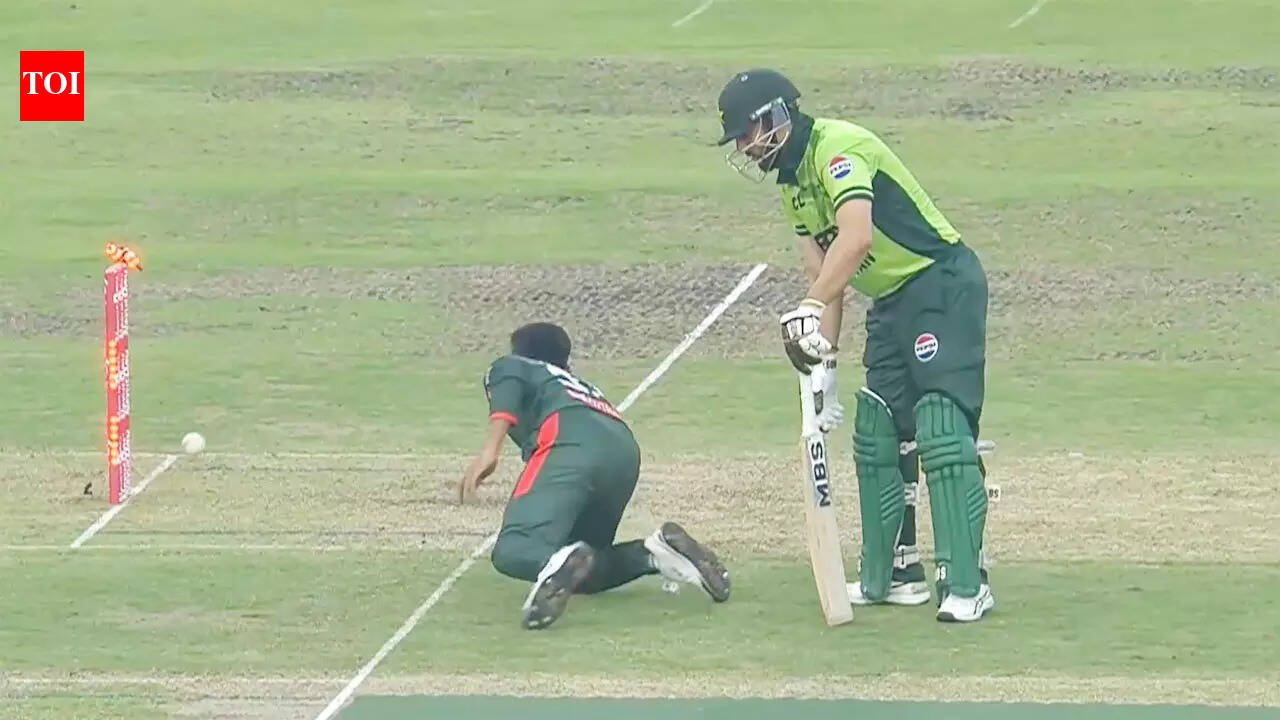
NEW DELHI: The debate around the “spirit of cricket” resurfaced after the controversial run-out of Salman Ali Agha by Mehidy Hasan Miraz during the second ODI between Pakistan national cricket team and Bangladesh national cricket team at the Sher-e-Bangla National Cricket Stadium in Dhaka.The incident unfolded in the 39th over of Pakistan’s innings when the visitors were in the middle of a steady recovery. Agha and Mohammad Rizwan had put together a 109-run partnership for the fourth wicket after Pakistan lost three early wickets. On the fourth delivery of the over, bowled by Bangladesh captain Miraz, Rizwan pushed the ball gently down the ground. The ball rolled towards Agha, who had stepped out of his crease at the non-striker’s end after backing up.

EXCLUSIVE: Rahul Dravid on iconic Eden Gardens win against Australia in 2001

As the ball struck his pads, Agha bent down to pick it up and appeared to hand it back. Miraz, however, quickly collected the ball and dislodged the bails while Agha was still outside the crease before appealing for a run-out.The on-field umpire referred the appeal to the third umpire, who ruled in Bangladesh’s favour and confirmed the dismissal. The decision left Agha visibly frustrated as he walked back to the pavilion, with television visuals showing the Pakistan batter expressing his displeasure.The moment also triggered a brief exchange between Agha and Miraz on the field, while Rizwan was seen engaging in a discussion with the Bangladesh players.Despite the controversy, Pakistan went on to win the match by 128 runs via the DLS method. Speaking after the game, Agha reflected on the dismissal and the circumstances around it.“What he has done is in the law. I think if he thinks it’s right, it’s right, but from my perspective, I would have done it differently. I would have gone for sportsman’s spirit. We haven’t done this type of thing previously, we would never do that in the future as well,” Agha said.“Actually, the ball hit on my pad and then my bat. So I thought he can’t get me run-out now, because the ball already hit on my pad and my bat. I was just trying to give him the ball back. I was not looking for the run or anything like that, but he already decided to make the run-out,” he added.“It was just heat-of-the-moment kind of stuff. If you ask me what I would have done, I would have done things differently. But it was everything, whatever happened after that, it was in the moment,” said Agha.When asked about the exchange between the two players during the incident, Agha admitted that neither side used “nice words”.“I can’t remember what I was saying, and I can’t remember what he was saying. I’m sure I wasn’t saying nice things, and I’m sure he wasn’t saying nice stuff as well. But it was just the heat of the moment, so we are fine,” he said.

Banner Insert


Source link

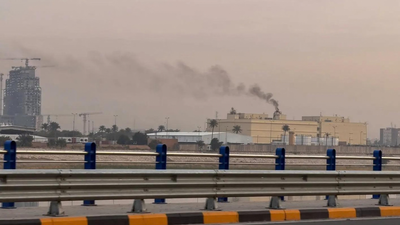
Watch: Iran strikes US embassy in Baghdad, smoke rises over compound


Watch: Iran strikes US embassy in Baghdad, smoke rises over compound
Blasts rock US embassy in Baghdad (AP photo)

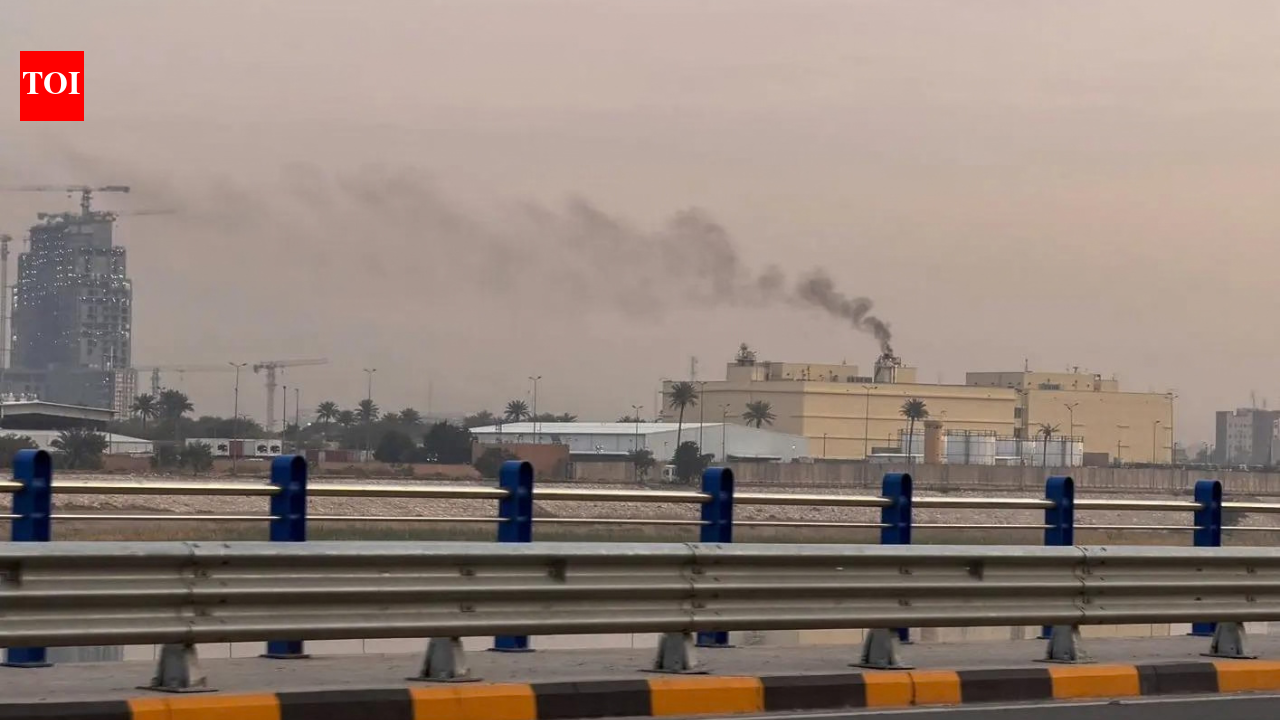
After issuing a strong warning that it would target American oil and military facilities in the region, Iran struck the United States embassy in neighbouring Iraq, escalating tensions in the Middle East conflict.The embassy compound in Baghdad was targeted by Iranian drones, according to multiple videos shared on social media. Thick black smoke could be seen rising from the complex after the strikes reportedly hit the helipad of the fortified US mission.Iraq, which has long been a proxy battleground between the United States and Iran, was quickly drawn deeper into the wider Middle East war triggered by US and Israeli strikes on Iran on February 28.A cloud of black smoke rose above the US diplomatic mission shortly after explosions were heard on Saturday morning, an AFP journalist reported.Two security officials told AFP that the embassy complex was struck in the attack, though the exact cause remained unclear. One source said a drone had hit the embassy, while another said a projectile, believed to be a rocket, had fallen on the diplomatic complex.Another security source said “a projectile, believed to be a rocket, had fallen near the embassy’s airbase.”The US embassy did not immediately respond to AFP’s request for comment on the incident.It is the second time the US embassy in Baghdad has come under attack since the start of the war.Several Tehran-backed armed groups, which Washington has designated as “terrorist organisations”, and which operate under an umbrella movement known as the Islamic Resistance in Iraq, have claimed responsibility for daily drone and rocket attacks against US bases in the region.Since the start of the war, several attacks targeting members of those groups across Iraq have been blamed on the United States and Israel.Saturday’s attack came shortly after two strikes targeted the powerful Iran-backed group Kataeb Hezbollah and killed two of its members, including a “key figure”, according to security sources.AFP journalists heard explosions in the Iraqi capital followed by ambulance sirens, while witnesses reported seeing smoke rising from the Arasat neighbourhood, where several Iran-backed groups are believed to have a presence.“At 02:15 am (2315 GMT Friday), a missile struck a house that was being used by Kataeb Hezbollah,” a security source said, adding that “a key figure was martyred,” and two members of the group were wounded.Two hours later, an airstrike hit a vehicle in eastern Baghdad, killing “a member of the Hashed al-Shaabi,” another security source said.A Hashed al-Shaabi official told AFP that the person killed belonged to Kataeb Hezbollah.The Hashed al-Shaabi, or the Popular Mobilisation Forces (PMF), is a former paramilitary group that has since been integrated into Iraq’s regular armed forces.The force also includes brigades from Iran-backed groups, including Kataeb Hezbollah.None of the sources said who was believed to be behind the strikes, and the Kataeb Hezbollah group has not commented on the incident.


Source link